Sports Cars
-
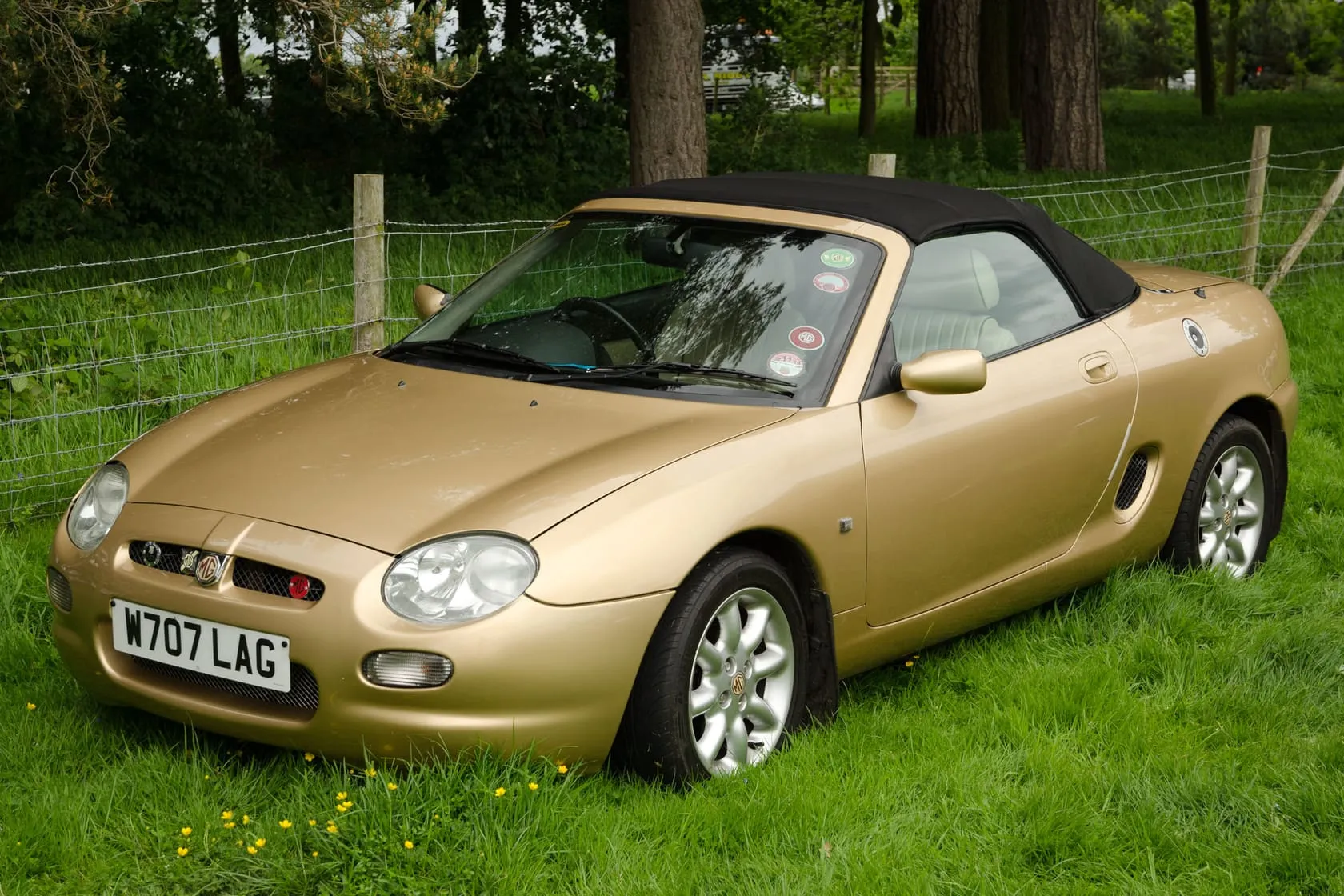 MGF and TF values: the cheapest sports car in the record, where a head gasket costs more than the car
The cheapest cars in this whole record. MGF and MG TF prices across 369 recorded auction sales, the TF small premium over the MGF, what a head gasket does to the arithmetic, and why a falling median and a falling survivor count are the same story.
-
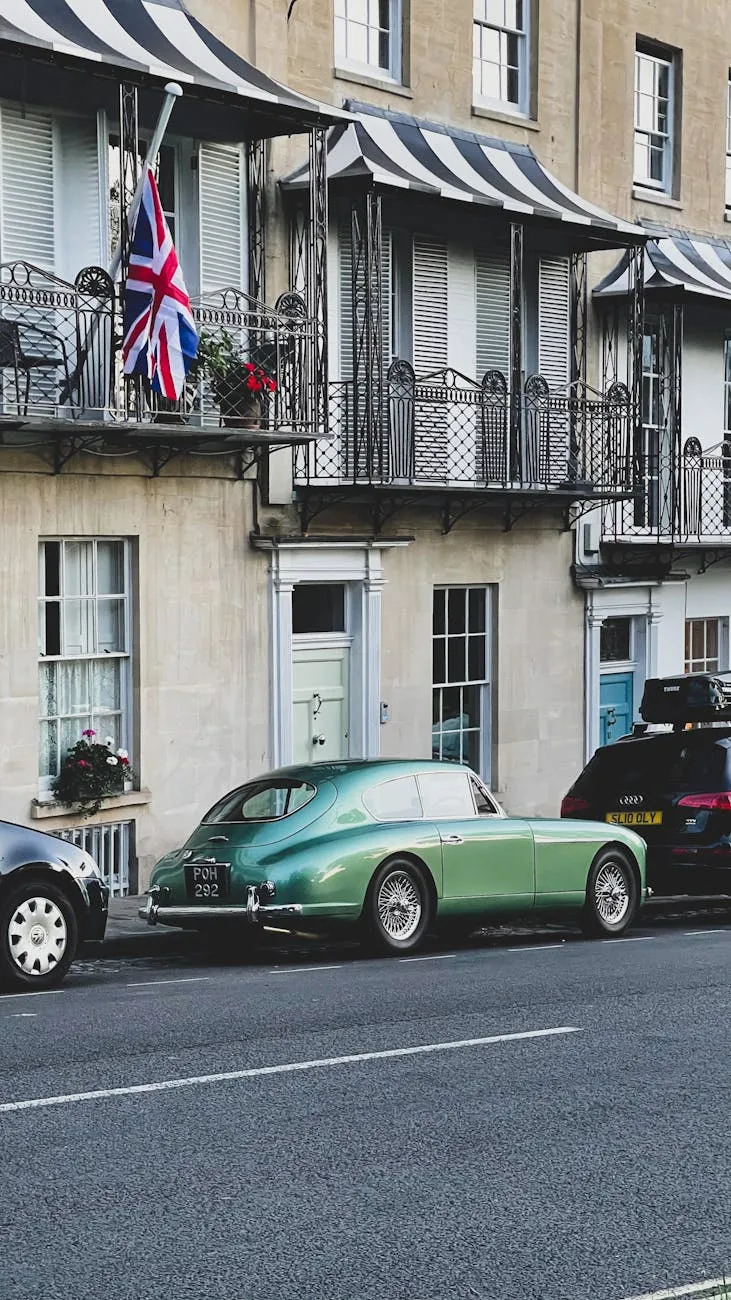 Aston Martin DB2: where the DB legend learned to walk (1950–1959)
The DB2 gave David Brown's initials their first great car, Frank Feeley's flowing coupe over the Lagonda six, raced at Le Mans and matured through the DB2/4 and Mk III into the family that fathered the DB4. A guide to the Feltham era, and what to check before buying.
-
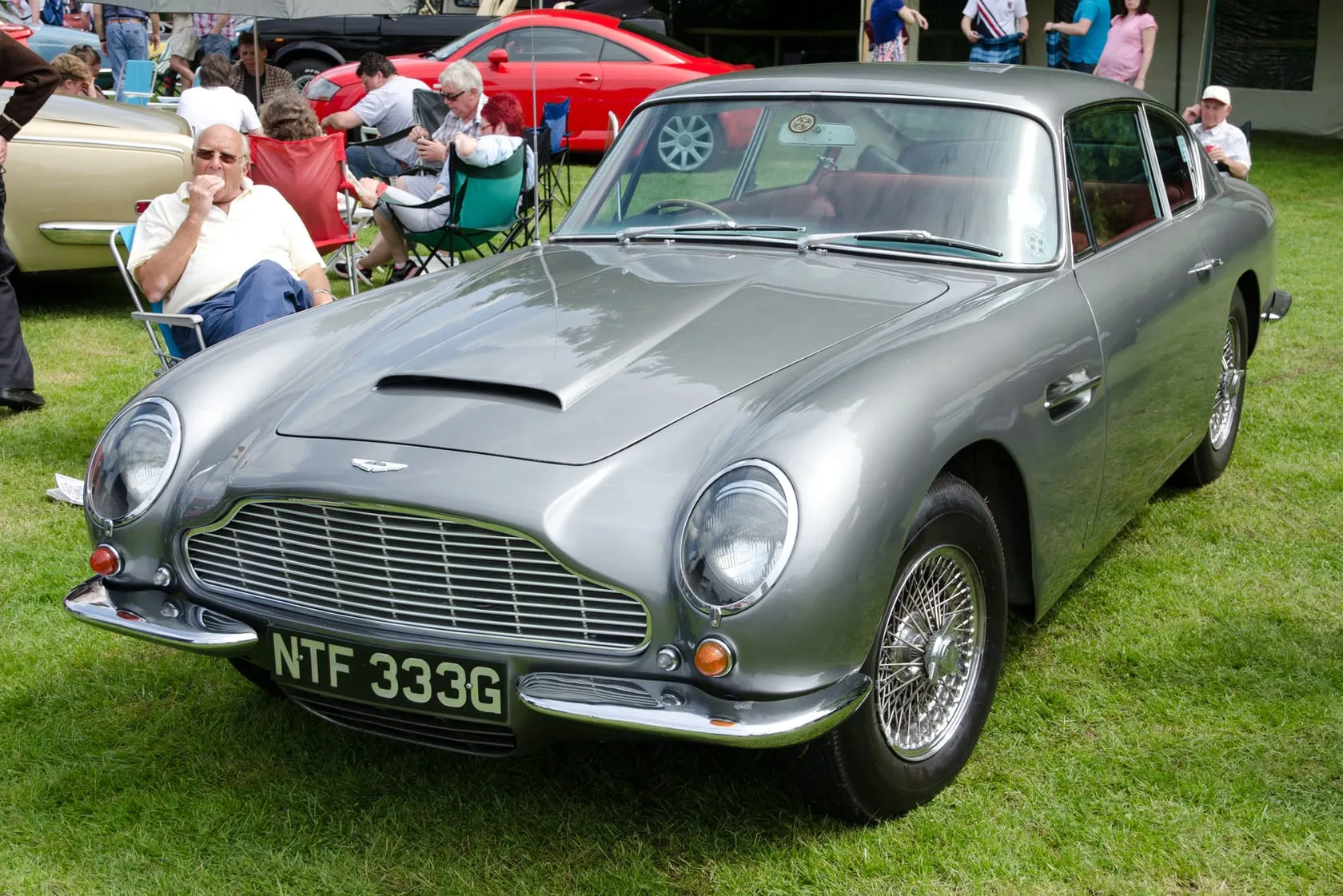 Aston Martin DB6: the grown-up Aston the market finally noticed (1965–1971)
The DB6 stretched the sainted DB line into its most usable form, four real seats, a Kamm tail and the first Volante badge, and spent decades in its siblings' shadow before collectors caught on. A guide to the Mk1 and Mk2, the Volantes, and what to check before buying.
-
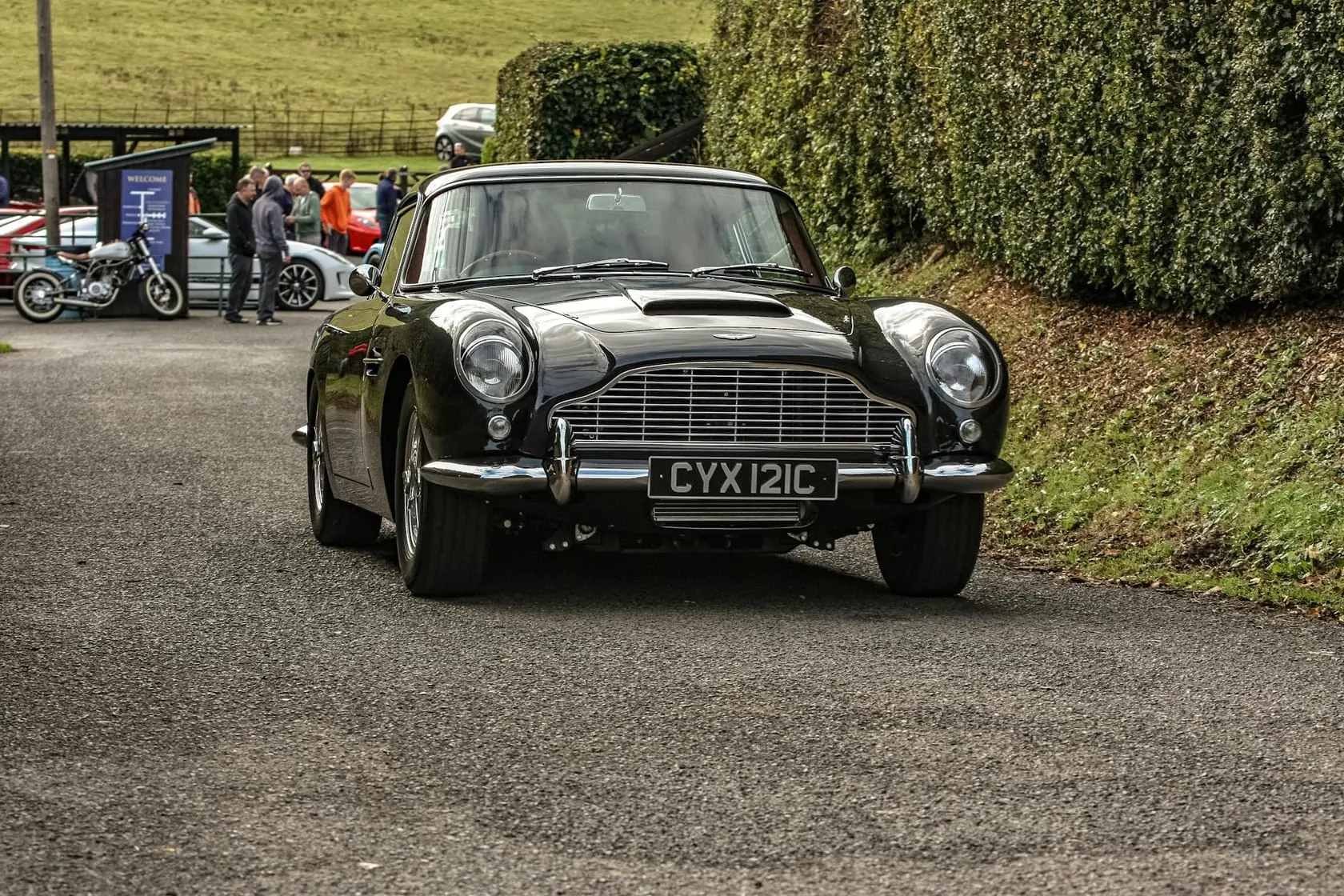 Aston Martin DB5: the most famous car in the world (1963–1965)
The DB5 refined the DB4 into 4.0 litres of hand-built glamour, and then Goldfinger made it cinema's most famous car and fixed its silhouette in global culture forever. A guide to the 1,059 cars built, the Bond story, buying checks and what half a million pounds actually buys.
-
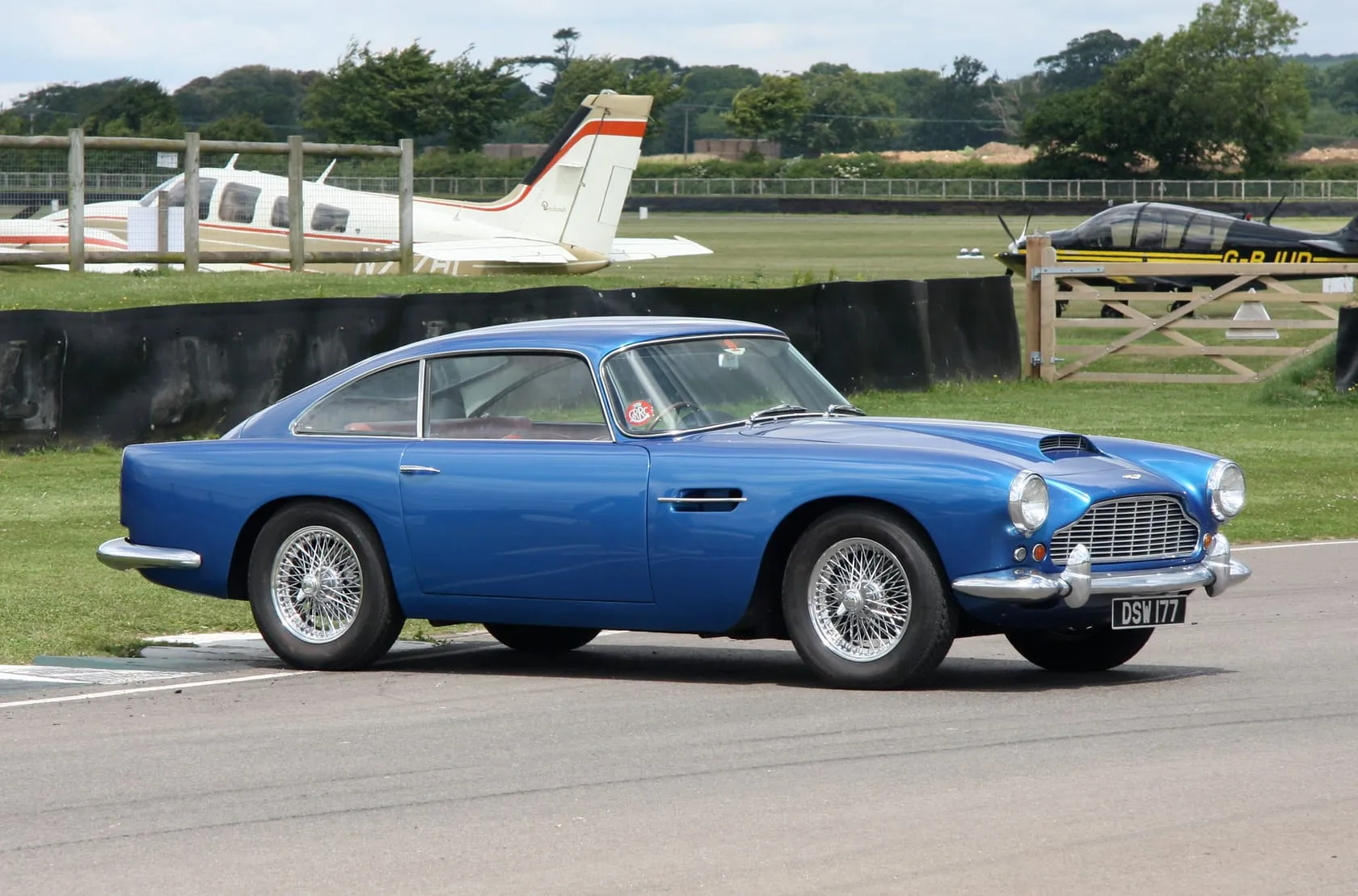 Aston Martin DB4: the car that made Newport Pagnell immortal (1958–1963)
The DB4 brought Touring of Milan's Superleggera construction and Tadek Marek's new six together into the first of the great Newport Pagnell Astons, and its GT and Zagato versions became some of the most valuable British cars ever made. A guide to the whole DB4 family, and what to check before buying.
-
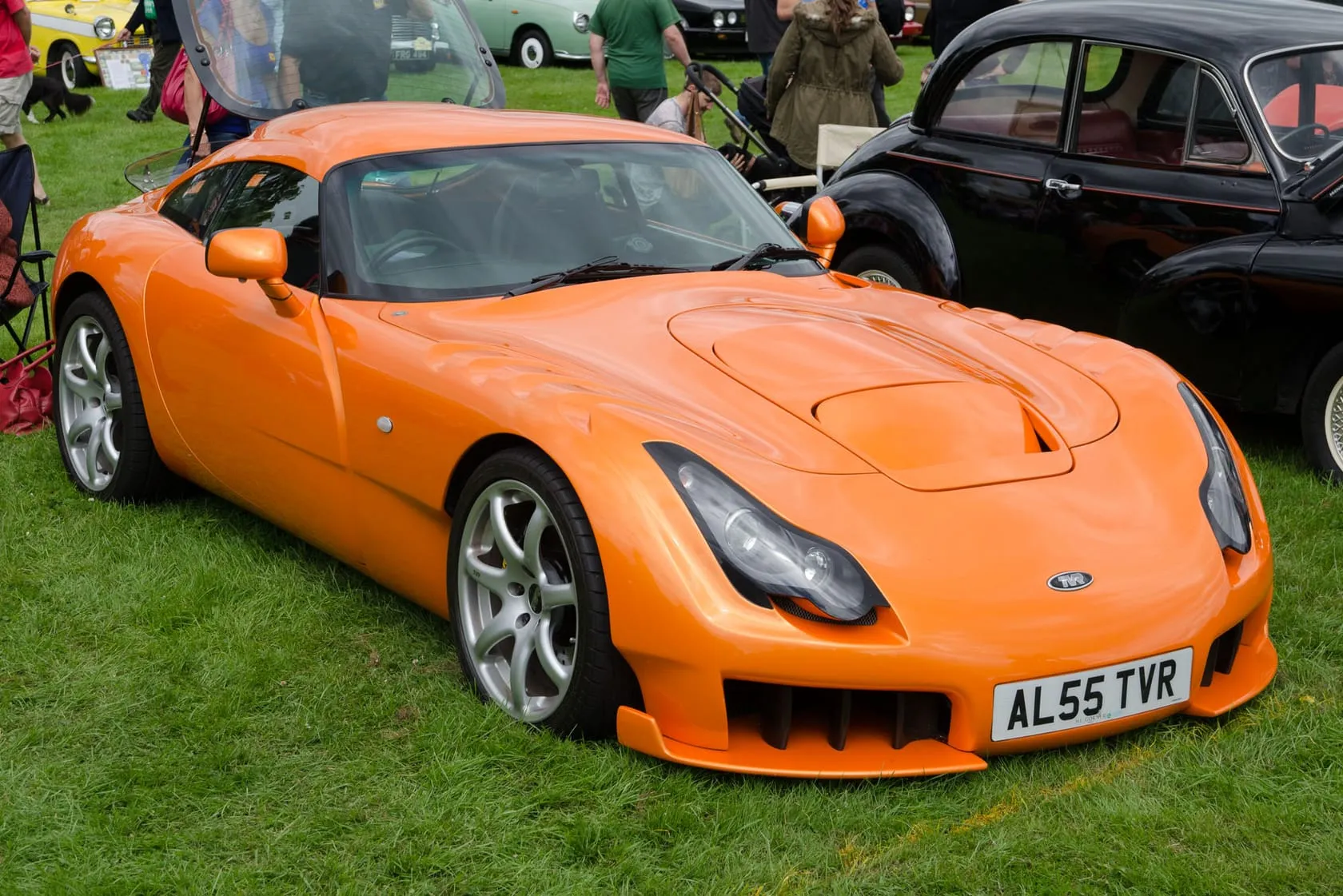 TVR Sagaris: 406 bhp, no airbags, and the last car out of Blackpool (2005–2006)
The TVR Sagaris was the last production car built at Bristol Avenue, Blackpool, a 406 bhp Speed Six coupé on the T350's bones with slashed wings, side-exit exhausts and a glass rear spoiler, 213 built in 2005 and 2006 before the factory closed. A guide to how it came about, what it is like, what to check, and why it is the most valuable modern TVR.
-
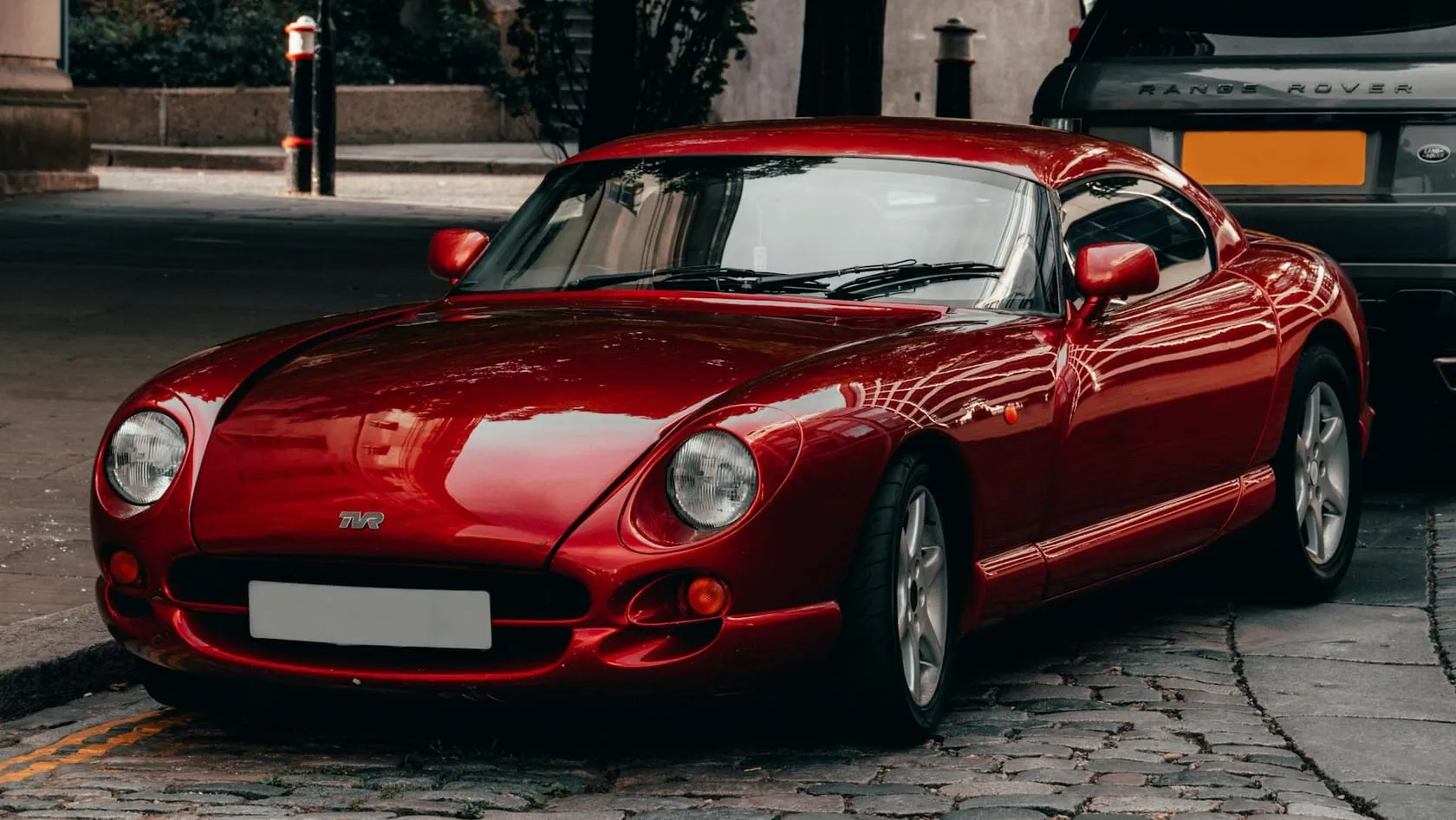 TVR Cerbera: the four-seater with a racing engine and no mercy (1996–2006)
The Cerbera was TVR's great leap, its first in-house engine, a 2+2 coupe body and pace that humiliated supercars at a third of the money. A guide to the Speed Eight and Speed Six cars, the Speed 12 legend, buying checks and values.
-
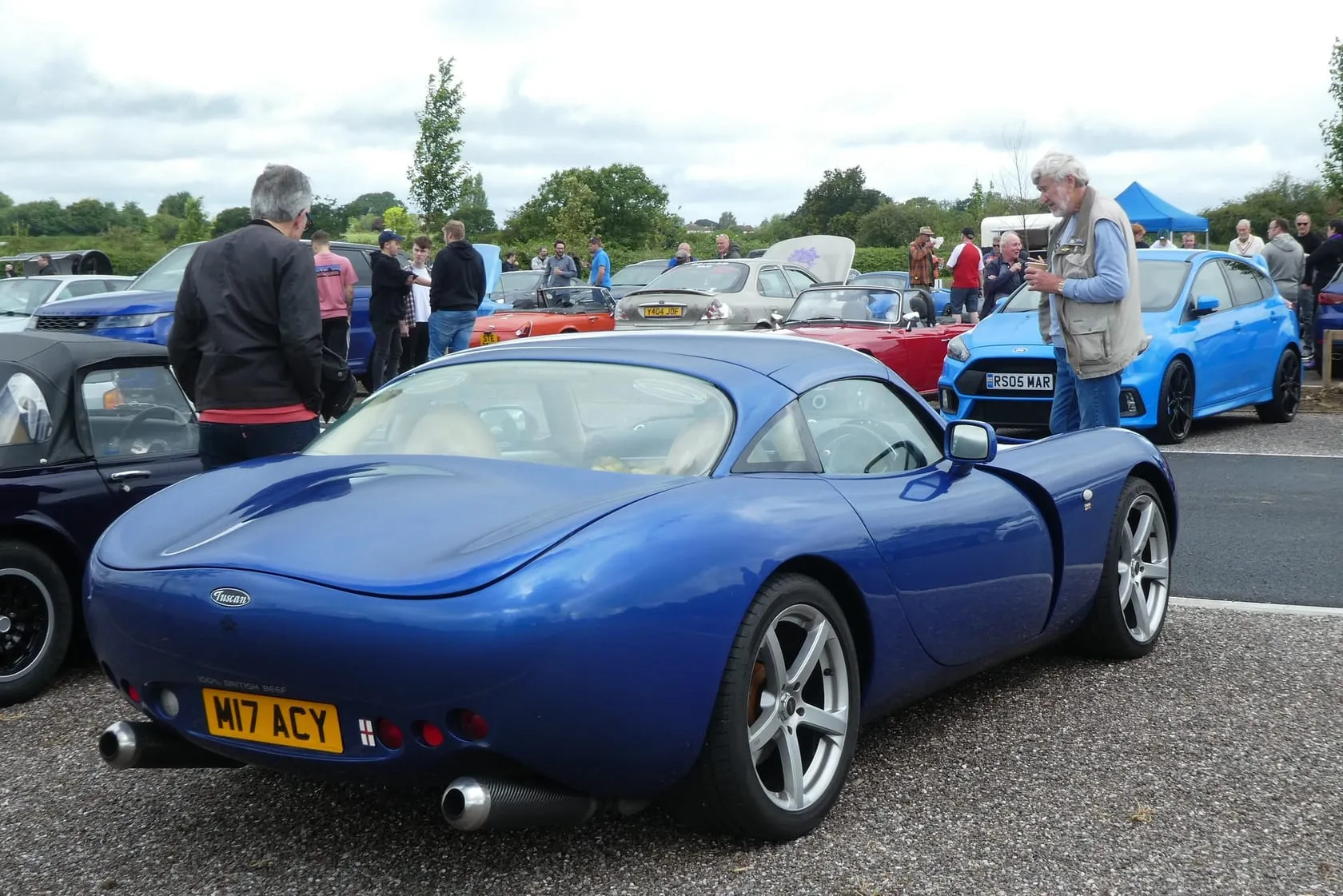 TVR Tuscan: two eras of Blackpool at full volume (1967–1971, 1999–2006)
The Tuscan name bookends TVR's story, first on the V8 and V6 cars that steadied the sixties company, then on the Speed Six that defined its final flourish, all curves, keyless doors and a screaming straight six. A guide to both eras, buying checks and values.
-
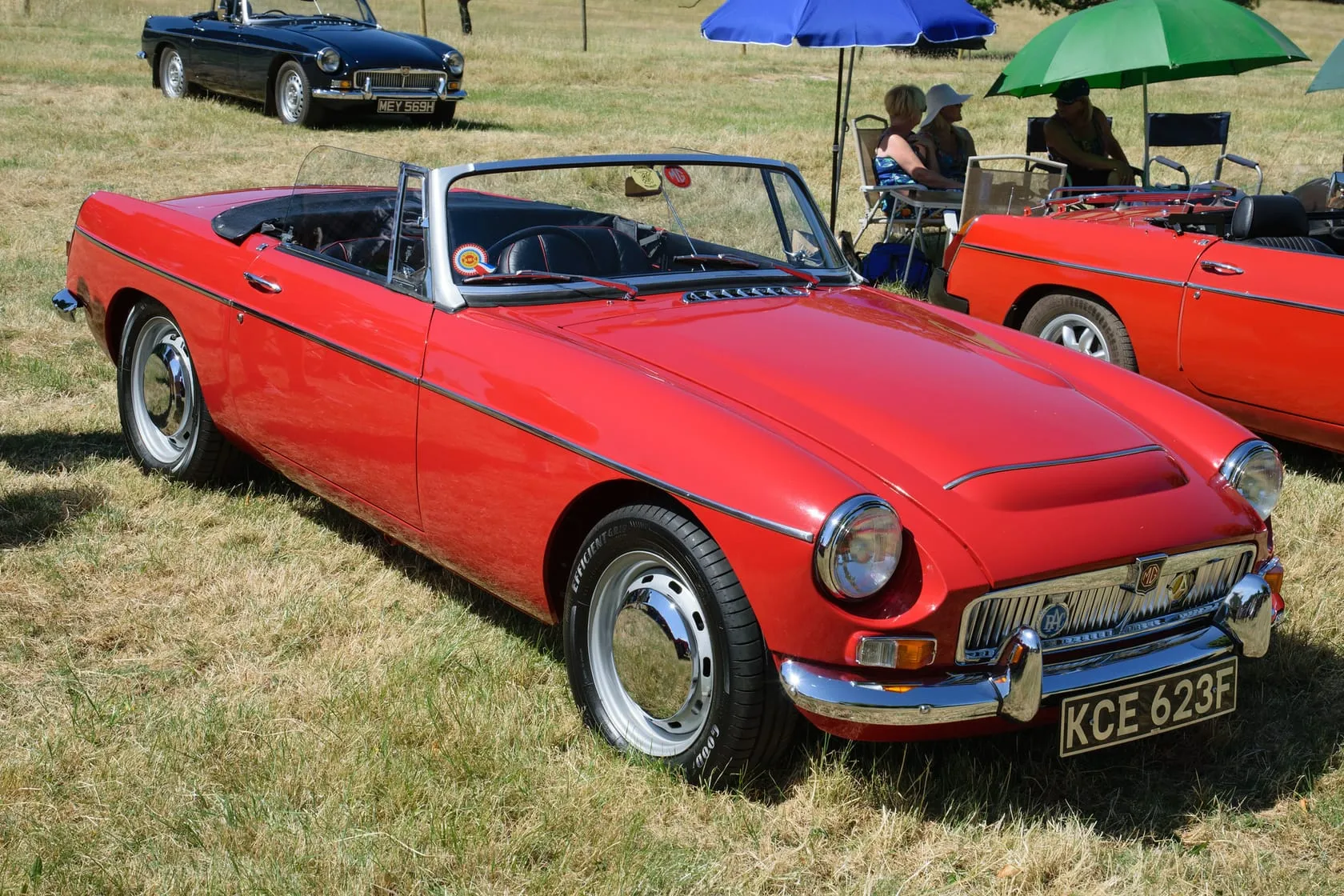 MGC values: roadster over GT, double the MGB, half the Healey, and the GTS in a class of its own
The six-cylinder MG sits between the MGB below it and the Austin-Healey 3000 it replaced. MGC values from 261 recorded auction sales, the roadster premium over the GT, what the University Motors Specials and the Sebring GTS cars make, and why the MGC has come down by nearly half in real terms since 2017.
-
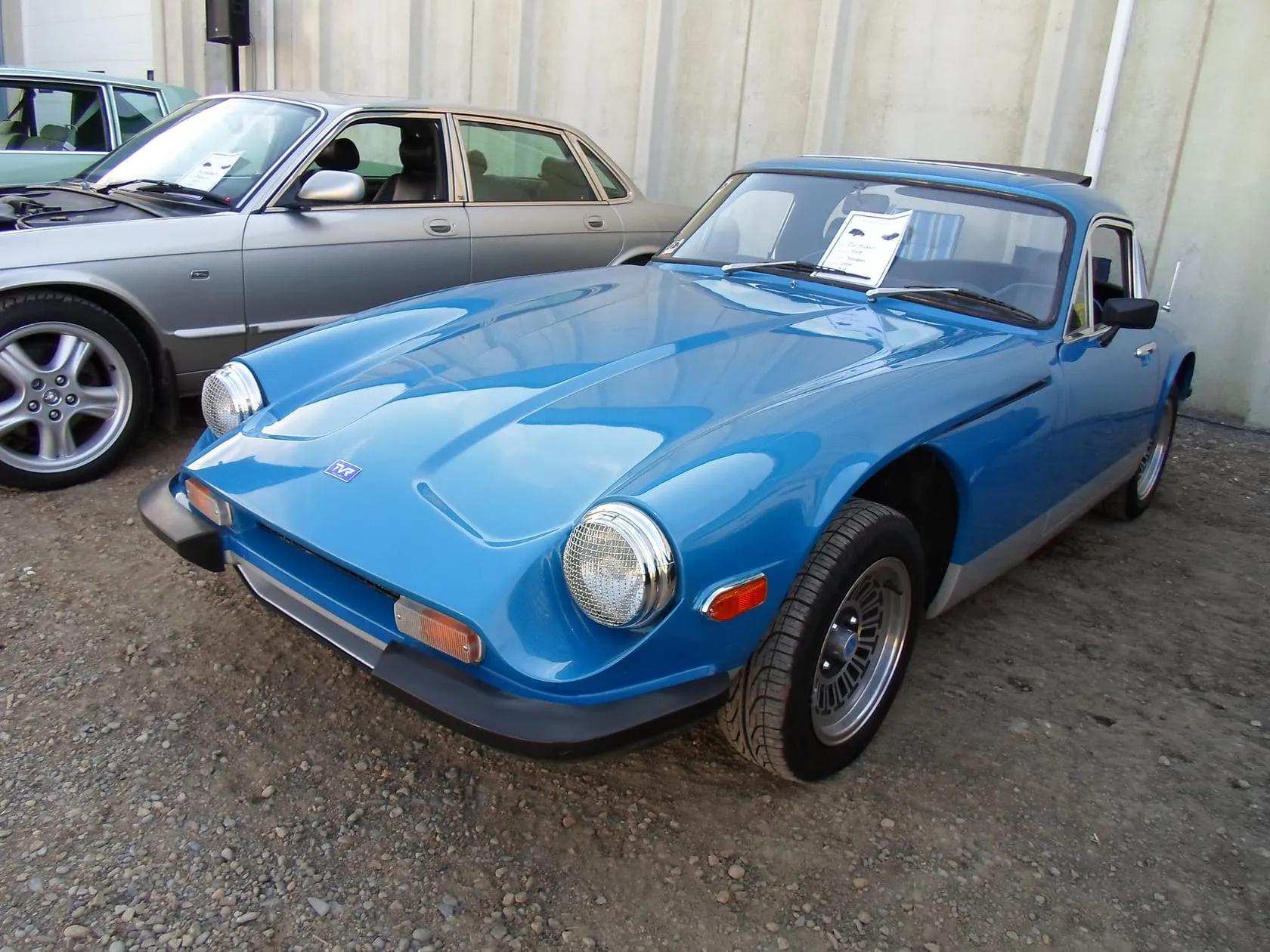 TVR M-series: the cars that kept Blackpool alive (1972–1979)
The M-series was TVR's steady decade, the 1600M, 2500M and 3000M with the Taimar hatchback, built soundly under Martin Lilley and sold worldwide while the company found its feet. A guide to the seventies family, the Turbo, buying checks and values.
-
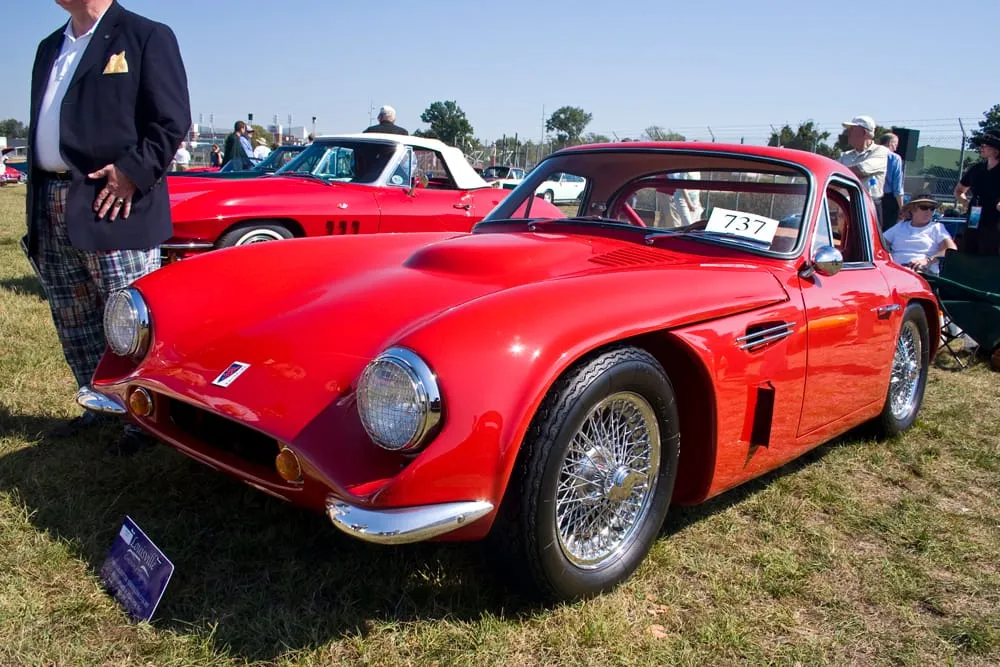 TVR Griffith: the name Blackpool saved for its wildest cars (1963–2002)
Twice in TVR's history the Griffith name meant the same thing, the biggest V8 Blackpool could find in the smallest car that would hold it, first with Ford muscle in 1963 and again with Rover power in 1991. A guide to both eras, the unbuilt 2017 revival, buying checks and values.
-
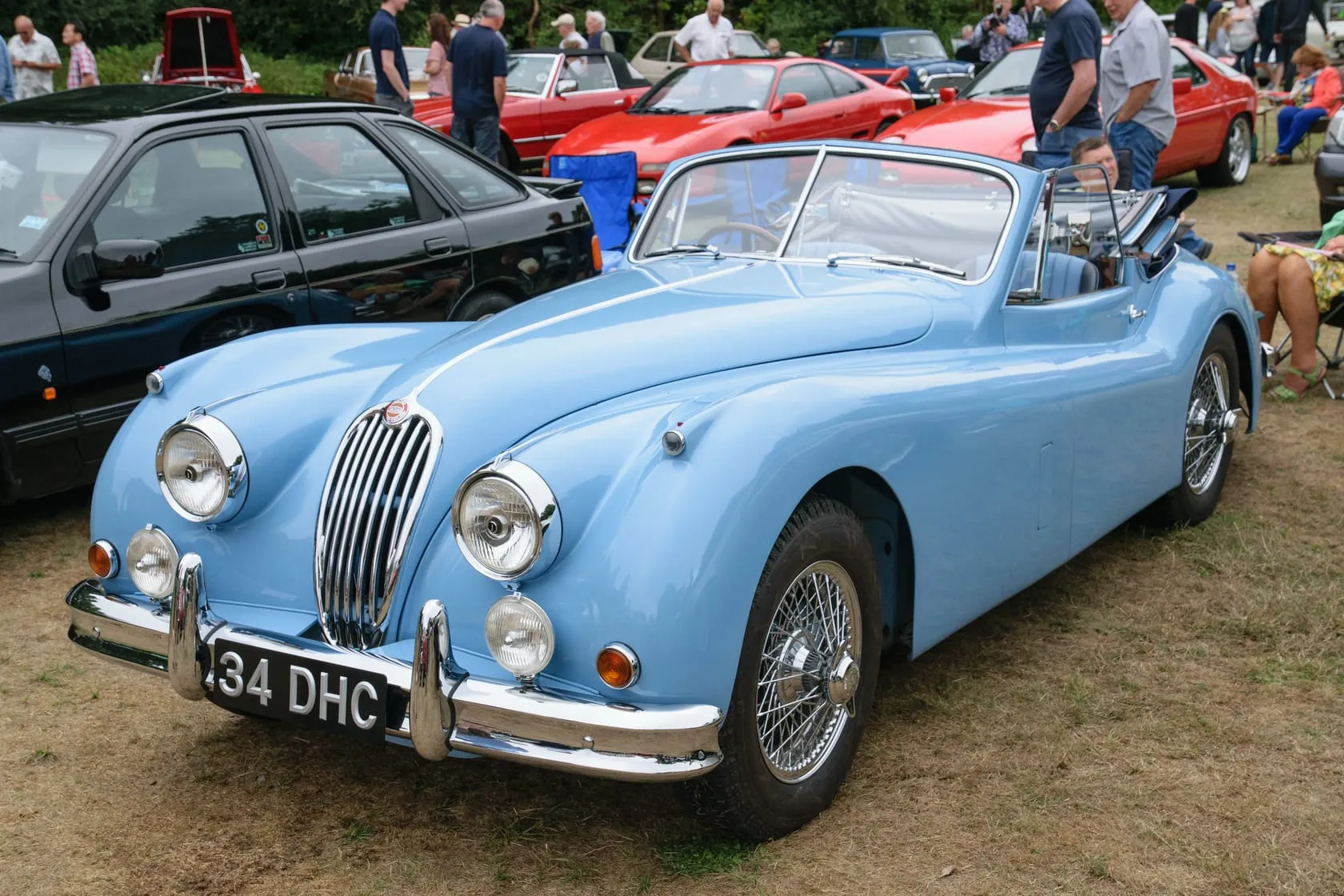 Jaguar XK140 values: the one XK where the drophead beats the roadster, and the cheapest of the three at the median
Here alone among the XKs, the drophead coupe outsells the roadster. Jaguar XK140 values across 451 recorded auction sales, what the fixed-head, the SE and the home-market cars make, how the middle XK sits against the XK120 and XK150, and why it has halved in real terms since 2017.
-
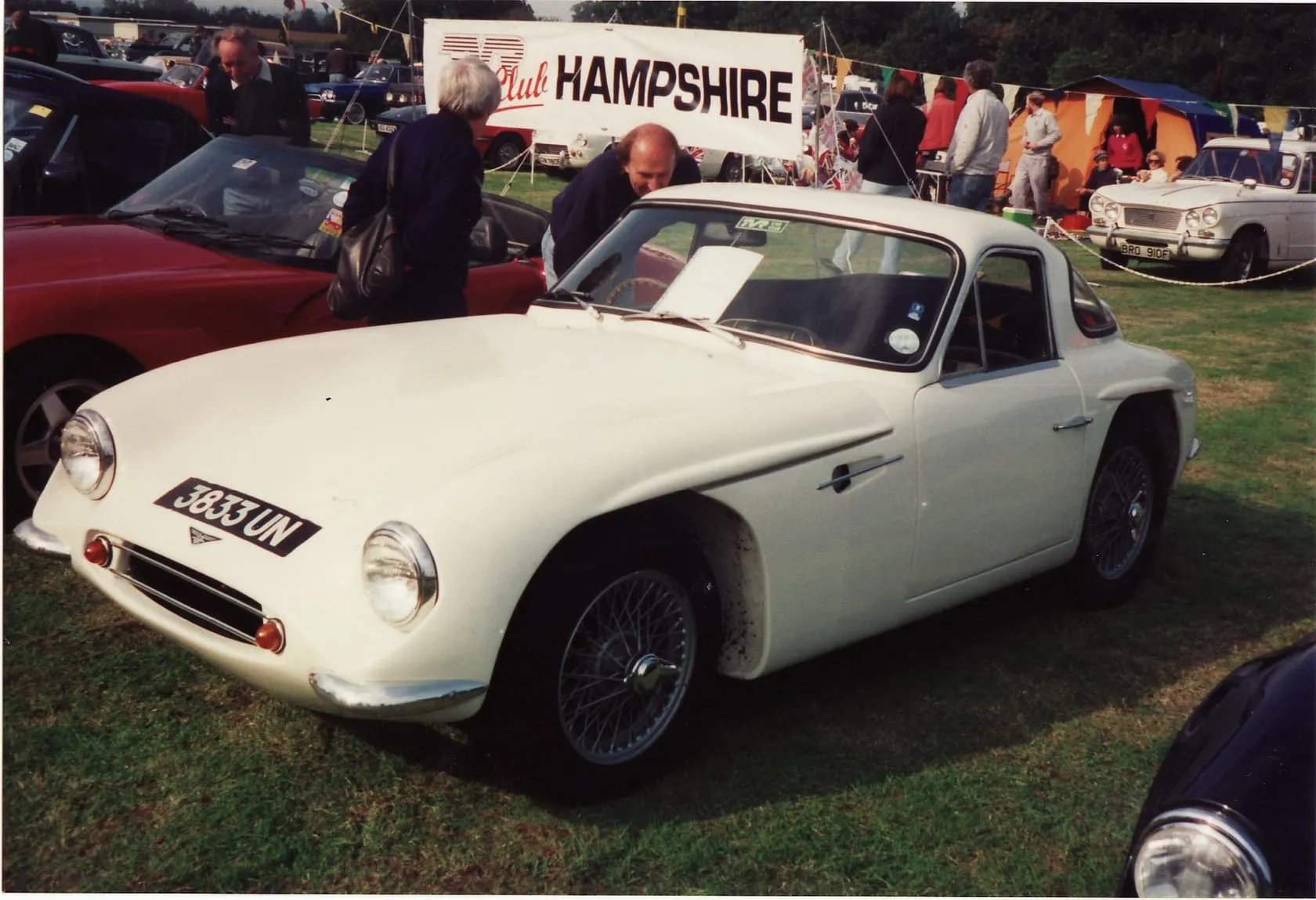 TVR Grantura and Vixen: where Blackpool learned to build sports cars (1958–1973)
The Grantura was TVR's first real production car, a stubby glassfibre coupe that taught Blackpool its trade, and the Vixen that grew from it carried the recipe to 1973. A guide to both families, the marks and engines, buying checks and values.
-
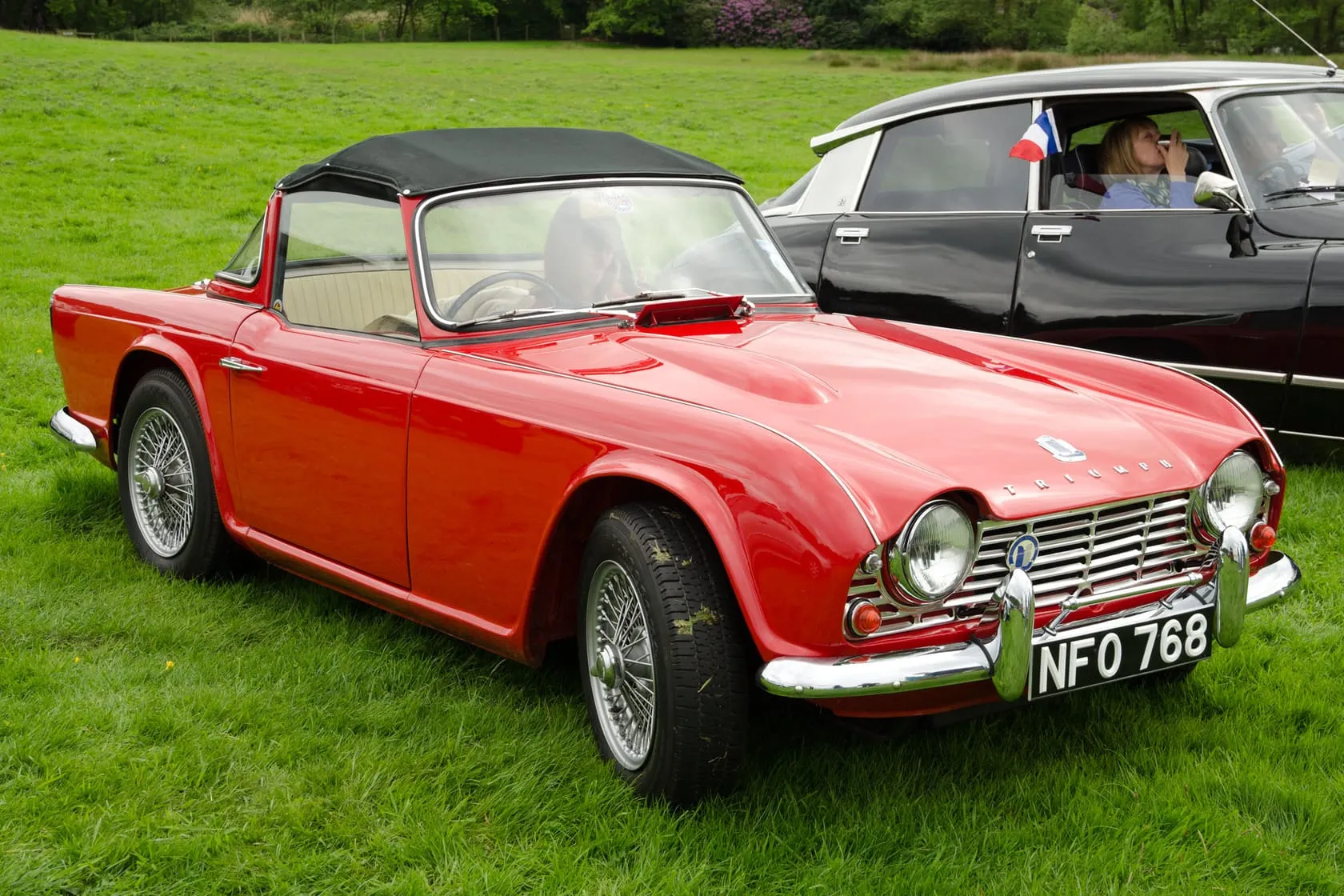 Triumph TR4 values: the TR4A premium, Surrey tops and wires, the TR5 above and the TR6 below, and a market that has halved
The TR4 now sells for more than the TR6 and less than the TR5. Triumph TR4 prices from 479 recorded auction sales, why the independent-rear TR4A commands only a little more, what the Surrey top, overdrive and a home-market history add, and why the Michelotti TR has lost half its value in real terms since 2016.
-
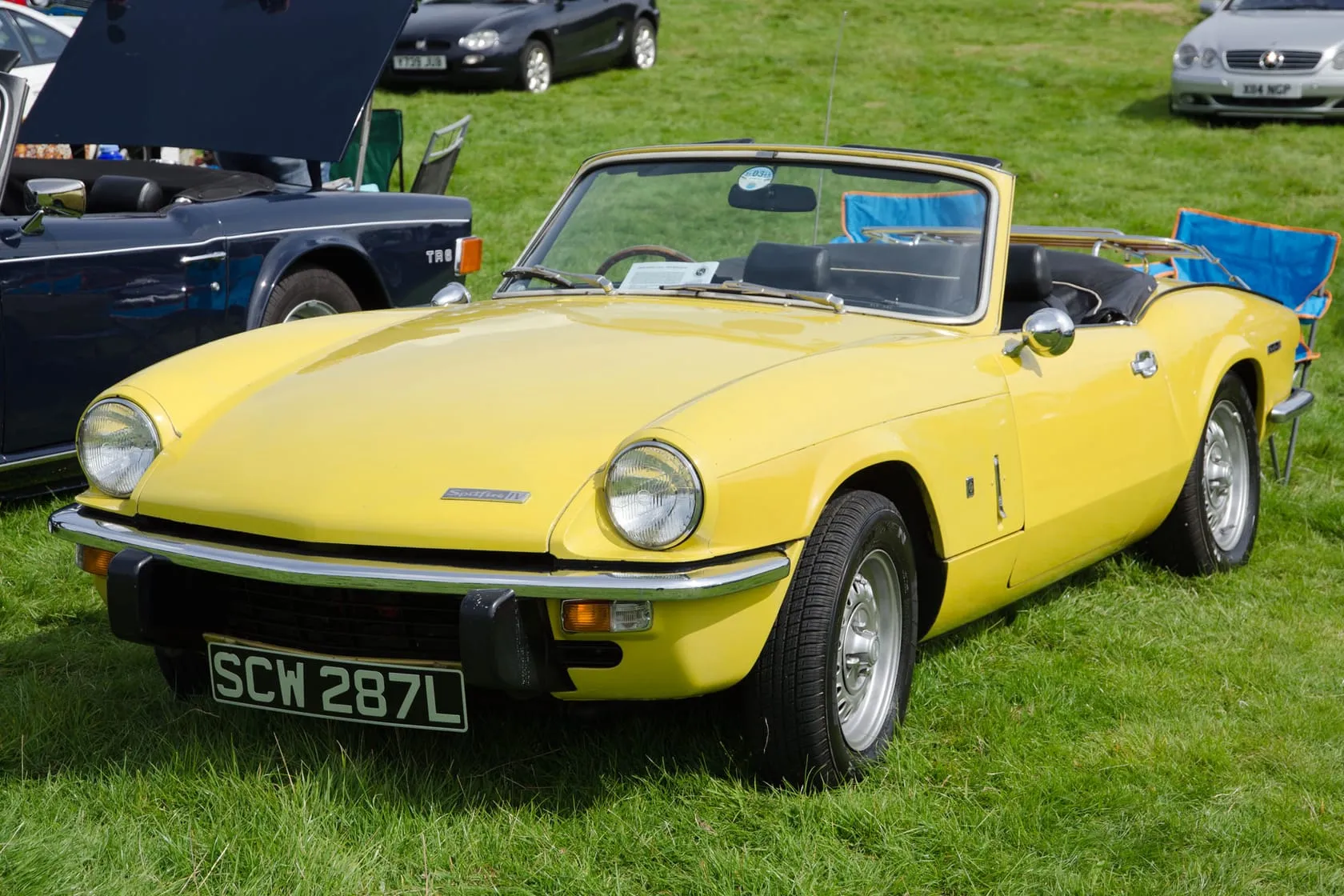 Triumph Spitfire values: Mk1 and Mk2 at nearly double the 1500, the Mk3 between, and the cheapest open Triumph there is
The early Mk1 and Mk2 sell for nearly double the 1500, and the Mk4 for least of all. Triumph Spitfire values across 487 recorded auction sales, how it compares with the MG Midget and the Sprite, what moves a Spitfire price, and why the cheapest open Triumph has slipped by a third in real terms since 2022.
-
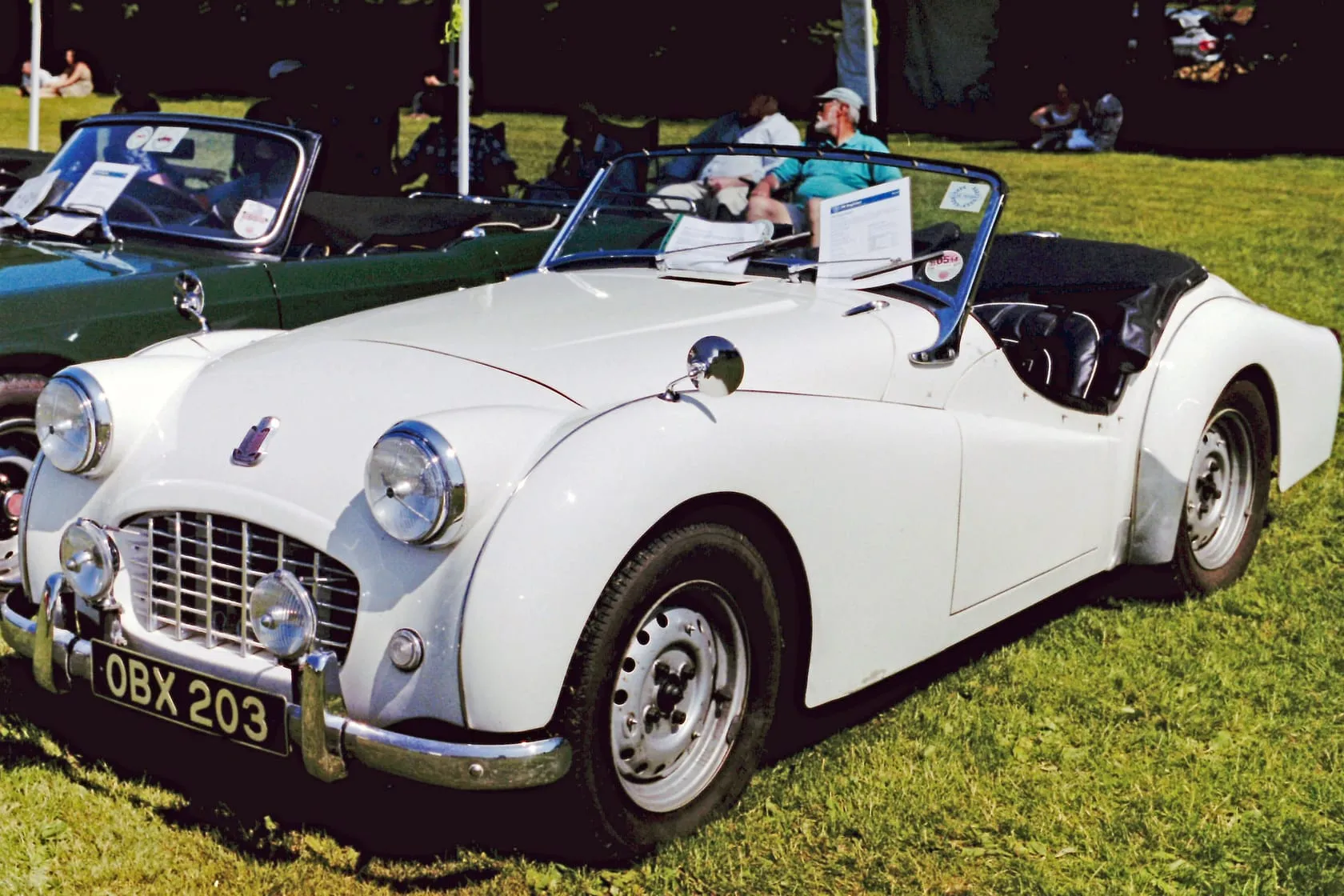 Triumph TR3 values: TR3B over TR3A over TR3, the works cars apart, and a market back to 2010 prices
The late TR3B sells for more than the TR3A, and the early small-mouth car for a little less. Triumph TR3 values across 490 recorded auction sales, what the works cars made, how the TR3 compares with the TR2, TR4 and MGA, and why it is cheaper in real terms than it was fifteen years ago.
-
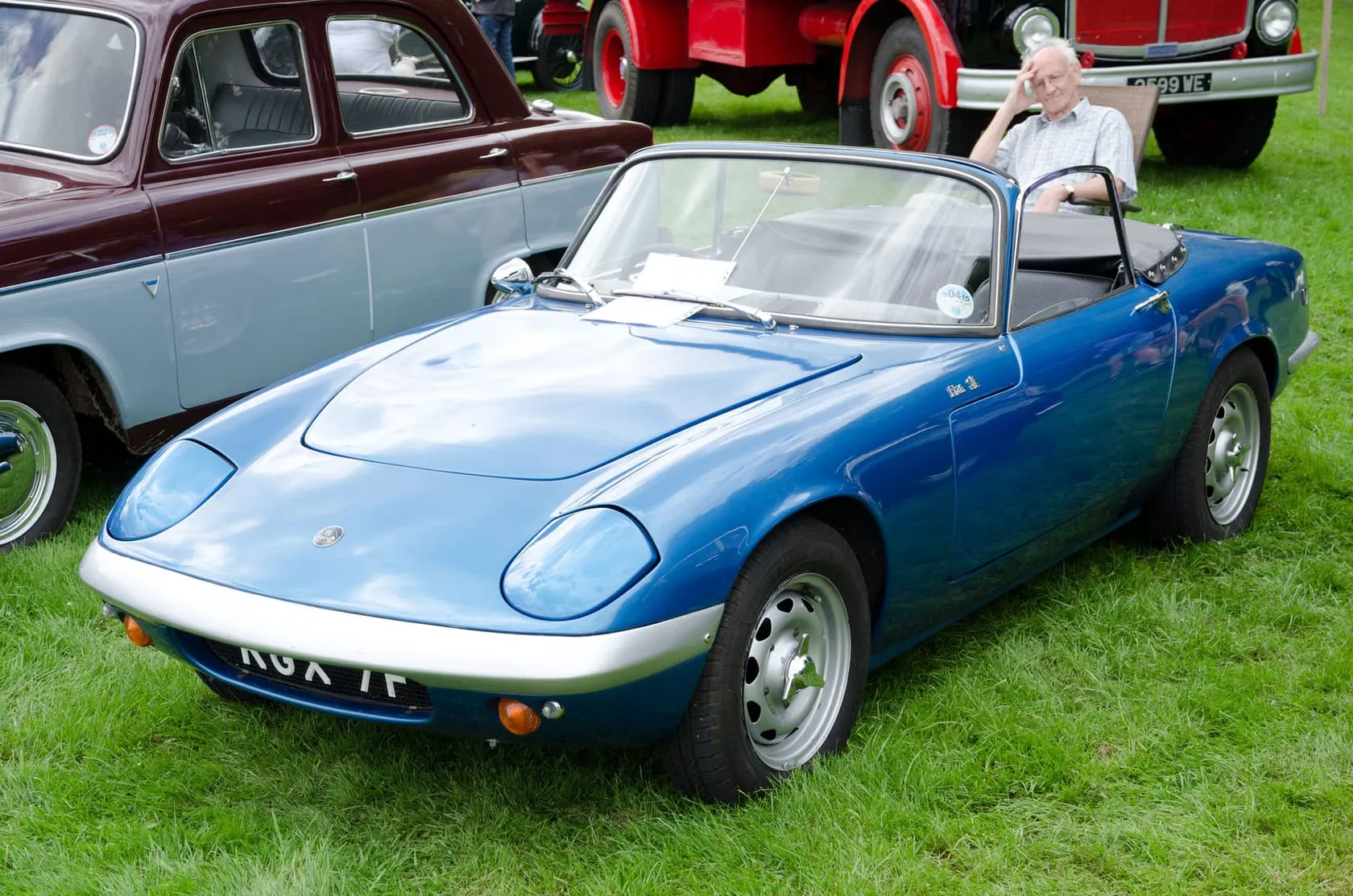 Lotus Elan values: Sprint over S4, two-seater over +2, the 26R apart, and fifteen years of standing still
Fifteen years standing still in cash is two-fifths gone in real terms. Lotus Elan prices from 498 recorded auction sales, why the Sprint sells for a third more than the earlier two-seaters and the +2 for a third less, what a 26R racer and the Emma Peel car made, and where the front-drive M100 sits.
-
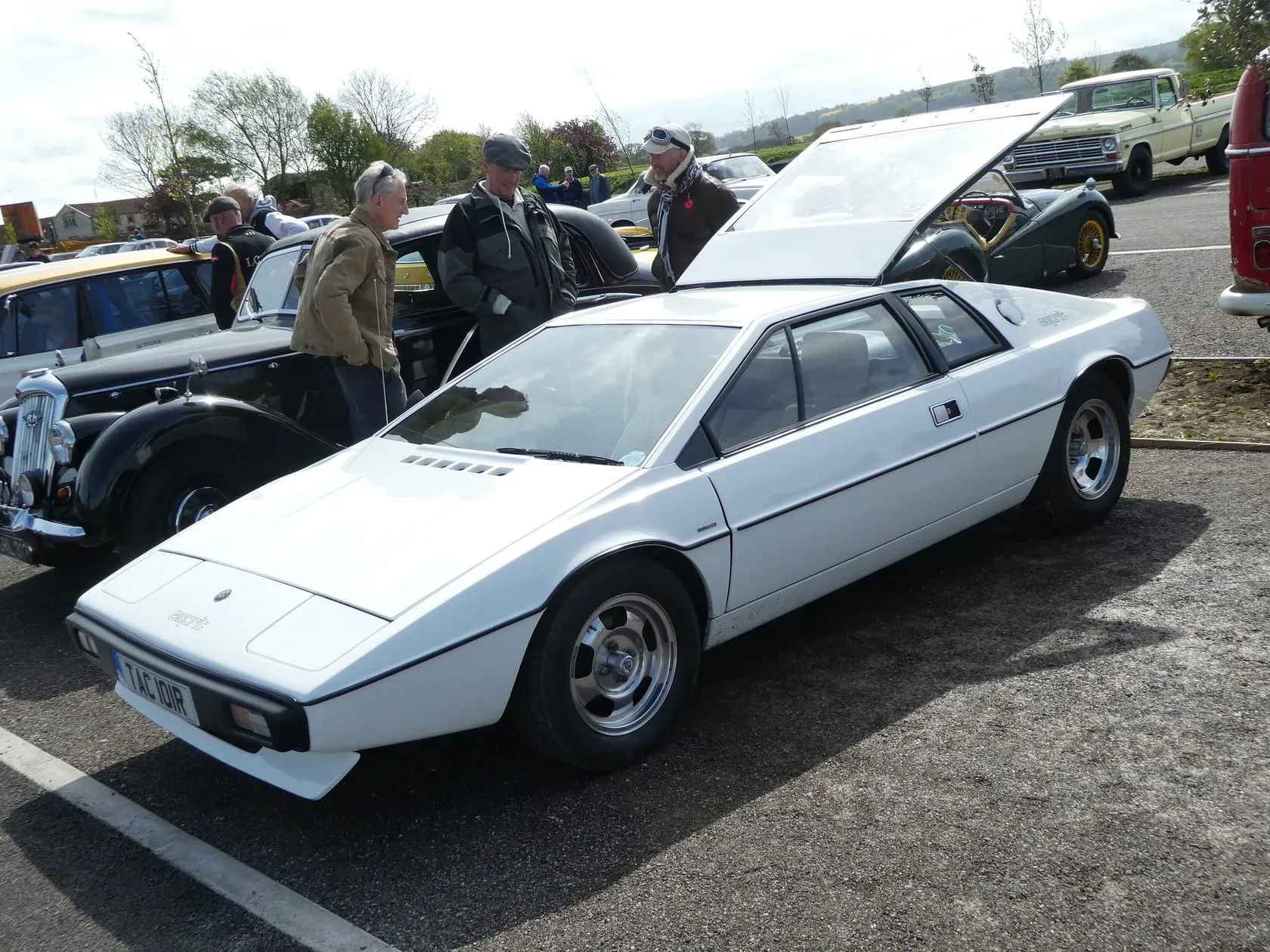 Lotus Esprit values: V8 over four, S1 over S2, the JPS and Final Edition premiums, and the one market in this series still rising
The one British classic here that has doubled in real terms since 2014. Lotus Esprit values from 507 recorded auction sales, why the S4 V8 leads the table and the Stevens-era X180 sits at the bottom, what a Giugiaro S1 makes against an S2 and an S3 Turbo, and what the JPS, the Final Edition and the Bond cars have done.
-
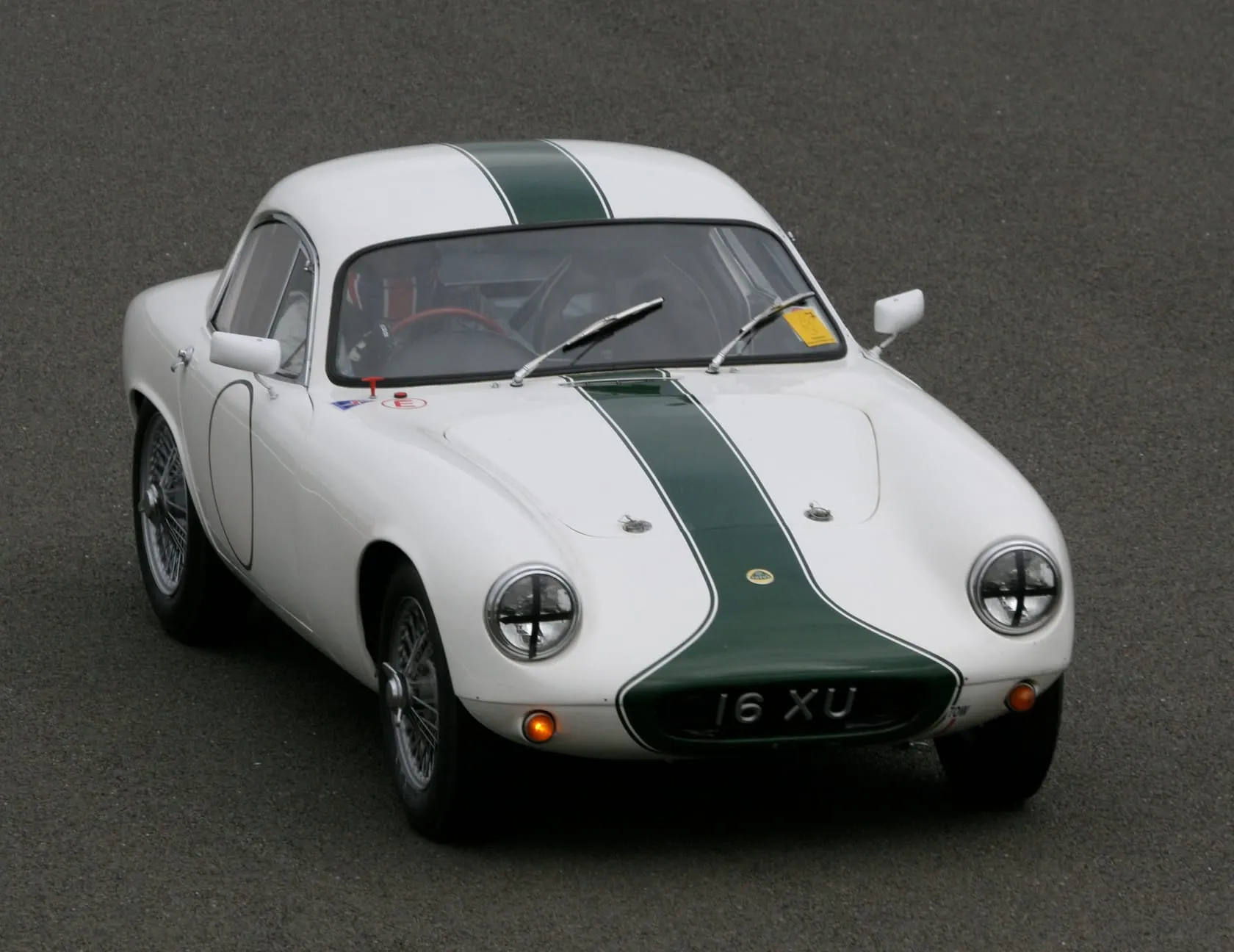 Lotus Elite: the glassfibre jewel that raced on air (1957–1963)
The Lotus Elite was the world's first glassfibre monocoque, a 660-kilogram coupe that cut through the air like nothing else in 1957 and won its class at Le Mans six years running. A guide to the Type 14, the Climax engine, the racing record, buying checks and values.
-
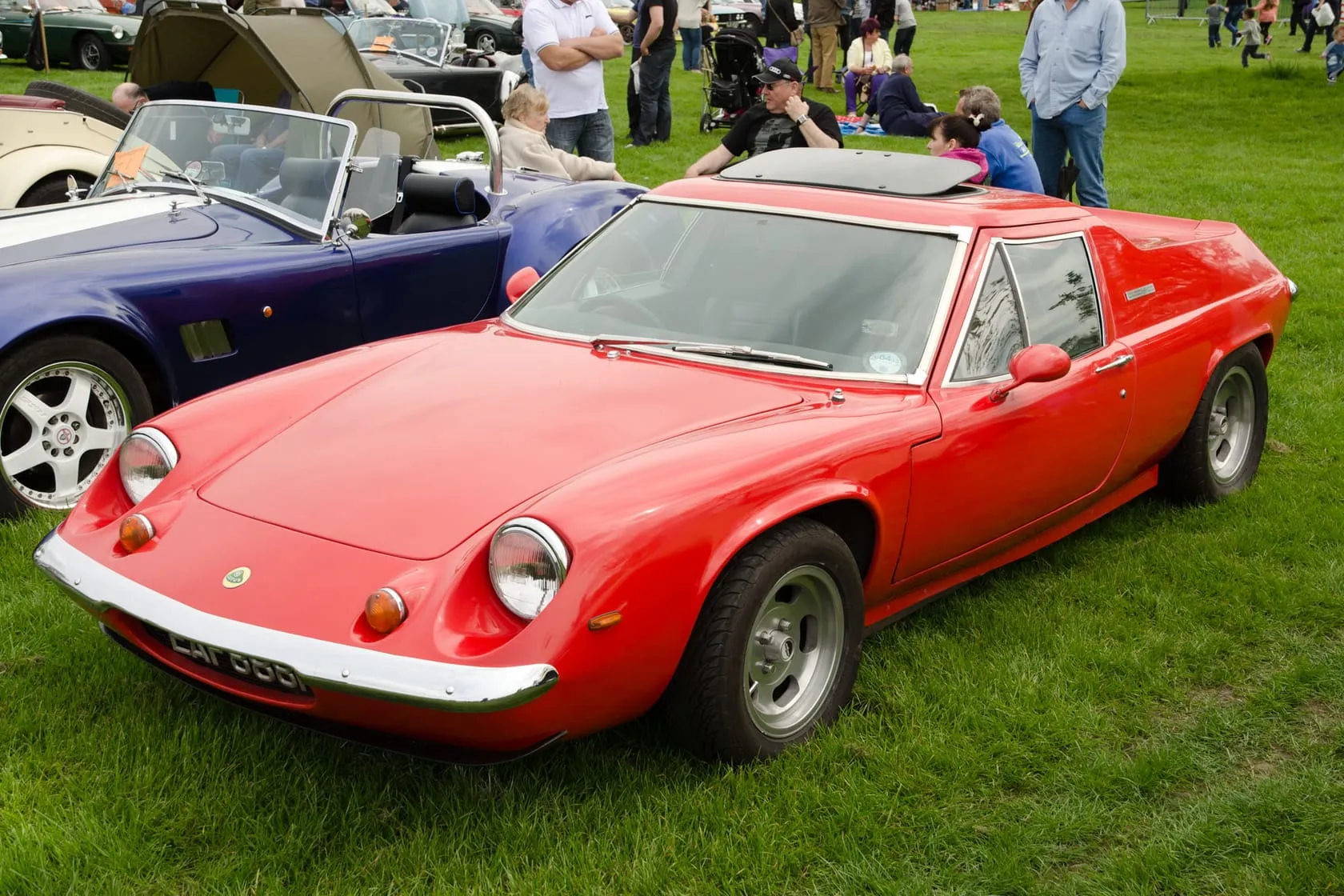 Lotus Europa: the bread van that beat the supercars to mid-engines (1966–1975)
The Lotus Europa put a mid-mounted engine in a road car years before the supercar establishment, wrapped it in a shape mocked as a bread van and gave it handling nothing at the price approached. A guide to the S1, S2, Twin Cam and Special, buying checks and values.
-
 Austin-Healey 100 values: the 100M and 100S premiums, BN2 over BN1, the 100/6 discount, and a market that has halved
A factory 100M sells for more than double a standard car, and a 100S for half a million. Austin-Healey 100 prices across 618 recorded auction sales, what a BN1, a BN2 and a Le Mans car make, why the six-cylinder 100/6 is the cheapest Big Healey, and why the 100 has lost half its value in real terms since 2013.
-
 Jaguar XK150 values: the S premium, roadster over drophead over coupé, and a market that has halved since 2019
A 3.4 S roadster sells for two and a half times a 3.4 fixed-head. Jaguar XK150 prices from 628 recorded auction sales, what the 3.8 and the S badge add by body, how the XK150 compares with the XK120 and XK140, and why it has lost more than half its value in real terms since 2019.
-
 Austin-Healey Sprite values: the Frogeye at double the Spridget, the Sebring premium, and a market off its 2022 peak
A Frogeye Mk I sells for more than double the Mk II, III and IV that followed. Sprite prices from 636 recorded auction sales, what a Sebring Sprite and its replicas make, how the Sprite compares with the MG Midget it shares everything with, and why Sprite values have fallen by a third in real terms since 2022.
-
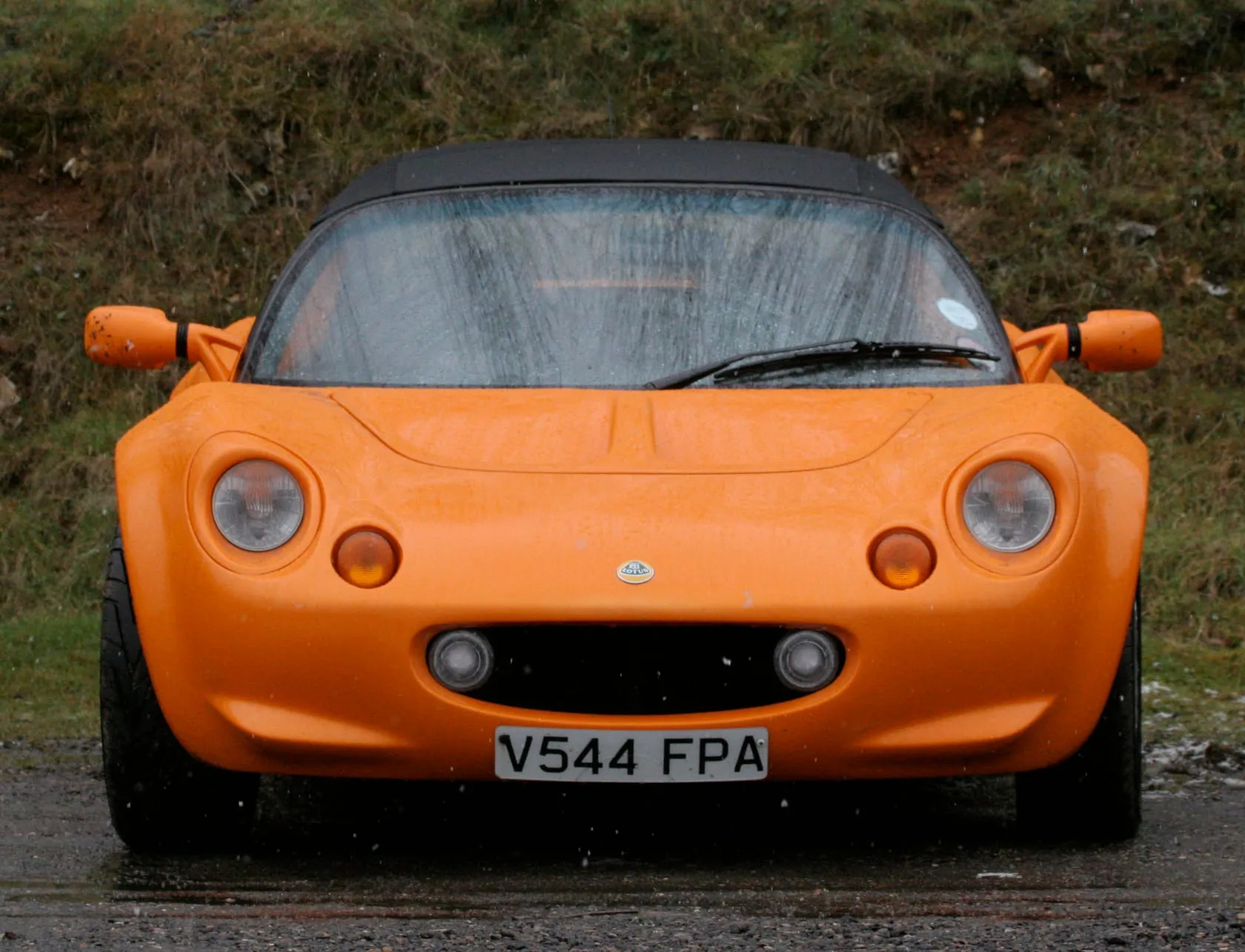 Lotus Elise: the bonded-aluminium bathtub that saved Lotus (1996–2021)
The Lotus Elise put a glassfibre body on a bonded aluminium chassis that weighed 68 kilograms, gave it 118 bhp and 725 kilograms, and saved the company for twenty-five years. A guide to the S1, S2 and S3, the 111S and the Cup cars, what an Elise is like to live with, what to check, and what the sale rooms pay now that the first cars are classics.
-
 MG Midget values: the cheapest MG sports car, chrome over rubber, and a market back where it started
The chrome-bumper Mk III sells for more than the rubber-bumper 1500, and the early cars more still. MG Midget values from 693 recorded auction sales, what the Sprite badge does to the same car, what moves a Midget price, and why it is cheaper in real terms today than in 2014.
-
 MG T-Series values: TC over TF over TD, the Tickford premium, and a market that has halved
Three letters set the price order, TC above TF above TD. MG T-type values across 1,451 recorded auction sales, what the pre-war TA and TB and the Tickford dropheads make, what the ash frame does to the figure, and why the T-Series has lost half its worth in real terms since 2016.
-
 Jaguar XK120 values: the alloy premium, roadster over coupé, and a market half what it was
The 240 aluminium-bodied roadsters sell for nearly three times a steel car. Jaguar XK120 prices from 802 recorded auction sales, the roadster, drophead and fixed-head order, what competition history is worth, and why the XK120 has lost half its value in real terms since 2017.
-
 MGA values: the Twin Cam premium, the coupé discount, and a market that has slipped
The 1500, 1600 and Mk II sell for almost the same money. MGA prices across 890 recorded auction sales, what the Twin Cam makes, the coupe discount, what a right-hand-drive car is worth in a record dominated by exports, and why MGA values have halved in real terms since 2016.
-
 MGB GT values: the coupé discount, the V8 premium, and the special editions that aren't
The cheapest sound classic sports car money can buy. MGB GT values from 992 recorded auction sales, why the coupe sells for a quarter less than the roadster, what the GT V8 makes, and why the Jubilee and Limited Edition carry no premium at all.
-
 Classic Mini Cooper values: 1960s against 1990s, the S premium, and what a replica is worth
The median is a 1990s Rover Cooper price, not a 1960s car. Classic Mini Cooper values from 1,101 recorded auction sales, what a genuine 1960s Cooper S makes, the Mk I premium, what a replica sells for against the real thing, and why provenance matters more here than on any other small British car.
-
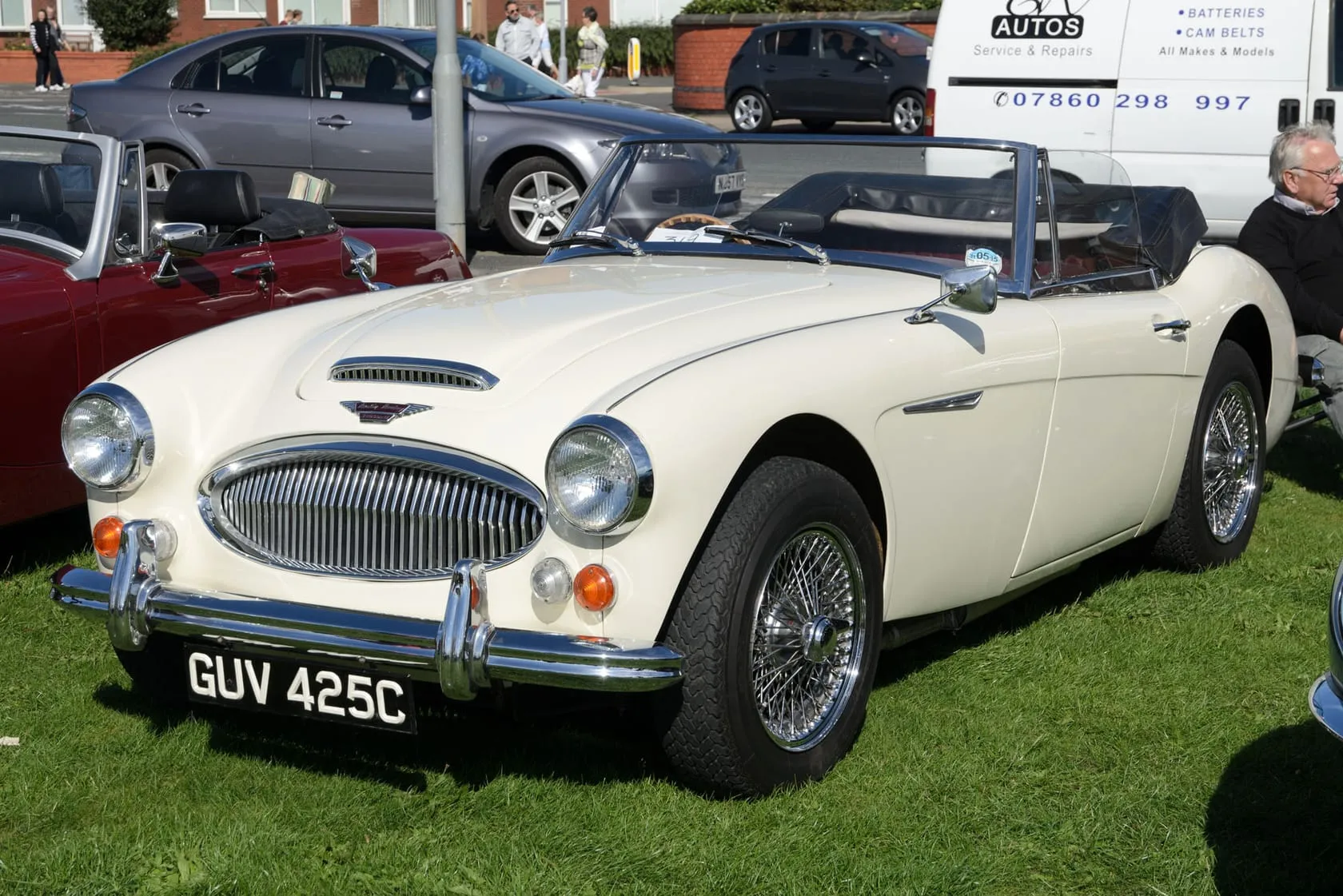 Austin-Healey 3000 values: the BJ8, the two-seaters, and a decade of drifting prices
The Mk III BJ8 leads the table and the rare two-seaters beat it. Austin-Healey 3000 values from 1,184 recorded auction sales, what a works history is worth, what the chassis and the shut lines do to the price, and why the Big Healey has lost nearly half its value in real terms since 2013.
-
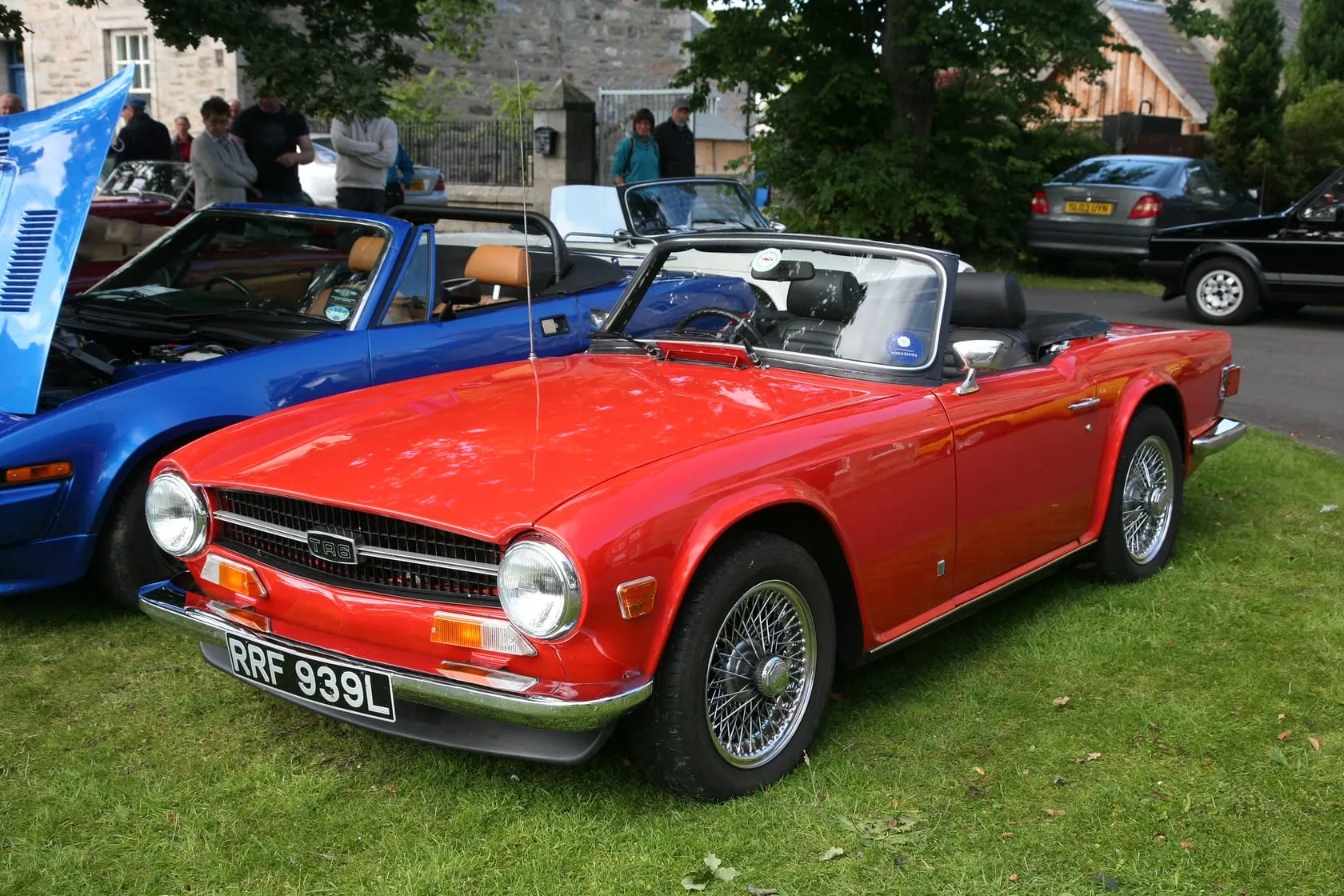 Triumph TR6 values: injection over carburettor, and what 1,280 sold prices say
A home-market fuel-injection car sells above the American carburettor cars that dominate the record. Triumph TR6 values from 1,280 recorded auction sales, what the chassis and the Lucas system do to the price, and why the TR6 has given back a third of its pandemic gains.
-
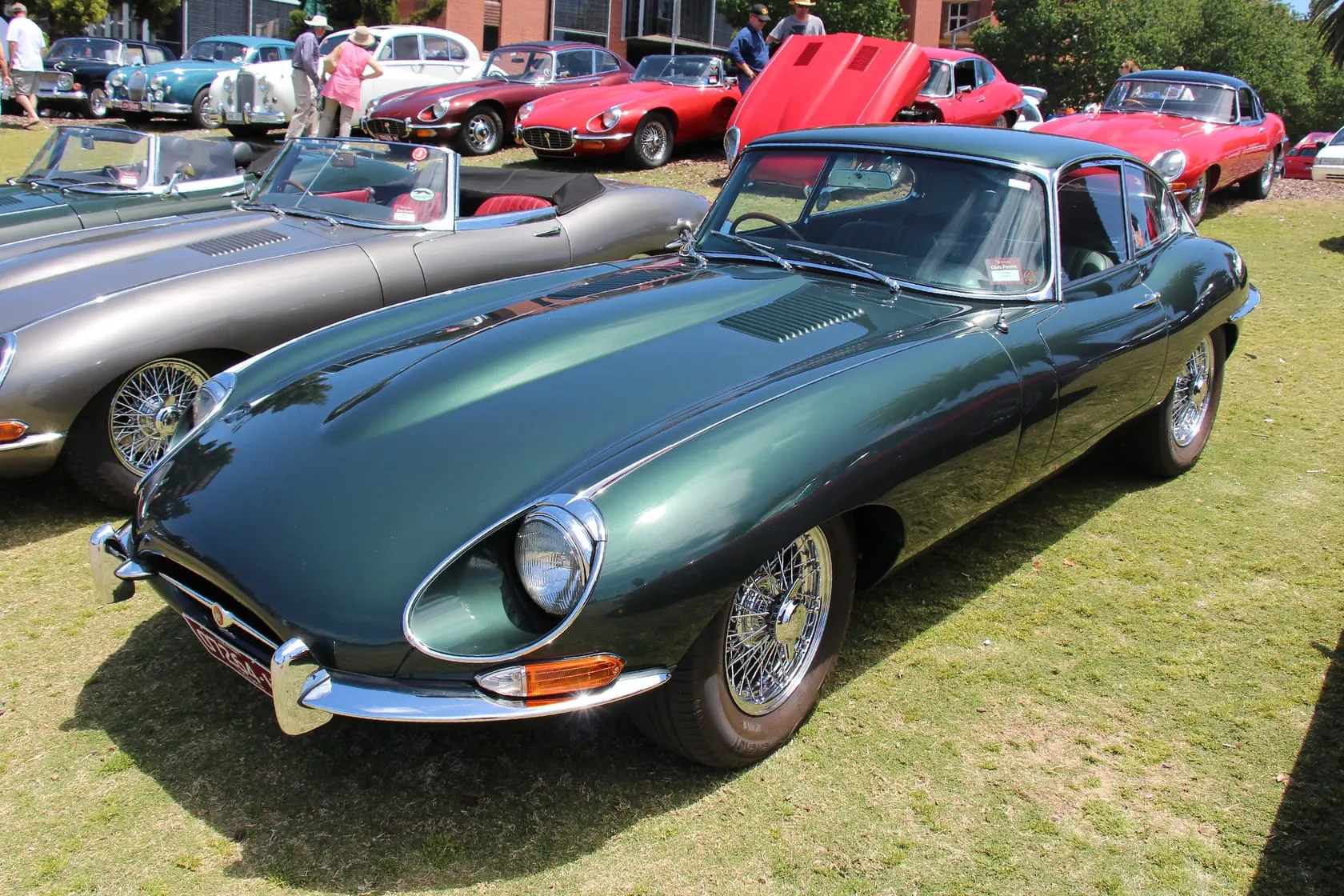 Jaguar E-Type values: what every series sells for, and why the price has fallen
One order never changes, roadster over coupe over 2+2 and Series 1 over everything. Jaguar E-Type prices from 4,029 recorded auction sales, what a right-hand-drive car or a restoration does to the value, and why the E-Type is cheaper in real terms now than in 2010.
-
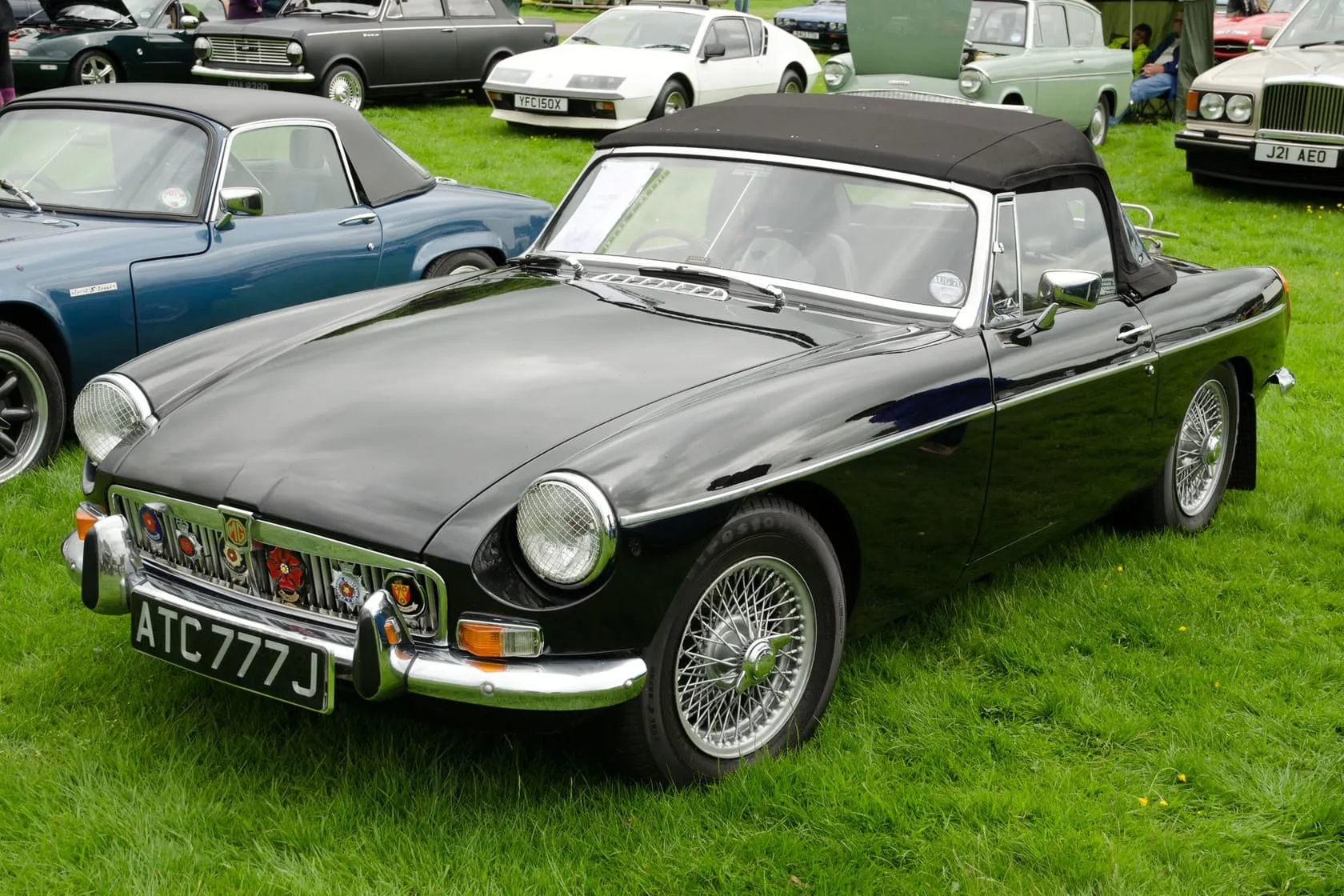 How much is an MGB worth? The sold prices, 1997 to 2026
Chrome bumpers, a V8 conversion and a Heritage shell all move the number. MG MGB roadster prices from 1,831 recorded auction sales, the usual range, what each of those is worth in figures, and why the typical MGB has got cheaper in real terms since 2020.
-
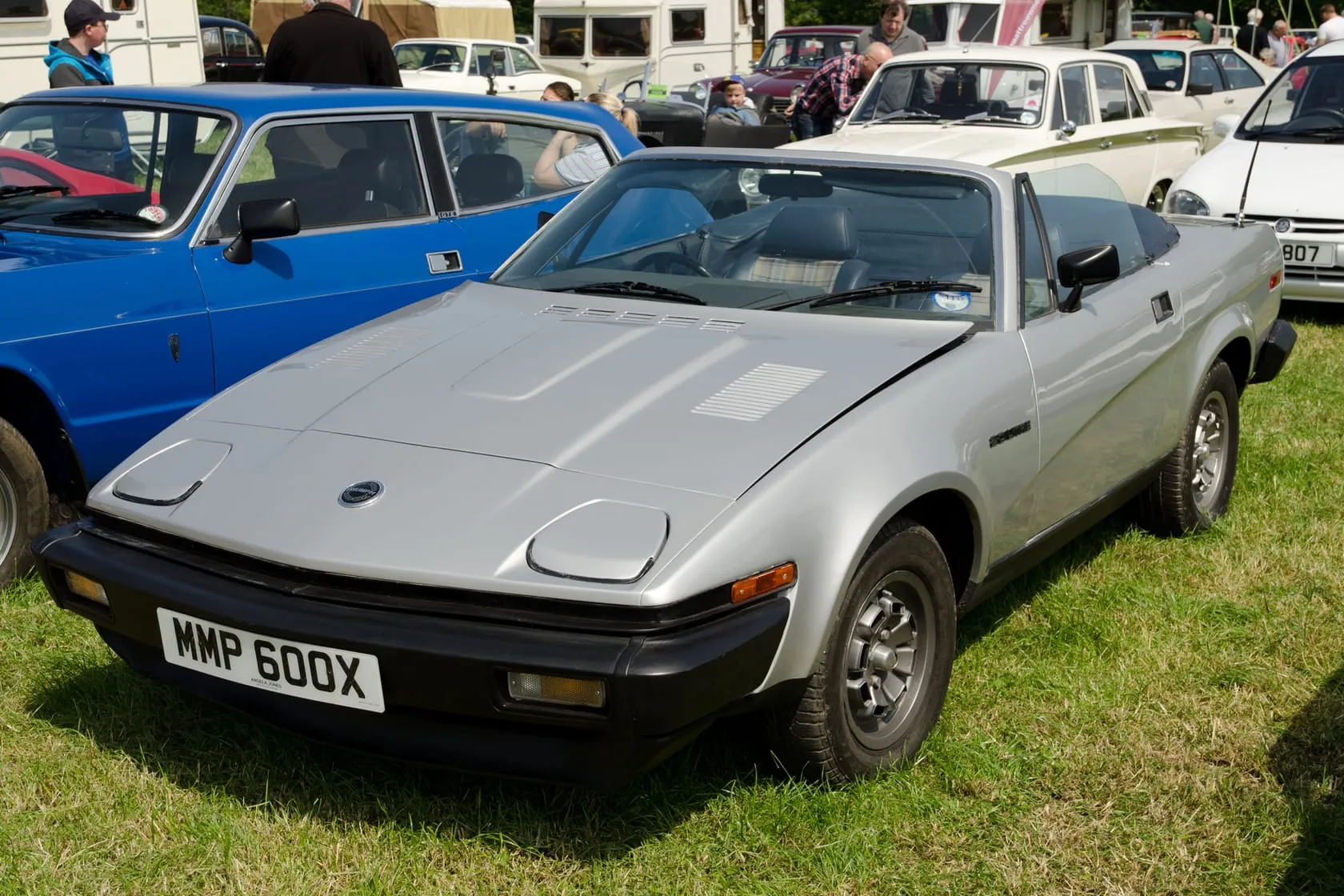 Triumph TR7 and TR8: the wedge that ended the line (1975–1981)
The Triumph TR7 dropped the TR formula for a sharp Harris Mann wedge and became the best-selling TR of all, and the Rover-V8 TR8 gave the line its farewell muscle. A guide to coupe and convertible, the factories and the quality story, the rare TR8, and what to check before buying one.
-
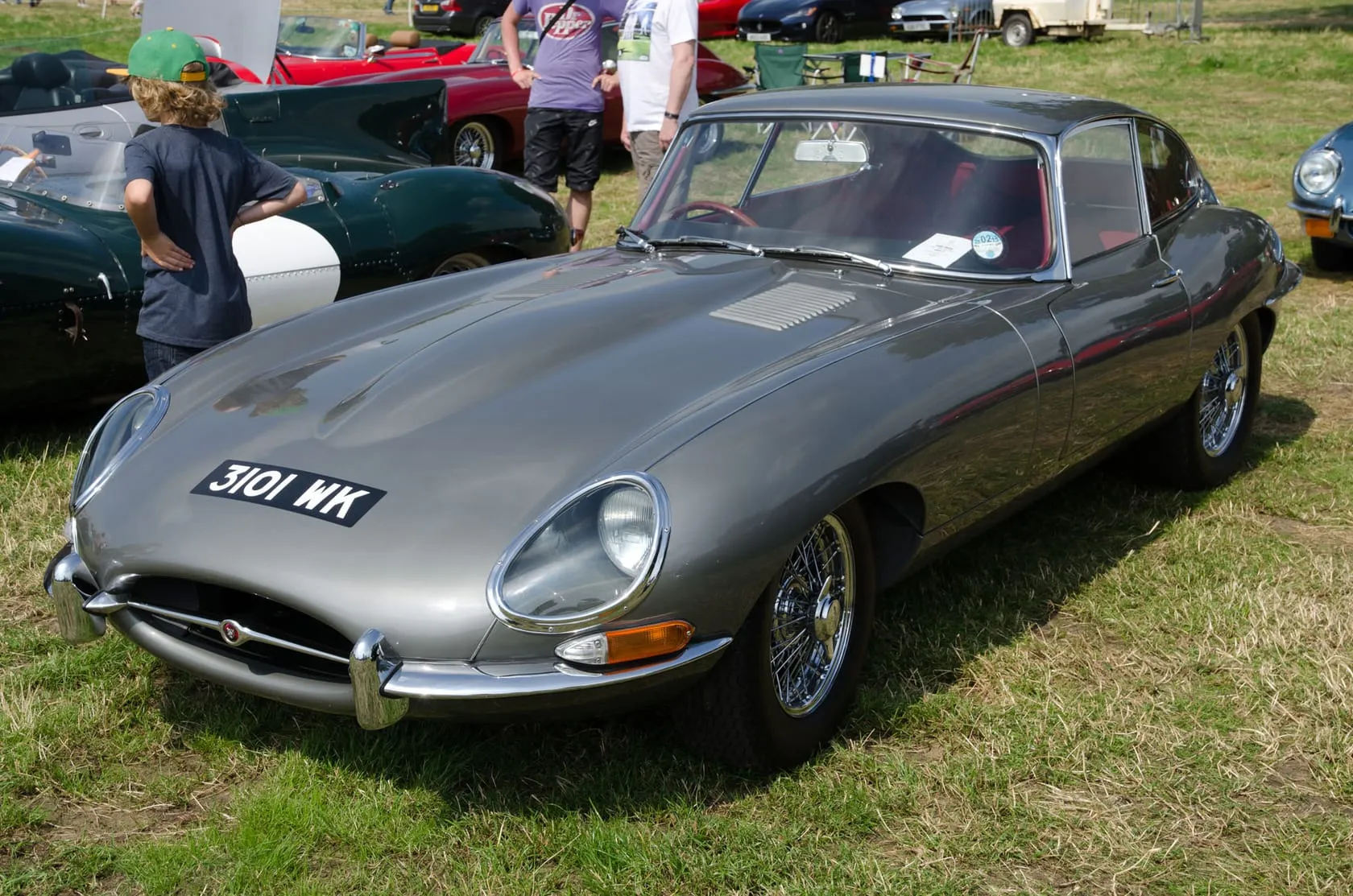 Jaguar E-Type Series 1: the original of the most beautiful car (1961–1968)
The Series 1 is the E-Type as Geneva first saw it, covered headlamps, slender bumpers and the 150 mph legend, and it is the generation the collector market prizes above all. A guide to the 3.8 and 4.2 cars, flat floors and 2+2s, buying checks and what the deepest E-Type market pays.
-
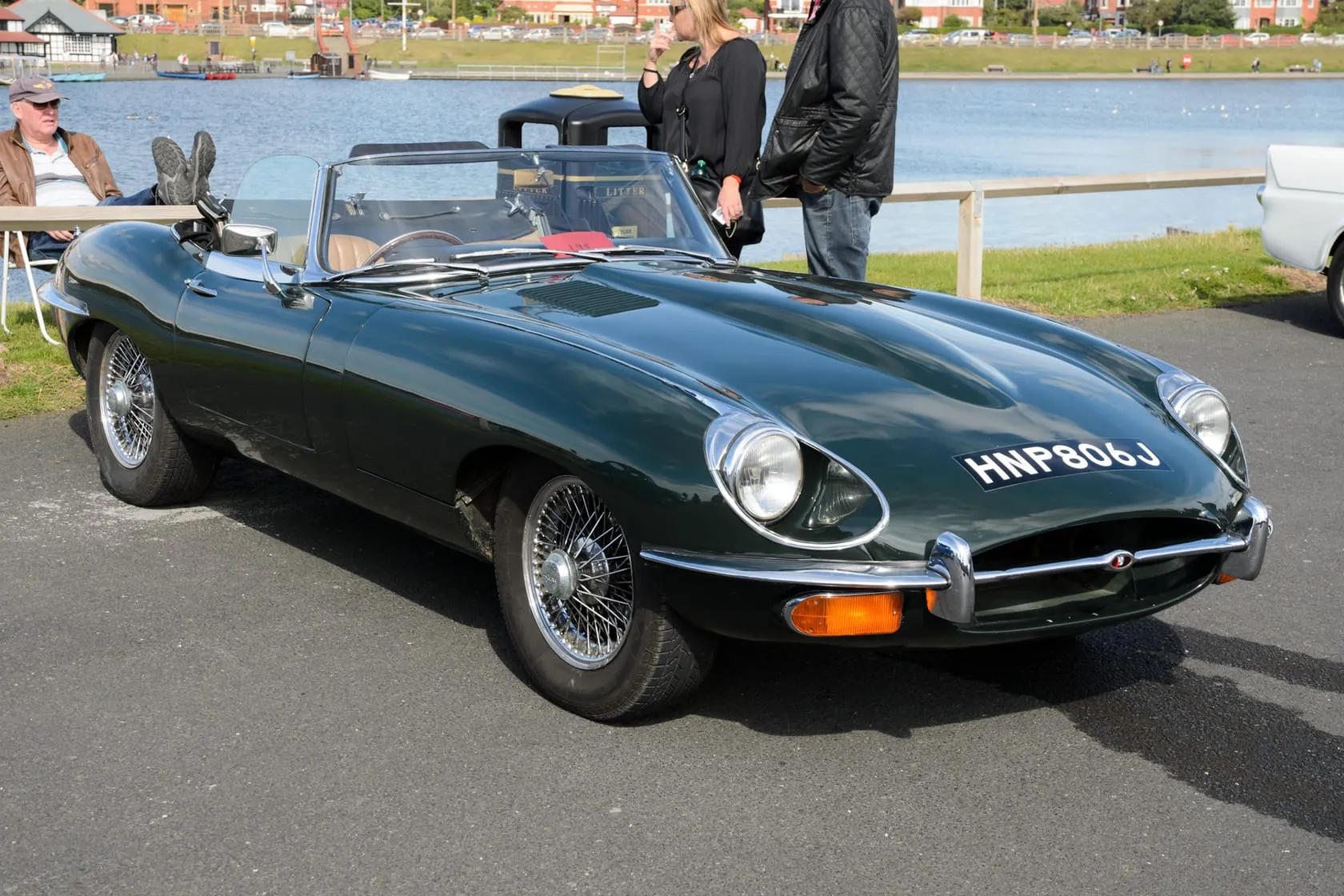 Jaguar E-Type Series 2: the sensible one, and the shrewd way in (1968–1971)
The Series 2 is the E-Type that American regulators redrew, open headlamps, bigger mouth, better brakes and cooling, and it remains the most usable route into six-cylinder E-Type ownership. A guide to what changed, why collectors rate it below the Series 1, and the buying checks that matter.
-
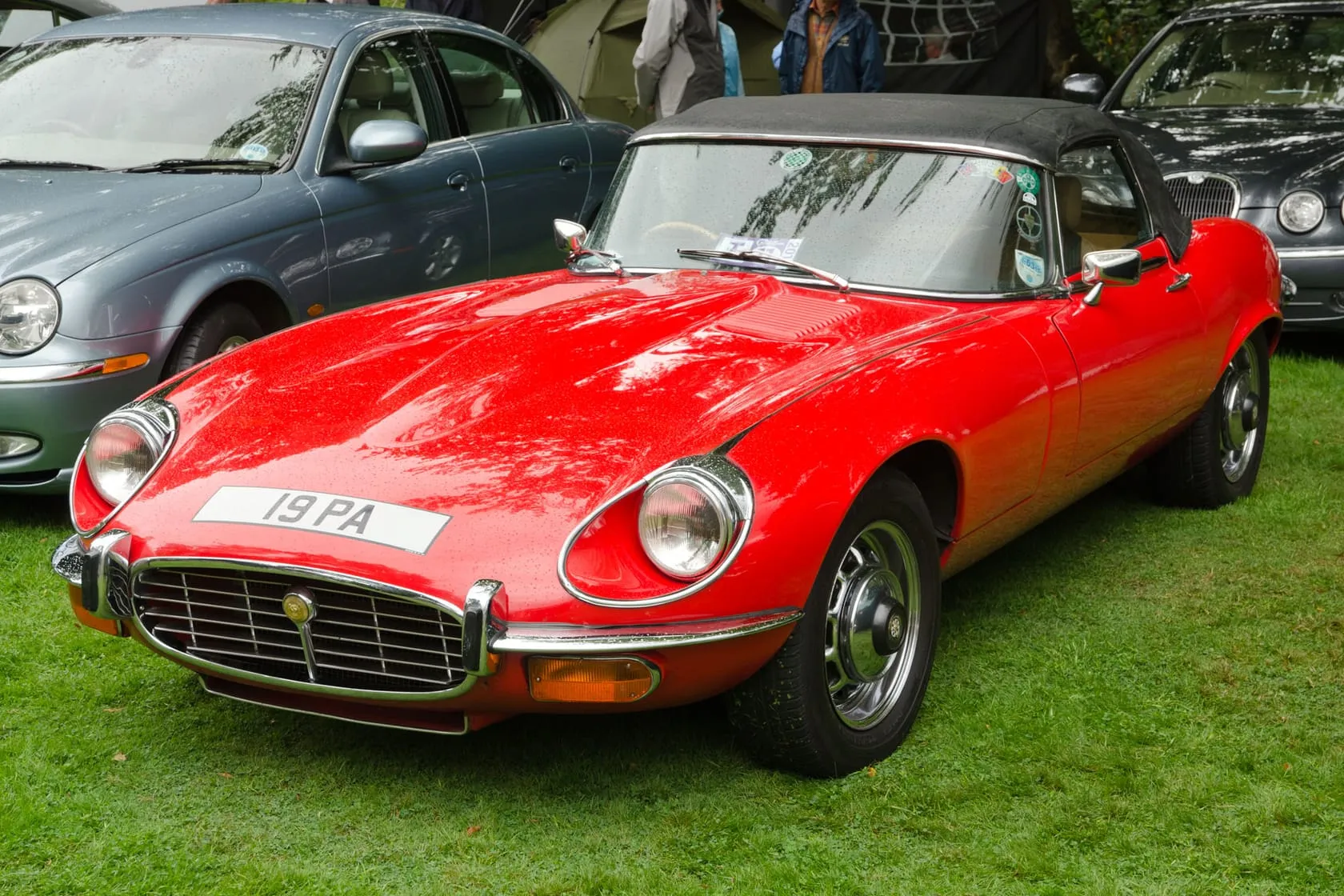 Jaguar E-Type Series 3: twelve cylinders for the grand finale (1971–1975)
The Series 3 gave the E-Type a 5.3-litre V12, a longer wheelbase and flared arches, trading the original's rawness for turbine-smooth grand touring. A guide to the V12 cars, the commemorative final fifty, what the market pays and how to buy the last of the line.
-
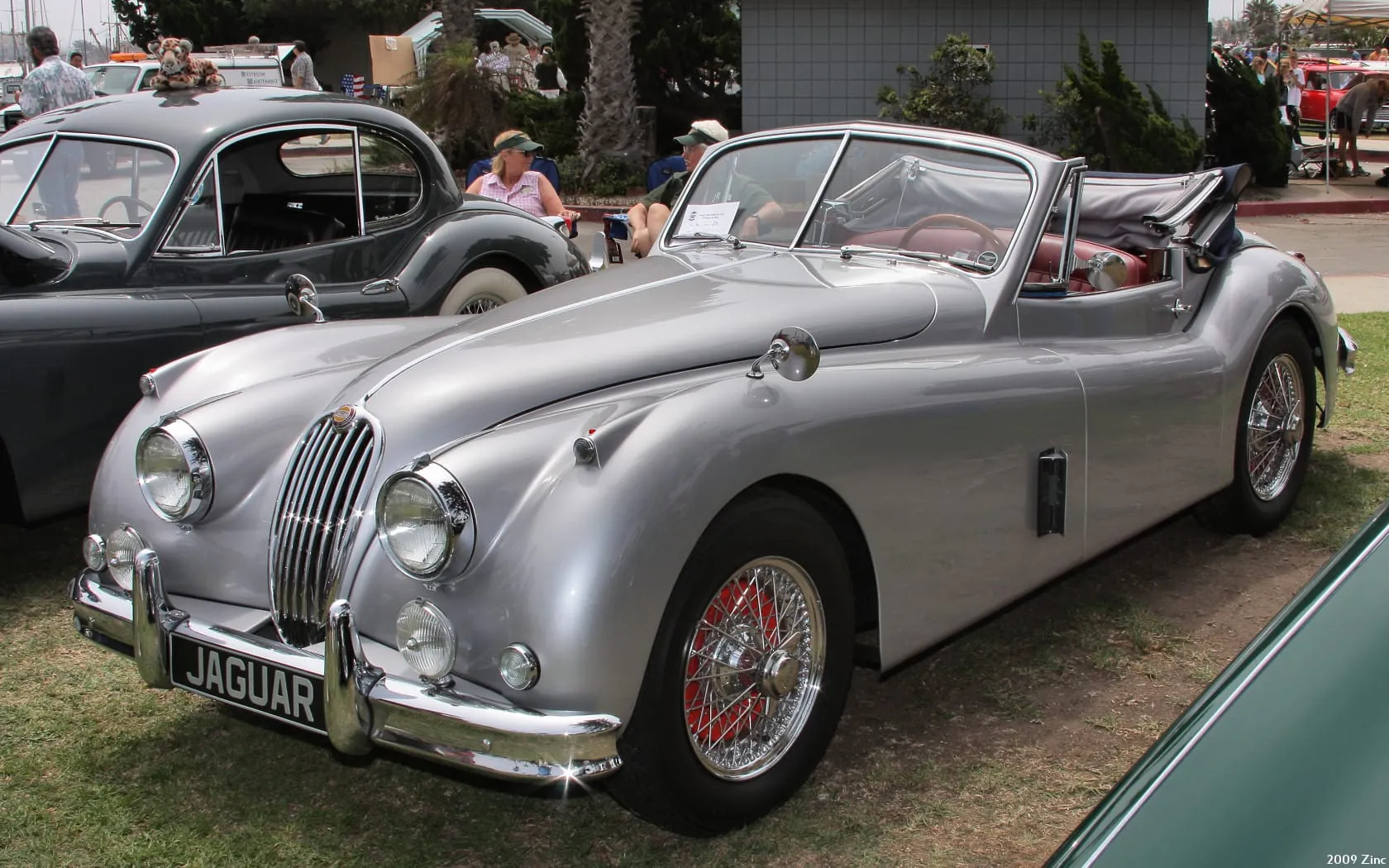 Jaguar XK140: the XK120 finished properly (1954–1957)
The Jaguar XK140 took the sensational XK120 and fixed everything owners had grumbled about, rack-and-pinion steering, cabin room, cooling, without losing the looks or the pace. A guide to the roadster, drophead and fixed head coupe, the SE upgrades, what year XK to avoid and why, and what to check before buying one.
-
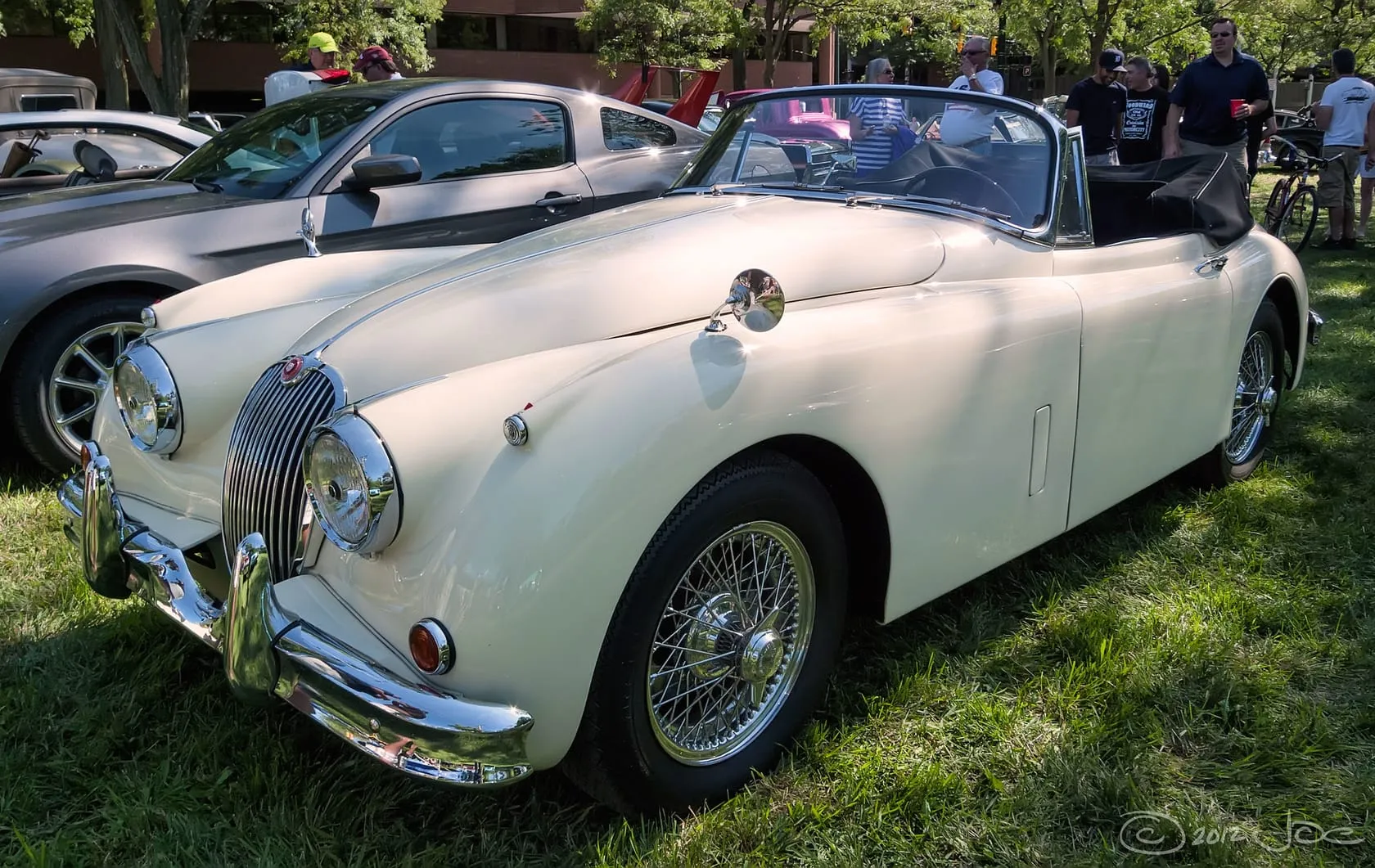 Jaguar XK150: disc brakes, wider shoulders and the last of the line (1957–1961)
The Jaguar XK150 closed the XK story with four-wheel disc brakes, a wider modern body and, in 3.8 S form, the pace that previewed the E-Type. A guide to the 3.4 and 3.8 cars, the S models, how the 150 differs from the XK140, what to check when buying, and what one costs today.
-
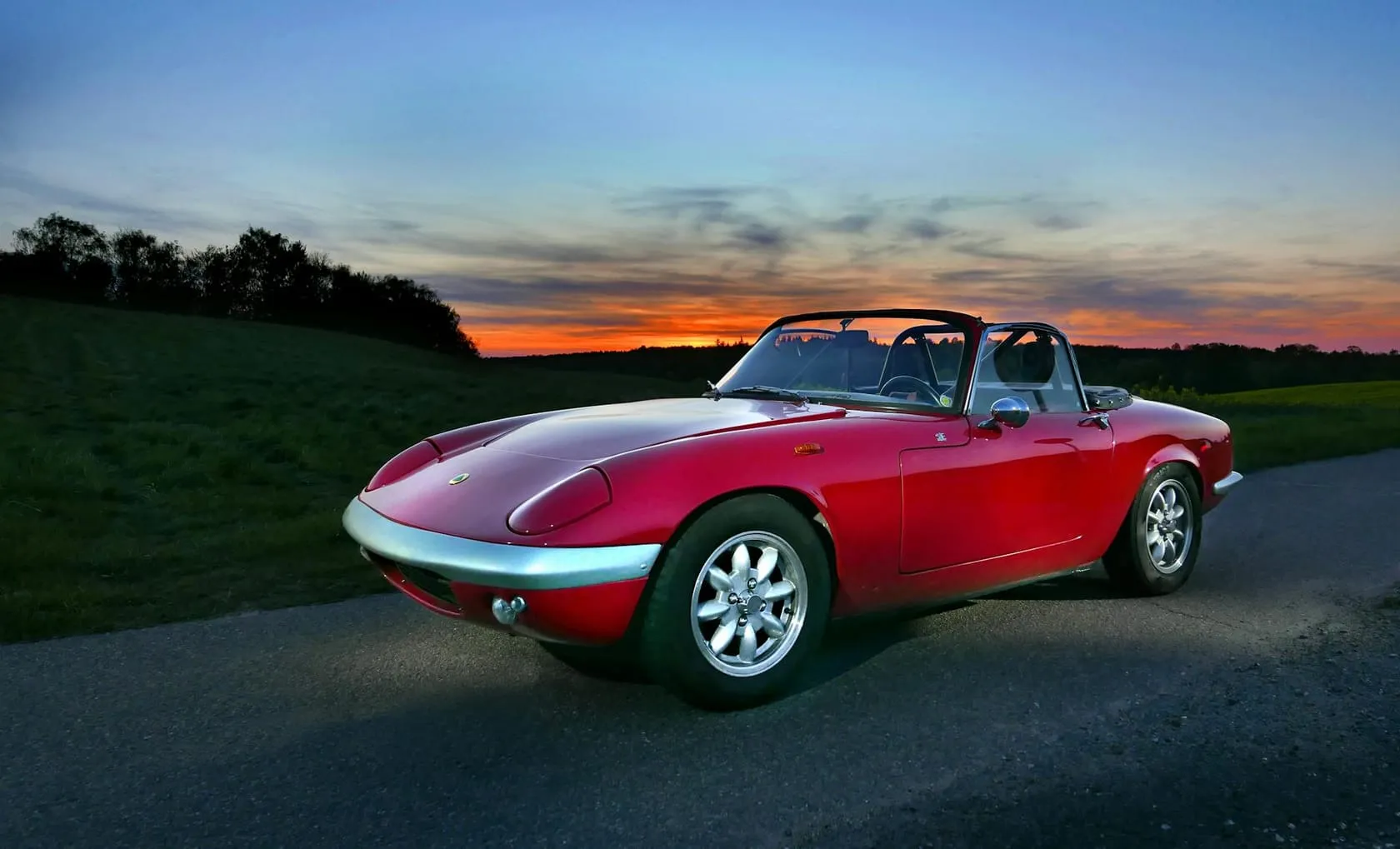 Lotus Elan: 700 kilograms that changed what a sports car had to be (1962–1973)
The Lotus Elan paired a steel backbone chassis with a glassfibre body and the twin-cam engine, weighed barely 700 kilograms, and redefined sports-car handling for good. A guide to the S1 to Sprint, the +2 four-seater, the Emma Peel fame, what to check on chassis and twin-cam, and what an Elan costs today.
-
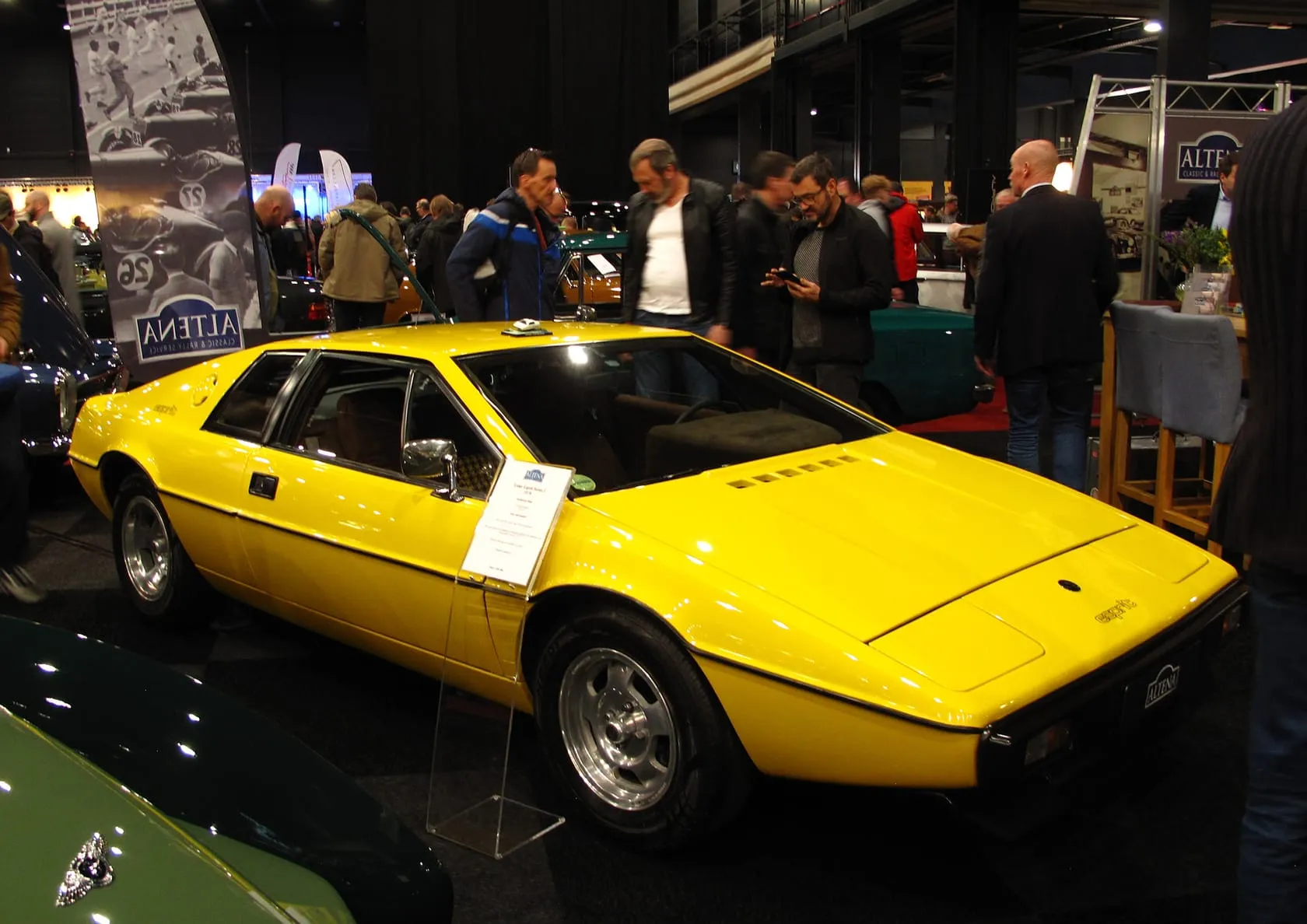 Lotus Esprit: the wedge that went underwater and grew into a supercar (1976–1992)
The Lotus Esprit wore Giugiaro's sharpest wedge over a backbone chassis, drove underwater in The Spy Who Loved Me, and matured through turbocharging into a genuine supercar rival. A guide to the Giugiaro and Stevens eras, the Bond fame, the Turbo, what to check when buying, and what an Esprit costs today.
-
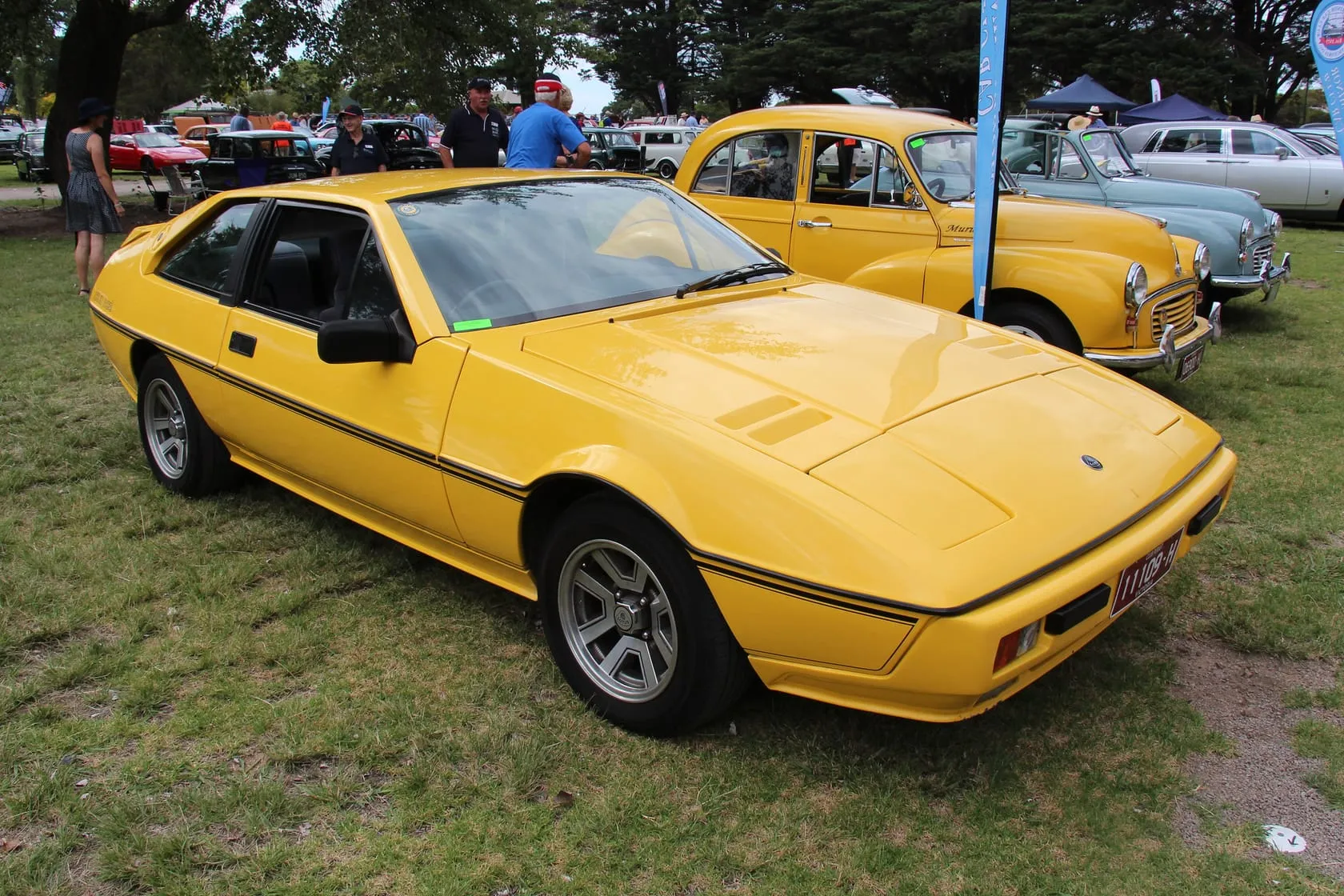 Lotus Excel: Hethel's best-kept secret, and still the cheapest real Lotus (1982–1992)
The Lotus Excel took the Elite and Eclat's wedge four-seater idea and rebuilt it with Toyota running gear into the most usable classic Lotus of all, then depreciated into the marque's great bargain. A guide to the Excel and the Eclat before it, the Toyota partnership, what to check when buying, and why it costs so little.
-
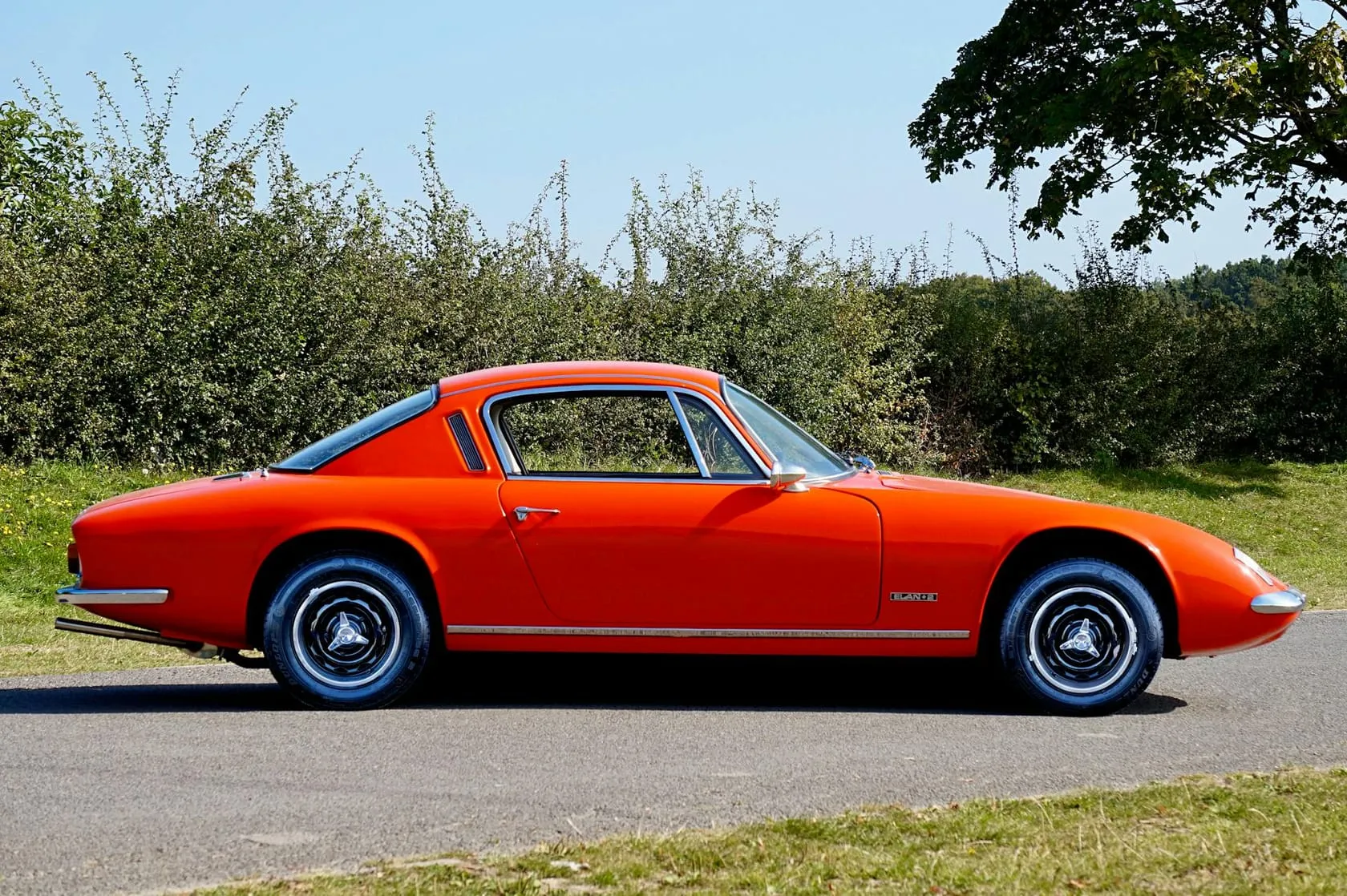 Lotus: Colin Chapman, added lightness and the cars that carried the idea
Lotus built Britain's cleverest sports cars from a philosophy Colin Chapman put in one line, simplify, then add lightness, and won seven Formula One constructors' titles while doing it. A guide to the classic Lotus road cars we cover, from the Eleven and Elan to the Esprit, Excel and the outrageous Lotus Carlton, what each is like to own and what they are worth.
-
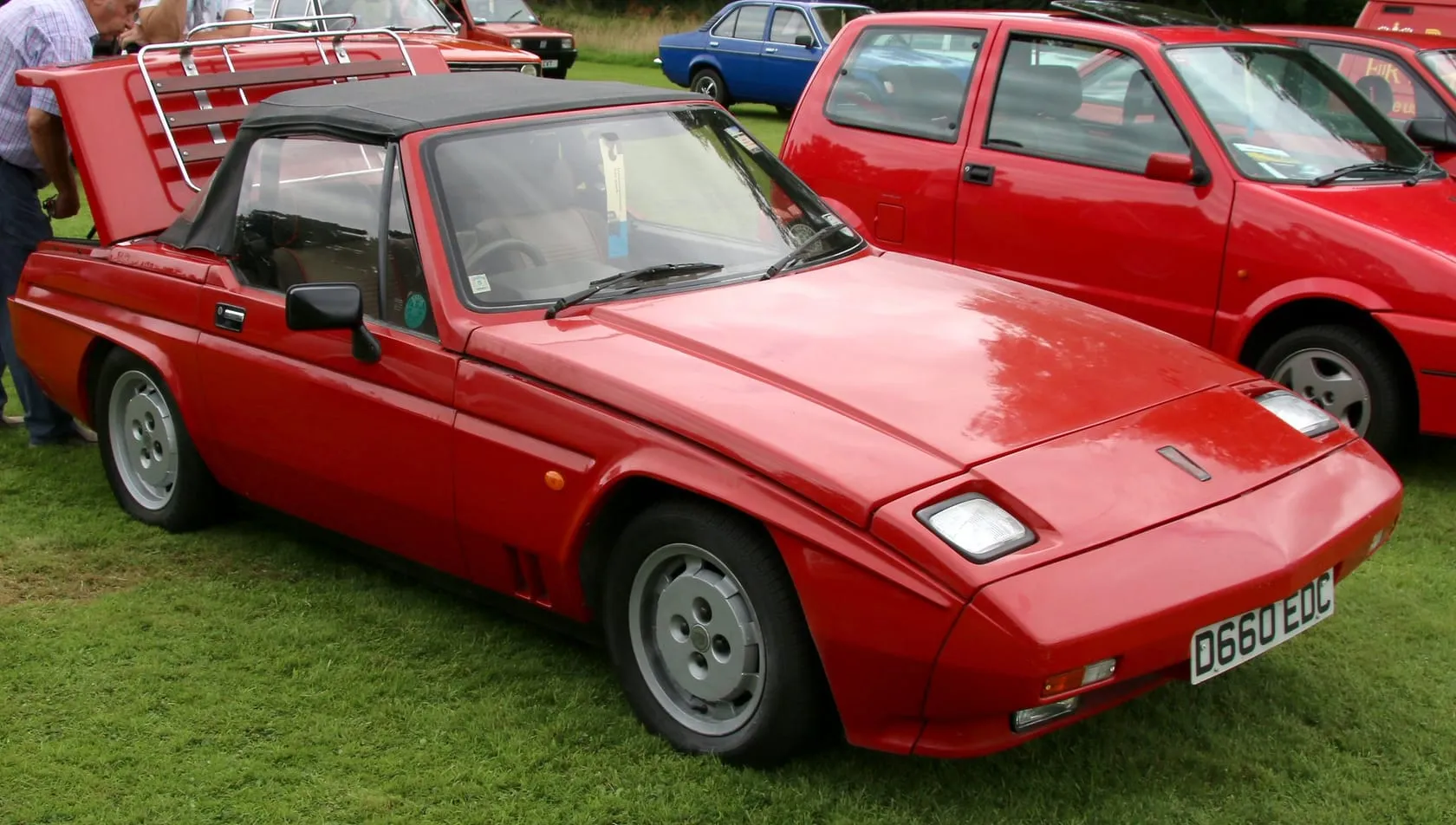 Reliant Scimitar SS1: Michelotti's last roadster and the bargain of the 1980s (1984–1995)
The Reliant Scimitar SS1 was the affordable British roadster of the 1980s, styled by Michelotti, built in glassfibre at Tamworth, and transformed by its Nissan-turbocharged 1800Ti version. A guide to the SS1, the restyled SST and Scimitar Sabre, why it never sold, what to check when buying, and why it remains a roadster bargain.
-
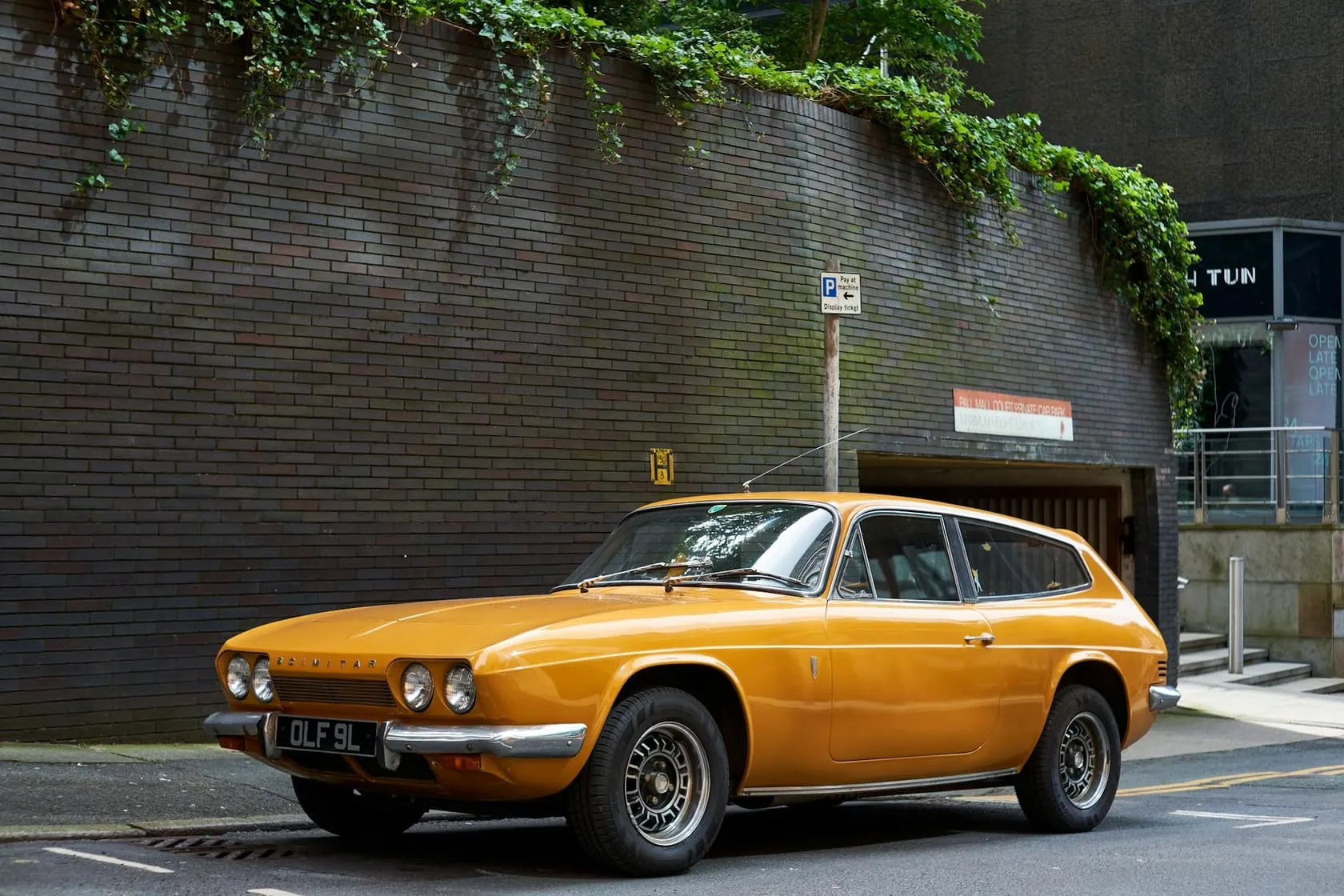 Reliant Scimitar: the sporting estate that invented its own class (1964–1986)
The Reliant Scimitar grew from a handsome Ford-powered glassfibre coupe into the GTE, the car that invented the sporting estate and counted Princess Anne among its most loyal owners. A guide to the Sabre before it, the GT, GTE and GTC, the Middlebridge revival, what to check when buying, and what a Scimitar is worth.
-
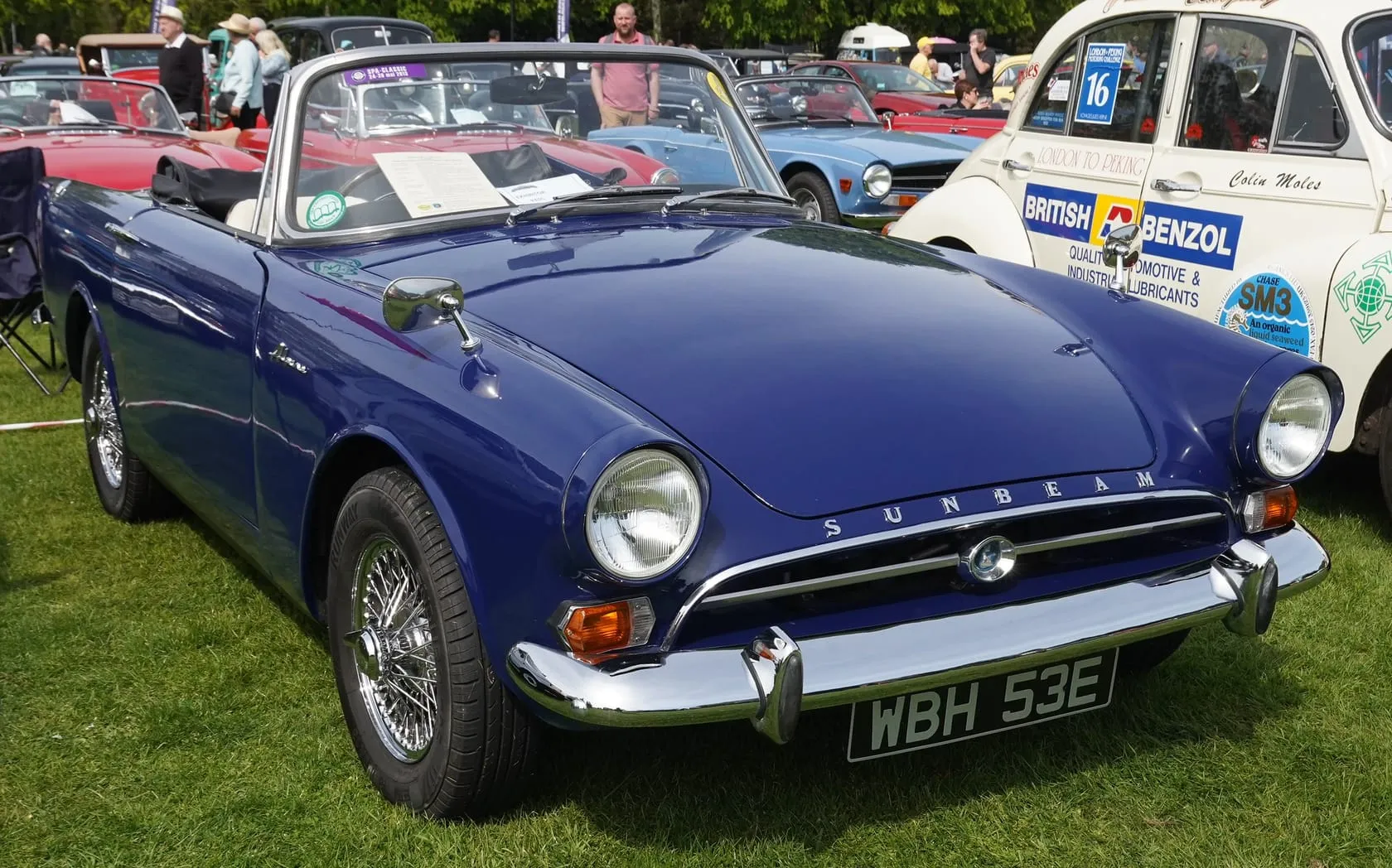 Sunbeam Alpine: the civilised British sports car (1959–1968)
Comfortable, well-equipped and genuinely a sports car, the Alpine evolved through five Series from 1959 to 1968 and put James Bond behind its wheel before he ever drove an Aston. A guide to the Series I to V, the Harrington fastbacks, what to look for when buying, and what an Alpine is worth.
-
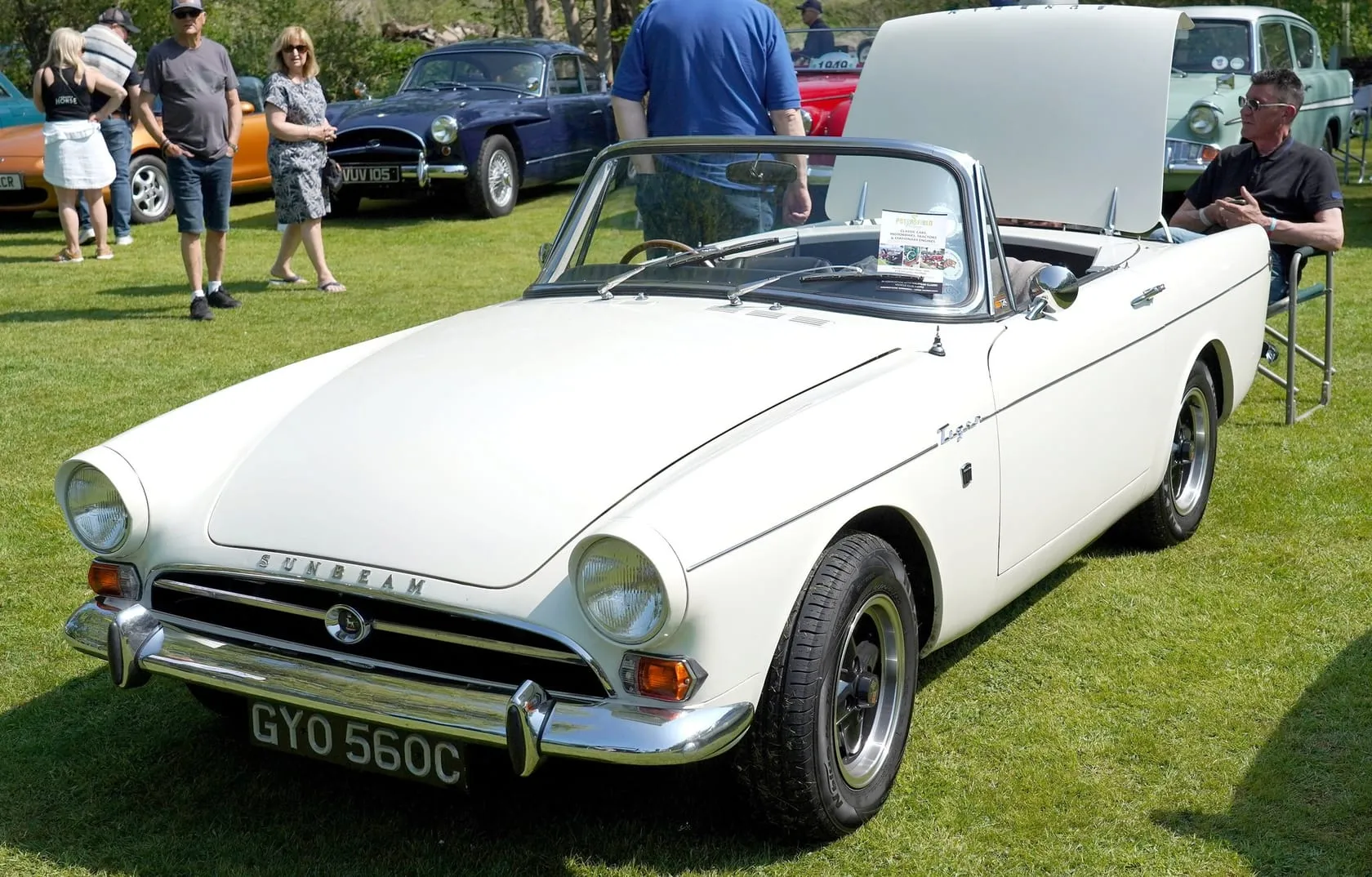 Sunbeam Tiger: a Ford V8 in the Alpine's polite suit (1964–1967)
The Sunbeam Tiger dropped a Ford V8 into the Alpine's body, an idea developed with Carroll Shelby's workshop and built for Rootes by Jensen in West Bromwich. A guide to the Mk I and rare Mk II, how the Tiger differs from an Alpine, why authentication matters so much, and what genuine cars are worth.
-
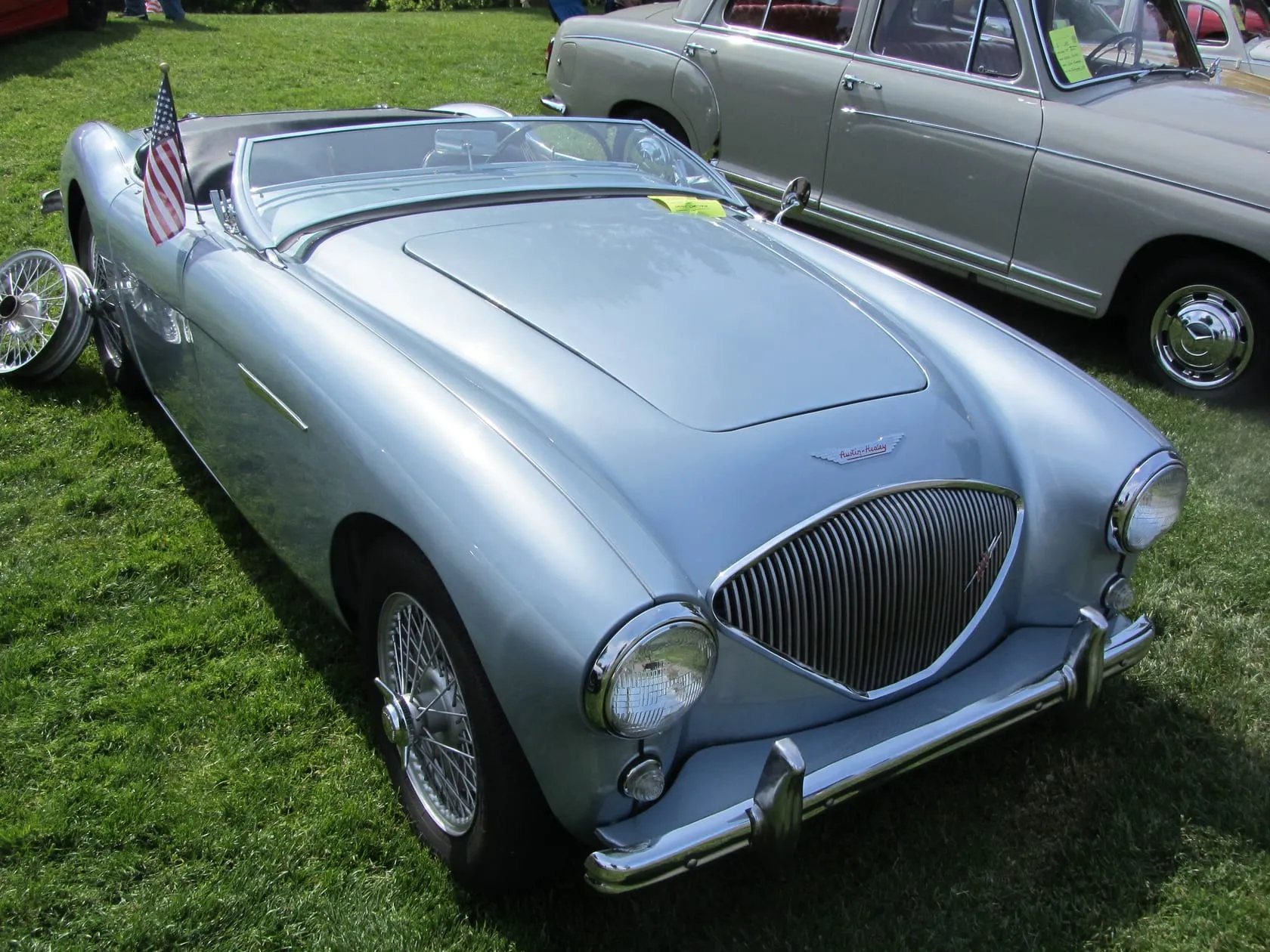 Austin-Healey 100: the original Big Healey (1953–1959)
The Austin-Healey 100 is the car that started the marque, the original Big Healey, named for its 100 mph top speed. A guide to the four-cylinder 100/4 (BN1 and BN2), the high-performance 100M and the rare 100S, the six-cylinder 100-6, what one is like to own, and what to look for when buying.
-
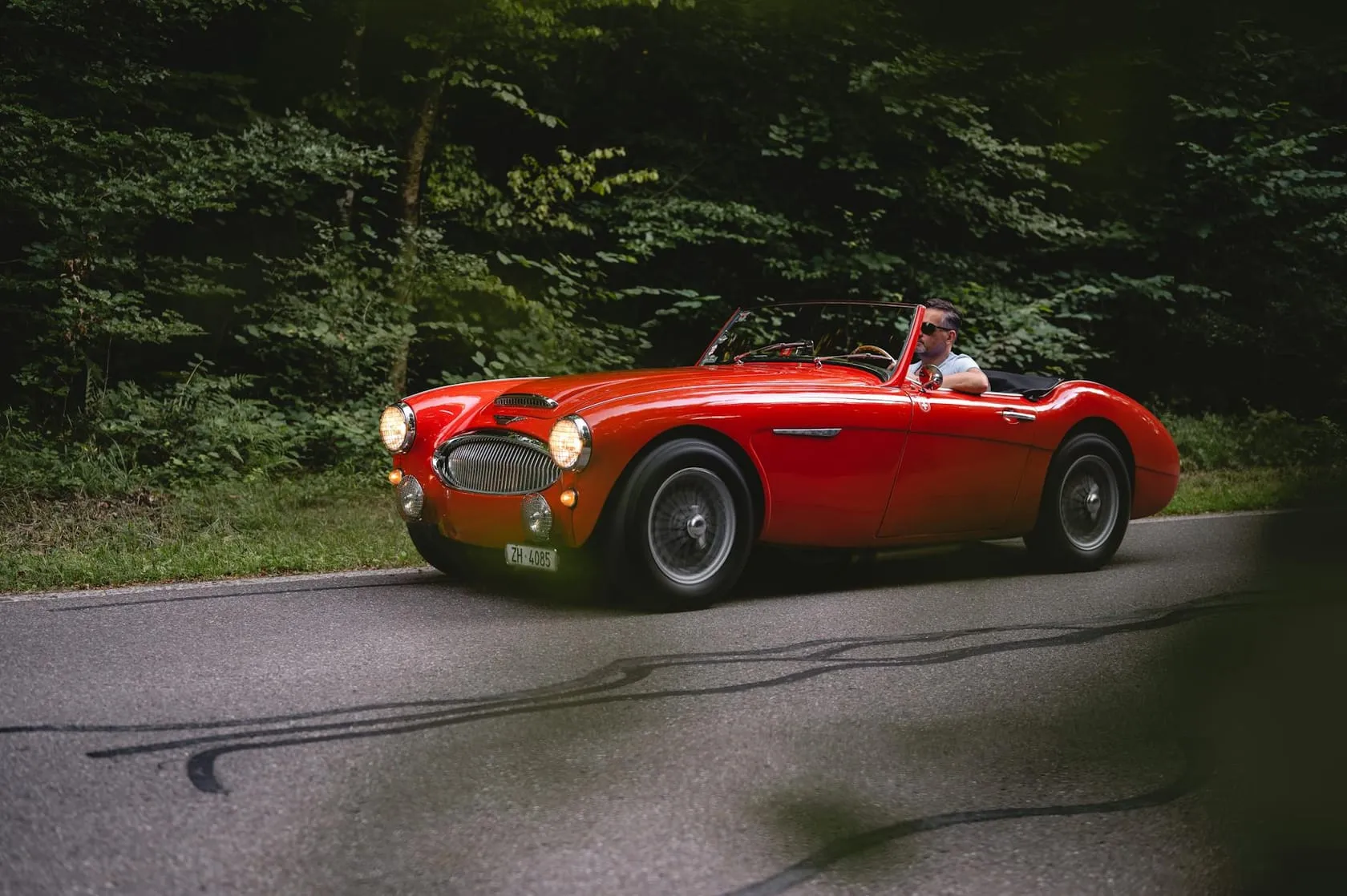 Austin-Healey 3000: the Big Healey (1959–1967)
The Austin-Healey 3000, the "Big Healey", is the muscular six-cylinder sports car that defined the marque and built its rally reputation. A guide to the Mk I, II and III, the wind-up-window BJ7 and the prized Mk III BJ8, the works rally cars, and what to look for when buying.
-
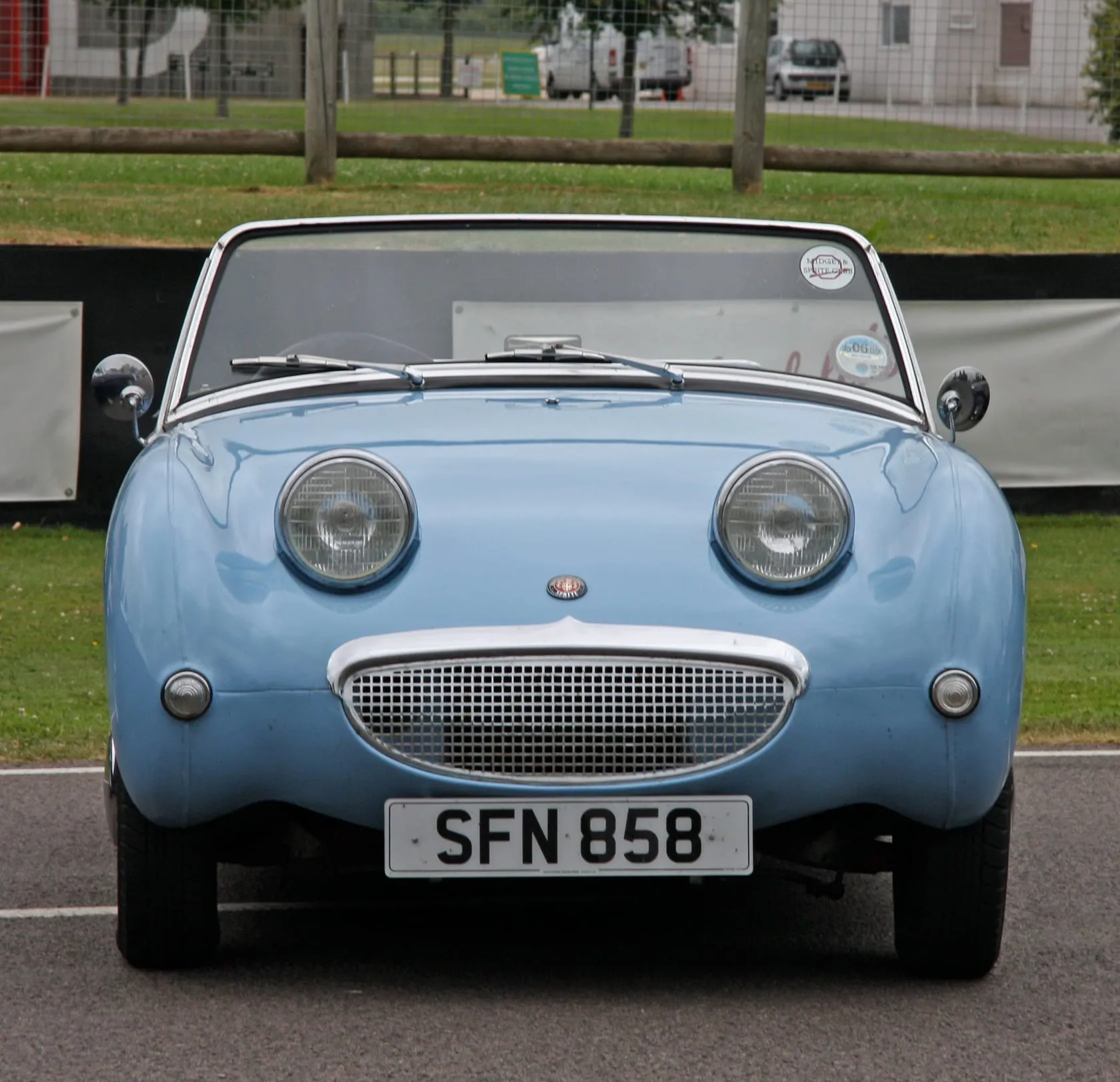 Austin-Healey Sprite: the Frogeye and the Spridget (1958–1971)
The Austin-Healey Sprite, and above all its bug-eyed first version the Frogeye, is one of the most loveable and affordable classic sports cars there is. A guide to the Frogeye Mk I, the later Spridget cars shared with the MG Midget, the Sebring racers, and what to check before buying one.
-
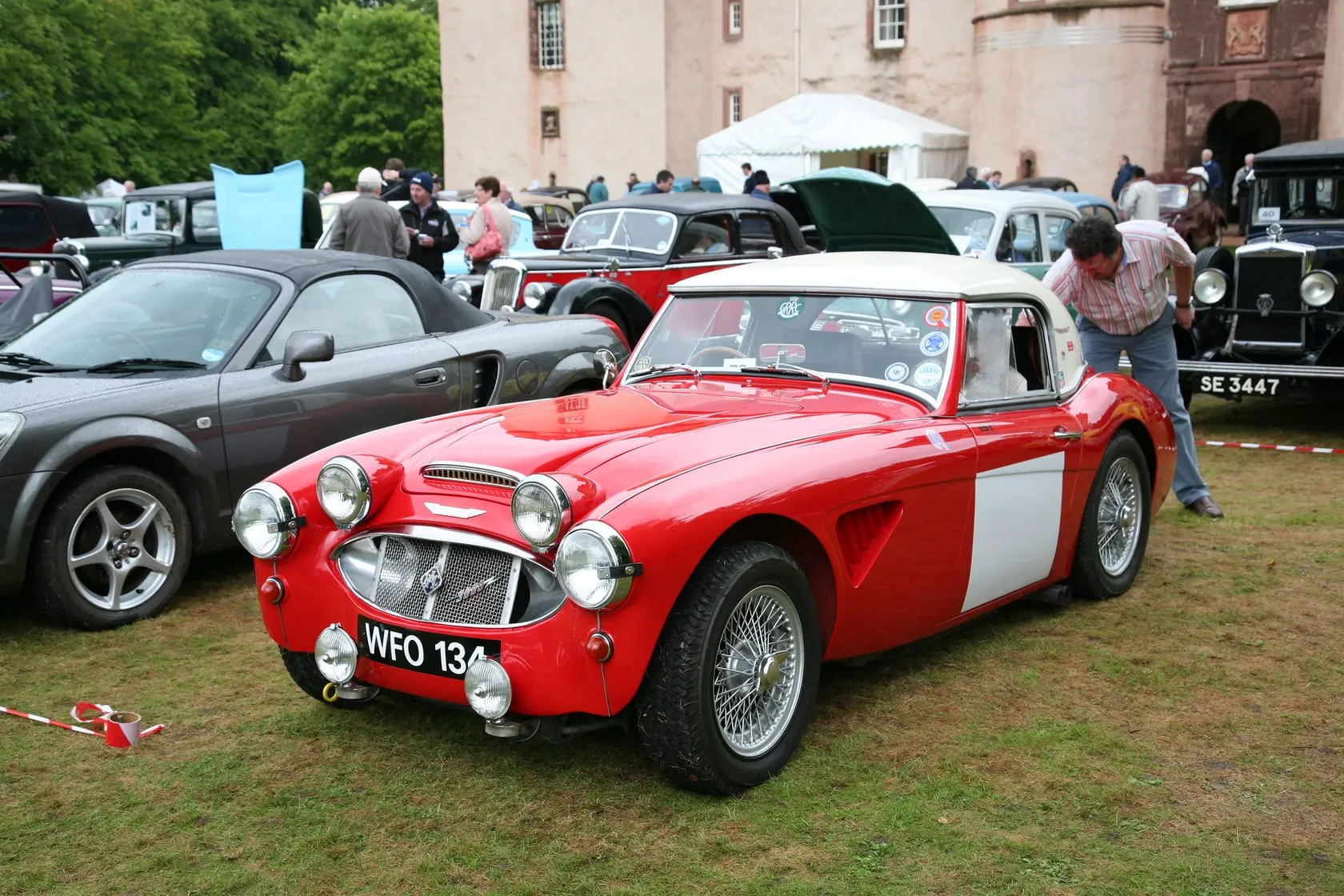 Austin-Healey: the Big Healey and the Frogeye
Austin-Healey built some of the most charismatic British sports cars of the 1950s and 60s, from the muscular, rally-winning Big Healey 3000 to the cheeky little Frogeye Sprite. A guide to the Austin-Healeys worth knowing, the Donald Healey and BMC partnership behind them, and why a good Healey is one of the most prized of all affordable classics.
-
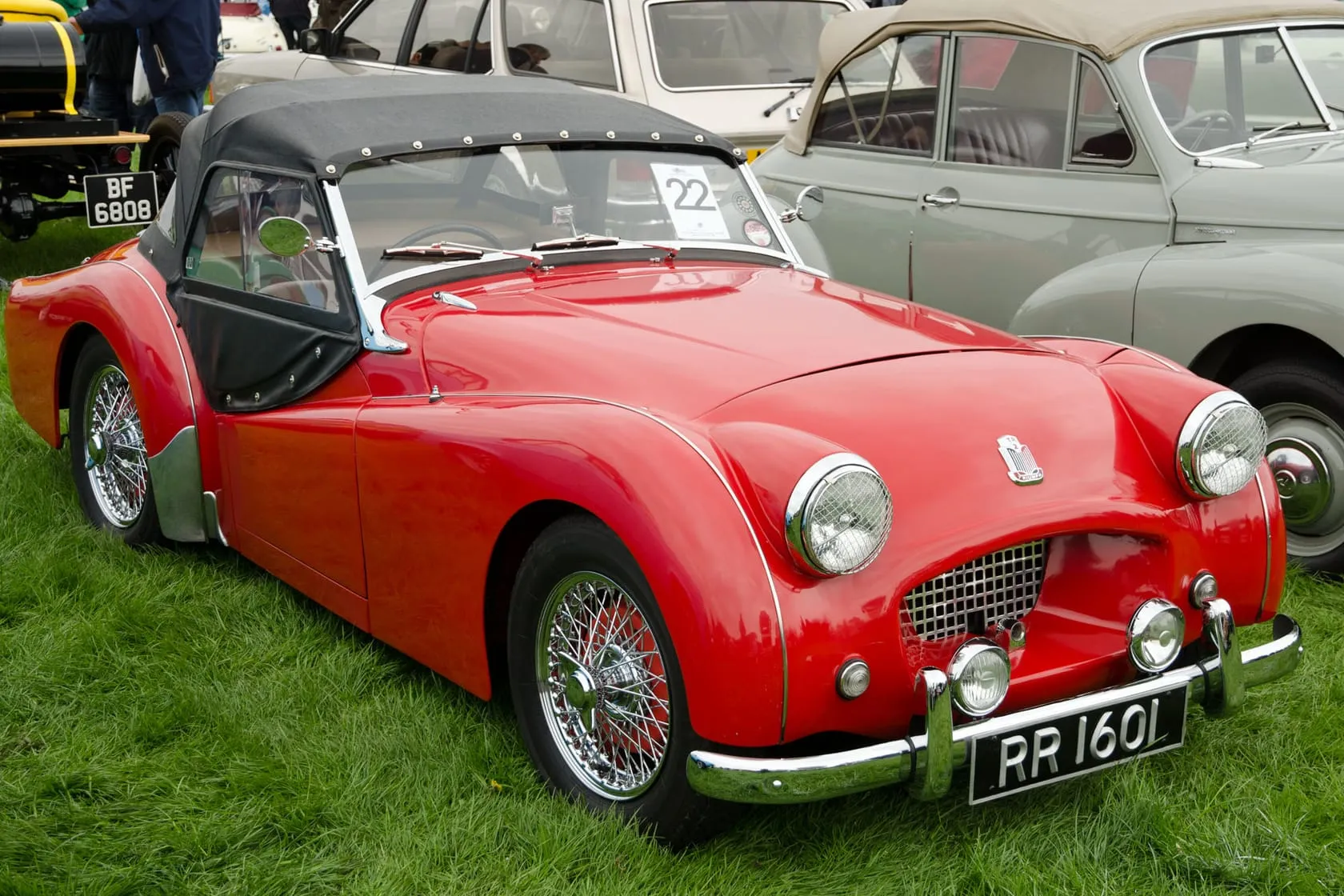 Triumph TR2: the cheap 100 mph sports car that started the line (1953–1955)
The Triumph TR2 launched the TR sports-car line in 1953 and made its name on a single claim, that it was the cheapest production car of its day able to top 100 mph. A rugged, basic, separate-chassis roadster with a torquey Standard four, it is now the rarest and most vintage-feeling of the side-screen TRs. A guide to the long-door and short-door cars, owning one, and values.
-
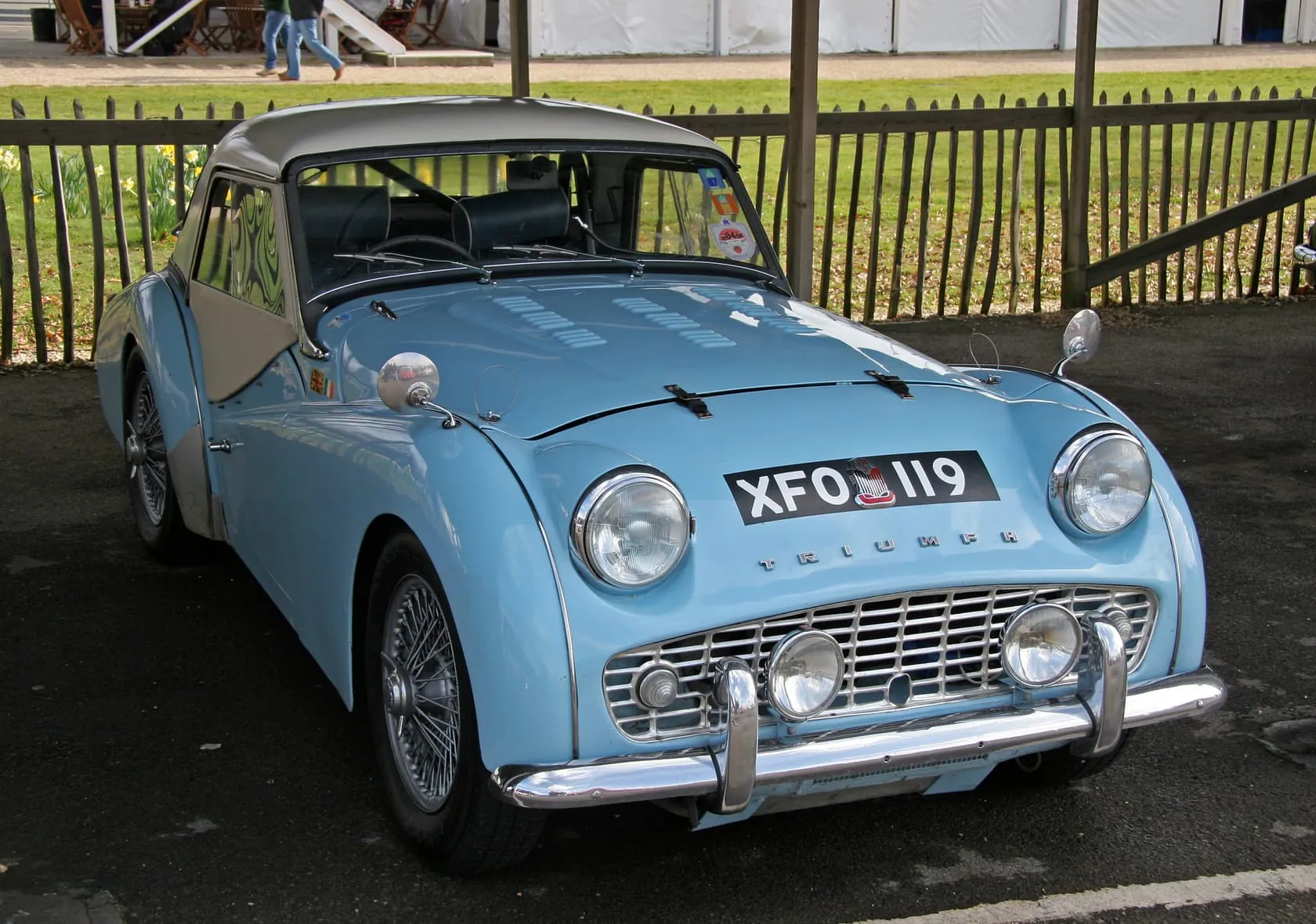 Triumph TR3: the first British car with disc brakes (1955–1962)
The Triumph TR3 was the rugged side-screen sports car that made Triumph's name in America, and in 1956 it became the first British series-production car fitted with front disc brakes. A guide to telling the TR3, TR3A and TR3B apart, what they are like to drive, and what to check when buying.
-
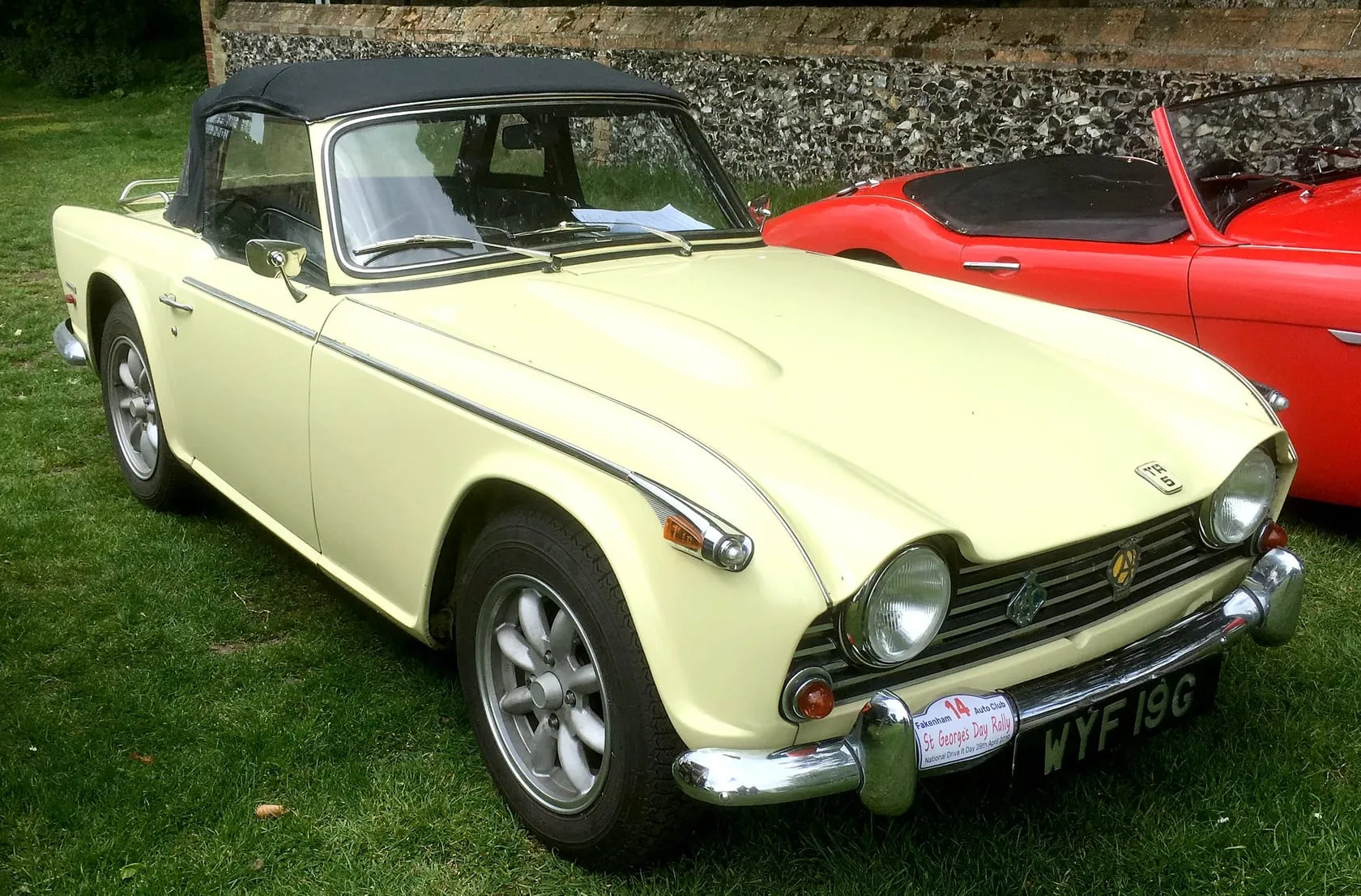 Triumph TR5: the rare fuel-injected six (1967–1968)
The Triumph TR5 was built for barely a year and only 2,947 were made, which makes it the rarest of the mainstream TRs and one of the most valuable. It was the first six-cylinder TR, with 150 bhp from a Lucas fuel-injected 2.5-litre straight-six wrapped in the familiar TR4 body. A guide to the TR5 versus the American TR250, what to look for, and what they are worth.
-
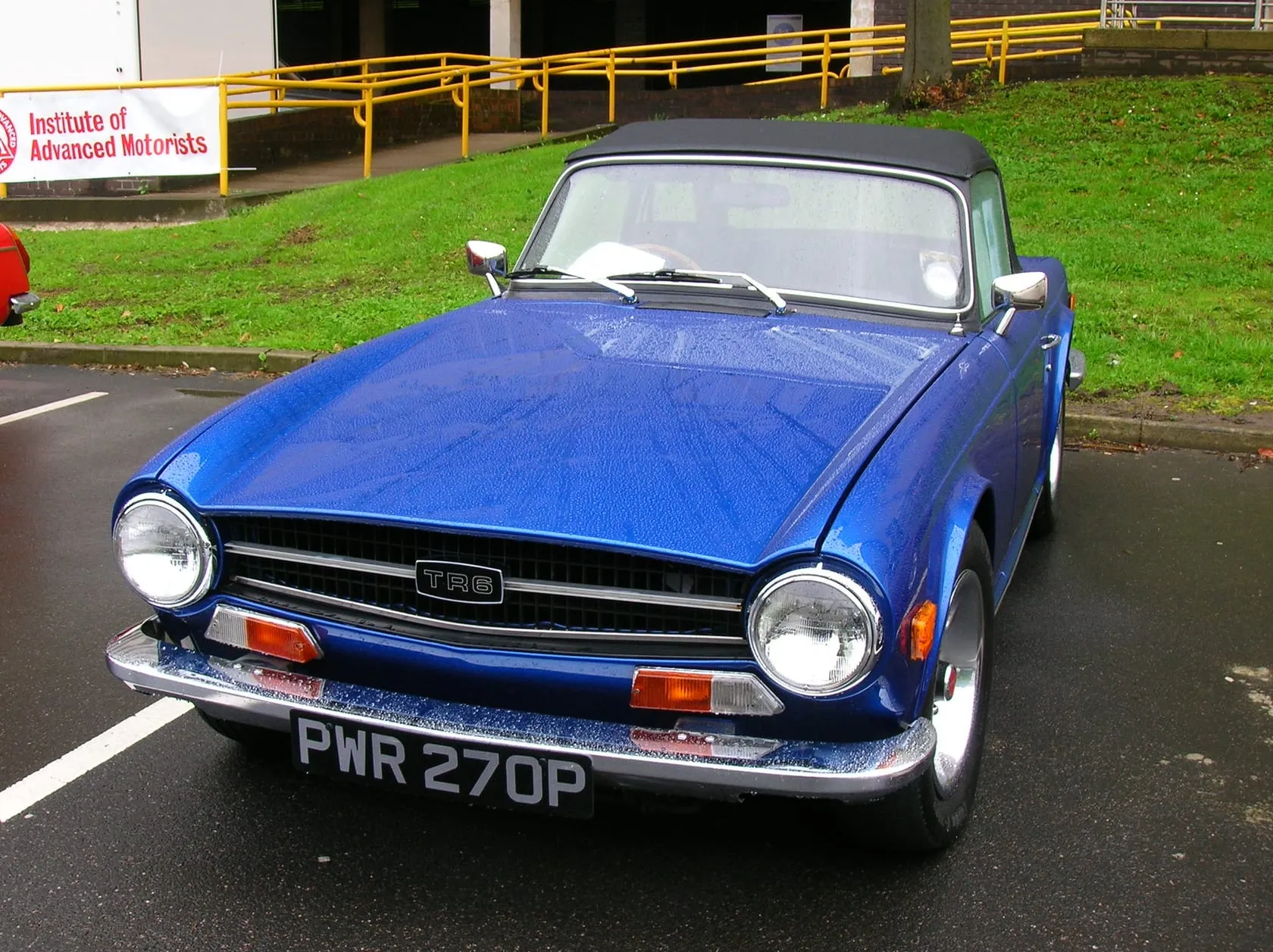 Which Triumph TR to buy: the TR2 to TR6 compared
The classic Triumph TR roadsters run from the side-screen TR2 of 1953 to the muscular TR6 of the 1970s, and they are very different cars to live with. A plain-English guide to the differences between the TR2, TR3, TR4, TR4A, TR5 and TR6, what each is like to own, what they cost, and how to choose the right one.
-
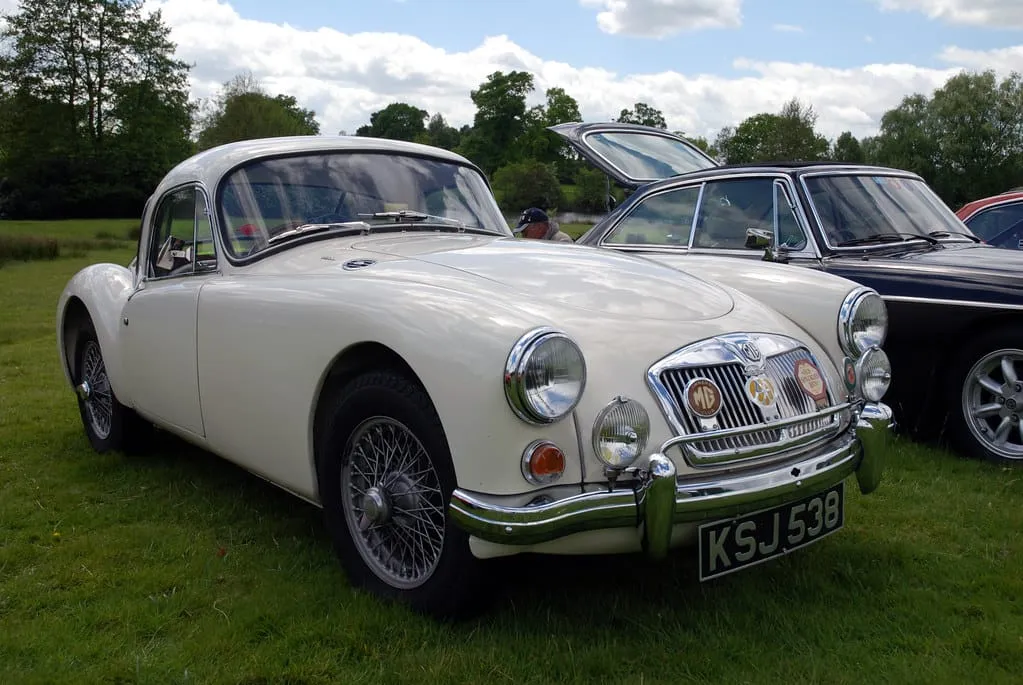 MG MGA: 100,000 built, almost all for export, and the prettiest MG of all (1955–1962)
The MG MGA was the sleek, aerodynamic sports car that swept away MG's upright pre-war look, sold over a hundred thousand almost entirely for export, and remains the prettiest of the affordable classic MGs. A guide to the 1500, 1600 and 1600 MkII pushrod cars, the rare and troubled Twin Cam, and what to look for when buying one.
-
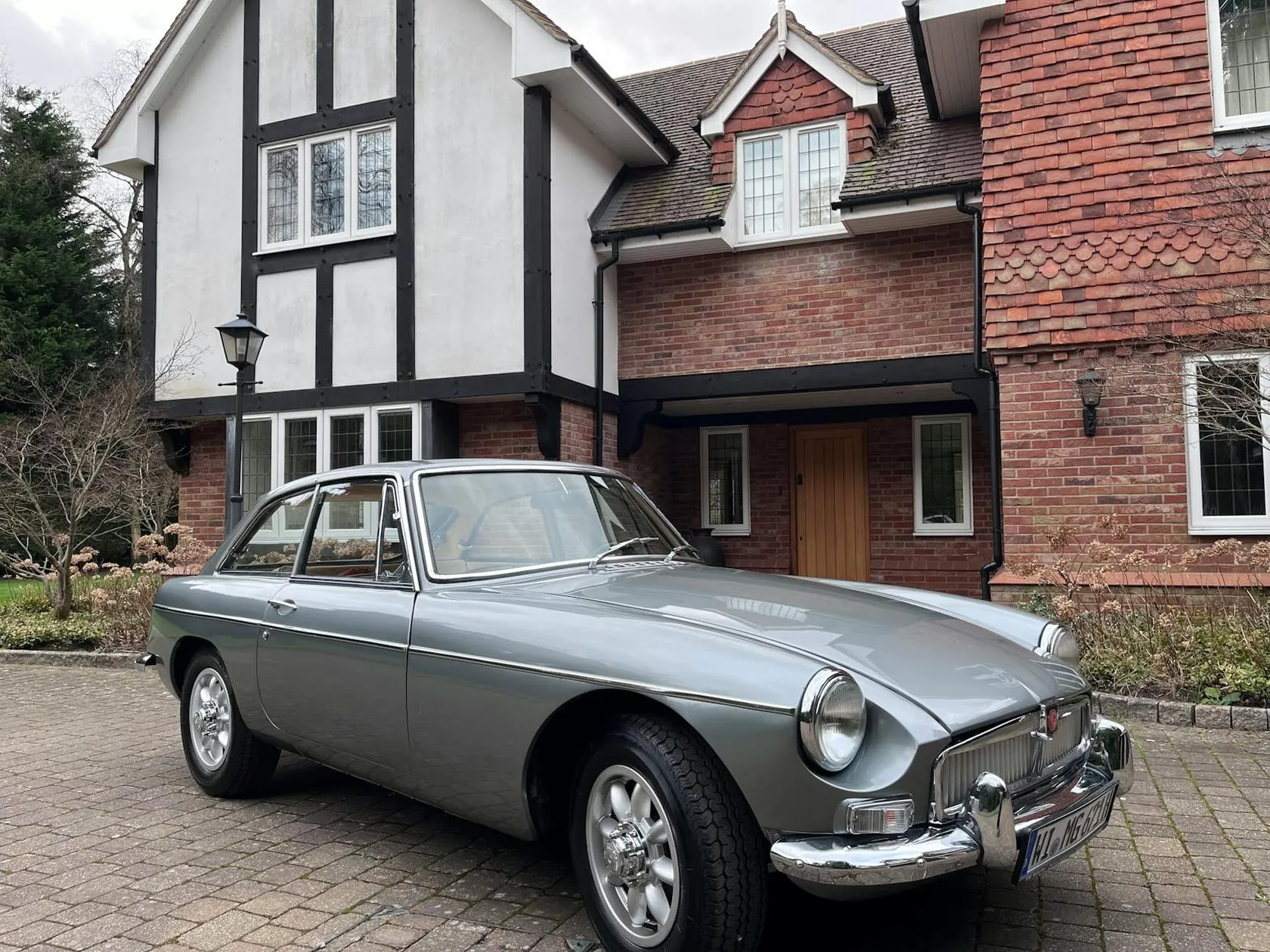 MG MGB GT: Pininfarina looks and a hatchback, for roadster money (1965–1980)
The MG MGB GT added a handsome Pininfarina-styled fastback roof and a practical hatchback to the MGB, making a refined 2+2 that is one of the most underrated classics there is, and the rare MGB GT V8 gave it real pace. A guide to how the GT differs from the roadster, the V8, and what to watch for when buying.
-
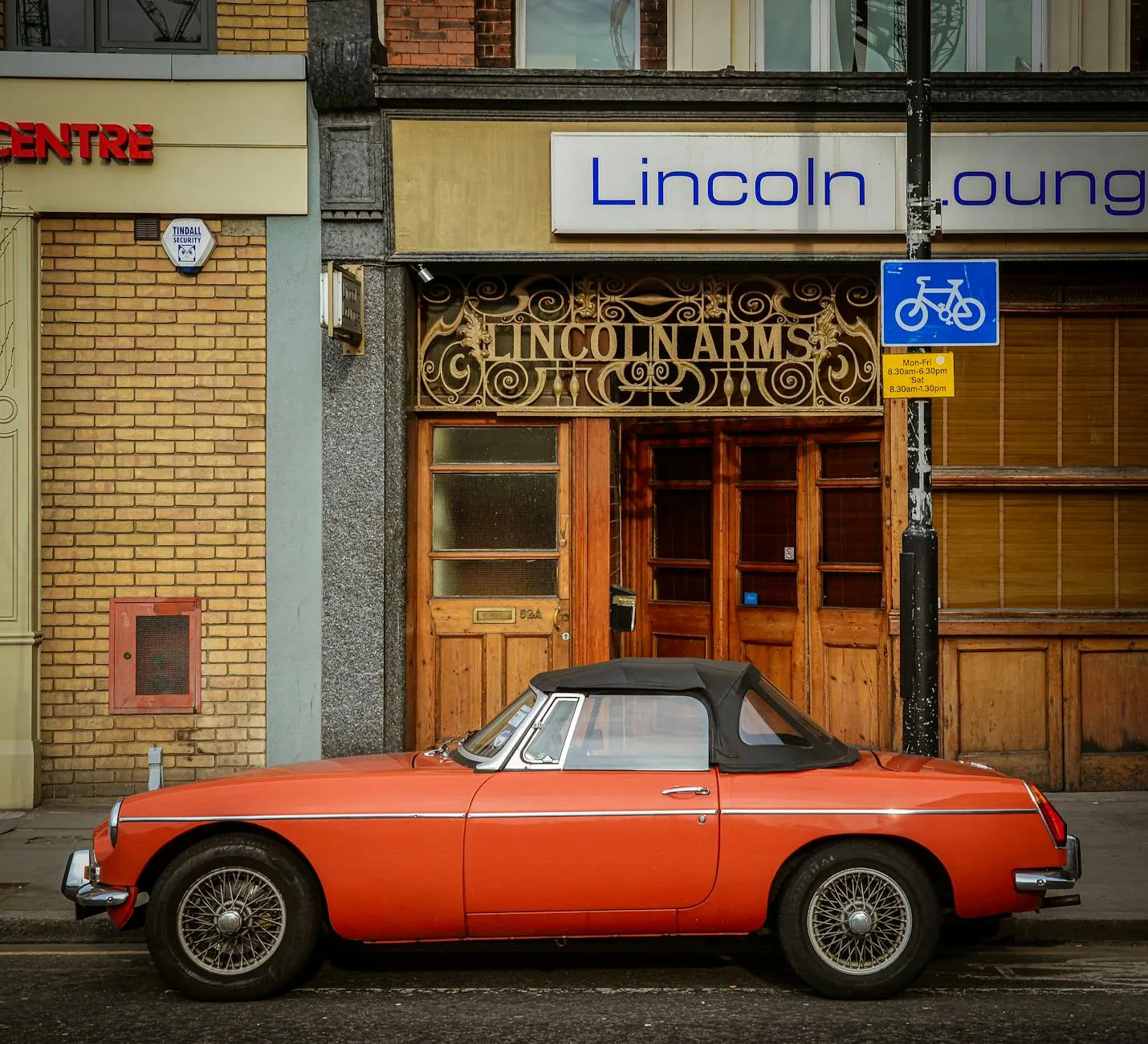 MG MGB: over half a million built, and still the easiest classic to own (1962–1980)
The MG MGB was the modern monocoque roadster that sold more than half a million and became, for years, the best-selling sports car in the world. A guide to the 1.8-litre B-series, the three-bearing and five-bearing engines, the all-important chrome-bumper versus rubber-bumper divide, and the checks that matter before buying one.
-
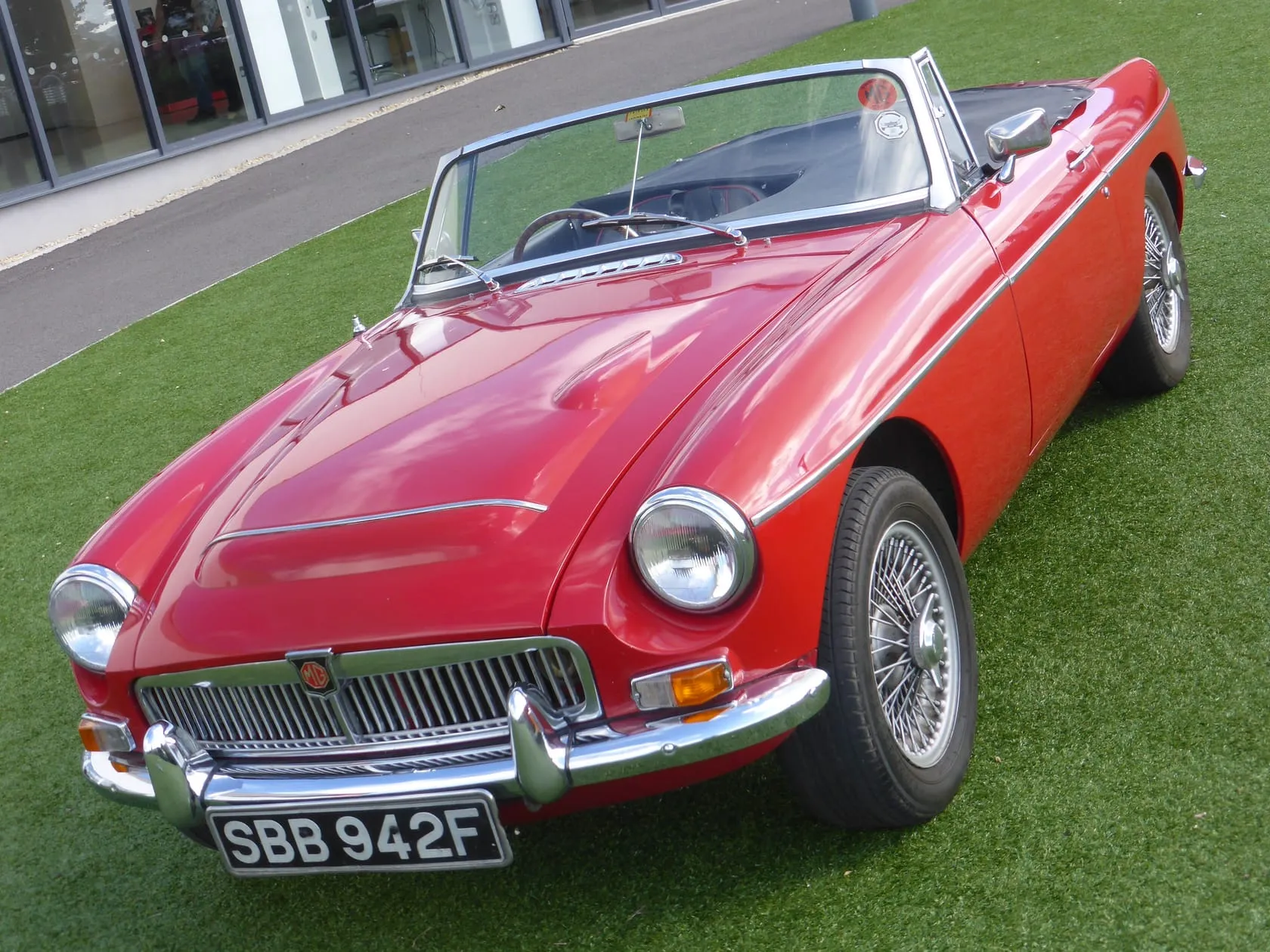 MG MGC: an MGB with a straight-six, and a reputation it never deserved (1967–1969)
The MG MGC was the MGB given a 3.0-litre straight-six, conceived as a replacement for the big Austin-Healey 3000 and damned in period for nose-heavy handling. A guide to the redesigned six-cylinder engine, the truth about the handling reputation, the roadster and GT, what to look for when buying, and why a sorted MGC is now a sought-after grand tourer.
-
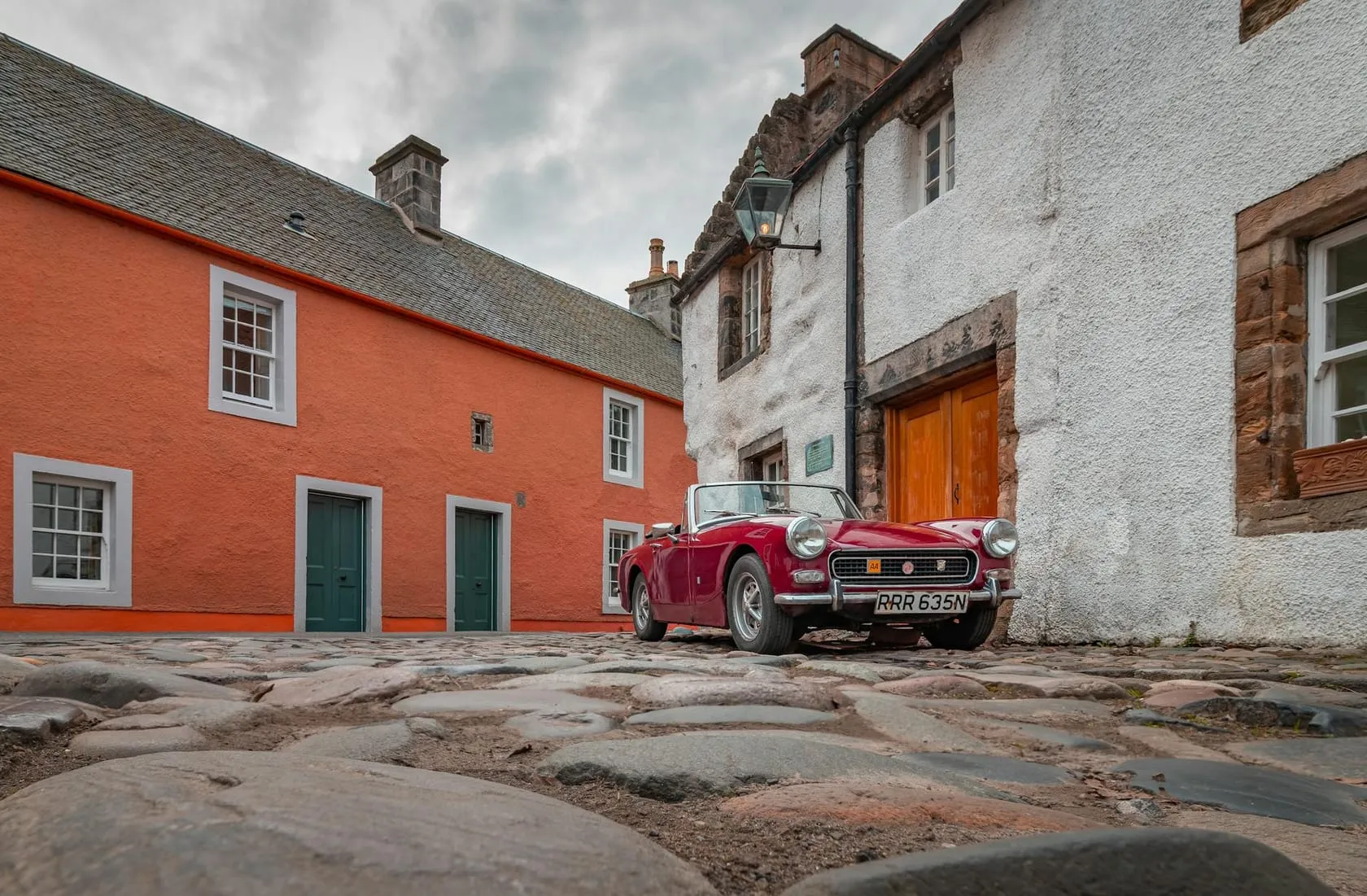 MG Midget: a Sprite in MG clothing, and the cheapest way into the marque (1961–1979)
The MG Midget was the tiny, nimble, affordable roadster built alongside its near-identical twin the Austin-Healey Sprite, and the cheapest way into classic MG ownership. A guide to the marks and engines, the curious 1500 that used a Triumph engine, the chrome and rubber bumper cars, the round and square arches, and what to look for when buying.
-
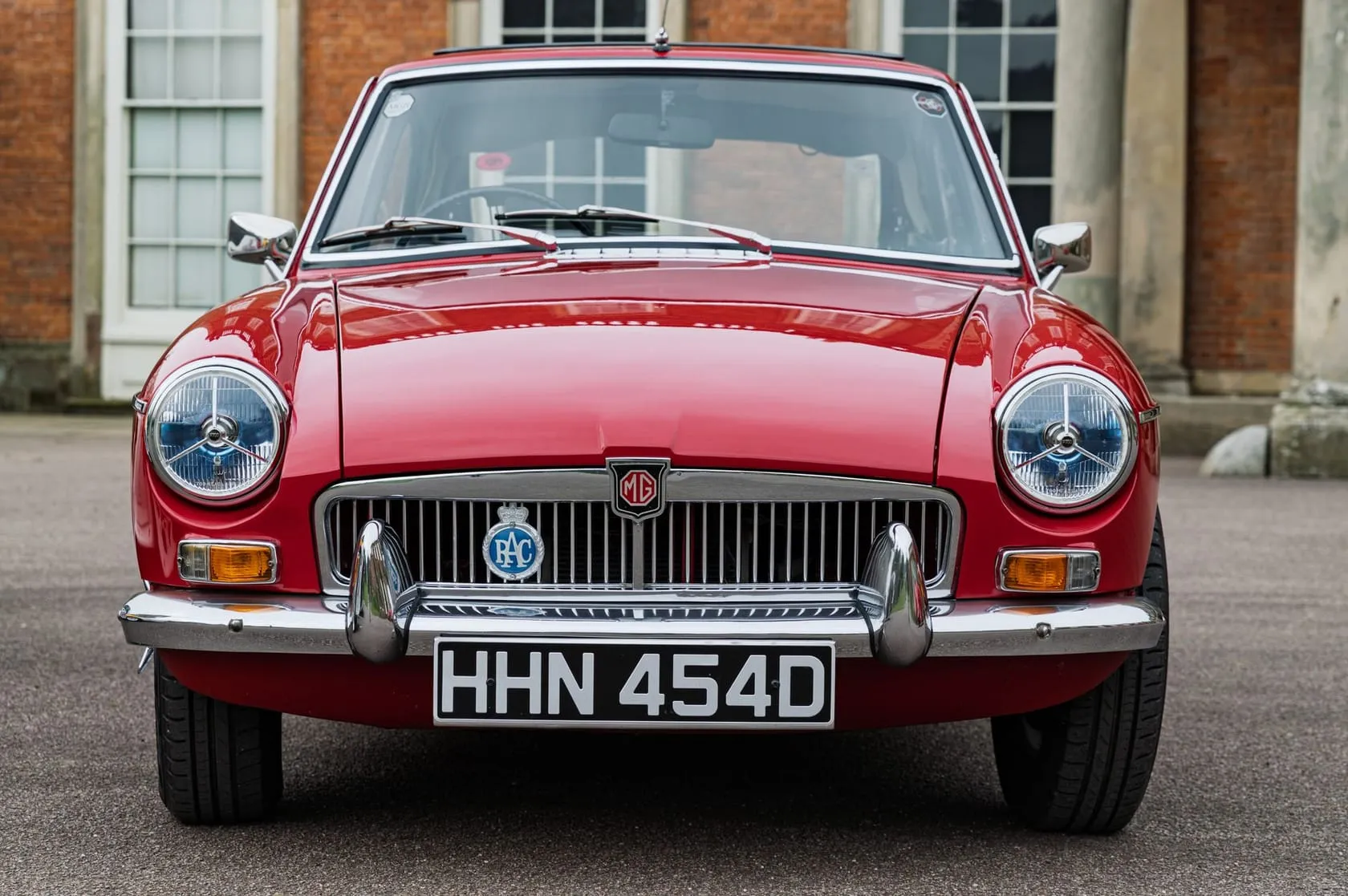 MG: the marque that put the sports car in the driveway
MG built some of the most loved and most affordable sports cars Britain ever made, from the pretty MGA and the half-million-selling MGB to the cheap-and-cheerful Midget and the six-cylinder MGC. A guide to the classic MGs worth knowing, the Morris Garages-to-Abingdon story, and why a good one is still one of the friendliest ways into classic ownership.
-
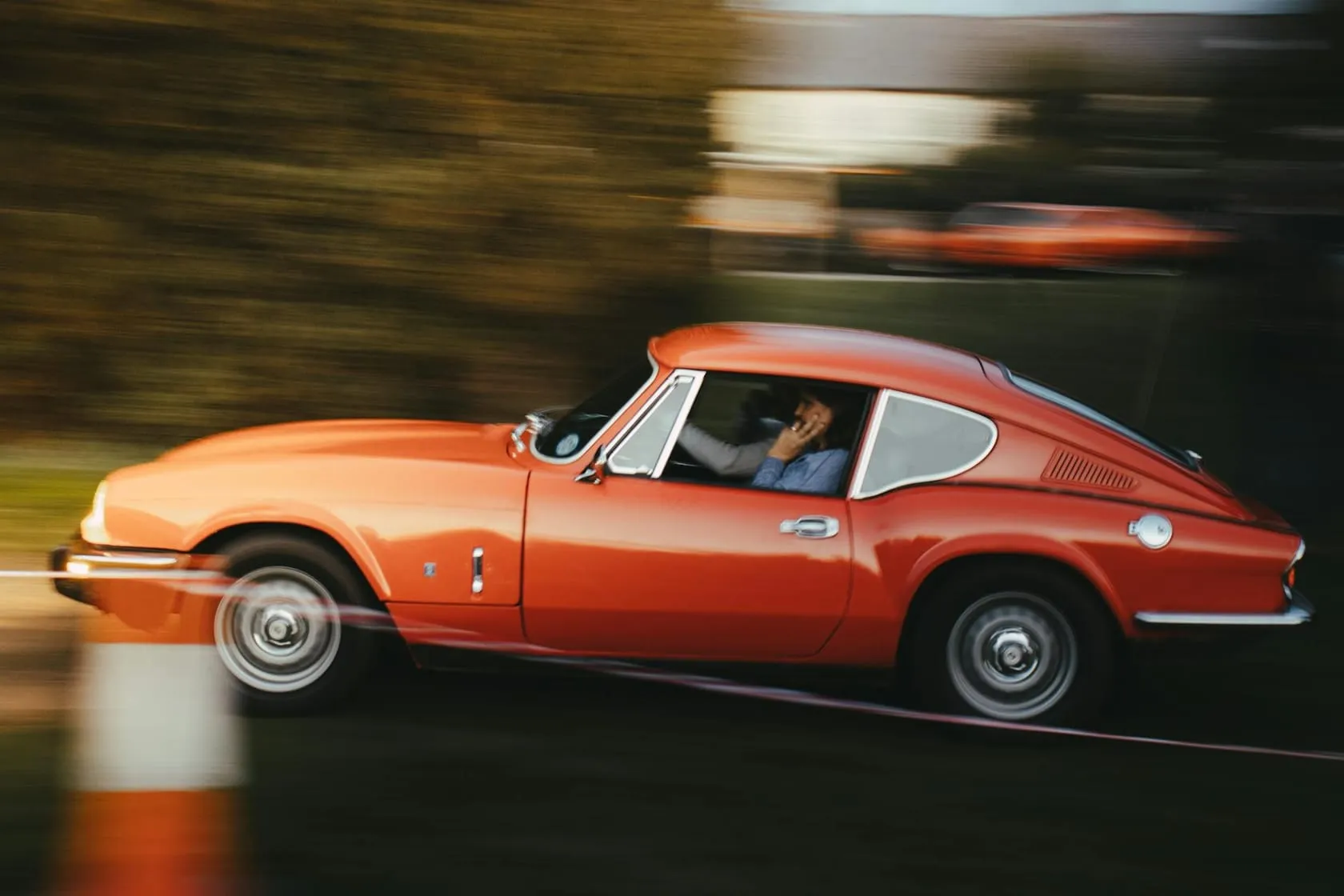 Triumph GT6: the poor man's E-Type (1966–1973)
The Triumph GT6 was a handsome six-cylinder fastback coupe on the Spitfire platform, nicknamed the baby E-Type, whose tricky swing-axle handling was famously cured by the Rotoflex rear suspension of the Mk2. A guide to the three marks, the handling saga, the Rotoflex fix, and what to look for when buying one.
-
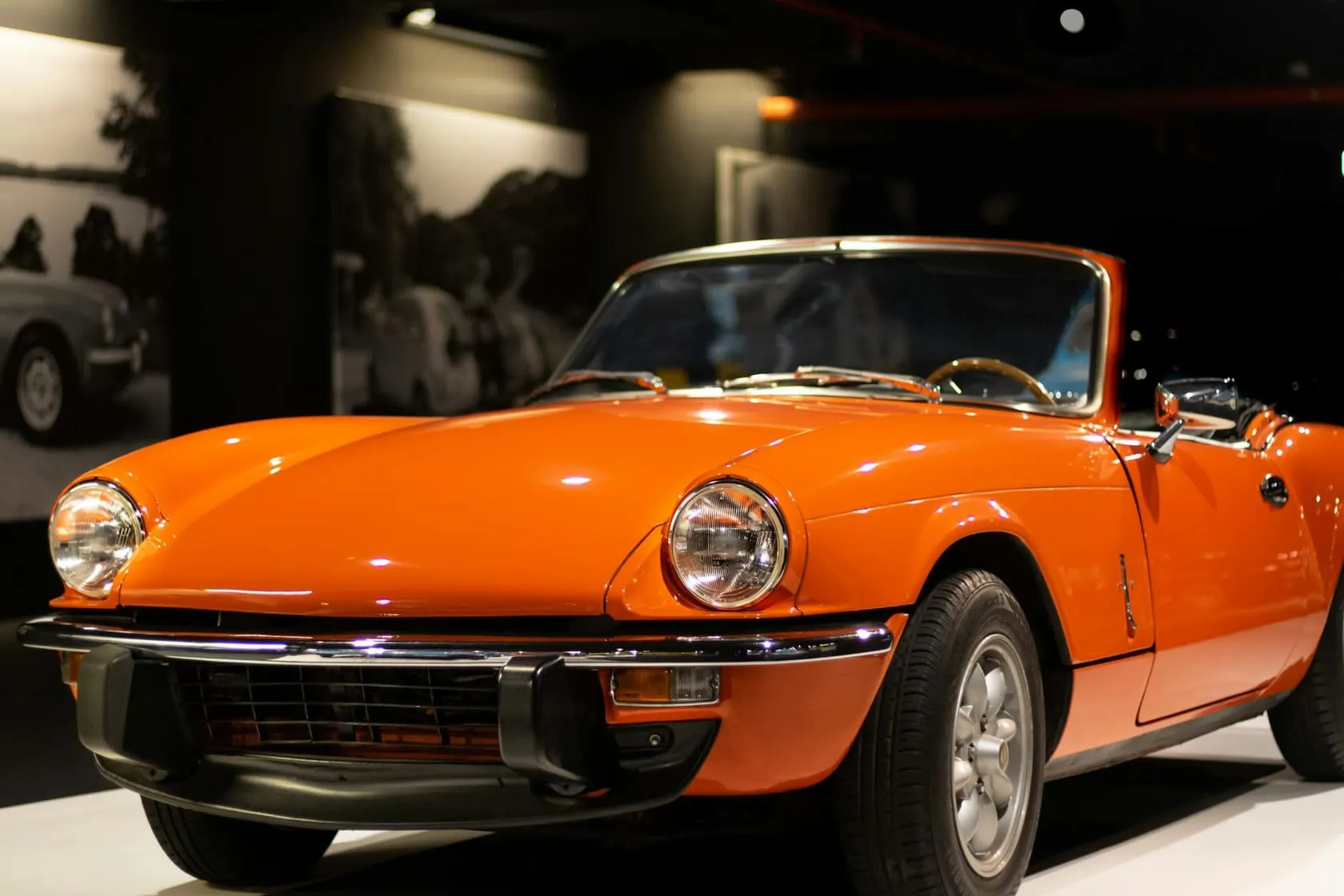 Triumph Spitfire: a real roadster on a shortened saloon chassis (1962–1980)
The Triumph Spitfire was the affordable open sports car that put a real roadster within reach of ordinary buyers, an MG Midget rival with a forward-tilting bonnet and a tight turning circle. A guide to the five marks, the swing-axle handling and its fix, what to look for, and why it is still one of the cheapest ways into classic British sports-car ownership.
-
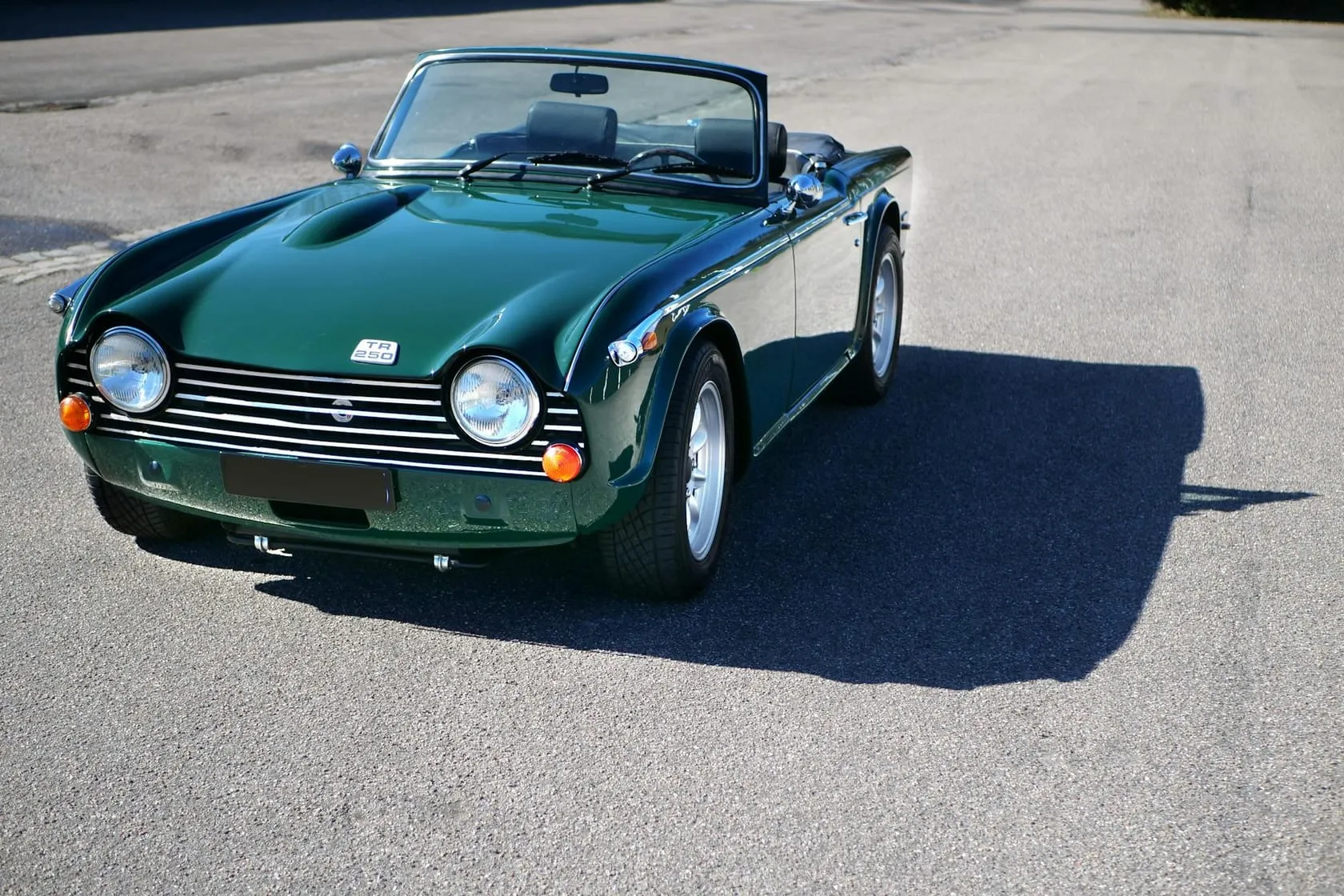 Triumph TR4: a crisp Michelotti body on proven TR mechanicals (1961–1967)
The Triumph TR4 brought modern Michelotti styling, rack-and-pinion steering and the clever Surrey-top removable roof to the rugged TR sports-car line, and the TR4A added independent rear suspension. A guide to the two cars, their place in the TR story, and what to look for when buying one.
- Triumph TR6: the last of the hairy-chested roadsters (1968–1976)
The Triumph TR6 was the best-selling TR and the last of the traditional separate-chassis British sports cars, a muscular Karmann-restyled roadster with a 2.5-litre straight-six and, on home-market cars, Lucas fuel injection. A guide to the PI-versus-carburettor cars, the CP and CR distinction, and the buying checks that matter most.
-
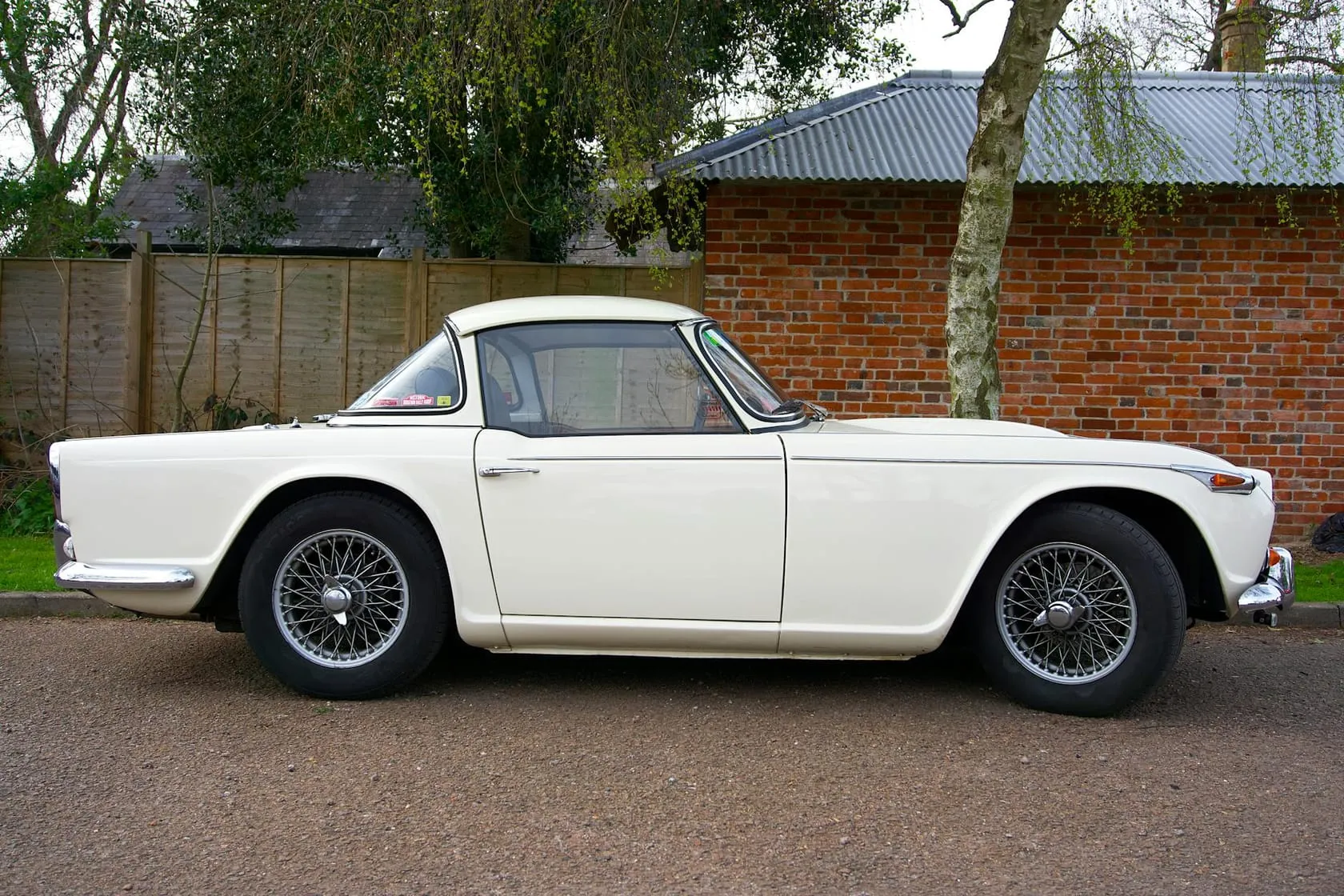 Triumph: the marque that made British sports cars affordable
Triumph put sports-car motoring within reach of ordinary British drivers, from the cheap-and-cheerful Spitfire and Herald to the muscular TR sports cars, the V8 Stag and the clever Dolomite Sprint. A guide to the classic Triumphs worth knowing, the marque's Coventry-to-British-Leyland story, and why a good one is one of the friendliest ways into classic ownership.