Triumph Spitfire: a real roadster on a shortened saloon chassis (1962–1980)
The Triumph Spitfire was the affordable open sports car that put a real roadster within reach of ordinary buyers, an MG Midget rival with a forward-tilting bonnet and a tight turning circle. A guide to the five marks, the swing-axle handling and its fix, what to look for, and why it is still one of the cheapest ways into classic British sports-car ownership.
Built 1962–1980

At a glance
- Years
- 1962–1980
- Body styles
- Two-door open sports car (roadster)
- Drivetrain
- Front engine, rear-wheel drive
- Engines
- 1147cc, 1296cc and 1493cc four-cylinder
- Power
- 63 to 75 bhp
- Top speed
- Around 90 to 100 mph (1500)
- Trim levels
- Spitfire 4 (Mk1), Mk2, Mk3, Mk4, 1500
- Production
- Around 314,000 across five marks
- Assembly
- Canley, Coventry
- Designer
- Giovanni Michelotti
- Values
- Project £2,500-£7,500; good £6,000-£13,000; excellent £11,000-£24,000 (early cars top the range)
- Based on
- A shortened Triumph Herald separate chassis
- Chief rival
- MG Midget and Austin-Healey Sprite
The models
For the price of a modest family saloon, Triumph put a real two-seat roadster within reach of ordinary buyers, with wind-up windows, a forward-tilting bonnet and genuine Italian styling. The Spitfire sold by the hundred thousand, and more than any other car it is the friendly, cheap, fixable classic that introduced generations to British sports-car ownership. It still does the same job today.
The Spitfire is part of the classic Triumph family, and the most successful sporting Triumph of all. It was built to do one thing, put open-top motoring within reach, and it did it for eighteen years across five distinct marks.
A sports car on a saloon’s chassis
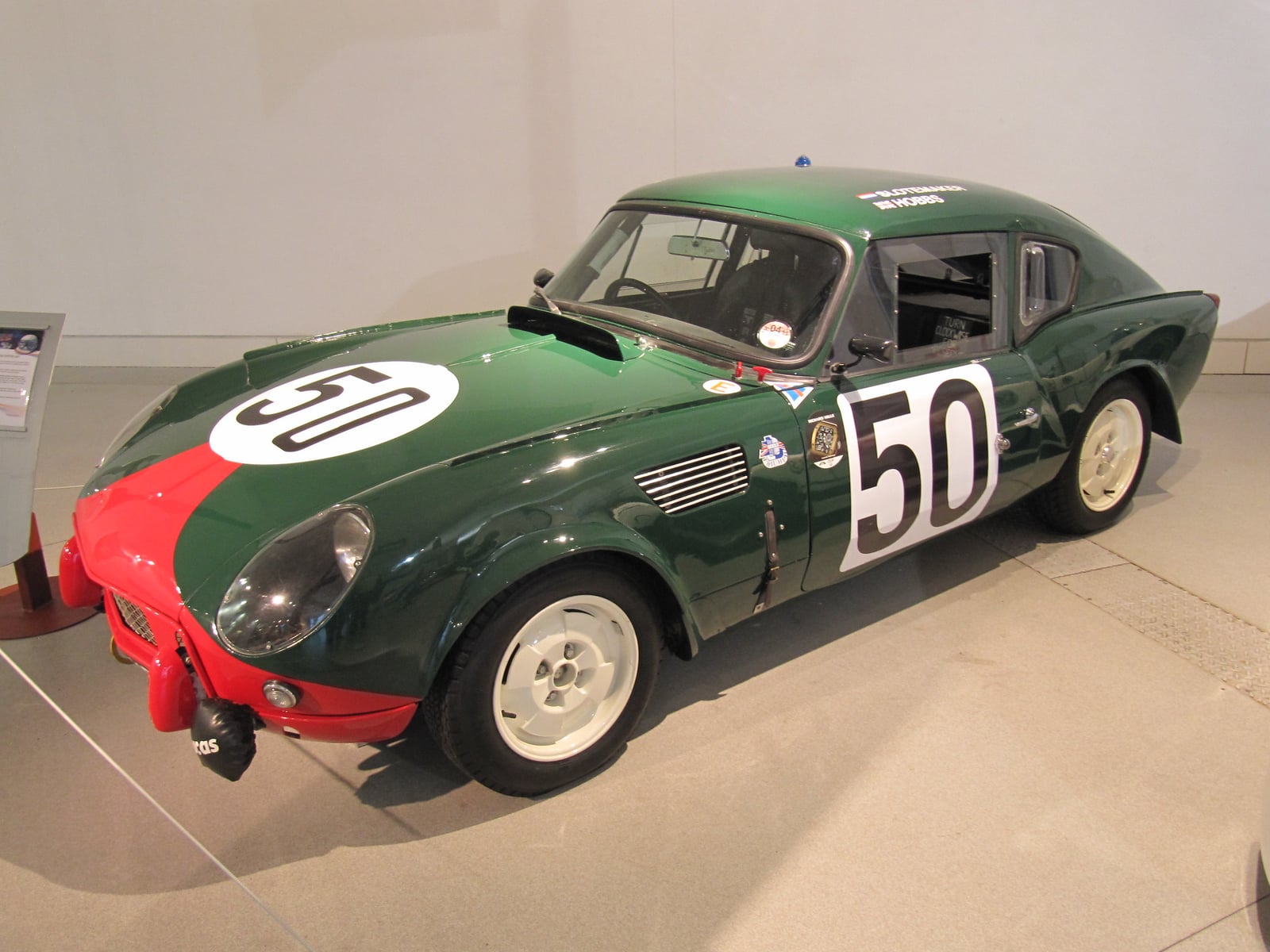
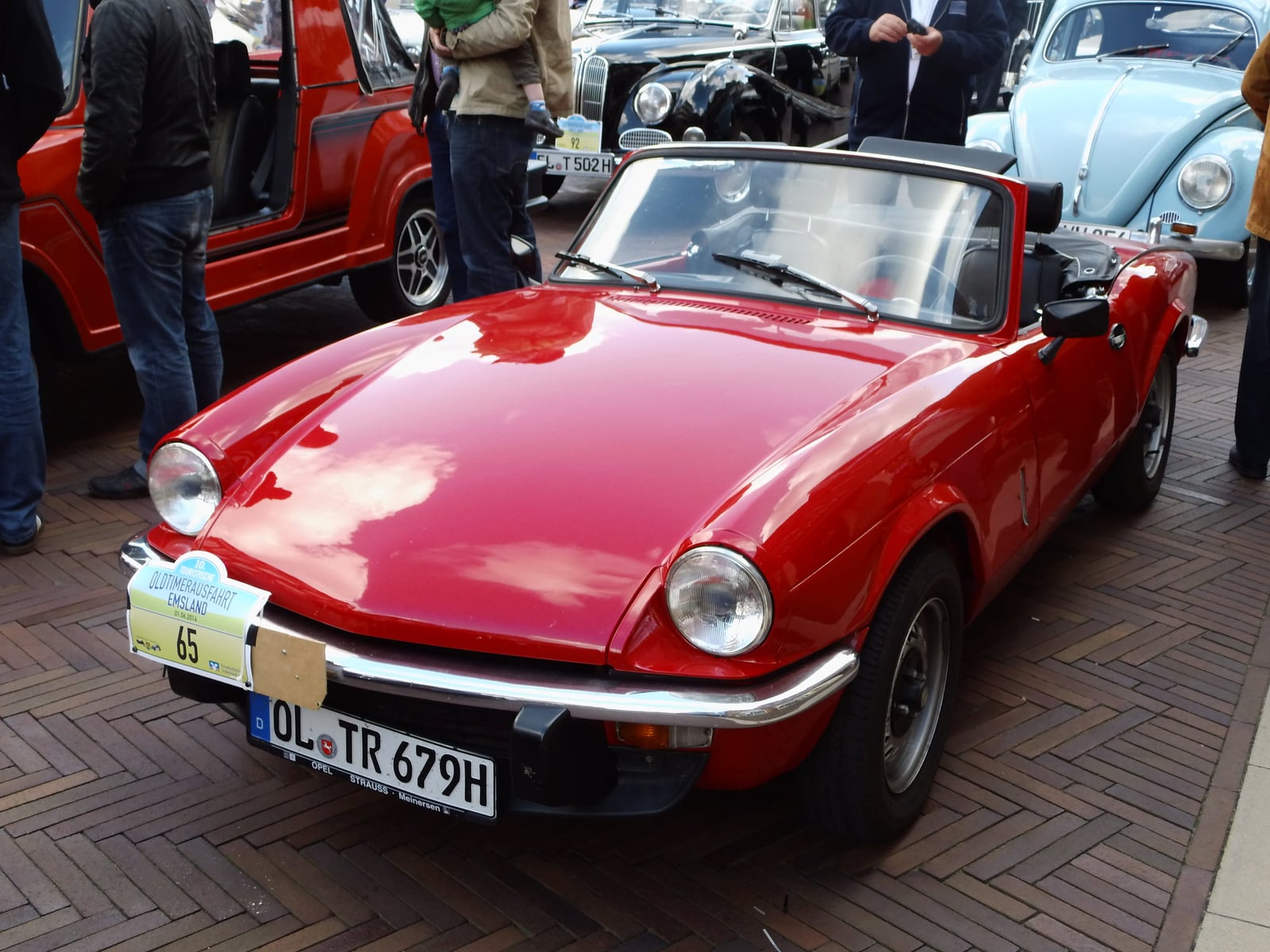
The Spitfire was designed by Giovanni Michelotti in 1957 and launched at the London Motor Show in October 1962 as the Spitfire 4. Underneath the pretty body it was, cleverly, a Triumph Herald in disguise: it used a shortened version of the Herald’s separate chassis and the Herald’s running gear, which is why Standard-Triumph could bring it to market quickly and cheaply. That separate-chassis layout gave the Spitfire two of its best-known party tricks, a famously tight turning circle from the rack-and-pinion steering, and a one-piece front that hinges forward in a single panel for superb access to the engine.
The car was built at Canley in Coventry throughout its life, and aimed squarely at the MG Midget and Austin-Healey Sprite. Against those rivals the Spitfire offered a roomier cockpit and the civility of wind-up windows where the early Midgets still had sidescreens, and it outsold them comfortably.

The five marks
The Spitfire ran through five distinct versions:
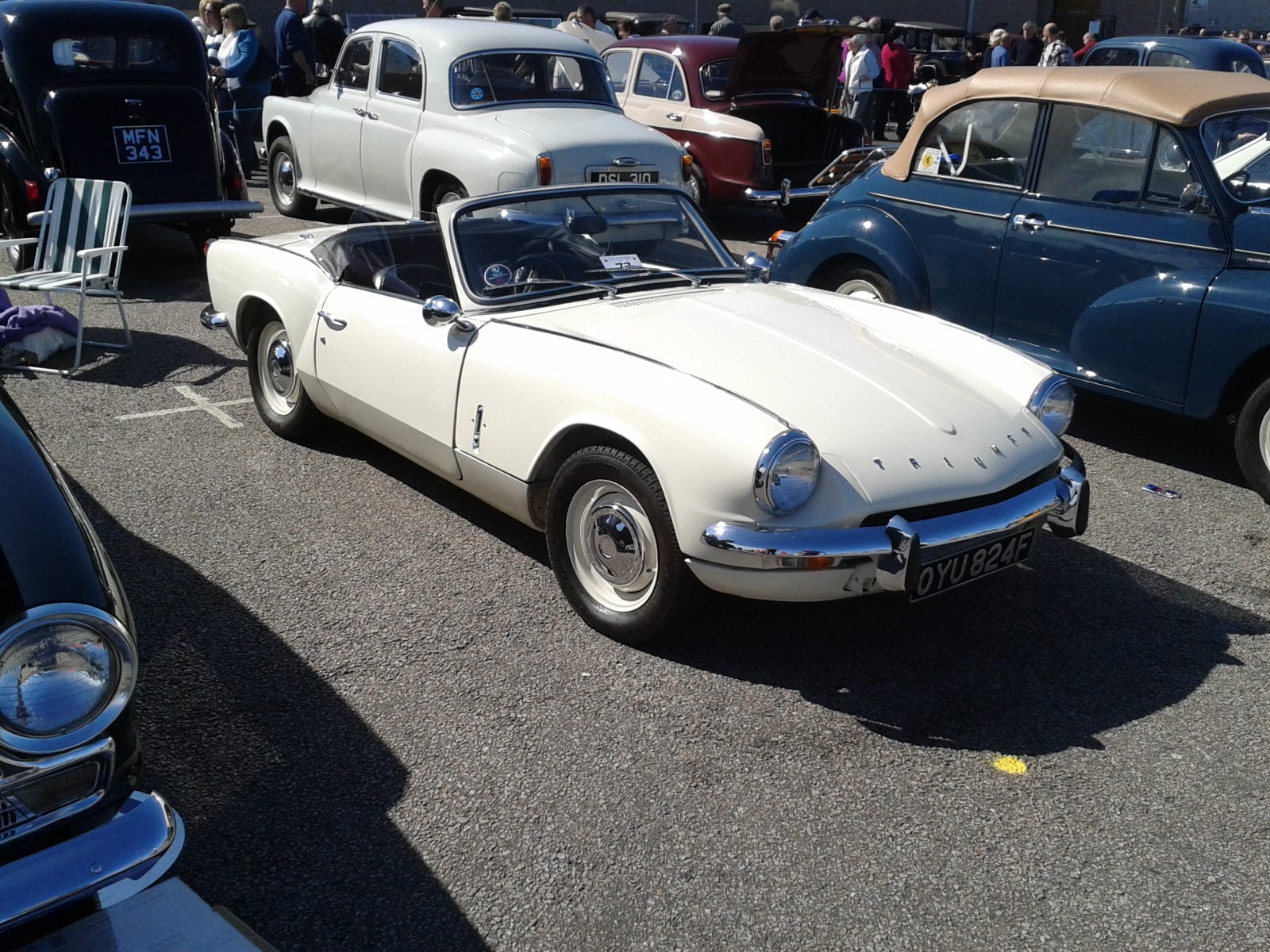
- Mk1 (Spitfire 4, 1962–1964): the original, with a 1147cc engine of around 63 bhp.
- Mk2 (1965–1967): a mild power and trim upgrade on the same engine.
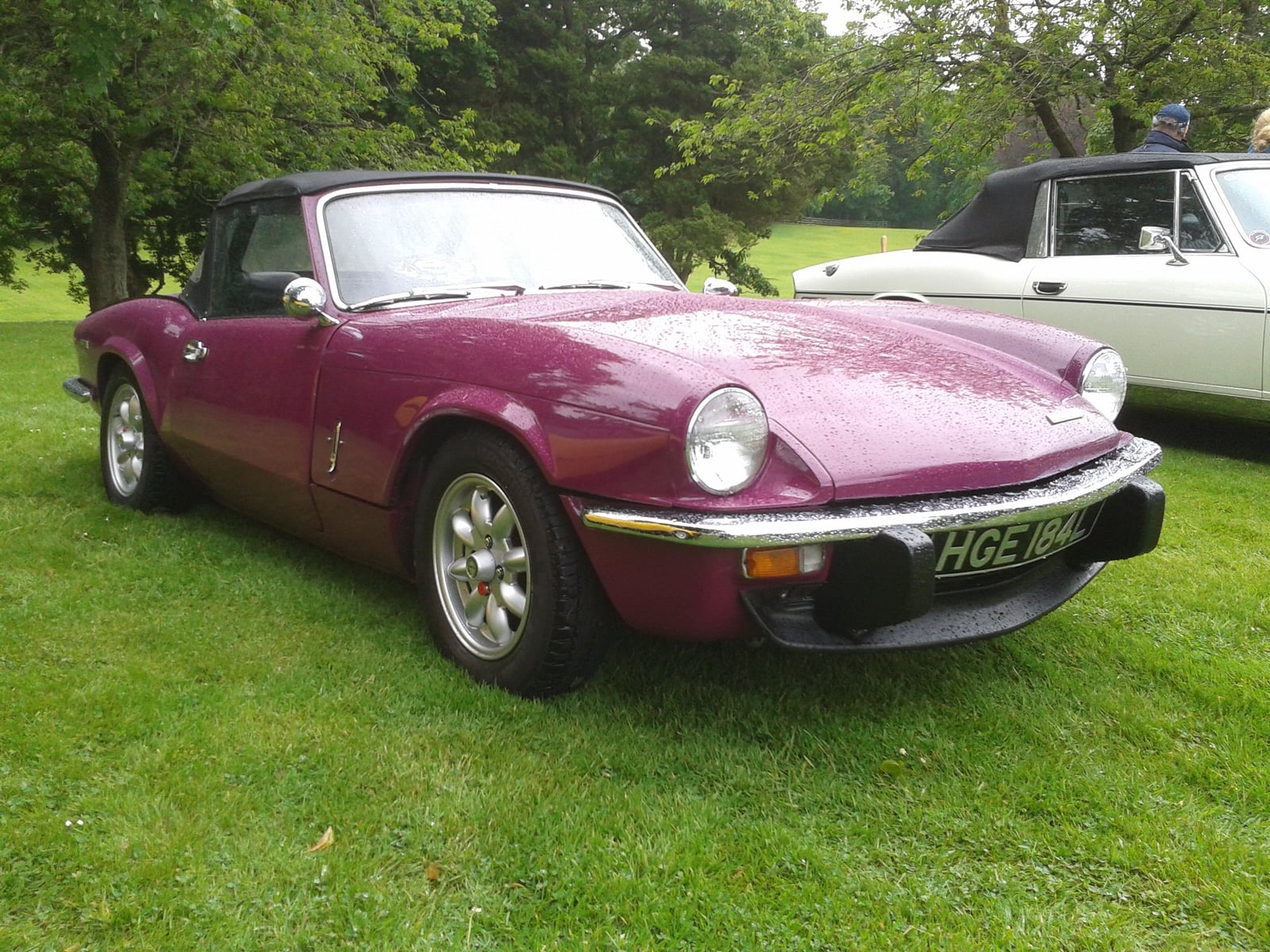
- Mk3 (1967–1970): the bigger 1296cc engine and a raised front bumper to meet American headlamp-height rules. The peppiest and best-handling of the early cars.
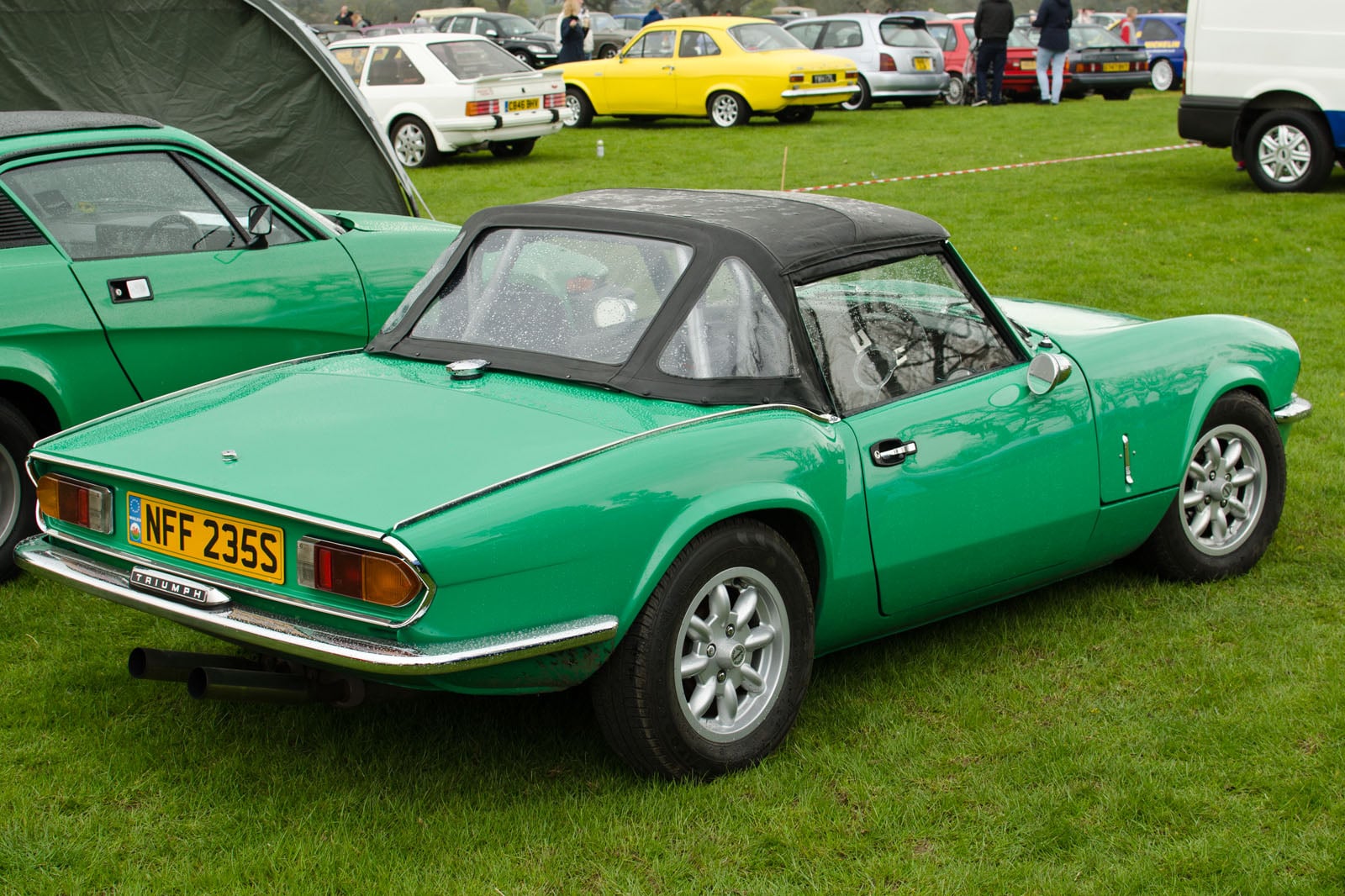
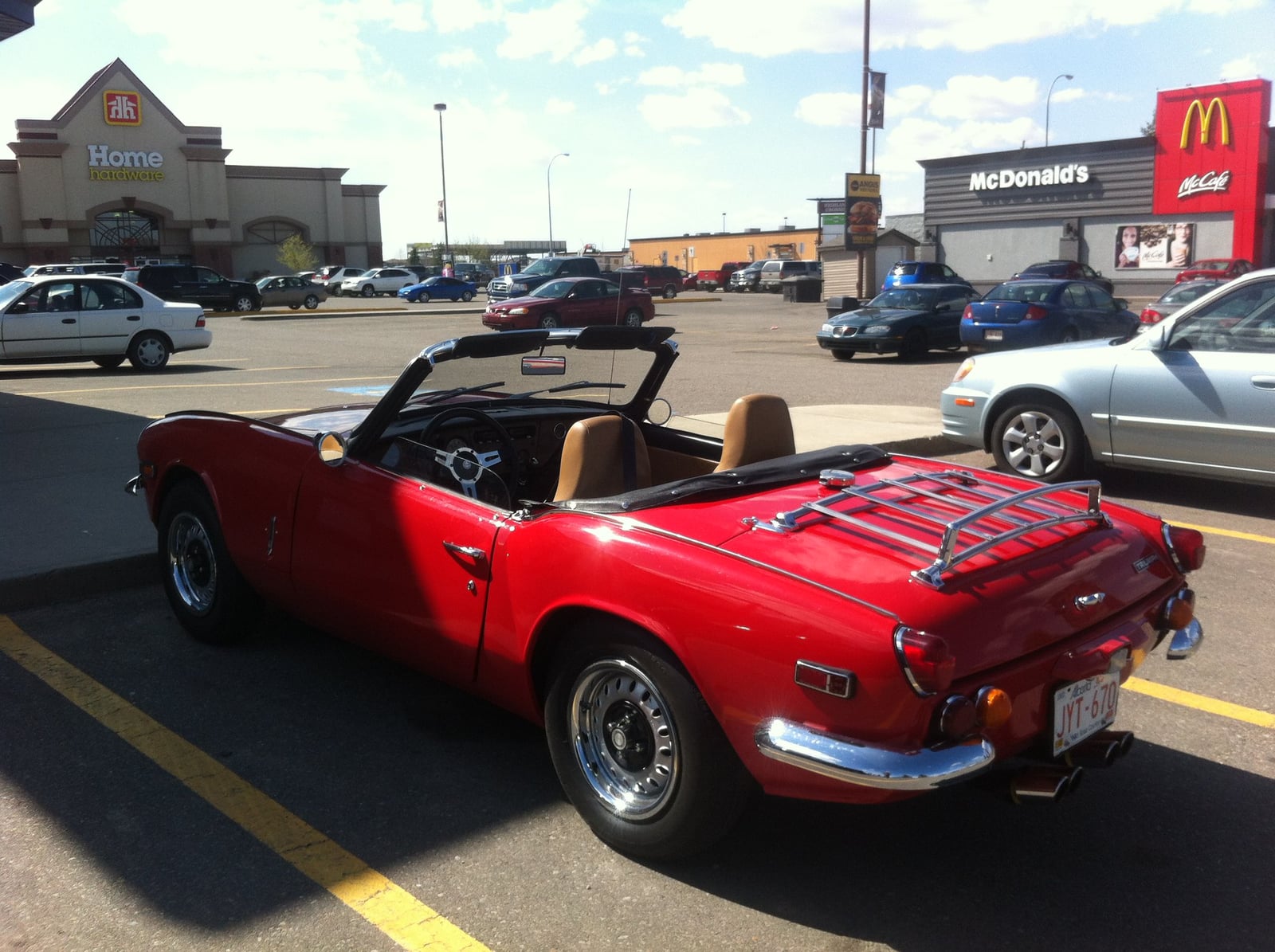
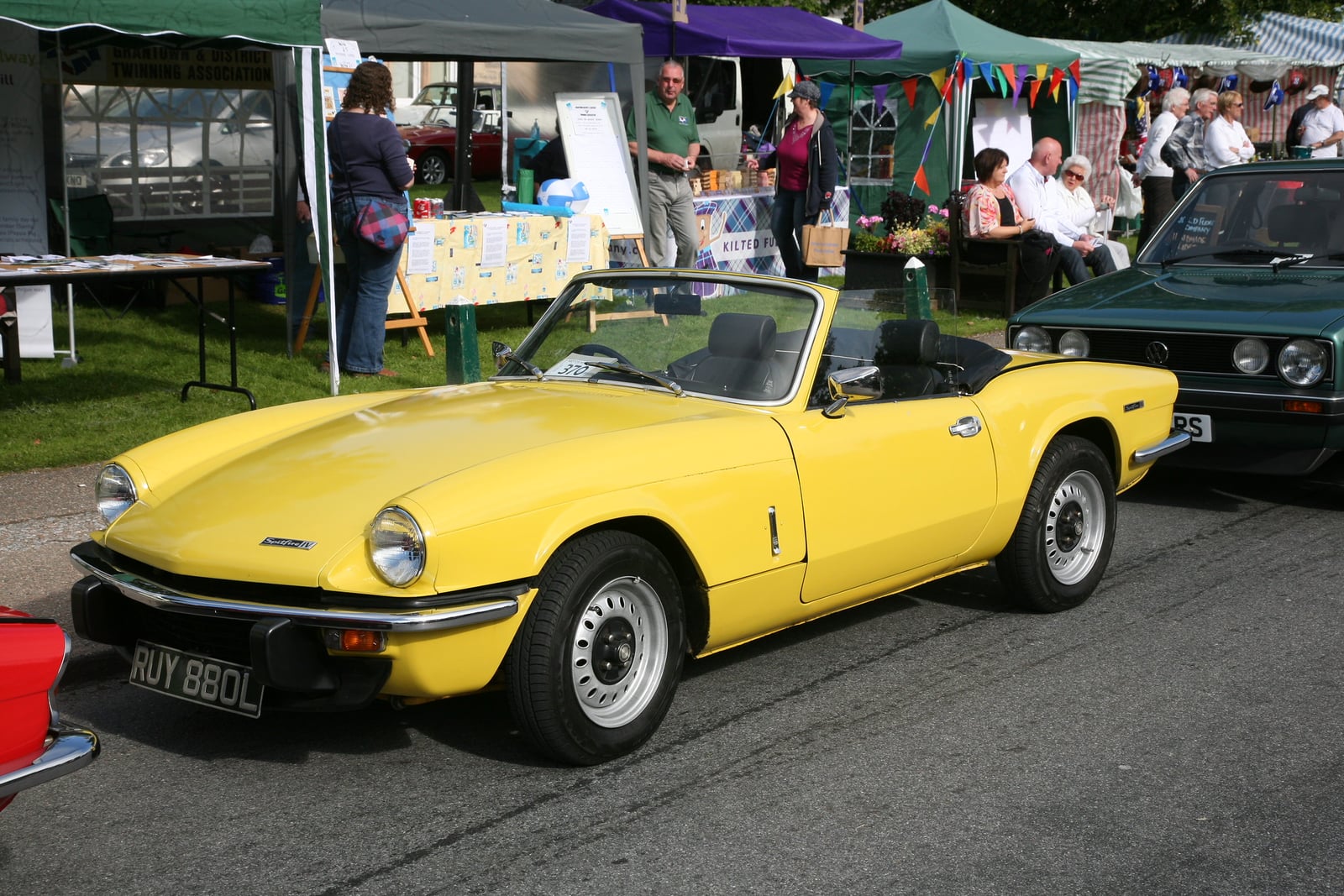
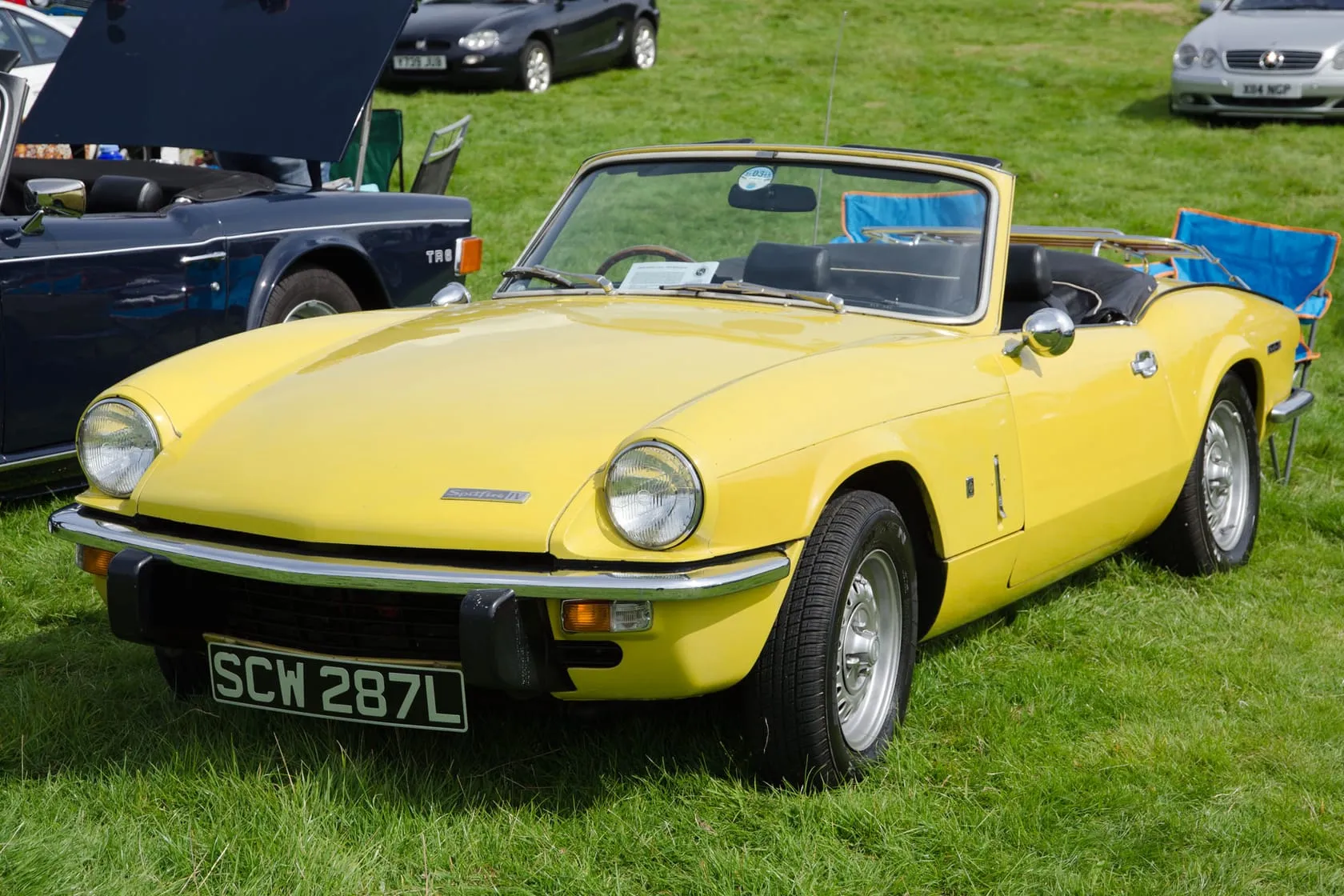
- Mk4 (1970–1974): a Michelotti restyle with a cut-off “Kamm” tail matching the GT6, and the important chassis change described below.
- 1500 (1974–1980): the largest 1493cc engine, the best torque and a genuine 100 mph top speed, though the bigger unit has a slightly weaker bottom end.
Across all five, around 314,000 Spitfires were built, making it by a wide margin the best-selling sporting Triumph.

The swing-axle handling, and the fix
The Spitfire’s one real dynamic flaw was inherited from the Herald. The early cars used a transverse-leaf swing-axle rear suspension, and under hard cornering or a sudden lift off the throttle the rear wheels could tuck under and change camber abruptly, producing snap oversteer. It was manageable once you knew about it, but it earned the early cars a reputation. Triumph fixed it properly on the Mk4 of 1970 with a clever “swing-spring” arrangement: the transverse leaf spring was pivoted at its centre, which removed the rear roll stiffness that caused the tuck-under. From the Mk4 onward the Spitfire handles cleanly and predictably, and many owners retro-fit the swing-spring to earlier cars.

What it is like to own
The appeal of a Spitfire is its simplicity. It is light, the engine is a tough, well-understood Standard-Triumph four, the cockpit is snug but usable, and almost everything on the car can be reached and repaired with ordinary tools. It is not fast in modern terms, even the 1500 takes around 13 seconds to 60 mph, but it is a genuine wind-in-the-hair roadster that costs little to run and even less to fix, and it has a charm that more capable cars lack. For many enthusiasts it is the perfect first classic.

Buying guide: what to look for
Rust is the Spitfire’s enemy, and because the body sits on a separate chassis there are two structures to check. On the body, look hard at the sills (which are structural and stiffen the whole car), the floors and boot floor, the front of the bonnet around the lights, the front valance and the rear wheel arches. On the chassis, check the main rails, the outriggers and the rear trailing-arm and radius-arm mounts. Cars built in the late 1970s used poorer-quality steel and rot faster. The worst trap is a home-restored car whose sills were replaced without bracing the shell, leaving a twisted bodyshell, so check that the doors shut cleanly and the gaps are even and the bonnet sits square.
Mechanically the news is good. The main thing to grease and check is the front vertical-link trunnions, which must be oiled regularly or they seize and can snap; replacement kits are cheap. On the 1500, watch for crankshaft thrust-washer wear, felt as fore-and-aft movement in the crank. Otherwise the engines and gearboxes are tough, and parts of every kind are available new, which is a large part of the Spitfire’s appeal.

The cheapest open Triumph, and where it sits
The Spitfire remains genuinely affordable, with the Mk4 and the 1500 the cheapest ways in and the early Mk1 and Mk2 the exception, priced for their rarity and originality; whatever the mark, condition and a sound chassis matter far more than the year. The full record, 487 recorded sales by mark, how the Spitfire compares with the Midget and the Sprite, and what the market has done since its 2020 peak, is on the page covering Triumph Spitfire values.
In the wider story the Spitfire is the people’s sports car, the open Triumph that put the roadster experience within reach below the TR sports cars, and the perennial rival to the MG Midget. Its upmarket six-cylinder sibling, the GT6, took the same platform and added a fastback roof and a straight-six.
Owners’ clubs and parts
The Triumph Sports Six Club is the principal club for the Spitfire and the rest of the small-chassis Triumph family, and runs its own spares operation; Club Triumph is the other long-established choice. Parts supply is excellent: body panels, chassis sections, trim, hoods, the optional factory hardtop’s fittings and mechanical parts are all available new through the marque specialists, which is exactly why the Spitfire is such a practical car to own.
The Spitfire in dates
- 1957Michelotti draws the car that will become the Spitfire.
- Oct 1962Launched at the London Motor Show as the Spitfire 4, on a shortened Herald chassis with a 1,147cc engine of around 63 bhp.
- 1965The Mk2 brings a mild power and trim upgrade on the same engine.
- 1967The Mk3 fits the 1,296cc engine and raises the front bumper for American headlamp-height rules, becoming the peppiest of the early cars.
- 1970The Mk4 restyle brings a Kamm tail and the swing-spring rear suspension that fixes the handling flaw for good.
- 1974The 1500 arrives with a 1,493cc engine, the best torque of the range and a genuine 100 mph.
- 1980Production ends at around 314,000 cars, the best-selling sporting Triumph by a wide margin.
Spitfire: what to check before you buy
Chassis and body
- The chassis is the structure, so it is the first check on any car
- Check the panel gaps are even and the bonnet sits square
- Bolt-on panels make cosmetic rust misleading in both directions
- Chassis sections are available new, which caps the worst case
Mechanical
- Front vertical-link trunnions must be oiled regularly or they seize and can snap; replacement kits are cheap
- On a 1500, watch for crankshaft thrust-washer wear, felt as fore-and-aft movement in the crank
- Engines and gearboxes are otherwise tough
- Overdrive, where fitted, is worth having and worth checking engages cleanly
Mark and suspension
- Mk1 to Mk3 use swing-axle rear suspension; the Mk4 onward has the swing-spring fix
- Many owners retro-fit the swing-spring to earlier cars, which is worth identifying
- Mk4 and 1500 are the cheapest ways in; Mk1 and Mk2 are priced for rarity and originality
- The optional factory hardtop's fittings are available new, so a missing one is not fatal
Related
The Spitfire is one of the classic Triumphs. It shares its chassis and much of its character with the Triumph Herald that spawned it and the six-cylinder Triumph GT6 coupe. For the wider period it belongs to, see British classic cars of the 1960s and the 1970s.
More photos