Triumph Dolomite Sprint: the 16-valve saloon that beat the world (1973–1980)
The Triumph Dolomite Sprint was British Leyland's answer to the BMW 2002, a compact sporting saloon whose clever single-cam 16-valve engine reached the mass market a decade ahead of the rest, and the first British car with alloy wheels as standard. A guide to the engineering, the racing success, what to look for when buying, and what they are worth.
Built 1973–1980 44 recorded sales

At a glance
- Years
- 1973–1980
- Body styles
- Four-door sporting saloon
- Drivetrain
- Front engine, rear-wheel drive
- Engines
- 1998cc 16-valve single-overhead-cam slant-four
- Power
- 127 bhp (DIN), about 135 bhp in the old SAE measure
- Top speed
- Around 119 mph
- Trim levels
- Top of the Dolomite range (1300, 1500, 1850, Sprint)
- Production
- 22,941 Sprints
- Assembly
- Canley, Coventry
- Designer
- Giovanni Michelotti (body); 16-valve head developed by Spen King's team
- UK survivors
- Around 420 Sprints left on UK roads
- Values
- Project £4,000-£6,500; good £10,000-£13,000; excellent £18,000-£22,000+
- Engineering firsts
- One of the first mass-produced 16-valve road-car engines, and the first British car with alloy wheels as standard
- Built to beat
- The BMW 2002 and Alfa Romeo 2000 GTV
The models
British Leyland is rarely remembered for engineering brilliance, which is exactly what makes the Triumph Dolomite Sprint such a surprise. A compact, handsome four-door saloon built to take on the BMW 2002, it was powered by an engine a decade ahead of its time: a 16-valve unit driven by a single overhead camshaft, reaching ordinary buyers long before 16-valve heads became the norm. It was also the first British car to come with alloy wheels as standard. It should have been a landmark; it was undercut, as so many Triumphs were, by the build quality and the collapse of the company around it.
The Dolomite Sprint is part of the classic Triumph range and its engineering high point, the sporting saloon that aimed squarely at the best of Germany.
From front-wheel drive to a rear-drive sports saloon
The Dolomite’s lineage runs through one of the odder reversals in British motoring. Triumph launched the front-wheel-drive 1300 in 1965 and the 1500 in 1970, but British Leyland, looking to cut cost, reverted to a cheaper rear-wheel-drive layout. The rear-drive Toledo arrived in 1970, and the upmarket Dolomite, with a 1854cc slant-four engine, followed in 1972. By 1976 the whole range was unified under the Dolomite name, from the 1300 up to the Sprint, all styled, like most Triumphs, by Giovanni Michelotti.
The Sprint itself arrived in 1973, conceived to chase the BMW 2002 and Alfa Romeo 2000 GTV, cars that were out-performing the standard Dolomite and costing Triumph both sales and prestige.

The 16-valve engine
The heart of the Sprint is its 1998cc engine, and it is a genuine piece of engineering history. Where a 16-valve head normally needs twin overhead camshafts, Triumph’s engineers, led by Spen King, contrived to drive sixteen valves from a single camshaft: the inlet valves were operated directly through bucket tappets, the exhaust valves through rocker arms. The head design won a British Design Council award in 1974, and the engine reached the mass market roughly a decade before multi-valve units became common, which makes the Sprint one of the first mass-produced 16-valve cars.
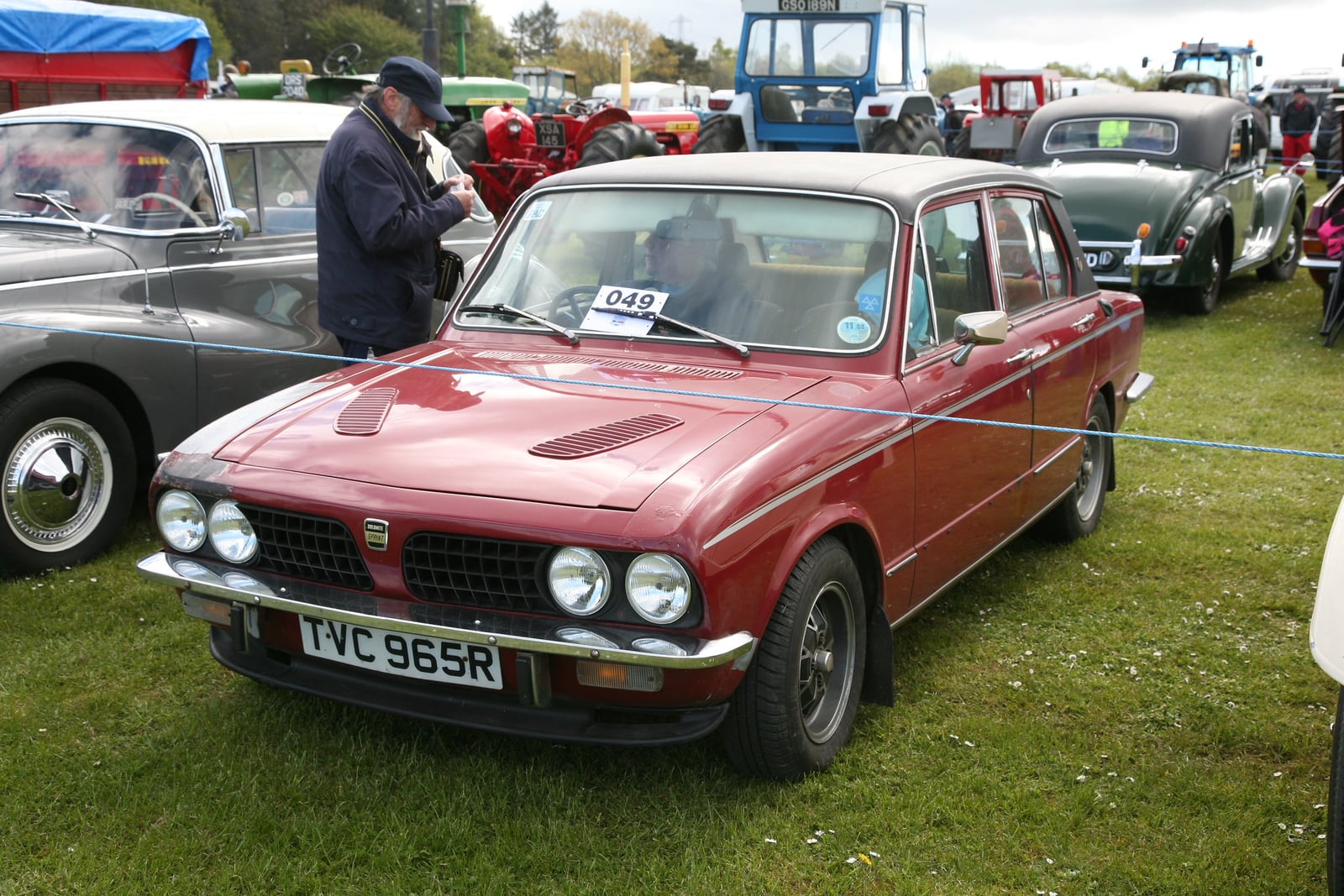
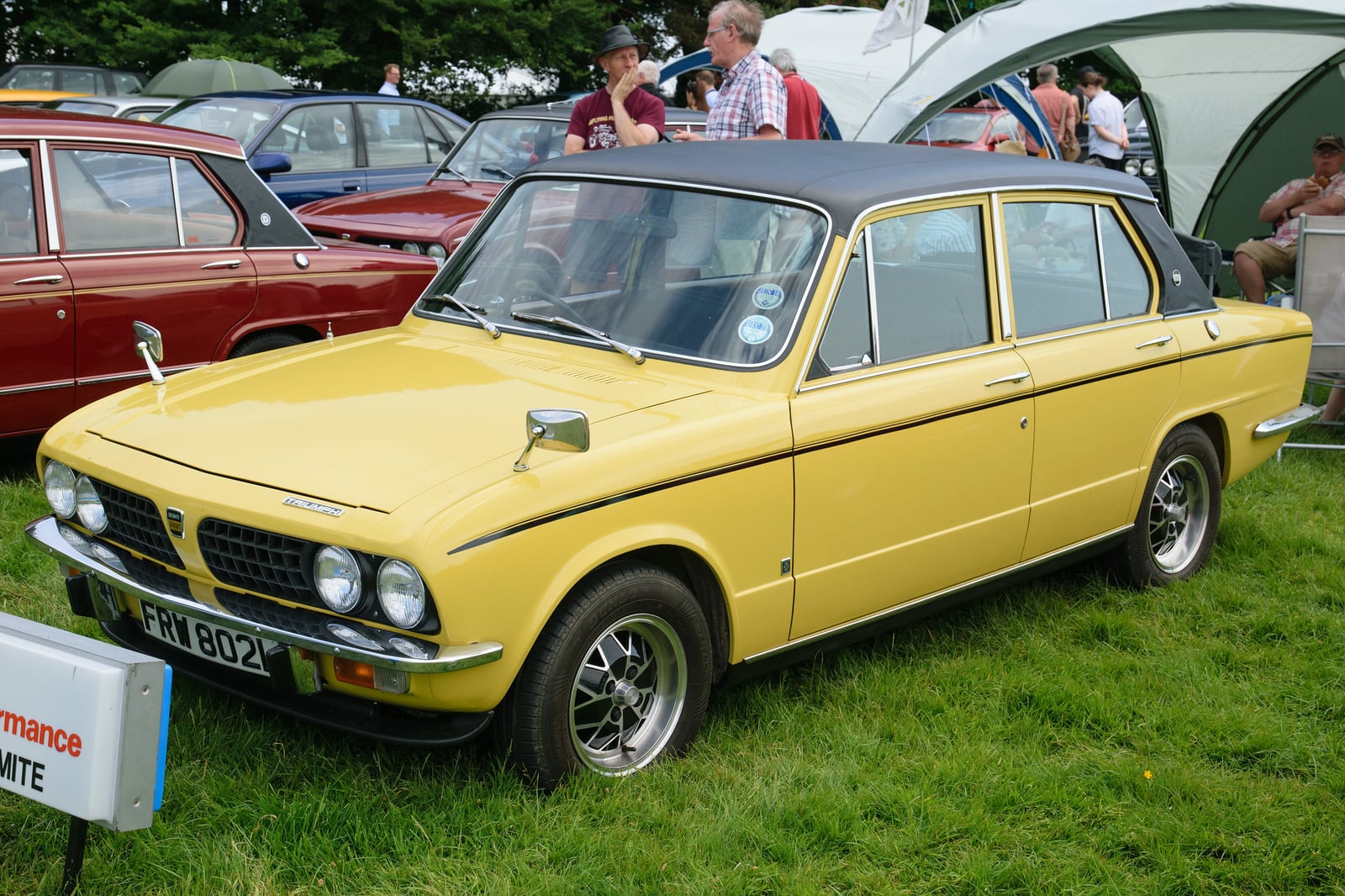
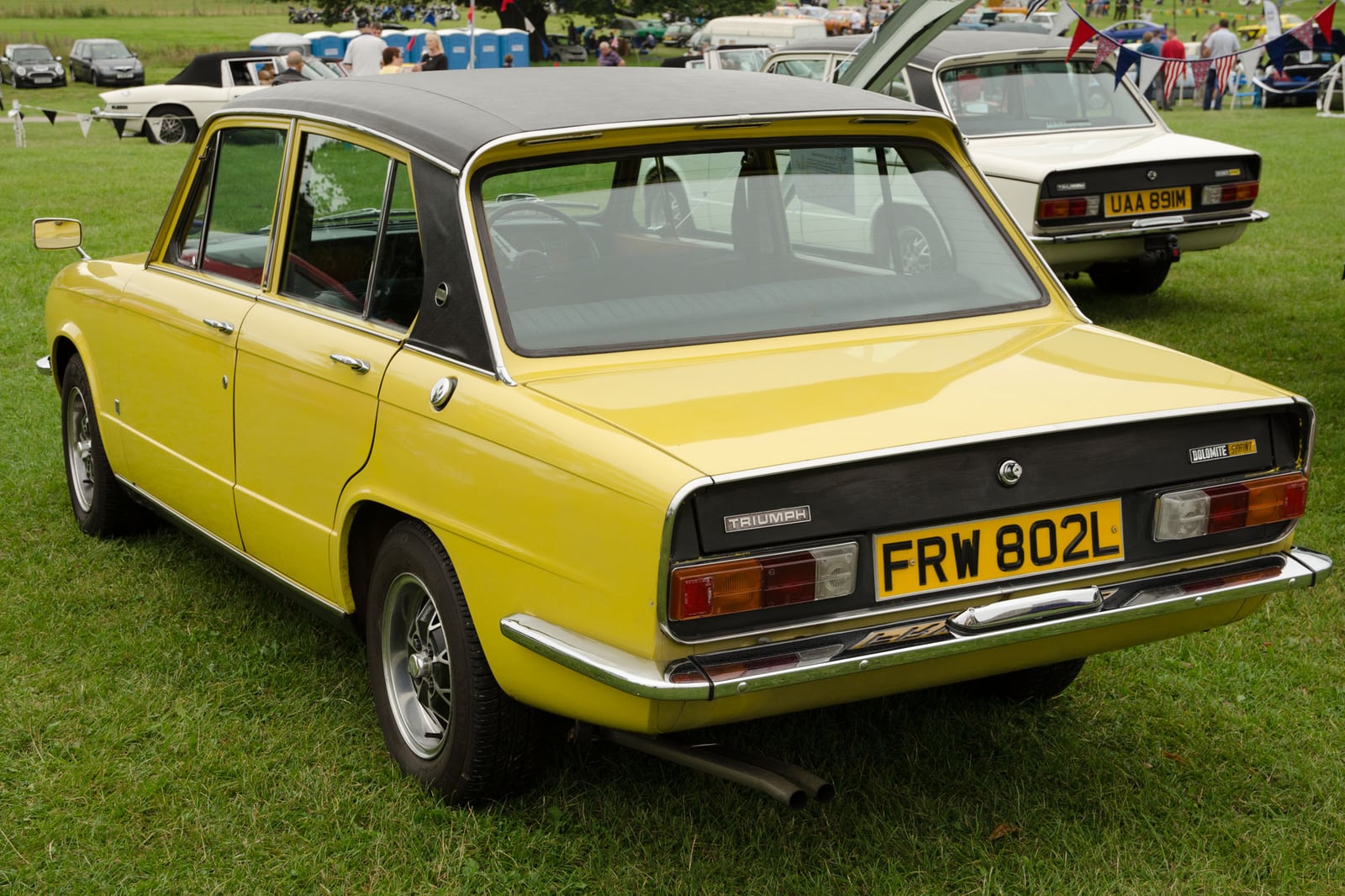
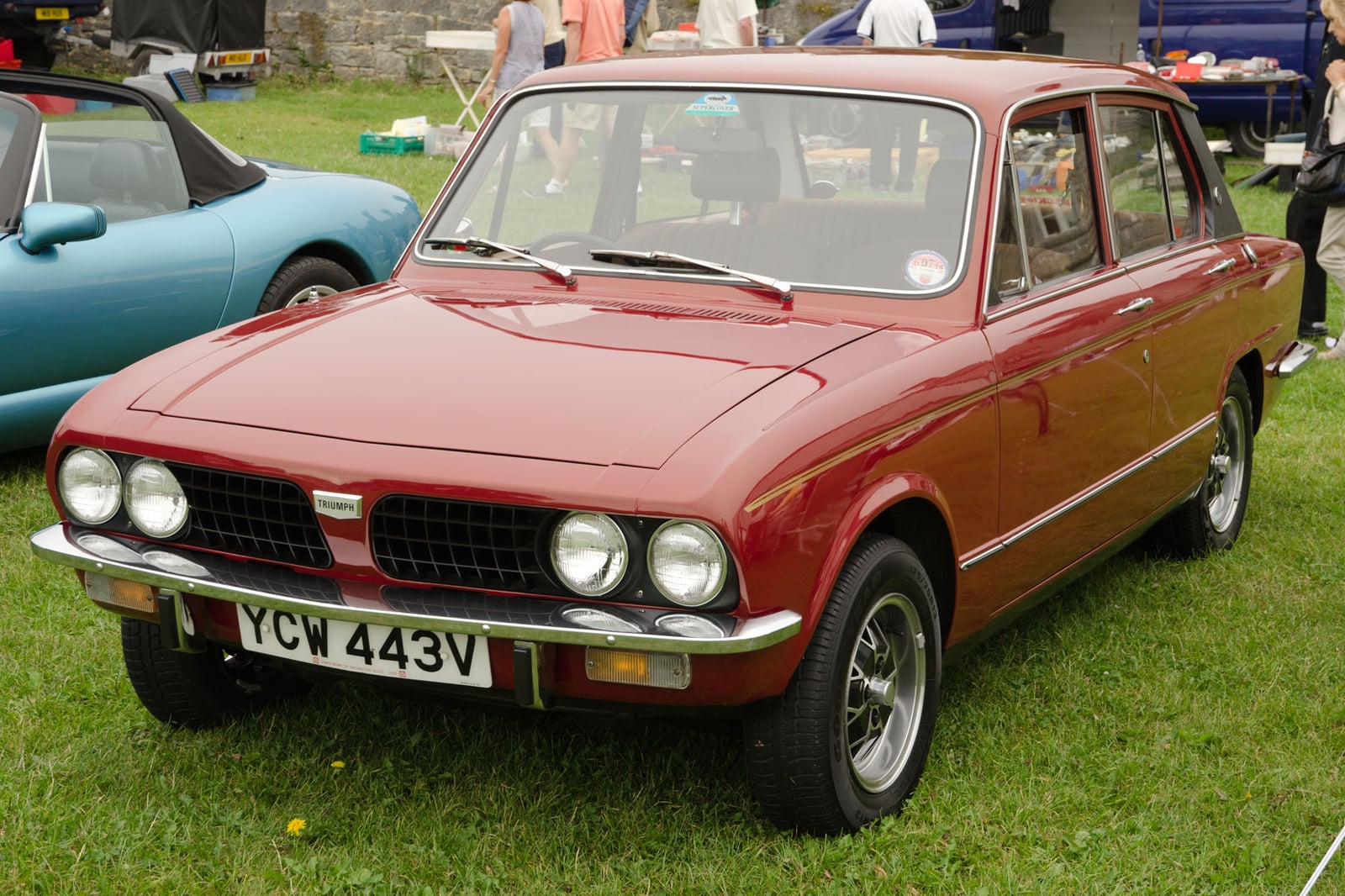
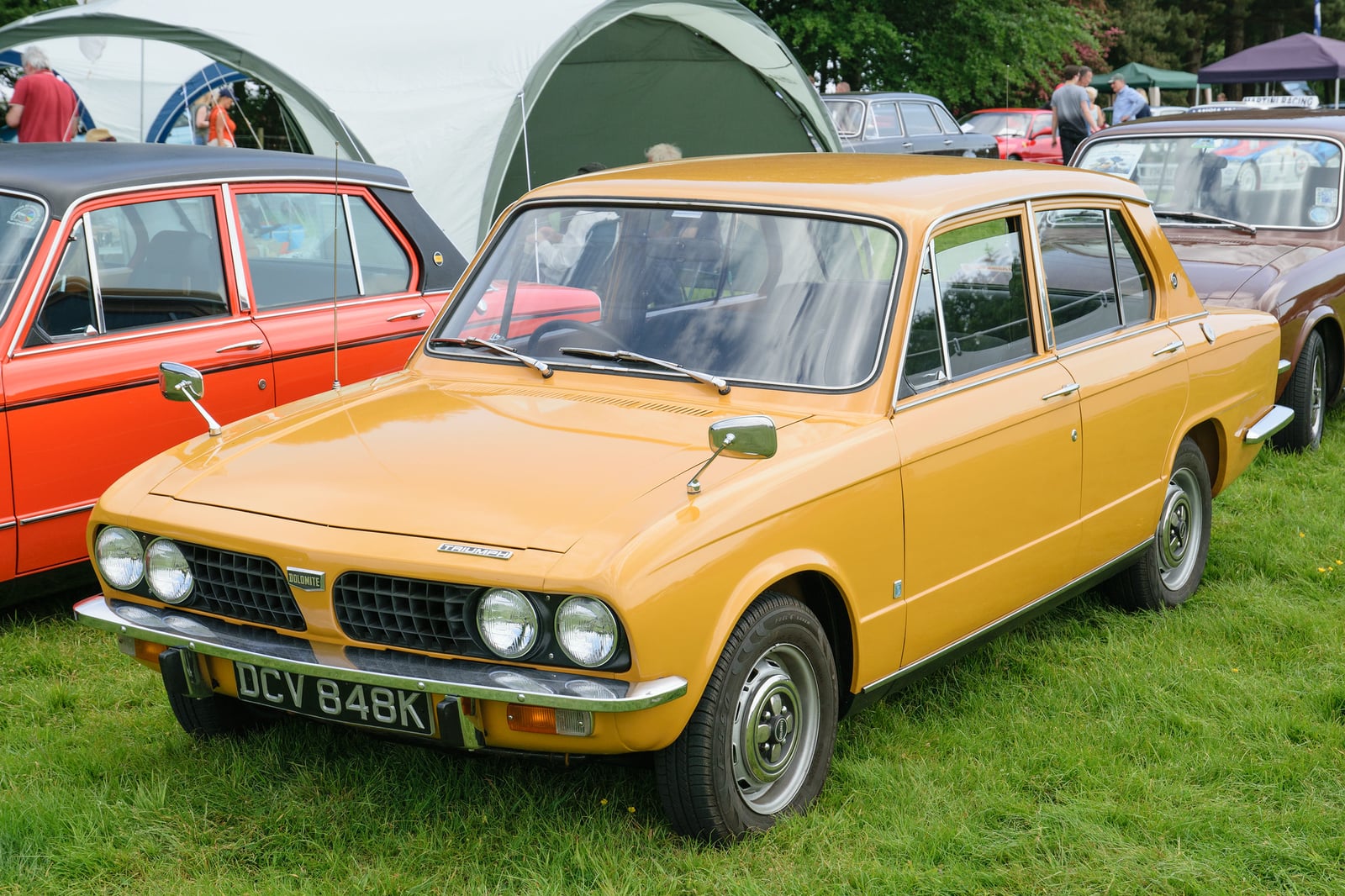
It was originally to be called the Dolomite 135, after a target of around 135 bhp, and an early test engine is said to have given 150 bhp on the bench. The production figure of 127 bhp sounds like a detune, but it is mostly a change of measurement standard: the switch from the old SAE method to the stricter DIN standard knocked the headline figure down by about five per cent, so 135 bhp SAE became 127 bhp DIN, and the car was renamed the Sprint. Either way it was good for around 119 mph and a 0 to 60 time of about 8.4 seconds, genuinely rapid for a 2.0-litre saloon of the period. The Sprint also wore standard alloy wheels, a British production first, along with a four-headlamp face, overdrive (a Triumph Dolomite automatic was also offered, on Sprint and the lesser 1850 alike) and, often, a vinyl roof.

A real racing pedigree
The Sprint was not just quick on paper. In the hands of the Broadspeed team it was hugely successful in the British Saloon Car Championship, the forerunner of the BTCC. Broadspeed took the manufacturers’ title in 1974, and Andy Rouse won the drivers’ championship outright in a Sprint in 1975, with Tony Dron among the other front-running drivers. That touring-car record is part of why the Sprint is remembered as more than just a clever engine.

Buying guide: what to look for
The Sprint rusts in the familiar British Leyland places, so check the wheel-arch lips and inner arches, the door bottoms, the headlamp surrounds, the bonnet and boot floor, the front bulkhead and the front door pillars. The worst and hardest area to repair is the junction where the windscreen pillar meets the bulkhead and inner wing, and a vinyl roof can hide rust beneath it. Cars built before the 1976 rationalisation generally resist rot a little better.
The engine is where knowledge pays. Overheating that warps the head or blows the head gasket is the Sprint’s defining weakness, so check that the correct Sprint-specific radiator is fitted, that the cooling system has been kept healthy with the right coolant, and that there is a known head history. Look for timing-chain rattle and the usual oil leaks. A well-maintained Sprint with a sorted cooling system is reliable, but a neglected one can be an expensive engine waiting to happen. Mechanical parts are well supported, though some Sprint-specific trim, the wood cappings and original cloth, can be scarce.

Current value and where it sits
A project Sprint sits between roughly £4,000 and £6,500, a good car between £10,000 and £13,000, and an excellent one between £18,000 and £22,000 or a little more, with competition cars worth far above that. The lesser 1300 and 1500 Dolomites are much cheaper. With only around 420 Sprints left on UK roads, the car has real scarcity on its side.
In the wider story the Dolomite Sprint is the compact sporting saloon that was British Leyland’s answer to the BMW 2002, and an engineering high point, the 16-valve head, that the company’s build quality and collapse never let it fully exploit. Its engine shares its design lineage with the V8 in the Triumph Stag, another brilliant idea undone by the same era. Today it is a cult classic, prized precisely for that clever head.

Owners’ clubs and parts
The Triumph Dolomite Club is the main marque club for the Sprint, with the Triumph Sports Six Club and Club Triumph also covering it, offering technical support, dating and spares. Mechanical parts are reasonably well supported, with the scarcer items being the Sprint-specific trim and some switchgear.
Dolomite Sprint: what changed and when
- 1970British Leyland reverts Triumph's small saloons to rear-wheel drive with the Toledo, reversing the front-drive 1300 of 1965.
- 1972The upmarket Dolomite arrives with the 1,854cc slant-four.
- 1973The Sprint arrives to chase the BMW 2002 and Alfa 2000 GTV: sixteen valves from a single camshaft, 127 bhp DIN, and the first British car with standard alloy wheels.
- 1974The head design wins a British Design Council award; Broadspeed takes the British Saloon Car manufacturers' title.
- 1975Andy Rouse wins the drivers' championship outright in a Sprint.
- 1976The whole range is unified under the Dolomite name, from the 1300 up to the Sprint.
- 1980Production ends at 22,941 Sprints; around 420 remain on UK roads.
The Dolomite Sprint viewing checklist
The engine, where knowledge pays
- Check the correct Sprint-specific radiator is fitted and the cooling system has been kept healthy
- Ask for a known head history: warped heads and blown gaskets are the defining weakness
- Listen for timing-chain rattle and look for the usual oil leaks
- A sorted Sprint is reliable; a neglected one is an expensive engine waiting to happen
Rust
- Wheel-arch lips and inner arches, door bottoms and headlamp surrounds
- Bonnet, boot floor, front bulkhead and front door pillars
- The windscreen-pillar-to-bulkhead junction is the worst and hardest area to repair
- A vinyl roof can hide rust beneath it, and pre-1976 cars generally resist rot a little better
Trim and specification
- Sprint-specific trim, wood cappings and original cloth are the scarce items
- Overdrive was standard fare; the Triumph Dolomite automatic exists on Sprint and 1850 alike
- Competition history multiplies value and needs documenting
- The Triumph Dolomite Club, TSSC and Club Triumph all cover the model
What the Dolomite Sprint sells for at auction
The Dolomite Sprint comes to auction only occasionally: 44 recorded sales since 2009, typically making between £8,672 and £16,312 . With so few sales, treat any single result as a data point rather than a market price.
- £20,100Dolomite Sprint
- £11,700Dolomite Sprint
- £5,220Dolomite Sprint
- £7,188Dolomite Sprint
- £8,750Dolomite Sprint
Thin evidence. Only 44 recorded sales: read the figures as a sketch of the market, not a price. Based on 44 sold results from public classic car auctions (2009 to 10 August 2026). Sold prices, not asking prices, and not a valuation: condition, history and specification vary from car to car. Inflation-adjusted figures use the ONS CPIH index, in 2025 money.
Related
The Dolomite Sprint is one of the classic Triumphs, and shares its engine family with the Triumph Stag. It belongs to the British Leyland era and to the classic cars of the 1970s.
More photos