Triumph Herald: a bolt-together chassis that saved Standard-Triumph (1959–1971)
The Triumph Herald was the charming, infinitely fixable small car whose separate bolt-together chassis, born of a body-supply crisis, saved Standard-Triumph and spawned the Spitfire, Vitesse and GT6. A guide to the 948, 1200, 12/50 and 13/60, the famous turning circle and tilt-forward bonnet, what to look for, and what they are worth.
Built 1959–1971 146 recorded sales

At a glance
- Years
- 1959–1971
- Body styles
- Saloon, coupe, convertible, estate and van
- Drivetrain
- Front engine, rear-wheel drive
- Engines
- 948cc, 1147cc and 1296cc four-cylinder
- Power
- Around 35 to 61 bhp
- Top speed
- Around 70 to 80 mph
- Trim levels
- Herald 948, 1200, 12/50, 13/60
- Production
- Well over half a million
- Assembly
- Canley, Coventry, plus knock-down kit assembly worldwide
- Designer
- Giovanni Michelotti
- Values
- Saloon project £750-£2,000, good £2,000-£3,500, excellent to £7,000; convertibles £3,500-£12,500
- Construction
- Separate chassis with bolt-on body panels
- Spawned
- The Spitfire, Vitesse and GT6 sports cars
The models
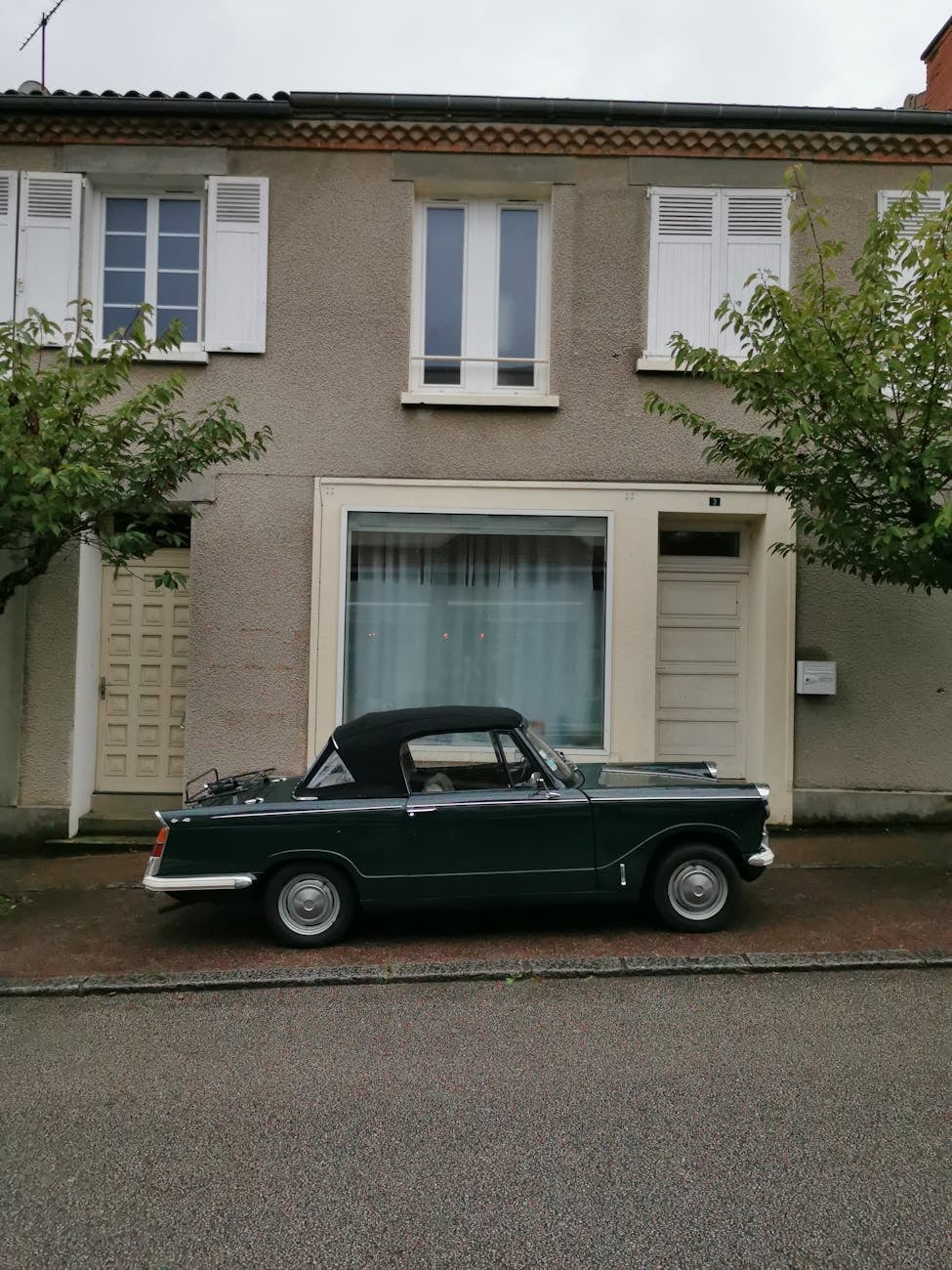
Cheap, charming and infinitely fixable, the Triumph Herald put Standard-Triumph back on its feet and, almost as a side effect, gave the company a whole family of sports cars. Born of a crisis over where to source its body, it turned a constraint into a virtue, and the bolt-together chassis that resulted became the basis for the Spitfire, the Vitesse and the GT6. For a modest, friendly classic with a genuinely central place in the story, the Herald is hard to beat.
The Herald is part of the classic Triumph range and, in many ways, its foundation stone.
A car built around a problem
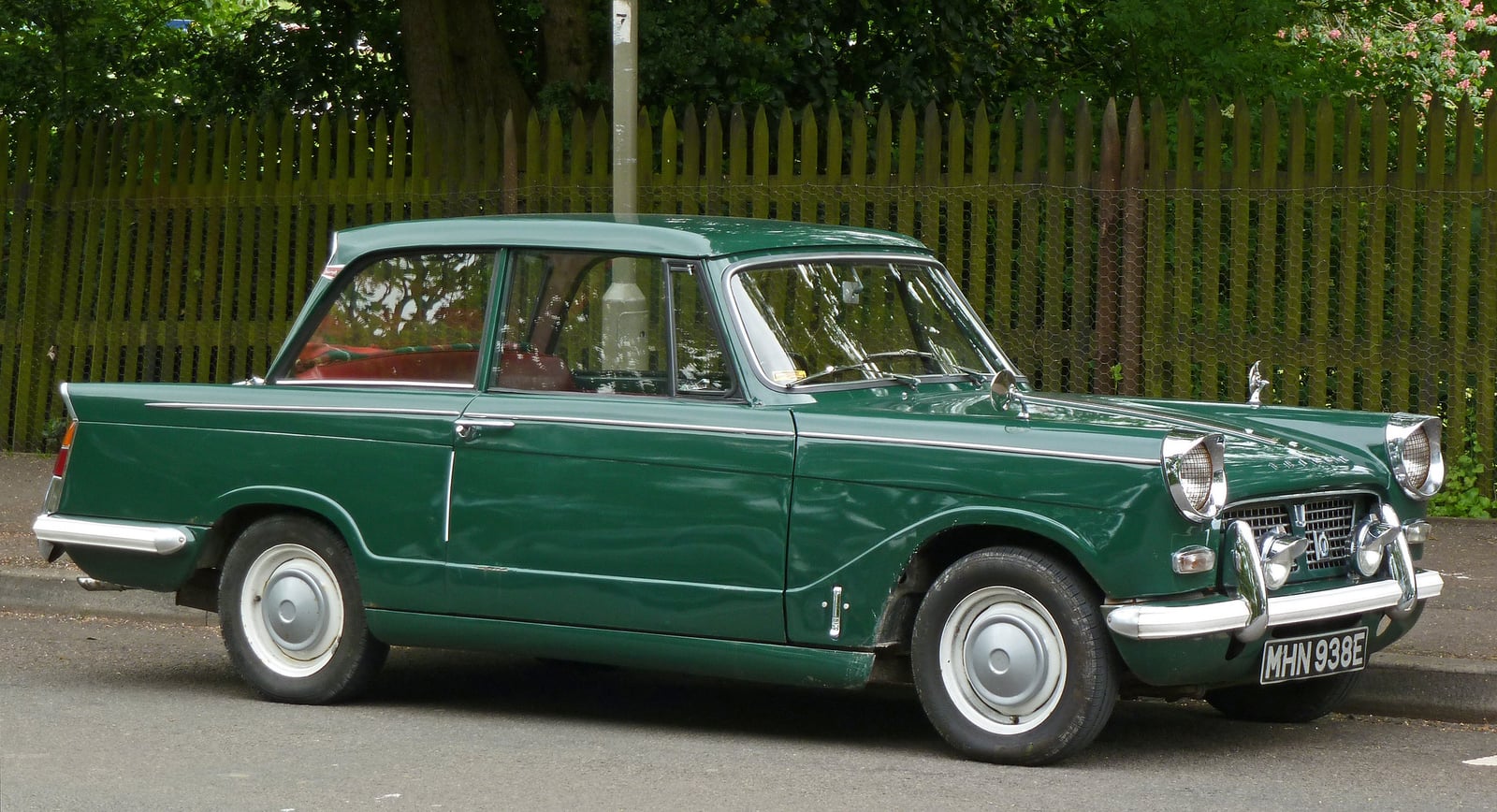
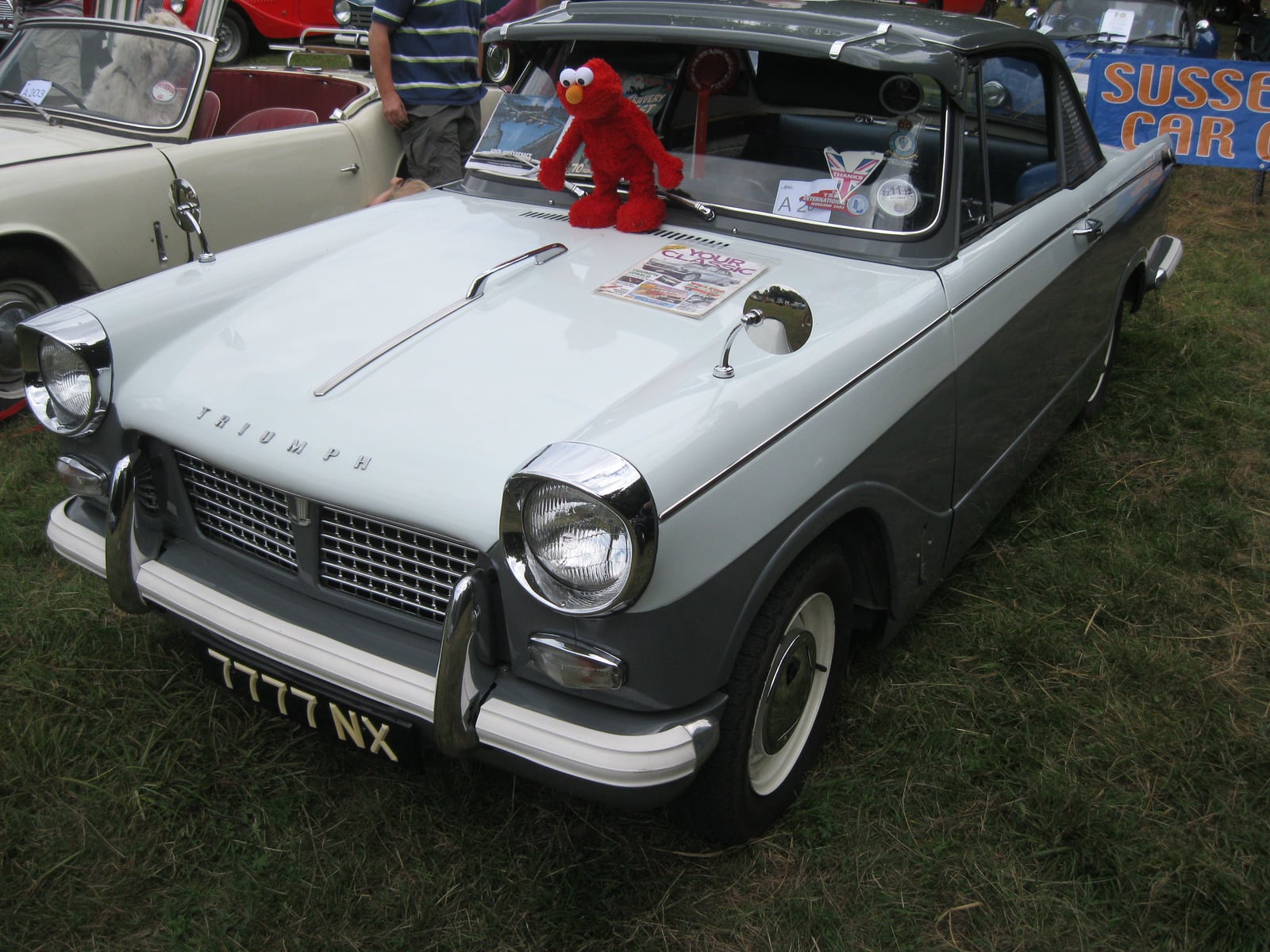
The Herald was launched in April 1959, styled by Giovanni Michelotti with the razor-edge lines and huge glass area that defined Triumph’s small cars for a decade. But its defining feature came from a problem. Standard-Triumph’s body supplier had been bought by the rival British Motor Corporation, which then refused to press the cheap monocoque shell the new car needed. With no way to source a unitary body affordably, Triumph fell back on a separate chassis with bolt-on body panels made by smaller suppliers and assembled at Canley.
That decision shaped everything. The separate chassis was cheap to tool, and it suited knock-down kit export beautifully, because the chassis itself served as the assembly jig, so Heralds could be built in markets from India to Australia. It also let one underlying car wear saloon, coupe, convertible, estate and van bodies, and, crucially, it could be shortened and modified to underpin a sports car. The Herald is widely credited with saving Standard-Triumph, and Leyland bought the company in 1960 on the strength of it.

The versions
The Herald ran through four main versions over twelve years:
- Herald 948 (1959–1964): the original, with a 948cc engine.
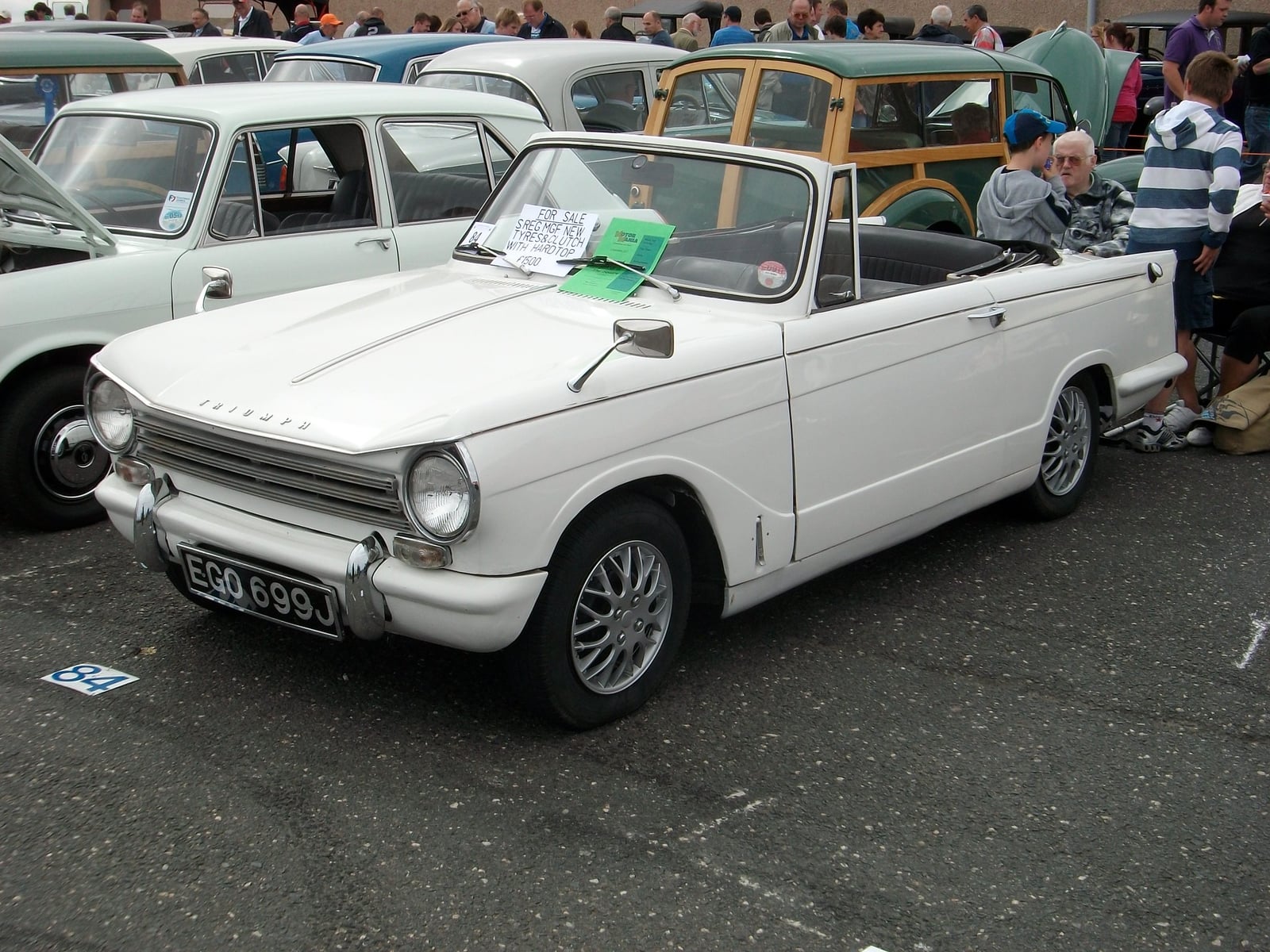
- Herald 1200 (1961–1970): the bigger 1147cc engine, funded by Leyland, and the best-seller of the range.
- Herald 12/50 (1963–1967): a tuned 1147cc saloon with a standard folding sunroof and front disc brakes.
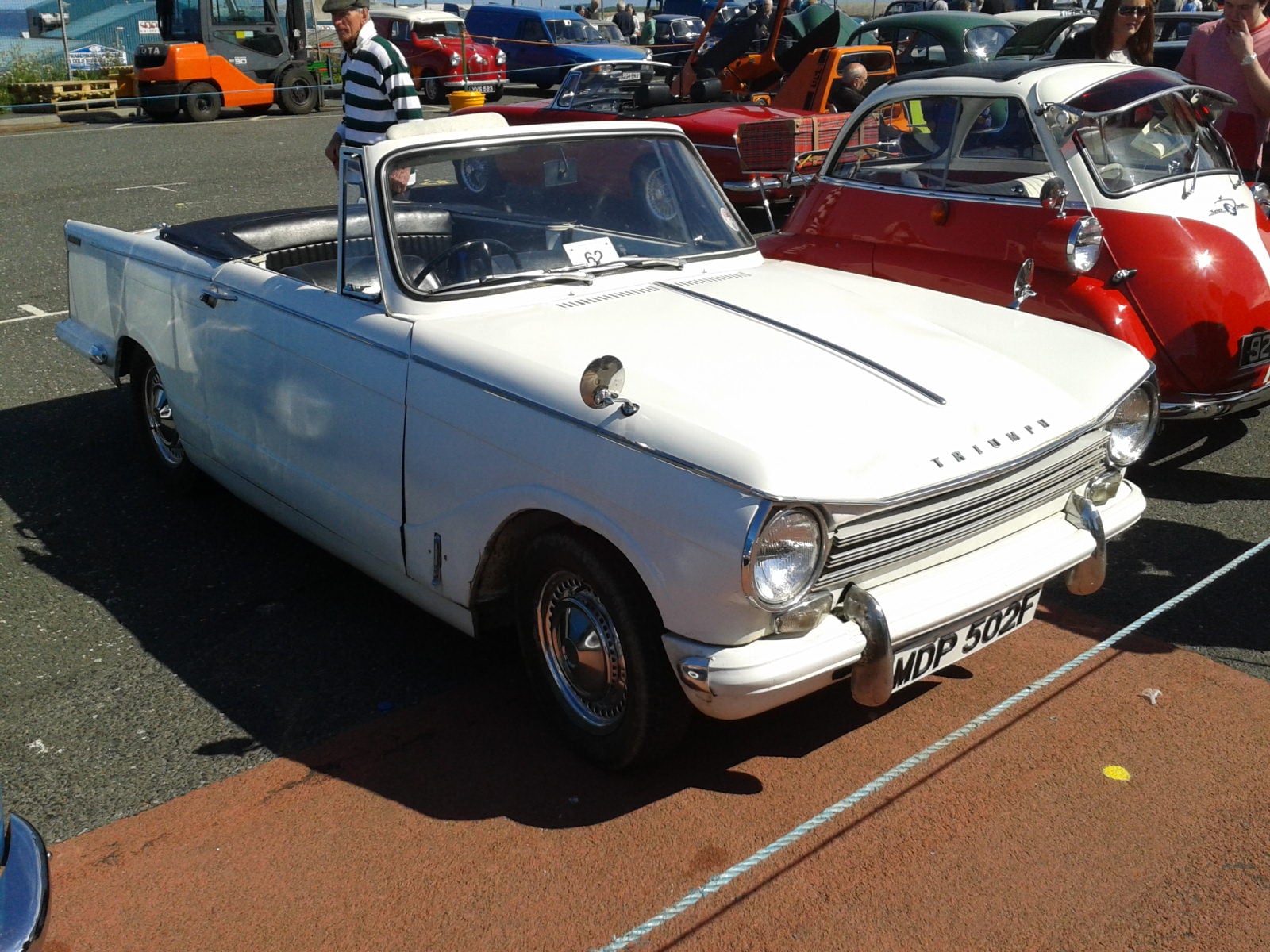
- Herald 13/60 (1967–1971): the final and best-developed car, with a 1296cc engine and a restyled, sloping Vitesse-style front.
In total well over half a million Heralds were built across all the versions, an enormous number that is a large part of why they remain so affordable and so well supported today.

Living with one
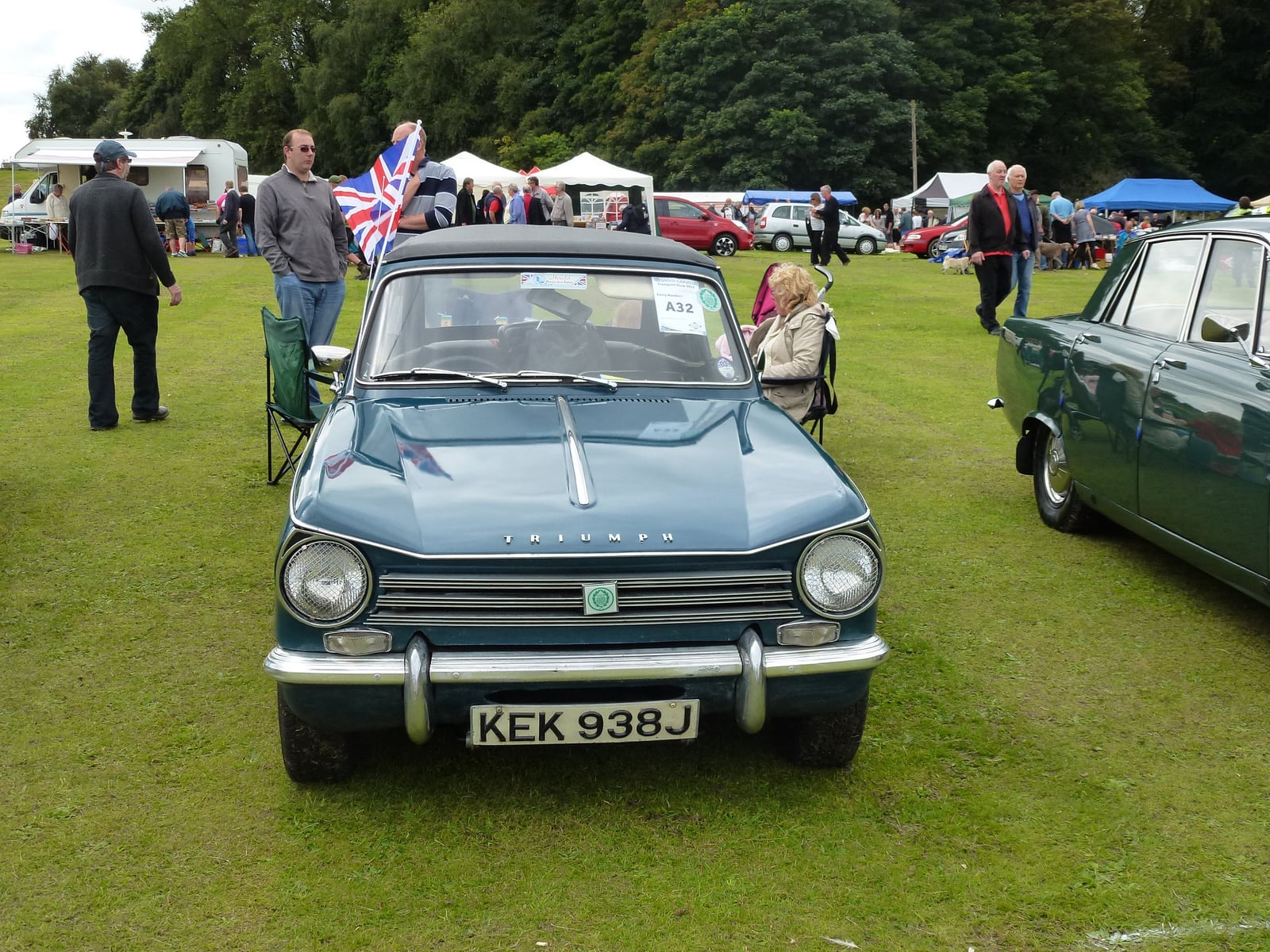
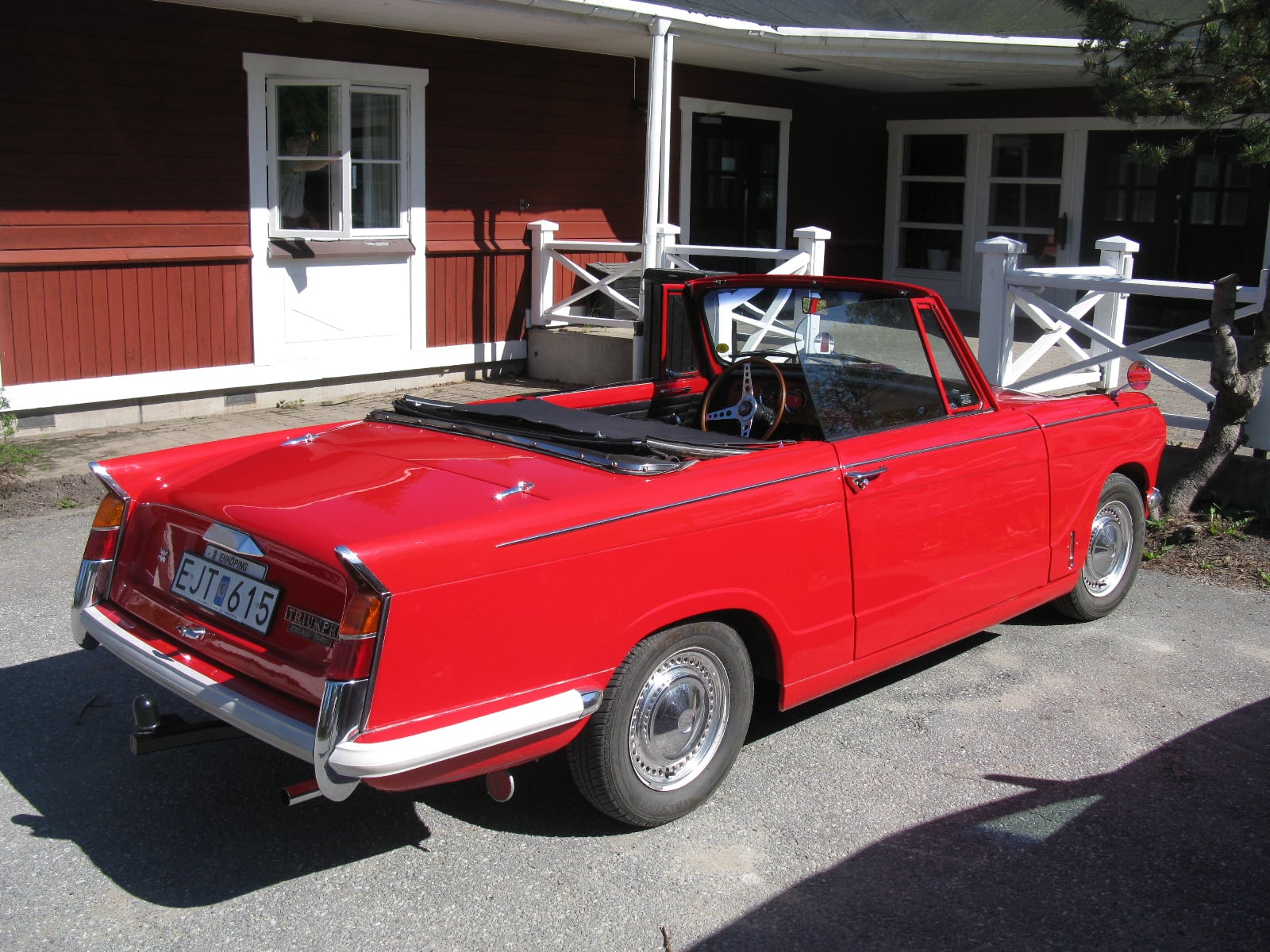
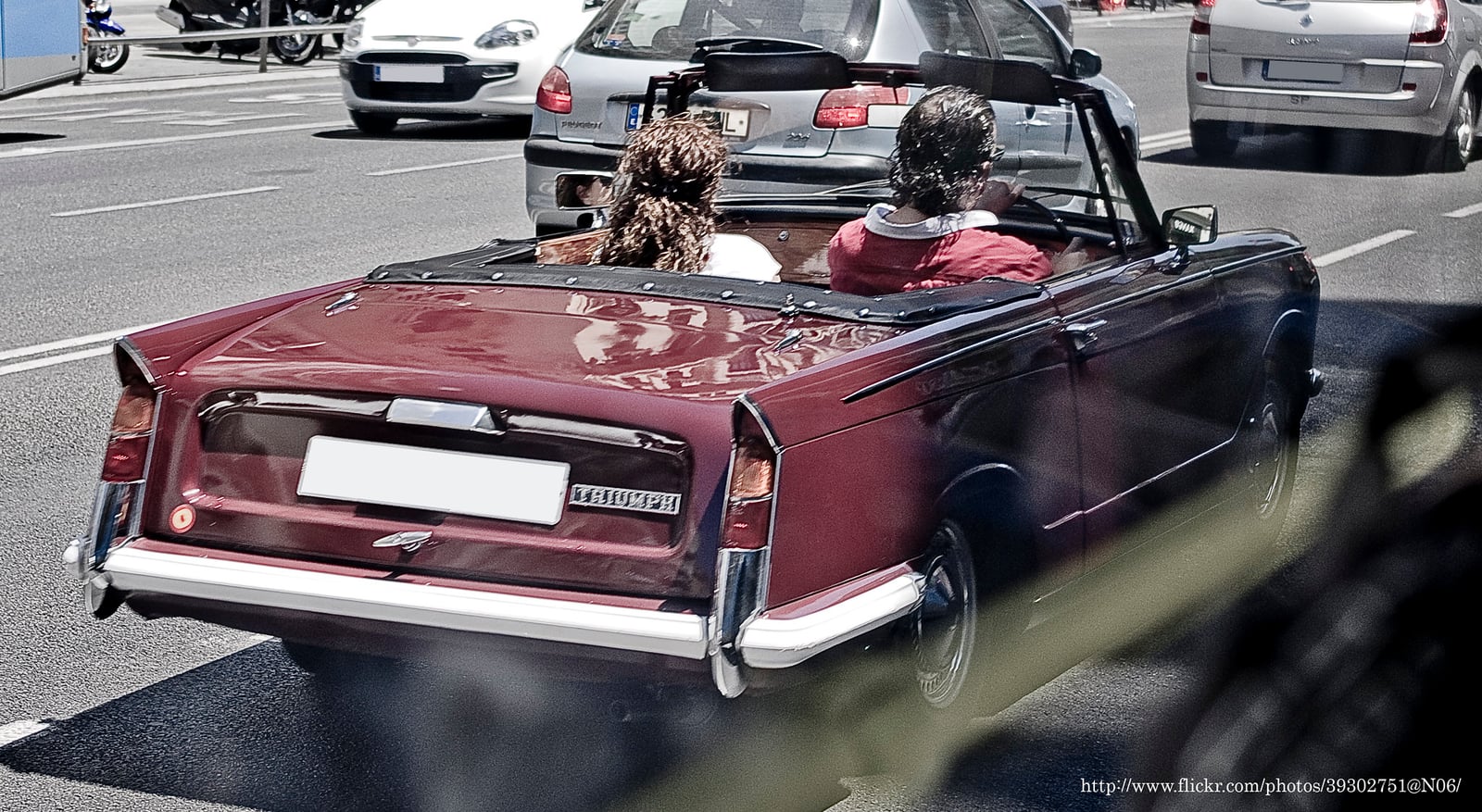
The Herald’s appeal is its honesty. It is light, simple and slow, but it is also genuinely useful and one of the easiest classics to own. The tilt-forward one-piece front gives complete access to the engine, the rack-and-pinion steering gives a famously tight turning circle of around 25 feet that was a real selling point, and almost everything can be repaired at the roadside with basic tools. The convertible is a delightful, affordable open car. The one dynamic quirk is the swing-axle rear suspension, shared with the early Spitfire and Vitesse, which can produce some rear-end tuck-under if you lift off mid-corner, manageable once you know about it.

Buying guide: what to look for
On a Herald the chassis is the structure, so it is the first and most important check. Look hard at the main chassis rails, particularly the section either side of the differential where road dirt collects, and at the outriggers that sit behind the bolt-on sills. Rotten outriggers let the body sag, which shows up as uneven door gaps and doors that will not shut cleanly, and putting them right means lifting the body off. Confirm the chassis is still bolted to the body with the correct flexible membrane in between; a previous owner who has welded them together is a warning sign. Note that, unusually, the visible outer sills are not structural on a Herald, though you should still inspect the metal around them.
The bodywork rusts in the usual places, the floors, door bottoms, wing bottoms, A-pillars and the bonnet’s inner arches. Mechanically the signature check is the front vertical-link trunnions, which need feeding with oil roughly every 6,000 miles or they seize and can snap the suspension, often at low speed when turning; the fix is cheap and easy. Watch too for crankshaft thrust-washer wear, felt as movement at the pulley. Parts of every kind are readily available, which makes the Herald a very practical first classic.

Current value and where it sits
The Herald is one of the most affordable classics on the road. Saloon projects start under £1,000, good usable saloons sit between £2,000 and £3,500, and excellent cars reach around £7,000. Convertibles command a clear premium, with good cars around £6,000 and the best reaching £11,000 to £12,500. The Triumph Herald 13/60 is the most sought-after for everyday use.
In the wider story the Herald is the car that gave Standard-Triumph a future, and whose separate chassis became the foundation for the Spitfire, the Vitesse and the GT6. Historically it matters out of all proportion to its modest performance.

Owners’ clubs and parts
The Triumph Sports Six Club is the main club for the Herald and the rest of the small-chassis Triumph family, and runs its own spares operation; Club Triumph is the other established choice. Parts supply is excellent, with body panels, chassis sections, trunnions, hoods and mechanical parts all available new, a strong argument for the Herald as an everyday classic.
Herald: what changed and when
- 1959Launched in April with Michelotti's razor-edge lines, on a separate chassis with bolt-on panels because BMC had bought the body supplier and refused to press a monocoque.
- 1960Leyland buys Standard-Triumph on the strength of the Herald's success.
- 1961The Herald 1200 arrives with a Leyland-funded 1,147cc engine and becomes the best-seller of the range.
- 1962The shortened chassis underpins the Spitfire, and later the Vitesse and GT6.
- 1963The 12/50 adds a tuned 1,147cc engine, a standard folding sunroof and front disc brakes.
- 1967The 13/60 brings a 1,296cc engine and a restyled sloping Vitesse-style front, the best-developed car of the range.
- 1971Production ends after well over half a million cars, including knock-down kit assembly worldwide.
What to check on a Herald
Chassis, first and most important
- Main chassis rails, particularly either side of the differential where road dirt collects
- The outriggers behind the bolt-on sills: rotten ones let the body sag
- Uneven door gaps and doors that will not shut cleanly are the symptom
- Confirm the chassis is still bolted to the body with the correct flexible membrane; welded-together is a warning sign
Body
- Floors, door bottoms, wing bottoms and A-pillars
- The bonnet's inner arches
- The visible outer sills are not structural on a Herald, though the metal around them still matters
- Bolt-on construction means panel replacement is straightforward once the chassis is sound
Mechanical
- Front vertical-link trunnions need oil roughly every 6,000 miles, and the fix is cheap and easy
- Crankshaft thrust-washer wear, felt as movement at the pulley
- Swing-axle rear suspension is manageable once you know about it
- 948, 1,147 and 1,296cc engines all appear; the 13/60's is the most developed
What the Herald sells for at auction
In 2025 the median Herald sold for £4,000 across 19 sales, 19% up on 2024. In real terms, typical Herald prices were down about 26% over the five years to 2025, once inflation is accounted for.
| Variant | Sold | Typical range | Median |
|---|---|---|---|
| Herald 13/60 | 63 | £1,800 - £6,132 | £3,808 |
| Herald 1200 | 37 | £3,150 - £6,300 | £4,100 |
| Herald 12/50 | 15 | £3,125 - £6,452 | £4,032 |
| Herald | 8 | £2,163 - £3,558 | £2,968 |
Show the year-by-year mediansHide the year-by-year medians
| Year | Sold | Median | In 2025 money |
|---|---|---|---|
| 2026 (so far) | 14 | £2,950 | |
| 2025 | 19 | £4,000 | £4,000 |
| 2024 | 18 | £3,350 | £3,479 |
| 2023 | 14 | £4,339 | £4,656 |
| 2022 | 29 | £4,760 | £5,451 |
| 2021 | 13 | £4,603 | £5,692 |
| 2020 | 10 | £4,256 | £5,394 |
| 2019 | 5 | £3,398 | £4,350 |
| 2018 | 5 | £5,300 | £6,900 |
| 2017 | 6 | £5,795 | £7,719 |
| 2016 | 6 | £1,854 | £2,533 |
- £4,420Herald
- £800Herald
- £2,800Herald
- £3,270Herald
- £6,950Herald
Reasonable evidence. 146 recorded sales: enough for the range to mean something, though a few unusual cars can still move a single year's median. Based on 146 sold results from public classic car auctions (2007 to 10 August 2026). Sold prices, not asking prices, and not a valuation: condition, history and specification vary from car to car. Inflation-adjusted figures use the ONS CPIH index, in 2025 money.
Related
The Herald is one of the classic Triumphs, and the car whose chassis spawned the Triumph Spitfire and the Triumph GT6. For the wider period it belongs to, see British classic cars of the 1960s and the 1970s.
More photos