Jensen Interceptor: the Anglo-Italian V8 grand tourer (1966–1976)
The Jensen Interceptor paired Italian styling and a hand-built West Bromwich body with a big Chrysler V8, and its wraparound glass hatch made it one of the most distinctive British grand tourers. A guide to the Mk I to Mk III, the SP and convertible, what to look for, and what they are worth.
Built 1966–1976 350 recorded sales

At a glance
- Years
- 1966–1976
- Body styles
- Two-door fastback coupe; convertible and notchback coupe from 1974
- Drivetrain
- Front engine, rear-wheel drive
- Engines
- 6.3 and 7.2-litre Chrysler V8
- Power
- Around 330 bhp, up to 385 bhp in the SP
- Trim levels
- Mk I, Mk II, Mk III; SP; Convertible; Coupe
- Production
- Around 6,400, including the four-wheel-drive FF
- Assembly
- West Bromwich, England; early bodies built by Vignale, Italy
- Designer
- Carrozzeria Touring of Milan, productionised by Vignale
- Values
- Usable from around £20,000; good cars £40,000-£70,000; the best convertibles and SP cars well beyond
- Signature
- The huge wraparound rear glass hatch over a fastback tail
- Bodywork
- Steel, replacing the fibreglass of the CV8 it succeeded
The models
Few British cars announce themselves like the Jensen Interceptor. Italian styling, a hand-built body from a small factory in West Bromwich, and a huge American V8 under a long bonnet, all topped by a wraparound sheet of rear glass that nothing else on the road shared. It was Jensen’s grand tourer for a decade, and it remains the car the marque is remembered for.
Italian lines, English hands
The Interceptor’s shape came from Carrozzeria Touring of Milan, and the earliest bodies were built in Italy by Vignale before production moved home to West Bromwich. The result was a long, low two-door fastback whose signature was the vast curved glass tailgate, a single piece of wraparound glazing over the luggage area that has defined the car ever since.
It mattered that the body was now steel. The Interceptor replaced the fibreglass CV8, and the switch to a steel shell with proper coachbuilt finish gave the new car a more expensive, more cohesive look that the divisive CV8 never had. Where the CV8 split opinion, the Interceptor was admired almost universally.

The Chrysler V8 heart
Under the bonnet sat a big, lazy American V8 bought in from Chrysler. Early cars used the 6.3-litre unit, and from 1971 most ran the larger 7.2-litre engine, paired with Chrysler’s tough TorqueFlite automatic gearbox. This was effortless, long-legged performance rather than sports-car sharpness, and it suited the Interceptor’s role as a fast, comfortable cross-country car.
The choice has aged well for owners. The Chrysler V8 is one of the most understood engines in the world, and the mechanical parts are cheap and widely available from the United States. The thirst is real and the car is heavy, but the drivetrain itself is rarely what makes an Interceptor expensive to keep.

Mk I to Mk III, and the rarer cars
The Interceptor ran through three main versions. The Mk I (1966–1969) is the purest of the shape; the Mk II (1969–1971) brought a revised dashboard and detail changes; and the Mk III (1971–1976) is the most numerous, with the larger engine, better seats and alloy wheels. Auction catalogues usually drop the Mk and list the cars simply as the Interceptor I, Interceptor II and Interceptor III, and it is the Interceptor III that dominates the sale results. Within the Mk III came the SP, a high-output car with a triple-carburettor 7.2-litre engine and the most performance of any Interceptor.
Two further versions are the ones collectors chase hardest. The convertible arrived in 1974 and is among the most valuable Interceptors of all, and a rare notchback coupe followed in 1975. Both were late additions, made in small numbers as the company’s finances worsened.
Built on the same body but driving all four wheels was the FF, a separate and far rarer model that arrived alongside the Interceptor in 1966 and was, for its day, a genuine engineering landmark.

What it is like to own
An Interceptor is a relaxed, imposing thing to drive, with light controls, a soft ride and a wave of torque whenever it is wanted. It is happiest covering ground rather than being hustled, and the cabin, with its leather and its bank of switches, still feels special. Mechanically it is straightforward, and a good specialist network keeps the cars on the road.
The cost of ownership is in the fuel and the bodywork, not the engine. This is a big, thirsty car best used for the journeys it was built for, and the real running costs are the quiet ones the brochure never mentioned: dry storage, an agreed-value insurance policy and the slow, patient business of keeping rust at bay. Fuel aside, none of it is expensive; it simply rewards the owner who keeps on top of it.

Buying guide: what to look for
Rust is the first and biggest concern. The steel body corrodes in the sills, floors, valances, wheelarches, the bottoms of the doors and the box sections, and on the convertible the structure around the folding roof needs careful checking. A clean, sound shell is worth far more than a low-mileage car with hidden corrosion, because body restoration on a hand-built Interceptor is slow and expensive.
Mechanically, confirm the engine and gearbox are healthy and that the car runs cool, as overheating is a known weak point on a heavy car with a big V8. Check the originality and history, especially on the more valuable SP and convertible, and budget for trim and electrics, which are the fiddly, time-consuming part of any restoration.

Current value and where it sits
The Interceptor is the most recognised Jensen and the anchor of the range, and it is priced accordingly. Entry is about £20,000 for a usable coupe. Good ones change hands between £40,000 and £70,000, and the convertible and the SP sit well above that. For the era, see British classic cars of the 1970s.

More photos
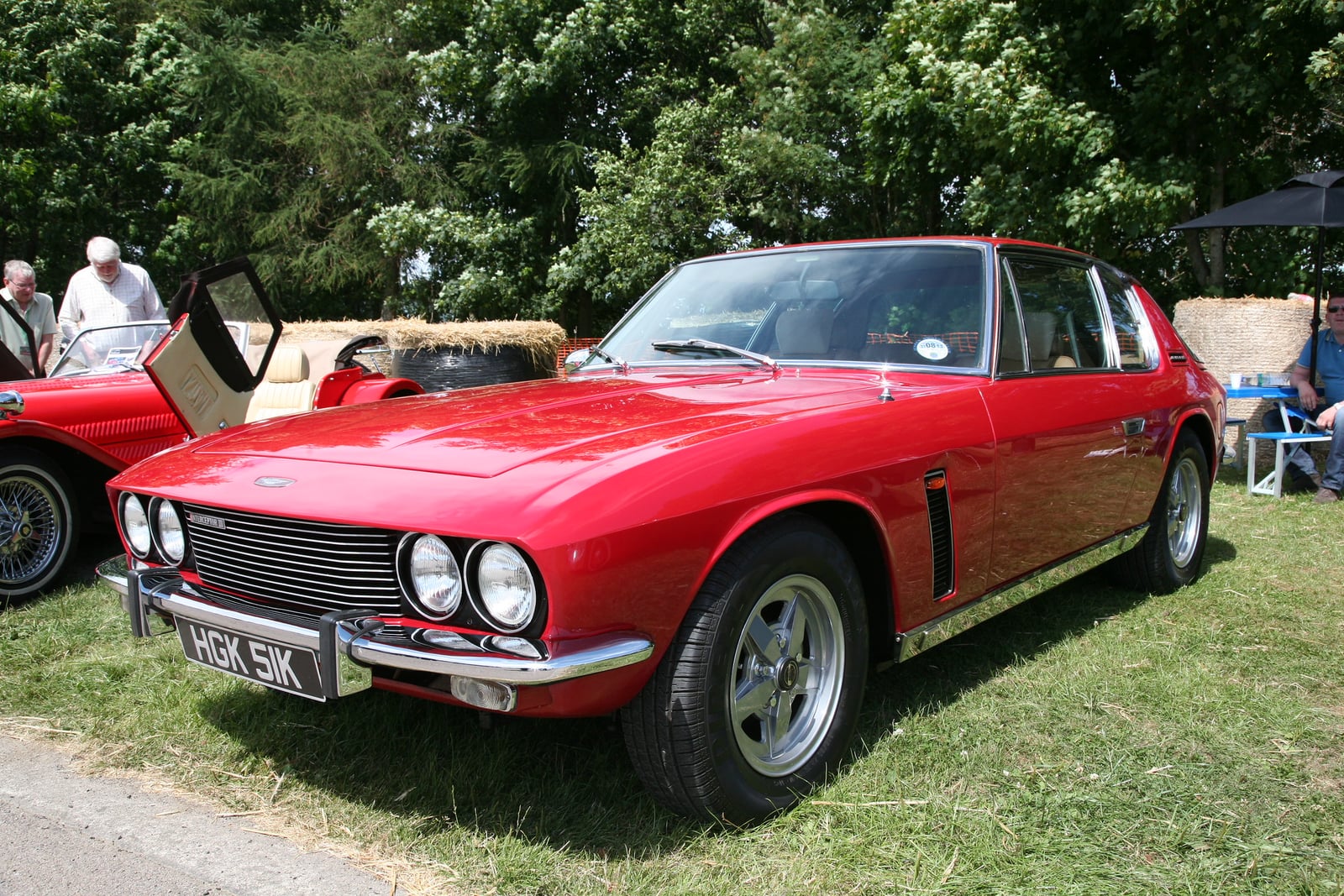
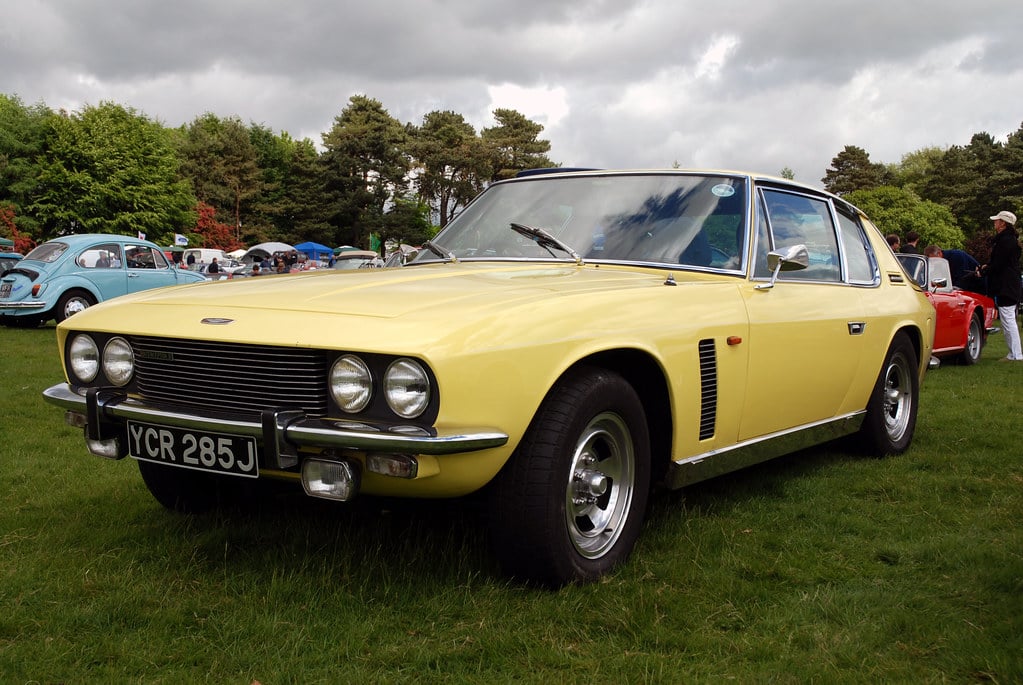
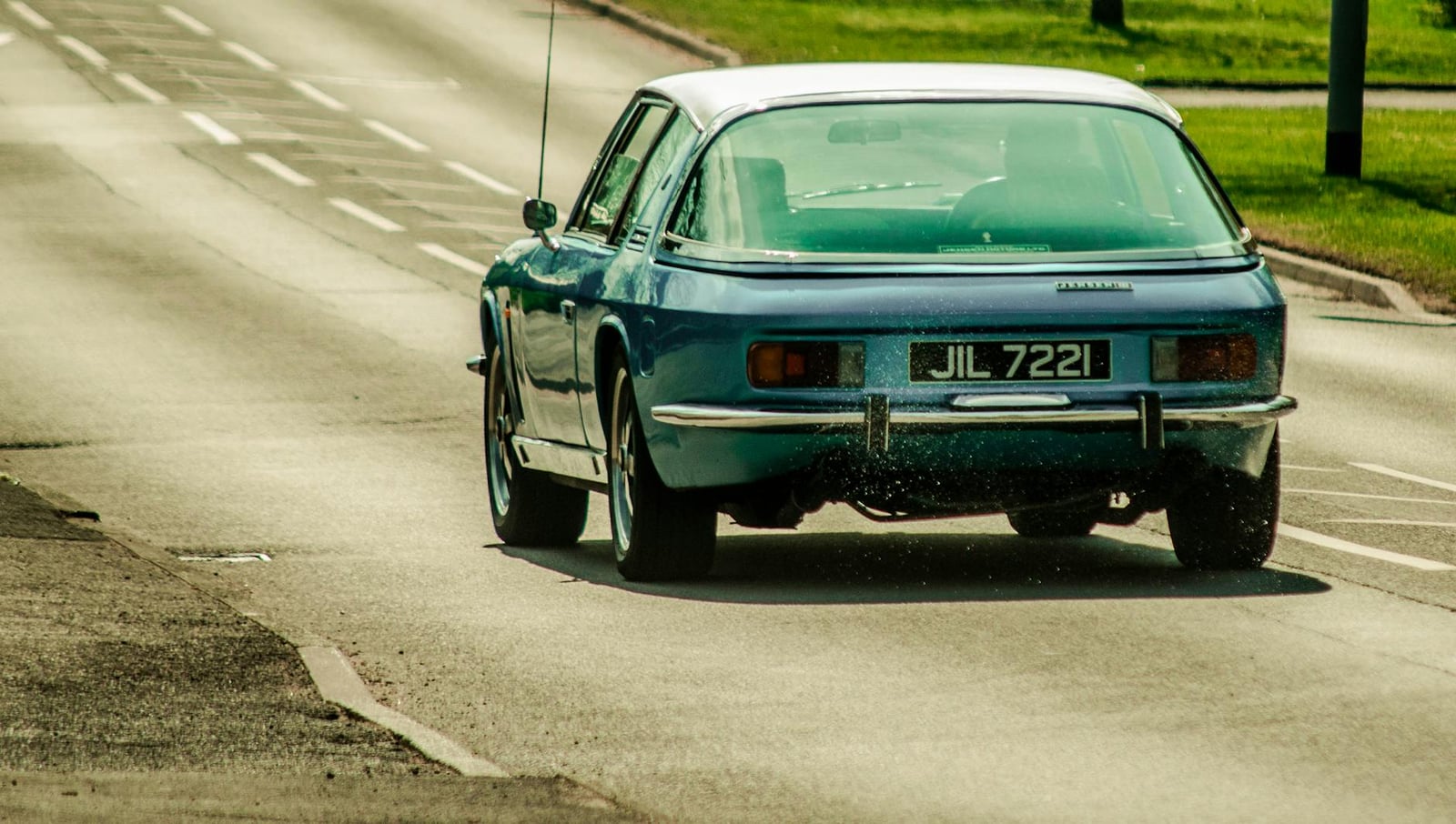
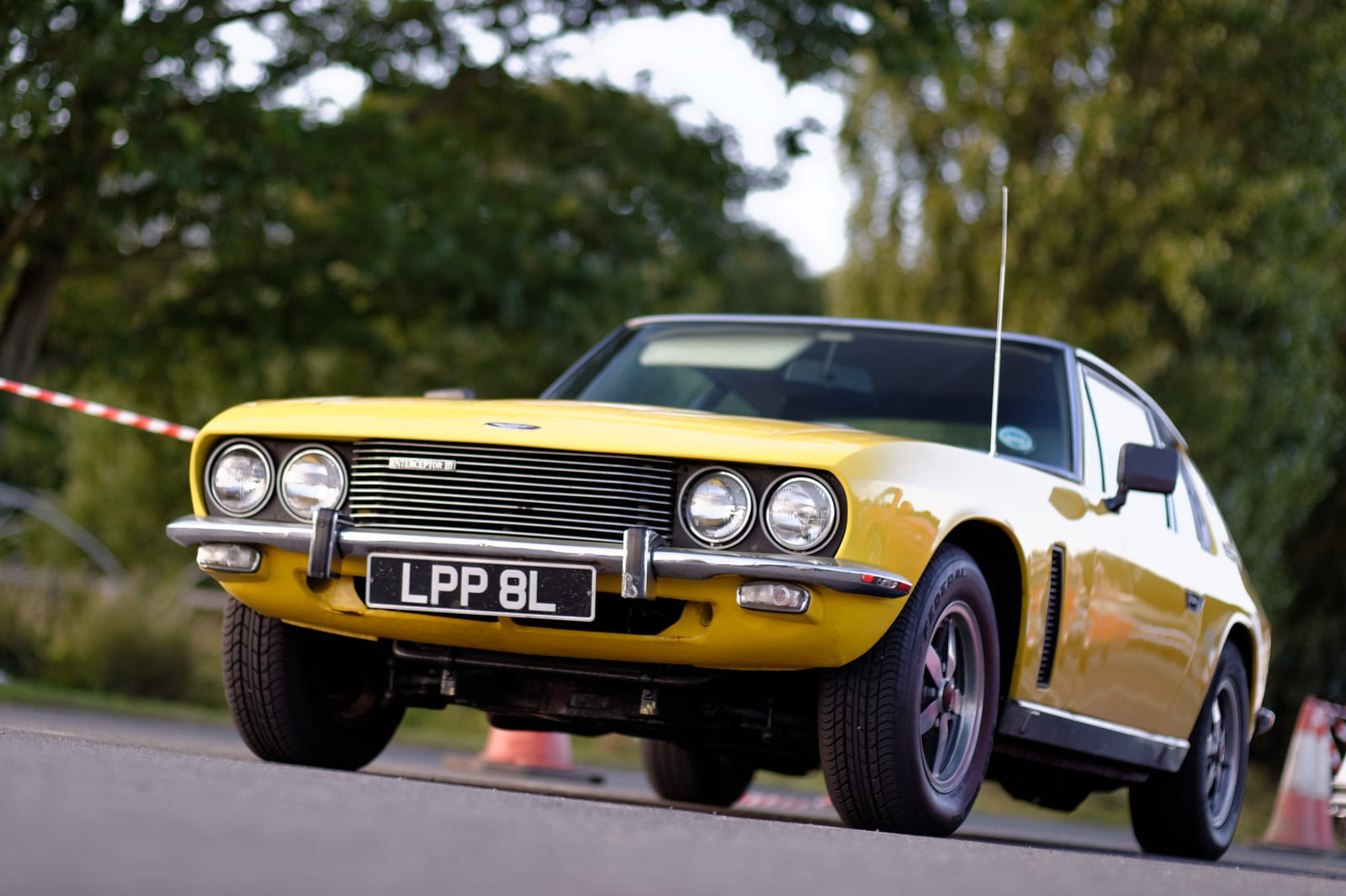
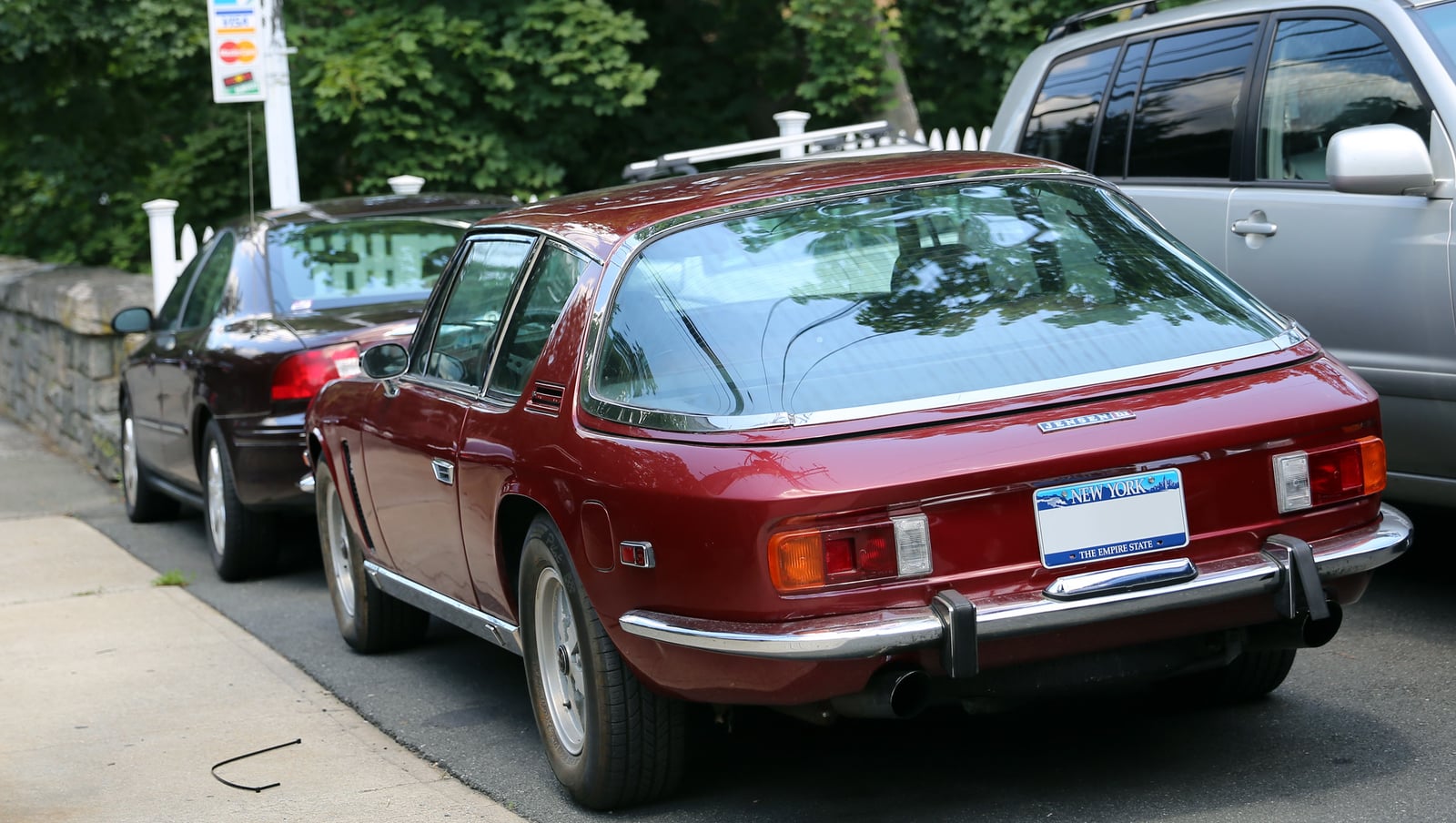
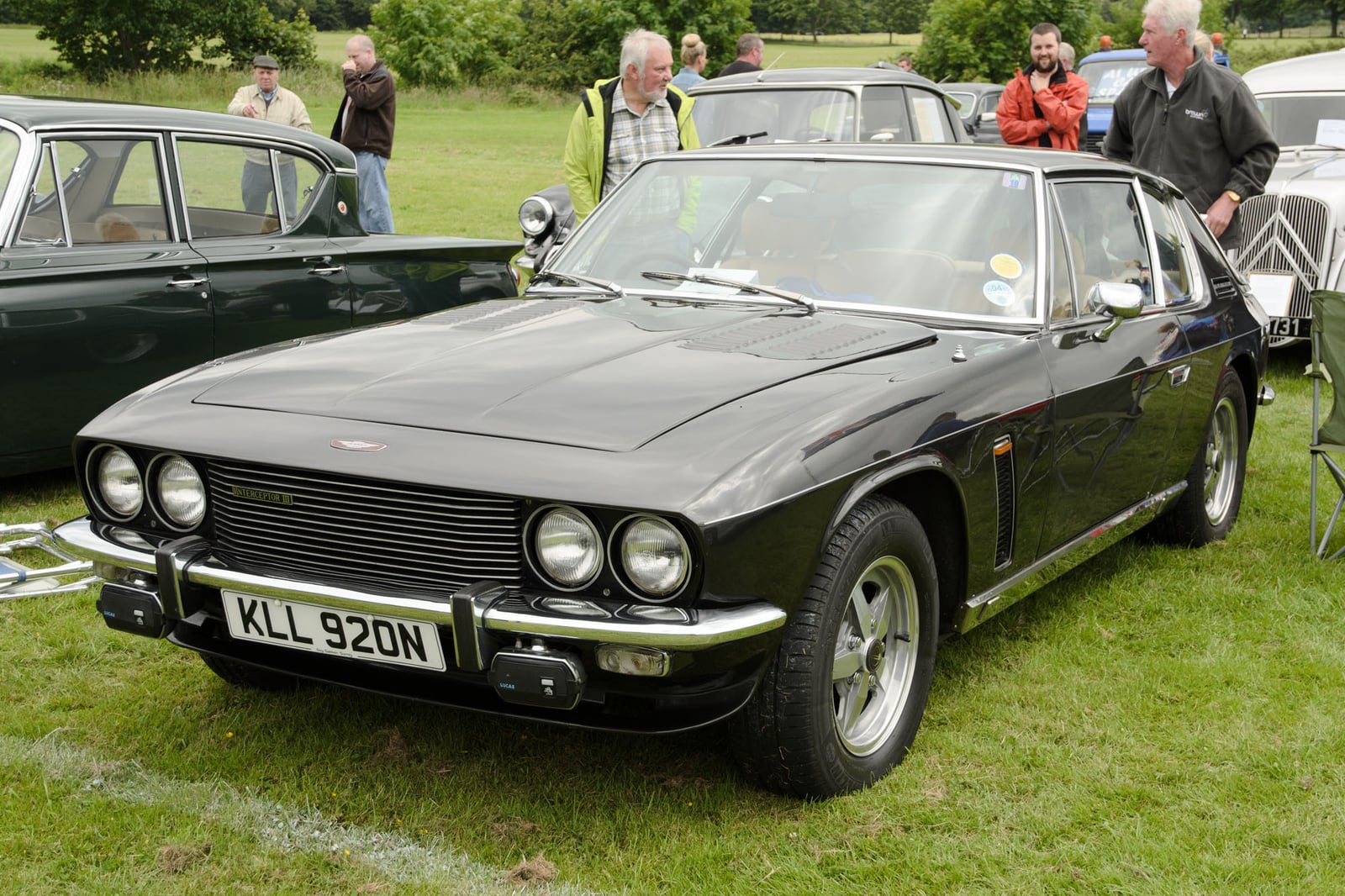
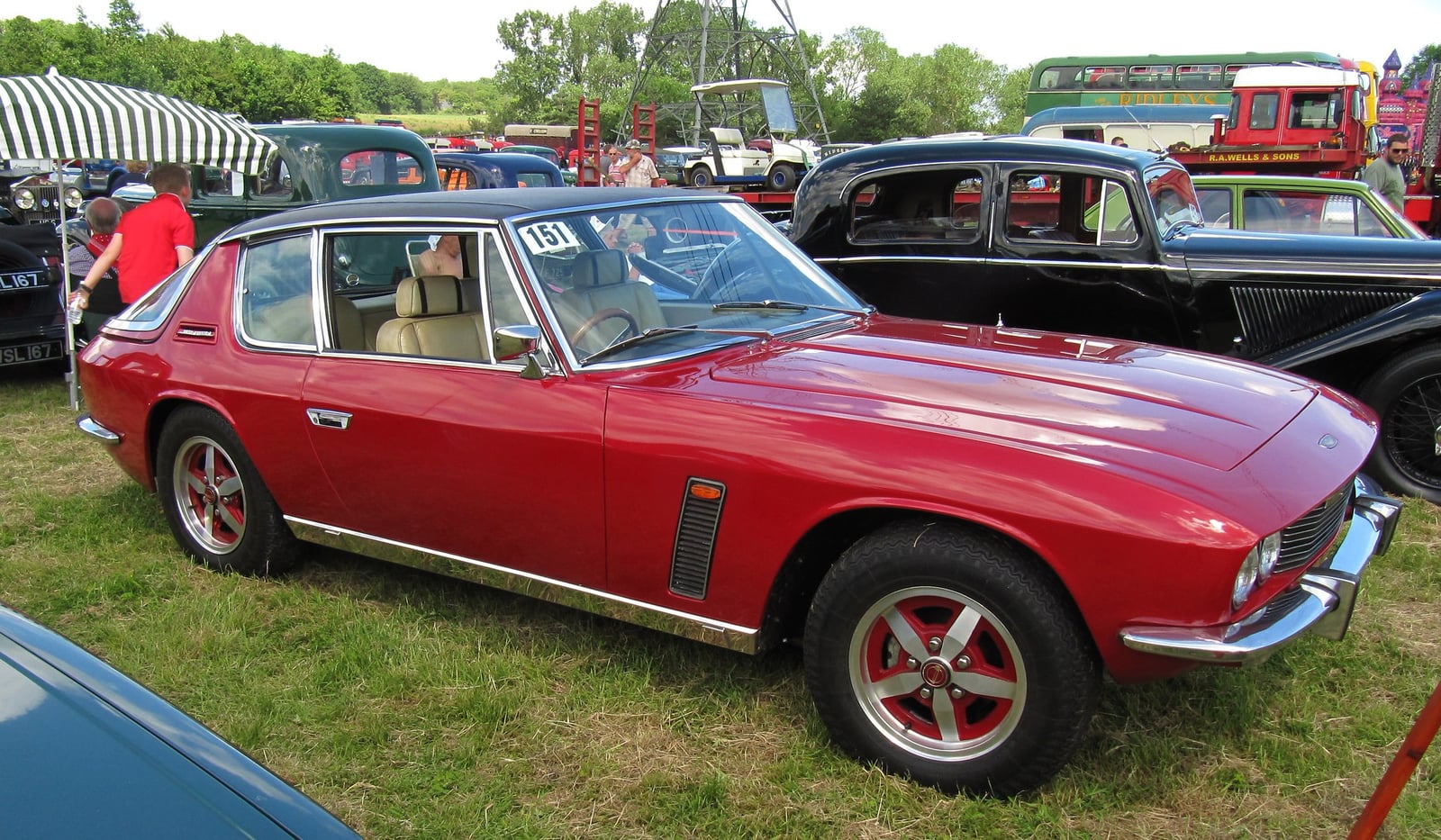
The Interceptor in dates
- 1966Launched with Touring's fastback shape, early bodies built by Vignale in Italy, replacing the fibreglass CV8 with coachbuilt steel; the four-wheel-drive FF arrives alongside.
- 1969The Mk II brings a revised dashboard and detail changes.
- 1971The Mk III arrives with the 7.2-litre engine, better seats and alloy wheels, and dominates the sale results ever after; the triple-carburettor SP tops the range.
- 1974The convertible joins, now among the most valuable Interceptors of all.
- 1975A rare notchback coupe follows as the company's finances worsen.
- 1976Production ends at around 6,400 cars including the FF.
Interceptor: what to check before you buy
The shell, slow and expensive to fix
- Sills, floors, valances and wheelarches
- Door bottoms and the box sections
- On a convertible, the structure around the folding roof needs careful checking
- A sound shell beats a low-mileage car with hidden corrosion
Mechanical
- Confirm the engine and gearbox are healthy and the car runs cool
- Overheating is the known weak point, so the cooling system is the test-drive focus
- Chrysler V8 parts are cheap and widely available from the United States
- The drivetrain is rarely what makes an Interceptor expensive to keep
Version and history
- Check originality and history, especially on the valuable SP and convertible
- The SP's triple-carburettor 7.2 needs verifying as genuine
- The FF is a separate, far rarer model on the same body and its own market
- Budget for trim and electrics, the time-consuming end of any restoration
What the Interceptor sells for at auction
In 2025 the median Interceptor sold for £28,080 across 29 sales, 3% up on 2024. In real terms, typical Interceptor prices were down about 33% over the five years to 2025, once inflation is accounted for.
| Variant | Sold | Typical range | Median |
|---|---|---|---|
| Interceptor III | 209 | £16,800 - £36,167 | £26,880 |
| Interceptor II | 37 | £17,500 - £32,664 | £23,980 |
| Interceptor I | 33 | £23,500 - £46,125 | £34,000 |
| Interceptor SP | 10 | £22,069 - £48,066 | £26,840 |
Show the year-by-year mediansHide the year-by-year medians
| Year | Sold | Median | In 2025 money |
|---|---|---|---|
| 2026 (so far) | 21 | £22,500 | |
| 2025 | 29 | £28,080 | £28,080 |
| 2024 | 32 | £27,166 | £28,208 |
| 2023 | 35 | £31,590 | £33,899 |
| 2022 | 37 | £26,500 | £30,349 |
| 2021 | 37 | £30,375 | £37,560 |
| 2020 | 16 | £32,991 | £41,807 |
| 2019 | 22 | £31,368 | £40,156 |
| 2018 | 16 | £27,066 | £35,236 |
| 2017 | 16 | £32,898 | £43,822 |
| 2016 | 17 | £22,500 | £30,743 |
| 2015 | 10 | £24,490 | £33,796 |
| 2014 | 8 | £13,640 | £18,899 |
| 2013 | 4 | £16,070 | £22,582 |
| 2012 | 12 | £19,044 | £27,376 |
| 2011 | 7 | £13,800 | £20,346 |
| 2010 | 4 | £10,072 | £15,427 |
| 2009 | 3 | £6,975 | £10,951 |
| 2008 | 7 | £10,925 | £17,490 |
| 2006 | 4 | £9,900 | £16,784 |
| 2005 | 5 | £8,438 | £14,666 |
| 2004 | 4 | £5,290 | £9,383 |
- £22,500Interceptor III
- £9,513Interceptor III
- £42,750Interceptor III
- £17,837Interceptor III
- £21,844Interceptor III
Strong evidence. 350 recorded sales and a dozen or more a year: the median and the range are well founded. Based on 350 sold results from public classic car auctions (1998 to 10 August 2026). Sold prices, not asking prices, and not a valuation: condition, history and specification vary from car to car. Inflation-adjusted figures use the ONS CPIH index, in 2025 money.