Jensen CV8: the fibreglass Chrysler-V8 bruiser (1962–1966)
The Jensen CV8 was a fibreglass-bodied four-seat grand tourer with a big Chrysler V8 and a famously divisive slanted-headlamp face, and one of the fastest four-seaters of its day. A guide to the Mk I to Mk III, its place between the 541 and the Interceptor, and what they are worth.
Built 1962–1966 35 recorded sales

At a glance
- Years
- 1962–1966
- Body styles
- Two-door four-seat coupe
- Drivetrain
- Front engine, rear-wheel drive
- Engines
- 5.9 and 6.3-litre Chrysler V8
- Power
- Around 305 bhp to 330 bhp
- Trim levels
- CV8 Mk I, Mk II, Mk III
- Production
- Around 500
- Assembly
- West Bromwich, England
- Designer
- Eric Neale (Jensen)
- Values
- Usable from around £30,000; good cars £45,000-£70,000; the best beyond
- Bodywork
- Glassfibre, a Jensen speciality before the steel Interceptor
- That face
- Slanted four-headlamp front that still divides opinion
The models
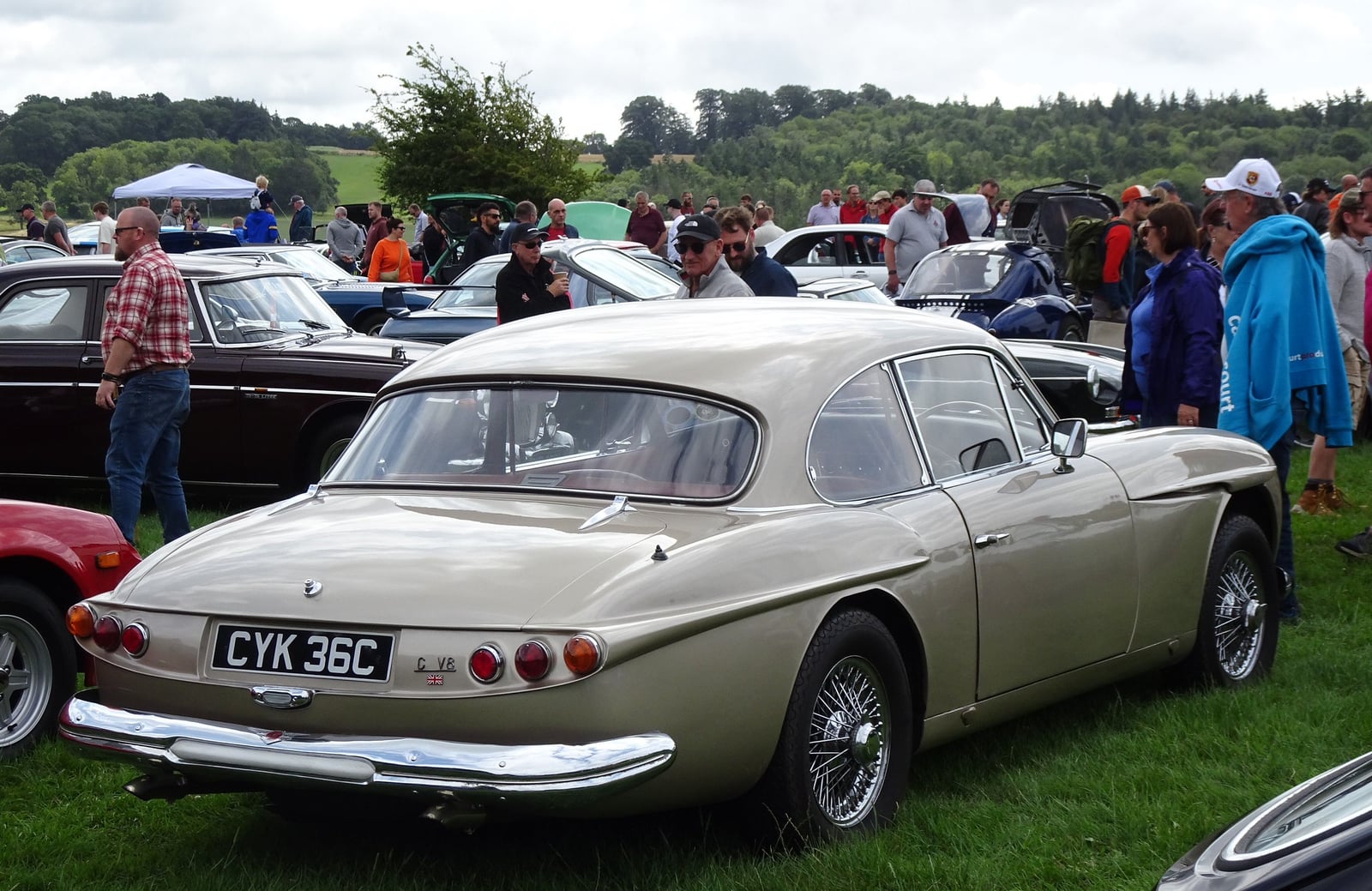
Some classics charm at first sight. The Jensen CV8 (C-V8 in the company’s own hyphenated badging, and in most auction catalogues) picks a fight. Its slanted, four-headlamp face split opinion the day it appeared and splits it still, but behind that nose is a serious car: a fibreglass-bodied four-seater with a big Chrysler V8, one of the fastest of its kind in the early 1960s, and the direct ancestor of the Interceptor.
That face
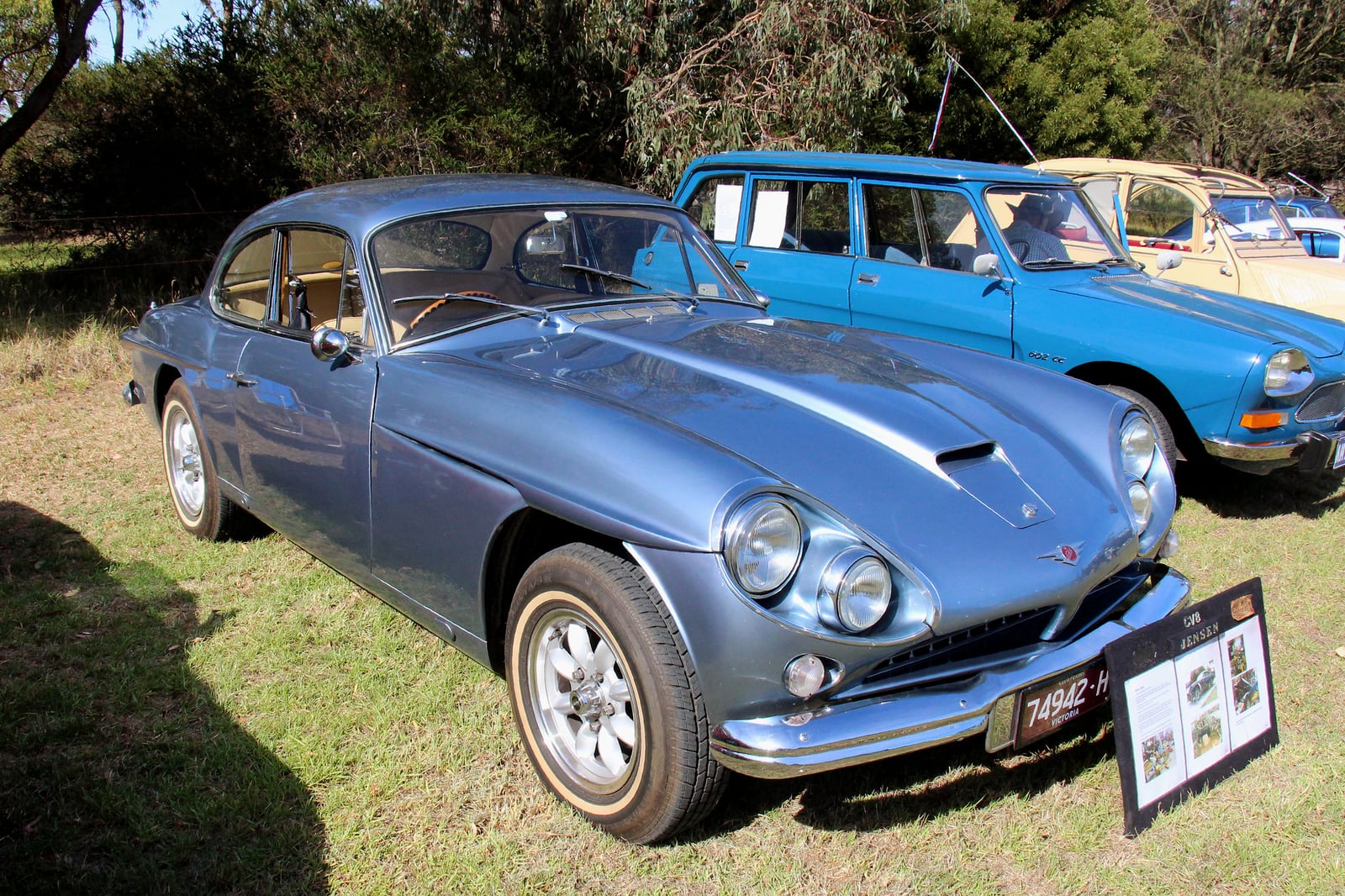
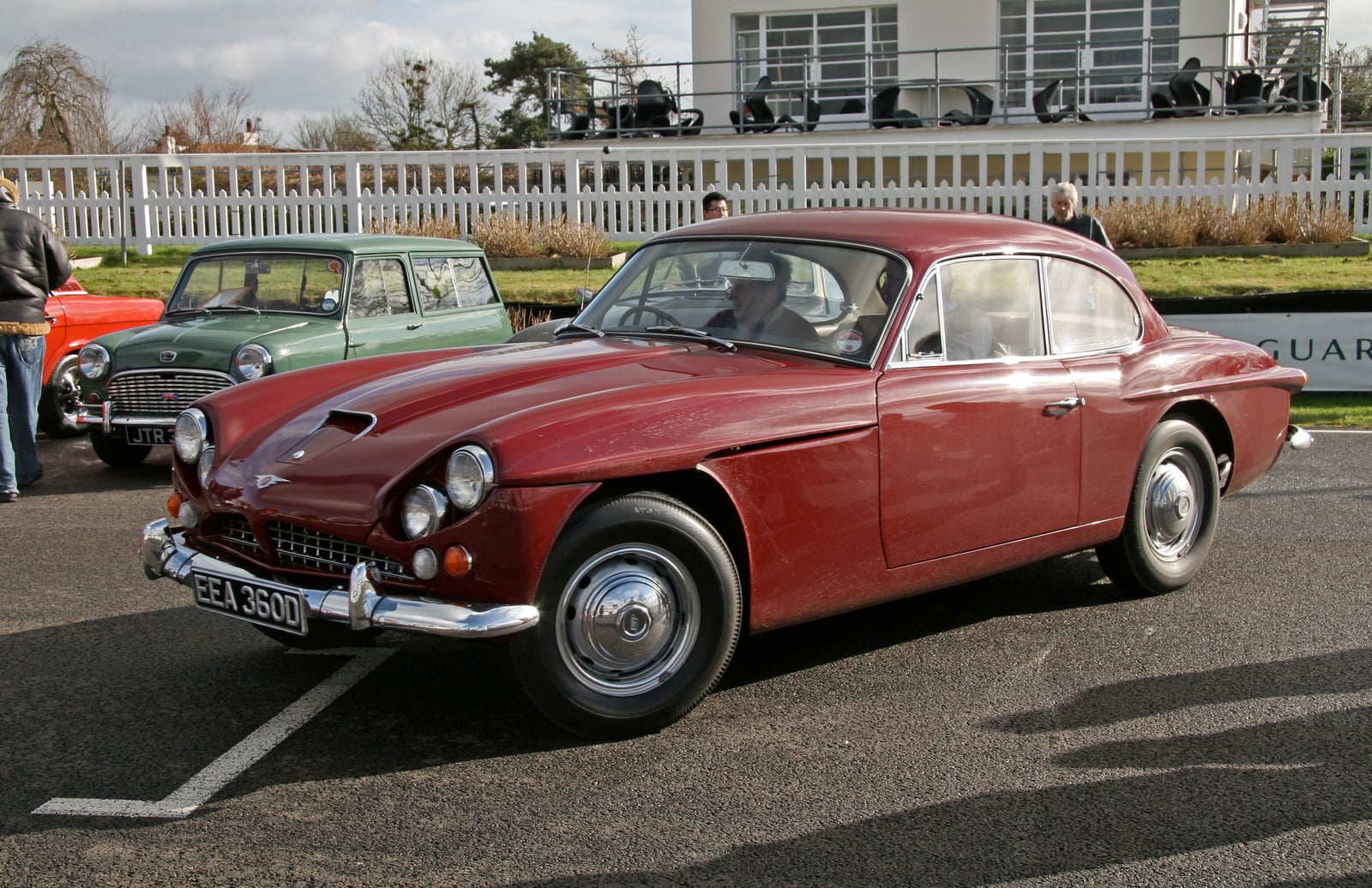
There is no easing into the CV8’s looks. The front slopes sharply forward and carries four headlamps set at an angle, a treatment that looked startling in 1962 and still draws a reaction now. It was made possible by fibreglass, which let Jensen shape the nose without the constraints of pressed steel, and it is the single thing everyone remembers about the car. Owners tend to wear the divisiveness as a badge: the CV8 is not trying to be pretty, it is trying to be fast and different, and it succeeds.

Fibreglass and a big American V8
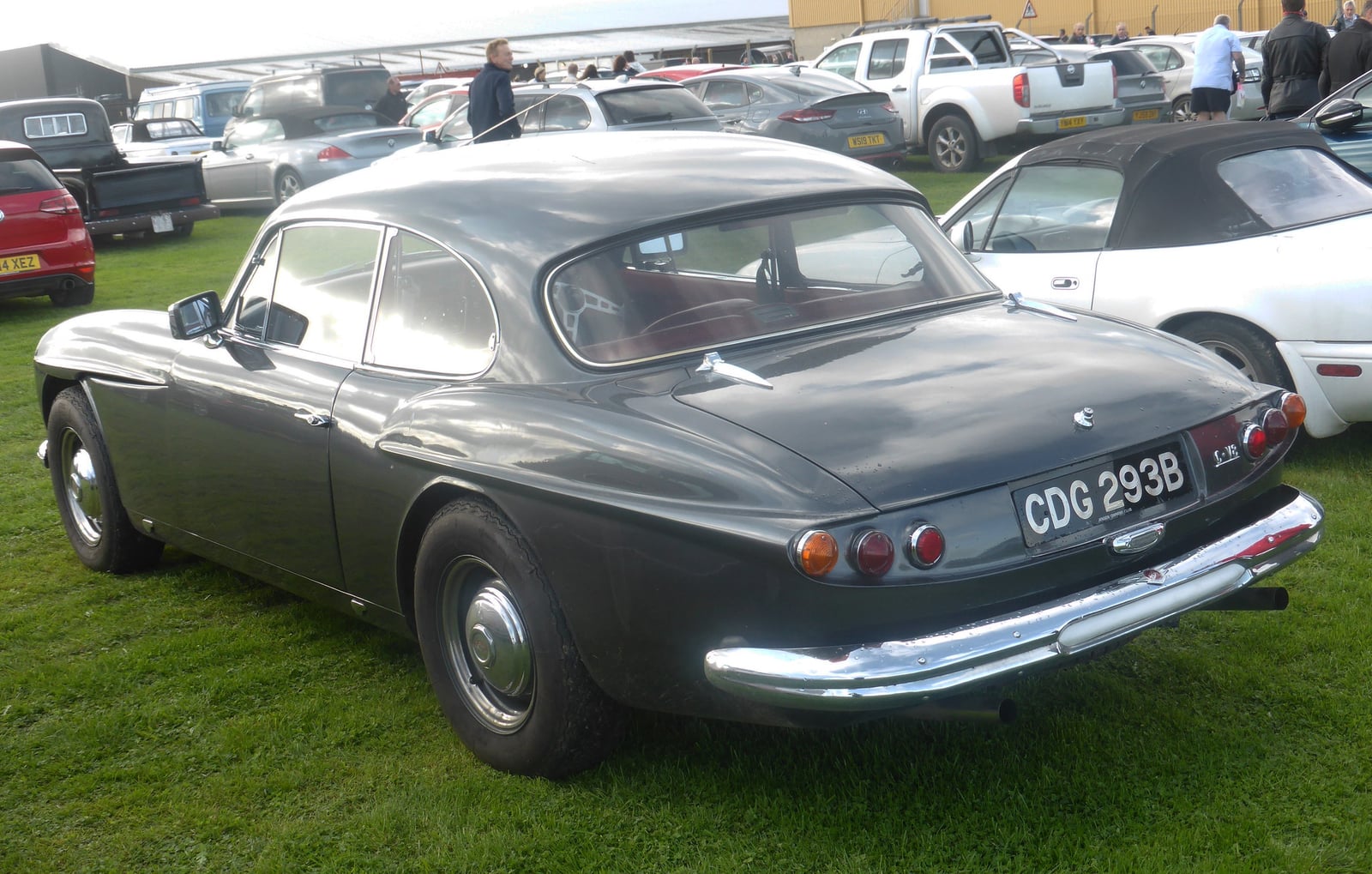
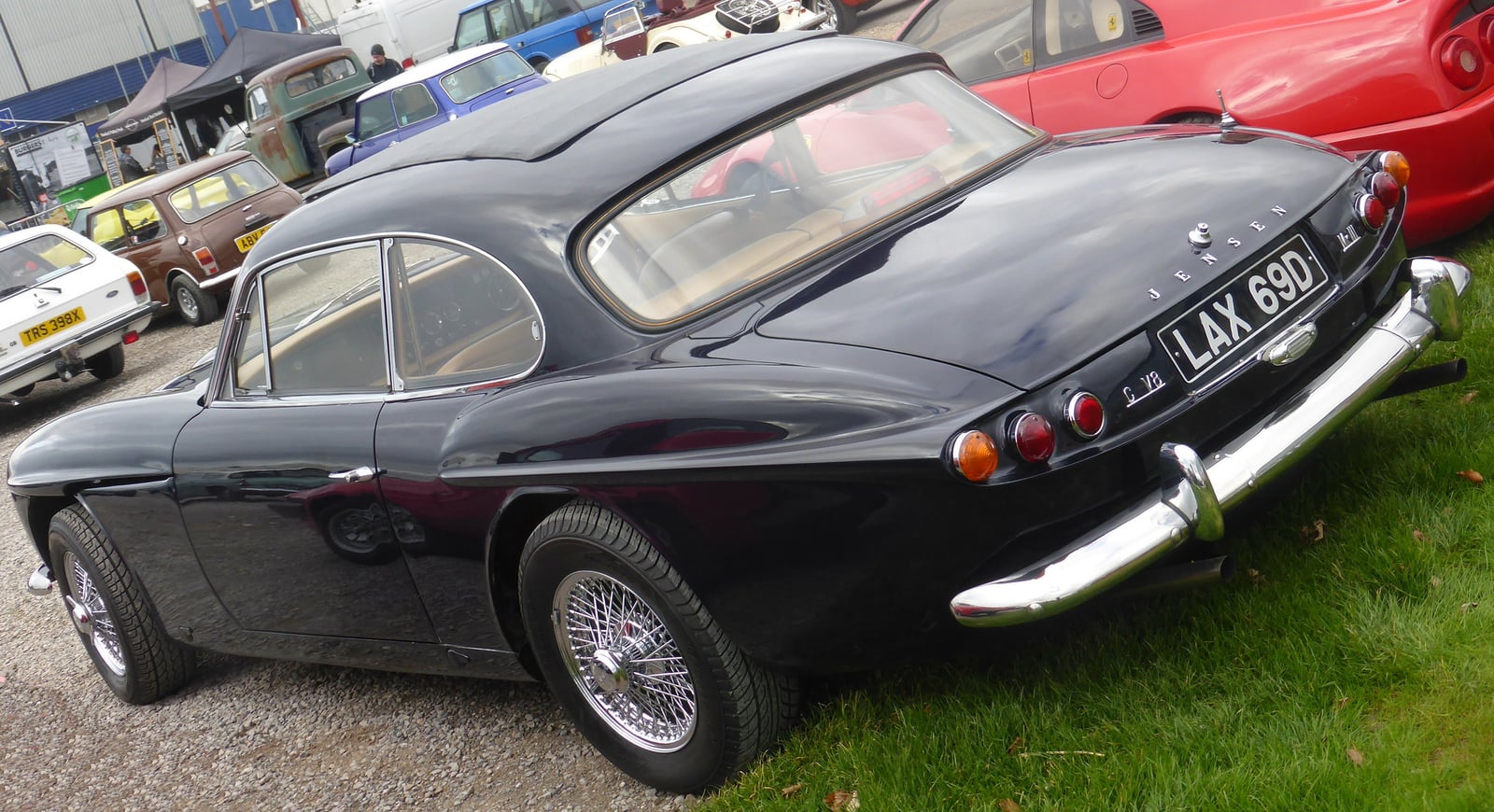
Like the 541 before it, the CV8 used a glassfibre body, a sensible choice for a small firm building cars in tiny numbers without the cost of steel tooling. Fibreglass does not rust, which is a genuine plus, though it can craze and crack and the steel chassis beneath still needs watching.
The performance came from across the Atlantic. The CV8 used a Chrysler V8, 5.9 litres at first and 6.3 from the Mk II, driving through an automatic gearbox, and the combination of that torque and a relatively light fibreglass body made the CV8 genuinely quick, good for comfortably over 120 mph at a time when that was rare in a four-seater.

Mk I, Mk II and Mk III
The CV8 ran through three versions in four years. The Mk I of 1962 set the template; the Mk II of 1963 brought the larger 6.3-litre engine and detail improvements; and the Mk III of 1965 added equal-height headlamps within the slanted panel, a four-wheel disc-brake set-up and trim changes. All are rare, and the differences are worth knowing when comparing cars, but the essential character, fast, fibreglass and unmistakable, runs through all three.

West Bromwich ways: how a CV8 was built
The way the CV8 was made explains a lot of its character. Jensen was a small West Bromwich concern that also built bodies for other companies, the big Austin-Healeys among them, and the CV8 came together largely by hand: fibreglass panels laid up and finished on site, bonded and bolted over a stout steel chassis, with leather and walnut trimmed in-house. Around 500 cars were built in four years, a pace of roughly two a week, so no two are quite identical and originality questions are settled car by car through the club’s records rather than any factory catalogue. That hand-built scale is also why survivors reward patient restoration: the structure is simple and honest, and everything on the car was made to be worked on by people, not production lines.
From CV8 to Interceptor
The CV8’s importance is partly in what came next. When Jensen wanted a more universally appealing car it kept the Chrysler V8 and the grand-touring brief but swapped the controversial fibreglass body for a steel one styled in Italy, and the Interceptor was the result. The CV8 also served as the test bed for the four-wheel-drive system that became the FF. So the CV8 is the hinge of the whole story: the last of the old fibreglass Jensens and the seed of the cars that made the marque famous.

What it is like to own
The CV8 drives much as it looks: muscular, quick and a little raw, with the lazy shove of a big V8 and the lightness that fibreglass brings. It is a usable classic for those who like its character, and the Chrysler running gear is tough and well supported, with cheap engine parts from the United States.
Ownership care centres on the body and chassis rather than the engine. The fibreglass needs proper repair when it cracks, the steel chassis beneath must be checked for rust, and trim and detail parts are the scarce items on so rare a car. The broader running costs are modest for so fast a machine: the V8’s thirst is the main line in the budget, and the storage and insurance are the same as for any classic of the era.

Current value and where it sits
A usable CV8 starts around £30,000, a good one sits roughly £45,000 to £70,000, and the best climb beyond, with rarity and performance, not the styling, setting the price. It is the rare and characterful elder of the Jensen range. For the era, see British classic cars of the 1960s.

More photos
The CV8 timeline
- 1962The Mk I arrives: Eric Neale's slanted four-headlamp nose in fibreglass over a stout steel chassis, with a 5.9-litre Chrysler V8.
- 1963The Mk II brings the larger 6.3-litre engine and detail improvements.
- 1965The Mk III adds equal-height headlamps, four-wheel discs and trim changes.
- 1966Production ends at around 500 cars, roughly two a week; the steel-bodied Interceptor takes over.
Buying checklist: the CV8 in front of you
Body and chassis
- Fibreglass crazing and cracks, which need proper repair
- The steel chassis beneath, which rusts as fibreglass never will
- Panels were laid up and finished by hand, so no two cars are quite identical
- Bonding and bolting between body and chassis deserves inspection
Mechanical
- The Chrysler V8 and automatic are tough, with cheap American parts
- The V8's thirst is the main line in the running budget
- Mk III cars carry four-wheel discs; earlier cars do not
- Confirm which engine is fitted: 5.9 on the Mk I, 6.3 from the Mk II
Rarity and provenance
- Around 500 built, so trim and detail parts are settled car by car
- The club's records stand in for any factory catalogue
- Originality questions reward patient research before purchase
- The company's own badging is C-V8, and most auction catalogues follow it
What the CV8 sells for at auction
The CV8 comes to auction only occasionally: 35 recorded sales since 2005, typically making between £17,050 and £39,938 . With so few sales, treat any single result as a data point rather than a market price.
- £26,450C-V8 Mk II
- £37,520C-V8 Mk III
- £29,744C-V8 Mk II
- £33,732C-V8 Mk II
- £35,000C-V8 Mk II
Thin evidence. Only 35 recorded sales: read the figures as a sketch of the market, not a price. Based on 35 sold results from public classic car auctions (2005 to 10 August 2026). Sold prices, not asking prices, and not a valuation: condition, history and specification vary from car to car. Inflation-adjusted figures use the ONS CPIH index, in 2025 money.