Land Rover Series II and IIA: the definitive working Land Rover (1958–1971)
The Land Rover Series II and IIA gave the marque its enduring 2.25 engine and its familiar barrel-side shape, and the IIA is widely held to be the toughest Series of all. A guide to the 88 and 109 inch cars, the engines, the famous headlamp move to the wings, and what to look for when buying one.
Built 1958–1971

At a glance
- Years
- 1958–1971
- Body styles
- Soft-top, pickup, hard-top and station wagon; 88 and 109in
- Drivetrain
- Selectable four-wheel drive, two-speed transfer box
- Engines
- 2.25 petrol and 2.25 diesel four-cylinder; 2.6 six-cylinder (long wheelbase)
- Power
- Around 62 to 86 bhp
- Top speed
- Around 60 to 70 mph
- Production
- Series II 1958–1961, Series IIA 1961–1971; the long-running middle Series
- Assembly
- Solihull, Warwickshire
- Designer
- David Bache (body restyle)
- Values
- Project around £5,000-£10,000, good £10,000-£18,000, excellent £20,000-£35,000
- Construction
- Separate steel chassis, aluminium-alloy body
- The one to have
- The IIA is widely regarded as the toughest, most over-engineered Series
The models
Thirteen years of production turned the original stop-gap into an institution: the Land Rover Series II and IIA gave the Land Rover its 2.25 engine and the gently curved body it would wear for decades, and the IIA is, for many enthusiasts, the toughest and most satisfying Land Rover of all. Between them they defined what a working Land Rover was.
They are the middle chapter of the Land Rover story, the link between the spartan Series I and the more numerous Series III, and among the most usable of the early cars.
The Series that set the template
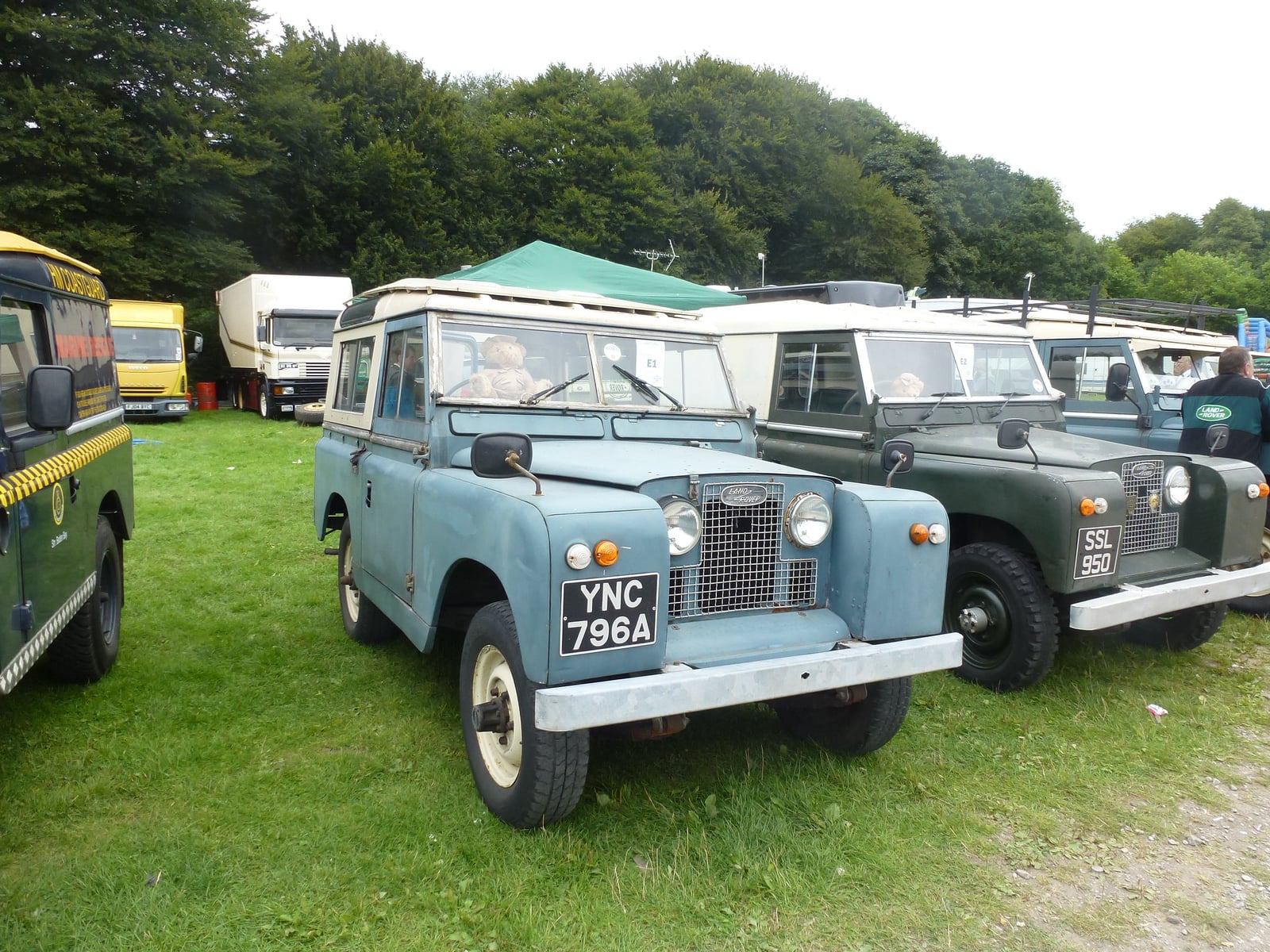
The Series II arrived in 1958 with two big changes. The first was the new 2.25-litre petrol engine, a tough, long-lived unit that would power Land Rovers in one form or another for the next quarter-century. The second was the body: Rover’s stylist David Bache gave the utilitarian shape its distinctive curved “barrel sides” and modesty panels below the doors, a silhouette still recognisable in the Defender thirty years later. It came on the 88-inch short and 109-inch long wheelbases, in the familiar soft-top, pickup, hard-top and station-wagon bodies.

Series II to IIA
The Series IIA of 1961 took a good thing and made it better. The diesel grew to match the petrol at 2.25 litres, and in 1967 a 2.6-litre six-cylinder petrol was offered in the long-wheelbase cars for those who wanted more pulling power. More than any single change, though, it was a long run of small improvements that gave the IIA its reputation: it is widely regarded as the most over-engineered and durable of all the Series Land Rovers, built when the marque was at its most confident.

The headlamps move to the wings
The most useful dating clue on a Series IIA is where the headlamps sit. Early cars carried them in the grille panel, between the radiator grille and the wings. Near the end of IIA production they moved outboard into the wings, around spring 1968 for export cars and 1969 at home. The reason was regulatory, not stylistic: new lighting laws in export markets, Australia chief among them, required headlamps to be set wider apart to indicate the vehicle’s true width, and the grille lamps were too close together. The wing position then carried over to the Series III, so a wing-headlamp IIA is a late one.

What it is like to own
A Series IIA is a proper old Land Rover: slow, upright, noisy and immensely capable, with a driving experience that is all about the journey rather than the speed. The 2.25 engine is tough and easy to work on, the controls are honest if heavy, and the car will go almost anywhere. The gearbox has no synchromesh on the lower gears, so it asks for an unhurried, deliberate style. For an owner who enjoys simplicity and character over pace, few classics are as rewarding to live with or as easy to keep running.

Buying guide: what to look for
The aluminium body does not rust, but the steel underneath does, and that is where the money goes. Check the chassis closely (the outriggers, spring hangers, rear crossmember and its mud-trapping top face) and the steel bulkhead and footwells, which are expensive to repair. Look for galvanic corrosion where the aluminium panels meet steel fixings, a known weakness on these cars. Mechanically, watch for worn swivel housings and oil leaks, and remember the 2.25 engine of this era has a three-bearing crank that is weaker at very high mileage than the later five-bearing unit, so check oil pressure and listen for bottom-end noise.

Where the Series II sits in the market
The Series II and IIA remain among the more attainable early Land Rovers: a project, a good usable car and an excellent restored example sit at clearly different levels, with station wagons, the 2.6 six and original early IIAs at the top, and a sound chassis and bulkhead, not shine, set the figure. The full record, 747 recorded sales by wheelbase and series, why the IIA outsells the II and the 109 no more than the 88, and what the market has done since the pandemic, is on the page covering Land Rover Series II and IIA values.
For the period these cars belong to, see British classic cars of the 1950s and 1960s.

Owners’ clubs and parts
The Series II and IIA are exceptionally well supported, with dedicated clubs and registers and excellent parts supply, since so much was shared across the long production run. For the practical side of keeping one going, see our guide to Land Rover parts and restoration.
Key dates for the Series II/IIA
- 1958The Series II arrives with the new 2.25-litre petrol engine and David Bache's curved barrel sides, a silhouette still recognisable in the Defender thirty years later.
- 1961The Series IIA takes over, with the diesel grown to match the petrol at 2.25 litres.
- 1967A 2.6-litre six-cylinder petrol joins the long-wheelbase cars for more pulling power.
- 1968Headlamps move outboard into the wings on export cars, driven by lighting laws in Australia and elsewhere; home cars follow in 1969.
- 1971The Series III takes over, inheriting the wing-headlamp face.
Before you buy a Series II/IIA
The steel
- Chassis outriggers, spring hangers and the rear crossmember with its mud-trapping top face
- The steel bulkhead and footwells, which are expensive to repair
- Galvanic corrosion where aluminium panels meet steel fixings
- The body itself is aluminium and safe, so judge the structure not the panels
Mechanical
- Worn swivel housings and oil leaks are the routine checks
- The three-bearing 2.25 crank is weaker at very high mileage: check oil pressure and listen for bottom-end noise
- No synchromesh on the lower gears is the design, asking a deliberate style
- The 2.6 six in long-wheelbase cars is thirstier and less common
Dating and version
- Grille-mounted headlamps mean an earlier IIA; wing-mounted means a late one
- The IIA is the one to have, the most over-engineered of all the Series
- 88-inch and 109-inch wheelbases serve different lives; the 88 is the nimble favourite
- Station wagons and factory hard-tops carry their own followings
Related
The Series II and IIA are the middle of the Land Rover Series line, between the Series I and the Series III, and the ancestors of the Defender. For the wider period, see British classic cars of the 1950s and 1960s.
More photos