British classic cars of the 1950s
The decade British sports cars went mainstream, the British cars of the 1950s running from the Jaguar XK120 and the Austin-Healey 100 to the Bentley R-Type Continental, the Land Rover Series I, and the export drive that built the American market.
Part of: British classic cars by decade, the full guide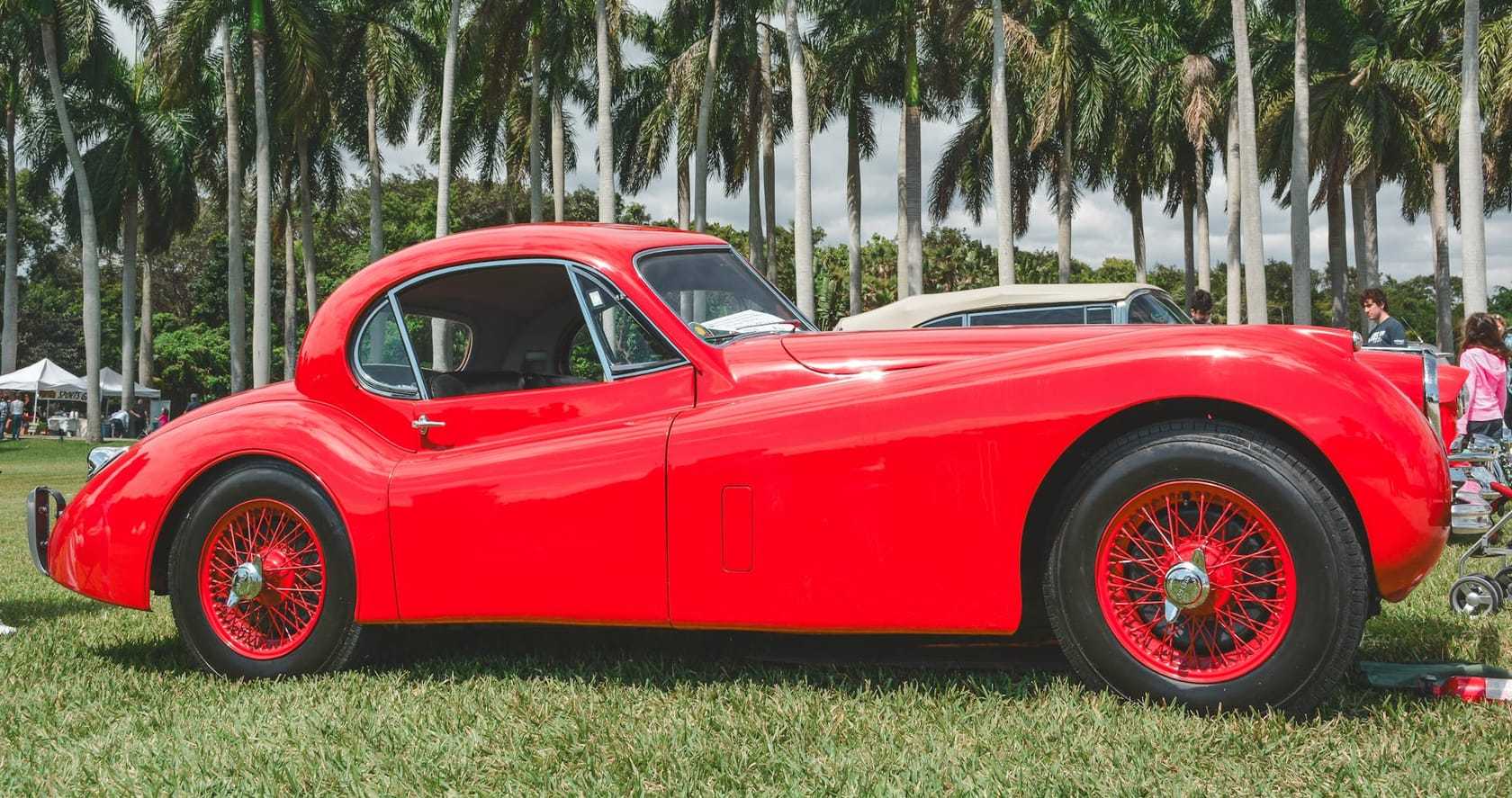
The decades
By 1950 the British motor industry had emerged from the wartime shutdown and the immediate post-war austerity that followed. Petrol was still rationed (until May 1950), steel was on quota until 1954, and the government’s “Export or Die” slogan was literal policy: a manufacturer’s allocation of raw materials depended on how many cars it sent overseas. The Standard Vanguard, the Jowett Javelin, the Morris Minor, the MG TC, the Land Rover and the Jaguar XK120 had all appeared in the late 1940s, born of that export drive, and they bloomed across the 1950s as restrictions eased.
This is the decade when the British cars of the 1950s give classic motoring its current shape. The post-war sports-car export to America starts here. The Land Rover lineage begins here. The Jaguar XK saloons and sports cars define their identity here. Aston Martin moves from Lagonda-era saloons into the DB sports cars that would carry the brand for the next fifty years. And by the end of the decade the Mini has just launched and the 1960s is about to start.
Sports cars and roadsters
The MG TC (1945–49) was the first car to genuinely break into the American market, selling around 10,000 units to US buyers between 1945 and 1949 in what became the prototypical “British sports car” experience: light, cheap, fast for the era, leaky, fragile, beloved. The TD (1949–53) and TF (1953–55) followed the same formula with gradual refinements. The MGA (1955–62) was the modernised version, with full-width steel bodywork replacing the running-board pre-war shape, and is the MG sports car that defines the late 1950s.
The Jaguar XK120 launched at the 1948 London Motor Show and went into production in 1949. The new “XK” twin-cam straight-six engine made 160 horsepower, the body styling was unlike anything else British, and the 120 mph top speed was real and demonstrated. The XK140 (1954–57) widened the body and added rack-and-pinion steering. The XK150 (1957–61) closed the lineage with disc brakes as standard and softer styling. Across all three series, around 31,000 were built and most went to America.
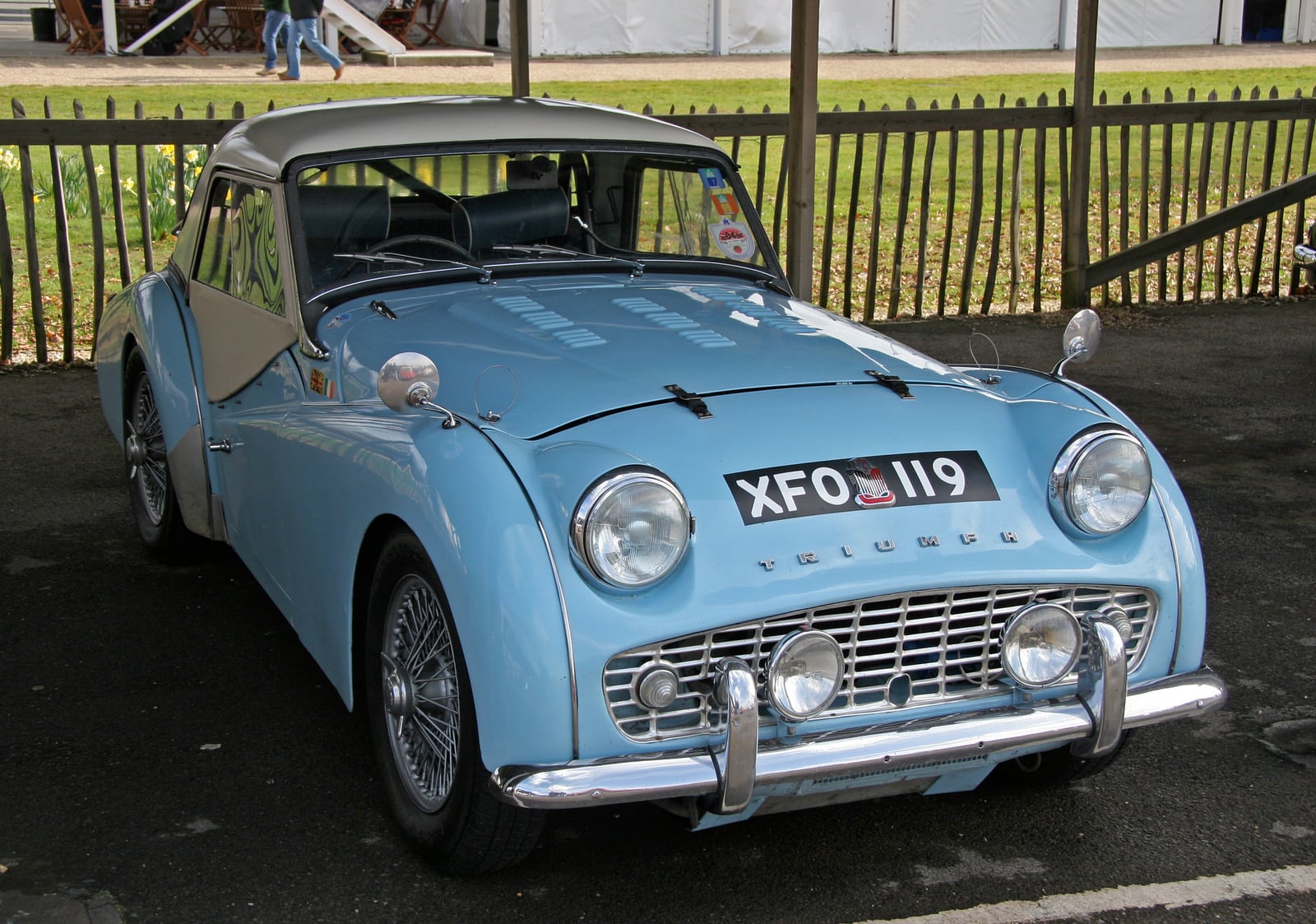
Triumph entered the modern sports-car era with the TR2 (1953–55), the four-cylinder car that gave the marque its post-war sports-car identity. The TR3 (1955–57) and TR3A (1957–62) refined it with disc front brakes and a wider grille. The TR formula (separate chassis, four-cylinder Standard-derived engine, masculine styling, affordable price) was the budget alternative to MG and Austin-Healey.
The Austin-Healey 100 (1953–56) was Donald Healey’s design for the Austin Motor Company, taking the Austin A90 Atlantic’s four-cylinder engine and putting it in a hand-finished light alloy body. The 100M and 100S versions added more power. The Austin-Healey 100-6 (1956–59) introduced the larger six-cylinder engine. By the end of the decade the Austin-Healey 3000 (1959–67) was just appearing and would carry the marque into the 1960s.
AC sold the AC Ace (1953–63) and the Aceca coupe (1954–63) through the decade, hand-built in Thames Ditton. These were the cars Carroll Shelby would later use as the basis for the AC Cobra in 1962.

Grand tourers
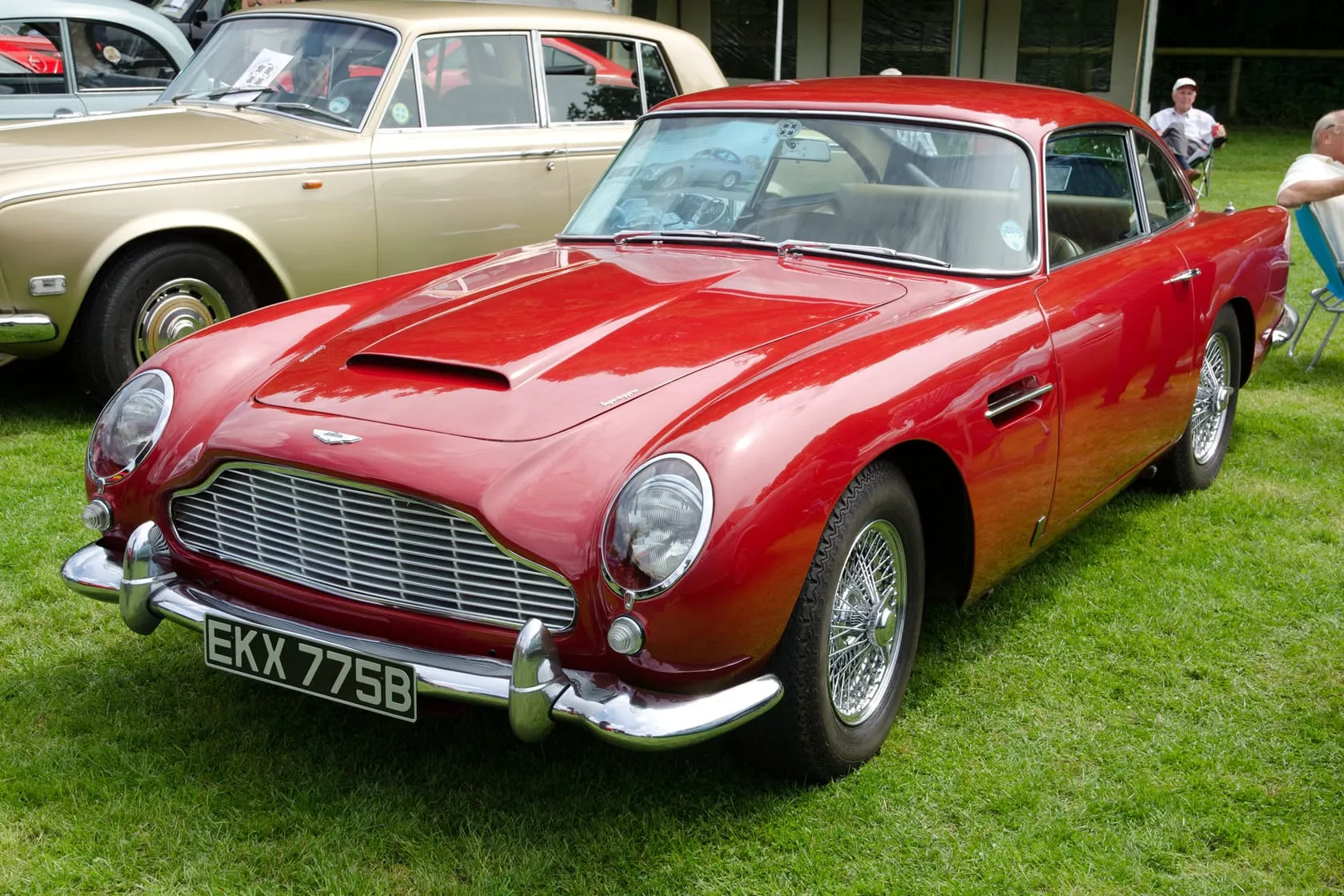
Aston Martin’s 1950s starts with the DB2 (1950–53), the first “DB” car after David Brown bought the company in 1947. The DB2-4 (1953–57) added two small rear seats and made the car a more practical GT. The DB Mark III (1957–59) closed the decade with updated styling. These pre-DB4 Astons are now among the more expensive 1950s British classics; they’re rarer than the contemporary press realised at the time.
Bristol Cars, the small Filton-based maker that ran from 1945 to 2011, produced the 400 (1947–50), 401 (1948–53), 402 cabriolet (1949–50), 403 (1953–55), 405 (1954–58), and 406 (1958–61) through the decade. Each was hand-built, each used a BMW-derived straight-six engine acquired as part of the post-war reparations process, and total annual production never exceeded a few hundred cars. Surviving Bristols from this period are substantially more valuable today than the contemporary press treated them.
The Daimler Conquest (1953–58) and Daimler Majestic (1958–62) carried the Daimler marque through the decade as the upmarket alternative to the post-war Jaguars. The Daimler SP250 (1959–64) sports car arrived at the very end of the decade with its controversial fibreglass body and 2.5-litre V8.
Saloons and limousines
Jaguar’s saloons run from the Mk V (1948–51, the last pre-XK styling), through the Mk VII (1950–54), Mk VIII (1956–58), and Mk IX (1958–61). Each took the XK twin-cam engine in a larger body. The Mk VII won the Monte Carlo Rally in 1956 despite weighing nearly two tons, an unlikely competition result that helped sell saloons for years after.
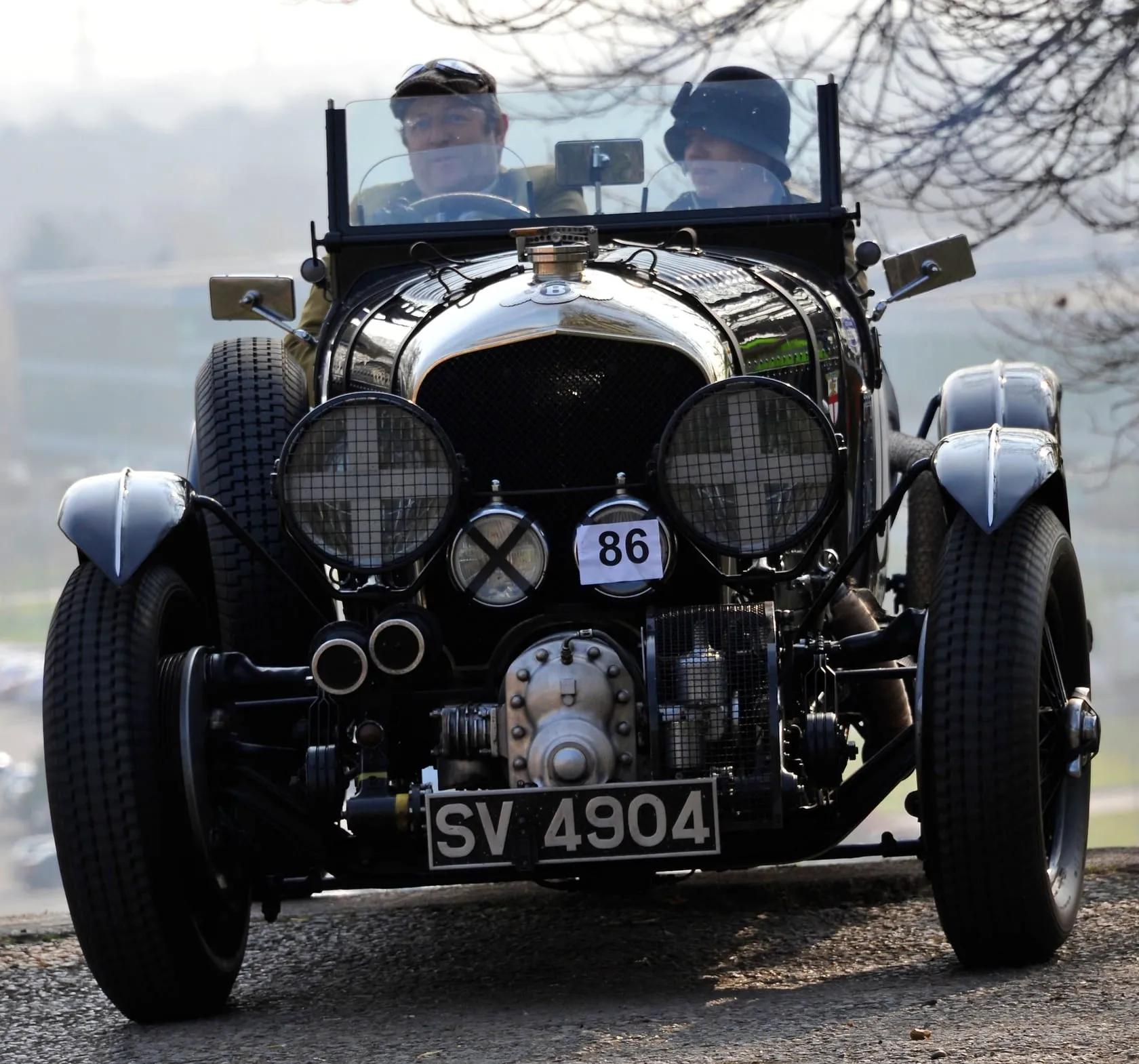
Bentley’s 1950s starts with the Mark VI (1946–52), continues with the R-Type (1952–55) and the R-Type Continental, and into the S1 (1955–59). The Bentley R-Type Continental (1952–55) is the most expensive British classic of the 1950s by some margin: hand-built, designed for high-speed continental touring, around 208 cars made. Surviving examples sell for seven figures.
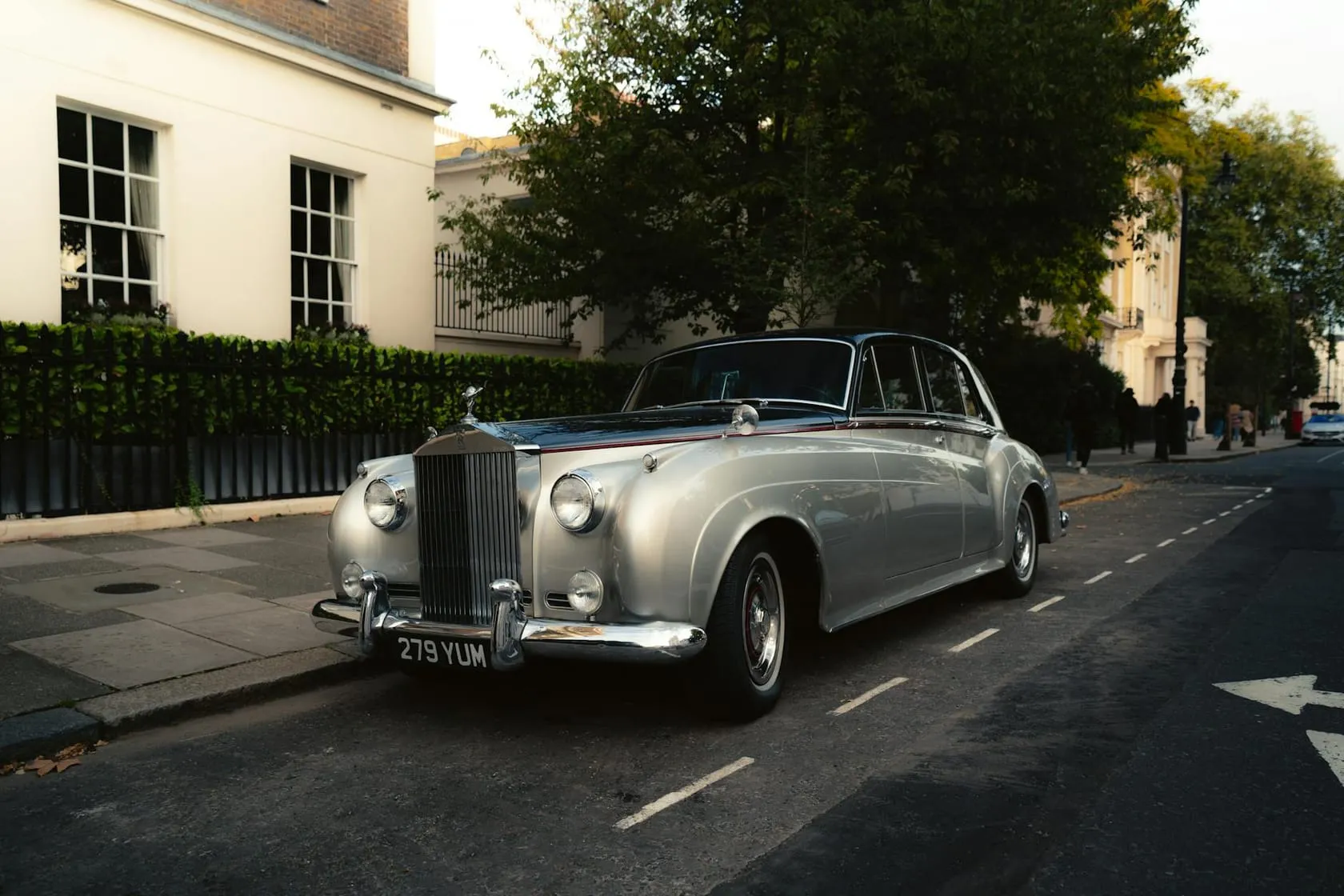
Rolls-Royce’s 1950s mirrors Bentley’s: Silver Wraith (1946–58), Silver Dawn (1949–55), and Silver Cloud I (1955–58, then II from 1959). The Silver Cloud is the British classic Rolls of the period with body styling by John Blatchley that ran through the early 1960s.
The Armstrong Siddeley Sapphire (1952–60) and the lower-volume Lagonda 3-Litre (1953–58, briefly under Aston ownership) round out the executive saloon market.

Land Rover and the 4x4
The Land Rover Series I launched in April 1948, originally intended as a temporary stopgap to keep Rover’s Solihull factory busy during post-war steel rationing. It used a chassis derived from Maurice Wilks’ farm Willys Jeep, a Rover engine, and a folded-aluminium body that needed no expensive press tooling. By 1950 it was outselling Rover’s saloon cars by a factor of two.
The 80-inch wheelbase Series I (1948–53) was followed by the 86-inch and 88-inch versions through to 1958. The Series II (1958–61) introduced the 88-inch and 109-inch wheelbase standardisation that ran for the next forty years across the Series III, then the Defender. By the end of the 1950s the Land Rover had become a global symbol of British industrial design.

The everyday cars
The Morris Minor (1948–71) sold over 1.6 million units across its production run, peaking through the 1950s when it was the affordable family car. Designed by Alec Issigonis before he moved on to the Mini, the Minor was sold as a four-door saloon, convertible, estate (the Traveller), and van. Today’s Morris Minor Owners’ Club is one of the most active single-model classic-car clubs in the UK.
The Austin A30 (1951–56) and A35 (1956–59) competed at the smaller end with a 803cc engine and budget pricing. The Ford Anglia 100E (1953–59) carried pre-war underpinnings and a side-valve engine into the 1950s, before being replaced by the more modern 105E Anglia in 1959. Above the small Fords sat Dagenham’s big-car family: the four-cylinder Consul, the six-cylinder Zephyr and the luxury Zodiac, which from the early 1950s brought modern unitary construction to the British Ford range and, as the finned Mk2 “Three Graces” of 1956, gave it a dose of transatlantic glamour. The Vauxhall Velox/Wyvern (1948–65) carried the GM-style transatlantic styling that distinguished Vauxhall from its more traditional competitors.
The Vauxhall Victor F-type (1957–1961) replaced the Wyvern with a much more openly American shape. The wraparound windscreen, dogleg A-pillars, chrome side spear, and small rear tailfins were styled after the 1955 Chevrolet Bel Air. Under the bonnet was a modest 1507cc OHV pushrod four making 55 horsepower through a three-speed column-change gearbox. The F-type was the first British car designed from the start for export in serious numbers, sold into Canada, Australia, the US, and South Africa through spare GM dealer capacity. Around 390,000 were built and it outsold the Austin Cambridge in several years. It also became famous for rust onset so rapid that by the mid-1960s an F-type with visible holes in the sills was national folk knowledge. The Series II from late 1959 toned down some of the chrome. The Vauxhall Victor lineage carried on through four more generations into 1976.
The Hillman Minx (in various series through the decade), the Singer Gazelle, and the Standard Eight / Ten / Pennant covered the medium-saloon market. These cars sold in huge numbers and were nearly all scrapped between 1965 and 1990. Survivors today are correspondingly rare and correspondingly interesting.


Specialist makers
Lotus’s 1950s is the Colin Chapman story. The Lotus Mk I appeared in 1948, the Mk VI in 1952, and the Lotus Seven in 1957 (which remains in production today as the Caterham Seven, 68 years later). The Lotus Elite (1958–63), the first production Lotus, was a fibreglass monocoque GT that proved the lightweight engineering approach Lotus would build on for the next thirty years.
Allard, the small London-based maker, ran through the decade with the J2, K3, and P-series cars. American-engined sports cars (typically Cadillac, Chrysler or Ford V8s in a British chassis), they were the AC Cobra’s spiritual predecessor by a full decade. Sydney Allard won the 1952 Monte Carlo Rally in one of his own cars.
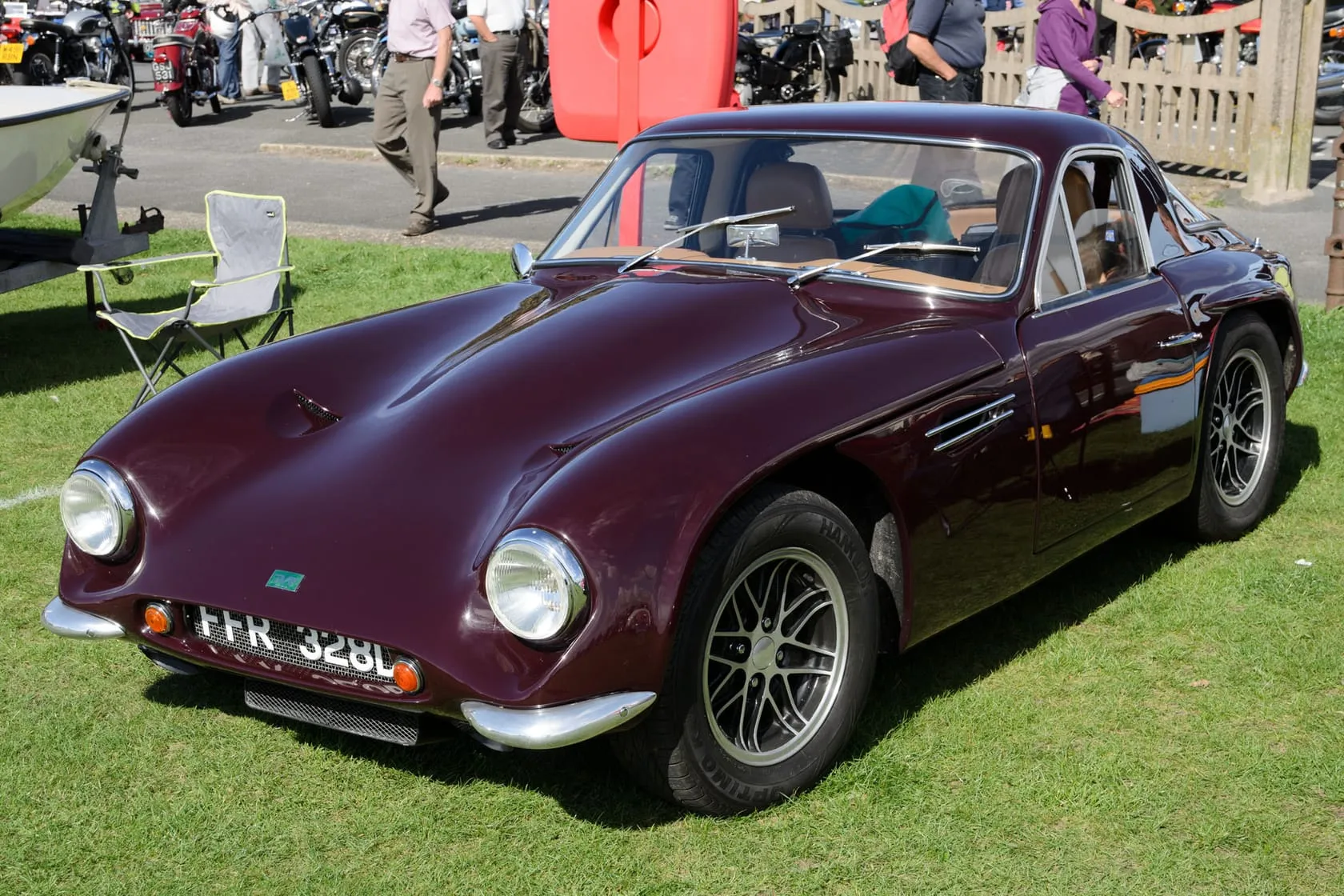
TVR opened its workshop in Blackpool in 1947 and produced the Grantura (1958–67) as its first proper road car. The TVR M-series, the 350i, the Wheeler-era Griffith and Chimaera, all trace their lineage back to the Grantura.
Other small makers active through the decade: Healey (the Silverstone 1949–51 and the export-only Nash-Healey), Frazer Nash (Le Mans Replica and Mille Miglia variants, very limited production), and AC (beyond the Ace, the AC 2-Litre saloon ran from 1947–58).

Racing green: Le Mans and the British ascent
The 1950s is the decade British racing went from plucky to dominant. Jaguar won the Le Mans 24 Hours five times in seven years: the C-Type in 1951 and 1953, the second win aided by pioneering disc brakes, and the D-Type in 1955, 1956 and 1957, the last two entered by the Scottish privateers of Ecurie Ecosse. In 1957 D-Types filled five of the first six places, and Aston Martin closed the decade by finally winning the race in 1959 with the DBR1.
Grand Prix racing turned British at the same time. Vanwall took the first Formula One constructors’ championship in 1958, the year Mike Hawthorn became Britain’s first world champion, and Cooper’s rear-engined cars carried Jack Brabham to the 1959 title and made every front-engined racer in the world obsolete. The engineering culture built in those seasons became the British motorsport industry that still supplies the sport today.

What made the 1950s distinctive
Three threads run across the decade.
The export drive. The MG TC and its successors, the Austin-Healey 100, and the Jaguar XK120 collectively built the American market for British sports cars from scratch. Without the dollars that drive earned, the British motor industry of the 1950s would not have made it through the rationing years that lasted to 1954. The “British roadster in California” cultural cliché was manufactured in the 1950s with deliberate government policy behind it.
The diversification of the sports-car market. By 1955 a British buyer with a budget could choose between an MGA, a TR2, an Austin-Healey 100, a Jaguar XK140, an Aston DB2-4, or a Bristol. By 1960 the same buyer could add the Mini Cooper, the Lotus Elite, the AC Aceca, the early Triumph Spitfire (just appearing) and TVR Grantura. The choice grew dramatically across the decade, and the sports-car export volume grew with it.
The Land Rover. The decision in 1948 to keep building it as a permanent product rather than a stopgap is one of the most consequential industrial decisions in British post-war manufacturing. Without the Land Rover, the Range Rover doesn’t exist, the Discovery doesn’t exist, and Jaguar Land Rover under Tata doesn’t have the modern luxury 4x4 line that funds the rest of the business today.
The decade ended with the Mini’s launch in August 1959, which would define the 1960s. But the cars that defined the 1950s themselves (the XK, the Healey, the MGA, the TR2, the DB2, the Series I, the Silver Cloud, the R-Type Continental) established the British classic-car identity that the next sixty years would build on.
If you want to read forward, the 1960s page picks up the story. Reading backwards, the 1940s covers the wartime shutdown and immediate post-war foundation period that the 1950s built on. For broader scope, see which cars count as British classics.

More photos
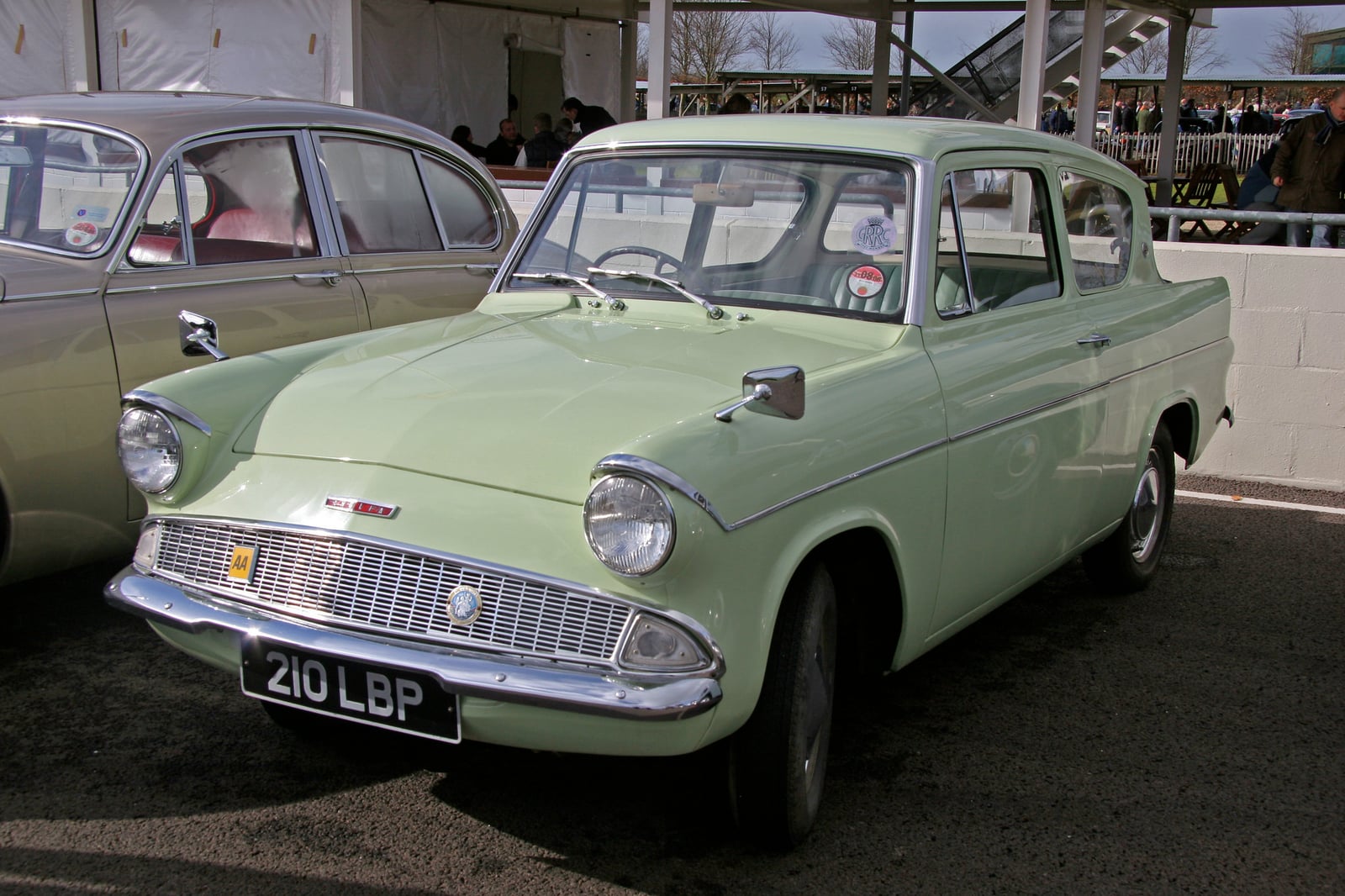
The cars of the 1950s
34 guides1950


1954


1956


Frequently asked questions
What are the most collectible British cars of the 1950s?
Why did so many British sports cars sell in America in the 1950s?
What was the Land Rover originally meant to be?
When did the Mini launch?
Did British cars win at Le Mans in the 1950s?
When did Britain's first motorway open?
What were the most popular 1950s cars in Britain?
Related across themes
Recently added

Bentley S-series: the quiet twin with the beautiful secrets (1955–1965)

Rolls-Royce Silver Spirit and Silver Spur: the last Crewe bargain (1980–1999)

Rolls-Royce Corniche: the coachbuilt survivor that outlived its makers (1971–1995)
