Vauxhall Victor: nineteen years and five generations of family Vauxhall (1957–1976)
The Vauxhall Victor ran for nineteen years and five generations, from the wraparound-windscreen F-type to the slant-four FE estate. A guide to the lineage, what to look for, what they're worth, and why so few survived.
Built 1957–1976 55 recorded sales

At a glance
- Years
- 1957–1976
- Body styles
- Saloon, estate (plus VX 4/90 and Ventora variants)
- Drivetrain
- Rear-wheel drive
- Engines
- 1.5/1.6 OHV four; 1.6-2.3 OHC slant-four; 3.3 straight-six (Ventora)
- Power
- 55-123 bhp
- Top speed
- 95 mph (1.8) to around 110 mph (3.3 Ventora)
- Trim levels
- Standard, Super, De Luxe, VX 4/90; Ventora
- Production
- Five generations (F, FB, FC, FD, FE); around 390,000 F-types alone
- Assembly
- Luton (FE estates at Ellesmere Port)
- UK survivors
- Scarce; under 200 F-types and under 250 FCs licensed (DVLA)
- Values
- Roughly £2,500-£8,000 by generation; restored F-types £15,000-plus
- Export
- Sold as the Envoy in Canada; also Australia and South Africa
The models
Britain seems to forget the Vauxhall Victor twice over. They forget it because Vauxhall itself spent decades being treated as the slightly less serious GM-owned cousin of the Cortina and the Cambridge, and they forget the Victor specifically because of how spectacularly the first generation rusted. By 1965 the F-type Victor was a national joke about rotten sills. By 1985 the last-generation FE was scrap. The car that kept Vauxhall’s Luton plant in family-saloon business through three decades is now scarce enough that you can attend a classic show without seeing one.
That’s a shame, because the Victor’s nineteen-year run across five distinct generations is a useful frame for what Britain’s mainstream motor industry was actually doing between the late 1950s and the mid-1970s. The F-type was Britain trying to sell American styling to sceptical UK buyers. The Vauxhall FB Victor was the apology for it. The FC was the peak of conventional engineering. The FD was the moment Vauxhall’s engineering department got ambitious and built an entirely new slant-four overhead-cam engine. The FE was the last large car Vauxhall designed largely by itself before GM pulled all future saloons onto shared European Opel platforms. Each generation tells you something specific about its moment.
F-type (1957–1961): the Detroit pastiche
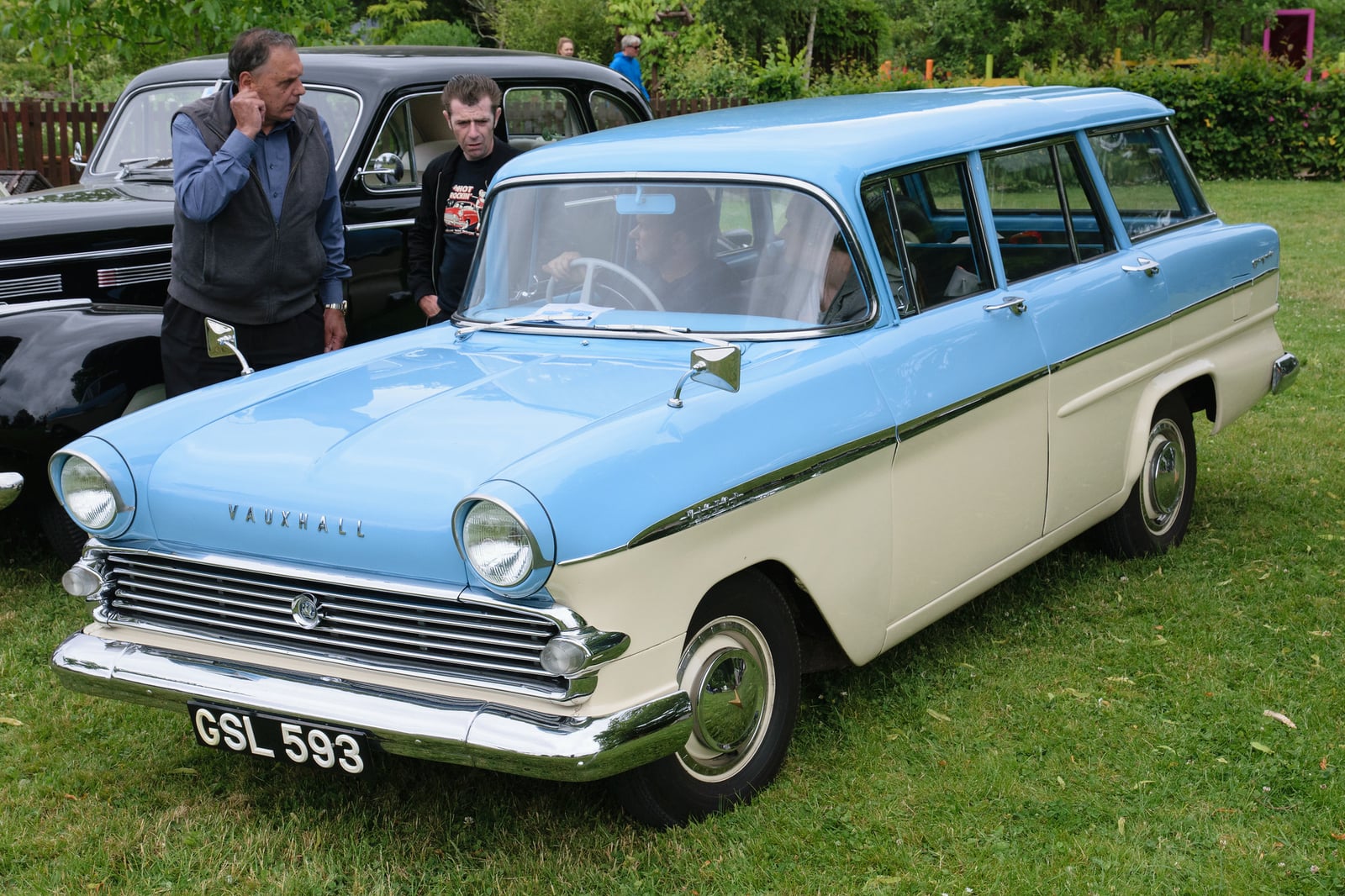
The first Victor arrived in March 1957 as Vauxhall’s belated answer to the Morris Oxford and Austin Cambridge. It was a clean break from the outgoing Wyvern in two ways. It was deliberately, almost embarrassingly, styled to look like a small 1955 Chevrolet Bel Air, with a wraparound windscreen, dogleg A-pillars, a chrome side spear, and small rear tailfins. And it was the first British Vauxhall designed from the start to be exported in serious numbers, to Canada, Australia, the United States, South Africa, and the Caribbean. GM had spare US dealer capacity and wanted a small British car to fill it.
The mechanicals were modest. A 1507cc overhead-valve pushrod four making 55 horsepower drove the rear wheels through a three-speed column-change gearbox. There were two trim levels, Standard and Super, then a slightly cleaned-up Series II from late 1959 with some of the more flamboyant body trim removed after sustained complaints from the British motoring press. Around 390,000 were built in total, the bulk of them sold at home into a UK market that was, despite the press, perfectly happy to buy the F-type in big numbers. It outsold the Cambridge for several years.
Then the rust started. The F-type rusted in places no other car of the period rusted: in the sills, the inner wings, the bulkhead, the floors, around the windscreen, around the rear window, in the bumper irons. Two or three winters into ownership, an F-type that had been pristine in 1958 would have visible holes by 1961. The problem was the steel itself rather than the design. Vauxhall had been using inadequately treated sheet steel from a single supplier, and the cars dissolved faster than the dealer network could keep up. By the mid-1960s the F-type’s reputation for rust was already folk knowledge in Britain. Survival rates today are very low. The DVLA registers fewer than 200 F-type Victors as still licensed.

FB (1961–1964): the cleanup
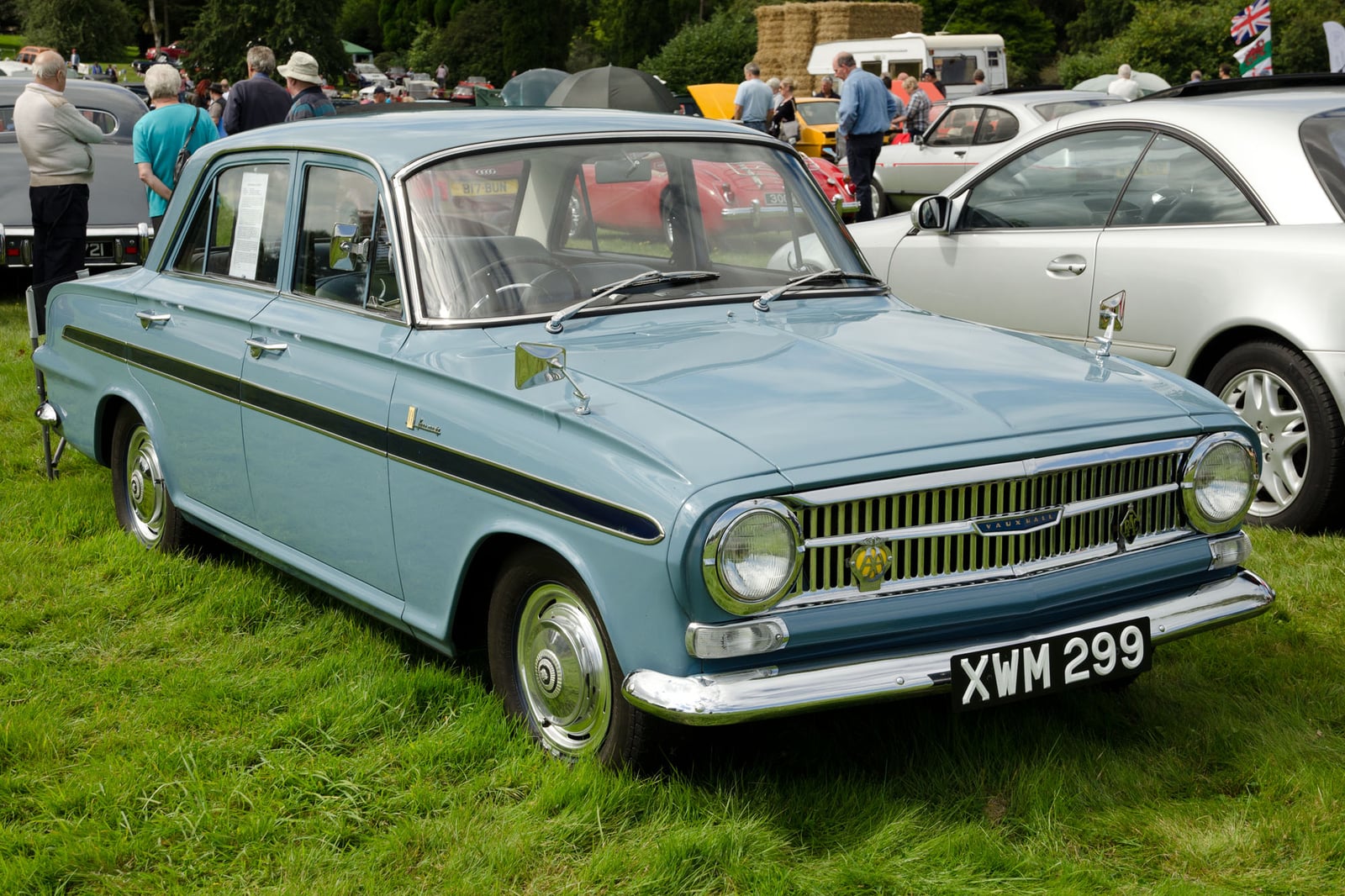
The FB Victor of 1961 was Vauxhall’s apology for the F-type. The wraparound windscreen went. The tailfins went. The dogleg A-pillars went. What replaced them was a clean, conventional three-box saloon, very much in the contemporary Anglo-American vein, more sober than the Cambridge Farina and more conservative than anything Ford was building at the time. The body styling came from David Jones’s team at Vauxhall, and is the generation that ages most gracefully today.
The engine carried over the 1507cc unit, growing to 1594cc from late 1963 with a useful jump in torque. The estate joined the range in 1962 and was a genuinely useful load-carrier with a wide tailgate and folding rear seat. The performance variant, the VX 4/90, arrived in late 1961 with a twin-Zenith-carb high-compression head, four-speed floor-change gearbox, front disc brakes, and a top speed comfortably over 90 mph. The VX 4/90 is the generation’s most collectable variant by some margin.
Rust was much better controlled than on the F-type but still not solved. FB Victors still rust on the rear wheel arches and the sills, just at the rate of a normal early-1960s saloon rather than the suicidal rate of the F-type.

FC / Victor 101 (1964–1967): the conventional peak
Vauxhall called the FC the Victor 101 in marketing, claiming a hundred and one improvements over the FB. Most were marginal. The shape was a longer, slightly more angular evolution of the FB, still conservatively styled, with the same 1594cc engine standard and a 1.8-litre option from 1967. The VX 4/90 continued through the FC era, joined briefly by a 2.0-litre option in the final year.
The FC is the generation enthusiasts often point to as the best-balanced Victor. The cleanup of the FB’s styling had landed properly, the running gear was thoroughly debugged, and the chassis tuning was sweeter than either neighbour generation. They are also the rarest Victors after the F-type. Fewer than 250 are licensed in the UK.

FD (1967–1972): the slant-four and the coke bottle
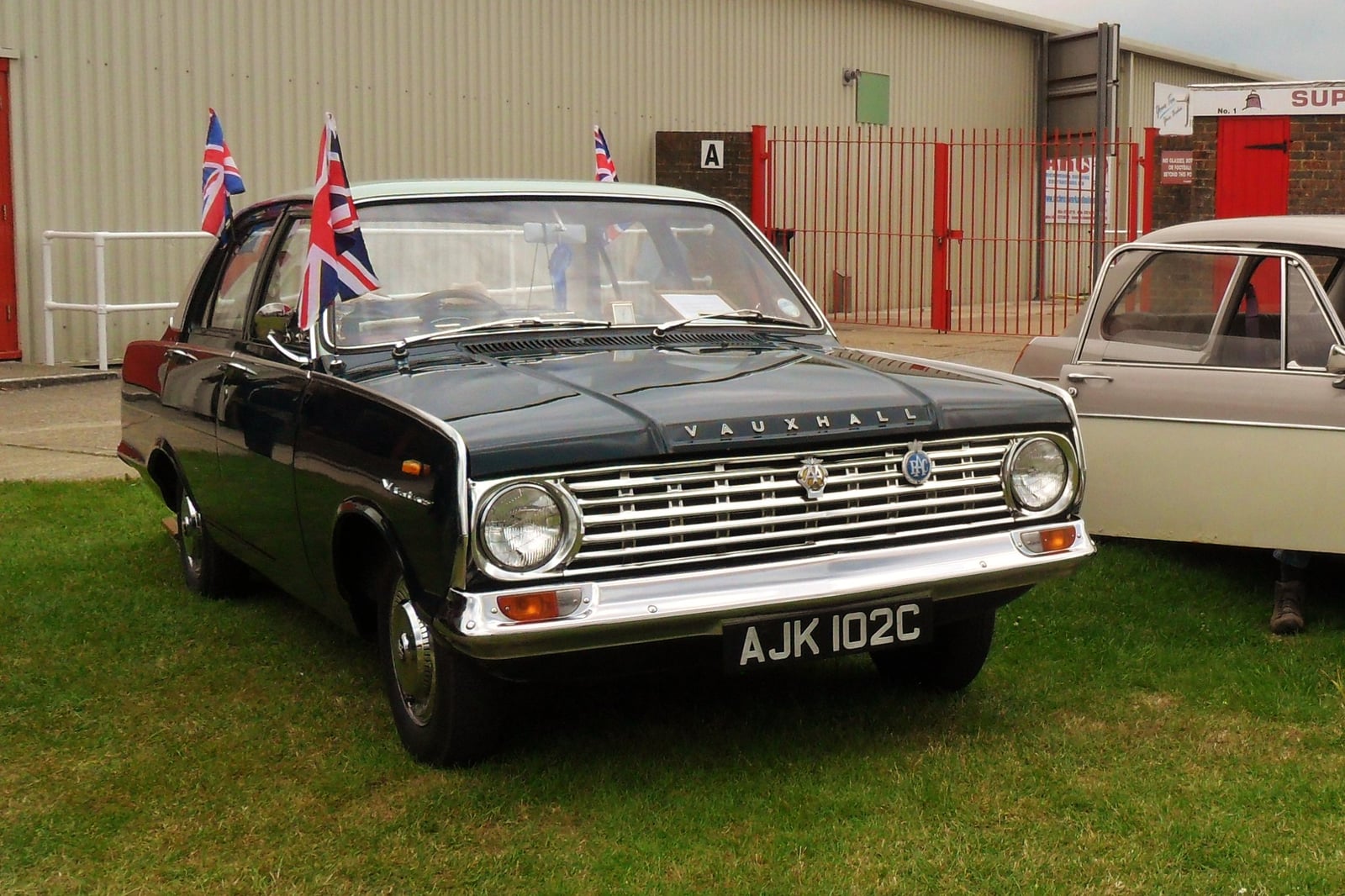
The FD Victor of 1967 was the moment Vauxhall stopped playing it safe. The body was a true Coke-bottle shape, narrow at the waist, flared at the rear haunches, with a long bonnet and a short boot. The Detroit influence was back but in late-1960s Coke-bottle form rather than mid-1950s tailfin form, and on a more European-sized saloon than American showrooms were used to.
The more significant change was under the bonnet. The pushrod four-cylinder was retired in favour of an all-new overhead-cam slant-four engine in 1599cc and 1975cc capacities. The slant-four was the engine that would carry on into the Cavalier, the Magnum, the Firenza, and the Chevette HS, and it ran in various Vauxhalls and Opels through to the late 1980s. The 1.6 was adequate, the 2.0 was lively, and Vauxhall’s tuning department got useful torque out of both. Stick a four-speed manual on either and the FD was as easy to live with as a Cortina Mk2 of the same vintage.
The FD also gained the Ventora in late 1968, a model worth its own paragraph. The Ventora used the FD bodyshell but dropped in the 3294cc straight-six from the contemporary Cresta, giving 123 brake horsepower, a top speed of 105 mph, and a relaxed long- distance gait the four-cylinder Victors did not have. Specified with the optional automatic and the vinyl roof, the Ventora was Vauxhall’s pitch at the lower edge of the Rover 2000 / Jaguar 240 market. It did not sell in big numbers but the survivors are now among the most desirable Victors.

FE (1972–1976): the bigger Victor
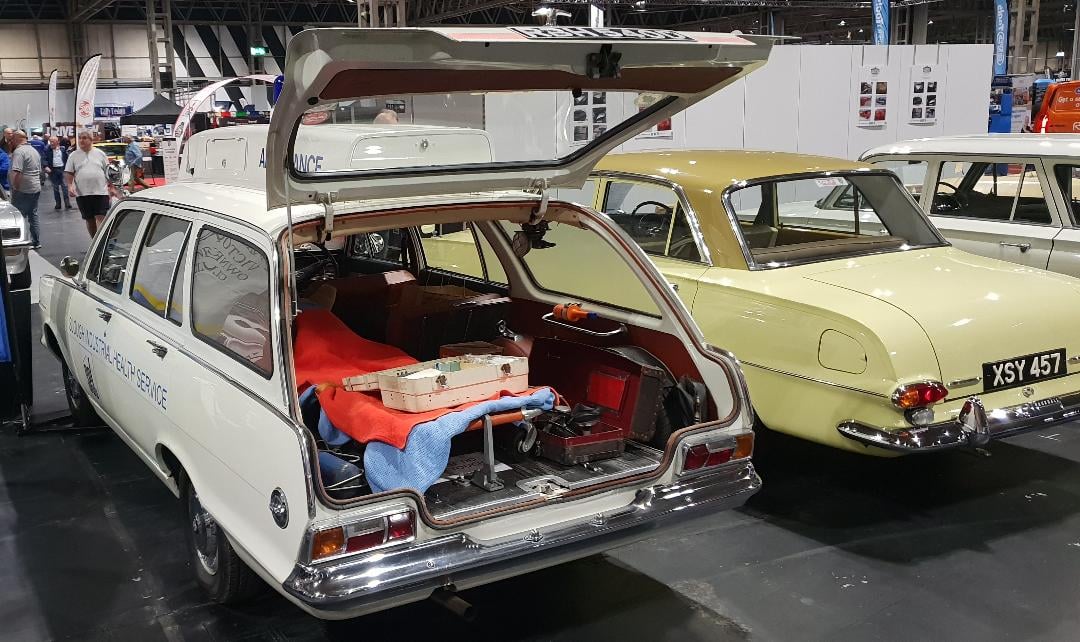
The FE of 1972 was the last Victor and the largest. It grew in every dimension, becoming a properly substantial mid-sized saloon on the same engineering platform as the Opel Rekord D, though the two cars shared no body panels. The slant-four engines were bored out to 1759cc and 2279cc, the Ventora continued with the 3.3-litre straight-six, and the VX 4/90 carried on as a sporting trim with the 2.3 engine and twin Stromberg carbs.
The FE estate is the variant the model is now best remembered for. Built at Ellesmere Port from 1972, it had a flat load floor, a huge rear tailgate, a self-levelling rear suspension option, and the kind of practical load-carrying capacity that made it a popular tow car and family wagon. They survived in higher numbers than the saloons because they were used hard rather than parked, which kept the underside moving and the rot at bay.
Production ended in 1976. The Victor’s smaller-end market went to the new Vauxhall Cavalier, launched 1975 on the GM J-car platform. The larger end and the Ventora’s role went to the Vauxhall Carlton from 1978. Both were rebadged Opels at heart. The Victor was Vauxhall’s last major car designed primarily in Luton for British engineering tradition rather than European platform sharing.

Engines and trim levels
Across the five generations the Victor offered:
- 1507cc OHV four (F-type, FB to 1963): 55 to 60 bhp.
- 1594cc OHV four (FB late, FC, early FD): 70 to 81 bhp standard, 85 to 95 bhp in VX 4/90 form.
- 1599cc OHC slant-four (FD, FE): 77 bhp standard, more in tuned variants.
- 1759cc OHC slant-four (FE): 80 to 86 bhp.
- 1975cc OHC slant-four (FD): 104 bhp standard, more in VX 4/90.
- 2279cc OHC slant-four (FE): 110 bhp standard, more in VX 4/90.
- 3294cc OHV straight-six (Ventora FD and FE): 123 bhp.
Trim levels evolved generation by generation, but the family pattern was Standard, Super, De Luxe, and VX 4/90, with the Ventora as a separate model name on the FD and FE.
Buying guide: what to look for
Every Victor rusts. The question is where, how much, and whether the welds underneath the underseal are factory or a bodge.
On all generations, check the sills (inner and outer), the rear wheel arches, the floor pans, the bulkhead corners under the windscreen, the bottom corners of the doors, and the inner wings around the front suspension turrets. On the F-type, also check the rear inner wings, the boot floor, and the windscreen surround. The F-type’s structural rust is often hidden under layers of period repair that won’t withstand serious inspection. Take a torch and a screwdriver. Tap suspect panels.
Mechanically the cars are durable. The OHV pushrod fours will run forever with regular oil changes. The OHC slant-four is more sensitive to cambelt service intervals (the FE’s belt should be changed every 30,000 miles or every five years) but is otherwise durable. The Ventora’s straight-six is essentially the same engine as the Cresta and is a known-quantity unit. Gearboxes are generally reliable, the column-change three-speed on the F-type being the obvious weak point.
Parts availability is the harder question. Mechanical service items are reasonably well covered through the owners’ clubs. Body panels, trim, and chrome work are increasingly hard to find, especially for the F-type and FC. A Victor restoration starting from a rusty shell is a real-money project today.
Current Vauxhall Victor price and value range
The price for a running, MOT’d Victor sits in a wide band depending on generation. As a rough current guide:
- F-type (1957–1961): £4,000 for a tatty but driveable Series II saloon, £10,000 to £18,000 for a properly restored Series I or II in show condition. Rarity drives the top of the range more than mechanical condition.
- FB Victor (1961–1964): £3,000 to £7,000 for the saloon, £4,000 to £8,000 for the estate. VX 4/90 adds around 30 per cent.
- FC Victor 101 (1964–1967): £3,500 to £7,500 saloon. VX 4/90 examples are scarce and reach £9,000 to £12,000.
- FD Victor (1967–1972): £2,500 to £6,000 for the four-cylinder saloon, £5,000 to £9,000 for the Ventora.
- FE Victor / VX series (1972–1976): £2,500 to £5,500 for the saloon, £3,500 to £7,000 for the estate, £5,500 to £9,500 for the Ventora and VX 4/90.
Auction passes are common at the lower end because few buyers will commit serious money to a car whose underside has not been inspected on a ramp. A documented restoration with welding bills and panel-replacement evidence is worth more than the car’s MOT status alone.
Owners’ clubs and parts supply
Two clubs cover the model. The Vauxhall Victor Owners’ Club is the model-specific organisation, runs an active spares scheme, and has the closest community knowledge on the F-type through FE. The Vauxhall Driver Owner’s Club covers all post-war Vauxhalls including the Victor and is a useful broader resource for shared GM parts (Ventora six-cylinder running gear shares plenty with the Cresta PB/PC).
Mechanical service parts are reasonably well supplied through the clubs and through GM-period specialists like Old Skool Ford and Vauxhall (despite the name). Body panels are the bottleneck. The clubs occasionally commission re-manufactured panels in batches, but anyone buying a Victor today should assume that a panel they need is not in stock and may take a year to source.
Where the Victor sits in the British motoring story
The Victor matters because it spans the moment GM stopped treating Vauxhall as an independent British engineering operation and started treating it as the British showroom for European-built Opels. The F-type was Vauxhall in confident American mode. The FE was Vauxhall in last-act mode, designed and engineered at Luton but the last big saloon that would be. The Cavalier and the Carlton that replaced it were the new pattern, and the Victor’s end is also the end of a British Vauxhall engineering tradition that started with the Velox and Wyvern of the late 1940s.
For a buyer today, that history is most of the case for the car. The Victor is not a fast classic, not a beautiful classic, and not a rare classic in the way an Aston is rare. What it is, is a direct line back to the British family-saloon market when the British family-saloon market was a serious commercial battlefield, and a survivor of that battlefield in any generation is worth a second look.
The Victor in dates
- March 1957The F-type arrives styled like a small Chevrolet Bel Air, the first Vauxhall designed for serious export; around 390,000 are built before the rust reputation sets in.
- 1961The FB is the apology: a clean, conventional three-box from David Jones' team, the generation that ages most gracefully.
- 1961The VX 4/90 performance variant arrives with a twin-carburettor high-compression head and front discs.
- 1964The FC, marketed as the Victor 101, is the conventional peak: debugged running gear and the sweetest chassis tuning of the line.
- 1967The FD brings the coke-bottle body and the all-new overhead-cam slant-four that will power Vauxhalls into the late 1980s; the 3.3 straight-six Ventora follows in 1968.
- 1972The FE grows onto the Opel Rekord D platform with no shared panels; the Ellesmere Port-built estate becomes the best-remembered variant.
- 1976Production ends; the Cavalier and Carlton, rebadged Opels at heart, divide the inheritance.
Victor: what to check before you buy
Rust, on all generations
- Sills inner and outer, rear arches, floor pans and the bulkhead corners under the windscreen
- Door bottoms and the inner wings around the front suspension turrets
- F-type: also rear inner wings, boot floor and windscreen surround, with a torch and a screwdriver
- Period repairs on an F-type rarely withstand serious inspection, so tap suspect panels
Mechanical
- OHV fours are near-immortal on regular oil changes
- The OHC slant-four is cambelt-sensitive: 30,000 miles or five years
- The Ventora's straight-six is the known-quantity Cresta unit
- Column-change three-speeds on early cars are period charm, not faults
Generation and variant
- The FC is the enthusiasts' balanced pick and the second-rarest after the F-type
- Ventoras are among the most desirable survivors
- VX 4/90s carry the sporting premium and need verifying against records
- FE estates survived best because they worked hardest
What the Victor sells for at auction
| Variant | Sold | Typical range | Median |
|---|---|---|---|
| Victor | 40 | £3,139 - £7,661 | £5,819 |
| Victor FE | 7 | £1,552 - £3,800 | £2,800 |
| Victor FB | 6 | £1,545 - £6,016 | £4,769 |
Show the year-by-year mediansHide the year-by-year medians
| Year | Sold | Median | In 2025 money |
|---|---|---|---|
| 2026 (so far) | 3 | £6,200 | |
| 2025 | 7 | £5,200 | £5,200 |
| 2024 | 5 | £4,860 | £5,047 |
| 2023 | 12 | £6,368 | £6,834 |
| 2022 | 9 | £7,365 | £8,435 |
| 2021 | 4 | £4,473 | £5,531 |
| 2018 | 7 | £1,568 | £2,041 |
- £4,000Victor
- £10,000Victor FE
- £6,200Victor
- £6,200Victor
- £5,000Victor
Thin evidence. Only 55 recorded sales: read the figures as a sketch of the market, not a price. Based on 55 sold results from public classic car auctions (2004 to 10 August 2026). Sold prices, not asking prices, and not a valuation: condition, history and specification vary from car to car. Inflation-adjusted figures use the ONS CPIH index, in 2025 money.
Related across British family saloons
For other British family saloons of the same period, see the Hillman Avenger (1970–1981), the Morris Marina (1971–1980), and the Austin Princess (1975–1981). The Vauxhall Chevette (1975–1984) was the smaller car Vauxhall launched alongside the late Victor. For the wider context on these five cars as a group, see Britain’s troubled 1970s family saloons. For the broader period context, see British classic cars of the 1950s, British classic cars of the 1960s, and British classic cars of the 1970s.
More photos
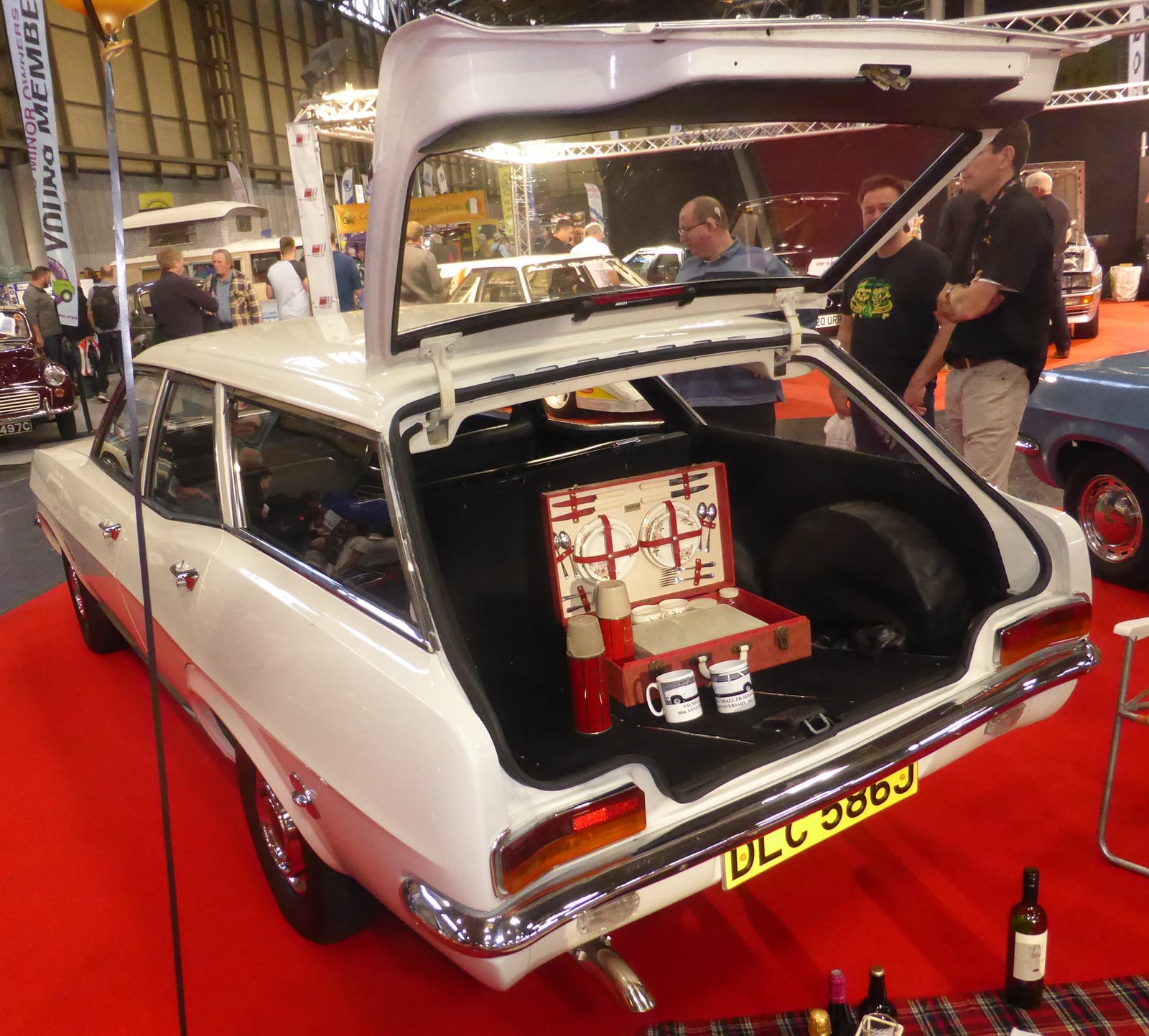
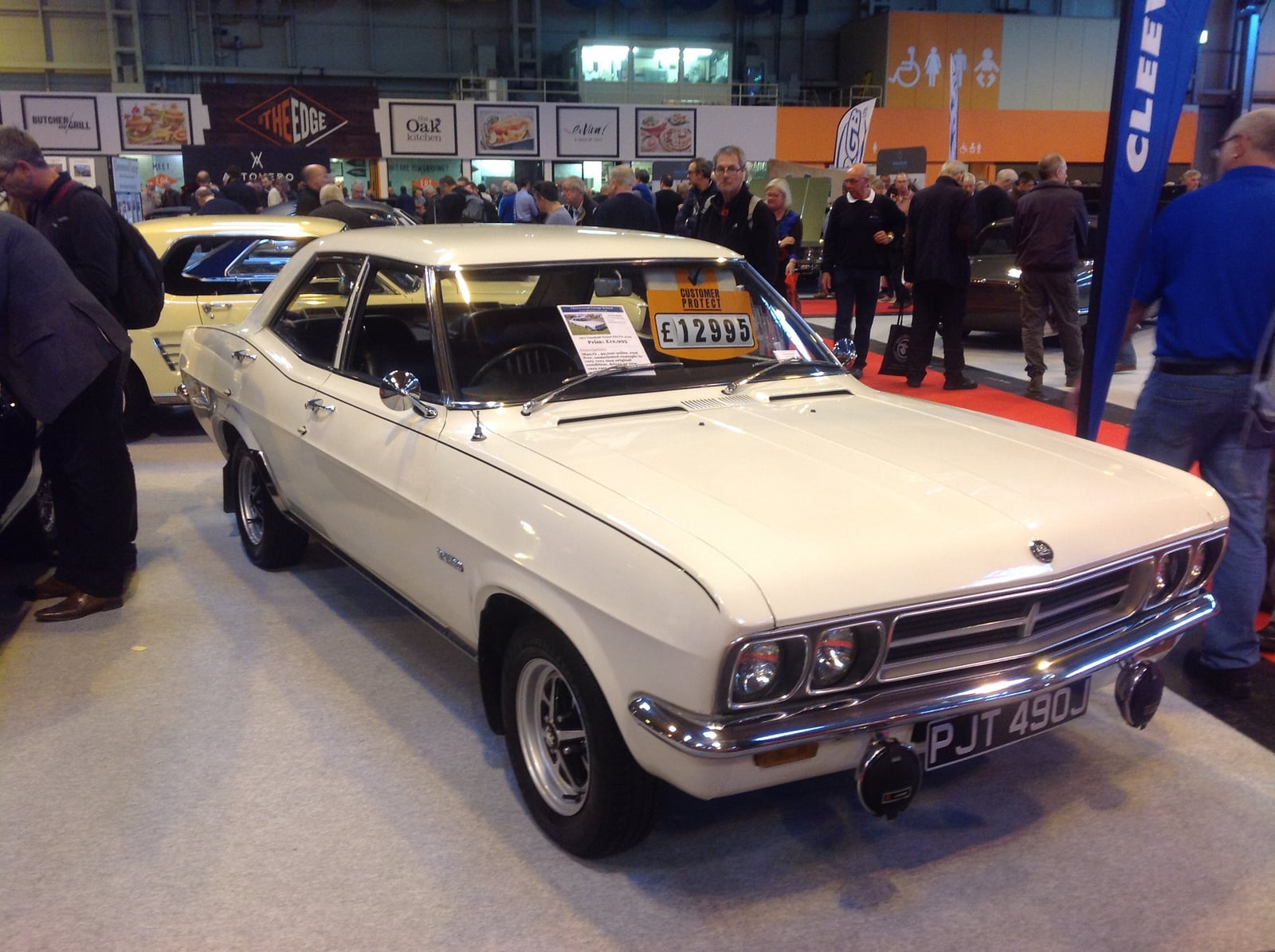
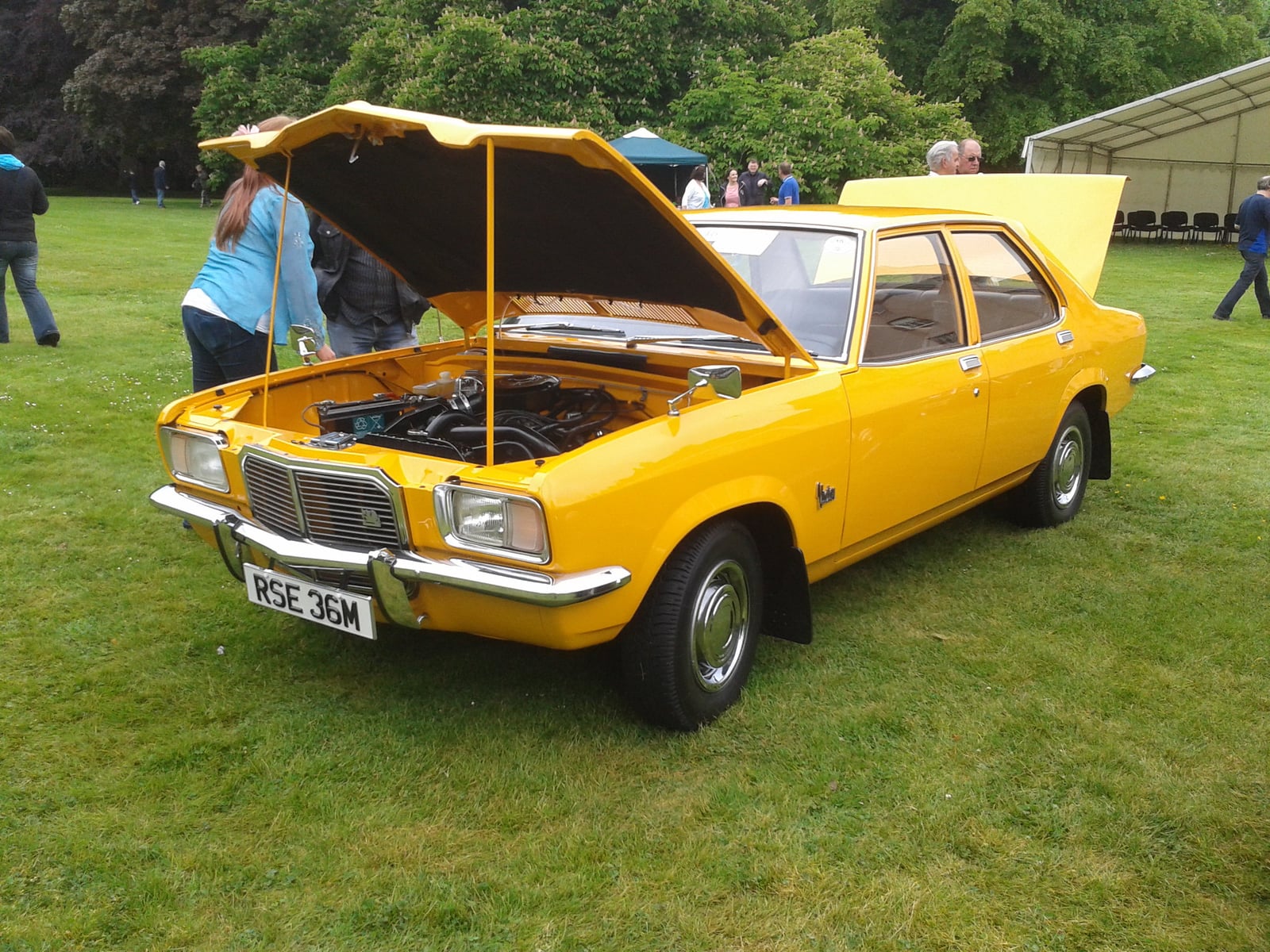
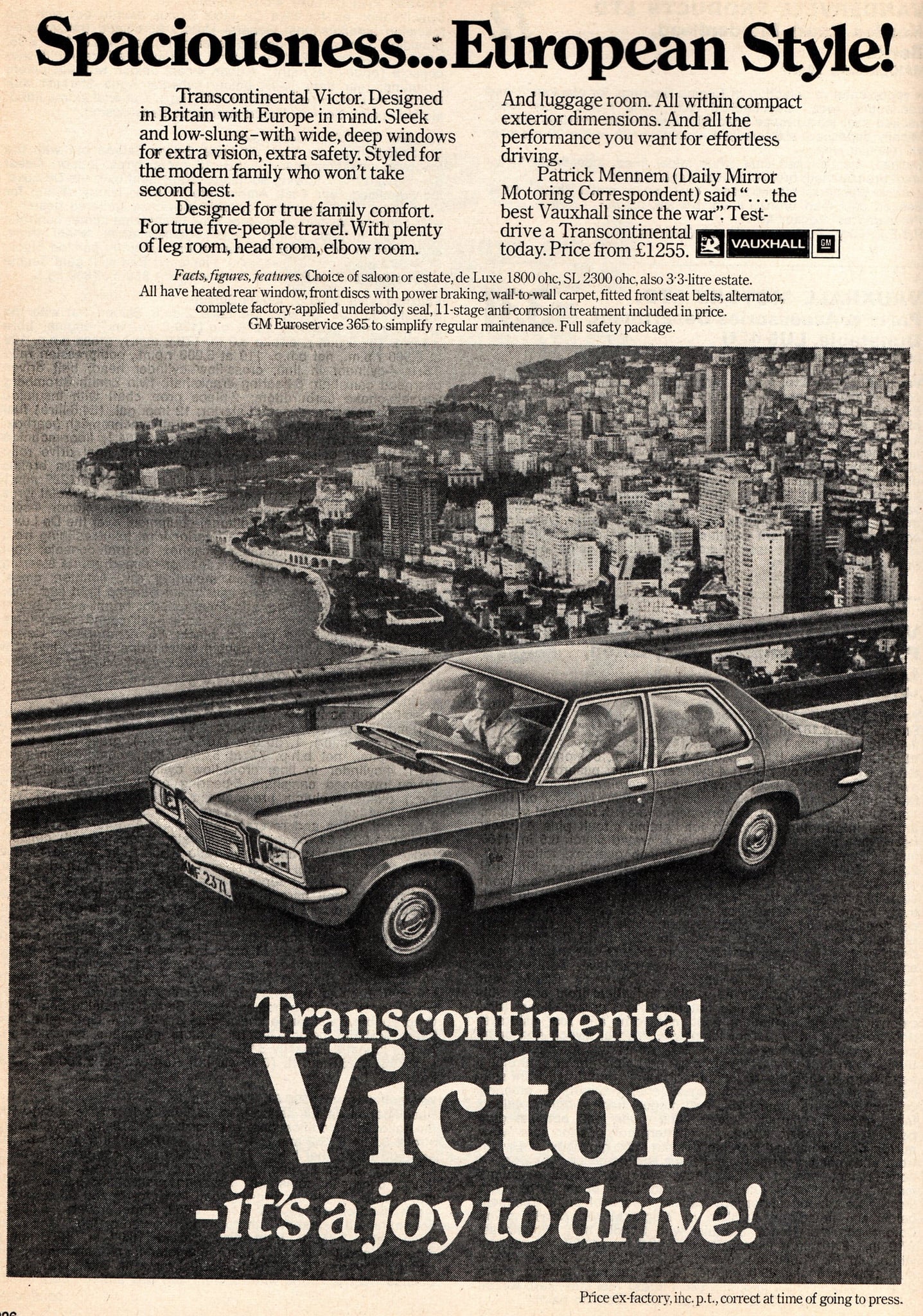
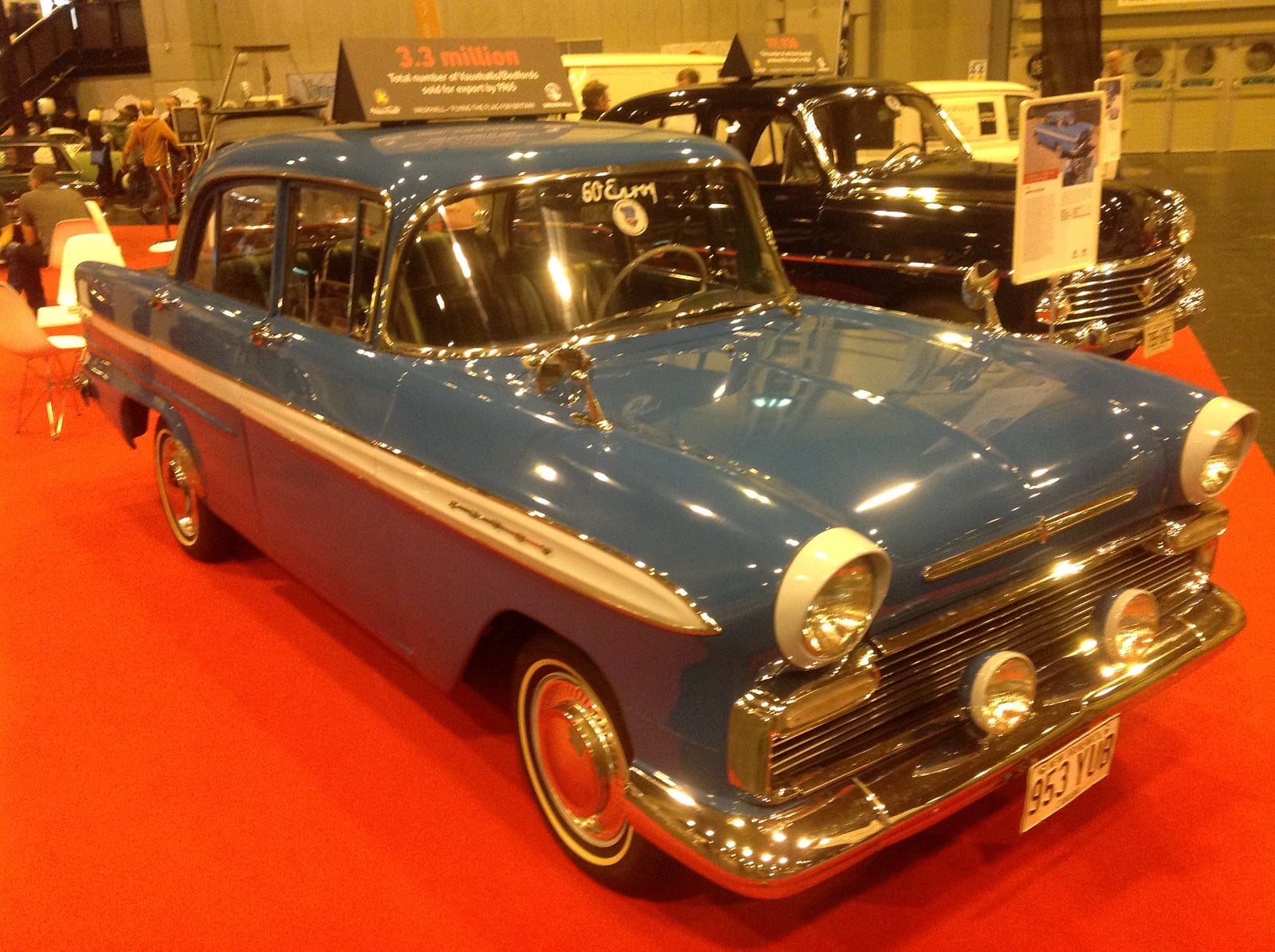
The Victor generations
Frequently asked questions
How much is a Vauxhall Victor worth?
What replaced the Vauxhall Victor?
What was the top speed of the Red Victor 3?
Who made the Vauxhall Victor?
What is the most expensive Victor ever sold at auction?
How often does a Victor come up for sale?
Related across themes
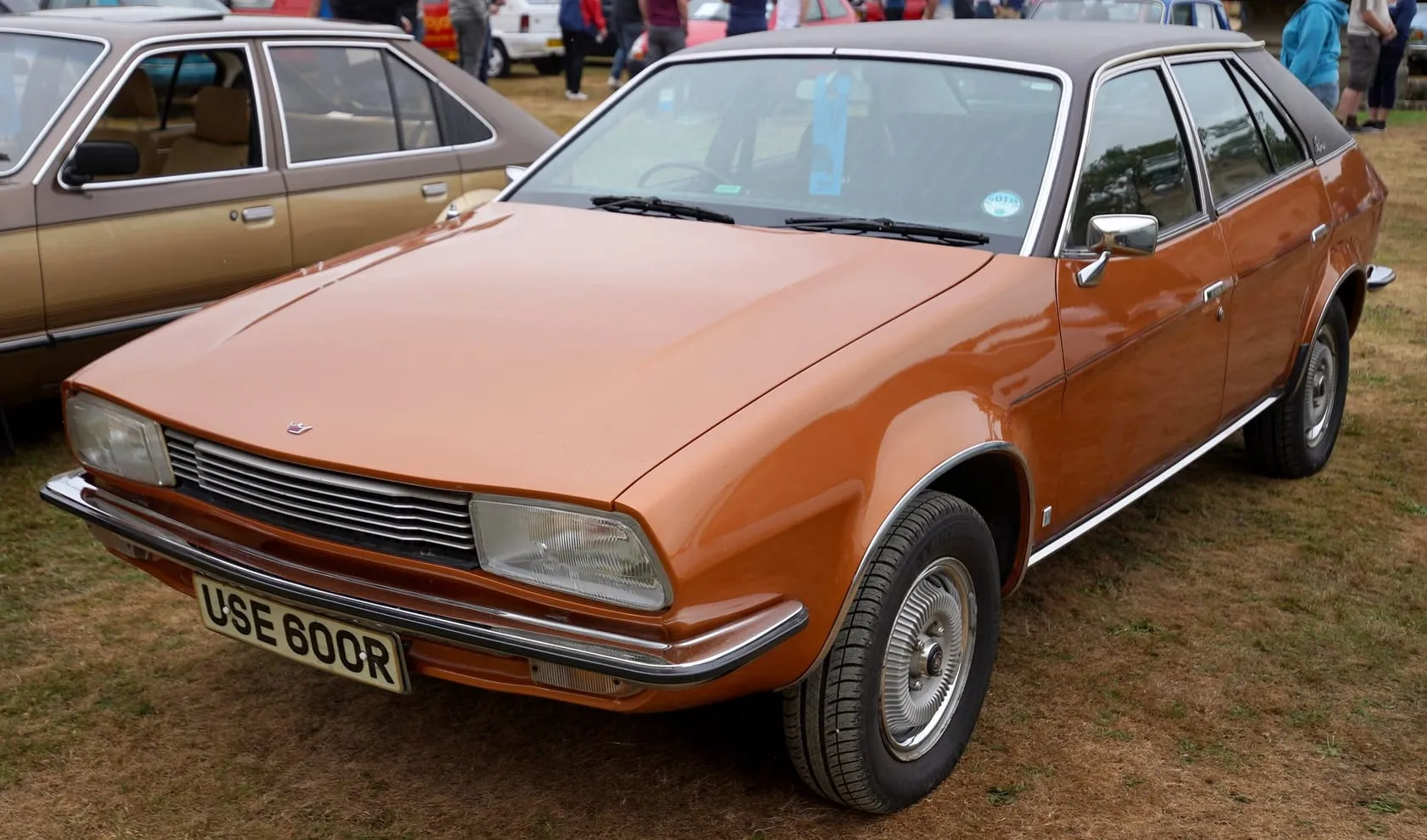
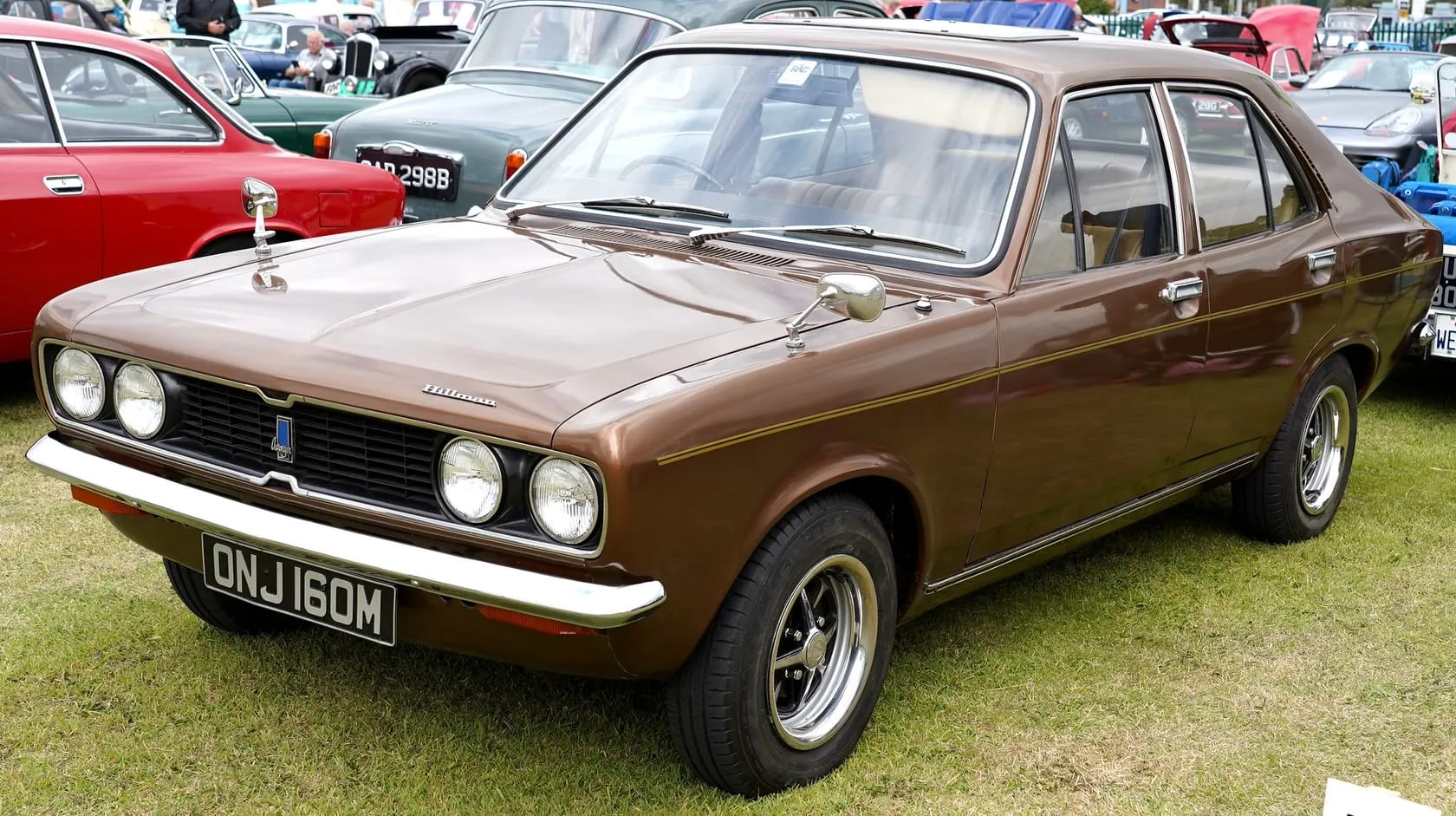
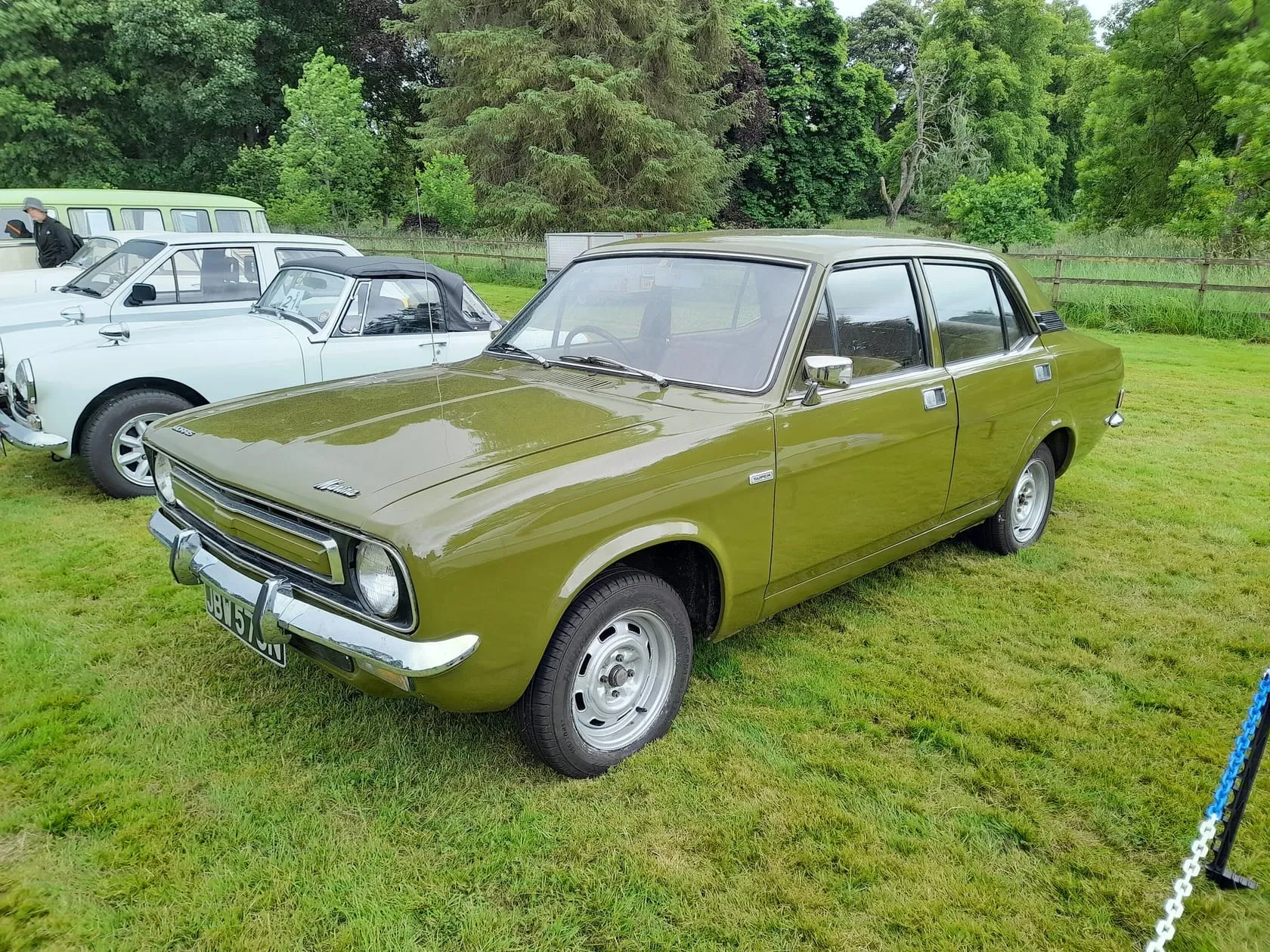
More from Vauxhall

Vauxhall Carlton: Luton's last big saloon, the Car of the Year and the GSi 3000 (1978–1994)

Vauxhall Astra GTE: Ellesmere Port's hot hatchback, from the Mk1 to the 16v red-top (1983–1991)

Vauxhall Chevette: the shovel-nose hatchback that beat Ford to it (1975–1984)


