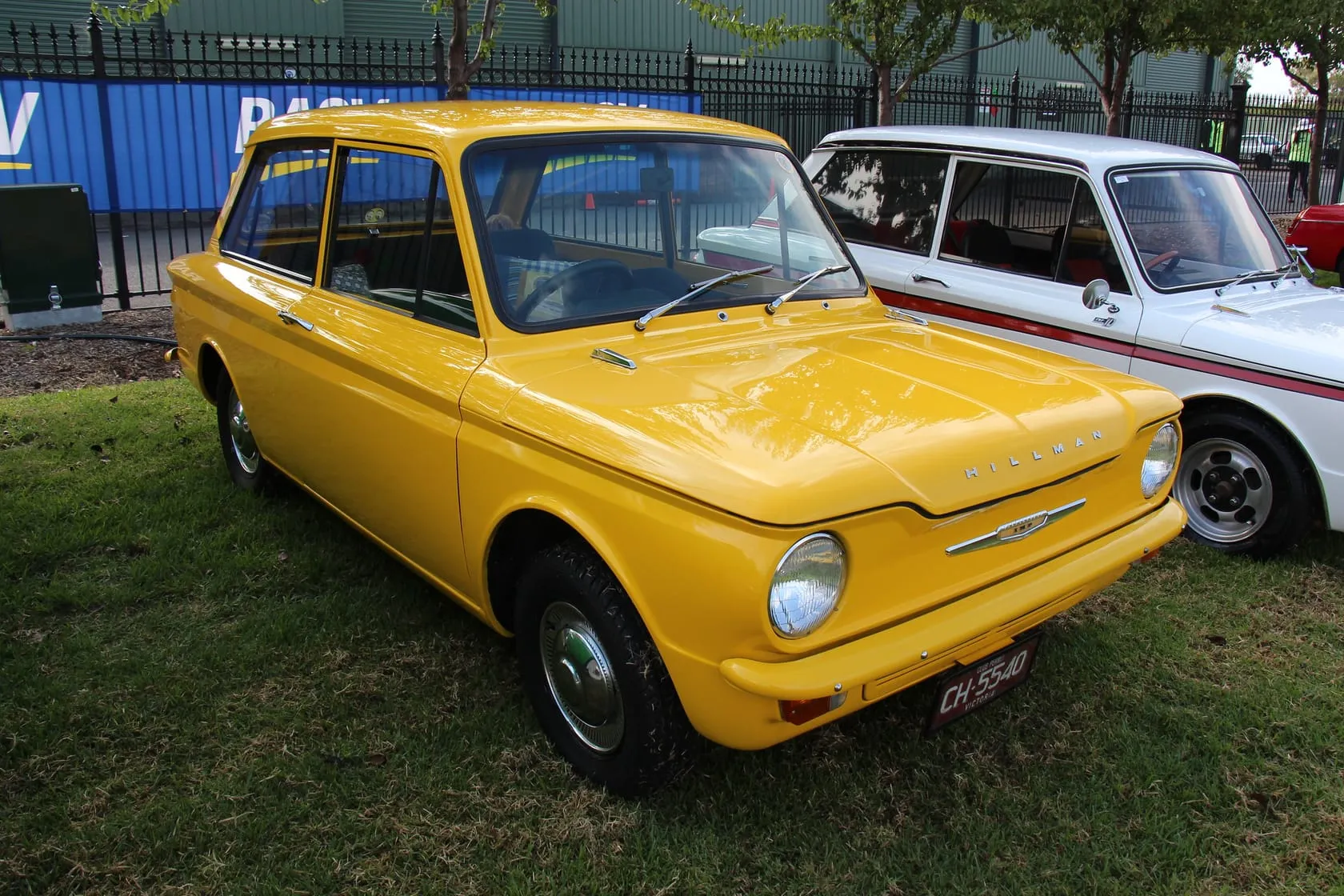
Hillman Avenger: the saloon that changed badge three times (1970–1981)
Rootes Group's last clean-sheet small saloon, sold as a Hillman, then a Chrysler, then a Talbot, with a yellow rally homologation Tiger in the middle of it. A guide to the lineage, the Tiger, what to look for, and what they're worth.
Built 1970–1981 9 recorded sales

At a glance
- Years
- 1970–1981
- Body styles
- Two-door saloon, four-door saloon, five-door estate
- Drivetrain
- Rear-wheel drive
- Engines
- 1.25/1.5/1.6 OHV four (the Avenger engine)
- Power
- 53-107 bhp (107 bhp Tiger)
- Trim levels
- DL, Super, GL, GLS, GT; Tiger (rally homologation)
- Production
- Around 638,000 built
- Assembly
- Ryton-on-Dunsmore, near Coventry
- Designer
- Roy Axe
- UK survivors
- Around 600 on the DVLA register; Tigers around 30-40% survive
- Values
- Saloon £2,500-£6,000, estate £3,000-£7,000; Tiger £25,000-£55,000
- Badges
- Sold as Hillman, then Chrysler, then Talbot Avenger
The cars
Across an eleven-year life the Hillman Avenger wore three different badges in Britain, was sold under a fourth in North America, and continued under a fifth in Argentina after British production ended. It was the Rootes Group’s last clean-sheet small saloon, designed at Coventry in the late 1960s under the leadership of Roy Axe, and is the only Rootes- designed car that lived long enough to be sold as a Talbot in 1980. That fact alone is most of the case for taking the Avenger seriously as a piece of British motoring history.
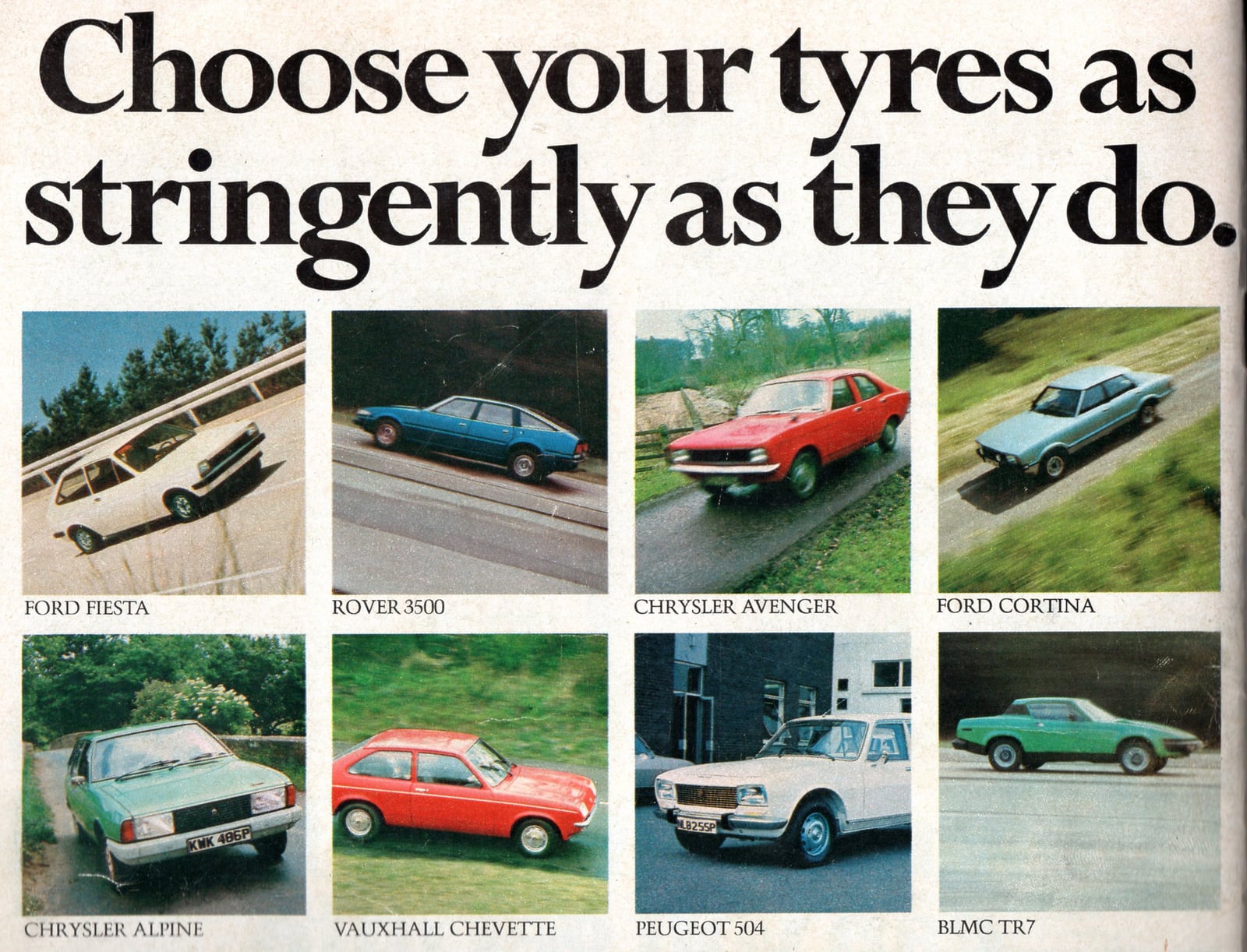
The other case is the car itself. The Avenger sat between the Hillman Hunter and the Hillman Imp in the Rootes range, replacing the Minx, and was aimed squarely at the Ford Escort and the Morris Marina. Period road tests rated it the best-handling of the three. Sales were strong from launch and held up well through the mid-1970s. Then Chrysler’s broader European troubles starved the Avenger of the mid-life redesign it needed, the Marina caught up on price, the Escort Mk2 arrived, and the car drifted into the late 1970s as a budget option rather than the credible Cortina rival it had been at launch.
Where the Avenger came from
The Avenger was developed under the codename “B-car” at the Rootes engineering centre in Coventry from 1965 onwards, intended as a replacement for the ageing Hillman Minx. Chrysler had bought into Rootes in 1964 and taken full control by 1967, so the Avenger was the first new Rootes car developed entirely under American ownership, although the design work was British throughout.
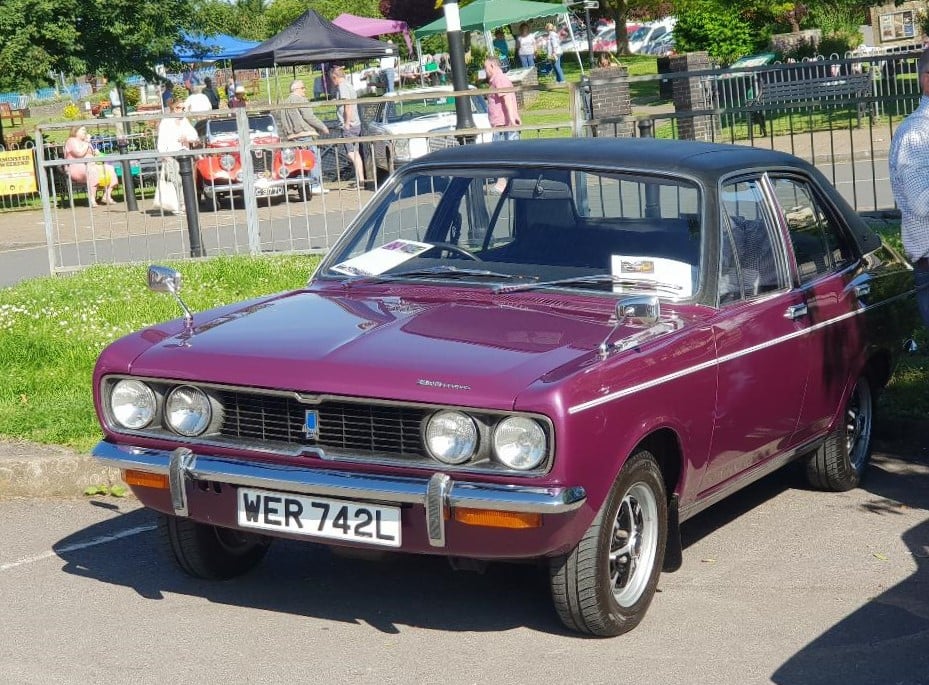
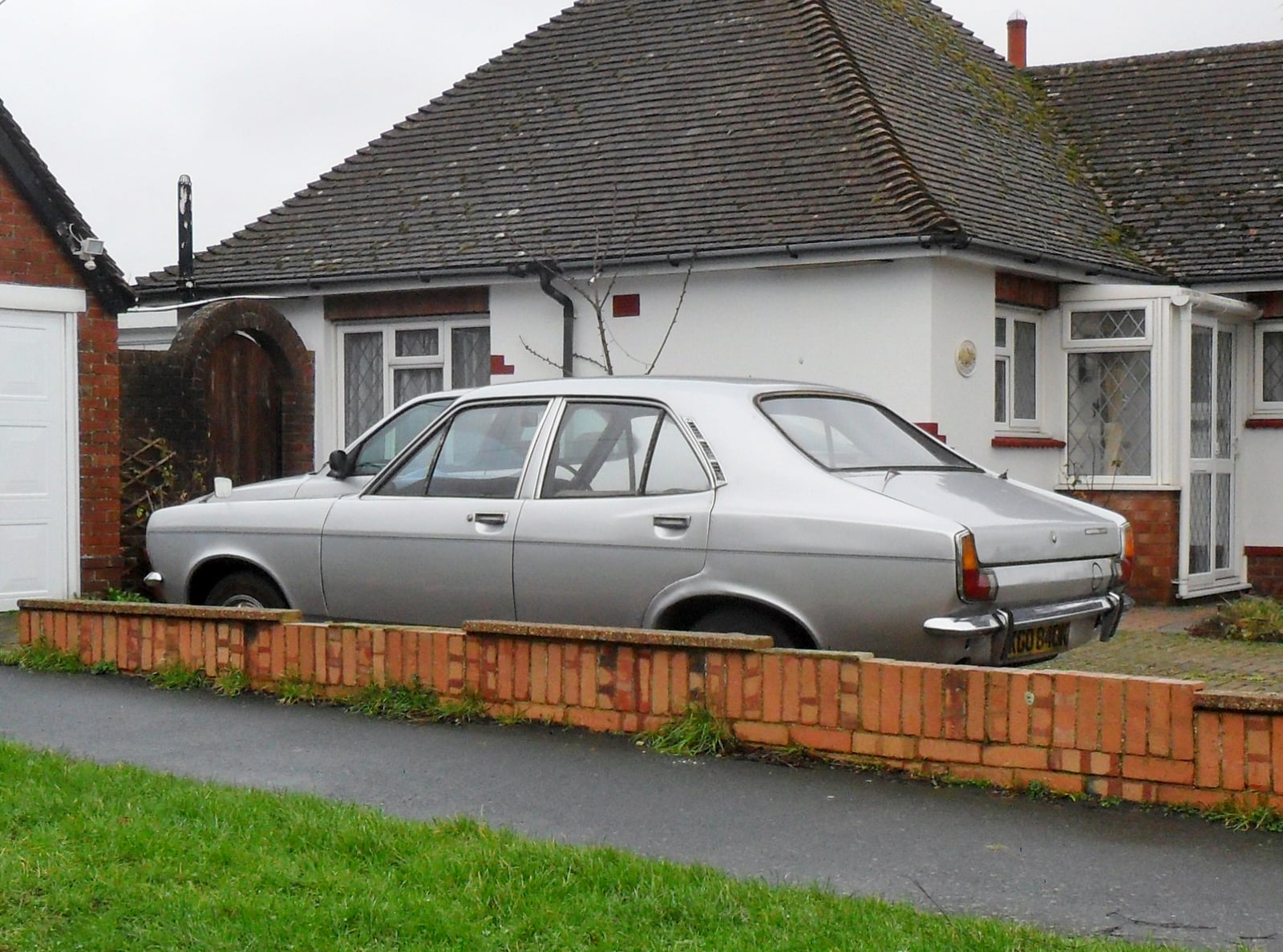
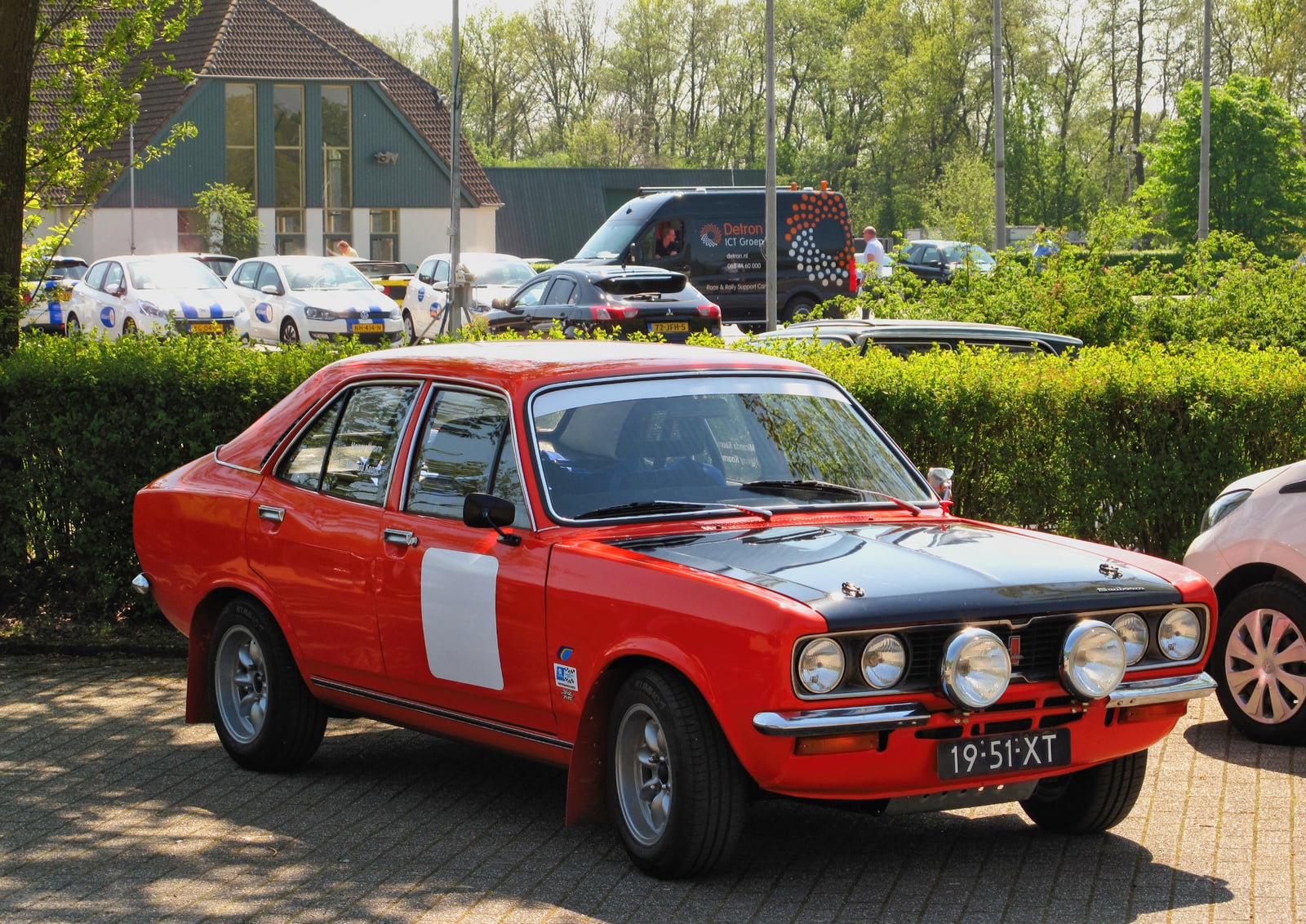
Roy Axe led the styling team. The Avenger arrived in February 1970 as a clean-lined four-door saloon with a distinctive curved “hockey stick” rear quarter window that became the model’s visual signature, a feature Axe pulled through across the bodywork. The proportions were tidy, the glasshouse was generous, and the front end carried a quad-headlight grille on early GL trim that put the car visually above the Marina’s flatter face.
The mechanicals were entirely new. The 1248cc and 1498cc OHV inline-four engines were designed specifically for the Avenger, not carried over from the Minx, and were known internally as the Avenger engine throughout their life. The MacPherson-strut front suspension, the live rear axle on coil springs and trailing arms, and the four-speed all-synchromesh gearbox were all designed for the car. None of it was exotic, but the engineering was contemporary and reasonably well-executed.
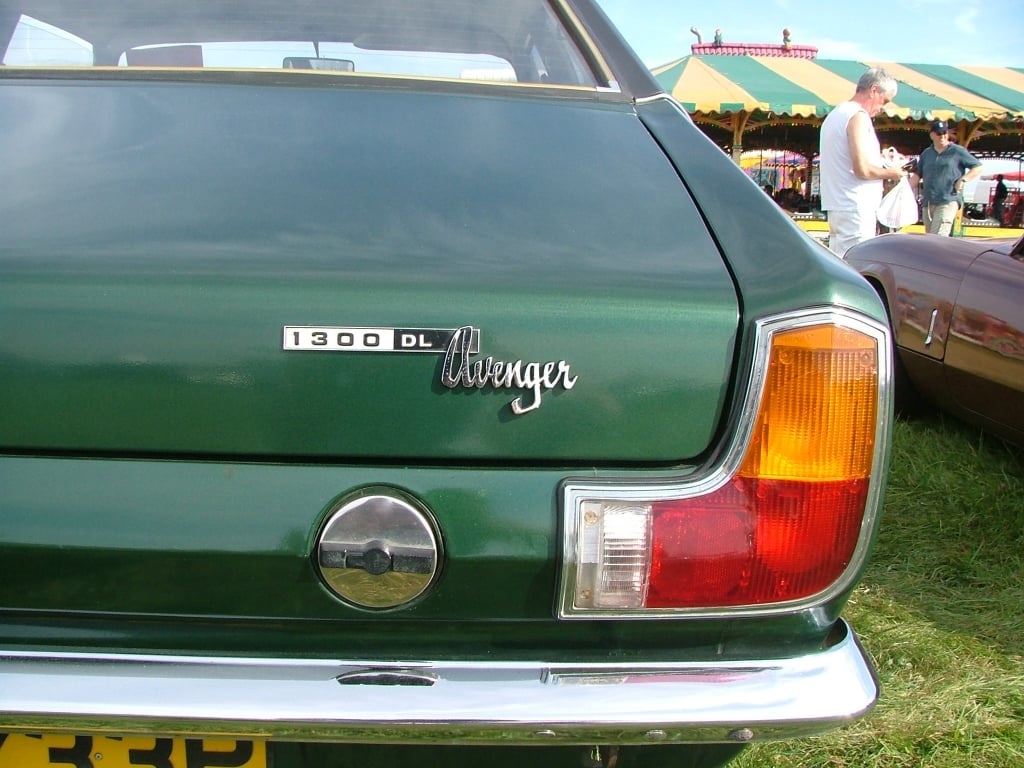
Production was at Ryton-on-Dunsmore, the former Rootes plant just south of Coventry that Chrysler had inherited with the takeover. The Ryton-built Avengers sold into the UK market and most of mainland Europe. Other markets got the same car built locally: the Plymouth Cricket from 1971 to 1973 in North America (assembled in the UK and shipped over), the Sunbeam Avenger in Canada through the mid-1970s, and the Dodge 1500 in Argentina, where production continued at Buenos Aires under various badges including a brief spell as the Volkswagen 1500 from 1982 until 1990.
Body styles and trim levels
The Avenger ran in three body styles across its life:
- Four-door saloon (1970–1981): the original and the volume seller throughout.
- Two-door saloon (1972–1976): added to give the range a cheaper entry-level option. Sold in much smaller numbers and was dropped relatively early.
- Five-door estate (1972–1981): the practical body style and the one that survived the badge changes intact.
There was no hatchback Avenger. By the time the segment moved to hatchbacks in the late 1970s, Chrysler had launched the Sunbeam hatchback (technically a shortened Avenger underneath) to fill that role, and the Avenger saloon and estate continued as the booted alternative.
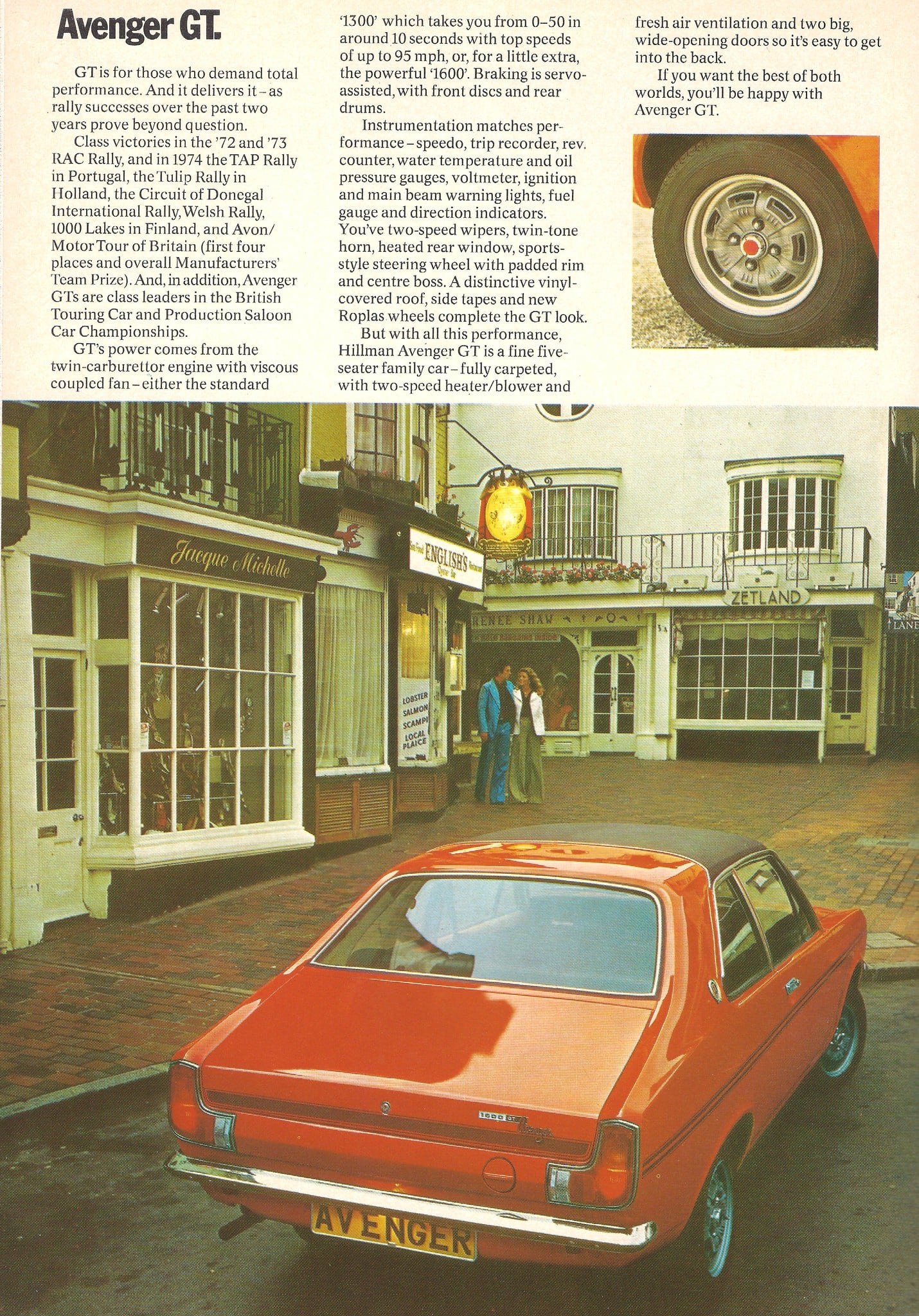
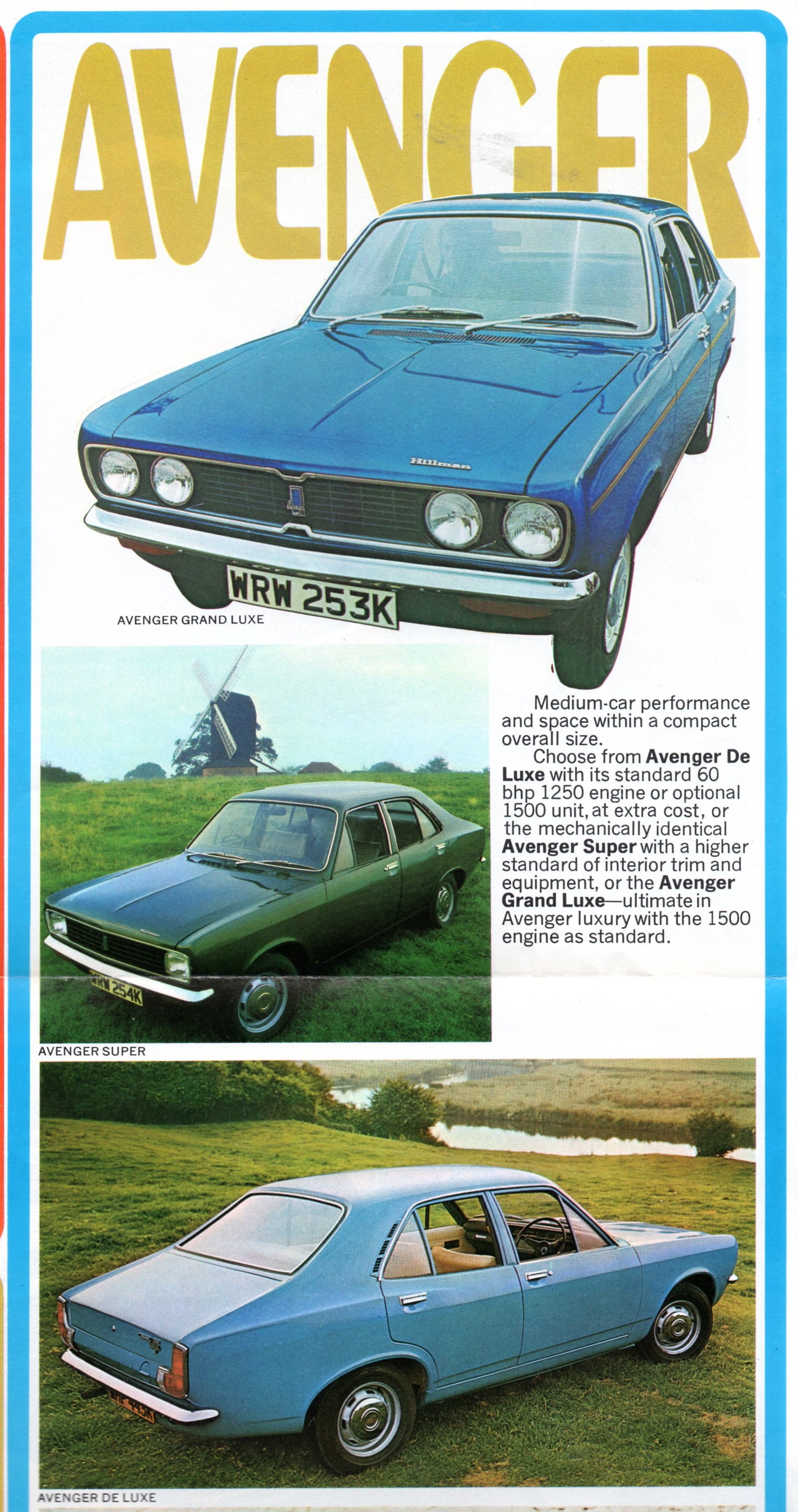
Trim levels evolved with the badges. The original Hillman Avenger ran with Standard, DL, Super, and GL trim. The Avenger GT was a sporting trim from 1971 with twin Strombergs, sports wheels, and a tachometer. The Tiger of 1972–1973 was the rally homologation special, covered in its own section below. From the 1976 Chrysler relaunch the trim levels simplified to LS, GLS, and the Avenger 1600 GT as the sporting flagship. The Talbot era from late 1979 ran simpler still: LS and GLS, with the sporting variants discontinued.

The Avenger Tiger: the rally homologation special
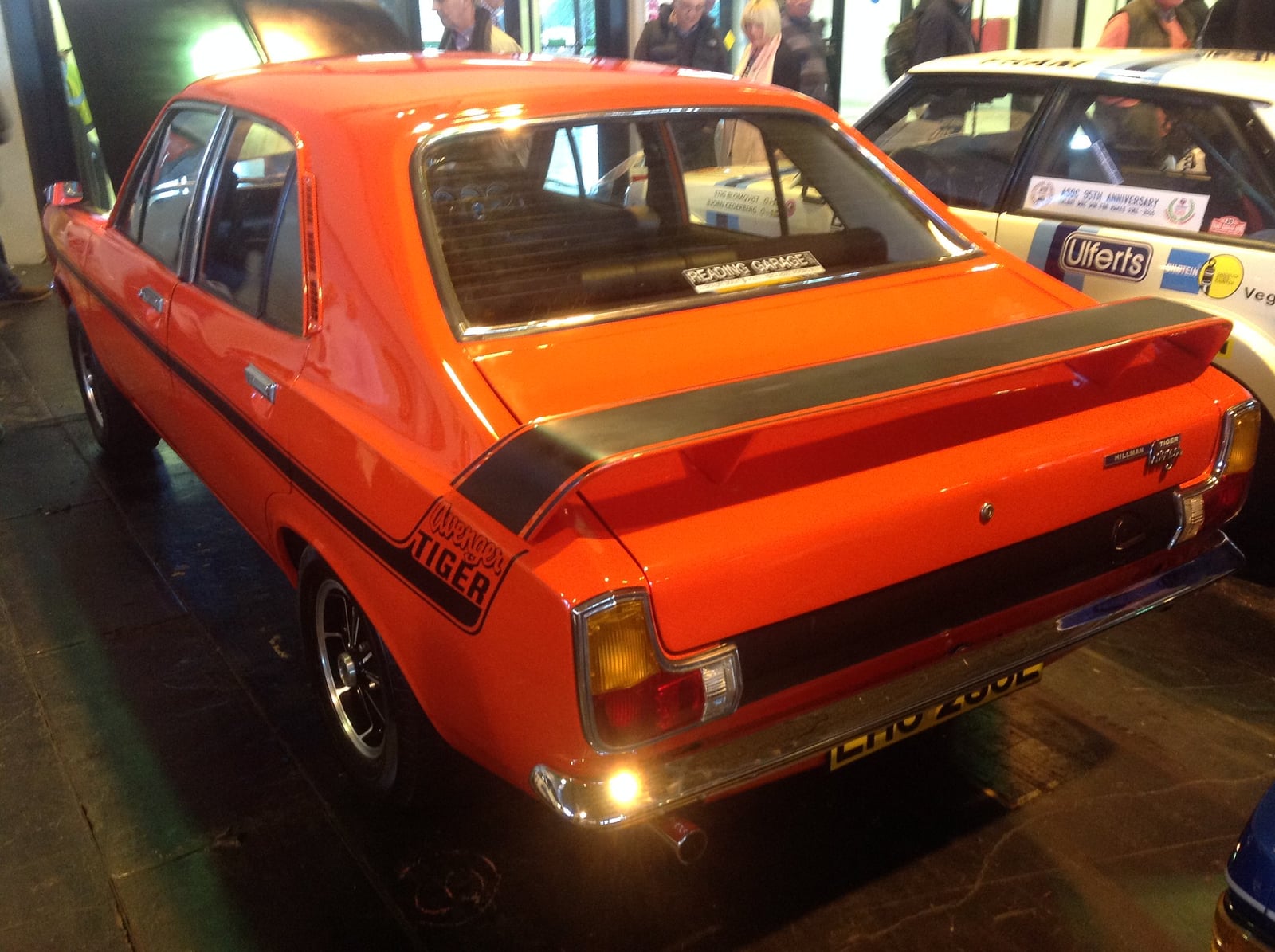
The Avenger Tiger arrived in spring 1972 as Chrysler UK’s homologation special for international rallying. The Tiger qualified the Avenger for Group 2 competition and was built to meet the FIA’s homologation requirement of 1,000 production units, although actual production fell well short of that number on the Mk1.
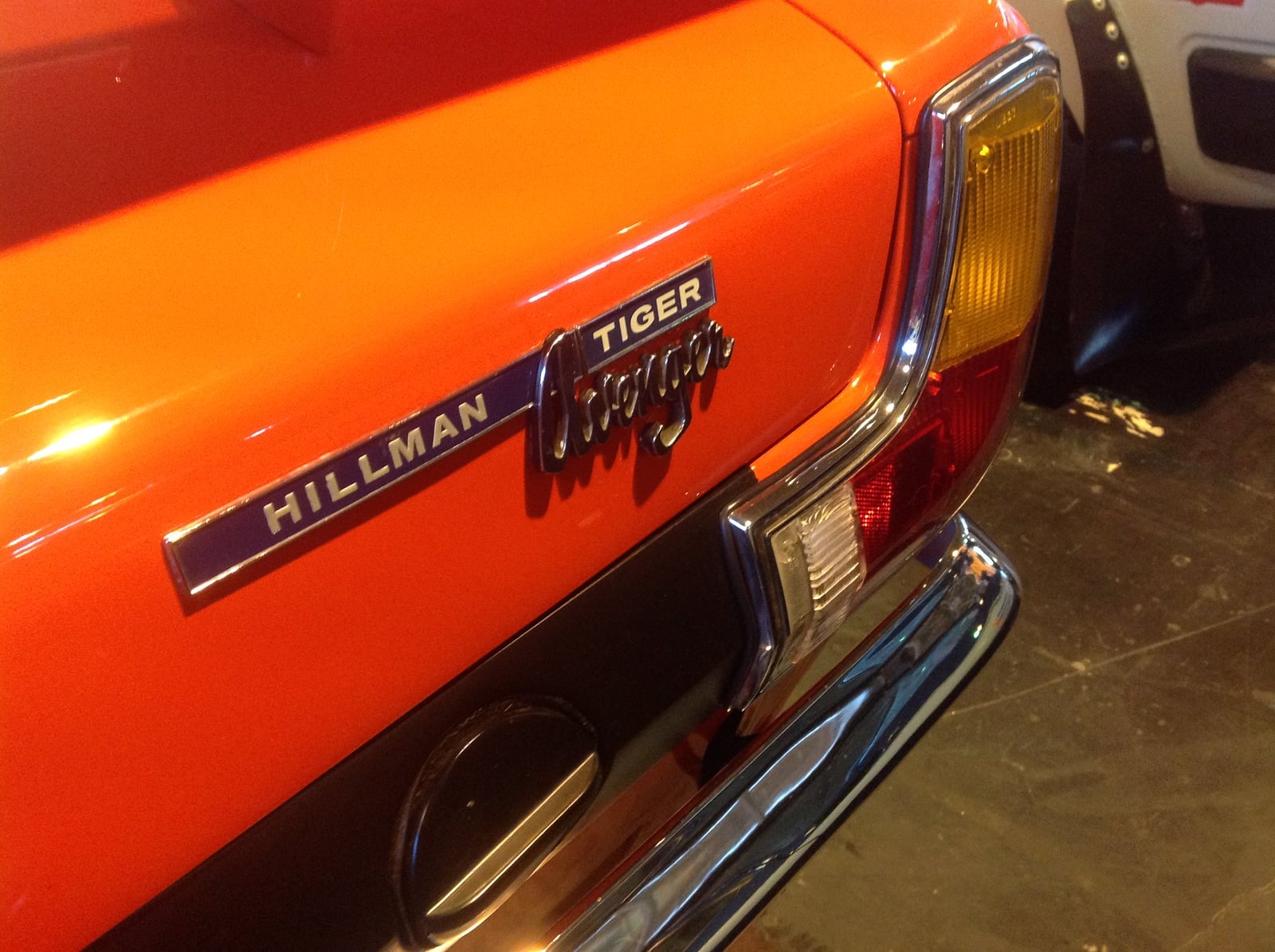
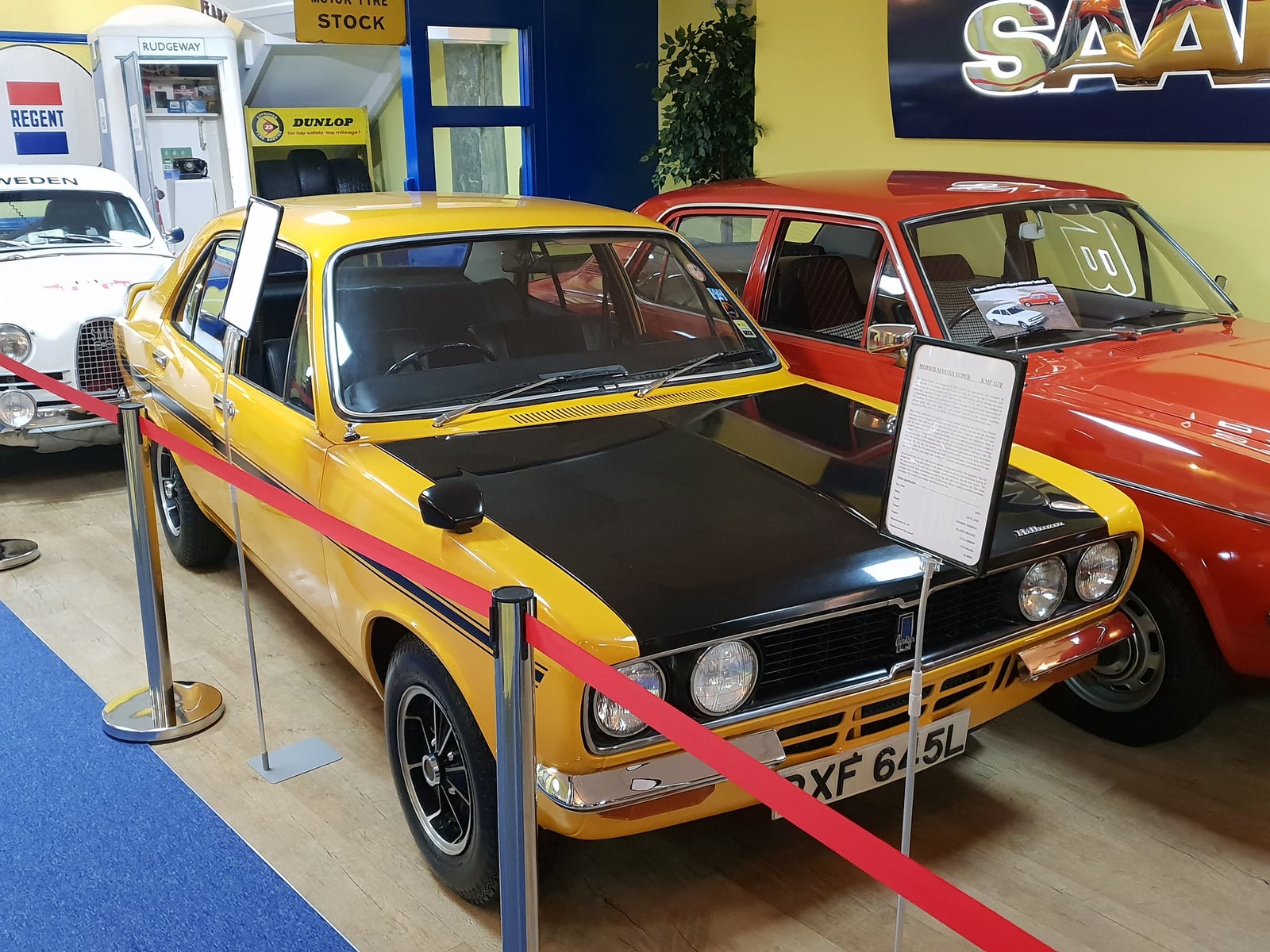
The Mk1 Tiger of 1972 used a tuned 1498cc engine with twin Weber 40 DCOE carburettors, a higher compression ratio, a modified camshaft, and a free-flow exhaust, producing 107 brake horsepower against the standard 1.5’s 68. The bodyshell got stiffer suspension, wider wheels, a bonnet stripe in matt black, and a paint scheme that was almost exclusively Sundance Yellow. Around 400 Mk1 Tigers were built across 1972 and 1973. A red Mk2 Tiger followed in mid-1973 with the same mechanical specification but mostly different cosmetic details and red paint. Roughly 200 Mk2 Tigers were built before the programme ended.
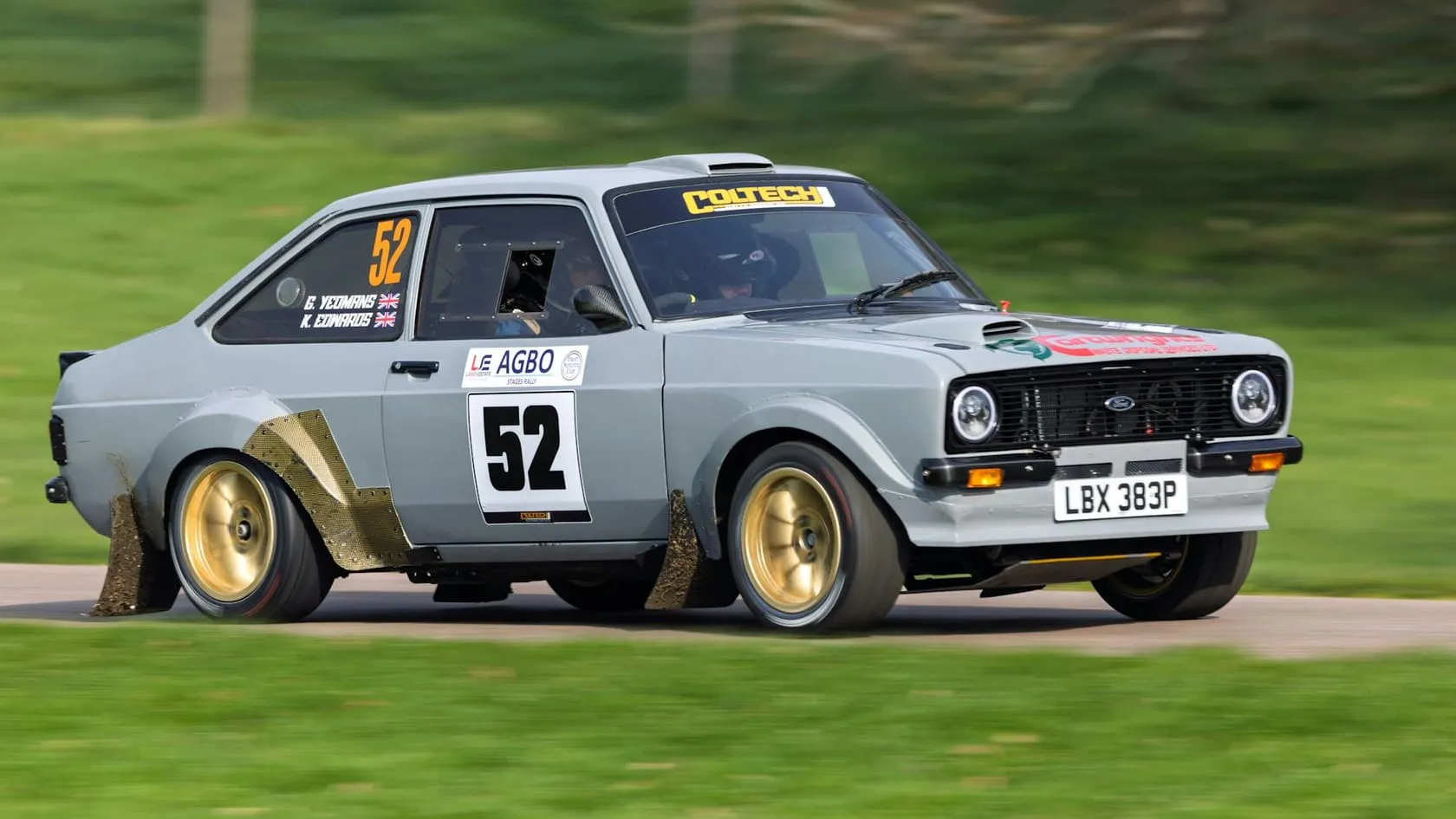
The Tiger was successful in domestic rallying. Chrysler’s works team campaigned them in the British Rally Championship through 1973 and 1974, with Andrew Cowan and Roger Clark among the drivers who ran factory cars. The Tiger never quite broke through into international rally success, partly because Chrysler’s UK competition budget was always thinner than Ford’s Boreham operation, and partly because the Lancia Stratos arrived in 1974 and changed what a rally car needed to be.
Today the Tiger is the variant Avenger collectors chase. A documented original Mk1 in Sundance Yellow with matching engine and shell numbers is rare-car-market territory now, regularly selling at £30,000 to £45,000 at auction. The Mk2 in red is rarer still and can pass £50,000 in top condition. Replicas built from standard 1.5 Avengers exist, so provenance is the whole question. The Avenger and Sunbeam Owners’ Club maintains records of known original Tigers and is the standard authority on verification.

Engines and mechanicals
Across the production run the Avenger offered:
- 1248cc OHV four (1970–1976): 53 to 60 bhp.
- 1498cc OHV four (1970–1981): 68 bhp standard, 75 bhp in the GT, 107 bhp in the Tiger.
- 1598cc OHV four (1976–1981): 70 to 76 bhp standard, 79 bhp in the 1600 GT.
All were the same basic Avenger-engine architecture, bored out across the run rather than replaced. The gearboxes were a Chrysler-sourced four-speed manual through most of production, with a three-speed Borg-Warner automatic available on GL and GLS saloons.
Mechanically the cars were straightforward. The Avenger engine was long-lived given regular oil changes. The clutch was a half-day driveway job for anyone competent. The rear axle was a known-good design shared with several other Chrysler Europe models, and the differential is interchangeable across the range. The early electrical system was reliable; the late-1970s electrical system, after Chrysler’s component-supplier changes following the takeover, was less so.
Buying guide: what to look for
The Avenger rusts in the same places every early-1970s British family saloon rusts, plus a few of its own. Inspect the sills, the rear wheel arches, the floor pans, the front suspension turrets, the boot floor, the bottom corners of the doors, and around the windscreen and rear window surrounds. The hockey-stick quarter window is a specific Avenger rust trap, with the chrome trim collecting water against the bodywork at the rear corner. Estate tailgates rust in their bottom corners where the seal sits against the rear panel. Under the bonnet, check the steel around the MacPherson strut tops for both rot and signs of previous welding; underneath, look at the bottom of each A-post and B-post where they meet the sill, and the box section between the front valance and the panel beneath the radiator.
The Avenger’s particular weak point is the front cross-member. The structural box section that carries the front suspension mounting points can rust from the inside out, with no visible warning on the outer surface. Tap test it. A solid cross-member sounds solid. A rotten one sounds hollow and rings dead. A car with a corroded cross-member is welding-shop territory and not a project for the driveway.
Mechanically the engines are durable, with the cooling system the one area to watch, so check for any history of overheating. Check for blue smoke on overrun (worn valve guides on engines that have done over 80,000 miles without a top-end rebuild), oil pressure at idle when warm (should be over 25 psi on a healthy unit), and that the timing chain has been tensioned or replaced if mileage is high. The gearbox synchros wear on second gear first; second- gear crunch on a cold change is a known issue and not a deal-breaker if everything else is sound.
On the Tiger, every standard buying-guide point applies plus provenance. A genuine Tiger has the right body number range, the right engine number range, the correct twin-Weber setup, the correct sports suspension brackets, and a documented history. The Avenger and Sunbeam Owners’ Club is the standard reference for verification. Replicas trade at a fraction of the genuine price and should be priced as replicas.
Current Hillman Avenger price and value range
The market is generally weaker than for the Ford and Vauxhall equivalents of the same period, partly because the badge confusion (Hillman vs Chrysler vs Talbot) keeps the cars off some collectors’ radar.
- Hillman Avenger saloon (1970–1976): £2,500 to £6,000 for good DL and Super saloons, £4,000 to £7,500 for clean GLs and the quad-headlight 1500 GT.
- Hillman Avenger estate (1972–1976): £3,000 to £7,000 for good cars. The estate has held its value better than the saloon because survivors are rare.
- Chrysler Avenger (1976–1979): £2,000 to £5,500 for the LS and GLS saloons, slightly less than the equivalent Hillman because the Chrysler badge is less collectable. The 1600 GT is the exception at £4,000 to £7,500.
- Talbot Avenger (1979–1981): £1,800 to £4,500 at the lowest end of the Avenger market, again because of the badge. Survivors are rare and the values may correct upwards as scarcity bites.
- Avenger Tiger Mk1 (1972, Sundance Yellow): £25,000 to £45,000 for documented original cars, more for the very best.
- Avenger Tiger Mk2 (1973, red): £30,000 to £55,000, reflecting its rarity over the Mk1.
The Hillman badge is the most collectable across the range and the Talbot badge the least, even when the car underneath is mechanically identical. The market values the badge story.
Owners’ clubs and parts supply
The Avenger and Sunbeam Owners’ Club is the model-specific organisation, covering the Avenger across all three badge eras plus the Sunbeam hatchback that shared the underpinnings. It runs a spares scheme, holds the Tiger verification records, and maintains the most active community knowledge.
Mechanical service parts remain reasonably available through the club and through Rootes-period specialists. The Avenger engine shares enough internals with the Sunbeam and the Talbot Horizon to keep service items flowing. Body panels are the bottleneck. Door skins, rear wheel arch repair sections, and sill panels have been re-manufactured in batches by the club over the years, but specific Tiger trim items such as the Sundance Yellow paint code and the matt black bonnet stripe material need specialist suppliers and time to source.
Where the Avenger sits in the British motoring story
The Avenger matters because it spans the moment Chrysler’s European operations went from acquisition to collapse to Peugeot rescue. The Hillman badge was the British engineering tradition Rootes had built since the 1930s. The Chrysler badge was the American owner’s attempt to standardise the European range under one name. The Talbot badge was Peugeot’s attempt to salvage something marketable from the wreckage of Chrysler Europe after the 1978 acquisition. The car underneath barely changed across all three. The badges were the story.
The Avenger was also the last car designed under the Hillman name and the last clean-sheet small saloon Rootes engineered before Chrysler stopped funding new model programmes. Everything that came after, the Sunbeam hatchback, the Talbot Horizon, the Talbot Solara, was either a re-skinned Avenger underneath or a Simca import from France. For the British engineering tradition that Rootes had carried since the 1930s, the Avenger was the end.

The Avenger timeline
- 1970Launched in February as Roy Axe's clean-lined B-car, with the hockey-stick rear quarter window, purpose-designed OHV engines and MacPherson struts.
- 1971North America takes the car as the Plymouth Cricket; Argentina builds it as the Dodge 1500.
- 1972The homologation Avenger Tiger brings 107 bhp and rally intent.
- 1976The badge changes to Chrysler Avenger as the parent's troubles starve the car of its mid-life redesign.
- 1980A third badge: Talbot Avenger, the only Rootes-designed car to live that long.
- 1981British production ends at around 638,000 cars; Argentina carries on without it.
Buying checklist: the Avenger in front of you
The cross-member, first
- The structural box section carrying the front suspension mounts rusts from the inside out
- Tap test it: solid sounds solid, rotten rings hollow and dead
- A corroded cross-member is welding-shop territory, not a driveway project
- Check the box section between the front valance and the radiator panel too
The rest of the metal
- Sills, rear arches, floor pans and front suspension turrets, with an eye for previous welding
- Boot floor, door corners and both screen surrounds
- The hockey-stick quarter window trim collects water at the rear corner
- Estate tailgates rust in their bottom corners where the seal sits
Identity and version
- Hillman, Chrysler and Talbot badges date the car at a glance
- A genuine Tiger is a £25,000-plus rarity and needs its homologation history proved
- GT and GLS trims carry the enthusiast interest below the Tiger
- Around 30 to 40 per cent of Tigers survive, a far better rate than the saloons
What the Avenger sells for at auction
The Avenger comes to auction only occasionally: 9 recorded sales since 2021, typically making between £2,550 and £8,600 . With so few sales, treat any single result as a data point rather than a market price.
- £6,200Avenger
- £8,600Avenger
- £2,856Avenger
- £1,550Avenger
- £14,850Avenger
Thin evidence. Only 9 recorded sales: read the figures as a sketch of the market, not a price. Based on 9 sold results from public classic car auctions (2021 to 10 August 2026). Sold prices, not asking prices, and not a valuation: condition, history and specification vary from car to car.
Related across British family saloons
The other 1970s British family cars in this cohort sit alongside the Avenger: the Vauxhall Victor (1957–1976), the Vauxhall Chevette (1975–1984), the Morris Marina (1971–1980), and the Austin Princess (1975–1981). For the wider context on these five cars as a group, see Britain’s troubled 1970s family saloons. For the broader period (the Talbot Avenger ran into 1981), see British classic cars of the 1970s and British classic cars of the 1980s.
More photos