Ford Escort: the everyman Ford and the rally legend (1968–2000)
The classic Ford Escort ran across six generations from 1968 to 2000, from the rear-drive rally cars to the front-drive hot hatches and the mighty RS Cosworth. A guide to the Mk1 to Mk6, how the generations differ, the everyman saloons and the celebrated fast Escorts, the booted Orion, and what to look for when buying.
Built 1968–2000 7 generations
The Escort guides Mk1Escort Mk2Escort Mk5RS2000XR3iMexicoRS Cosworth

At a glance
- Years
- 1968–2000
- Body styles
- Two- and four-door saloon, estate and van; later three- and five-door hatchback and cabriolet
- Drivetrain
- Rear-wheel drive (Mk1-Mk2); front-wheel drive (Mk3 onward); four-wheel drive (RS Cosworth)
- Engines
- Kent, Pinto, CVH and Zetec fours; Cosworth BDA and turbocharged Cosworth YB
- Power
- From around 40 bhp to 227 bhp (Escort RS Cosworth)
- Trim levels
- Base, L, XL, GL, Ghia, Sport; XR3 and XR3i; RS1600, RS1800, RS2000, Mexico, RS Turbo, RS Cosworth
- Production
- More than four million built in Britain across six generations
- Assembly
- Halewood and Dagenham (UK), Saarlouis (Germany); RS road cars at Aveley, Essex
- Designer
- Ford of Britain, later Ford of Europe
- Values
- Ordinary cars from a few thousand; XR3i £4,000-£30,000; RS2000 and Mexico £15,000-£85,000; Escort RS Cosworth and genuine RS1800 well into six figures
- The breadth
- From the 1.1 base saloon to the turbocharged four-wheel-drive RS Cosworth, all under one badge
- In competition
- One of the most successful rally cars of all time, and the car that won Ford the 1979 World Rally Championship
The models
No car put Britain on wheels quite like the Ford Escort. Across six generations from 1968 to 2000, the Ford Escort was the default family car, the company-fleet workhorse and, in its hottest forms, one of the most successful rally cars ever built. It is the rare model that ran from a humble 1.1-litre saloon all the way to a turbocharged, four-wheel-drive homologation special, all under one badge.
This is the guide to the whole family: how the six generations developed, the great divide between the rear-drive and front-drive cars, and how the ordinary Escorts and the celebrated fast ones fit together. The individual pages go deeper on each, from the rally-bred Escort Mk2 and the front-drive Escort Mk5 to the RS2000, the Mexico and the XR3i.
Six generations, from Mk1 to Mk6
The Escort arrived in 1968 to replace the Anglia, a conventional, light, rear-drive saloon with the simple Kent engine, and it was an immediate success. The squared-off Mk2 of 1975 kept the same rear-drive recipe and built the rally legend. Then came the great change: the Ford Escort Mk3 of 1980 switched to front-wheel drive and a hatchback body, a thoroughly modern car for a new decade, facelifted as the Mk4 in 1986.
The Mk5 of 1990 launched to some of the harshest reviews Ford had received and was heavily revised soon after, and the Mk6 of 1995 saw the name out to 2000, when the Focus replaced it. Across all six the Escort stayed true to its brief: an affordable, practical car for the many, with a fast version near the top for the few.

The everyman Ford
For most of its life the Escort was simply the car Britain bought. More than four million were built here across the six generations, in saloon, estate and van forms and later as hatchbacks, and for decades an Escort was the most ordinary sight on any British road. The 1.1, 1.3 and 1.6 cars did the school run and the commute in their millions.
That very ubiquity is why honest, original ordinary Escorts are now genuinely rare. They were used hard, modified, banger-raced and scrapped when they were merely cheap old cars, so a tidy, standard saloon today has a quiet appeal and a growing following of its own.

The Orion: the Escort with a boot
One member of the family wore its own badge. The Ford Orion of 1983 was the booted saloon version of the front-drive Escort, pitched slightly upmarket with Ghia trim at the top of the range and aimed at buyers who considered a hatchback beneath them. It sold strongly for a decade before Ford folded it back into the range as the Escort saloon in 1993, and it then vanished from the roads even more completely than its hatchback sisters. Surviving Orions, the injection-engined 1.6i Ghia above all, are now scarce enough to draw a crowd at any Ford show, and they remain one of the cheapest ways into the fast-growing eighties Ford scene.
The rally legend and the fast Escorts
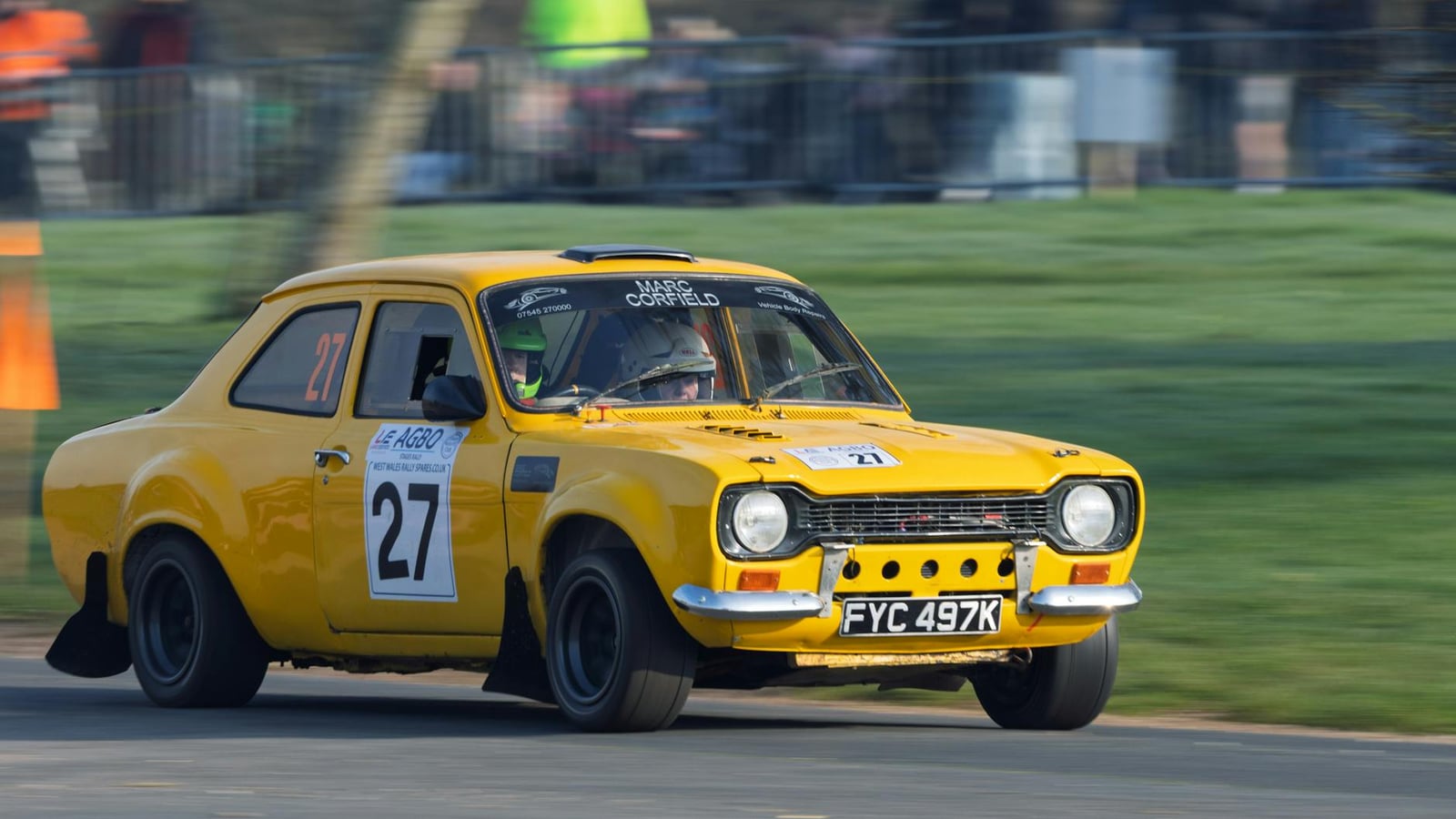
What lifts the Escort above the ordinary is its competition record. The light, tough, rear-drive Mk1 and Mk2 became giant-killers in rallying, taking Ford the 1979 World Rally Championship and turning the RS badge into folklore. The road-going heroes followed directly: the Twin Cam and the BDA-engined RS1600 that began the line, the rally-bred Mexico and RS2000, the exotic RS1800, and the droop-snoot Mk2 RS2000 that most people picture.
When the Escort went front-wheel drive, the fast cars became hot hatches: the fuel-injected XR3i, Britain’s best-selling hot hatch, the homologation RS1600i prized by collectors, and the turbocharged RS Turbo above it. The story closed with the Escort RS Cosworth of 1992, a turbocharged, four-wheel-drive homologation special with nothing under its skin in common with the family hatchback it resembled. The fast Escorts are much of the reason the classic Ford market runs so hot, and they share their own fast Ford buying guide.

What it is like to own
The Escort is one of the most approachable classics there is. The mechanicals, the Kent, Pinto, CVH and later Zetec engines, are simple, durable and shared across the Ford range, the specialist trade is deep, and parts supply is excellent, helped by the sheer numbers built and the cars’ popularity in historic motorsport. The ordinary cars are cheap to run and easy to work on at home.
To drive, the rear-drive cars are light, communicative and endlessly entertaining, the quality that made them such rally weapons; the front-drive cars are tidier, more practical everyday classics. Whichever era you choose, an Escort is a usable, friendly way into classic-Ford ownership.

Buying guide: what to look for
The Escort spans six generations and two entirely different cars, so the first question is which era you are buying into. The rear-drive Mk1 and Mk2 are light, simple and extraordinarily well supported, with panel supply deep enough that a rough but genuine shell can be saved. The front-drive cars from the Mk3 on are cheaper to buy and run, but they were used up rather than kept, so with those it is condition rather than rarity that you are hunting.
Rust is the constant, and where it bites moves with the generation. On the rear-drive cars look hardest at the chassis legs and the strut tops; on the front-drive cars at the suspension turrets. Floors, sills and inner sills, front and inner wings, rear arches and the boot floor apply to all of them.
Identity is the expensive question, and it applies only at the top. Because an RS, Mexico or Cosworth is worth several times an ordinary Escort, cloning one into a lookalike is common, so verify any performance car through matching numbers, the correct build records and a documented history, and treat the badge as a claim rather than a fact. Below that level the calculation inverts: an ordinary surviving Escort is now rare enough to be worth buying simply for being honest.

Where the Escort sits in the market
The Escort covers an enormous span. An ordinary saloon or hatchback runs from a few thousand pounds, a good XR3i sits between roughly £4,000 and £30,000, and the rear-drive RS2000 and Mexico reach £15,000 to £85,000 for genuine cars. At the top, the Escort RS Cosworth and the rare RS1800 are well into six figures. Whichever you choose, condition, originality and provenance move values far more than mileage. The full record, 1,479 recorded sales broken down by variant, what the replica problem does to prices and why the family median swings from year to year, is on the page covering Ford Escort values. For the eras the Escort belongs to, see British classic cars of the 1970s, 1980s and 1990s.
More photos
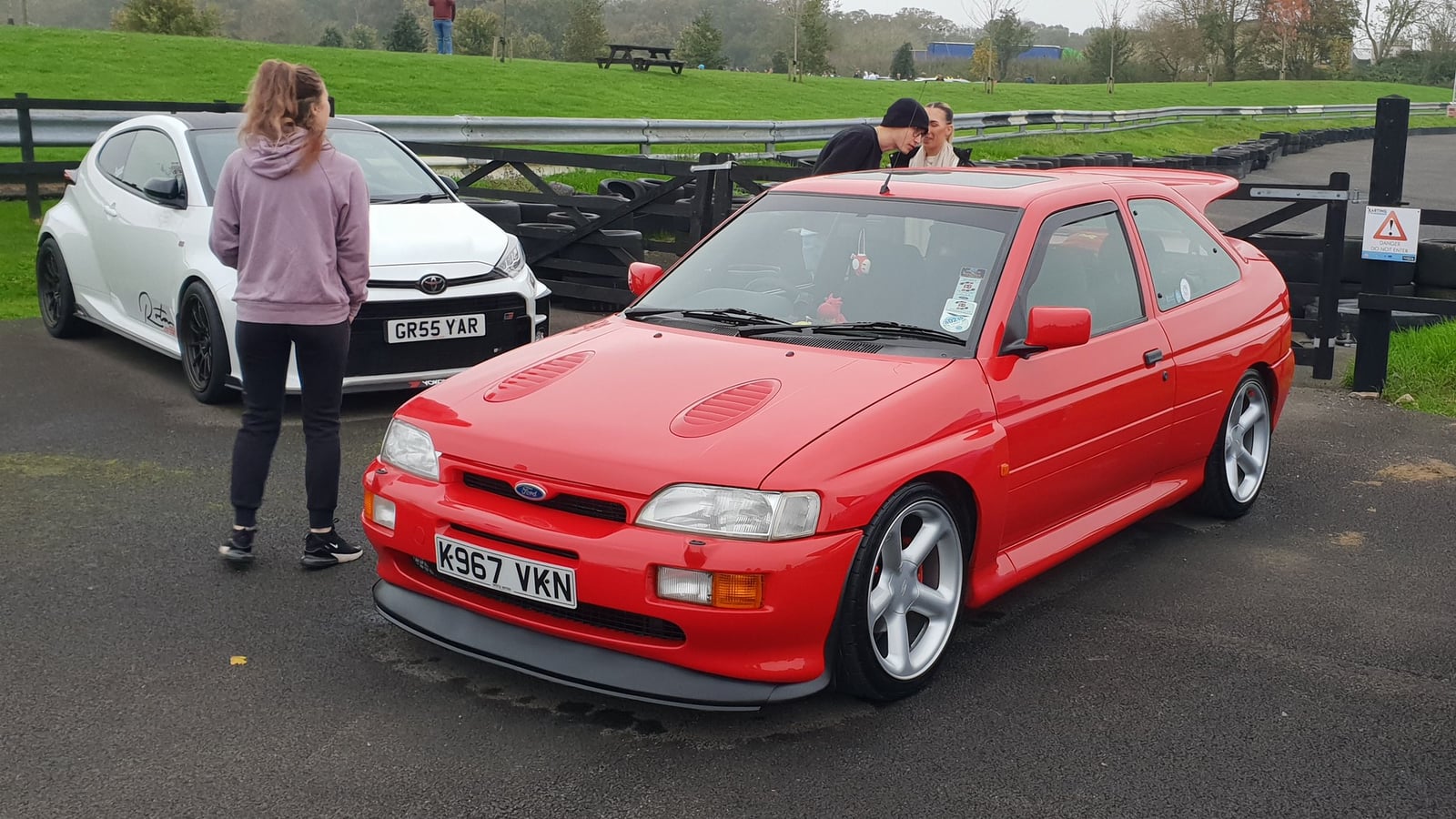
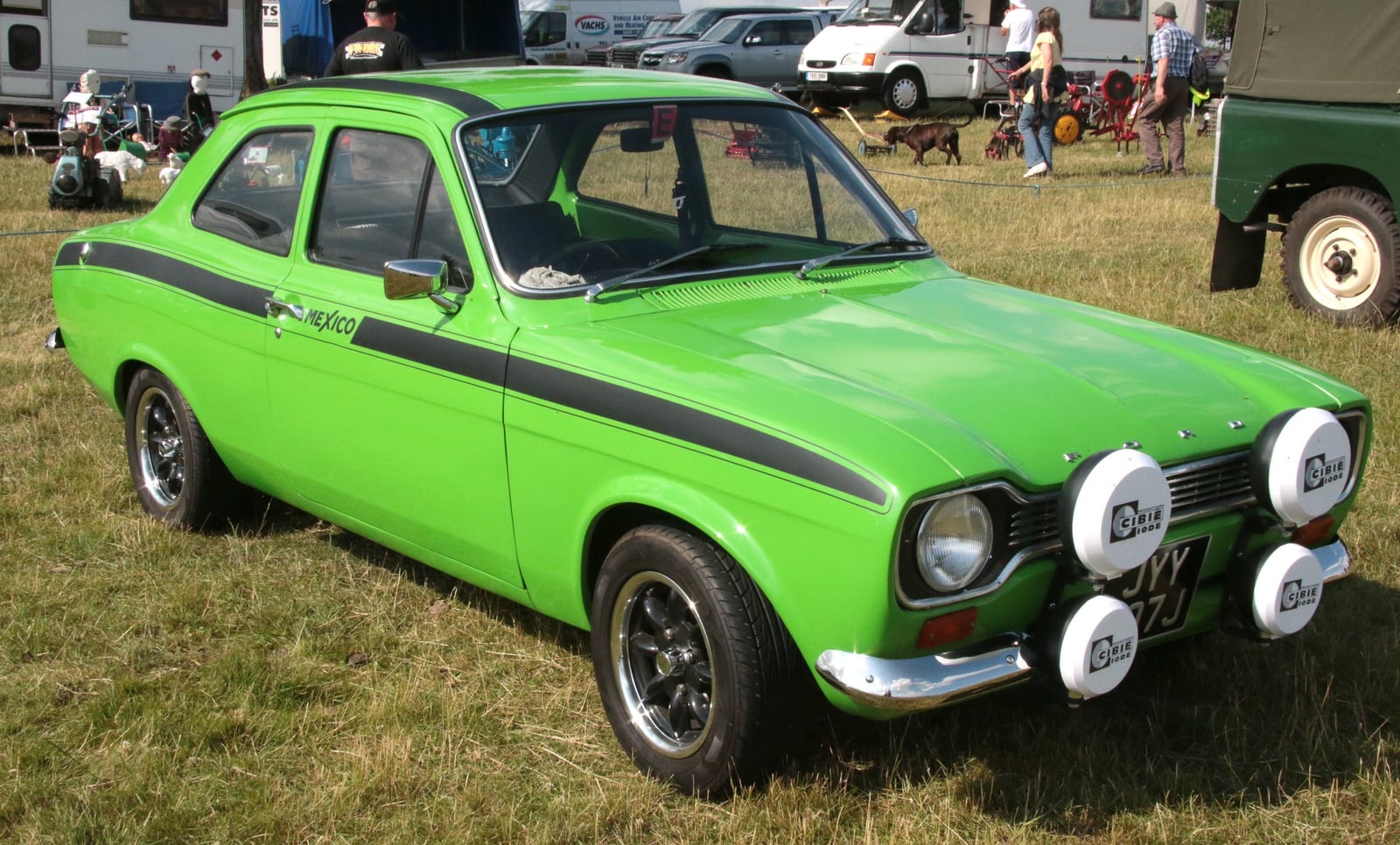
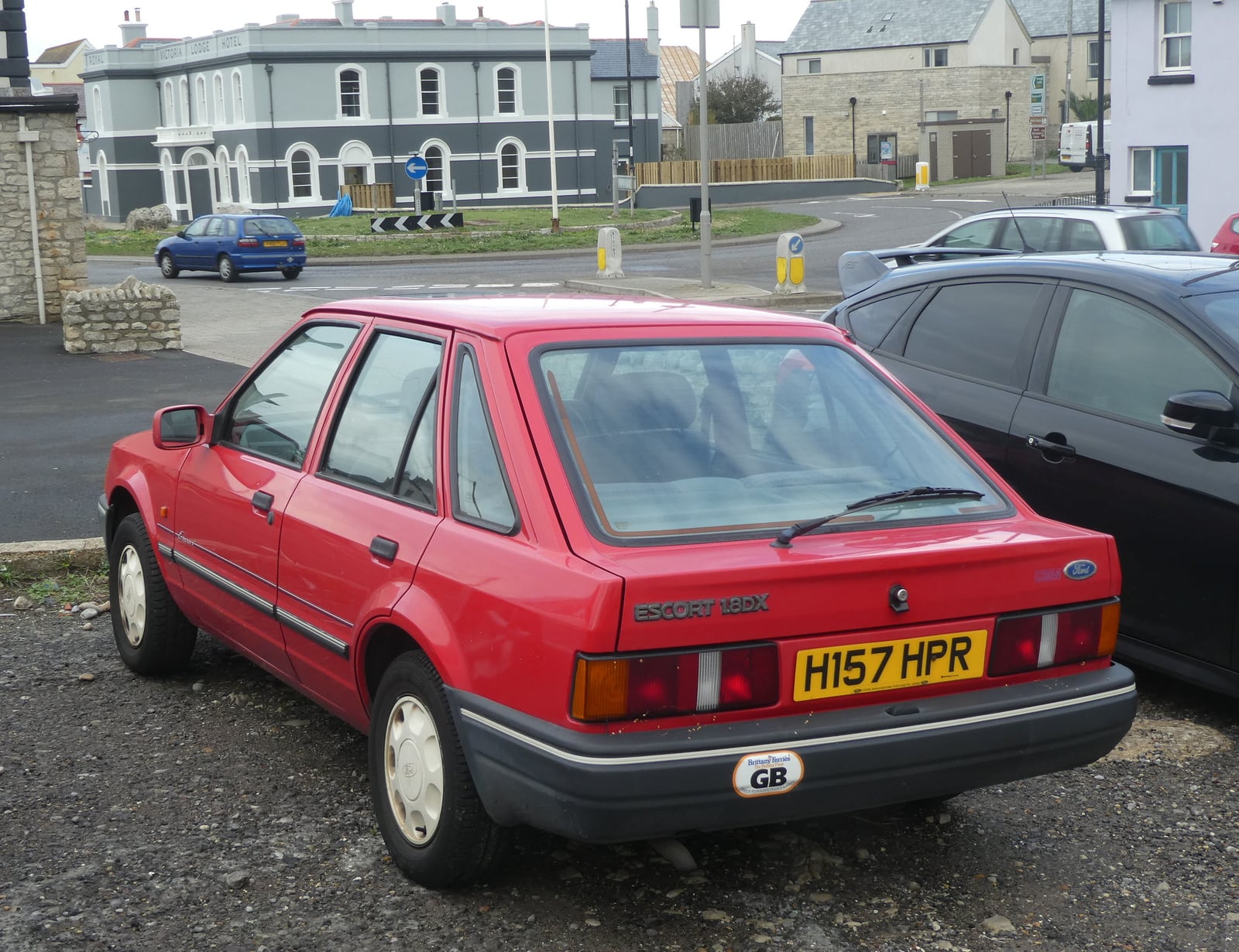
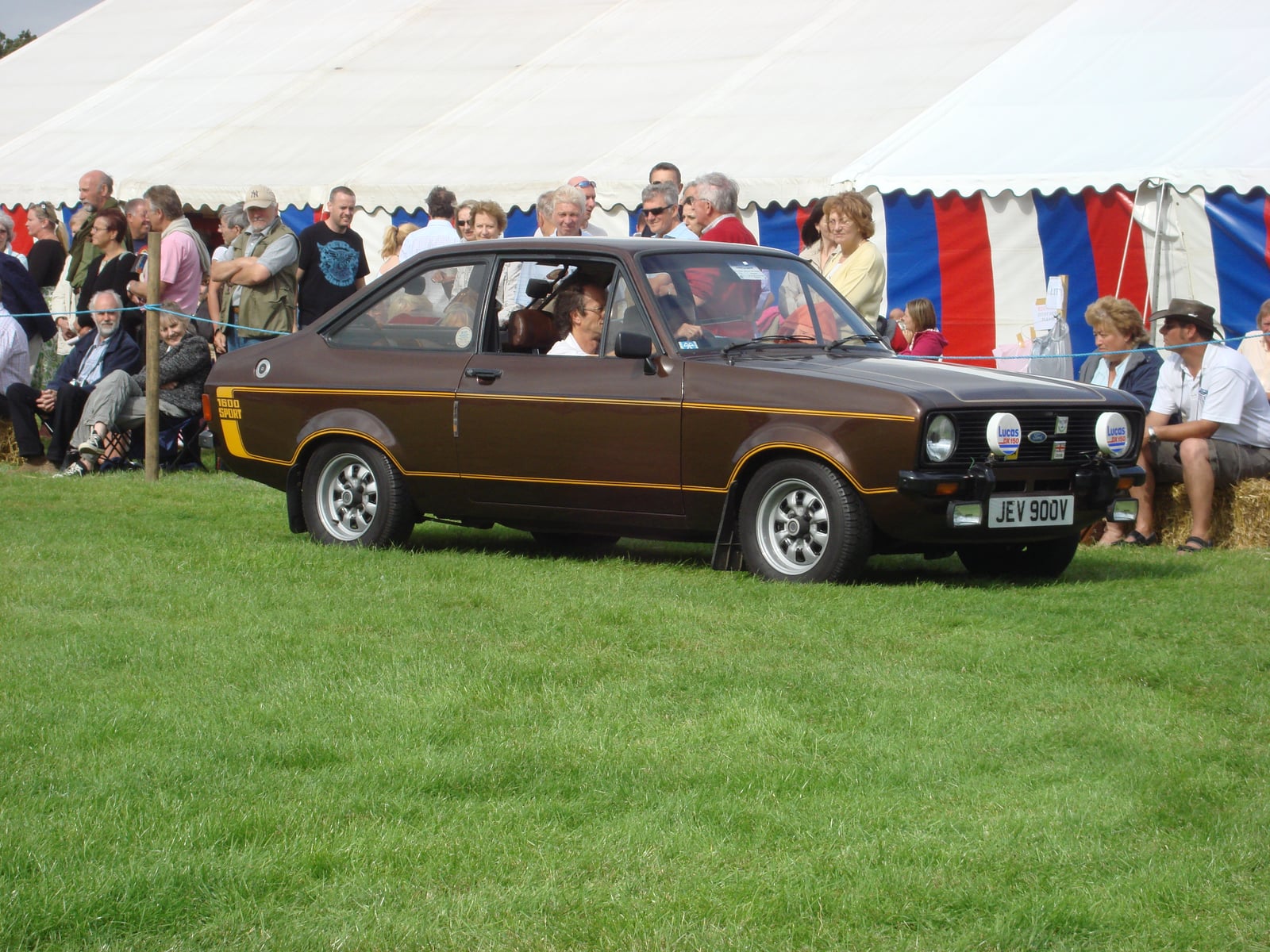
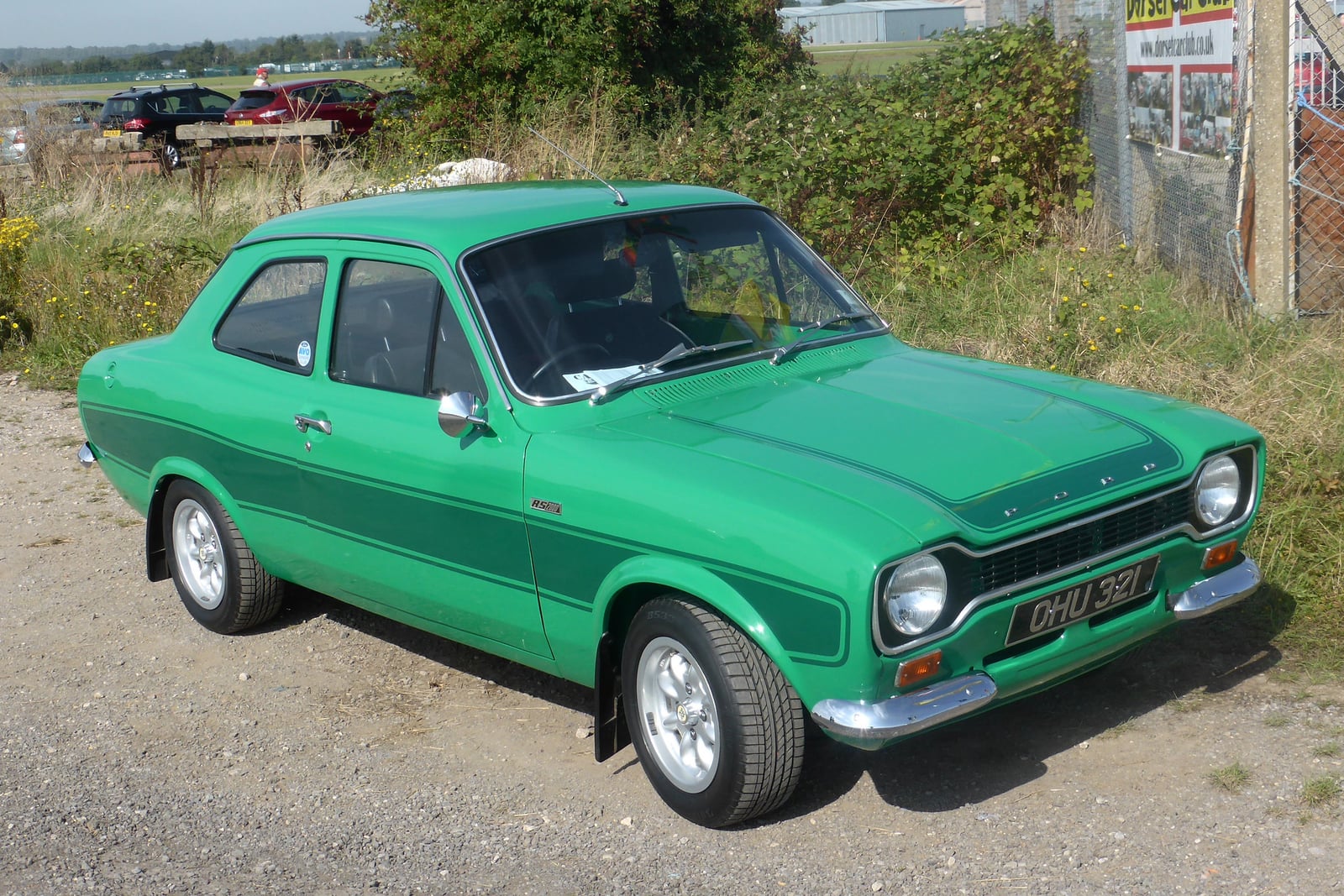
The Escort timeline
- 1968The Escort replaces the Anglia: a conventional, light, rear-drive saloon with the simple Kent engine, and an immediate success.
- 1975The squared-off Mk2 keeps the rear-drive recipe and builds the rally legend.
- 1979The Escort takes Ford the World Rally Championship.
- 1980The Mk3 switches to front-wheel drive and a hatchback body; the XR3, then the fuel-injected XR3i, become Britain's best-selling hot hatch.
- 1983The Orion adds a booted saloon body pitched slightly upmarket, selling strongly for a decade.
- 1986The Mk4 facelift arrives, with the turbocharged RS Turbo above the XR3i.
- 1990The Mk5 launches to some of the harshest reviews Ford had received and is heavily revised soon after.
- 1992The RS Cosworth arrives: turbocharged, four-wheel drive, and sharing nothing under the skin with the hatchback it resembles.
- 2000The Mk6 sees the name out and the Focus replaces it.
What to check on an Escort
Which era you are buying
- Rear-drive Mk1 and Mk2: light, simple and extraordinarily well supported
- Front-drive Mk3 onward: cheaper to buy and run, but used up rather than kept
- The two halves are entirely different cars sharing a badge
- An ordinary surviving Escort of any era is now rare enough to be worth buying for being honest
Rust, which moves with the generation
- Rear-drive cars: the chassis legs and the strut tops, hardest of all
- Front-drive cars: the suspension turrets
- Floors, sills and inner sills on every generation
- Front and inner wings, rear arches and the boot floor throughout
Identity, at the top of the range only
- An RS, Mexico or Cosworth is worth several times an ordinary Escort, so cloning is common
- Verify through matching numbers, the correct build records and a documented history
- Treat the badge as a claim rather than a fact
- Below that level the calculation inverts entirely: honesty is the value, not rarity
The Escort generations
The Ford Escort Mk1 replaced the Anglia, won the World Cup Rally and the Safari, spawned the Twin Cam, RS1600 and Mexico, and became the most valuable ordinary Ford ever made. A guide to the dogbone-grille original, the fast versions, the 2026 continuation and what survivors cost.
Escort Mk1 guide1975–1980Escort Mk2The squared-off Escort Mk2 of 1975 was a humble rear-drive family car that doubled as one of the most successful rally cars of all time. The RS1800, RS2000 and Mexico turned the badge into a legend while millions of ordinary Escorts did the school run. The development story, the rally cars, and the survivors.
Escort Mk2 guide1990–1995Escort Mk5The front-drive Escort Mk5 of 1990 launched to some of the harshest reviews Ford had ever received, and the company spent the next two years putting it right. At the top of the range, the rally-homologation Escort RS Cosworth turned the unloved Escort into an icon. The development story and the survivors.
Escort Mk5 guide1973–1980Escort RS2000The Ford Escort RS2000 was the rally-bred hero of the rear-wheel-drive Escort, a light two-door with a torquey 2.0-litre engine and, in Mk2 form, the famous droop-snoot nose. A guide to the Mk1 and Mk2 RS2000, what made it a motorsport legend, what to look for when buying, and how to spot a car that is not what it claims.
Escort RS2000 guide1982–1990Escort XR3iThe Ford Escort XR3i was the fuel-injected hot hatch that outsold every rival and defined performance motoring for a generation of British drivers. A guide to the XR3 and XR3i, the Mk3 and Mk4 cars and the cabriolet, how it compares to the Golf GTI, what to look for, and what they are worth now.
Escort XR3i guide1970–1978Escort MexicoThe Ford Escort Mexico was named to celebrate Ford's victory in the 1970 London-to-Mexico World Cup Rally, an affordable, tough, rear-wheel-drive homologation special built to take the Escort's rally success to the showroom. A guide to the Mk1 and Mk2 Mexico, what to look for, and why originality matters more here than on any ordinary Escort.
Escort Mexico guide1992–1996Escort RS CosworthThe Ford Escort RS Cosworth was a rally homologation special wearing an Escort suit over Sierra Cosworth four-wheel-drive bones, its whale-tail wing the defining fast-Ford image of the 1990s. A guide to big-turbo and small-turbo cars, the rally record, the replica problem, buying checks and values.
Escort RS Cosworth guide