Ford Escort Mexico: the World Cup Rally hero (1970–1978)
The Ford Escort Mexico was named to celebrate Ford's victory in the 1970 London-to-Mexico World Cup Rally, an affordable, tough, rear-wheel-drive homologation special built to take the Escort's rally success to the showroom. A guide to the Mk1 and Mk2 Mexico, what to look for, and why originality matters more here than on any ordinary Escort.
Built 1970–1978 84 recorded sales

At a glance
- Years
- 1970–1978
- Body styles
- Two-door saloon
- Drivetrain
- Front engine, rear-wheel drive
- Engines
- 1.6-litre Kent (Mk1); 1.6-litre Pinto (Mk2)
- Power
- Around 86-95 bhp
- Top speed
- Around 100 mph
- Trim levels
- Mk1 Mexico (1970–74, AVO-built); Mk2 Mexico (1976–78)
- Production
- The Mk1 built by Ford's Advanced Vehicle Operations at Aveley; the Mk2 at Saarlouis
- Assembly
- Aveley (Mk1, AVO) and Saarlouis, Germany
- Designer
- Ford Advanced Vehicle Operations
- Values
- Project around £15,000-£25,000; good £30,000-£50,000; excellent £55,000-£80,000 (genuine Mk1 AVO cars lead)
- The name
- Celebrates Ford's win in the 1970 London-to-Mexico World Cup Rally
- The recipe
- A tough, affordable rally-bred Escort, simpler than the RS1600 but built on the same strong shell
The models
In 1970 a works Ford Escort won the London-to-Mexico World Cup Rally, a brutal 16,000-mile marathon across two continents. Ford did what Ford did best with a motorsport win: it built a car to celebrate it. The Escort Mexico took the rally-developed strength of the Escort and packaged it as an affordable, tough, rear-wheel-drive road car, and in doing so created one of the most evocative names in fast-Ford history.
The Mexico is now a sought-after and valuable classic, prized for that direct link between a famous result and a car an ordinary enthusiast could own.
Born from a rally win
The 1970 World Cup Rally was won by Hannu Mikkola and Gunnar Palm in a works Escort, and Ford launched the road-going Mexico later the same year to bank the publicity. Crucially, it was built by Ford’s Advanced Vehicle Operations at Aveley, the same skunkworks that produced the more exotic RS Escorts, on the strong, rally-developed bodyshell.
What set the Mexico apart from its pricier AVO siblings was the engine. Where the RS1600 used an exotic 16-valve unit, the Mexico used the simple, tough 1.6-litre Kent pushrod engine, easy to service and cheap to run. That made it the affordable way to own a genuine rally-bred Escort, which was exactly the point.

Mk1 and Mk2
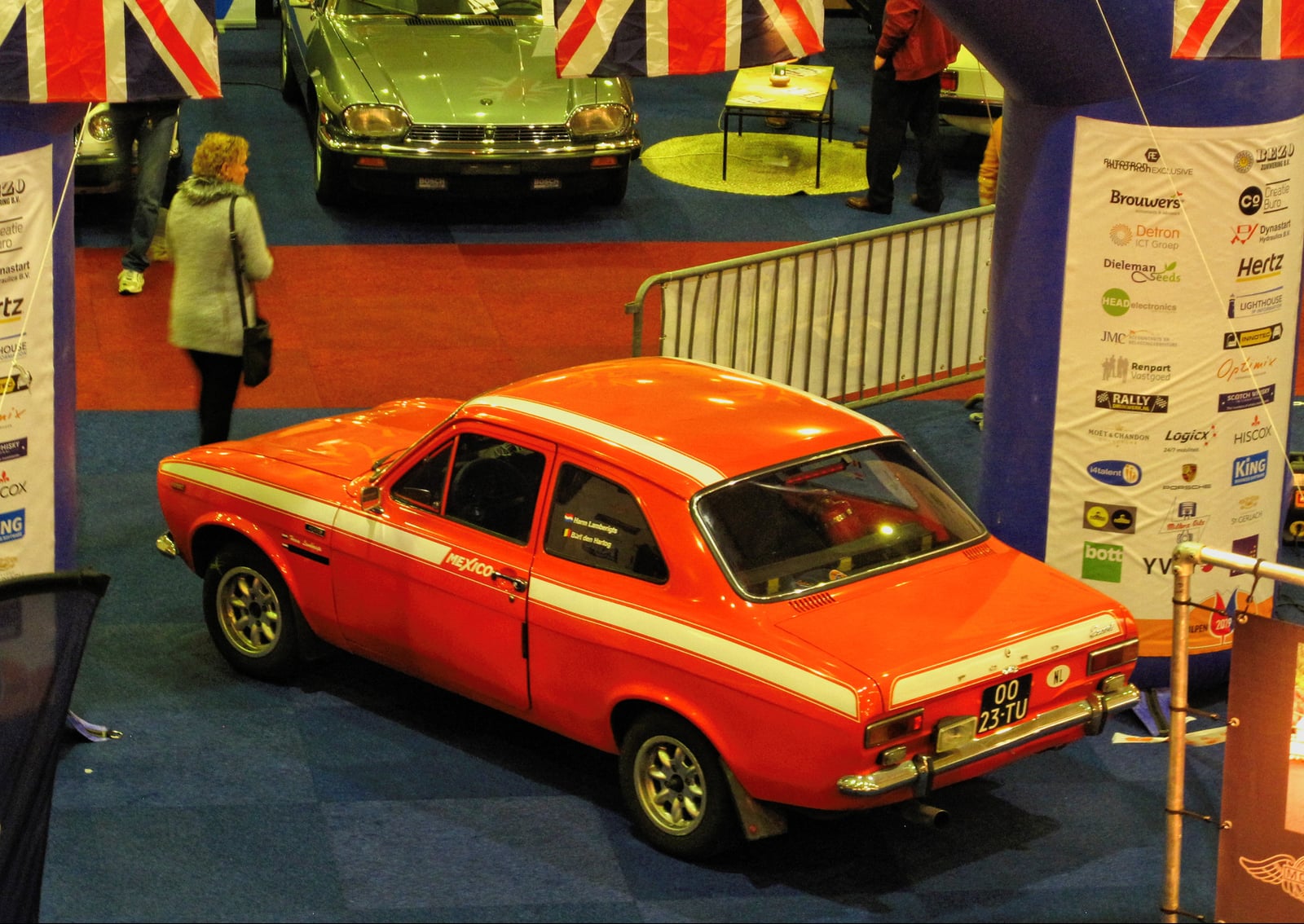
The Mk1 Mexico (1970–74) is the AVO-built original, on the rounded first-generation Escort shell, and is the rarer and more valuable car. The Ford Escort Mexico Mk2 (1976–78) used the squarer second-generation Escort and switched to the overhead-cam 1.6 Pinto engine, built at Saarlouis. Both carry the Mexico’s distinctive identity and its link to the rally programme; the Mk1 is the collector’s choice, the Mk2 the more attainable.

Aveley and the AVO years
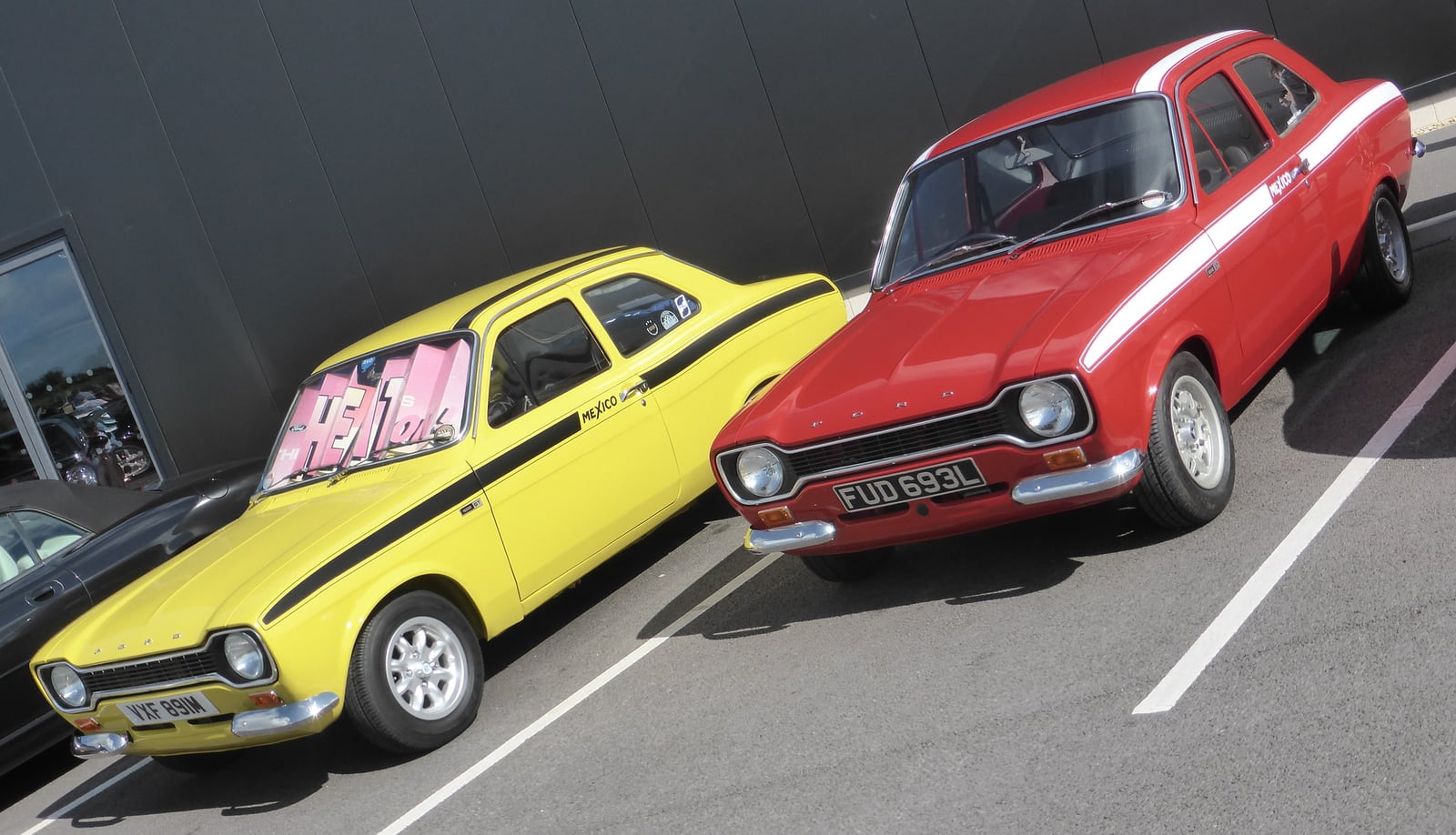
The Mexico was the volume product of one of Ford’s most romantic ventures: Advanced Vehicle Operations, the dedicated performance plant at Aveley in Essex. Opened in 1970, AVO built the fast Escorts on the strengthened Type 49 bodyshell on its own flexible assembly line, and the Mexico, far cheaper to build and to buy than the 16-valve RS1600, was the car that kept that line busy. Ford even ran a one-make Mexico Challenge race series to promote it, which gave more than one future star an early taste of circuit racing.
The plant lived fast and died young: the first oil crisis collapsed the performance-car market, AVO closed in early 1975, and the Mexico name rested until the Mk2 revival. That short life is a large part of the Mk1’s aura, and it left an unusually well-documented legacy: AVO build records survive for many cars, the dedicated owners’ clubs are strong, and the bright Clubman paint schemes and quarter-bumper front end make a genuine car one of the most recognisable fast Fords of its era.
What it is like to own
Mechanically the Mexico is a delight to own precisely because it was built to be simple. The Kent and Pinto engines are familiar, hard-wearing Ford units with superb parts support, and the rear-drive Escort running gear is exceptionally well catered for by the specialists. It is a straightforward car to maintain and restore. Running one is as cheap as fast-Ford ownership gets: the Kent engine shares parts with half the classic Ford world, agreed-value insurance is reasonable, and the cars are light enough to be kind to their brakes and tyres. The expense is acquisition, not upkeep.
To drive, it is a classic rear-drive Escort: light, communicative and endlessly entertaining, with the kind of throttle-adjustable handling that made the Escort such a rally weapon. Modest power matters little when the chassis is this good.

Buying guide: what to look for
The Mexico was always the affordable way into an AVO-built Escort, and it still is. Where the RS1600 built alongside it used an exotic 16-valve engine, the Mexico used the simple 1.6 Kent pushrod, which is why it cost less then and why it costs less to keep now. On this car the expense is acquisition, not upkeep.
Choosing between the generations is mostly a question of what you want it for. The Mk1, built at Aveley on the strengthened Type 49 shell from 1970 to 1974, is the collector’s choice and carries the aura that the plant’s short life created. The Mk2, built at Saarlouis from 1976 on the Pinto, is the more attainable car and gives away nothing in character.
Because Mk1 values are now high, conversions and cloned cars exist, so the AVO build records that survive for many cars are worth more to a buyer than any amount of paint. The clubs hold them, the quarter-bumper front end and the bright Clubman paint schemes are the visible signatures, and a documented car is worth substantially more than an undocumented one that looks identical.

Current value and where it sits
Mk1 provenance is what the money follows. Expect £15,000 to £25,000 for a project, £30,000 to £50,000 for something usable and £55,000 to £80,000 for an excellent example, with genuine AVO-built Mk1s at the top of every band. It sits alongside the RS2000 among the most sought-after of the rear-drive fast Escorts. For the era, see British classic cars of the 1970s. The Mexico is one of many Ford Escort variants, told in full on the model overview.
More photos
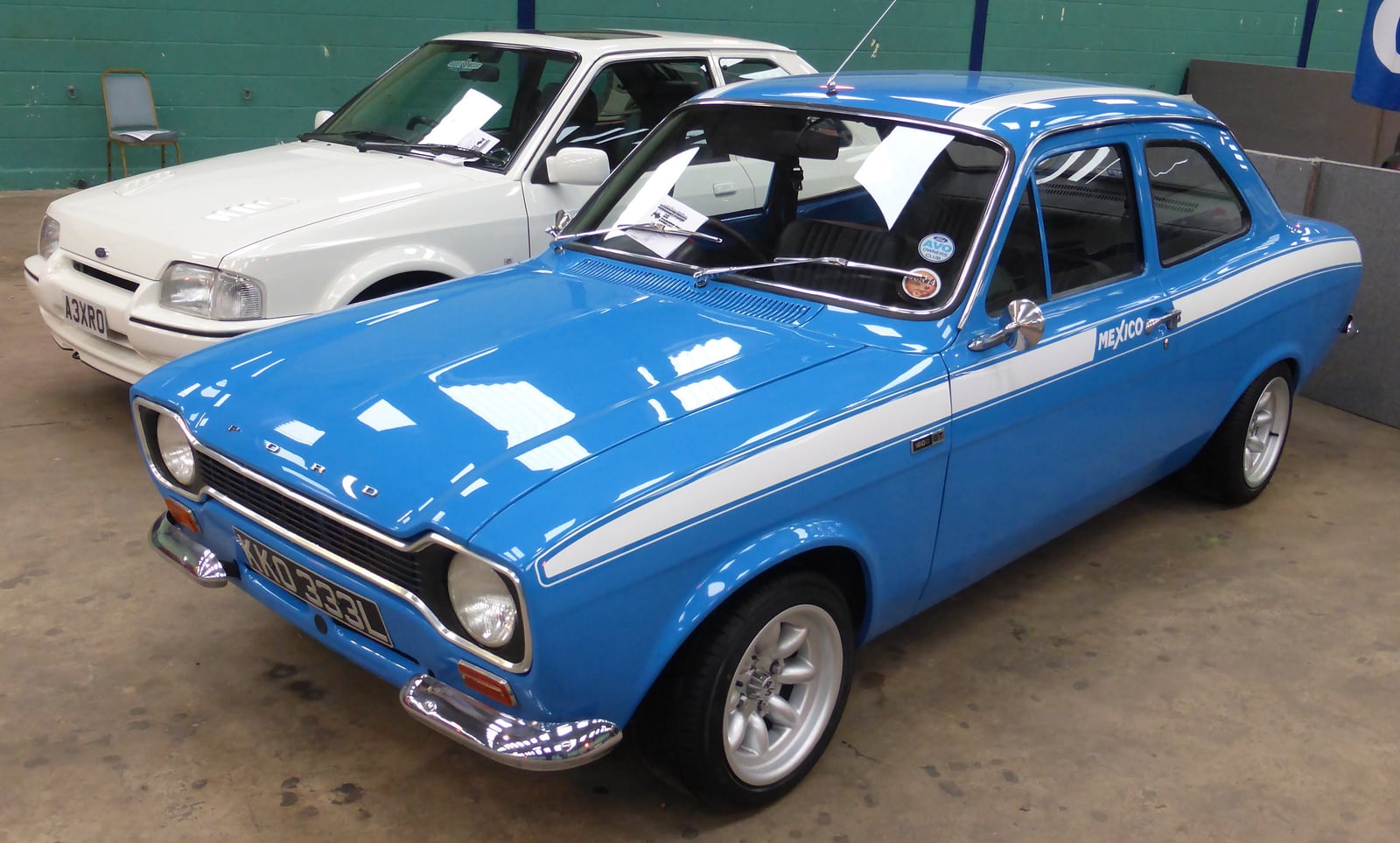
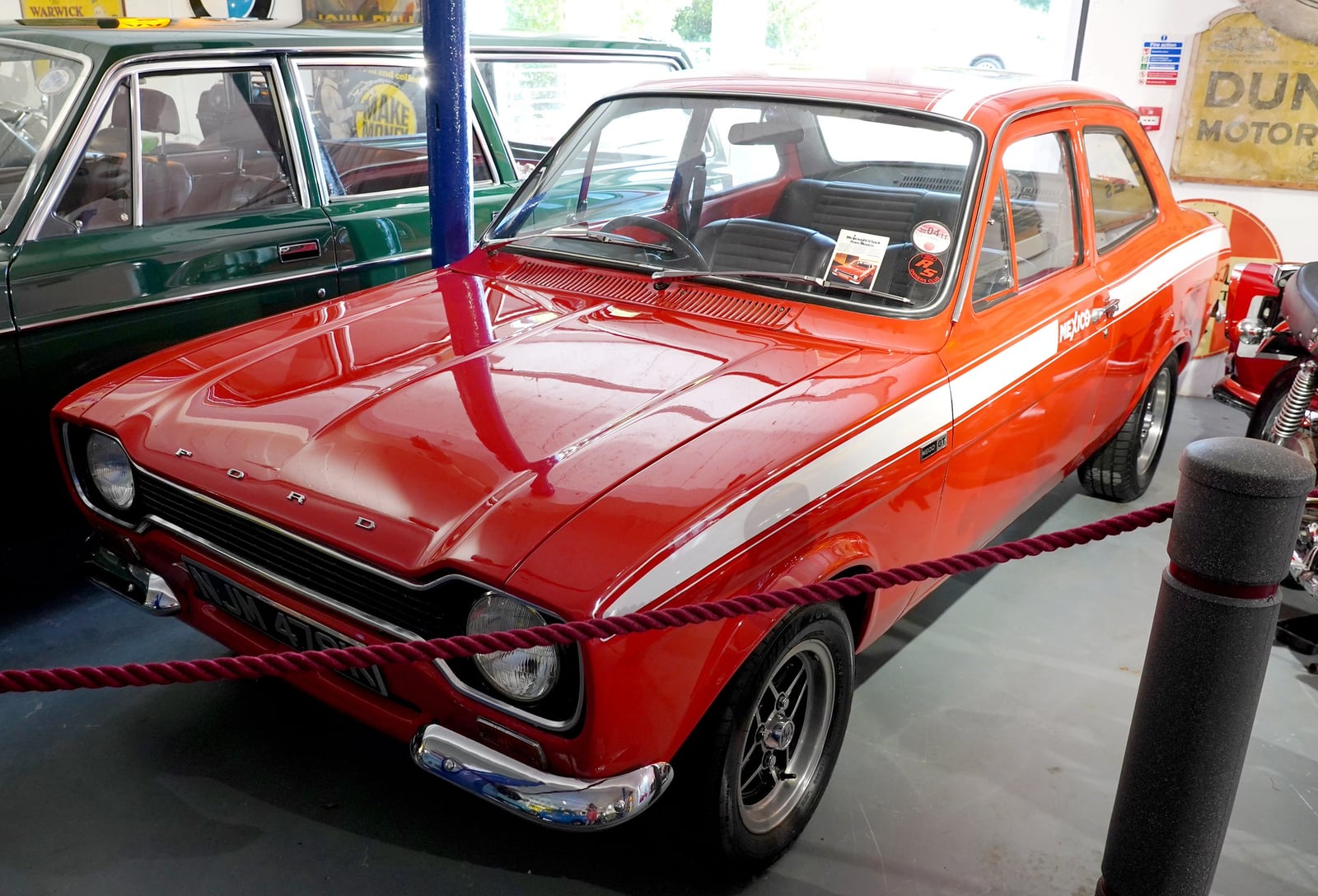
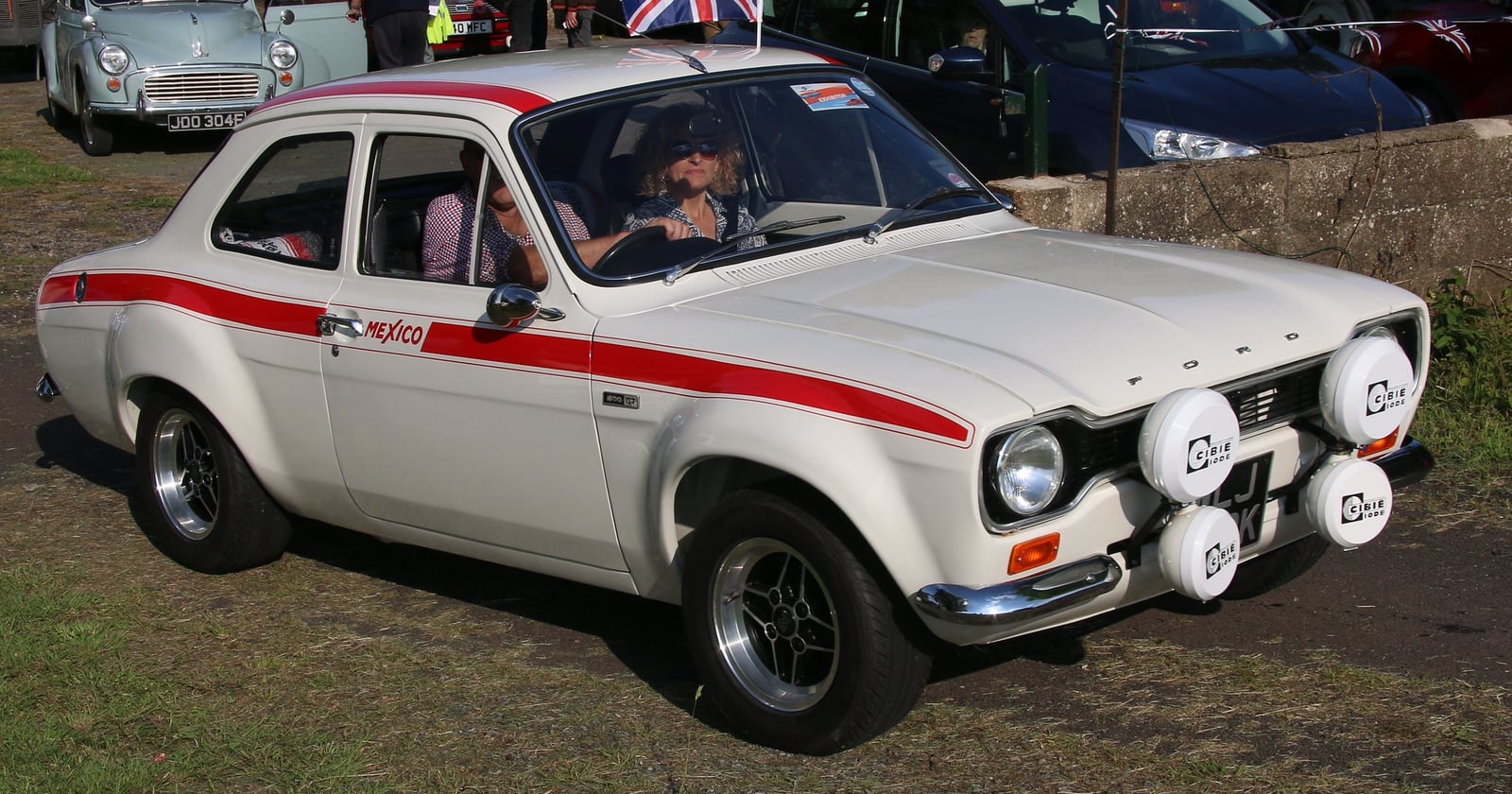
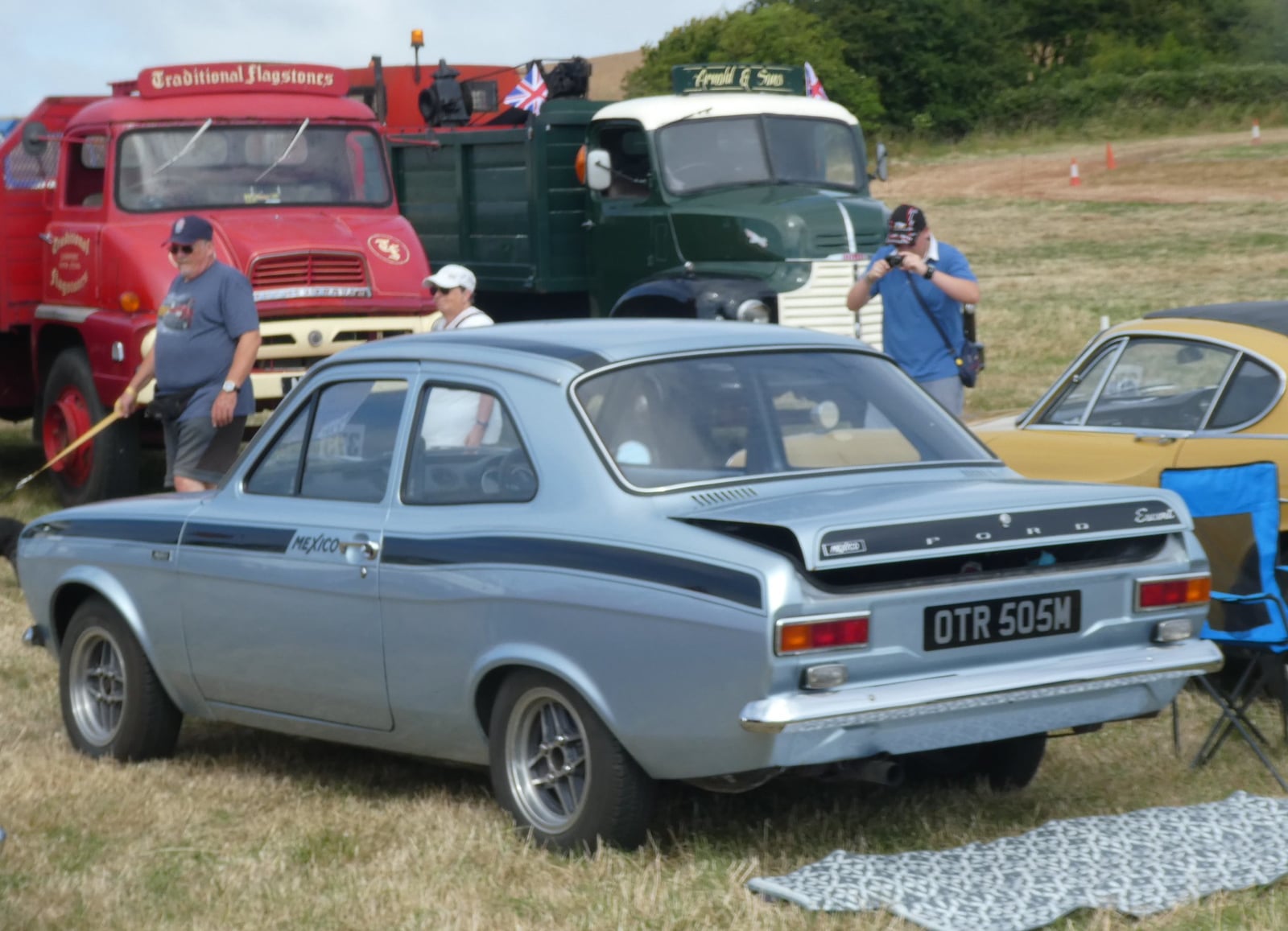

The Mexico timeline
- 1970Hannu Mikkola and Gunnar Palm win the London to Mexico World Cup Rally in a works Escort.
- Late 1970Ford launches the road-going Mexico to bank the publicity, built by Advanced Vehicle Operations at Aveley on the rally-developed shell.
- Early 1970sA one-make Mexico Challenge race series promotes the car and gives more than one future star an early taste of circuit racing.
- 1974Mk1 production ends.
- Early 1975The first oil crisis collapses the performance-car market, AVO closes and the Mexico name rests.
- 1976Mexico returns on the squarer Mk2 shell with the overhead-cam 1.6 Pinto, built at Saarlouis rather than Aveley.
- 1978Mk2 production ends.
The Mexico viewing checklist
Structure
- Floors, sills and inner sills
- Front wings, inner wings and the rear arches
- Chassis legs, suspension mounts and the boot floor
- Fast Escorts rot and many have had hard lives, so metal matters more than mechanicals
Proving a Mk1
- AVO build records survive for many cars and the owners' clubs hold them
- The quarter-bumper front end and the bright Clubman paint schemes are the recognisable signatures
- Insist on matching numbers and a credible documented history before paying genuine-car money
Which engine you are buying
- Mk1 uses the simple 1.6 Kent pushrod, easy to service and cheap to run
- Mk2 switched to the overhead-cam 1.6 Pinto and moved production to Saarlouis
- Neither is the RS1600 16-valve BDA, and neither should be priced like one
What the Escort Mexico sells for at auction
In 2025 the median Escort Mexico sold for £32,784 across 20 sales, 18% up on 2024. In real terms, typical Escort Mexico prices were down about 17% over the five years to 2025, once inflation is accounted for.
Show the year-by-year mediansHide the year-by-year medians
| Year | Sold | Median | In 2025 money |
|---|---|---|---|
| 2026 (so far) | 8 | £37,438 | |
| 2025 | 20 | £32,784 | £32,784 |
| 2024 | 9 | £27,872 | £28,942 |
| 2023 | 8 | £26,770 | £28,727 |
| 2022 | 6 | £28,426 | £32,554 |
| 2021 | 5 | £33,600 | £41,548 |
| 2020 | 6 | £31,240 | £39,588 |
| 2018 | 8 | £30,094 | £39,179 |
| 2014 | 4 | £19,760 | £27,378 |
- £35,500Escort Mexico
- £39,375Escort Mexico
- £41,440Escort Mexico
- £25,875Escort Mexico
- £18,000Escort Mexico
Reasonable evidence. 84 recorded sales: enough for the range to mean something, though a few unusual cars can still move a single year's median. Based on 84 sold results from public classic car auctions (2008 to 10 August 2026). Sold prices, not asking prices, and not a valuation: condition, history and specification vary from car to car. Inflation-adjusted figures use the ONS CPIH index, in 2025 money.