Ford Cortina Mk5 (1979–1982): the Cortina 80 and the end of the line
Ford called it the Cortina 80; Britain called it the Mk5. The 1979 facelift of the Mk4 was the last Cortina of all, holding the sales lead until the radical Sierra replaced it in 1982 and ended two decades of rear-drive Cortinas. The development story, the run-out, and the survivors.
Built 1979–1982 50 recorded sales

At a glance
- Years
- 1979–1982
- Body styles
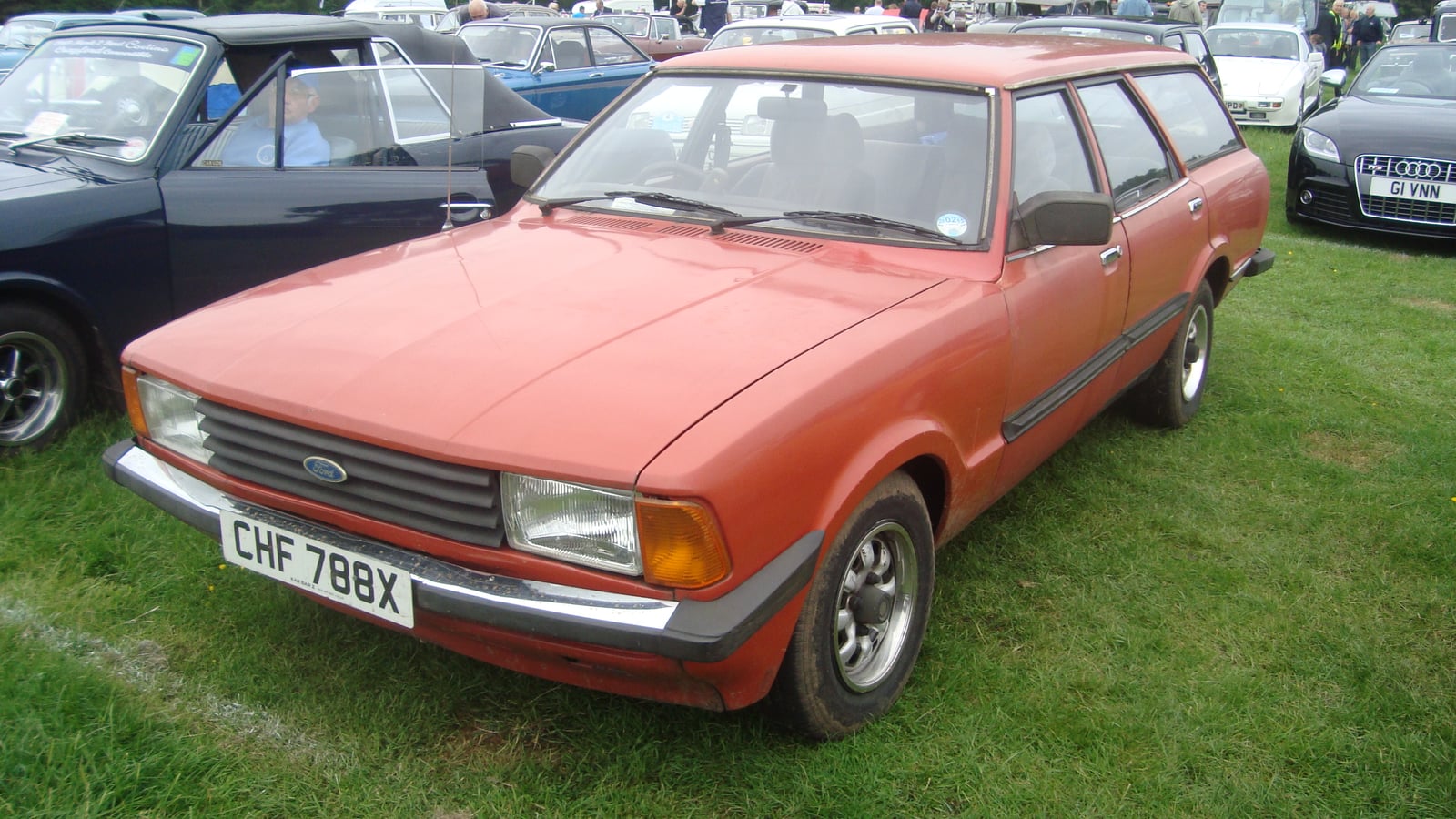
- Four-door saloon, five-door estate
- Drivetrain
- Rear-wheel drive
- Engines
- 1.3 Kent, 1.6/2.0 Pinto, 2.3 Cologne V6
- Power
- 61-116 bhp
- Top speed
- Up to 109 mph (2.3 V6)
- Trim levels
- Base, L, GL, GLS, Ghia, Ghia S
- Production
- The last Cortina; over four million built across five marks
- Assembly
- Dagenham (the last car, 22 July 1982)
- Values
- Around £5,500 good, £8,300 excellent (1.6)
The models
The Cortina Mk5 is the long goodbye of Britain’s best-selling car. It was never a new model, only a careful 1979 reworking of the Mk4 that Ford badged the Cortina 80, but it carried the Cortina name to the very end and stayed at the top of the sales charts until the day the Sierra arrived to bury the whole rear-drive idea.
The Cortina 80 facelift
Ford announced the updated car on 24 August 1979. The brief was shrewd and modest: freshen the Mk4 enough to keep it selling, without spending on a replacement that was already deep in development. The official name was the Cortina 80; the press and the public called it the Mk5 from the start, and that is the name that stuck.
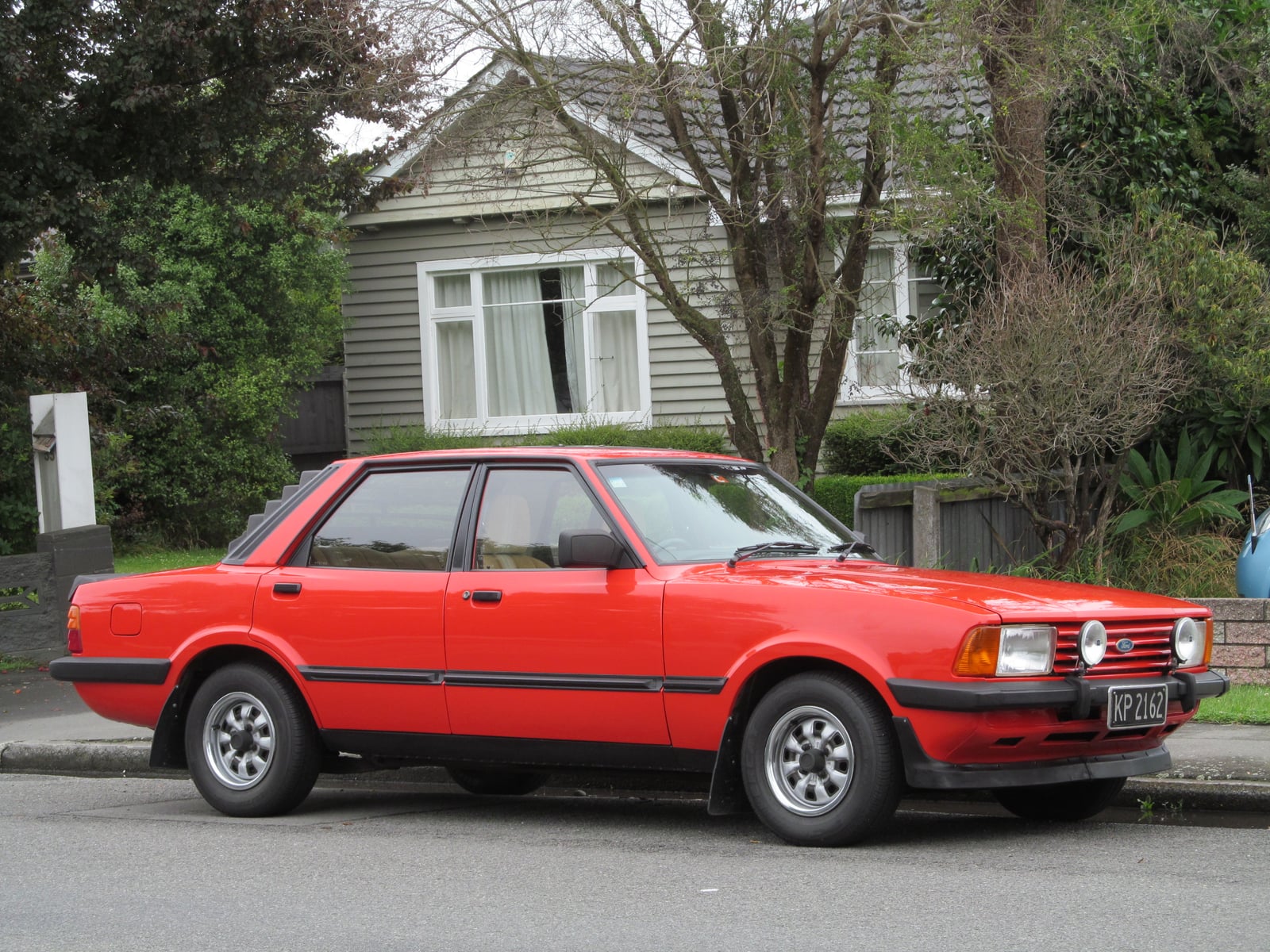
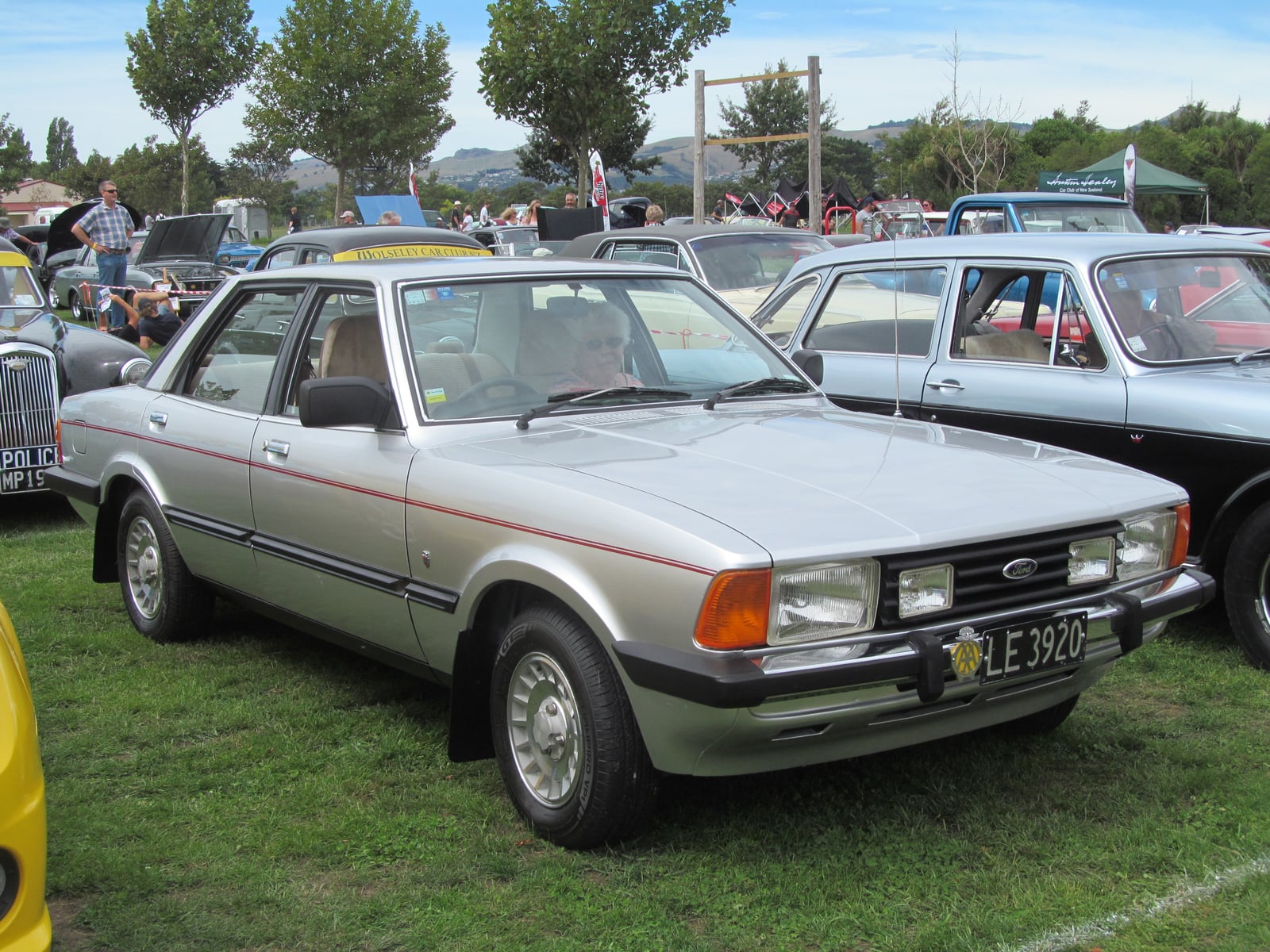
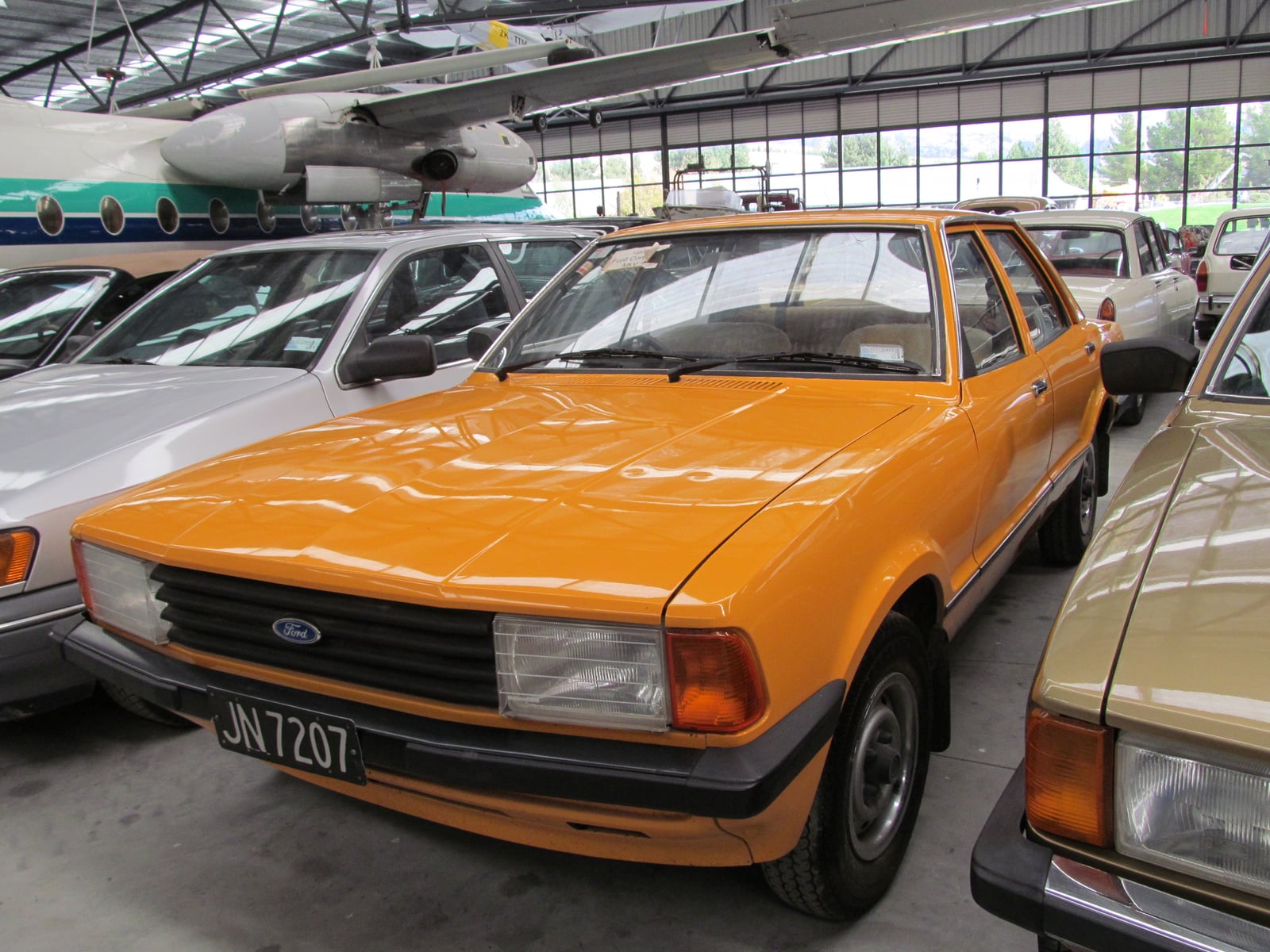
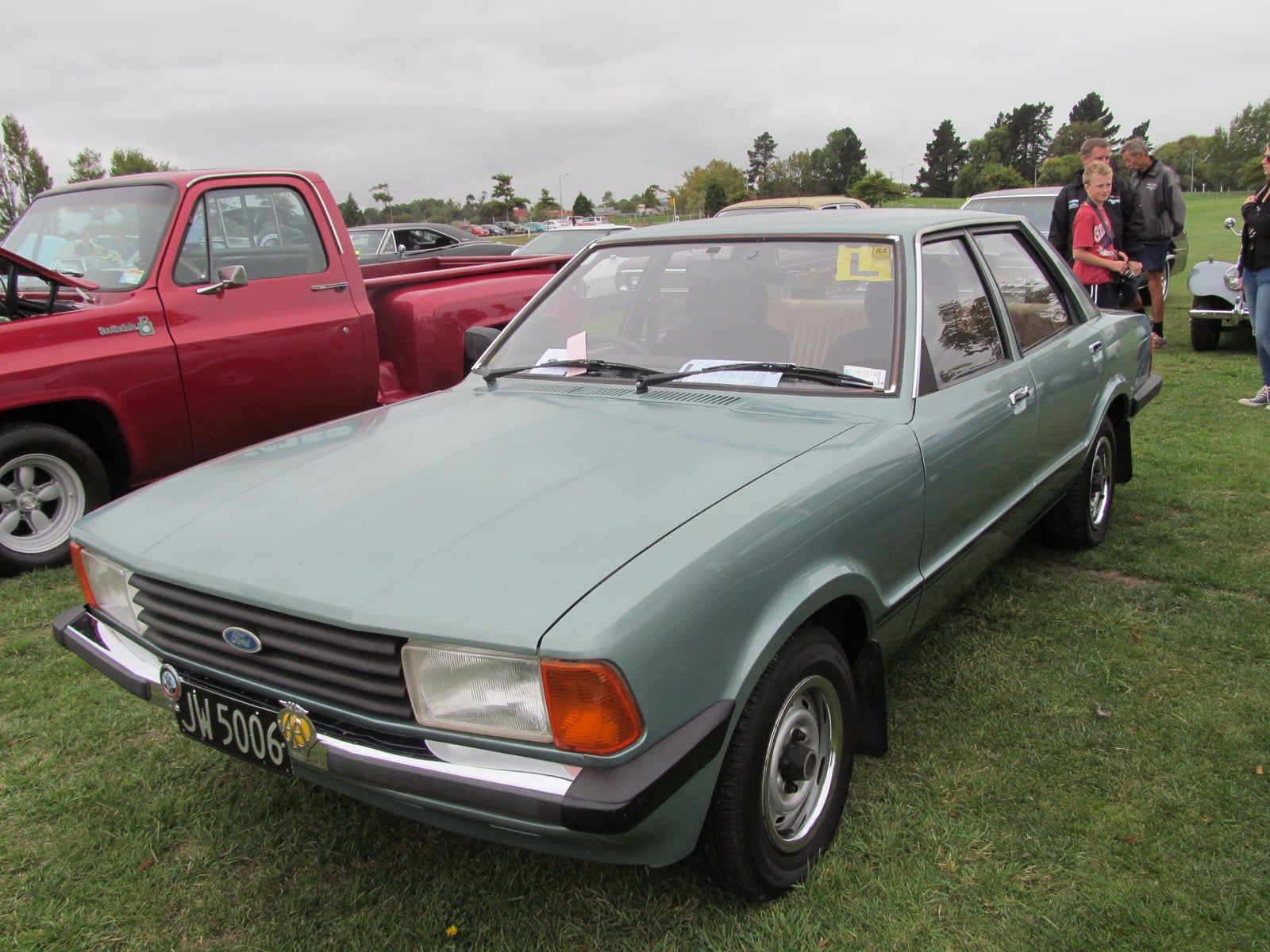
The changes were all in the pressings and the glass. The roofline was flatter and higher, the C-pillars slimmer, and the glass area larger, which is what justified the new “mark” rather than a simple trim refresh. There was a new slatted grille Ford called Aeroflow, revised headlamps with bigger wrap-around indicators now visible from the side, larger ribbed tail lamps on the saloons, new bumpers and a deeper front valance. Underneath it was the Mk4: same platform, same doors, same basic structure.
Under the skin
Mechanically the Cortina 80 carried over the Mk4’s engines with a round of refinement aimed at economy and quietness. Everything gained a viscous-coupled cooling fan, and the 1.3 and 1.6 picked up the Motorcraft Variable Venturi carburettor, which is now one of the car’s known weak points.
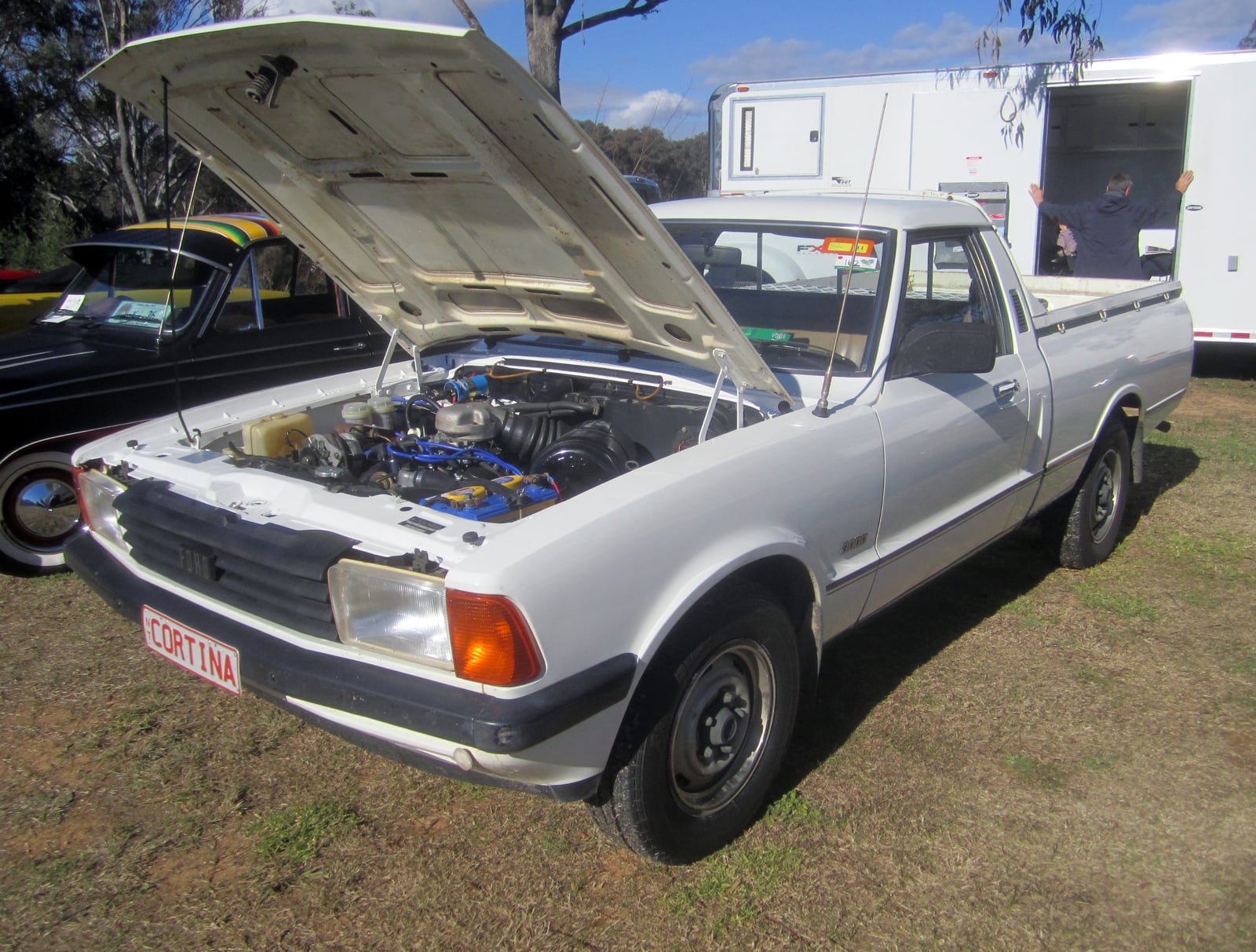
The engine line-up ran the 1.3 Kent crossflow at around 61 brake horsepower, the 1.6 and 2.0 Pinto overhead-cam fours, and the 2.3 Cologne V6 at the top. The V6 was the one engine that got real attention: electronic ignition, better heads and higher compression lifted it to about 116 brake horsepower, enough for a genuine 109 miles per hour and a useful half-second off the 2.0’s 0 to 60 time. It was offered on the upper trims, where a Cortina could be a quietly quick and comfortable thing.
The range and the run-out specials
The UK range was the four-door saloon and the five-door estate, in base, L, GL, GLS and Ghia trim. The standalone S model of the Mk4 was dropped, replaced by an S pack option of driving lamps, firmer suspension and S badging, and there was a Ghia S above it.
What the Mk5 is really remembered for is the way Ford saw it out. As the Sierra loomed, the company kept showroom interest alive with special editions: the two-tone Carousel of 1981, and then the Crusader of 1982, the highest-specified Cortina of all, with velour seats, wooden door cappings, a long centre console and the rest of the Ghia toy box. Ford reportedly built around 30,000 Crusaders, which is often quoted as its best-selling special edition to that point, though that figure rests on Ford and enthusiast accounts rather than an audited record.
The very last Cortina, a Strato Silver Crusader, came off the Dagenham line on 22 July 1982, and the car is said to have been kept by Ford for its Heritage Centre. After twenty years and more than four million Cortinas across five marks, that was the end of it.

Reception and the Sierra
The press treated the Cortina 80 as exactly what it was: a competent, conservative update to a known quantity, the shape so familiar it barely earned a second glance. Buyers did not care. The Cortina was Britain’s best-selling car in 1979, 1980 and 1981, and only surrendered the top spot in 1982 as production wound down.
Its replacement could not have been more different. The aerodynamic, jelly-mould Sierra divided opinion in a way the upright Cortina never had, and conservative fleet buyers resisted it at first, some of them buying up the last discounted Crusaders rather than face the new shape. Within a few years the Sierra had matched and passed the Cortina’s position, but the contrast at the handover, the safe old saloon against the radical newcomer, is one of the set-piece moments of British motoring.

Buying a Cortina Mk5 now
As with the Mk4, the enemy is rust and the survivors are thin on the ground, with the run-out special editions now especially sought after by collectors who remember them new. Every Cortina Mk5 now qualifies for historic vehicle status under the 40-year rule, with the road-tax and MOT exemptions that brings.
Check the door bottoms, the sills inside the door shuts, the front and rear valances, the front wings at their top-rear corners and where they meet the valance and slam panel, the inner wings and bonnet-hinge area, the battery tray, the bulkhead, the top suspension mounts and around any sunroof. The Mk5 was better protected than the earlier cars but still rots in all the usual Ford places.
Mechanically, watch for blue smoke from a tired 1.3 crossflow, camshaft wear on a Pinto with a blocked oil spray bar, and the troublesome Variable Venturi carburettor on the smaller engines. None of it is expensive or hard to put right. Repair panels are made new, and mechanical parts are cheap and shared across the range; it is the special-edition trim that will test your patience.
Values reflect a car that is loved but not chased the way the Capri and RS Escorts are. The price guides put a Mk5 1.6 at roughly £5,500 in good order and £8,300 for an excellent one, and auction data since 2020 gives a median around £5,700 with the best cars reaching the mid teens. A well-kept Crusader, and anything with a credible claim to being near the end of the line, carries a premium. For everyone else, the appeal is simple: this is the last Cortina, the car that ended the longest-running nameplate in the British family-saloon market, and a good one is cheaper to own than almost anything else with that much history in it.
Cortina Mk5: what changed and when
- 24 Aug 1979Ford announces the Cortina 80, a facelift in the pressings and glass with a flatter, higher roofline, slimmer C-pillars and the slatted Aeroflow grille.
- 1979The Cortina is Britain's best-selling car, and is again in 1980 and 1981.
- 1981The two-tone Carousel special edition arrives to keep showroom interest alive as the Sierra looms.
- 1982The Crusader follows, the highest-specified Cortina of all, with around 30,000 reportedly built.
- 22 July 1982The last Cortina, a Strato Silver Crusader, comes off the Dagenham line after twenty years and more than four million cars.
What to check on a Cortina Mk5
Where it rots
- Door bottoms and the sills inside the door shuts
- Front and rear valances, and the front wings at their top-rear corners and where they meet the valance and slam panel
- Inner wings, bonnet-hinge area, battery tray, bulkhead, top suspension mounts and around any sunroof
Engine faults worth knowing
- Blue smoke from a tired 1.3 crossflow
- Camshaft wear on a Pinto with a blocked oil spray bar
- The Variable Venturi carburettor on the smaller engines is the troublesome one, though none of it is expensive to put right
Which one to chase
- A well-kept Crusader, and anything with a credible claim to being near the end of the line, carries a premium
- The standalone S was dropped, replaced by an S pack of driving lamps, firmer suspension and badging, with a Ghia S above it
- The 30,000 Crusader figure rests on Ford and enthusiast accounts rather than an audited record
What the Cortina Mk5 sells for at auction
Show the year-by-year mediansHide the year-by-year medians
| Year | Sold | Median | In 2025 money |
|---|---|---|---|
| 2026 (so far) | 8 | £8,568 | |
| 2025 | 6 | £7,475 | £7,475 |
| 2024 | 7 | £7,560 | £7,850 |
| 2023 | 8 | £5,616 | £6,027 |
| 2022 | 6 | £5,430 | £6,219 |
| 2021 | 8 | £3,518 | £4,350 |
- £8,250Cortina Mk V
- £8,175Cortina Mk V
- £9,520Cortina Mk V
- £5,616Cortina Mk V
- £16,078Cortina Mk V
Thin evidence. Only 50 recorded sales: read the figures as a sketch of the market, not a price. Based on 50 sold results from public classic car auctions (2006 to 10 August 2026). Sold prices, not asking prices, and not a valuation: condition, history and specification vary from car to car. Inflation-adjusted figures use the ONS CPIH index, in 2025 money.
Related
The Mk5 is the final chapter of the classic Ford story on the Cortina, the direct successor to the Cortina Mk4. It spans the turn of the decade, from British classic cars of the 1970s into the 1980s, and is one generation of the wider Ford Cortina story.
More photos