Dutton: the biggest kit-car maker in the world (1970–1989)
Dutton was reckoned the most prolific kit-car maker in the world, building cheap glass-fibre sports cars and estates on Triumph and then Ford Escort running gear, and once beat Ford in the High Court for the right to keep calling one of its cars the Sierra. A guide to the models, the famous lawsuit, what to look for when buying, and what they are worth.
Built 1970–1989

At a glance
- Years
- 1970–1989
- Body styles
- Glass-fibre open sports cars and estates, kit-built
- Engines
- Triumph Herald and Spitfire, then Ford Escort running gear
- Production
- Around 8,000 kits, reckoned the most prolific kit-car maker in the world
- Assembly
- Sussex (four factories at the 1984 peak)
- Values
- A few hundred pounds for a project; £1,500-£3,000 for a usable car; £3,000-£4,000-plus for the best
- Models
- Phaeton, Malaga, Sierra, Melos, Legerra
- Notable
- Beat Ford in the High Court to keep the Sierra name
The makers
Dutton built more kit cars than anyone. At its peak in the mid-1980s the Sussex firm ran four factories, employed around eighty people, and turned out over a thousand cars a year, which is reckoned to make it the most prolific kit-car manufacturer the world has seen. Its founder, Tim Dutton-Woolley, was dubbed the grandmaster of kit cars, and his cheap, cheerful, glass-fibre sports cars and estates put a home-built car on more British driveways than any rival. They are also the car that once beat Ford in court.
Dutton sits at the volume end of Britain’s kit-car story. These were never component-car grand tourers like a Gilbern; they were budget kits, built on the simplest possible steel ladder chassis around the running gear of a cheap donor, and sold by the thousand to people who wanted a sports car for very little money.
The grandmaster of kit cars
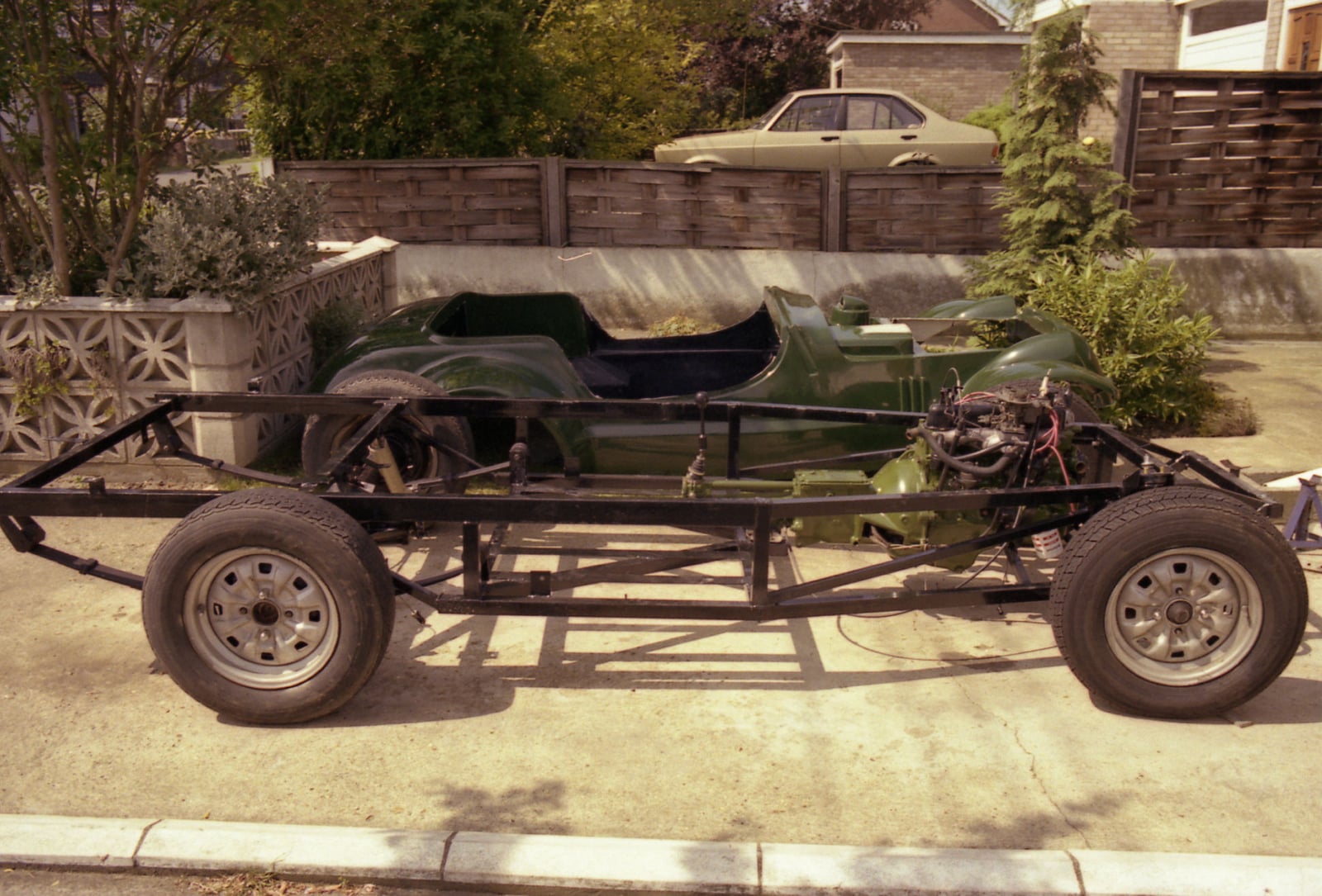
Tim Dutton, a former tool-making apprentice, started building cars in West Sussex in 1970, after a one-off gull-winged special called the Mantis in 1968. The business model never changed: a simple steel ladder-frame chassis, a glass-fibre body, and the engine, gearbox and suspension lifted from a cheap, plentiful donor. Buyers supplied a scrap or bargain donor, transplanted its running gear, bonded on the body, and had a road-legal sports car for pocket money. Low price plus abundant donors plus the satisfaction of building your own is exactly how Dutton out-produced every competitor.
As demand grew the company moved from a small workshop near Worthing to larger premises at Tangmere near Chichester, and later back to Worthing with a separate glass-fibre body works at Lancing. By 1984 it was at its height: four factories, a showroom, and over a thousand cars a year, with the best-selling Sierra leaving the works at up to twenty-two a week. Across its life the company is credited with around 8,000 kits, the figure usually quoted for the world’s most prolific kit-car maker, though it comes from company and club sources rather than an audited count.

The models
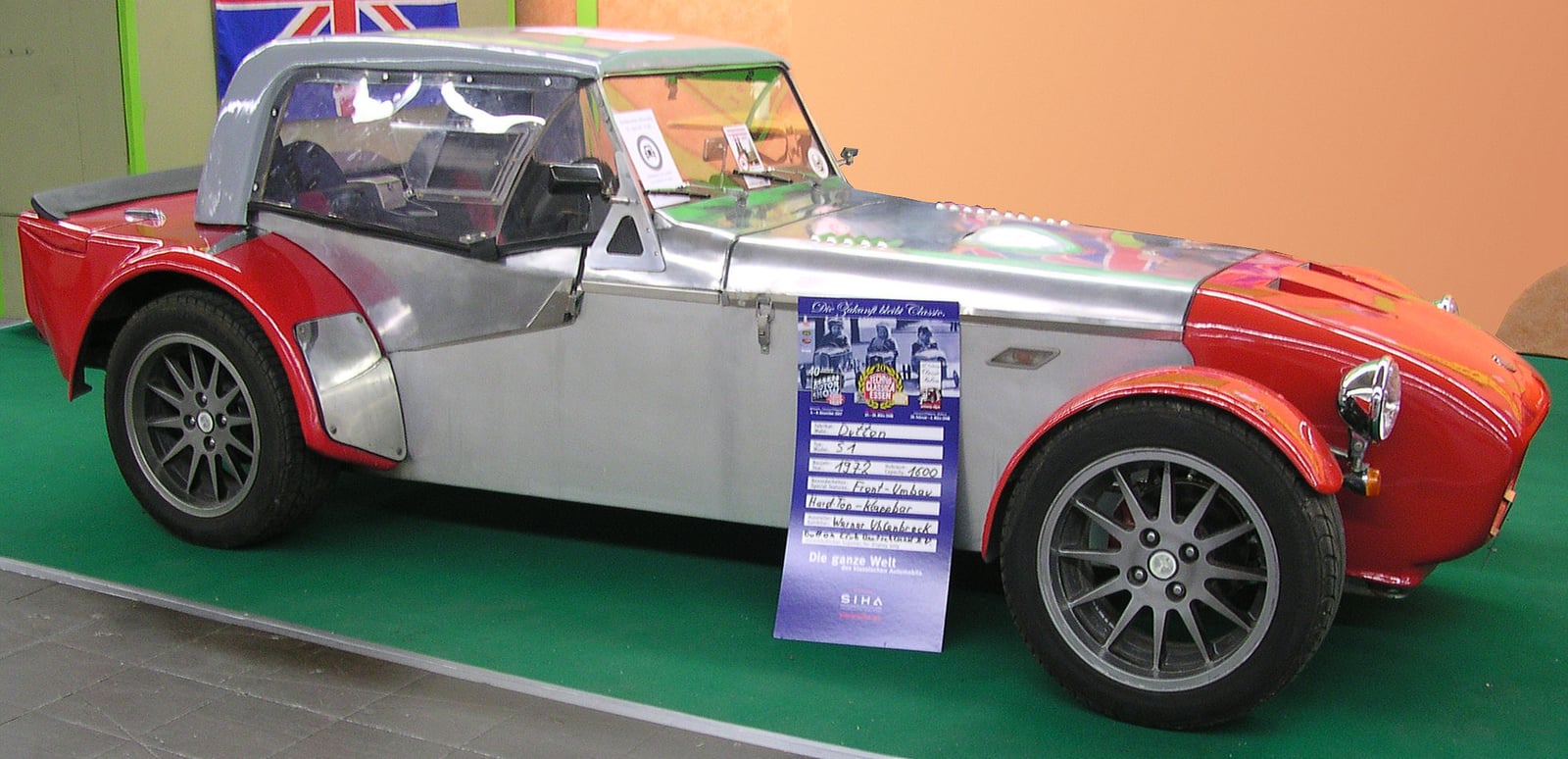
The Dutton range was large and the names overlap, but the spine of it is clear. The early P1 of 1969 to 1971 was a Lotus-Seven-style car on BMC Sprite and Midget mechanicals, of which only a handful were made. The B-Type of 1971 brought in the Triumph Herald and Spitfire running gear that defined the early Dutton, an open cycle-winged roadster that sold well and spawned the B Plus and the Malaga.
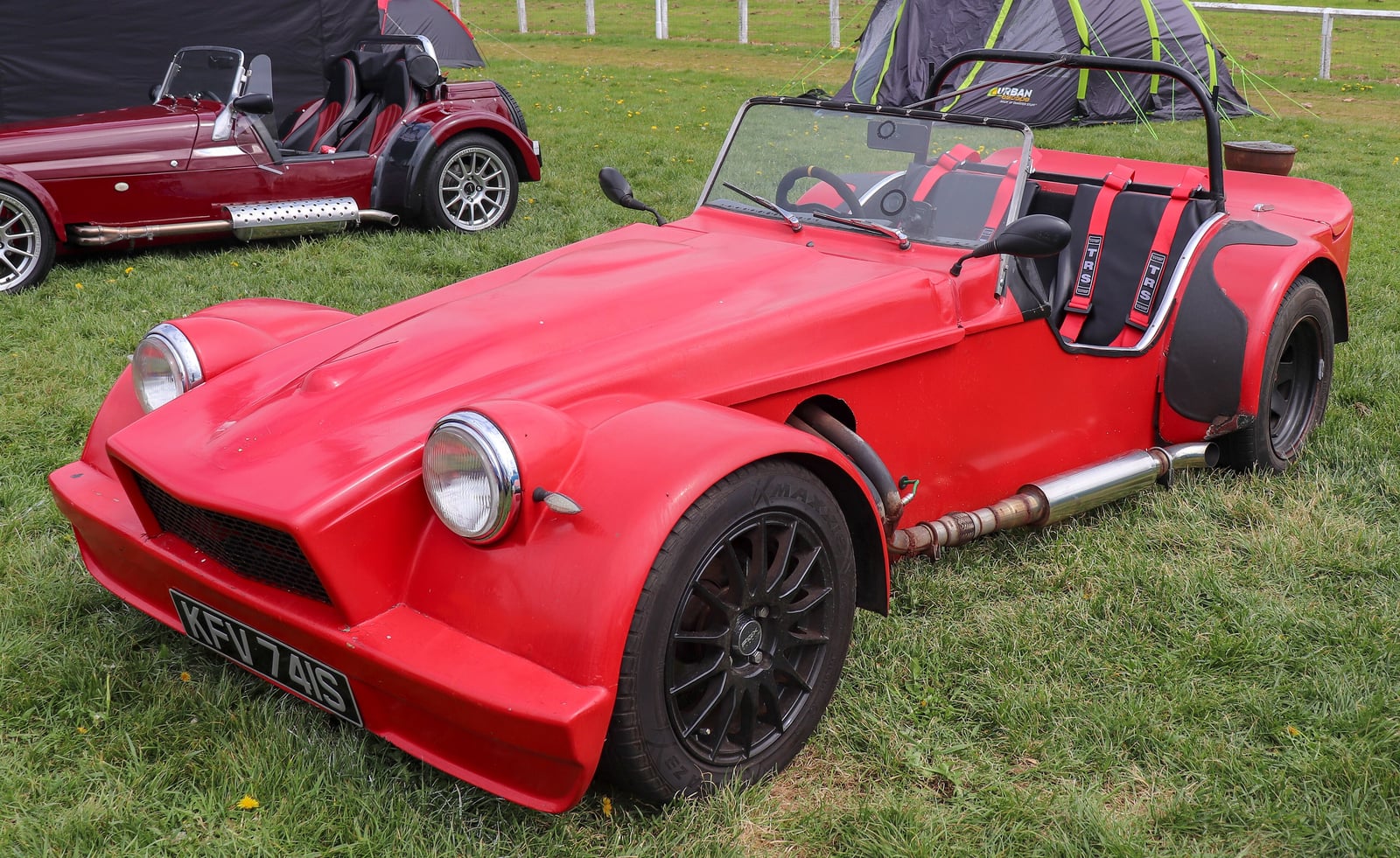
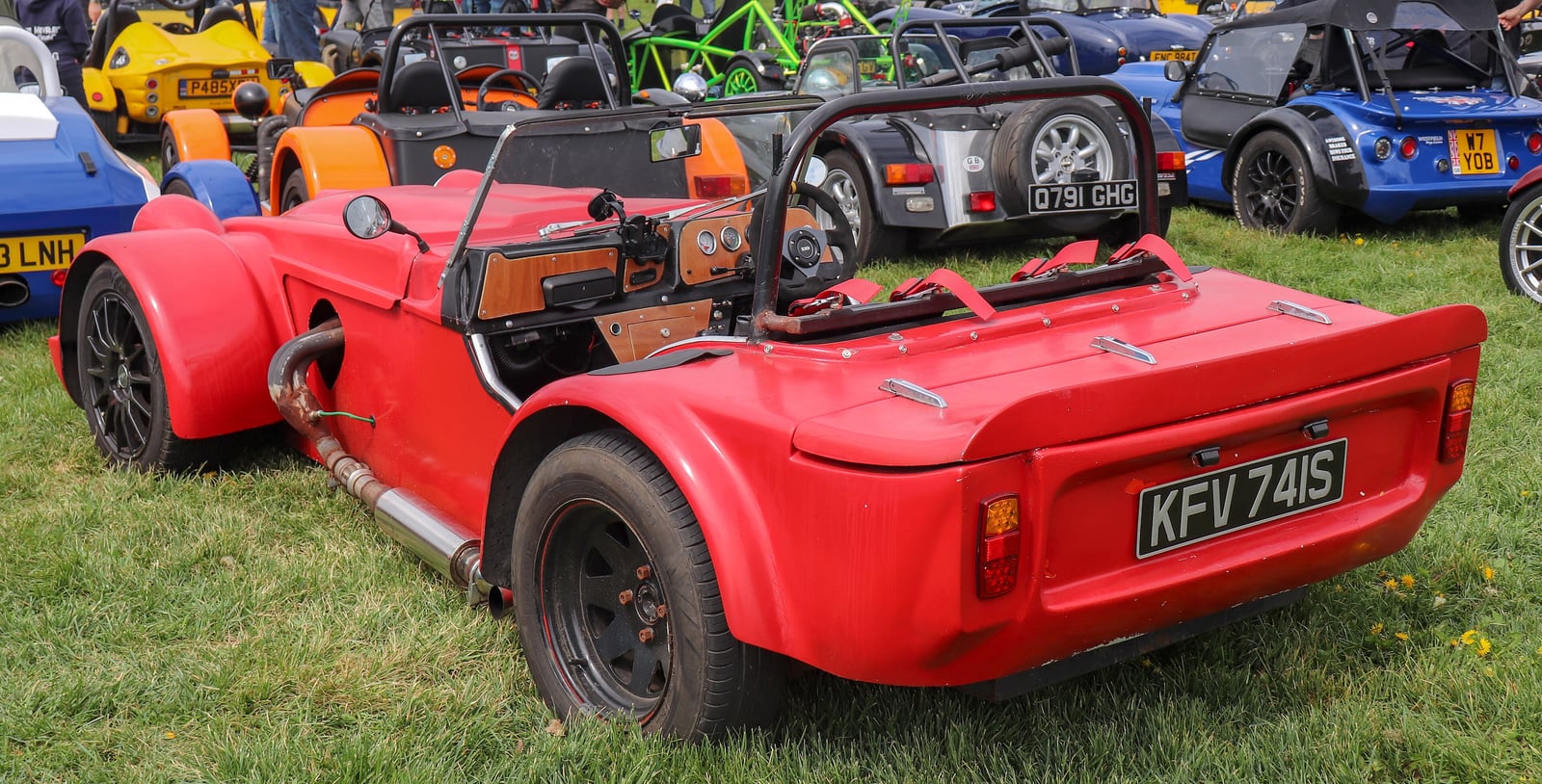
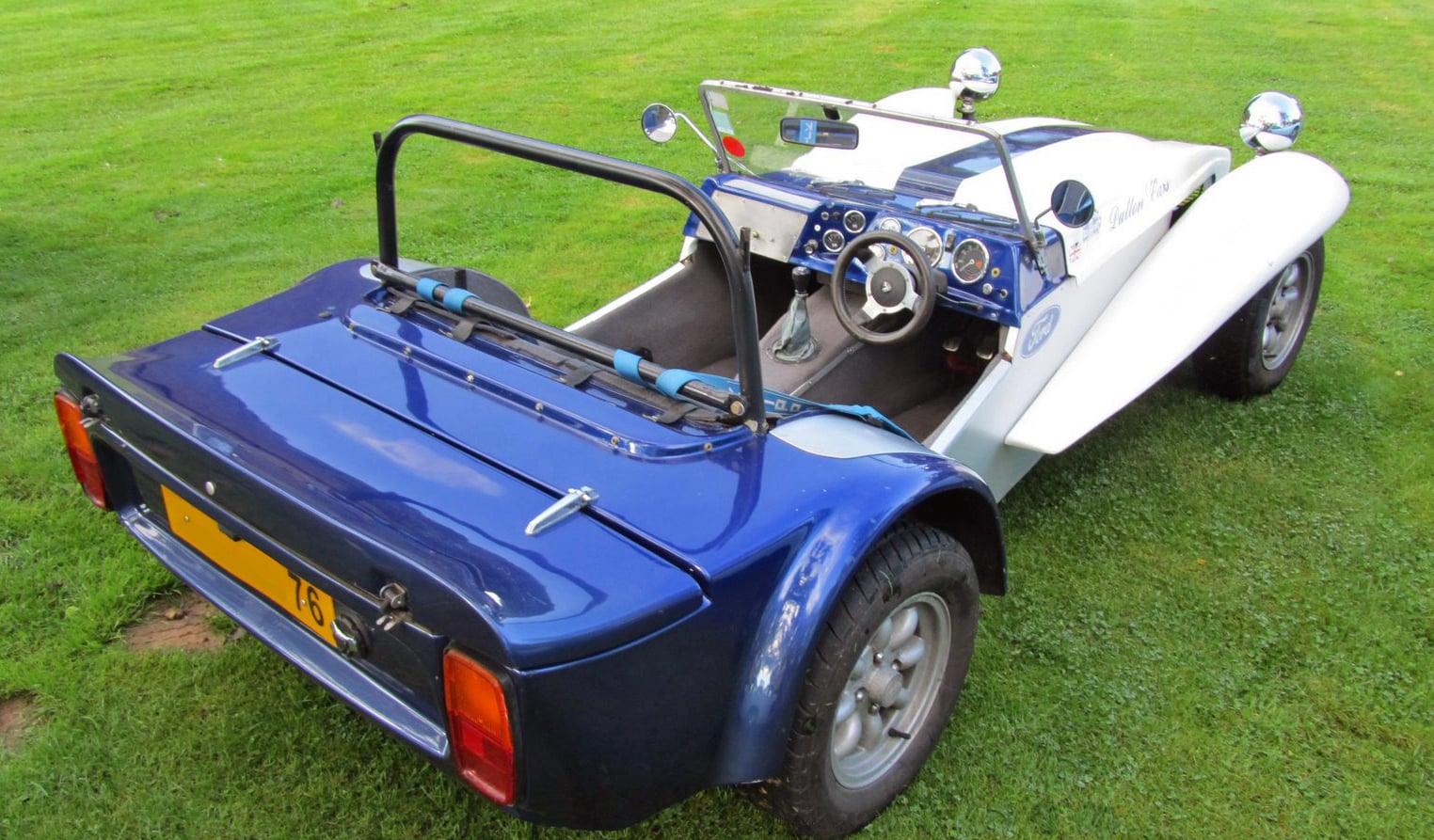
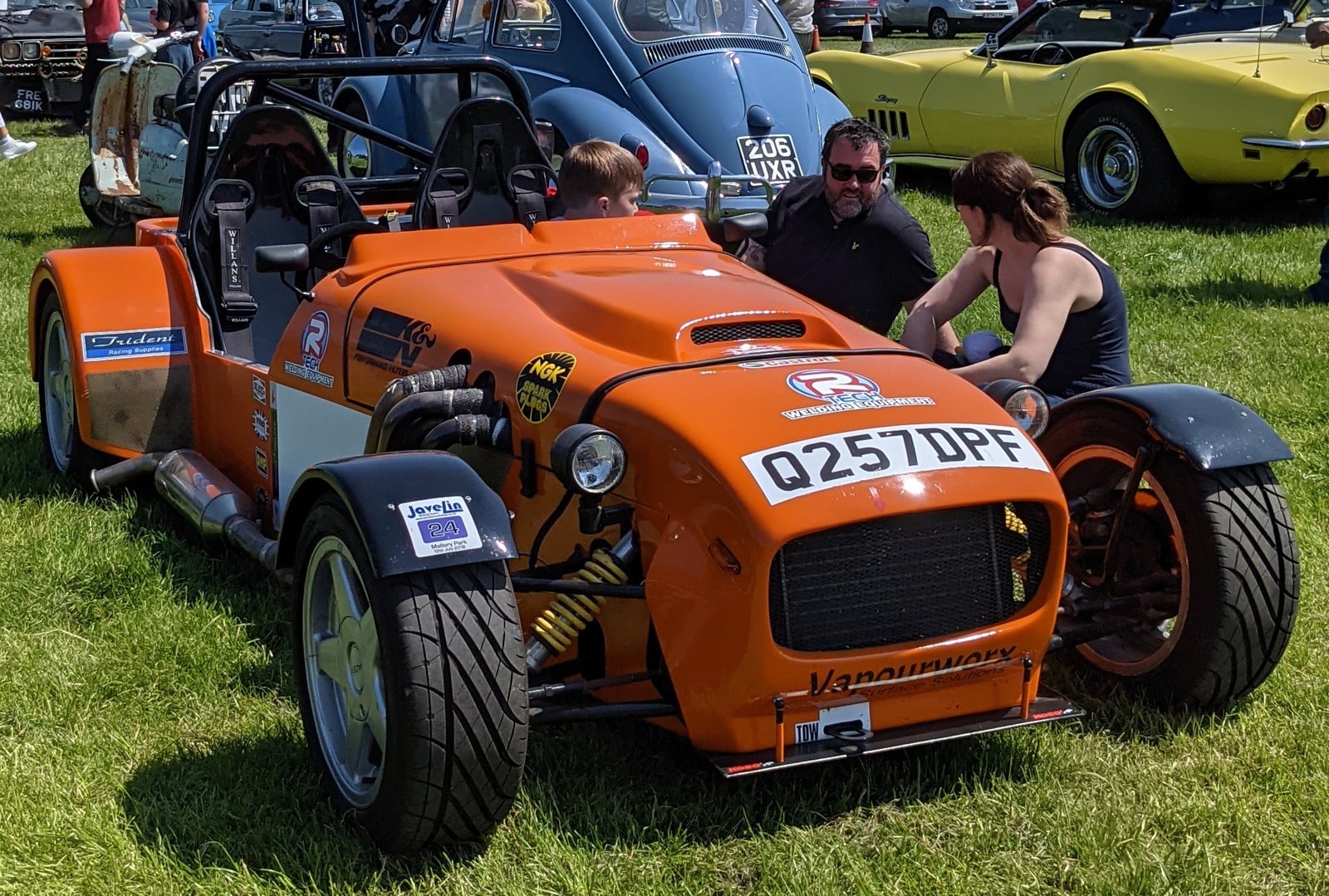
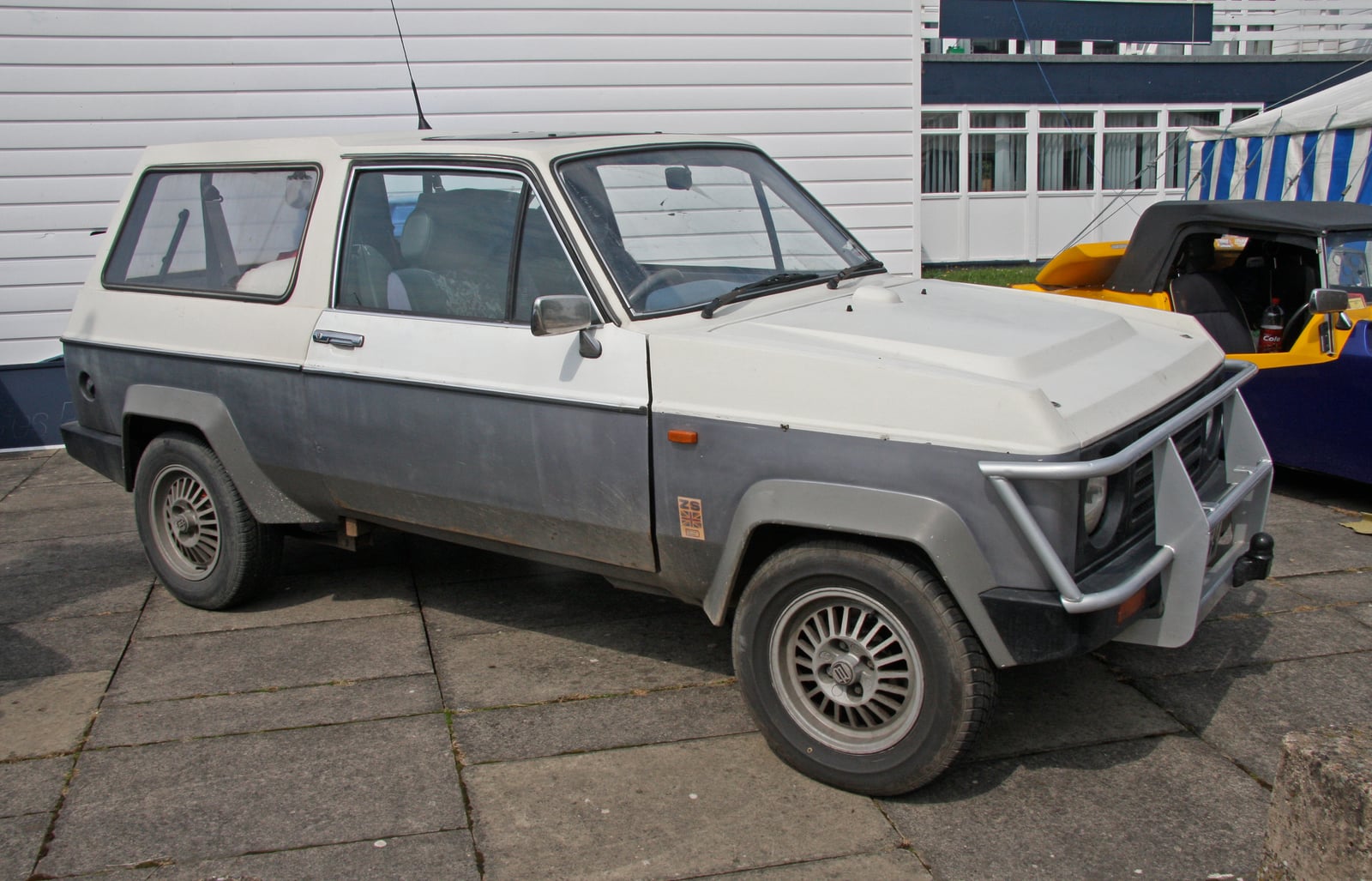
The two cars that really made Dutton’s name came at the end of the 1970s, as the company switched the bulk of its range to cheap, plentiful Ford Escort mechanicals. The Phaeton, from 1977, was a classic cycle-winged open roadster and one of the great kit-car best-sellers, running right through to 1989. The Sierra, from around 1979, was something more unusual: a practical glass-fibre estate with an off-road look, built on Escort running gear and using Escort doors and windscreen, and it became the company’s biggest seller of all. Alongside them the Melos was a neat little Escort-based sports car with better-than-usual fibreglass, and the Rico a four-seat saloon with a Shuttle estate version. The range tailed off at the end of the 1980s with the Legerra and the Beneto, and the Fiesta-based Maroc.

The car that beat Ford
The Sierra is also the reason Dutton has a place in legal folklore. Dutton had been selling its Sierra since around 1979, several years before Ford chose the name for its Cortina replacement. When Ford launched its own Sierra in 1982 and tried to stop Dutton using the name, the case went to the High Court in London, and little Dutton won. The court accepted that kit cars were a separate category from mass-produced factory cars, so nobody was going to confuse a home-built glass-fibre Dutton with Ford’s new jelly-mould saloon. It was a genuine David-and-Goliath result, and the publicity did Dutton no harm at all: the Sierra became its best-selling model.

The end, and a separate second act
Tim Dutton wound up the kit-car business in 1989, bored with the scene, and sold the designs off to various hands. That is the end of the classic Dutton story, and it is worth drawing a firm line here, because Dutton’s name continued in a completely separate venture. From 1995 Tim Dutton returned with amphibious cars, the Mariner, Commander and Surf, machines that can drive into the water and swim, and which he has used for Channel crossings. Those are not the classic kit cars, and the much higher prices they command should never be confused with the value of a 1970s or 1980s Dutton sports car. More recently still he has returned to conventional kits on a modern Mazda MX-5 base, so in a small way the story continues.

Buying guide: what to look for
The single most important thing to understand about buying a Dutton is that you are buying one person’s build, not a model. Every car was assembled at home, and the quality ranges from genuinely good to frankly alarming, so the rule is to inspect this particular car rather than form a view of “a Dutton”. The glass-fibre was modestly made from new, rougher on the Phaeton and Sierra than on the better-finished Melos, so look closely at the body and at how well it has been bonded and fitted to the chassis. The steel ladder chassis can rot, especially where it was poorly painted during the original build, so check it carefully.
The first job on any Dutton is to identify the donor, because that dictates the mechanicals and the parts supply. A Triumph-era car carries Herald and Spitfire running gear and that donor’s known issues; an Escort-era car uses simple Ford Escort Mk1 or Mk2 mechanicals, which are the easier and better-supported ownership prospect today. Either way, check the running gear in the usual ways and make sure the V5C registration document matches the actual car.
The paperwork deserves particular attention. As home-built cars, Duttons register under the kit-car rules, and whether a car carries a registration matching its donor’s age or a Q-plate depends on the DVLA’s points system, which rewards an original, unmodified chassis and matched donor parts. Many older Duttons carry an age-related plate tied to their donor; some carry a Q-plate, which is permanent and can dent value and complicate insurance. Check which one the car has before you buy, because it is difficult to change afterwards.
What they are worth
Duttons are among the cheapest classics on the road, and the price is really a price for the quality of the build. An unfinished project or a rough car can change hands for a few hundred pounds, a solid, usable, registered example sits between roughly £1,500 and £3,000, and a genuinely well-built or restored car might reach £3,000 to £4,000 or a little more. Two cars of the same model can be worth very different money depending entirely on how well they were put together, so a careful inspection is worth far more here than a price guide. To say it once more: the pricey amphibious Duttons are a separate thing and not a guide to classic-Dutton values.
Owners’ club and parts
The Dutton Owners Club is the marque club and the natural home for the community, technical help and events, and there are active owners’ groups online alongside it. Tim Dutton’s own operation still supplies new and used Dutton parts, and because the running gear is all donor, the mechanical side is really a question of Triumph Herald and Spitfire or Ford Escort parts, the Escort items being especially well supported. The body and chassis-specific parts are where the club network earns its keep.
Dutton: the short history
- 1970Tim Dutton starts building cars in West Sussex, after the one-off gull-winged Mantis of 1968: ladder chassis, glass-fibre body, cheap donor.
- 1971The B-Type brings the Triumph Herald and Spitfire running gear that defines the early cars, spawning the B Plus and Malaga.
- 1977The Phaeton switches the range to plentiful Ford Escort mechanicals and becomes one of the great kit best-sellers.
- 1979The Sierra estate arrives, years before Ford chooses the same name.
- 1982Ford sues over the Sierra name and loses in the High Court; the publicity makes the Dutton its best-seller.
- 1984The peak: four factories, eighty staff, over a thousand cars a year, the Sierra leaving at up to twenty-two a week.
- 1989Tim Dutton winds up the kit business at around 8,000 kits; the later amphibious cars are a separate story entirely.
The Dutton viewing checklist
The build, which is what you are buying
- Inspect this particular car; quality ranges from good to alarming
- How well the body has been bonded and fitted to the chassis
- The glass-fibre was modestly made from new, rougher on Phaeton and Sierra than the Melos
- The steel ladder chassis rots where the original builder painted it poorly
The donor, which dictates everything
- Identify the donor first: Triumph-era or Escort-era mechanicals
- Escort-era cars are the easier, better-supported ownership prospect
- Check the running gear by its donor's known issues
- The V5C should match the car's actual configuration
Registration
- Age-related plate or Q-plate: check which before you buy, because changing it afterwards is difficult
- The DVLA points system rewards an original chassis and matched donor parts
- A Q-plate is permanent and affects value and insurance
- The pricey amphibious Duttons are a separate thing and no guide to classic values
Related
Dutton is one of Britain’s kit cars, and the most prolific of them all. Its cars span the era of Britain’s classic cars of the 1970s and the 1980s. The later Robin Hood took the same budget-kit idea cheaper still in the 1990s.
More photos