Ford Capri: the car you always promised yourself (1969–1986)
The classic Ford Capri was Europe's answer to the Mustang, an affordable fastback coupe that sold nearly two million and became a 1970s and 80s icon. A guide to the Mk1, Mk2 and Mk3, the V6 cars, the 2.8 Injection and the RS models, how it differs from the new electric Capri, and what to look for when buying one.
Built 1969–1986
The Capri guides 2.8 Injection

At a glance
- Years
- 1969–1986
- Body styles
- Two-door fastback coupe
- Drivetrain
- Front engine, rear-wheel drive
- Engines
- 1.3-1.6 Kent and Pinto fours; 2.0-2.3-2.8 Cologne V6; 3.0 Essex V6
- Power
- From around 50 bhp (1.3) to 160 bhp (2.8 Injection)
- Top speed
- Up to around 130 mph (3.0 and 2.8i)
- Trim levels
- L, GT, XL, GL, S, Ghia, plus RS2600, RS3100 and the 2.8 Injection
- Production
- Nearly 1.9 million across three generations
- Assembly
- Halewood and Dagenham (UK), Cologne (Germany)
- Designer
- Philip T. Clark (also involved in the Ford Mustang)
- Values
- Four-cylinder cars from around £5,000; good V6s £15,000-£25,000; excellent 3.0 and 2.8i cars £30,000-£45,000; the RS models well into six figures
- The pitch
- Sold as 'the car you always promised yourself', the affordable European Mustang
- The one to have
- The Mk3 2.8 Injection is the enthusiast's favourite road car
The models
Ford sold the Capri with one of the great advertising lines: “the car you always promised yourself”. It was a promise nearly two million buyers kept. Launched in 1969 as Europe’s answer to the Mustang, the Capri was an affordable fastback coupe that let an ordinary buyer have the look of a sports car, and, further up the range, the performance to match. It became one of the defining Ford classics of the 1970s and 80s, and it is one of the most loved British classics of all.
A note on the name: in 2024 Ford revived “Capri” for a new electric coupe-SUV. That car shares nothing with the original but its badge. This guide is about the classic Capri of 1969 to 1986.
The European Mustang
The Capri was a deliberate copy of a winning idea. Ford’s American Mustang had shown that a long-bonnet, short-tail fastback coupe, offered with everything from economy engines to fire-breathing V8s, could sell in vast numbers by making sporty looks affordable. The Capri did the same for Europe, and Philip T. Clark, who styled it, had worked on the Mustang itself.
The genius was the range. A buyer could have a humble 1.3 with the coupe looks, or work all the way up through the fours to the snarling V6s. That breadth, glamour for the many, real pace for the few, is why the Capri sold so well and why it remains so accessible today.

Mk1, Mk2 and Mk3
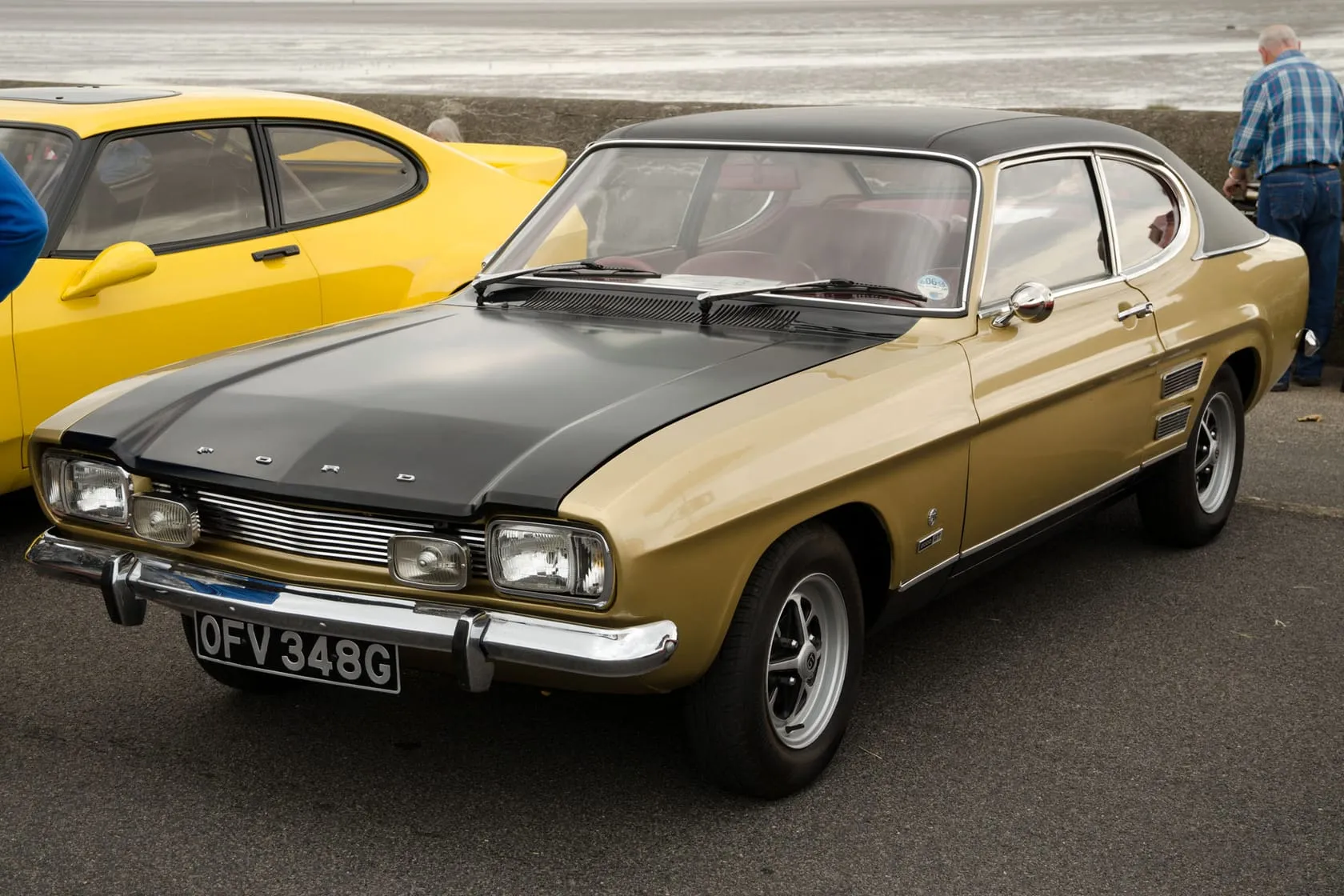
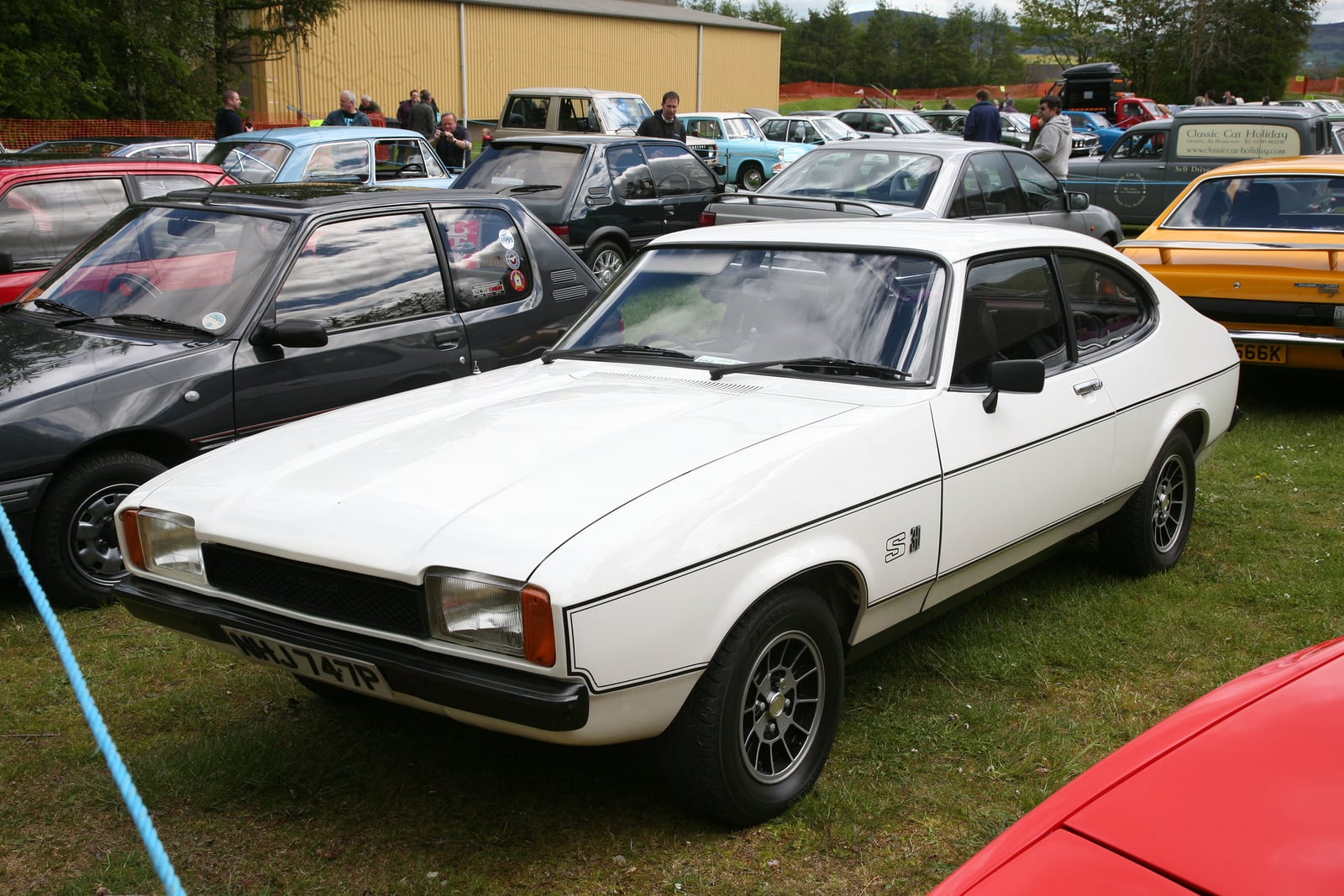
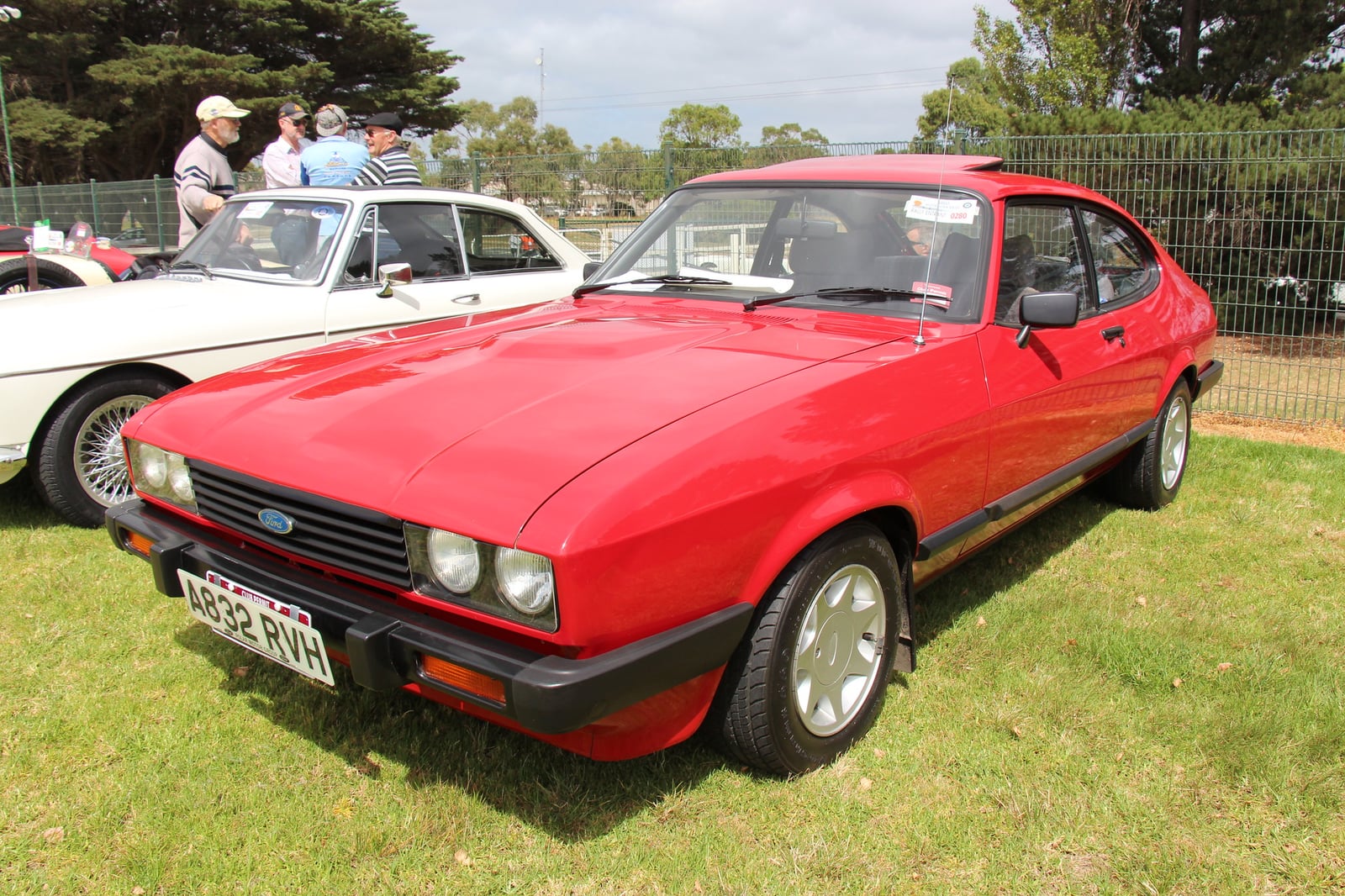
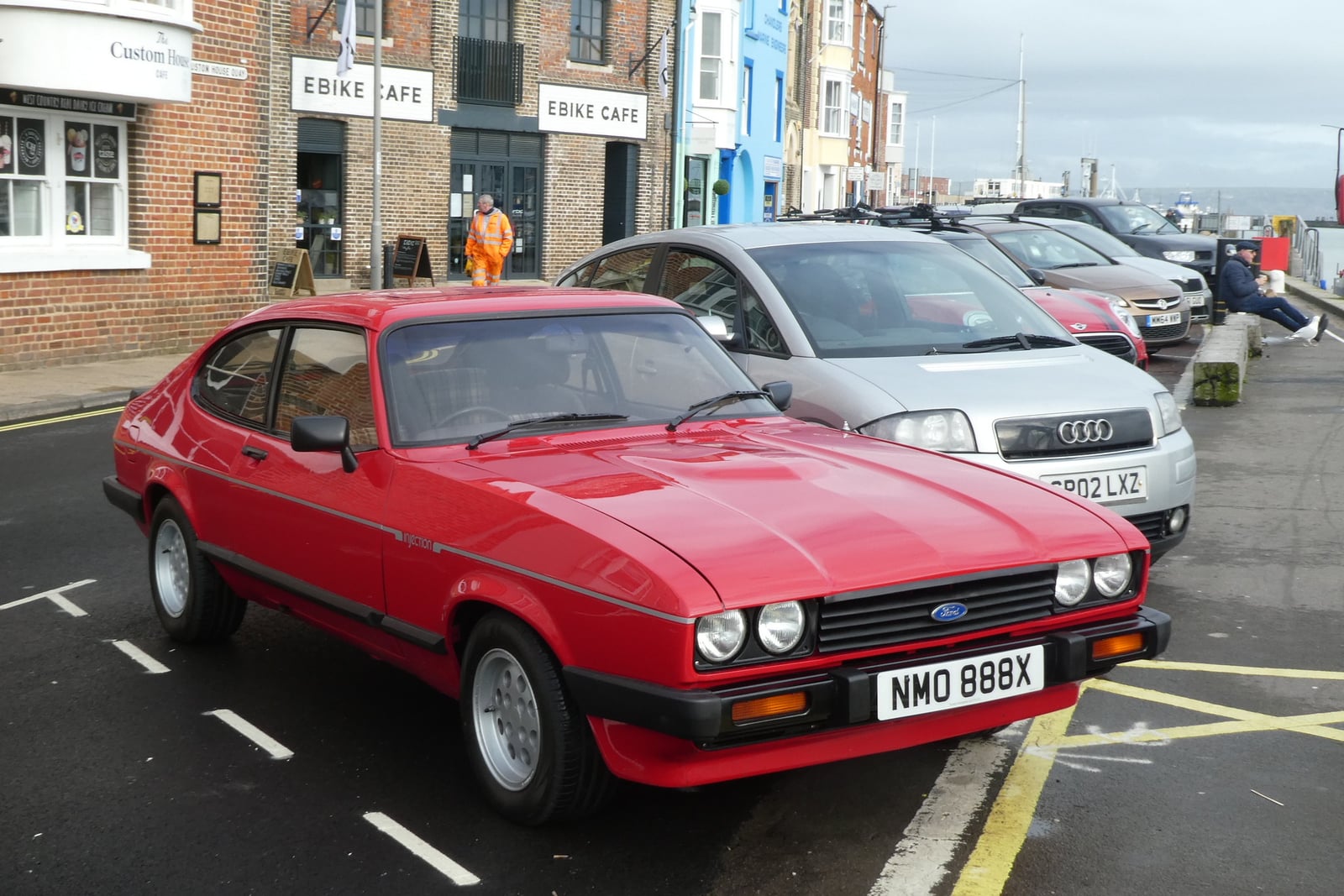
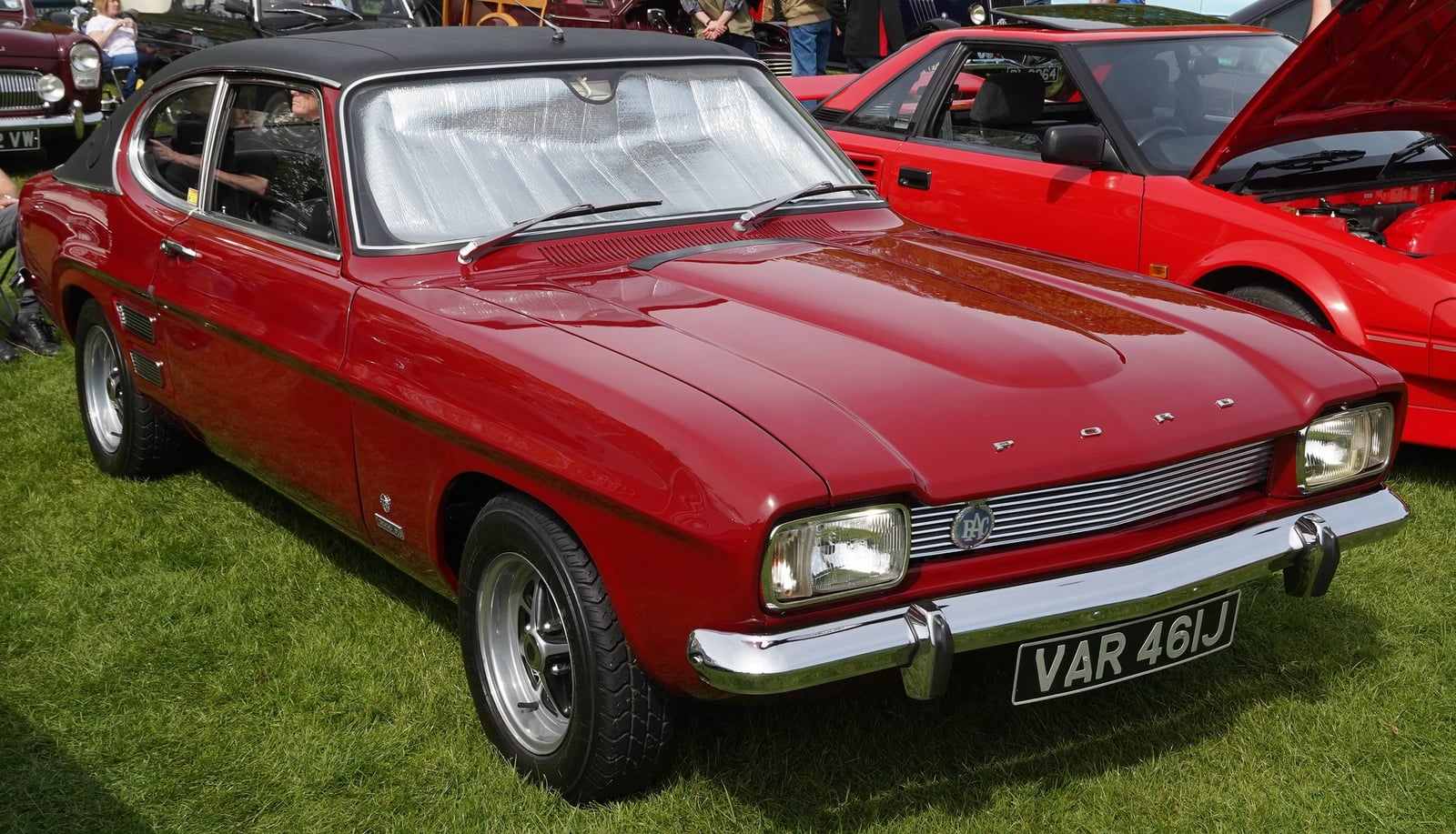
The Capri ran through three generations. The Mk1 (1969–74) is the purest shape, low and lithe: the 1600 was the volume seller, the 3000 GT and GXL put the Essex V6 into road trim, and the competition-bred RS2600 and RS3100 are now among the most valuable Fords of all. The Mk2 (1974–78) added a practical hatchback tailgate without losing the look, with the 3.0 Ghia the plushest of its six-cylinder cars. The Mk3 (1978–86) brought the four-headlamp facelift most people picture: the 3.0 S carried the Essex into its early years before the car that crowns the road-going range, the 2.8 Injection, with a fuel-injected 2.8-litre Cologne V6 and the performance and sound to back up the styling, while the everyday 1.6 and 2.0 cars ran on to the end, latterly in well-equipped Laser trim. The very last cars were the limited-edition 280 Brooklands of 1987, and the wildest was the Ford Capri Tickford of 1983, the Aston Martin-linked 205 bhp turbo conversion built in tiny numbers.
The Mk2 years also produced the range’s most striking special: the JPS Capri of 1975, a UK-market limited edition in the black and gold of the John Player Special livery that Lotus made famous in Formula One, with gold coachlines, gold wheels and an upgraded cabin over 1.6 and 2.0 S-model mechanicals. Built for barely a year in modest numbers, genuine JPS cars are now among the most collectable non-RS Capris, and the black-and-gold treatment is much imitated, so originality checks matter before paying the premium.

The V6 sound
What separates a Capri from an ordinary coupe is the engine choice, and above all the V6. The 3.0-litre Essex of the early cars and the 2.8-litre Cologne of the Injection give the Capri real performance and an unmistakable hard-edged V6 note that is a big part of the car’s character. It is why the six-cylinder cars command such a premium and why the four-cylinder cars, good as they are, are the more affordable choice.

What it is like to own
The Capri is one of the more usable performance classics. The mechanicals are familiar Ford components, simple and tough, and parts supply is excellent through the specialists and the owners’ clubs, helped by the sheer number built. The V6 cars are quick and characterful; the four-cylinder cars are cheap to run and easy to live with. All of them are practical enough, especially in hatchback Mk2 and Mk3 form, to use regularly.
Buying guide: what to look for
The badge is most of the price on a Capri, so establish what the car is before working out what it is worth. A 2.8 Injection, a 3.0 S or a 280 Brooklands sells for two to three times a four-cylinder car, every Mk3 shares the same shell, and the RS wheels and Recaros that mark the expensive versions are all easy to buy. The chassis number and the club registers settle the question; nothing else does.
On the metal, the Capri has its own list rather than the generic one: inner and outer sills, floors, front wings and inner wings, rear arches, the boot and spare-wheel well, the bottoms of the doors and the area around both screens, plus the crossmember and the suspension mounting points. Structural repair costs more than most Capris are worth, which is why the shiny car with soft sills is the expensive one.
The engines are durable and none of them is a reason to walk away. The V6s want checking for wear and overheating, and a 2.8 Injection’s fuel-injection system should be healthy, which on these cars usually means untouched.

Where the Capri sits in the market
The V6 cars, the 3.0 S and the 280 Brooklands lead the Capri market, with the RS2600 and RS3100 in a league of their own, while tidy four-cylinder cars remain a genuinely affordable way into one of the most famous classic Fords; the full record, 566 recorded sales by mark and engine, and what the market has done since its 2020 peak, is on the page covering Ford Capri values. A classic Ford Capri is also one of the most usable: the hatchback practicality, the unstressed mechanicals and the club support mean plenty of owners drive theirs regularly rather than saving them for shows, which is exactly how the car was meant to be used. The handful of six-figure RS homologation cars aside, this is a classic you buy to drive, not to store. For the era, see British classic cars of the 1970s and 1980s.
More photos
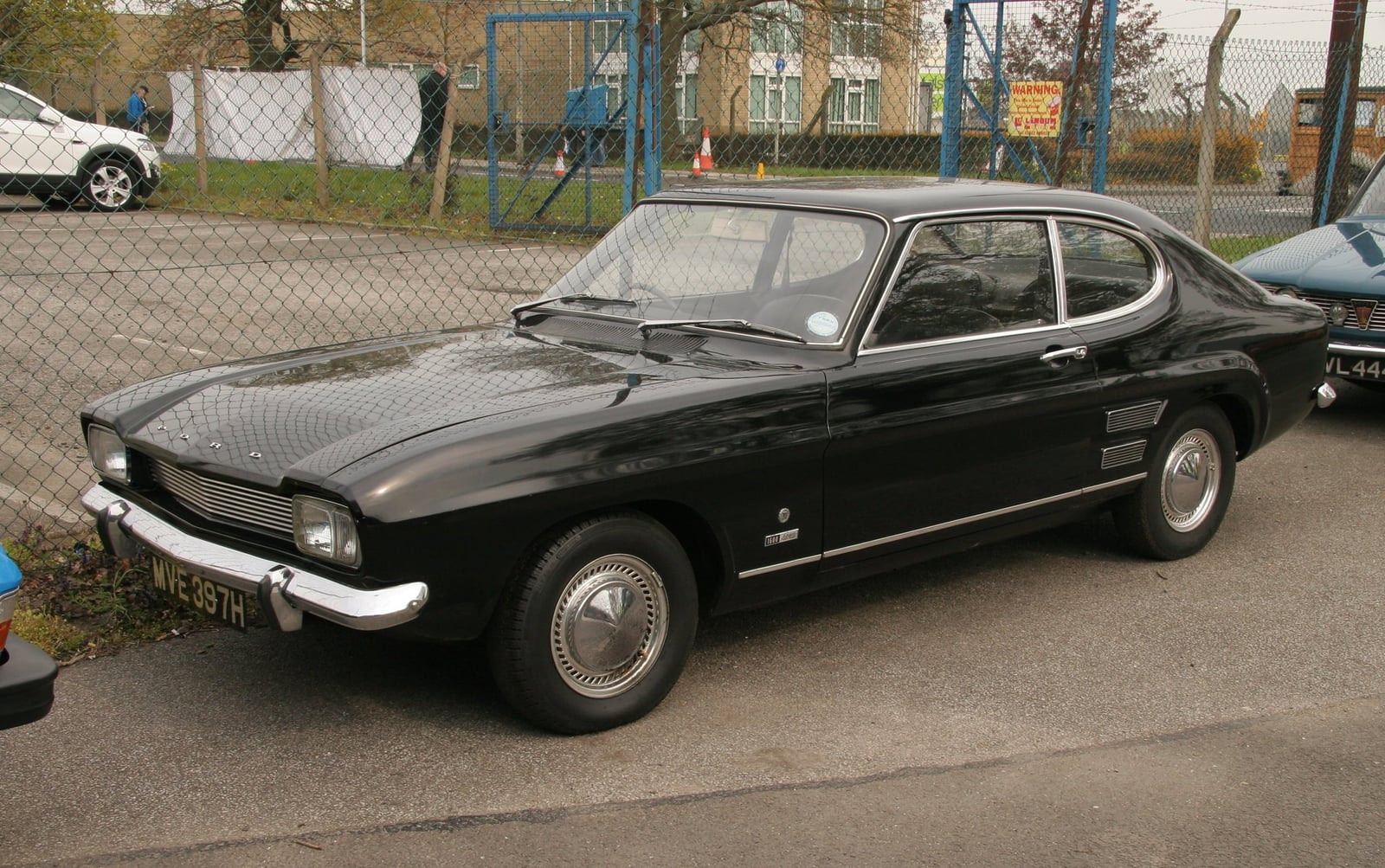
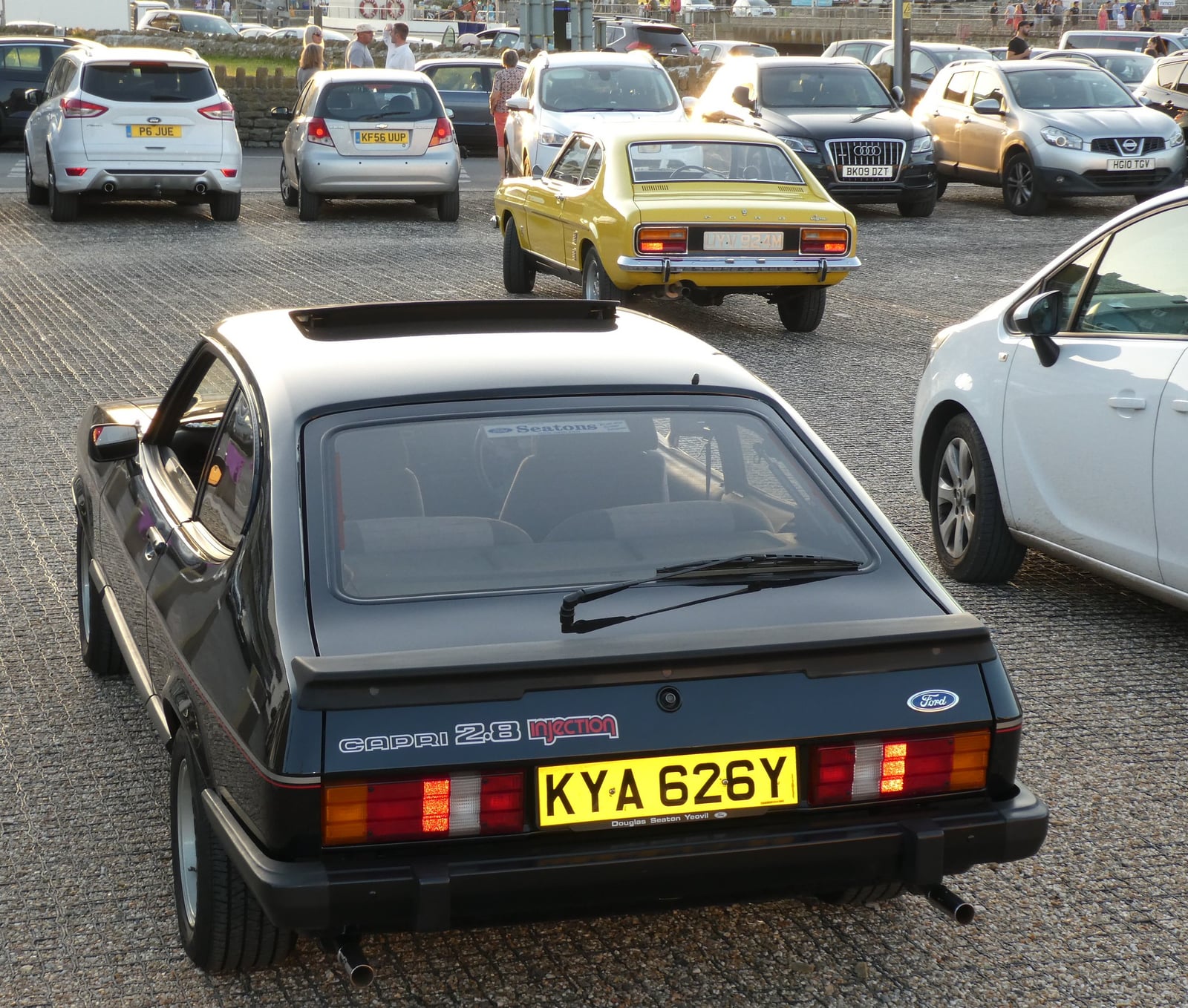
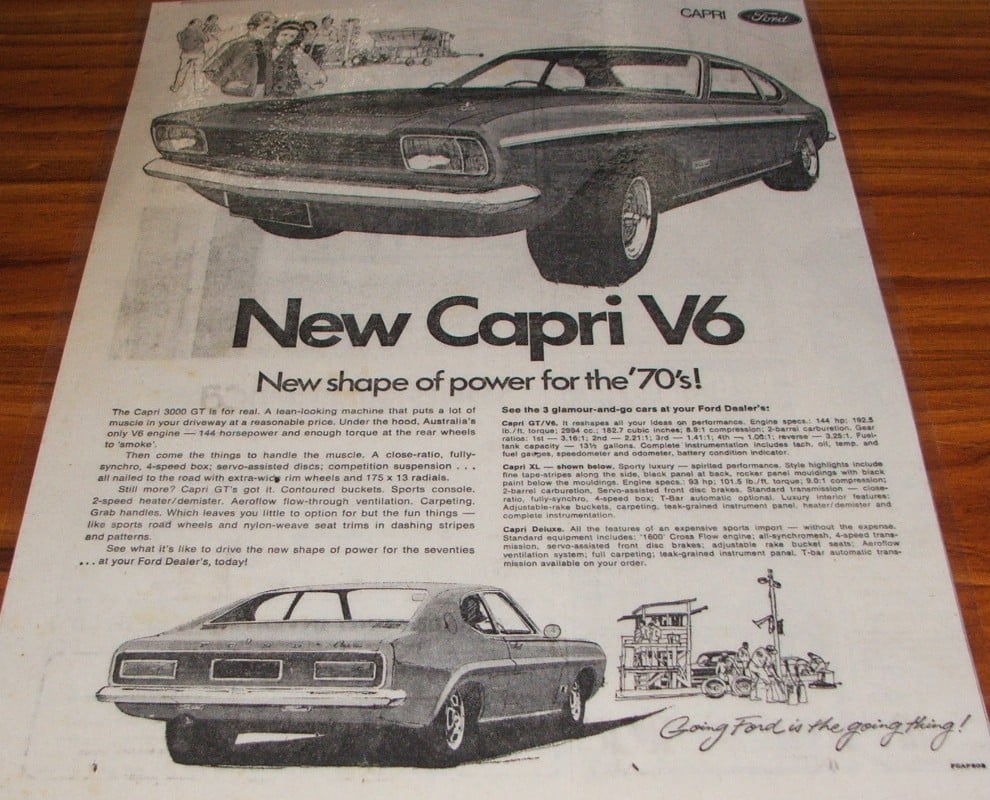
Capri: the short history
- 1969Launched as Europe's Mustang, styled by Philip T. Clark who had worked on the American car: a long-bonnet fastback offered from a humble 1.3 to the Essex V6.
- 1970The competition-bred RS2600 arrives, homologating the Capri for European touring cars.
- 1974The Mk2 brings a hatchback tail and more practicality; the RS3100 closes the Mk1 line.
- 1975The JPS Capri appears in John Player Special black and gold over 1.6 and 2.0 S mechanicals, built for barely a year.
- 1978The Mk3 arrives with the quad-lamp nose and improved aerodynamics.
- 1981The 2.8 Injection puts 160 bhp of fuel-injected Cologne V6 into the Mk3, and becomes the enthusiast's favourite.
- 1986Production ends at nearly 1.9 million cars, closing with the 280 Brooklands.
Before you buy a Capri
Identity, which is most of the price
- A 2.8 Injection, 3.0 S or 280 Brooklands sells for two to three times a four-cylinder car
- Every Mk3 shares the same shell, and the RS wheels and Recaros that mark the expensive versions are easy to buy
- The chassis number and the club registers settle the question; nothing else does
- The black-and-gold JPS treatment is much imitated, so originality checks matter before paying the premium
The metal
- Inner and outer sills, floors, front wings and inner wings
- Rear arches, the boot and spare-wheel well, and the bottoms of the doors
- Around both screens, plus the crossmember and the suspension mounting points
- Structural repair costs more than most Capris are worth
Engines
- None of them is a reason to walk away; all are durable and well supported
- V6s want checking for wear and overheating
- A 2.8 Injection's fuel-injection system should be healthy, which usually means untouched
- Four-cylinder cars are cheap to run and are the affordable, honest way in