Ford Granada Mk3 (1985–1994): the aerodynamic executive Ford
The third-generation Granada of 1985 was Ford's most advanced car yet, a smooth aerodynamic hatchback that brought executive-class technology like standard anti-lock brakes to the mainstream and was named European Car of the Year. Known as the Ford Scorpio abroad, it was Ford's big British saloon for a decade. The development story and the survivors.
Built 1985–1994 58 recorded sales

At a glance
- Years
- 1985–1994
- Body styles
- Five-door hatchback, four-door saloon, estate
- Drivetrain
- Rear-wheel drive (four-wheel drive on 2.9i)
- Engines
- 1.8/2.0 fours, 2.4-2.9 Cologne V6, 2.9 24v Cosworth V6, 2.5 diesel
- Power
- Around 120-192 bhp (192 bhp from the 2.9 24v Cosworth)
- Top speed
- Near 140 mph (2.9 24v Cosworth)
- Trim levels
- L, GL, Ghia, Scorpio (UK flagship trim)
- Assembly
- Cologne, Germany
- UK survivors
- Ordinary cars nearly extinct; V6 and Cosworth cars have a following
- Values
- Ordinary cars near worthless; tidy 24v Cosworth around £3,000-£3,500
- Awards
- European Car of the Year 1986
- Notable
- First mainstream European car with anti-lock brakes standard across the range
The models
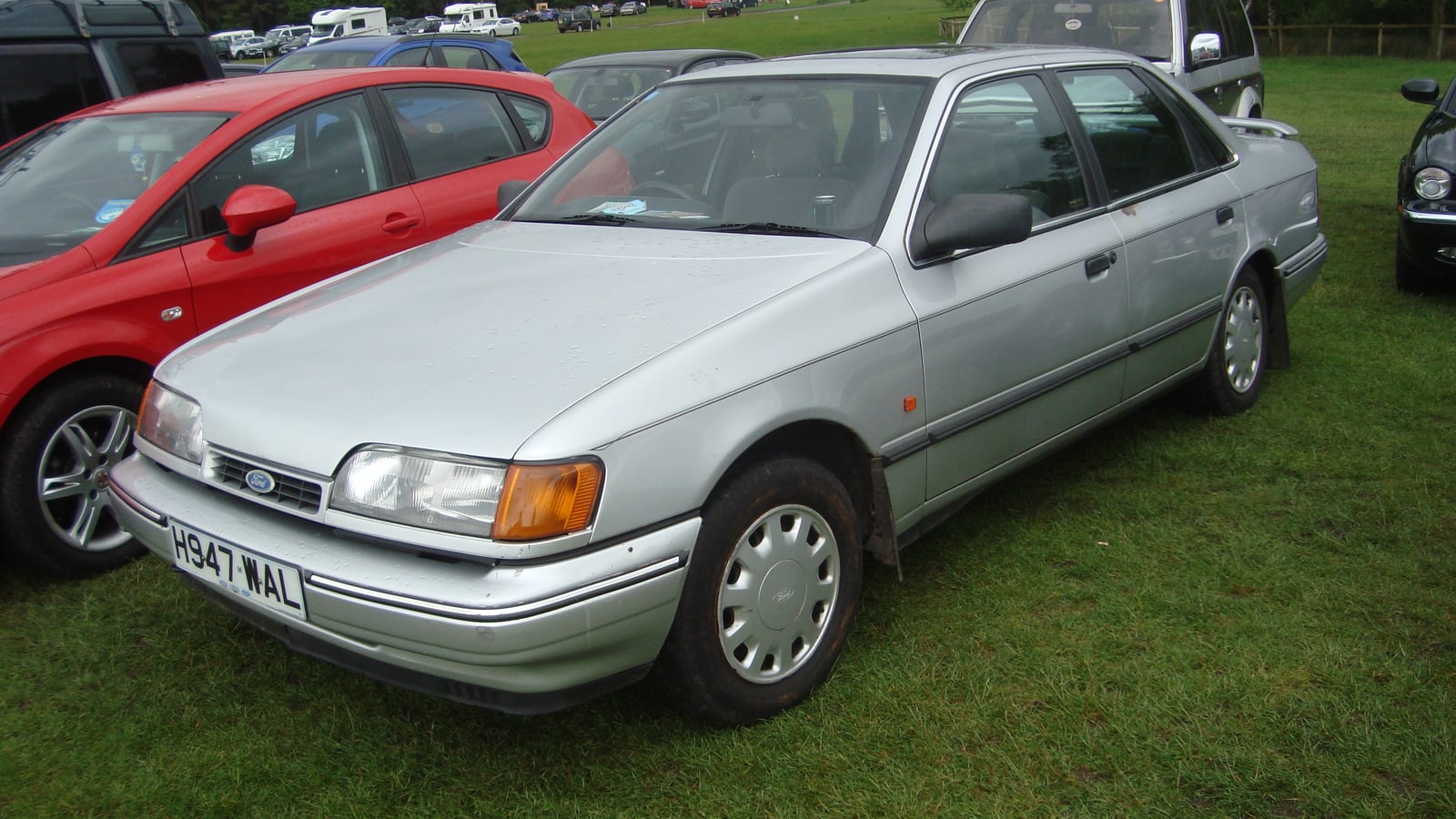
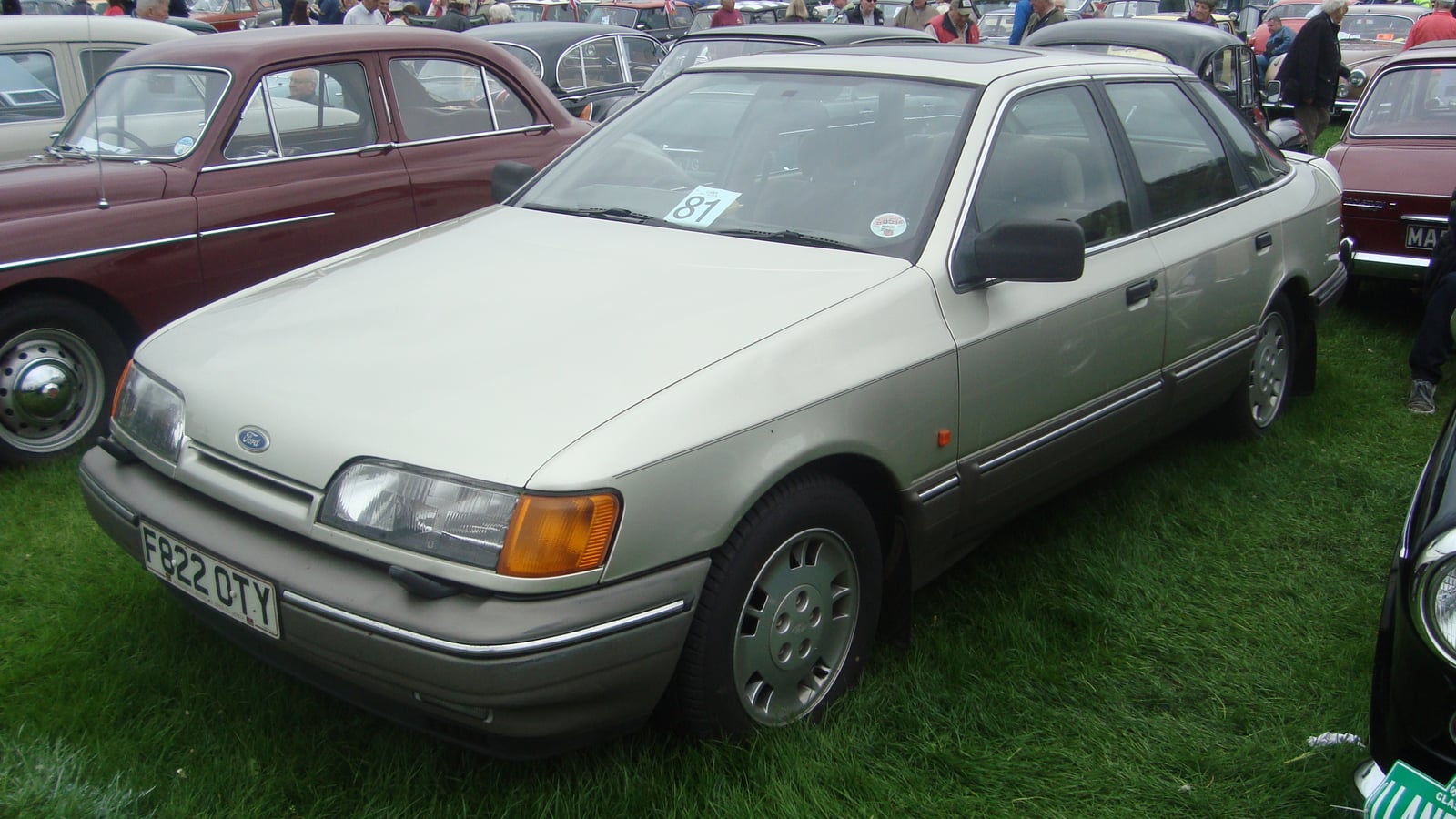
The Granada Mk3 is the moment Ford’s big British saloon turned genuinely modern. Where its boxy predecessors were conventional rear-drive executive cars, the 1985 Granada was a smooth aerodynamic hatchback full of technology, a car that took the fight to Rover and the German marques on equipment and engineering rather than badge. It won the European Car of the Year title and then spent a decade as the default British motorway executive, which is roughly why so few survive.
A clean break: the 1985 Granada
Ford launched the third Granada in April 1985 and led with aerodynamics, refinement and a level of technology the class had not seen at this price. The headline feature was anti-lock brakes. The Granada was the first mainstream European volume car to fit ABS as standard across its entire range, using a Teves system, at a time when the German prestige marques still charged extra for it or had yet to standardise it. Anti-lock systems had existed before, on luxury cars and as options, so the claim worth making is the precise one: not the first car with ABS, but the first ordinary high-volume car to give it to every buyer.
The jury agreed it was a step change. The car was named European Car of the Year for 1986, Ford’s second win of the award, the judges citing the new shape, the rear hatch, the equipment and the fuel-injected V6. For a car aimed at fleet managers and middle management, that was an unusually strong start.
Granada or Scorpio?
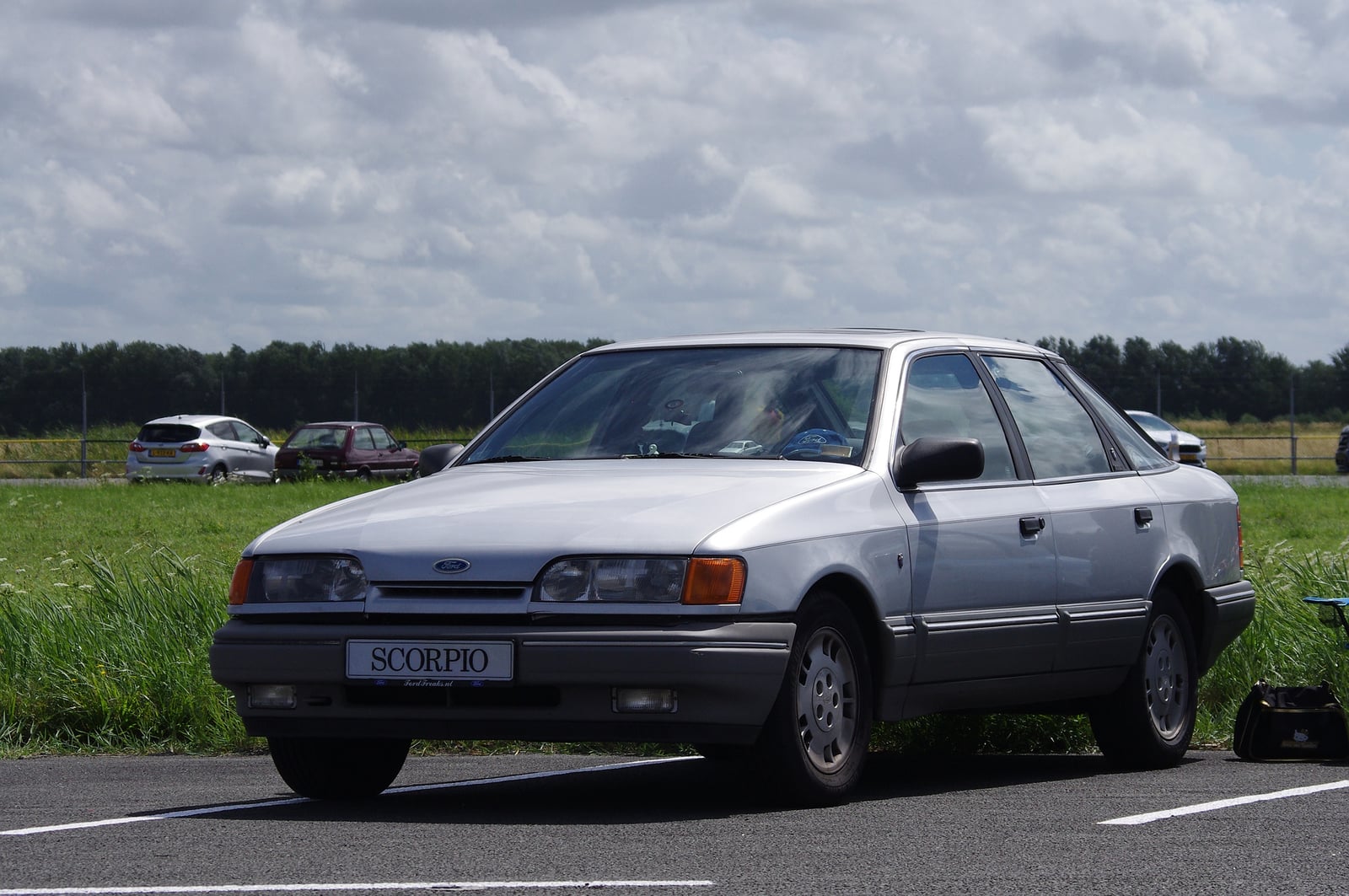
This is the point that confuses people, so it is worth setting out plainly. The car was sold as the Granada in Britain and Ireland only. Everywhere else in Europe the same car was the Ford Scorpio from launch. Ford kept the trusted Granada name in the UK because the radical Sierra had spooked conservative buyers a few years earlier, and “Granada” still meant something solid.
In Britain, “Scorpio” was a trim level rather than a model name, the flagship sitting above Ghia. So a top Granada wore a Scorpio badge while still being, officially, a Granada. The two names finally converged in 1994, when the facelifted next-generation car arrived and Ford dropped the Granada name in the UK to call it the Scorpio like everyone else. The 1985-to-1994 car you are looking at was therefore the last Ford ever to wear the Granada badge in Britain.

Engineering and equipment
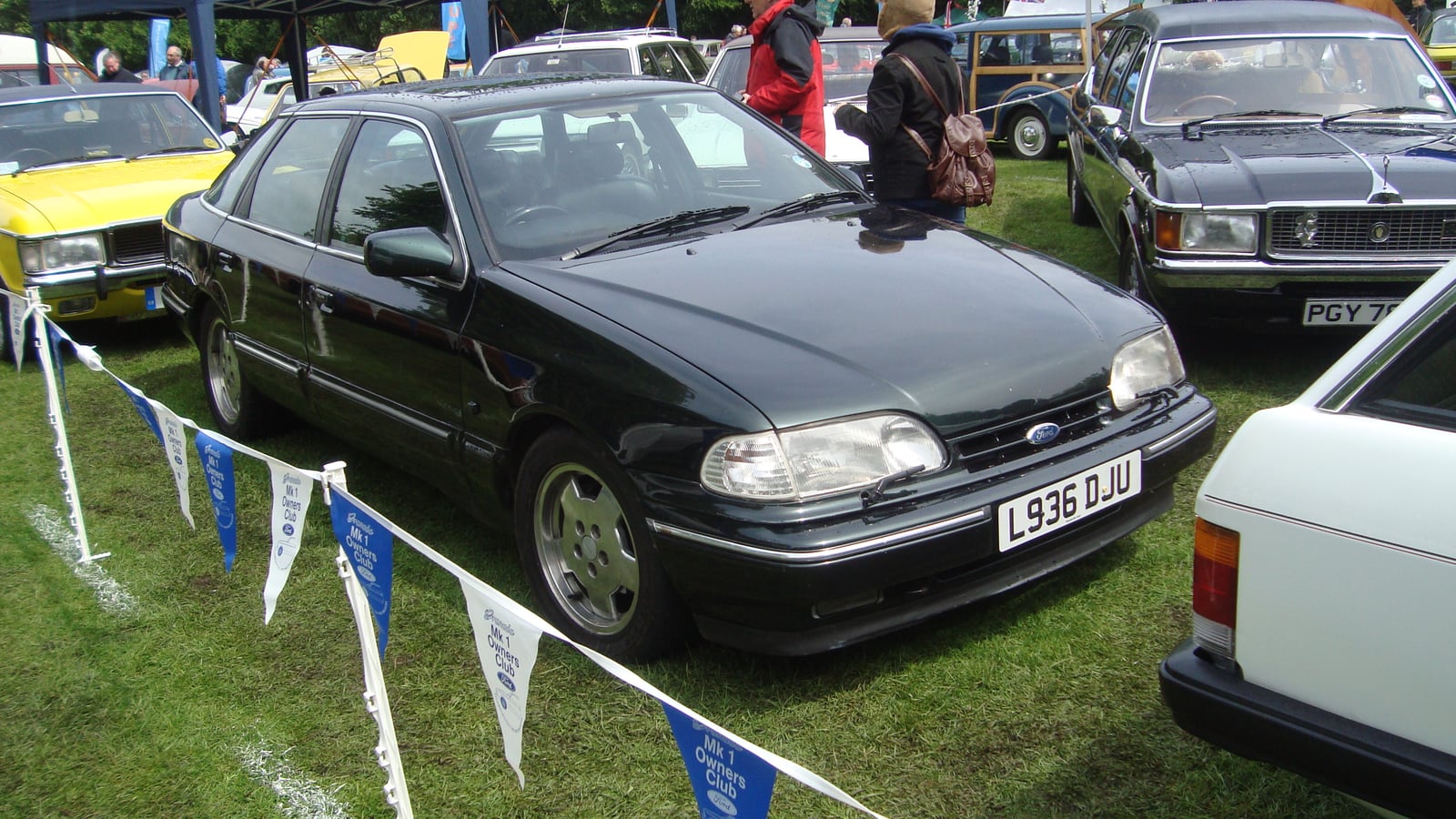
Under the aerodynamic body the Granada stayed rear-wheel drive, on a stretched and modified version of the Sierra floorpan, with a four-wheel-drive 2.9i version offered later. The signature was the five-door hatchback, genuinely unusual in the executive class and the thing the Car of the Year jury singled out for its versatility. Ford judged, in hindsight, that launching hatchback-only was a mistake for such a conservative buyer, and added a four-door saloon in December 1989 and an estate in early 1992, the latter alongside a facelift that previewed the look of the coming Mondeo.
It was also designed and built by Ford in Cologne rather than at a British plant, which is the quiet truth about the late Granada: it was a Ford of Europe car that Britain happened to call by a British name.

The range: engines
The engine list ran from a tax-break four up to a genuine performance flagship. At the bottom were the 1.8 and 2.0 Pinto fours, the 2.0 later replaced by a smoother twin-cam making around 120 to 135 brake horsepower. The mainstream choice was the Cologne V6, in 2.4, 2.8 and then 2.9 fuel-injected forms, the 2.9 making roughly 145 to 150 brake horsepower and giving the car the effortless motorway gait it was built for. A 2.5 diesel, bought in from Peugeot and later turbocharged, covered the high-mileage fleet.
The one to know is the flagship. From 1990 Ford offered a 2.9 24-valve V6 with cylinder heads developed by Cosworth, making 195 metric horsepower, about 192 brake horsepower, for a top speed near 140 miles per hour. Marketing and casual sources round this to 200; the accurate figure is 192. The 210-brake-horsepower version some people quote belongs to the later 1995 Scorpio, a different car, not to the Granada you are reading about.

Reception and legacy
The launch press understood what they were looking at. Motor, testing a 2.8 in 1985, reckoned the leap was if anything more dramatic than Cortina to Sierra, but that the benefits, versatility, aerodynamics, packaging and efficiency, were real rather than just styling. The standard ABS and the Car of the Year title gave it credentials against BMW, Mercedes, Audi, Rover and Volvo that no previous Granada could claim.
History has been cooler, and fairly so. This was the quintessential rep’s motorway car, a class above the Cortina and the Sierra the same drivers had worked their way up from, sold in vast numbers to people who put 30,000 miles a year on it and then sent it to the auctions. That is exactly why a clean survivor is now a rare thing. It was a very good tool that almost nobody kept.
Buying a Granada Mk3 now
Ordinary Granadas are nearly extinct, used into the ground and worth too little to save, while the V6 and Cosworth cars are the ones with a following. The earliest cars are now reaching historic vehicle status as the rolling 40-year rule catches up with them, with the rest of the run to follow over the coming years.
Rust is the first enemy, despite the car’s modern feel. Check the rear wheelarches and tubs, both ends of the sills and the inner sills and floors, the section of floor just ahead of the rear axle, the spare-wheel well, the front crossmember, bulkhead and chassis rails, plus the usual wings, inner wings, A-posts and screen surrounds. Earlier cars were better protected than the facelift ones.
The second enemy is complexity. These were electrically sophisticated cars for their day, and age has not been kind. Corroded fuseboxes cause erratic gremlins and can be a sign of a rotten bulkhead letting water into the loom, ABS faults are expensive and sometimes hidden by a seller pulling the warning bulb, heater matrices leak, and the engine management can throw up problems. Mechanically, the front suspension bushes and ball joints wear and clunk, the automatics get tired between 60,000 and 80,000 miles, and the 24-valve Cosworth’s timing chains stretch and should be quiet rather than rattly. Odometer clocking was rife, so history matters more than the reading.
Specialist support exists online and the mechanical parts, shared with the Sierra and other Fords, are reasonable, though some trim and body parts are getting scarce. On value, the picture is humble: ordinary cars are near worthless, and even the prized 24-valve Cosworth tends to sit in the low thousands, with a tidy example carrying perhaps a £3,000 to £3,500 estimate at a recent auction. That makes the flagship of Ford’s 1980s executive range one of the cheapest ways into a genuinely fast, genuinely interesting period saloon, for anyone willing to take the electrics on.

Key dates for the Granada Mk3
- April 1985The third Granada launches, leading on aerodynamics, refinement and anti-lock brakes fitted as standard across the entire range.
- 1986Named European Car of the Year, Ford's second win of the award, the judges citing the shape, the rear hatch, the equipment and the fuel-injected V6.
- Dec 1989A four-door saloon joins, Ford having judged in hindsight that launching hatchback-only was a mistake for so conservative a buyer.
- 1990The flagship arrives, a 2.9 24-valve V6 with cylinder heads developed by Cosworth, about 192 bhp and a top speed near 140 mph.
- Early 1992An estate arrives alongside a facelift that previews the look of the coming Mondeo.
- 1994Ford drops the Granada name in Britain, making this the last Ford ever to wear it here.
Buying checklist: the Granada Mk3 in front of you
Rust, despite the modern feel
- Rear wheelarches and tubs, both ends of the sills, and the inner sills and floors
- The floor just ahead of the rear axle, the spare-wheel well and the front crossmember
- Bulkhead and chassis rails, plus the usual wings, inner wings, A-posts and screen surrounds
- Earlier cars were better protected than the facelift ones
Complexity, the second enemy
- Corroded fuseboxes cause erratic gremlins, and can be a sign of a rotten bulkhead letting water into the loom
- ABS faults are expensive and are sometimes hidden by a seller pulling the warning bulb
- Heater matrices leak, and the engine management can throw up problems of its own
Mechanical wear points
- Front suspension bushes and ball joints wear and clunk
- Automatics get tired between 60,000 and 80,000 miles
- The 24-valve timing chains stretch, and should be quiet rather than rattly
Getting the numbers and the names right
- The 24-valve makes about 192 bhp; marketing and casual sources round it up to 200
- The 210 bhp figure some people quote belongs to the later 1995 Scorpio, a different car
- In Britain, Scorpio was a trim level above Ghia rather than a model name, until the names converged in 1994
What the Granada Mk3 sells for at auction
The Granada Mk3 comes to auction only occasionally: 58 recorded sales since 2014, typically making between £2,066 and £5,742 . With so few sales, treat any single result as a data point rather than a market price.
- £5,738Granada
- £1,904Granada
- £10,050Granada
- £3,886Granada
- £1,800Granada
Thin evidence. Only 58 recorded sales: read the figures as a sketch of the market, not a price. Based on 58 sold results from public classic car auctions (2014 to 10 August 2026). Sold prices, not asking prices, and not a valuation: condition, history and specification vary from car to car. Inflation-adjusted figures use the ONS CPIH index, in 2025 money.
Related
The Granada Mk3 sits at the top of the classic Ford range and spans British classic cars of the 1980s and the 1990s. For the earlier Mk1 and Mk2 and the full picture, see the main Ford Granada guide.
More photos