William Lyons and the art of value for money
Jaguar began a long way from luxury. In 1922 William Lyons and William Walmsley founded the Swallow Sidecar Company in Blackpool, building coach-built motorcycle sidecars. The partnership was formalised on Lyons’ twenty-first birthday, the age he needed to reach to sign for the bank. From 1927 the firm moved into car bodywork, most famously a re-bodied Austin Seven, and in 1928 it moved to Coventry, the centre of the British motor industry.
The first cars to carry the company’s own design were the SS models of the early 1930s, and in 1935 the firm gave one of them a name that would outlast everything else: Jaguar. The company itself was still called SS Cars at that point. After the Second World War the SS initials carried an obvious and unwelcome association, and in 1945 the shareholders approved renaming the business Jaguar Cars. From 1951 the company built its cars at Browns Lane in Coventry, the plant that would produce every Jaguar in this guide.
Running through all of it was Lyons himself, a proprietor who styled his cars by eye, judging full-size mock-ups rather than working as a trained engineer. His instinct was for a particular kind of value: a Jaguar should undercut more expensive rivals on price while matching them on luxury and pace. That promise, made visible in car after car, is the thread that ties the whole marque together.

Jaguar at auction
What a classic Jaguar sells for at auction
- Median sale, 2025
- £13,405 Down from £22,500 in 2021
- Sales in 2025
- 1,339 The most we have recorded in a year
- Sold when offered
- 72.5% Of the cars put up for auction since 1993
- The record
- £16.6m D-Type, RM Sotheby's, August 2016
Grace, space, pace: the saloons
Jaguar’s saloons were never ordinary. The Mk2 of 1959 was a compact sports saloon that, in 3.8-litre form, would see off most sports cars of its day, and it became the definitive 1960s Jaguar: wood and leather inside, the leaping cat on the bonnet, and a turn of speed that made it a favourite of both the police and the criminals they chased.
The car that replaced Jaguar’s entire saloon range was the XJ6 of 1968, the last car designed under Sir William Lyons. It swept away the Mk2, the S-Type and the big saloons in one move, and the period press struggled to find anything that drove better at any price. With the smooth 5.3-litre V12 of the XJ12, it became the quiet, fast, deeply comfortable car that defined what a Jaguar saloon should be for a generation. “Grace, space, pace”, the old advertising line, fitted it exactly.
The saloons the XJ6 swept away deserve their own footnote, because they keep their following. The vast Jaguar Mark X of 1961 (the Jaguar Mark 10, as often written), later renamed the 420G, was the company’s limousine-sized flagship; the compact Jaguar 420 of 1966 bridged the S-Type and the new era; and the stately Mk5, Mk7, Mk8 and Mk9 carried Jaguar through the 1950s (period writing prefers Roman numerals, so the same cars appear as the Mark V Jaguar, Mark VII, Mark VIII and Mark IX). From 1983 Jaguar revived Sovereign, previously a Daimler name, as its own top trim, so a Jaguar Sovereign is a plush XJ6 or XJ40. On the sporting side, the C-Type and D-Type racers won Le Mans five times between them in the 1950s and stand today among the most valuable British cars ever made; originals are so far beyond reach that a well-built replica Jaguar D-Type industry thrives, and the Lister Jaguar specials keep the racing bloodline in historic motorsport. The classics were built at Browns Lane, Coventry; the Jaguar Castle Bromwich plant, a wartime Spitfire factory, joined the story in the 1970s as the body works and builds Jaguars outright today. The Jaguar Drivers’ Club and the Jaguar Enthusiasts’ Club, two of Britain’s largest one-marque organisations, keep all of it on the road. Alongside the saloons sits the Daimler story: Jaguar bought the grand old marque in 1960, and its earlier independent era, closed out by the Daimler Conquest, belongs in any telling of Coventry’s upper-middle market.

The sports cars
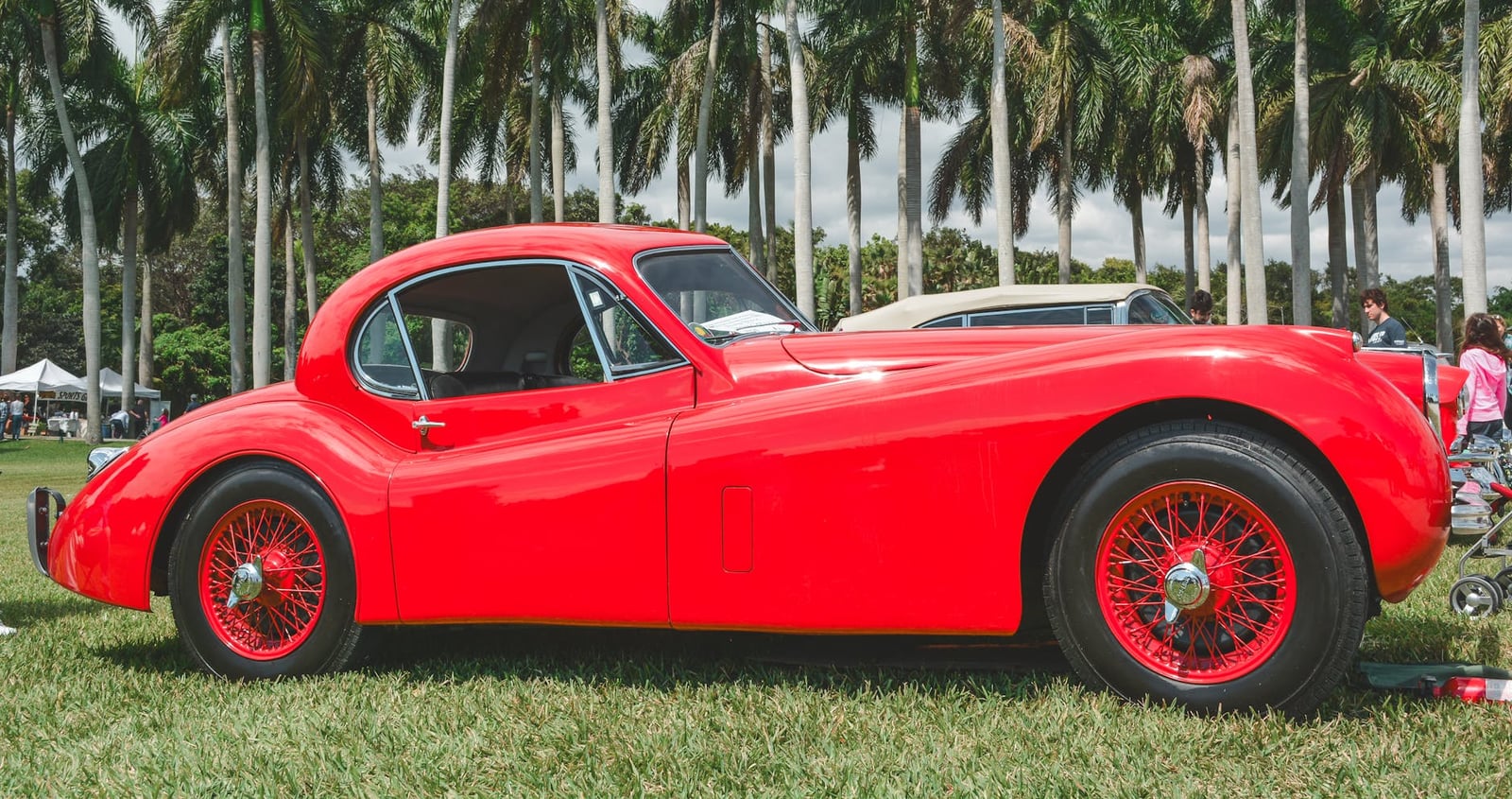
The sports cars are where the legend is loudest. The XK120 of 1948 was meant to be a low-volume showcase for Jaguar’s new twin-cam XK engine, and instead it stopped the Earls Court show, billed as the fastest production car in the world. That XK straight-six went on to power Jaguars for more than forty years, and the XK120 grew into the XK140 and disc-braked XK150 before giving way to the car that crowned the line.
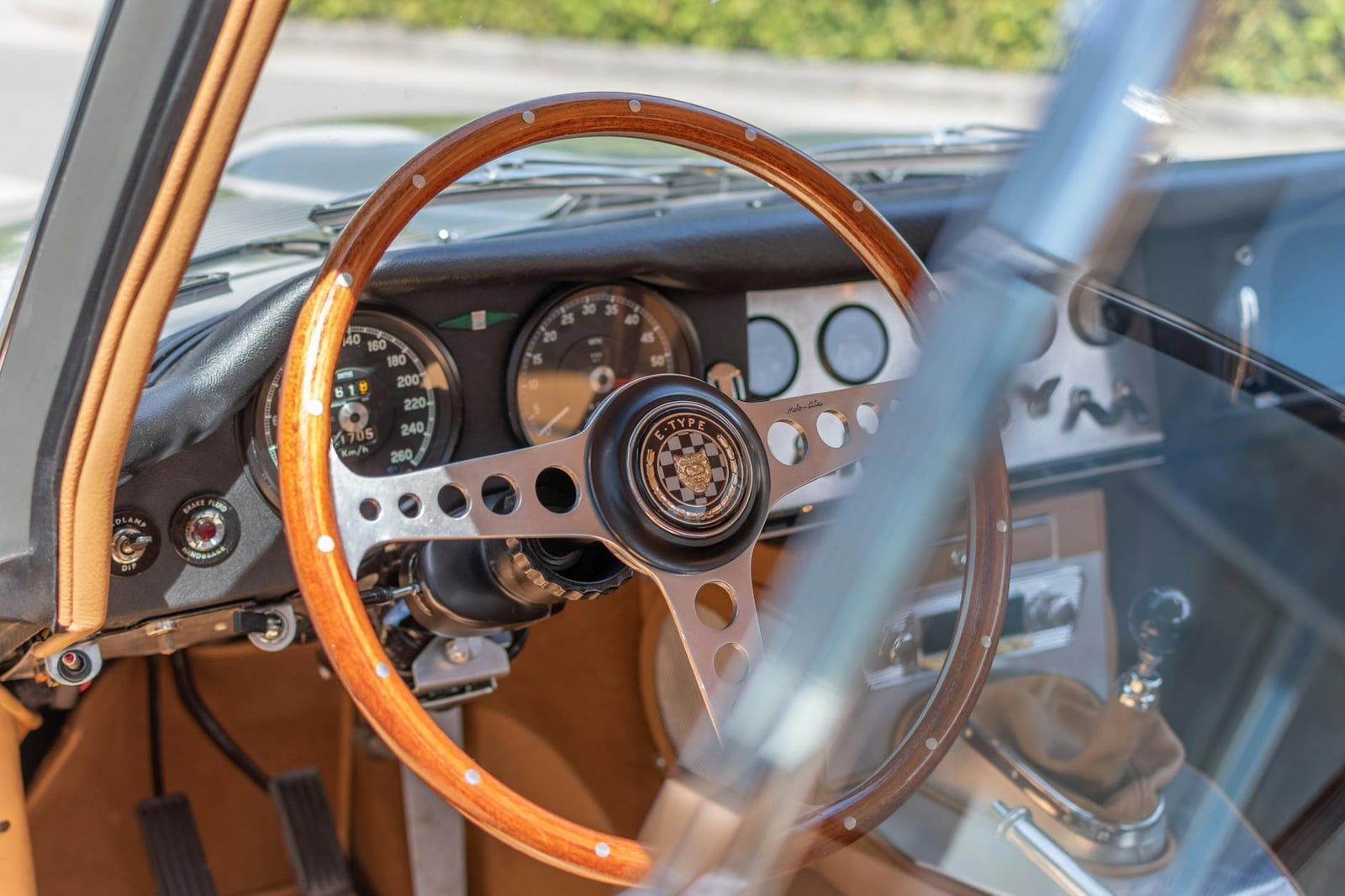
The E-Type of 1961 is the one everybody knows. Long, low and impossibly graceful, it was fast, relatively affordable for its performance, and so striking that its looks have arguably never been bettered. It ran from the covered-headlamp Series 1 through to the V12 Series 3, and it remains the car most people picture when they hear the word Jaguar.

The grand tourer
When the E-Type ended in 1974, its replacement was a different sort of car. The XJS of 1975 was a luxury grand tourer rather than a sports car, and its long, controversial shape divided opinion at launch. It went on to outsell the E-Type and to run for more than twenty years, and time has been kind to it. A good XJS, particularly a V12 convertible, is now a sought-after classic in its own right, and the cheapest way into a genuine Jaguar grand tourer.

Jaguar at Le Mans
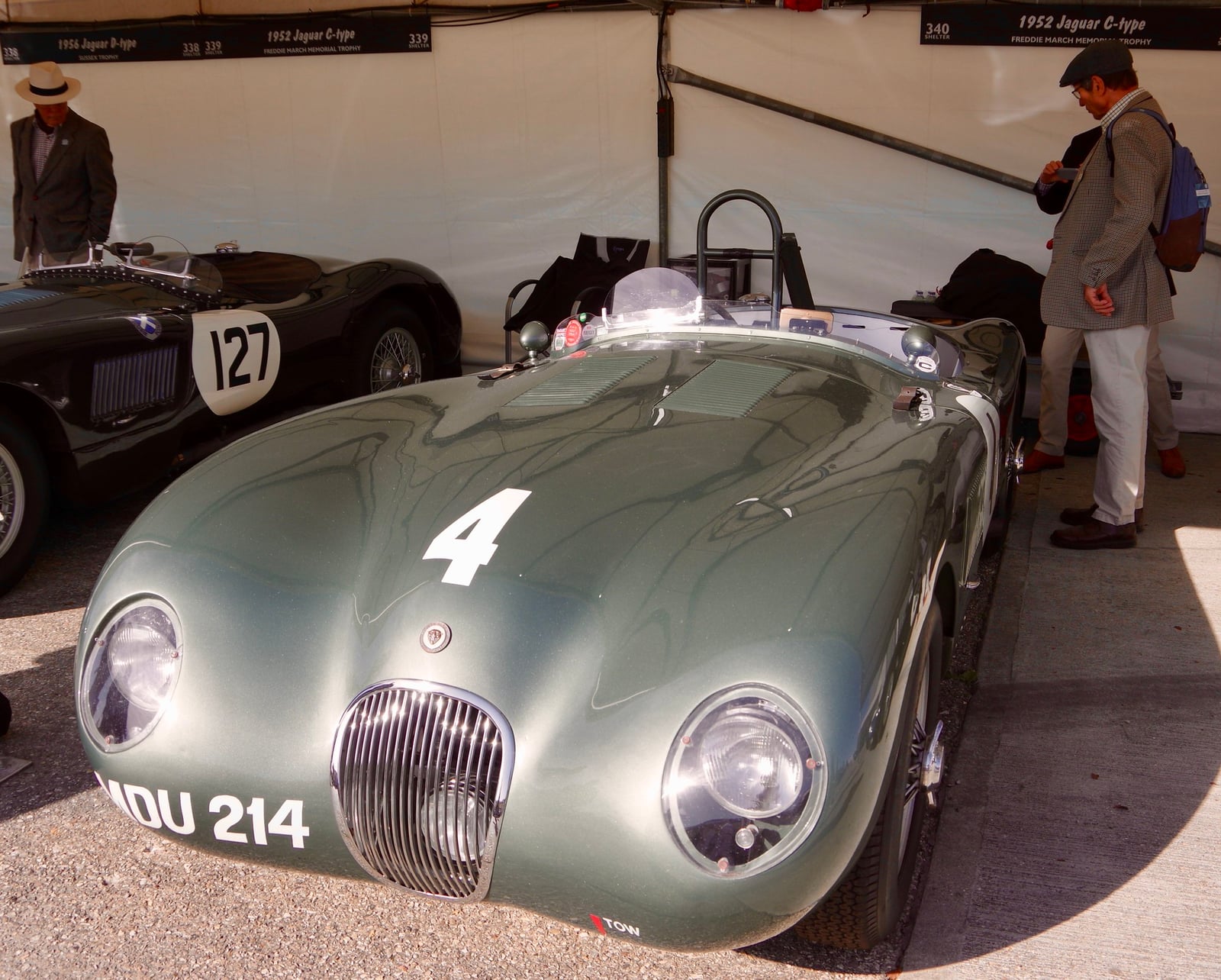
Jaguar’s competition record gave the road cars their credibility. The C-Type won the Le Mans 24 Hours in 1951 and again in 1953, the second time as the first car to win the race with disc brakes and the first to average over 100 mph for the distance. The D-Type then won three years running, in 1955, 1956 and 1957. Closer to home, the tuned Mk2 saloons prepared by John Coombs dominated touring-car racing at the turn of the 1960s. The pattern was always the same: Jaguar raced on Sunday and sold the glamour on Monday.

The supercar moment: the Jaguar XJ220
The racing programme of the late 1980s produced one glorious detour. The Jaguar XJ220, shown as a V12 four-wheel-drive concept in 1988 and delivered from 1992 with a twin-turbo V6 driving the rear wheels, briefly held the production-car speed record at 213 mph and stood as the fastest car in the world when it reached its first customers. The specification change and a recession-hit launch made it notorious in period, with buyers suing to escape their deposits, but time has been kind: just 281 were built at Bloxham, and the XJ220 now trades as one of the defining supercars of its decade, the wildest single expression of the marque’s racing dividend alongside the XJR-15.
Buying and owning a classic Jaguar
The good news is that classic Jaguars are exceptionally well supported. The specialist trade for these cars is one of the strongest in the British classic-car world, and almost everything is available, from a full E-Type bodyshell to the smallest piece of trim. The XK six is tough and the V12 is durable when it is looked after.
The catch, on every one of these cars, is rust. Jaguars of the 1960s, 1970s and 1980s corrode in the sills, floors, valances, wheelarches and the structural areas around the suspension mounts, and a clean shell matters far more than a low mileage. The other thing to weigh is the V12: wonderful to drive, but complex, thirsty and unforgiving of neglect, so a cheap one can be the most expensive car you ever buy. Much of the rest of the job is the ordinary upkeep any forty-year-old car asks for, and most of these models are now old enough to qualify for historic vehicle status, with the tax and MOT exemptions that brings.

More photos