Jaguar XK120 (1948–1954): the fastest car in the world
The XK120 was meant to be a low-volume showcase for Jaguar's new twin-cam engine and became a sensation, billed as the fastest production car in the world. The Jabbeke speed runs, the aluminium and steel cars, the body styles and the famous XK engine, and what to look for when buying one.
Built 1948–1954

At a glance
- Years
- 1948–1954
- Body styles
- Open two-seater (roadster), fixed-head coupe, drophead coupe
- Drivetrain
- Rear-wheel drive
- Engines
- 3.4 XK twin-cam straight-six
- Power
- 160 bhp standard; around 180 bhp Special Equipment
- Top speed
- Around 120-125 mph; 124.6 mph in a 1949 road test
- Production
- Around 12,000, of which roughly 240 early aluminium cars
- Assembly
- Coventry
- Designer
- William Lyons
- Values
- From around £55,000 for a fixed-head coupe to well over £150,000 for an aluminium roadster
The models
The Jaguar XK120 was an accident of success. Jaguar built it to show off a new engine and expected to make a few hundred; it stopped the 1948 Earls Court show, was billed as the fastest production car in the world, and launched a dynasty. The engine it was meant to advertise went on to power Jaguars for more than four decades, and the car itself remains one of the most beautiful and significant British sports cars ever made.
This is the guide to the XK120. For the wider marque story, see the main classic Jaguar guide.
The car that stole the show
In the austere post-war years, Jaguar’s priority was a new saloon, the Mark VII, and the advanced twin-cam XK engine it would use. To give that engine some experience in the field first, William Lyons built a small two-seat sports car around it, expecting to sell it in modest numbers. When the XK120 appeared at the London Motor Show in October 1948, the reaction was so strong that Lyons tore up the plan and put it into full production.
It is easy to see why. The XK120 was low, long and gorgeous, and it backed its looks with genuine speed and a price that undercut everything else of its performance. It was the car that established Jaguar as a maker of fast, beautiful, affordable machines, and it set the template the E-Type would perfect thirteen years later.

The Jabbeke runs and the 120 mph claim
The name said 120, and Jaguar set out to prove it. In May 1949, on the Jabbeke motorway in Belgium, an XK120 was officially timed by the Belgian authorities. With the windscreen removed it averaged 132.6 mph over a flying mile, and even with the screen and hood erect it managed over 126 mph. It was a genuine sensation, though it is worth knowing the record car ran with an aluminium undertray and other aids, so the headline figure was a best case rather than a showroom-stock result.
A period road test of a standard car in 1949 recorded a top speed of 124.6 mph and 0 to 60 mph in ten seconds, remarkable figures for the time. Later, in 1953, a heavily modified XK120 with a bubble canopy and a tuned engine reached over 172 mph at Jabbeke in the hands of Jaguar test driver Norman Dewis, but that was a record-attempt special, not a car anyone could buy.

Aluminium and steel
The XK120 falls into two distinct populations. The first cars, roughly 240 of them built between 1948 and early 1950, had hand-built aluminium panels over an ash wood frame, made in small numbers while Jaguar tooled up for volume. From 1950 the body switched to pressed steel, which was slightly heavier but far cheaper to build in quantity. Even on steel cars the doors, bonnet and boot lid remained aluminium.

That early aluminium car is the one collectors prize above all others. So few were made, and so closely are they tied to the model’s first sensational year, that they command roughly two to three times the value of an equivalent steel car.
Body styles and the XK engine
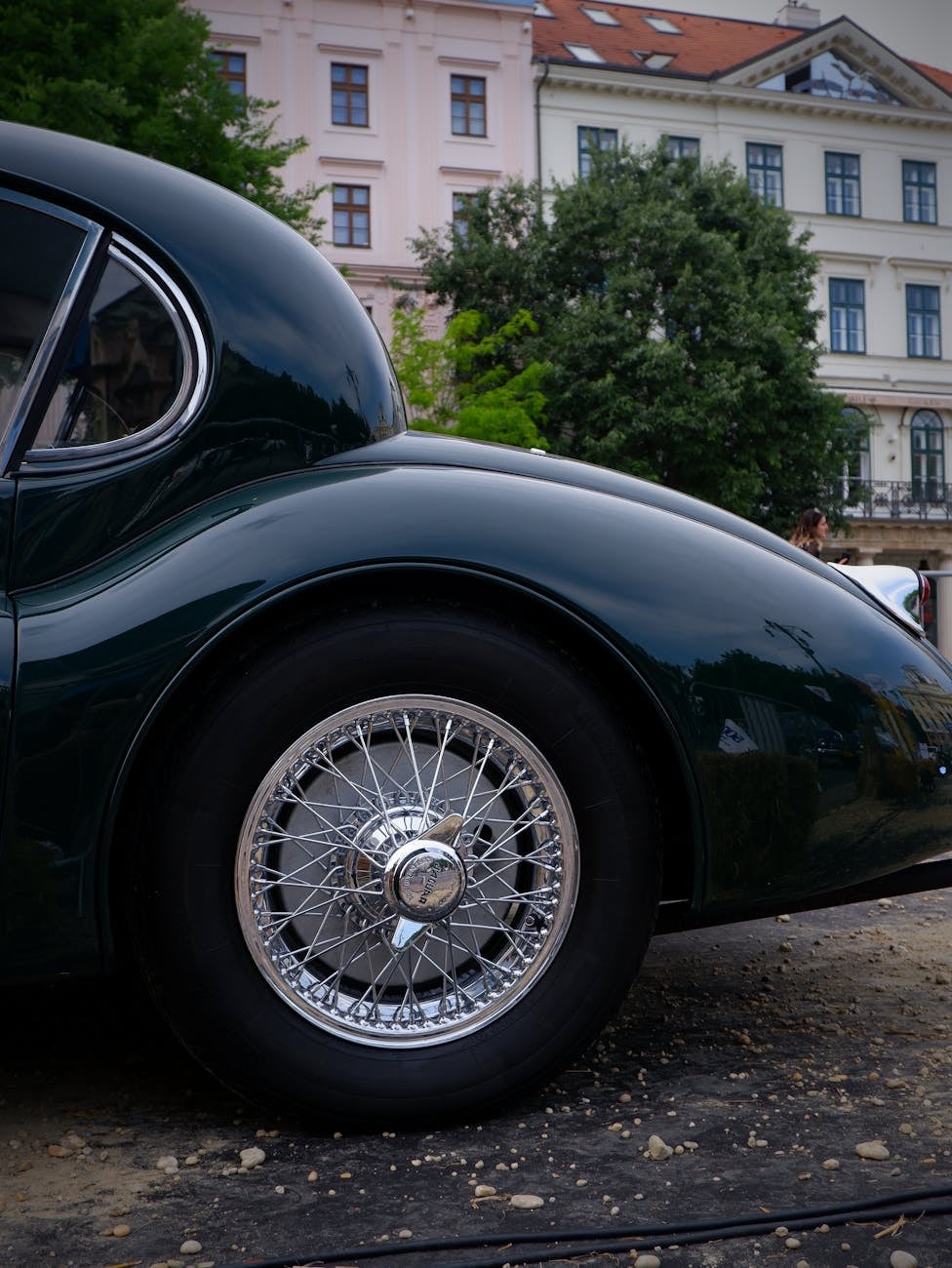
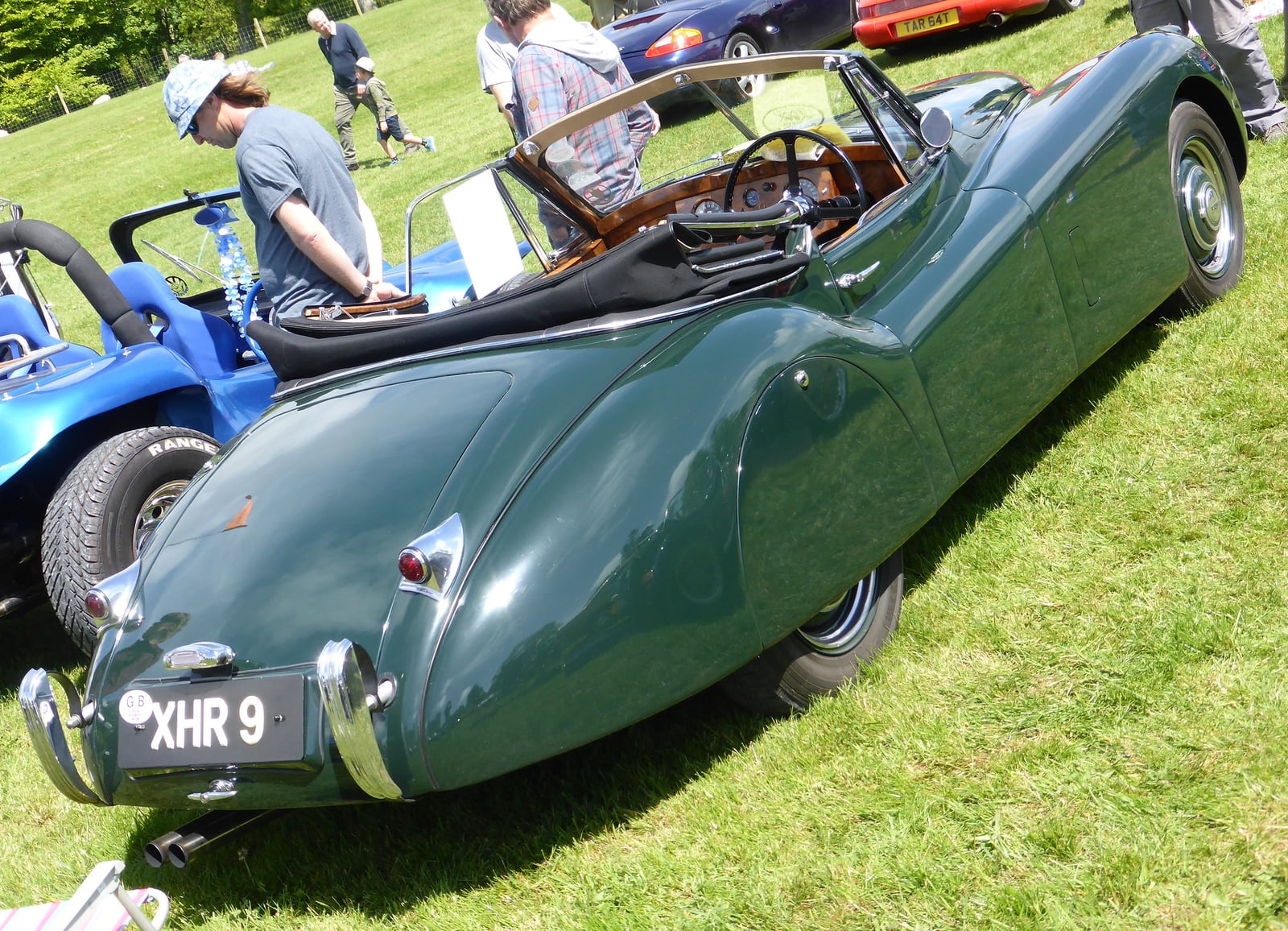
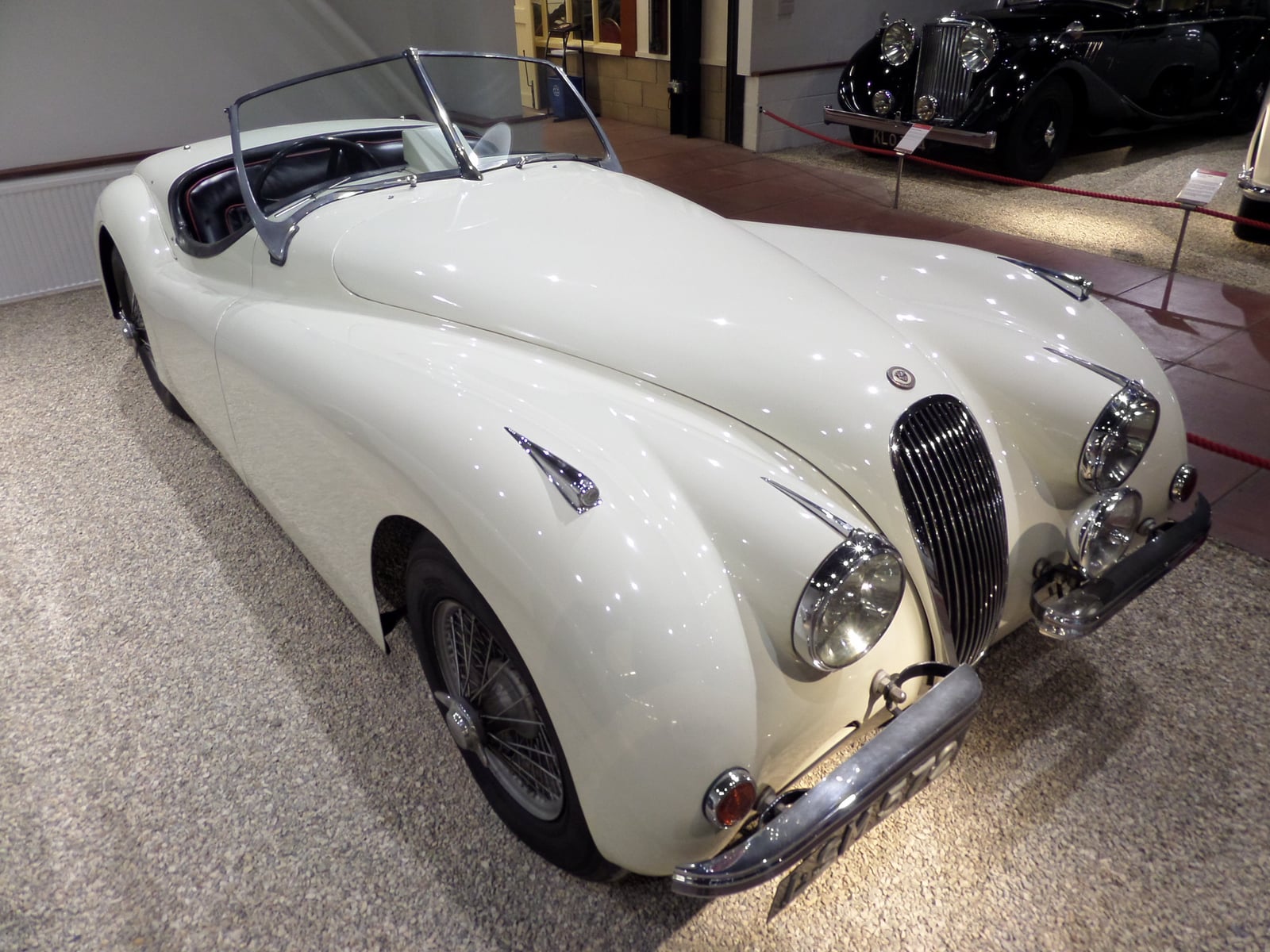
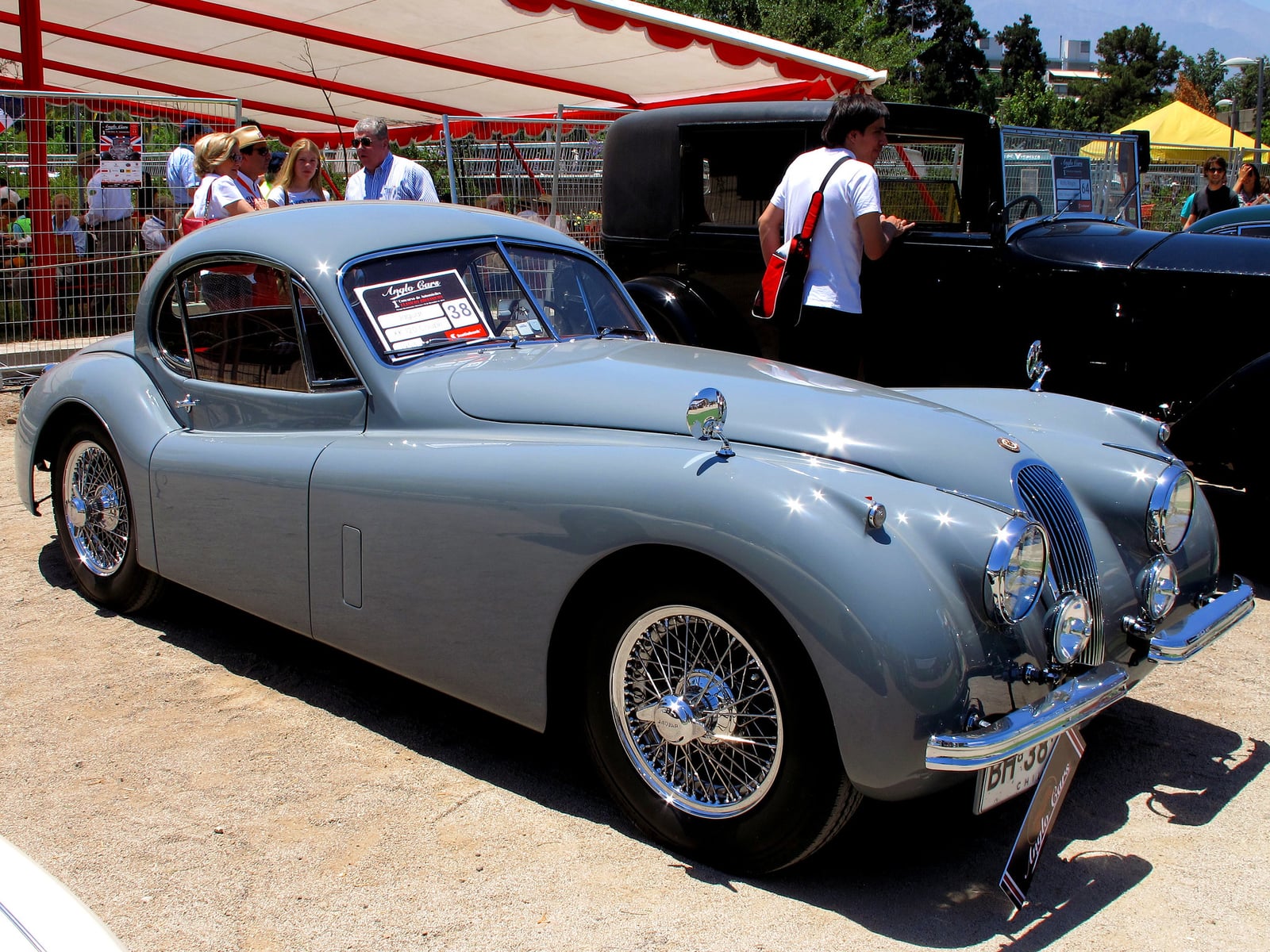
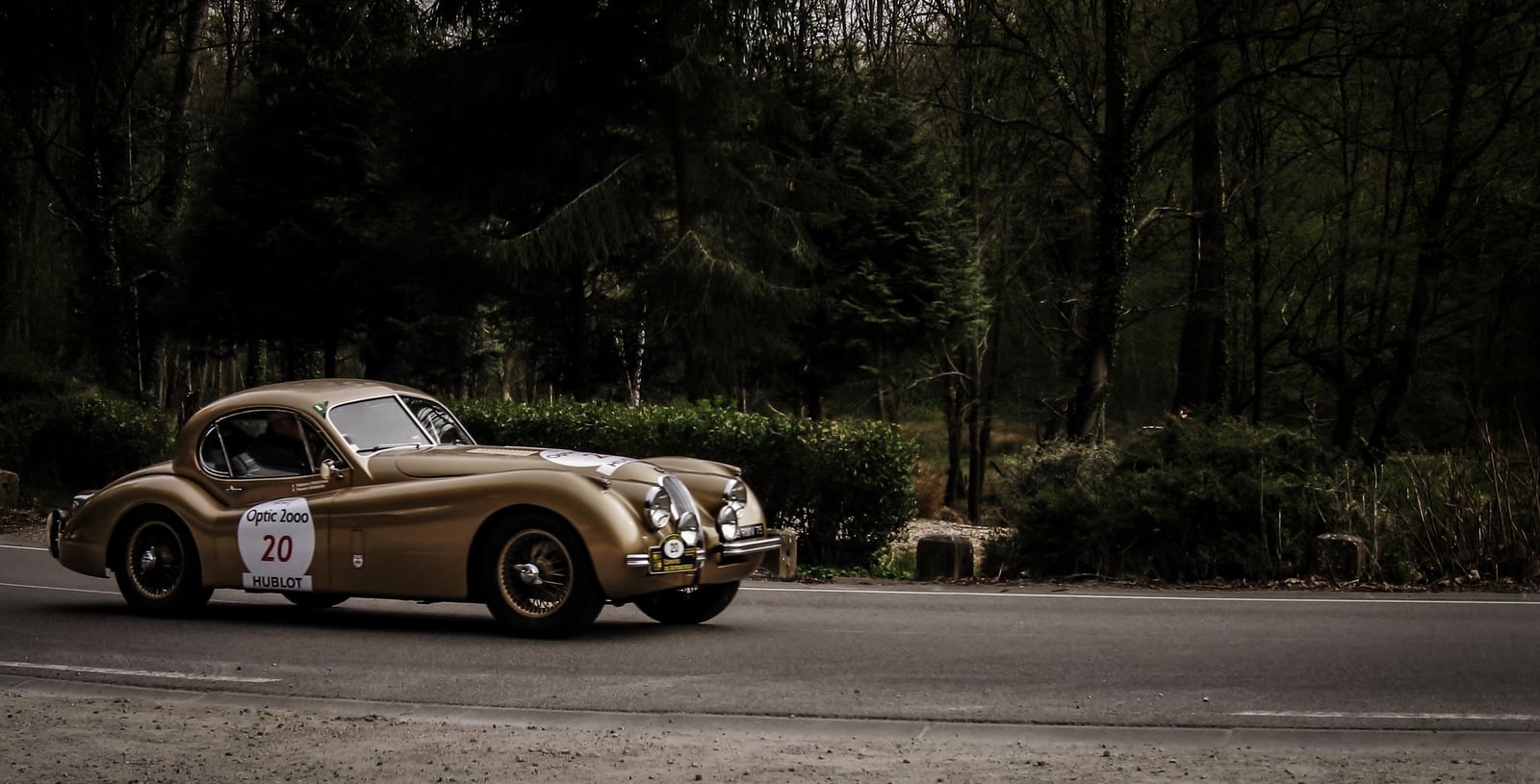
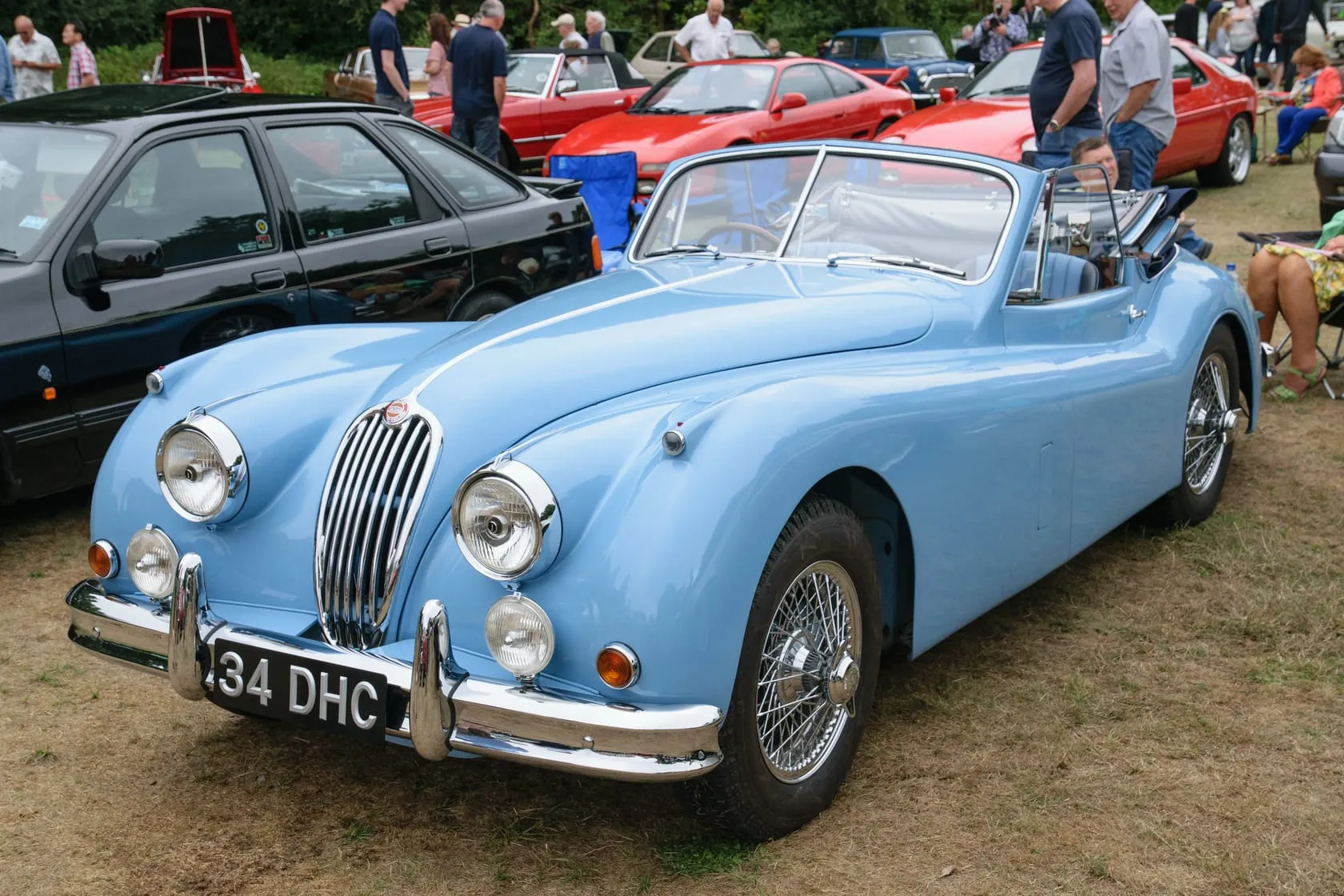
The XK120 launched as an open two-seater roadster in 1948, gained a fixed-head coupe in 1951, and a more civilised drophead coupe with a proper folding hood in 1953. Under all of them sat the 3.4-litre XK twin-cam straight-six, a sophisticated engine for its day with twin overhead camshafts and a hemispherical-chamber alloy head. It made 160 bhp as standard, and around 180 bhp in Special Equipment form, sold in America as the XK120M. A more highly tuned C-type cylinder head, giving around 210 bhp, was a separate option that linked the road car to Jaguar’s Le Mans-winning racers.

A competition record
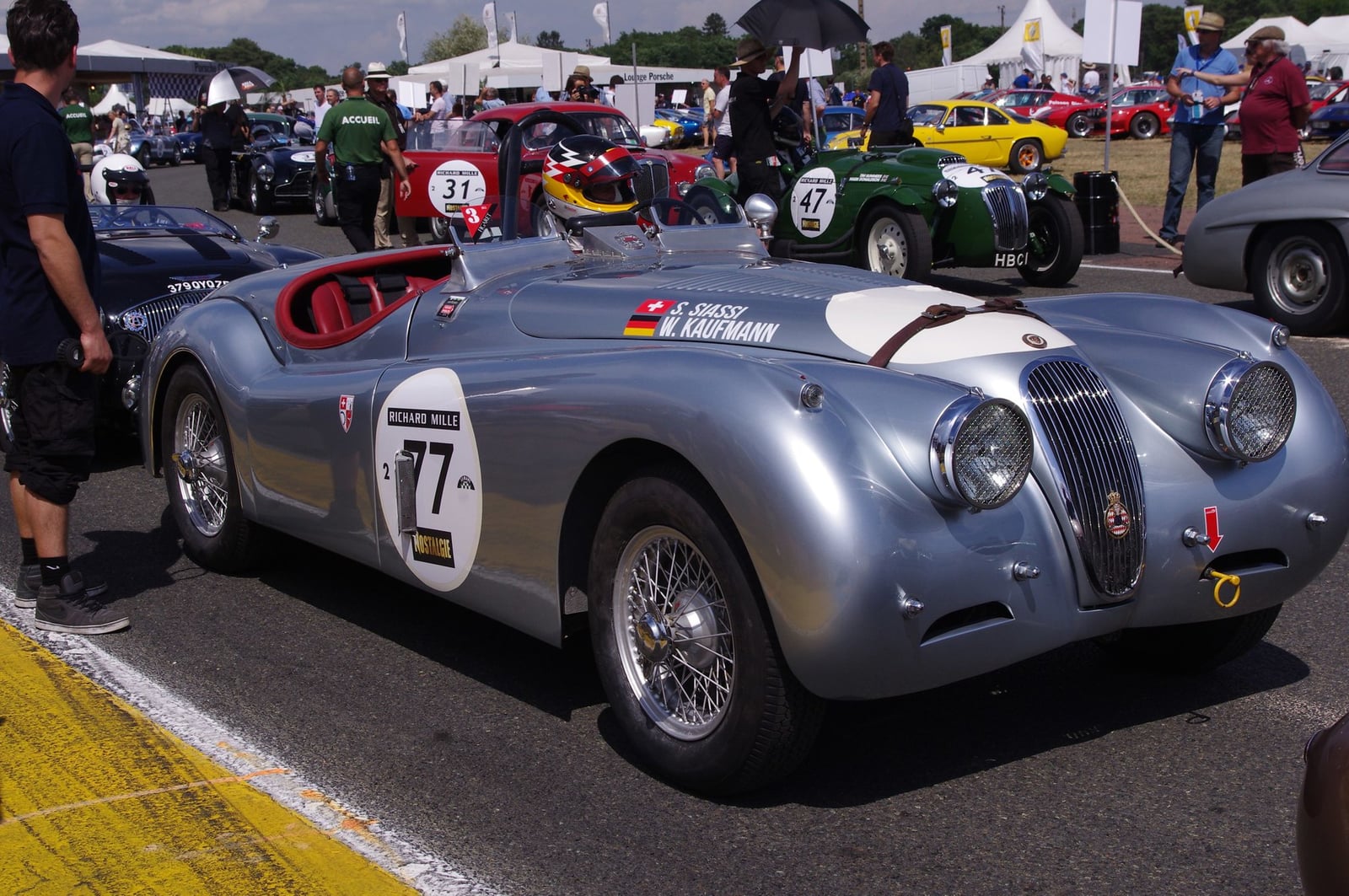
The XK120 was no show pony. Ian Appleyard won Alpine Rally awards with his, including the prized gold Coupe d’Or; Leslie Johnson won the production-car race at Silverstone in 1949; and three XK120s ran at Le Mans in 1950, one running near the front before a late clutch failure, a result that convinced Jaguar to build the C-Type. Most extraordinary of all, in 1952 a fixed-head XK120 lapped the Montlhéry banked circuit for seven days and seven nights at an average of over 100 mph, covering some 16,000 miles to take a clutch of world records. It was proof that the XK was as tough as it was fast.

Buying an XK120 now
The XK range is well supported by specialists, but the structure needs care, and the two body types fail differently. On an aluminium car, the priority is the ash frame, which can rot or suffer woodworm, and the galvanic corrosion that occurs where aluminium panels meet the steel structure. On a steel car, the usual rot points apply: sills, floors, footwells and valances, plus the aluminium doors, bonnet and boot, which corrode in their own way.
The XK engine itself is tough and long-lived, the Moss gearbox slow and deliberate by nature rather than necessarily worn. Matching numbers and documented history matter, especially on the valuable early cars and any with competition provenance. One point particular to the XK120: production was overwhelmingly left-hand-drive for export, so an original right-hand-drive home-market car is genuinely rare and that rarity is reflected in the price.

Where the XK120 stands now
The XK120 sits firmly at the top of the market, but with a wide spread. The aluminium roadster sits at the top, well into six figures, typically two to three times the value of a comparable steel roadster. Steel roadsters lead the volume cars, with the drophead coupe generally a little above the fixed-head coupe. Condition, originality and history move individual cars a long way, and the best concours and competition-history examples reach far beyond the averages. Auction data and the price guides bear out the ordering, though as ever these are indicative ranges rather than fixed figures. The full record, 802 recorded sales by body, the alloy and competition premiums in figures and a market that has halved in real terms since 2017, is on the page covering Jaguar XK120 values.
Key dates for the XK120
- Oct 1948Shown at Earls Court as a small-volume showcase for the new XK engine; the reaction is strong enough that Lyons tears up the plan and puts it into full production.
- May 1949Officially timed on the Jabbeke motorway at 132.6 mph over a flying mile with the screen removed, and over 126 mph with screen and hood erect.
- 1950The body switches from hand-built aluminium over ash to pressed steel after roughly 240 alloy cars; three XK120s run at Le Mans.
- 1951A fixed-head coupe joins the roadster.
- 1952A fixed-head car laps Montlhery for seven days and nights at over 100 mph, covering some 16,000 miles for a clutch of world records.
- 1953The drophead coupe adds a proper folding hood; a modified car reaches over 172 mph at Jabbeke with Norman Dewis driving.
- 1954Production ends at around 12,000 cars; the XK140 follows.
Buying checklist: the XK120 in front of you
Structure, by body type
- Aluminium cars: the ash frame, for rot and woodworm, and galvanic corrosion where alloy meets steel
- Steel cars: sills, floors, footwells and valances
- Doors, bonnet and boot lid are aluminium on every car and corrode in their own way
- Roughly 240 alloy cars were built, and they command two to three times an equivalent steel car
Mechanical
- The XK six is tough and long-lived; judge it on oil pressure and history
- The Moss gearbox is slow and deliberate by design, not necessarily worn
- Special Equipment cars make around 180 bhp; the C-type head option gives around 210
- Overdrive, where fitted, transforms the car on modern roads
Identity
- Matching numbers and documented history, especially on the early cars
- Competition provenance needs verifying and multiplies value when genuine
- An original right-hand-drive home-market car is genuinely rare and priced for it
- The C-type head was a separate option, so any 210 bhp claim needs supporting
Related
The XK120 introduced the XK engine that runs through the whole classic Jaguar story, and it is one of the great British classic cars of the 1950s. The same engine powered the Mk2 saloon and the E-Type that followed it, and the XK120 itself grew into the XK140 and XK150.
More photos