Jaguar SS 100: the pre-war sports car that named the marque (1936–1939)
The SS Jaguar 100 was William Lyons' pre-war sports car, a short, fast open two-seater whose name claimed a genuine 100 mph and which carried the Jaguar name from 1936. A guide to the SS 100, the SS Jaguar saloons, the replica question, and what they are worth.
Built 1936–1939 28 recorded sales

At a glance
- Years
- 1936–1939
- Body styles
- Two-seat open sports
- Drivetrain
- Front engine, rear-wheel drive
- Engines
- 2.5 and 3.5-litre overhead-valve six
- Power
- Around 100 bhp to 125 bhp
- Top speed
- Around 95 mph; the 3.5-litre cars reached 100 mph
- Production
- Around 300
- Assembly
- Coventry
- Designer
- William Lyons
- Values
- Among the most valuable pre-war British sports cars; genuine 3.5-litre cars reach well into six figures. Many replicas exist at a fraction of the price
- The name
- Among the first cars to carry the Jaguar name, from 1935–36
- Caution
- Replicas are common; provenance is everything on a genuine car
The models
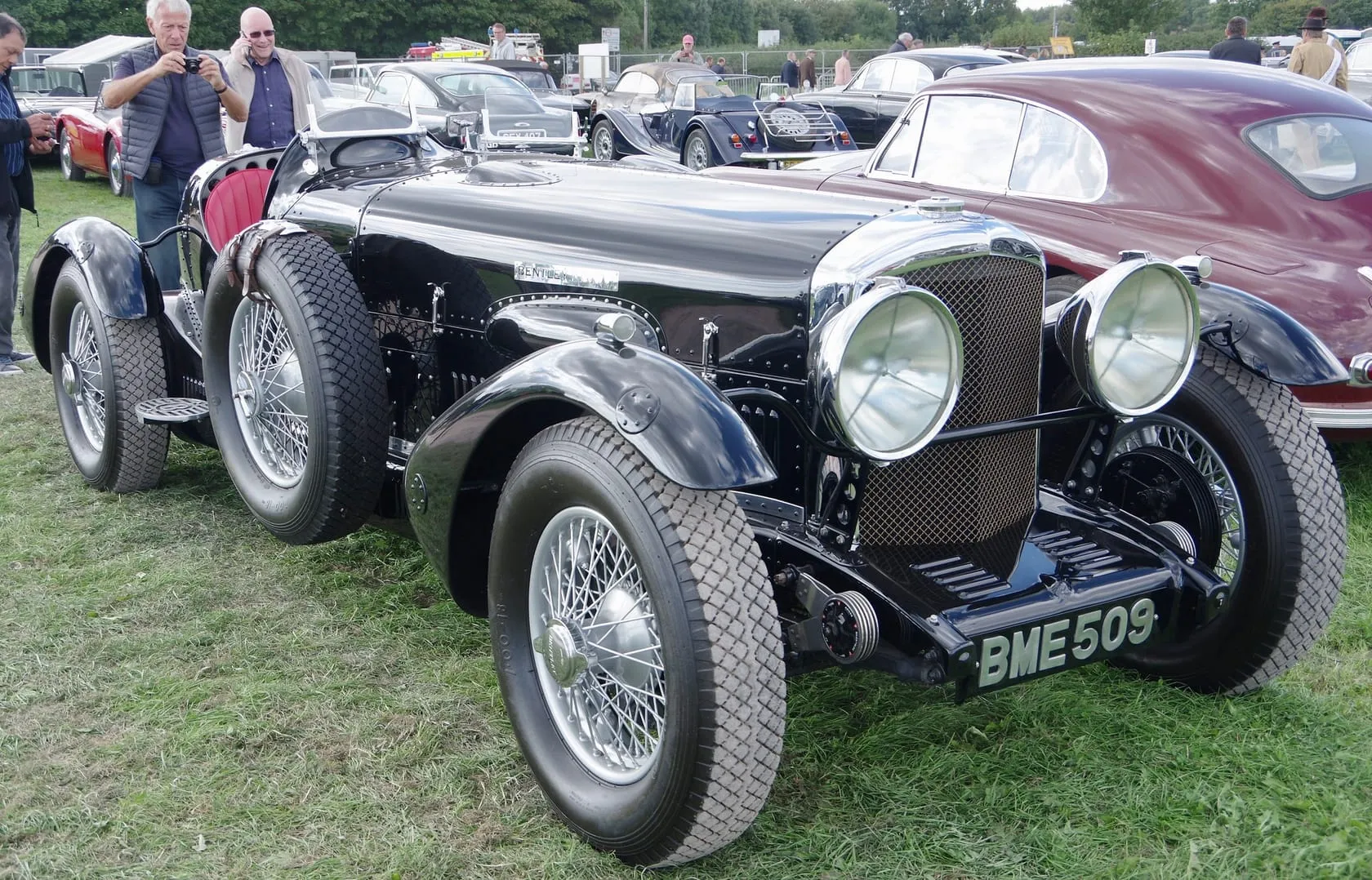
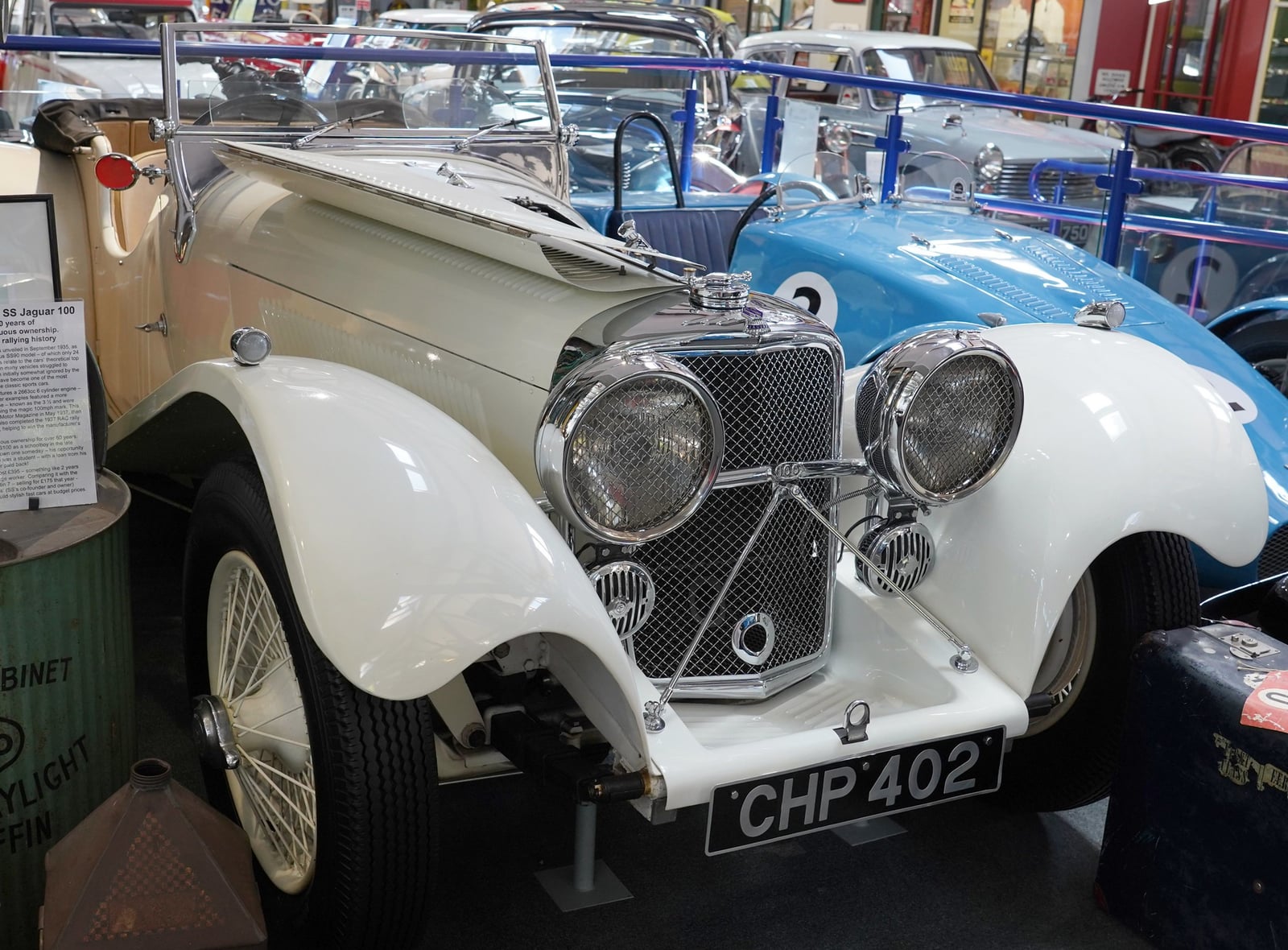
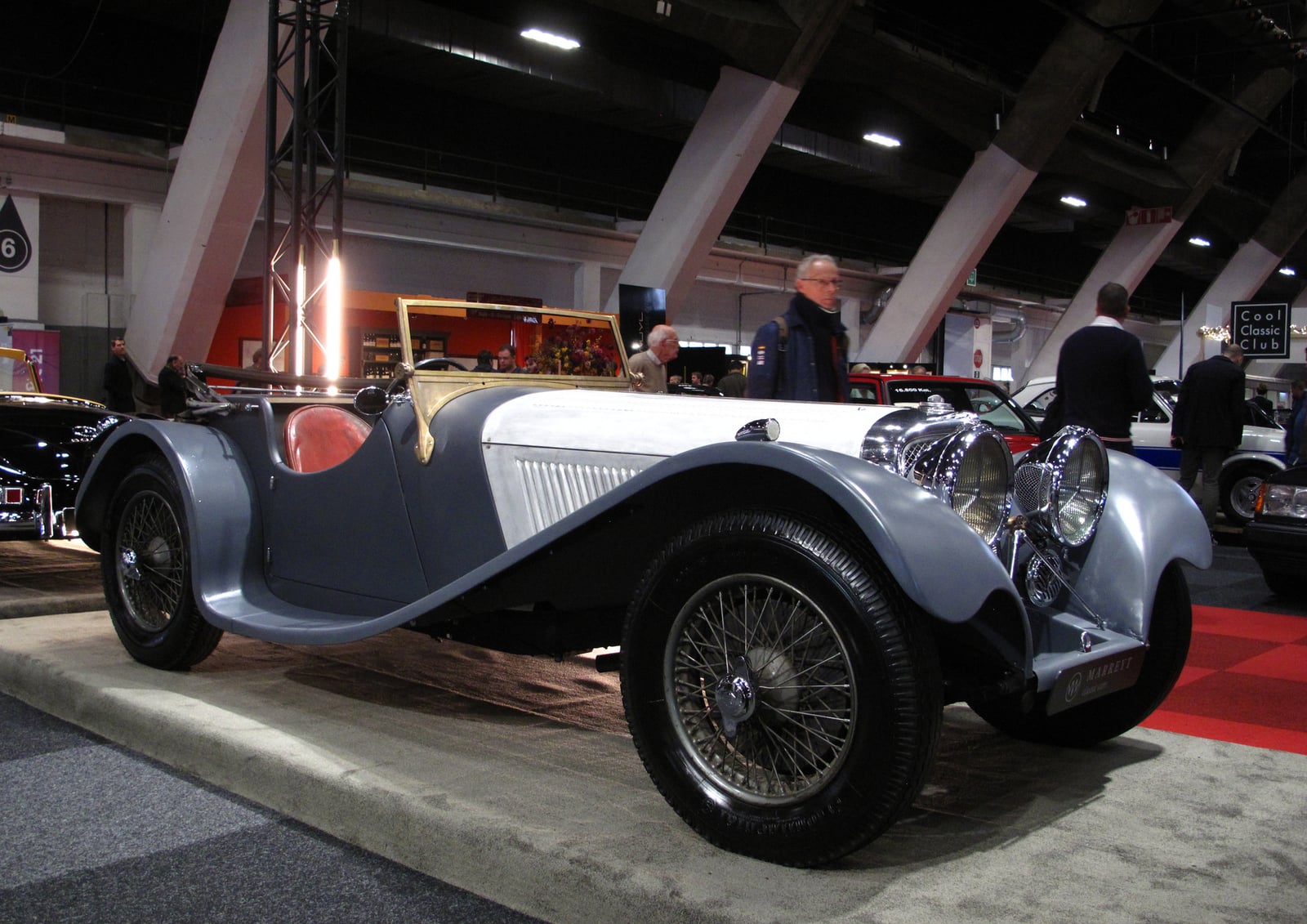
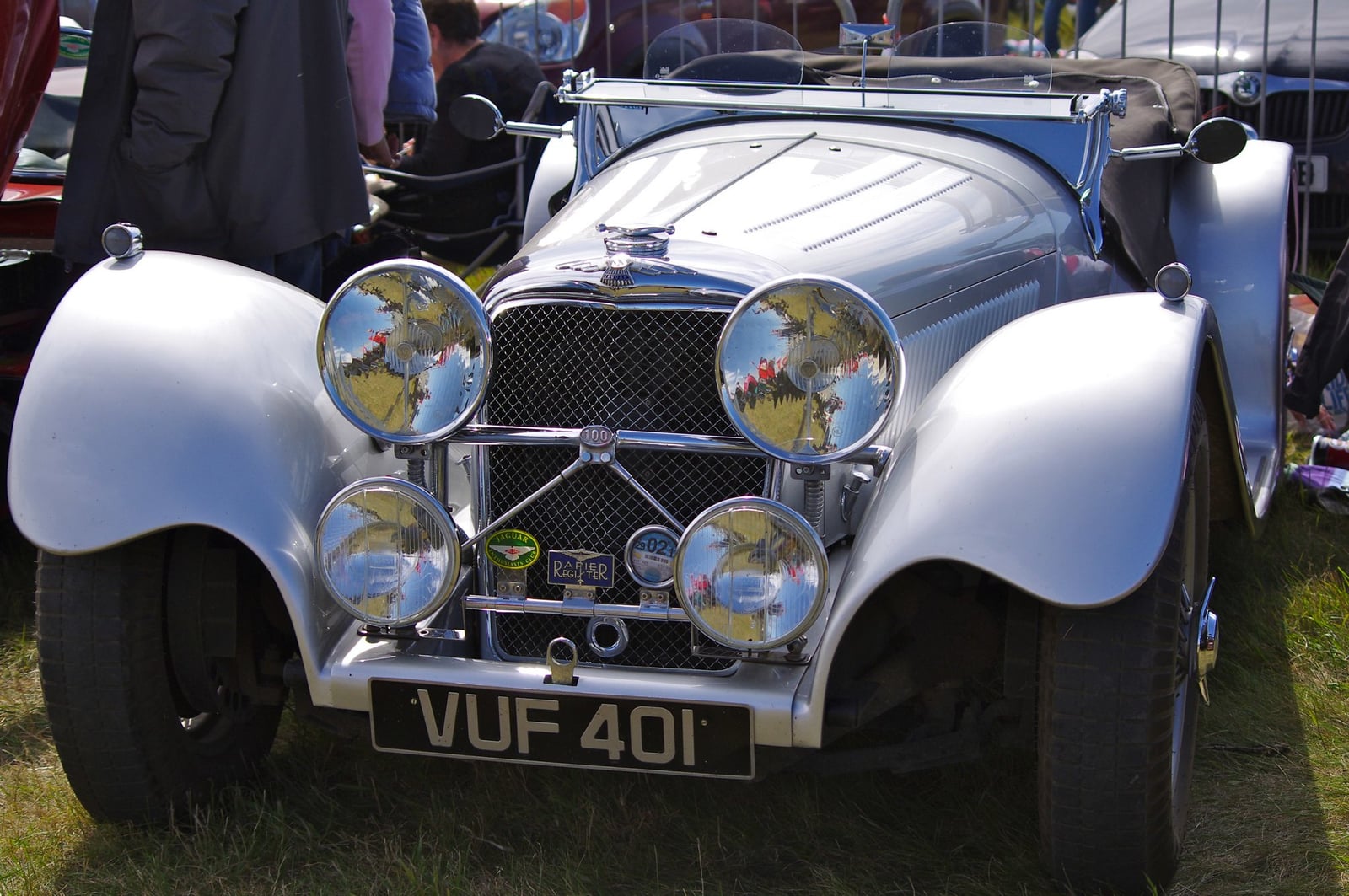
Before there was a Jaguar company, there was the SS 100 (written SS100 in most registers and auction catalogues), and it already had the Jaguar name. William Lyons’ pre-war sports car was a short, low, fast open two-seater that looked and went like cars costing far more, and it is the car in which the whole Jaguar story, value, beauty and speed for the money, first came fully together.
William Lyons and the SS years
Lyons’ firm grew out of the Swallow Sidecar Company and moved through the early 1930s from coachbuilt bodies into cars of its own, the SS1 and SS2. These were striking, low-slung machines sold at prices that undercut anything that looked as expensive. By the mid-1930s the company, now SS Cars, was ready to put its name to something faster and more focused.
The thread running through all of it was Lyons himself, a proprietor with an extraordinary eye for line and value who styled his cars by judging full-size mock-ups. The promise was always the same: a car that looked like money and cost much less. The SS 100 made that promise sporting.

The SS 100
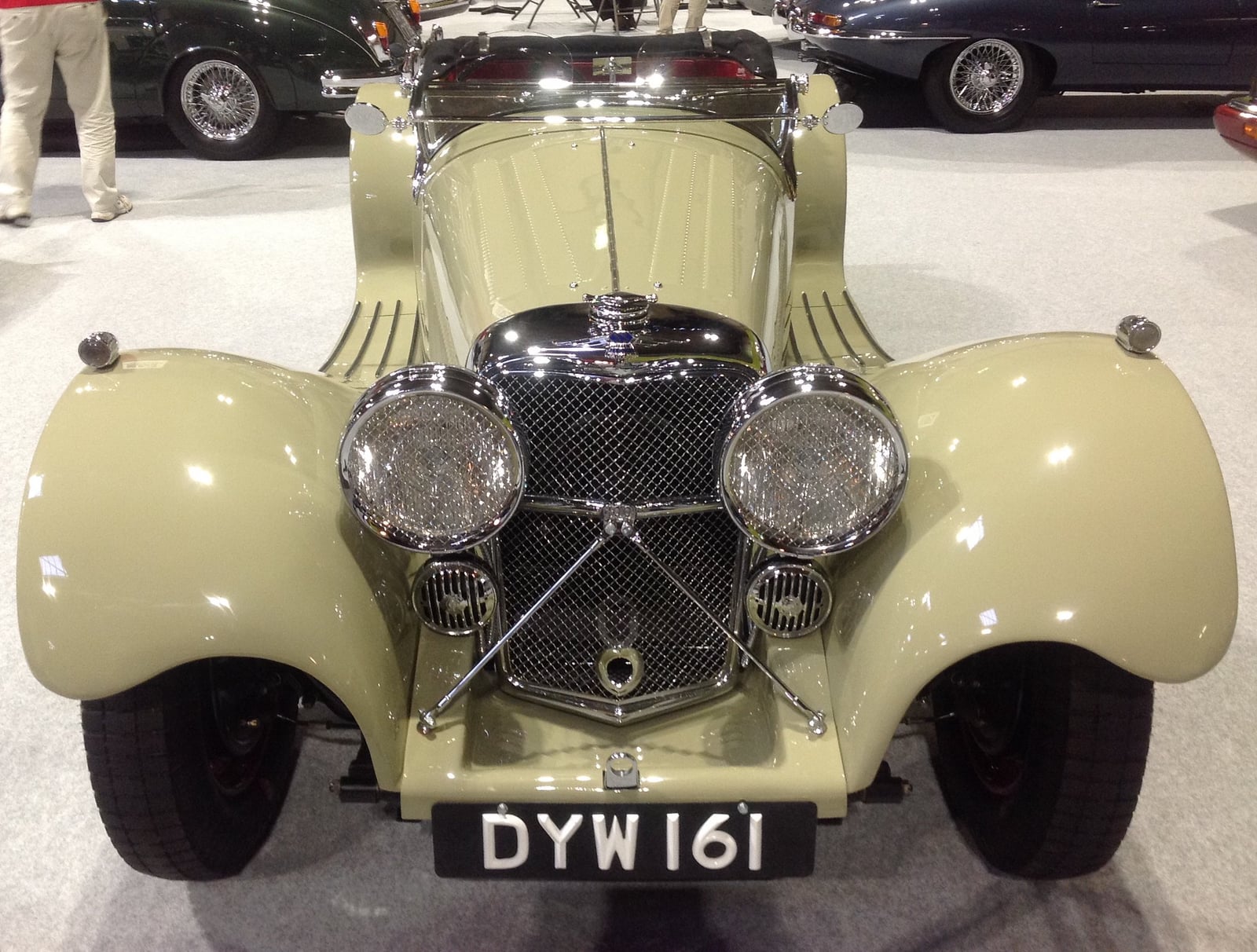
Launched in 1936, the SS 100 put a shortened chassis under a minimal, elegant two-seat body, with cycle-style wings, a low stance and an overhead-valve six-cylinder engine developed with the help of the gas-flow specialist Harry Weslake. In 2.5-litre form it was quick; in the 3.5-litre form of 1938 it could reach the 100 mph its name promised, a genuinely fast car for the money.
It was never built in large numbers, around 300 in total, and it was as much a flagship and a competition car as a volume product. It rallied and raced with success, and it gave the young marque exactly the glamorous, fast image Lyons wanted. Today it is among the most desirable pre-war British sports cars of all.

The competition record
The SS Jaguar 100, to give the car its full period title, earned its reputation the sporting way: works and private entries collected wins and class awards in the RAC Rally, the Alpine Trial and the Welsh Rally through the late 1930s, and the model set competitive times in sprints and hillclimbs wherever owners entered it. A streamlined one-off coupe shown in 1938 hinted at grander ambitions, and post-war the surviving cars kept racing in club events for decades. That record, modest in scale but genuine, is a large part of why the roughly 300 originals stand so far above their many imitators today, and why period competition history multiplies an already serious price whenever it can be documented.
The SS Jaguar saloons
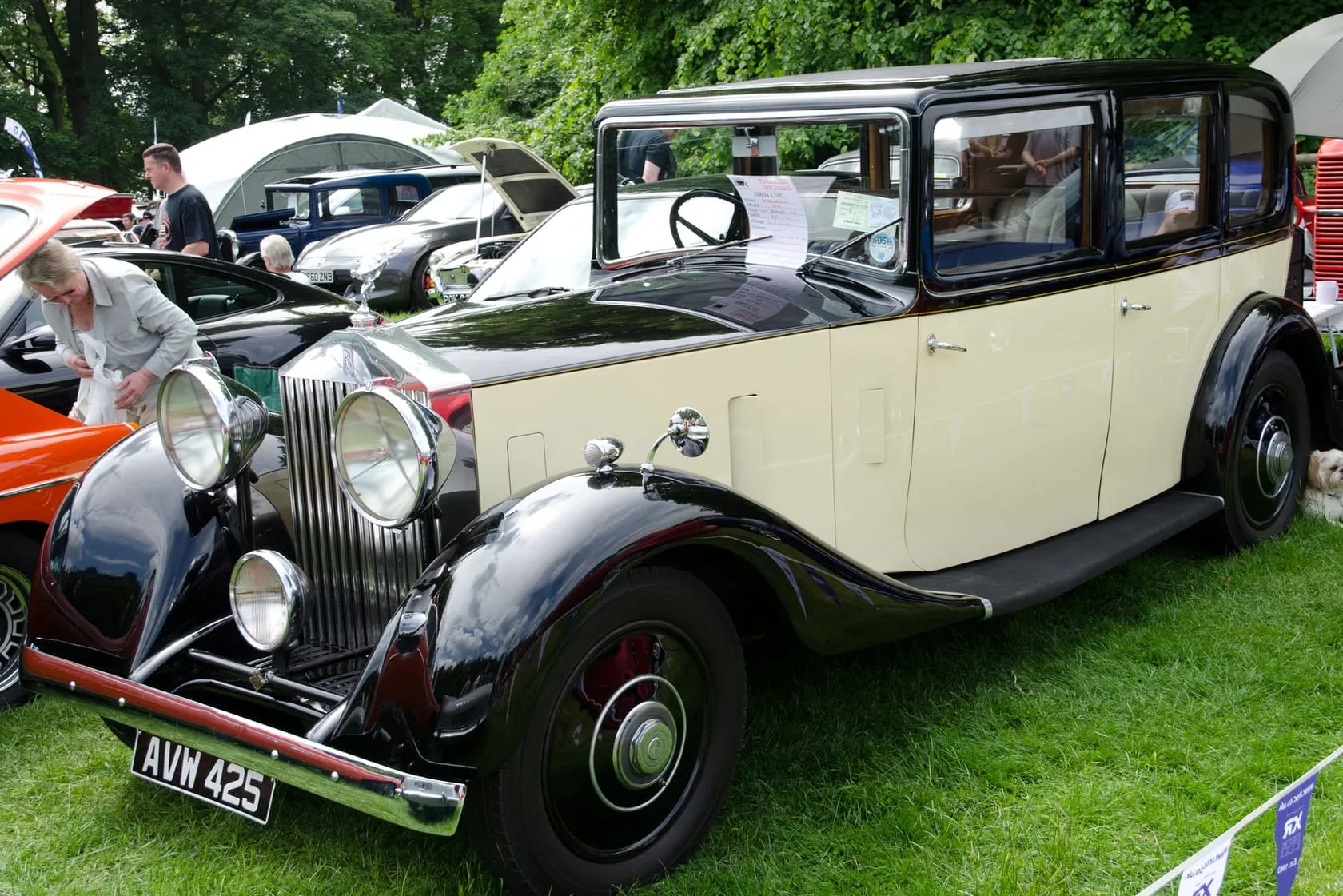
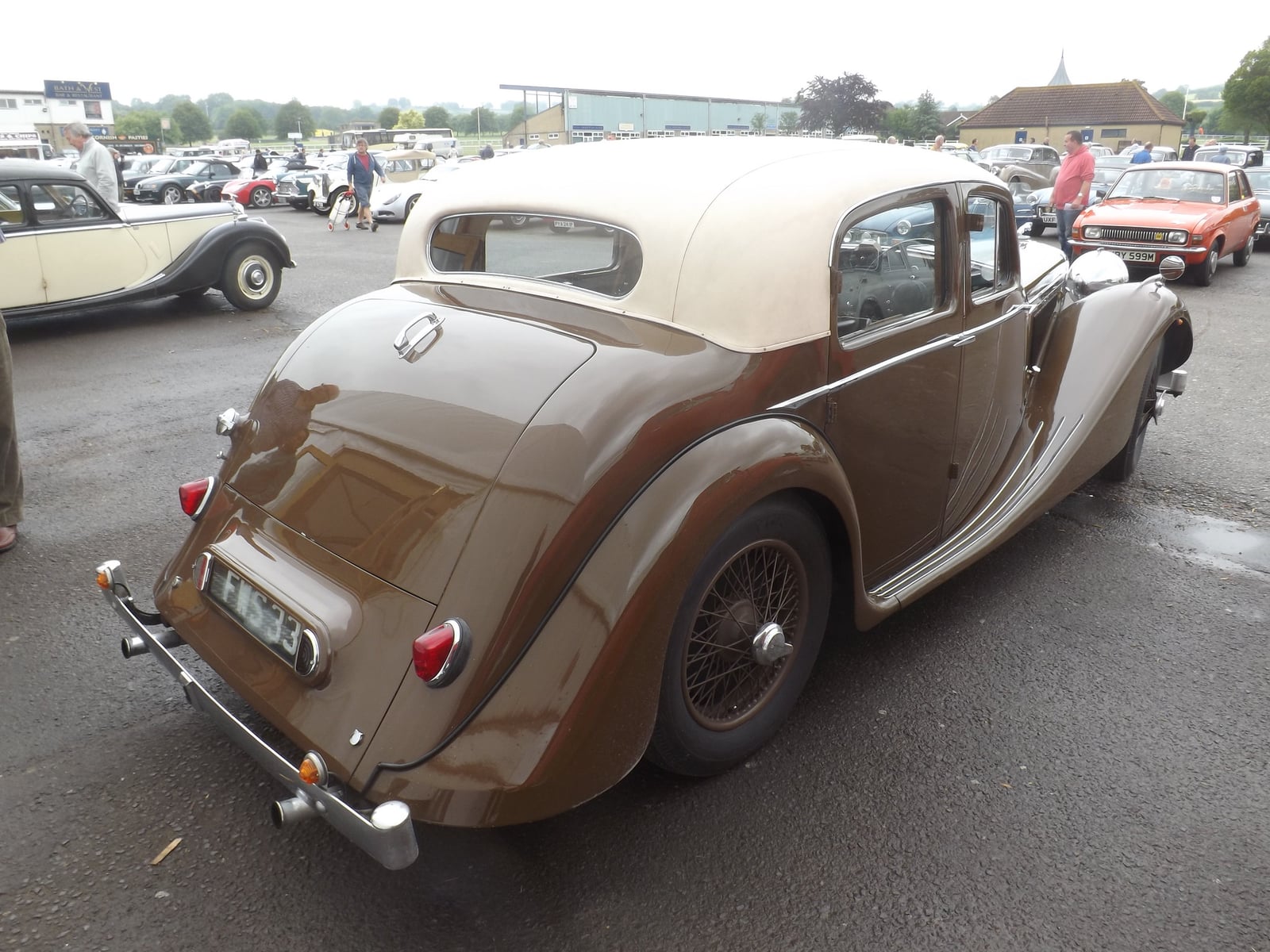
Alongside the sports car came the cars that carried the volume. The SS Jaguar saloons, introduced in 1935 and 1936, were handsome, well-appointed four-doors with the same six-cylinder engines, and they undercut their rivals so heavily on price that buyers struggled to believe the figures. They established the saloon side of the business that, after the war, produced the Mark V and the cars that followed.
Both the saloons and the SS 100 shared the formula and the new name. It was here, in the late 1930s, that “Jaguar” first came to mean a fast, beautiful car sold for less than it looked worth.

From SS to Jaguar
The Jaguar name was a model name through the late 1930s; the company was still SS Cars. After the Second World War the SS initials carried an obvious and unwelcome association, and in 1945 the shareholders renamed the business Jaguar Cars after its best-known model. The SS 100 and the SS Jaguar saloons are therefore early Jaguars in everything but the badge on the building, the direct ancestors of the XK120 and everything that came after.

Owning and buying: genuine versus replica
This is a car where the first question is authenticity. Genuine SS 100s are rare and extremely valuable, and the shape has been recreated many times on various chassis, so a buyer must establish beyond doubt that a car is real, with the correct chassis, running gear and a documented history. Expert verification is essential at this level.
A genuine car is a serious pre-war machine to own, demanding the techniques and maintenance of its era and the support of the marque’s specialists, much of it the wider business of running a classic car taken to its most rarefied. For most enthusiasts the SS 100 is a car to admire at events rather than to buy, which is part of its mystique.

Value and where it sits
A genuine SS 100 is a six-figure classic, the best original 3.5-litre cars reaching well beyond, while replicas sell for a small fraction and should never be mistaken for the real thing. It is the pre-war jewel of the Jaguar story and one of the defining British sports cars of the 1930s, the car in which the marque found its voice.

More photos
SS 100: what changed and when
- 1935SS Cars introduces the Jaguar name on its saloons, undercutting rivals so heavily that buyers struggled to believe the prices.
- 1936The SS 100 puts a shortened chassis under a minimal two-seat body with cycle wings and a Weslake-developed overhead-valve 2.5-litre six.
- 1937Works and private entries collect wins and class awards in the RAC Rally, the Alpine Trial and the Welsh Rally.
- 1938The 3.5-litre car reaches the 100 mph its name promised; a streamlined one-off coupe hints at grander ambitions.
- 1939Production ends at around 300 cars as war arrives.
- 1945The shareholders rename the business Jaguar Cars, the SS initials having acquired an unwelcome association.
Before you buy an SS 100
Authenticity, the first question
- Establish beyond doubt that the car is real: correct chassis, running gear and a documented history
- Expert verification is essential at this level, not optional
- The shape has been recreated many times on various chassis, and replicas sell for a small fraction
- Period competition history multiplies an already serious price whenever it can be documented
Specification
- 2.5-litre and 3.5-litre cars are quite different propositions; only the larger reaches 100 mph
- The overhead-valve six was developed with gas-flow specialist Harry Weslake
- Registers and auction catalogues write the model as SS100 as often as SS 100
- SS Jaguar saloons of the same era share the engines and are an entirely separate market
Ownership realities
- Pre-war techniques and maintenance are the daily reality, not an occasional inconvenience
- The marque's specialists are the support network, and the only sensible route
- Genuine cars are six-figure classics, the best 3.5-litre examples well beyond
- A replica should never be described, or bought, as the real thing
What the SS Jaguar 100 sells for at auction
The SS Jaguar 100 comes to auction only occasionally: 28 recorded sales since 1996, typically making between £167,452 and £345,125 . With so few sales, treat any single result as a data point rather than a market price.
- £169,176SS100
- £202,500SS100
- £393,000SS100
- £321,434SS100
- £495,000SS100
Thin evidence. Only 28 recorded sales: read the figures as a sketch of the market, not a price. Based on 28 sold results from public classic car auctions (1996 to 10 August 2026). Sold prices, not asking prices, and not a valuation: condition, history and specification vary from car to car.