British classic cars of the 1930s
The pre-war decade in full, from the Austin Seven that motorised the middle class and the first affordable MG sports cars to the birth of SS Jaguar, the £100 Ford, and the coachbuilt Rolls-Royce, Bentley and Lagonda, the years the car reached ordinary Britain before war stopped it in 1939.
Part of: British classic cars by decade, the full guide
The decades
No decade did more to change who owned a car than the 1930s. At the start of the 1920s a motor car was largely a thing of the wealthy; by the end of the 1930s a clerk or a shopkeeper could run a small saloon, and the firms that made it possible, Austin, Morris, Ford and the rest, were turning out cars by the hundred thousand. The Austin Seven had shown the way in the 1920s, and through the 1930s the price of motoring fell until a brand-new car could be had for £100.
It was also a decade of contrasts. While the baby cars democratised the road, the coachbuilders were at their height, clothing Rolls-Royce, Bentley and Lagonda chassis in hand-built bodies of real beauty. New marques were born, SS Jaguar chief among them, and the affordable sports car came of age in the hands of MG. The whole flourishing was cut short in September 1939, when the industry turned once more to war, but the cars and the companies of the 1930s set the template for everything British motoring became afterwards.
The Austin Seven and mass motoring
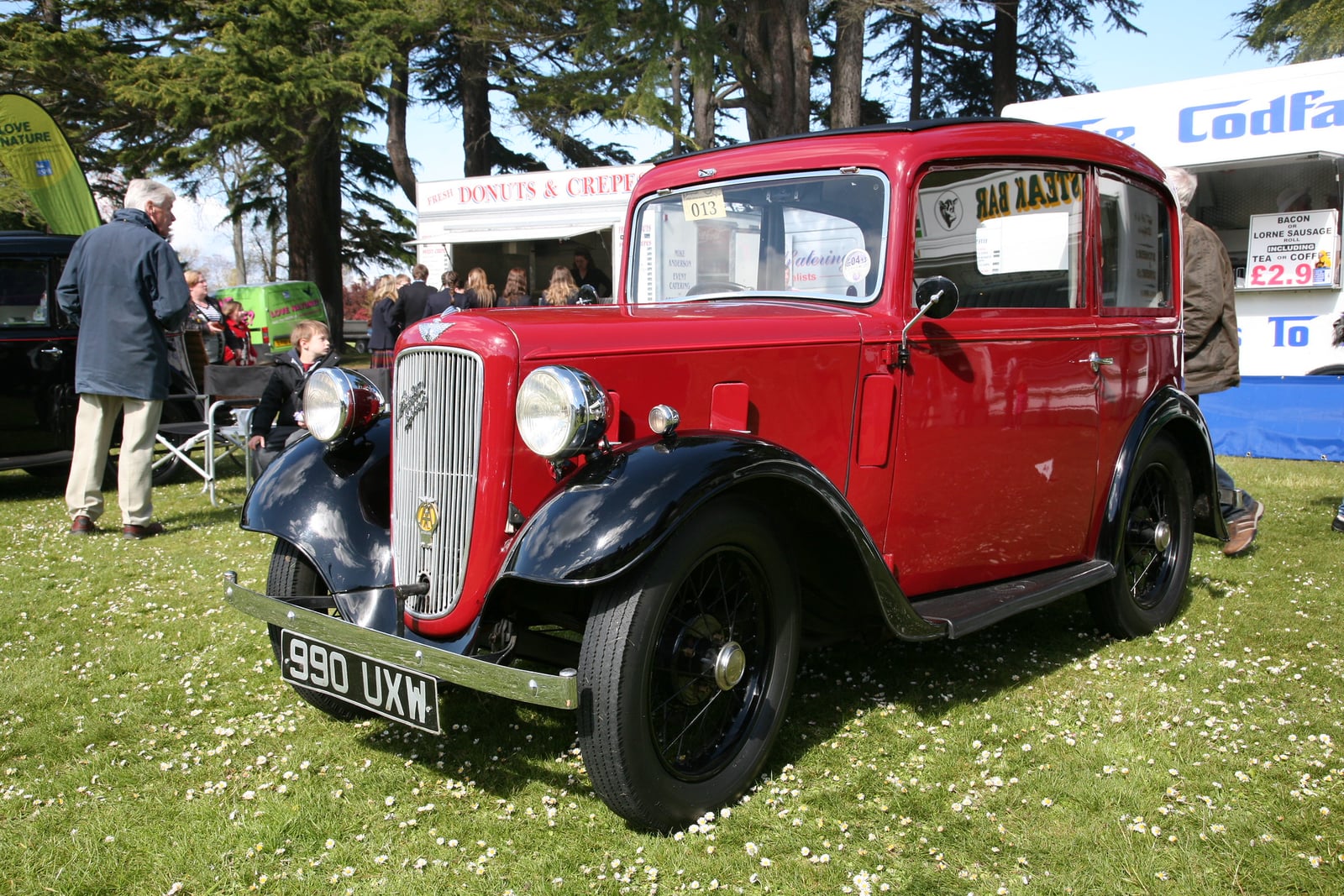
The car that defined the decade had actually arrived in 1922. The Austin Seven was Herbert Austin’s tiny, cheap, genuinely practical small car, and through the 1930s it became the car that motorised ordinary Britain, selling in forms from the open Chummy to the Ruby saloon and the sporting Nippy and Ulster. Around 290,000 were built before production ended in 1939.
Its influence ran far beyond its own sales. The Seven was licensed and copied around the world: BMW’s first car, the Dixi, was a licence-built Austin Seven; Datsun’s early cars were closely based on it; and Rosengart built it in France and Bantam in America. Closer to home it was the car a generation of constructors learned on, most famously Colin Chapman, who built the first Lotus on a Seven chassis. Few single designs have seeded so much.

MG and the affordable sports car
If the Austin Seven democratised the saloon, MG did the same for the sports car. Cecil Kimber’s Abingdon firm built light, quick, affordable two-seaters that an enthusiast of modest means could actually buy, and the 1930s were its making. The little Midgets, from the M-type through the J2 to the PA and PB, set the pattern, while the six-cylinder Magna and Magnette added pace and a competition record. The slogan, “Safety Fast”, summed up the appeal.
In 1936 came the car that closed the decade and opened the next: the T-type, beginning with the TA. Traditional in construction, with a folded body on an ash frame, it carried MG’s pre-war character straight through the war and into the TC that built the American market in the late 1940s. The 1930s MGs are where the whole affordable-British-sports-car story begins, the line that later ran through the MGA and MGB.

SS Jaguar and the birth of value for money
One of the marques that matters most to the rest of this story was born in the 1930s. William Lyons’ Coventry firm, SS Cars, moved from building bodies and the rakish SS1 into cars of its own, and in 1935 it gave one a name that would outlast everything else: Jaguar. The SS Jaguar saloons were strikingly handsome and undercut their rivals heavily on price, the value-for-money formula that defined the marque ever after.
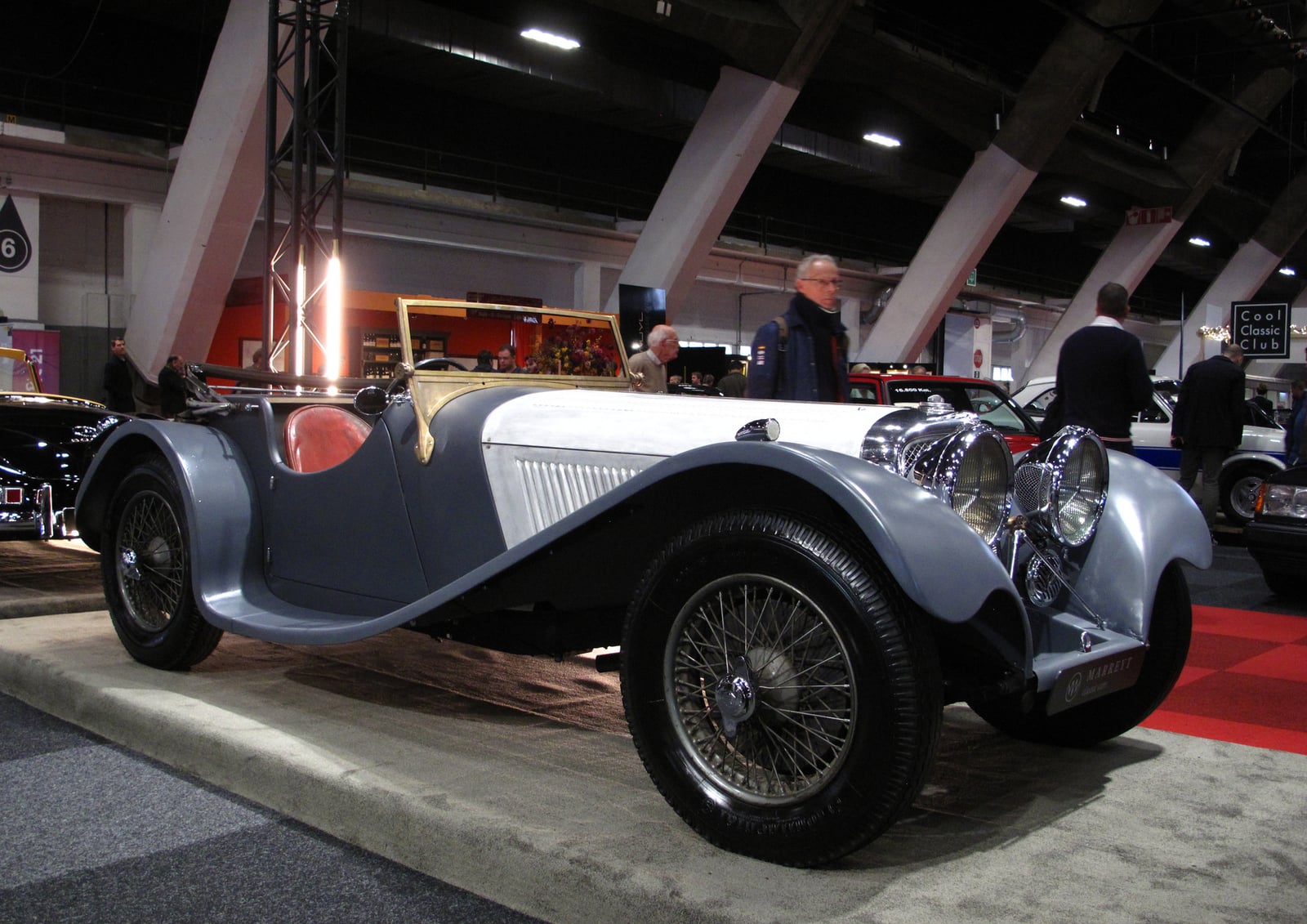
The sporting flagship was the SS 100 of 1936, a short, purposeful open two-seater capable of the 100 mph its name claimed in 3.5-litre form. Only a few hundred were built before the war, and it is now among the most sought-after pre-war British sports cars. The SS initials became unwelcome after 1939, and in 1945 the company took the name of its best car and became Jaguar.

The big producers and the family saloon
Beneath the famous names, the volume makers fought a price war that put cars within reach of millions. Ford opened its Dagenham plant in 1931 and built the Model Y, the first Ford designed for Europe, and in 1935 a basic version became the first modern saloon to sell at £100. Morris answered with the Morris Eight, its best-seller of the decade, alongside the Ten and the pre-war Minor, and Austin fielded the Seven, Ten and Twelve.
The rest of the industry crowded the same ground. Standard built the Nine and the streamlined Flying Standard range; Hillman’s Minx became a staple of the middle-class garage; Singer was briefly the third-largest British maker; and Vauxhall, by then owned by General Motors, broke new ground with the Ten of 1937, one of the first British mass-market cars with unitary construction. The modern family saloon, steel-bodied, enclosed and affordable, took shape in these years.

Luxury and the coachbuilders
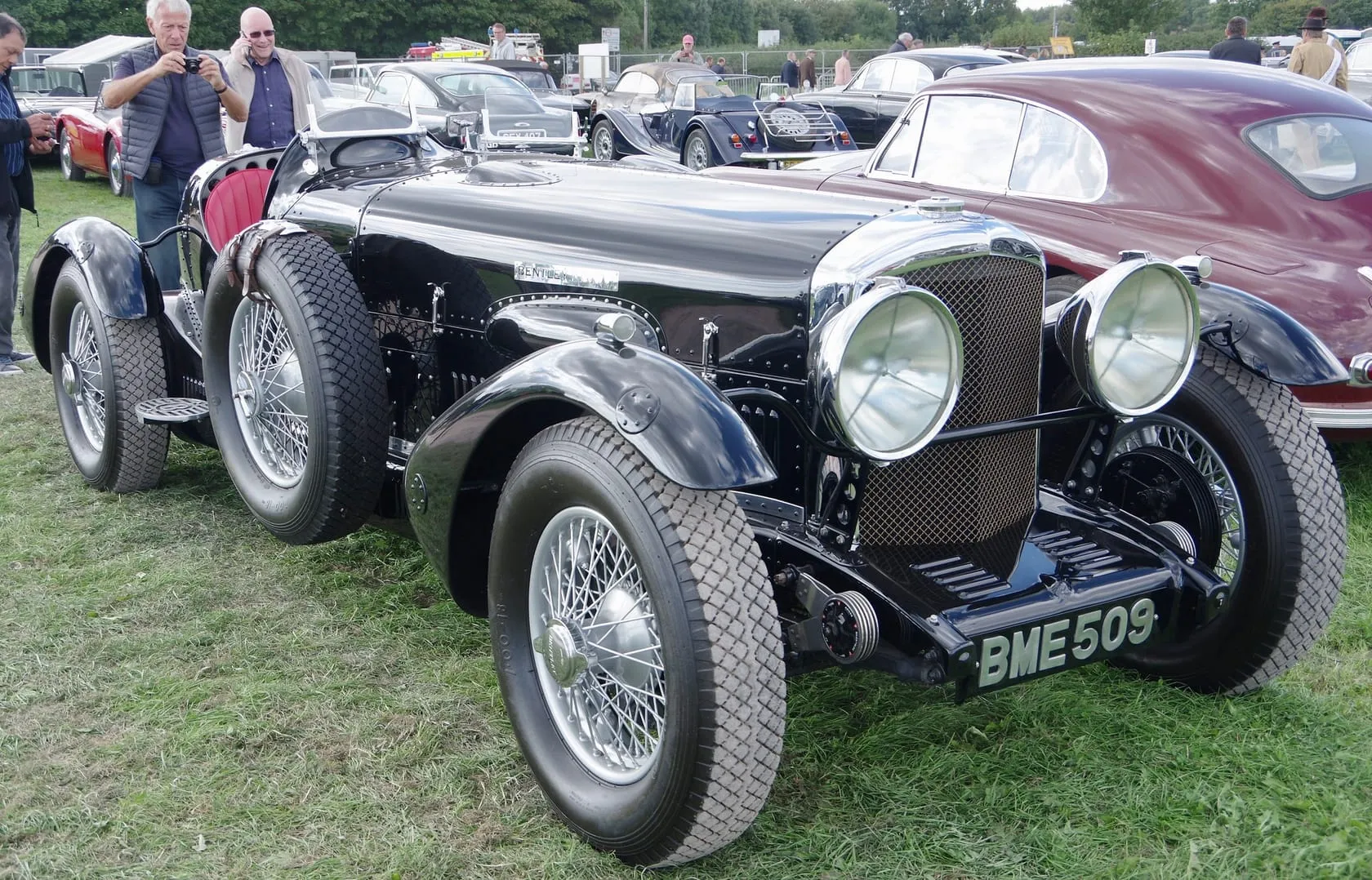
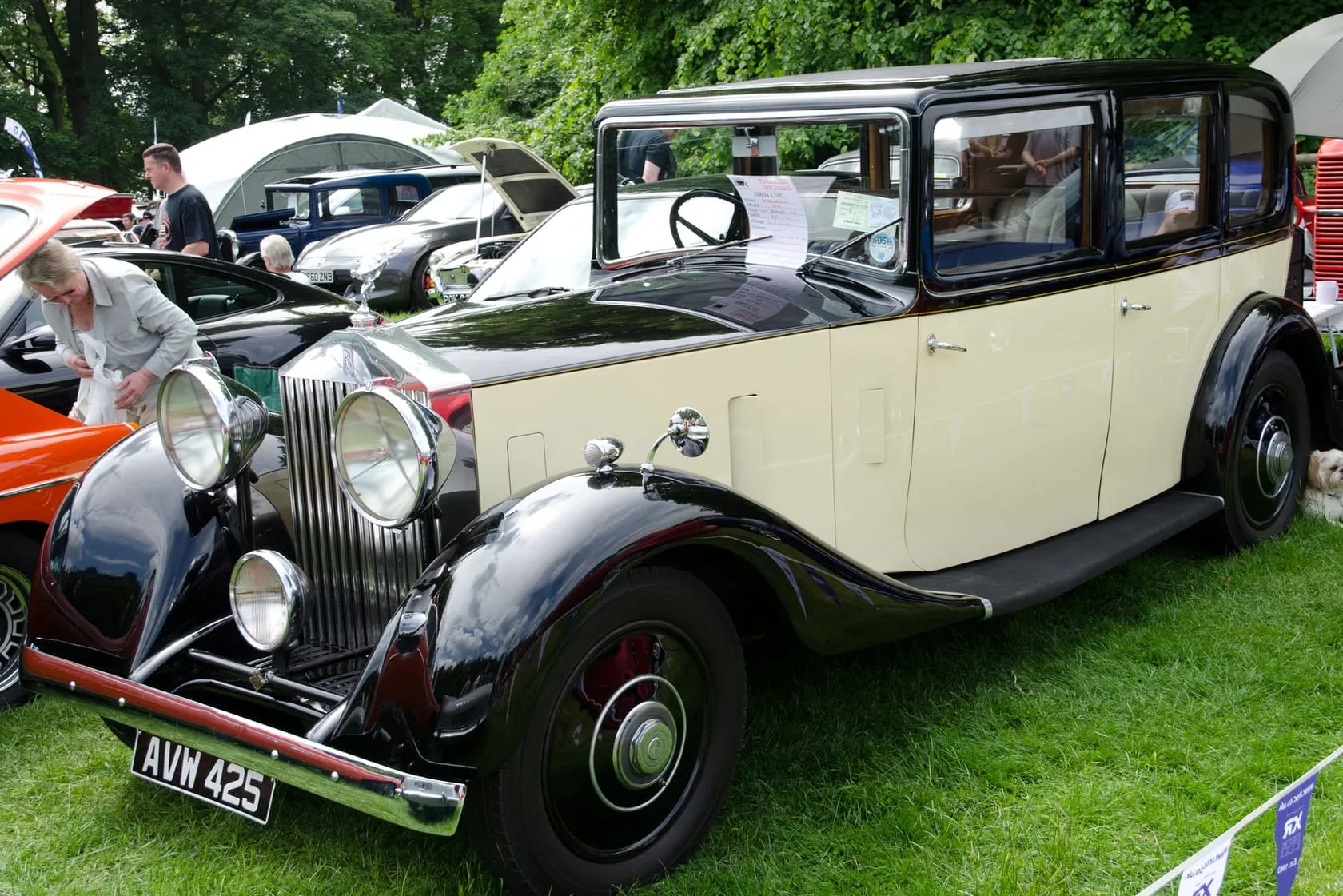
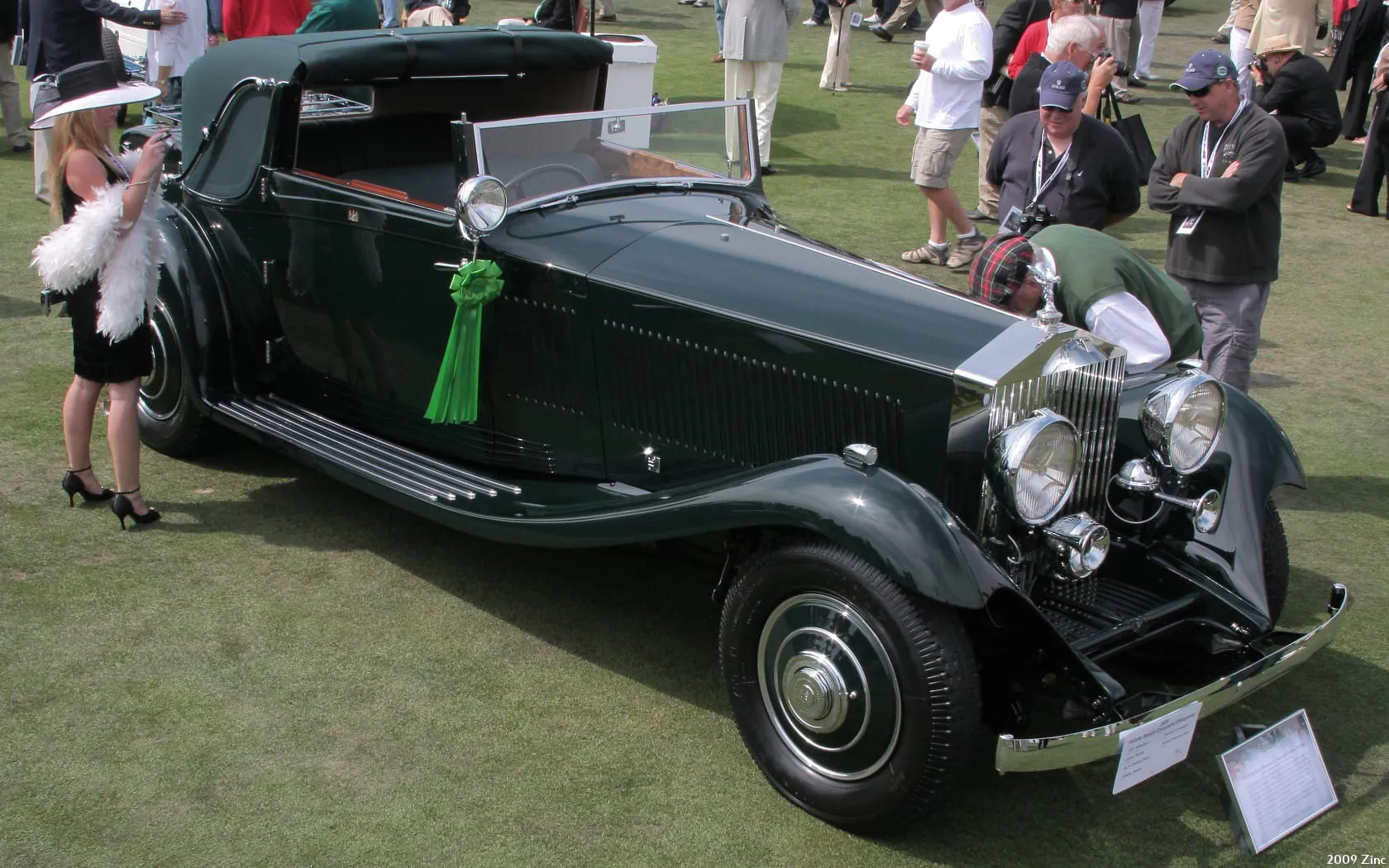
At the other end of the market, British coachbuilding reached a peak it never touched again. Rolls-Royce ran the stately Phantom II and, from 1936, the V12 Phantom III, with the smaller 20/25 and 25/30 carrying the bulk of sales. Bentley, taken over by Rolls-Royce in 1931, re-emerged with the “Derby” 3.5 and 4.25-litre cars, marketed as “the silent sports car” and among the most desirable fast tourers of the day.
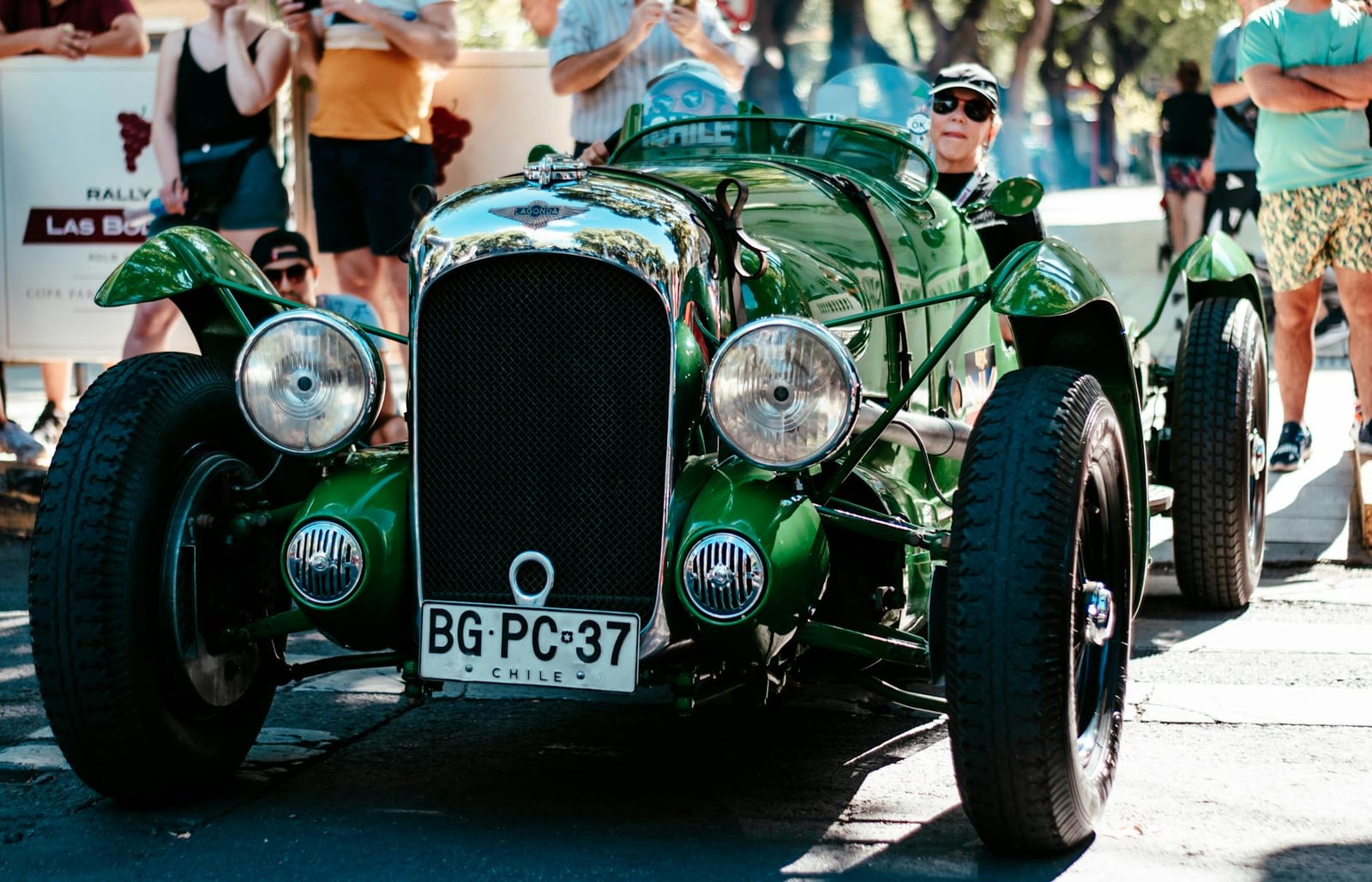
They had distinguished company. Lagonda built large, powerful tourers and won the Le Mans 24 Hours outright in 1935, later launching a V12 designed by W.O. Bentley himself; Alvis offered the quick, well-engineered Speed 20 and Speed 25; and Daimler supplied the royal household and pioneered the fluid flywheel transmission. Almost none of these cars wore a factory body. They were sold as chassis and clothed by coachbuilders, which is why so many pre-war grandees are one-offs today.

Speed, records and the racing years
The 1930s were also a golden age of British speed. At Brooklands, the banked Surrey track that was the centre of British motorsport, specials and production-based racers ran flat out, and the era’s voiturette racing was dominated by ERA, the English Racing Automobiles concern associated with Raymond Mays. MG chased class records with streamlined cars like the EX135.
The headline feats were the land-speed records. Malcolm Campbell pushed his series of Bluebird machines past 300 mph in 1935, and George Eyston and John Cobb traded the outright record through the rest of the decade in vast aero-engined specials, much of it on the salt flats of Bonneville. It was British engineering at its most ambitious, and it sold the ordinary cars on Monday what it achieved on the weekend.

Motoring gets rules: tests, limits and the modern road
A million-odd new drivers brought consequences, and the 1930s is when British motoring law took its modern shape. The Road Traffic Act of 1930 introduced compulsory third-party insurance and the Highway Code; its 1934 successor brought the 30 mph limit in built-up areas, pedestrian crossings marked by Leslie Hore-Belisha’s orange beacons, and, from 1935, the driving test. Anyone already driving before the test arrived kept their licence without ever taking one, a grandfathering that lasted the rest of those drivers’ lives.
The road itself modernised alongside. Traffic lights, roundabouts and arterial bypasses spread through the decade, and the roadhouse, the big pub built on the new arterials for a motoring clientele, became a minor institution. The free-for-all of the vintage years was over; the framework every later decade of British motoring ran inside was set here.
What made the 1930s distinctive
The 1930s is the decade the motor car stopped being a luxury and became, for millions of British families, an ordinary possession. That shift, driven by the Austin Seven and sealed by the £100 Ford, is the single most important thing about the era, and everything else, the affordable MG, the value-for-money SS Jaguar, the modern steel saloon, follows from the same democratising current.
It was, at the same time, the last decade of the great coachbuilders and the hand-built grandee, a world of Rolls-Royce, Bentley and Lagonda chassis bodied to order that the war and the economics that followed would largely end. The two halves, the cheap car for everyone and the bespoke car for the few, sat side by side as they never quite would again.
Then it stopped. Car production for civilians wound down through 1939 and ended as the factories turned to the war effort, and the industry would not build ordinary cars again until 1945. Read forward to the 1940s page for the wartime shutdown and the “Export or Die” recovery that followed. For the wider question of what belongs in this story at all, see which cars count as British classics.

More photos