Which cars count as British classics?
The site's scope reference. Which marques and which cars count as British classics, the edge cases, and what we don't cover. The companion essay on when a car becomes a classic answers the temporal question separately.
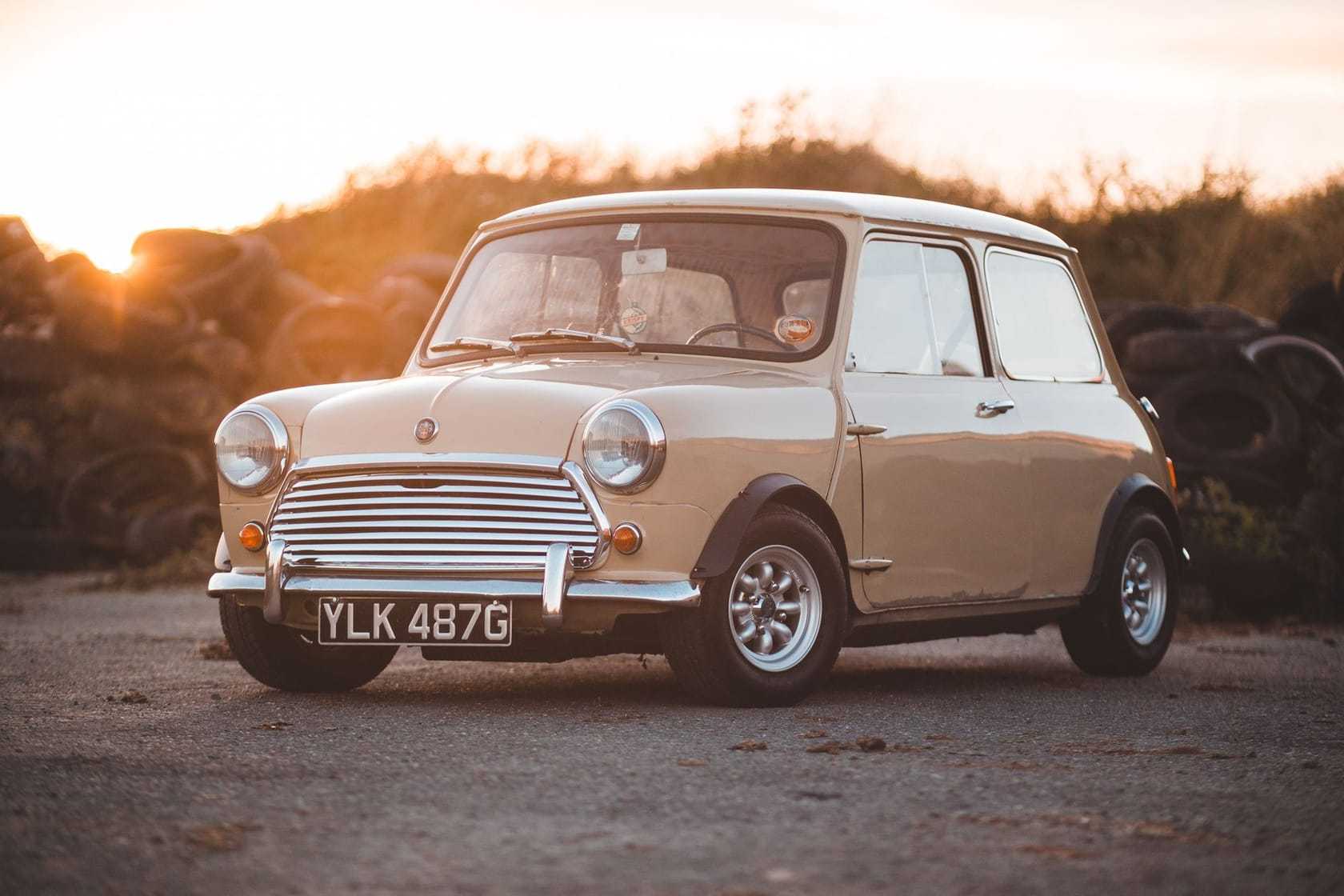
For a car to count as a “British classic” on this site, it has to meet all three of the following:
- Built in the UK, or designed for the UK and European market by a British manufacturer or a foreign manufacturer’s UK subsidiary.
- Generally pre-late-1990s, with the exact dividing line varying by model.
- Treated as a British classic by the owners’ clubs and the enthusiast press (Practical Classics, Classic & Sports Car, the marque-specific publications).
That’s the test. Cars that pass all three are in scope. Cars that fail any of them aren’t, even if they’re interesting for other reasons.
Marques in scope
A non-exhaustive list, organised by tier. Most readers will find the cars they’re looking for here.
The household names
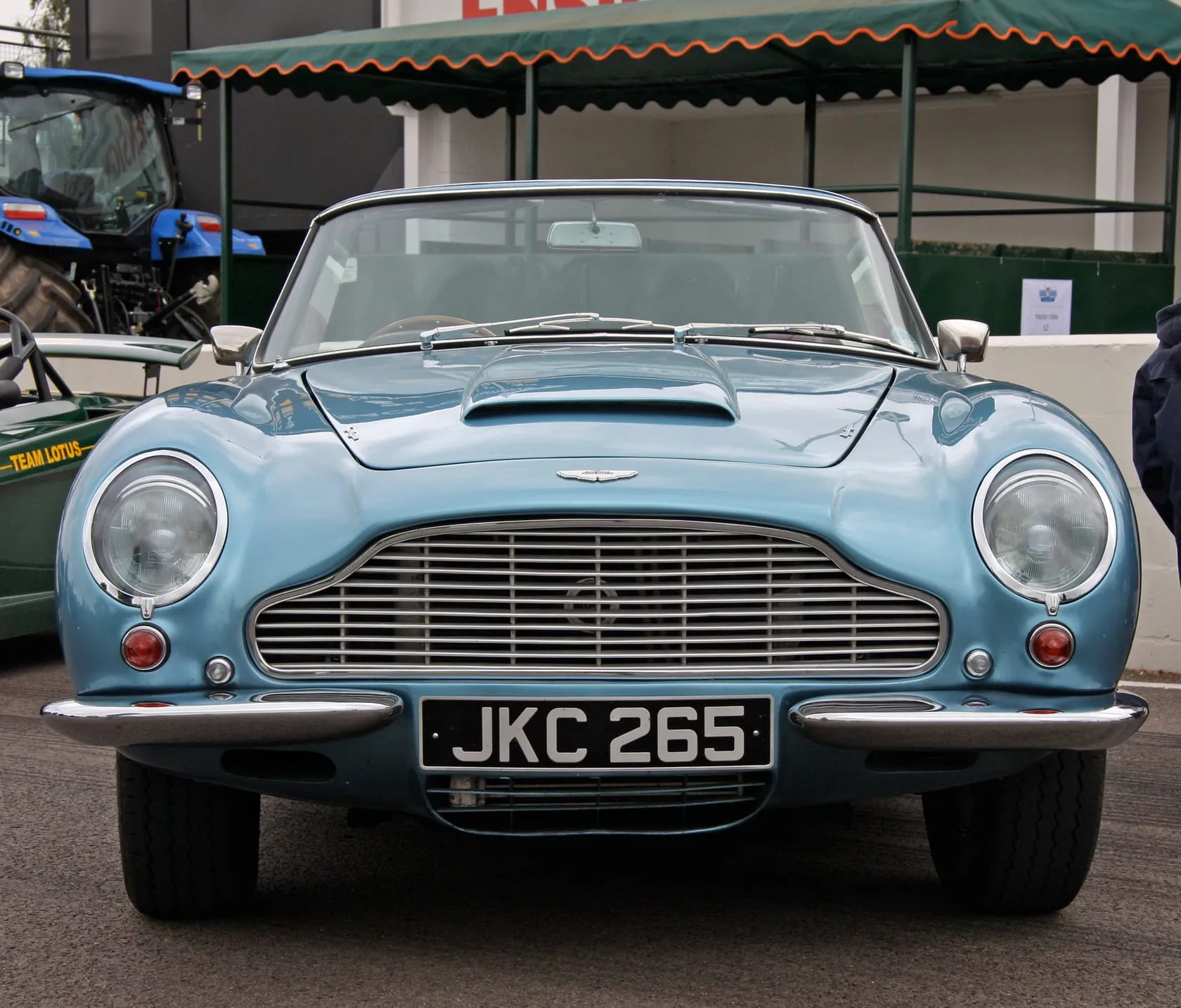
Jaguar, Aston Martin, Lotus, Mini (the original Issigonis car, 1959 to 2000), MG, Morgan, Triumph, Bentley, Rolls-Royce, Land Rover, Range Rover Classic.
Ford UK
A deliberate inclusion. Ford itself is American, but the Capri, Escort (Mk1 to Mk5), Cortina, Sierra Cosworth, Sapphire Cosworth, Escort RS Cosworth, Anglia, and Granada were all designed in the UK, built at Halewood, Dagenham, and Southampton, and treated as British classics by Capri Club International, the MK1 Cortina Owners’ Club, the Ford RS Owners Club, and the magazine press.
The smaller specialist makers
TVR, Jensen, Daimler, Reliant Scimitar, Marcos. Generally lower volume than the household names but with strong enthusiast followings.
The kit-car cottage industry
AC Cobra replicas (Dax, Pilgrim, GD), Caterham, Westfield, Robin Hood, GTM, Sylva, Tiger Racing, GBS Zero, Birkin. British-built or British-designed kit cars are in scope.
The everyday British marques
The volume saloon-builders of the 1950s, 60s, 70s and 80s, many of which sat inside what became British Leyland: Austin, Morris, Wolseley, Riley, Singer, Hillman, Sunbeam, Standard, Vauxhall, Bond, and Reliant (including the Robin and Bug). Production volumes were enormous; survivors today are correspondingly rare and correspondingly interesting.
The pre-war heavyweights
Pre-war Bentley, pre-war Rolls-Royce, Lagonda, Alvis, Riley pre-war, Austin Seven, MG T-series, Frazer Nash, Squire, Aston Martin pre-war.

Edge cases worth being explicit about
A handful of cars sit on the boundary of what’s in scope, and how we treat them is worth stating directly.
In scope (sometimes surprisingly)
- Healey and Austin-Healey. Same lineage (Donald Healey designed it, Austin built it). Both names in scope.
- Daimler before and after the Jaguar takeover (1960). Pre-1960 Daimlers are their own engineering tradition; post-1960 Daimlers are mostly badge-engineered Jaguars. Both eras covered.
- Reliant Robin and Bond Bug. Three-wheelers. Yes, in scope.
- Classic vans and light commercials. The Bedford CF, the Morris Minor van, and the classic Ford Transit: working vehicles, worked to death and now genuinely rare. In scope, covered as their own strand.
- DeLorean DMC-12. Built in Dunmurry, Northern Ireland, with British government funding. In scope by origin even though most cultural references are American.
- Cosworth-engined Fords. Sierra Cosworth, Sapphire Cosworth, Escort RS Cosworth. In scope.
- Lotus Elise. Late-1990s car but built in Norfolk, designed by a British team, archetypal British sports car. In scope, just inside the late-1990s edge of our timeframe.
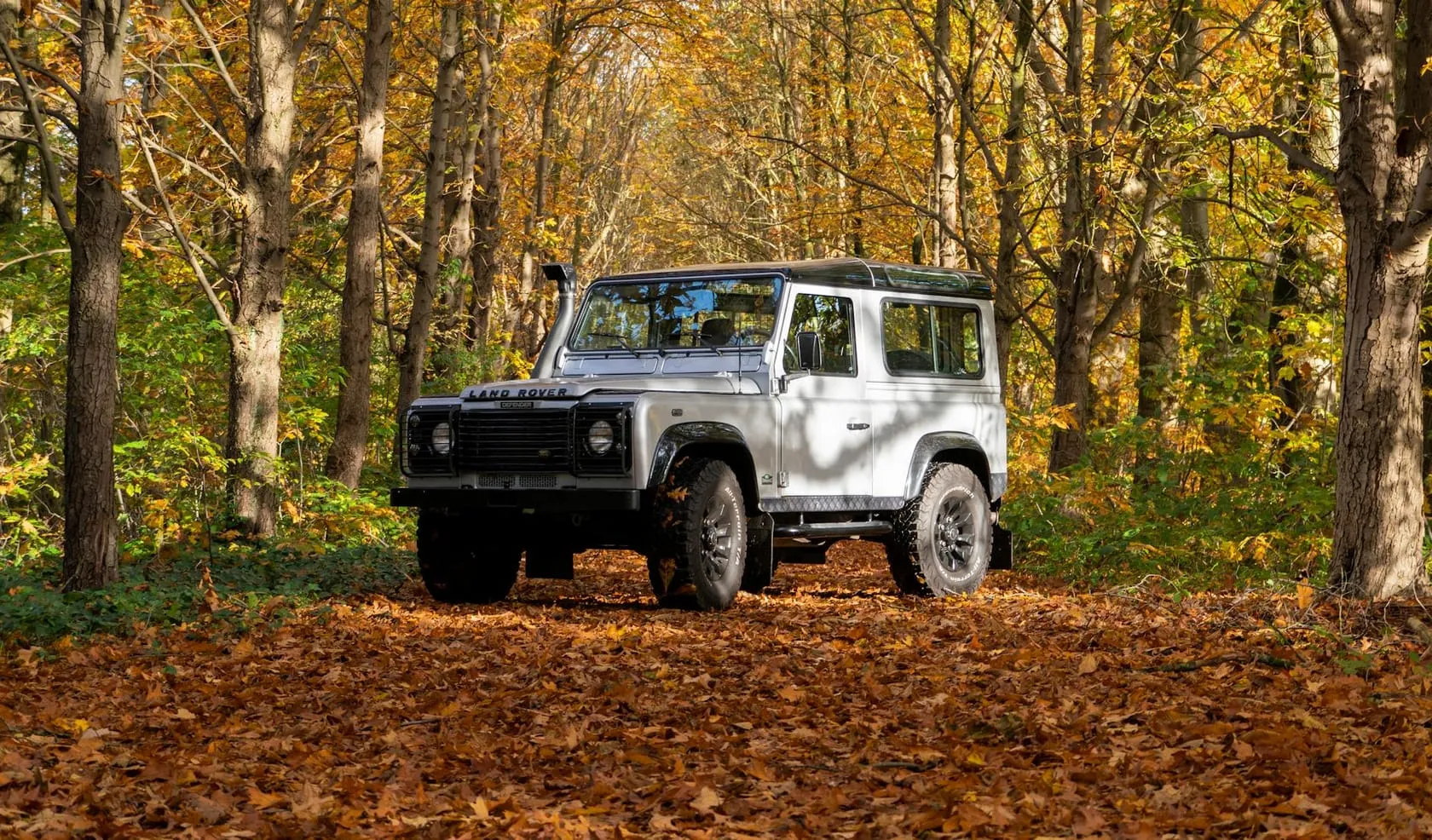
- Range Rover Classic and Defender 90/110. Land Rover product, in scope despite spanning into the 2010s for the Defender.
Out of scope (and why)
- American classics (Mustang, Corvette, Camaro, Cadillac Eldorado, big-block muscle generally). Strong UK ownership, but a separate world with its own specialist media, and not what this site is for.
- Italian classics (Ferrari, Maserati, Alfa Romeo, Lancia, Fiat, De Tomaso). Same reasoning.
- Japanese classics (Nissan Skyline / GT-R, Toyota Supra, Mazda RX-7, Datsun 240Z). Same.
- German classics (air-cooled Porsche, classic 911, SEC and R107 Mercedes, BMW E30 / E34, classic VW Beetle and bus). Same.
- Modern MINI (BMW-era, 2001 onward). Different car, same name. Not in scope.
- Motorcycles of any nationality. Different discipline.
- Tractors, commercial vehicles, fire engines, military vehicles. Different categories with their own collector worlds.
- Replicas of non-British cars. A British-built Ferrari 250 GTO replica is still mechanically a recreation of an Italian car; it sits with the original-marque world more naturally than with us. (AC Cobra replicas are an exception because the AC Cobra itself is British.)
- Continuation cars and modern recreations built today. Eagle E-Types, Aston DB4 GT Continuations, and the like are new cars, however faithful. They’re not classics in the forty-year-old sense; they’re modern hand-builts evoking the original.

“Is this in scope?” worked examples
For quick disambiguation:
| Car | In scope? | Why |
|---|---|---|
| Jaguar E-Type Series 1 | Yes | British marque, British-built, household name |
| Ford Capri Mk1 | Yes | UK-designed, UK-built, treated as British |
| Triumph TR6 | Yes | British marque, British-built |
| TVR Griffith | Yes | British specialist maker |
| Range Rover Classic | Yes | Land Rover product |
| Reliant Robin | Yes | British marque, British-built (even if a punchline) |
| DeLorean DMC-12 | Yes | Built in Northern Ireland, British government investment |
| Ford Mustang | No | American |
| Porsche 911 (any era) | No | German |
| Ferrari 308 | No | Italian |
| Modern BMW MINI | No | German-owned, different car than the Issigonis Mini |
| Mazda MX-5 Mk1 | No | Japanese, even though UK ownership is huge |
| Triumph Bonneville (motorcycle) | No | Motorcycle, not a car |
| AC Cobra original (1962–1968) | Yes | British marque, British-built |
| AC Cobra replica (UK-built) | Yes | British kit-car tradition |
| Lotus Elise Series 1 (1996) | Yes | British marque, British-built, late-90s edge |
| Aston Martin DB9 (2004) | No | Modern Aston, post-DB7, outside the classic timeframe |
Where to go from here
For the temporal side of the question (when does a given car actually become a classic, given that the legal, market, cultural and personal definitions all give different answers), see when does a car become a classic?.
For the regulatory side specifically (the DVLA’s 40-year rule, MOT exemption, the historic-vehicle tax class), see the glossary entries: the 40-year rule and historic vehicle status.
For an era-by-era look at the cars themselves, the decade pages: the 1920s, the 1930s, the 1940s, the 1950s, the 1960s, the 1970s, the 1980s, the 1990s.
Frequently asked questions
Is a Ford Capri a British classic car?
Does an original Mini count, but not a modern MINI?
Is a TVR a British classic car?
What about Italian or American classics owned in the UK?
Where is the line drawn at the modern end?
Related across themes
Recently added

Bentley S-series: the quiet twin with the beautiful secrets (1955–1965)

Rolls-Royce Silver Spirit and Silver Spur: the last Crewe bargain (1980–1999)

Rolls-Royce Corniche: the coachbuilt survivor that outlived its makers (1971–1995)
