British classic cars of the 1940s
A decade split in two by the war, from the factories' switch to tanks and aero-engines and the 1945 restart, to the landmark launches of the MG TC, the Land Rover Series I, the Jaguar XK120, and the Bentley Mark VI under the "Export or Die" policy.
Part of: British classic cars by decade, the full guide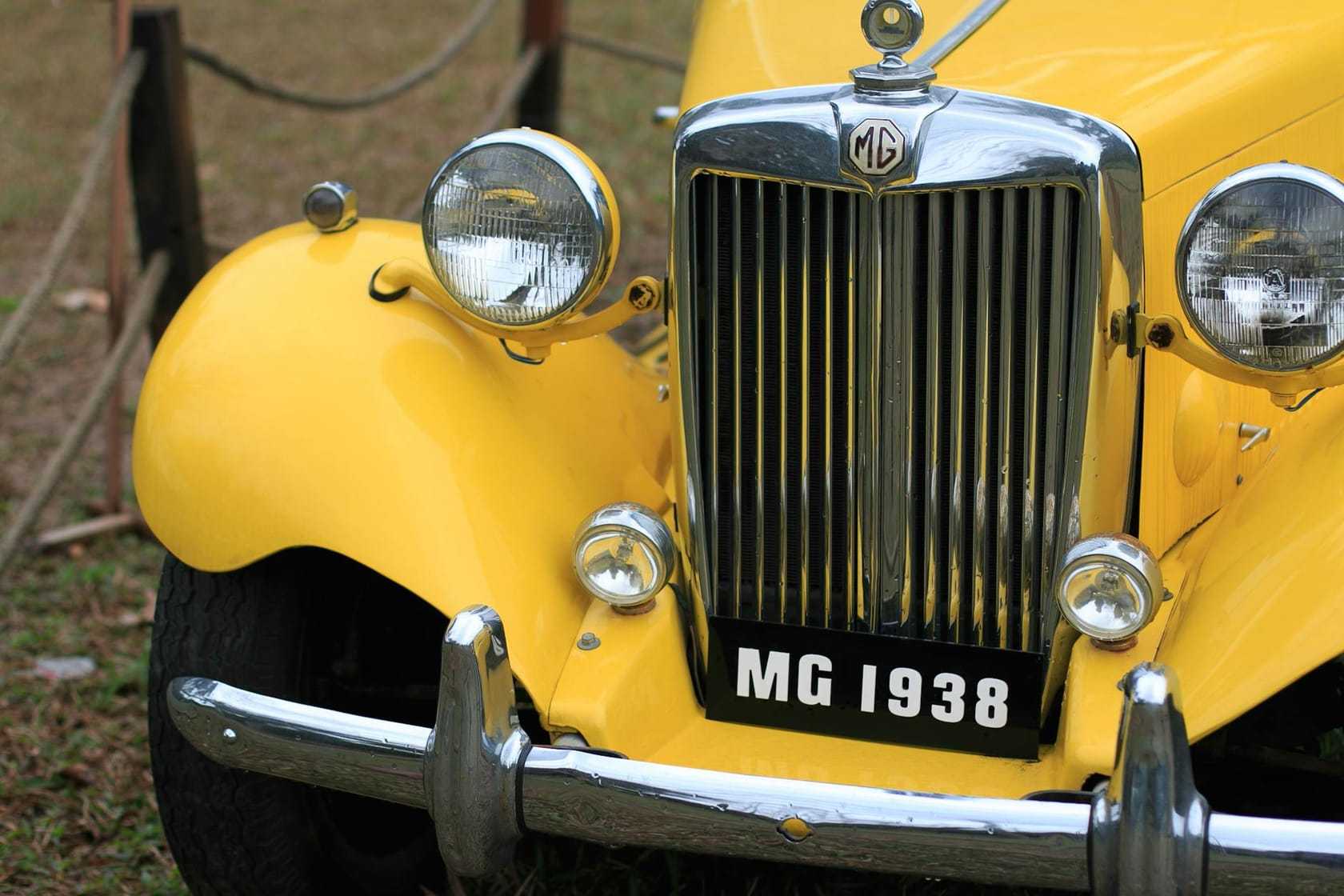
The decades
The British cars of the 1940s fall into two distinct halves, separated by the Second World War. The first half is the wartime shutdown: from September 1939 the British motor industry stopped making cars for civilians and switched to military production. Aircraft engines, tanks, trucks, ambulances, and parts came out of the factories that had been making Austins, Morrises, Wolseleys and Jaguars. Almost no passenger cars were registered to civilians from 1940 through 1945.
The second half is the recovery. From 1945 the industry restarted, initially with warmed-over pre-war designs because the tooling still existed and steel was rationed. Then, under Stafford Cripps’ “Export or Die” policy, the industry pivoted hard to overseas sales. By 1948 around 60% of British cars were being exported, and by 1949 the country was briefly the world’s largest car exporter. The cars that defined the 1950s and 1960s, the MG TC, the Land Rover, the Jaguar XK120, the Morris Minor, the Bentley Mark VI, were all launched in the late 1940s on the back of that export drive.
The wartime shutdown
Civilian car production effectively ended in 1940. The “Pool” petrol that was available to civilians was rationed to a few gallons a month, and most car owners laid their vehicles up for the duration. Factories switched to munitions and military vehicles: Rolls-Royce built Merlin aero-engines, Jaguar (then Swallow Sidecar Company, renamed Jaguar Cars in 1945) built aircraft parts, Austin’s Longbridge made aircraft and military vehicles, Vauxhall built Churchill tanks. The Land Rover would later be designed by Maurice Wilks partly because his wartime experience of the Willys Jeep convinced him the British market needed an equivalent.
A small number of pre-war cars remained in service through the war years, mostly used by doctors, farmers, and others with priority fuel allocations. Most ordinary cars sat in garages or were scrapped. By 1945 the British car parc was smaller, older, and in worse condition than in 1939.
The post-war restart and “Export or Die”
Production restarted slowly in late 1945 and 1946. The first post-war cars were largely pre-war designs in pre-war bodies: Austin Eight and Ten, Morris Eight, Standard Eight, Vauxhall Twelve and Fourteen. The tooling existed, the demand was immediate, and the priority was getting cars rolling out of factories as quickly as possible.
But the British economy needed dollars, urgently. The wartime debt to the United States and the post-war balance-of-payments crisis meant that exports became national policy. Stafford Cripps, as President of the Board of Trade and later Chancellor, made the position blunt: factories that didn’t export couldn’t get steel. The “Export or Die” slogan became literal industrial policy from 1947 onwards. Steel was rationed by export performance. A manufacturer’s allocation for the home market depended on how many cars it was sending overseas.
This is the policy environment that produced the late-1940s landmark launches. The MG TC, the Land Rover, the Jaguar XK120 and the Morris Minor were all designed with export markets in mind, and the success of those exports paid for the factories to keep producing through the rationing years that lasted until 1954.
Buying a car at home: covenants and waiting lists
For the British buyer, the export drive meant the new cars were largely unobtainable. Home-market allocations were a fraction of production, waiting lists ran to years for the popular models, and purchase tax made everything dearer, doubling to two-thirds of the price on cars over £1,000 from 1947. Petrol was still rationed, and stayed rationed until May 1950.
The scarcity produced its own machinery. Because a nearly-new car was worth more than a new one, buyers had to sign a covenant agreeing not to resell for a year, later extended to two, and a grey market in barely-used cars ran anyway. Most families who motored at all in the 1940s did so in a pre-war car kept alive on care and scarce spares, which is one reason so few ordinary pre-war saloons survived to become classics: they were worked to death.
Landmark launches
The MG TC (1945–49) was the first post-war British sports car and the car that built the American market. It was a warmed-over MG TB in essence, with the same 1,250cc XPAG engine and traditional folded-aluminium body on an ash frame. But it was the right car at the right moment. Around 10,000 TCs were sold, with about half going to American servicemen returning home after the war who had discovered British sports cars while stationed in the UK. The TC is the car that started the “British sports car in Southern California” cultural cliché that lasted thirty years.
The Land Rover Series I launched in April 1948. Maurice Wilks designed it during 1947 on his Anglesey farm as an interim solution: Rover’s Solihull factory needed something to build during the steel-rationing years, and a Willys Jeep clone with a Rover engine and folded-aluminium body required no expensive press tooling. Wilks expected the Land Rover to sell for two or three years before passenger-car production fully resumed. Instead it outsold Rover’s saloons by 1950 and stayed in production, in substantially the same form, for the next sixty-eight years.
The Jaguar XK120 was first shown at the 1948 London Motor Show as a styling exercise to publicise the new XK twin-cam engine. Demand was so strong that Jaguar put it into production for 1949. The XK120’s 120 mph top speed was real, it was the fastest production car in the world at launch, and it cost roughly half what an Aston Martin or Bristol equivalent did. The XK120 is the car that put Jaguar firmly in the sports-car business and set up the XK140, XK150, E-Type lineage that followed.

Jaguar and the XK120 moment
Jaguar’s 1940s is the William Lyons story. The company restarted post-war production with the 1.5 Litre, 2.5 Litre and 3.5 Litre saloons (1945–48), which were pre-war SS-Jaguar designs in substance. The Mark V (1948–51) was the first post-war Jaguar saloon properly designed for the post-war era, with independent front suspension and the option of the older 2.5 and 3.5 pushrod engines.
Then in 1948 came the XK engine: a twin-overhead-camshaft straight-six designed by William Heynes, Walter Hassan and Claude Baily. It would power Jaguar saloons and sports cars for the next forty years through to the late 1980s. The XK120 was originally a publicity car to launch the engine; the engine made the company.

The luxury makers restart
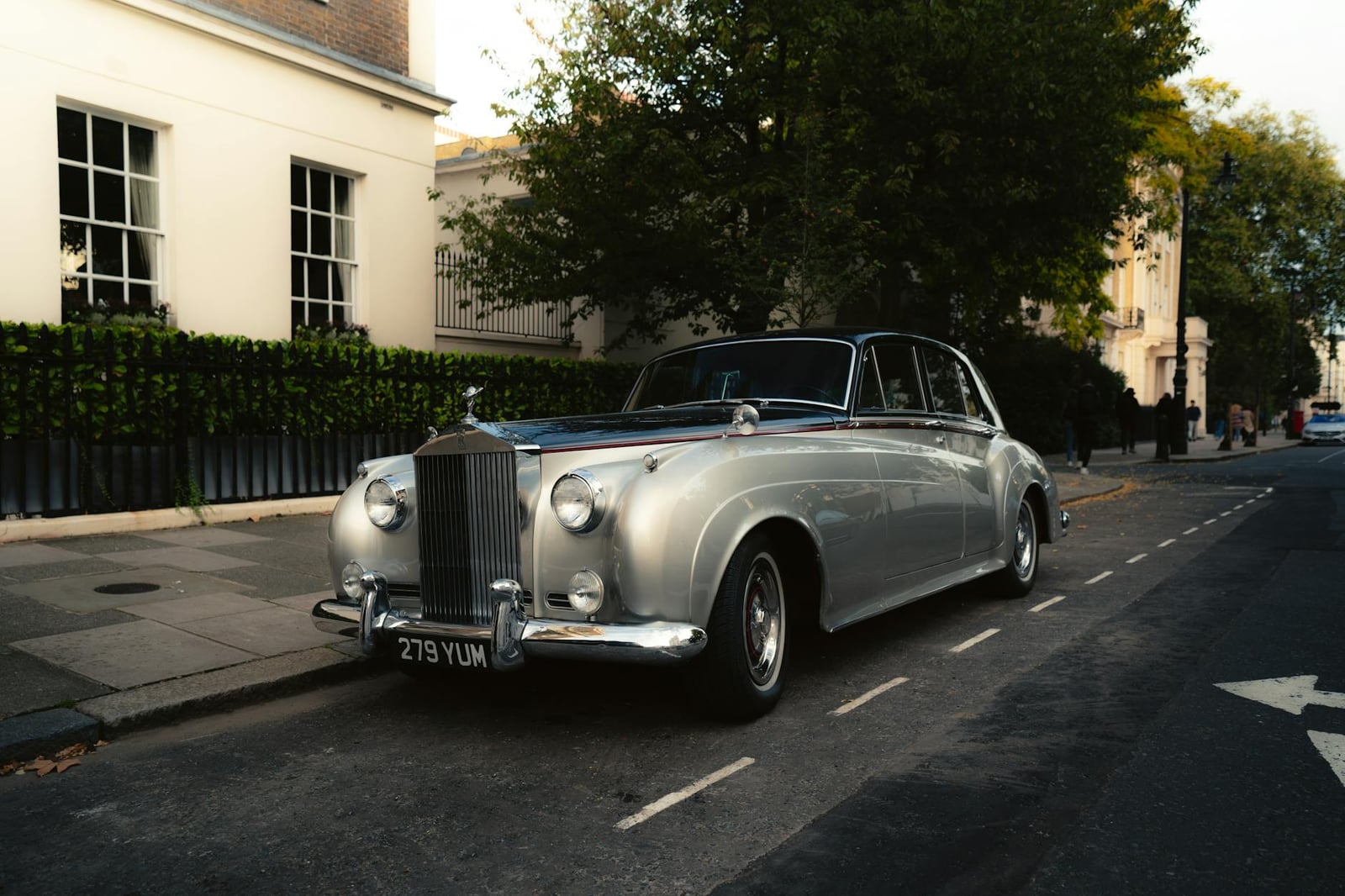
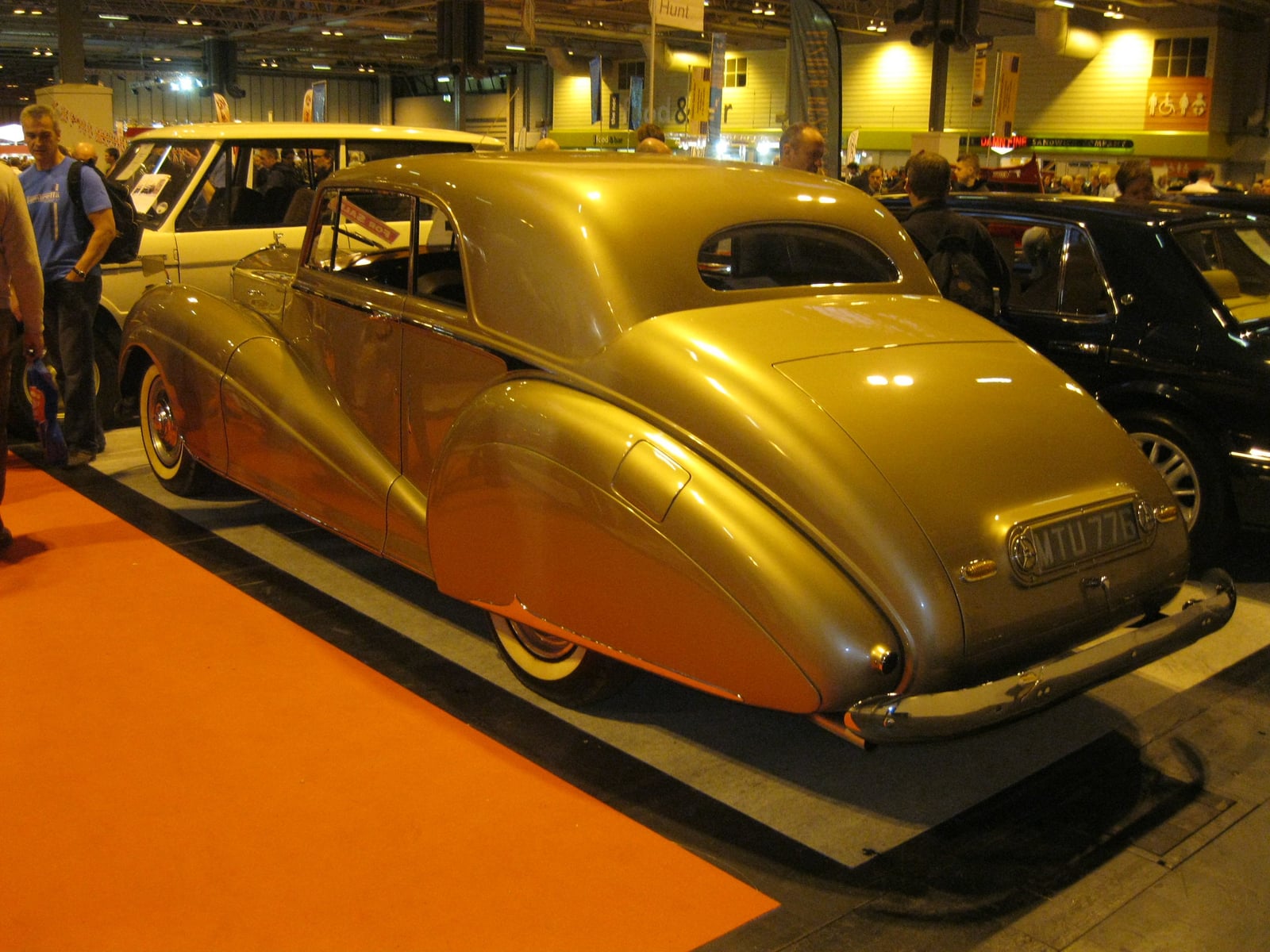
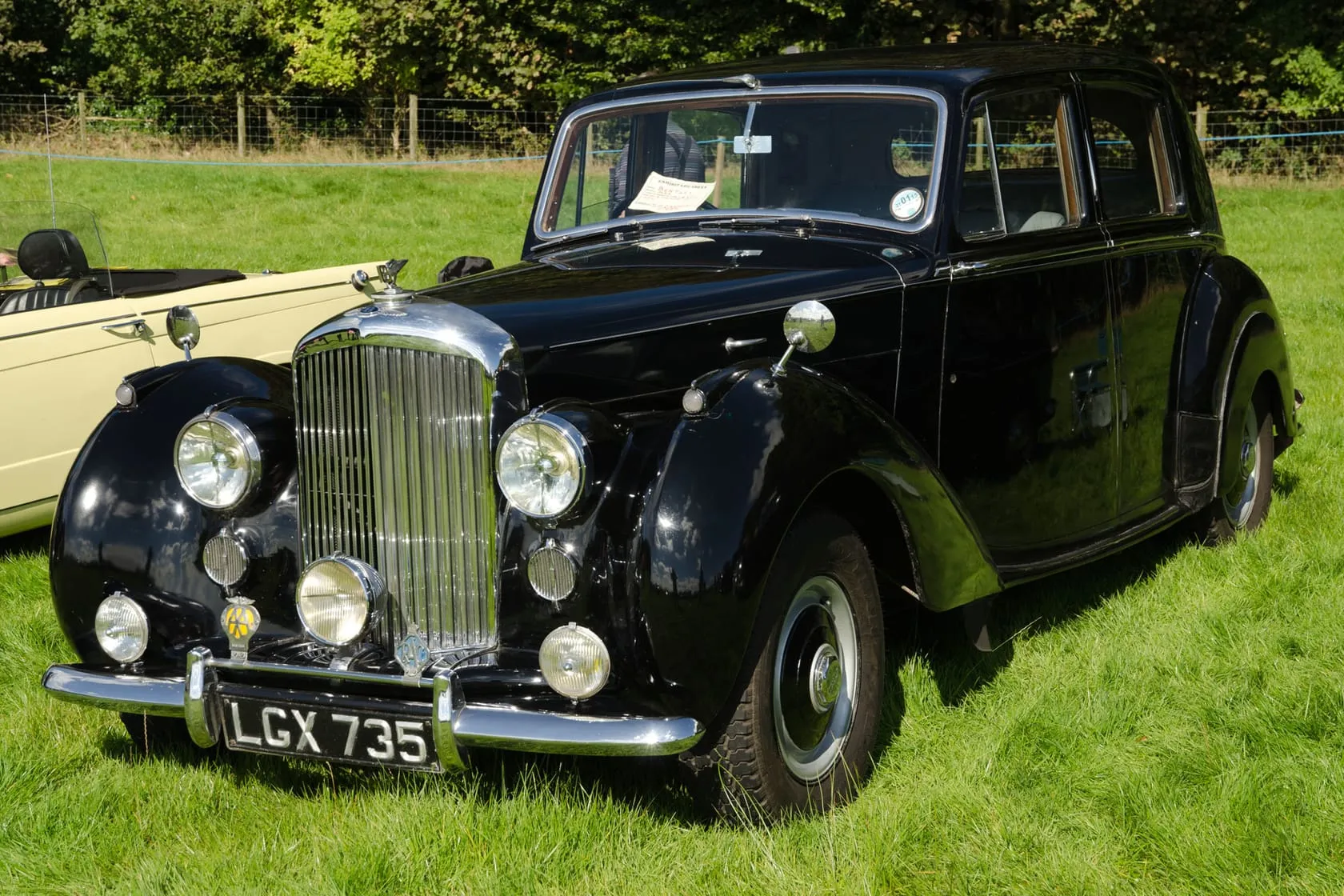
Bentley restarted production with the Mark VI (1946–52), the first Bentley designed and bodied entirely by Rolls-Royce (Bentley had been acquired by Rolls-Royce in 1931, but pre-war Bentleys still used coachbuilt bodies). The Mark VI used a 4.25-litre and later 4.5-litre straight-six engine and was the first Bentley sold as a complete car from the factory rather than as a rolling chassis for coachbuilders. Around 5,200 Mark VIs were built.
Rolls-Royce’s late-1940s output was the Silver Wraith (1946–58), sold as a chassis for coachbuilt bodies, and the Silver Dawn (1949–55), which was essentially a rebadged Bentley Mark VI with a slightly different grille and trim. The Silver Wraith ran the full post-war coachbuilt tradition through the decade and was the last Rolls-Royce sold primarily as a chassis-only proposition.
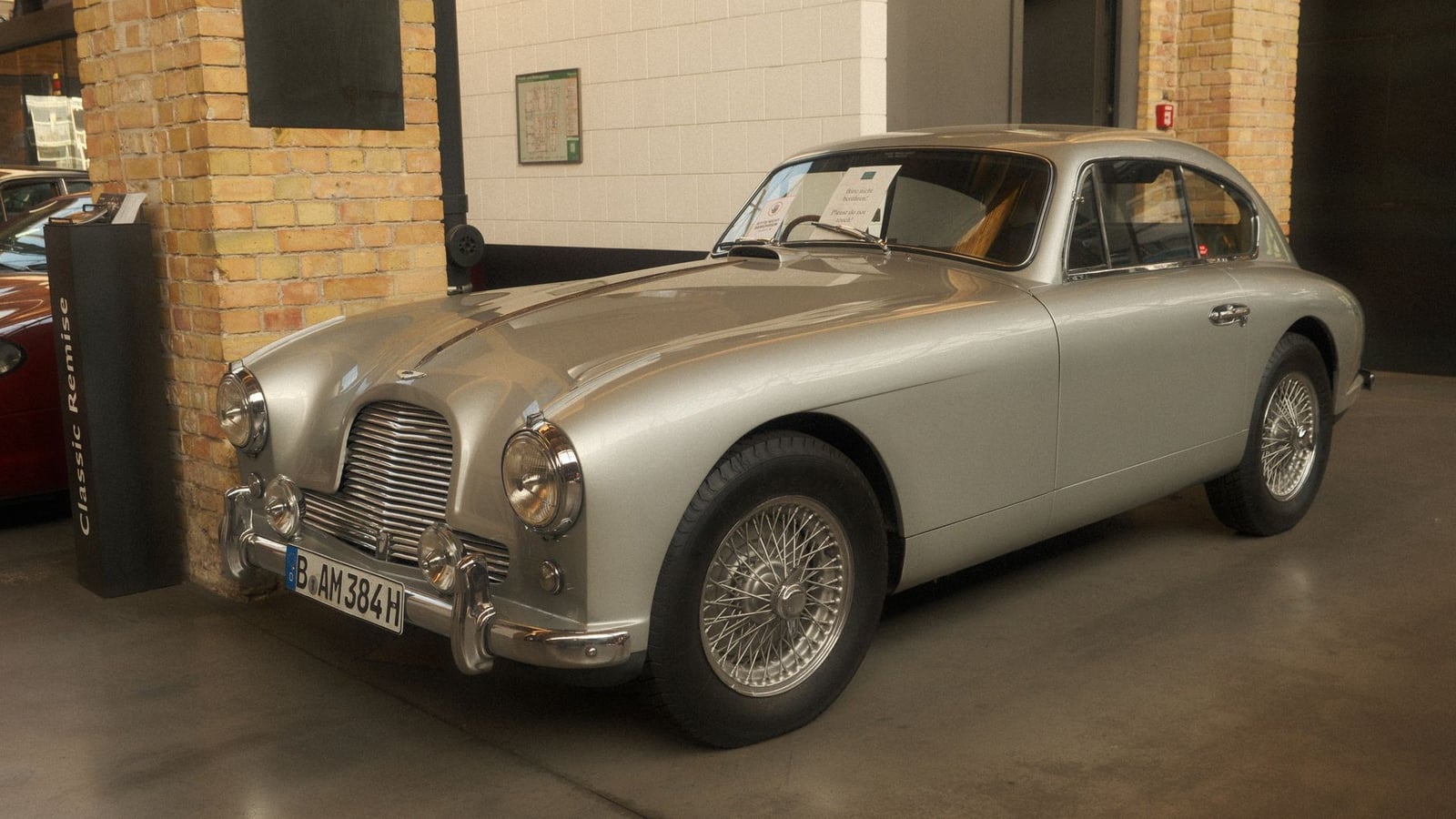
Aston Martin restarted under new ownership. David Brown, the Yorkshire tractor and gear maker, bought the company in 1947, then bought Lagonda in 1948 (largely for the W.O. Bentley-designed straight-six engine). The first DB Aston, the 2-Litre Sports later called the DB1 (1948–50), was a transitional car. The DB2 (1950–53) launched right at the end of the decade and properly started the DB lineage that ran for the next seventy years.
The small-car launches
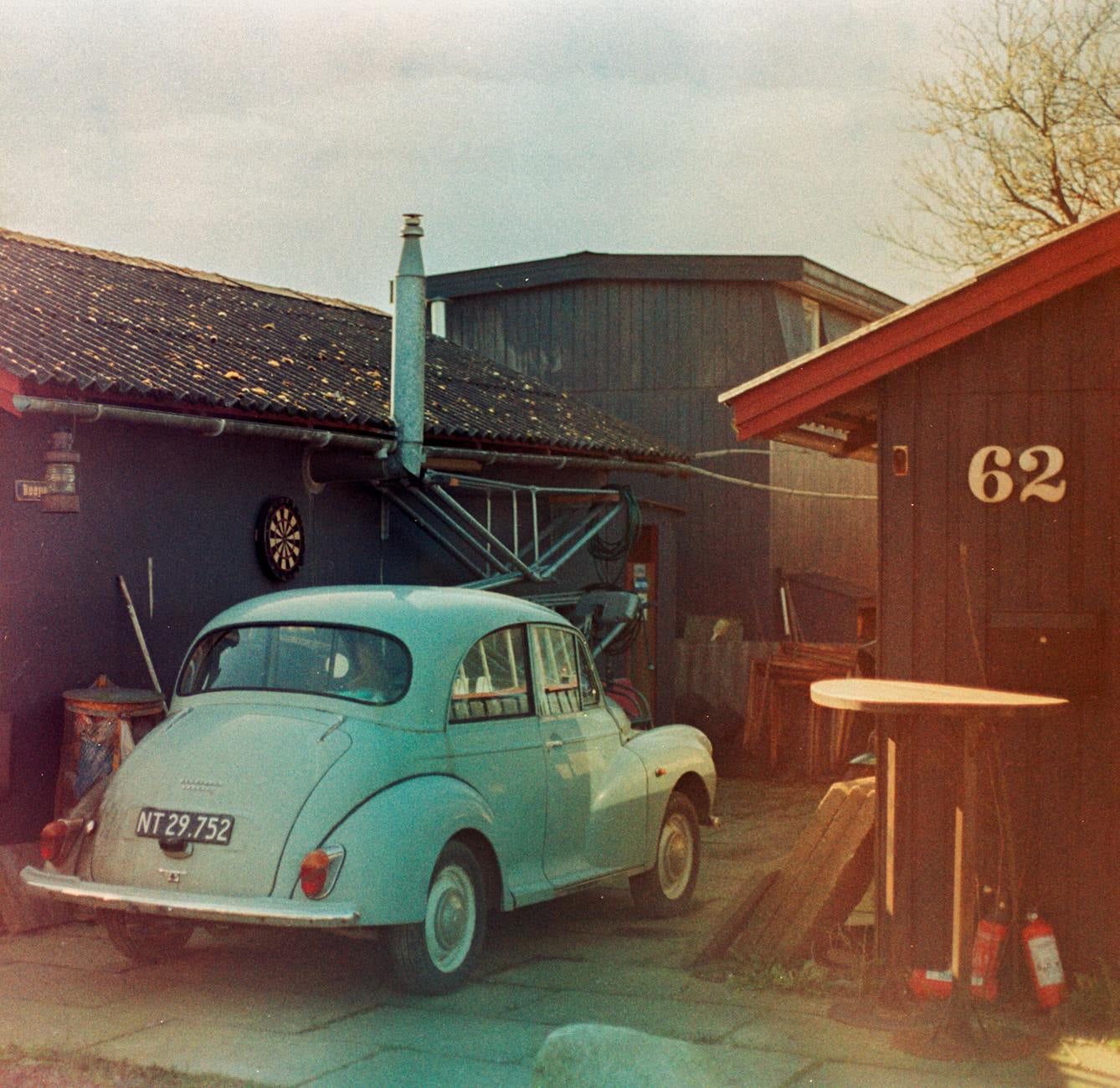
The Morris Minor launched at the 1948 London Motor Show alongside the XK120 and the Land Rover Series I, a remarkable single-show British launch trio. Alec Issigonis’s design was technically modern for the era: monocoque construction, independent front torsion-bar suspension, rack-and-pinion steering. The original MM Minor (1948–53) used a 918cc side-valve engine, replaced in 1952 by an 803cc Series II with the BMC A-series engine. The Minor would run until 1971 and sell 1.6 million units total.
The Austin A40 Devon and Dorset (1947–52) was Austin’s family saloon of the period, with the new 1.2-litre overhead-valve B-series engine. The Austin A90 Atlantic (1948–52) was Austin’s attempt at the American market with a heavy convertible body and a 2.6-litre four-cylinder engine. The Atlantic sold poorly in America but its engine and gearbox went on to power the Austin-Healey 100 from 1953.
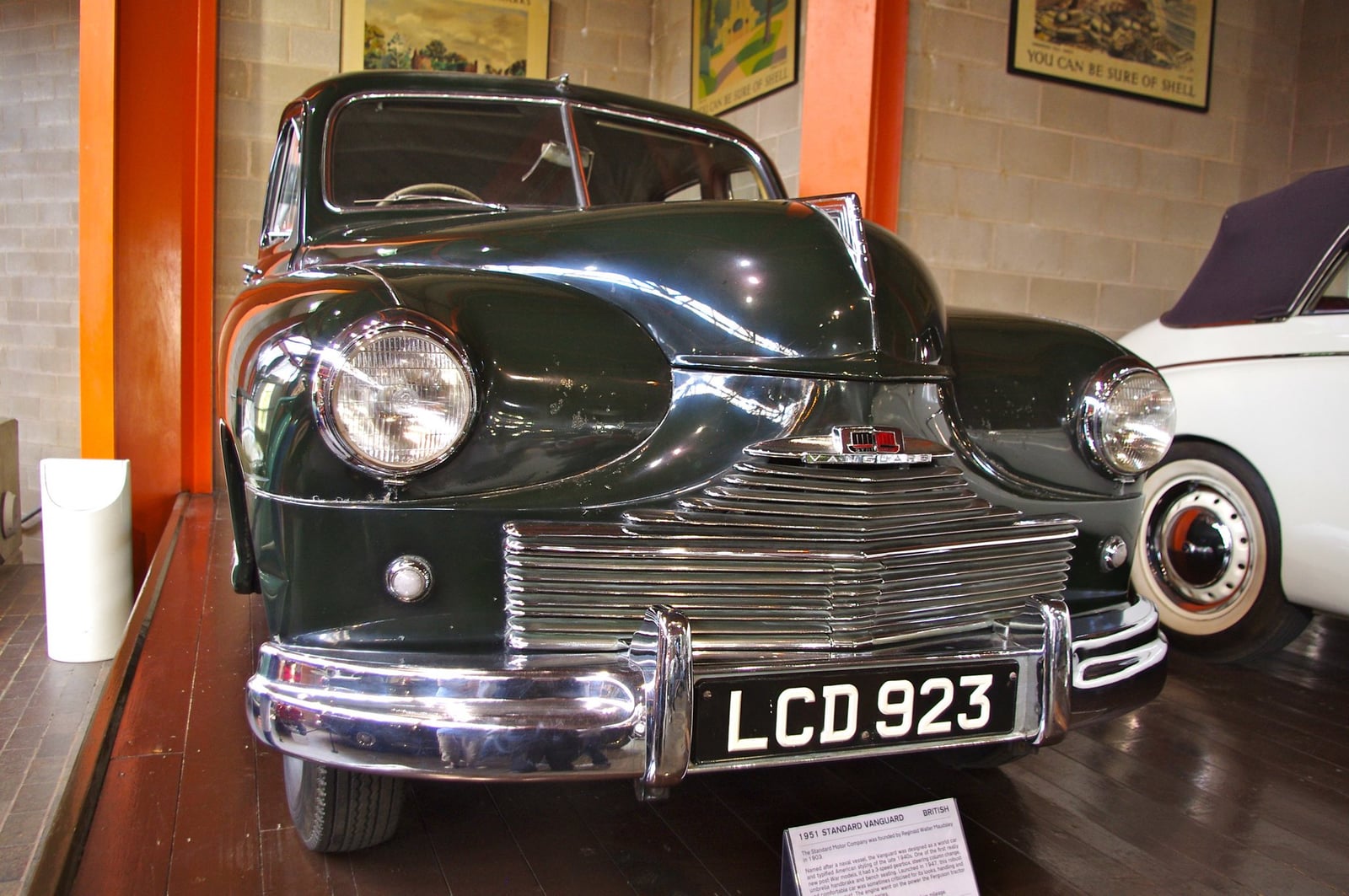
The Standard Vanguard launched in 1947, a chunky 2.1-litre saloon intended for the export market, and ran until 1963 across multiple Phase generations. The Vanguard was Standard’s main 1940s/1950s product and the company’s most significant export earner.
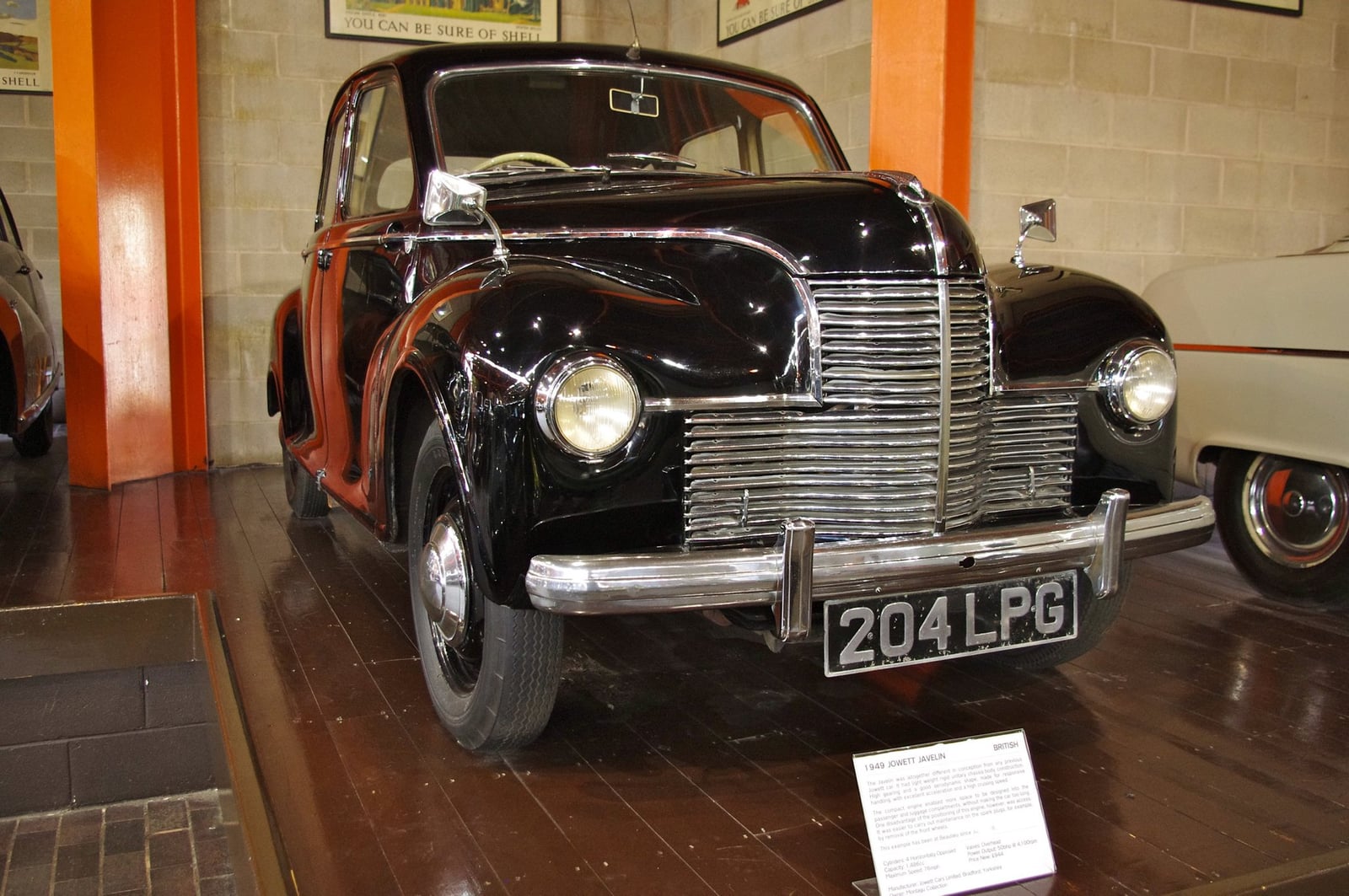
The Jowett Javelin (1947–53) was the small Bradford-based maker’s ambitious flat-four-engined family saloon. Technically interesting (aerodynamic body, torsion-bar suspension), low-volume, and Jowett went bust in 1954.
Specialists and the small makers
Several British specialist makers restarted post-war.
Bristol Cars formed in 1945, with engineers from the Bristol Aeroplane Company branching into car production. The Bristol 400 (1947–50) used a BMW 326-derived chassis and a BMW 328-derived straight-six engine acquired as part of post-war reparations. Bristol stayed hand-building cars until 2011, and the BMW-derived engine genealogy ran through the early models.
AC restarted with the AC 2-Litre saloon (1947–58). Frazer Nash, through Aldington’s Bristol connection, restarted with the Le Mans Replica and Mille Miglia variants, very low volume but technically sophisticated.
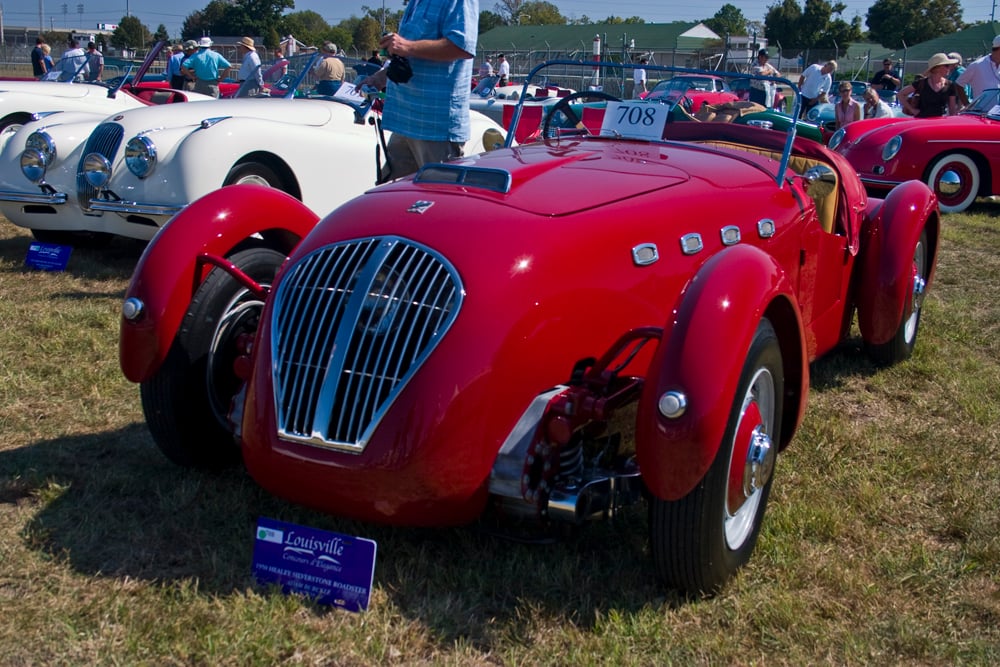
Healey, before the Austin-Healey collaboration, produced the Healey Silverstone (1949–51), the Westland and Elliott saloons, and worked with Nash to produce the Nash-Healey (1950–54) for the American market. The Donald Healey Motor Company would merge into the Austin-Healey collaboration in 1952.
Allard, the small London-based specialist, restarted with the J1 and J2 sports cars using American V8 engines in light British chassis. The Allard formula (American big engine, British small chassis) was the AC Cobra concept fifteen years early.
What made the 1940s distinctive
The 1940s is two stories.
The wartime gap. No other decade in British motoring history has a five-year manufacturing stop in the middle. The 1939–45 break created a backlog of demand, a depleted vehicle parc, and an industry that had spent the war building military equipment rather than refining car designs. When civilian production restarted in 1945–46, most of the cars on sale were pre-war designs in pre-war bodies, because that’s what the tooling was set up to produce.
The Export or Die policy and what it built. The late-1940s launches that define the era (MG TC, Land Rover, Jaguar XK120, Bentley Mark VI, Morris Minor, Aston DB2) were all designed under the explicit assumption that exports would carry the company. The American sports-car market, the colonial Land Rover market, the European Bentley and Jaguar market: these markets were built in the late 1940s by deliberate industrial policy. Without the dollars that the MG TC and the XK120 earned in California, the British motor industry of the 1950s simply could not have made it through the steel-rationing years.
The decade ended with the industry in better shape than at any point since 1939. The 1950s would build on the export markets the 1940s opened, and the cars that defined the 1950s and 1960s, the XK120, the Land Rover, the Morris Minor, the MG TC and its TD/TF successors, were all already in production by January 1950.
If you want to read forward, the 1950s page covers the decade when the late-1940s launches matured into the cars that built the British classic-car identity. For broader scope, see which cars count as British classics.

More photos
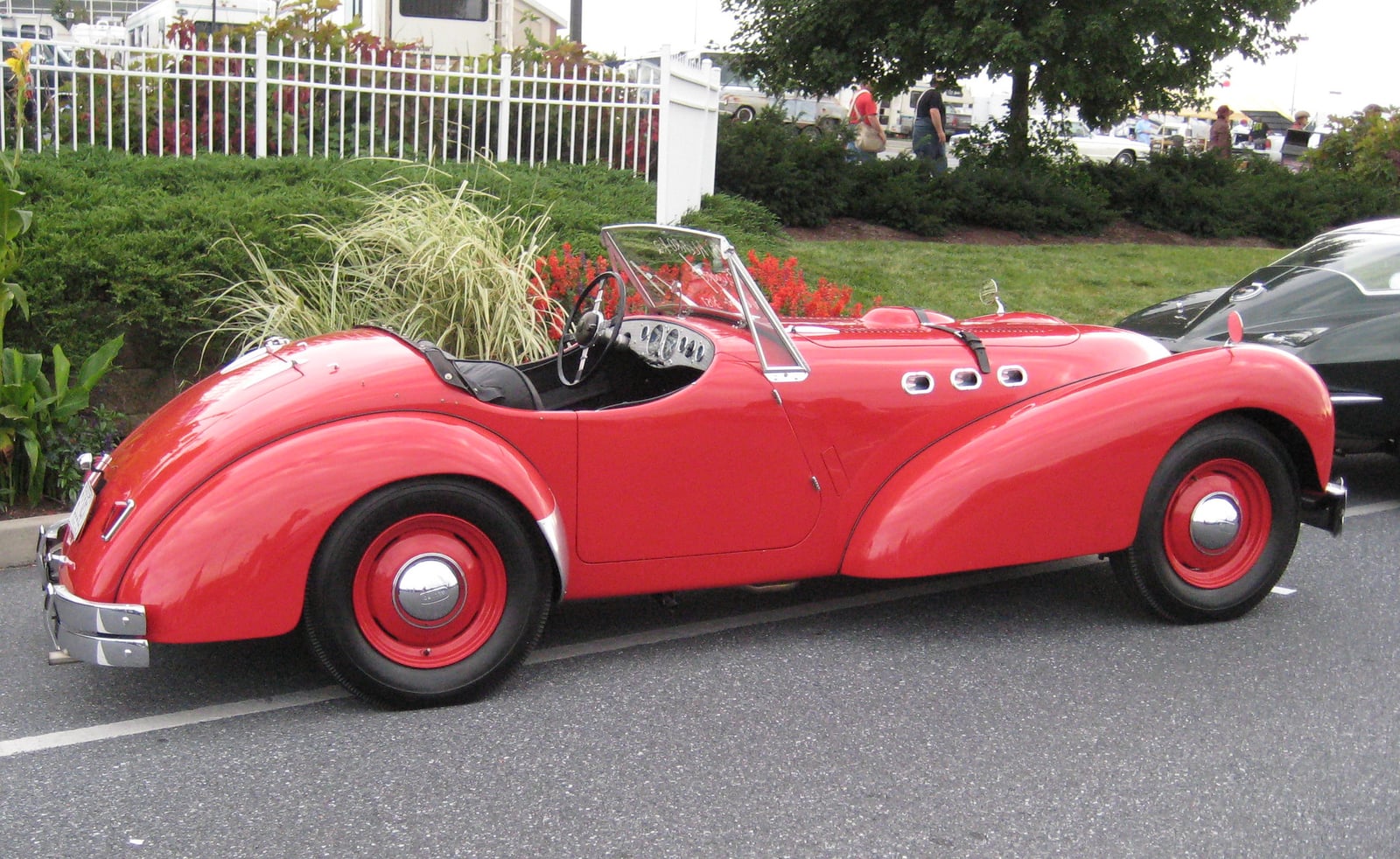
The cars of the 1940s
15 guides1945


1949


Frequently asked questions
What British cars were launched in the late 1940s?
What was the Export or Die policy?
Were cars built in Britain during the Second World War?
What was the fastest British car of the 1940s?
What was special about the 1948 London Motor Show?
Could ordinary Britons actually buy these cars at the time?
What were the most popular 1940s British cars?
Related across themes


Recently added

Bentley S-series: the quiet twin with the beautiful secrets (1955–1965)

Rolls-Royce Silver Spirit and Silver Spur: the last Crewe bargain (1980–1999)

Rolls-Royce Corniche: the coachbuilt survivor that outlived its makers (1971–1995)
