Nuffield tractors: the orange tractors built by the makers of Morris cars
Nuffield built bright orange tractors from 1948, made by the Morris car empire under Lord Nuffield himself. A guide to the old Nuffield tractors worth knowing, from the Universal M3 and M4 to the ten-speed 10/60 and the 4/65, the move to Bathgate, what to look for when buying, and what a vintage Nuffield is worth.
Built 1948–1969

At a glance
- Years
- 1948–1969
- Production
- Built in large numbers, though fewer than Ferguson or Fordson
- Assembly
- Ward End, Birmingham, then Bathgate, Scotland from 1962
- Values
- A running 10/60 or 4/65 from around £2,000-£4,000; a project less, a scarce early three-wheel M3 more
- Range
- Universal M3/M4, DM4, 3/42 & 4/60, 10/42 & 10/60, 3/45 & 4/65, 4/25 Mini
- Notable
- Built by the Morris/Nuffield car empire; rebadged as the blue Leyland tractors in 1969
The tractors
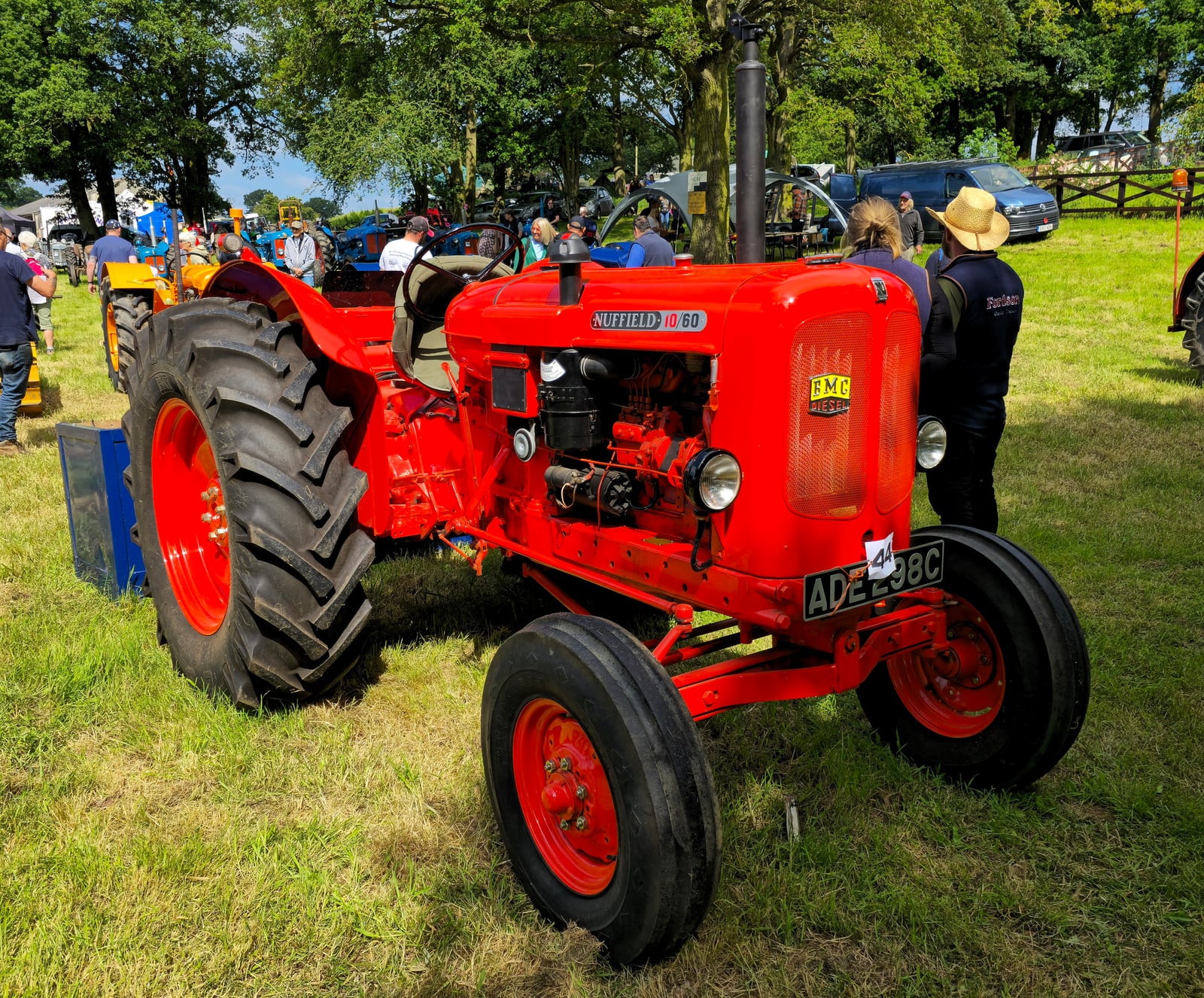
The Nuffield is the tractor built by a car company, and not a small one. The bright orange Nuffields that worked British farms from 1948 came out of the Morris empire, built under Lord Nuffield himself, the man who as William Morris had made Britain’s answer to Henry Ford. They are among the most distinctive of all Britain’s classic and vintage tractors, and a good one is still an affordable and usable machine.
From Morris cars to the Nuffield Universal
The story starts with the government. In 1945, with the country rebuilding and food production a national priority, the Nuffield Organisation was asked to design and build a new all-British tractor. The job went to Dr Herbert Merritt, an engineer who had designed tractors for David Brown and worked on tank transmissions during the war, and a prototype appeared in 1946.
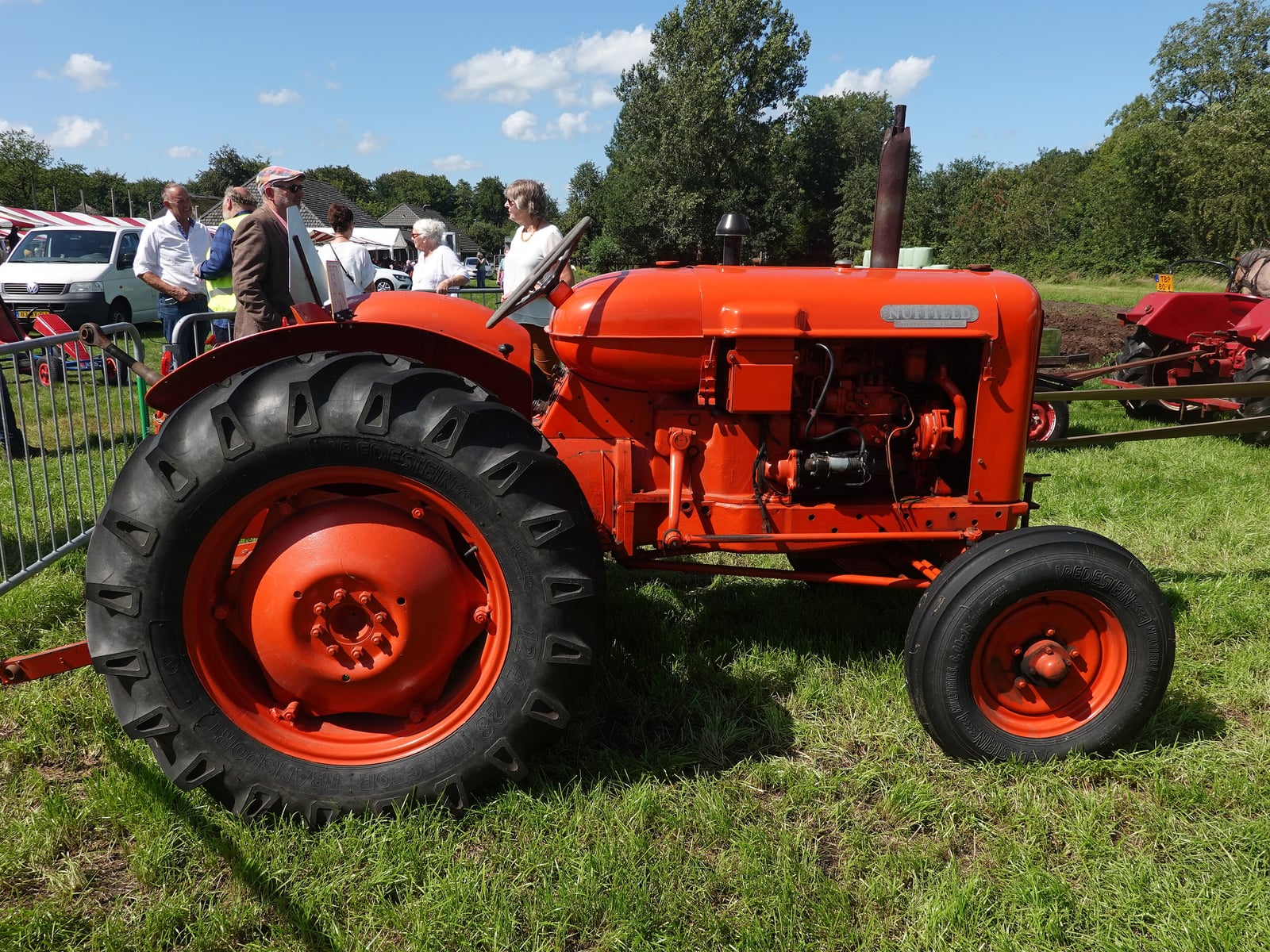
The production tractor, the Nuffield Universal, was launched at the Smithfield Show in December 1948. It was built at the former Wolseley Motors works at Ward End in Birmingham, freed up when car production moved away, and it came in two forms from the start: the four-wheeled M4 and the three-wheeled, row-crop M3. In those early machines the number simply counted the wheels, which is worth knowing, because the later Nuffields used a different system entirely.

The Nuffield tractors
The first Universals used a Morris Commercial lorry engine, a four-cylinder side-valve unit running on tractor vaporising oil, the same kind of engine the company built for its vans and trucks. A diesel followed around 1950 as the DM4, and when the Nuffield Organisation merged with Austin to form the British Motor Corporation, the tractors gained the BMC diesel engines used right across the group’s cars and lorries. That is part of the Nuffield’s character: it is a tractor with a car-and-lorry engine in it.
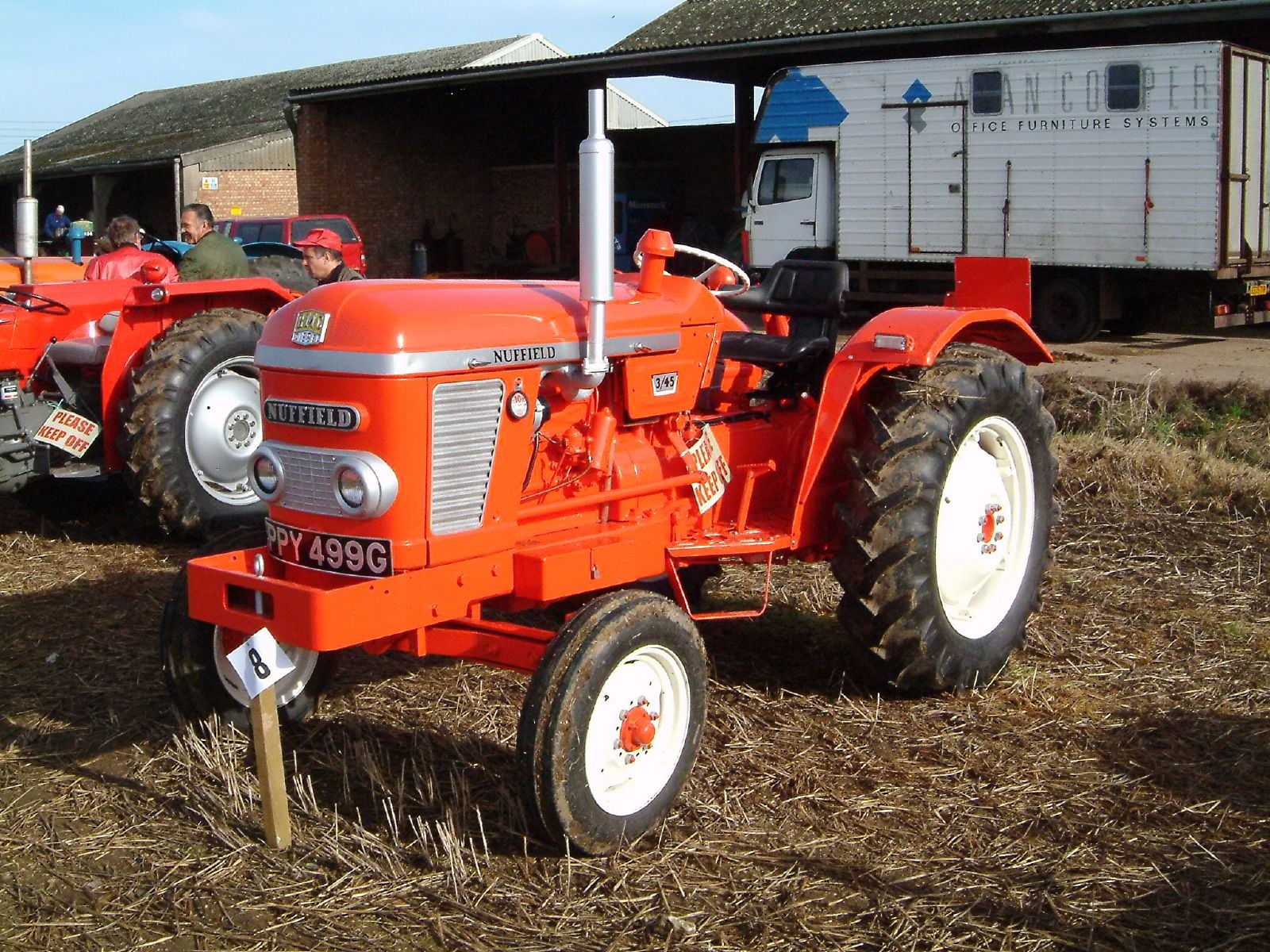
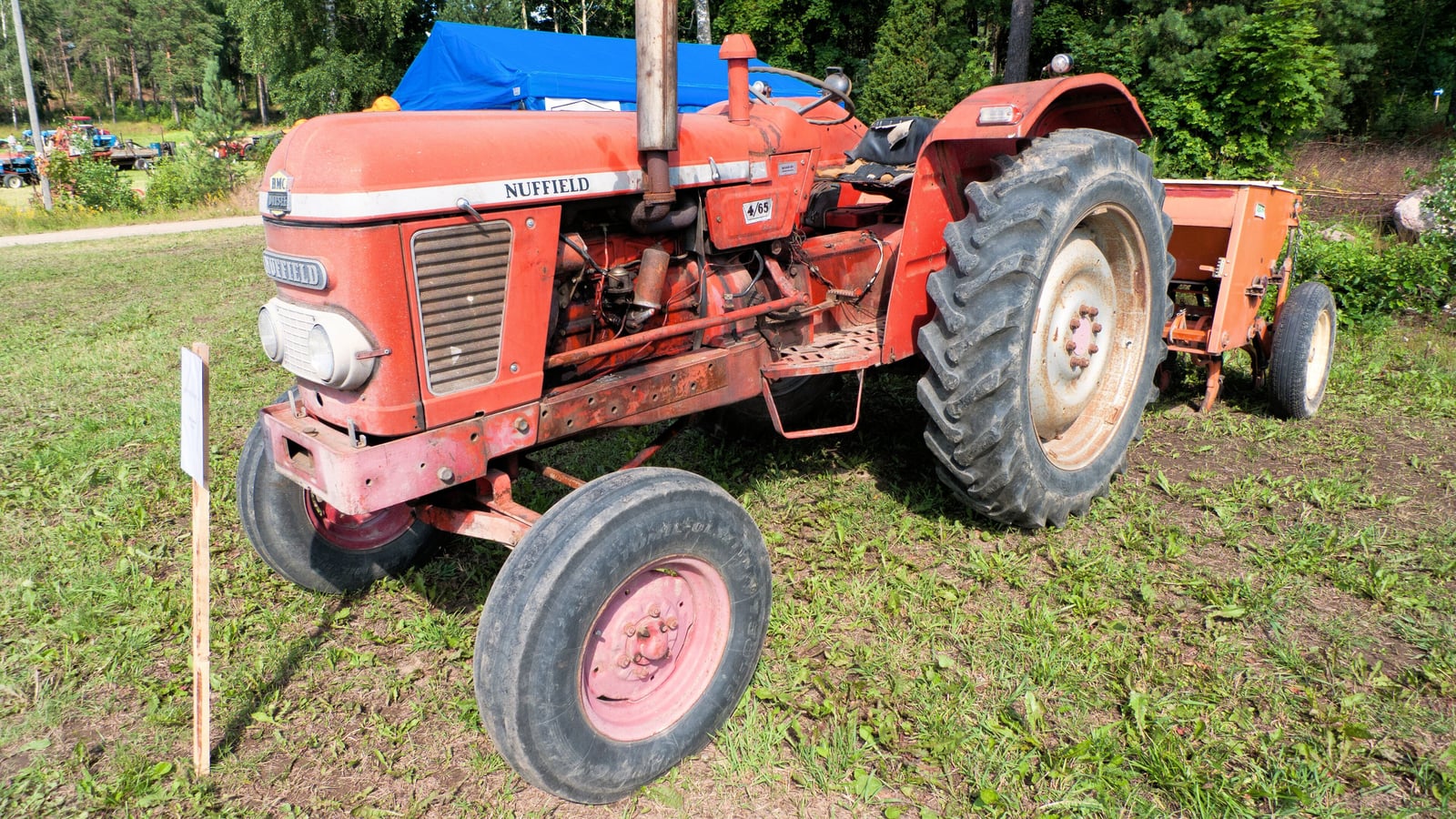
By the late 1950s the M3 and M4 had given way to the Universal Three and Universal Four, and here the naming changed. From now on the first figure was the number of cylinders and the second was roughly the horsepower, so a 3/45 was a three-cylinder of about forty-five horsepower and a 4/65 a four-cylinder of about sixty-five. The 3/42 and 4/60 of 1961 followed the same logic.
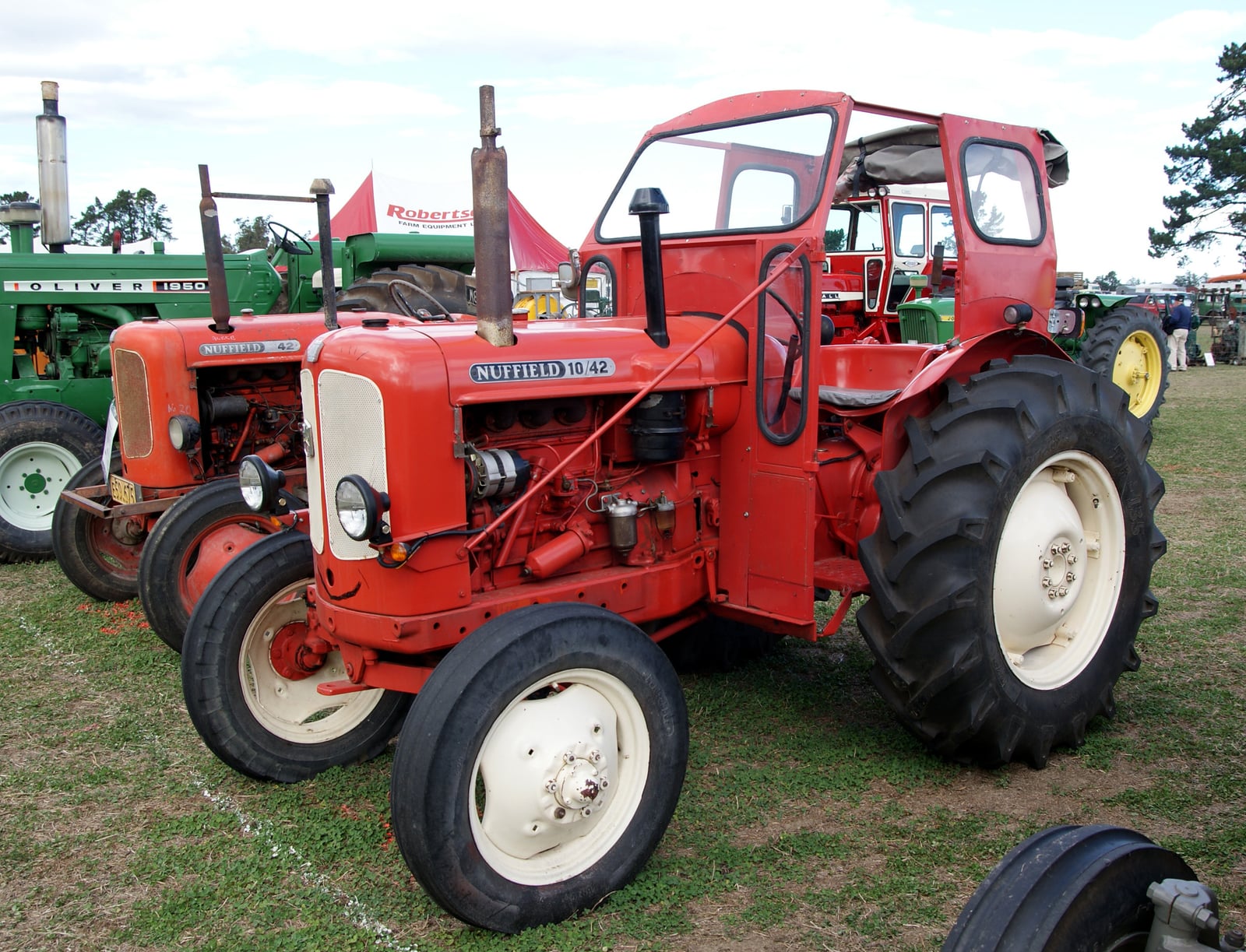
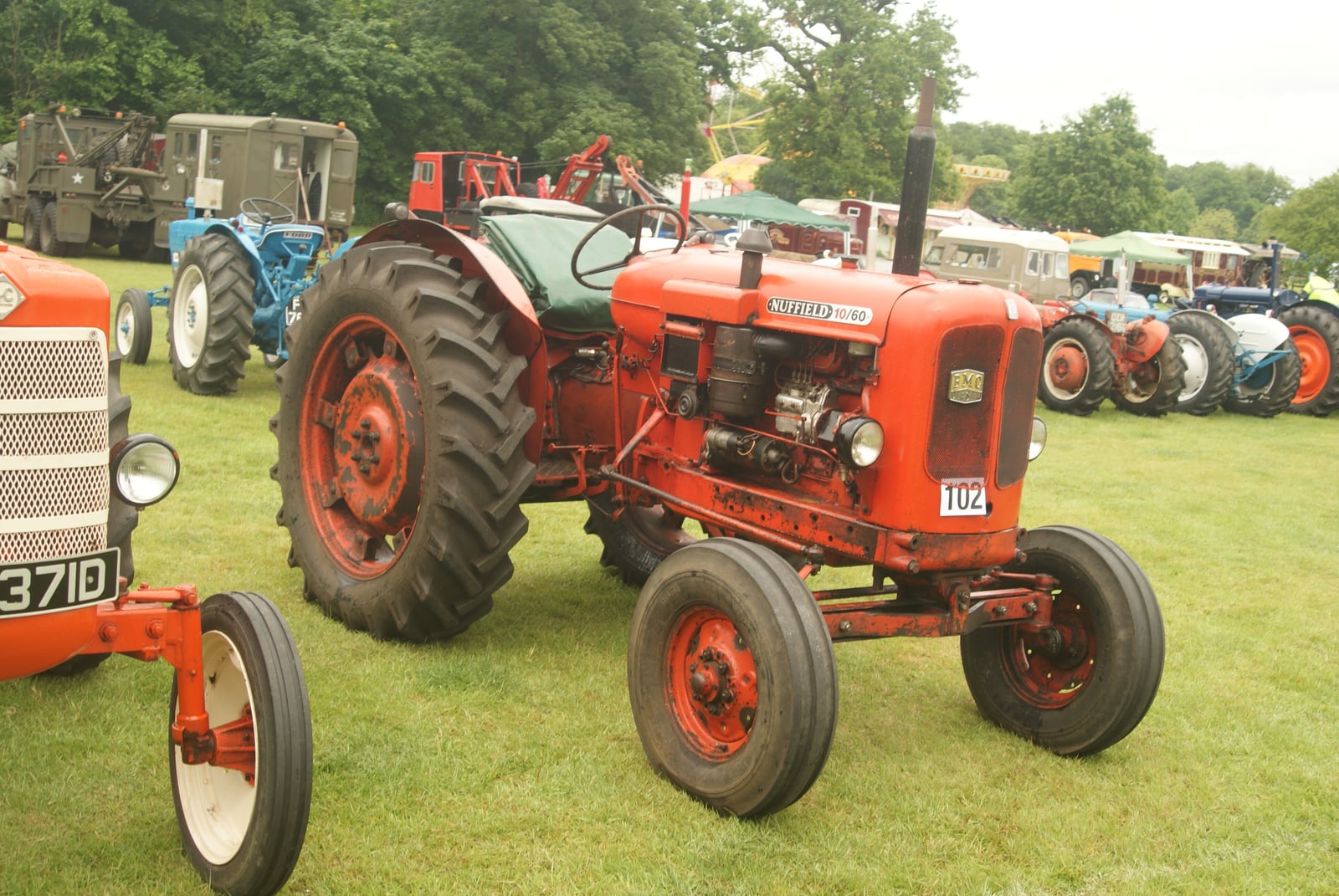
The best-known Nuffields came after the move to Scotland. In 1962 production shifted to a large new BMC factory at Bathgate in West Lothian, built with government encouragement to bring work to an area losing its coal mines. There, from 1964, came the ten-series, the 10/42 and 10/60, named not for cylinders or power but for a new ten-forward-speed gearbox, which Nuffield claimed as the first on a British tractor. The 3/45 and 4/65 of 1967 rounded out the range, alongside a small machine, the BMC Mini tractor that became the Nuffield 4/25.

The orange livery, and the move to blue
What everyone remembers is the colour. The Nuffield’s bright orange, officially Poppy Orange and close enough to red that the two names are used interchangeably, made it instantly recognisable in a field of grey Fergusons and blue Fordsons. It ran right through the Nuffield years.
It ended in 1969. By then the Nuffield Organisation had passed through BMC into British Leyland, and the corporation wanted its tractors in corporate colours. So the orange Nuffields became blue Leyland tractors, built at the same Bathgate factory, to the same basic designs, simply re-liveried and re-badged. An early blue Leyland is, underneath, a late orange Nuffield, which is why the two are always collected together.

Buying a Nuffield
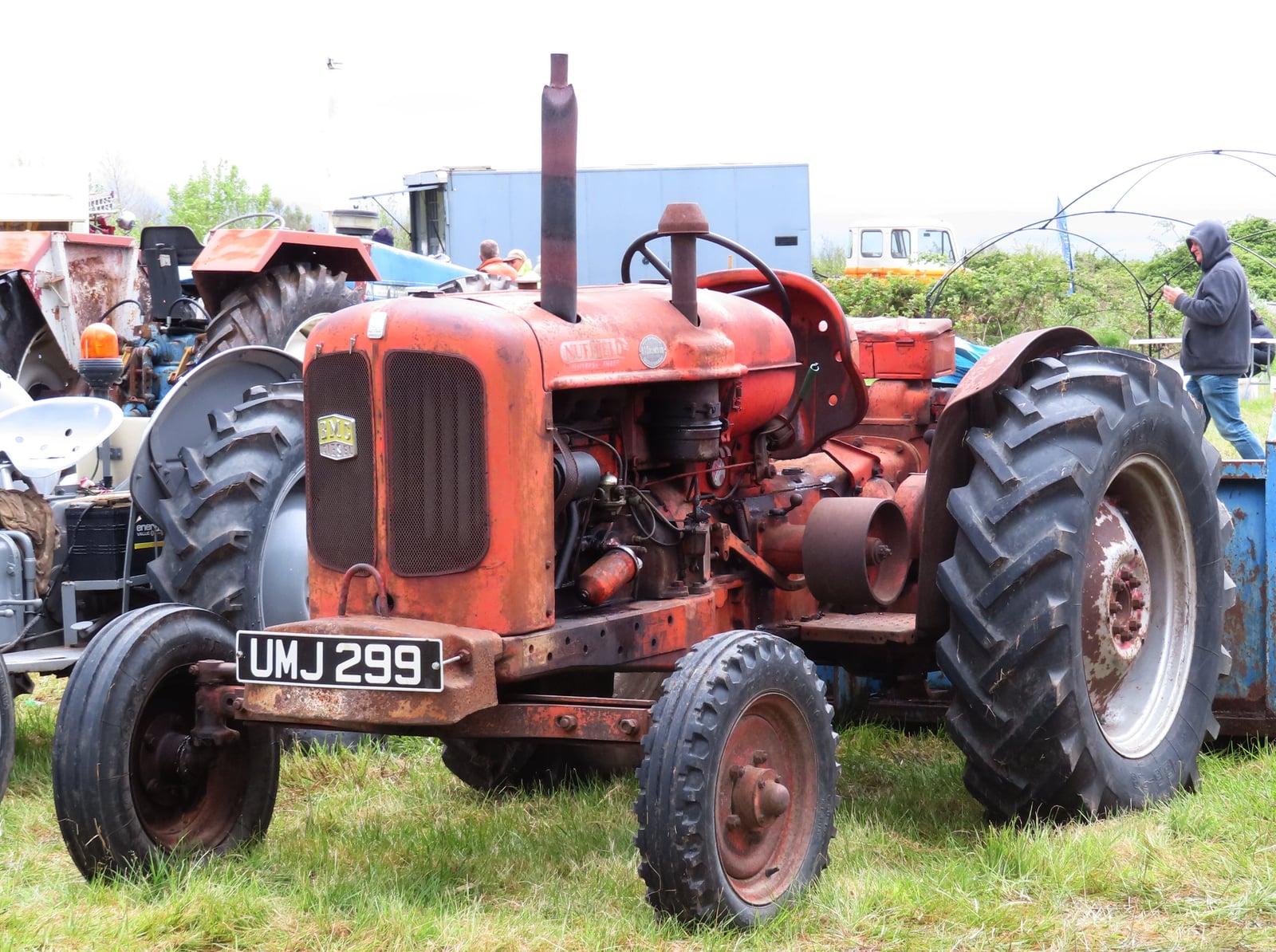
The thing to understand on a Nuffield is the engine. The BMC diesels use wet cylinder liners, and their classic weakness is liner-seal failure and cavitation, so the first checks are for water in the oil, a milky sump, or oil in the coolant, any of which points to a liner, gasket, or block problem. The good news is that the wet-liner design means liners can usually be replaced without machining the block, and the parts are well supported, so it is a manageable fault rather than a fatal one. On the ten-speed models there is a known weak circlip in the gearbox worth asking about. Otherwise the back ends are strong and long-lived, and the usual checks apply: clutch, brakes, steering, and tinwork. The general advice in owning and running a classic tractor applies directly here.
The early three-wheel M3 row-crop is the scarce and sought-after one. For most buyers, though, a 10/60 or a 4/65 is the sensible Nuffield, common enough to be affordable and well enough supported to be practical.

What they are worth
As a broad guide, and values do move, a tidy running Nuffield such as a 10/60 or a 4/65 sits roughly between £2,000 and £4,000 depending on condition. A rough project can be had for four figures, sometimes barely more than £1,000, while the scarce early M3 climbs well beyond the rest. As always, a sound engine and working hydraulics are worth far more than a recent respray.

Why Nuffield tractors are collected
The appeal is partly the back story, the bold orange car-maker’s tractor built by the Morris empire under Lord Nuffield, with engines shared with BMC cars and lorries. It is partly the looks, because nothing else on the showground is quite that colour. And it is partly the practicality: Nuffields are mechanically simple, robustly built, well served by a dedicated owners’ club and the specialist parts trade, and still attainable money. They qualify as historic vehicles like any other forty-year-old classic, and they carry a Scottish-industrial and British-motoring heritage that the grey and blue tractors around them cannot quite match.

Nuffield: the short history
- Dec 1948The Nuffield Universal launches at the Smithfield Show, built at the old Wolseley works at Ward End: the four-wheeled M4 and three-wheeled row-crop M3.
- 1950The DM4 diesel joins; the BMC merger later brings the group's diesel engines across.
- 1957The Universal Three and Four rename the range by cylinders and horsepower: 3/42, 4/60 and successors.
- 1962Production moves to the new BMC factory at Bathgate, built to bring work to a coalfield in decline.
- 1964The 10/42 and 10/60 arrive, named for a ten-forward-speed gearbox claimed as a British first.
- 1969British Leyland repaints the range blue and the orange Nuffield becomes the Leyland tractor.
The Nuffield viewing checklist
The engine, which is the thing
- Check for water in the oil, a milky sump or oil in the coolant
- Liner-seal failure and cavitation are the classic wet-liner weaknesses
- Liners usually replace without machining the block, so it is manageable rather than fatal
- Early Universals used a Morris Commercial side-valve on TVO, a different proposition entirely
Transmission and the rest
- Ask about the known weak circlip in the ten-speed gearbox
- Back ends are strong and long-lived
- Clutch, brakes, steering and tinwork as on any classic tractor
- A sound engine and working hydraulics are worth far more than a recent respray
Which Nuffield
- A 10/60 or 4/65 is the sensible buy: common enough to afford, supported enough to run
- The early three-wheel M3 row-crop is the scarce, sought-after one
- Poppy Orange and red are used interchangeably for the same livery
- The 4/25 Mini tractor is its own small curiosity
Related
Nuffield’s direct successor is the blue Leyland tractor. For the tractor that set the template the whole industry followed, see the Ferguson TE20, and for the best-selling classic of all, the Massey Ferguson 135.
More photos