1950s
-
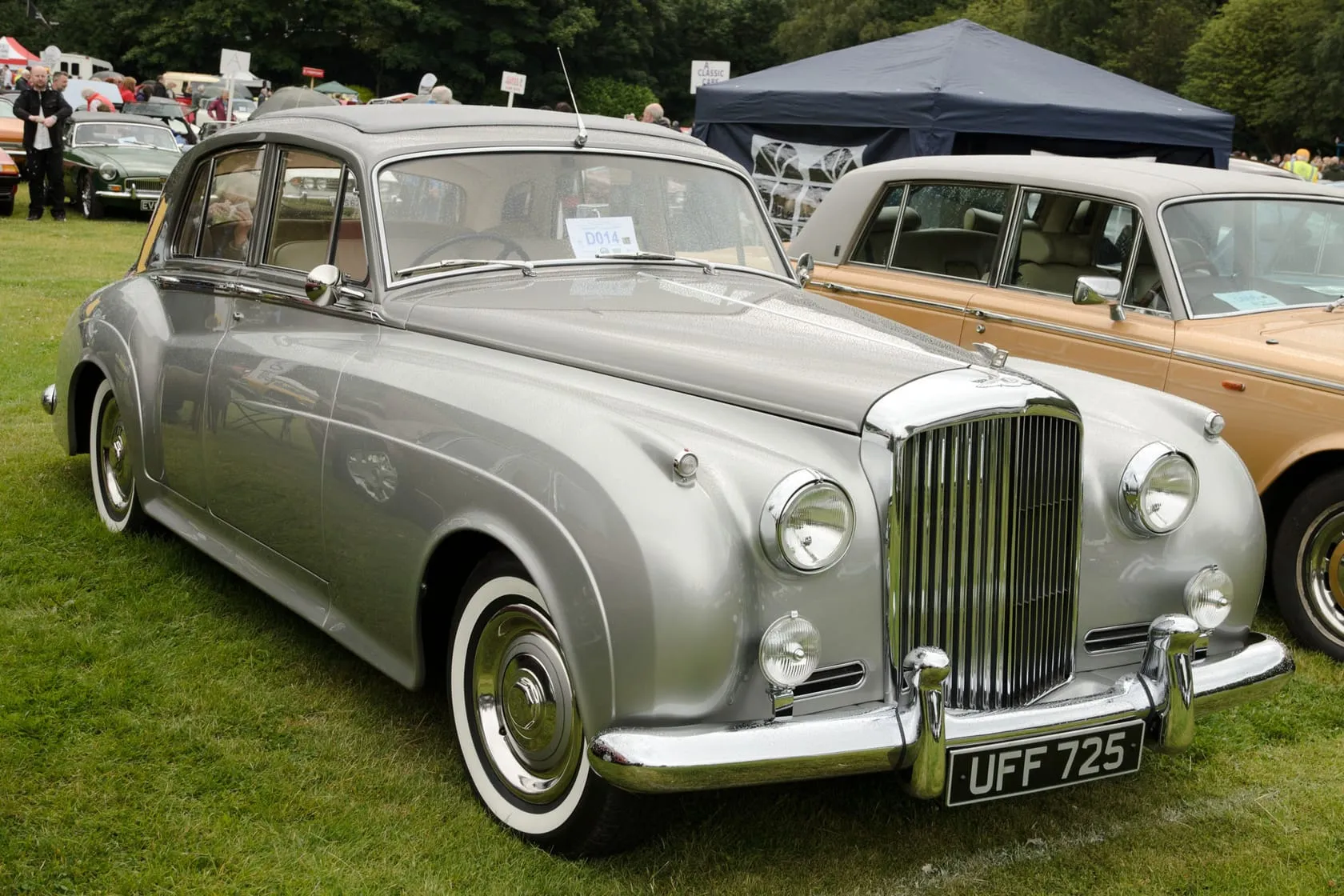 Bentley S-series: the quiet twin with the beautiful secrets (1955–1965)
The S-series was the Silver Cloud in discreet dress, and its Continental and Flying Spur versions were some of the most beautiful Bentleys ever built. A guide to S1, S2 and S3, the coachbuilt aristocracy, and what to check before buying.
-
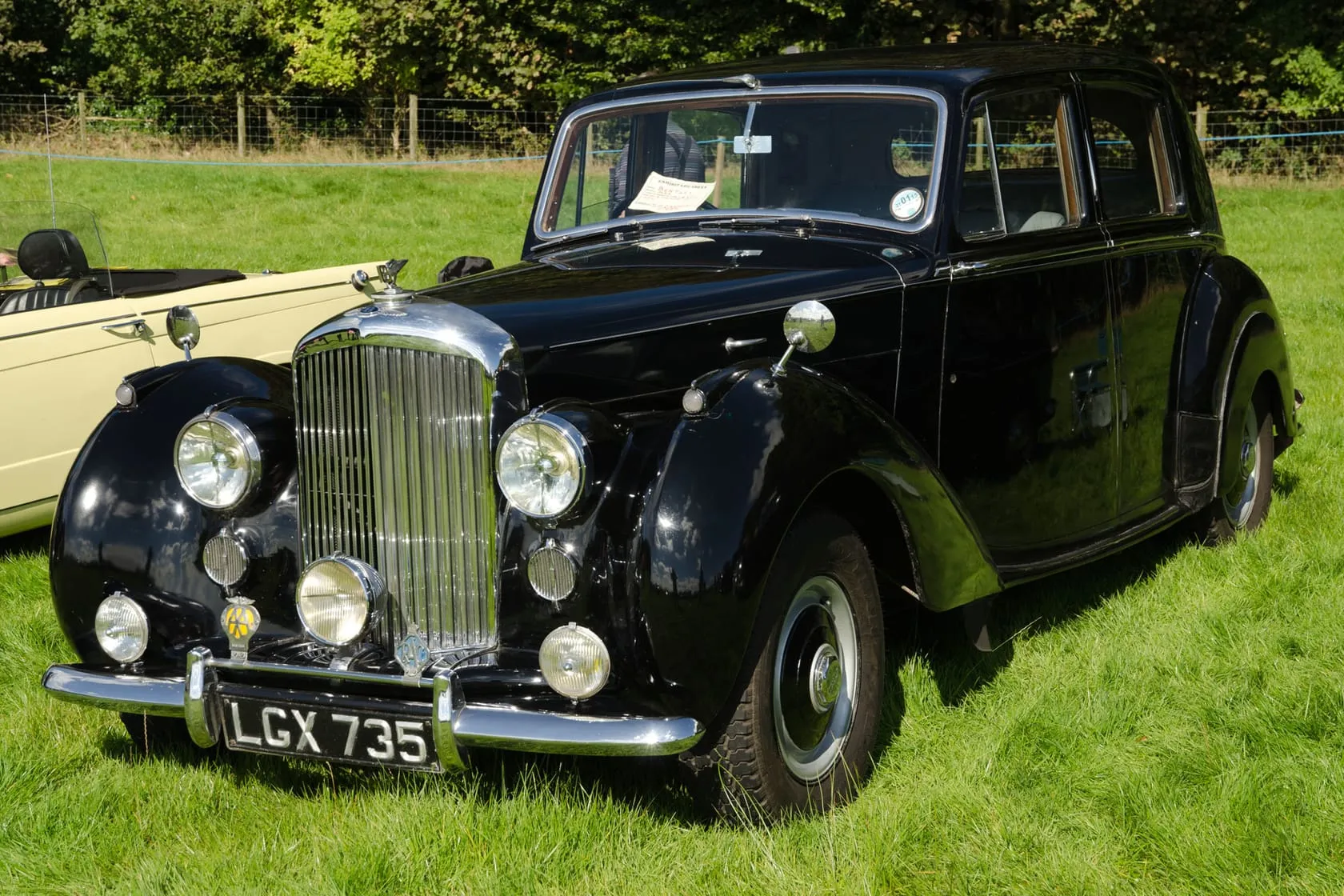 Bentley Mk VI and R Type: the first complete Bentley, and the fastest four-seater on earth (1946–1955)
The Mk VI was the first Bentley sold as a complete car, the machine that carried Crewe into the post-war world, and its R Type successor produced the fabled Continental, the fastest four-seater of its day. A guide to the standard steel and coachbuilt cars, the specials culture, and what to check before buying.
-
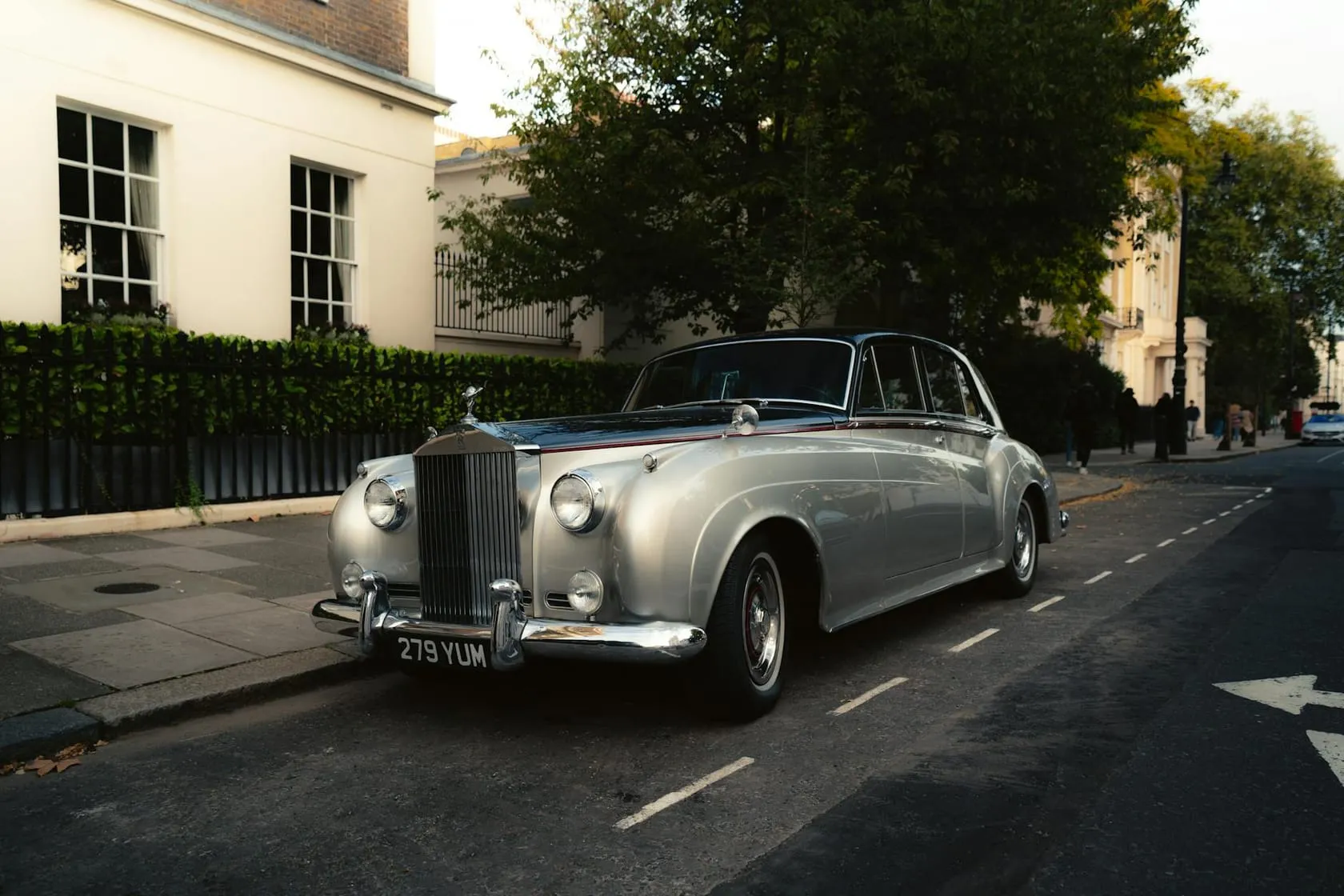 Rolls-Royce Silver Cloud: the last and loveliest of the old school (1955–1966)
The Silver Cloud closed the separate-chassis age with the most beautiful standard body Rolls-Royce ever wore, gained a V8 heart along the way, and became the definitive image of the classic Rolls. A guide to Clouds I, II and III, the coachbuilt cars, and what to check before buying one.
-
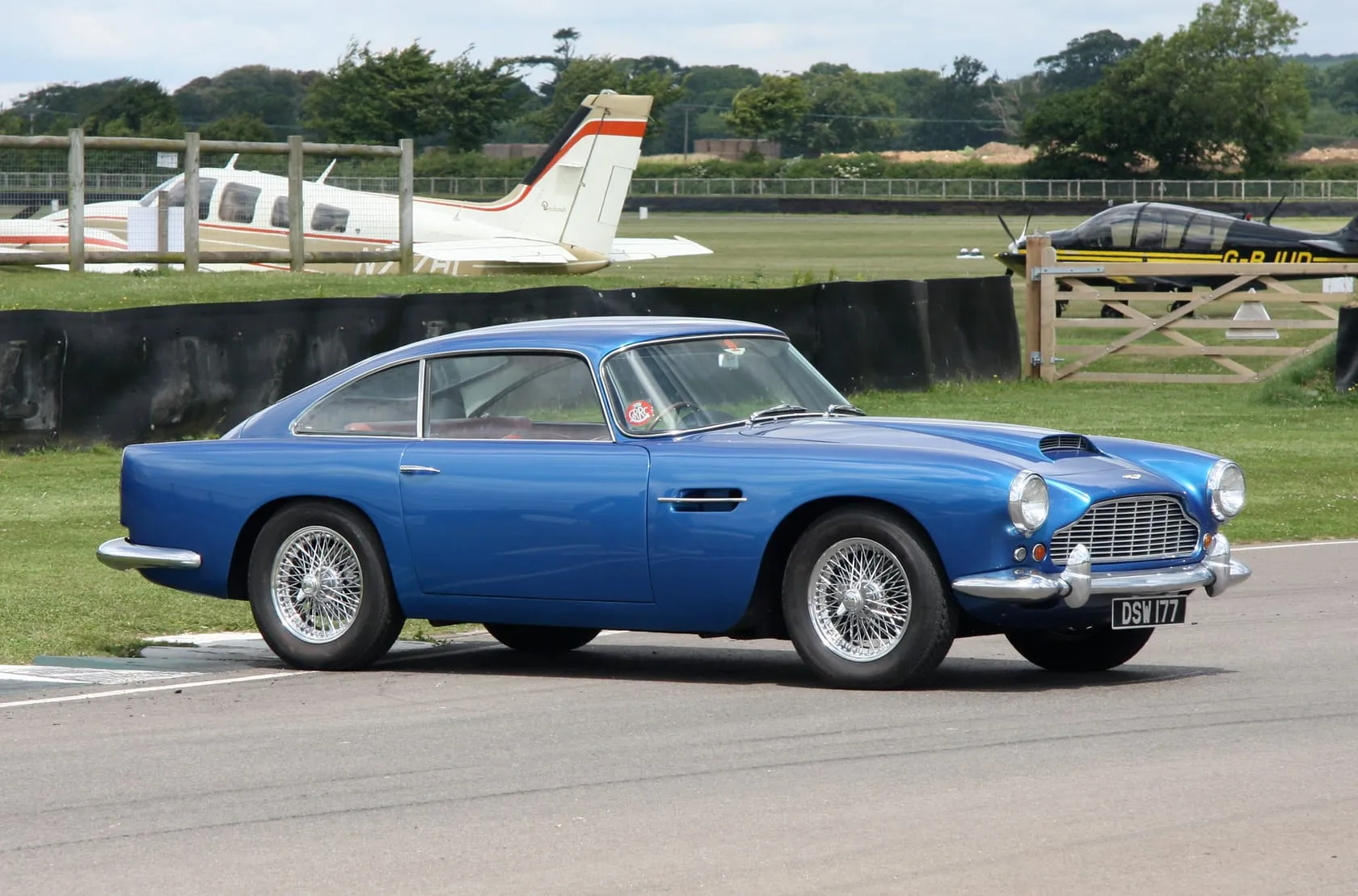 Aston Martin DB4: the car that made Newport Pagnell immortal (1958–1963)
The DB4 brought Touring of Milan's Superleggera construction and Tadek Marek's new six together into the first of the great Newport Pagnell Astons, and its GT and Zagato versions became some of the most valuable British cars ever made. A guide to the whole DB4 family, and what to check before buying.
-
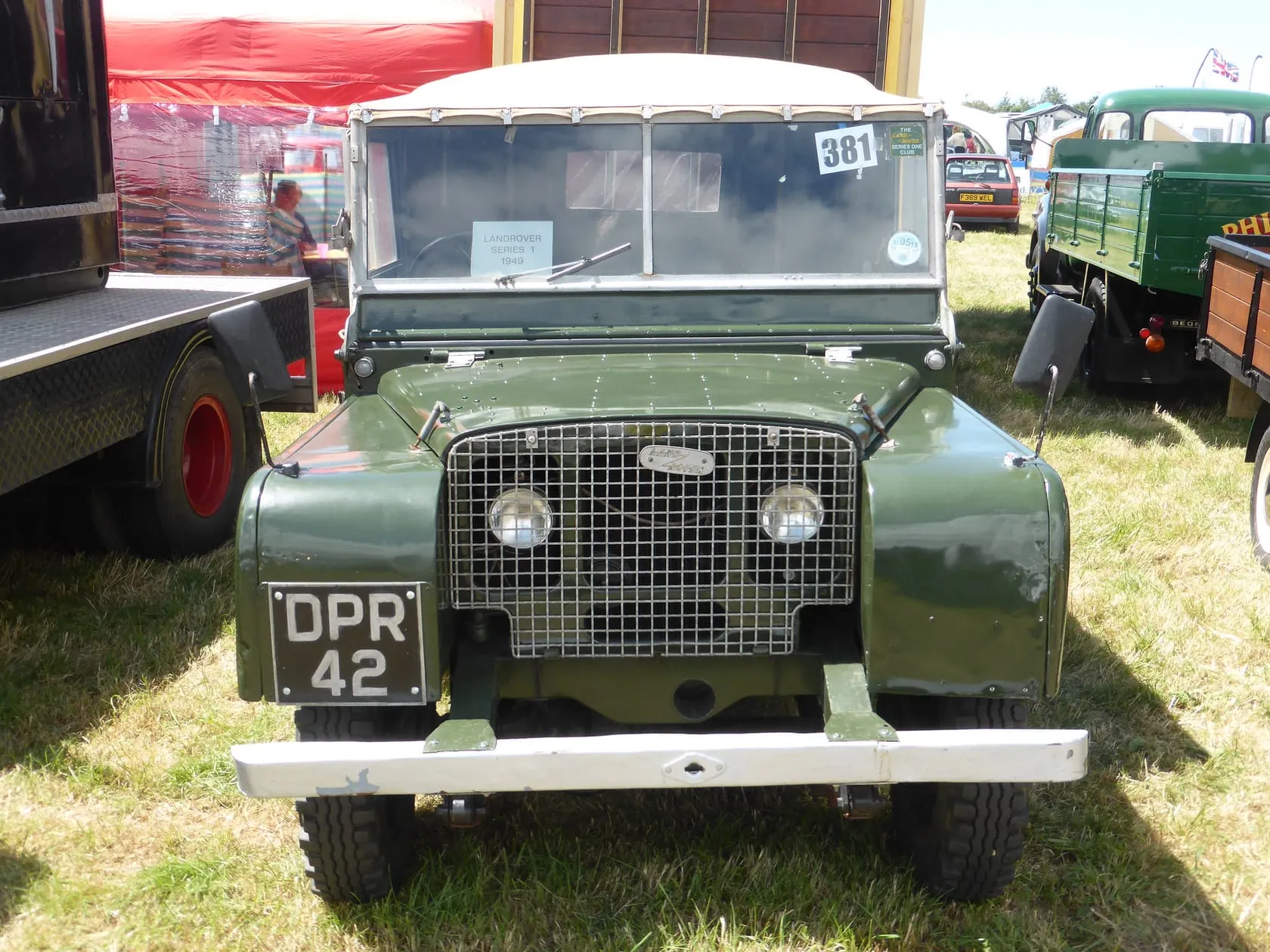 Land Rover Series I values: the 80-inch premium, the factory Reborn cars, and a market off its 2021 peak
The first Land Rover priced from 421 recorded auction sales. The median and the usual range, why the early 80-inch cars lead the table and the 86 and 88 sit below them, what the station wagons, the fire engines and the factory Reborn restorations make, what moves a Series I price, and why the first Land Rover has come down two-fifths from its 2021 peak.
-
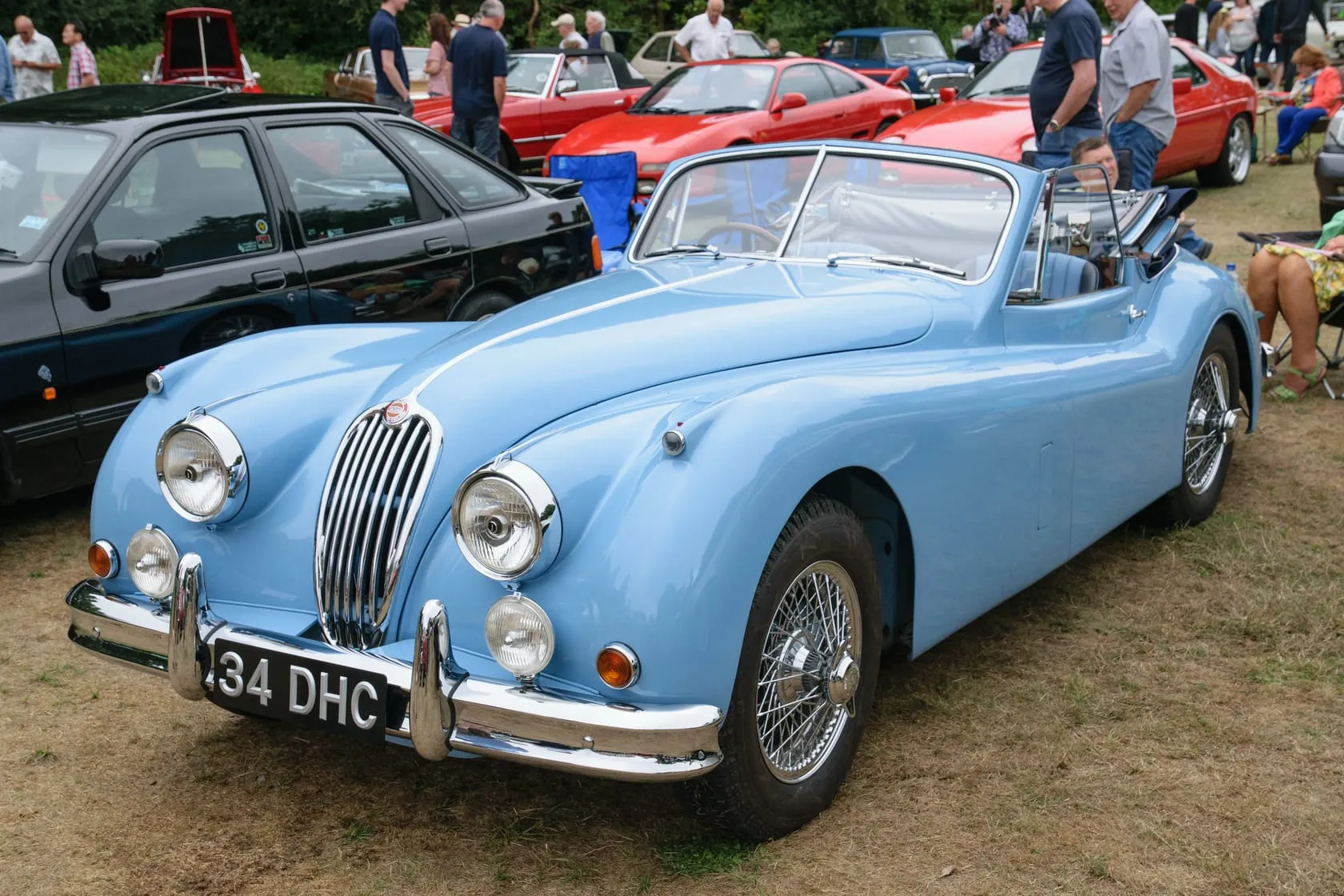 Jaguar XK140 values: the one XK where the drophead beats the roadster, and the cheapest of the three at the median
Here alone among the XKs, the drophead coupe outsells the roadster. Jaguar XK140 values across 451 recorded auction sales, what the fixed-head, the SE and the home-market cars make, how the middle XK sits against the XK120 and XK150, and why it has halved in real terms since 2017.
-
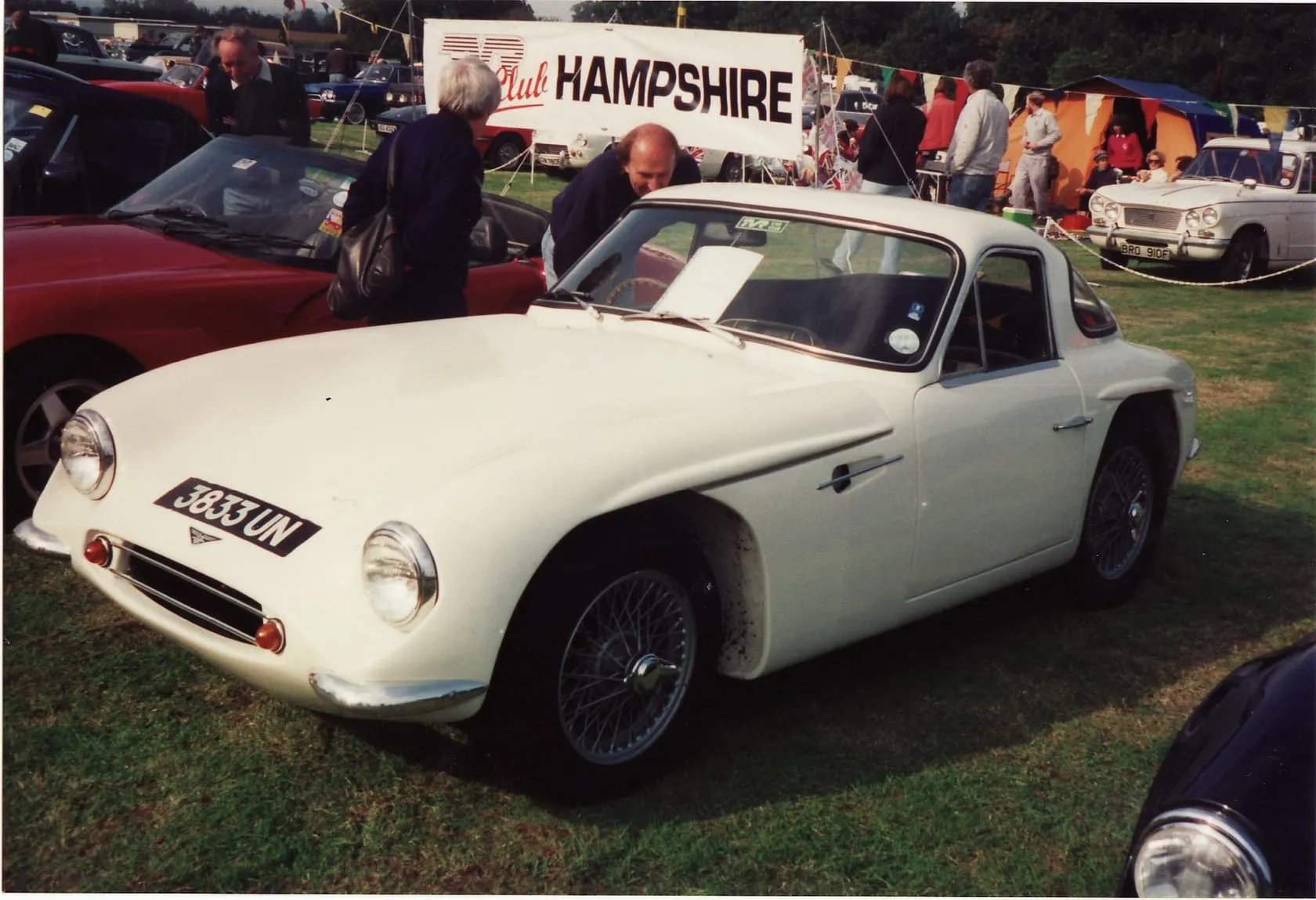 TVR Grantura and Vixen: where Blackpool learned to build sports cars (1958–1973)
The Grantura was TVR's first real production car, a stubby glassfibre coupe that taught Blackpool its trade, and the Vixen that grew from it carried the recipe to 1973. A guide to both families, the marks and engines, buying checks and values.
-
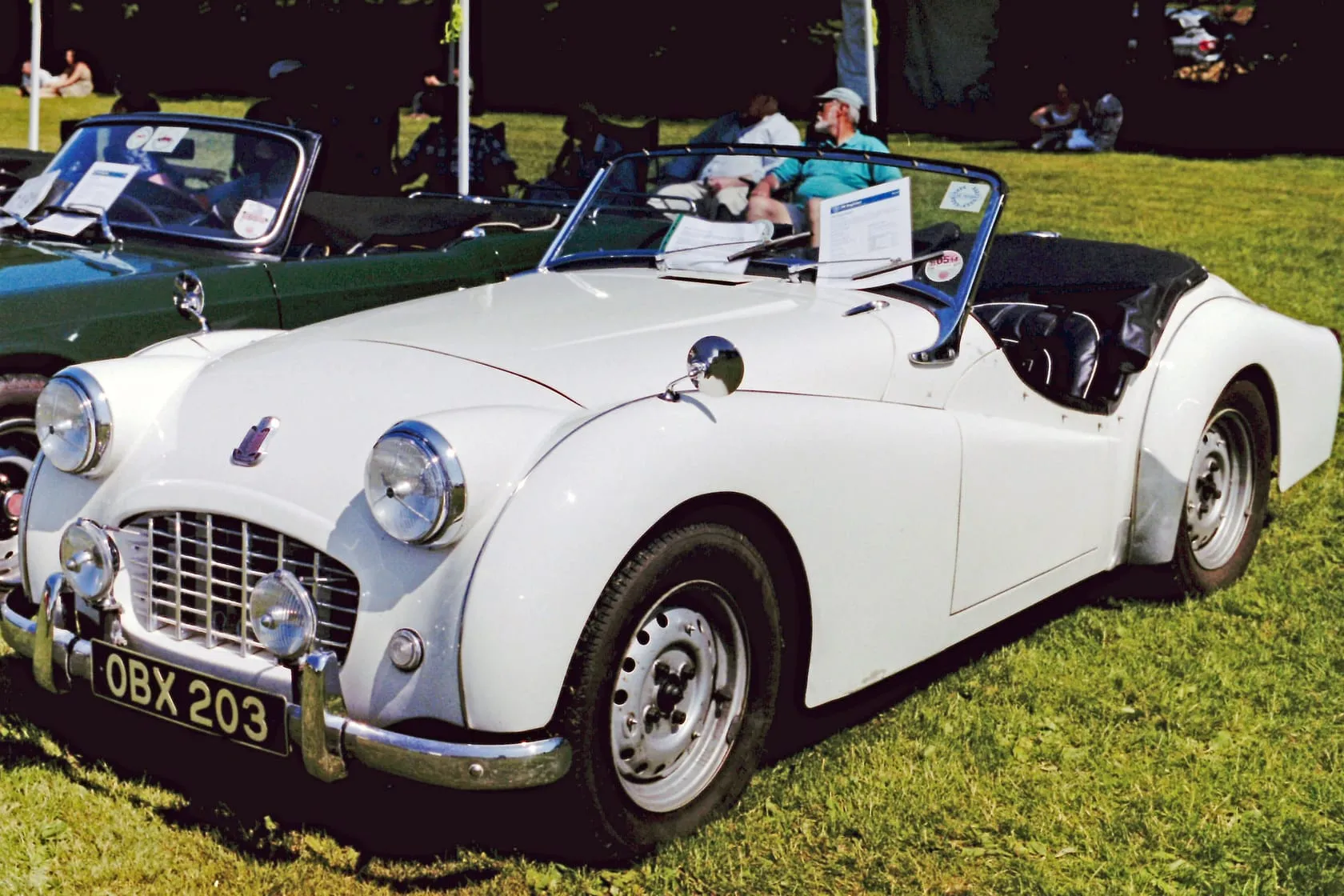 Triumph TR3 values: TR3B over TR3A over TR3, the works cars apart, and a market back to 2010 prices
The late TR3B sells for more than the TR3A, and the early small-mouth car for a little less. Triumph TR3 values across 490 recorded auction sales, what the works cars made, how the TR3 compares with the TR2, TR4 and MGA, and why it is cheaper in real terms than it was fifteen years ago.
-
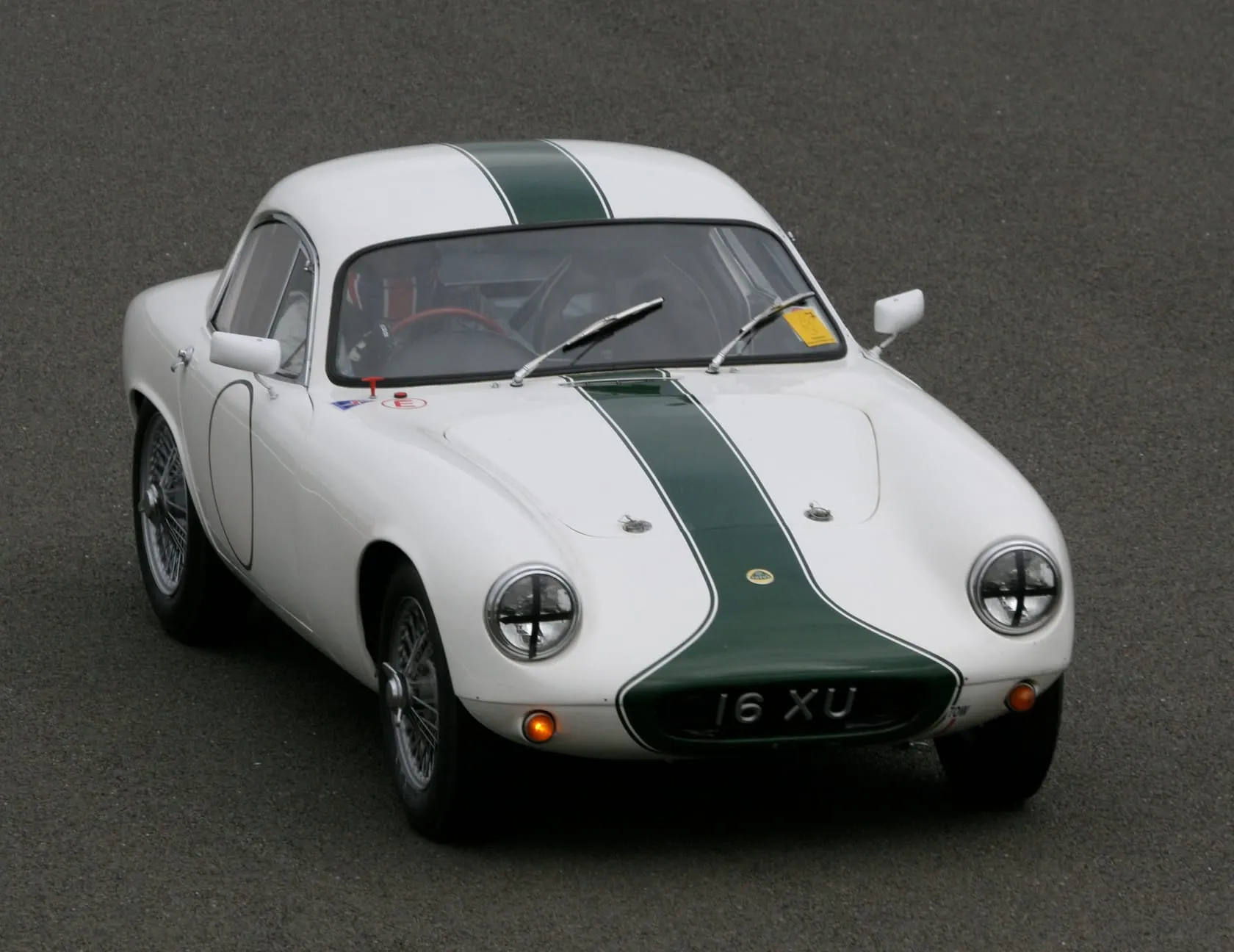 Lotus Elite: the glassfibre jewel that raced on air (1957–1963)
The Lotus Elite was the world's first glassfibre monocoque, a 660-kilogram coupe that cut through the air like nothing else in 1957 and won its class at Le Mans six years running. A guide to the Type 14, the Climax engine, the racing record, buying checks and values.
-
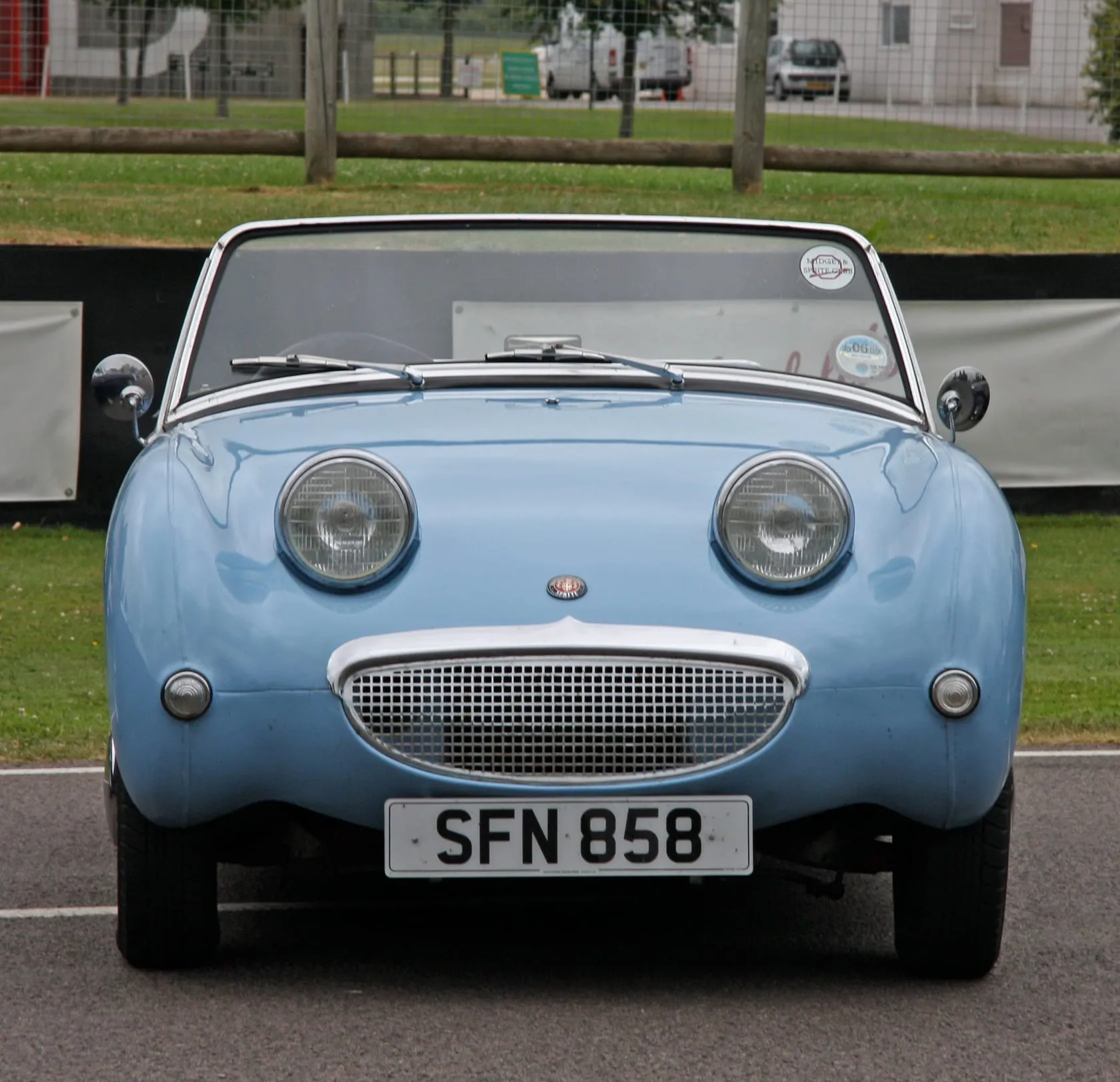 Frogeye Sprite: the happiest face in motoring (1958–1961)
The Frogeye Sprite put real sports-car joy on sale for £669 with a face nobody has ever managed to dislike. A guide to the original Austin-Healey Sprite Mk I, why the headlamps sit on the bonnet, the Sebring racers, buying checks and values.
-
 Austin-Healey 100 values: the 100M and 100S premiums, BN2 over BN1, the 100/6 discount, and a market that has halved
A factory 100M sells for more than double a standard car, and a 100S for half a million. Austin-Healey 100 prices across 618 recorded auction sales, what a BN1, a BN2 and a Le Mans car make, why the six-cylinder 100/6 is the cheapest Big Healey, and why the 100 has lost half its value in real terms since 2013.
-
 Jaguar XK150 values: the S premium, roadster over drophead over coupé, and a market that has halved since 2019
A 3.4 S roadster sells for two and a half times a 3.4 fixed-head. Jaguar XK150 prices from 628 recorded auction sales, what the 3.8 and the S badge add by body, how the XK150 compares with the XK120 and XK140, and why it has lost more than half its value in real terms since 2019.
-
 Triumph Mayflower: the watch-charm Rolls-Royce that dared to be different (1949–1953)
The Triumph Mayflower shrank razor-edge limousine styling onto a ten-horsepower small car, aimed it at America and became one of the most argued-about shapes in British motoring. A guide to the little razor-edge, its transatlantic gamble, buying checks and values.
-
 Austin-Healey Sprite values: the Frogeye at double the Spridget, the Sebring premium, and a market off its 2022 peak
A Frogeye Mk I sells for more than double the Mk II, III and IV that followed. Sprite prices from 636 recorded auction sales, what a Sebring Sprite and its replicas make, how the Sprite compares with the MG Midget it shares everything with, and why Sprite values have fallen by a third in real terms since 2022.
-
 Triumph Renown: razor-edge grandeur on a Vanguard chassis (1949–1954)
The Triumph Renown dressed sturdy Vanguard mechanicals in coachbuilt razor-edge styling that looked like a Bentley at a fifth of the price. A guide to the razor-edge saloons, the 1800 that started it, the rare limousine, buying checks and values.
-
 Land Rover Series II and IIA values: the 88 and 109 level, the IIA premium, and a market that has halved
The IIA sells for more than the II, and the 109 for no more than the 88. Land Rover Series II and IIA values across 747 recorded auction sales, what station wagons, early cars and unrestored ones make, where the American bidders have taken the top of the market, and why the Series II has lost half its value in real terms since 2021.
-
 MG T-Series values: TC over TF over TD, the Tickford premium, and a market that has halved
Three letters set the price order, TC above TF above TD. MG T-type values across 1,451 recorded auction sales, what the pre-war TA and TB and the Tickford dropheads make, what the ash frame does to the figure, and why the T-Series has lost half its worth in real terms since 2016.
-
 Jaguar XK120 values: the alloy premium, roadster over coupé, and a market half what it was
The 240 aluminium-bodied roadsters sell for nearly three times a steel car. Jaguar XK120 prices from 802 recorded auction sales, the roadster, drophead and fixed-head order, what competition history is worth, and why the XK120 has lost half its value in real terms since 2017.
-
 Ford V8 Pilot: Dagenham's flathead farewell (1947–1951)
The Ford V8 Pilot put America's flathead V8 in a stately pre-war British body and became austerity Britain's unlikely V8 flagship, beloved of police forces, farmers and the wedding trade ever since. A guide to the Pilot's story, the flathead engine, the pick-ups and woodies, buying checks and values.
-
 Jaguar C-Type and D-Type: five Le Mans wins and the replica industry they built (1951–1957)
The Jaguar C-Type and D-Type won Le Mans five times in seven years, pioneered disc brakes and aviation monocoques, and became some of the most valuable British cars ever sold. A guide to both racers, the XKSS, the continuation cars and the replica industry that keeps the shapes on the road.
-
 MGA values: the Twin Cam premium, the coupé discount, and a market that has slipped
The 1500, 1600 and Mk II sell for almost the same money. MGA prices across 890 recorded auction sales, what the Twin Cam makes, the coupe discount, what a right-hand-drive car is worth in a record dominated by exports, and why MGA values have halved in real terms since 2016.
-
 Morris Minor values: the Traveller premium, the £350 saloon, and 948 sold prices
The one classic whose value has hardly moved in twenty years. Morris Minor prices across 948 recorded auction sales, why a Traveller sells for double a saloon, what the convertibles and the Minor Million make, and what the sills and the wood do to the figure.
-
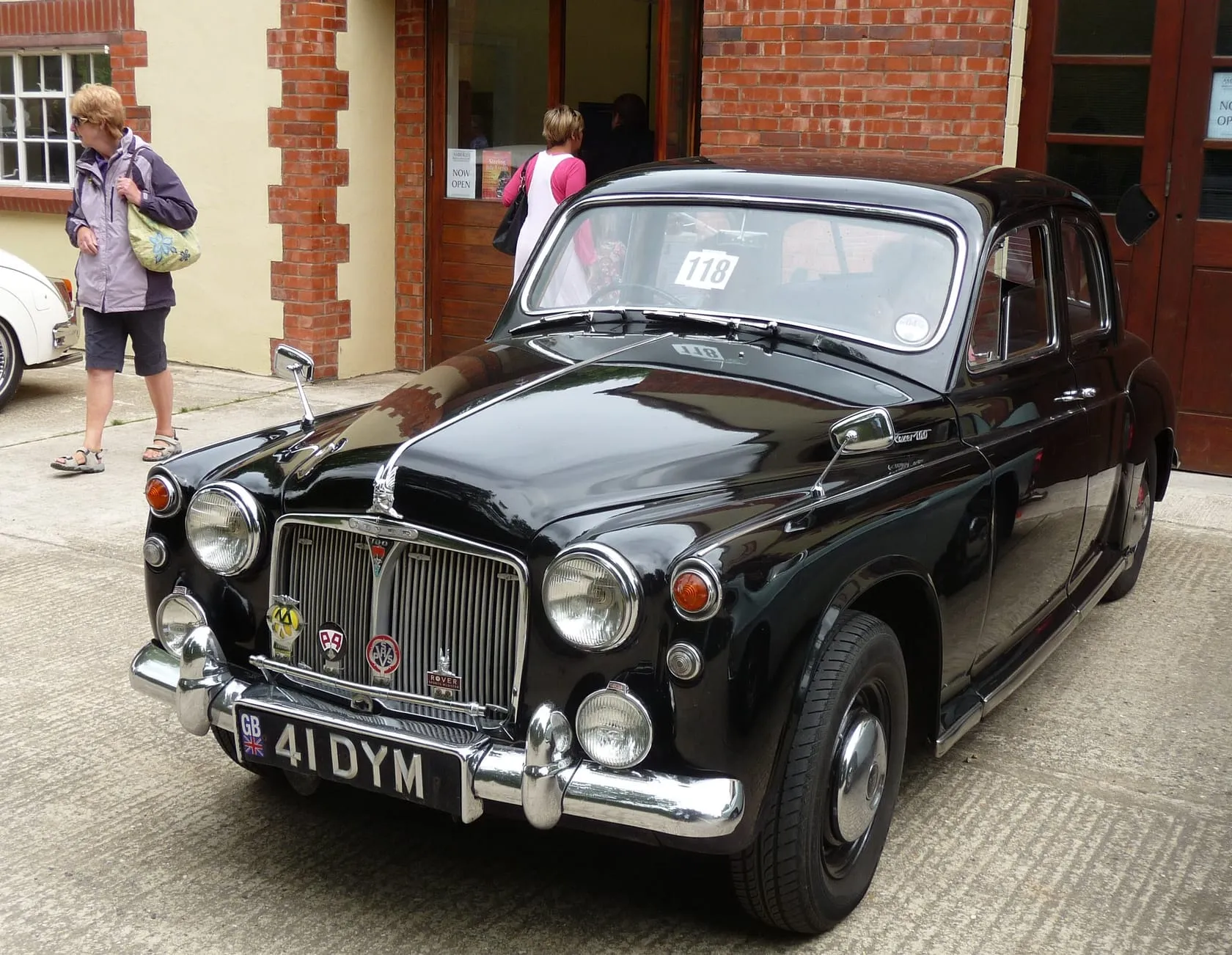 Rover P4: fourteen years of Auntie (1949–1964)
The Rover P4 was the dignified saloon Britain's professionals trusted for fourteen years, from the Cyclops-eyed 75 of 1949 through the 60, 90, 105 and the final 95 and 110. A guide to the Auntie Rovers, the numbers decoded, the gas-turbine connection, buying checks and values.
-
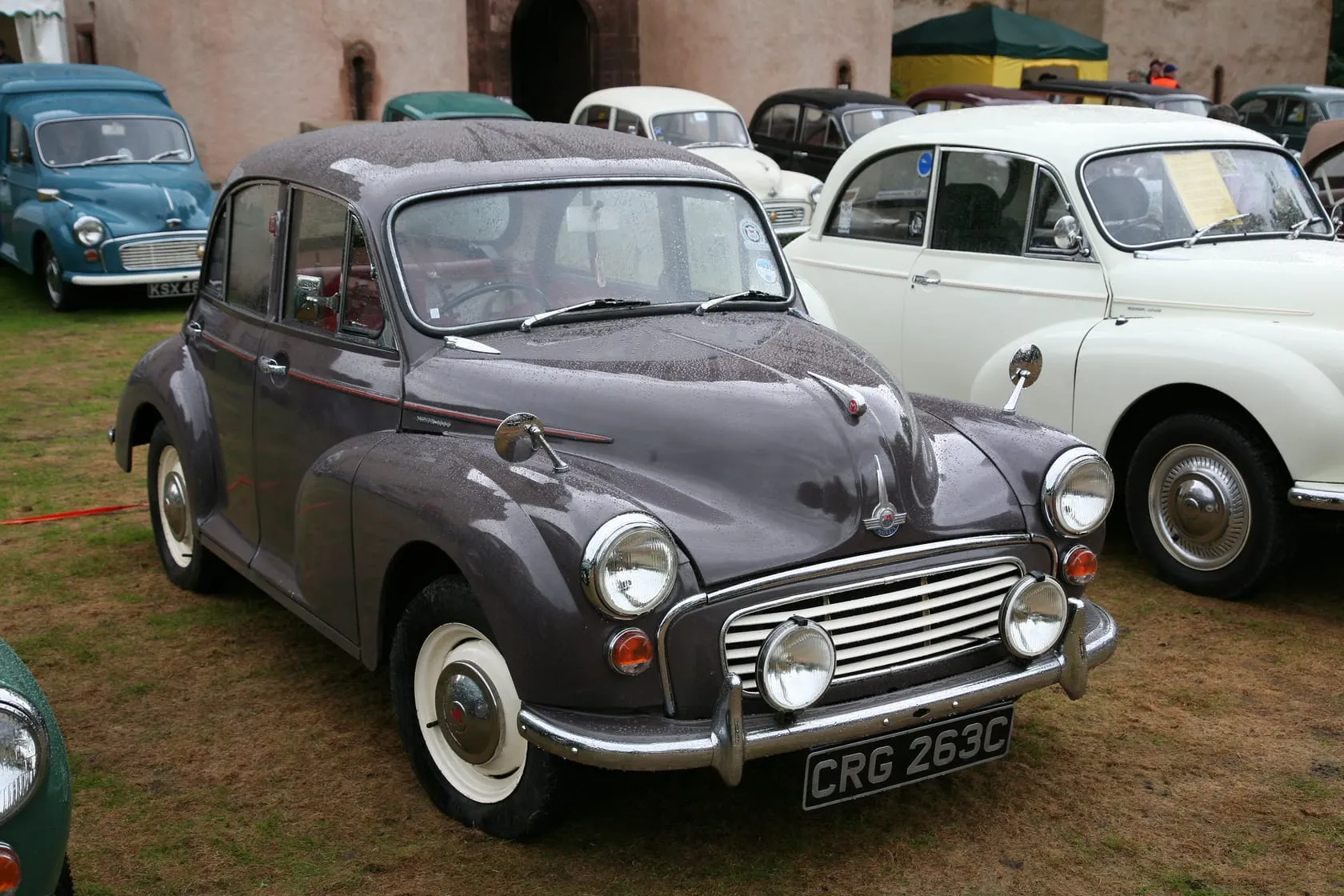 Morris Minor: a million of the best-loved car Britain ever made (1948–1971)
The Morris Minor was the first British car to sell a million, Issigonis's people's car built for twenty-three years as saloon, convertible, wood-framed Traveller and van. A guide to the Series MM, Series II and Minor 1000, the bodies decoded, why it remains the easiest classic to own, and what to check before buying one.
-
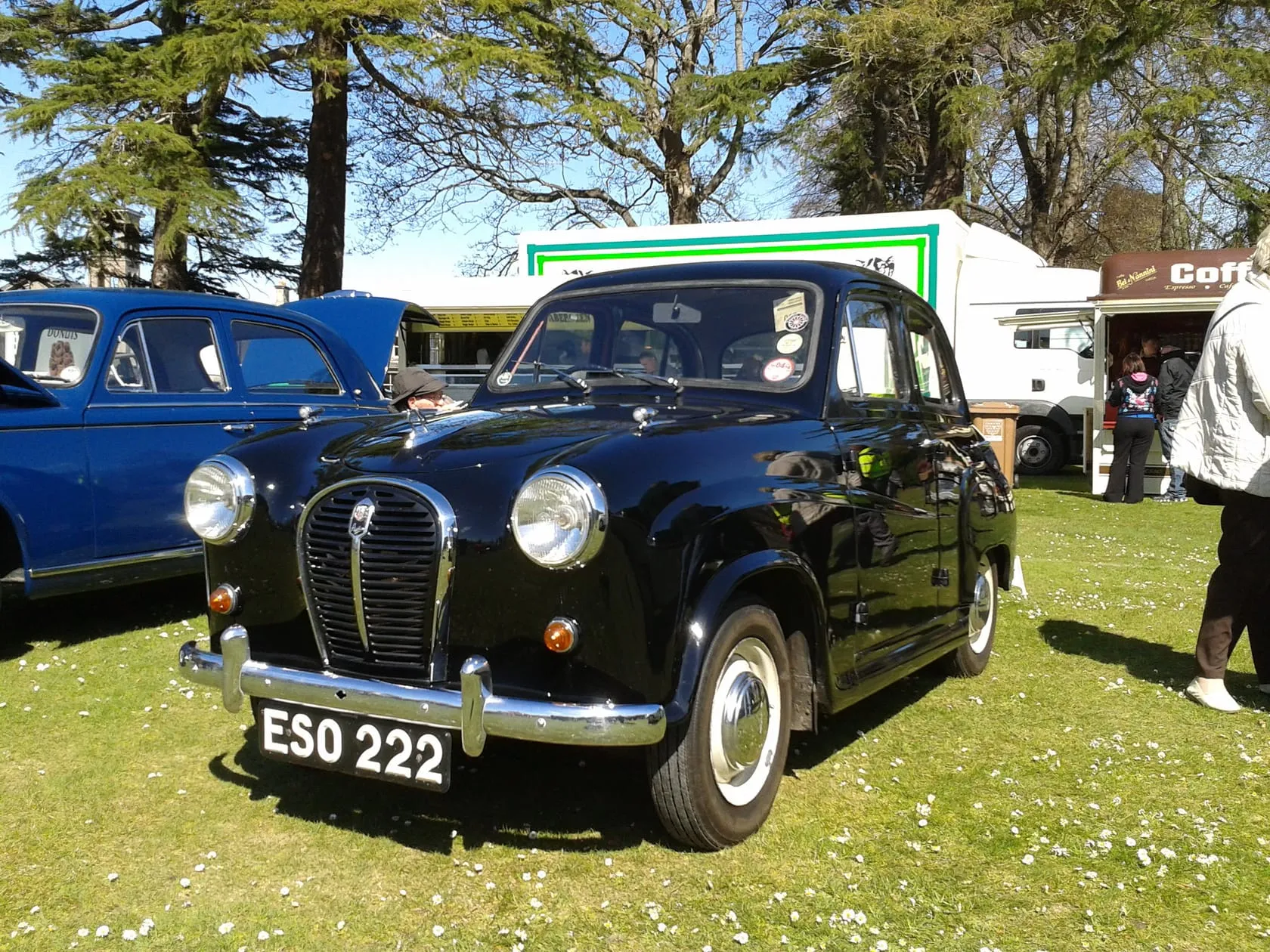 Austin A30 and A35: the little Austin that raced everything (1951–1968)
The Austin A30 was Longbridge's answer to the Morris Minor and its first unitary car, launched as the New Austin Seven; the improved A35 became one of the definitive small cars of the 1950s and, later, a giant-killing historic racer. A guide to both cars, the vans and Countrymen, the racing scene, and what to check before buying one.
-
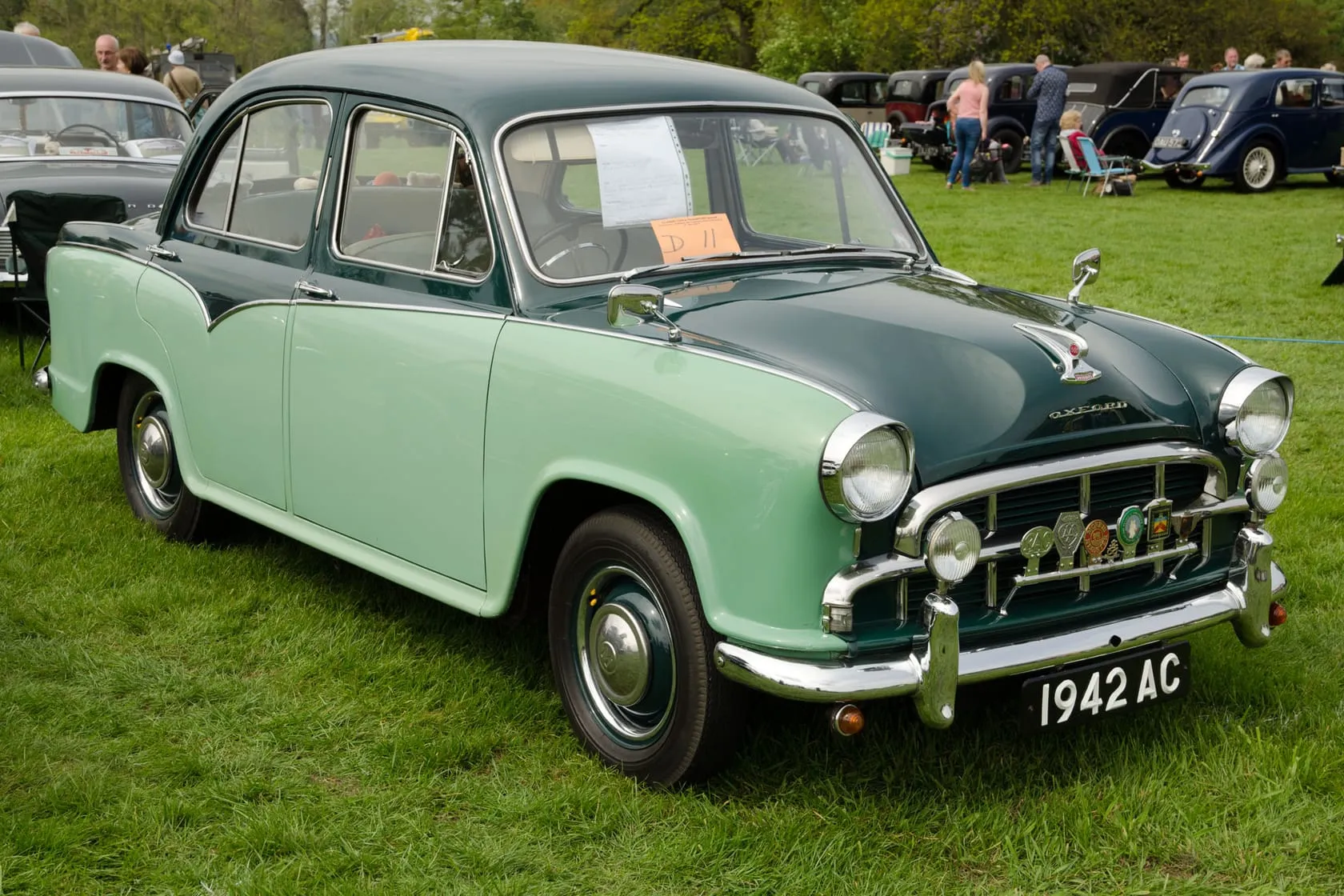 Morris Oxford: six generations of the sensible middle (1913–1971)
The Morris Oxford name spanned the whole life of its maker, from the 1913 Bullnose that founded the company to the Farina saloons that became India's Hindustan Ambassador. A guide to the Bullnose, the MO, the Series cars and the Farinas, what to look for when buying, and what an Oxford costs today.
-
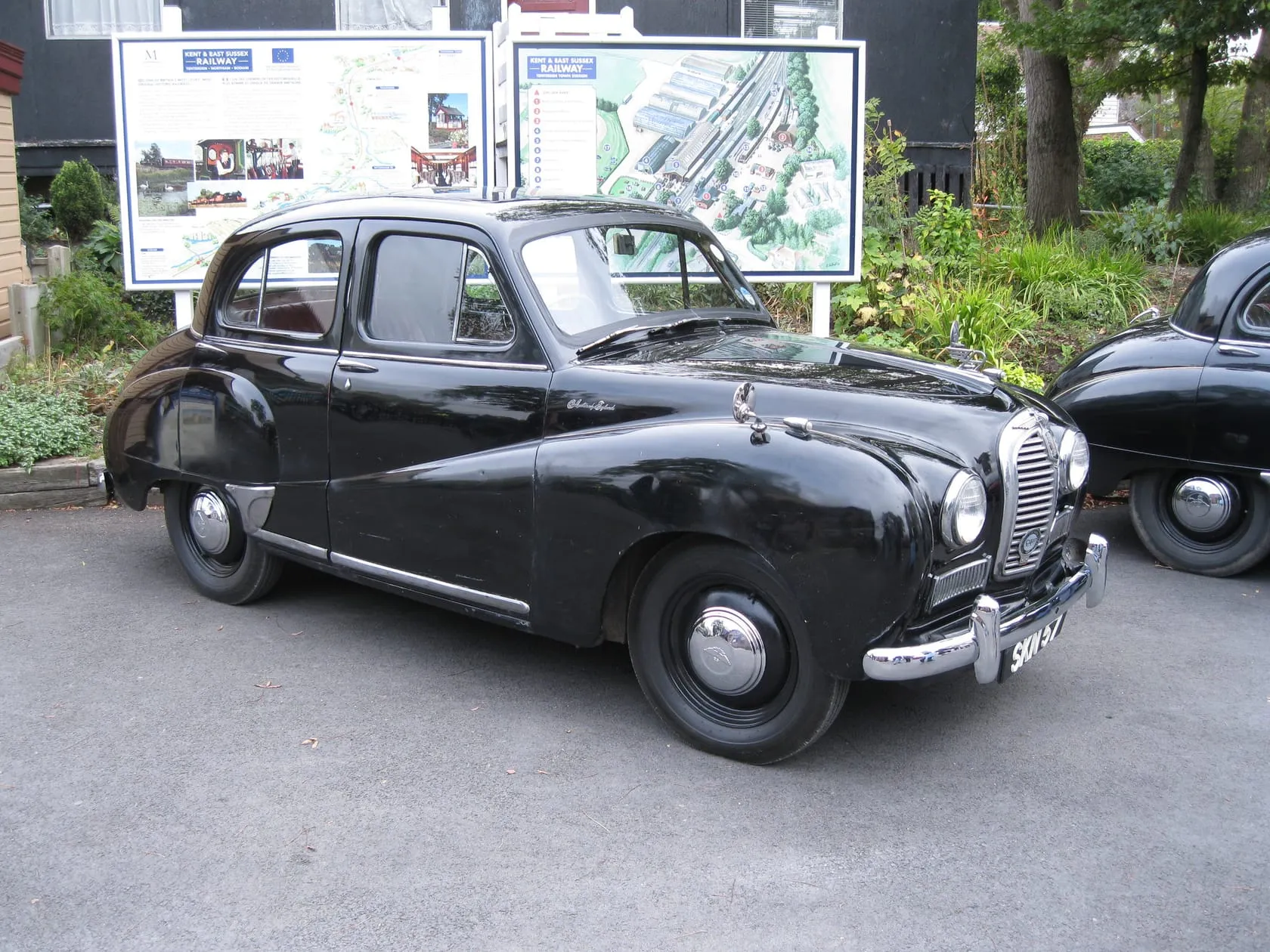 Austin A40: from Devon to Farina, the small Austin that kept reinventing itself (1947–1967)
The Austin A40 badge covered twenty years of small Austins, the export-drive Devon, the rounded Somerset, the Jensen-bodied Sports and the Farina that quietly invented the modern hatchback shape. A guide to the whole family, buying checks and values.
-
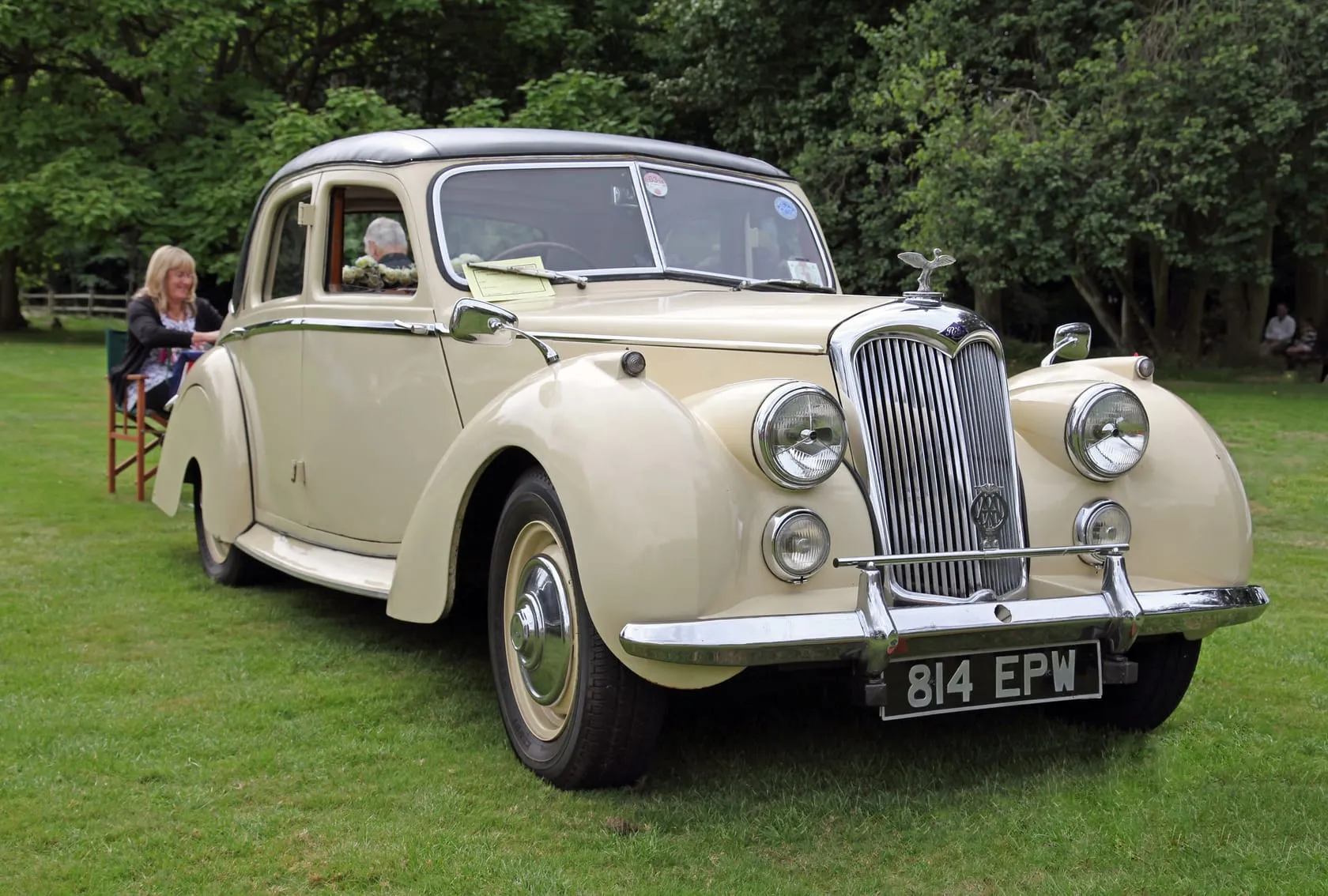 Riley RM series: the last real Rileys (1945–1955)
The Riley RM series, RMA to RMF, was the final flowering of the true Riley, a twin-cam sports saloon with torsion-bar suspension and coachbuilt elegance, plus the rare RMC roadster and RMD drophead. A guide to every RM model, how to tell them apart, buying checks and values.
-
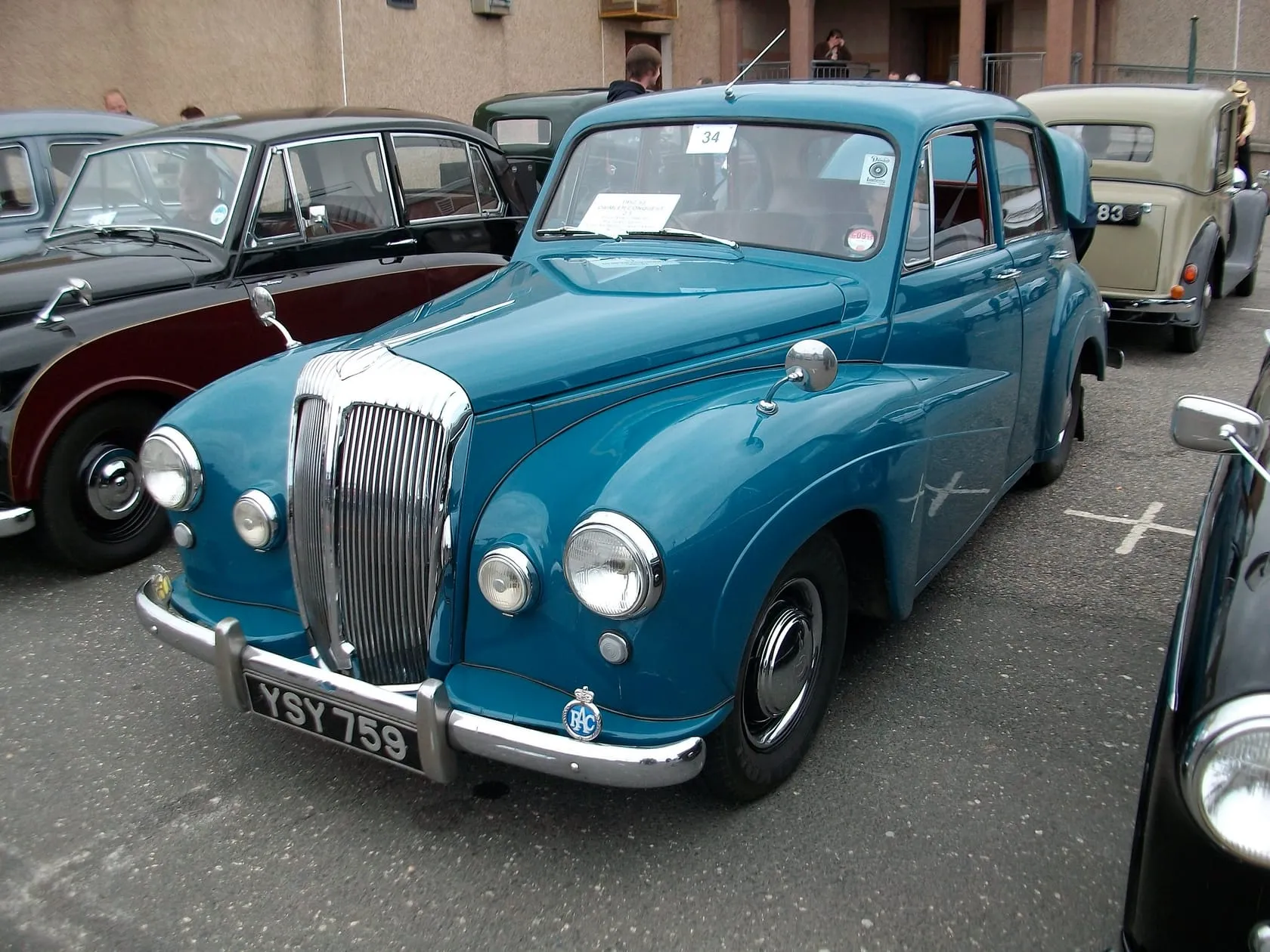 Daimler Conquest: the old guard's last graceful stand (1953–1958)
The Daimler Conquest was the grand old marque's mid-1950s bid for the professional classes, a dignified 2.4-litre saloon with Daimler's silken preselector transmission, plus the quicker Century and a startling roadster. A guide to the range, the famous name, what to check when buying, and what a Conquest costs today.
-
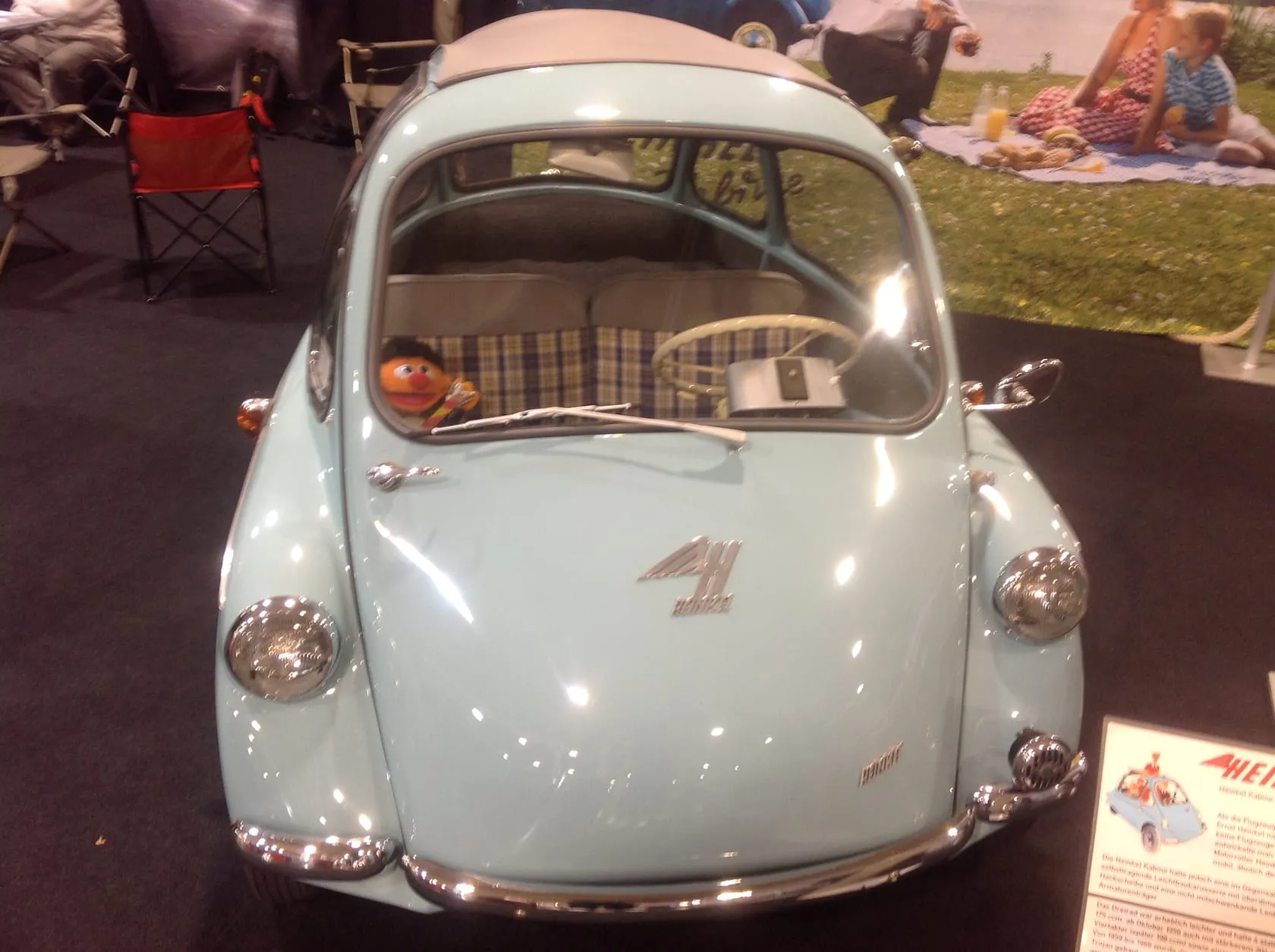 Heinkel Kabine and Trojan 200: the bubble car Britain built in Croydon (1956–1965)
The Heinkel Kabine was the aircraft-maker's bubble car, lighter and nimbler than the rival Isetta, and from 1960 it became an honorary British classic as the Trojan 200, built under licence in Croydon. A guide to the Kabine and Trojan story, how it differs from an Isetta, what to check, and what one costs today.
-
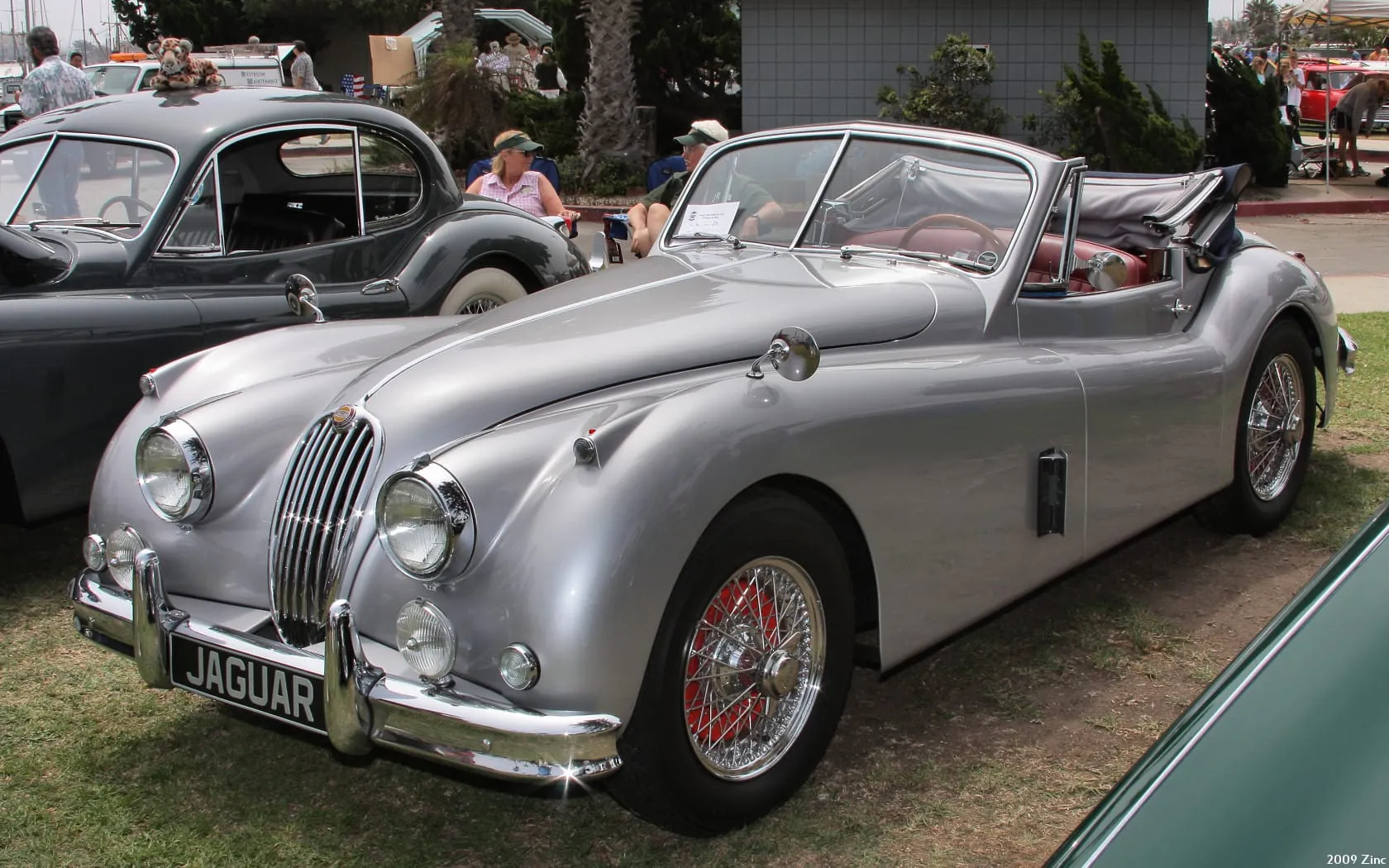 Jaguar XK140: the XK120 finished properly (1954–1957)
The Jaguar XK140 took the sensational XK120 and fixed everything owners had grumbled about, rack-and-pinion steering, cabin room, cooling, without losing the looks or the pace. A guide to the roadster, drophead and fixed head coupe, the SE upgrades, what year XK to avoid and why, and what to check before buying one.
-
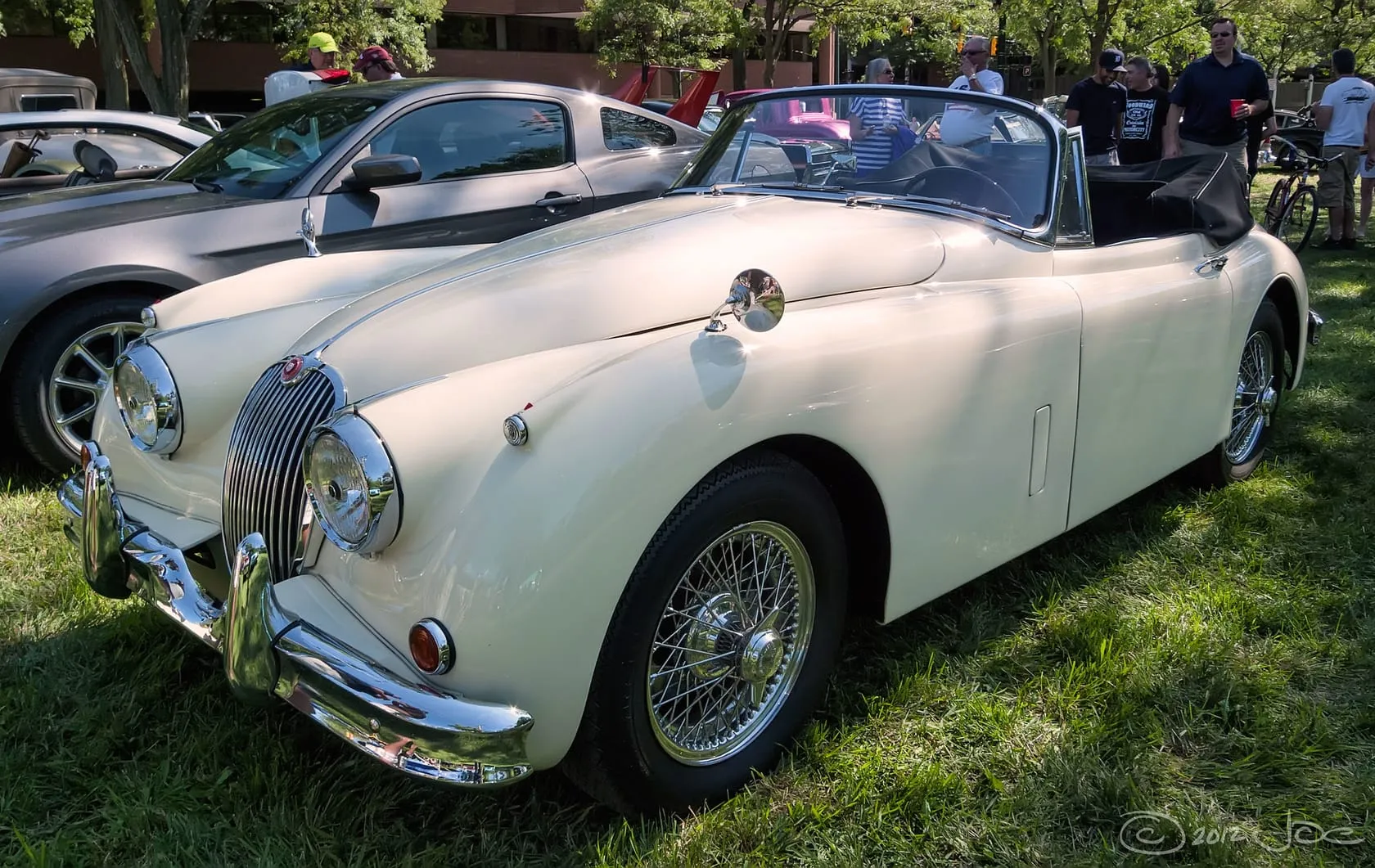 Jaguar XK150: disc brakes, wider shoulders and the last of the line (1957–1961)
The Jaguar XK150 closed the XK story with four-wheel disc brakes, a wider modern body and, in 3.8 S form, the pace that previewed the E-Type. A guide to the 3.4 and 3.8 cars, the S models, how the 150 differs from the XK140, what to check when buying, and what one costs today.
-
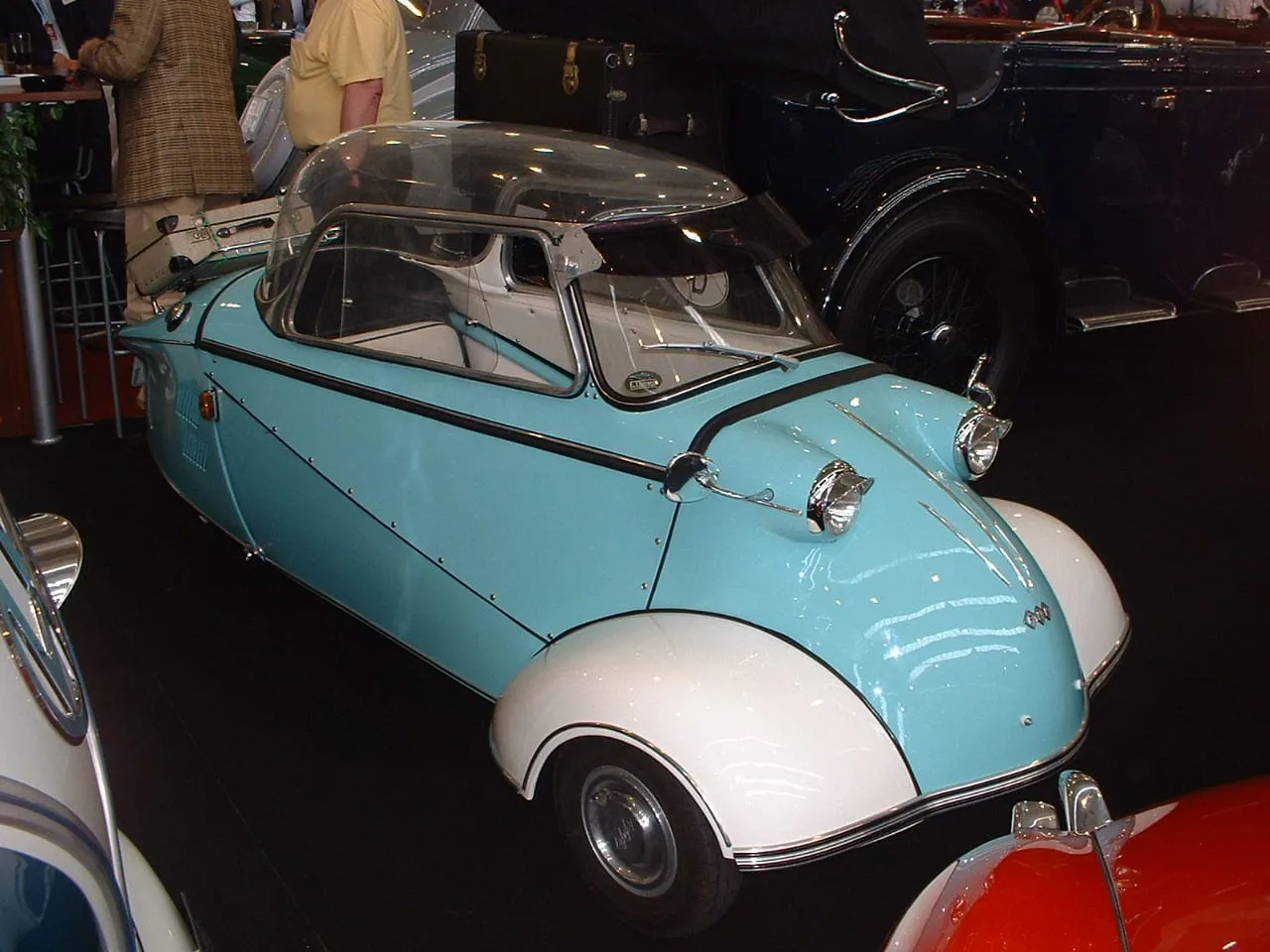 Messerschmitt KR200: tandem seats, a bubble canopy and the fighter-plane school of motoring (1955–1964)
The Messerschmitt KR200 sat its two occupants in tandem under an aircraft-style bubble canopy, steered by handlebars and reversed by running its engine backwards. A guide to the Kabinenroller's story, the KR175 before it and the Tg500 Tiger above it, what to check when buying, and what one costs today.
-
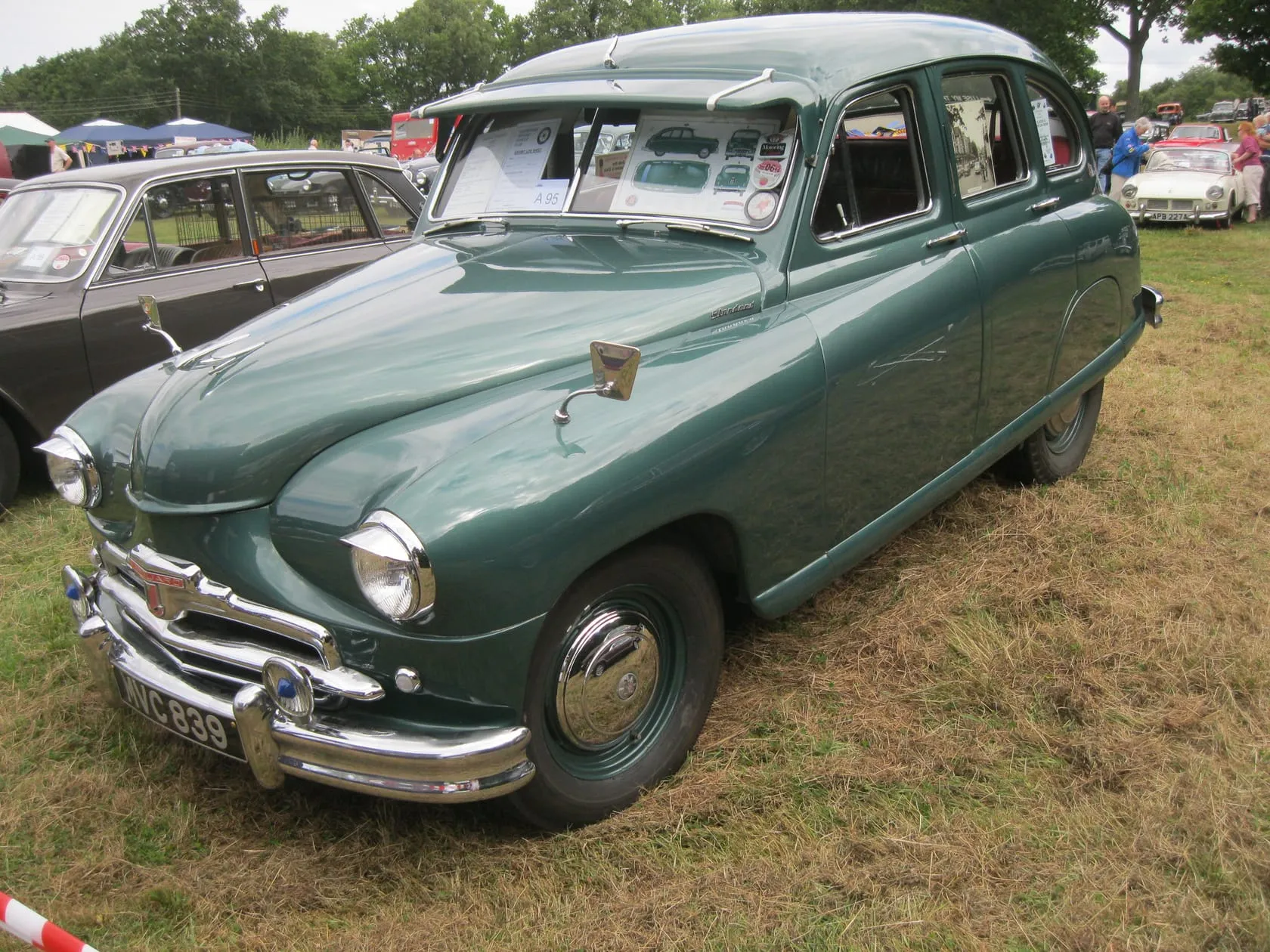 Standard Vanguard: one car for the whole world, and the engine that powered everything (1947–1963)
The Standard Vanguard was post-war Britain's one-model gamble, a beetle-backed export machine whose wet-liner engine also powered the Ferguson tractor and the Triumph TR sports cars. A guide to the three phases, the Standard name's fate, the Triumph connection, what to check when buying, and what a Vanguard costs today.
-
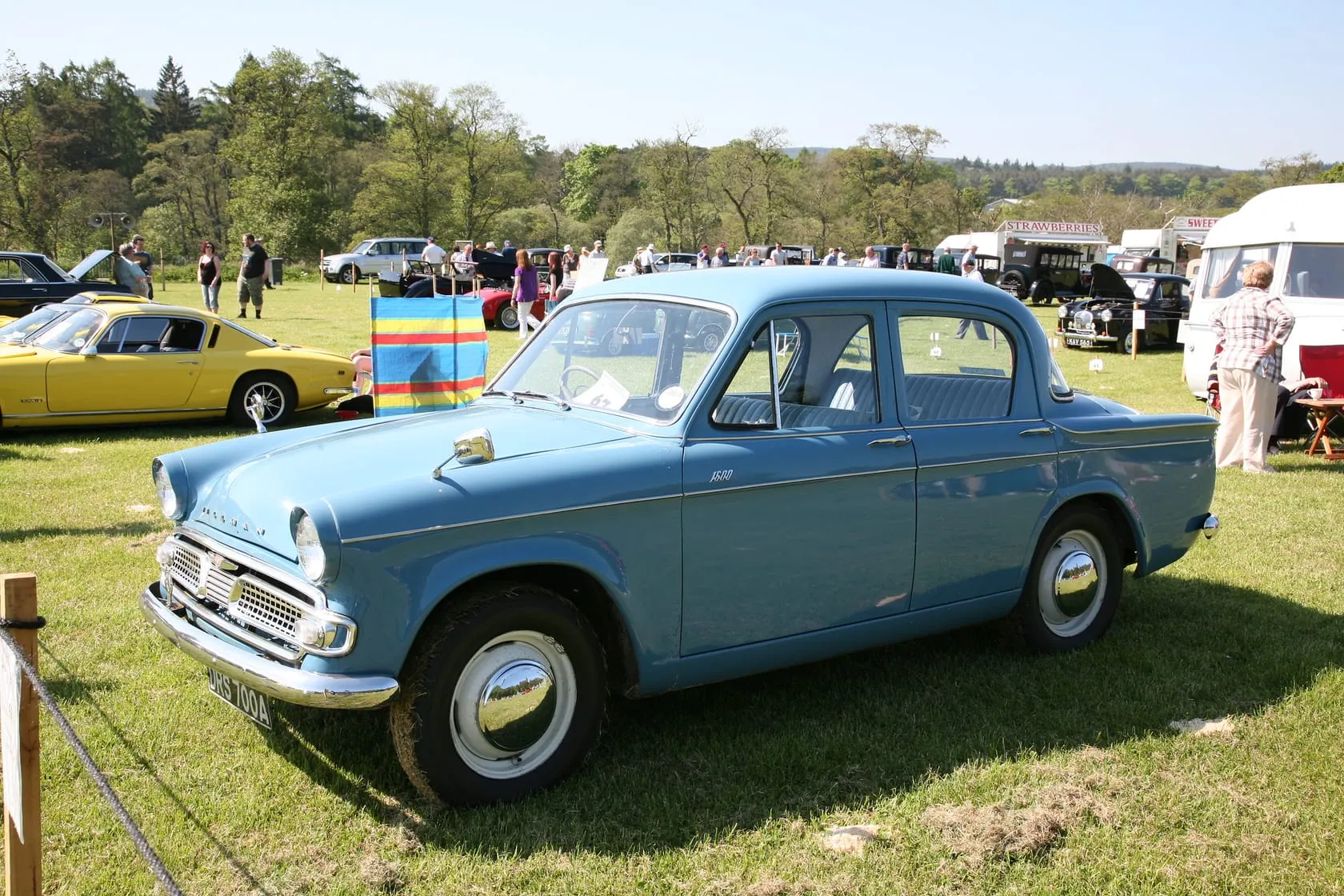 Hillman Minx: four decades of Britain's dependable family car (1932–1970)
Nearly forty years of bread-and-butter family car, from the sidevalve saloons of the 1930s through the crisp Loewy-styled Audax Series cars to the last New Minx of 1970. A guide to the Minx generations, the Super Minx and the badge-engineered cousins, what to look for when buying, and what a Minx is worth today.
-
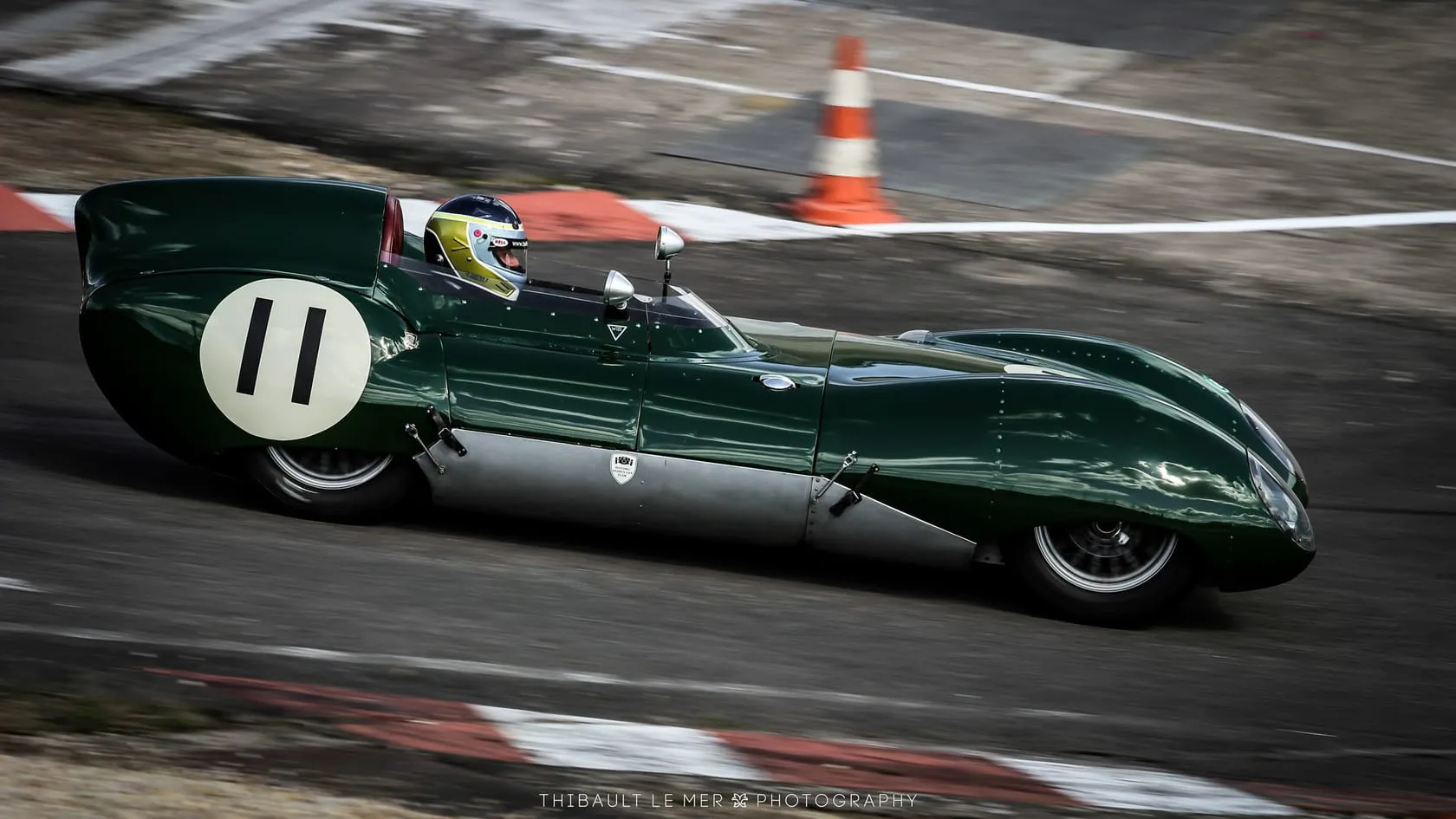 Lotus Eleven: the tiny sports racer that made Lotus a marque (1956–1958)
The Lotus Eleven was Colin Chapman's 1950s masterpiece, a featherweight, aerodynamic sports racer that took class honours at Le Mans and turned Lotus from a specials builder into a marque. A guide to the Eleven's engineering, its Le Mans record, Series 1 and 2, the replica question, and what genuine cars are worth.
-
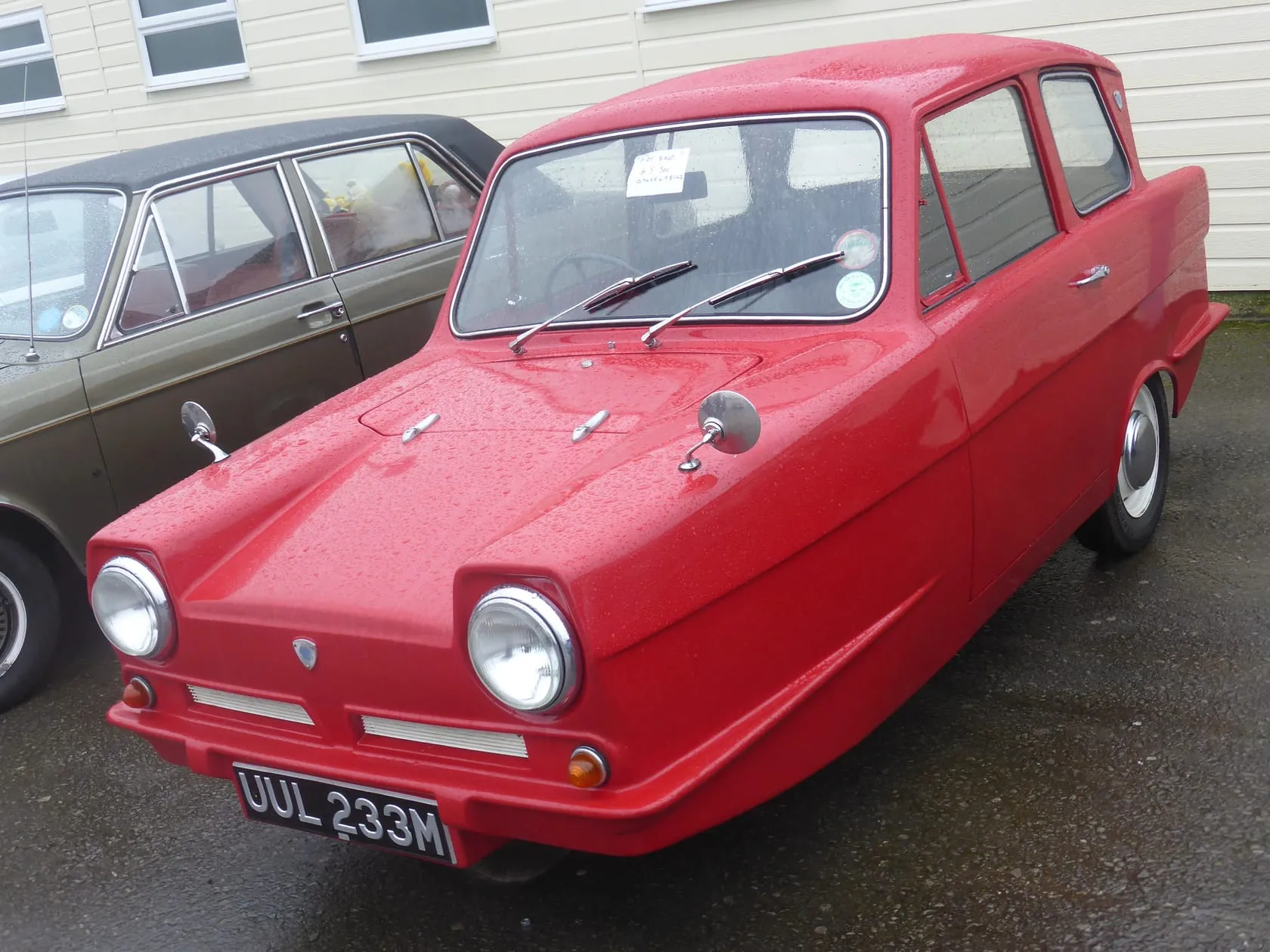 Reliant Regal: the three-wheeler that carried Britain's tradesmen, and the Trotters (1953–1973)
The Reliant Regal put post-war Britain's motorcyclists and tradesmen on three weather-proof wheels, and its Supervan became the most famous van in the country in Only Fools and Horses. A guide to the Regal's twenty years, the alloy-engined 3/25 and 3/30, the Supervan and the television fame, what to check, and what a Regal costs.
-
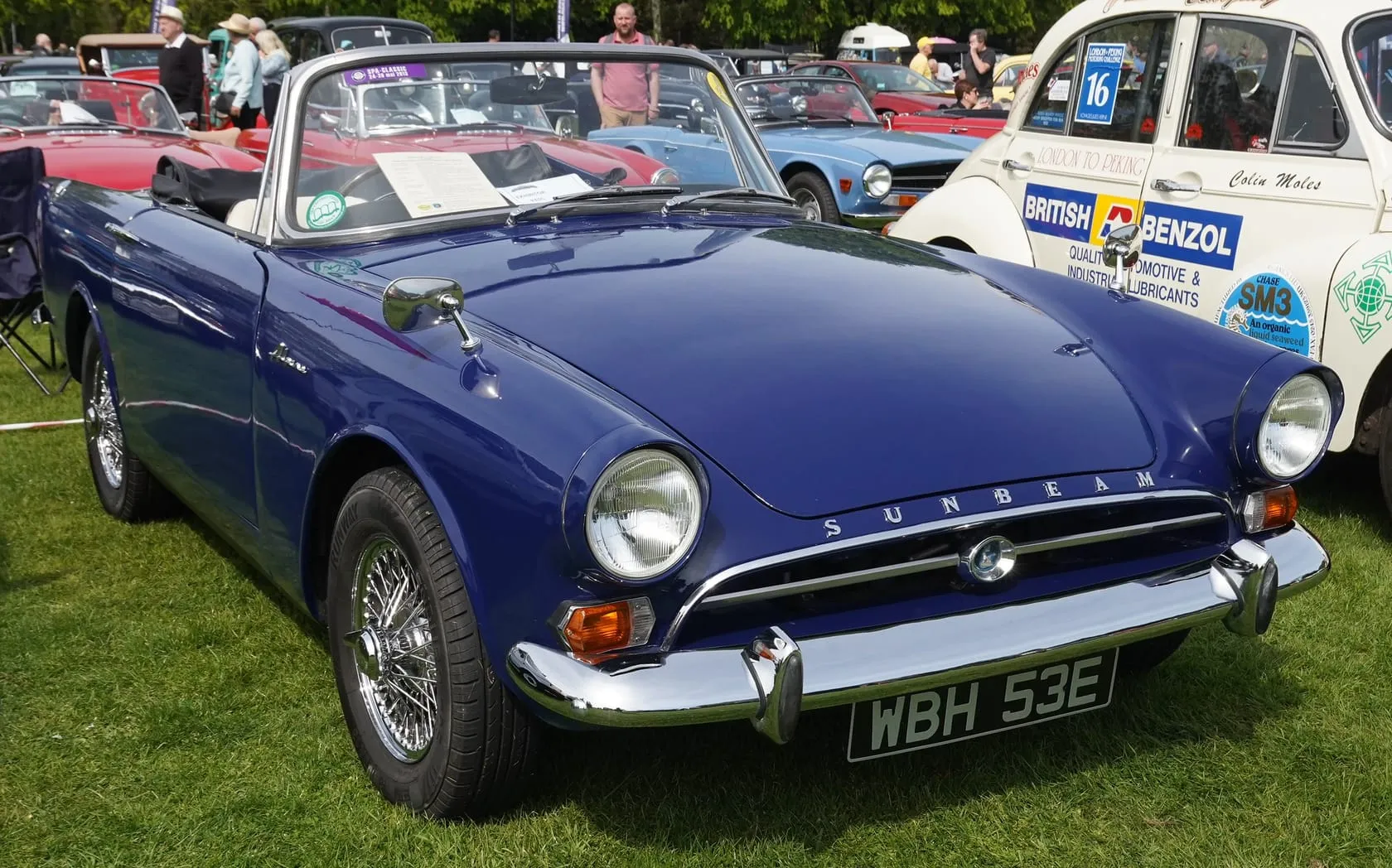 Sunbeam Alpine: the civilised British sports car (1959–1968)
Comfortable, well-equipped and genuinely a sports car, the Alpine evolved through five Series from 1959 to 1968 and put James Bond behind its wheel before he ever drove an Aston. A guide to the Series I to V, the Harrington fastbacks, what to look for when buying, and what an Alpine is worth.
-
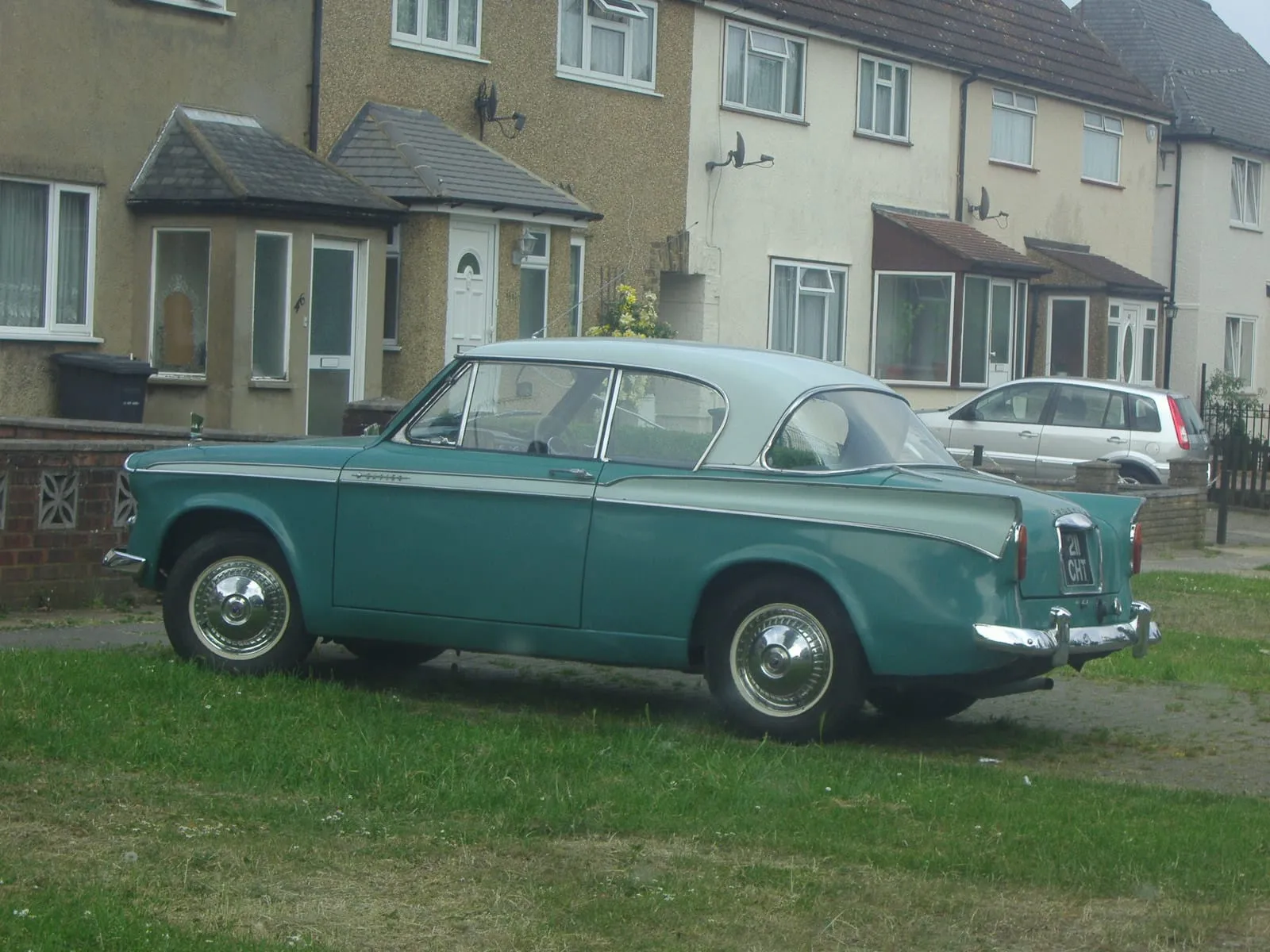 Sunbeam Rapier: two shapes, five Series and a rally-winning streak (1955–1976)
Two decades of sporting saloon-coupe, first as the rally-winning two-door Series cars of 1955 to 1967, then as the sleek fastback of 1967 to 1976 with the Holbay-tuned H120 at its head. A guide to both generations, the competition record, what to look for, and what a Rapier costs today.
-
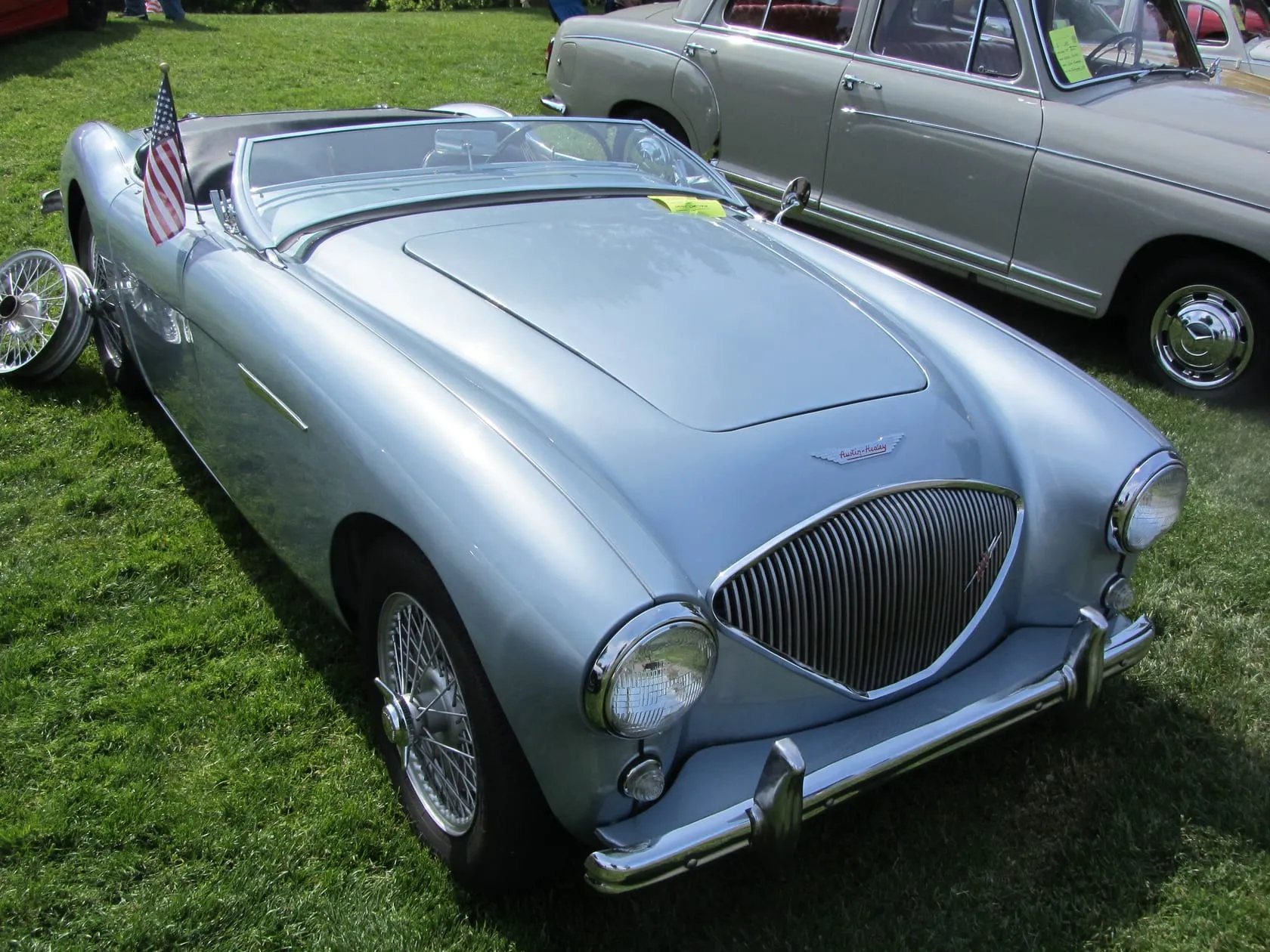 Austin-Healey 100: the original Big Healey (1953–1959)
The Austin-Healey 100 is the car that started the marque, the original Big Healey, named for its 100 mph top speed. A guide to the four-cylinder 100/4 (BN1 and BN2), the high-performance 100M and the rare 100S, the six-cylinder 100-6, what one is like to own, and what to look for when buying.
-
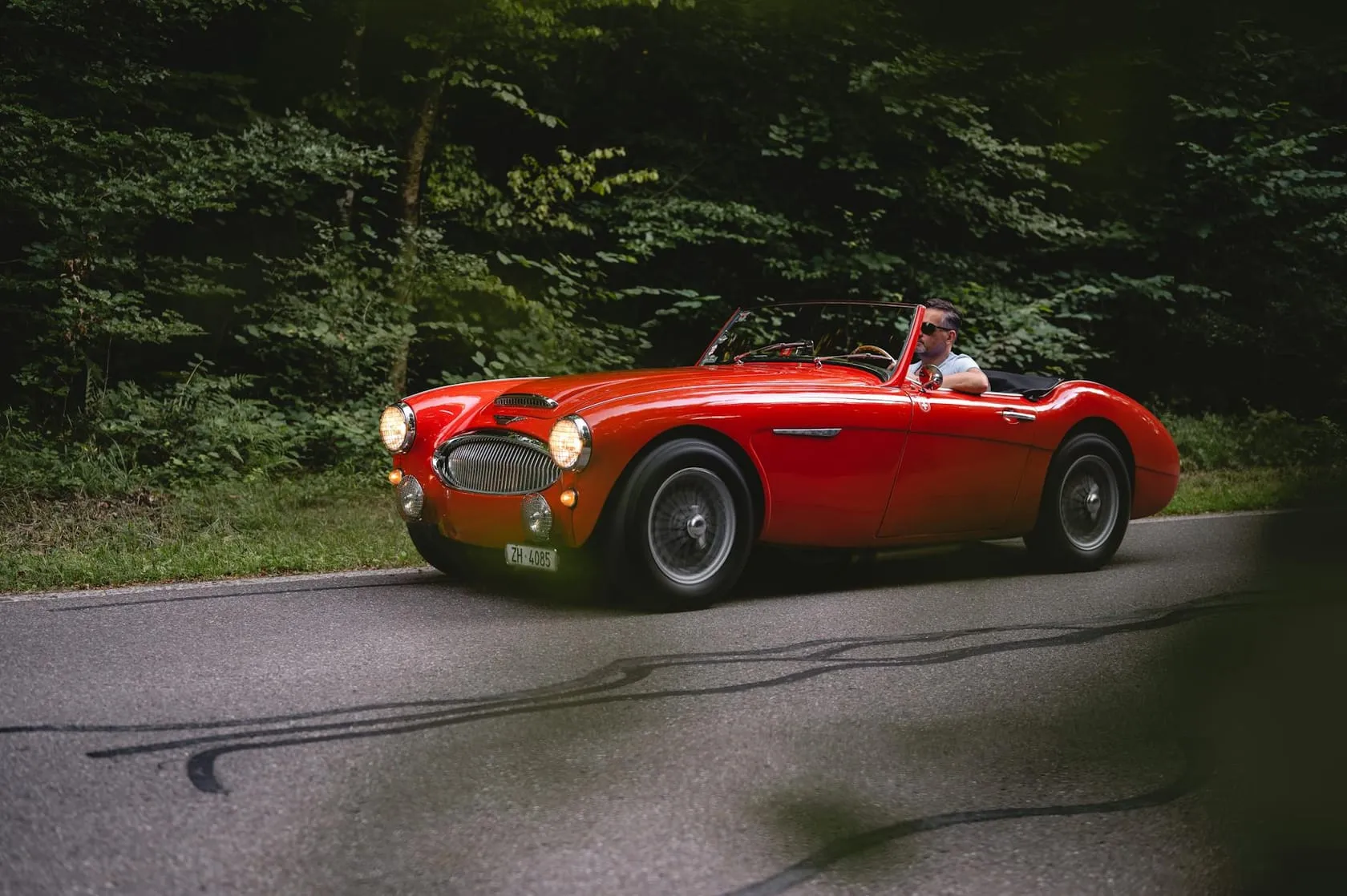 Austin-Healey 3000: the Big Healey (1959–1967)
The Austin-Healey 3000, the "Big Healey", is the muscular six-cylinder sports car that defined the marque and built its rally reputation. A guide to the Mk I, II and III, the wind-up-window BJ7 and the prized Mk III BJ8, the works rally cars, and what to look for when buying.
- Austin-Healey Sprite: the Frogeye and the Spridget (1958–1971)
The Austin-Healey Sprite, and above all its bug-eyed first version the Frogeye, is one of the most loveable and affordable classic sports cars there is. A guide to the Frogeye Mk I, the later Spridget cars shared with the MG Midget, the Sebring racers, and what to check before buying one.
-
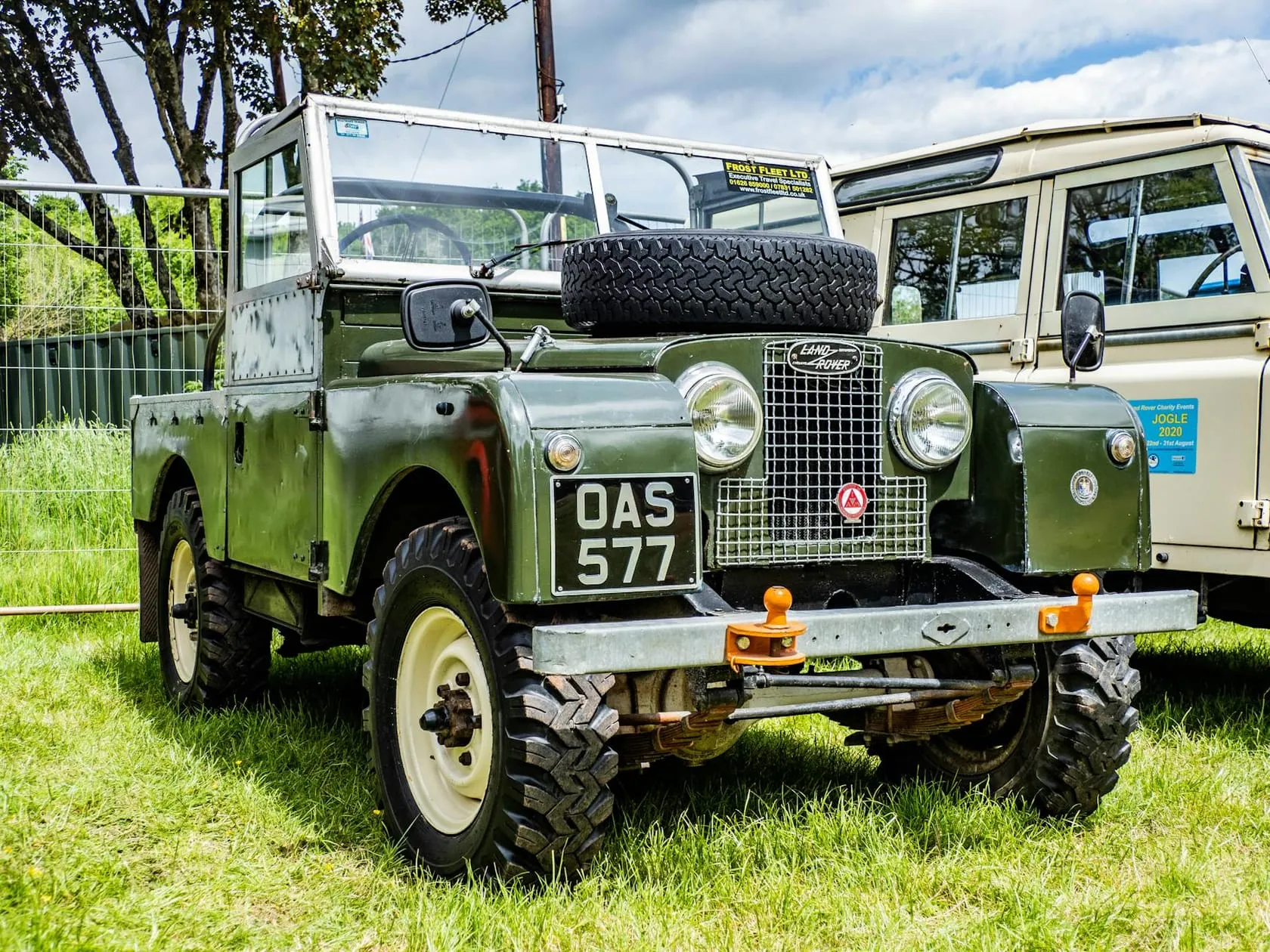 Land Rover Series I: the aluminium original (1948–1958)
The Land Rover Series I is the spartan, aluminium-bodied original that started it all in 1948. A guide to the 80, 86 and 88 inch cars, the petrol and diesel engines, the early freewheel four-wheel drive, what to look for when buying, and why the earliest cars are now so valuable.
-
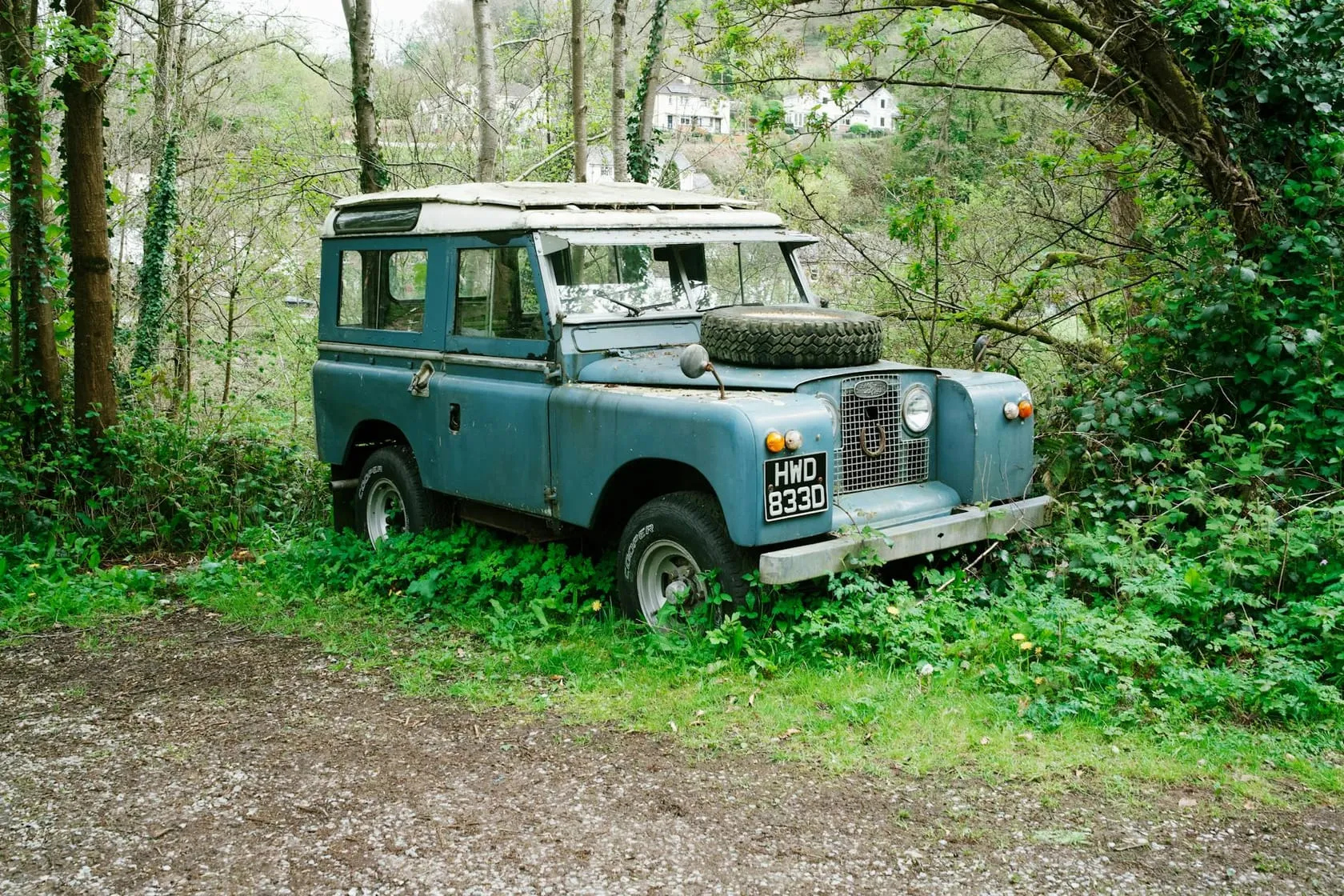 Land Rover Series II and IIA: the definitive working Land Rover (1958–1971)
The Land Rover Series II and IIA gave the marque its enduring 2.25 engine and its familiar barrel-side shape, and the IIA is widely held to be the toughest Series of all. A guide to the 88 and 109 inch cars, the engines, the famous headlamp move to the wings, and what to look for when buying one.
-
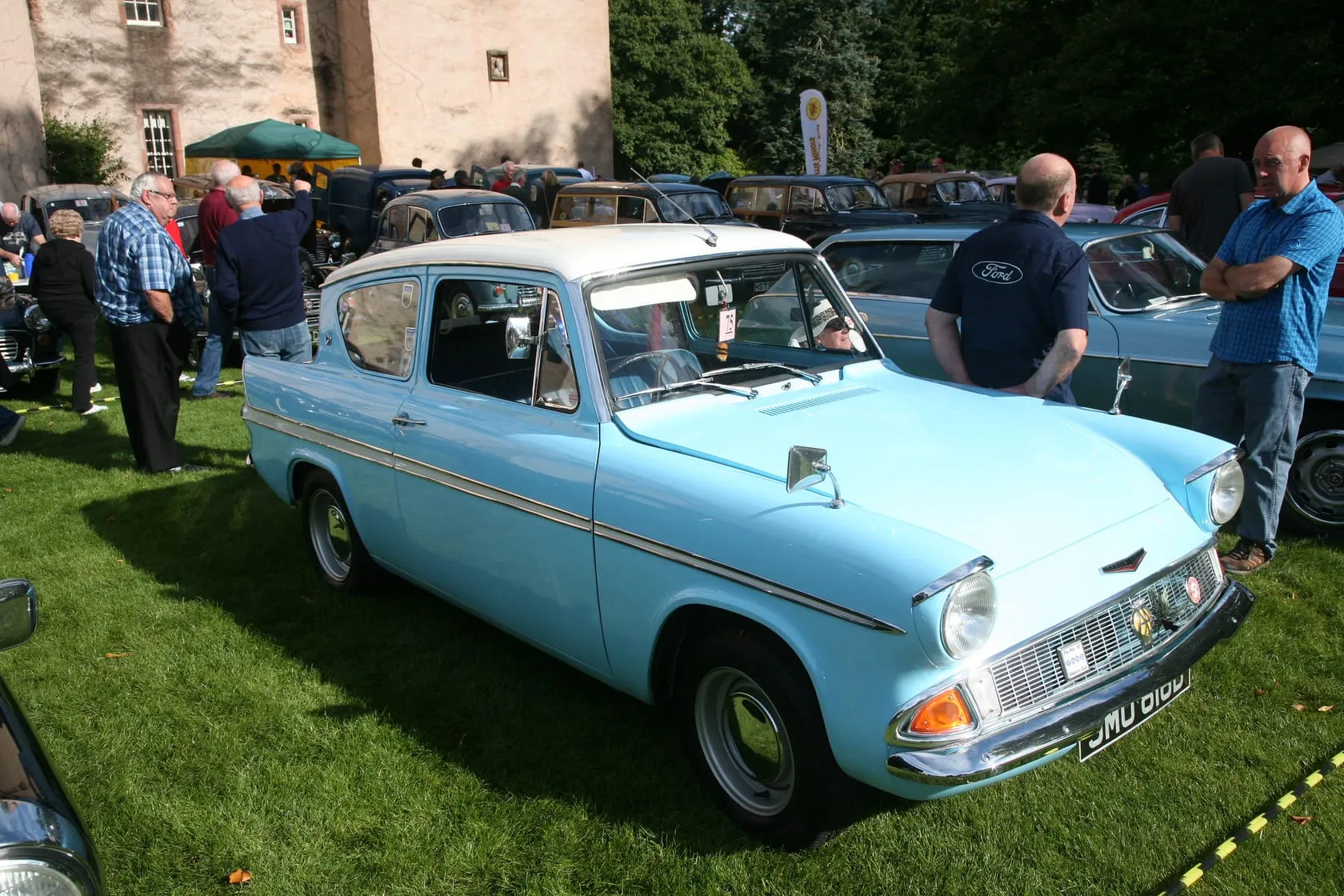 Ford Anglia 105E: the small Ford with the backwards window (1959–1967)
The Ford Anglia 105E put more than a million British families on the road, and is remembered for two things, its reverse-rake rear window and, decades later, its starring role as the flying car in Harry Potter. A guide to the 105E and 123E, the first of the Kent engines, what they are like to own, and what they are worth.
-
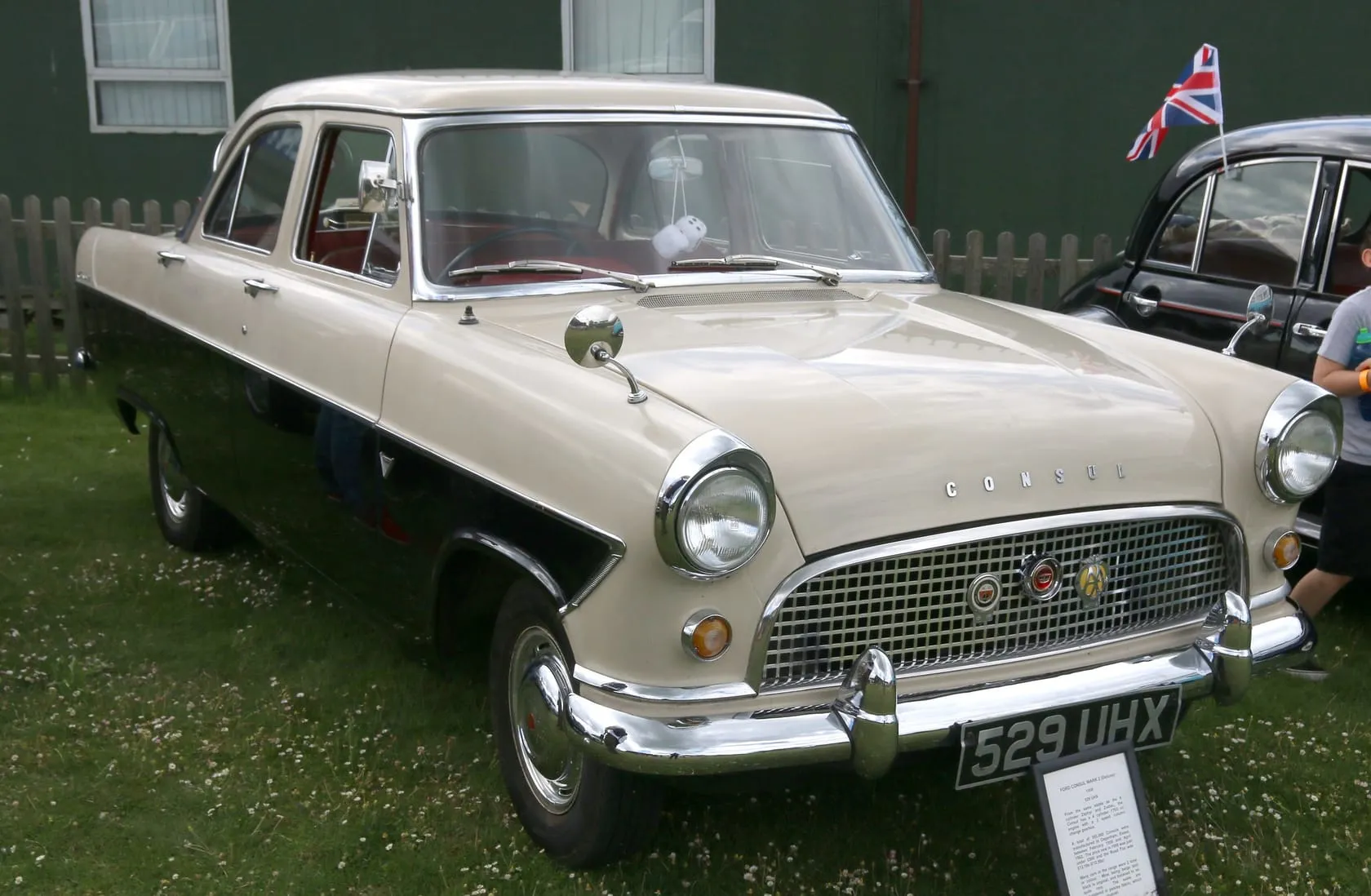 Ford Consul: the modern Ford that started a dynasty (1951–1962)
The Ford Consul was the four-cylinder base of Ford of Britain's big-saloon range, and with its Zephyr sister it was the first British Ford built with modern unitary construction. A guide to the Mk1 and Mk2 Consul, the Three Graces, the later use of the Consul name, what to look for and what they are worth.
-
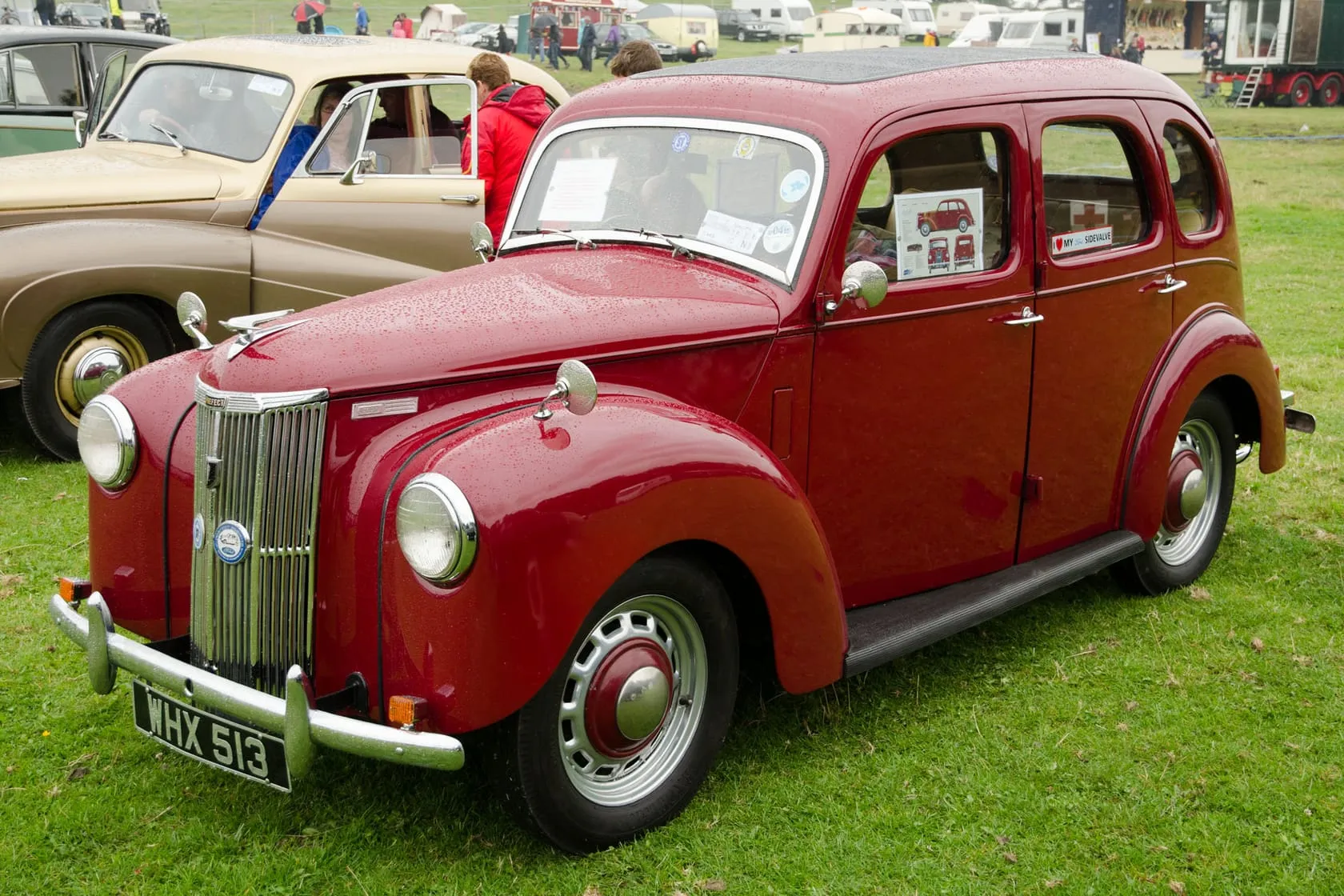 Ford Prefect: the upright small Ford that motorised Britain (1938–1961)
The Ford Prefect was Ford UK's upmarket small saloon for over two decades, from the upright "sit up and beg" pre-war cars to the modern 100E of the 1950s. Cheap, tough and built in huge numbers, it put Britain on the road, and lent its name to a Hitchhiker's Guide character. A guide to the models, owning one, and values.
-
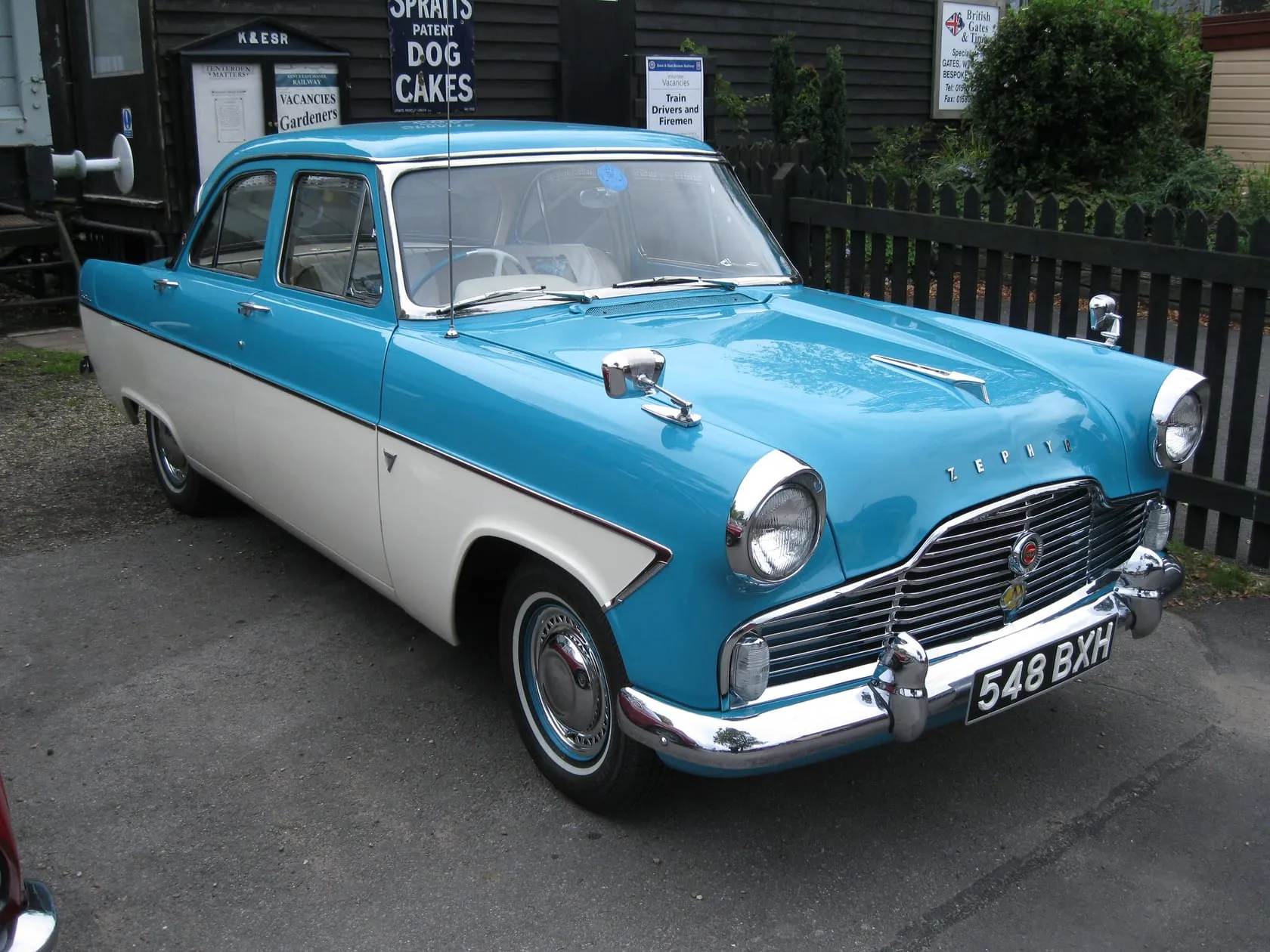 Ford Zephyr: the six-cylinder Ford that policed Britain (1950–1972)
The Ford Zephyr was the six-cylinder heart of Ford of Britain's big-saloon range, quick and spacious for its day, and famous as the patrol car of the BBC series Z-Cars. A guide to the four generations from the finned Three Graces to the big V6 Mk4, how it relates to the Consul and Zodiac, what to look for, and what they are worth.
-
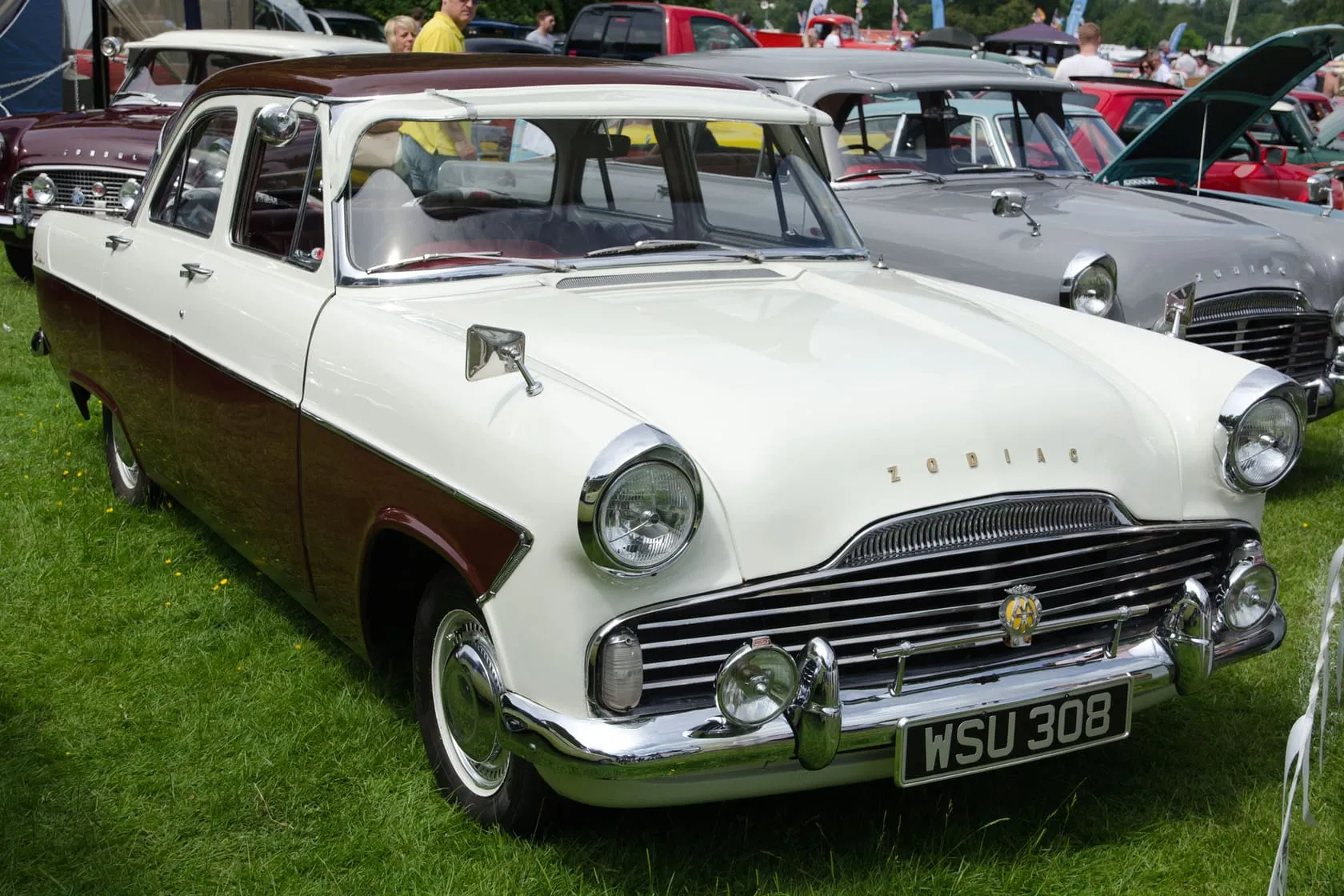 Ford Zodiac: Dagenham's affordable luxury car (1953–1972)
The Ford Zodiac was the top of Ford of Britain's big-saloon range, the upmarket, six-cylinder flagship above the Consul and Zephyr. From the finned Mk2 to the huge V6-engined Mk4, it offered American-style space and brightwork at a British price. A guide to the four generations, what to look for, and what they are worth.
-
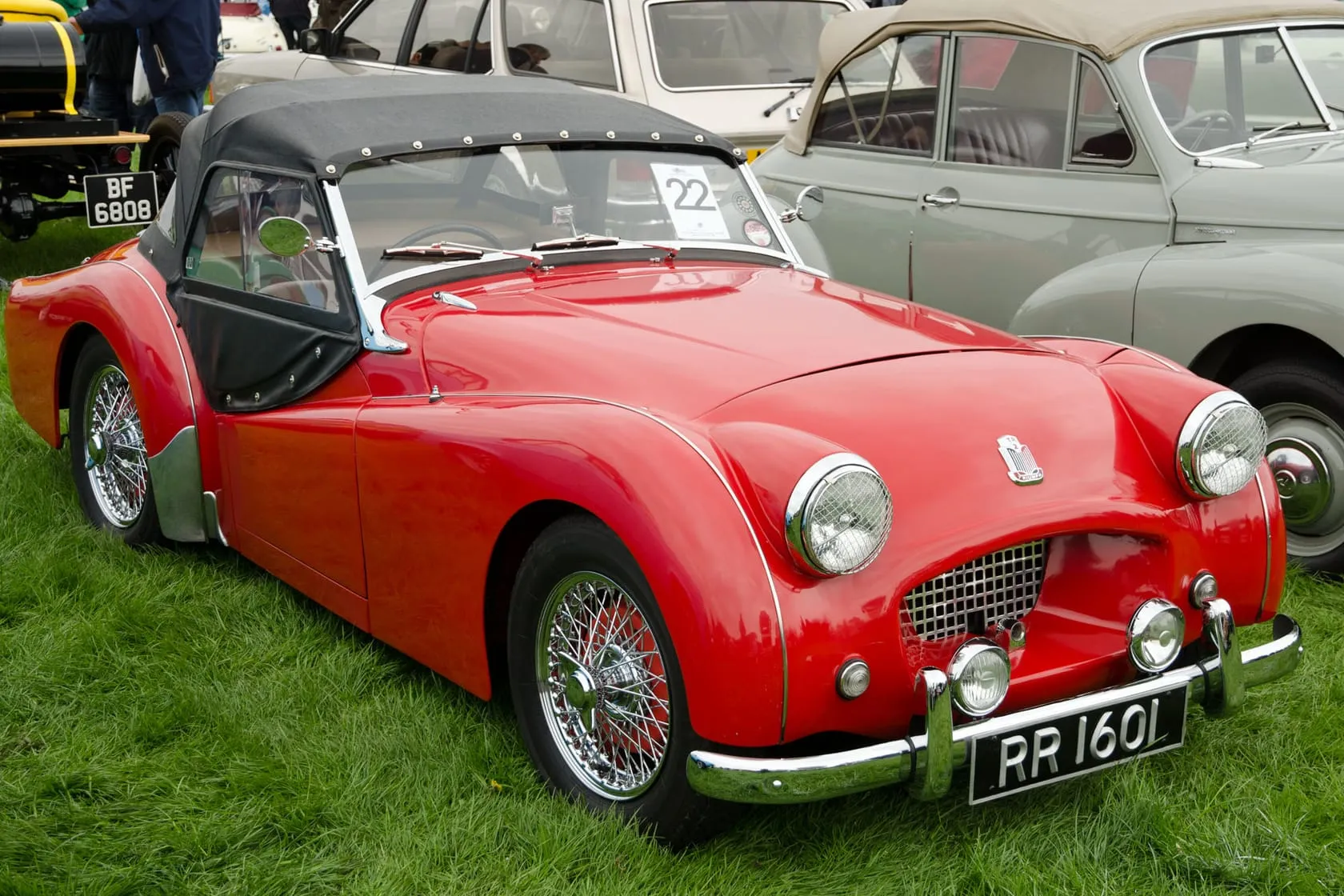 Triumph TR2: the cheap 100 mph sports car that started the line (1953–1955)
The Triumph TR2 launched the TR sports-car line in 1953 and made its name on a single claim, that it was the cheapest production car of its day able to top 100 mph. A rugged, basic, separate-chassis roadster with a torquey Standard four, it is now the rarest and most vintage-feeling of the side-screen TRs. A guide to the long-door and short-door cars, owning one, and values.
-
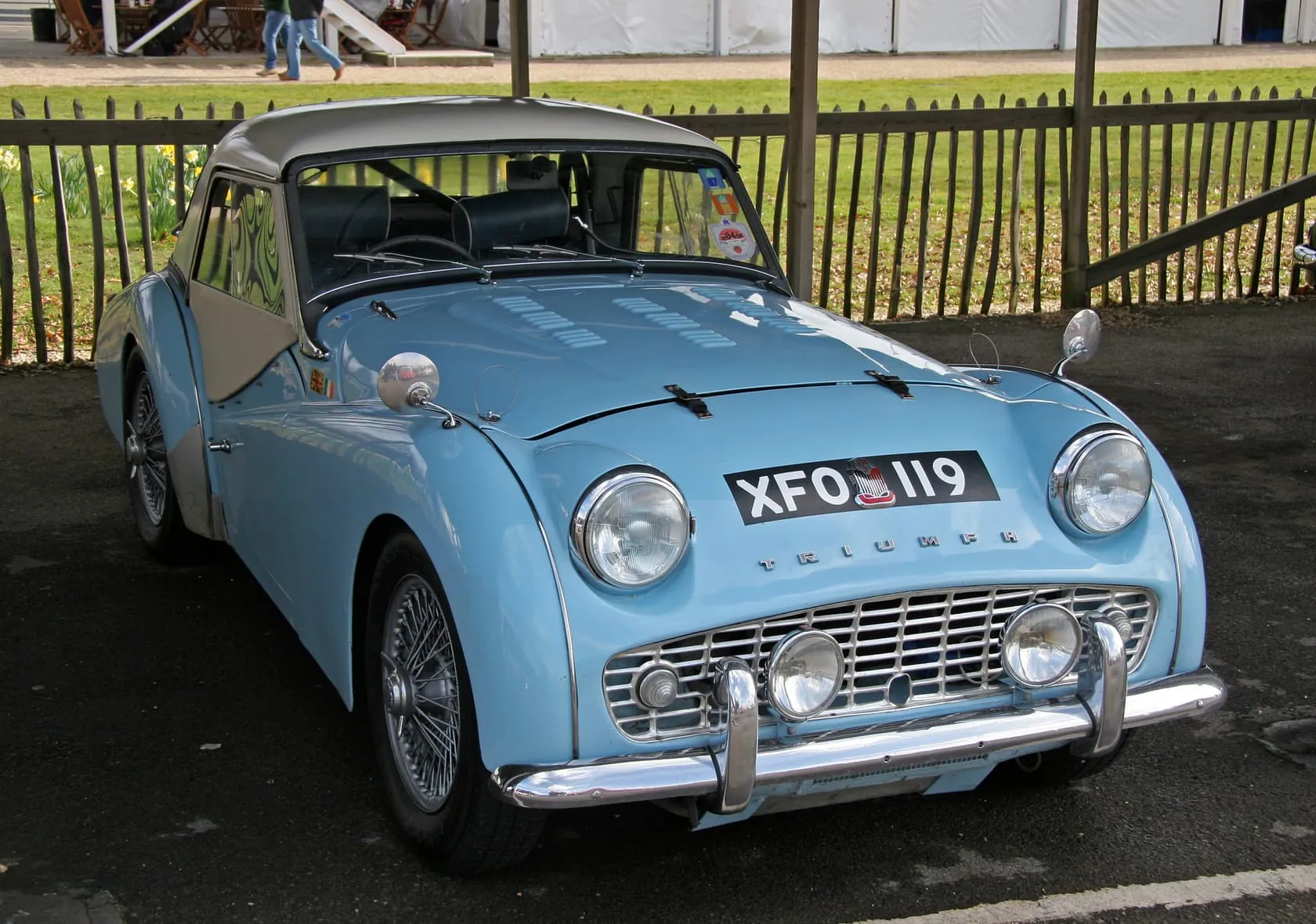 Triumph TR3: the first British car with disc brakes (1955–1962)
The Triumph TR3 was the rugged side-screen sports car that made Triumph's name in America, and in 1956 it became the first British series-production car fitted with front disc brakes. A guide to telling the TR3, TR3A and TR3B apart, what they are like to drive, and what to check when buying.
-
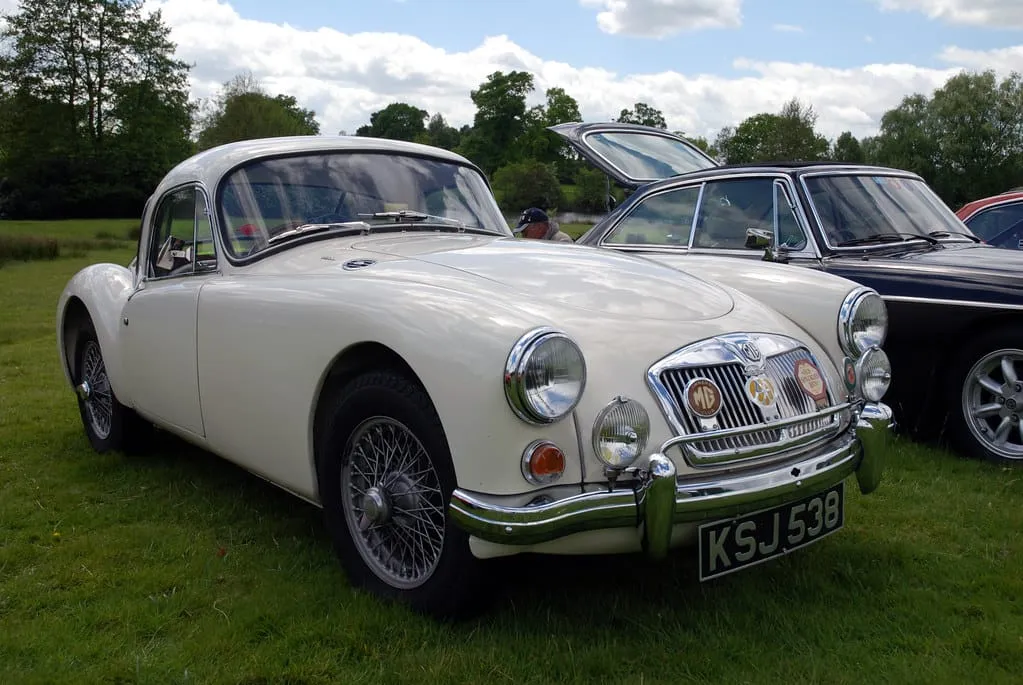 MG MGA: 100,000 built, almost all for export, and the prettiest MG of all (1955–1962)
The MG MGA was the sleek, aerodynamic sports car that swept away MG's upright pre-war look, sold over a hundred thousand almost entirely for export, and remains the prettiest of the affordable classic MGs. A guide to the 1500, 1600 and 1600 MkII pushrod cars, the rare and troubled Twin Cam, and what to look for when buying one.
-
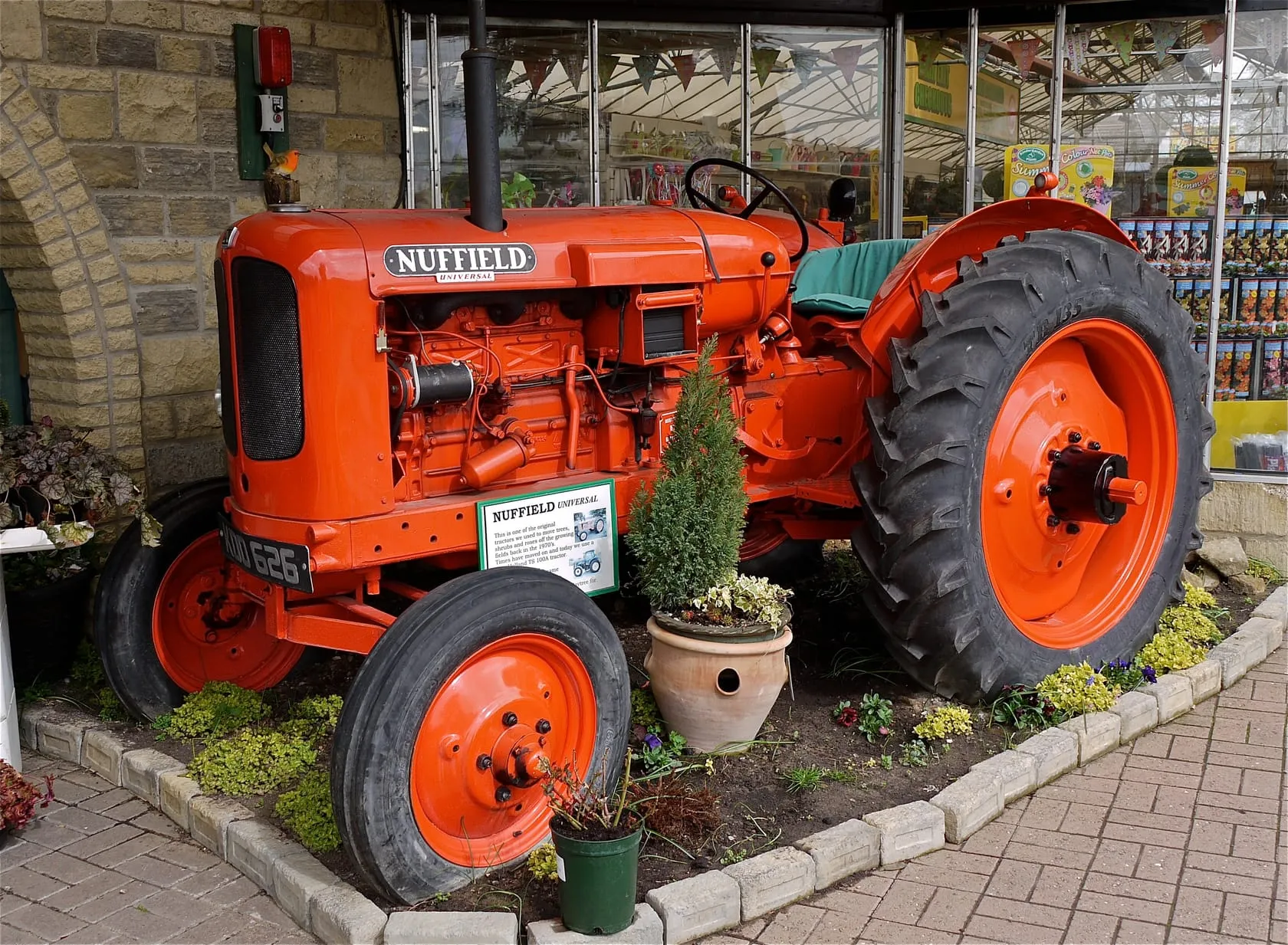 Nuffield tractors: the orange tractors built by the makers of Morris cars
Nuffield built bright orange tractors from 1948, made by the Morris car empire under Lord Nuffield himself. A guide to the old Nuffield tractors worth knowing, from the Universal M3 and M4 to the ten-speed 10/60 and the 4/65, the move to Bathgate, what to look for when buying, and what a vintage Nuffield is worth.
-
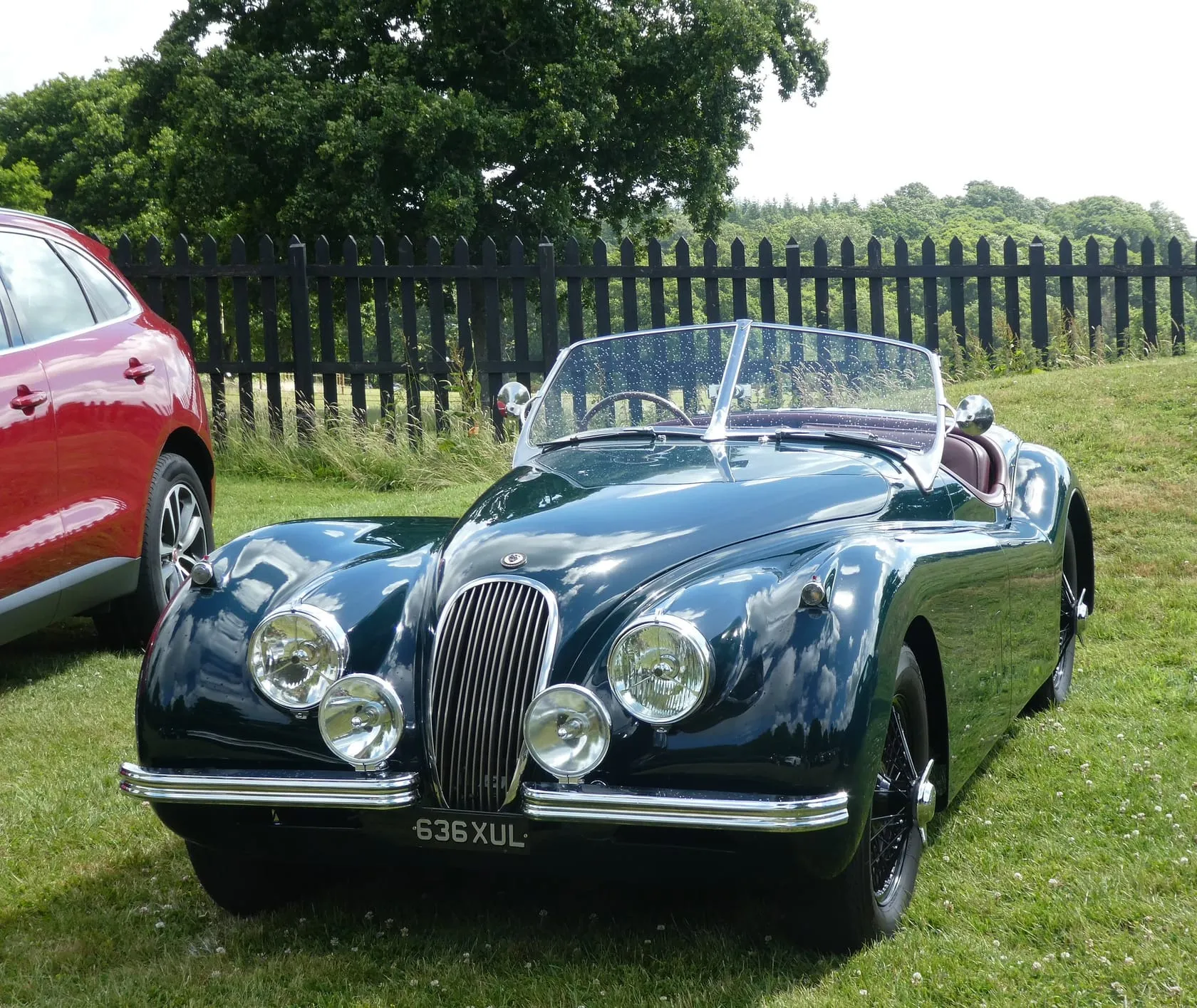 Jaguar XK120 (1948–1954): the fastest car in the world
The XK120 was meant to be a low-volume showcase for Jaguar's new twin-cam engine and became a sensation, billed as the fastest production car in the world. The Jabbeke speed runs, the aluminium and steel cars, the body styles and the famous XK engine, and what to look for when buying one.
-
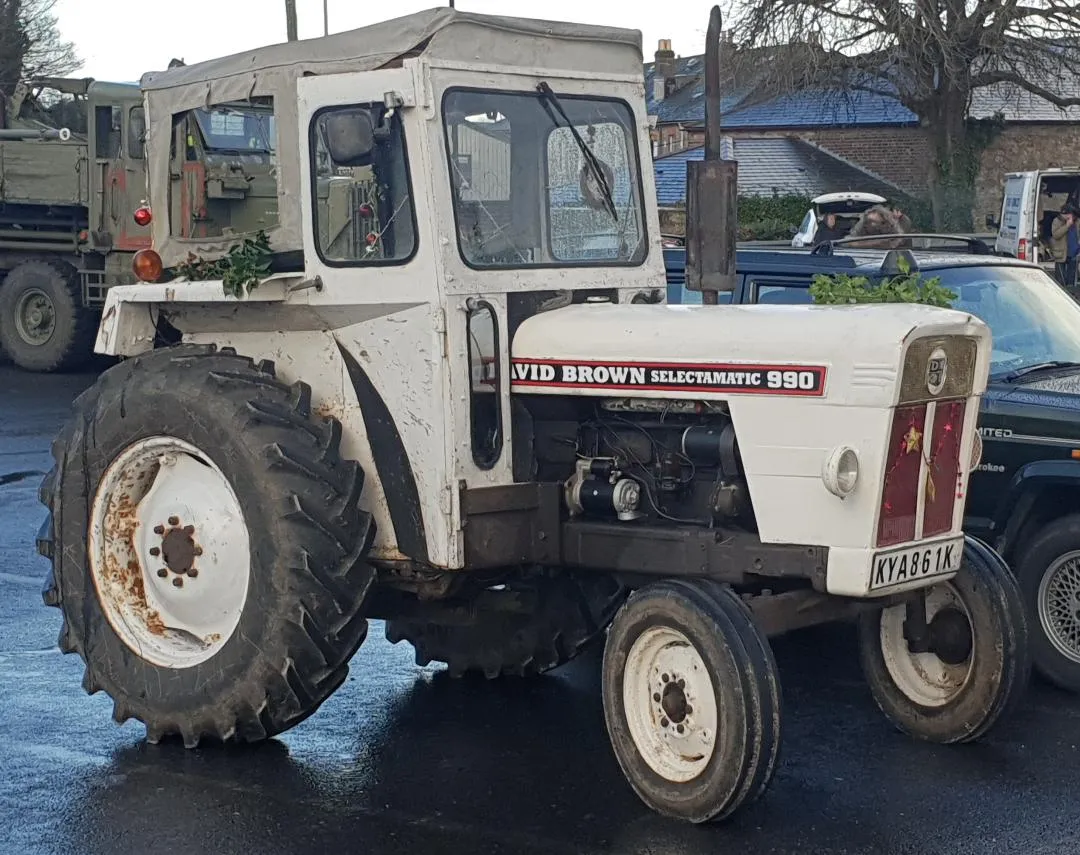 David Brown tractors: the gear-makers who also built Aston Martin
David Brown built well-engineered classic tractors at Meltham in Yorkshire from the 1936 Ferguson-Brown to the Selectamatic range, and the same company owned Aston Martin, giving the DB in DB5 its initials. The history, the Cropmaster, Implematic and Selectamatic models, the Aston Martin connection, what to look for when buying, and values.
-
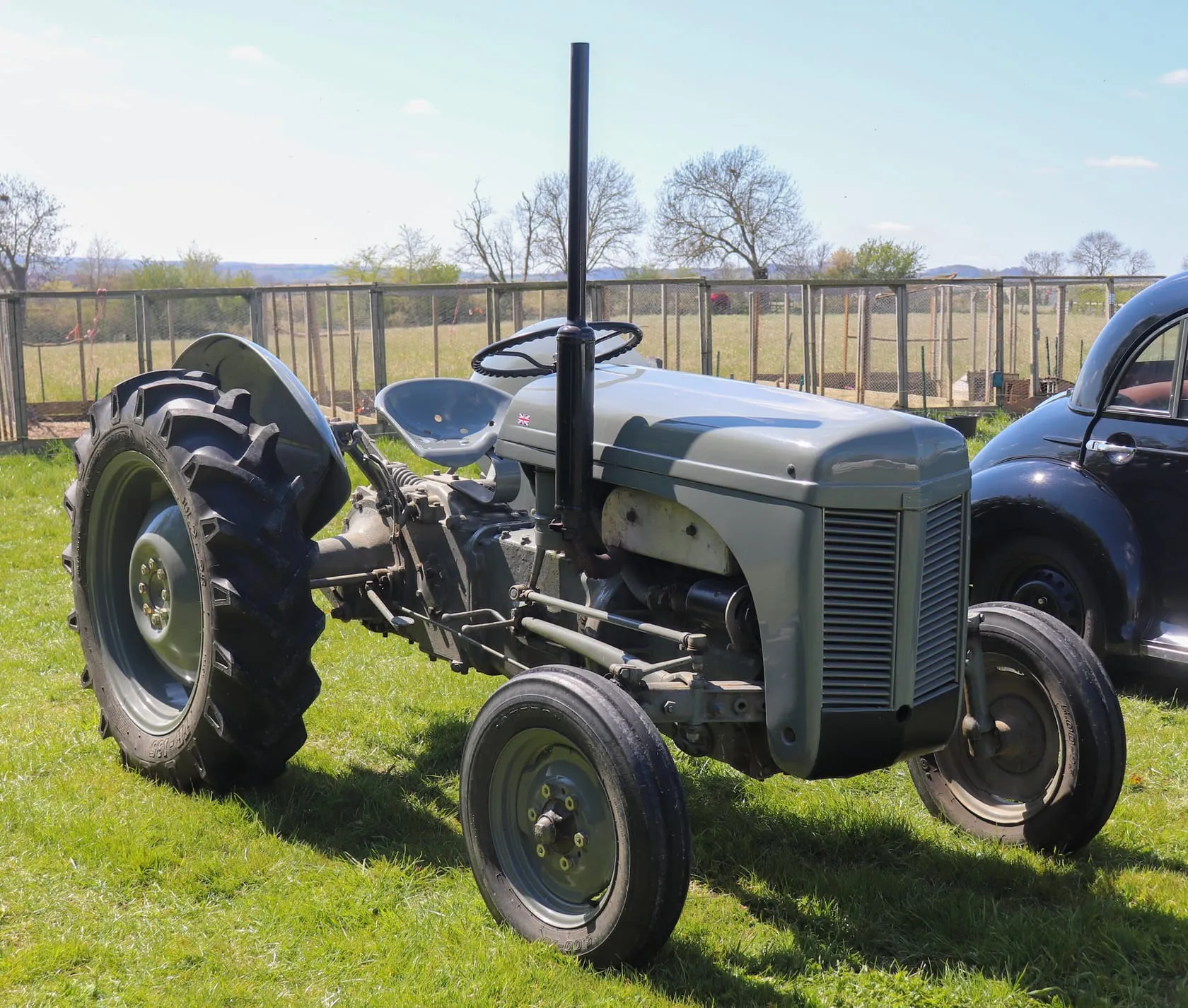 Ferguson TE20: the little grey Fergie that changed farming
The Ferguson TE20, the "little grey Fergie", is the tractor that brought Harry Ferguson's three-point hydraulic system to the world. Over half a million built in Coventry from 1946. Its history, the Ford handshake and the famous lawsuit, the petrol, TVO and diesel engines, what to check when buying, and what one is worth.
-
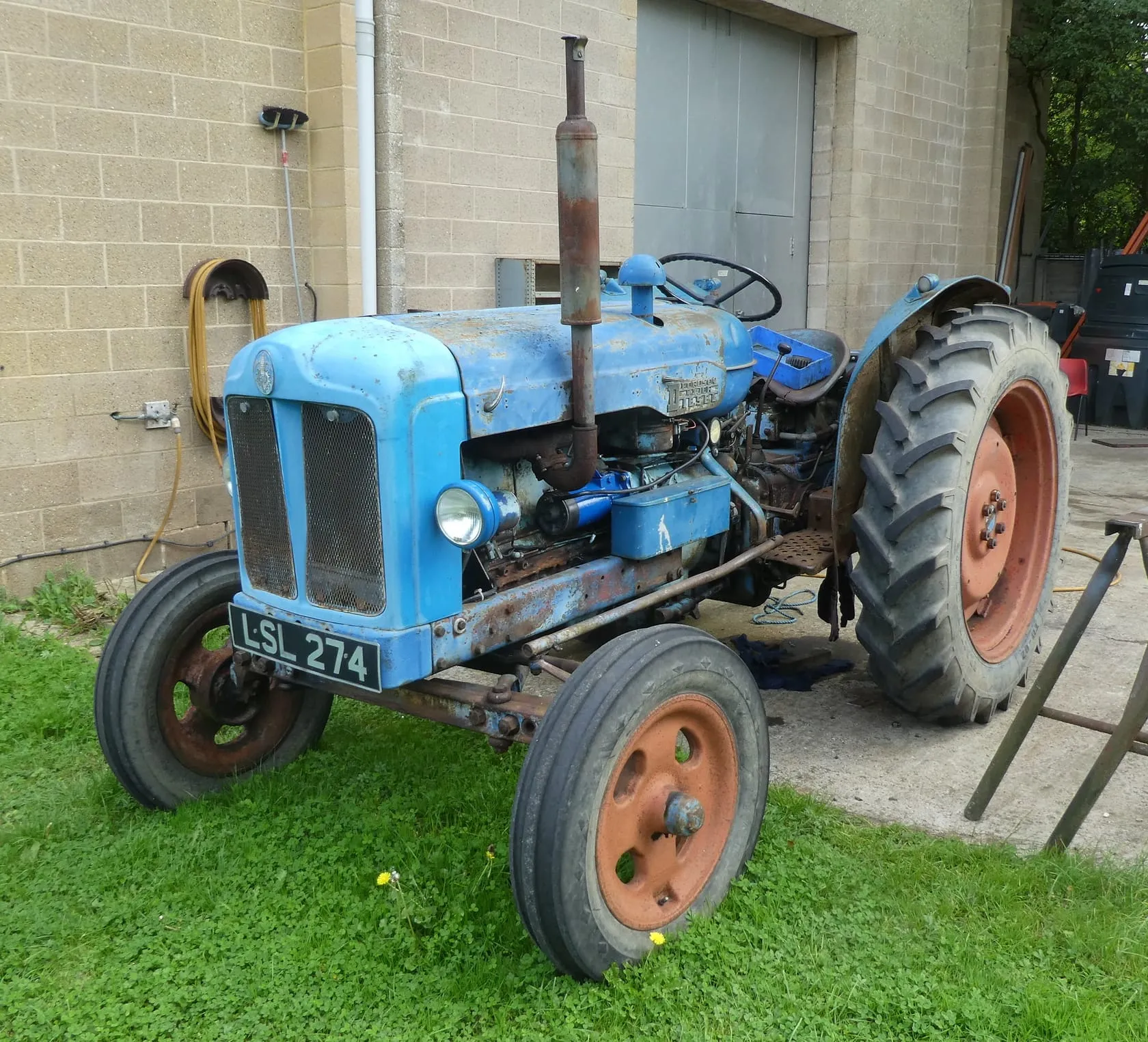 Fordson Major: the big, simple Ford that ploughed Britain
The Fordson Major is the heavyweight British classic tractor, built by Ford at Dagenham from the post-war E27N to the diesel New Major, Power Major and Super Major of 1952 to 1964. Its history, the engines, the difference between the E27N and the New Major, what to check when buying, and what one is worth.
-
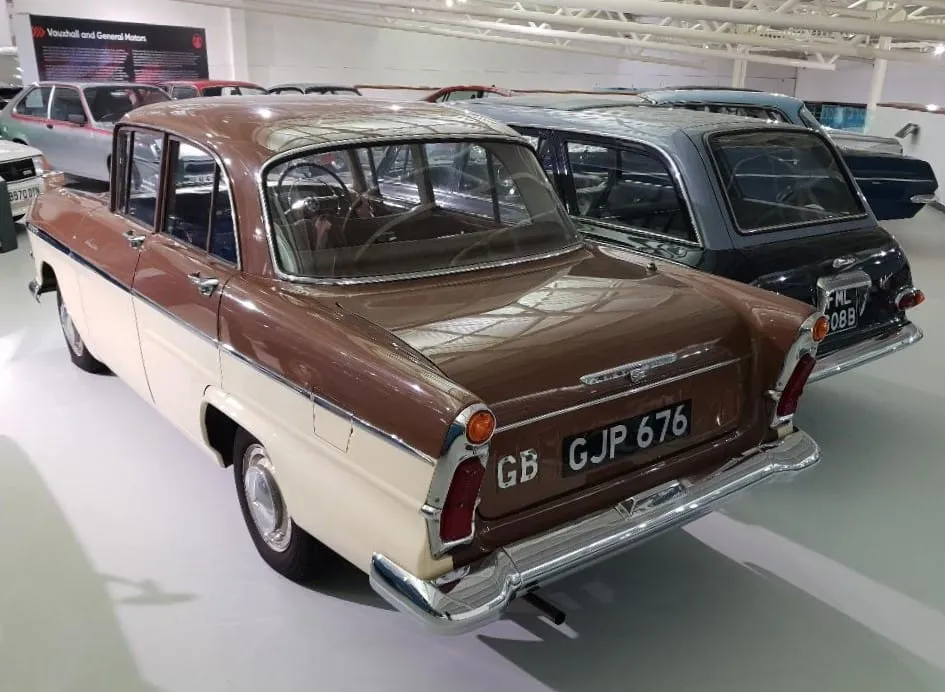 Vauxhall Victor: nineteen years and five generations of family Vauxhall (1957–1976)
The Vauxhall Victor ran for nineteen years and five generations, from the wraparound-windscreen F-type to the slant-four FE estate. A guide to the lineage, what to look for, what they're worth, and why so few survived.
-
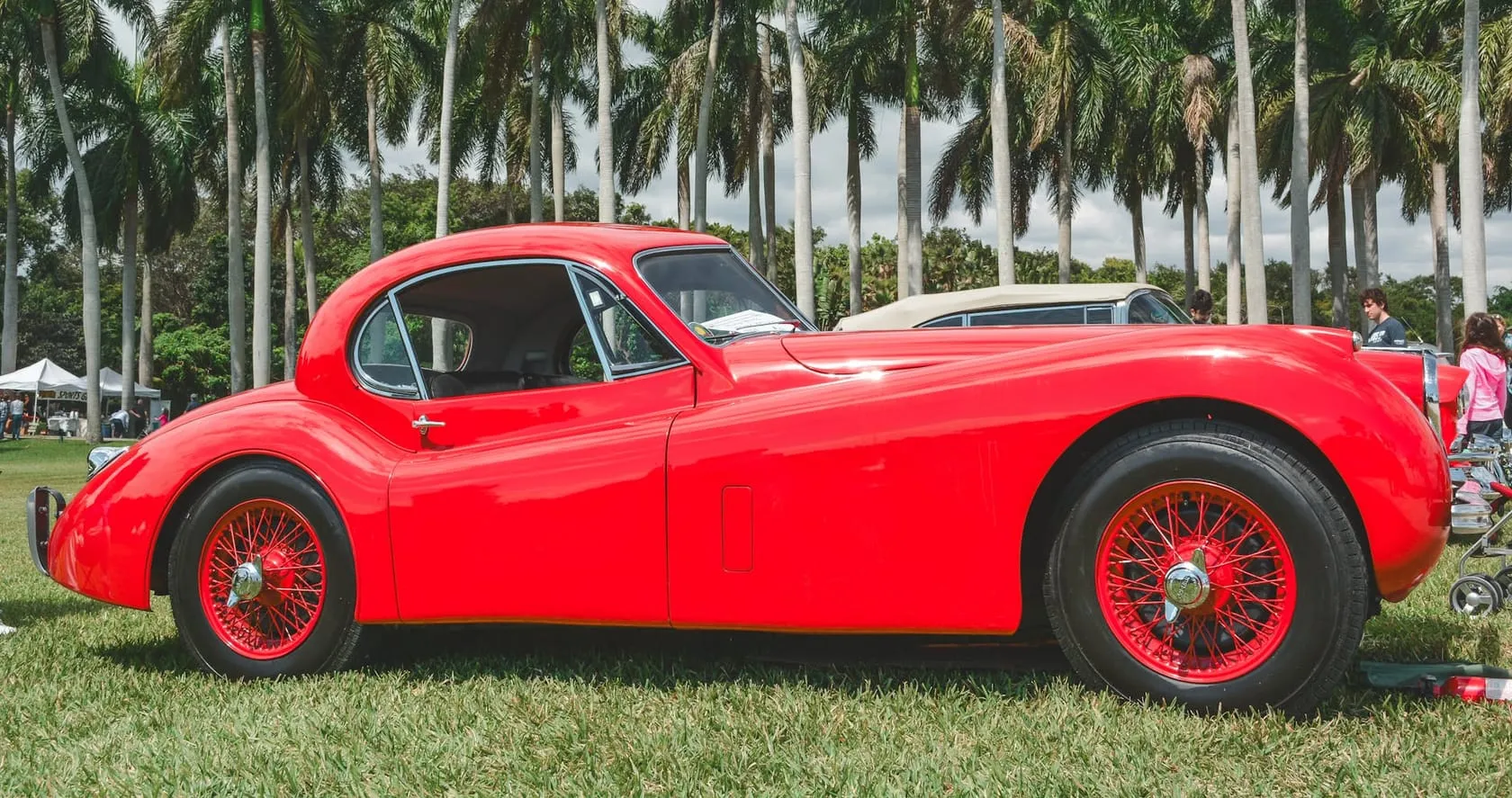 British classic cars of the 1950s
The decade British sports cars went mainstream, the British cars of the 1950s running from the Jaguar XK120 and the Austin-Healey 100 to the Bentley R-Type Continental, the Land Rover Series I, and the export drive that built the American market.