Ford Consul: the modern Ford that started a dynasty (1951–1962)
The Ford Consul was the four-cylinder base of Ford of Britain's big-saloon range, and with its Zephyr sister it was the first British Ford built with modern unitary construction. A guide to the Mk1 and Mk2 Consul, the Three Graces, the later use of the Consul name, what to look for and what they are worth.
Built 1951–1962 51 recorded sales

At a glance
- Years
- 1951–1962
- Body styles
- Four-door saloon (also convertible and estate)
- Drivetrain
- Front engine, rear-wheel drive
- Engines
- 1508cc four (Mk1); 1703cc four (Mk2)
- Power
- 47 bhp (Mk1); 59 bhp (Mk2)
- Top speed
- Around 75-79 mph
- Trim levels
- Consul, Consul De Luxe; Mk1 (EOTA) and Mk2 (204E)
- Production
- The four-cylinder base model of the Consul/Zephyr/Zodiac range built at Dagenham from 1951 to 1962
- Assembly
- Dagenham, Essex
- Designer
- George Walker (Ford USA styling)
- Values
- Project around £2,500-£6,000; good £7,000-£12,000; excellent £13,000-£20,000 (Mk1 convertibles and the best Mk2s top the range)
- Engineering first
- With the Zephyr, the first British Ford with modern unitary (monocoque) construction
- Place in the range
- The four-cylinder base car below the Zephyr and Zodiac
The models
The Ford Consul matters out of all proportion to its modest reputation. When it appeared in 1951, it and its six-cylinder Zephyr sister were the first British Fords built the modern way, with the body and chassis combined into a single unitary structure rather than bolted together. That made them lighter, stronger and cheaper to build, and it set the template for almost every Ford that followed.
As the four-cylinder base of the range, the Consul is the most affordable way into these important early big Fords, and an honest, characterful 1950s family saloon in its own right.
The base of the range, and a new way of building cars
Ford’s big saloon was always a three-model family, and the Consul was the entry point: the four-cylinder car below the six-cylinder Zephyr and the luxury Zodiac. What it shared with them was the thing that mattered most, the new unitary construction, styled under George Walker of Ford’s American parent and giving the cars a clean, modern, transatlantic look.
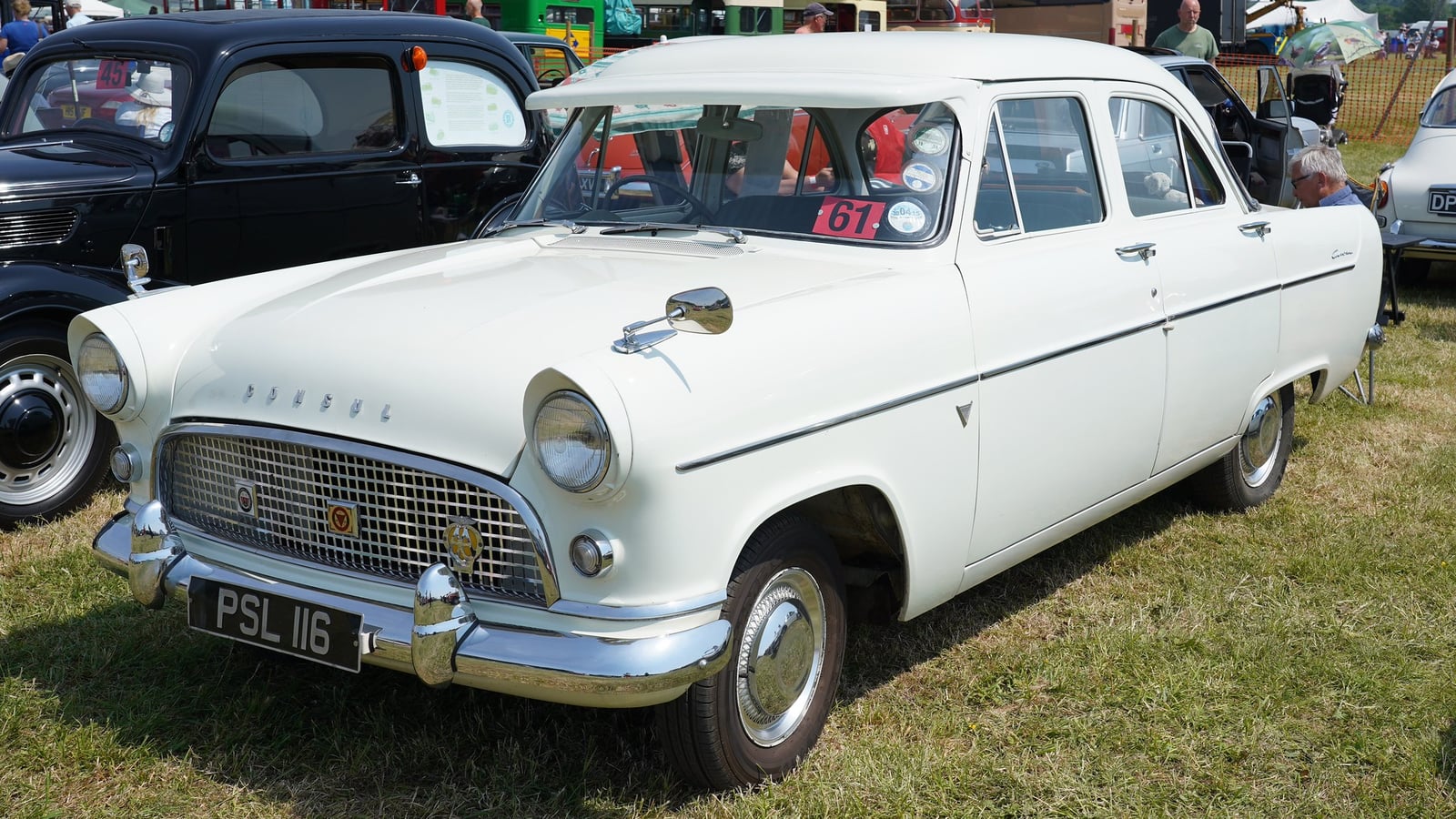
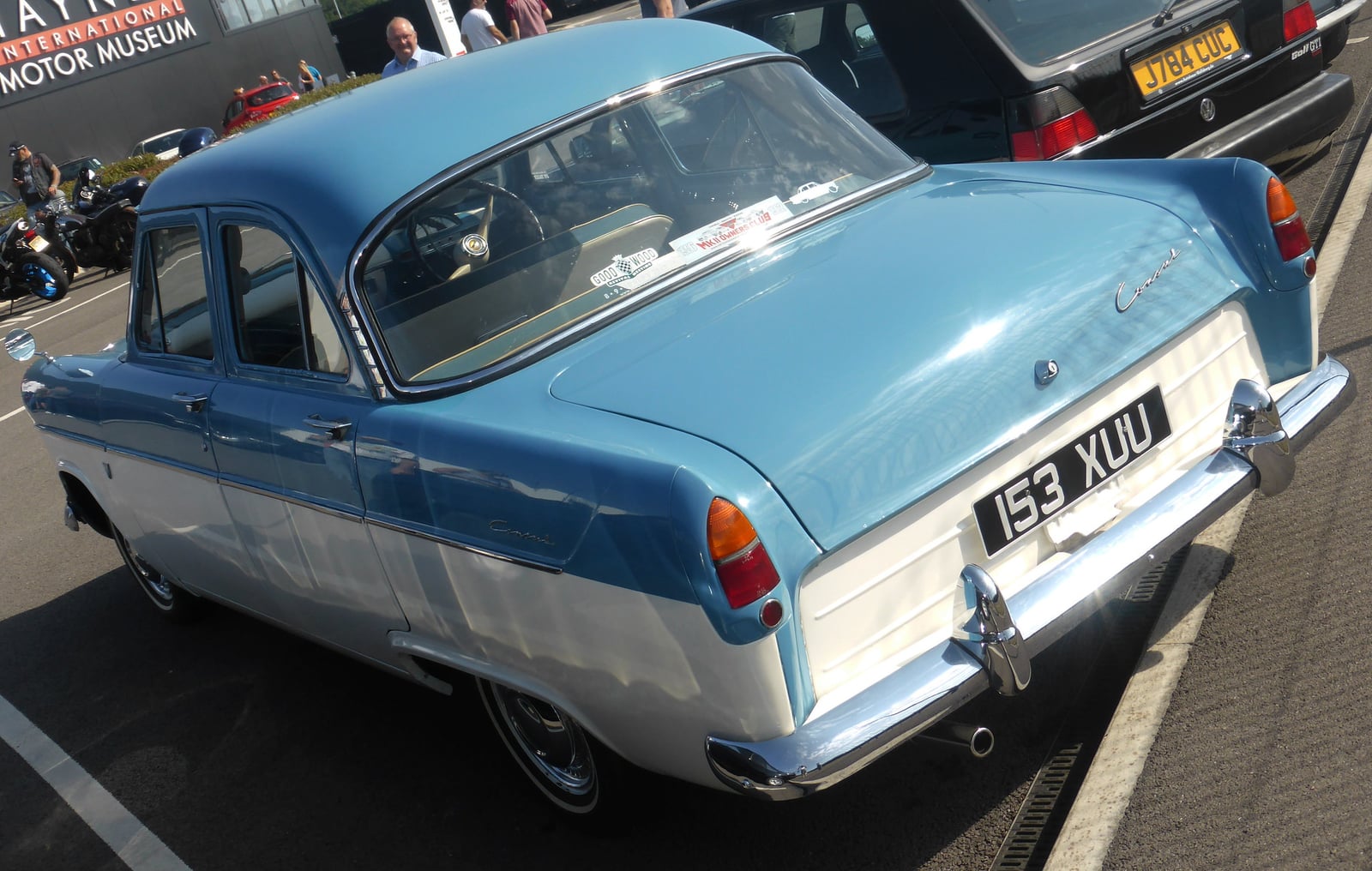
The Mk1, coded EOTA, ran from 1951 to 1956 with a 1508cc four. The restyled Mk2 (code 204E) followed from 1956 to 1962 as one of the so-called Three Graces alongside the Zephyr and Zodiac, with a longer wheelbase, a larger 1703cc engine and styling clearly influenced by contemporary American Fords.

A name that lived on
The Consul name proved durable, and it can confuse. At the very end of the original car’s life Ford launched a short-lived four-car Consul range, the finned Consul Classic saloon, the Consul Capri coupe, the Consul Corsair and the Consul Cortina, all distinct models. Later still, in 1972, the big new Ford that most people remember as the Granada was launched as the Consul, the name surviving on the lower-specification versions for a few years. The car covered here is the original 1951–62 big Consul, the one that started it all. If you are hunting one today, the club scene that covers the Three Graces together is the place to start: knowledge, spares and project cars move through it constantly, and the same people can usually point you to an honest car.
Saloons, convertibles and estates
Beyond the saloon, the family had its glamour versions. Carbodies of Coventry built factory-approved convertibles of the Consul and its sisters, and Abbott of Farnham converted estates. Both are rare and prized today, the convertibles especially, and they bring serious premiums over the saloons. The standard car’s appeal is different: it is the honest, usable, affordable face of 1950s family motoring, and the version most survivors represent.
Inside, the Consul carried the range’s period furniture in its plainest form: a bench front seat and column gearchange on most cars, vacuum wipers early on, and trim that grew brighter as the decade went on. De Luxe trim and two-tone paint arrived late in the Mk2’s life and lift values today. Most survivors are Mk2s, the Mk1 having almost vanished, so an honest early car is a rare sight at any show.
What it is like to own
The Consul is a simple, sturdy and easy-going classic. The four-cylinder engine is unstressed and durable, the running gear is strong, and the cars were built in large numbers, so the mechanicals are well understood and most service parts can be found. Some trim and body parts for the rarer versions take more hunting.
To drive, it is very much a car of the early 1950s: roomy, soft and relaxed, with modest performance and light controls. The lighter four-cylinder Consul feels a little more nimble than its six-cylinder sisters and is the more economical car. For an affordable, characterful entry into early big-Ford ownership, it is hard to beat.

Buying guide: what to look for
Start with which car you are looking at, because survival across the range is lopsided. Most surviving Consuls are Mk2s and the Mk1 has almost vanished, so an honest early car is a rare sight at any show and deserves to be priced as one. The Carbodies convertibles and Abbott estates bring serious premiums over the saloons, and both want the structure examined harder than a saloon does, the convertible especially, because losing the roof puts more load through the body.
Then the metal, which is how these cars are lost: floors, sills and inner sills, the front and rear wings, the wheel arches, the boot floor, the door bottoms and the suspension mounting points.
Mechanically there is very little to fear. The four-cylinder engine is unstressed, the gearbox is tough, and the Consul was built in large enough numbers that most service parts can still be found. The real hunt is trim. De Luxe fittings and two-tone paint arrived late in the Mk2’s life and lift values today, and the bench seat, column change and period furniture are all far harder to replace than anything mechanical.

Current value and where it sits
What a Consul costs is out of proportion to what it did. This was the car that brought modern unitary construction to the British Ford range, and the bottom of its market still starts near £2,500. Reckon on £7,000 to £12,000 for a usable car and £13,000 to £20,000 for an excellent one, with the Mk1 convertibles and the best Mk2 saloons at the top. For the wider period, see British classic cars of the 1950s and 1960s.
More photos
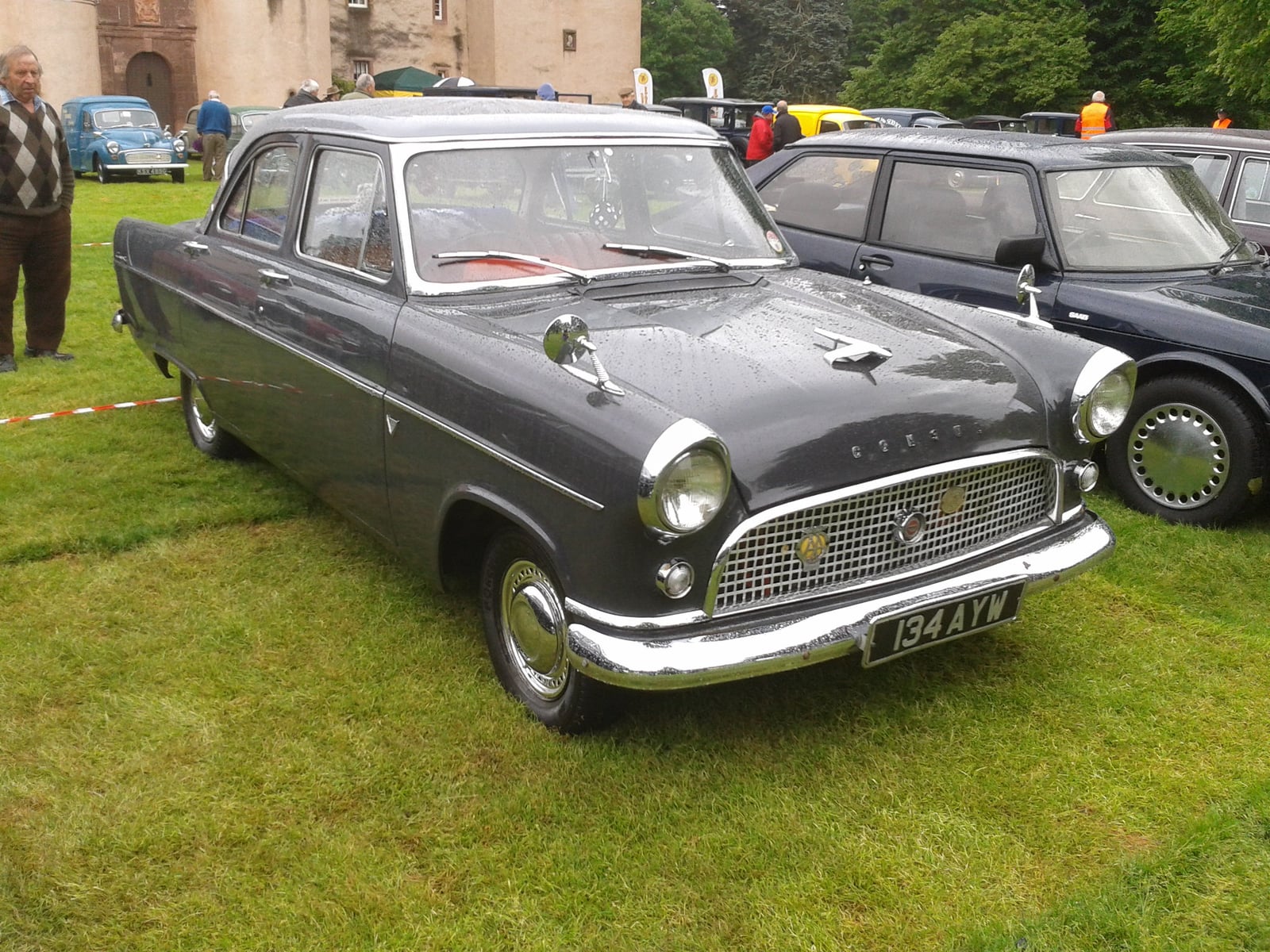
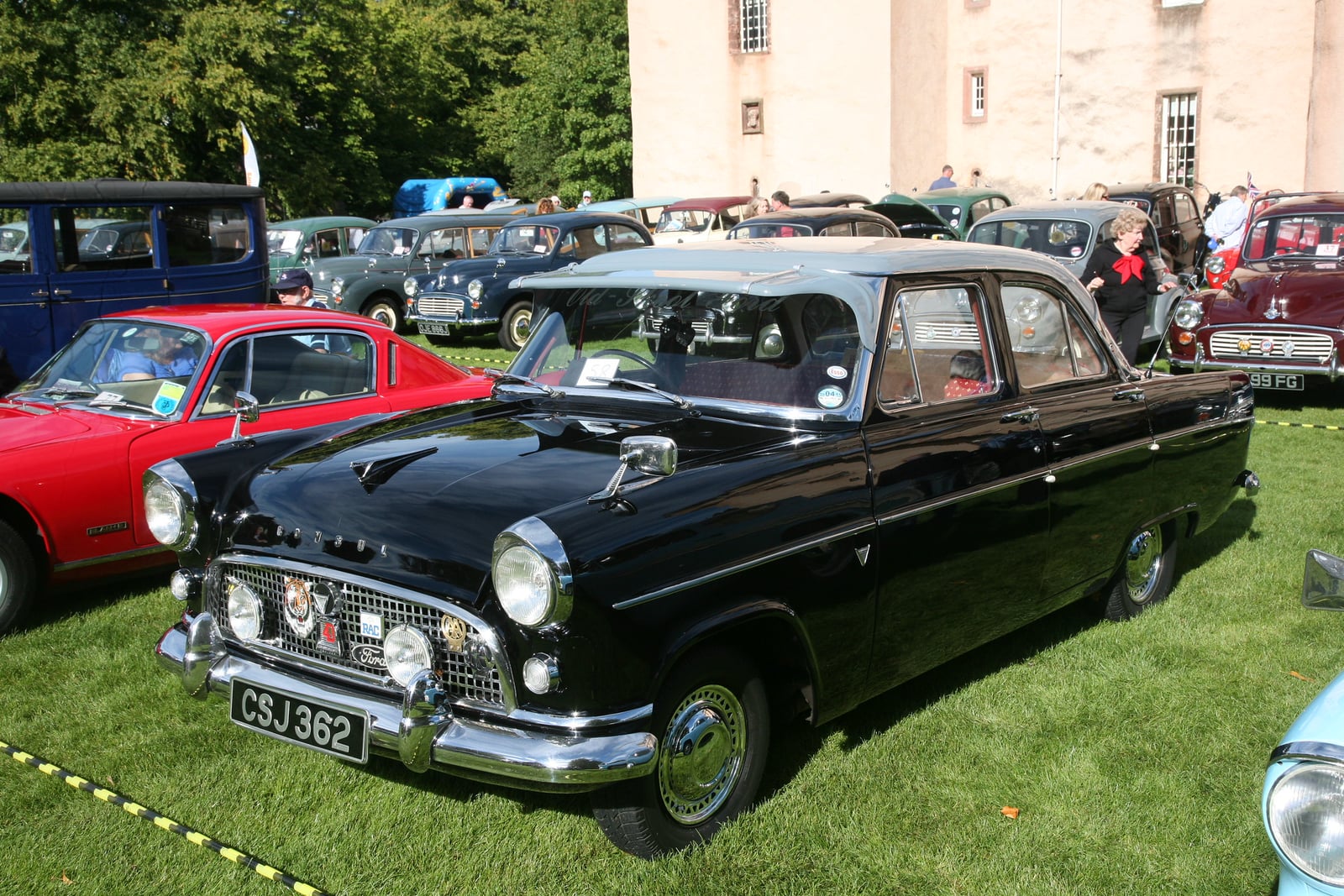
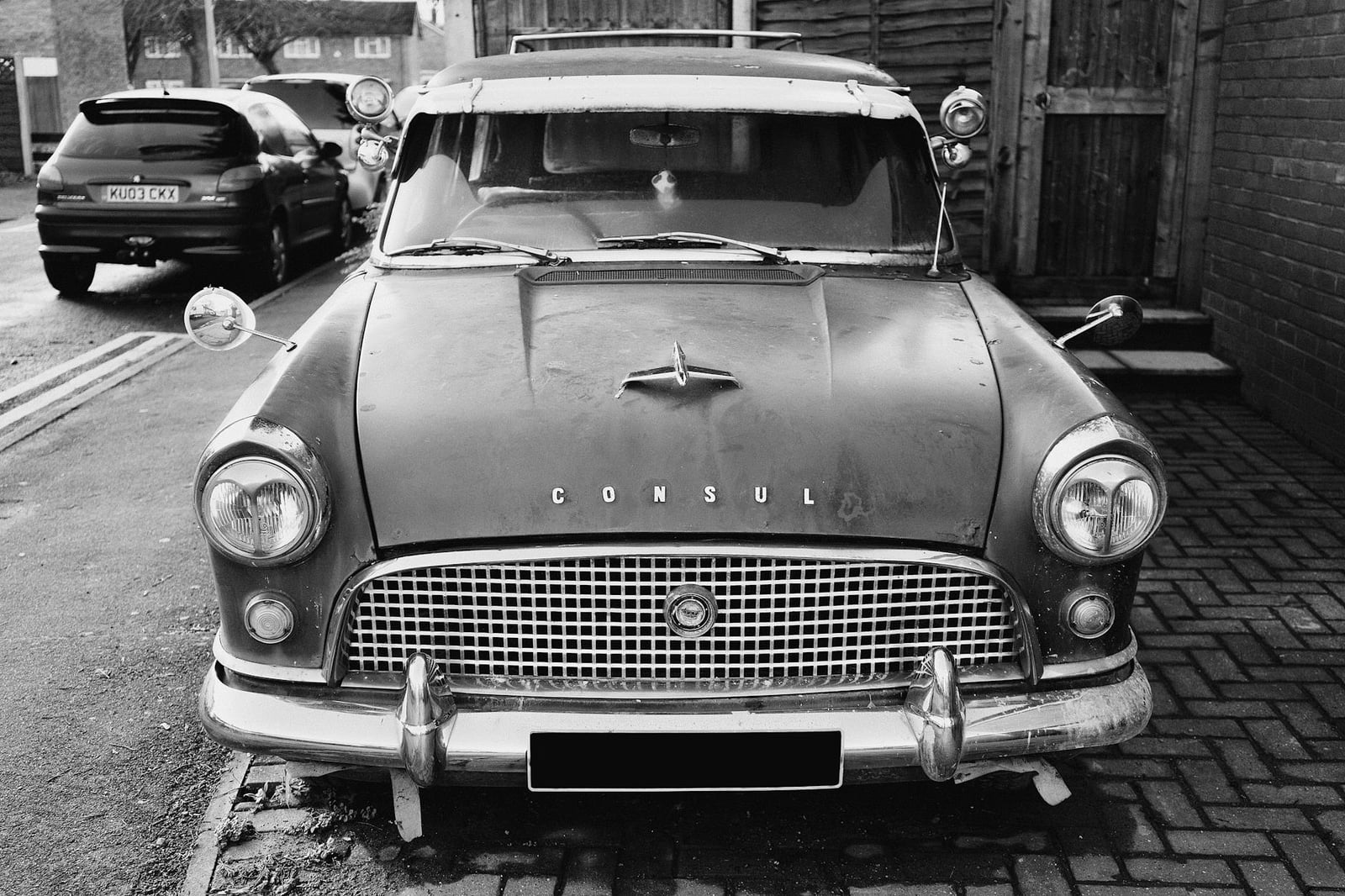
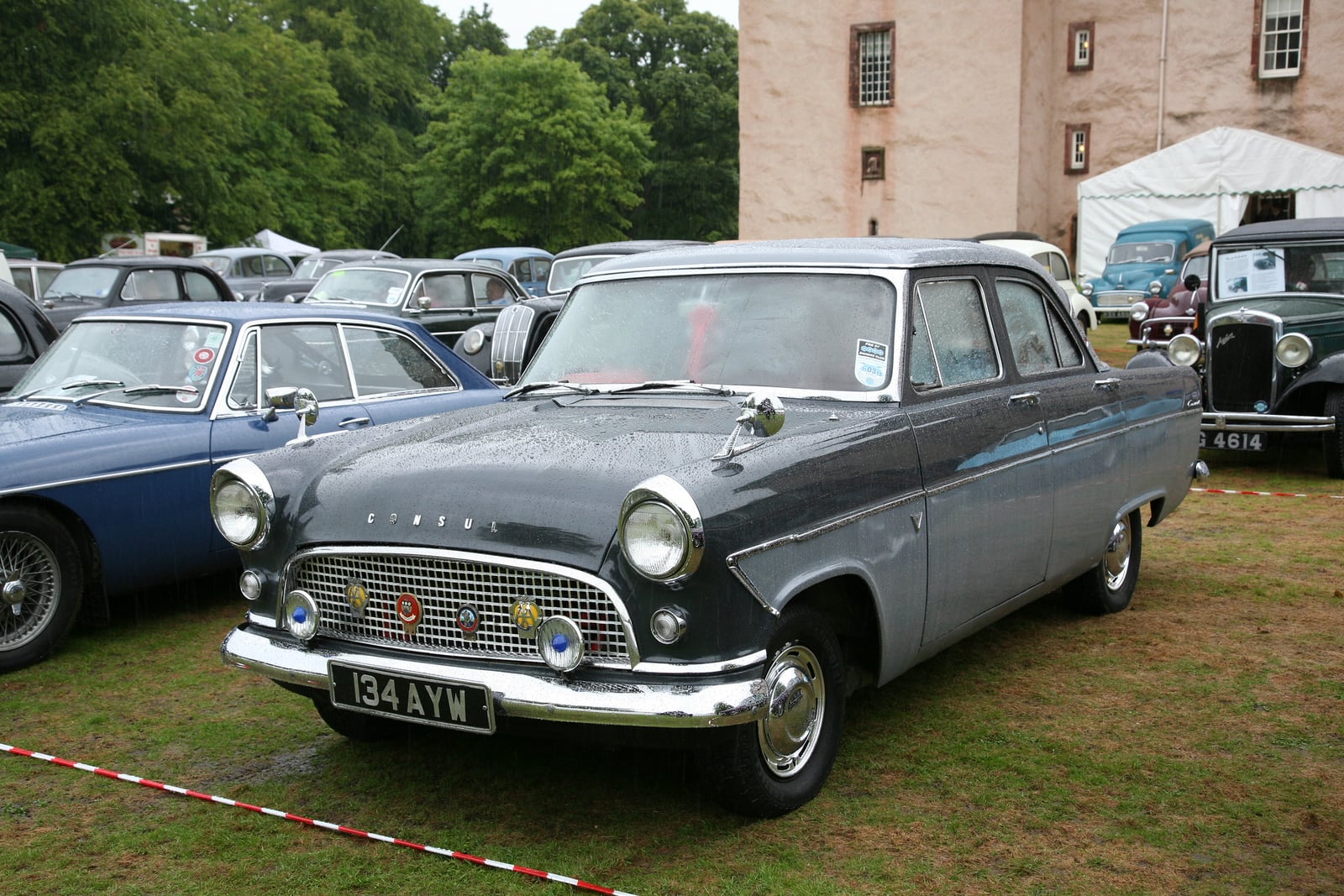
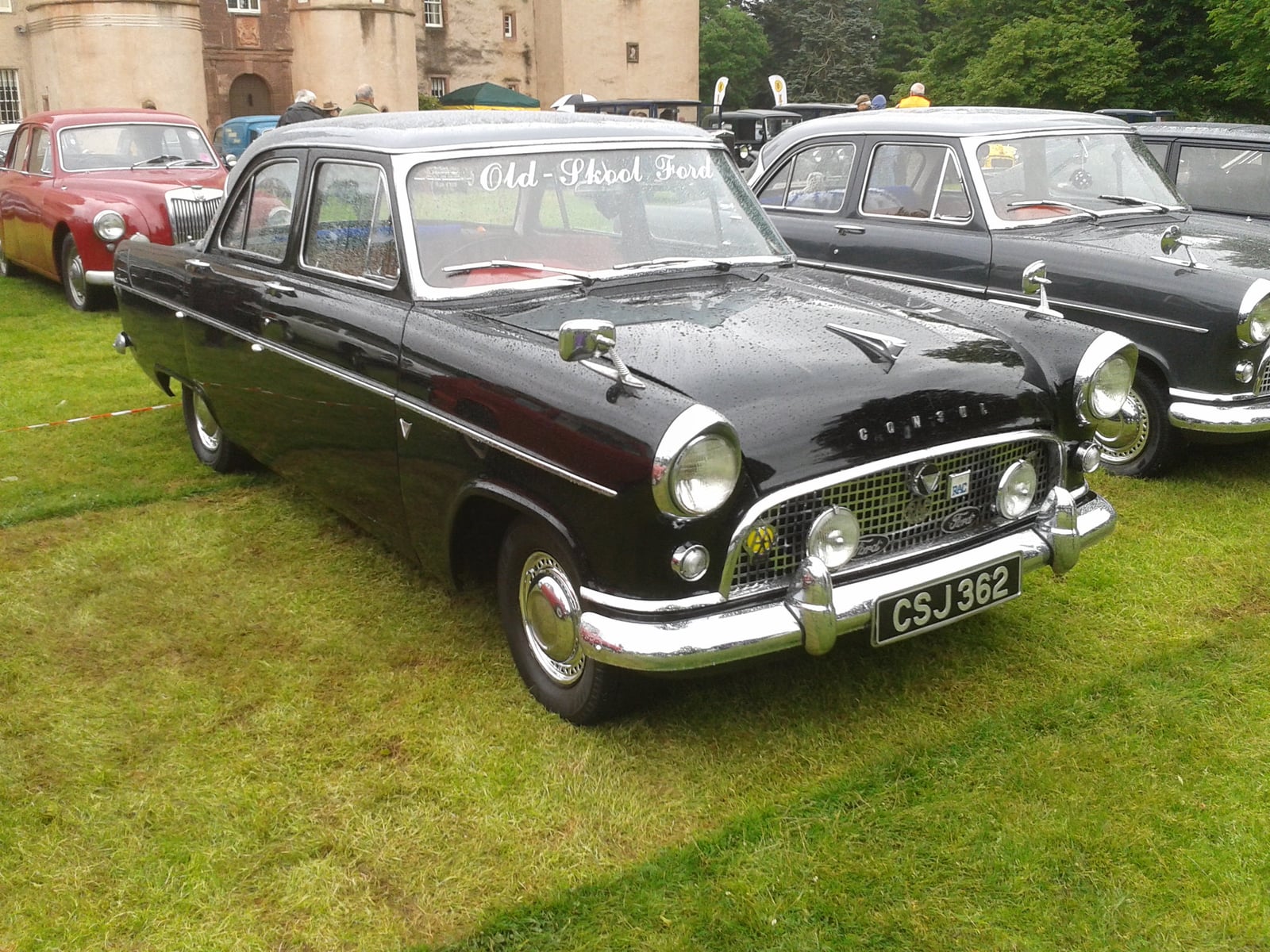
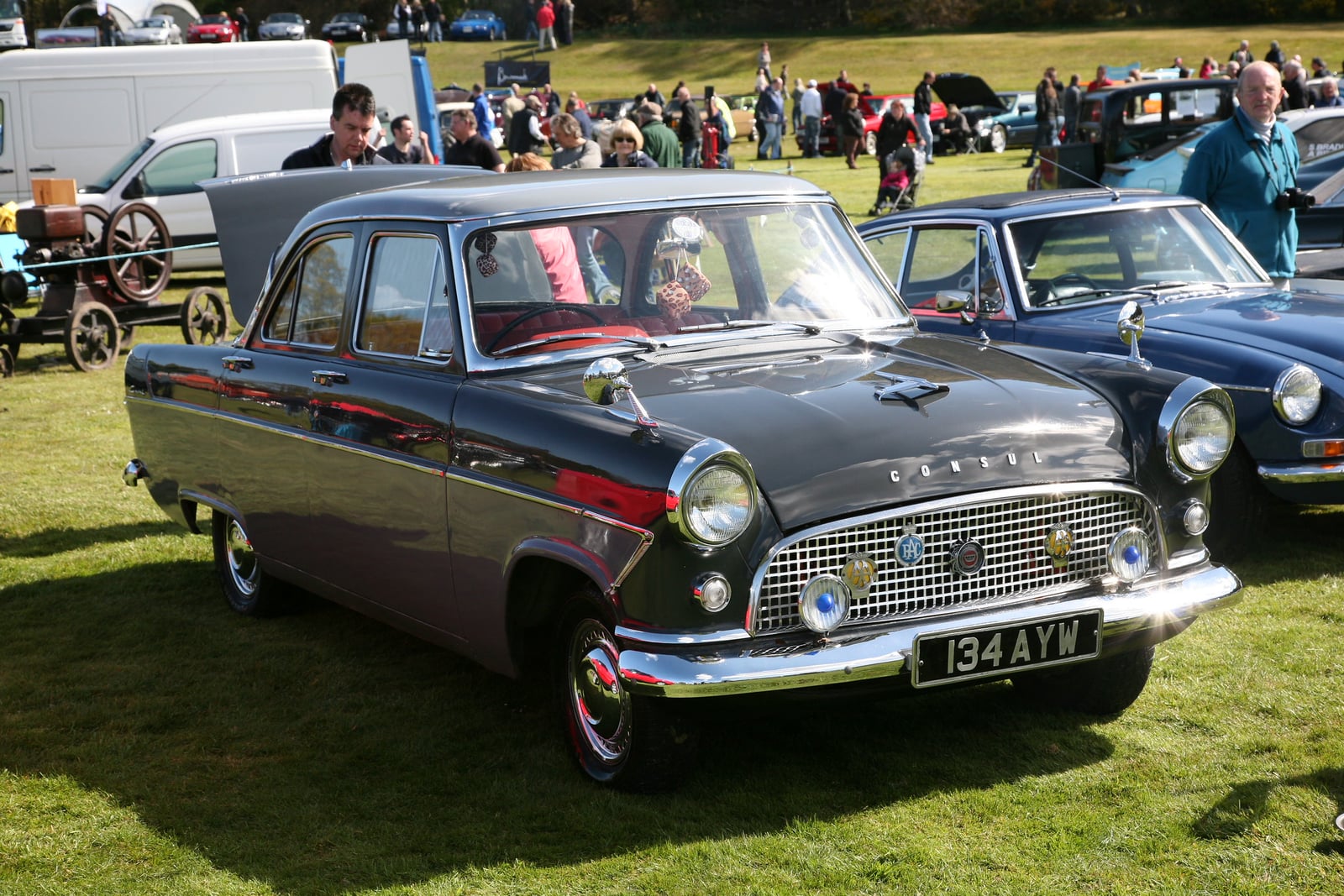
Key dates for the Consul
- 1951The Mk1, coded EOTA, arrives with a 1,508cc four and, with the Zephyr, the first modern unitary construction on a British Ford.
- 1953Carbodies of Coventry builds factory-approved convertibles; Abbott of Farnham converts estates.
- 1956The restyled Mk2, coded 204E, joins the Three Graces with a longer wheelbase, a 1,703cc engine and American-influenced styling.
- 1961De Luxe trim and two-tone paint arrive late in the Mk2's life.
- 1962Production of the original big Consul ends; the name is reused on the Consul Classic, Capri, Corsair and Cortina, and later on the 1972 car most people remember as the Granada.
The Consul viewing checklist
Which car, first
- Most survivors are Mk2s; an honest Mk1 is a rare sight and deserves to be priced as one
- Carbodies convertibles and Abbott estates bring serious premiums over saloons
- A convertible wants the structure examined harder, because losing the roof puts more load through the body
- The Three Graces club scene covers all three badges and is where good cars move
The metal
- Floors, sills and inner sills
- Front and rear wings, wheel arches and the boot floor
- Door bottoms and the suspension mounting points
- This is how these cars are lost, so it outranks everything mechanical
Trim, the real hunt
- De Luxe fittings and two-tone paint arrived late in the Mk2's life and lift values
- Bench seat, column change and period furniture are far harder to replace than anything mechanical
- Vacuum wipers on early cars are period-correct rather than a fault
- A complete unmolested car beats a cheap incomplete one, however tempting the price
What the Ford Consul sells for at auction
Show the year-by-year mediansHide the year-by-year medians
| Year | Sold | Median | In 2025 money |
|---|---|---|---|
| 2026 (so far) | 4 | £3,323 | |
| 2025 | 6 | £6,550 | £6,550 |
| 2024 | 7 | £6,600 | £6,853 |
| 2023 | 6 | £10,498 | £11,266 |
| 2022 | 7 | £5,870 | £6,722 |
| 2021 | 7 | £6,666 | £8,243 |
| 2014 | 3 | £5,288 | £7,327 |
| 2007 | 3 | £2,760 | £4,572 |
- £5,184Consul
- £6,480Consul
- £600Consul
- £1,462Consul
- £5,325Consul
Thin evidence. Only 51 recorded sales: read the figures as a sketch of the market, not a price. Based on 51 sold results from public classic car auctions (2005 to 10 August 2026). Sold prices, not asking prices, and not a valuation: condition, history and specification vary from car to car. Inflation-adjusted figures use the ONS CPIH index, in 2025 money.