Ford Zephyr: the six-cylinder Ford that policed Britain (1950–1972)
The Ford Zephyr was the six-cylinder heart of Ford of Britain's big-saloon range, quick and spacious for its day, and famous as the patrol car of the BBC series Z-Cars. A guide to the four generations from the finned Three Graces to the big V6 Mk4, how it relates to the Consul and Zodiac, what to look for, and what they are worth.
Built 1950–1972 76 recorded sales

At a glance
- Years
- 1950–1972
- Body styles
- Four-door saloon (also estate and convertible on early cars)
- Drivetrain
- Front engine, rear-wheel drive
- Engines
- 2.3-2.6-litre straight-six (Mk1-3); 2.0 V4 and 2.5/3.0 V6 Essex (Mk4)
- Power
- Around 68 bhp (Mk1) up to around 144 bhp (Mk4 3.0 V6)
- Top speed
- Around 85-100 mph depending on model
- Trim levels
- Zephyr (Mk1-3); Zephyr 4 and Zephyr 6 (Mk4)
- Production
- The six-cylinder mid-range model of the Consul/Zephyr/Zodiac range built at Dagenham from 1950 to 1972
- Assembly
- Dagenham, Essex
- Designer
- Ford of Britain, with American styling influence
- Values
- Project around £2,500-£6,000; good £7,000-£13,000; excellent £14,000-£22,000 (finned Mk2 cars and convertibles lead)
- Place in the range
- The six-cylinder car between the four-cylinder Consul and the luxury Zodiac
- On screen
- The patrol car of the BBC police series Z-Cars
The models
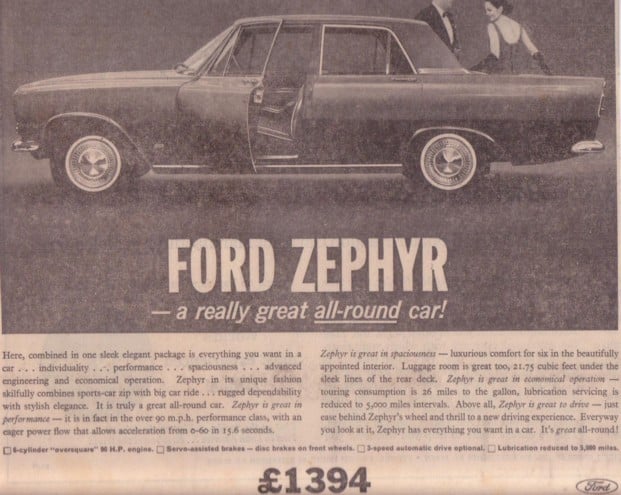
In the middle of Ford of Britain’s big-saloon range sat the Zephyr: the six-cylinder car that gave the family its performance. Above the four-cylinder Consul and below the luxury Zodiac, the Zephyr offered smooth six-cylinder power and real pace for the money, and it became one of the defining big Fords of the 1950s and 60s, on the road and, famously, on television.
For anyone wanting six-cylinder smoothness and space without paying flagship prices, the Zephyr remains the value choice of the range.
The six-cylinder middle ground
Ford’s big saloon was always a three-model family. The Consul was the four-cylinder base, the Zodiac the luxury flagship, and the Zephyr the six-cylinder car in between, the sweet spot of the range. It had the performance and refinement of the six without the cost and brightwork of the Zodiac, and it sold strongly to families and fleets alike.
By the standards of its day the Zephyr was genuinely quick, which gave it a sporting reputation out of keeping with its sensible image, and led to its most famous role.

The Z-Cars connection
From 1962 the BBC police drama Z-Cars made the big Fords part of British cultural life, using Zephyrs as its patrol cars. The show ran for years and cemented the Zephyr’s image as a fast, capable machine, which it genuinely was: real police forces used them for the same reason. That television fame is a large part of why the cars are remembered so warmly today.

A surprising competition record
The Zephyr’s pace was proved in period in the toughest events of the day. A works Mk1 won the Monte Carlo Rally outright in 1953, driven by Maurice Gatsonides, the Dutchman who later gave the world the Gatso speed camera. Two years later a Zephyr won the gruelling East African Safari, and the big sixes remained a respected sight in rallying and saloon racing through the 1950s. For a sensible family Ford it was quite a CV, and it is part of why the Zephyr, more than the Consul or the Zodiac, carries a sporting reputation to this day. A handful are still campaigned in historic rallying and racing now, usually to the delight of the crowd.
Four generations
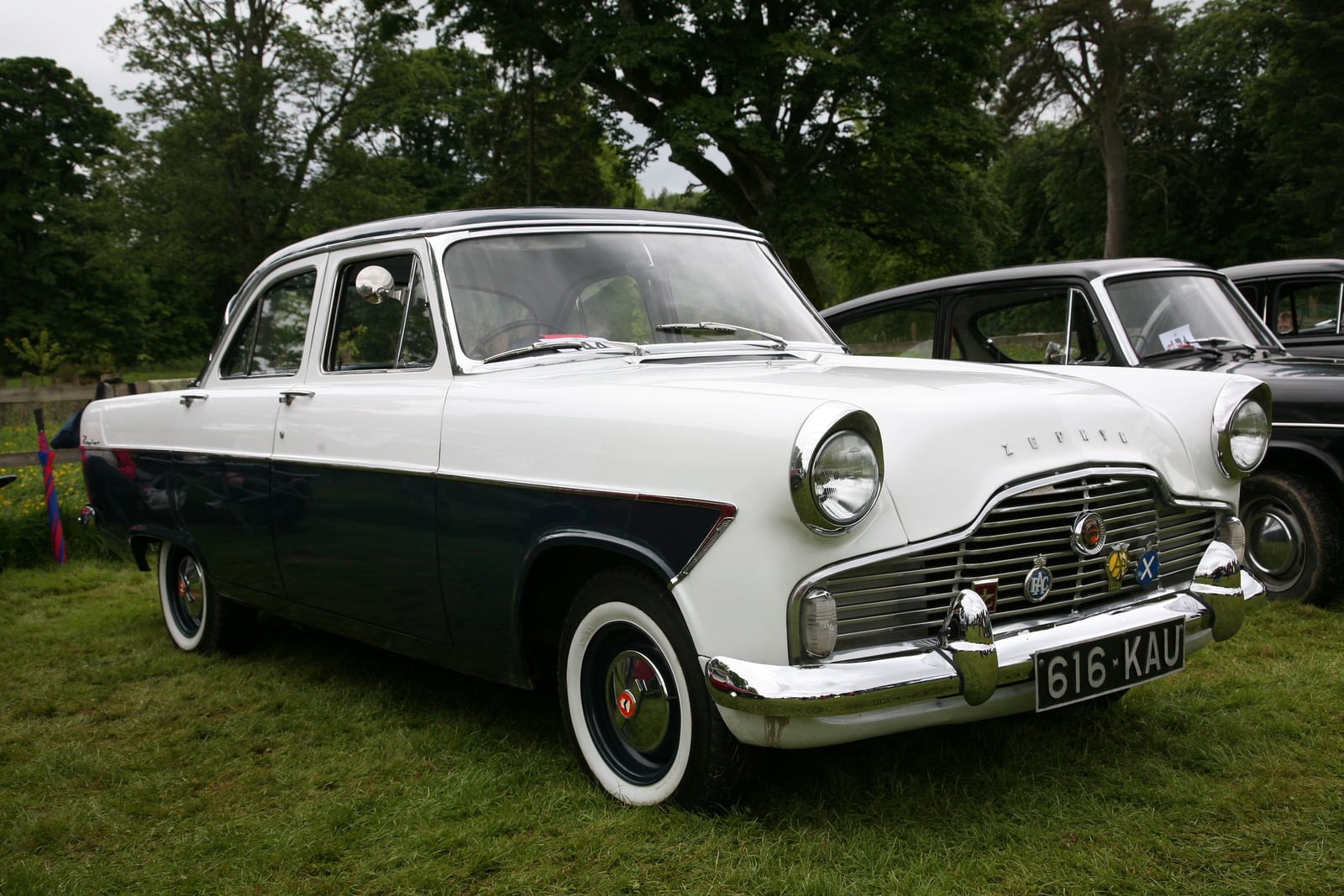
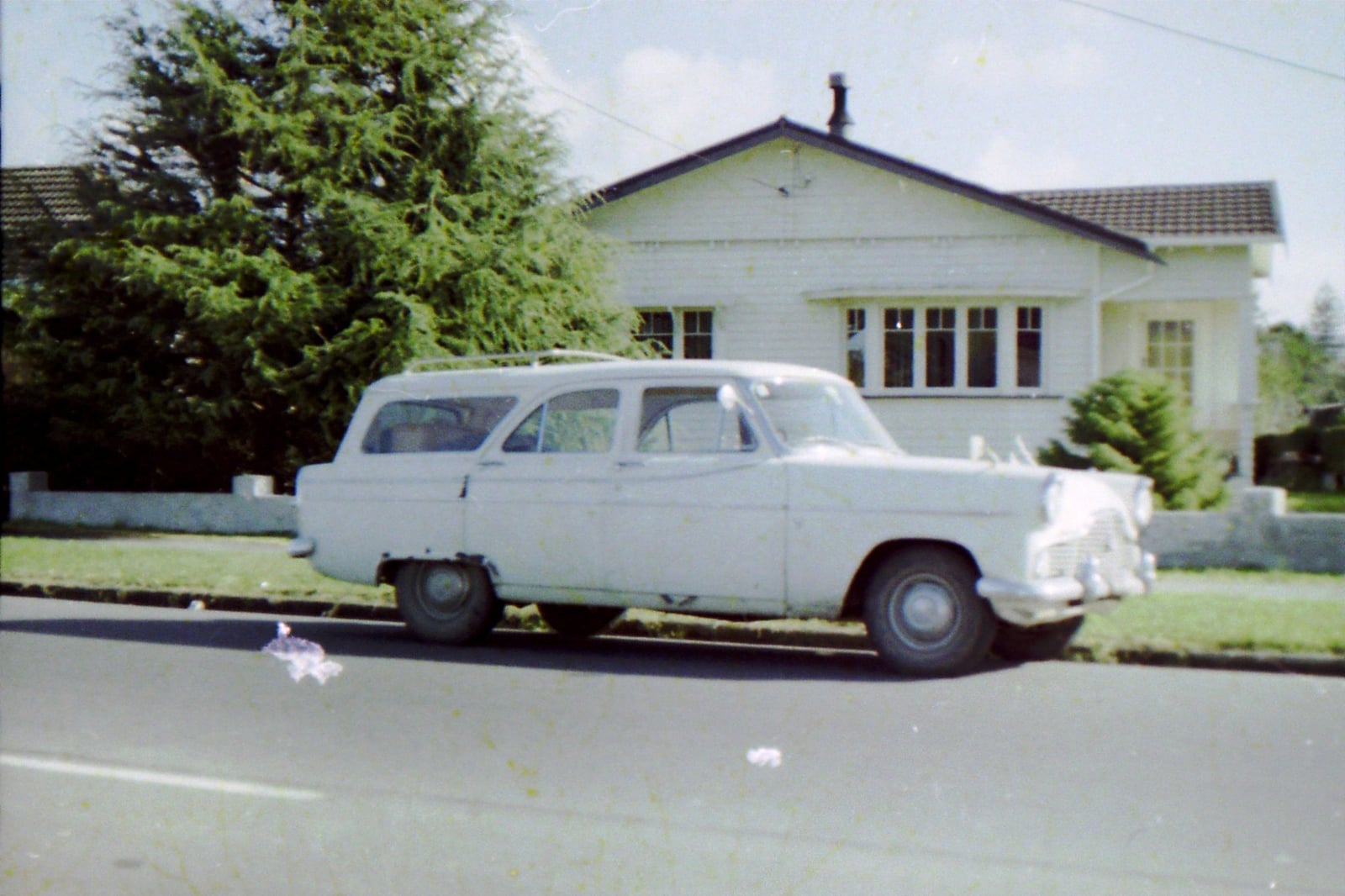
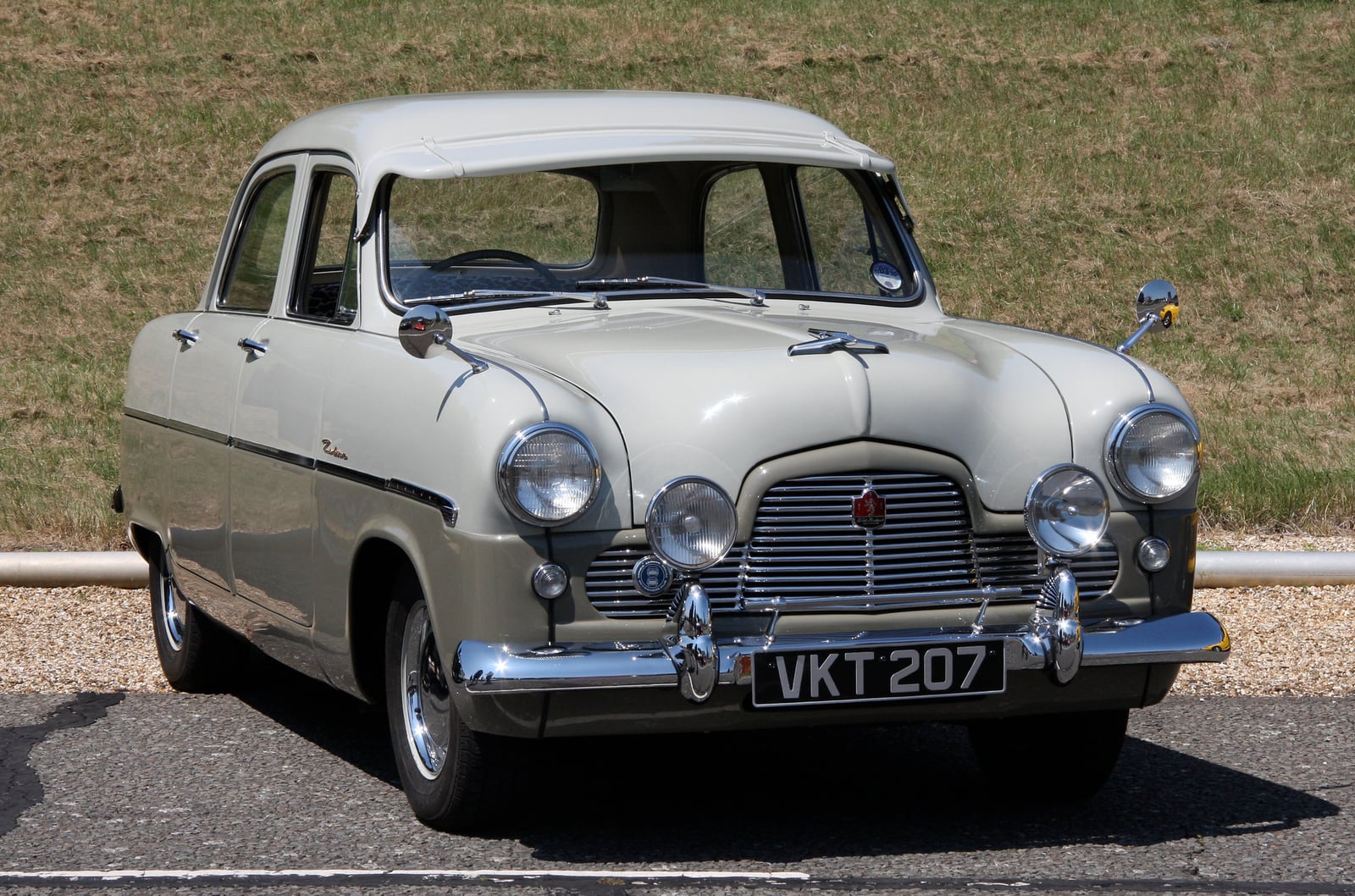
The Zephyr changed completely over its life. The Mk1 (1951–56) was Ford’s first British six-cylinder unitary car. The Mk2 (1956–62), one of the Three Graces, is the flamboyant finned car with strong American influence. The Mk3 (1962–66) was a crisper, more modern shape. The Mk4 (1966–72) was a much larger car with new V4 and V6 Essex engines, independent rear suspension, the first on a British Ford, and was sold as the four-cylinder Zephyr 4 and six-cylinder Zephyr 6.

What it is like to own
Ownership divides by generation more sharply here than on either sister car. A Mk1 to Mk3 is a straightforward, torquey straight-six that the big-Ford clubs know inside out, with remanufactured mechanical parts easy to come by and knowledge that travels across the whole Consul, Zephyr and Zodiac family. A Mk4 is a substantially bigger machine on V4 or V6 Essex power with independent rear suspension, and it wants an owner interested in that rather than one expecting more of the same.
What takes patience on any of them is brightwork and interior trim for a particular year or facelift, which is why a complete, unmolested car beats a cheap incomplete one however tempting the price.
The Zephyr also carries a following the other two do not. Z-Cars and a genuine competition record fixed it in the public memory as the fast one, and that shows up in club interest, in what turns up at shows, and in what a car with real police or rally history will fetch.

Buying guide: what to look for
The four generations are different cars and want different eyes. On the Mk1 to Mk3 the straight-six is durable and the running gear simple. On the much larger Mk4 it is the V4 and V6 Essex engines and the independent rear suspension, the first fitted to a British Ford, that repay a careful look for wear.
Rust is the constant across all of them: floors, sills and inner sills, the front and rear wings, the wheel arches, the boot floor and the door bottoms, plus the box sections and suspension mounting points on the Mk4, which has more car to hide them in.
Two things specific to this badge are worth establishing before money moves. Cars with a genuine police history carry a following that has little to do with condition, and the Zephyr’s competition record, the outright 1953 Monte Carlo win and the 1955 Safari among it, means period-modified and historic-rally cars appear regularly in the classifieds. Both are perfectly good buys. Both are a different purchase from an original road car, and the paperwork should say which one you are making.

Current value and where it sits
Television fame has never translated into money here, which is the Zephyr’s standing invitation. The range runs from about £2,500 for a project to £22,000 for an excellent example, with the usable cars in the £7,000 to £13,000 band and the finned Mk2s and early convertibles leading. For this much car and this much six-cylinder smoothness, that remains cheap. For the wider period, see British classic cars of the 1950s and 1960s.
More photos


The Zephyr timeline
- 1951The Mk1 arrives as Ford's first British six-cylinder unitary car.
- 1953A works Mk1 wins the Monte Carlo Rally outright, driven by Maurice Gatsonides.
- 1955A Zephyr wins the gruelling East African Safari.
- 1956The flamboyant finned Mk2 joins the Three Graces, with strong American influence.
- 1962The crisper Mk3 arrives; the BBC's Z-Cars makes Zephyr patrol cars part of British cultural life.
- 1966The much larger Mk4 brings V4 and V6 Essex engines and independent rear suspension, the first on a British Ford, as the Zephyr 4 and Zephyr 6.
- 1972Production ends; the Consul and Granada replace the range.
Zephyr: what to check before you buy
Which generation
- Mk1 to Mk3: a durable straight-six with simple running gear the clubs know inside out
- Mk4: V4 and V6 Essex engines and independent rear suspension, both repaying a careful look for wear
- The Mk4 is a bigger, different machine, not more of the same
- Knowledge and parts travel across the whole Consul, Zephyr and Zodiac family
Rust, the constant
- Floors, sills and inner sills
- Front and rear wings, wheel arches and the boot floor
- Door bottoms on every generation
- Box sections and suspension mounting points on the Mk4, which has more car to hide them in
History, which changes the purchase
- A genuine police history carries a following with little to do with condition
- Period-modified and historic-rally cars appear regularly, on the strength of the competition record
- Both are perfectly good buys, and both are different from an original road car
- The paperwork should say which purchase you are making
What the Ford Zephyr sells for at auction
In 2025 the median Ford Zephyr sold for £8,960 across 17 sales, 87% up on 2024.
| Variant | Sold | Typical range | Median |
|---|---|---|---|
| Zephyr | 61 | £5,200 - £10,925 | £7,590 |
| Zephyr Zodiac | 15 | £8,780 - £12,980 | £11,200 |
Show the year-by-year mediansHide the year-by-year medians
| Year | Sold | Median | In 2025 money |
|---|---|---|---|
| 2026 (so far) | 3 | £7,168 | |
| 2025 | 17 | £8,960 | £8,960 |
| 2024 | 8 | £4,798 | £4,982 |
| 2023 | 4 | £10,130 | £10,870 |
| 2022 | 11 | £8,600 | £9,849 |
| 2021 | 8 | £10,037 | £12,411 |
| 2019 | 4 | £7,472 | £9,565 |
| 2017 | 6 | £6,900 | £9,192 |
| 2016 | 3 | £6,500 | £8,881 |
| 2012 | 4 | £11,144 | £16,020 |
- £7,168Zephyr
- £8,938Zephyr
- £6,272Zephyr
- £13,000Zephyr Zodiac
- £13,176Zephyr Zodiac
Reasonable evidence. 76 recorded sales: enough for the range to mean something, though a few unusual cars can still move a single year's median. Based on 76 sold results from public classic car auctions (2005 to 10 August 2026). Sold prices, not asking prices, and not a valuation: condition, history and specification vary from car to car. Inflation-adjusted figures use the ONS CPIH index, in 2025 money.