Ford Granada: the executive Ford from The Sweeney to Cosworth (1972–1994)
The Ford Granada was Ford's big executive saloon and coupe for over two decades, from the Mk1 made famous by The Sweeney to the aerodynamic, Car-of-the-Year Mk3 and its 24-valve Cosworth flagship. A guide to the three generations, the Granada and Scorpio names, what to look for, and what they are worth.
Built 1972–1994 139 recorded sales

At a glance
- Years
- 1972–1994
- Body styles
- Four-door saloon, two-door coupe, five-door hatchback and estate
- Drivetrain
- Rear-wheel drive (four-wheel drive on the Mk3 2.9i)
- Engines
- 2.0-2.1 fours; 2.3-3.0 Essex and Cologne V6; 2.9 24v Cosworth V6; 2.5 diesel
- Power
- From around 90 bhp to 192 bhp (2.9 24v Cosworth)
- Trim levels
- L, GL, Ghia, Scorpio; the Mk1 GXL and the Ghia coupe
- Production
- Ford of Europe's executive car across three generations from 1972 to 1994
- Assembly
- Cologne, Germany (and Dagenham on early cars)
- Designer
- Ford of Europe
- Values
- Ordinary cars near worthless; good Mk1 coupes and V6s £8,000-£20,000; tidy 24v Cosworth around £3,000-£5,000
- On screen
- The Mk1 Granada and its Consul sister were the Flying Squad cars of the 1970s TV series The Sweeney
- Award
- The Mk3 was European Car of the Year 1986
The models
The Granada was the car Ford sent up against Rover and the German marques at the top of the range, and for over two decades it held that ground: the company car that director-level Britain actually drove. From the handsome Mk1 of 1972, made famous by the Flying Squad in The Sweeney, to the aerodynamic, award-winning Mk3 and its Cosworth-engined flagship, the Granada was Ford of Europe’s answer to the executive saloon for a generation.
This is the guide to the whole family: how the three generations developed, the Granada and Scorpio names that confuse so many people, and which cars enthusiasts chase now. The third-generation car has its own page, the aerodynamic Granada Mk3 of 1985.
Three generations of Granada
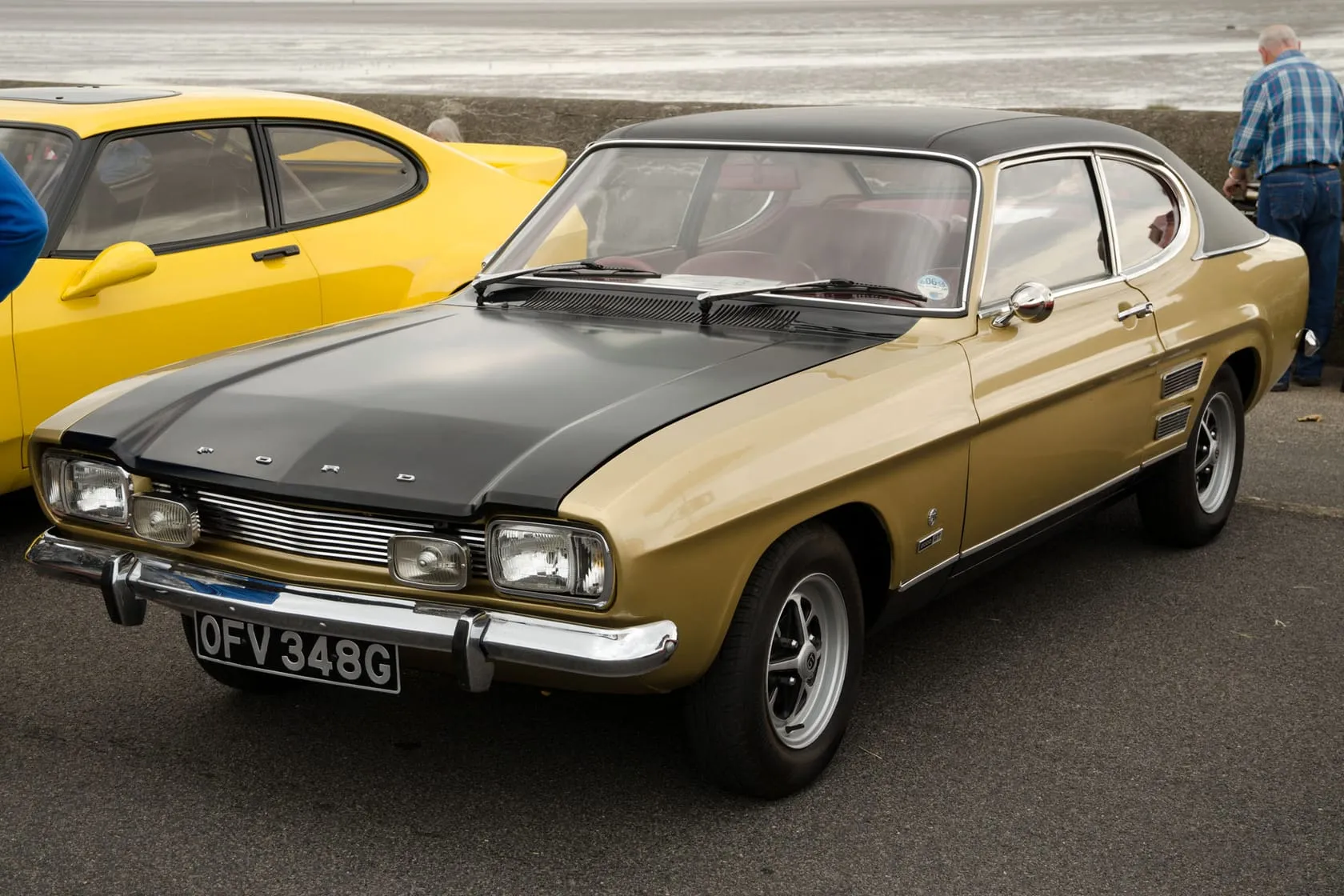
The Granada changed completely over its life. The Mk1 (1972–77) was the original: a big, square-shouldered executive car offered as a saloon, an estate and a handsome two-door coupe, with four- and six-cylinder engines and, in Ghia and GXL form, real luxury. The Mk2 (1977–85) was a crisper, more restrained restyle of the same idea, the sensible executive Ford of the late 1970s and early 80s.
The Mk3 (1985–94) was a different animal: a smooth, aerodynamic hatchback that brought executive-class technology to the mainstream, won the European Car of the Year title, and sold across most of Europe as the Scorpio. It ran to 1994, when Ford dropped the Granada name in Britain.

The Sweeney era: the Mk1
The Mk1 Granada earned its place in popular memory on television. The big Ford, alongside its four-cylinder Consul sister, was the unmarked Flying Squad car of the 1970s series The Sweeney, sliding around London in pursuit of armed robbers. The car’s tough, fast, no-nonsense image was set there, and it is a large part of why the Mk1 is so fondly remembered.
It deserved the role. The Mk1 was a genuinely good car, comfortable and quick in V6 form, and the coupe in particular is now the Granada enthusiasts most want. It is the generation that gives the whole range its character.

The modern executive: Mk2 and Mk3
The Mk2 of 1977 kept the formula but sharpened the styling, and served as the respectable big Ford of its day. The real leap came with the Mk3 of 1985, which abandoned the three-box saloon shape for a smooth aerodynamic hatchback. It was Ford’s most advanced car yet, the first mainstream European car to fit anti-lock brakes as standard across the range, and it took the European Car of the Year award for 1986.
At the top of the Mk3 range sat the 2.9-litre 24-valve V6, with Cosworth-developed heads, around 192 bhp and a top speed near 140 mph, the fast executive Granada and now the most prized of the later cars.

What it is like to own
The Granada is the cheapest way into a big, comfortable, characterful classic, and the arithmetic is what makes it interesting: V6 engines that are smooth and unstressed, running gear shared with the rest of the Ford range, and prices that have never taken off.
The variable is which generation you take on. A Mk1 or Mk2 is mechanically simple, and the ownership question is trim and brightwork, which on the rarer versions takes real hunting. A Mk3 is a more sophisticated car and the ownership question is electronics: the anti-lock brakes, the engine management and the looms all reward a car that has been looked after and punish one that has not.
Either way it does the thing an executive car of the era was built for better than anything else at the price, which is covering long distances in quiet, spacious comfort.

Buying guide: what to look for
Three generations, and the risk moves from metal to electronics as you go up them. On the Mk1 and Mk2 it is rust: floors, sills and inner sills, wings, wheel arches, the boot floor, the suspension mounting points, and the structure around the screens and box sections. The Mk3, being newer, fares a little better but still rots in the usual places and brings problems of its own, in the electronics, the anti-lock brakes, and on the 24-valve cars an engine that should be both healthy and standard.
What you are buying matters as much as its condition. The Mk1 coupe is the car Granada enthusiasts most want, and the Sweeney association has kept the whole first generation in a warmer light than its successors. Trim and brightwork for the rarer Mk1 and Mk2 models take real hunting, while the running gear is shared with the rest of the Ford range and costs accordingly.
The arithmetic at the bottom is brutal and worth stating plainly. Ordinary Granadas are worth so little that many have simply been neglected, and at these prices a full structural repair will always cost more than the finished car. Buy the sound one.

Current value and where it sits
The Granada spans from near worthless to genuinely valuable. Ordinary cars are worth too little to save, but a good Mk1 coupe or V6 saloon reaches roughly £8,000 to £20,000, the best Mk1s beyond. The Mk3 2.9 24-valve Cosworth sits in the low thousands, around £3,000 to £5,000 for a tidy example, a lot of fast, comfortable saloon for the money. For the eras the Granada belongs to, see British classic cars of the 1970s, 1980s and 1990s.
More photos
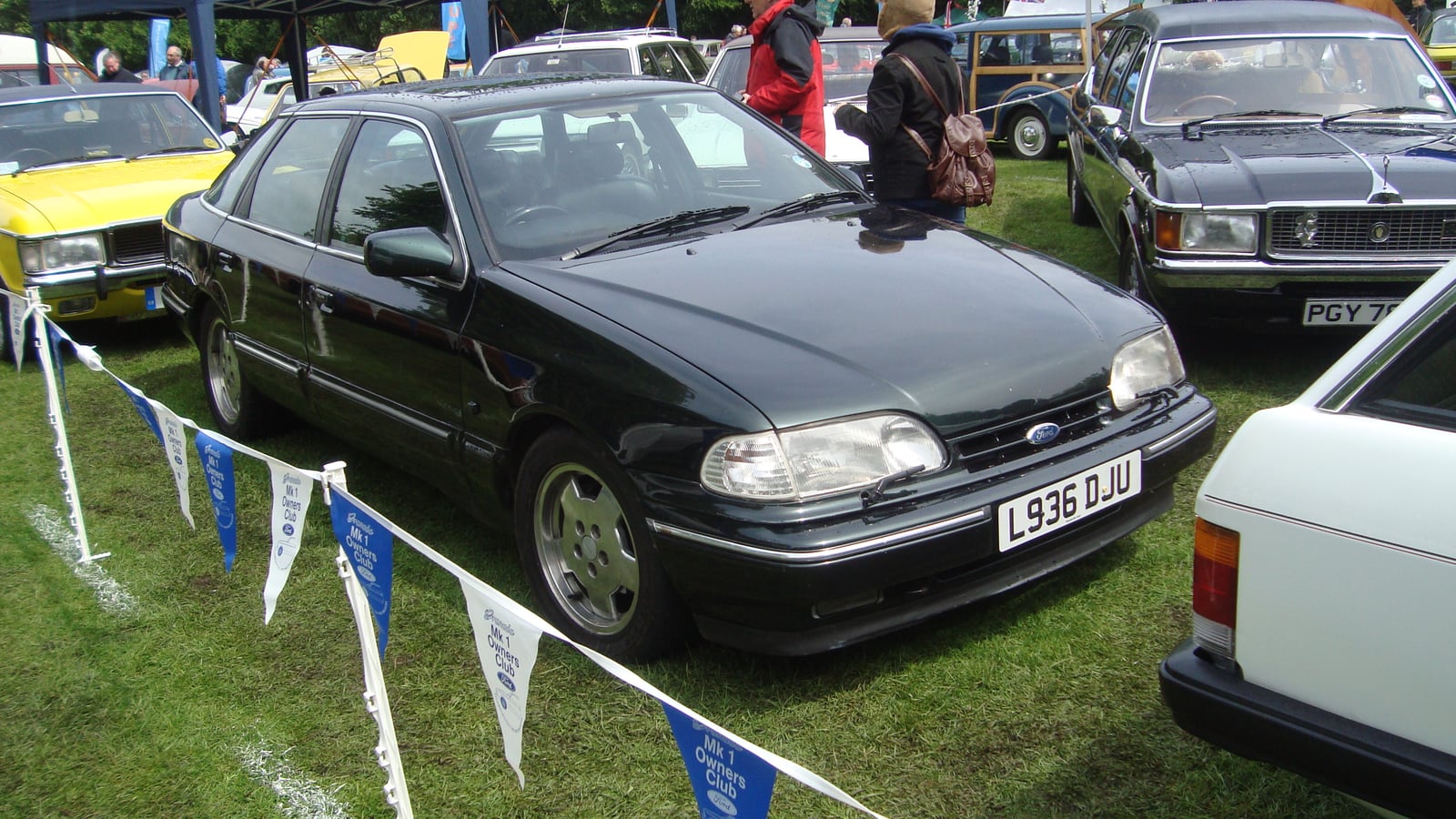
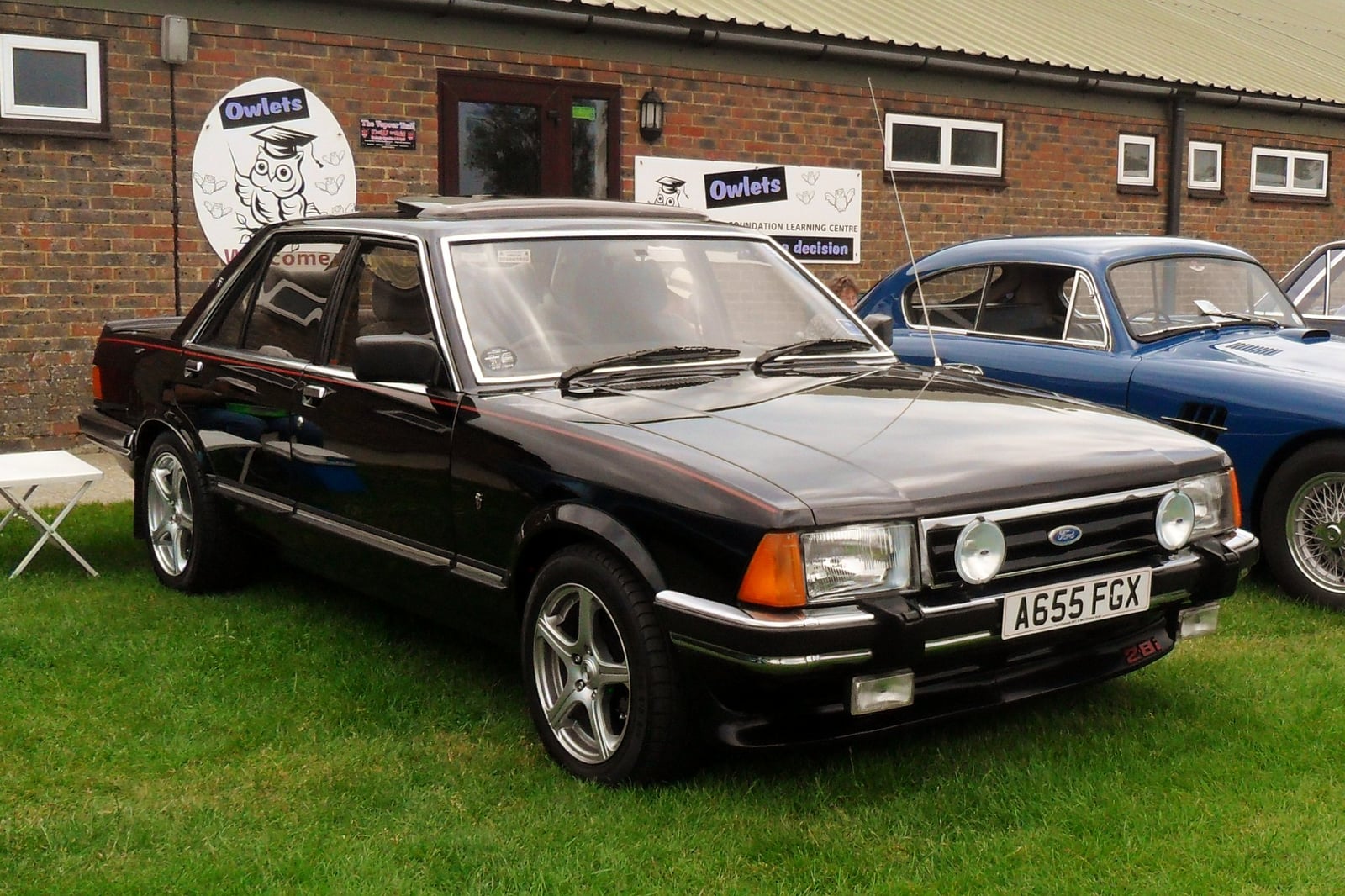


The Granada in dates
- 1972The Mk1 arrives as a big, square-shouldered executive car in saloon, estate and two-door coupe forms, with real luxury in Ghia and GXL trim.
- 1975The Mk1 and its Consul sister become the unmarked Flying Squad cars of The Sweeney, setting the model's image for good.
- 1977The Mk2 keeps the formula and sharpens the styling as the respectable big Ford of its day.
- 1985The Mk3 abandons the three-box saloon for a smooth aerodynamic hatchback, sold across most of Europe as the Scorpio.
- 1986European Car of the Year.
- 1991The 2.9-litre 24-valve V6 with Cosworth-developed heads tops the range at around 192 bhp and near 140 mph.
- 1994Ford drops the Granada name in Britain.
Before you buy a Granada
Mk1 and Mk2: rust
- Floors, sills and inner sills
- Wings, wheel arches and the boot floor
- Suspension mounting points, and the structure around the screens and box sections
- At these values a full structural repair always costs more than the finished car
Mk3: electronics
- The anti-lock brakes, the engine management and the looms
- It still rots in the usual places despite being newer
- On a 24-valve car the engine should be both healthy and standard
- A car that has been looked after is worth the premium over one that has not
What you are buying
- The Mk1 coupe is the car enthusiasts most want, and the Sweeney association warms the whole first generation
- Trim and brightwork for the rarer Mk1 and Mk2 models take real hunting
- Running gear is shared with the rest of the Ford range and costs accordingly
- Buy the sound one; ordinary Granadas are worth too little to save
What the Ford Granada sells for at auction
In 2025 the median Ford Granada sold for £8,800 across 25 sales, 105% up on 2024. In real terms, typical Ford Granada prices were up about 21% over the five years to 2025, once inflation is accounted for.
Show the year-by-year mediansHide the year-by-year medians
| Year | Sold | Median | In 2025 money |
|---|---|---|---|
| 2026 (so far) | 24 | £5,175 | |
| 2025 | 25 | £8,800 | £8,800 |
| 2024 | 17 | £4,290 | £4,455 |
| 2023 | 17 | £5,520 | £5,923 |
| 2022 | 11 | £5,076 | £5,813 |
| 2021 | 14 | £5,384 | £6,658 |
| 2020 | 3 | £5,744 | £7,279 |
| 2019 | 5 | £5,500 | £7,041 |
| 2018 | 6 | £1,744 | £2,270 |
| 2016 | 3 | £2,362 | £3,227 |
| 2015 | 7 | £3,472 | £4,791 |
- £12,656Granada
- £5,738Granada
- £1,904Granada
- £10,050Granada
- £13,000Granada
Reasonable evidence. 139 recorded sales: enough for the range to mean something, though a few unusual cars can still move a single year's median. Based on 139 sold results from public classic car auctions (2011 to 10 August 2026). Sold prices, not asking prices, and not a valuation: condition, history and specification vary from car to car. Inflation-adjusted figures use the ONS CPIH index, in 2025 money.