Ford Cortina Mk4 (1976–1979): the squared-off Cortina that stayed on top
The Cortina Mk4 of 1976 traded the Coke-bottle curves of the Mk3 for crisp Italian-influenced lines and finally shared its body fully with the German Taunus. It kept Ford's best-seller at the top of the British charts to the end of the decade. The development story, the range, and what the survivors are like now.
Built 1976–1979 19 recorded sales

At a glance
- Years
- 1976–1979
- Body styles
- Two-door saloon, four-door saloon, five-door estate
- Drivetrain
- Rear-wheel drive
- Engines
- 1.3 Kent, 1.6 Kent/Pinto, 2.0 Pinto, 2.3 Cologne V6
- Power
- 57-110 bhp
- Trim levels
- Base, L, GL, S, Ghia
- Production
- Britain's best-seller; the 1979 range set a 190,000-car registration record
- Assembly
- Dagenham
- Designer
- Uwe Bahnsen (Ford of Europe)
- UK survivors
- Perhaps a couple of hundred on the road, the rarest Cortina
- Values
- Around £6,600 average; usable from £3,000, the best into the mid-teens
The models
The Cortina Mk4 shows how completely Ford owned the British family-saloon market in the 1970s. Ford took a car that was already outselling everything else in the country, gave it a crisp new suit of clothes, and watched it carry on outselling everything else for another three years. It is one of the least glamorous and most quietly significant cars of the decade, and it is now the rarest Cortina of all.
Where the Mk4 came from
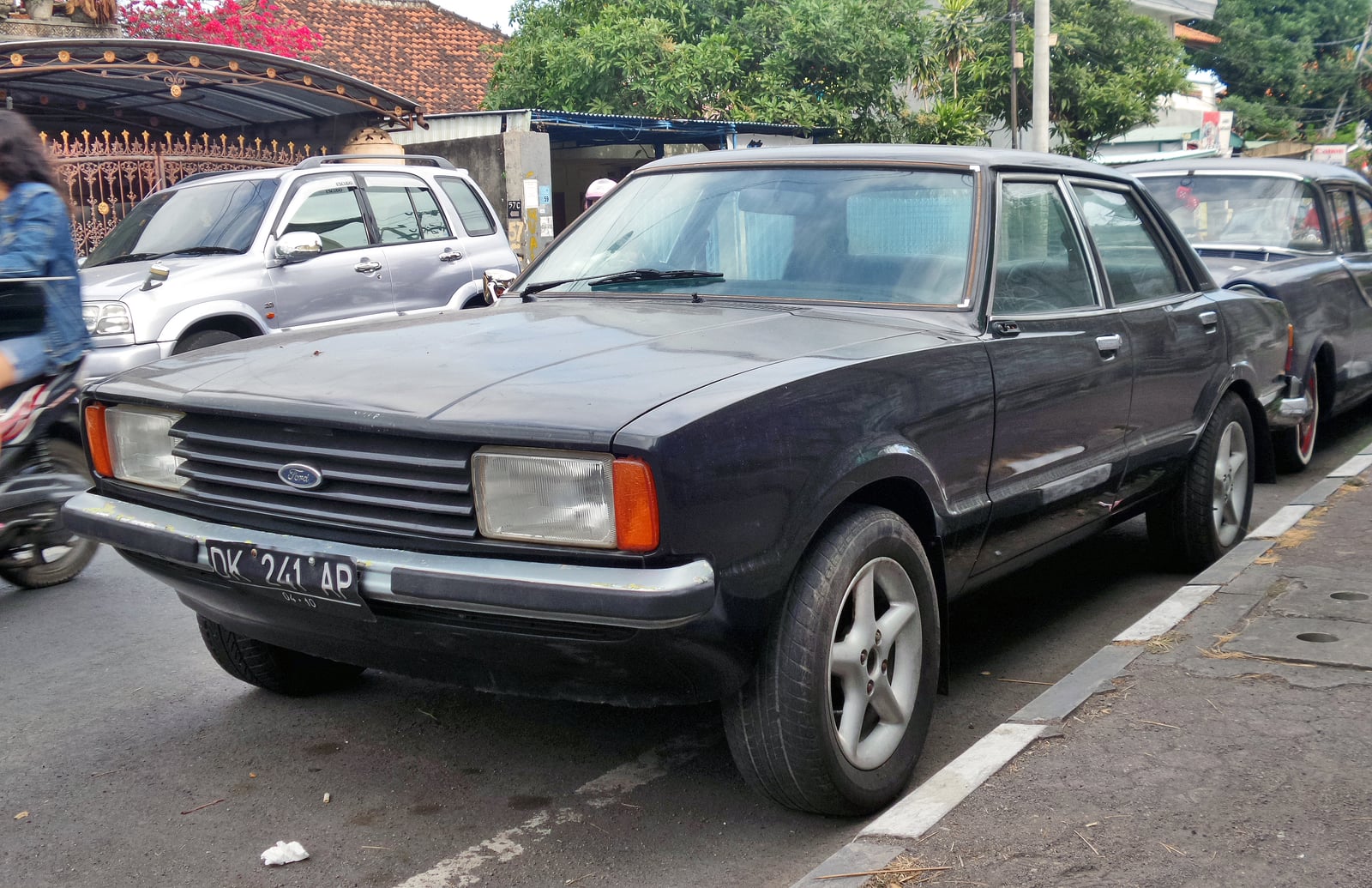
By the mid-1970s the curvaceous “Coke-bottle” Cortina Mk3 looked dated, and Ford’s British and German arms were ready to stop building two different cars. The Mk4, launched in Britain on 29 September 1976, squared the styling into the clean rectilinear look of the period, the work of Ford of Europe’s studios under design chief Uwe Bahnsen.
The bigger change was underneath the badge. Internally the car was the TC2, the second generation of the unified Taunus-Cortina programme, and from this point the British Cortina and the German Ford Taunus became effectively the same car, sharing their floorpan and most major panels and differing mainly in trim and the side they steered from. The German Taunus version actually reached the Continent first, late in 1975, with the British Cortina following the next autumn.
What changed, and what carried over
For all the new sheet metal, the Mk4 was an evolution rather than a clean sheet. It was a reskin on carried-over underpinnings, sharing its floorpan and even its doors with the outgoing car, with a squarer glasshouse and noticeably more glass.
One detail is worth getting right, because casual sources get it wrong. The Cortina did not run on MacPherson struts at the front. It had moved to an independent double-wishbone front end with coil springs back at the Mk3, a deliberate move for refinement, and the Mk4 kept it. The rear was a coil-sprung live axle located on four links, with rack-and-pinion steering. None of it was exotic, but it rode and steered better than the cheaper strut-and-leaf-spring cars it sold against.
The range: engines, trim, and body styles
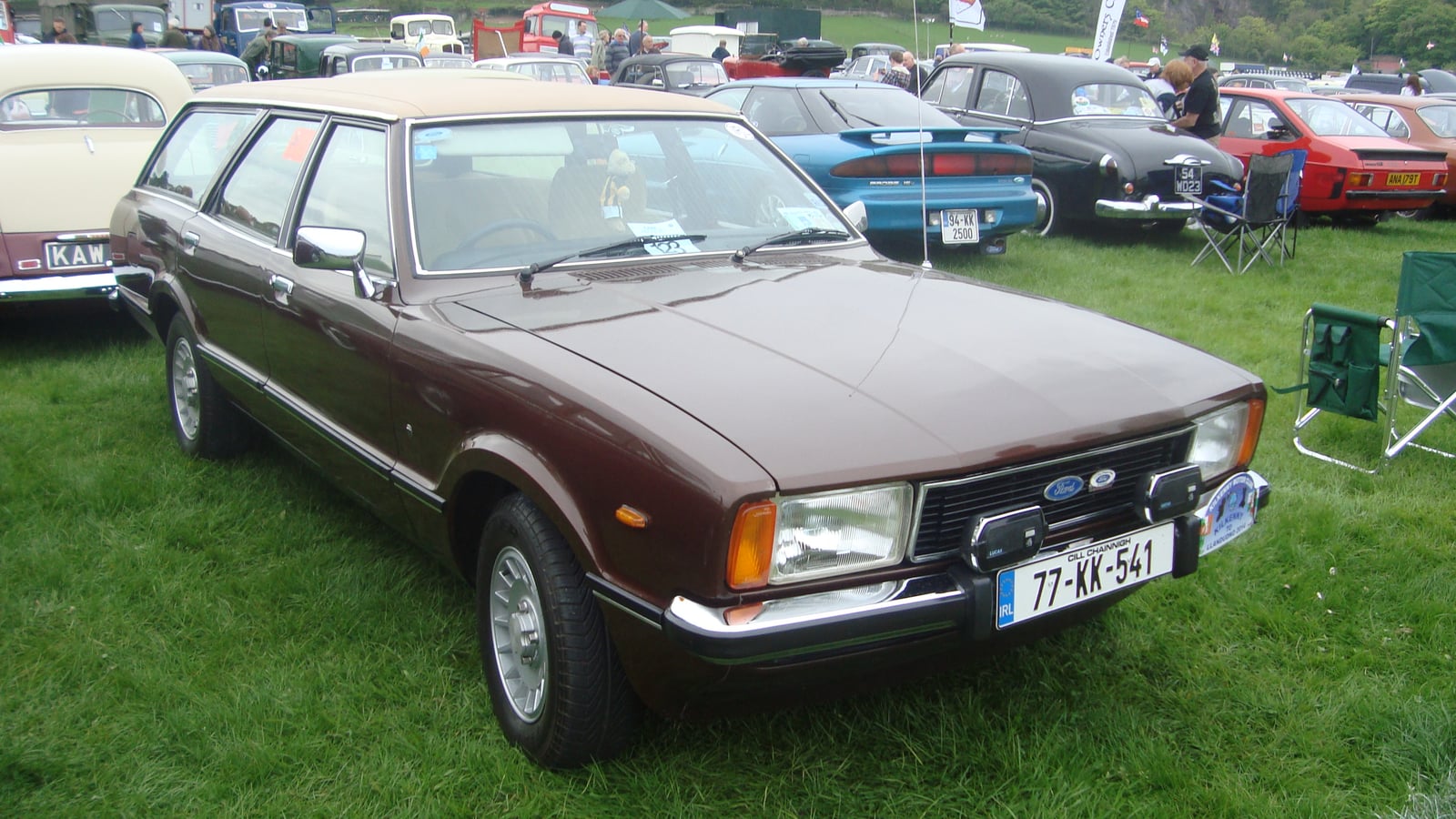
Ford offered the Mk4 as a two-door saloon, a four-door saloon and a five-door estate, across a trim ladder that ran base, L, GL, S and Ghia. The S was the sporting presentation, firmer and better equipped rather than a separate engine. The Ghia was new as the Cortina’s range-topper, replacing the old GXL and 2000E badges with vinyl roof, alloy wheels and a plusher cabin, and it set the template for the wood-and-velour Ford that the company sold for the next two decades.
The engines spanned the familiar Ford families. The 1.3 was the old Kent overhead-valve crossflow, good for around 57 to 61 brake horsepower depending on how you measured it. The 1.6 came in both Kent and the newer overhead-cam Pinto forms, and the 2.0 was pure Pinto, making roughly 100 brake horsepower. From 1977 a 2.3 Cologne V6 went in at the top, around 108 to 110 brake horsepower, offered in the GL, S and Ghia. Power figures shift a few horses between sources because of the different rating conventions and the German-versus-British states of tune, so treat them as the right ballpark rather than gospel.

How it sold
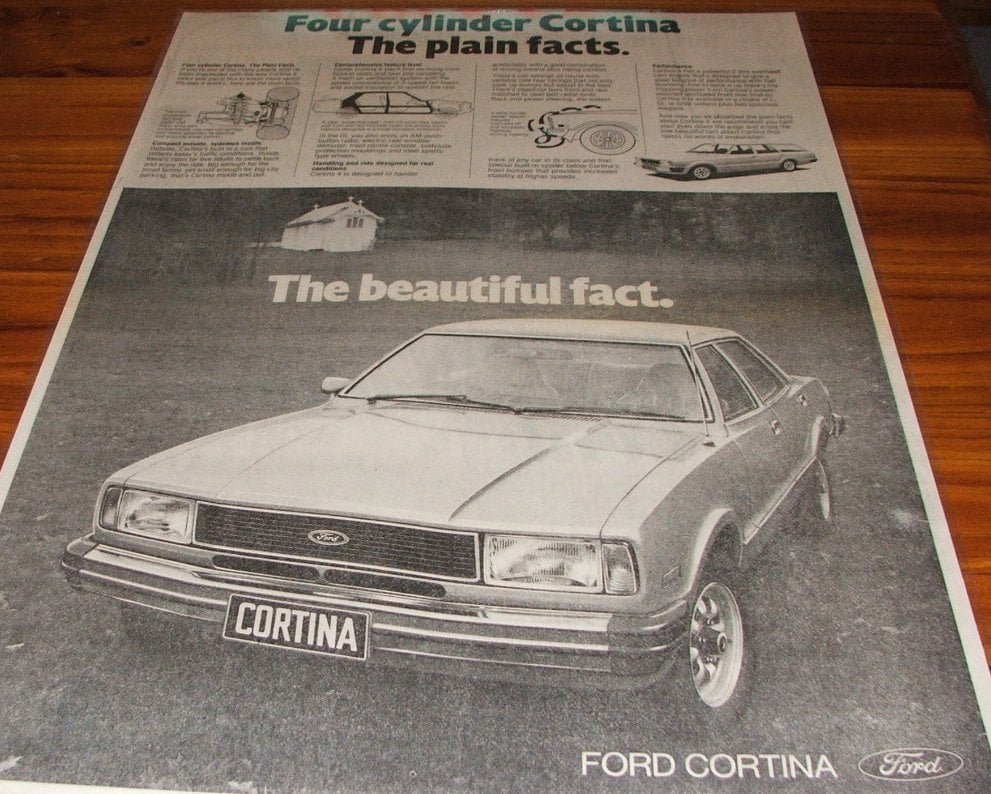
The Mk4 sold in numbers that are hard to picture now. The Cortina was Britain’s best-selling car for nine of the ten years from 1972 to 1981, the one exception being 1976, when the Escort just pipped it. For 1977, 1978 and 1979 it was the outright national best-seller, and during the 1979 changeover to its successor the Cortina range set a British registration record of more than 190,000 cars in a single year.
It earned that selling to fleets and reps and families who wanted a known quantity: roomy, easy to drive, cheap to fix, and backed by a dealer in every town. The retrospective verdict, that it had less character than the Mk3 it replaced, was true and beside the point. Character was not what the buyer was after.

Into the Cortina 80
In 1979 the Mk4 gave way to a facelift that Ford marketed as the Cortina 80 and that everyone else called the Cortina Mk5. It was the same car under new front and rear pressings, and it saw the Cortina line out entirely when the Sierra replaced it in 1982.
Buying a Cortina Mk4 now
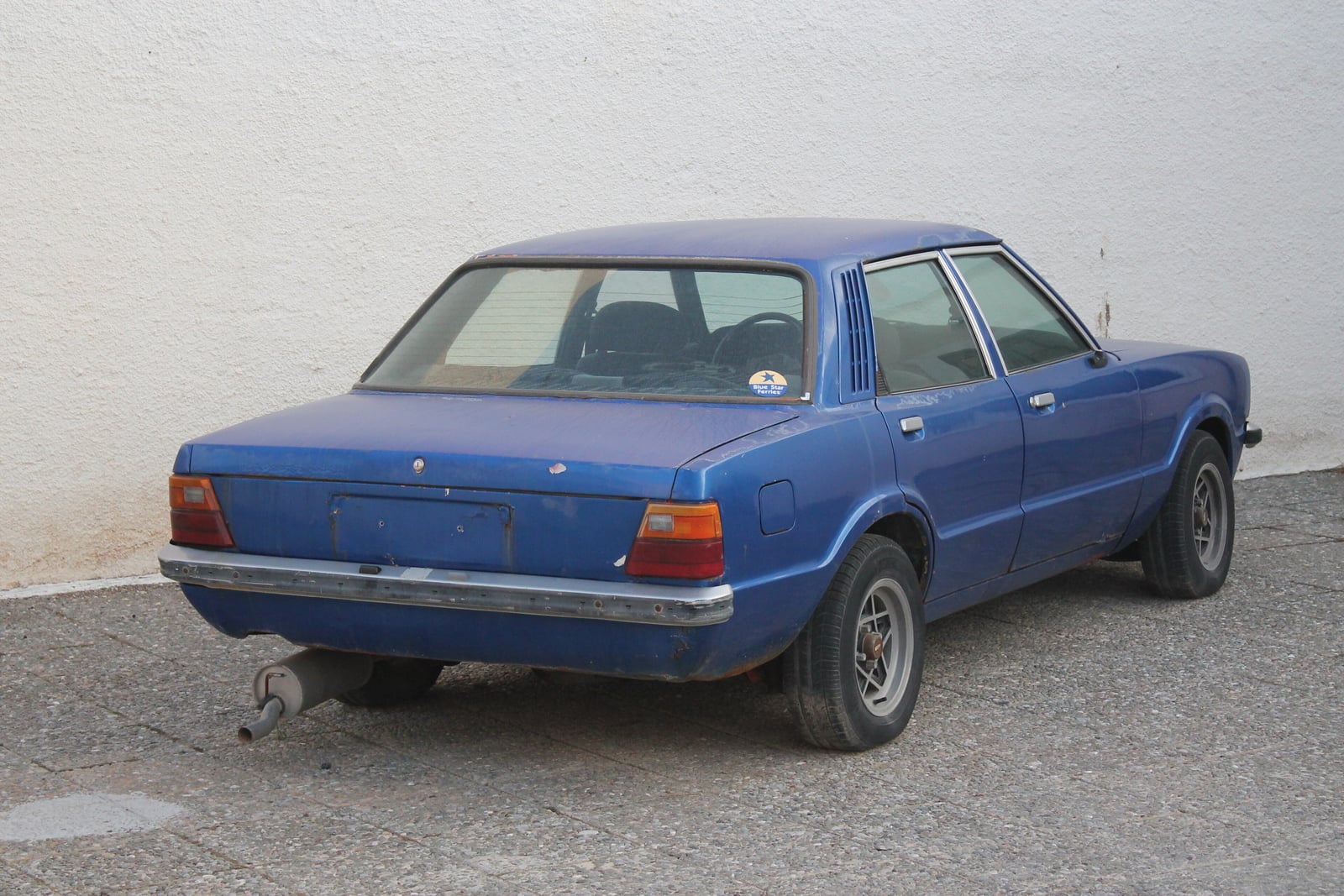
Survivors are scarce, because these cars were used hard, raced on banger tracks for fun, and scrapped without sentiment, and rust did the rest. The Mk4 is now reckoned the rarest Cortina, with perhaps only a couple of hundred left on the road, so a sound original car in a desirable trim is a genuinely rare find. Every Cortina Mk4 now qualifies for historic vehicle status under the rolling 40-year rule, which brings exemption from road tax and, on an unmodified car, the annual MOT.
Rust is the whole game. Check the battery tray, the inner wings and bonnet-hinge area, the joints where the slam panel meets the wings, the front crossmember, the top suspension mounts, the sills and floors, and the surround of any sunroof. The Mk4’s factory rustproofing was poor, and the Mk5 improved on it, so a clean Mk4 has almost certainly been looked after or restored rather than simply survived.
Mechanically these are tough, cheap cars. The Kent and Cologne engines rarely give trouble, and the only common worry is camshaft and follower wear on a Pinto whose oil spray bar has been neglected. Mechanical parts are well supported, shared as they are with the Capri, Escort and Transit, and specialists like Burton Power keep the tuning side alive. Body panels and Mk4-specific trim are the bottleneck.
On value, the Cortina has lagged the Capri and the RS Escorts and is the better for it if you actually want to use one. Auction data gathered since 2020 puts the average around £6,600, with usable cars from a little over £3,000 and the very best reaching into the mid teens. Buy on condition and originality, not on engine size. A tidy 1.6 GL costs less to put right than a rotten 2.3 Ghia and will give you exactly the same thing: the car that Britain actually drove.

The Cortina Mk4 timeline
- Late 1975The German Ford Taunus version reaches the Continent first.
- 29 Sept 1976The British Cortina Mk4 launches, squaring the Mk3 Coke-bottle styling into the rectilinear look of the period under Ford of Europe's studios.
- 1977A 2.3 Cologne V6 joins at the top of the range, offered in GL, S and Ghia.
- 1977The Cortina is Britain's outright best-selling car, and is again in 1978 and 1979.
- 1979The Mk4 gives way to the facelift Ford marketed as the Cortina 80, and the range sets a British registration record of more than 190,000 cars in a single year.
Buying checklist: the Cortina Mk4 in front of you
Rust is the whole game
- Battery tray, inner wings and the bonnet-hinge area
- The joints where the slam panel meets the wings, and the front crossmember
- Top suspension mounts, sills, floors and the surround of any sunroof
Mechanicals, which rarely worry
- Kent and Cologne engines rarely give trouble
- Camshaft and follower wear is the Pinto's one common fault, from a neglected oil spray bar
- Parts are shared with the Capri, Escort and Transit, and the tuning side is well served
One detail casual sources get wrong
- The Cortina did not run MacPherson struts at the front
- It moved to an independent double-wishbone front end with coil springs at the Mk3, and the Mk4 kept it
- The rear is a coil-sprung live axle located on four links, with rack-and-pinion steering
What the Cortina Mk4 sells for at auction
The Cortina Mk4 comes to auction only occasionally: 19 recorded sales since 2016, typically making between £3,970 and £10,508 . With so few sales, treat any single result as a data point rather than a market price.
- £7,015Cortina Mk IV
- £3,240Cortina Mk IV
- £3,400Cortina Mk IV
- £15,000Cortina Mk IV
- £12,938Cortina Mk IV
Thin evidence. Only 19 recorded sales: read the figures as a sketch of the market, not a price. Based on 19 sold results from public classic car auctions (2016 to 10 August 2026). Sold prices, not asking prices, and not a valuation: condition, history and specification vary from car to car. Inflation-adjusted figures use the ONS CPIH index, in 2025 money.
Related
The Cortina Mk4 belongs to the broader classic Ford story, and to the wider world of British classic cars of the 1970s. It was replaced by the closely related Cortina 80, covered above. For the full five-generation story, see the main Ford Cortina guide.
More photos