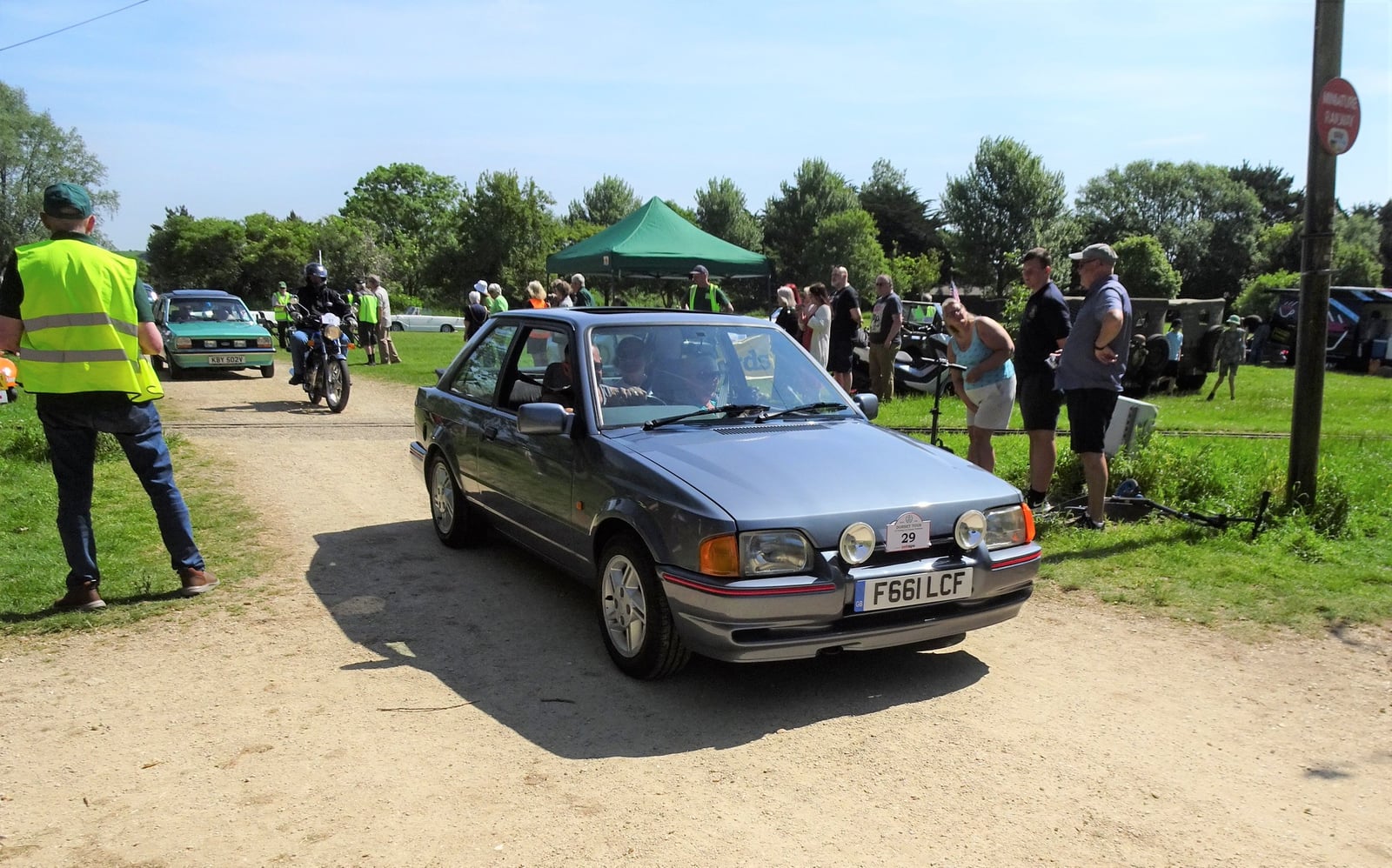
Ford Escort XR3i: Britain's favourite 1980s hot hatch (1982–1990)
The Ford Escort XR3i was the fuel-injected hot hatch that outsold every rival and defined performance motoring for a generation of British drivers. A guide to the XR3 and XR3i, the Mk3 and Mk4 cars and the cabriolet, how it compares to the Golf GTI, what to look for, and what they are worth now.
Built 1982–1990 188 recorded sales

At a glance
- Years
- 1982–1990
- Body styles
- Three-door hatchback; cabriolet
- Drivetrain
- Front engine, front-wheel drive
- Engines
- 1.6-litre CVH four, fuel injected
- Power
- Around 105 bhp (later EFI cars revised)
- Top speed
- Around 116-120 mph
- Trim levels
- XR3 (carburettor, 1980); XR3i (fuel injection, 1982); Mk3 and Mk4 bodies; cabriolet from 1986
- Production
- Built in large numbers across the Mk3 and Mk4 Escort
- Assembly
- Halewood and Saarlouis
- Designer
- Ford of Europe
- Values
- Project around £4,000-£8,000; good £10,000-£18,000; excellent £20,000-£30,000 (early Mk3 cars lead)
- The rival
- Took on the Volkswagen Golf GTI and the Peugeot 205 GTi, and outsold them in Britain
- Drivetrain note
- Front-wheel drive, unlike the earlier rear-drive RS Escorts
The models
For a generation of British drivers, the Ford Escort XR3i was performance motoring. It was the car on every young enthusiast’s wall and in every company car park, the fuel-injected hot hatch that took on the Golf GTI and the 205 GTi and outsold them at home. More than any single rival, the XR3i defined the 1980s hot-hatch boom, and it did it as an ordinary, affordable Ford anyone could aspire to.
Now, as 1980s nostalgia has matured into a genuine collector market, the XR3i has become a collected one, with good original cars increasingly scarce and increasingly valuable.
From XR3 to XR3i
The story began in 1980 with the XR3, the carburettor-fed performance version of the new front-wheel-drive Mk3 Escort, good for around 96 bhp. Two years later came the car that mattered: the XR3i, with Bosch mechanical fuel injection, sharper throttle response, uprated suspension and about 105 bhp. The injected car was a clear step on, and the ‘i’ became a badge of honour.
The XR3i carried on through the facelifted Mk4 Escort from 1986, which brought revised styling and a smoother dashboard, and a Karmann-built cabriolet joined the range to add open-top glamour. Throughout, the XR3i remained Britain’s best-selling hot hatch.

A different kind of fast Escort
It is worth being clear about what the XR3i is and is not. Unlike the earlier rally-bred RS2000 and Mexico, which were rear-wheel drive, the XR3i is front-wheel drive, a thoroughly modern hot hatch in the Golf GTI mould rather than a rally homologation special. That makes it more practical and more forgiving, and it is a different driving experience: tidy, front-driven and accessible rather than tail-happy.

The rest of the fast family
The XR3i sat at the centre of a family of fast front-drive Escorts, and the badges move the money today. Below it was the original carburettor XR3. Alongside it, briefly, sat the RS1600i, a motorsport homologation special of the early 1980s with a revised injected engine, distinctive wheels and spoilers and only around 8,600 built, which makes it the collector’s pick of the early cars. Above them all came the RS Turbo from 1984, with around 132 bhp and a limited-slip differential. The first series was sold almost entirely in white, and the most famous exception, a unique black car loaned to Diana, Princess of Wales, sold for £722,500 at auction in 2022, a number that says everything about where fast-Ford values have gone.
The XR3i’s own fame developed a sharper edge as the boom peaked. It climbed to the top of the insurance risk groups, became a favourite target of thieves and joyriders, and by the early 1990s the cost of insuring one had become a national talking point. That era used up cars at a ferocious rate, which is exactly why an unmolested survivor is the prize now. If you are weighing the whole family against each other, our fast Ford buying guide compares them side by side.
What it is like to own
The XR3i is cheap and simple to run. The CVH engine and front-drive running gear are familiar, well-proven Ford components with strong parts support, so maintenance is straightforward and inexpensive. The cars are practical, usable everyday classics.
The difficulty is condition. The XR3i spent the 1990s and 2000s as a cheap, disposable performance car, so the great majority were modified, neglected or scrapped. Finding a standard, rust-free, original survivor is the whole challenge of buying one, and is exactly what underpins the values of the good cars.

Buying guide: what to look for
The XR3i is the fast Escort with no homologation story behind it, and that is the useful thing to know before buying one. It is a front-drive hot hatch in the Golf GTI mould rather than a rally special, which makes it cheaper, more usable and more forgiving than the rear-drive cars that came before it, and means it will never carry their money.
The difficulty is condition, and it follows directly from how these cars were used. The XR3i spent the 1990s and 2000s as a cheap, disposable performance car, climbed to the top of the insurance risk groups and became a favourite of thieves and joyriders. That era used survivors up at a ferocious rate and modified most of what it left behind, so a standard, unmolested, rust-free car is both rare and the only version worth paying properly for.
Mechanically there is little to fear. The CVH engine and front-drive running gear are well-proven Ford components with strong parts support, and maintenance is cheap. Almost everything that decides the price of an XR3i is about what has been done to it rather than what is wrong with it.

Current value and where it sits
The spread is unusually wide for a car of this kind: projects £4,000 to £8,000, usable cars £10,000 to £18,000 and excellent original examples £20,000 to £30,000, with the earliest Mk3 cars leading. What separates the top of that range from the bottom is originality, in a model where almost nothing was left standard. For the era, see British classic cars of the 1980s. For how the front-drive XR3i fits the wider Ford Escort range, see the model overview.
More photos
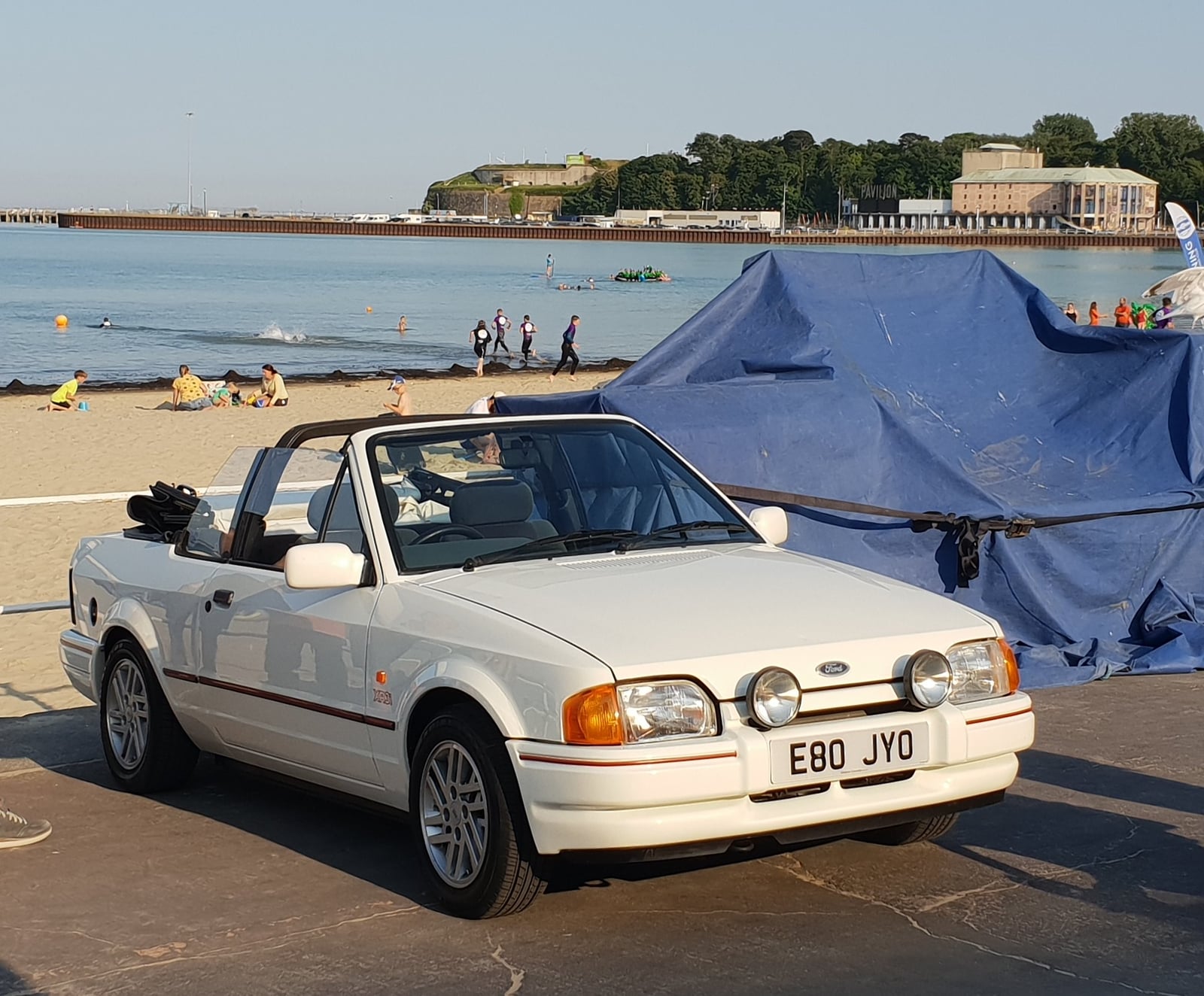
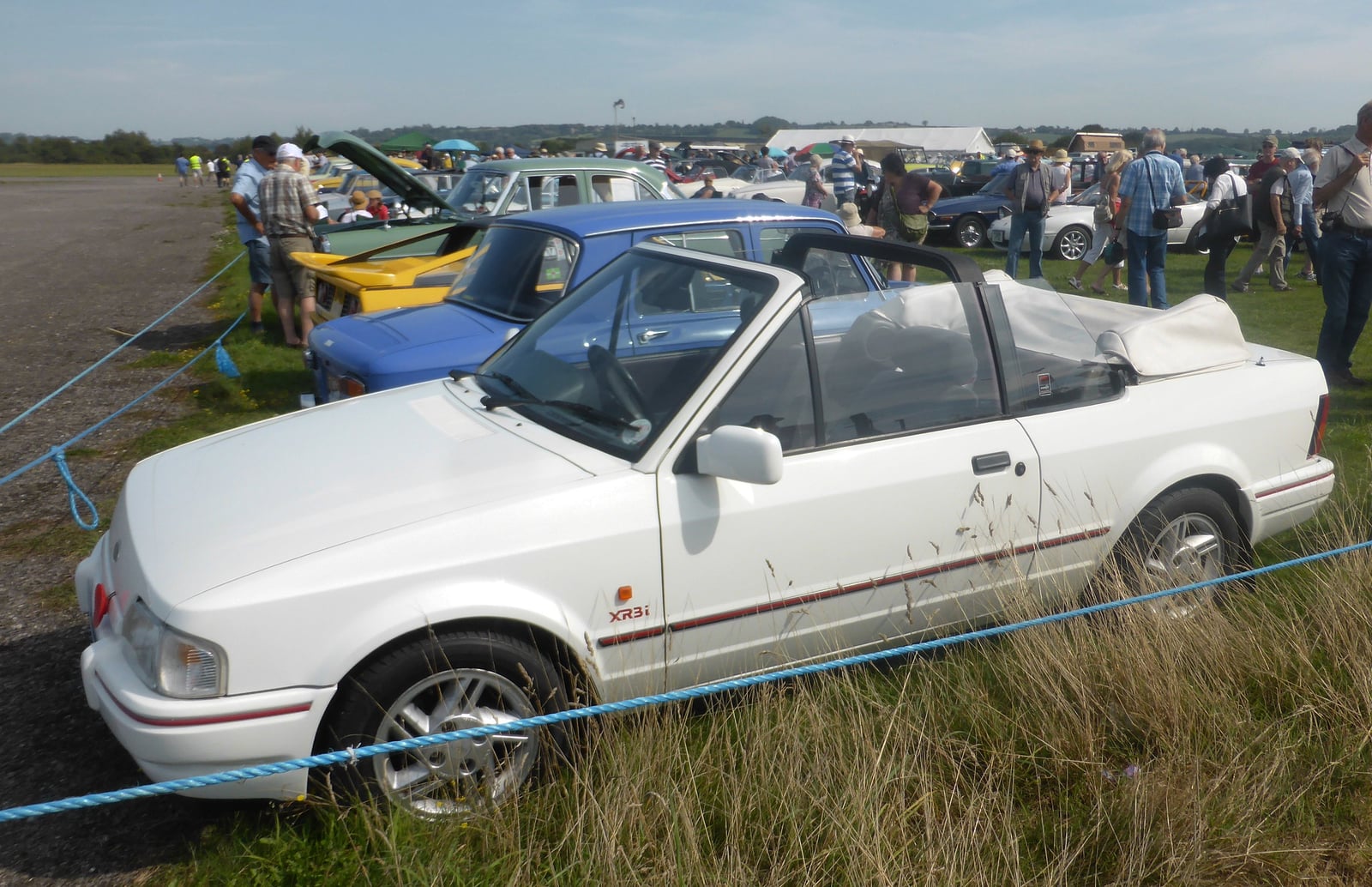
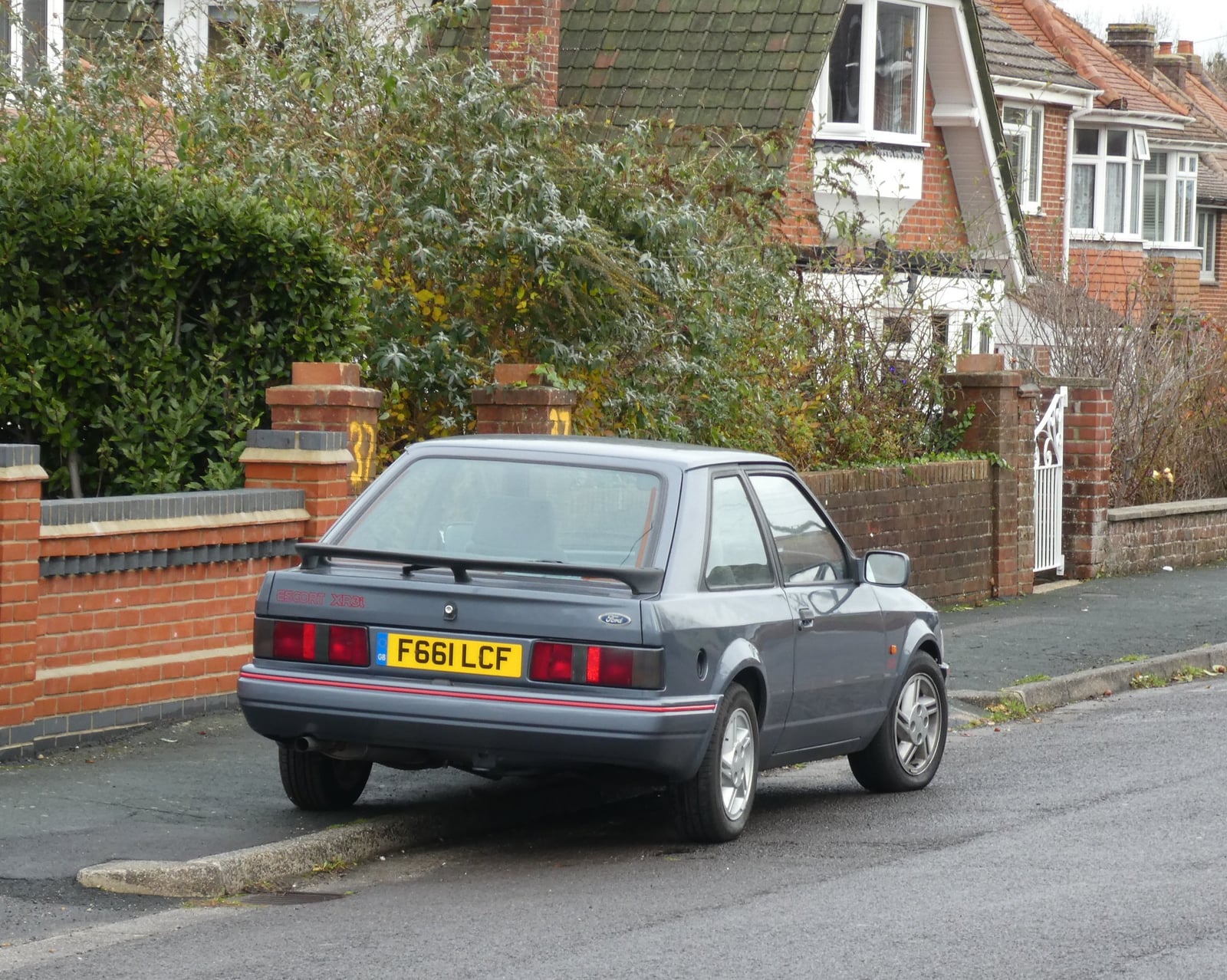


Key dates for the XR3i
- 1980XR3 launches as the carburettor performance version of the new front-drive Mk3 Escort, good for around 96 bhp.
- 1982XR3i arrives with Bosch mechanical fuel injection, sharper throttle response, uprated suspension and about 105 bhp.
- Early 1980sThe RS1600i homologation special sits briefly alongside it, around 8,600 built.
- 1984RS Turbo joins above the range with around 132 bhp and a limited-slip differential.
- 1986The XR3i carries on through the facelifted Mk4 Escort, and a Karmann-built cabriolet joins the range.
- Early 1990sThe car tops the insurance risk groups and becomes a favourite target for theft, using up survivors at a ferocious rate.
What to check on an XR3i
Rust
- Floors, sills and inner sills
- Front wings, inner wings and the rear arches
- Suspension turrets, boot floor and the screen surrounds
Originality, which is the whole game
- So many were modified that a standard, unmolested car is both rare and the one to have
- Correct trim and interior for the year, and no signs of amateur tuning
- No evidence of crash repair, in a car that spent its cheap years being driven hard
Which badge you are buying
- XR3 is the earlier carburettor car; the XR3i is the injected one from 1982
- RS1600i is the early-1980s homologation special and the collector's pick of the early cars
- RS Turbo from 1984 sits above them all and is priced accordingly
What the Escort XR3i sells for at auction
In 2025 the median Escort XR3i sold for £7,668 across 28 sales, 36% up on 2024. In real terms, typical Escort XR3i prices have been broadly level over the five years to 2025.
| Variant | Sold | Typical range | Median |
|---|---|---|---|
| Escort XR3i | 161 | £3,994 - £9,500 | £6,357 |
| Escort XR3 | 27 | £7,306 - £15,723 | £8,625 |
Show the year-by-year mediansHide the year-by-year medians
| Year | Sold | Median | In 2025 money |
|---|---|---|---|
| 2026 (so far) | 19 | £6,720 | |
| 2025 | 28 | £7,668 | £7,668 |
| 2024 | 33 | £5,625 | £5,841 |
| 2023 | 30 | £8,115 | £8,708 |
| 2022 | 32 | £6,550 | £7,501 |
| 2021 | 17 | £7,540 | £9,324 |
| 2020 | 9 | £5,950 | £7,540 |
| 2018 | 5 | £9,632 | £12,540 |
| 2017 | 3 | £22,500 | £29,971 |
| 2006 | 3 | £3,038 | £5,150 |
- £811Escort XR3i
- £7,015Escort XR3i
- £6,720Escort XR3i
- £19,170Escort XR3
- £14,170Escort XR3i
Reasonable evidence. 188 recorded sales: enough for the range to mean something, though a few unusual cars can still move a single year's median. Based on 188 sold results from public classic car auctions (2004 to 10 August 2026). Sold prices, not asking prices, and not a valuation: condition, history and specification vary from car to car. Inflation-adjusted figures use the ONS CPIH index, in 2025 money.