Ford Cortina: Britain's best-selling car of the 1960s and 70s (1962–1982)
The Ford Cortina was Britain's best-selling car for much of the 1960s and 70s, five generations of family saloon that defined the company car park and the family driveway, from the sporting Lotus Cortina to the everyday GLs. A guide to the Mk1 to Mk5, how the generations differ, the fast Cortinas, and what to check before buying one.
Built 1962–1982 5 generations
The Cortina guides Mk1Cortina Mk4Cortina Mk5Lotus CortinaMk2 / 1600E

At a glance
- Years
- 1962–1982
- Body styles
- Two- and four-door saloon, five-door estate
- Drivetrain
- Rear-wheel drive
- Engines
- 1.2-2.0 Kent and Pinto fours; 1.6 Lotus twin-cam; 2.3 Cologne V6
- Power
- From around 48 bhp to 110 bhp (2.3 V6); 105 bhp (Lotus Cortina)
- Trim levels
- Base, De Luxe, Super, L, GL, GT, S, Ghia, 1600E; Lotus Cortina
- Production
- More than 2.6 million in Britain across five generations; Britain's best-seller for most of the 1970s
- Assembly
- Dagenham
- Designer
- Ford of Britain, later Ford of Europe
- Values
- Ordinary cars from around £3,000; good Mk1/Mk2 and 1600E £10,000-£20,000; Lotus Cortina £35,000-£60,000-plus
- The record
- Britain's best-selling car for most of the 1970s; the 1979 range set a 190,000-car registration record
- The sporting one
- The Lotus Cortina, a twin-cam touring-car winner in Jim Clark's hands
The models
For most of the 1960s and 70s, the best-selling car in Britain was a Ford Cortina. Across five generations from 1962 to 1982 it was the default family saloon and the company-car-park staple, the car a whole country learned to drive, to commute and to take on holiday. No model did more to make Ford the company that Britain actually bought from.
This is the guide to the whole family: how the five generations developed, the Cortina’s reign as Britain’s best-seller, and the sporting and luxury models that lift it above the ordinary. The squared-off later cars have their own pages, the Cortina Mk4 of 1976 and the facelifted Cortina Mk5, the Cortina 80.
Five generations of Cortina
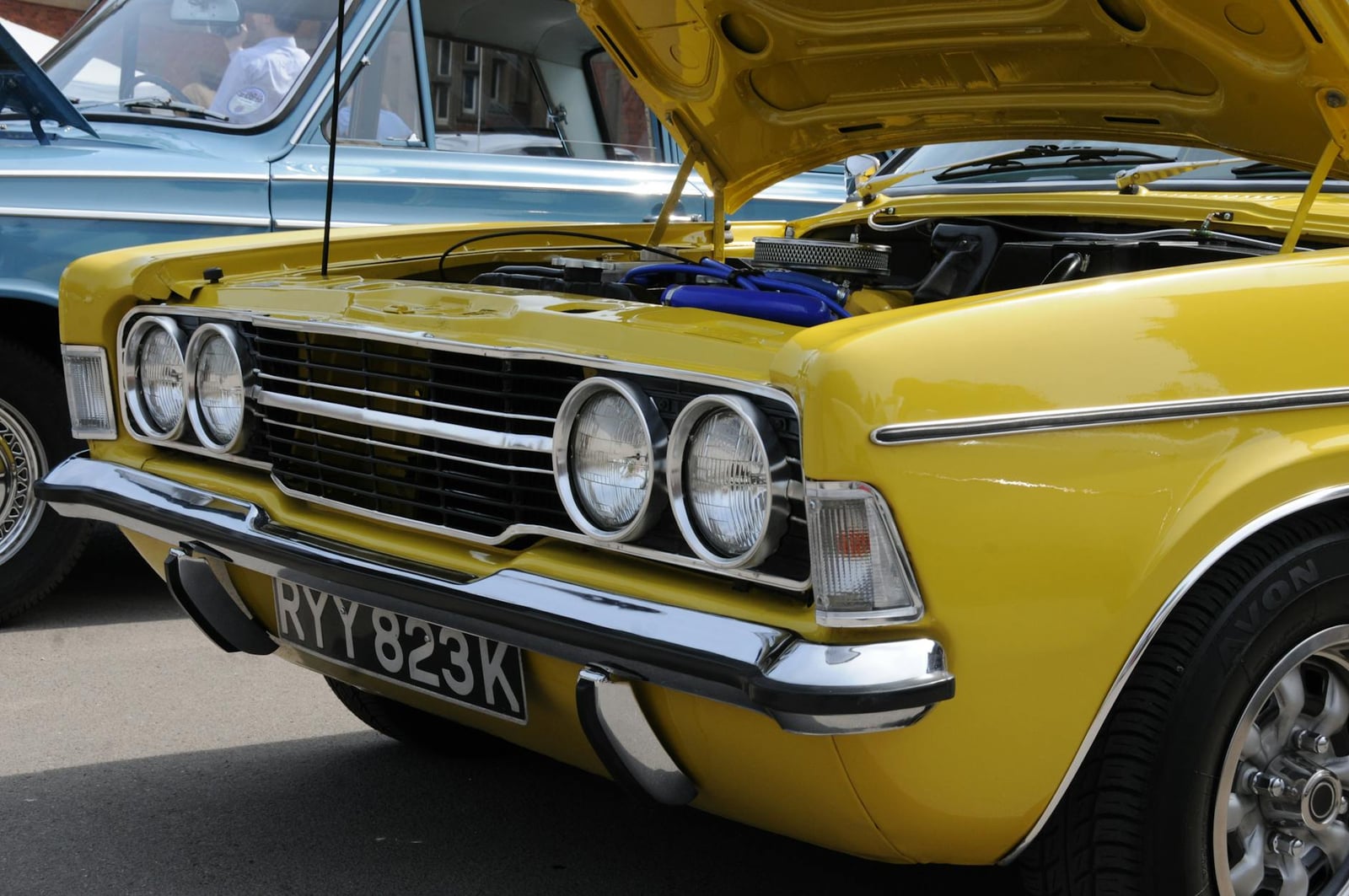
The Cortina was restyled completely four times while keeping the same winning recipe. The Mk1 (1962–66) was the original: light, simple and rear-driven in 1200 and 1500 forms, and the basis of the famous Lotus Cortina. The Mk2 (1966–70) was crisper and squarer, and introduced the plush, sought-after 1600E. The Mk3 (1970–76) brought curvy, American-influenced “coke-bottle” styling, a new range of engines, and its own executive flagship in the 2000E.
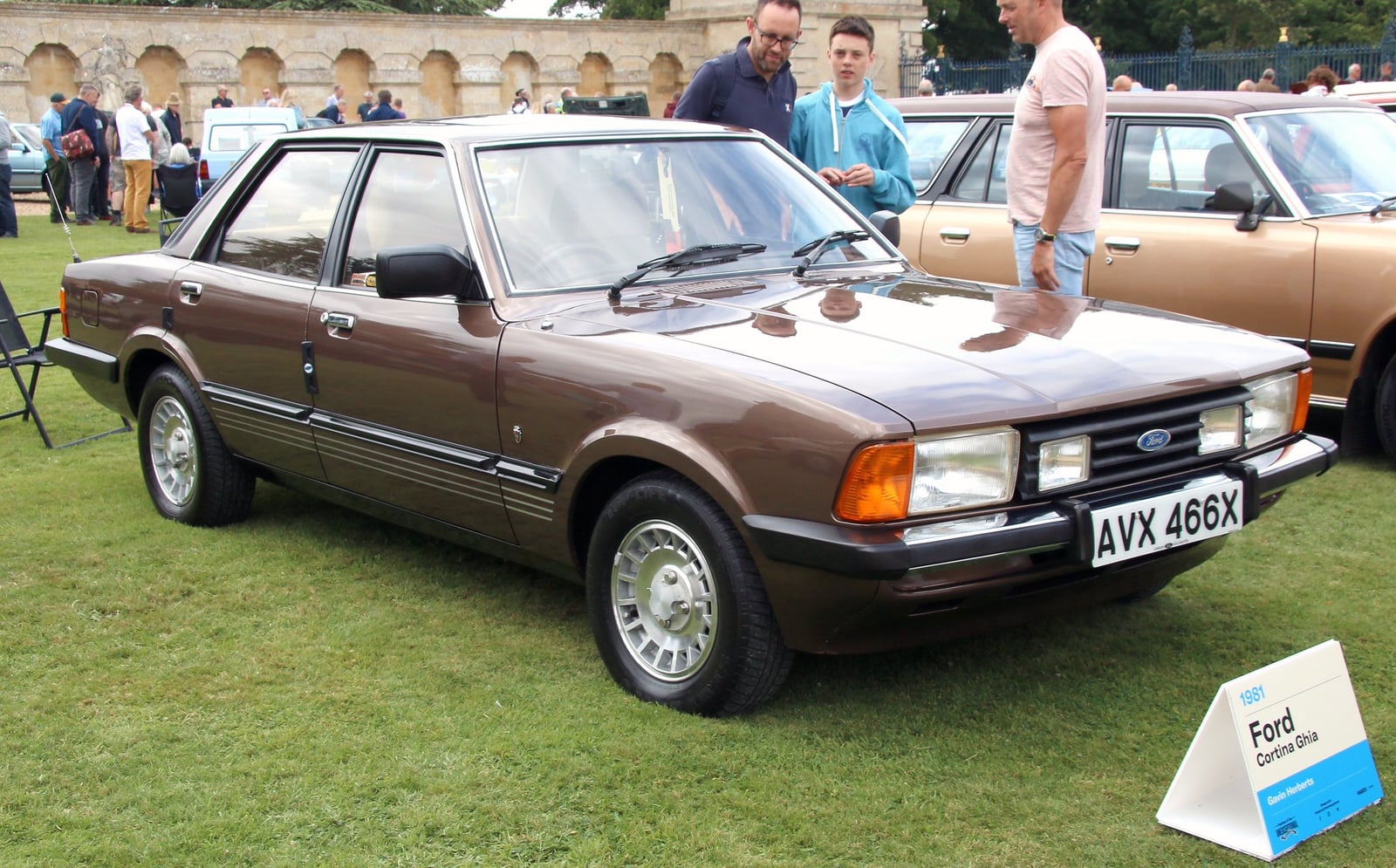
The Mk4 (1976–79) returned to crisp, Italian-influenced lines and finally shared its body fully with the German Taunus, and the Mk5, sold as the Cortina 80, was a 1979 facelift that ran the model out to 1982, when the aerodynamic Sierra replaced the whole rear-drive idea.

Britain’s best-seller
The headline fact about the Cortina is simple: it sold in numbers nobody else came close to. It was Britain’s best-selling car for most of the 1970s, the default choice for the family driveway and the fleet manager alike, and the 1979 range set a registration record that stood for years. More than 2.6 million were built here across the five generations.
That ubiquity is exactly why honest survivors are now scarce. The cars were used hard, raced as bangers and scrapped without a second thought when they were simply old, so a tidy, original Cortina of any generation is a far rarer sight today than the production figures suggest.

The sporting Cortina
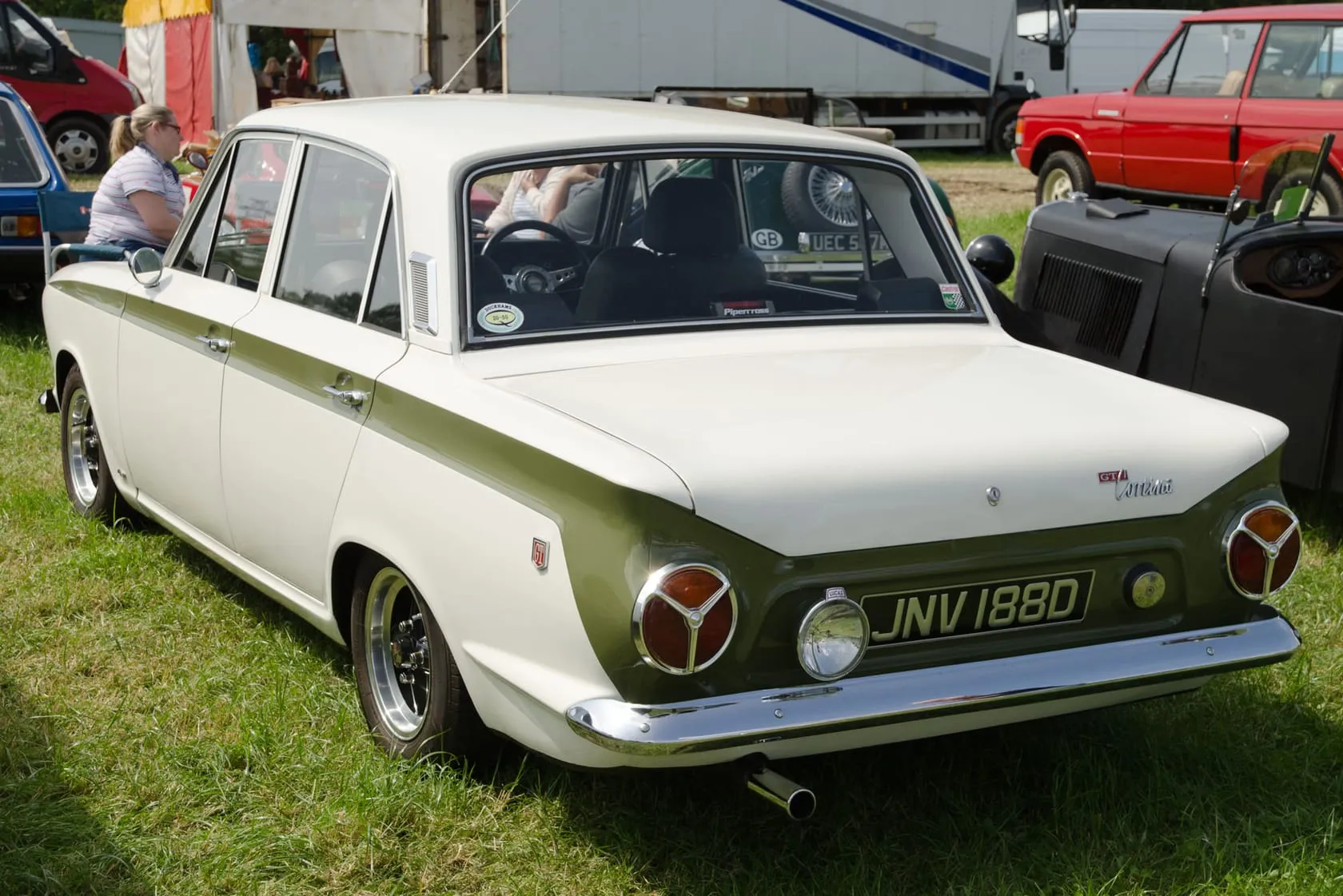
The Cortina was never only a rep’s car. The Lotus Cortina, developed with Lotus on the Mk1 and Mk2, put a 1.6-litre twin-cam engine and uprated suspension in the light saloon body and became a touring-car winner, most famously with Jim Clark at the wheel. It is now by far the most valuable Cortina.
Below it sat a whole run of warm and luxury models that the enthusiast market still chases: the GT, the plush Mk2 1600E, and the GL, S and Ghia cars of the later generations. They are the Cortinas people aspired to when the car was new, and the ones most sought after now.

What it is like to own
The Cortina is one of the most approachable classics there is. The Kent and Pinto engines and the simple rear-drive running gear are durable, well understood and shared across the Ford range, so mechanical parts are cheap and widely available, and the cars are easy to work on at home. The owners’ clubs are strong and knowledgeable.
To drive, these are honest, light, easy-going saloons, exactly as a family car of their era should be, with enough pace in GT and V6 form to stay enjoyable. That blend of simplicity, period character and usability is much of why the Cortina is such a rewarding classic to own.

Buying guide: what to look for
The factory rustproofing is the defining fact of Cortina ownership, and it is why a car built in millions is now scarce. Every generation rots, so inspect underneath rather than along the flanks: floors, sills and inner sills, front wings and inner wings, rear arches, the boot floor and the suspension mounting points. A cosmetically tidy Cortina hides corrosion better than most, because the shape offers so many places to put filler.
Mechanically there is very little to fear. The engines and gearboxes are simple, tough and shared with half the classic-Ford world, so a tired drivetrain should discount a car far less than tired metal does.
Where the money moves is the badge. A Lotus Cortina is worth several times an ordinary one and the 1600E carries its own premium, and that gap is precisely why recreations exist, so a car wearing either badge wants verifying against the registers before it is priced as one. The Mk4 and Mk5 sit at the other end of the range, cheap enough that scarcity rather than desirability is what makes a good one hard to find.

Where the Cortina sits in the market
The Cortina covers a wide span, from the ordinary saloon at hatchback money through the Mk1 GT and the 1600E to the Lotus Cortina, which leads the range by a wide margin; the full record, 469 recorded sales by generation and version, and why the yearly figures say more about which Cortinas came to sale than about prices, is on the page covering Ford Cortina values. Even so, a classic Ford Cortina remains one of the most affordable ways into mainstream-classic ownership, and one of the most sociable: there is a Cortina presence at almost every show in the country. For the eras the Cortina belongs to, see British classic cars of the 1960s and 1970s.
More photos


The Cortina in dates
- 1962The Mk1 arrives: light, simple and rear-driven in 1200 and 1500 forms.
- 1963The Lotus Cortina puts a 1.6-litre twin-cam and uprated suspension in the light saloon body, and becomes a touring-car winner in Jim Clark's hands.
- 1966The Mk2 is crisper and squarer, and introduces the plush, sought-after 1600E.
- 1970The Mk3 brings American-influenced coke-bottle styling, a new engine range and its own executive flagship in the 2000E.
- 1976The Mk4 returns to crisp, Italian-influenced lines and finally shares its body fully with the German Taunus.
- 1979The Cortina 80 facelift arrives, and the range sets a registration record that stands for years.
- 1982Production ends at more than 2.6 million British-built cars; the aerodynamic Sierra replaces the whole rear-drive idea.
Cortina: what to check before you buy
Rust, the defining fact
- Inspect underneath rather than along the flanks; the shape hides filler well
- Floors, sills and inner sills
- Front wings and inner wings, rear arches and the boot floor
- Suspension mounting points, which are the structural ones
Mechanical, which is the easy part
- Engines and gearboxes are simple, tough and shared with half the classic-Ford world
- A tired drivetrain should discount a car far less than tired metal does
- Parts are cheap and widely available, and the cars are easy to work on at home
- GT and V6 versions have enough pace to stay enjoyable without changing the ownership case
Badge and generation
- A Lotus Cortina is worth several times an ordinary one, and recreations exist
- The 1600E carries its own premium and the same warning
- Verify either badge against the registers before pricing a car as one
- Mk4 and Mk5 are cheap enough that scarcity, not desirability, makes a good one hard to find
The Cortina generations
The Ford Cortina Mk1 was engineered to a weight target, priced to destroy the competition and sold a million in four years, the fastest any British Ford had managed. A guide to the original Cortina, the GT and Lotus versions, the Safari win, buying checks and values.
Cortina Mk1 guide1976–1979Cortina Mk4The Cortina Mk4 of 1976 traded the Coke-bottle curves of the Mk3 for crisp Italian-influenced lines and finally shared its body fully with the German Taunus. It kept Ford's best-seller at the top of the British charts to the end of the decade. The development story, the range, and what the survivors are like now.
Cortina Mk4 guide1979–1982Cortina Mk5Ford called it the Cortina 80; Britain called it the Mk5. The 1979 facelift of the Mk4 was the last Cortina of all, holding the sales lead until the radical Sierra replaced it in 1982 and ended two decades of rear-drive Cortinas. The development story, the run-out, and the survivors.
Cortina Mk5 guide1963–1970Lotus CortinaThe Lotus Cortina put Colin Chapman's twin-cam engine into Ford's family saloon and created the touring-car legend of the 1960s, Jim Clark cornering it on three wheels in every archive reel. A guide to Mk1 and Mk2, the racing record, originality traps and values.
Lotus Cortina guide1966–1970 (Mk2); 1967–1970 (1600E)Cortina 1600EThe Ford Cortina 1600E dressed the Mk2 in lowered suspension, Rostyle wheels and a walnut-and-sports-seats cabin, inventing the affordable executive express and outliving its era as the most loved Cortina of all. A guide to the 1600E and the Mk2 family around it, buying checks and values.
Cortina 1600E guide