British classic car glossary
The terms, schemes and acronyms that come up when you own an old car, from DVLA paperwork to auction shorthand, defined properly and linked everywhere they matter.
Owning an old car comes with its own vocabulary. Some of it is official terminology you’ll encounter the first time you fill in a form at the DVLA (V5C, historic vehicle status, the forty-year rule). Some of it is industry shorthand that gets used in classified ads and at auctions (agreed value, concours condition). Some of it is trade-body branding that ends up insurance-relevant whether the owner intended it to or not (CaSSOA Gold). Most articles on this site lean on these terms without redefining them in body copy, on the assumption that the linked glossary entry does the work better.
The entries sit in several loose groupings, each gathering the terms that share a common source and serve a common reader. Each term’s one-line definition lives on its own entry page; the index below groups them by category.

DVLA paperwork
5 terms- 40-year ruleThe rolling cut-off for historic vehicle status: each 1 April, road-tax exemption extends to cars built more than forty years before that 1 January, while MOT exemption arrives on each car's own fortieth anniversary.
- Historic vehicle statusThe official DVLA tax class that qualifying classic cars sit in, and what it changes about owning the car.
- V5CThe registration certificate that underpins almost every classic-car transaction, with each section recording a specific piece of vehicle data.
- Q-plateThe Q-prefix registration the DVLA issues when a car's original identity has been lost or rebuilt, and the circumstances where owners want to avoid it.
- Age-related plateThe older-style registration marks issued for imports and substantial restorations, with the evidence the DVLA needs to assign one.
Storage standards
1 termInsurance structure
1 termCondition grading
1 termHistorical context
2 terms- Export or DieThe post-war policy backed by steel rationing that produced the late-1940s landmark launches and built the American market for British sports cars.
- British LeylandThe 1968-to-1999 industrial arc, from the merger that created it through nationalisation and privatisation to the BMW breakup, that owned most of the volume British car industry.
Body styles
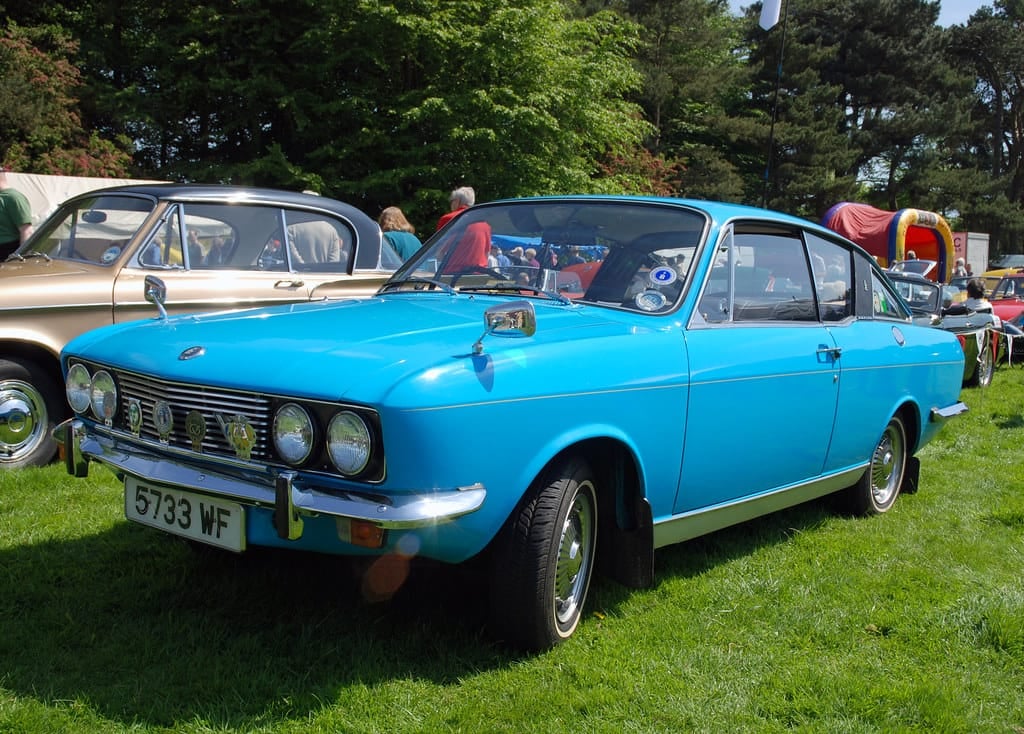
3 terms- FastbackA roofline that slopes in one unbroken line to the tail, the shape behind cars from the Ford Capri to the MGB GT, and how it differs from a notchback and a hatchback.
- LiftbackA fastback profile with a tailgate that lifts the rear glass up with it, and how it sits between a fixed-roof fastback and an ordinary hatchback.
- Shooting brakeThe coachbuilt two-door sporting estate, where the name comes from, and the British examples from the DB5 shooting brake to the Scimitar GTE.
Design and engineering
2 terms- Transverse engineThe sideways-mounted engine that made compact front-wheel drive possible, and how the Mini turned it into the template for the small car.
- Hydrolastic suspensionAlex Moulton's interconnected fluid-and-rubber suspension that kept BMC cars riding level, and the Hydragas system that followed it.
Motorsport heritage
1 termRestoring and modifying
1 termWhere the vocabulary comes from
The language of British classic-car ownership is unusual in that it’s built up out of four quite separate registers, each from a different source and each addressing a different reader.
The DVLA register is bureaucratic and precise. A V5C is a V5C; a Q-plate means a specific thing; historic vehicle status is a tax class. These terms were coined by Swansea and are used the same way in any government correspondence about any vehicle. They have single correct definitions, and the entries here mostly just record those definitions plus the small print that matters in practice.
The auction and trade register is commercial. Phrases like agreed value, concours condition, hammer price and provenance documentation emerged from the auction houses and specialist insurers, and they’re used the same way across the rest of the market. They have less rigid definitions than the DVLA terms but are still used consistently within the trade.
The hobbyist register is older and noisier. Patina, barn-find, matching numbers, original paint, fettled: these terms come from owners’ clubs, the enthusiast press and decades of conversation across show fields and forums. They mean what enthusiasts have agreed they mean, which is sometimes slightly different from what the trade means by the same word.
The industrial-history register is the technical and corporate vocabulary: A-series engine, Rover V8, Export or Die, British Leyland, badge engineering. These terms describe the actual cars and the industry that built them, and they appear in marque and decade pages across the site as well as in the entries here.
Most readers arrive at the glossary needing one term from one of these four registers. The cross-links inside each entry point to the others where they intersect.

The British-American vocabulary gap
A separate vocabulary gap runs across all four registers above: the language difference between British and American motoring English. Petrol and gasoline, bonnet and hood, spanner and wrench. Some are simple swaps. Others (like “hood” itself, which means opposite parts on either side of the Atlantic) are easy to misread. A working translation table, with notes on the genuinely tricky cases, sits at British and American motoring vocabulary, translated.

Related
For the broader scope question of which cars count as British classics in the first place, see which cars count as British classics?. For the temporal question of when a car actually becomes a classic, see when does a car become a classic?.
More photos