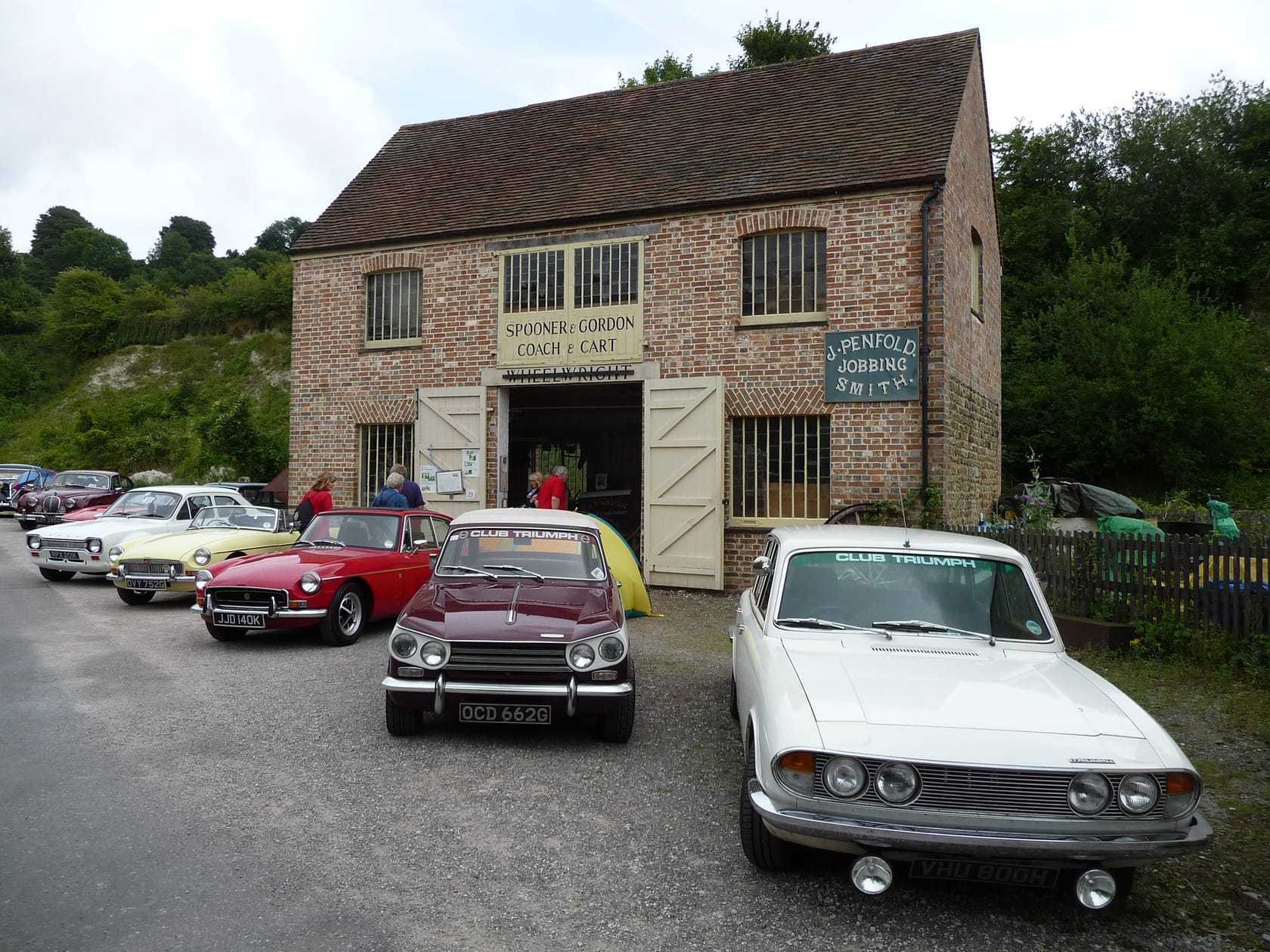
Britain was building cars worth collecting long before the war. The vintage 1920s gave us the Austin Seven that put the country on wheels, the Le Mans-winning Bentleys and the record-breaking Sunbeams; the 1930s turned the car into something the middle class could afford and produced the first cheap MGs and the original SS Jaguar. Then, in 1939, the war stopped everything.
The industry restarted from that shutdown in 1945, pivoted hard to exports under the “Export or Die” policy of the late 1940s, and ran through another fifty years of expansion, consolidation, nationalisation, and gradual dismantling before arriving at the small-volume specialist landscape of the late 1990s. From the MG TC and the Jaguar XK120 at the post-war end to the Lotus Elise and the McLaren F1 at the other, these are the cars most people now mean when they say “British classics”.
The eight decade guides above are the deep dives. What follows here is the short version of the whole story, each decade in capsule with a pointer to its full guide, and then the handful of threads that only become visible when you read the eras side by side.
The 1920s: the vintage years
The vintage decade opens with the car still a rich man’s machine and closes with it well on the way to everyone else. The Austin Seven of 1922 did the most to change that: a proper four-cylinder car in miniature, with brakes on all four wheels, at a price that swept the crude cyclecars away and created the British small-car market. William Morris matched it in the middle of the market, using mass production at Cowley to cut prices until the Bullnose Morris made him Britain’s largest car maker.
At the other end of the scale, the decade built the legend. Bentley won Le Mans in 1924 and then four years running from 1927 to 1930, Sunbeam took the first British Grand Prix win and put Henry Segrave past 200 mph, and Rolls-Royce, Vauxhall and Alvis built some of the finest fast cars of the century, nearly all of them clothed by coachbuilders rather than factories. The guide to the 1920s covers the vintage years in full, from the baby Austins to the Blower Bentleys.

The 1930s: the age of the baby car
Through the 1930s the price of motoring fell until a clerk or a shopkeeper could run a small saloon, and in 1935 a stripped Ford Model Y became the first modern car to sell for £100. The Austin Seven was everywhere by now, around 290,000 built by the time production ended in 1939, and the modern family saloon, steel-bodied, enclosed and affordable, took shape in the price war between Austin, Morris and Ford.
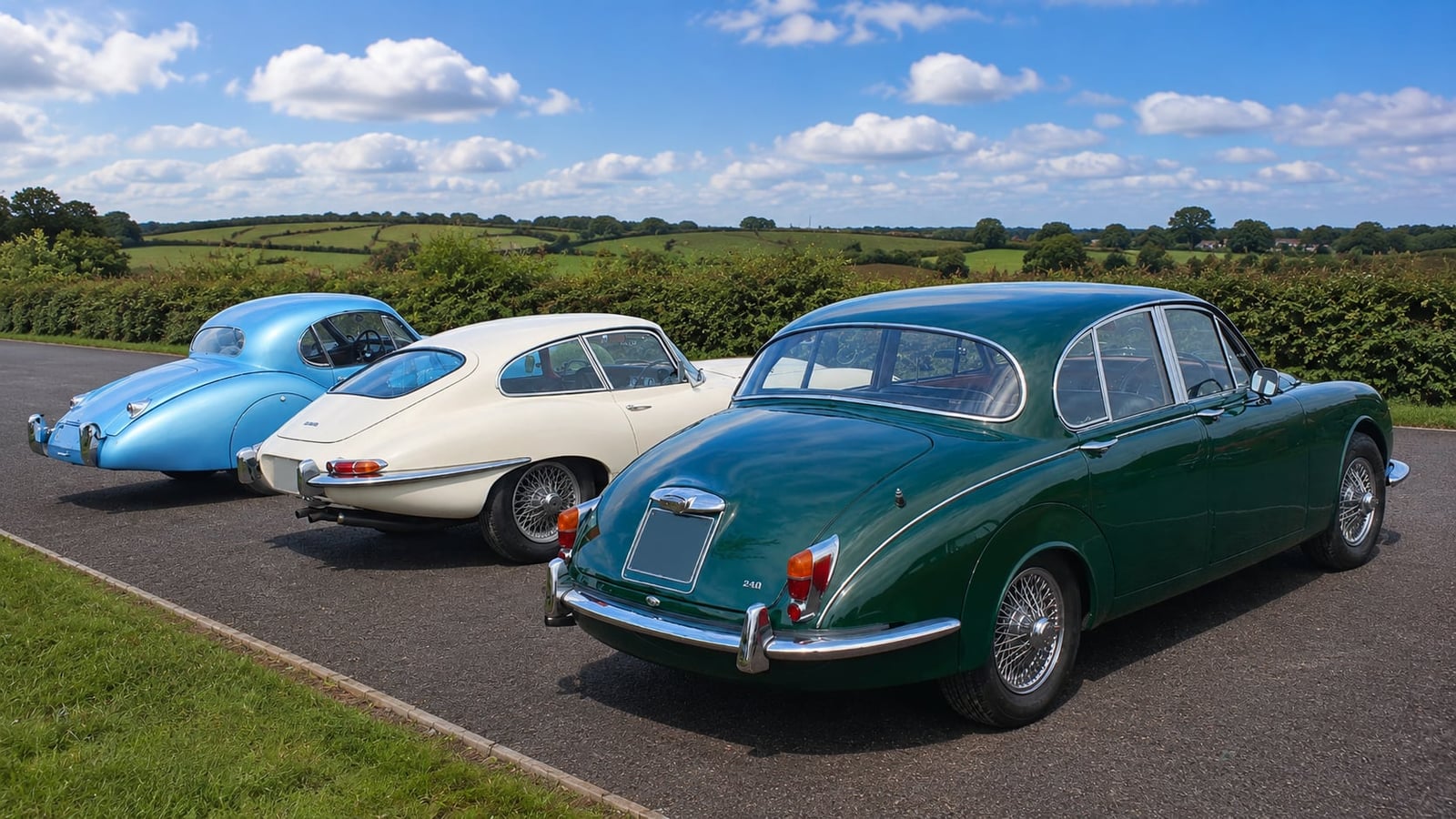
The decade also introduced the main characters of everything that followed. MG made the sports car affordable with the Midgets and the T-type of 1936; William Lyons put the Jaguar name on his SS saloons in 1935, with the SS 100 giving the young marque its glamour; and the coachbuilders reached a height they never touched again on Rolls-Royce, Derby Bentley and Le Mans-winning Lagonda chassis. It all stopped dead in September 1939. The 1930s guide tells the pre-war story properly.

The 1940s: austerity and Export or Die
The 1940s is two stories separated by the war. From 1940 to 1945 the factories built aircraft engines, tanks and trucks instead of cars, and when civilian production restarted in 1945 it did so with warmed-over pre-war designs and a desperate national need for dollars. Exports became industrial policy: steel was rationed by export performance, and by 1949 Britain was briefly the world’s largest car exporter.
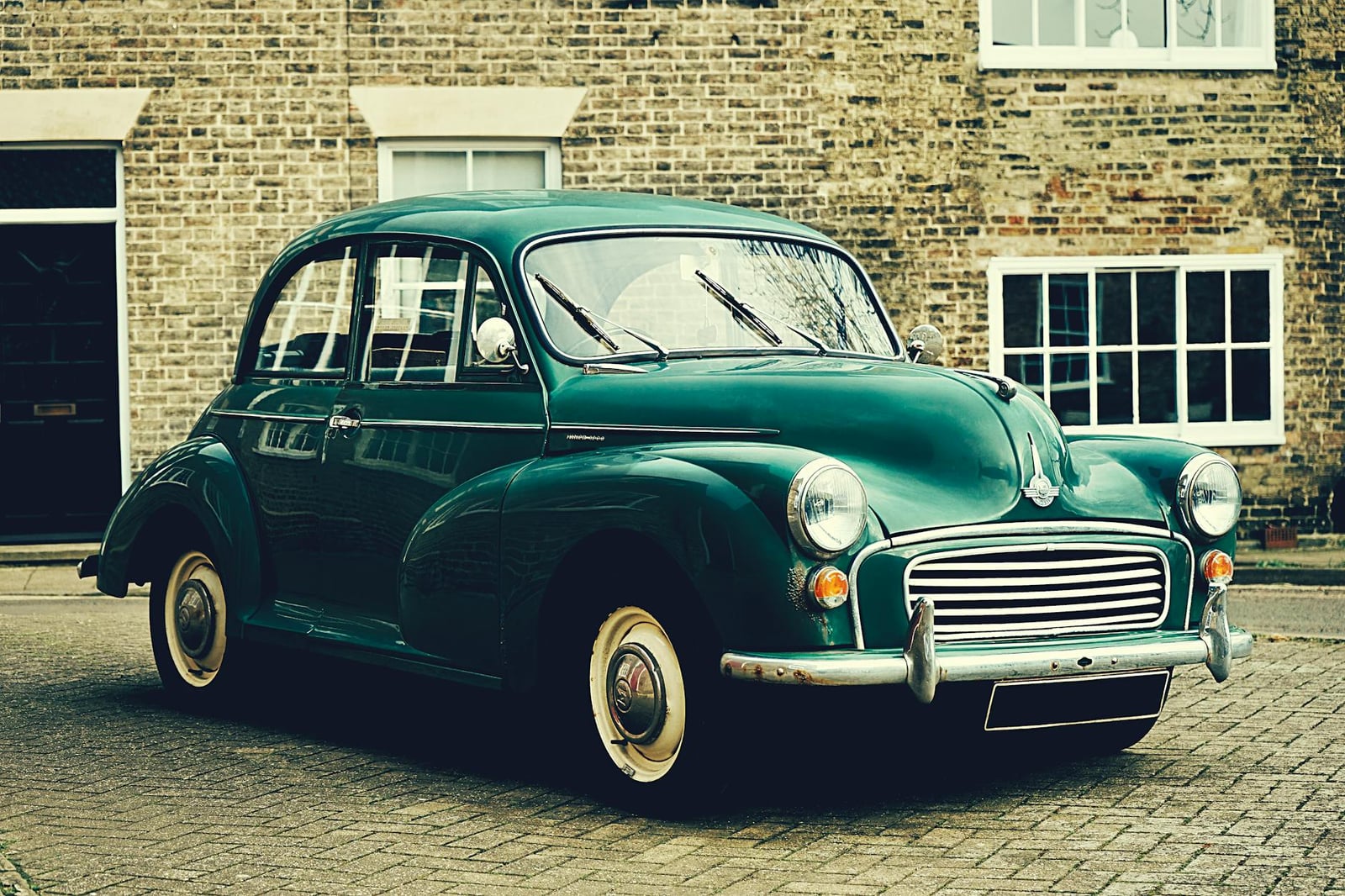
That pressure produced an extraordinary run of launches. The MG TC built the American sports-car market almost single-handed, and the 1948 London Motor Show alone introduced the Morris Minor, the Land Rover Series I and the Jaguar XK120, the fastest production car in the world at launch. Between them, those cars set up the next thirty years. The 1940s guide covers the shutdown and the recovery in detail.

The 1950s: the sports car boom
The 1950s is when the export launches of the late 1940s bloomed into an industry. The XK120 grew into the XK140 and XK150, the Austin-Healey 100 of 1953 and the Triumph TR2 joined the fight, and MG modernised the T-series into the MGA. Most of them went straight to America, exactly as government policy intended, and the “British roadster in California” image dates from these years.
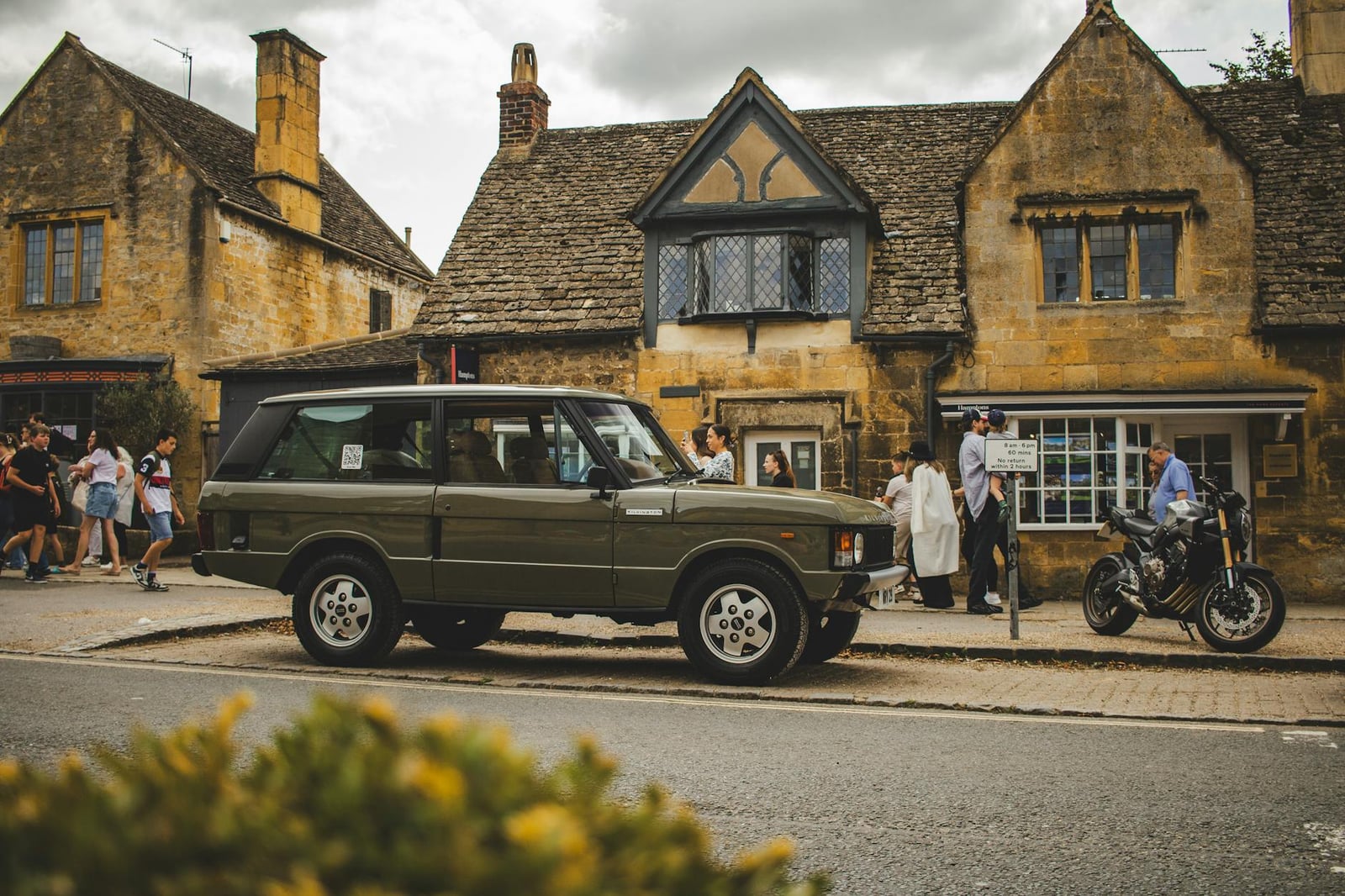
At home the Morris Minor became the affordable family car, Jaguar’s Mk VII won the Monte Carlo Rally at nearly two tons, and the R-Type Continental became the most expensive British car of its era. The Land Rover settled into the wheelbases it would keep for forty years. Then, in August 1959, the Mini arrived, closing the decade with the car that would define the next one. The full story is in the 1950s guide.

The 1960s: the golden age
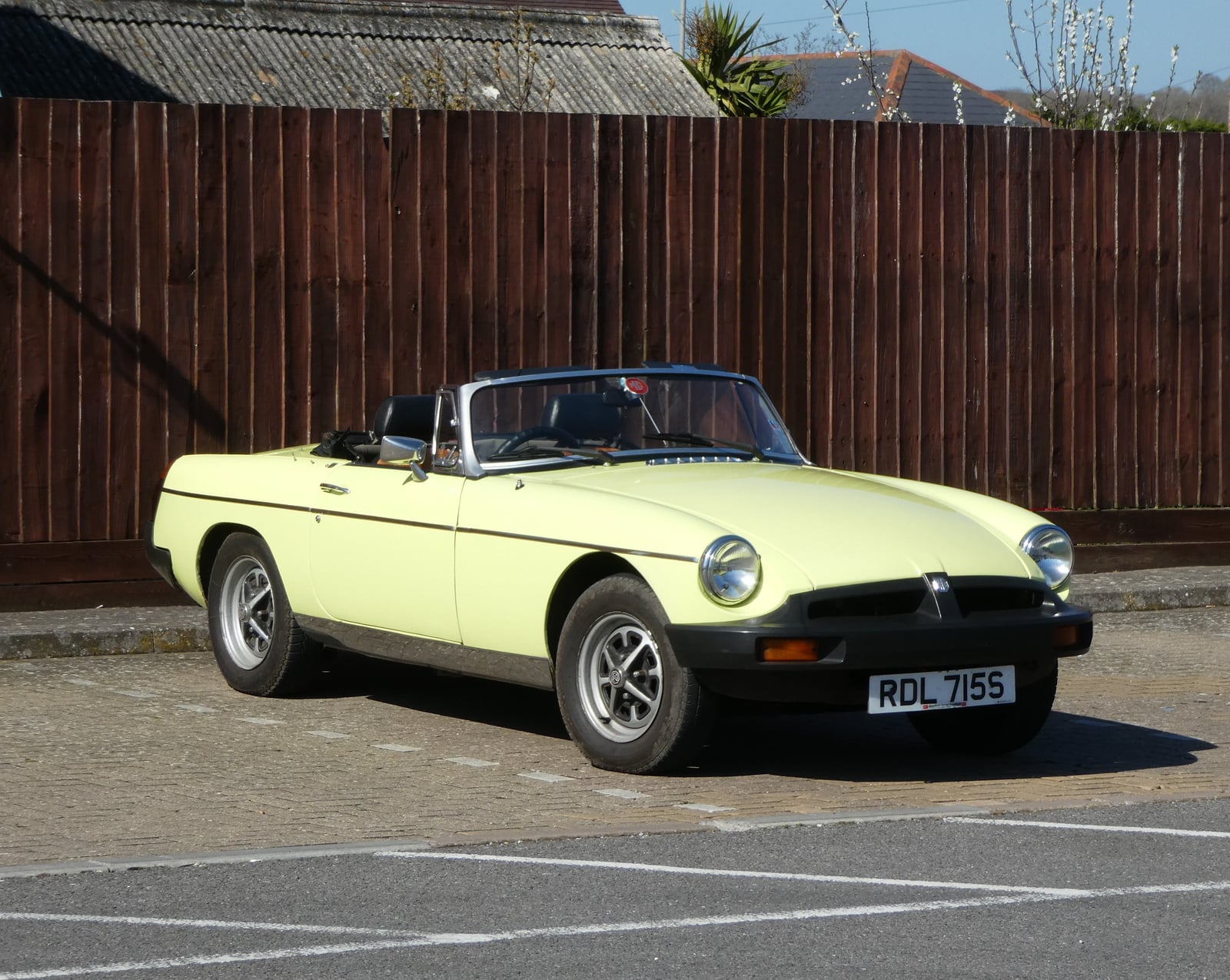
By the mid-1960s Britain was building around two million cars a year, and the results read like a roll-call of the most-loved classics of all: the Mini winning Monte Carlo, the E-Type doing 150 mph for under £2,000, the MGB selling in numbers no British sports car had managed before, the Lotus Elan, the Aston Martin DB5. The design culture that produced Issigonis, Chapman and Malcolm Sayer peaked in this decade and never quite repeated itself.
The same years quietly set up what went wrong next. BMC merged with Jaguar in 1966, the result merged with Leyland in 1968, and by the end of the decade almost every British marque sat inside British Leyland. The 1960s guide covers the high-water mark; the pages that follow it cover the consequences.

The 1970s: brilliance and chaos
The 1970s is the awkward decade, and an honest telling keeps both halves. The chaos is real: the oil crisis of 1973, British Leyland’s nationalisation in 1975, the strikes on the news bulletins, and the family saloons the press never forgave, the Marina and the Allegro among them, a story told in full in Britain’s troubled 1970s family saloons.
The brilliance is just as real. The Ford Capri was the people’s coupe, the Triumph Stag the beautiful problem, the Rover SD1 an executive hatchback styled after a Ferrari, and the Lotus Esprit of 1976 gave Britain its wedge-shaped supercar. Rally homologation specials like the Escort RS turned ordinary saloons into future collectibles. The 1970s guide walks the whole tightrope.

The 1980s: turbos and hot hatches
Performance moved onto ordinary driveways in the 1980s. The Sierra RS Cosworth of 1986 put 204 turbocharged horsepower and an enormous rear wing on a family-saloon base, and beneath it the hot hatches did the traditional roadster’s job so well that the segment the MGB had defined effectively collapsed during the decade.
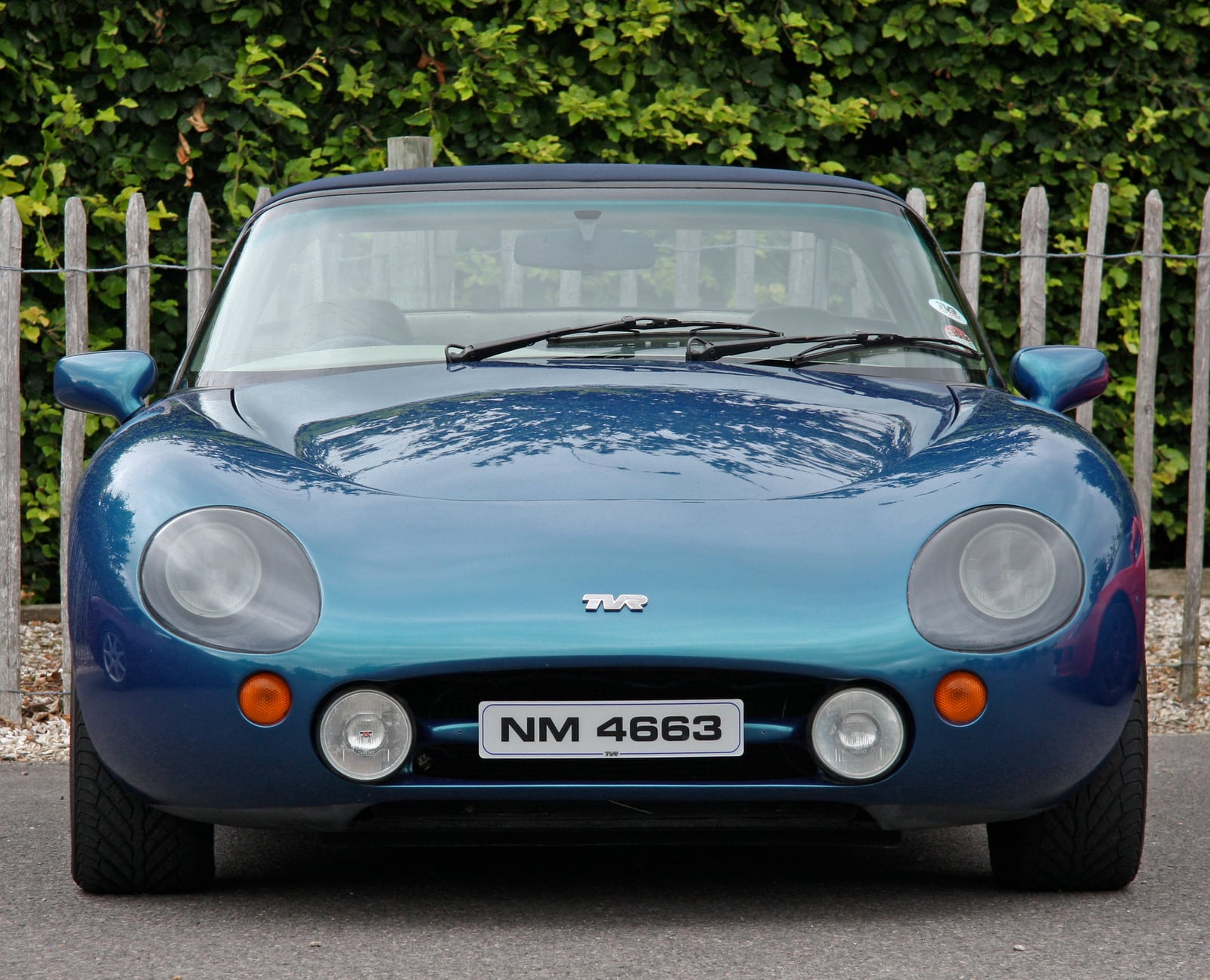
Around the fast Fords, the industry rearranged itself. British Leyland was broken up through privatisation, with Jaguar sold off in 1984 and the Rover Group in 1988; the Range Rover spent the decade turning from country workhorse into status object; Bentley reinvented itself with the Turbo R; and TVR’s new owner Peter Wheeler began building the big-engined glassfibre cars the firm became famous for. The 1980s guide picks through all of it.

The 1990s: the modern classics
The 1990s closed one industry and opened another. By 1999 the volume marques were owned by Ford or BMW or sold for £10 to the Phoenix Consortium, and the lineage of British mass-market car making that ran back to the 1900s was effectively over. The specialists inherited the ground: the McLaren F1 held the production-car speed record at 240 mph, the 725 kg Lotus Elise of 1996 changed what a sports car could be, TVR built more cars than at any point in its history, and the DB7 saved Aston Martin outright.
This is also the decade the collector market began treating cars barely ten years old as classics in their own right, with specialist insurers and auction houses building products around the Cosworth Fords and Turbo R Bentleys of the late 1980s. The 1990s guide runs from the F1 to the end of the original Mini in 2000.

The threads that run across the post-war decades
A handful of stories run continuously across the post-war decades and make more sense as single arcs than as six separate ones. They’re worth keeping in mind while reading any of the individual decade pages.
The British Leyland industrial arc. BL was formed in 1968 by the merger of British Motor Holdings (Austin, Morris, MG, Riley, Wolseley, Jaguar, Daimler) with Leyland Motors (Triumph, Rover, Land Rover). It became the umbrella that built most of the cars on the 1970s page and a substantial share of the 1960s and 1980s pages too. Nationalised in 1975 as the losses mounted, partially broken up through 1980s privatisation (Jaguar sold off in 1984, Rover Group spun out and sold to British Aerospace in 1988), and finally dismantled in 1999 after BMW’s brief five-year ownership. Roughly half the cars on these pages came from some corner of this single industrial entity at some point in their production lives. The slow decline of BL is the through-line that explains the overlapping model ranges, the badge engineering, the gradually deteriorating build quality of the volume cars, and the parts-supply problems that 1970s and 1980s owners still navigate today.
The volume-to-specialist switch. Through the 1960s and 1970s the cars that mattered came out of high-volume factories: Cowley for Morris, Longbridge for Austin and Mini, Halewood and Dagenham for Ford UK, Solihull for Land Rover, Browns Lane for Jaguar. By the 1990s the cars that mattered came out of small workshops: TVR at Bristol Avenue in Blackpool, Lotus at Hethel, McLaren at Woking, Caterham at Crawley, Morgan at Malvern Link. The volume manufacturers had either become foreign subsidiaries (Ford UK and Vauxhall) or been dismantled (BL), and the specialists rebuilt their reputations and inherited the sports-car territory the volume makers had vacated. By 1999 Britain was building fewer mass- market cars than at any point since the war, but more genuinely distinctive sports cars than at any point in living memory.
Marque continuity across decade boundaries. Some of the most-loved British classics ran in essentially the same form for thirty years or more. The Mini from 1959 to 2000. The Land Rover Series III through to the Defender from 1971 to 2016. The MGB from 1962 to 1980. The Jaguar XJ shape from 1968 through to the X308 in 2003. The decade pages place these cars in the era they belonged to most strongly, but the cars themselves crossed multiple decades and accumulated different reputations in different eras. A 1971 Mini and a 1995 Mini are mechanically very similar; their cultural lives are not, and the same is true of most of the long-runners. Reading just one decade page in isolation misses this; reading the pages in sequence makes it visible.
The Rover V8 engine. One engine family ran across all four decades and connected manufacturers that otherwise had nothing to do with each other. The 3.5-litre aluminium V8 was a 1961 Buick design that General Motors sold to Rover in 1967, on the basis that GM had decided not to bother with aluminium engine production and Rover had. From there it powered the Rover P5B (1967), the Rover P6 V8 (1968), the Range Rover Classic (1970), the Rover SD1 V8 (1976), the MGB GT V8 (1973), the Morgan Plus 8 (1968 to 2004), the TVR 350i / 400 / 450 SE (1983 to 1990), the TVR Griffith and Chimaera (1991 to 2003), the Land Rover Defender V8, and a long tail of kit-car and limited-production specials. By the time the engine finished production in 2006, elements of the same basic design had been in British classics for forty-five years. It’s the through-line under the bonnet for most of the British performance cars worth caring about across the period.
Related
For the scope question of which cars qualify as British classics in the first place, see which cars count as British classics?. For the temporal question of when a given car actually becomes a classic, see when does a car become a classic?. For the regulatory side of the older cars on these pages, the glossary has entries on the 40-year rule, historic vehicle status, and the related DVLA paperwork.
More photos