Classic Mini: the British car that reinvented the small car (1959–2000)
No British car is more loved, or more important, than the Mini. Alec Issigonis's 1959 design reinvented the small car, put a nation on wheels, won the Monte Carlo Rally against far more powerful machinery, and ran for forty-one years. Below, every classic Mini we cover: the standard cars, the Cooper, and the variants from the woody Traveller to the beach-going Moke, what each costs and which to buy first.
A 1960 Morris Mini-Minor, an early example of Alec Issigonis's revolutionary design. More than five million Minis followed over the next forty-one years. Photo by Andrew Bone / CC BY 2.0
Issigonis and the 1959 revolution
The Mini was the work of Alec Issigonis, charged by
the British Motor Corporation with building a proper small car in response to
the Suez fuel crisis. His solution was radical. By mounting the engine
transversely and placing the gearbox underneath it in the sump, he freed up
around eighty per cent of the car’s length for passengers and luggage. Tiny
ten-inch wheels pushed to the corners and clever rubber-cone suspension did
the rest.
The result, just ten feet long, carried four adults in a car that handled like
a go-kart and cost very little to buy or run. It was a genuine engineering
landmark: the transverse front-wheel-drive layout Issigonis pioneered is now
used by almost every small car in the world. It launched in August 1959 as the
Austin Seven and the Morris Mini-Minor, and quickly became,
simply, the Mini.
The original Mini, just ten feet long, carried four adults by turning the engine sideways and putting the gearbox in the sump. It changed every small car that came after.Photo by Andrew Bone / CC BY 2.0
The Mini might have stayed a humble economy car had the racing-car constructor
John Cooper not seen its potential. The Mini Cooper of 1961
added a tuned engine and front disc brakes, and the Cooper S that followed
turned the little car into a serious competition machine. Mini Cooper S works
cars won the Monte Carlo Rally outright in 1964, 1965 and 1967, beating cars
with several times their power, and were famously and controversially
disqualified from a fourth win in 1966 on a lighting technicality.
That giant-killing record is central to the Mini’s legend and to its values.
The Cooper and Cooper S are the cars most enthusiasts want, and genuine 1960s
examples are worth a clear premium over the standard cars.
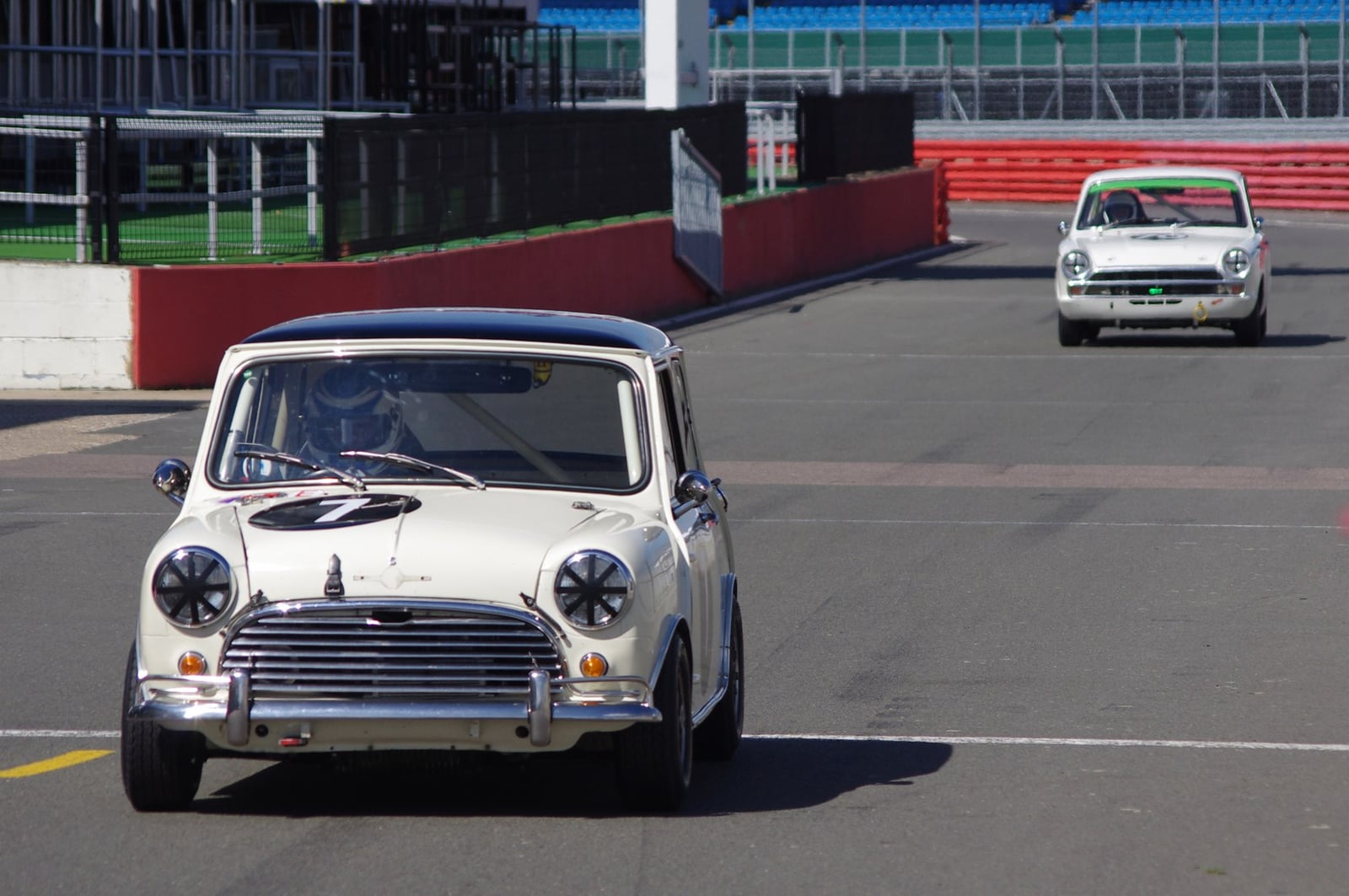
A Cooper S in competition trim. Works cars won the Monte Carlo Rally in 1964, 1965 and 1967, beating far more powerful machinery.Photo by Dave Hamster / CC BY 2.0
The Mini family
Few cars spawned as many variants. The squared-front
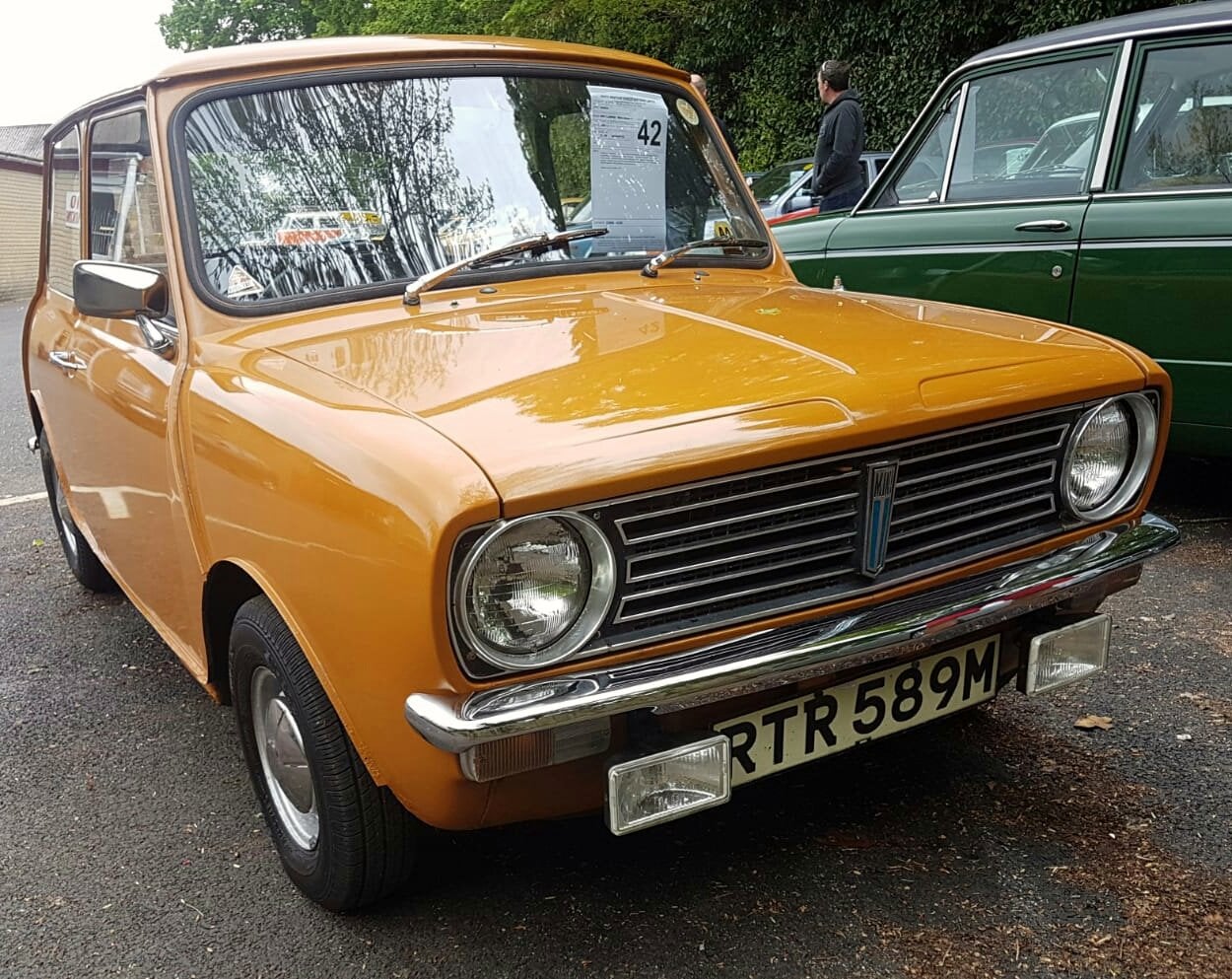
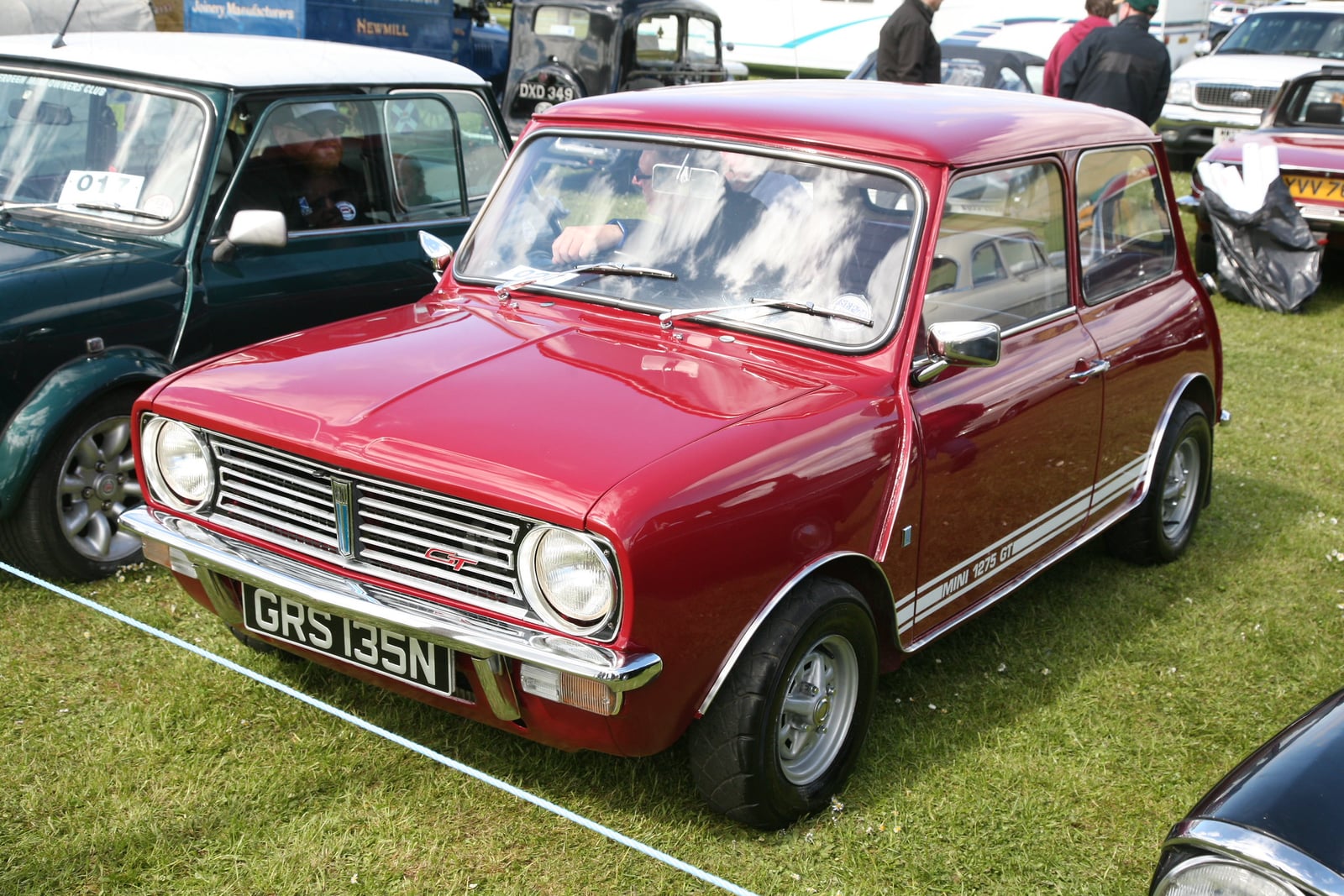
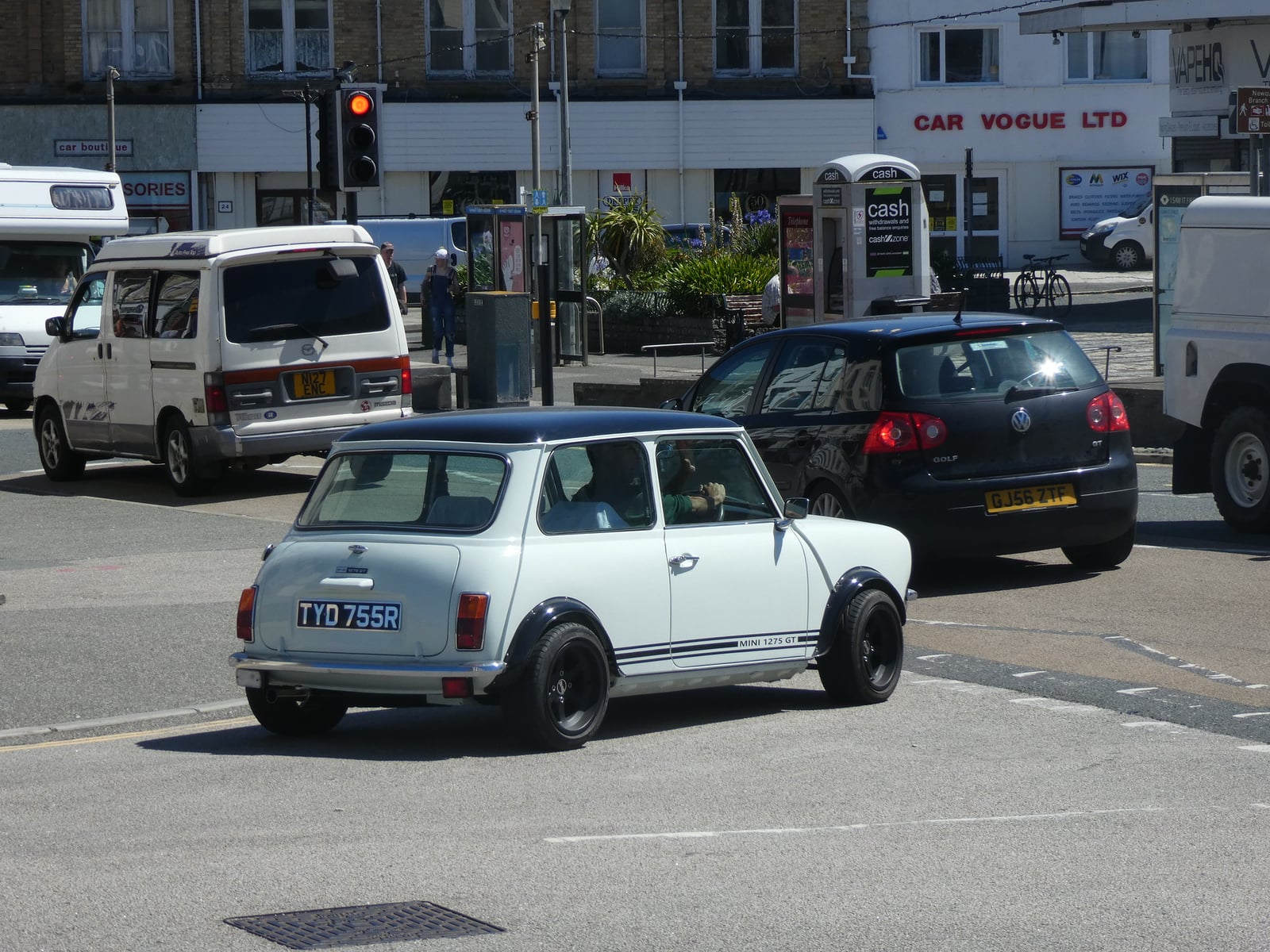
Mini Clubman and the sporty 1275GT modernised the range from
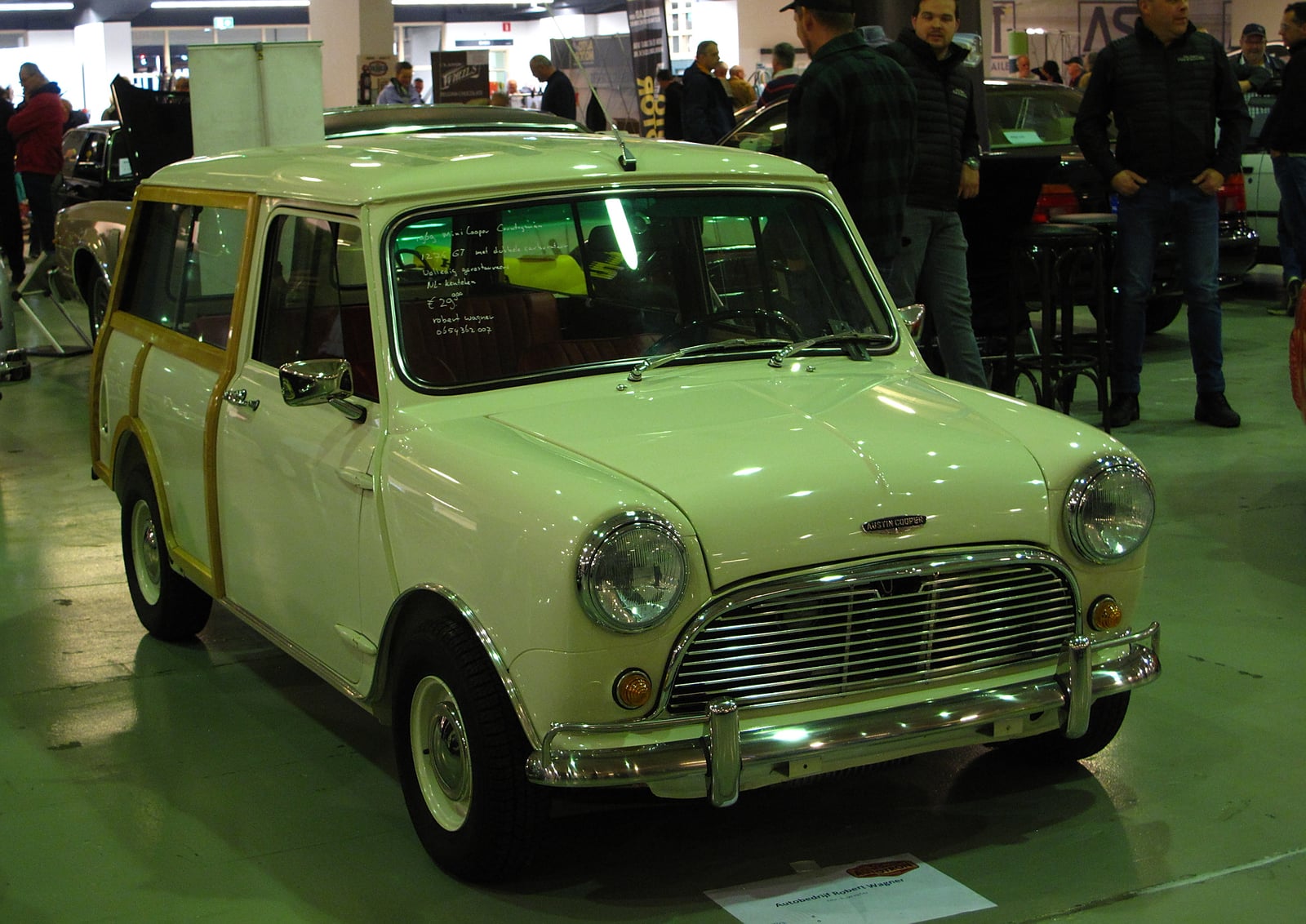
1969. The Mini Traveller and Countryman were the charming
estate versions, the early ones with their timber-framed rear bodies. The
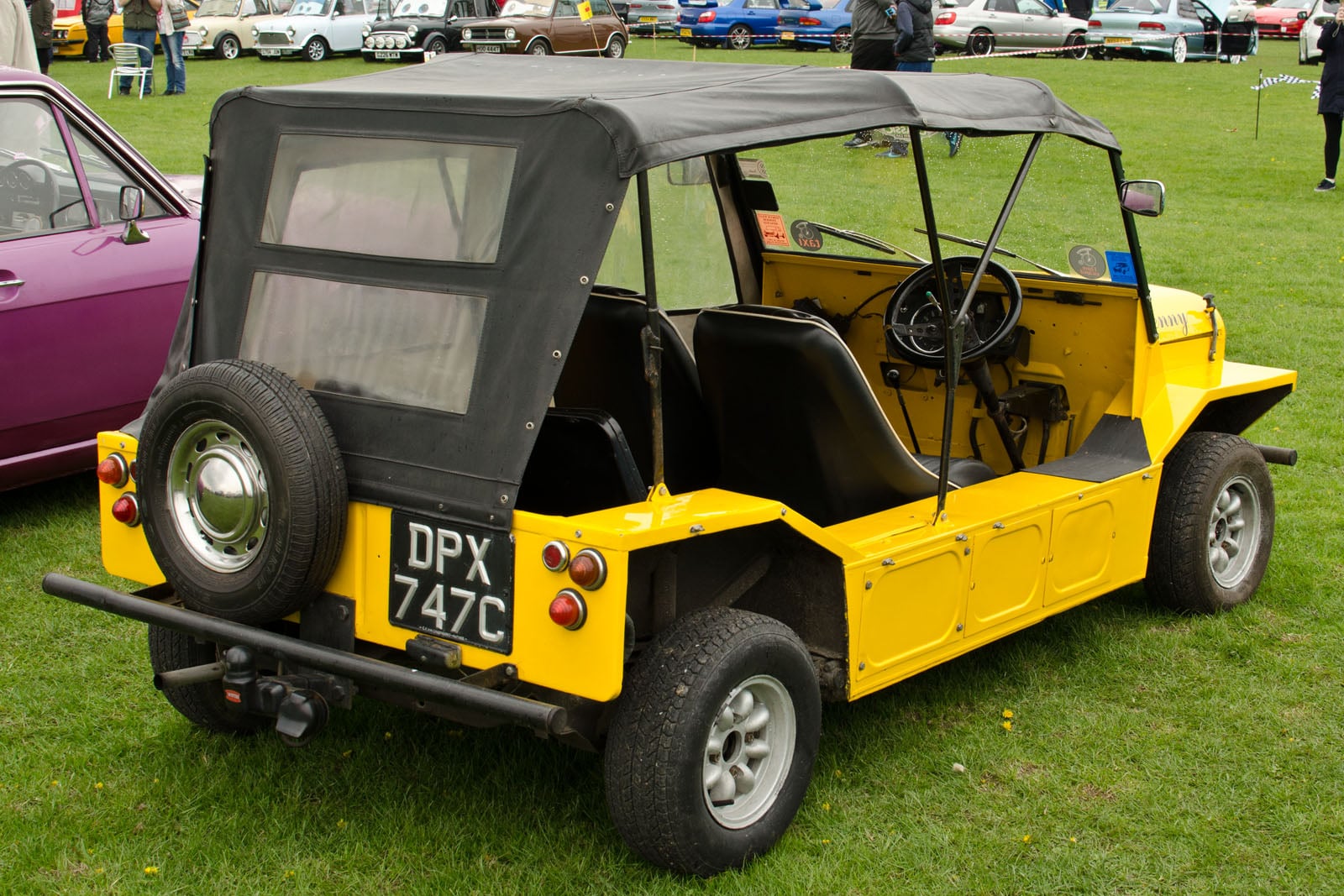
Mini Moke stripped the car back to a doorless utility runabout
that found fame on beaches and film sets, and the Mini Van and Pick-up
put the package to work.
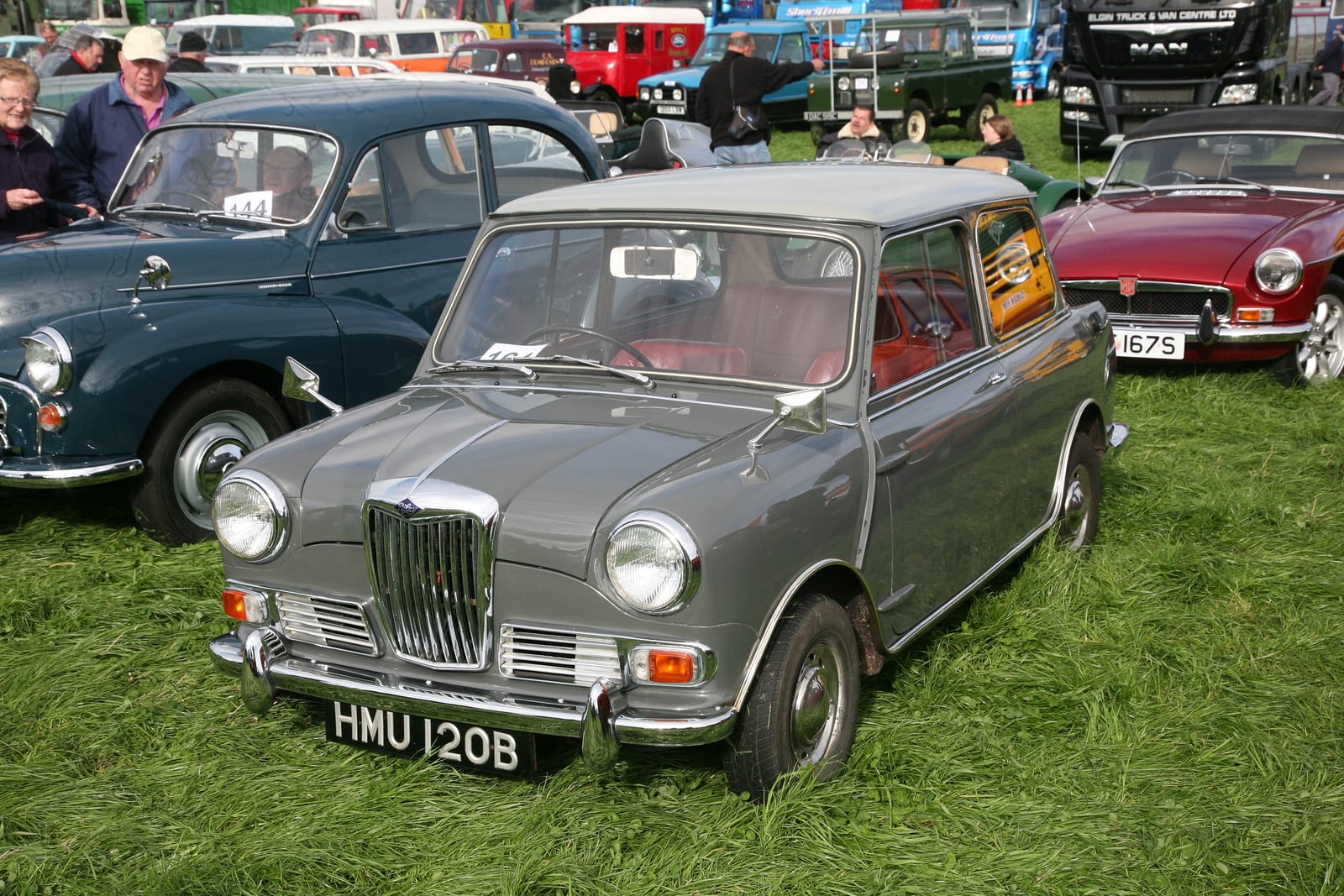
There were upmarket versions too: the Riley Elf and Wolseley Hornet
gave the Mini a longer boot, a traditional grille and a plusher cabin,
coachbuilders like Wood & Pickett trimmed Minis to limousine
standards, and the elegant Innocenti Mini was built under licence
in Milan. The
mainstream cars wore engine-size badges, the Mini 850 and Mini 1000
above all, before the Mini City and Mayfair trims took over in the
1980s. And
across the car’s long life came a remarkable run of
special editions, from the Mary Quant-styled
1100 Special to the Cooper revival cars of the 1990s.
A woody Traveller, one of many variants. The Mini spawned estates, vans, the Moke, the luxury Elf and Hornet and a long run of special editions.Photo by Andrew Bone / CC BY 2.0
Owning and buying a classic Mini
The Mini is one of the most approachable classics there is. It is small, light
and mechanically simple, the parts supply is extraordinary, with almost
everything remanufactured down to complete bodyshells, and the club and
specialist network is among the strongest in the world. It is cheap to run,
easy to work on at home and small enough to keep anywhere.
The one real enemy is rust, which the Mini suffers badly, so the soundness of
the bodywork matters more than anything when you buy. Our
Mini buying guide sets out which version to choose and
where these cars rot and rot fast, and the Mini parts and specialists
page covers keeping one on the road. For most buyers the Mini delivers more
character and more fun per pound than almost any classic you can name.
The transverse A-series engine, with the gearbox in the sump. Simple, tough and superbly supported for parts, the Mini is one of the easiest classics to keep on the road.Photo by grobertson4 / CC BY 2.0
Forty-one years, one idea
What makes the Mini extraordinary is not just how good the original was, but
how little it needed to change. From 1959 to 2000 it ran in recognisably the
same form, outliving the BMC that built it, the British Leyland that nearly
killed it, and most of its rivals several times over. By the end it was a
fashion item and a sought-after classic, the John Cooper conversions of the
1990s reviving the performance name for a new generation, and the Oxford-built
BMW MINI that followed in 2001, whose supercharged
Cooper S R53 is now a classic in its own right,
carrying the name on.
The Mini belongs to the same story as the rest of British motoring’s golden
era; for the wider picture see British classic cars of the
1960s and 1970s. But no
single car sums up British ingenuity, character and sheer likeability better
than this one.
A late Rover-era Mini. The car ran in recognisably the same form from 1959 to 2000, outliving the companies that built it and most of its rivals.Photo by dave_7 / CC BY 2.0
More photos
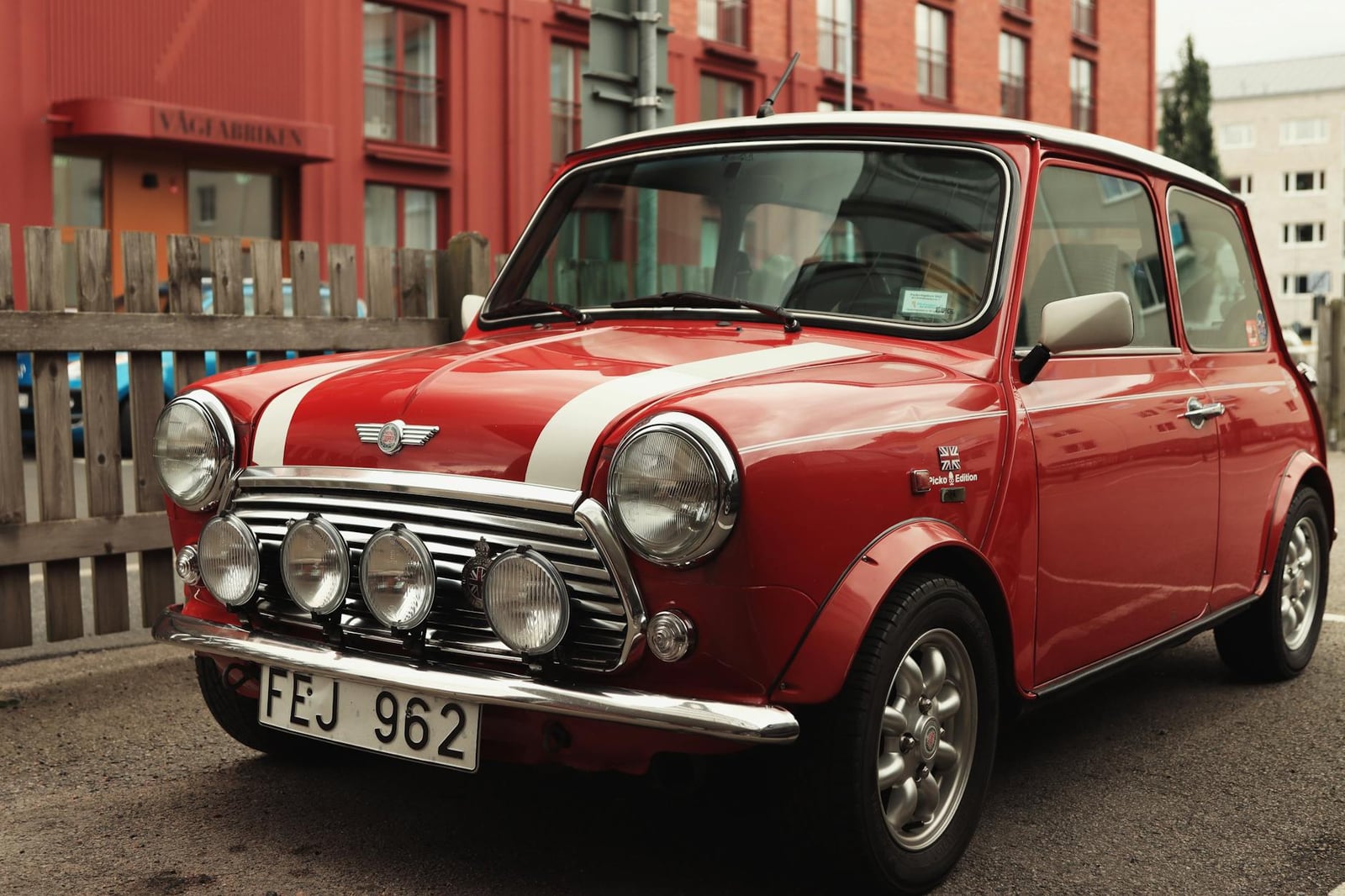
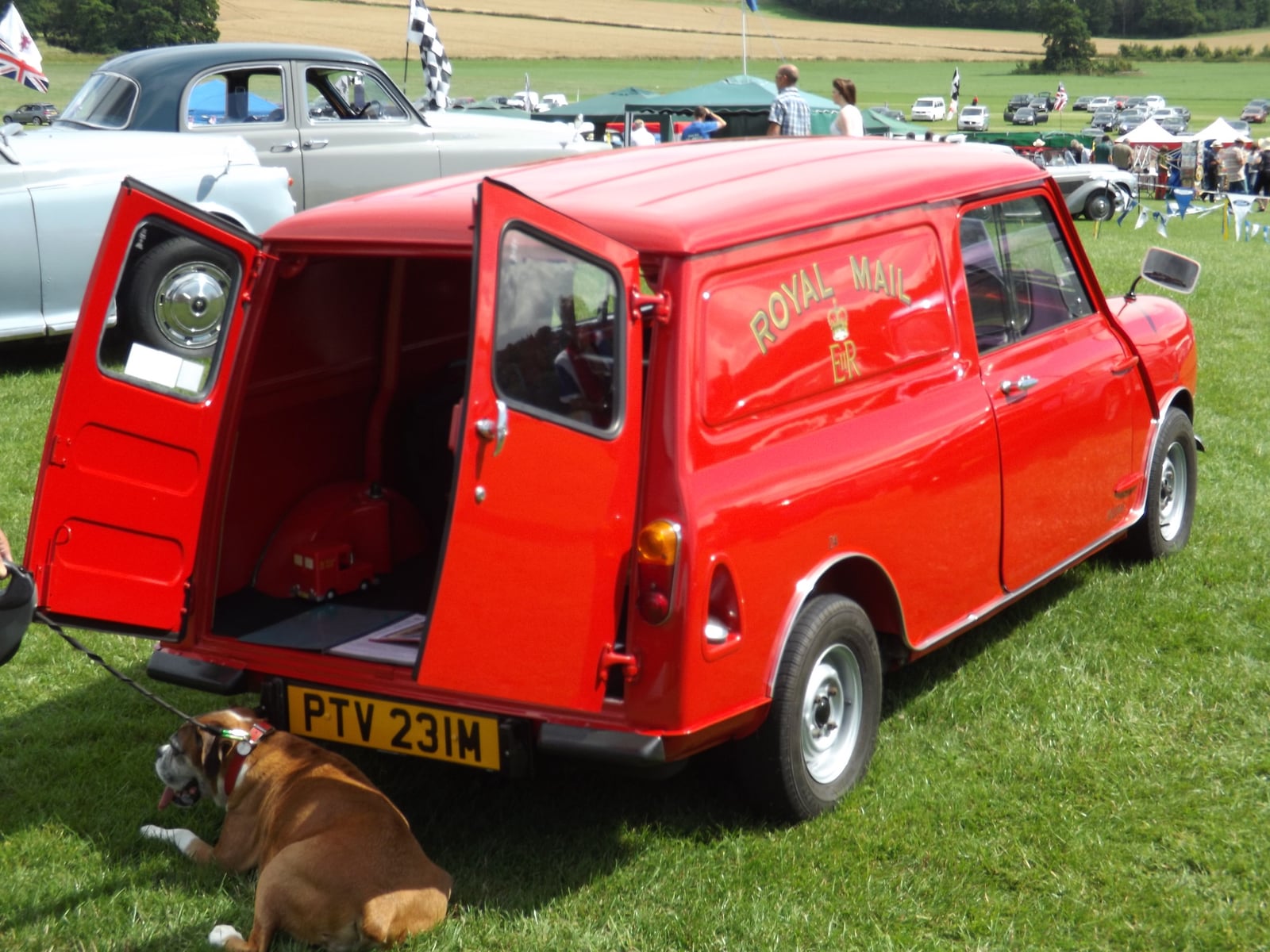
A Mini Cooper in the classic red with a white roof, the performance car that made the Mini a giant-killer.A Mini Clubman, the squared-off face of the 1970s, sold alongside the original round-nosed car.Photo by Andrew Bone / CC BY 2.0A 1275GT, the sporty Clubman that took over from the Cooper S as the affordable performance Mini.Photo by grobertson4 / CC BY 2.0A Mini Moke, the doorless fun car that found fame on beaches and film sets.Photo by SG2012 / CC BY 2.0A Mini Van in Royal Mail livery. The cheap, economical commercials sold by the hundred thousand.Photo by Andrew Bone / CC BY 2.0A Riley Elf, the luxury Mini with a longer boot, a traditional grille and a walnut-trimmed cabin.Photo by grobertson4 / CC BY 2.0An Austin Mini Countryman, the estate twin of the Morris Traveller, here in plain all-steel form.Photo by Rutger van der Maar / CC BY 2.0A Cooper S in competition, where the Mini earned its giant-killing reputation.Photo by Dave Hamster / CC BY 2.0A 1275GT, the affordable performance Mini that carried the idea through the 1970s.Photo by Andrew Bone / CC BY 2.0
Quick answers
Frequently asked questions
Was the classic Mini available as an automatic?
Yes: a Mini automatic was catalogued from 1965, using the ingenious AP four-speed automatic that lived in the sump sharing the engine's oil, and the option ran for most of the car's life. Automatics suit town use and are prized by some owners, though they sap the little engine's performance and need a specialist's care at rebuild time. Survivors are much scarcer than manuals and trade at similar money, so condition rather than the gearbox should decide the purchase.
How big is a classic Mini?
Ten feet and half an inch long, to be precise: the classic Mini dimensions are 3,054 mm long, 1,397 mm wide and about 1,346 mm tall, on a wheelbase of just over two metres, with a kerb weight around 620 to 700 kg depending on year. That footprint is over a metre shorter than a modern supermini and explains both the party-trick interior space and why a classic Mini fits where nothing modern can.
When was the classic Mini made?
The classic Mini was launched in August 1959 and stayed in production, in essentially the same form, until October 2000, a run of forty-one years and around 5.3 million cars. It was sold first as the Austin Seven and Morris Mini-Minor, then simply as the Mini, and later as a marque in its own right. The modern BMW MINI that followed in 2001 is a completely different and much larger car.
Who designed the Mini?
Ask who designed the classic Mini and the answer is Alec Issigonis, working for the British Motor Corporation. His breakthrough was to turn the engine sideways and put the gearbox in the sump, freeing up almost the whole car for people and luggage. The result fitted four adults into a car just ten feet long, and the transverse front-wheel-drive layout he pioneered is now used by almost every small car in the world.
What is the difference between a Mini and a Mini Cooper?
The standard Mini was the economy car; the Mini Cooper was the performance version, developed with the racing-car maker John Cooper. The Cooper and the more powerful Cooper S added tuned engines, front disc brakes and more, and went on to win the Monte Carlo Rally three times. A Cooper or Cooper S is worth considerably more than an equivalent standard Mini, so verifying a genuine car matters.
Which classic Mini is the most collectible?
The Mini Cooper and Cooper S lead the market, especially genuine 1960s Mk1 cars and the works rally cars. After them come the early Mk1 standard cars, the woody Traveller and Countryman estates, the Mini Moke, and the rare special editions. Ordinary later Minis are far more affordable and remain one of the cheapest ways into a genuinely usable classic, but condition and originality move values more than anything.
Are classic Minis easy to own?
Yes. The Mini is small, simple and one of the best-supported classics there is, with almost every part remanufactured and a huge club and specialist network. It is cheap to run and easy to work on at home. The catch is rust, which attacks the Mini badly, so the bodywork is what makes or breaks a car. A sound, rust-free Mini is a cheap, characterful and genuinely usable classic.
The Mini Cooper turned Alec Issigonis's economy car into a giant-killer, and the Cooper S won the Monte Carlo Rally three times. A guide to the 1960s Cooper and Cooper S, the 1990s revival, how to tell a genuine car from a clone, and what to look for when buying one.