Classic Mini special editions: from the 1100 Special to the last Coopers
Across its long life the classic Mini wore dozens of special and limited editions, from the 1979 1100 Special to the Mary Quant Designer, the anniversary cars and the 1990s Cooper revivals. A guide to the most notable Mini special editions, why there were so many, and whether they are worth more.
Part of: Classic Mini, the British car that reinvented the small car (1959–2000)
The models
For much of its later life the classic Mini was kept alive not by redesign but by reinvention. Unable to justify replacing a car that kept on selling, British Leyland and then Rover instead produced a remarkable stream of special and limited editions, dozens of them, that dressed the familiar Mini in new colours, trims and themes and kept it fresh and fashionable right up to the end. This guide picks out the most notable.
Why the Mini had so many special editions
By the late 1970s the Mini was already twenty years old, and an all-new replacement kept being planned and then cancelled. Rather than let the car go stale, its makers turned to special editions: relatively cheap to create, effective at generating publicity, and perfect for a car that had become as much a fashion item as a means of transport. The approach worked so well that it ran for more than two decades, turning the Mini’s old age into one of its most colourful periods.

The early specials
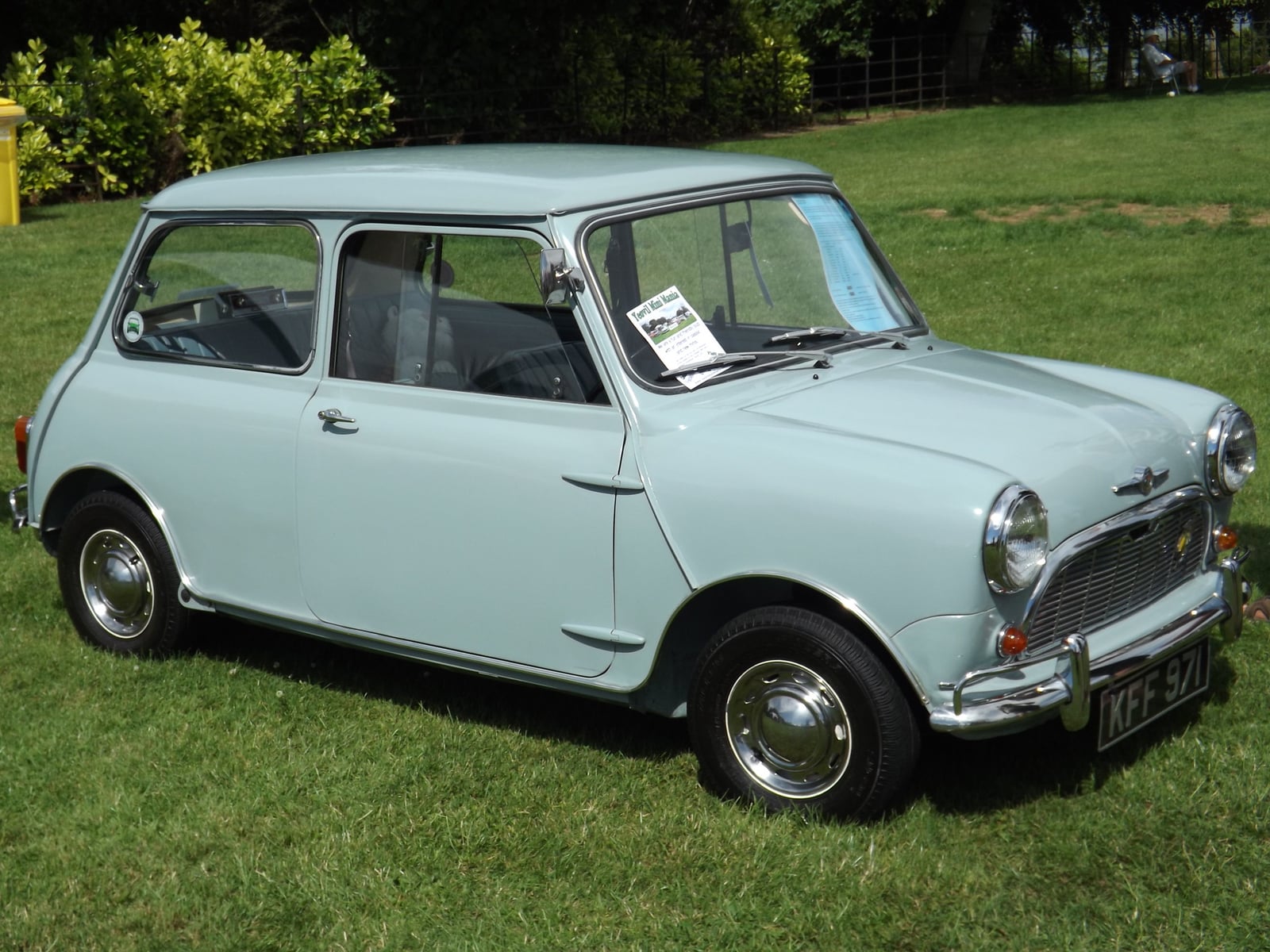
The 1979 Mini 1100 Special is generally regarded as the first proper limited edition, marking the car’s twentieth anniversary with a 1098cc engine, special paint and upgraded trim across a run of around 5,100 cars. It proved the idea, and the early 1980s brought further editions such as the Sprite as the format found its feet. These earlier cars are now scarcer than the later ones and have a particular period appeal.

The 1980s editions
The 1980s were the heyday of the Mini special edition. The Mini 25 of 1984 marked the car’s silver anniversary, and a rapid succession of themed editions followed, many named after fashionable London districts and places, the Ritz, the Chelsea, the Piccadilly, the Park Lane and more, along with bold paint editions like Red Hot and Jet Black. The best-known of all may be the 1988 Designer, styled with the fashion designer Mary Quant, with its striking black-and-white interior. Together they kept the Mini in the public eye through a decade when, by rights, it should have faded away.

The 1990s and the Cooper revival
The most significant editions came at the end. In 1990 the Cooper name returned on the limited Cooper RSP, built by Rover Special Products, reviving the famous performance badge and leading to the full production Cooper of the 1990s. Alongside it came a steady run of themed cars, including the 1992 Italian Job edition tied to the famous 1969 film, the 35 and 40 anniversary cars, and fashion tie-ins such as the 1998 Paul Smith Mini. The very last Minis of 2000, including the final Cooper Sport, closed the forty-one-year story with one more set of specials.

Are special editions worth more?
It depends entirely on the edition. The genuinely important cars, the Cooper revivals and the rarest, lowest-volume limited runs, do command a premium and are actively collected. Many of the others, though, were paint-and-trim packages on an otherwise standard car, so their value rests on rarity, condition and originality rather than the badge alone. As always with the Mini, a sound, original, complete car is what holds its worth.

Buying a special edition
Treat a special edition exactly as you would any Mini: the bodywork and rust come first, the special trim and correct details second. Confirm the car is a genuine example of the edition it claims to be, with the right paint, trim, badging and, ideally, documentation, since some have been recreated from standard cars over the years. Our Mini buying guide covers the structural and mechanical checks that matter on every Mini, special edition or not.

More photos
What the Mini special edition sells for at auction
In 2025 the median Mini special edition sold for £8,850 across 31 sales, 20% down on 2024. In real terms, typical Mini special edition prices were down about 17% over the five years to 2025, once inflation is accounted for.
| Variant | Sold | Typical range | Median |
|---|---|---|---|
| Mini Sprite | 42 | £3,724 - £6,806 | £4,882 |
| Mini Thirty | 27 | £4,082 - £9,752 | £5,832 |
| Mini British Open | 22 | £6,337 - £11,072 | £8,970 |
| Mini Paul Smith | 21 | £8,480 - £15,000 | £10,584 |
| Mini 30 | 19 | £4,275 - £6,917 | £5,250 |
| Mini 40th | 15 | £12,118 - £22,596 | £15,676 |
| Mini Italian Job | 12 | £5,934 - £8,536 | £7,414 |
| Mini Advantage | 5 | £4,600 - £5,320 | £5,152 |
Show the year-by-year mediansHide the year-by-year medians
| Year | Sold | Median | In 2025 money |
|---|---|---|---|
| 2026 (so far) | 21 | £11,200 | |
| 2025 | 31 | £8,850 | £8,850 |
| 2024 | 21 | £11,016 | £11,439 |
| 2023 | 20 | £5,875 | £6,304 |
| 2022 | 18 | £6,100 | £6,986 |
| 2021 | 12 | £6,410 | £7,926 |
| 2020 | 7 | £8,438 | £10,693 |
| 2019 | 8 | £8,376 | £10,723 |
| 2018 | 4 | £11,672 | £15,196 |
| 2017 | 8 | £6,425 | £8,558 |
| 2016 | 8 | £4,088 | £5,586 |
| 2015 | 5 | £6,600 | £9,108 |
| 2013 | 3 | £3,938 | £5,534 |
- £6,000Mini Italian Job
- £6,325Mini Sprite
- £5,600Mini Sprite
- £15,919Mini Paul Smith
- £19,114Mini 30
Reasonable evidence. 174 recorded sales: enough for the range to mean something, though a few unusual cars can still move a single year's median. Based on 174 sold results from public classic car auctions (2004 to 10 August 2026). Sold prices, not asking prices, and not a valuation: condition, history and specification vary from car to car. Inflation-adjusted figures use the ONS CPIH index, in 2025 money.