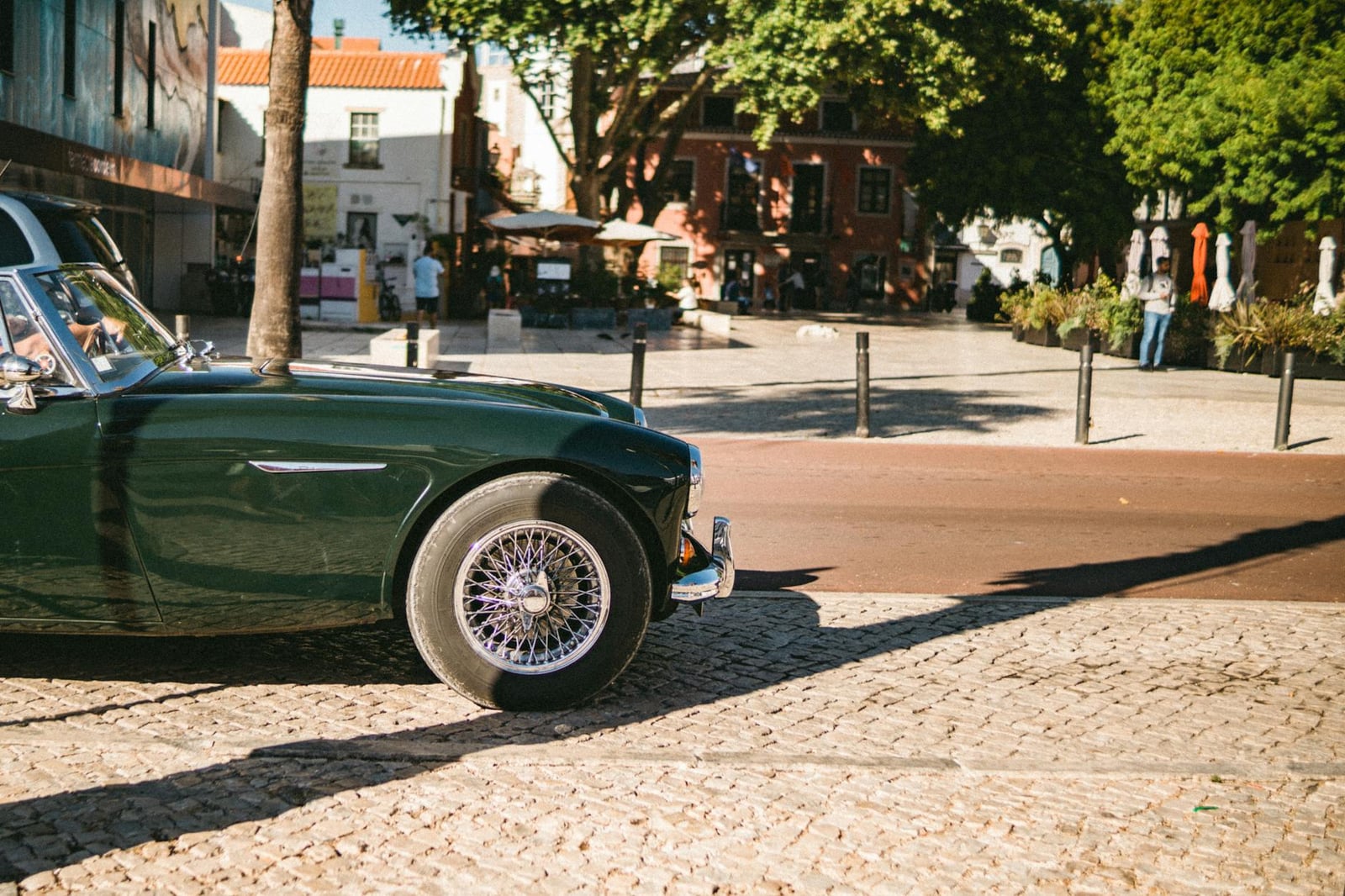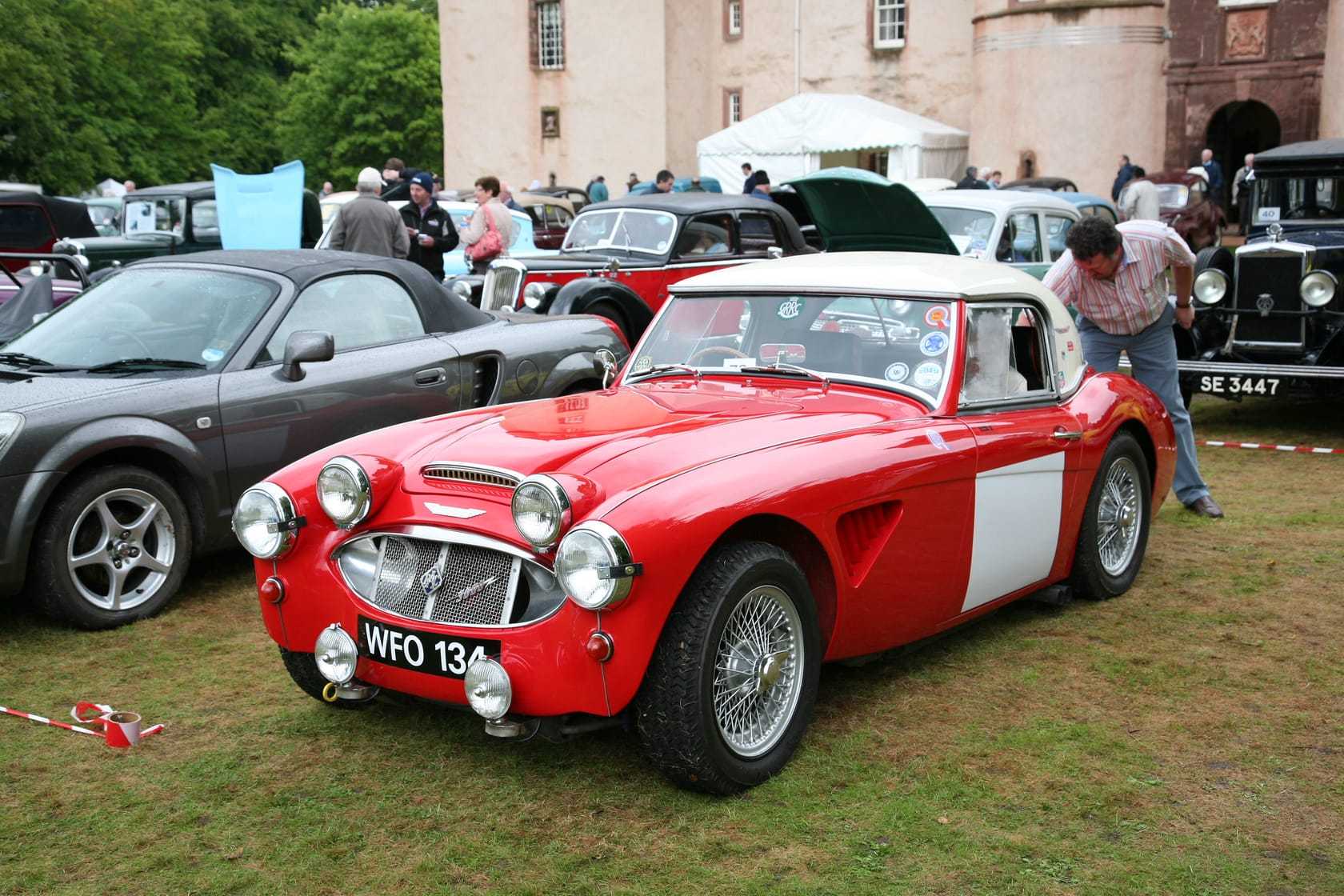
Austin-Healey built some of the most charismatic British sports cars of the 1950s and 60s, from the muscular, rally-winning “Big Healey” to the cheeky little Frogeye Sprite. It was a partnership: Donald Healey’s design and name, Austin’s engines and mass production. For fifteen years it produced cars that sold by the boatload to America and are among the most sought-after classics today.
This is a guide to the Austin-Healeys worth knowing: where the marque came from, the cars that defined it, what became of it, and why a good Healey is such a prized thing to own.
From Warwick to Abingdon
Donald Healey was a Cornish engineer, rally driver (he won the 1931 Monte Carlo Rally) and former Triumph technical director who set up the Donald Healey Motor Company in Warwick after the war. For the 1952 London Motor Show at Earls Court he built a sleek sports prototype, the Healey Hundred, using the engine and gearbox of the Austin A90 Atlantic, and it was the hit of the show. Leonard Lord, head of the British Motor Corporation, struck a deal to put it into mass production as the Austin-Healey 100, with Healey’s company retained as designers. The much-repeated story that the deal was done overnight and the car rebadged on the stand is enthusiast legend in its precise details, but the agreement was certainly struck at speed around the show, and the Healey Hundred left it as the Austin-Healey 100.
Production began at Austin’s Longbridge plant in 1953 and moved to the MG factory at Abingdon in late 1957, where Austin-Healeys were built alongside MGs for the rest of the marque’s life.

Austin-Healey at auction
What a classic Austin-Healey sells for at auction
- Median sale, 2025
- £26,798 Down from £32,732 in 2021
- Sales in 2025
- 221 The most we have recorded in a year
- Sold when offered
- 71.6% Of the cars put up for auction since 1994
- The record
- £786k 100 Special Test, Bonhams, July 2013
The cars worth knowing
Austin-Healey came in two distinct families.
The “Big Healey” was the muscular roadster. It began with the 100 (1953–59), the four-cylinder original named for its 100 mph top speed, grew into the six-cylinder 100-6, and culminated in the 3000 (1959–67), the definitive Big Healey and a front-rank rally car.
Below it sat the little Sprite, launched in 1958 as the bug-eyed “Frogeye”, the cheapest way into the marque and one of the most charming small sports cars ever made. From 1961 the Sprite became the badge-engineered twin of the MG Midget, the pair affectionately known as the “Spridget”. For the practical side, see Austin-Healey parts, specialists and restoration.

Built for America, proven in rallying
Austin-Healey was built, above all, for export: in 1963 more than nine in ten 3000s went abroad, overwhelmingly to the United States, where the marque became a byword for the affordable British sports car. It earned its stripes in competition too. Works Sprites took a class one-two-three at the Sebring 12 Hours in 1959, which gave the racing cars their “Sebring Sprite” name, and the Big Healey was a serious international rally car, most famously when Pat Moss and Ann Wisdom won the 1960 Liege-Rome-Liege marathon outright, the first all-woman crew to win a major international rally.

What happened to Austin-Healey
The Big Healey was dropped at the end of 1967, the widely cited reason being new United States safety and emissions rules that the ageing separate-chassis design could not meet without uneconomic re-engineering. The Sprite carried on, but in 1971 the last cars were badged simply “Austin Sprite”, British Leyland having dropped the Healey name to stop paying the royalty, and the twenty-year Healey agreement lapsed in 1972. The MG Midget continued alone. One thing worth stating plainly: Austin-Healey is not the Jensen-Healey, a separate, later, Lotus-engined car from a different company.

Why they are collected now
Austin-Healeys are prized because they combine real charisma with the practicality of BMC engineering. The mechanicals are shared across the BMC family (the Sprite’s A-series with the MG Midget, the Big Healey’s C-series six with larger BMC cars), parts supply is excellent, and the clubs are strong, so a good one is very usable. They span the heart of the classic era, the 1950s and 1960s, and qualify as historic vehicles like any forty-year-old classic. Alongside MG and Triumph, Austin-Healey is one of the three pillars of the affordable British sports car, and arguably the most charismatic of the lot.
More photos