Austin-Healey Sprite: the Frogeye and the Spridget (1958–1971)
The Austin-Healey Sprite, and above all its bug-eyed first version the Frogeye, is one of the most loveable and affordable classic sports cars there is. A guide to the Frogeye Mk I, the later Spridget cars shared with the MG Midget, the Sebring racers, and what to check before buying one.
Built 1958–1971
At a glance
- Years
- 1958–1971
- Body styles
- Two-seat open roadster (monocoque)
- Drivetrain
- Front engine, rear-wheel drive
- Engines
- 948, 1098 and 1275cc BMC A-series
- Power
- Around 43 bhp (Frogeye) to 65 bhp (1275cc Mk IV)
- Top speed
- Around 80 to 95 mph
- Production
- About 129,000 across four marks
- Assembly
- Abingdon, Oxfordshire
- Designer
- Gerry Coker (Frogeye body)
- Values
- Frogeye project around £4,000-£8,000, good £12,000-£16,000, excellent £18,000-£22,000 and up; later Spridget Sprites markedly cheaper, often under £10,000
- Construction
- Unitary (monocoque) body, one of the first volume sports cars to use it
- The icon
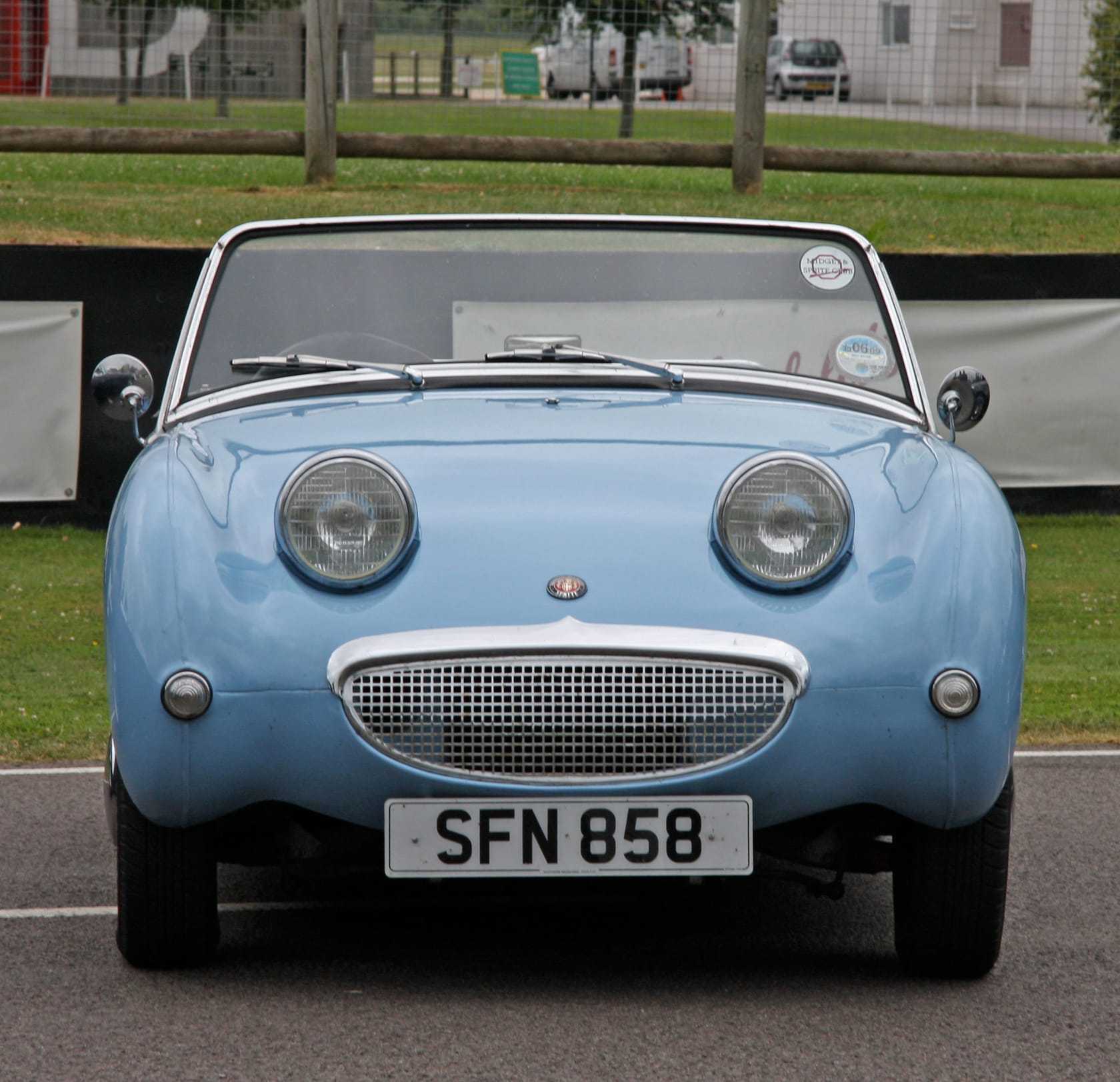
- The Frogeye Mk I (1958–61): the bug-eye original and most valuable Sprite
The models
The Austin-Healey Sprite is one of the most loveable small sports cars Britain ever built, and its first version, the bug-eyed “Frogeye”, is among the most charming shapes of the 1950s. Cheap when new and still among the most affordable ways into classic ownership, the Sprite is simple, light and enormous fun.
It is the small Healey of the Austin-Healey range, the junior partner to the muscular 3000, and from 1961 the twin of the MG Midget, the pair known together as the “Spridget”.
The Frogeye
The original Sprite, the Mk I of 1958, is the one everyone pictures: the “Frogeye” (the frog eye Sprite, the frog-eyed Sprite or the “Bugeye” in America, spellings the clubs have long stopped policing), named for the headlamps that sit proud on top of the bonnet. Those lamps were not meant to look that way. The designer, Gerry Coker, drew the car with retractable headlamps that would lie flush, but BMC deleted the mechanism to save money and fixed them in the raised position, and the famous face was born by accident.
It was a clever little car. One of the first volume sports cars with monocoque construction, it had a one-piece front (bonnet and wings together) that hinged up for superb engine access, no external boot lid (luggage went in from behind the seats), and a 948cc BMC A-series engine of around 43 bhp on quarter-elliptic rear springs. Modest on paper, it was light, eager and endearing, and it is the most sought-after and valuable Sprite today.

From Frogeye to Spridget
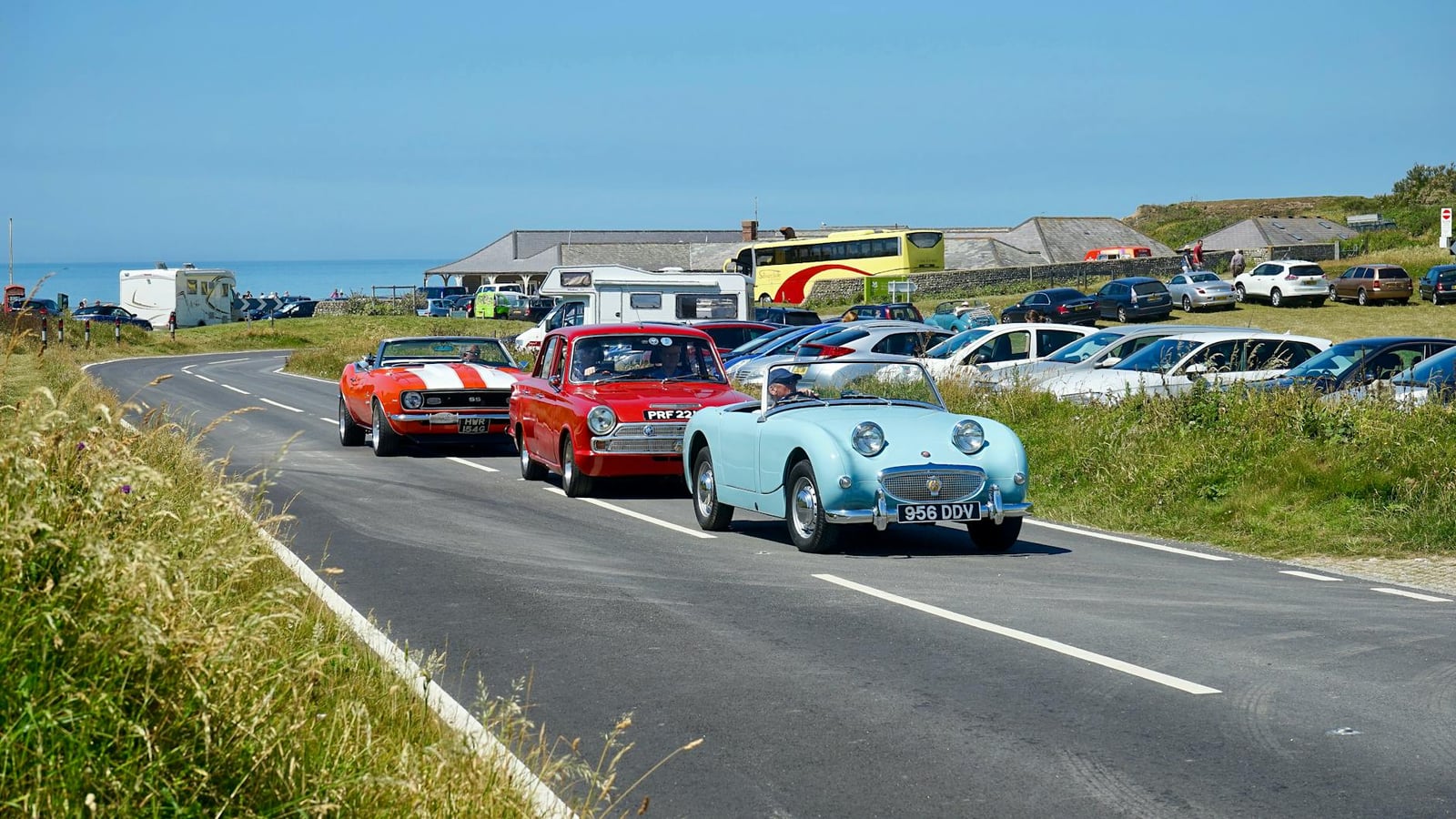
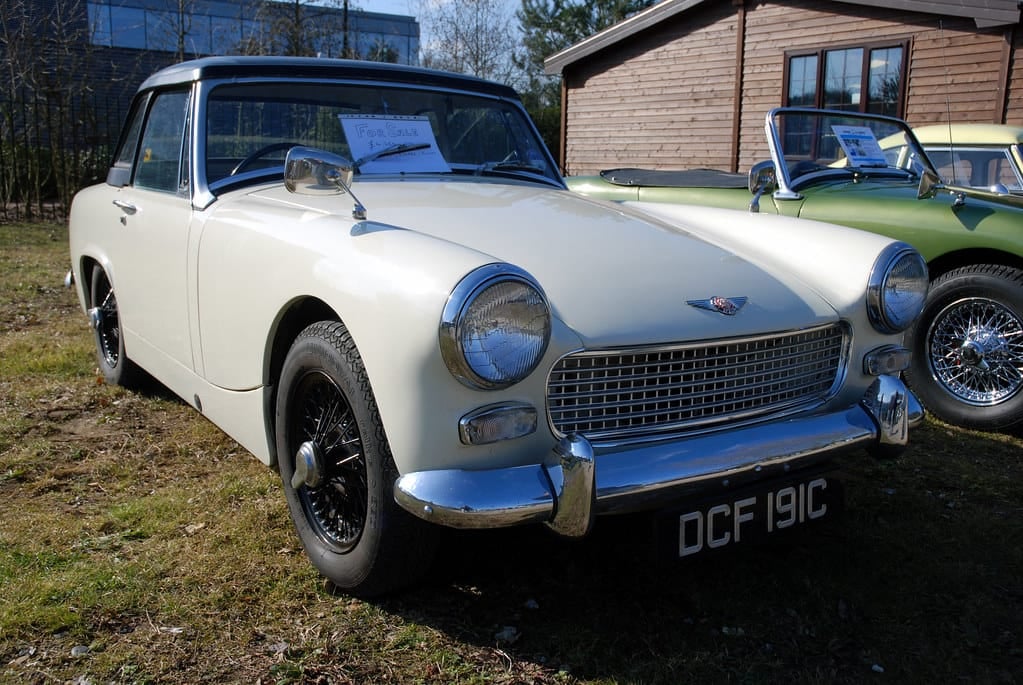
In 1961 the Sprite was restyled as the Mk II, and at the same moment it gained a twin: the MG Midget, the same car with a different badge. The two are so alike that enthusiasts call the whole family the “Spridget”. The new car had a conventional front with the headlamps in the wings, a full-width grille and, at last, an opening boot lid. The A-series engine grew from 948 to 1098cc (gaining front disc brakes), the Mk III of 1964 added wind-up windows and a semi-elliptic rear end, and the engine reached 1275cc in the Mk IV of 1966, which made around 65 bhp. When the agreement with the Healey company lapsed, the last cars of 1971 were badged simply “Austin Sprite”, and the Midget carried on alone.

The Sebring Sprite
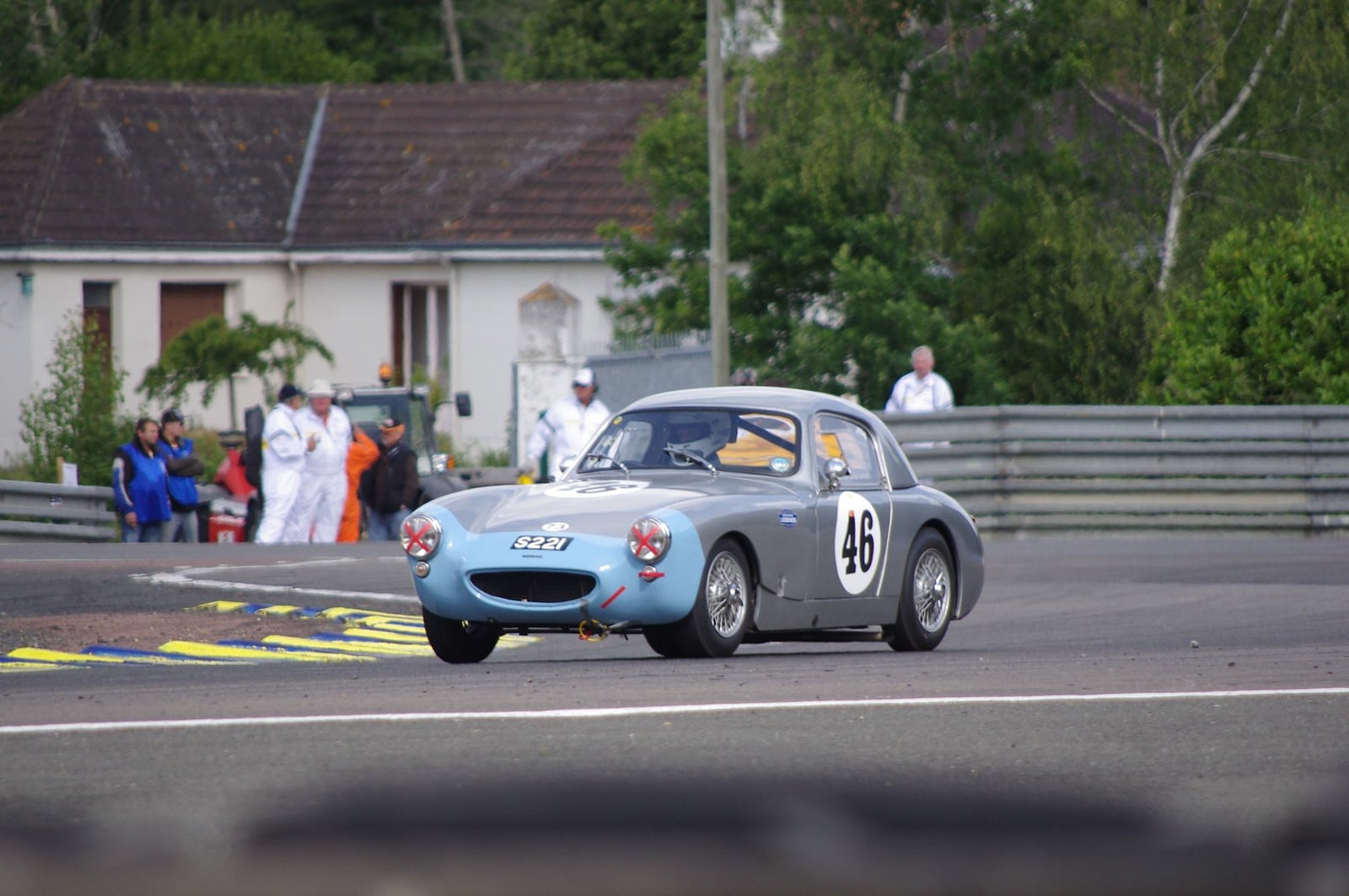
The Sprite earned a competition reputation out of all proportion to its size. Works cars took a class one-two-three at the Sebring 12 Hours in Florida in 1959, which gave the racing Sprites their name, and lightweight, aerodynamically-bodied “Sebring Sprites”, many developed by John Sprinzel, raced internationally, one finishing twelfth overall at Le Mans in 1965.

What it is like to own
The Sprite is simplicity itself, and that is the joy of it. It is slow by modern standards but light, nimble and communicative, and the tough A-series mechanicals are about as easy and cheap to maintain as a classic gets. The Frogeye in particular is a car you drive with a grin. The trade-offs are the snug cockpit, modest weather protection and, on the Frogeye, the awkward luggage access, none of which matters much to the people who love them.

Buying guide: what to look for
Rust is the main enemy on these monocoque cars, and it lives in the structure. The sills are two-part and structural: a tidy outer sill can hide a rotten inner one, so feel for soft metal. Check the floors and footwells (leaky hoods rot them), the A-posts (sagging doors and uneven gaps are the warning sign), and on the Frogeye the expensive one-piece front clip and its headlamp surrounds. Inspect the boot floor and the box section above the rear of the sill, a common rot trap. Mechanically the A-series engine and gearbox are tough and superbly supported; check for worn synchromesh, kingpin and trunnion wear, and oil leaks.

Where the Frogeye sits in the market
The Frogeye Mk I is the prize and is priced accordingly, a collector’s car where the later Spridget Sprites (Mk II to IV) are one of the genuine bargains of the classic world, for its looks, its purity and its place in history. The full record, 636 recorded sales by mark, what the Frogeye’s premium over the later cars and over the MG Midget actually is, what a Sebring Sprite makes, and what the market has done since 2022, is on the page covering Austin-Healey Sprite values.
For the period, see British classic cars of the 1950s and 1960s; past forty the Sprite is a historic vehicle like any other.

Owners’ clubs and parts
The Sprite is exceptionally well supported, helped enormously by sharing its mechanicals and much of its body with the MG Midget, so parts are cheap and plentiful. For the practical detail of running and restoring one, see our guide to Austin-Healey parts and restoration.

The Sprite in dates
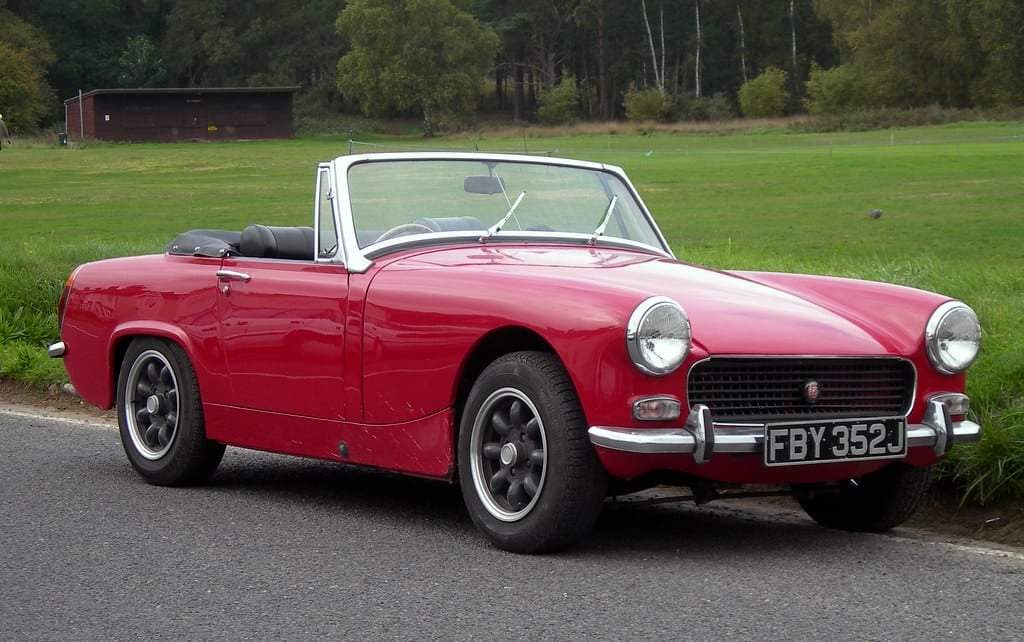
- 1958The Mk I Frogeye arrives: monocoque construction, a one-piece hinged front, no boot lid, and headlamps fixed upright after BMC deleted the retracting mechanism to save money.
- 1959Works cars take a class one-two-three at the Sebring 12 Hours, naming the racing Sprites.
- 1961The Mk II restyle brings a conventional front, a full-width grille and an opening boot; the MG Midget twin appears and the Spridget family begins.
- 1962The 1,098cc engine brings front disc brakes.
- 1964The Mk III adds wind-up windows and a semi-elliptic rear end.
- 1966The Mk IV brings the 1,275cc engine and around 65 bhp.
- 1971The Healey agreement lapses, the last cars are badged Austin Sprite, and the Midget carries on alone; about 129,000 Sprites were built.
Sprite: what to check before you buy
Structure
- The two-part structural sills: feel for soft metal behind a tidy outer
- Floors and footwells, which leaky hoods rot
- A-posts, with sagging doors and uneven gaps as the warning
- Boot floor and the box section above the rear of the sill, a common rot trap
Frogeye-specific
- The one-piece front clip and its headlamp surrounds, which are the expensive panels
- Chassis numbers settle Frogeye identity, since later cars get back-converted
- Luggage goes in from behind the seats, so check that area for damp and rot
- Quarter-elliptic rear springs are correct on a Frogeye, semi-elliptics on later cars
Mechanical
- The A-series engine and gearbox are tough and superbly supported
- Check for worn synchromesh
- Kingpins want greasing and wear when neglected
- Parts are shared with the Midget, so nothing mechanical is a deal-breaker
Related
The Sprite is the small Austin-Healey, junior to the 100 and the 3000, and the twin of the MG Midget. For the wider period, see British classic cars of the 1950s and 1960s.
More photos
Frequently asked questions
Why is it called a Frogeye Sprite?
What is a Spridget?
Is the Austin-Healey Sprite a good first classic?
Related across themes


More from Austin-Healey


Recently added

Bentley S-series: the quiet twin with the beautiful secrets (1955–1965)

Rolls-Royce Silver Spirit and Silver Spur: the last Crewe bargain (1980–1999)

Rolls-Royce Corniche: the coachbuilt survivor that outlived its makers (1971–1995)
