Mini Marcos: the half-tonne fibreglass car that finished Le Mans (1965–1996)
The Mini Marcos is a tiny glass-fibre monocoque coupe built on Mini subframes, sold mostly as a kit, and famous as the only British car to finish the 1966 Le Mans 24 Hours. A guide to its tangled origins, the Le Mans car that was stolen and found again, the model lineage, what to look for, and what they are worth.
Built 1965–1996 6 recorded sales

At a glance
- Years
- 1965–1970, 1974–1981, 1991–1996
- Body styles
- Two-door glass-fibre monocoque coupe
- Drivetrain
- Front engine, front-wheel drive
- Engines
- BMC A-series 850 to 1275cc (transverse, Mini-derived)
- Power
- Around 34 to 76 bhp depending on engine
- Top speed
- Up to roughly 130 mph (tuned 1275cc)
- Production
- Around 1,340 built across all makers
- Assembly
- Bradford-on-Avon; Oldham (D&H Fibreglass); Westbury
- Designer
- Brian Moulton (body), from Dizzy Addicott's DART concept
- Values
- Project £4,000-£6,000; good £8,000-£12,000; excellent £15,000-£30,000+ with race history
- Construction
- One-piece glass-fibre monocoque on Mini subframes
- Le Mans
- Only British car to finish the 1966 Le Mans 24 Hours
The makers
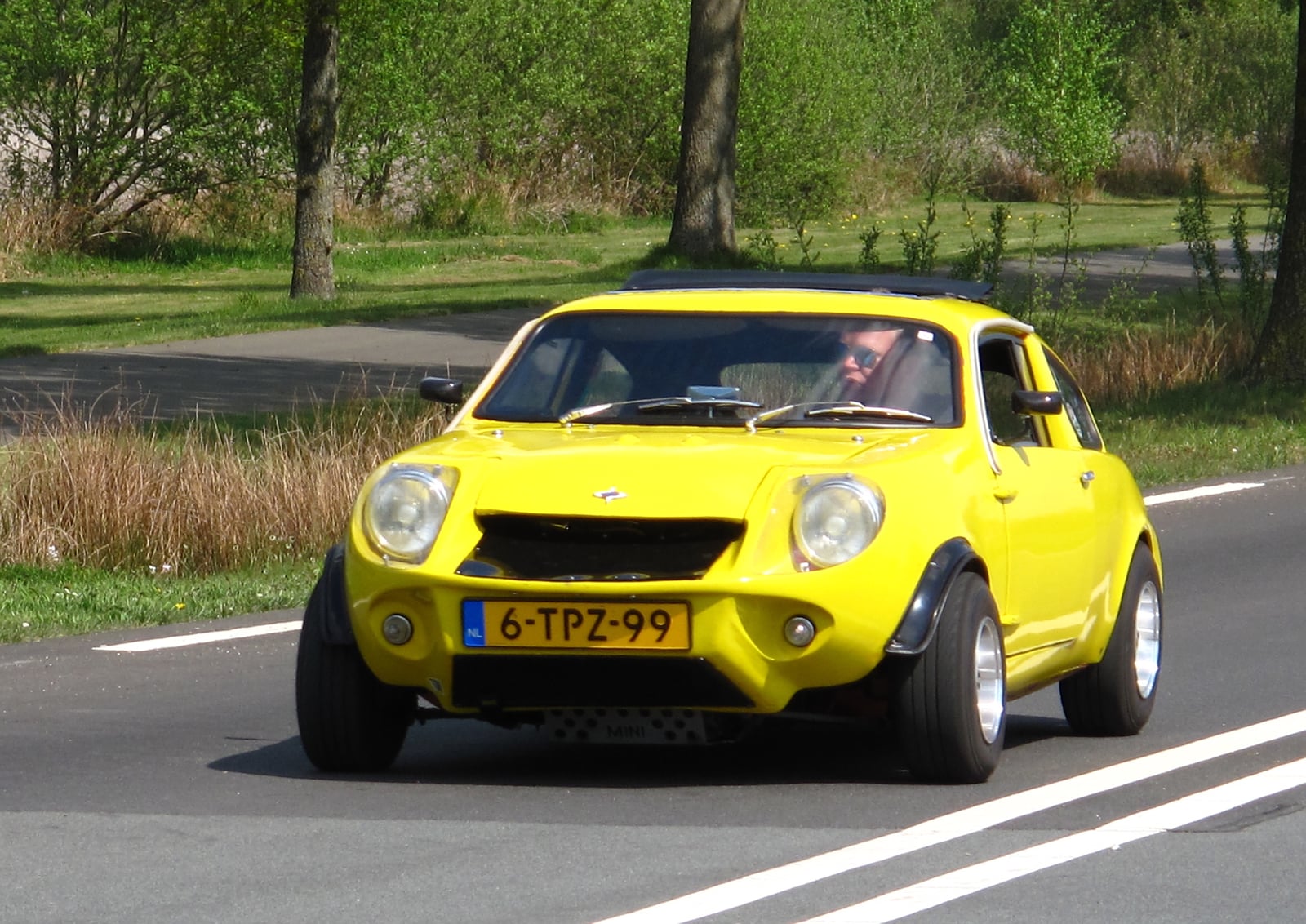
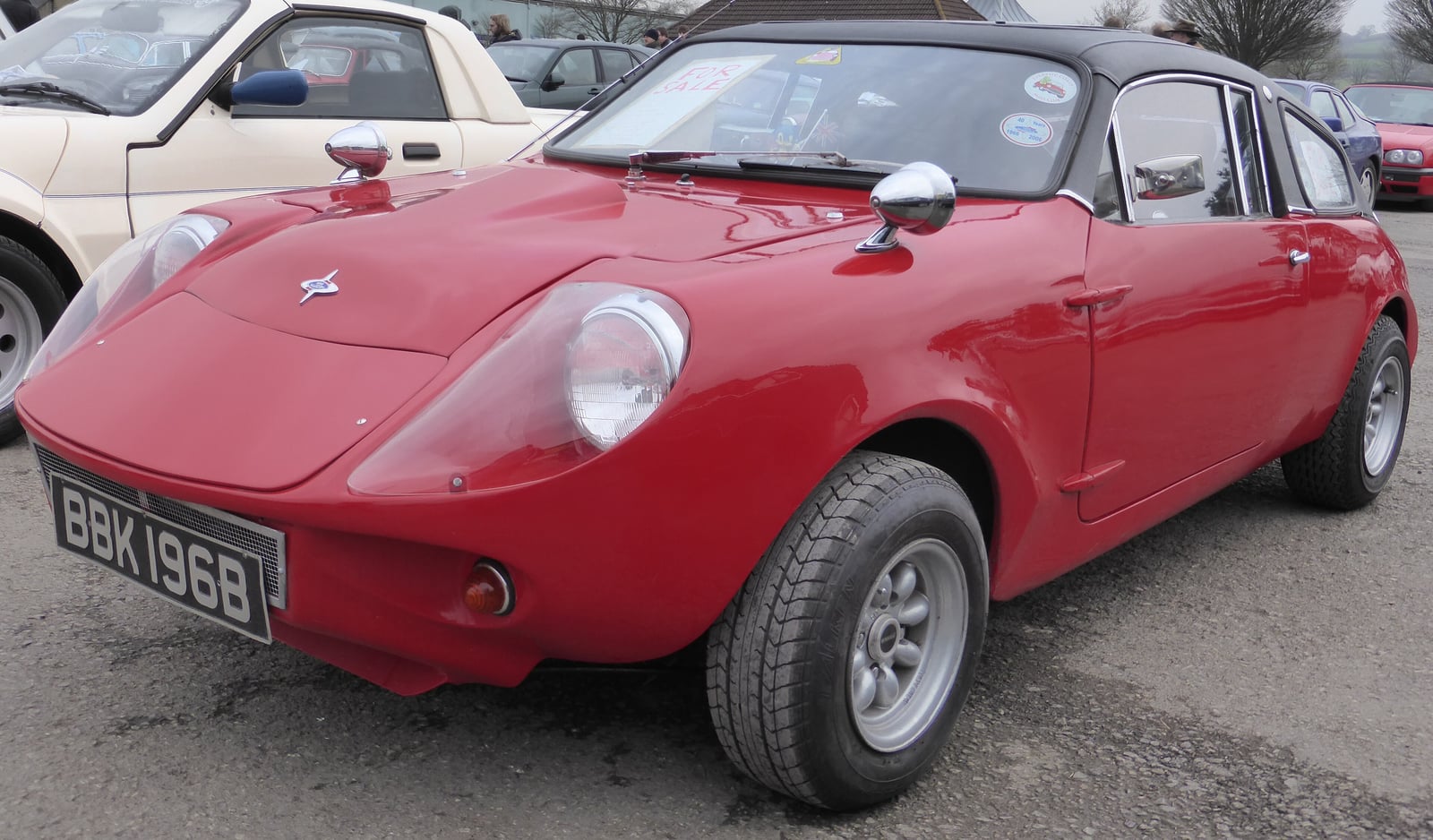
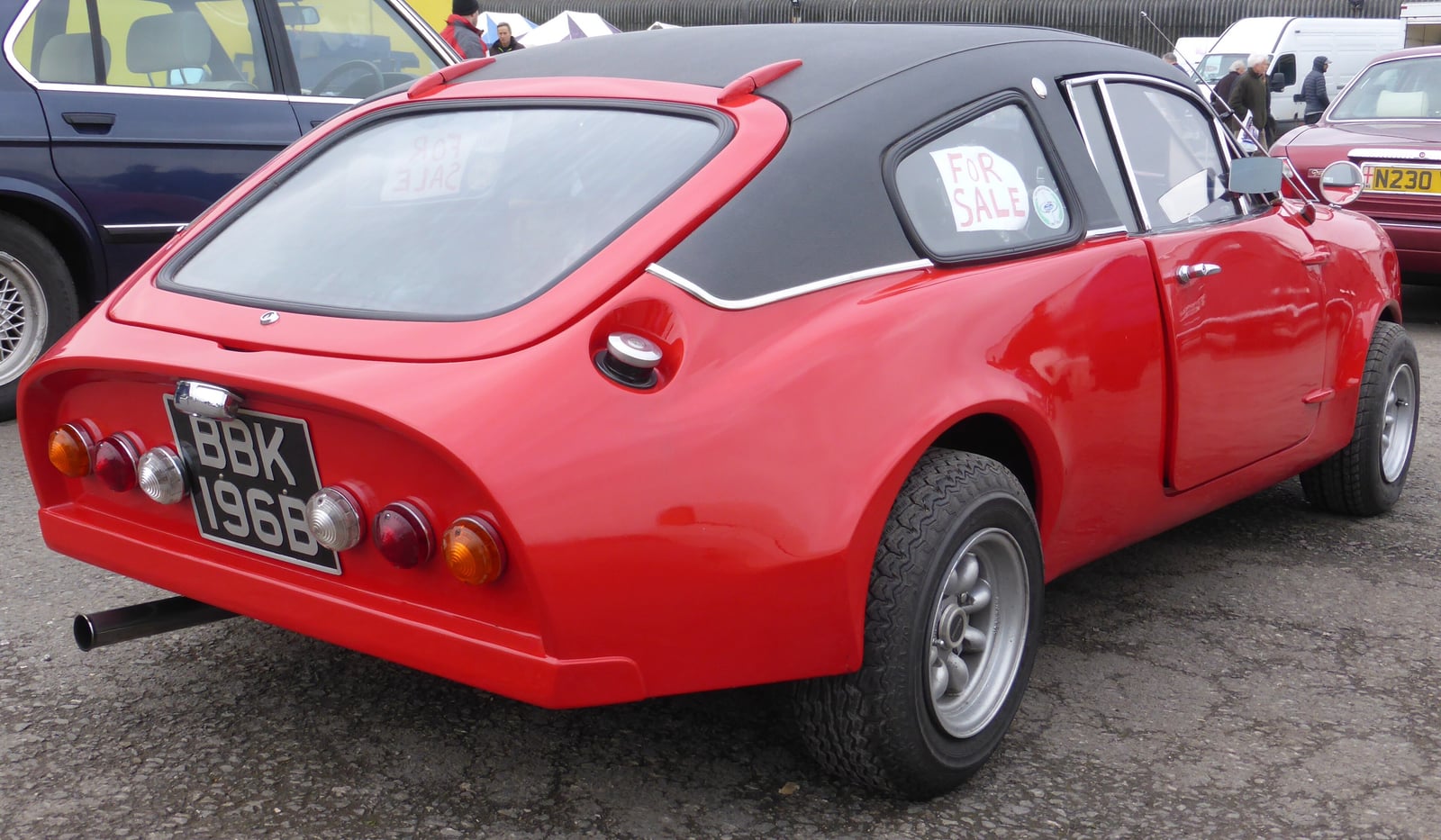
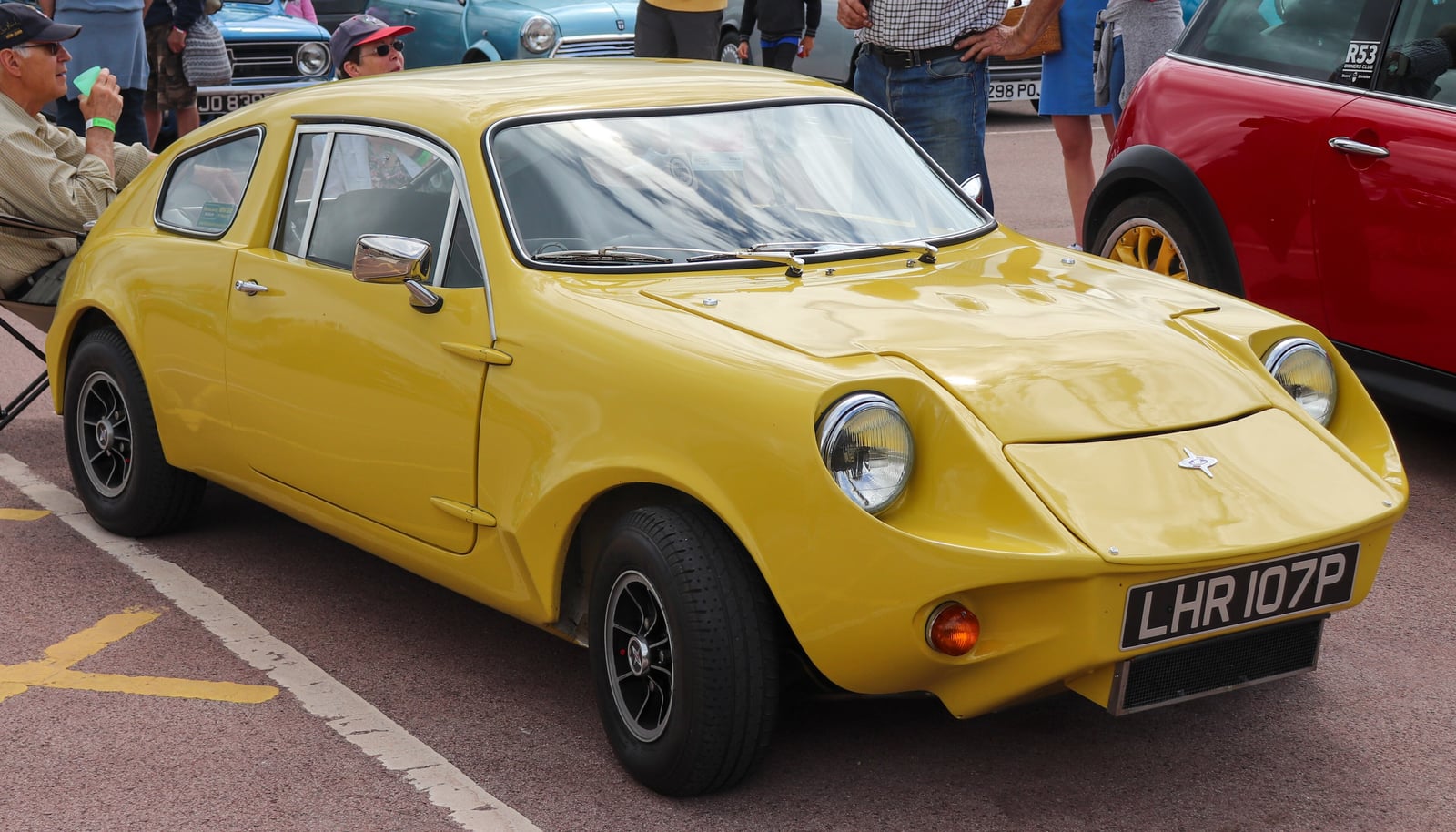
The Mini Marcos is the giant-killer of British kit cars: a tiny, half-tonne glass-fibre coupe built on humble Mini mechanicals, sold for pocket money as a kit, and famous for one extraordinary fact. In 1966 a Mini Marcos was the only British car to finish the Le Mans 24 Hours, outlasting a field of Astons, Jaguars and exotic prototypes to come home 15th overall. Few cars in this guide have a better story, and almost none did so much with so little.
It belongs to Britain’s kit and component-car tradition, and specifically to the cottage industry of fibreglass cars built around the Mini in the 1960s. What sets it apart is that this one went to Le Mans and came back a legend.
Tangled origins: DART, Mini Jem and Mini Marcos
The car’s beginnings are famously confused. It started with Desmond “Dizzy” Addicott, a former test and airshow pilot and club racer, who in 1964 built a low, aerodynamic Mini-based special he called the DART, using the running gear from a wrecked Mini. Jem Marsh of Marcos agreed to produce bodyshells for it, but the two men fell out over quality after a handful were made, and the project split in two. Addicott’s side became the Mini Jem, named after the nickname of its new developer Jeremy Delmar-Morgan, not after Jem Marsh, a confusion that has dogged the cars ever since. Marsh’s side became the Mini Marcos, with the body reworked into its definitive form by Brian Moulton. So the car and the Mini Jem are cousins, both descended from Addicott’s DART, and it was Moulton, not Marcos co-founder Frank Costin, who gave the car its shape.
What the car was
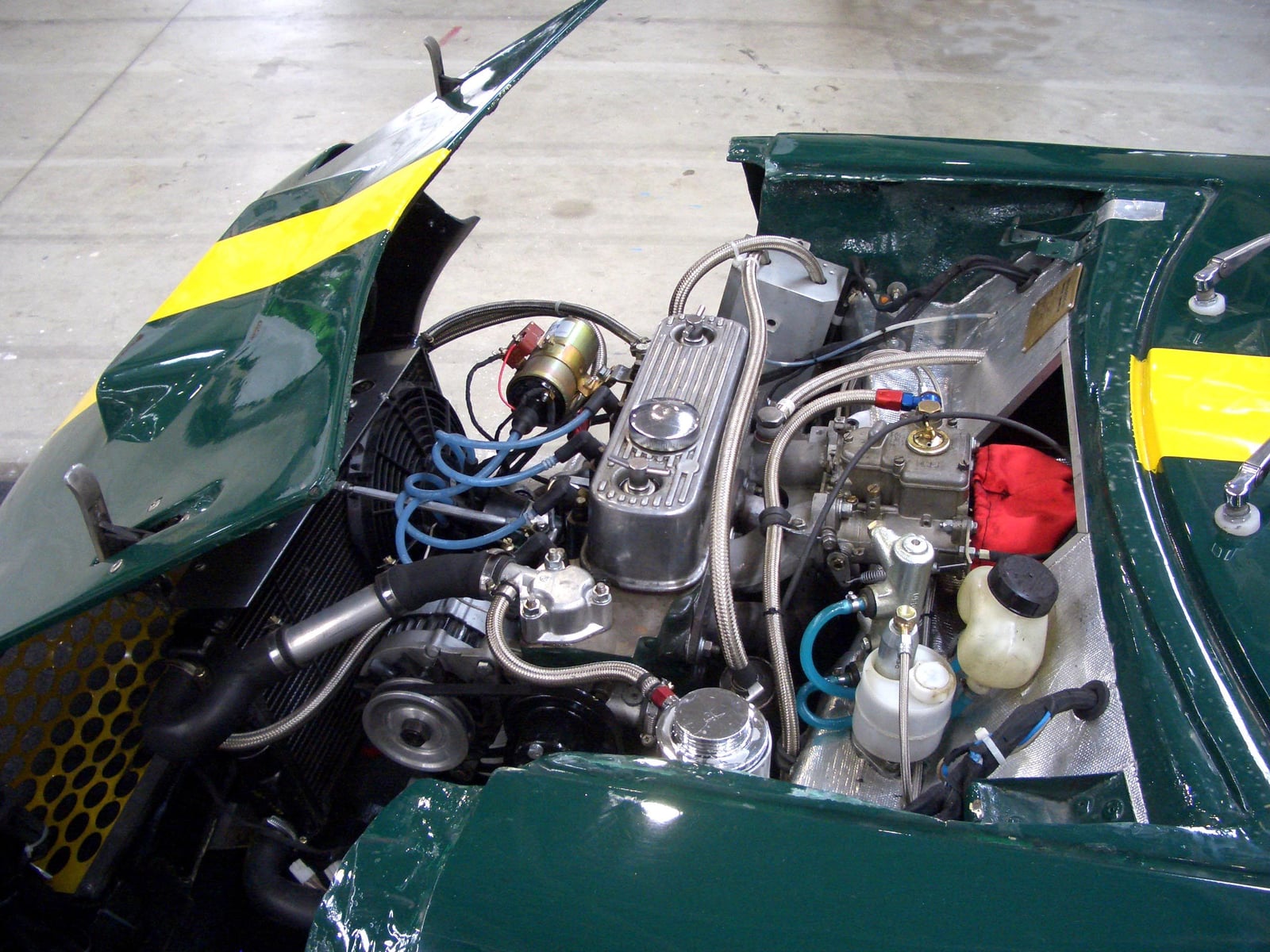
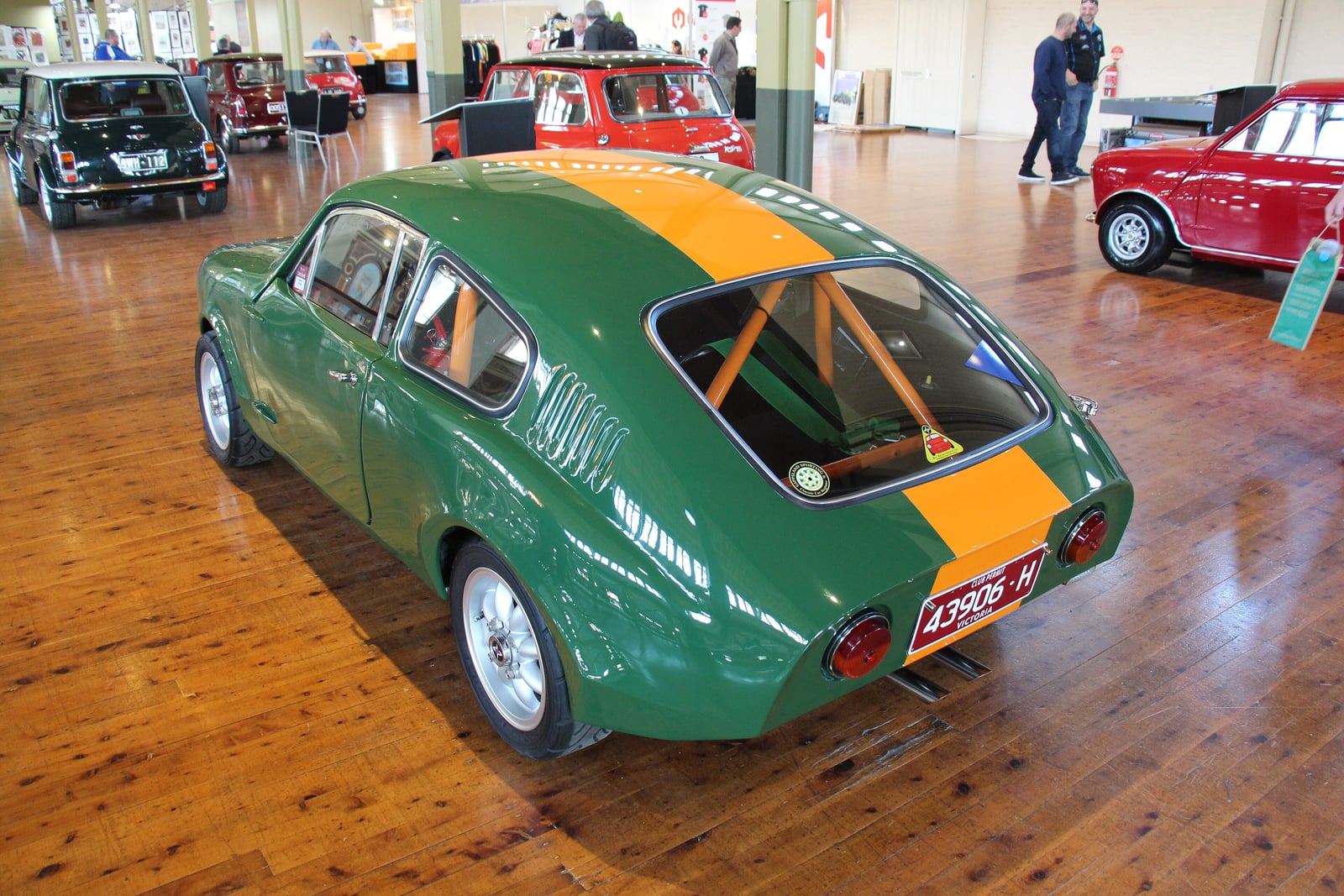
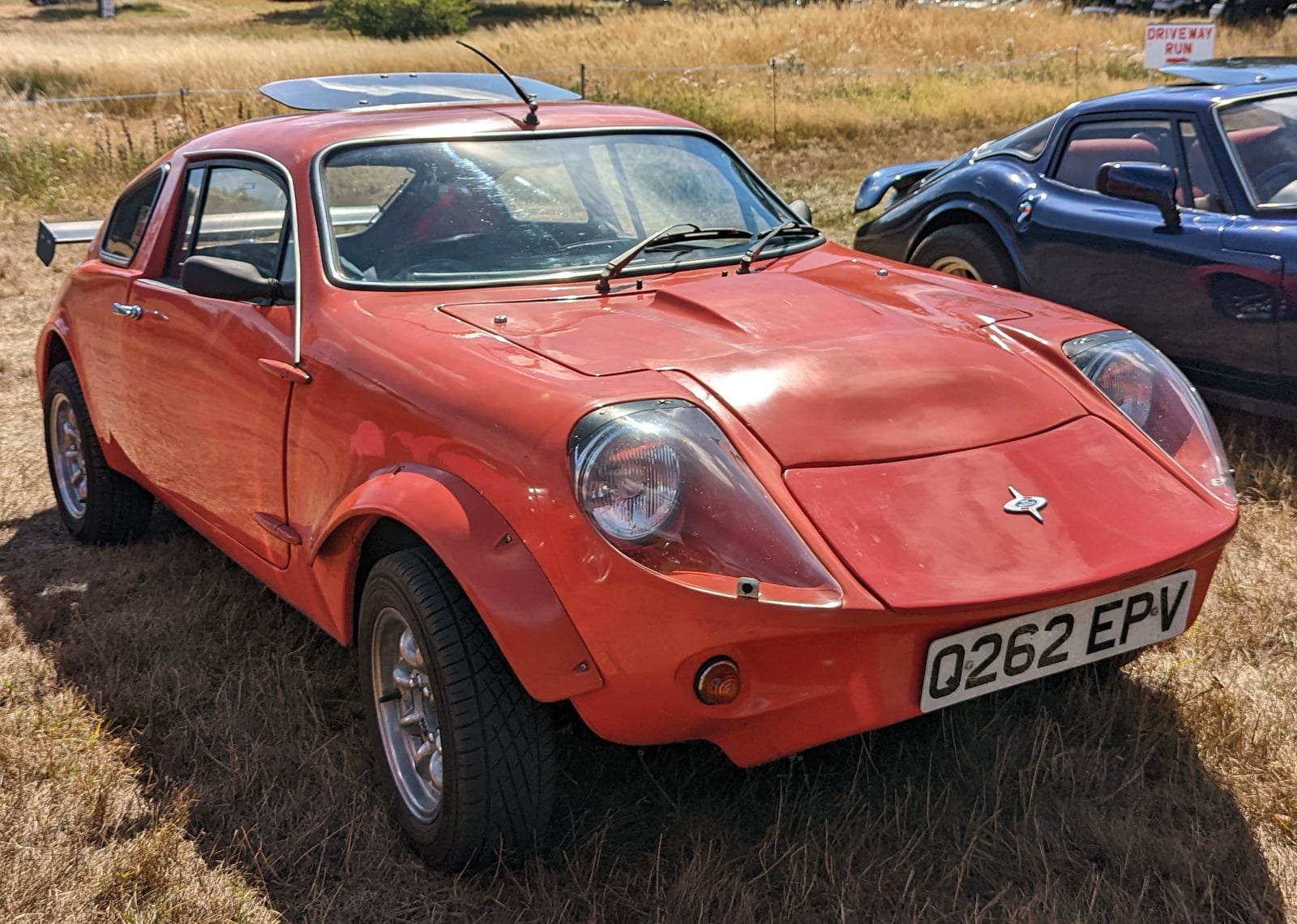
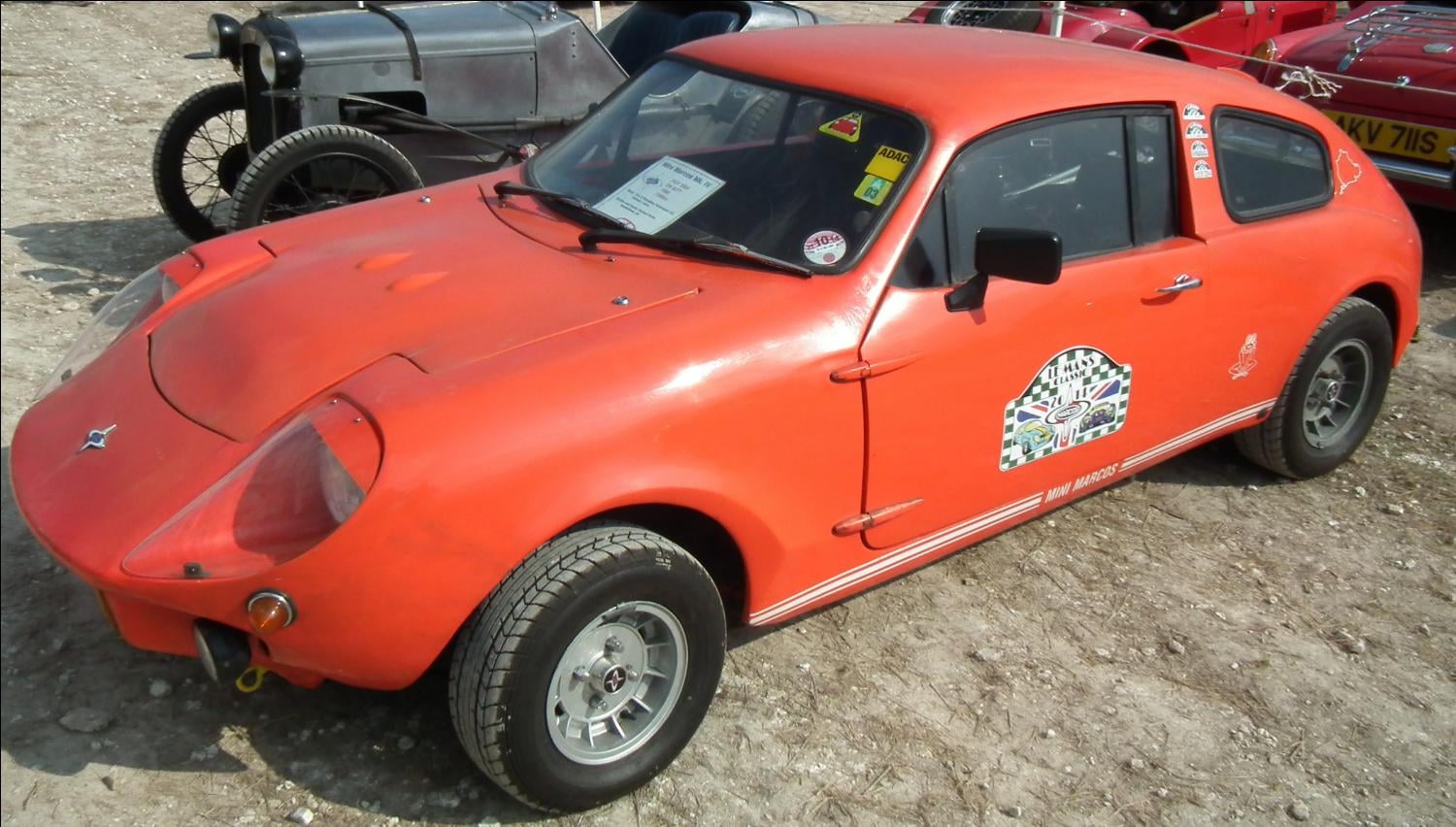
The car is structurally clever in the same way the Clan Crusader is: its body is a one-piece glass-fibre monocoque, with no separate steel chassis, into which the Mini’s front and rear subframes bolt directly. That carries the standard transverse A-series engine and gearbox, the Mini’s suspension and its brakes, so mechanically it is pure Mini. What makes it special is the weight, or rather the lack of it: the car weighs only around 480 kg, roughly half a tonne, so even an 850cc engine makes it feel alive, and a tuned 1275cc will see around 130 mph. Engines ranged across the A-series family from the 850 to the 1275, and the slippery shape made the most of every one.

The 1966 Le Mans car
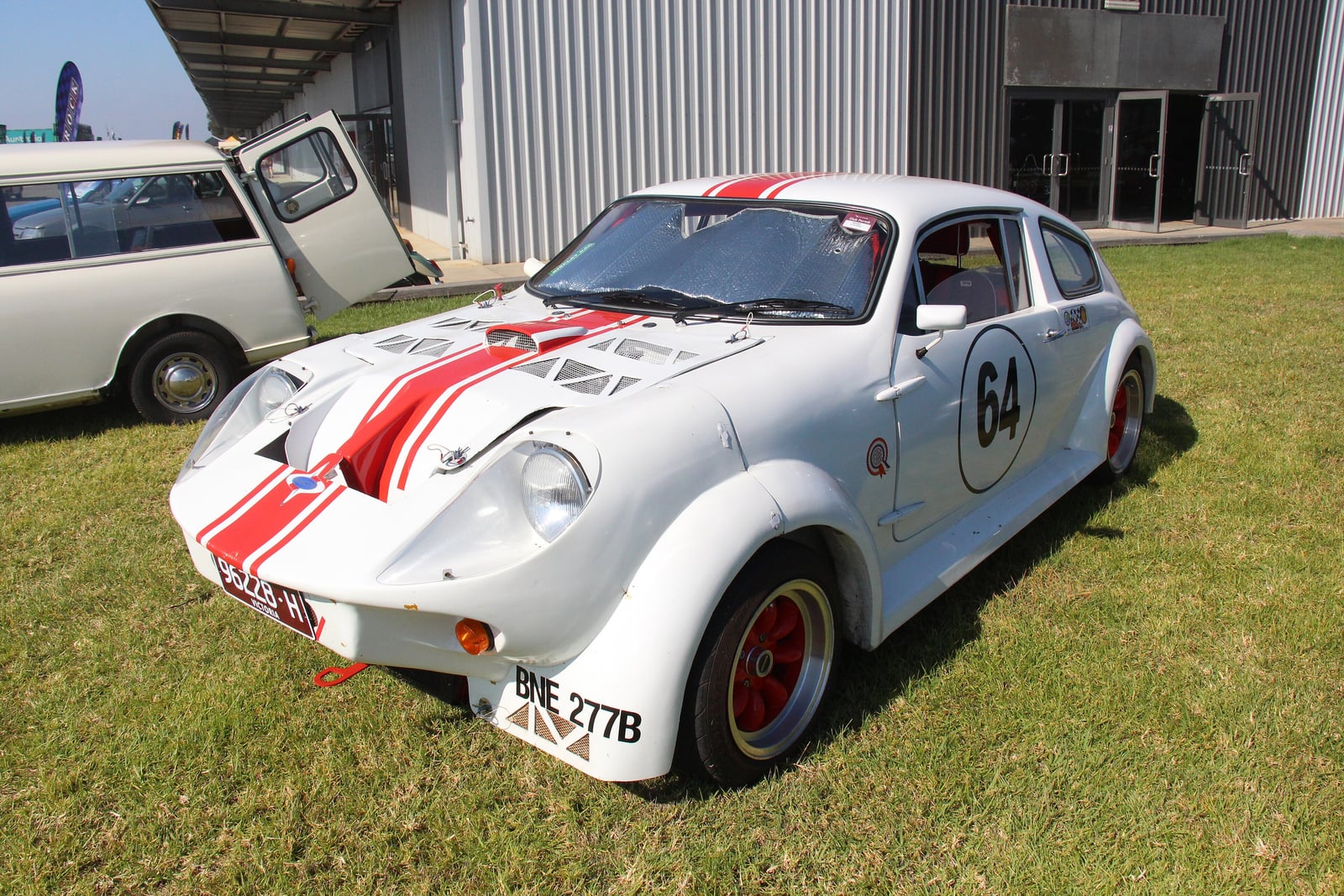
The headline fact is true and worth telling properly. At the 1966 Le Mans 24 Hours, a Mini Marcos wearing race number 50 finished 15th overall, one of only 15 cars classified at the finish from an entry of 55, and was the only British car to finish. It was driven by Jean-Louis Marnat and a young Claude Ballot-Léna, who would go on to become one of the great Le Mans drivers. Jem Marsh engineered the entry rather than drove it, giving a French team the car’s European rights in return for getting it to the grid. The little blue car, nicknamed La Puce Bleue, the Blue Flea, ran at around 130 mph down the Mulsanne Straight on Mini power and covered some 2,150 miles in the day, outlasting far more glamorous machinery. The one honest caveat is that the year’s dominant Ford GT40s were assembled in Britain, so the precise claim is that the Mini Marcos was the only British marque to finish.
That car then had an extraordinary afterlife. Raced on and sold, the original Le Mans Mini Marcos was stolen in Paris in 1975 and vanished for some forty years, presumed lost, before being rediscovered and authenticated in 2016. It is one of the great barn-find stories, and all the more remarkable for happening to a car the world had written off as a worthless kit.

The model lineage
The car was built by several firms over thirty years. Marcos built the Mk I to Mk III at Bradford-on-Avon from 1965 to 1970, including a homologation batch of 50 cars; these early cars also spawned licensed production in Ireland and South Africa. D&H Fibreglass Techniques of Oldham, run by Harold Dermott, built the Mk IV through the mid and late 1970s into 1981, when Dermott’s own Richard-Oakes-designed successor, the Midas, took over. Marcos itself built a final run, the Mk V, from 1991 to 1996, mainly for the Japanese market, and the original moulds now sit with Marcos Heritage Spares, which still offers a modern Mk VI. Across all of them, around 1,340 cars were built, the overwhelming majority sold as kits.

Buying guide: what to look for
The single most important check is hidden inside the body. Two glass-fibre-encased reinforcement rails run along each side behind the sills, and they can degrade unseen, so the car needs to go on a lift and those rails need to be felt and inspected. If they have gone, it is a body-off repair and a serious expense. Beware, too, of any heat or welded repairs made near the fibreglass without removing the body, because fibreglass burns and melts quickly and a botched repair is a real red flag.
Beyond the structure, the checks are the familiar ones for a kit car built on Mini parts. The bolted-in Mini subframes rot exactly as they do on a Mini, so check the mounting points and the subframe steel. Inspect the glass-fibre for crazing, stress cracks, delamination and badly repaired star-cracks, and remember that build quality varies enormously because almost every car was home-assembled, so each one is effectively a one-off and must be judged on its own merits. The low body means water ingress is common, so check the floors and footwells for damp and the electrics for water damage. The A-series mechanicals, by contrast, are the easy part: they wear in the usual Mini ways and are cheap and simple to put right. Finally, be sceptical of “Le Mans” or competition claims and check the body number against the car’s supposed era and history.

What they are worth
Mini Marcos values are thinly traded and condition-led. As a working guide, a project sits roughly between £4,000 and £6,000, a good usable car between about £8,000 and £12,000, and an excellent or genuinely race-historic example between roughly £15,000 and £30,000 or more. Recent UK auction results cluster around £7,600 for an average car, with sound restored examples reaching £10,000 or so. The big swing is competition provenance: a car with documented historic racing history and the right paperwork sells well above an ordinary road kit, and genuine Le Mans-era heritage is a different bracket again.
Owners’ club and parts
The Mini Marcos Owners Club is the marque club and the practical first stop, holding the cars’ history and registers and the route to the scarce fibreglass panels and parts. Marcos Heritage Spares holds the original moulds and supplies bodies and panels, and the modern Mk VI. Mechanically, because everything underneath is Mini, the A-series running gear is cheap and universally available through the wider Mini parts world, which is a large part of what makes the car a usable classic rather than a museum piece.
Mini Marcos: what changed and when
- 1964Test pilot Dizzy Addicott builds the DART special from a wrecked Mini; the project splits into the Mini Jem and, via Jem Marsh and Brian Moulton's rework, the Mini Marcos.
- 1965Marcos production begins at Bradford-on-Avon, including a 50-car homologation batch.
- 1966Race number 50, La Puce Bleue, finishes 15th overall at Le Mans, the only British marque to finish, covering some 2,150 miles.
- 1974D&H Fibreglass of Oldham builds the Mk IV until 1981, when the Midas succeeds it.
- 1975The Le Mans car is stolen in Paris and vanishes for forty years, before rediscovery and authentication in 2016.
- 1991Marcos builds the final Mk V run to 1996, mainly for Japan; around 1,340 cars across all makers.
What to check on a Mini Marcos
The hidden rails, most important of all
- Two glass-fibre-encased reinforcement rails run behind the sills and degrade unseen
- The car needs a lift, and the rails need to be felt and inspected
- Failed rails mean a body-off repair and serious expense
- Beware heat or welded repairs made near the fibreglass without removing the body
The familiar kit-and-Mini checks
- The bolted-in Mini subframes rot exactly as they do on a Mini
- Crazing, stress cracks, delamination and badly repaired star-cracks in the glass-fibre
- Build quality varies enormously; each car is effectively an individual
- Mini mechanicals are cheap, which is what keeps the car usable
Provenance
- Be sceptical of Le Mans and competition claims
- Check the body number against the car's supposed era and history
- Documented historic racing history sells well above an ordinary road kit
- The Mini Marcos Owners Club holds the registers that settle it
What the Mini Marcos sells for at auction
The Mini Marcos comes to auction only occasionally: 6 recorded sales since 2012, typically making between £6,632 and £9,983 . With so few sales, treat any single result as a data point rather than a market price.
- £7,630Mini Marcos
- £8,212Mini Marcos
- £4,734Mini Marcos
- £31,685Mini Marcos
- £6,300Mini Marcos
Thin evidence. Only 6 recorded sales: read the figures as a sketch of the market, not a price. Based on 6 sold results from public classic car auctions (2012 to 10 August 2026). Sold prices, not asking prices, and not a valuation: condition, history and specification vary from car to car.
Related
The Mini Marcos is one of Britain’s kit and component cars, and one of the many fibreglass specials built around the Mini in the 1960s. For the wider period it belongs to, see British classic cars of the 1960s.
More photos