Clan Crusader: the Lotus engineers' fibreglass underdog (1971–1973)
The Clan Crusader was a tiny rear-engined glass-fibre coupe designed by ex-Lotus engineers, built around Hillman Imp mechanicals in County Durham, and so strongly made it passed a 30 mph crash test almost no kit-car maker even attempted. It was selling well when the 1973 tax change killed it. A guide to the history, the cars, what to look for, and what they are worth.
Built 1971–1987 2 recorded sales

At a glance
- Years
- 1971–1973 (revived 1982–1987)
- Body styles
- Two-door glass-fibre monocoque coupe
- Drivetrain
- Rear engine, rear-wheel drive
- Engines
- 875cc Hillman Imp Sport alloy four (998cc on the 1980s revival cars)
- Power
- Around 51 bhp (up to 78 bhp on the 998cc revival)
- Top speed
- Around 100 mph
- Production
- Roughly 315 to 350 original cars, plus around 120 in the 1980s revival
- Assembly
- Washington, County Durham (revival: Newtownards, Northern Ireland)
- Designer
- Paul Haussauer and Brian Luff (ex-Lotus); body styling by John Frayling
- Values
- Project £3,000-£6,000; good £7,000-£10,000; excellent £10,000-£15,000+
- Construction
- One-piece glass-fibre monocoque, no separate chassis
- Donor
- Hillman and Sunbeam Imp Sport running gear
The makers
The Clan Crusader is one of the great British might-have-beens: a tiny, light, rear-engined glass-fibre coupe designed by a group of engineers who had just left Lotus, built around the humble mechanicals of the Hillman Imp, and so well made that it passed a 30 mph crash test that almost no kit-car maker of the era would even have attempted. It was selling steadily and barely two years old when the tax system changed in 1973 and killed it. It is one of the cars that explains both how good Britain’s small makers could be and how easily they could be wiped out.
The Crusader is part of Britain’s kit and component-car story, but it sat at the serious end of it. This was not a cheap body to drop over a scrap Ford. It was a properly engineered car, sold in kit form mainly to dodge purchase tax, with a structure cleverer than anything most full manufacturers were building at the price.
The Lotus engineers who built it
The Clan Motor Company grew out of Lotus. The men behind the Crusader, Paul Haussauer and Brian Luff on the engineering, with body styling by John Frayling, had all worked at Lotus, and they brought Lotus thinking with them. Luff had worked on the Lotus 72 Formula 1 car; Frayling is credited in Lotus circles with major work on the Elite. The idea was to apply that lightweight, glass-fibre-monocoque thinking to a small, affordable, rear-engined sports car of their own.
They built it in the north-east. The Washington Development Corporation, keen to bring industry to the County Durham new town, offered grants and premises, and a purpose-built factory of around 24,500 square feet opened on the Crowther Industrial Estate in the spring of 1971. At its peak the company employed around 29 people and built about five cars a week. The Crusader was launched in September 1971 at a hotel on Park Lane in London, a confident debut for a tiny firm from the north-east.

What the car was
The Crusader’s defining feature is its structure. It has no separate chassis at all: the body is a one-piece glass-fibre monocoque, moulded in two main halves and bonded together, with the running gear hung directly off the fibreglass. That made it very light, around 600 kg, and very strong. In May 1972 the company did something almost unheard of for a small maker and crash-tested a Crusader at MIRA: the 30 mph impact produced under an inch of cockpit intrusion, against the roughly five inches then permitted. A fibreglass car with the structural integrity of something far more expensive was a genuine engineering achievement.
The mechanicals came from the Imp. The all-aluminium 875cc engine from the Hillman and Sunbeam Imp Sport sat in the tail driving the rear wheels, producing around 51 bhp, with the Imp’s transaxle, suspension and brakes alongside it. That gave the Crusader a top speed of around 100 mph and a 0 to 60 time in the region of 12.5 to 12.9 seconds, which does not sound like much until you remember how little the car weighed and how sweetly the rear-engined layout let it handle. It was sold both as a kit, to keep it affordable, and fully built, at around £1,360 against roughly £1,125 in kit form in 1972, some 40 per cent dearer than an MG Midget but a far more interesting car.

A genuine competition record
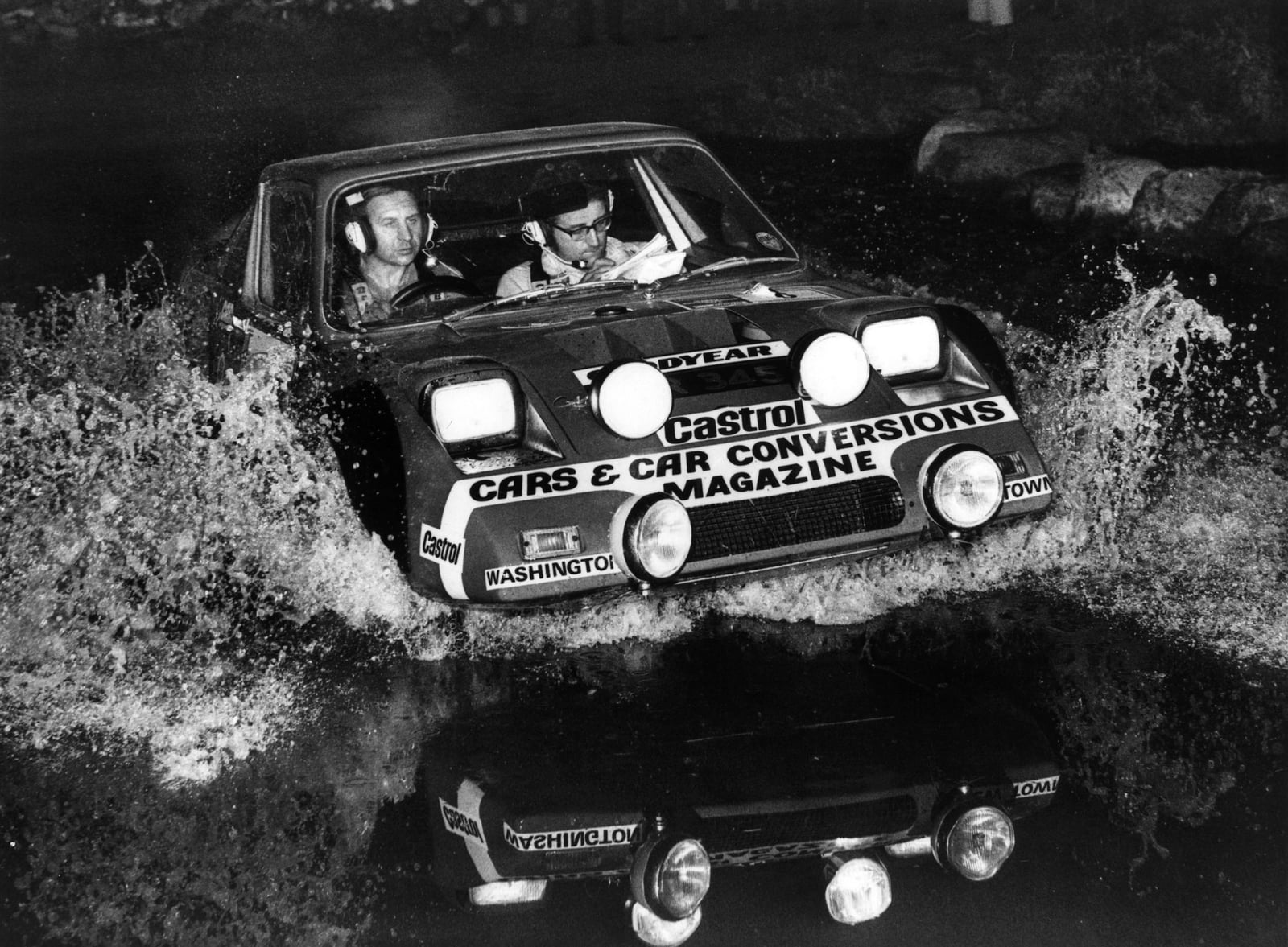
For such a small operation, the Crusader had a real motorsport life. The standout result was Andy Dawson taking second overall on the 1972 Manx International Rally, behind Roger Clark’s full works Ford Escort, a remarkable placing for a sub-one-litre fibreglass car against a factory team. Other drivers added a string of wins on events like the Tour of Mull and the Jim Clark Memorial Rally. The little rear-engined underdog genuinely punched above its weight, which is a large part of why the survivors are sought after today.

How it died, and how it came back
The Crusader was killed by economics, not by any failing of its own. In 1973 VAT replaced purchase tax and was applied to kit cars, which removed the tax advantage that made the kit affordable. That blow arrived alongside the 1973 oil crisis and the miners’ strikes of the period, and a small, undercapitalised company with healthy order books still ran out of cash. Production stopped in November 1973 after roughly 315 cars, or closer to 350 by the owners’ club’s count once cars finished from leftover stock are included.
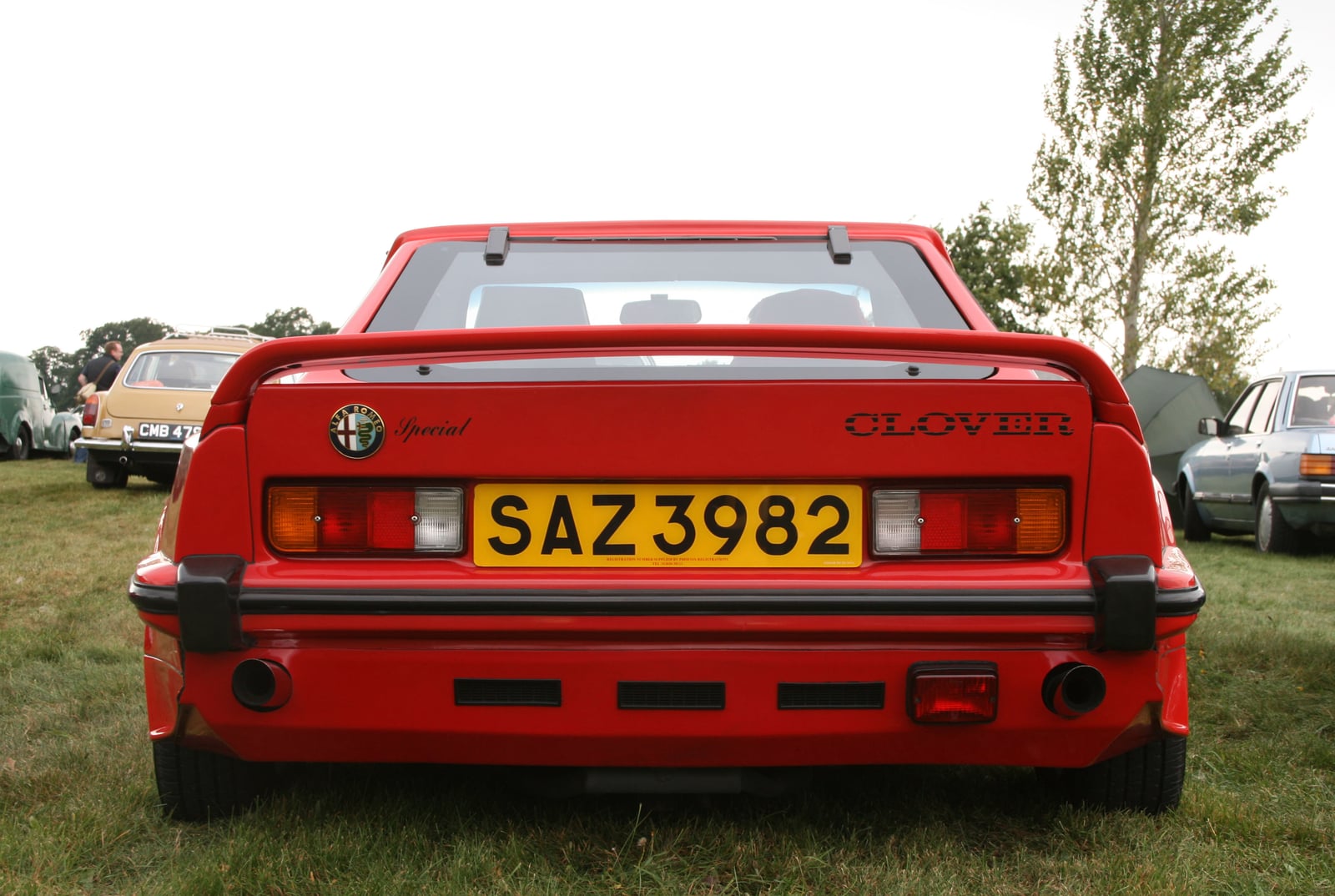
The story did not quite end there. In 1982 a long-time Clan owner, Peter McCandless, bought the moulds and restarted production in Newtownards, Northern Ireland, again with development-area help. The revived Clan was updated with retractable headlamps, moulded bumpers and disc brakes, and moved to a 998cc Imp-based engine tuned by Hartwell to around 65 or 78 bhp. About 120 of these were built before the operation closed in 1987. A more radical mid-engined spin-off, the Clan Clover, used an Alfa Romeo flat-four; only around two dozen were made, and they are now the rarest Clans of all.

Buying guide: what to look for
On a Crusader, the body is the car. Because the glass-fibre monocoque is the structure, its condition is the single most important thing to assess. Look hard for stress cracks, crazing and delamination, especially around the suspension and engine mounting points and along the bonded seam where the two main mouldings join. Fibreglass does not rust, but the Crusader is not entirely free of steel: there are bonded-in metal reinforcements and mounting points within the monocoque that can corrode and are awkward to inspect and repair. Past accident damage and the very variable quality of home kit assembly both matter, so check panel fit and the integrity of any glassed-in repairs. A tired or badly repaired monocoque is the one expensive fault on these cars.
The mechanicals are far less of a worry. The Imp engine’s great weakness is cooling: the all-alloy rear-mounted unit is prone to overheating, so check the water pump, the condition of the alloy castings, and that the cooling system has been properly looked after, the classic Imp Achilles heel. The twin carburettors need careful balancing, the Imp electrics have their quirks, and the transaxle and rear suspension wear in the usual ways. None of it is expensive or hard to fix, because Imp mechanical parts are well supported. Clan-specific items, the glass-fibre body panels, glazing and trim, are the harder things to find, so buy on body condition first and mechanical condition second.
What they are worth
Clans are rare and thinly traded, so values are indicative rather than firm. The few public auction results in recent years have landed in the £6,750 to £7,250 band for sound road cars, which is the most reliable anchor. As a working guide, a project or unfinished car sits roughly between £3,000 and £6,000, a good usable original between about £7,000 and £10,000, and an excellent car, or one with genuine period competition history, can reach £10,000 to £15,000 or more. Condition and provenance move the price far more than they would on a mainstream classic, and the state of the monocoque is the thing that really sets a car’s value.
Owners’ club and parts
The Clan Owners Club is the marque’s active club and the definitive source on the cars’ history, and it is the practical first stop for guidance and for the scarce Clan-specific parts. The Imp Club is the other essential, covering the shared Hillman Imp mechanicals on which the running gear depends. Between them, the mechanical side of Clan ownership is well supported; it is the bodywork and trim that need the club network.
The Clan Crusader timeline
- 1971Ex-Lotus engineers Paul Haussauer and Brian Luff, with John Frayling styling, open a grant-backed factory in Washington, County Durham, and launch the Crusader on Park Lane in September.
- May 1972A MIRA 30 mph crash test produces under an inch of cockpit intrusion against the five then permitted.
- 1972Andy Dawson takes second overall on the Manx International Rally behind Roger Clark's works Escort.
- Nov 1973VAT replaces purchase tax, the kit advantage vanishes, and production stops at roughly 315 to 350 cars amid the oil crisis.
- 1982Peter McCandless restarts production in Newtownards with retractable lamps and a 998cc engine; around 120 are built to 1987, plus about two dozen Alfa-engined Clan Clovers.
Buying checklist: the Clan Crusader in front of you
The monocoque, which is the car
- Stress cracks, crazing and delamination, especially around the suspension and engine mounting points
- The bonded seam where the two main mouldings join
- Bonded-in metal reinforcements corrode and are awkward to inspect and repair
- Panel fit and glassed-in repairs reflect kit-assembly quality as much as accidents
The Imp mechanicals
- The cooling system, the classic Imp Achilles heel: water pump, alloy castings and waterway corrosion
- Twin carburettors need careful balancing
- Imp electrics have their quirks, and the transaxle wears in the usual ways
- All of it is cheap to fix through the Imp Club's network
Provenance
- Original Washington cars, 1980s revival cars and the rare Clover differ substantially
- Genuine period competition history moves the price meaningfully
- The Clan Owners Club is the definitive source on individual cars
- Condition and provenance move prices more than on any mainstream classic
What the Clan Crusader sells for at auction
The Clan Crusader comes to auction only occasionally: 2 recorded sales since 2020, with recorded prices from £6,750 to £7,250 . With so few sales, treat any single result as a data point rather than a market price.
- £7,250Crusader
- £6,750Crusader
Thin evidence. Only 2 recorded sales: read the figures as a sketch of the market, not a price. Based on 2 sold results from public classic car auctions (2020 to 10 August 2026). Sold prices, not asking prices, and not a valuation: condition, history and specification vary from car to car.
Related
The Clan Crusader is one of Britain’s kit and component cars. Its closest relative is the Ginetta G15, another tiny, light, Imp-powered glass-fibre coupe killed by the same 1973 tax change. Like the Mini Marcos, its body is a one-piece glass-fibre monocoque with no separate chassis. For the wider period it belongs to, see British classic cars of the 1970s.
More photos