Riley Elf and Wolseley Hornet: the luxury Minis (1961–1969)
The Riley Elf and Wolseley Hornet were the upmarket Minis, the same little car given a longer boot, a traditional grille and a walnut-trimmed cabin. A guide to the two badge-engineered luxury Minis, how they differ, what to look for, and what they are worth.
Built 1961–1969 87 recorded sales

At a glance
- Years
- 1961–1969
- Body styles
- Two-door saloon with extended boot
- Drivetrain
- Transverse front engine, front-wheel drive
- Engines
- 848 and 998cc A-series
- Power
- Around 34 bhp to 38 bhp
- Trim levels
- Riley Elf and Wolseley Hornet, in Mk1, Mk2 and Mk3 forms
- Production
- Around 30,900 Riley Elfs and 28,500 Wolseley Hornets
- Assembly
- Longbridge
- Designer
- Dick Burzi, on Alec Issigonis's Mini
- Values
- Usable from around £4,000; good cars £8,000-£12,000; the best beyond
- The difference
- A longer boot, a traditional upright grille and a walnut-veneer dashboard
- Two badges
- Sold as the Riley Elf and the Wolseley Hornet, near-identical under the skin
The models
Not everyone wanted their Mini plain. For buyers who liked the little car’s engineering but wanted something more dignified, BMC offered the Mini in a dinner jacket: the Riley Elf and the Wolseley Hornet. Same brilliant front-wheel-drive package, but with a longer boot, a traditional upright grille and a walnut-trimmed cabin, sold through the company’s upmarket brands. They are among the most charming and most undervalued members of the Mini family.
A Mini in a dinner jacket
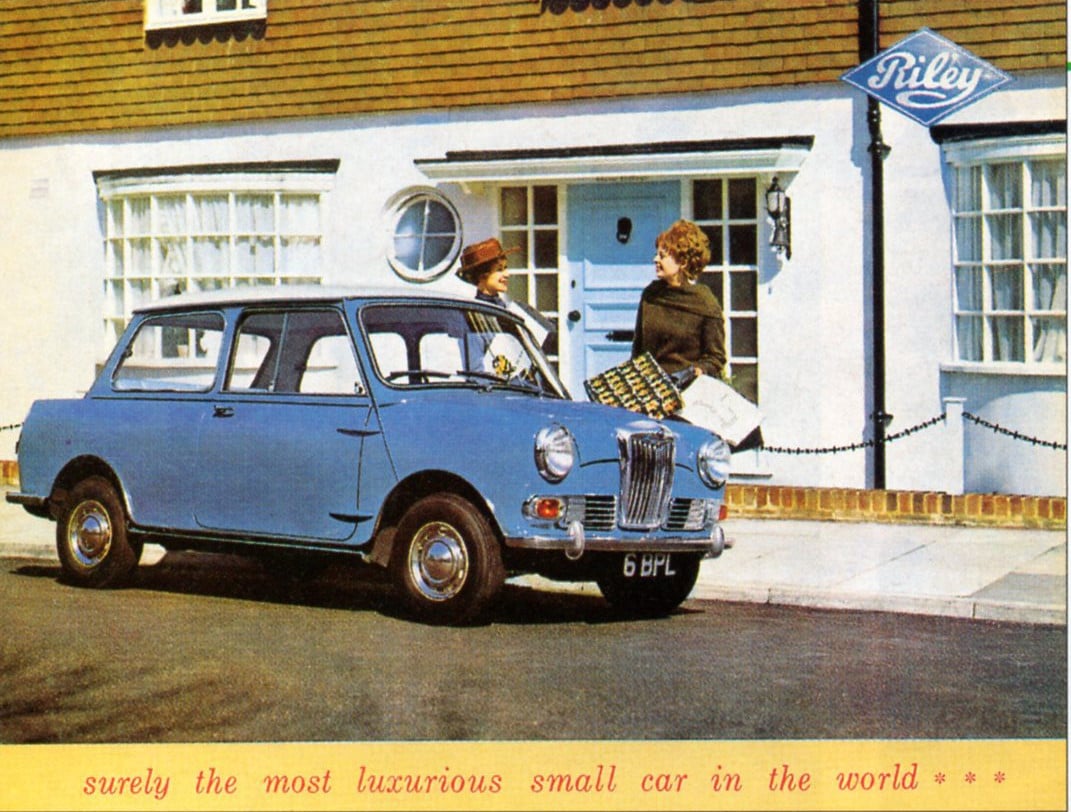
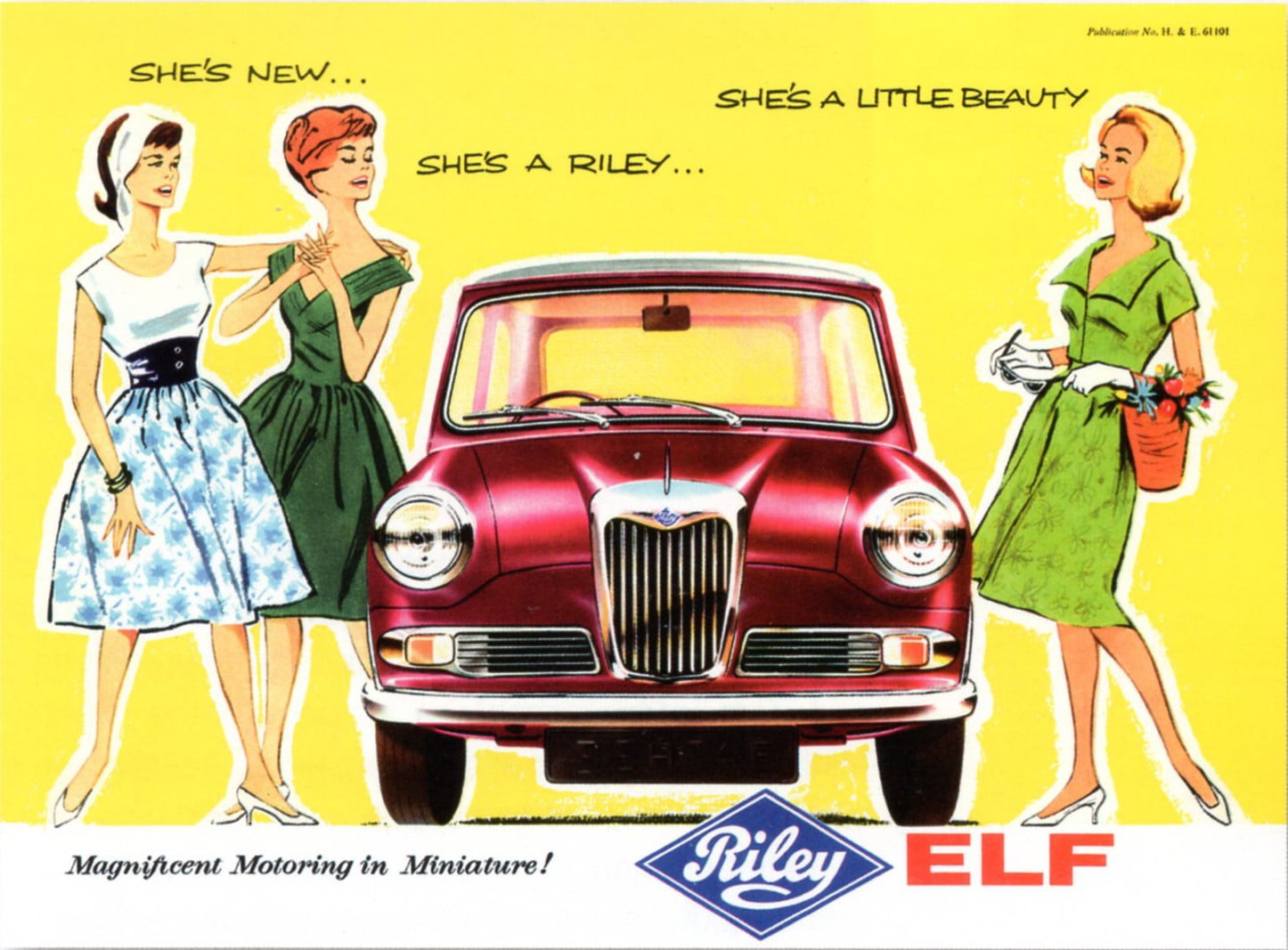
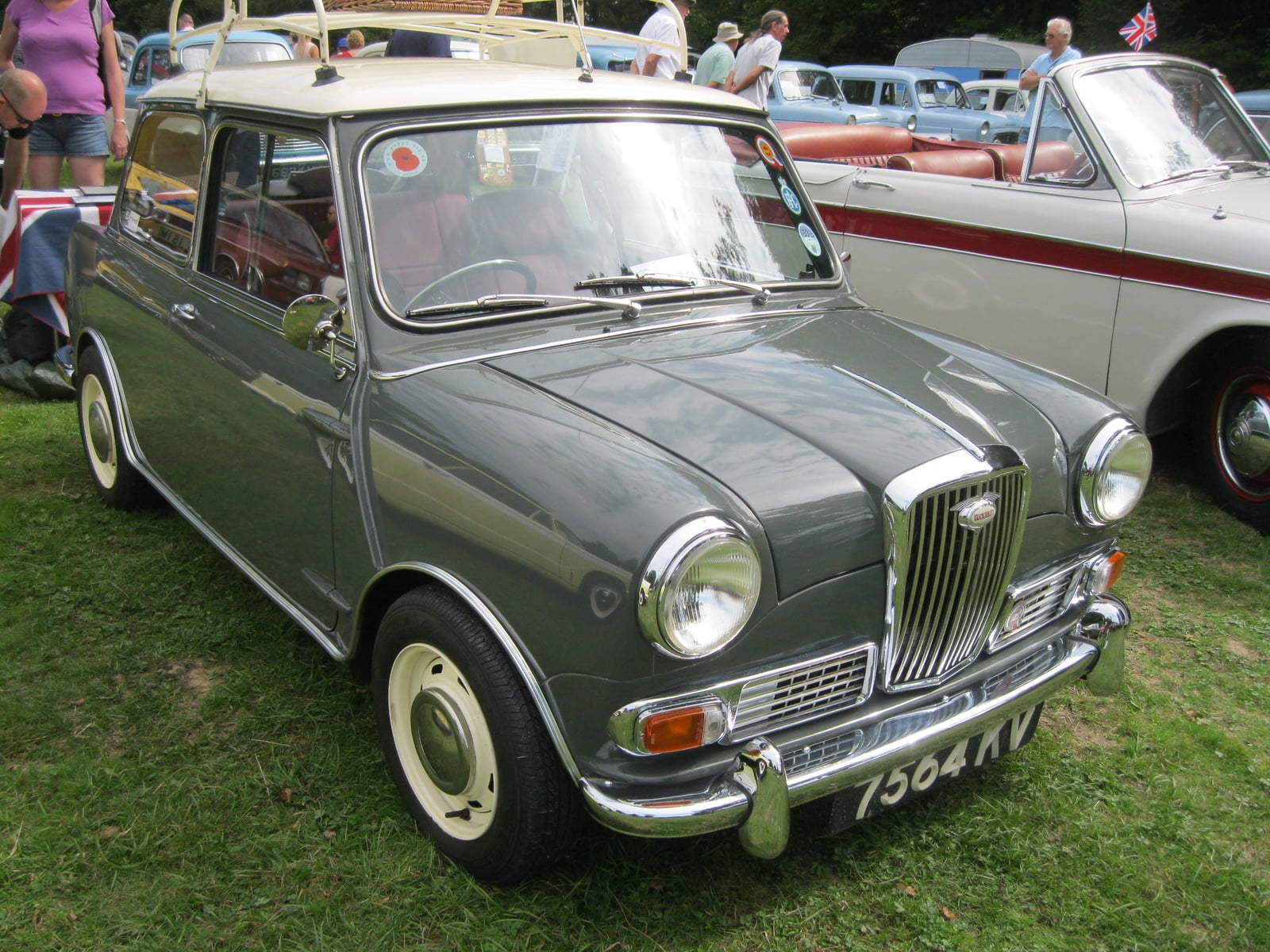
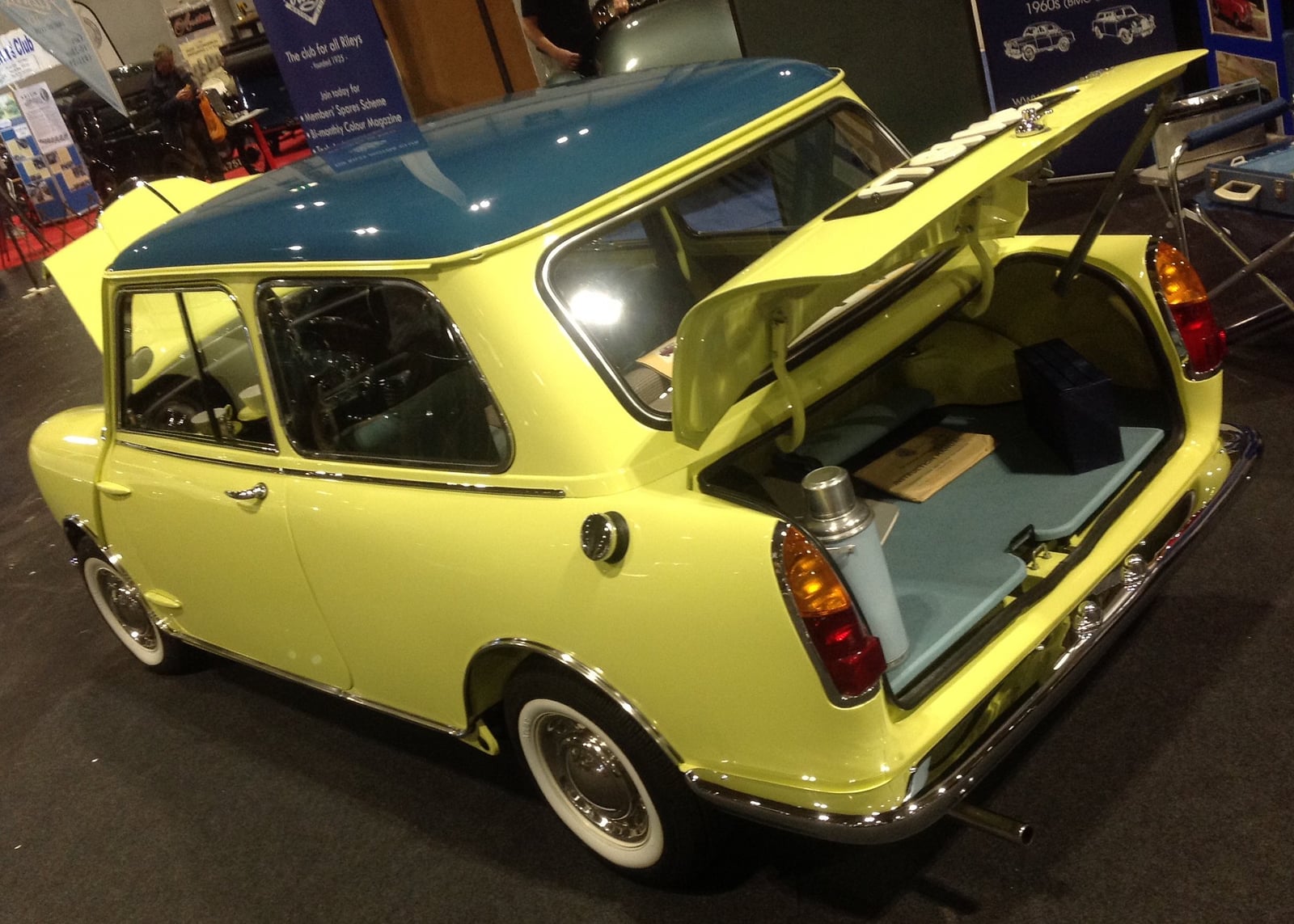
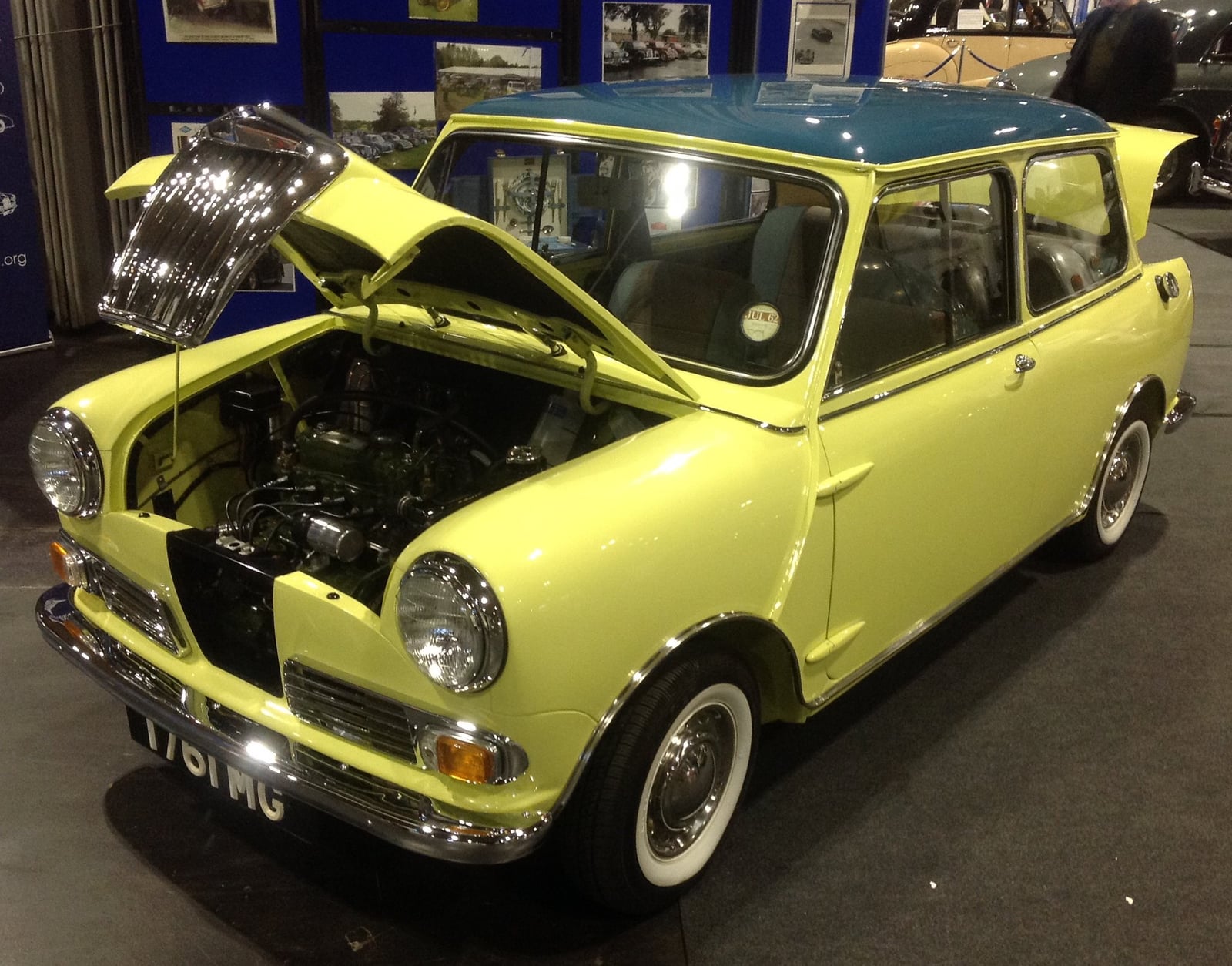
The Elf and Hornet, launched in 1961, took the standard Mini and dressed it up for a more conservative customer. The most obvious change was the boot, which grew a longer, more formal tail with a proper external bootlid and small fins, adding luggage space and a more traditional saloon shape. At the front, an upright chrome grille replaced the Mini’s plain face, and inside there was a wood-veneer dashboard and plusher seats. Period advertising pitched them at exactly the buyer you would imagine, more doctor’s wife than racing driver, and they cost usefully more than a standard Mini when new.
Underneath, though, nothing important changed. These were Minis through and through, with the same floorpan, the same front-wheel-drive running gear and the same A-series engine, in 848 and later 998cc forms. The luxury was all in the styling and trim, which is exactly what their buyers wanted.

Elf or Hornet?
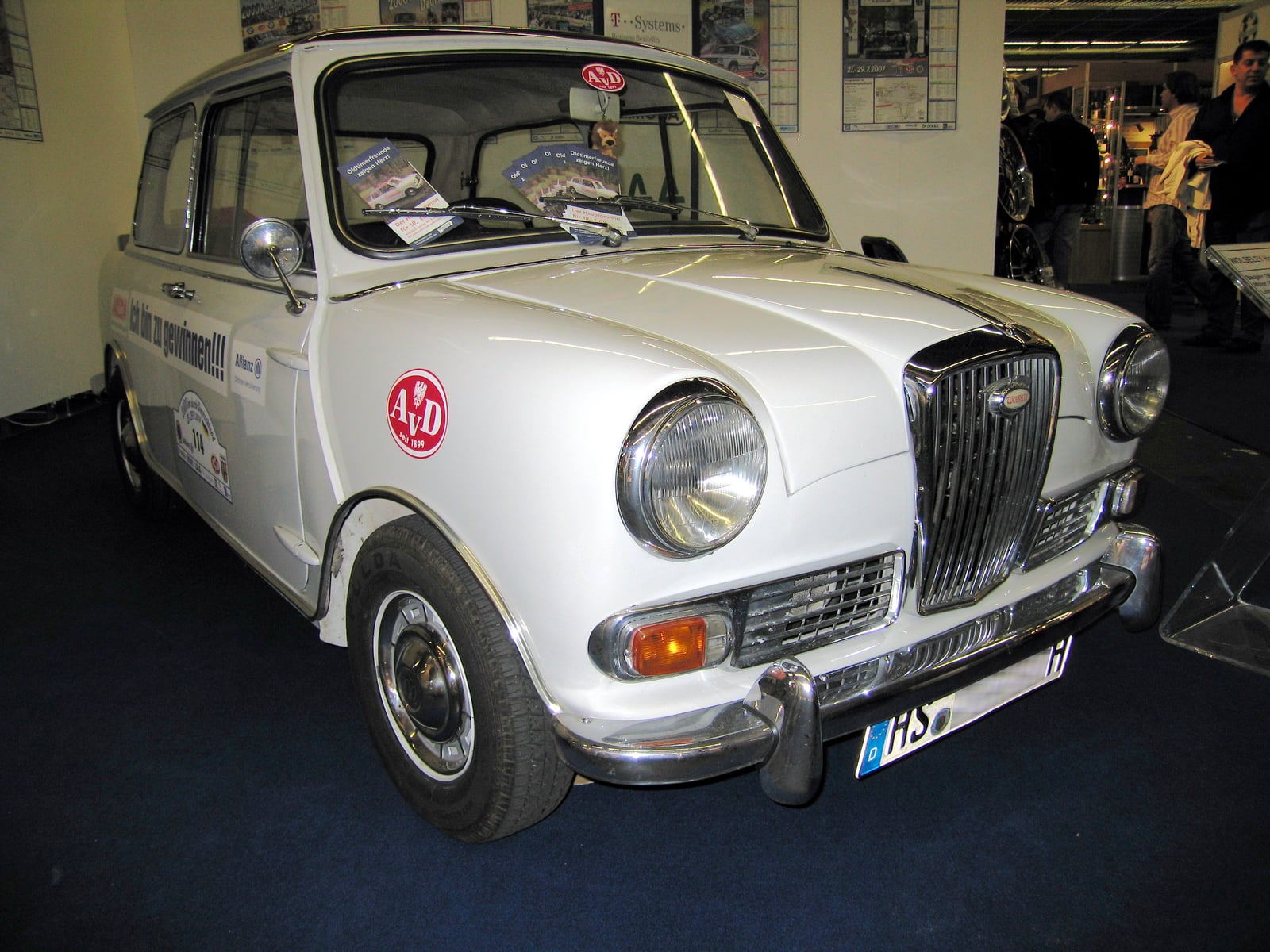
The two cars are the usual BMC pair: near-identical machines wearing different badges. The Riley Elf carried Riley’s grille and sporting identity, the same treatment that turned the bigger 1100 into the Riley Kestrel; the Wolseley Hornet carried Wolseley’s, and beyond the grille, badging and small trim details there is almost nothing to separate them. For a buyer today the choice is purely about which marque and face you prefer, since they drive and own identically.

Three marks
Both ran through three marks over their lives, broadly mirroring developments on the standard Mini: improvements to the engine, the move from the 848 to the more flexible 998cc unit, and changes to the trim and equipment. The later 998cc cars are the more usable for modern driving, while the earliest cars have their own period charm. Both also moved to Hydrolastic suspension with the saloons in 1964, so most later cars ride on the fluid system; it is no harder to live with, but it is worth knowing which you are buying. Production of both ended in 1969.

Firsts, and fifty-seven free Hornets
For all their conservative image, these were the most advanced Minis of their day. The Mk3 cars of 1966 introduced wind-up windows, concealed door hinges and fresh-air ventilation, years before the standard Mini caught up, so the dressed-up cars actually pioneered refinements everyone now takes for granted. They also own one of the era’s best promotional stories: in 1966 Heinz commissioned 57 Wolseley Hornets, converted to convertibles by Crayford and fitted out with picnic hampers, and gave them away in a competition, one for each of the 57 varieties. Survivors of that batch are highly collectable today, and the story remains one of the great period footnotes of the whole Mini family, and a reminder that badge engineering occasionally produced something genuinely worth collecting.
What it is like to own
What separates these from a plain Mini is upkeep rather than driving. The mechanical side is identical, so it is as cheap and as well supported as any Mini and goes down a road in exactly the same way. The difference is that an Elf or Hornet carries a wood-trimmed dashboard, a plusher cabin and noticeably more brightwork, and all of it has to be kept right for the car to be what it was meant to be.
That is not onerous, but it is a different kind of ownership. A standard Mini rewards mechanical fettling; these reward the sort of care you would give a small piece of furniture, and a water-marked veneer or a pitted grille undoes the whole effect in a way a scruffy Mini’s never does. The longer boot is the quiet bonus nobody mentions.

Buying guide: what to look for
The standard Mini checks are set out in the Mini buying guide. Three things here are not standard.
The boot is the first. These carry a longer one than any other Mini, with its own surround and its own fins, unique to them, which makes it both a known rot spot and an awkward repair with no shared panel to draw on.
The interior wood is the second. The Elf and Hornet were sold on their cabins, and a tired or water-marked veneer is expensive to put right and impossible to fake convincingly.
The brightwork is the third, and it is why a cheap one is rarely cheap. These wear considerably more of it than a standard Mini, the grille included, and replacing missing or pitted pieces will cost more than the mechanical work almost always does.

Current value and where it sits
Scarcer and better equipped than a standard Mini, and cheaper than either fact suggests. The usable ones begin near £4,000, £8,000 to £12,000 covers a good one, and the best original cars go beyond. That still leaves them among the more affordable classic Minis and a characterful entry into the range. For the era, see British classic cars of the 1960s.
More photos
How the Elf & Hornet changed
- 1961Launched as the Riley Elf and Wolseley Hornet: a longer finned tail with a proper bootlid, an upright chrome grille and a veneer dashboard on standard Mini bones.
- 1963The 998cc engine replaces the 848, making the later cars the more usable.
- 1964Both move to Hydrolastic suspension with the saloons.
- 1966Mk3 cars pioneer wind-up windows, concealed door hinges and fresh-air ventilation; Heinz gives away 57 Crayford-converted Hornet convertibles, one per variety.
- 1969Production ends at around 30,900 Elfs and 28,500 Hornets.
Elf & Hornet: what to check before you buy
The dressing, which is the point
- The wood-veneer dashboard, for water marks and lifting
- The upright grille and the extra brightwork, for pitting
- Plusher seats and cabin trim, none of it shared with the plain Mini
- These reward furniture care as much as mechanical fettling
The standard Mini rust
- Floors, sills, A-panels and subframes as on any Mini
- The longer boot and its fins add seams of their own
- Hydrolastic from 1964: no harder to live with, but know which you are buying
- The 998cc cars suit modern driving better
Badge and provenance
- Elf and Hornet differ only in grille, badging and small trim; choose on preference
- A genuine Heinz 57 Crayford convertible is highly collectable and needs its history proved
- Three marks broadly mirror the standard Mini's development
- Mk3 refinements make the last cars the everyday picks
What the Riley Elf & Wolseley Hornet sells for at auction
The Riley Elf & Wolseley Hornet comes to auction only occasionally: 87 recorded sales since 2007, typically making between £3,680 and £7,778 . With so few sales, treat any single result as a data point rather than a market price.
- £3,720Elf
- £3,606Hornet
- £10,475Elf
- £3,752Hornet
- £26,118Elf
Reasonable evidence. 87 recorded sales: enough for the range to mean something, though a few unusual cars can still move a single year's median. Based on 87 sold results from public classic car auctions (2007 to 10 August 2026). Sold prices, not asking prices, and not a valuation: condition, history and specification vary from car to car. Inflation-adjusted figures use the ONS CPIH index, in 2025 money.