Mini Moke: the doorless Mini that went to the beach (1964–1993)
The Mini Moke began as a failed military vehicle and became a doorless, open-topped fun car beloved on beaches and film sets. A guide to the British, Australian and Portuguese Mokes, its screen fame, and what to look for when buying one.
Built 1964–1993 190 recorded sales

At a glance
- Years
- 1964–1993
- Body styles
- Open doorless utility
- Drivetrain
- Transverse front engine, front-wheel drive
- Engines
- 848, 998, 1098 and 1275cc A-series
- Power
- Around 34 bhp to 40 bhp
- Trim levels
- UK Moke; Australian Moke and Californian; Portuguese Moke
- Production
- Around 50,000 across all three countries
- Assembly
- Longbridge (UK), then Australia and Portugal
- Designer
- Alec Issigonis, with John Sheppard
- Values
- Usable from around £8,000; good cars £12,000-£20,000; the best beyond
- Origin
- Designed as a military vehicle, rejected by the army, sold as a fun car
- On screen
- Famous from the 1960s series The Prisoner and countless beach and resort scenes
The models
Not every Mini was built to be sensible. The Mini Moke began life as a cut-down military vehicle, failed completely at that job, and was reborn as something far better: a doorless, open-topped fun car that became a fixture of beaches, holiday resorts and film sets the world over. It is the most light-hearted member of the whole Mini family, and one of the most charming small classics there is.
From failed military jeep to beach buggy
BMC built the Moke hoping to sell it to the armed forces as a cheap, light, air-portable runabout. On paper the idea made sense: take the Mini’s compact, efficient running gear and wrap it in the simplest possible flat-panelled body. In practice the tiny ten-inch wheels, low ground clearance and front-wheel drive made it useless off-road, and the military turned it down.
So BMC sold it to the public instead, and discovered an audience it had never expected. Cheap, cheerful and completely without pretension, the Moke became a leisure car, a beach buggy and a resort runabout, exactly the kind of car nobody needed and plenty of people wanted.

British, Australian and Portuguese Mokes
The Moke had three lives in three countries. The original British cars were built at Longbridge from 1964 to 1968. Production then moved to Australia, where Leyland built the Moke from 1966 to 1981, often with larger engines and bigger wheels better suited to local conditions, including the well-known Californian version. Finally it was made in Portugal from 1980 to 1993.
For a buyer this matters, because British, Australian and Portuguese Mokes differ in specification, wheel size and detail, and originality is judged against the right version. The early British cars are the ones most prized in this country.

On screen and on the beach
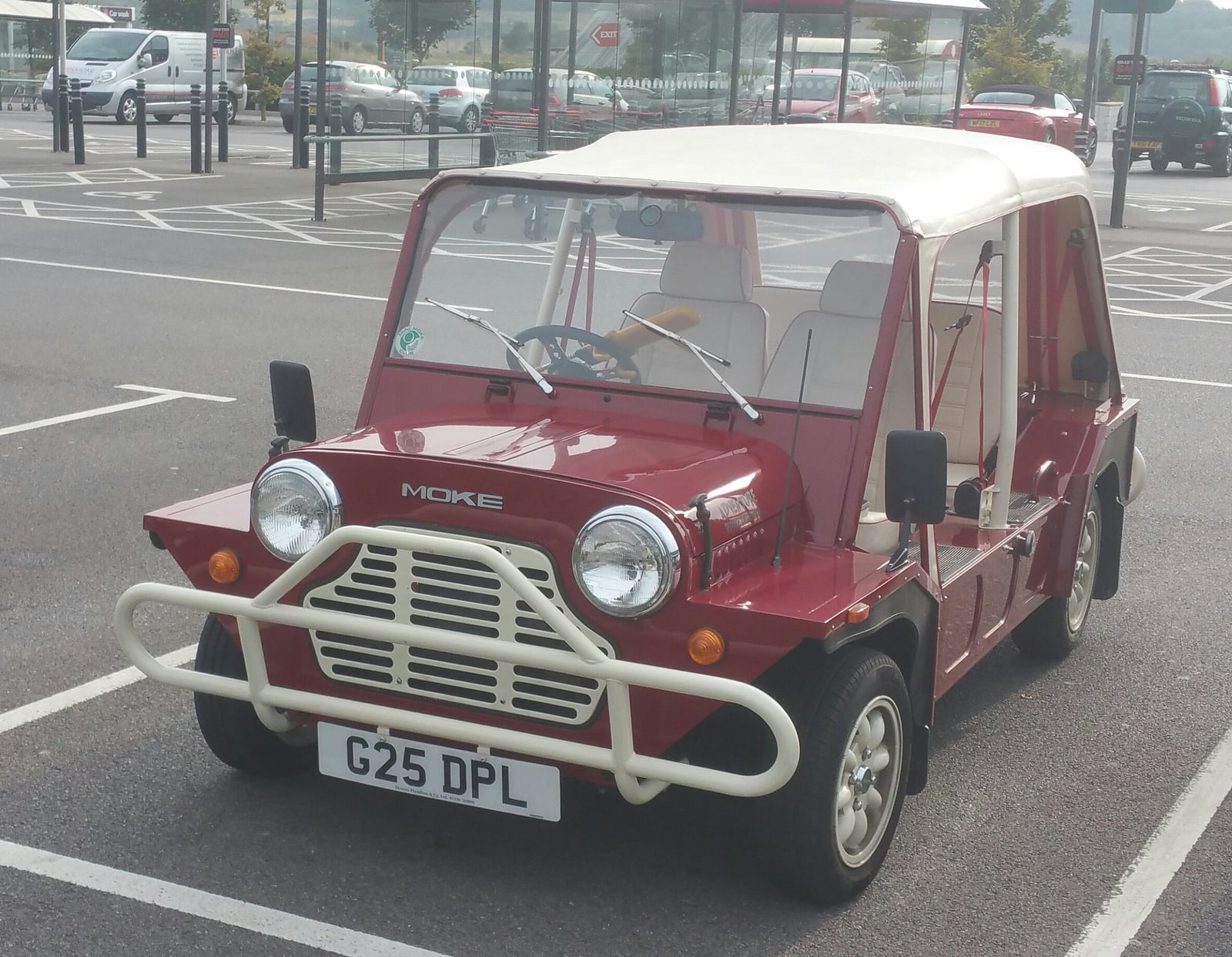
The Moke’s open, toy-like character made it a natural for the camera. It appeared most famously in the 1960s television series The Prisoner, ferrying characters around the surreal Village, and it has turned up in countless beach, resort and holiday scenes ever since. That breezy, sun-and-sand image is a large part of why the Moke is so fondly remembered, and why a doorless car with Mini mechanicals is worth more than a Mini Cooper.

Numbers, and the Moke today
British production was tiny: around 14,500 Mokes left Longbridge in four years, which is why a genuine UK-built 1960s car is the collector’s prize. Australia built roughly twice as many over a much longer run, and Portugal added the final batch, so the worldwide pool is bigger than the British rarity suggests, and imports are common on the UK market; be sure which you are looking at before you compare prices. The shape refuses to die, either: licensed modern revivals, lately electric, trade openly on the original’s image, which has done classic values no harm at all. The Moke has gone from military reject to fashion item twice over, and the market has noticed. It is also a car that attracts homemade rebuilds, so the structural checks below matter more than on most Minis, and a repainted tub deserves patient suspicion until you have seen underneath.
What it is like to own
Mechanically the Moke is pure Mini: the same simple, tough A-series engine and front-wheel-drive running gear, shared with the rest of the range and superbly supported for parts. It is easy to work on and cheap to run, and there is very little to it to go wrong.
The catch is its nature. With no doors and minimal weather protection, the Moke is a fair-weather car, more toy than transport, and that is exactly the point. For sunny-day fun it is hard to beat, and few classics raise as many smiles.

Buying guide: what to look for
Rust and structural soundness come first. The flat-panelled body and the box sections trap water, so check the floors, the seams, the subframe mountings and the body tub carefully, and be wary of cars that have been left outside, which many have. Confirm which country and version the car is, as that governs correct specification and value. The general Mini rust and mechanical detail is in our Mini buying guide.
Because Mokes were used hard and exposed to the elements, a genuinely sound, original car is worth seeking out over a tired or bodged one, and an honest restoration is worth more than a quick cosmetic tidy-up.

Where the Moke sits in the market
The Moke is the dearest member of the Mini family by a distance, and the premium is for its scarcity and its image rather than for anything under it: a genuine, sound car commands a clear premium over a tired or heavily modified one. The full record, 190 recorded sales at around three times Mini saloon money, a sale room that cannot tell a British car from a Portuguese one, and a drift down from the 2020 peak, is on the page covering what a Moke sells for. For the era, see British classic cars of the 1960s.
More photos
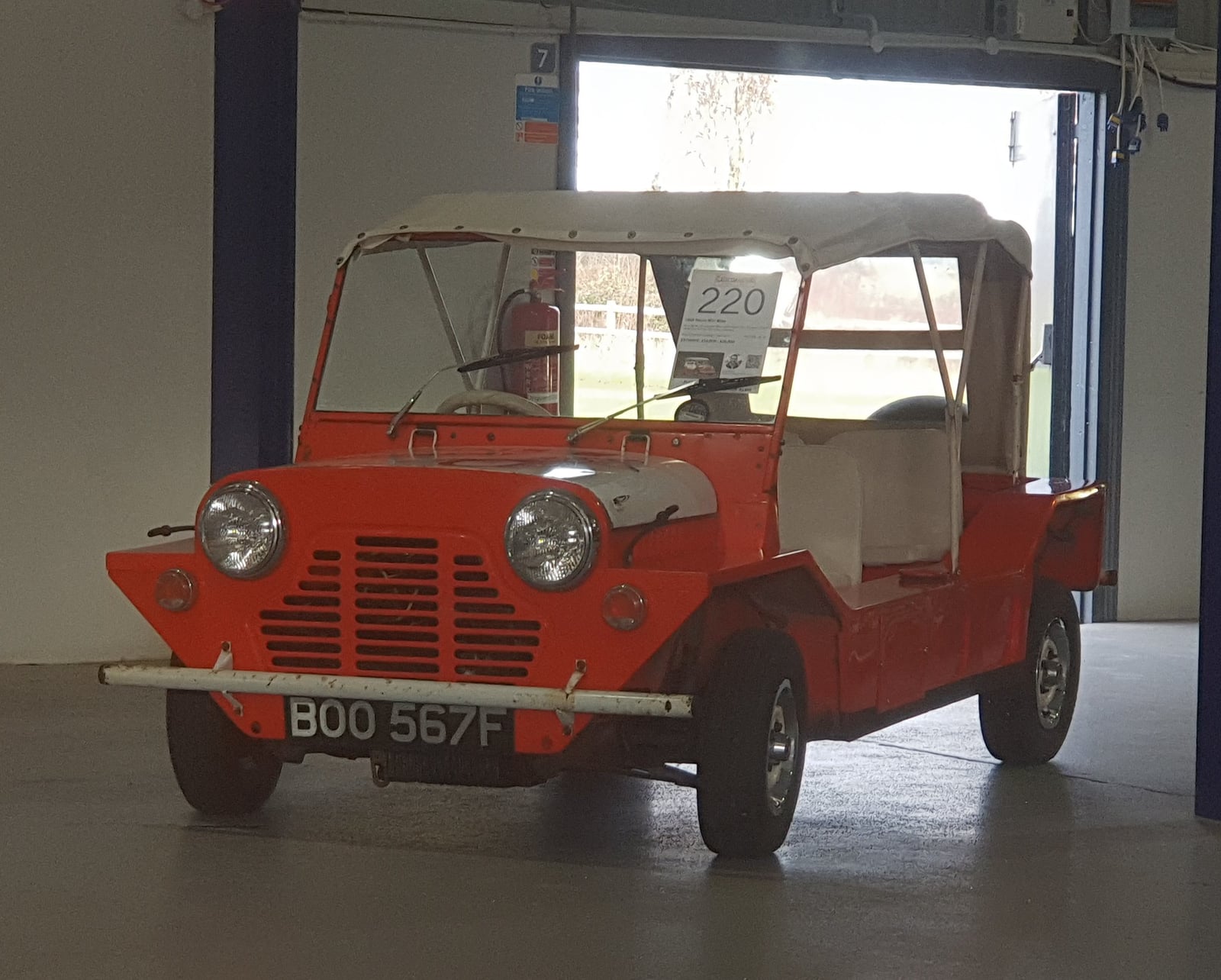
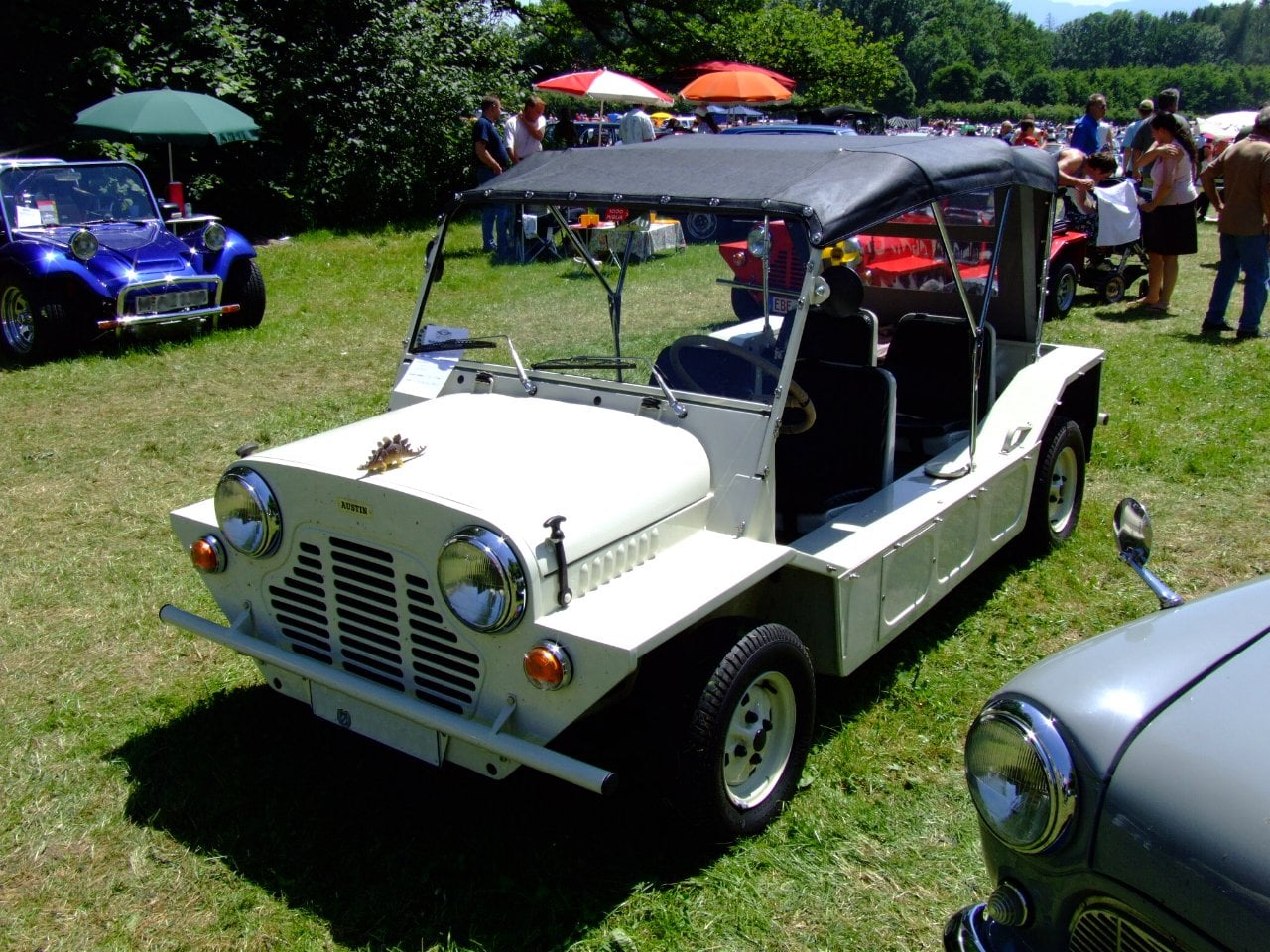
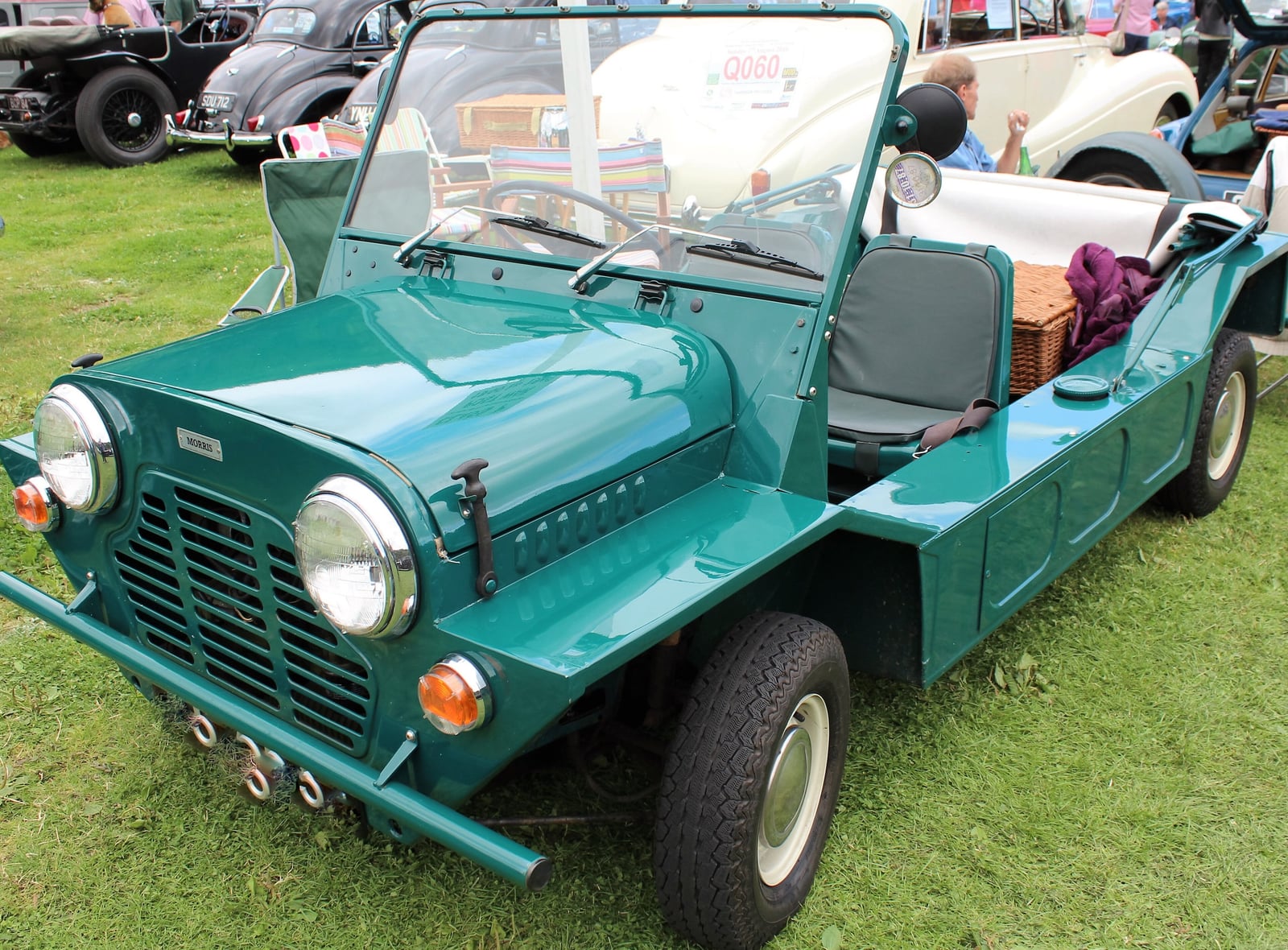
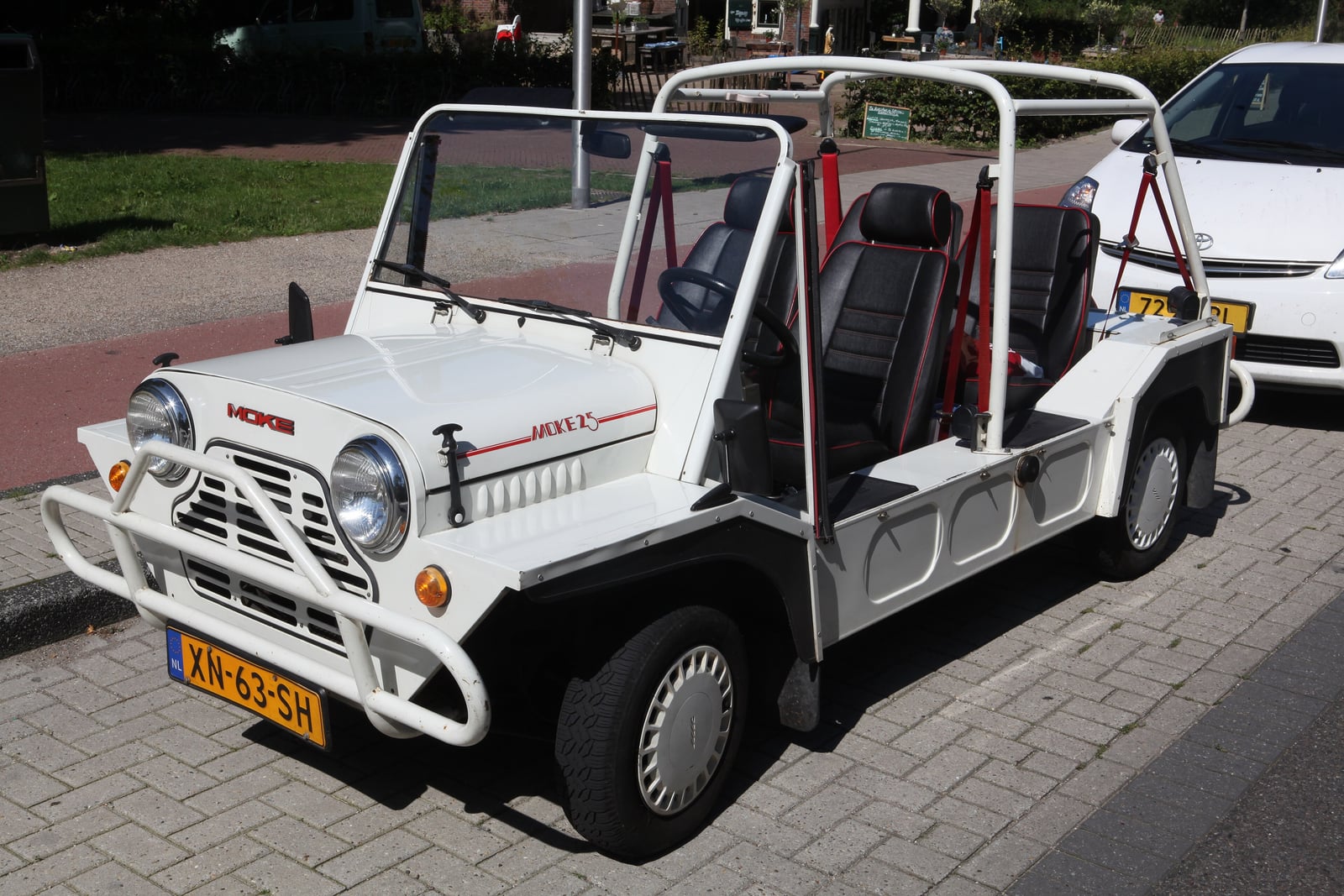

Moke: what changed and when
- 1964Designed as a cheap, air-portable military runabout; the ten-inch wheels and front-wheel drive prove useless off-road, the army declines, and BMC sells it to the public.
- 1966Australian production begins under Leyland, with larger engines and bigger wheels, including the Californian.
- 1968British production ends at around 14,500 cars, the collector's prize today.
- 1980Portugal takes over the final production run.
- 1993The last Portuguese Moke closes a 50,000-car, three-country story; licensed revivals, lately electric, trade on the image ever since.
What to check on a Moke
Structure
- Floors, seams, subframe mountings and the body tub, carefully
- The flat panels and box sections trap water
- Be wary of cars left outside, which many have been
- A repainted tub deserves suspicion until you have seen underneath
Which Moke
- British, Australian and Portuguese cars differ in specification, wheel size and detail
- Originality is judged against the right version
- Genuine UK-built 1960s cars are the prized minority
- Imports are common on the UK market, so establish origin before comparing prices
Ownership
- Mechanically pure Mini, easy to work on and cheap to run
- An honest restoration beats a quick cosmetic tidy-up
- A sound original car is worth seeking over a tired or bodged one
- Fair-weather use is the design brief, not a limitation to engineer away
What the Mini Moke sells for at auction
In 2025 the median Mini Moke sold for £17,495 across 24 sales, 4% up on 2024. In real terms, typical Mini Moke prices were down about 32% over the five years to 2025, once inflation is accounted for.
Show the year-by-year mediansHide the year-by-year medians
| Year | Sold | Median | In 2025 money |
|---|---|---|---|
| 2026 (so far) | 18 | £15,207 | |
| 2025 | 24 | £17,495 | £17,495 |
| 2024 | 15 | £16,875 | £17,523 |
| 2023 | 16 | £19,854 | £21,305 |
| 2022 | 22 | £15,314 | £17,539 |
| 2021 | 11 | £18,224 | £22,535 |
| 2020 | 19 | £20,368 | £25,811 |
| 2019 | 6 | £17,139 | £21,940 |
| 2018 | 10 | £14,870 | £19,359 |
| 2017 | 7 | £16,666 | £22,200 |
| 2016 | 8 | £14,784 | £20,201 |
| 2015 | 4 | £10,615 | £14,649 |
| 2014 | 4 | £14,700 | £20,367 |
| 2013 | 3 | £11,730 | £16,484 |
| 2012 | 3 | £10,229 | £14,704 |
| 2011 | 4 | £14,246 | £21,004 |
| 2010 | 10 | £9,630 | £14,749 |
| 2009 | 4 | £11,004 | £17,276 |
- £17,140Mini Moke
- £11,250Mini Moke
- £10,296Mini Moke
- £32,502Mini Moke
- £11,205Mini Moke
Reasonable evidence. 190 recorded sales: enough for the range to mean something, though a few unusual cars can still move a single year's median. Based on 190 sold results from public classic car auctions (2003 to 10 August 2026). Sold prices, not asking prices, and not a valuation: condition, history and specification vary from car to car. Inflation-adjusted figures use the ONS CPIH index, in 2025 money.