Austin Seven: the car that motorised Britain (1922–1939)
The Austin Seven was the small, cheap car that put middle-class Britain on four wheels, built from 1922 to 1939 in every form from the open Chummy to the Ruby saloon and the sporting Ulster. A guide to the many Sevens, the model that seeded BMW and Lotus, and what to look for when buying one.
Built 1922–1939

At a glance
- Years
- 1922–1939
- Body styles
- Open tourer, saloon, van and sports; many coachbuilt variants
- Drivetrain
- Front engine, rear-wheel drive
- Engines
- 747cc side-valve four
- Power
- Around 10 bhp to 17 bhp
- Top speed
- Around 45-50 mph, more in sports form
- Trim levels
- Chummy, Ruby, Nippy, Ulster and many more
- Production
- Around 290,000
- Assembly
- Longbridge, Birmingham
- Designer
- Herbert Austin, with Stanley Edge
- Values
- Usable from around £6,000; good cars £10,000-£18,000; the sporting Nippy and Ulster well beyond
- Influence
- Licensed worldwide; BMW's first car was a licensed Seven, and the first Lotus was Seven-based
- The idea
- A real car in miniature, cheap enough to replace the motorcycle and sidecar
The models
Few cars have done more with less than the Austin Seven. Launched in 1922 and built until 1939, it was a tiny, cheap, genuinely practical car at a time when most people of modest means could afford only a motorcycle and sidecar. Through the 1930s it became the car that put middle-class Britain on four wheels, and its influence reached far beyond anything its size suggested.
A real car in miniature
Herbert Austin conceived the Seven as a proper car shrunk down, not a flimsy cyclecar, and developed it with the young draughtsman Stanley Edge. The result was a light, simple machine with a 747cc side-valve four, a four-cylinder engine where rivals offered twins, and room for a small family. It was cheap to buy and cheap to run, and it did the basic job of a car well enough that it needed no excuses.
That was the breakthrough. By pricing a real car within reach of the clerk and the shopkeeper, the Seven opened up motoring to people who had never owned a car, and it sold in the hundreds of thousands. Around 290,000 were built over its life, a vast number for the era.

The many Sevens
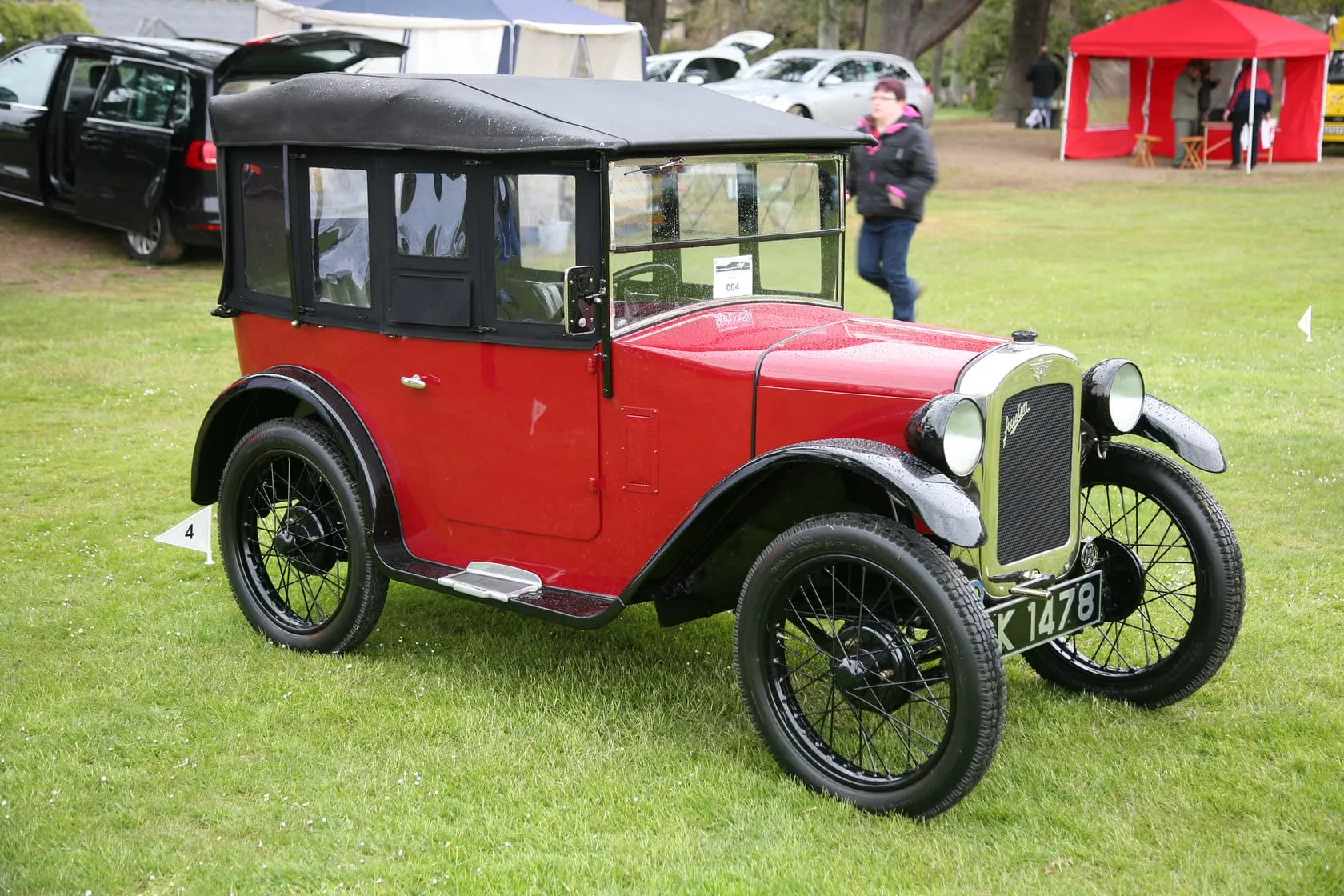
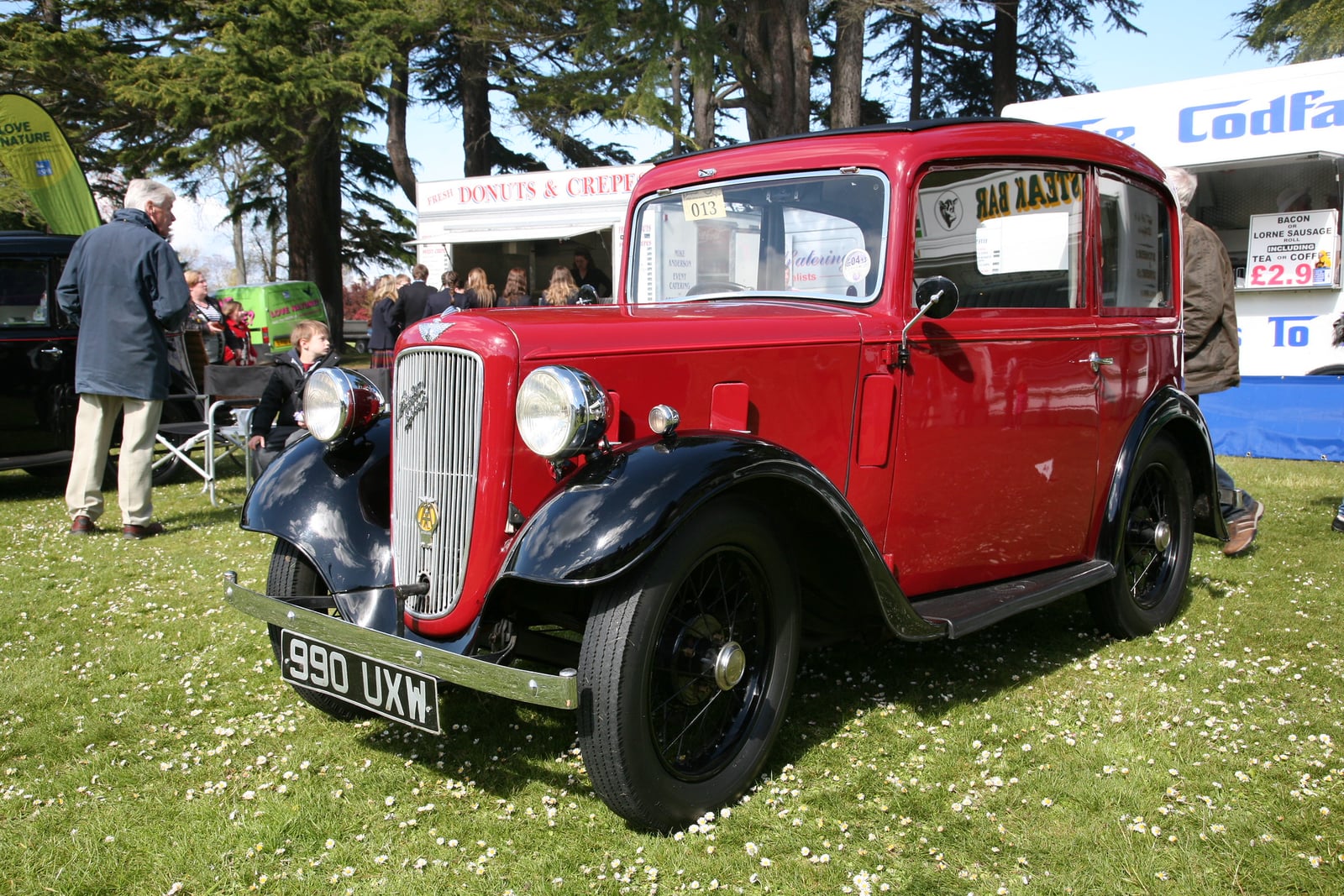
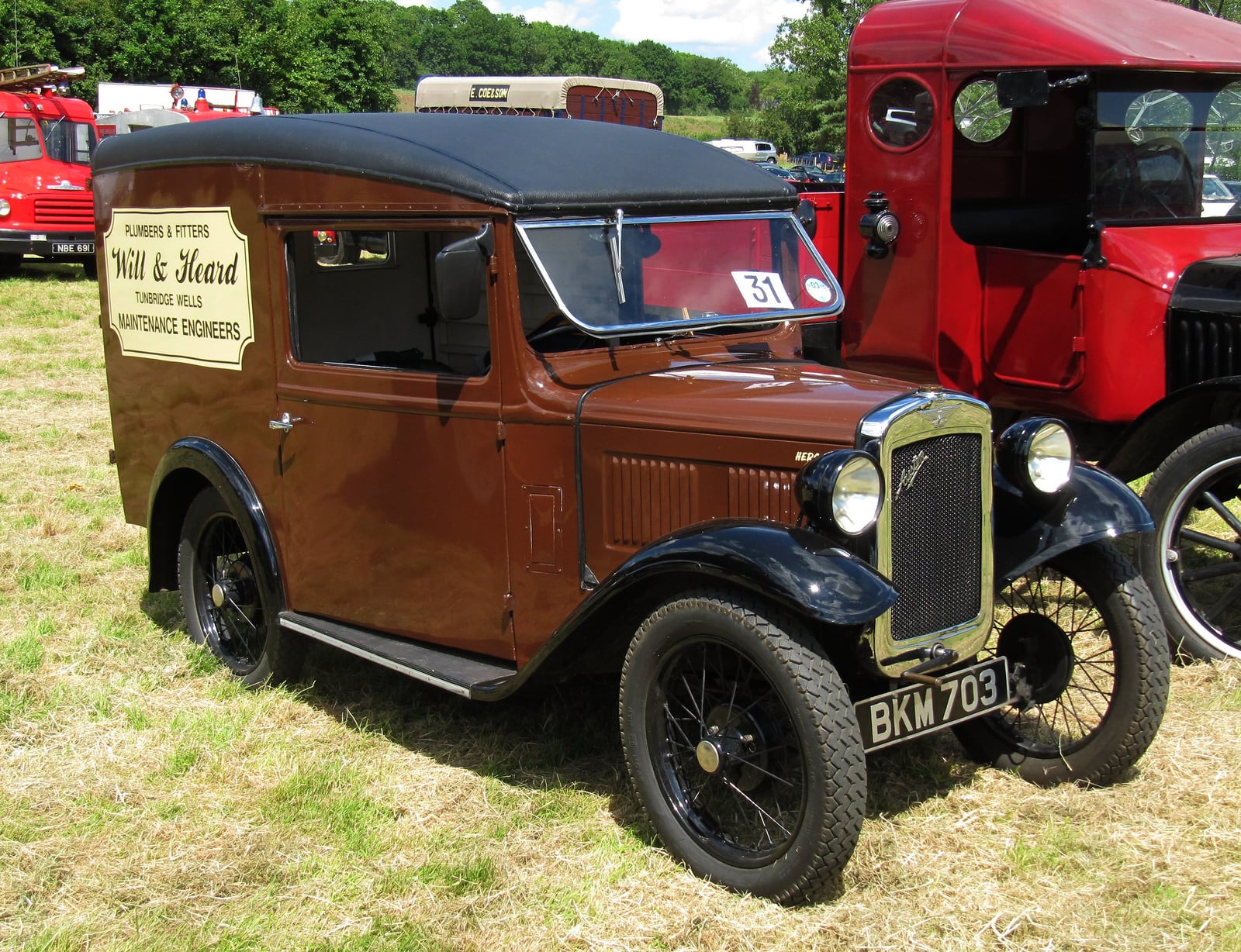
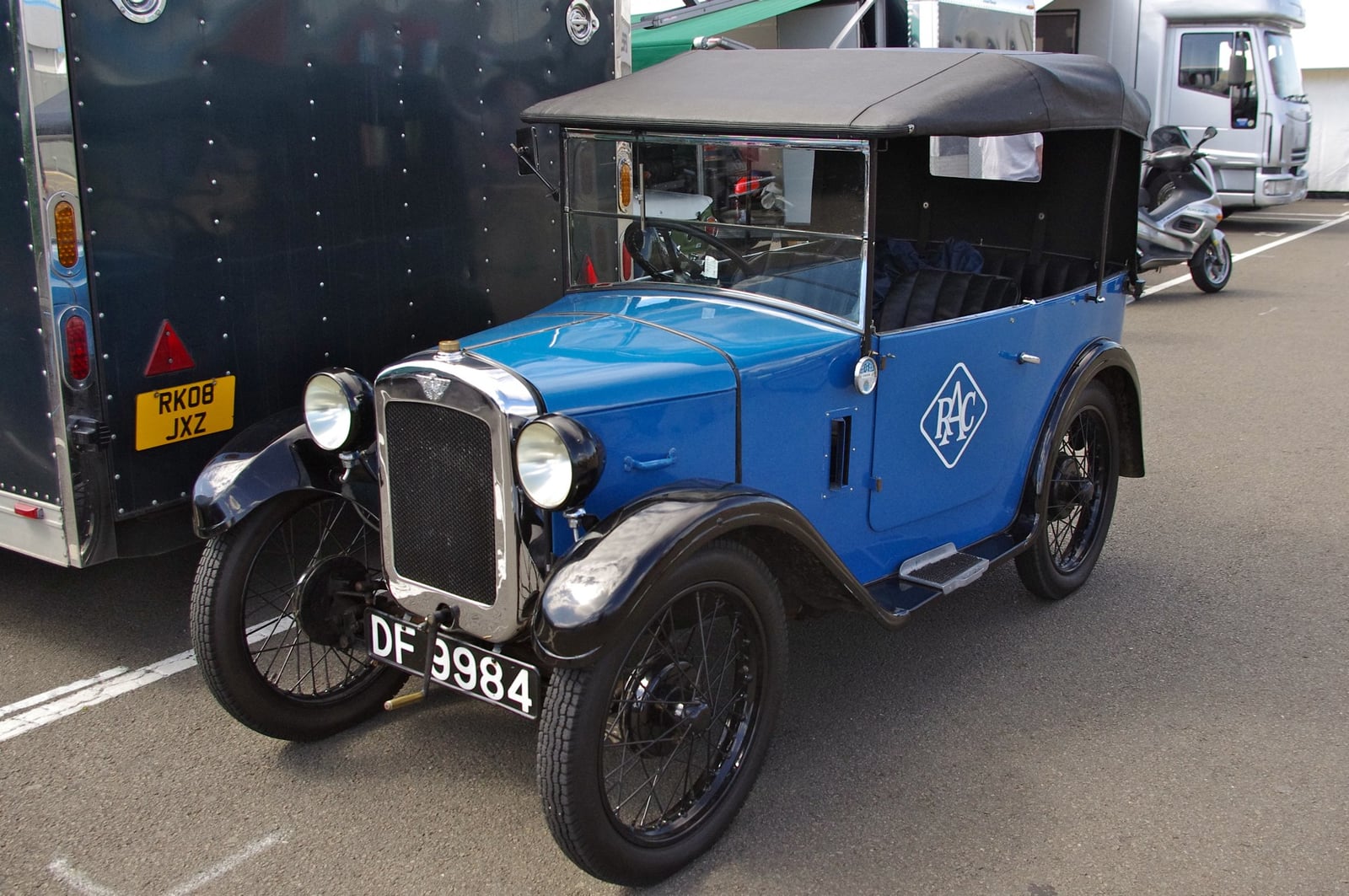
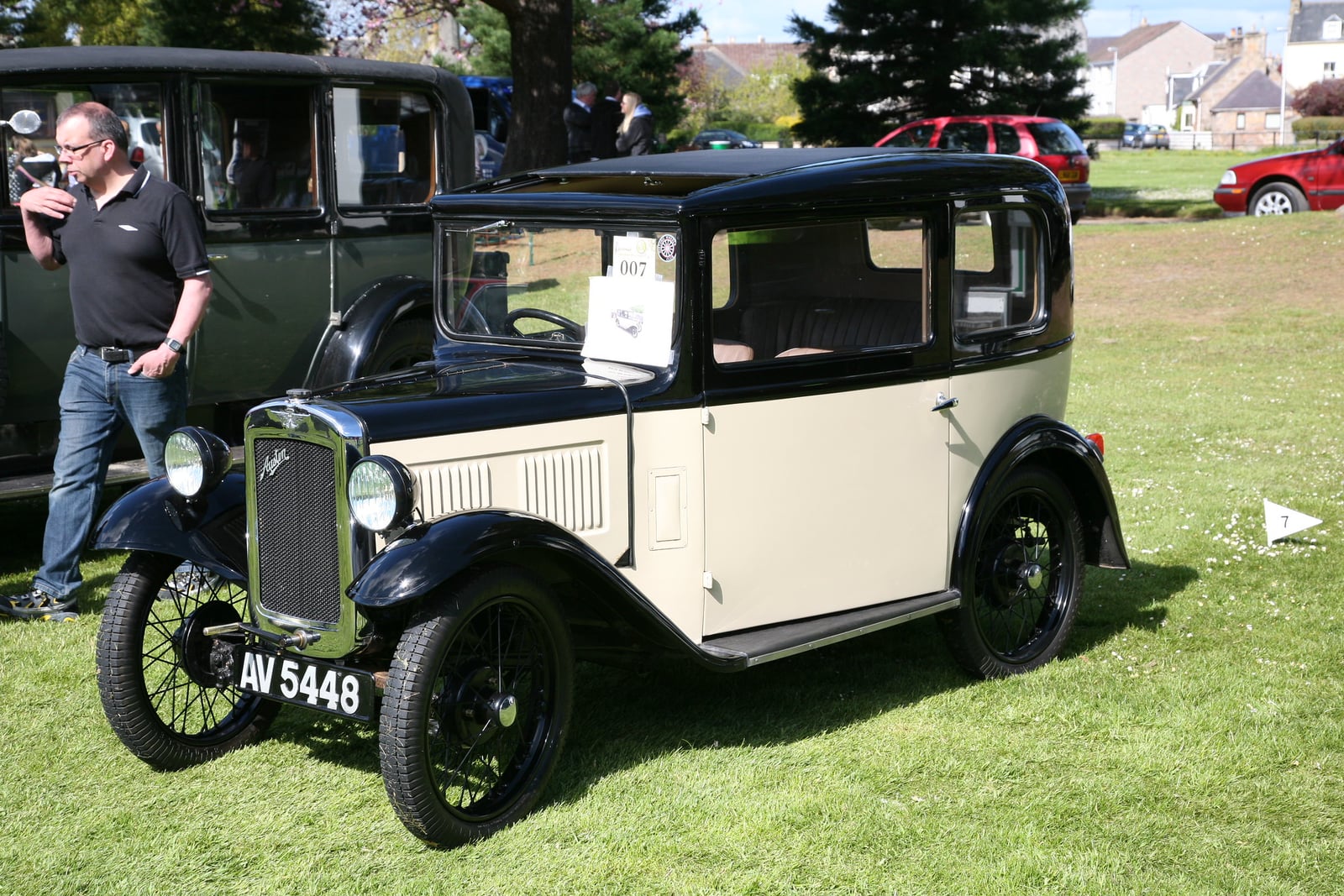
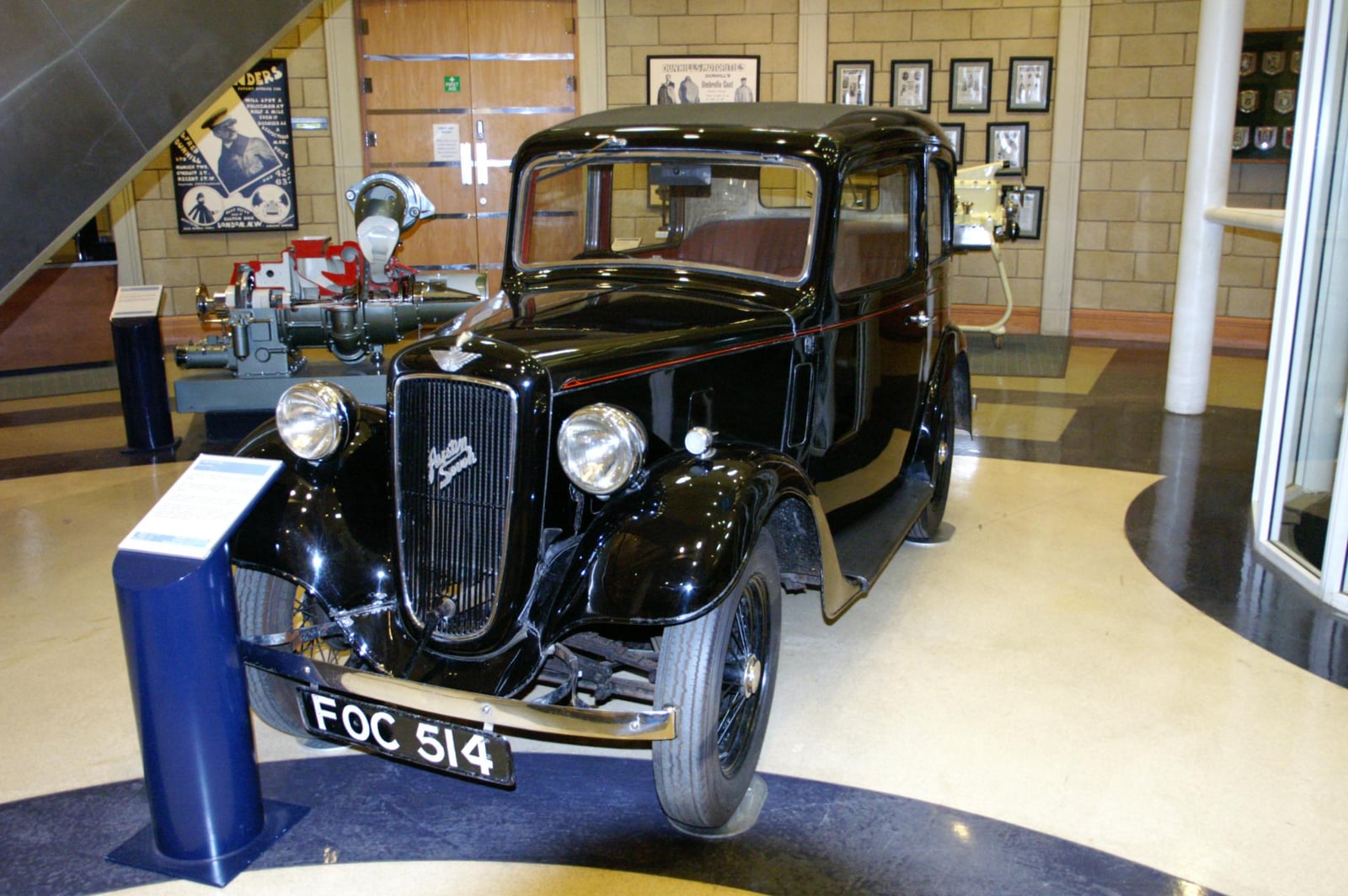
Part of the Seven’s charm is how many forms it took. The early open four-seat Chummy gave way through the decade to a string of variants: the rounded Austin Ruby saloon that most people picture, the upright Box saloons before it, the two-seat Opal tourer, light vans for tradespeople, and the sporting cars, the Nippy and the more serious Austin Seven Ulster, that took the little Austin racing and record-breaking. At the end of the 1930s Austin even offered a Big Seven, a slightly larger car in name and body only, which auction listings keep distinct from the true Sevens.
Beyond the factory cars, the Seven became the base for countless specials. Its cheap, plentiful chassis and running gear made it the natural starting point for home-built trials cars, racers and one-offs, a tradition that continues at pre-war club events today. No two Sevens, it sometimes seems, are quite alike.

The car that seeded an industry
The Seven’s deepest mark was on other people’s companies. BMW built its very first car, the Dixi, as a licence-built Austin Seven, so one of the great car marques began life making an Austin design under licence. In France, Rosengart built it; in America, the American Austin and later Bantam were closely based on it; and the earliest Datsuns drew heavily on the same template.
Closer to home, the Seven was the car a generation of constructors learned on. The most famous example is Colin Chapman, who built the first Lotus on an Austin Seven chassis before going on to found one of the most influential names in motor racing. Decades later, when the British Motor Corporation again set out to motorise the nation with a small car, the Mini it launched in 1959 was sold at first under the old, resonant name: the Austin Seven.

What it is like to own
A Seven is a window into early motoring, and that is the appeal and the caveat both. Performance is modest, the brakes and gearbox demand a gentler, more deliberate technique than a post-war car, and a long modern journey is hard work. But it is light, simple, endlessly characterful and superbly supported by one of the strongest pre-war club movements there is, so keeping one running is more straightforward than its age suggests.
Austin Seven cars are also among the most affordable routes into genuine pre-war motoring, and among the most welcome at events. As with any car of this age, much of the ownership experience is the wider business of running a classic car, and a Seven sits comfortably within historic vehicle status.

Buying guide: what to look for
Condition and originality matter more than mileage on a car this old. Check the wooden body framing where fitted, the chassis for corrosion and old accident repair, and the mechanical condition of the simple but well-understood engine and running gear. Parts availability is good thanks to the clubs and specialists, so a sound, complete car is a better buy than a cheap project missing key pieces.
Because so many specials and rebodied cars exist, establish exactly what a car is before buying: a genuine Ulster is worth far more than a Seven-based replica, and an honest, original saloon is worth more than a tired one dressed up as something sportier.

Where the Seven sits
The Austin Seven is one of the more affordable ways into pre-war ownership, with the saloons at the bottom of its range, the Chummy tourers above them and the sporting Nippy and especially the Ulster well beyond; the full record, 533 recorded sales by body, and what the market has done since 2018, is on the page covering Austin Seven values. It is the defining small car of the British 1920s and 1930s alike, and arguably the most important British car of its era, the machine that made motoring ordinary.

More photos
The Austin Seven in dates
- 1922Herbert Austin and the young Stanley Edge launch a real car in miniature: a 747cc side-valve four where rivals offered twins, priced for the clerk and the shopkeeper.
- 1920sThe open four-seat Chummy carries the early years; BMW's first car, the Dixi, is a licence-built Seven, with Rosengart in France and American Austin following.
- 1930sThe Box saloons, the rounded Ruby, light vans and the sporting Nippy and Ulster diversify the range; specials builders make the chassis their starting point.
- 1937The Big Seven arrives, larger in name and body only, and kept distinct by listings ever since.
- 1939Production ends at around 290,000; Colin Chapman later builds the first Lotus on a Seven chassis, and the 1959 Mini launches under the old name.
Austin Seven: what to check before you buy
What the car actually is
- Establish exactly what a car is before buying: saloon, tourer, sports or special
- A genuine Ulster is worth far more than a replica, and an honest saloon more than one dressed up
- Registers and the clubs settle identity questions
- No two Sevens, it sometimes seems, are quite alike, which makes the paperwork the anchor
Structure
- Wooden body framing where fitted
- The chassis, for corrosion and old accident repair
- Condition and originality matter more than mileage on a car this old
- A sound, complete car beats a cheap project missing key pieces
Mechanical and use
- The simple engine and running gear are well understood and club-supported
- Brakes and gearbox ask a deliberate pre-war technique
- Around 45 to 50 mph flat out, more in sports form
- Much of ownership is the ordinary business of running a pre-war car, and the clubs make it straightforward