Ford Prefect: the upright small Ford that motorised Britain (1938–1961)
The Ford Prefect was Ford UK's upmarket small saloon for over two decades, from the upright "sit up and beg" pre-war cars to the modern 100E of the 1950s. Cheap, tough and built in huge numbers, it put Britain on the road, and lent its name to a Hitchhiker's Guide character. A guide to the models, owning one, and values.
Built 1938–1961 61 recorded sales

At a glance
- Years
- 1938–1961
- Body styles
- Four-door saloon
- Drivetrain
- Front engine, rear-wheel drive
- Engines
- 1172cc sidevalve four (earlier cars 1.2-litre sidevalve)
- Power
- Around 30-36 bhp
- Top speed
- Around 60-70 mph
- Trim levels
- E93A and E493A (the upright cars), 100E (the modern 1953 car)
- Production
- Built by Ford UK across three model families from 1938 to 1961
- Assembly
- Dagenham, Essex
- Designer
- Ford of Britain
- Values
- Project around £2,000-£4,000; good £5,000-£9,000; excellent £10,000-£15,000 (the upright E493A and tidy 100E cars lead)
- Place in the range
- The upmarket, four-door small Ford above the Popular and alongside the Anglia
- In culture
- Lent its name to the character Ford Prefect in The Hitchhiker's Guide to the Galaxy
The models
For more than twenty years the Ford Prefect was one of the most ordinary sights on a British road, which is precisely why it matters. It was Ford UK’s upmarket small saloon from 1938 to 1961, the four-door car that, with its Popular and Anglia relatives, put hundreds of thousands of ordinary families behind the wheel of their first car. So common was it that a science-fiction author later borrowed its name as a byword for blending in.
The Prefect is among the most accessible of all classic Fords: a cheap, simple, tough little car with real period character and a place in the story of how Britain learned to drive.
From upright to modern
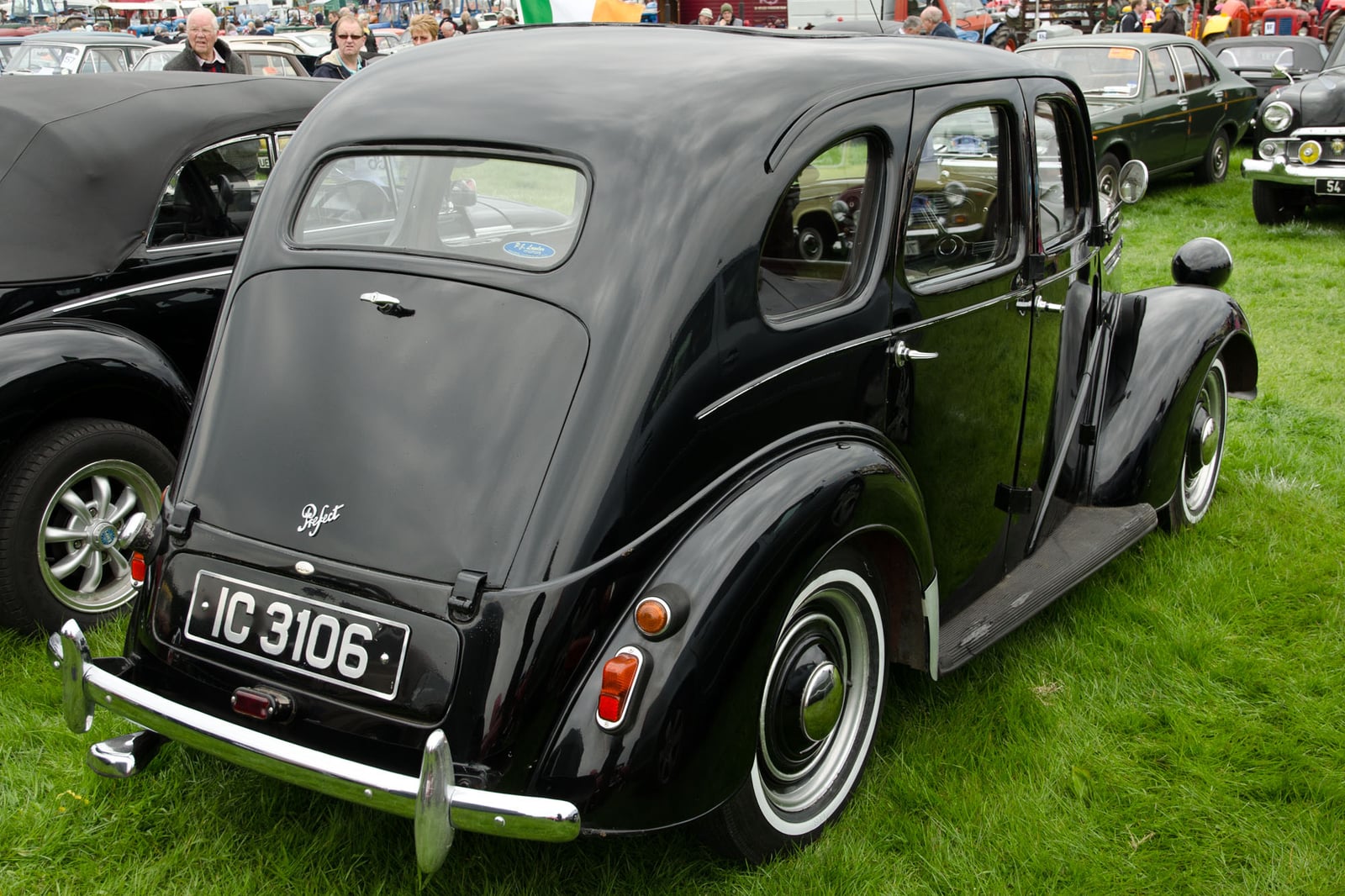
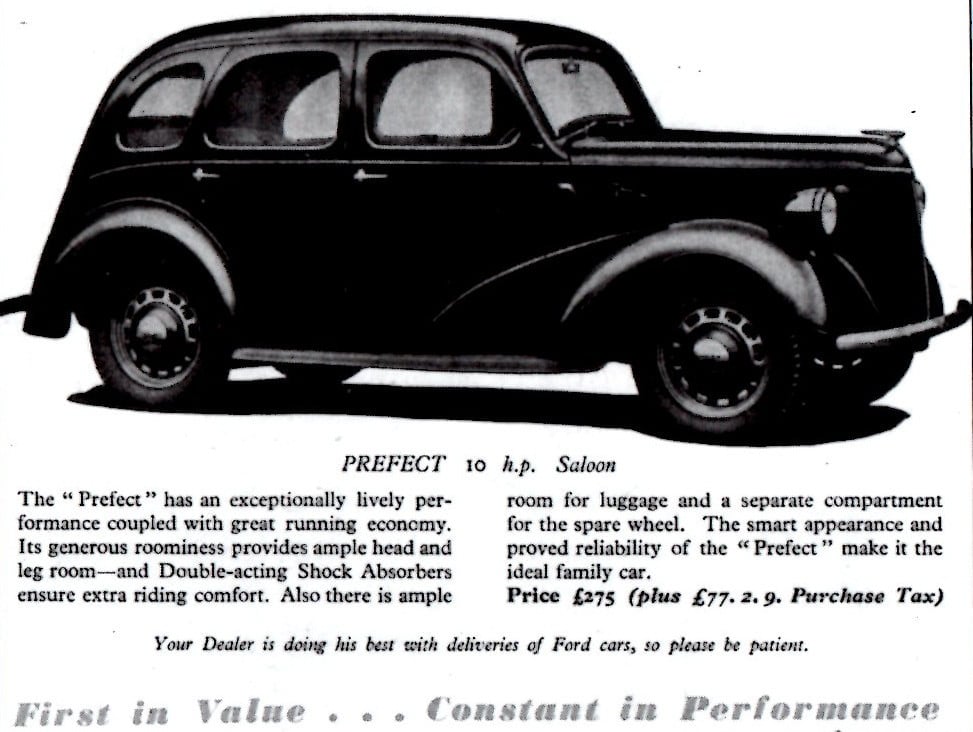
The Prefect spanned two completely different eras of car design. The early cars, the pre-war E93A and the post-war E493A of 1949–53, are the upright, tall-bodied “sit up and beg” Fords, with separate headlamps, a high stance and an old-fashioned charm that makes them sought-after period pieces today.
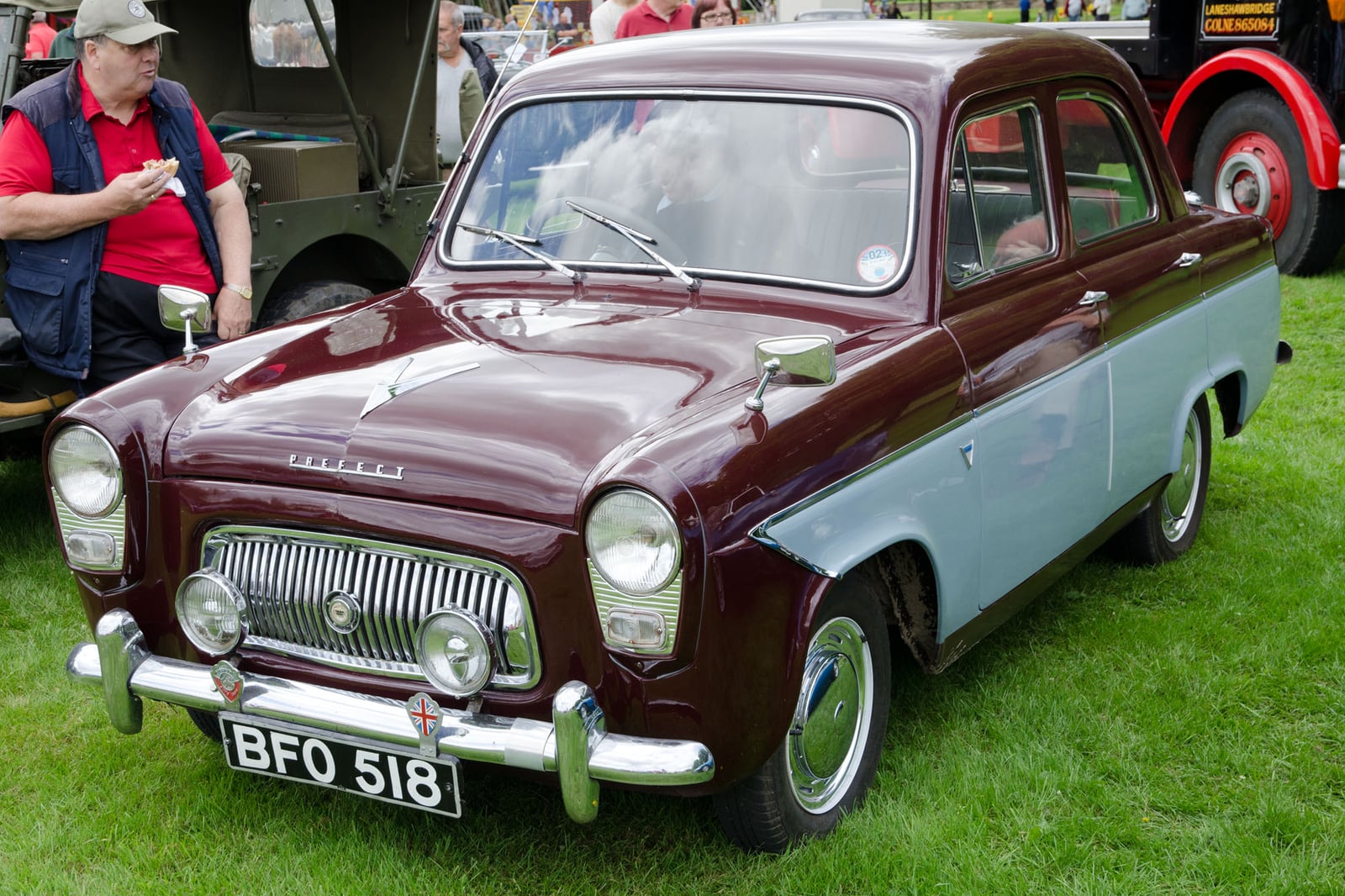
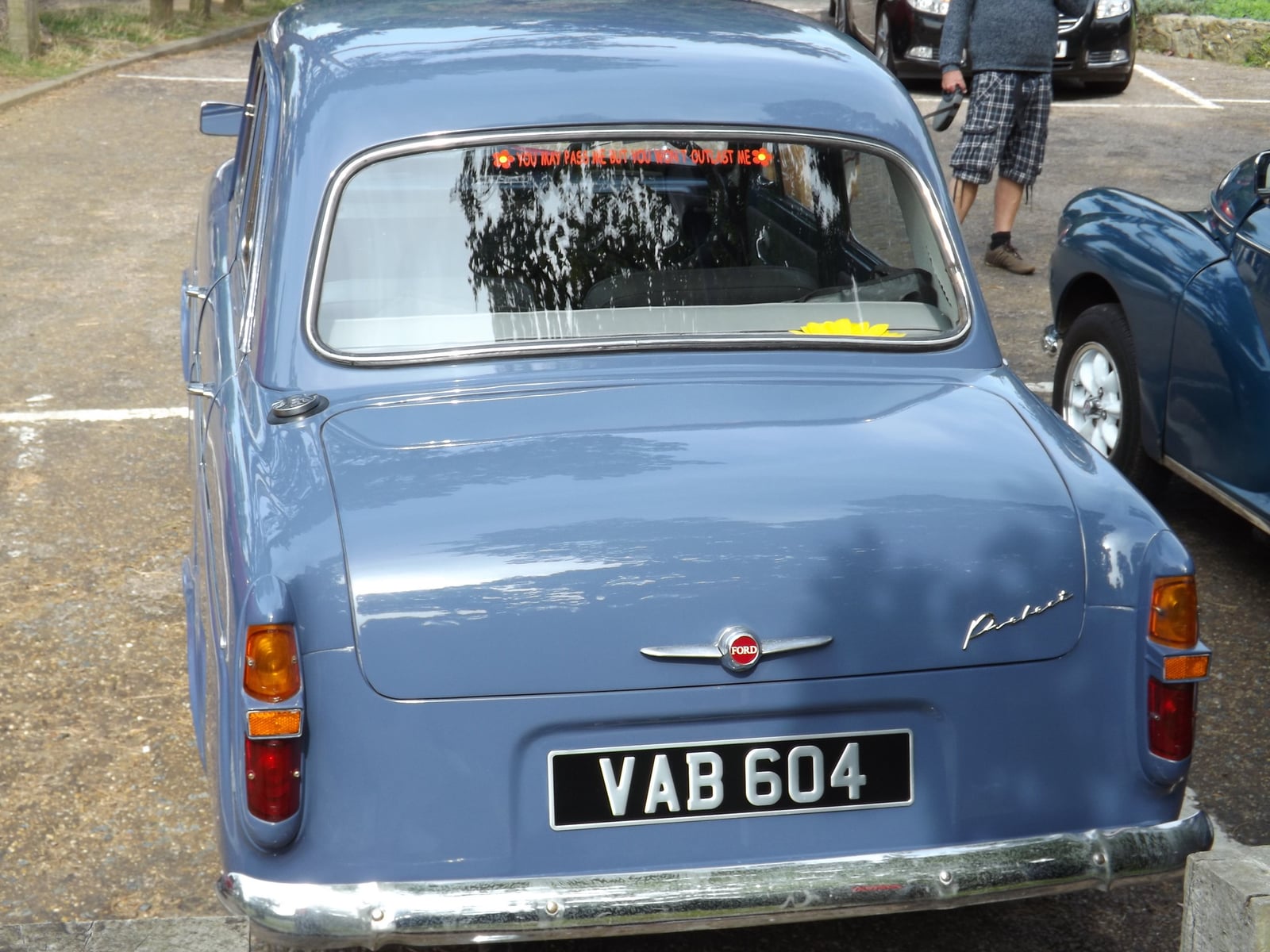
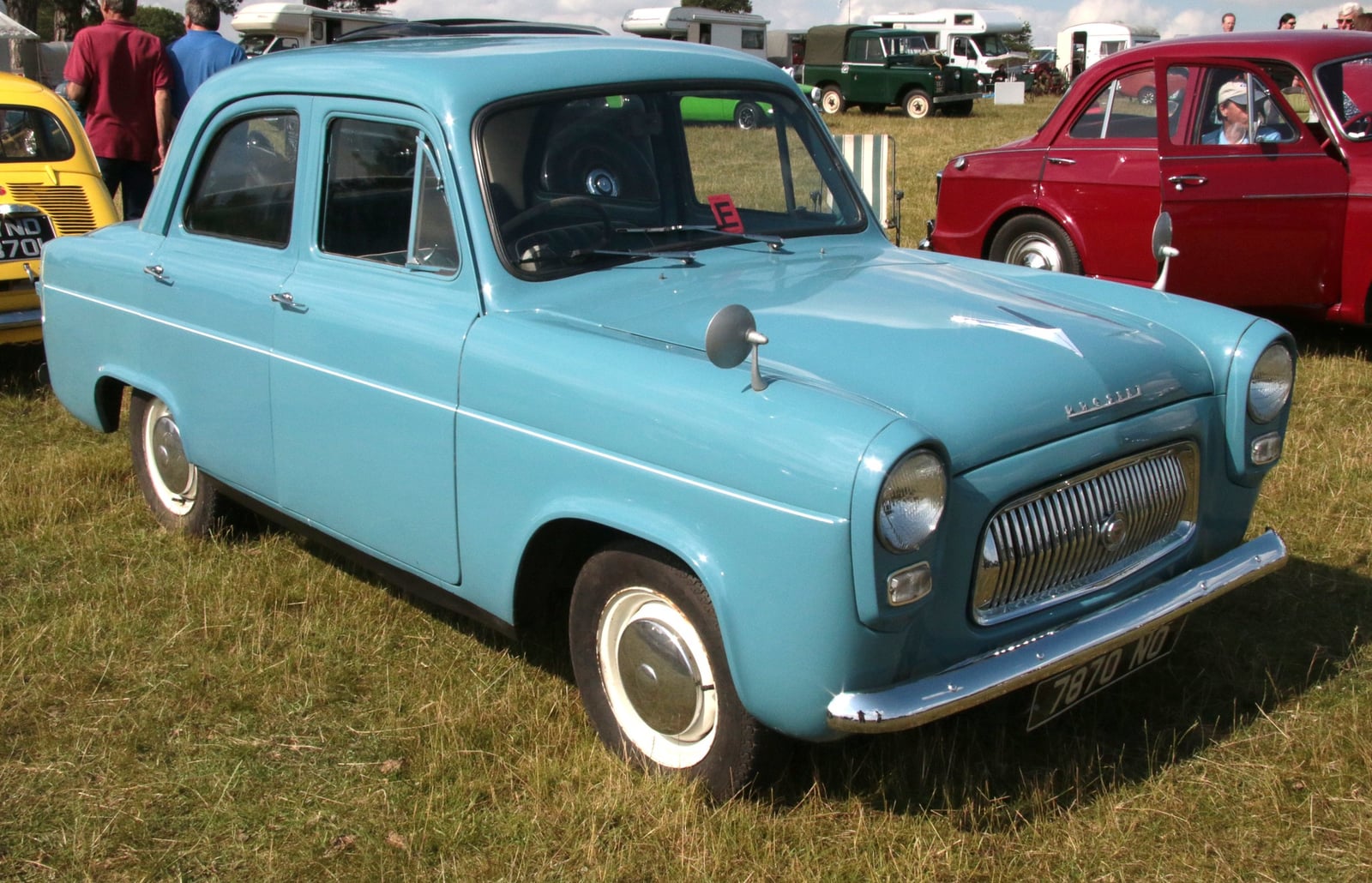
Then in 1953 came the 100E Prefect, a thoroughly modern, full-width four-door saloon sharing its body and 1172cc sidevalve engine with the 100E Anglia. It was the Prefect brought up to date, and it saw the name through to 1961, when it was retired and the Anglia name went on alone to the famous reverse-window 105E. The old upright tooling did not die either: it carried on as the bargain-basement Ford Popular, which kept the pre-war shape in production until 1959 as Britain’s cheapest new car.

The upmarket small Ford
Throughout its life the Prefect played a clear role: the slightly more upmarket, four-door member of Ford’s small-car range, sitting above the basic Popular and alongside the cheaper two-door Anglia. The differences were modest, trim, doors, equipment, but the positioning is the key to understanding the car. A Prefect was the small Ford for a family that wanted four doors and a touch more respectability without spending more than they had to. Hundreds of thousands were sold on exactly that promise, and the survivors still divide the same way: the uprights for period charm, the 100E for usability.

A name that became a joke
The Prefect’s very ordinariness earned it a strange immortality. In The Hitchhiker’s Guide to the Galaxy, Douglas Adams’s alien character names himself Ford Prefect, having mistakenly judged that a Ford Prefect would be a perfectly inconspicuous human name. The gag only works because these cars were so utterly everywhere. It is an affectionate measure of just how much a part of British life the little Ford once was.

Sidevalve quirks
Living with a Prefect means living with the sidevalve Ford’s endearing quirks. The 1172cc engine breathes through a three-speed gearbox, the upright cars carry six-volt electrics and semaphore trafficators that flick out of the door pillars, and the windscreen wipers on many cars are driven by engine vacuum, which means they slow to a crawl just as you accelerate into the rain. None of this is a fault to be fixed. It is the period character that owners buy the car for, the clubs keep every bit of it serviceable, and a Prefect rewards the owner who enjoys the ritual as much as the destination.
What it is like to own
A Prefect is a forgiving and cheap classic to run. The sidevalve engine is simple and durable, if modest in output, the mechanicals are basic and sturdy, and parts are reasonably available through the Ford sidevalve specialists and the owners’ clubs. The cars are light and easy to work on.
To drive, they are firmly of their time: leisurely performance, a tall narrow body on the upright cars, and the relaxed pace of a 1950s family saloon. None of that is the point. The appeal is honest simplicity, period charm and the cheapest possible route into early classic-Ford ownership.

Buying guide: what to look for
Rust is the main concern, as always. On the 100E check the floors, sills, front and rear wings, the boot floor and the door bottoms. On the upright E493A inspect the separate wings, running boards, the body mountings and the chassis, since these older cars are built differently. Mechanically there is little to fear from the simple sidevalve engine and running gear; condition and completeness, especially of trim, matter most.

Current value and where it sits
Few classics ask less of a budget. Below £4,000 are the projects, £5,000 to £9,000 is where the usable cars sit, and £10,000 to £15,000 buys an excellent example, the upright E493A and the best 100E cars leading. That makes it one of the least expensive routes into early Ford ownership, and among the most charming. For the wider period, see British classic cars of the 1950s.
More photos

The Prefect in dates
- 1938The E93A launches the name as Ford UK's upmarket four-door small saloon, above the Popular and alongside the two-door Anglia.
- 1949The post-war E493A continues the upright sit-up-and-beg body with separate headlamps and a high stance.
- 1953The 100E Prefect arrives as a thoroughly modern full-width four-door, sharing its body and 1,172cc sidevalve engine with the 100E Anglia.
- 1953The old upright tooling carries on as the bargain-basement Ford Popular, Britain's cheapest new car until 1959.
- 1961The name is retired and the Anglia carries on alone to the reverse-window 105E.
What to check on a Prefect
Rust, by body type
- 100E: floors, sills, front and rear wings, boot floor and door bottoms
- Upright E493A: separate wings, running boards, body mountings and the chassis
- The two are built differently, so do not carry one inspection over to the other
- Condition and completeness, especially of trim, matter most on both
Sidevalve quirks, which are the character
- Six-volt electrics on the upright cars
- Semaphore trafficators that flick out of the door pillars
- Vacuum-driven wipers that slow as you accelerate
- The clubs keep all of it serviceable; none of it is a fault to be engineered away
Mechanical
- The 1,172cc sidevalve is simple and durable, if modest in output
- A three-speed gearbox is standard and sets the driving rhythm
- Parts are reasonably available through the Ford sidevalve specialists
- Running gear is basic and sturdy, so there is little to fear mechanically
What the Ford Prefect sells for at auction
In real terms, typical Ford Prefect prices were down about 66% over the five years to 2025, once inflation is accounted for.
Show the year-by-year mediansHide the year-by-year medians
| Year | Sold | Median | In 2025 money |
|---|---|---|---|
| 2026 (so far) | 8 | £3,250 | |
| 2025 | 5 | £2,592 | £2,592 |
| 2024 | 5 | £4,180 | £4,340 |
| 2023 | 8 | £4,948 | £5,310 |
| 2022 | 8 | £2,936 | £3,363 |
| 2021 | 5 | £5,670 | £7,011 |
| 2020 | 3 | £6,007 | £7,612 |
| 2017 | 4 | £2,604 | £3,469 |
| 2006 | 3 | £850 | £1,441 |
- £1,360Prefect
- £6,367Prefect
- £2,900Prefect
- £3,600Prefect
- £2,000Prefect
Reasonable evidence. 61 recorded sales: enough for the range to mean something, though a few unusual cars can still move a single year's median. Based on 61 sold results from public classic car auctions (2005 to 10 August 2026). Sold prices, not asking prices, and not a valuation: condition, history and specification vary from car to car. Inflation-adjusted figures use the ONS CPIH index, in 2025 money.