Ford Anglia 105E: the small Ford with the backwards window (1959–1967)
The Ford Anglia 105E put more than a million British families on the road, and is remembered for two things, its reverse-rake rear window and, decades later, its starring role as the flying car in Harry Potter. A guide to the 105E and 123E, the first of the Kent engines, what they are like to own, and what they are worth.
Built 1959–1967 98 recorded sales

At a glance
- Years
- 1959–1967
- Body styles
- Two-door saloon (also estate and van)
- Drivetrain
- Front engine, rear-wheel drive
- Engines
- 997cc OHV Kent four (1198cc on the Super / 123E)
- Power
- 39 bhp (997cc); 48 bhp (1198cc)
- Top speed
- Around 73 mph (997cc); 81 mph (1198cc)
- Trim levels
- Standard, De Luxe, Super (1198cc, badged 123E)
- Production
- Over 1.08 million: 1,004,737 of the 105E plus 79,223 of the 123E
- Assembly
- Dagenham, Essex
- Designer
- Ford of Britain, with American styling influence
- Values
- Project around £2,500-£5,000; good £6,000-£10,000; excellent £11,000-£16,000 (Super and tidy De Luxe cars command the most)
- Engineering first
- Carried the first of Ford's famous Kent overhead-valve engines
- Famous for
- The reverse-rake rear window, and the flying car in Harry Potter and the Chamber of Secrets
The models
Few cars motorised post-war Britain as widely as the Ford Anglia. The name began on the sit-up-and-beg E494A of the late 1940s and the three-box Ford 100E Anglia of the 1950s, but the car everyone means is the 105E: Ford built more than a million of it between 1959 and 1967, and for a generation of families it was the first new car they ever owned. Today it is remembered for two things above all: the backward-sloping rear window that made it unmistakable, and the pale blue example that flew across cinema screens in Harry Potter.
The Anglia is one of the most accessible of all the classic Fords, a simple, cheap, characterful small saloon that is easy to own and impossible to mistake for anything else.
That backwards window
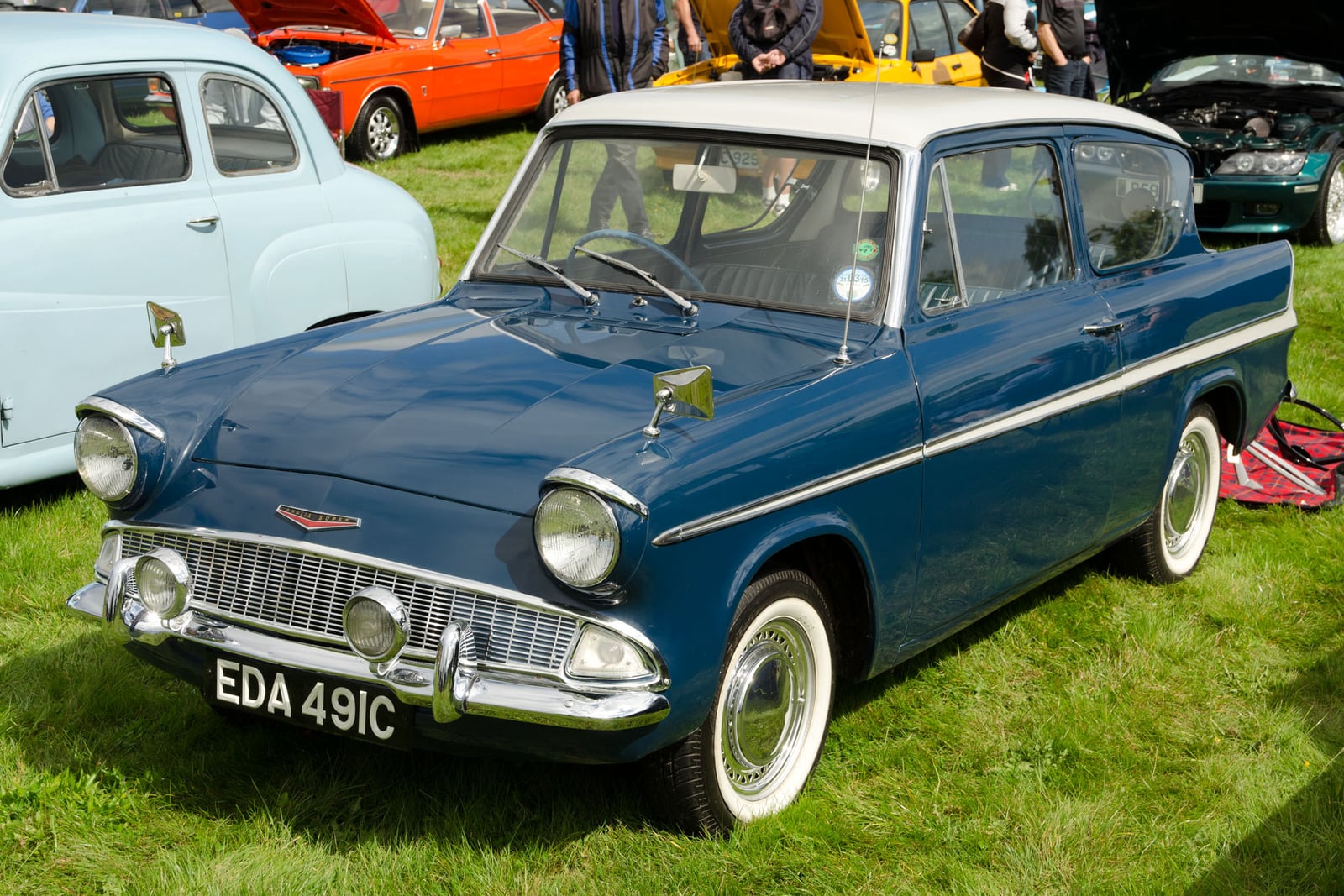
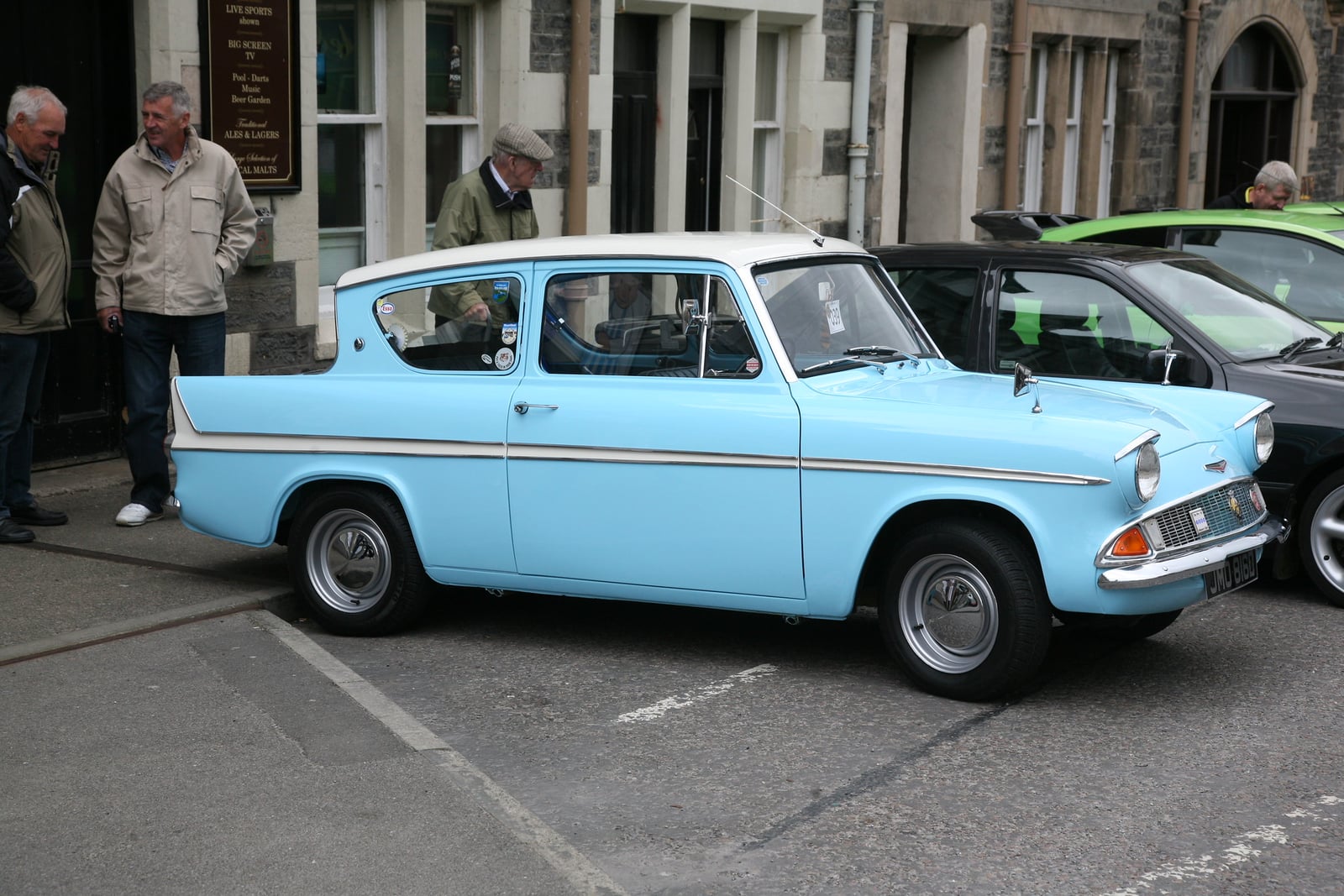
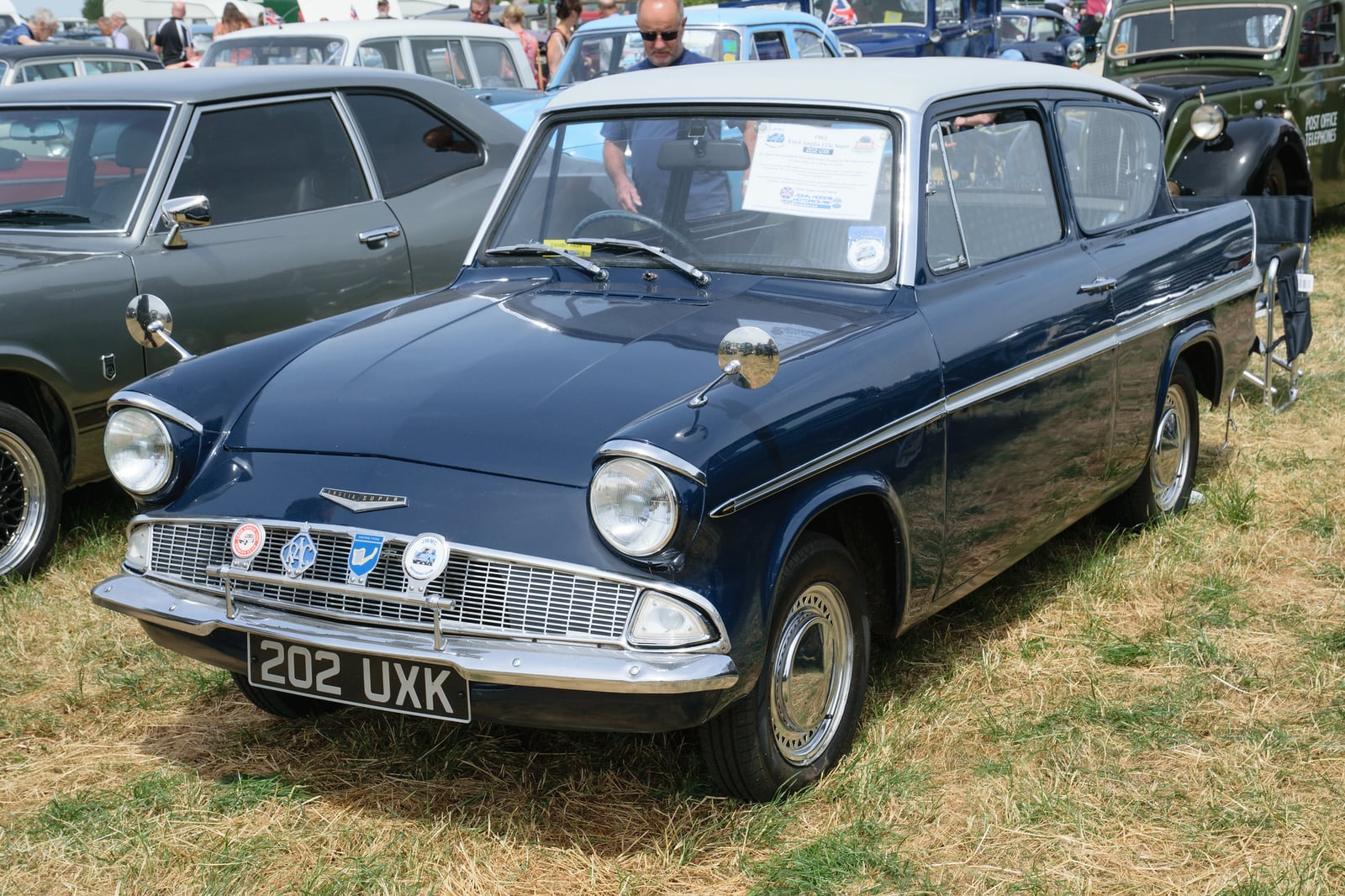
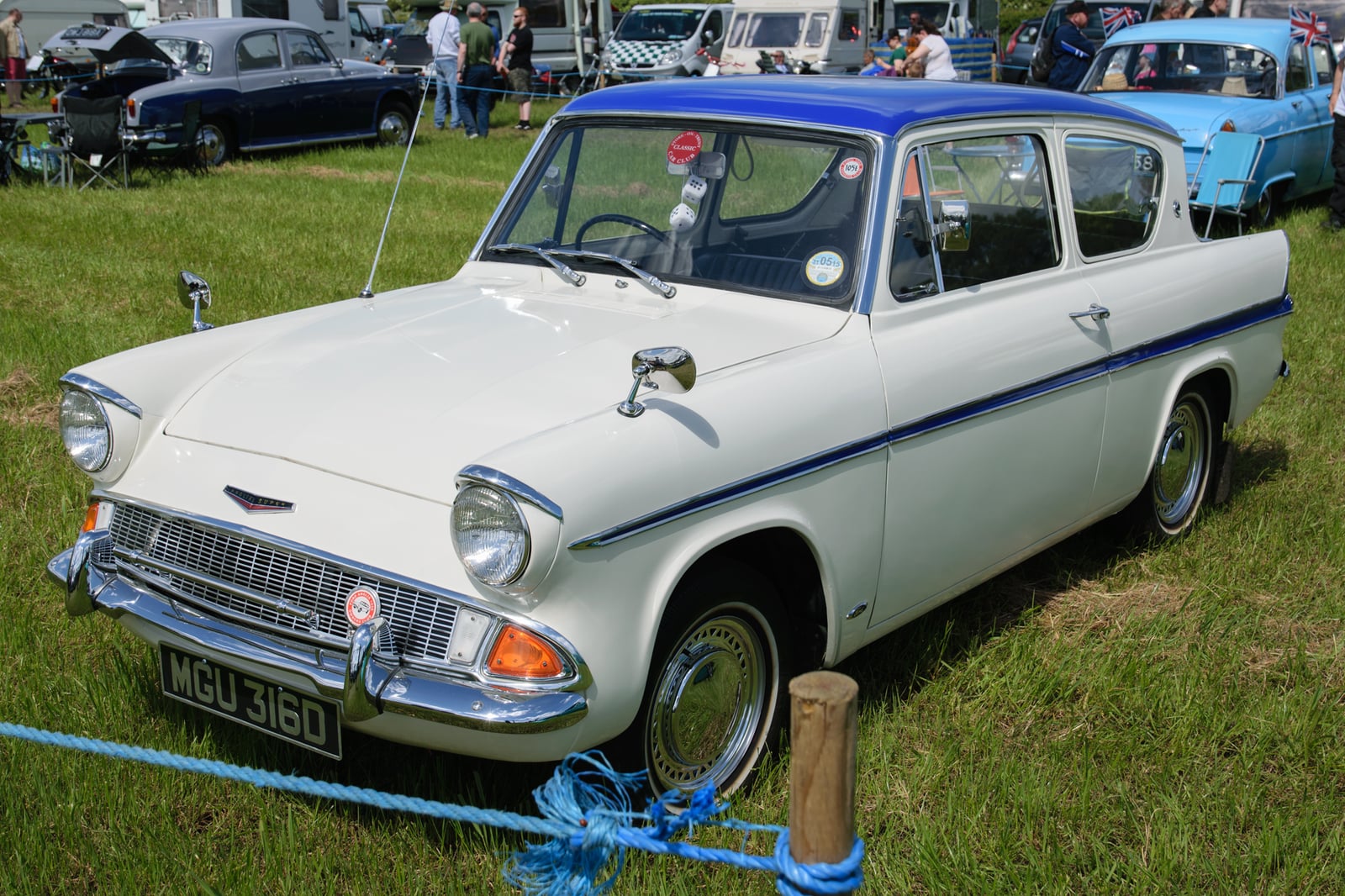
The 105E’s defining feature is its reverse-rake rear window, which slopes forwards from the roof down to the bootline rather than backwards. It was a piece of transatlantic styling, borrowed from contemporary American Fords, and Ford claimed practical benefits: more headroom for rear passengers and a back window that stayed clearer in the rain.
Whatever the engineering case, the effect was to make the little Anglia look like nothing else on a British road in 1959. Against the upright, rounded small cars of the day it looked sharp, modern and faintly American, and that distinctive profile is still the first thing anyone notices about it.

The first Kent engine
Under the bonnet sat something genuinely important. The 105E introduced Ford’s new 997cc overhead-valve four, the very first of the Kent engine family that would go on to power the Cortina, the Escort, the Lotus twin-cam and an entire industry of kit cars and racing specials. It was over-square, free-revving and tough, a big step on from the old sidevalve unit it replaced.
From 1962 the Anglia Super, carrying the code 123E, used a larger 1198cc version with more power and an all-synchromesh gearbox, making it the one to have for modern driving. The Kent’s simplicity and vast parts supply are the foundation of the Anglia’s reputation as an easy, cheap classic to keep on the road.
A small car with a big profile
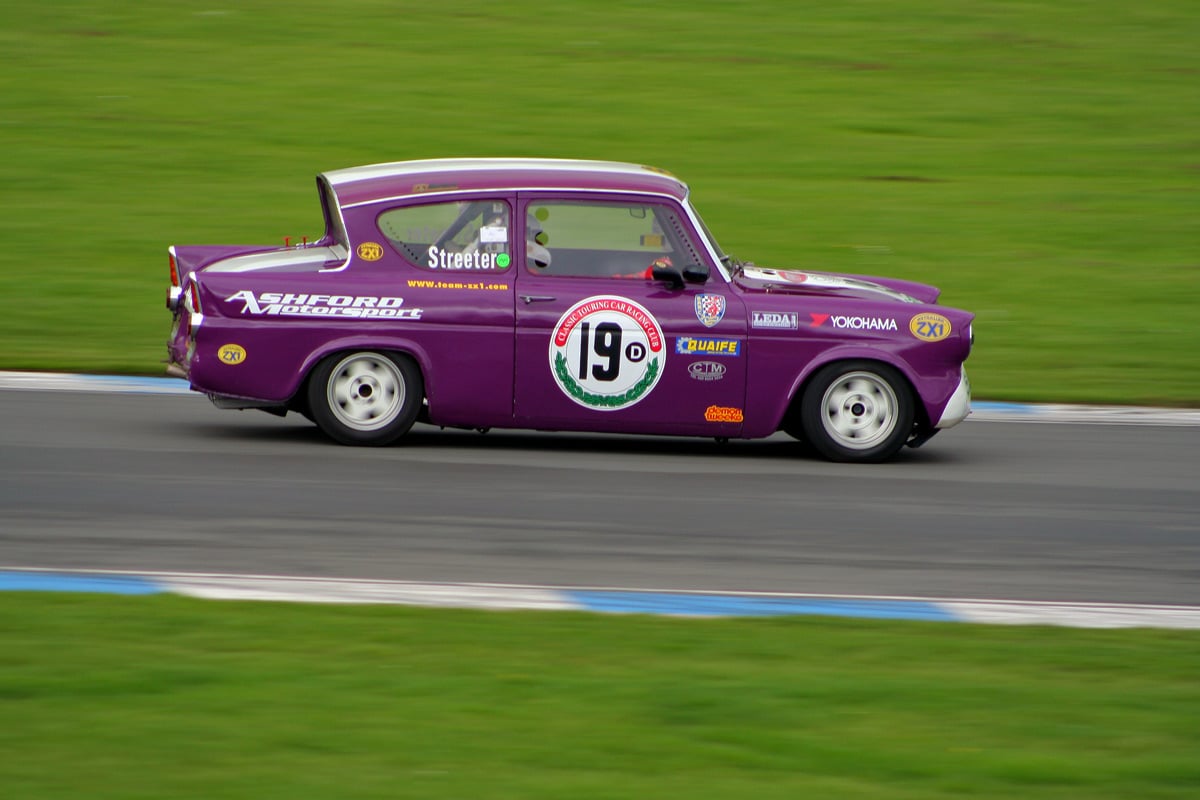
The Anglia earned an outsized place in popular culture. Decades after production ended it became famous all over again as the flying Ford Anglia in Harry Potter and the Chamber of Secrets, a pale blue 105E that introduced the car to millions who had never heard of it. It had a sporting life too: in period the Anglia was a successful saloon racer, and the 105E shell became a popular basis for competition cars.
That mix of everyday humility and unexpected fame is much of why the Anglia is loved. It is a car people remember from childhood, recognise from the cinema, and can actually afford to buy.

What it is like to own
An Anglia is a forgiving first classic. The Kent engine is durable and simple, the mechanicals are well understood, and parts, from service items to body panels, are cheap and widely available through the Ford specialists and the owners’ clubs. It is small, light and easy to work on at home.
To drive it is very much a car of its time: modest power, a light body and a willing engine that likes to rev, especially in 1198cc Super form. It is not fast, but it is genuinely usable in modern traffic, easy to park, and cheap to run. For many owners that combination, real period character with none of the fragility or cost of a sports car, is exactly the point.
Buying guide: what to look for
Rust is the main enemy, as with any monocoque small car of the era. Check the floors, the sills and inner sills, the front wings (especially around the headlamps and at the lower edges), the rear wheel arches, the boot floor and the bottoms of the doors. Look closely around that signature rear window, where water can sit, and at the windscreen surround.
Mechanically there is little to fear. The Kent engine is tough; listen for the usual rumbles and check for oil pressure, but rebuilds are cheap and straightforward. The gearbox and back axle are tough. Because so many were built and so many parts are remanufactured, condition and originality matter far more than mechanical wear when you are choosing between cars.

Current value and where it sits
The Anglia is one of the cheapest ways into classic Ford ownership and has stayed that way. £2,500 to £5,000 buys a project, £6,000 to £10,000 something usable and £11,000 to £16,000 an excellent one, with the 1198cc Super and the very best beyond. Those are modest figures for a shape this recognisable, which is precisely the appeal. For the wider period, see British classic cars of the 1950s and 1960s.
More photos
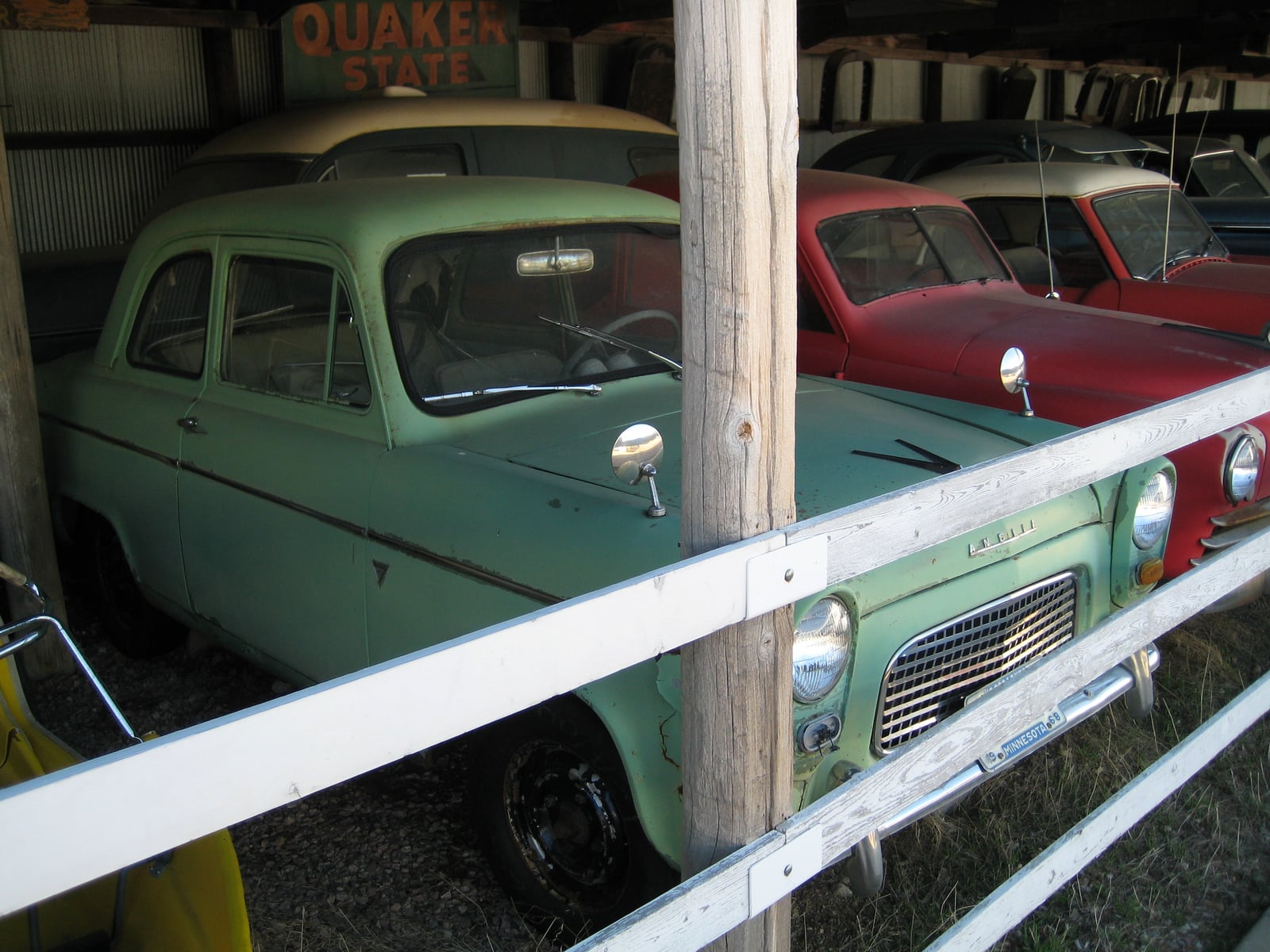
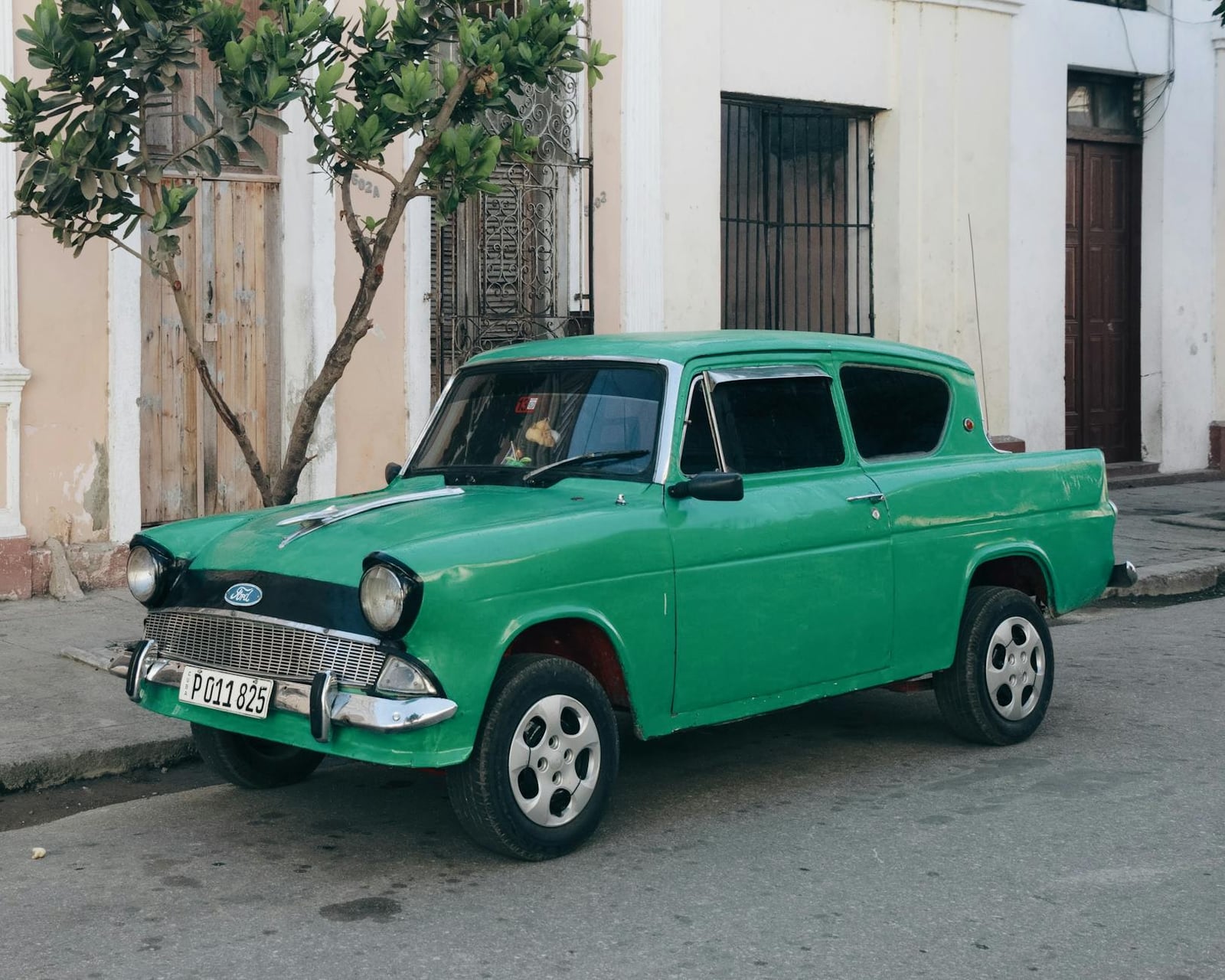
How the Anglia changed
- 1959The 105E arrives with the reverse-rake rear window borrowed from contemporary American Fords, and the first of the 997cc Kent overhead-valve engines.
- 1961Estate and van versions join the two-door saloon.
- 1962The Anglia Super, coded 123E, brings a 1,198cc engine and an all-synchromesh gearbox, making it the one to have for modern driving.
- 1967Production ends at 1,004,737 of the 105E plus 79,223 of the 123E; the Escort replaces it.
- 2002A pale blue 105E flies across cinema screens in Harry Potter and the Chamber of Secrets, introducing the car to millions.
Buying checklist: the Anglia in front of you
Rust
- Floors, sills and inner sills
- Front wings, especially around the headlamps and at the lower edges
- Rear wheel arches, boot floor and door bottoms
- Around the signature rear window, where water sits, and the windscreen surround
Mechanical, which holds little fear
- The Kent engine is tough: listen for rumbles and check oil pressure, but rebuilds are cheap
- The gearbox and back axle are tough and well supported
- So many parts are remanufactured that condition beats mechanical wear when choosing
- The 1,198cc Super has an all-synchromesh gearbox, which the 997cc car does not
Version and originality
- Standard, De Luxe and Super trims differ, and the Super carries the 123E code
- Super and tidy De Luxe cars command the most
- Estate and van versions are scarcer than the saloon
- The 105E shell was a popular competition base, so check what is original underneath
What the Ford Anglia sells for at auction
In 2025 the median Ford Anglia sold for £5,722 across 13 sales, 42% down on 2024. In real terms, typical Ford Anglia prices were down about 64% over the five years to 2025, once inflation is accounted for.
| Variant | Sold | Typical range | Median |
|---|---|---|---|
| Anglia | 60 | £5,308 - £10,038 | £7,050 |
| Anglia 105E | 33 | £4,603 - £9,562 | £7,650 |
Show the year-by-year mediansHide the year-by-year medians
| Year | Sold | Median | In 2025 money |
|---|---|---|---|
| 2026 (so far) | 10 | £6,624 | |
| 2025 | 13 | £5,722 | £5,722 |
| 2024 | 11 | £9,788 | £10,164 |
| 2023 | 11 | £8,400 | £9,014 |
| 2022 | 12 | £7,482 | £8,568 |
| 2021 | 9 | £8,400 | £10,387 |
| 2020 | 4 | £12,431 | £15,753 |
| 2019 | 3 | £4,600 | £5,889 |
| 2018 | 3 | £9,240 | £12,029 |
| 2016 | 7 | £5,800 | £7,925 |
| 2011 | 3 | £2,300 | £3,391 |
- £8,400Anglia 105E
- £15,000Anglia
- £3,248Anglia
- £5,020Anglia 105E
- £4,000Anglia
Reasonable evidence. 98 recorded sales: enough for the range to mean something, though a few unusual cars can still move a single year's median. Based on 98 sold results from public classic car auctions (2005 to 10 August 2026). Sold prices, not asking prices, and not a valuation: condition, history and specification vary from car to car. Inflation-adjusted figures use the ONS CPIH index, in 2025 money.