Ford Zodiac: Dagenham's affordable luxury car (1953–1972)
The Ford Zodiac was the top of Ford of Britain's big-saloon range, the upmarket, six-cylinder flagship above the Consul and Zephyr. From the finned Mk2 to the huge V6-engined Mk4, it offered American-style space and brightwork at a British price. A guide to the four generations, what to look for, and what they are worth.
Built 1953–1972 71 recorded sales

At a glance
- Years
- 1953–1972
- Body styles
- Four-door saloon (also estate and convertible on early cars)
- Drivetrain
- Front engine, rear-wheel drive
- Engines
- 2.3-2.6-litre straight-six (Mk1-3); 3.0-litre Essex V6 (Mk4)
- Power
- Around 71 bhp (Mk1) rising to 136 bhp (Mk4 3.0 V6)
- Top speed
- Around 100-105 mph (later cars)
- Trim levels
- Zodiac, plus Executive trim on the Mk3 and Mk4
- Production
- The upmarket model in the Consul/Zephyr/Zodiac range built by Ford of Britain from 1950 to 1972
- Assembly
- Dagenham, Essex
- Designer
- Ford of Britain, with strong American styling influence
- Values
- Project around £3,000-£7,000; good £8,000-£14,000; excellent £15,000-£25,000 (finned Mk2 convertibles and Executives top the range)
- Place in the range
- The luxury flagship above the four-cylinder Consul and the Zephyr
- On screen
- The big Fords were the patrol cars of the BBC police series Z-Cars
The models
At the top of Ford of Britain’s range, above the workaday Consul and the six-cylinder Zephyr, sat the Zodiac: the company’s affordable luxury car. For buyers who wanted American-style space, brightwork and a smooth six without the price of a Jaguar or a Rover, the Zodiac was the answer, and through four generations from 1953 to 1972 it gave Dagenham a genuine flagship.
The Zodiac is one of the most characterful of the big classic Fords, a car that wore its transatlantic influence proudly and is now valued for exactly that flamboyance.
The top of the range
Ford’s big saloon was always sold as a three-model family. The four-cylinder Consul was the base car, the six-cylinder Zephyr sat above it, and the Zodiac was the luxury version at the top. The Zodiac kept the six-cylinder engine and added the equipment, the brightwork and the interior trim that justified the higher price, two-tone paint, a richer cabin, more chrome and, on later cars, an upmarket Executive specification.
That positioning is the key to the car. A Zodiac is a fully-loaded Zephyr, and the appeal then and now is a lot of car, a lot of space and a lot of style for the money.
Four generations
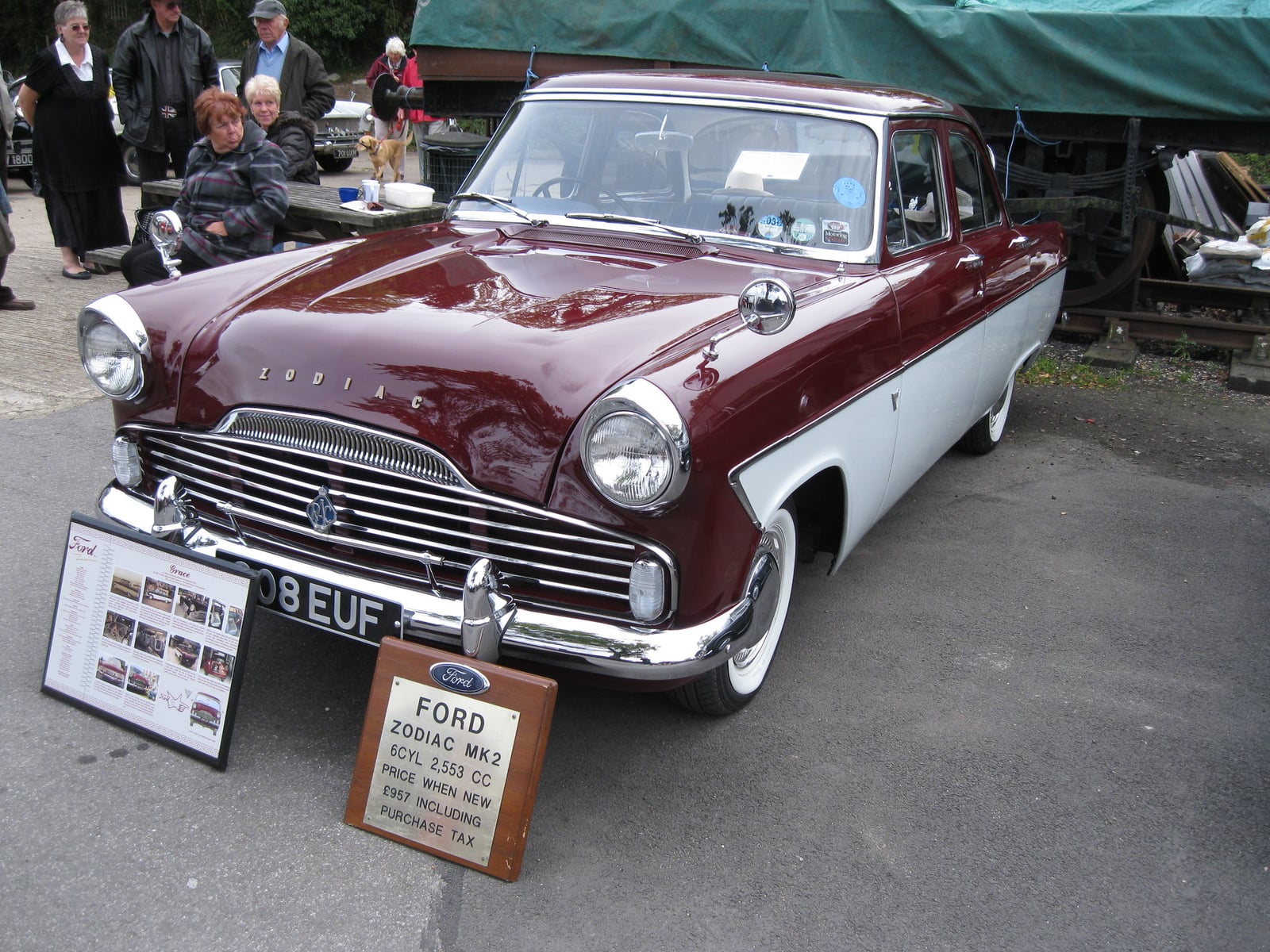
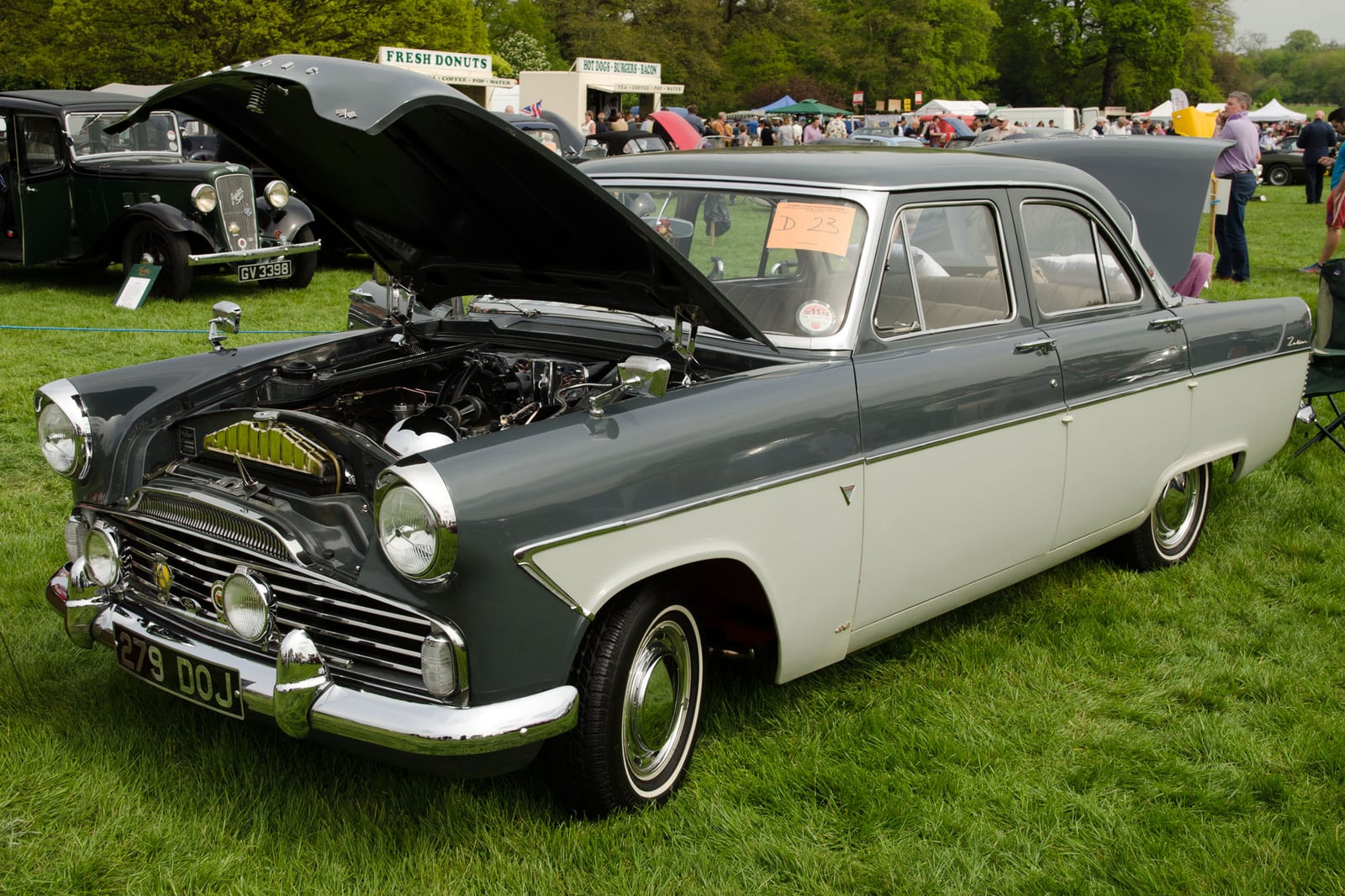
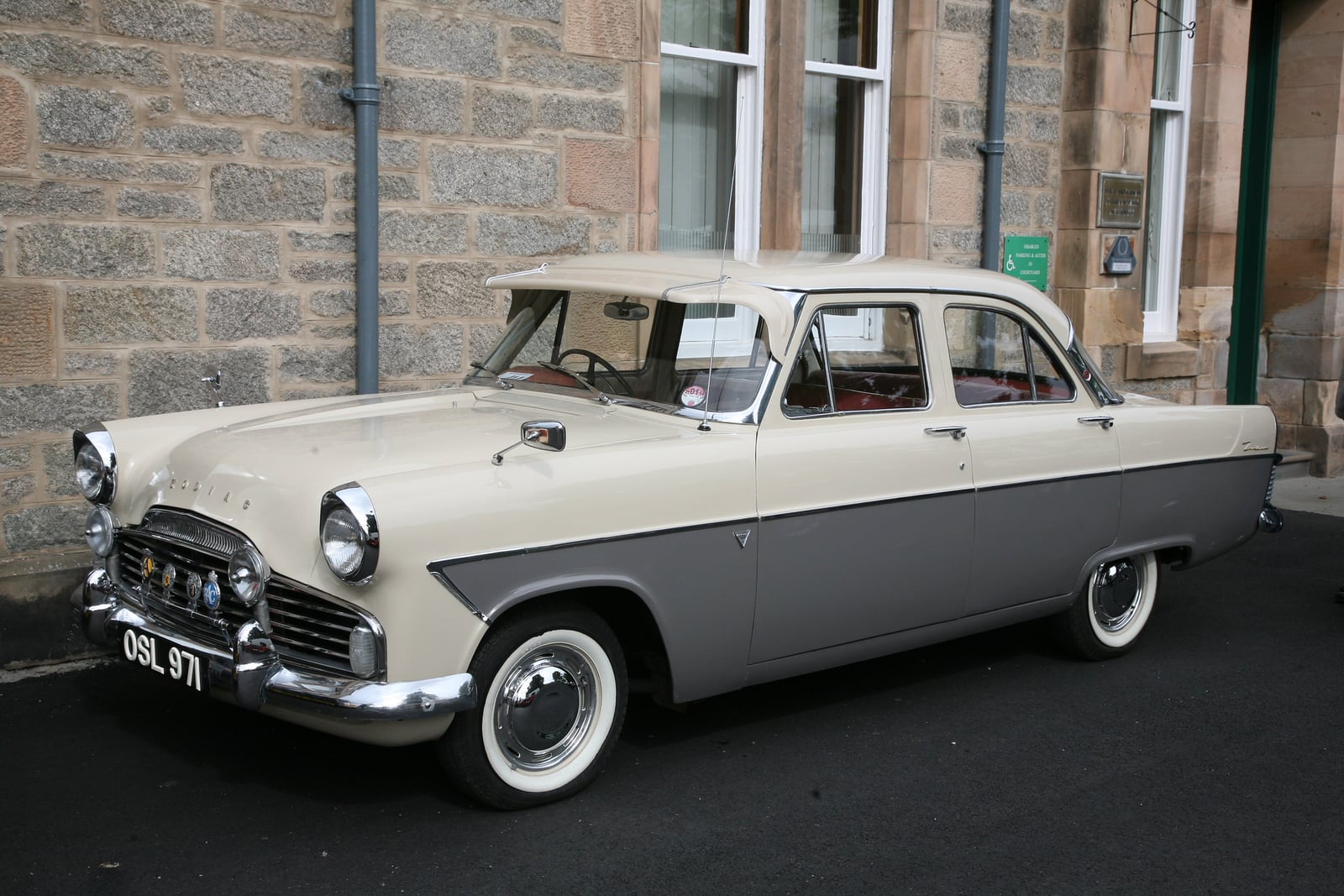
The Zodiac changed completely over its life. The Mk1, from 1953, was an upmarket take on the original Zephyr. The Mk2 (1956–62), one of the famous Three Graces alongside the Consul and Zephyr, is the flamboyant one: tail fins, a wrapped windscreen and unmistakable late-1950s American glamour, and the most sought-after of the line, especially as a convertible.
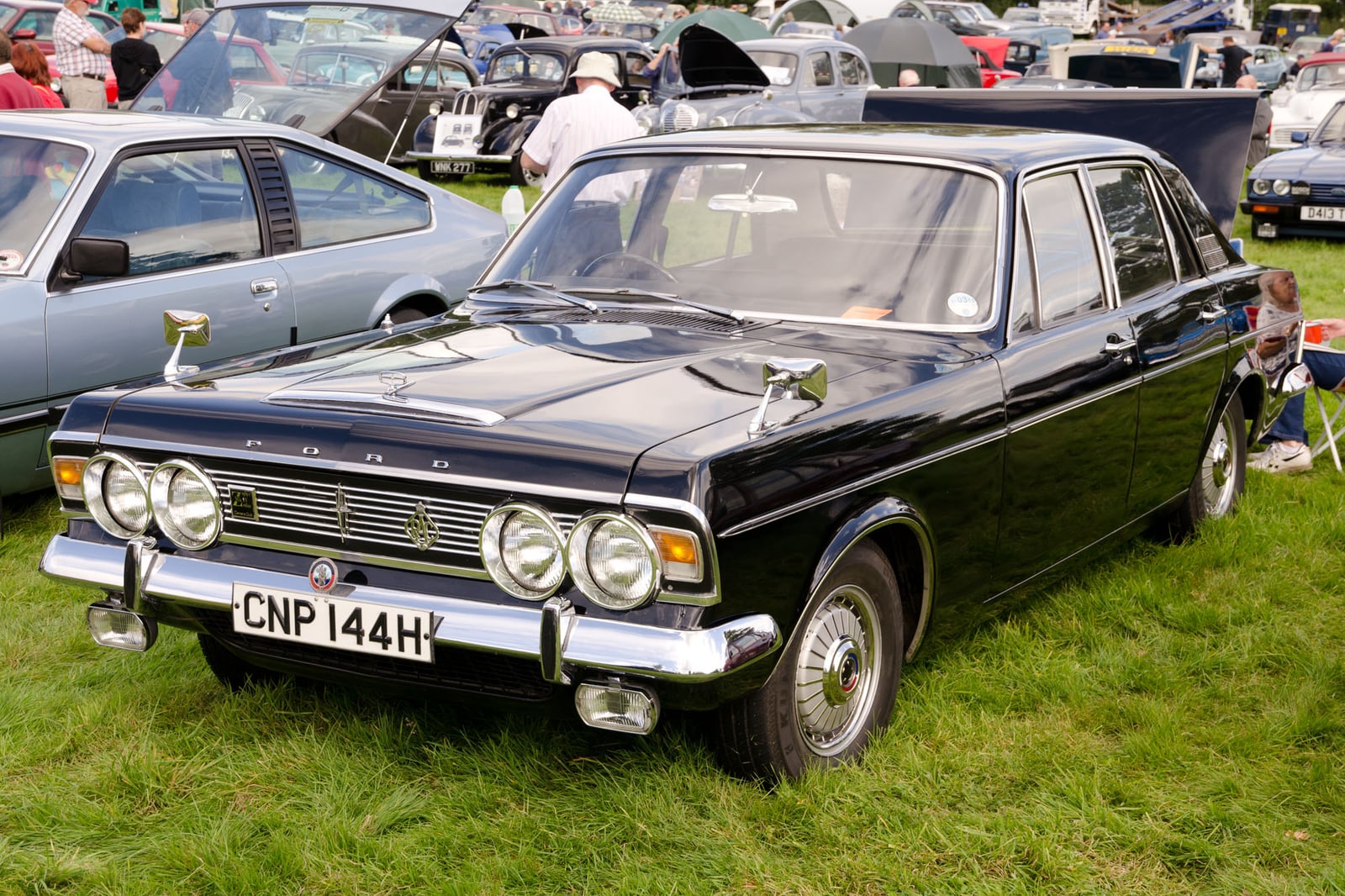
The Mk3 (1962–66) was crisper and more restrained, a cleaner early-1960s shape that also introduced the well-equipped Executive. The Mk4 (1966–72) was a different animal again: a much larger, longer car with a vast bonnet, the new 3.0-litre Essex V6, and the first independent rear suspension fitted to a British Ford. Its styling divided opinion in period and still does, which makes a good one quietly distinctive today.

What it is like to own
The Zodiac was the top of the range and it still owns like it. The six-cylinder engines are unstressed and the cabins are the best trimmed of the three, which is the whole reason to choose one over a Zephyr, and it is also what makes ownership more demanding. There is markedly more brightwork here than on the sister cars, and on a Mk2 in particular keeping it right is a continuing job rather than a one-off.
Mechanically nothing about it is difficult. These were built in huge numbers and share their running gear with the Consul and Zephyr, so service parts are available and the clubs are strong. It is the model-specific trim, and on an Executive the correct equipment, that takes the hunting.
The reward is presence. Very little else at the money looks as expensive standing still, which was the point of the car when it was new and remains the point of it now.

The Executive and the convertibles
Two corners of the range matter more than the rest to collectors. The first is the Executive, the loaded flagship specification introduced on the Mk3 and carried on with the Mk4, which bundled the best of the options list into one top-of-the-line car; a genuine Executive is the most sought-after closed car in the range. The second is the convertibles of the 1950s, built in small numbers by the coachbuilder Carbodies: rare then and very rare now, they sit at the absolute top of Zodiac values, with the finned Mk2 drophead the poster car of the whole line.
Between those poles, the ordinary saloons remain the value: the same six-cylinder smoothness and the same period style, at prices a fraction of the glamour models’.
Buying guide: what to look for
Specification decides the money here more than on either sister car. A genuine Executive, the loaded flagship introduced on the Mk3 and carried over to the Mk4, is the most sought-after closed Zodiac there is, and because it was a bundle of options rather than a separate model, the badge is a claim to check against the paperwork rather than a fact to accept. Above it sit the 1950s Carbodies convertibles, rare then and very rare now, with the finned Mk2 drophead at the top of the whole line.
The brightwork is the trap. The Mk2 carries a great deal of it and two-tone paint compounds the problem, because corrosion sits behind trim that nobody removes at a viewing. Ask for it to come off, or price the car as though something is behind it.
Underneath, the checks are the family’s: floors, sills and inner sills, wings, wheel arches, boot floor and door bottoms, and on the Mk4 the box sections and suspension mounts. The engines are durable, the Mk4’s 3.0 Essex V6 is worth checking for overheating, and the ordinary saloons remain the value in a range whose glamour models have run away from them.

Current value and where it sits
The Zodiac asks a small premium over its sister cars and returns it in presence. Projects run £3,000 to £7,000, usable cars £8,000 to £14,000 and excellent examples £15,000 to £25,000, with the finned Mk2, the early convertibles and the loaded Executives at the top. Very little else offers this much period luxury at the money. For the wider period, see British classic cars of the 1950s and 1960s.
More photos
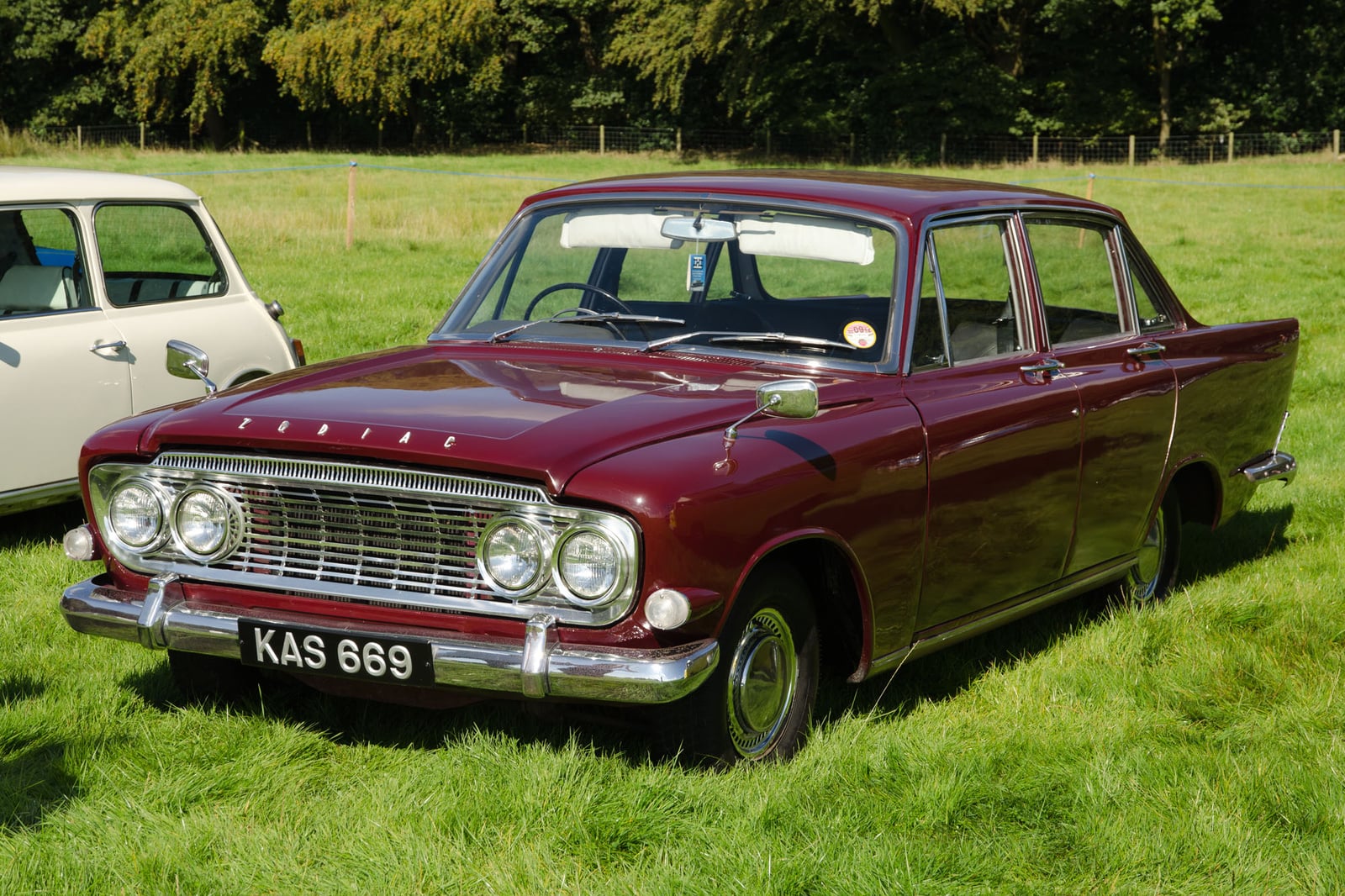
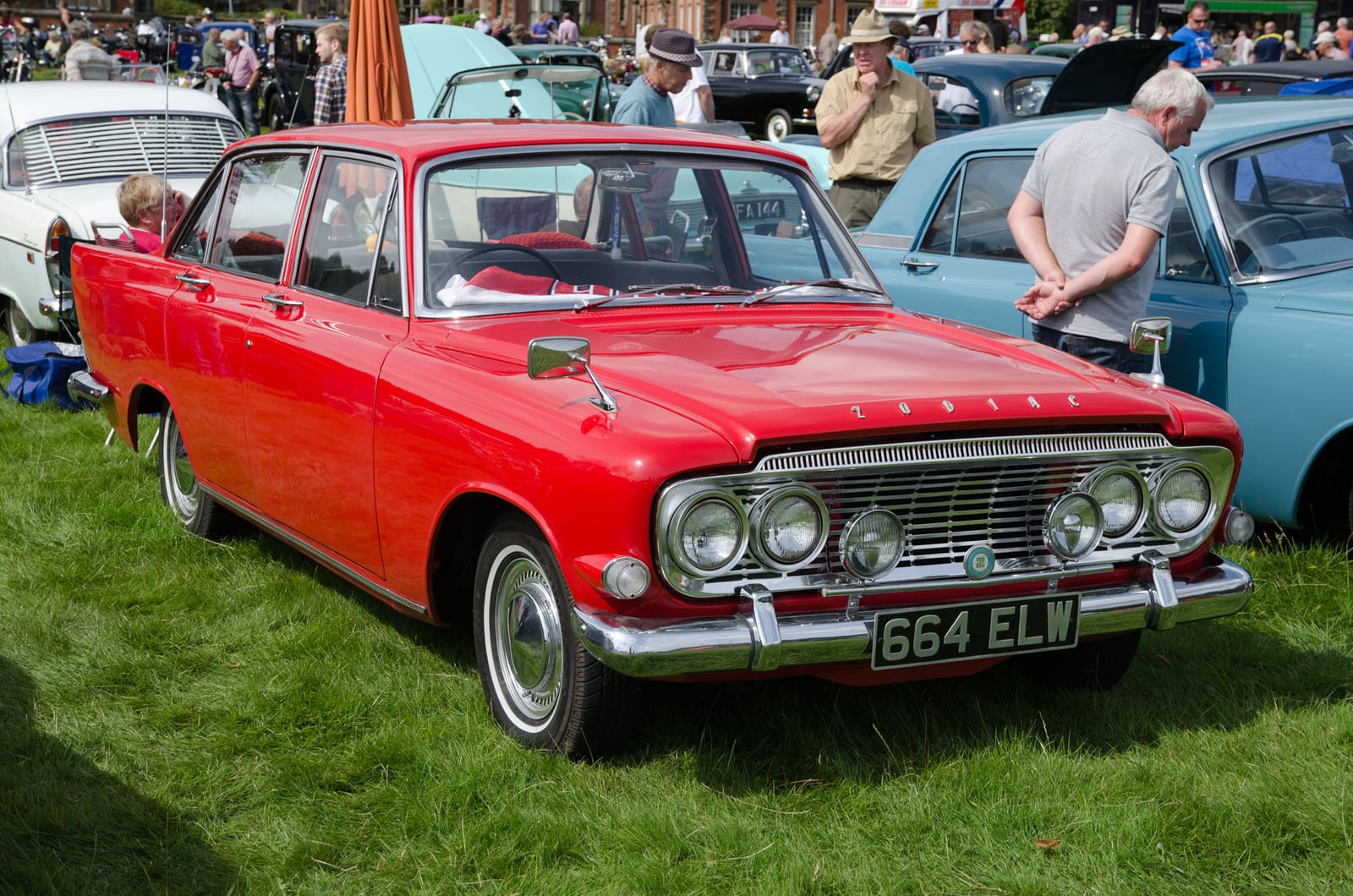
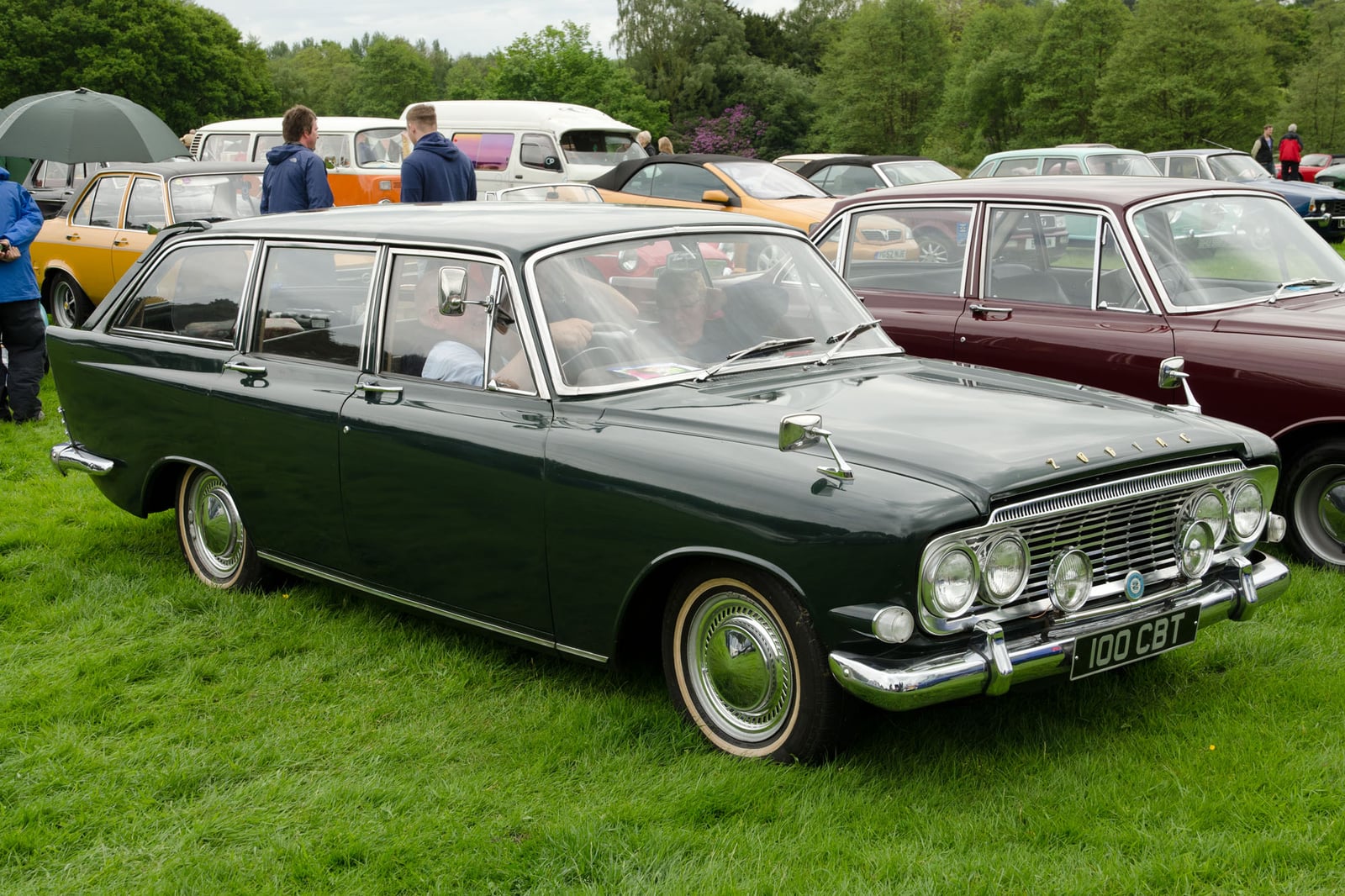
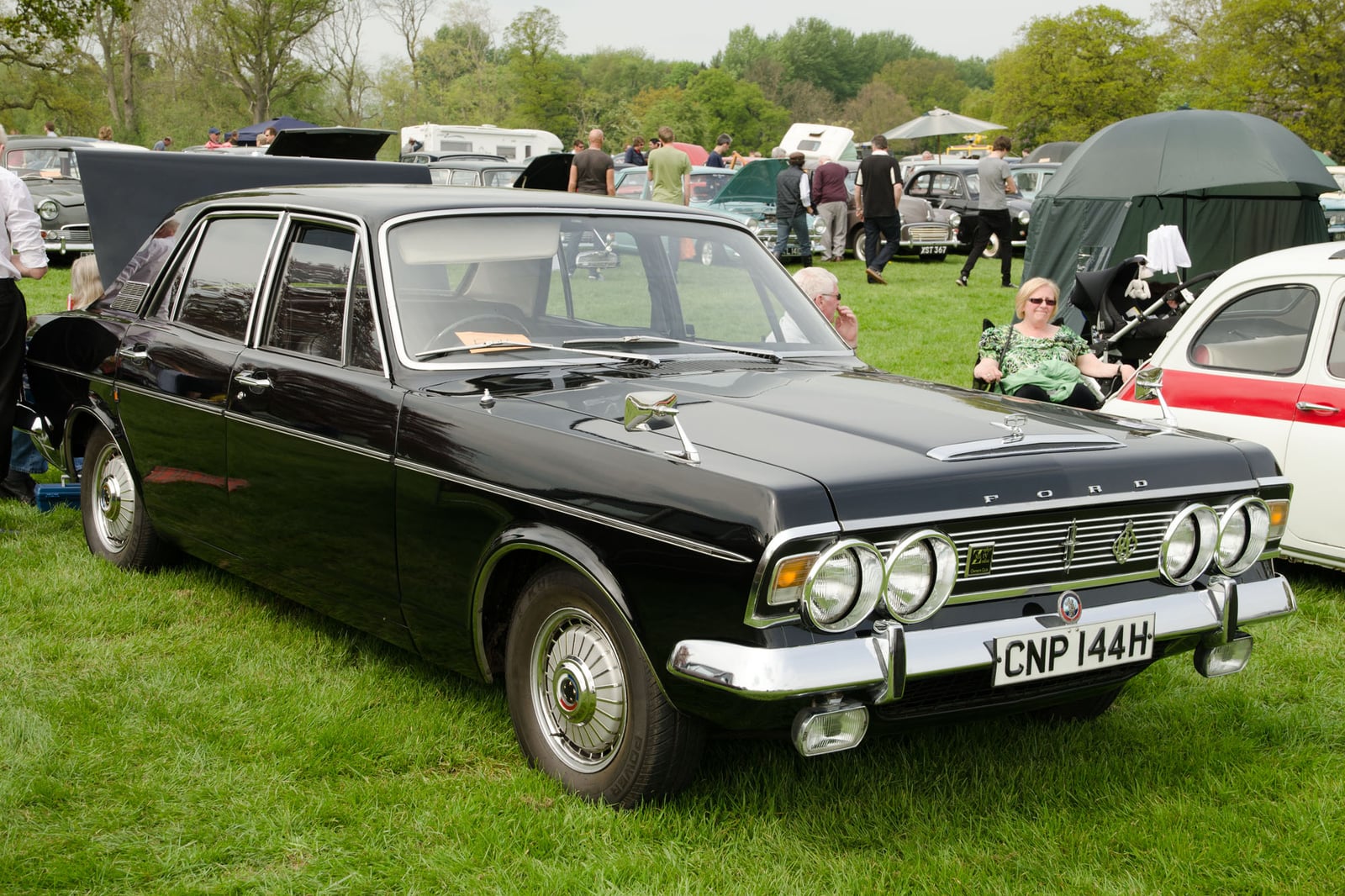
Zodiac: what changed and when
- 1953The Mk1 arrives as an upmarket take on the original Zephyr, the luxury flagship above the Consul.
- 1956The flamboyant finned Mk2 joins the Three Graces, with a wrapped windscreen and unmistakable late-1950s American glamour.
- 1950sCarbodies builds convertibles, rare then and very rare now, with the finned Mk2 drophead at the top of the whole line.
- 1962The crisper Mk3 arrives and introduces the well-equipped Executive specification.
- 1966The much larger Mk4 brings a vast bonnet, the 3.0-litre Essex V6 and the first independent rear suspension on a British Ford.
- 1972Production ends; the Consul and Granada replace the range.
Before you buy a Zodiac
Specification, which sets the money
- A genuine Executive is the most sought-after closed Zodiac there is
- Executive was a bundle of options, not a separate model, so check the badge against the paperwork
- 1950s Carbodies convertibles sit above everything, the finned Mk2 drophead at the very top
- Ordinary saloons remain the value in a range whose glamour models have run away
Brightwork, the trap
- The Mk2 carries a great deal of it, and two-tone paint compounds the problem
- Corrosion sits behind trim nobody removes at a viewing
- Ask for it to come off, or price the car as though something is behind it
- Model-specific trim and correct Executive equipment take the real hunting
Underneath, the family checks
- Floors, sills and inner sills, wings, wheel arches, boot floor and door bottoms
- Box sections and suspension mounts on the Mk4
- The engines are durable; the Mk4's 3.0 Essex V6 is worth checking for overheating
- Running gear is shared with the Consul and Zephyr, so mechanical parts are the easy part
What the Ford Zodiac sells for at auction
In real terms, typical Ford Zodiac prices were down about 40% over the five years to 2025, once inflation is accounted for.
Show the year-by-year mediansHide the year-by-year medians
| Year | Sold | Median | In 2025 money |
|---|---|---|---|
| 2026 (so far) | 10 | £10,884 | |
| 2025 | 4 | £6,425 | £6,425 |
| 2024 | 12 | £8,370 | £8,691 |
| 2023 | 8 | £10,132 | £10,873 |
| 2022 | 8 | £13,318 | £15,252 |
| 2021 | 6 | £13,010 | £16,088 |
| 2020 | 4 | £8,420 | £10,670 |
| 2019 | 3 | £12,000 | £15,362 |
| 2018 | 5 | £3,136 | £4,083 |
| 2016 | 4 | £4,428 | £6,051 |
- £16,600Zodiac
- £19,687Zodiac
- £22,083Zodiac
- £8,786Zodiac
- £9,000Zodiac
Reasonable evidence. 71 recorded sales: enough for the range to mean something, though a few unusual cars can still move a single year's median. Based on 71 sold results from public classic car auctions (2004 to 10 August 2026). Sold prices, not asking prices, and not a valuation: condition, history and specification vary from car to car. Inflation-adjusted figures use the ONS CPIH index, in 2025 money.