Leyland tractors: the famous blue tractors from Bathgate
The blue Leyland tractors grew straight out of the orange Nuffields in 1969 and were built at Bathgate in Scotland until 1982. A guide to the old Leyland tractors worth knowing, from the compact 154 to the synchro models and the big 2100, the British Leyland story, what to look for when buying, and what a vintage Leyland is worth.
Built 1969–1982

At a glance
- Years
- 1969–1982
- Production
- Built at Bathgate, Scotland, then under Marshall to the mid-1980s
- Assembly
- Bathgate, West Lothian, Scotland
- Values
- A compact 154 from around £1,500-£4,500; mid-range models roughly £3,000-£8,000 by condition
- Range
- 154, 253, 255 & 270, 262 & 272, 285 & 2100, 344 & 384, plus the Synchro models
- Notable
- The two-tone Leyland blue; grew directly from the Nuffield tractors under British Leyland
The tractors
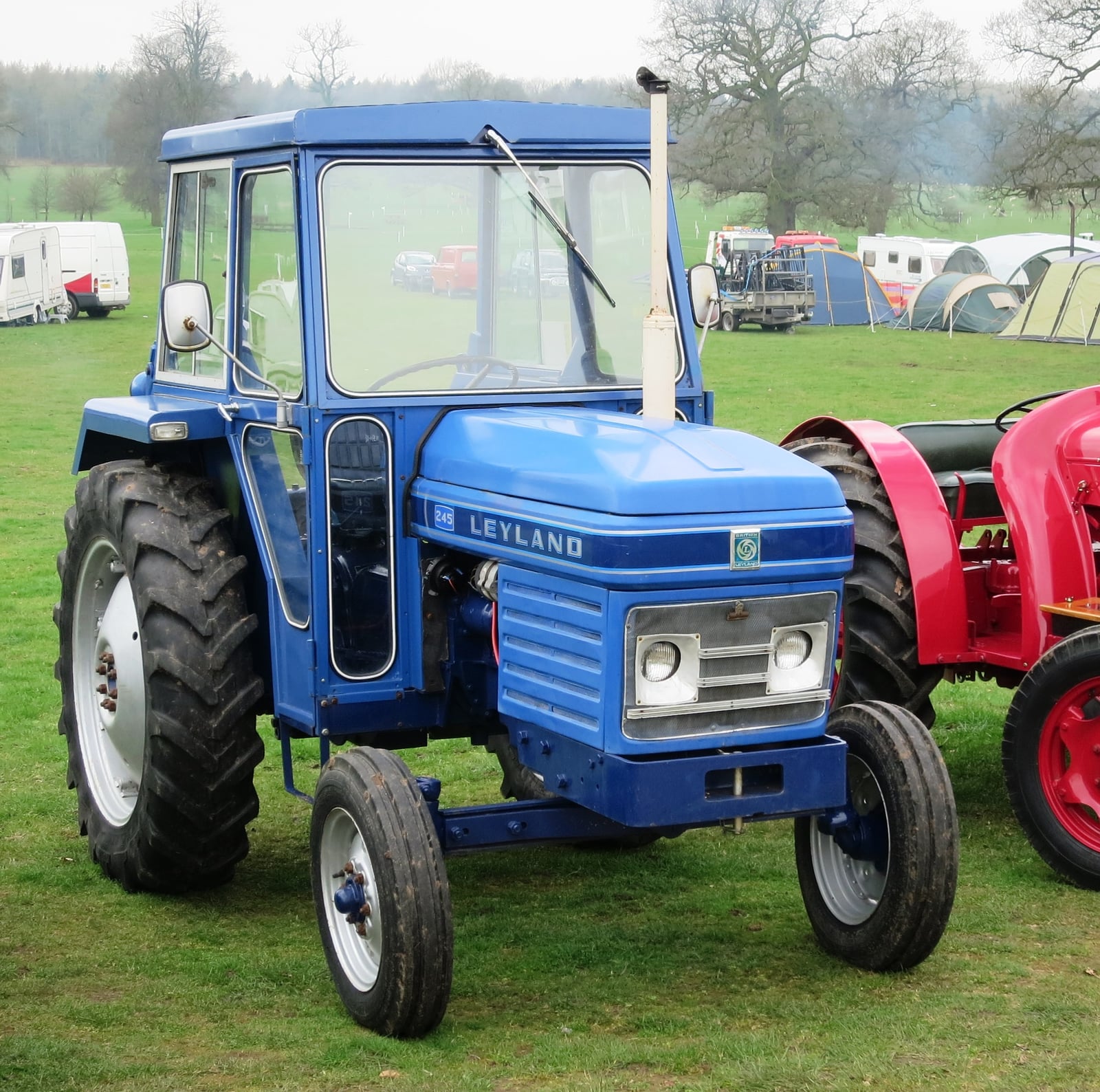
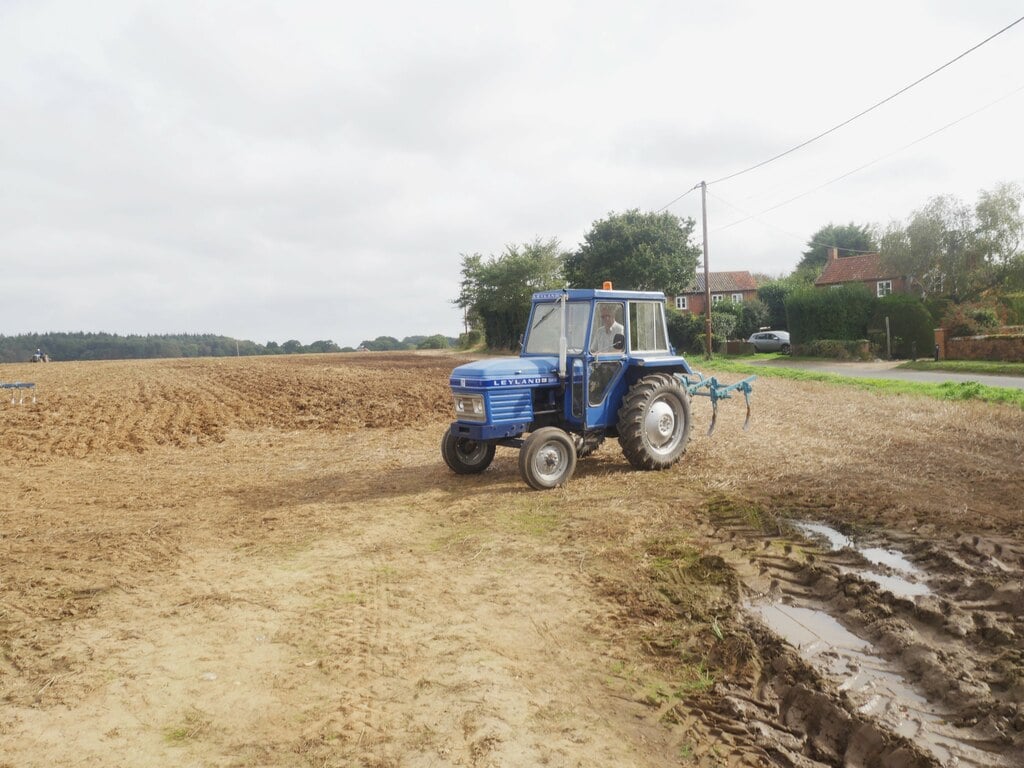
The Leyland tractor is the blue one, and the blue is the whole point. When British Leyland repainted its tractors in 1969, it gave them one of the most recognisable liveries in farming, a two-tone blue that still draws a crowd at any show. But underneath that paint is a tractor with a longer history than the badge suggests, because the Leyland is really a Nuffield that changed its colours. It is one of the most affordable and characterful of Britain’s classic and vintage tractors.
From orange Nuffield to blue Leyland
The Nuffield tractor had been built by the Morris car empire since 1948, and by the late 1960s it had passed through the British Motor Corporation into the giant British Leyland combine, the same corporation that owned Austin, Morris, Triumph and Rover. In 1969 British Leyland brought its tractors into line with the rest of the group: the Nuffield name was dropped, the orange paint gave way to corporate two-tone blue, and the range was relaunched as Leyland Tractors at that year’s Smithfield Show.
The early Leylands were essentially re-badged Nuffields. The Nuffield 4/65 became the Leyland 384 and the 3/45 became the 344, carrying over the BMC four-cylinder diesels and the ten-speed gearbox. Production stayed where it had been since 1962, at the large BMC factory at Bathgate in West Lothian, the Scottish plant built to bring work to an area that had lost its coal mines.

The Leyland tractors
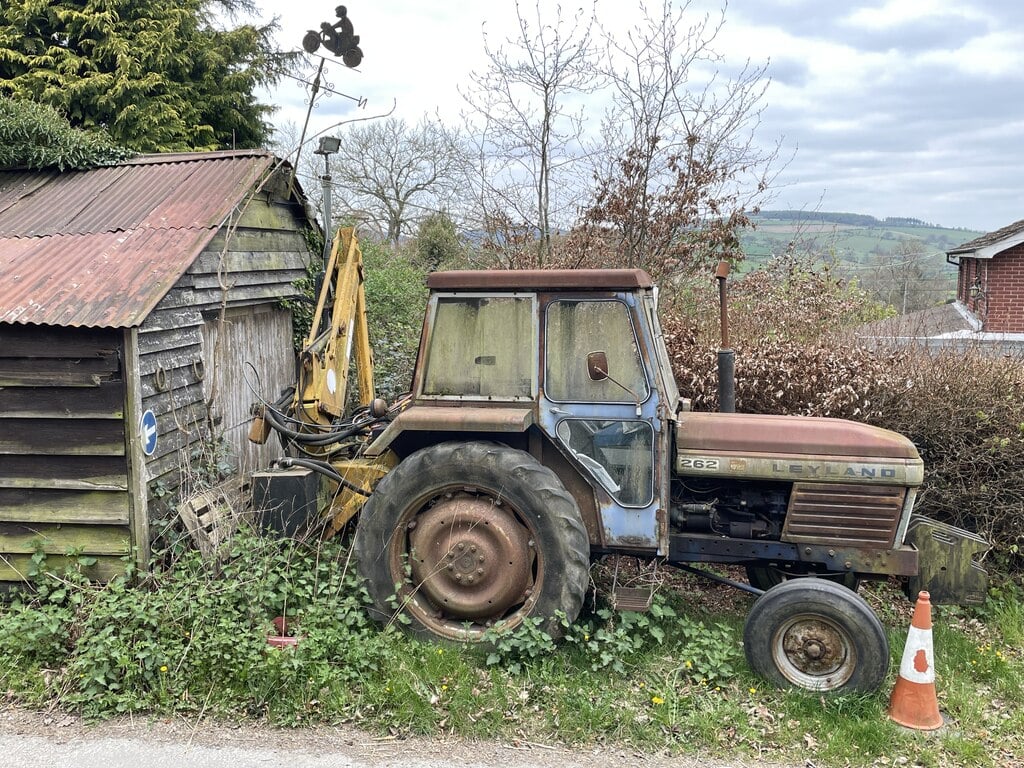
Leyland did not stand still on the inherited designs for long. In 1971 came the 253, an all-new tractor with a monocoque body and a three-cylinder Perkins diesel, aimed squarely at the best-selling Massey Ferguson 135. Then came the engine that defined the marque: the 98-series diesel, named for its ninety-eight-millimetre bore, in four-cylinder and six-cylinder forms. The four-cylinder 4/98 powered the mid-range 255 and 270 (which replaced the 344 and 384), uprated in 1975 to become the better-known 262 and 272. The six-cylinder 6/98 went into the big 285 and the range-topping 2100, the largest two-wheel-drive Leyland and the model enthusiasts call the big blue.
Two later developments matter to a buyer. From 1976 British law required a quiet, safety-tested cab, and Leyland’s answer was the rubber-mounted Q-cab, which brought hydrostatic steering and a far more civilised driving position. Then in 1978 came the Synchro, a synchromesh gearbox with a flat cab floor and shuttle-style changes, a real step forward over the old constant-mesh box. The very last Bathgate models wore a new golden-harvest scheme rather than blue.
The most familiar Leylands today are the compact 154, the mid-range 255 and 270, the workhorse 272, and the Nuffield-derived 384, with the big 2100 at the top of the range.

The end at Bathgate
British Leyland was in deep trouble by the early 1980s, and the tractor business was sold off. In January 1982 it went to Charles Nickerson, owner of Marshall of Gainsborough in Lincolnshire, in a deal that included the designs, the remaining stock, and the rights. Production at Bathgate ceased and moved south, and the tractors carried on, in the golden-harvest colours, now badged Marshall. The Marshall venture struggled and changed hands more than once over the following years, but the Leyland-badged tractor itself ended in 1982, which is why the marque has such a definite thirteen-year span. The owners’ club keeps all three names, Nuffield, Leyland and Marshall, together.

Buying a Leyland
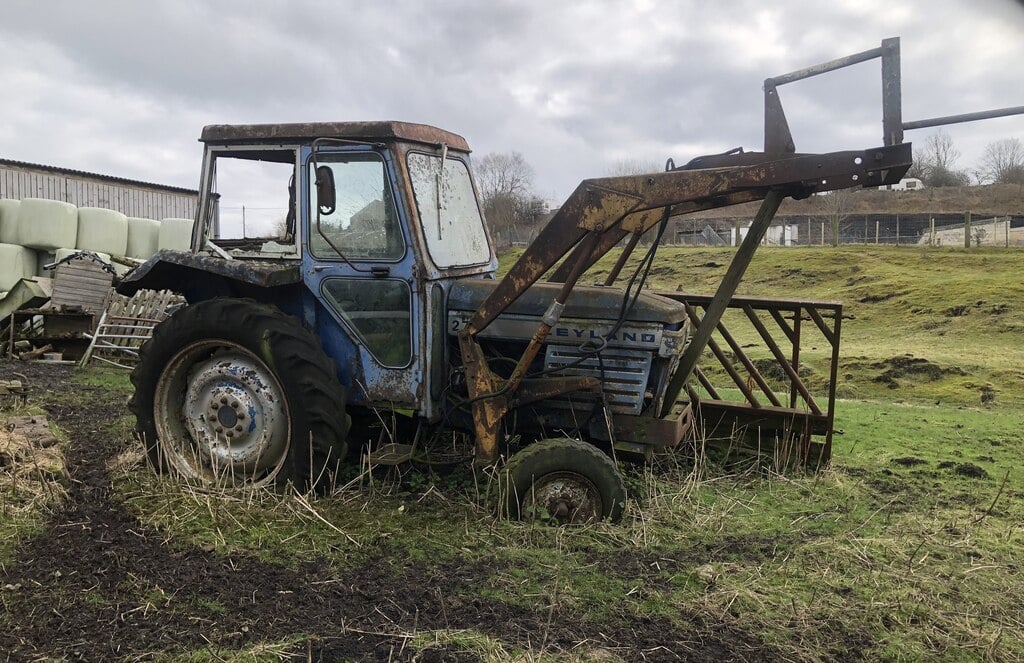
The Leylands are bought for honest money and are generally straightforward, but a few things are worth knowing. The BMC and Leyland diesels are well regarded, so the weak points tend to be elsewhere: brakes and clutches are the usual wear items, the synchro gearbox on the later models can give trouble (broken synchro packs and sticking in reverse come up on the owners’ forums), and the Q-cab rusts, so a tidy original cab is worth having. The Lucas electrics degrade with age like any of the period. Beyond that, the familiar checks apply, and the practical side is covered in owning and running a classic tractor.
Parts are more available than for many orphan marques, helped by an active club and specialist suppliers, though not quite at the level of the Ford and Massey Ferguson world. Check that the engine and chassis numbers match the paperwork, look hard at the cab on the later models, and on a synchro tractor, work the gearbox through its range.

What they are worth
As a broad and movable guide, the small 154, which was made in big numbers and is very common, runs from around £1,500 for a rough one to roughly £4,500 for a tidy example with a V5. The mid-range models, the 253, 255, 270 and 272, sit broadly between £3,000 and £8,000 depending on condition, cab and whether a loader is fitted. The big six-cylinder 2100 and the four-wheel-drive models are scarcer and harder to price. Treat all of these as approximate: condition and completeness move them more than the model badge does.

Why Leyland tractors are collected
The blue is the first answer, and a good one. No other classic tractor looks like a Leyland, and the colour carries a whole scene with it. But there is more to it than paint. A Leyland is an affordable, characterful, distinctly British machine with a real industrial story behind it, the Bathgate plant, the British Leyland connection, the slow decline that mirrors the wider fate of the company. They qualify as historic vehicles like any other classic, they are simple to keep, and they remain one of the most attainable ways into the hobby. For many owners the Leyland is the tractor that proves you do not need deep pockets to run a real piece of British engineering.

How the Leyland changed
- 1969British Leyland drops the Nuffield name and orange paint, relaunching the range in two-tone blue at the Smithfield Show.
- 1971The all-new monocoque 253 with a Perkins three-cylinder aims squarely at the Massey Ferguson 135.
- 1975The 98-series diesels power the uprated 262 and 272; the six-cylinder 2100 tops the range as the big blue.
- 1976British law requires a quiet, safety-tested cab, answered by the rubber-mounted Q-cab with hydrostatic steering.
- 1978The Synchro gearbox brings a flat cab floor and shuttle-style changes.
- Jan 1982The business sells to Charles Nickerson's Marshall of Gainsborough; Bathgate production ceases and the Leyland badge ends.
Leyland: what to check before you buy
The known weak points
- On a Synchro tractor, work the gearbox through its range: broken synchro packs and sticking reverse are the forum staples
- The Q-cab rusts, and a tidy original one is worth paying for
- Brakes and clutches are the usual wear items
- Lucas electrics degrade with age like any of the period
Identity
- Check engine and chassis numbers match the paperwork
- Early blue Leylands are late orange Nuffields underneath
- The last Bathgate models wore golden-harvest colours, not blue
- Marshall-badged continuation tractors are the same machine under new ownership
Which model
- The compact 154 is common and the gentle entry
- The 255, 270 and workhorse 272 are the mid-range mainstays
- The six-cylinder 2100 and the four-wheel-drive models are the scarce prizes
- Condition and completeness move prices more than the model badge does
Related
The Leyland’s direct ancestor is the orange Nuffield tractor. For the heavyweight Ford of the same era see the Fordson Major, and for the connoisseur’s British tractor, the gear-makers who also owned Aston Martin, see David Brown.
More photos