Jaguar E-Type (1961–1975): the complete guide to the series
The Jaguar E-Type was the most beautiful car of its age and one of the fastest, and it ran from the covered-headlamp Series 1 to the V12 Series 3 across fourteen years. The development story, the differences between the series, the myths sorted from the facts, and what the survivors are like to buy now.
Built 1961–1975 3 generations

At a glance
- Years
- 1961–1975
- Body styles
- Two-seat roadster, two-seat fixed-head coupe, 2+2 coupe
- Drivetrain
- Rear-wheel drive
- Engines
- 3.8 and 4.2 XK straight-six, 5.3 V12
- Power
- Around 265 bhp (six), 272 bhp (V12), gross figures
- Trim levels
- Series 1, Series 2, Series 3
- Production
- Approximately 72,500 across all series
- Assembly
- Coventry
- Designer
- Malcolm Sayer, with William Lyons
- Values
- From around £30,000 for a V12 2+2 to well over £150,000 for the best early roadsters
The models
The Jaguar E-Type is the rare car that lives up to its own legend. Launched in 1961, it was as fast as anything on the road, cost a fraction of its exotic rivals, and looked like nothing else before or since. More than sixty years later it is still the car most people picture when they hear the word Jaguar, and the one against which every beautiful car is quietly measured.
This is the guide to the whole family: where the E-Type came from, how the three series differ, which of the famous stories are true, and what the survivors are like to buy and own now. The individual Series 1, Series 2 and Series 3 pages go deeper on each in turn.
Where the E-Type came from
The E-Type did not appear from nowhere. It grew directly out of Jaguar’s Le Mans-winning sports-racing cars, the C-Type and the D-Type that the Scottish privateer team Ecurie Ecosse ran to back-to-back Le Mans wins in 1956 and 1957, and out of the aerodynamic thinking of Malcolm Sayer, an engineer who designed bodies by mathematics rather than by eye. Underneath the swooping shape sat a monocoque tub with a tubular subframe carrying the engine at the front, independent suspension all round, and disc brakes, advanced thinking for a road car in 1961.
It made its debut at the Geneva Motor Show in March 1961, initially for export, with the British launch following that July. The reaction was immediate. Here was a 150 mph-capable car, as Jaguar billed it, with the looks of a competition machine, at a price that undercut Ferrari and Aston Martin by a wide margin. It was the purest expression of William Lyons’ value-for-money instinct, and it caused exactly the sensation Jaguar wanted.

The three series at a glance
Across fourteen years the E-Type ran in three distinct series, plus an unofficial transitional batch that enthusiasts call the Series 1.5.
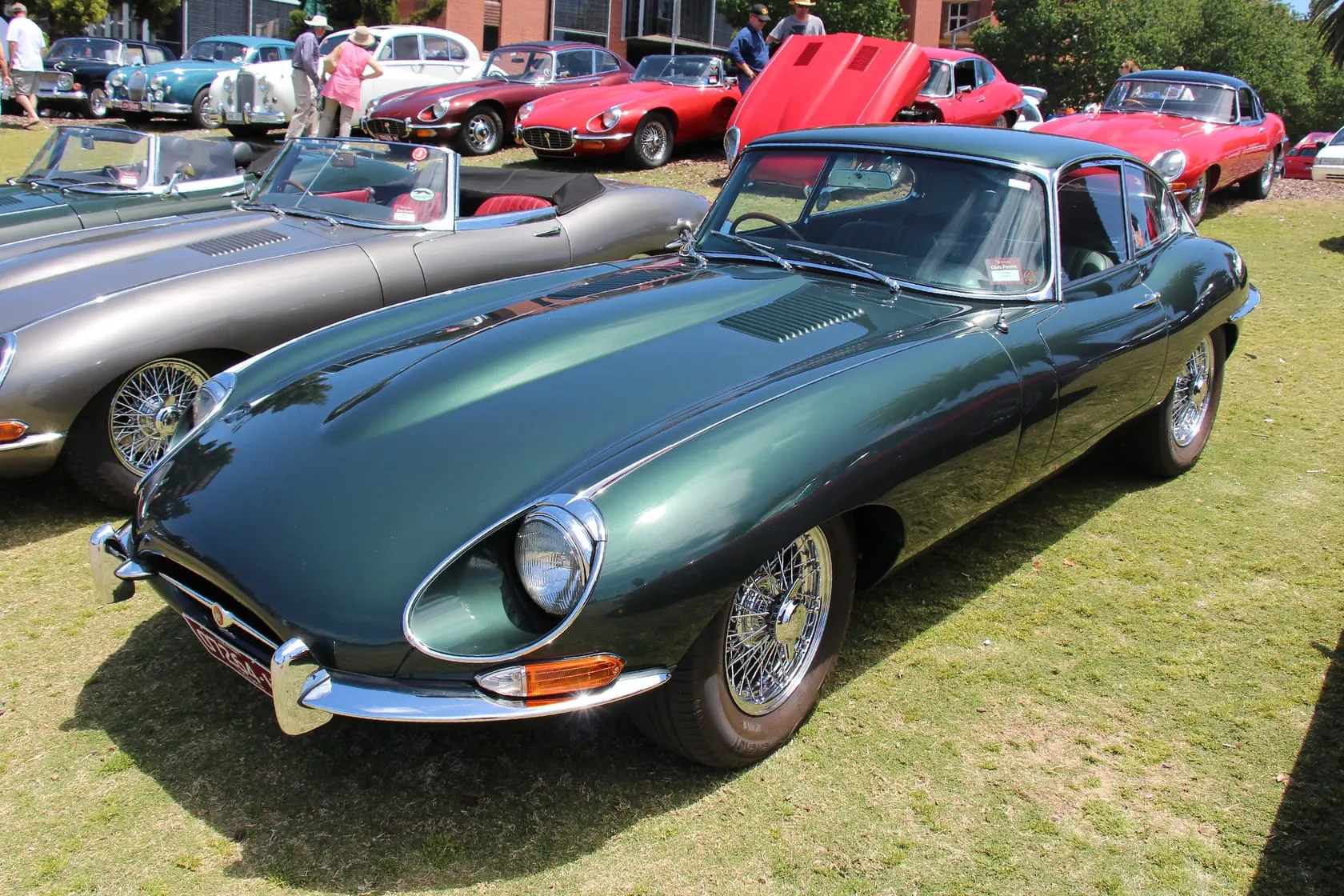
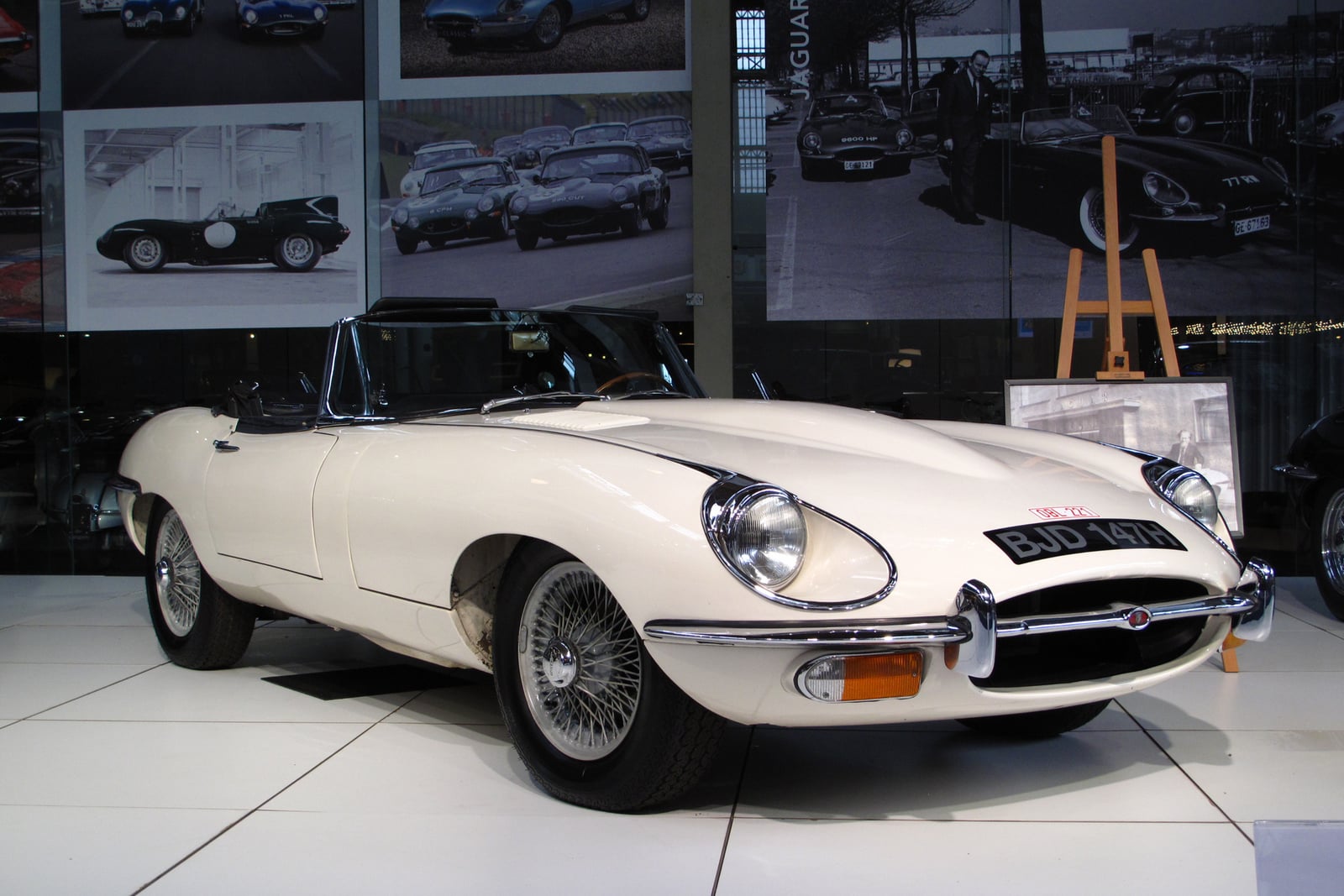
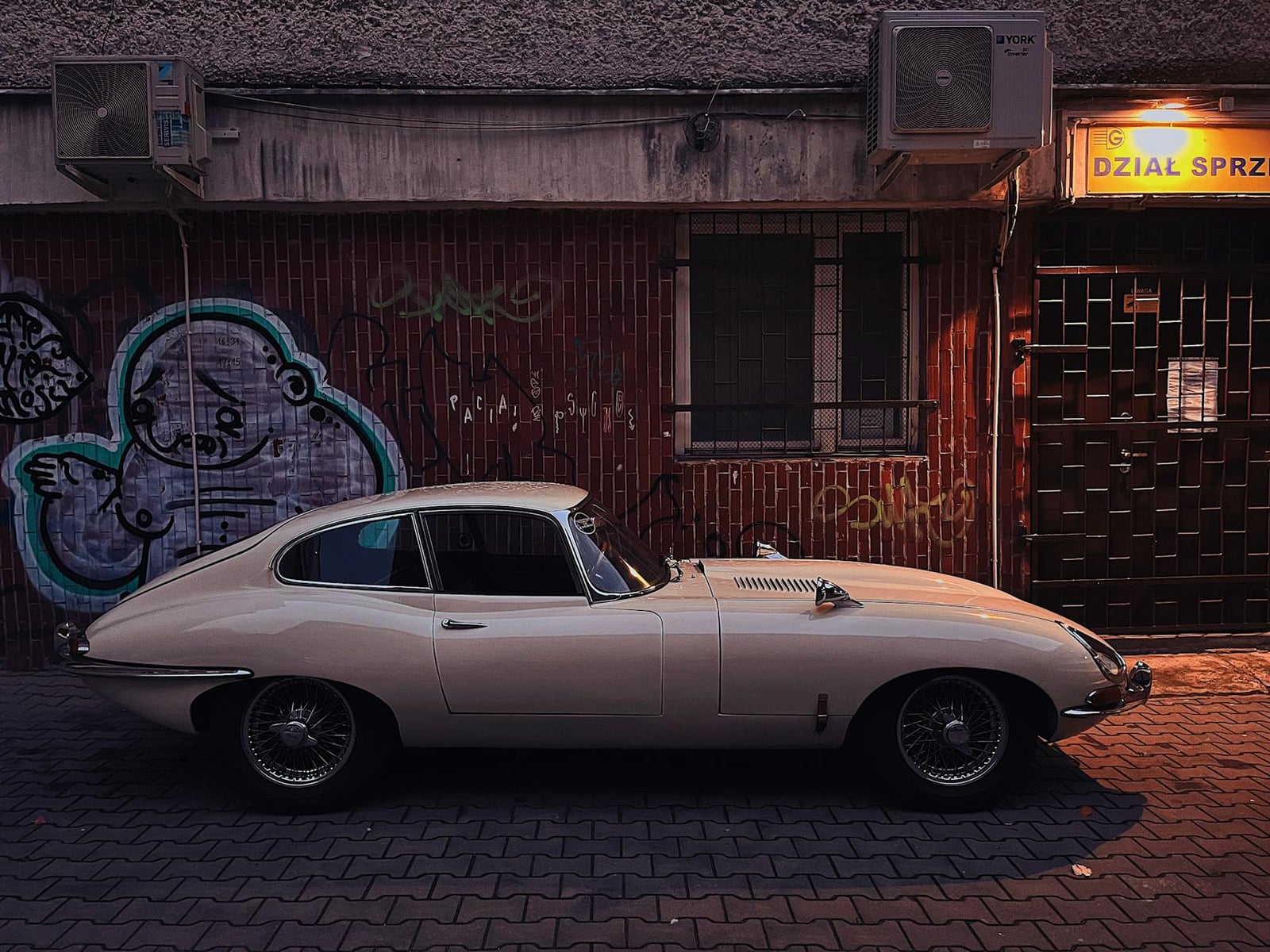
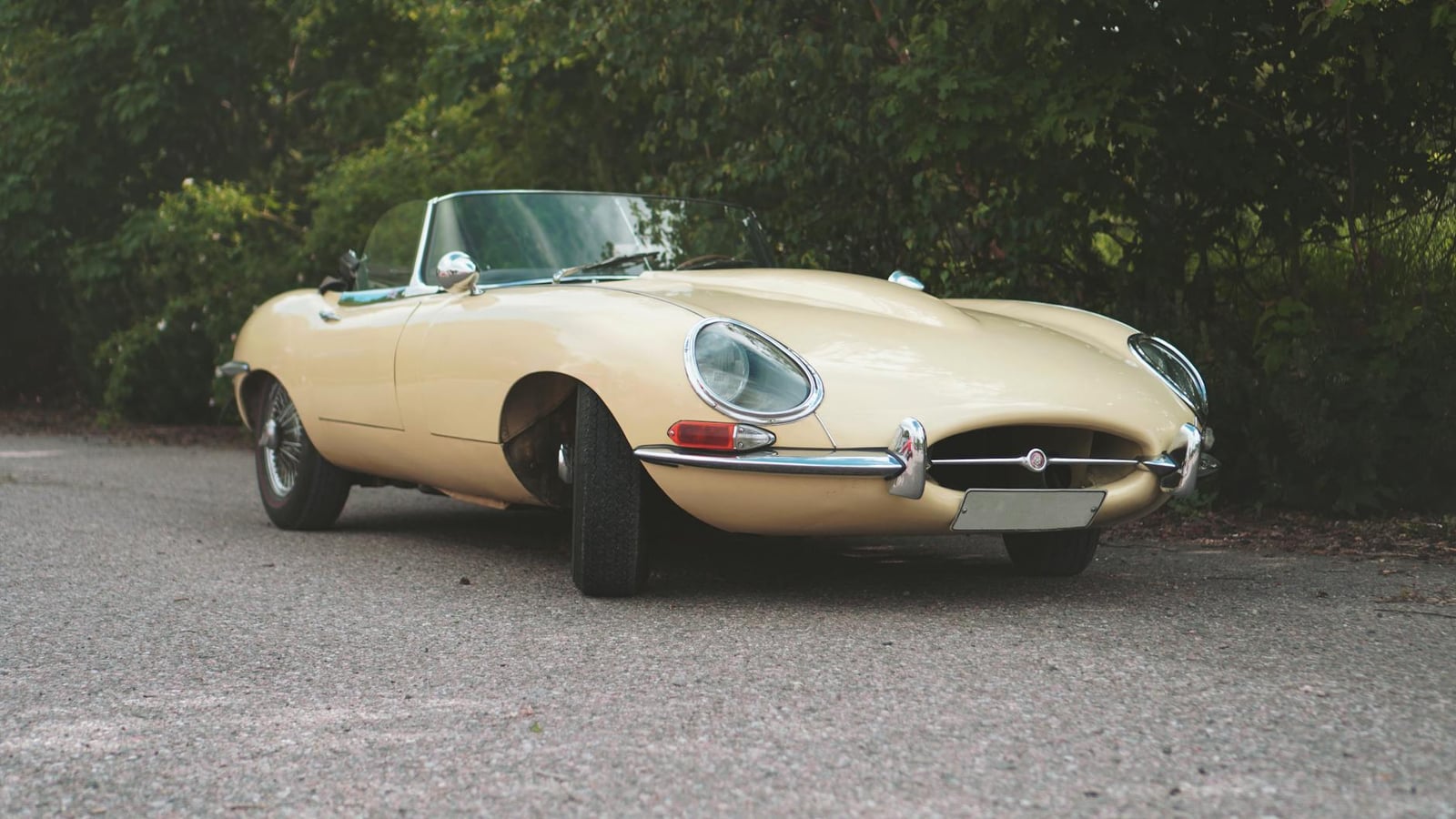
The Series 1 (1961 to 1968) is the original and the purest, defined by its glass-covered headlamps and slim chrome bumpers. It began with the 3.8-litre engine and gained the more flexible 4.2 in 1964. The interim Series 1.5 cars of 1967 to 1968 dropped the headlamp covers ahead of the full restyle.
The Series 2 (1968 to 1971) answered tightening American safety and emissions rules with open headlamps, a larger grille, wraparound bumpers and better cooling. It is the most usable and arguably the best-developed of the six-cylinder cars.
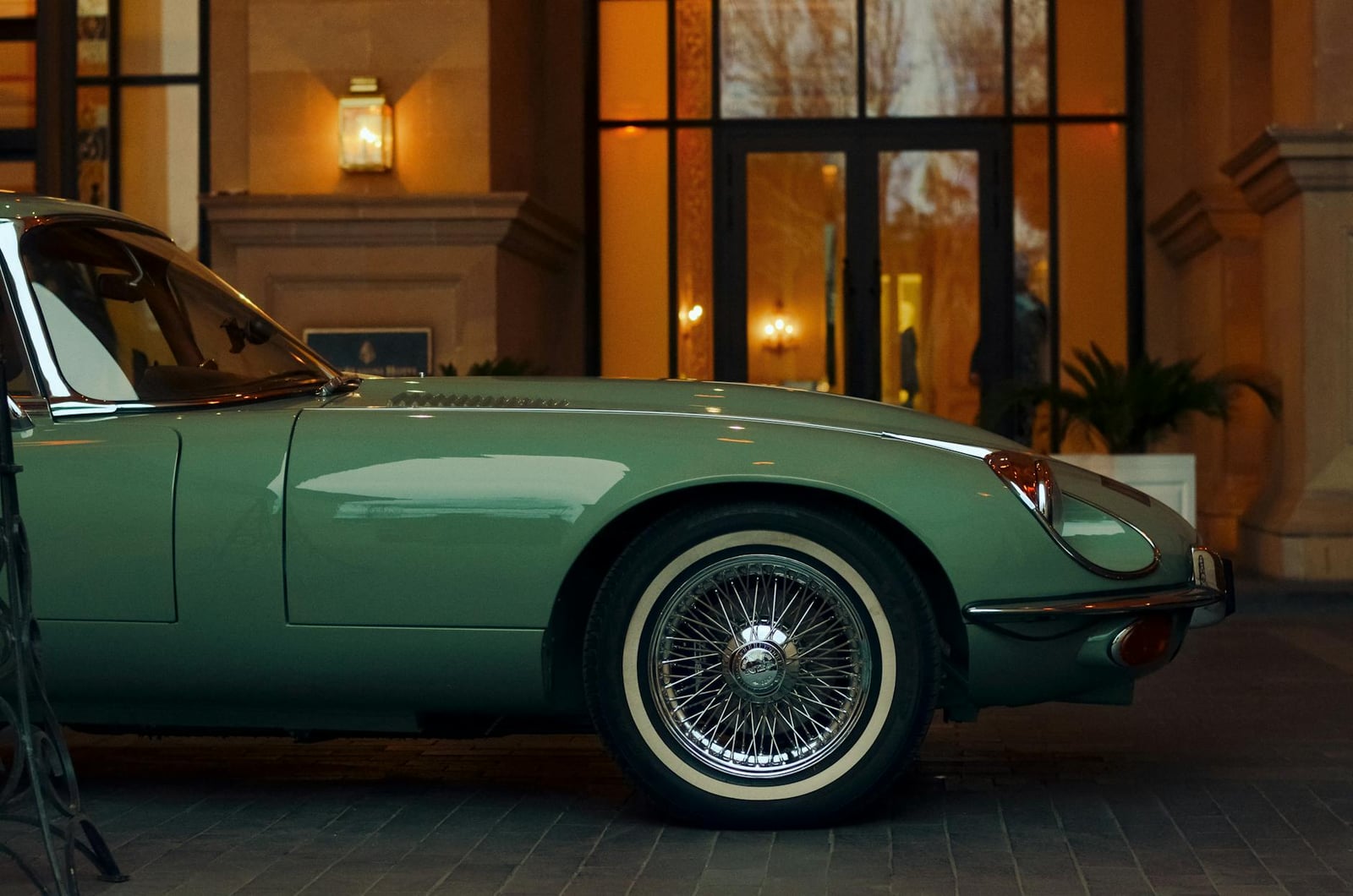
The Series 3 (1971 to 1974) brought the 5.3-litre V12, sat on the longer 2+2 wheelbase, and came only as a roadster or 2+2 coupe. It is the smoothest E-Type and the most relaxed grand tourer of the three.

The myths, sorted out
Few cars attract as much lore as the E-Type, so it is worth separating the famous stories from the facts.
The 150 mph top speed was real but qualified. The figure came from period road tests in 1961, but those press cars were prepared by the works, with subtle tuning, and ran on racing tyres in ideal conditions. A standard car on road tyres would not see 150, though it would comfortably exceed 140, which was still remarkable for the money.
The line about Enzo Ferrari calling it “the most beautiful car ever made” is repeated everywhere and documented nowhere. It is attributed to him at the 1961 launch, but no recording or transcript supports it. Enjoy it as a story, not a fact.
The power figures need the same care. The quoted 265 bhp for the six and 272 bhp for the V12 are gross ratings by the optimistic standards of the day, and the true output at the wheels was lower. The V12, for all its extra cylinders, was no quicker in a straight line than the original 3.8, being heavier and built for smoothness rather than outright speed.
Engines: the six and the V12
The Series 1 and 2 used the XK twin-cam straight-six that had powered Jaguars since 1949, in 3.8 and then 4.2-litre forms, breathing through triple SU carburettors. The 4.2 of 1964 made no more power on paper but added useful torque and, just as importantly, a far better all-synchromesh gearbox in place of the slow, baulky Moss unit the 3.8 used.

The Series 3 introduced Jaguar’s 5.3-litre V12, a single-overhead-cam engine of remarkable smoothness. It gave the E-Type effortless, turbine-like performance and a soundtrack all its own, at the cost of weight, fuel and complexity. It is a superb engine when healthy and an expensive one when neglected.
The specials: Lightweight and Low Drag
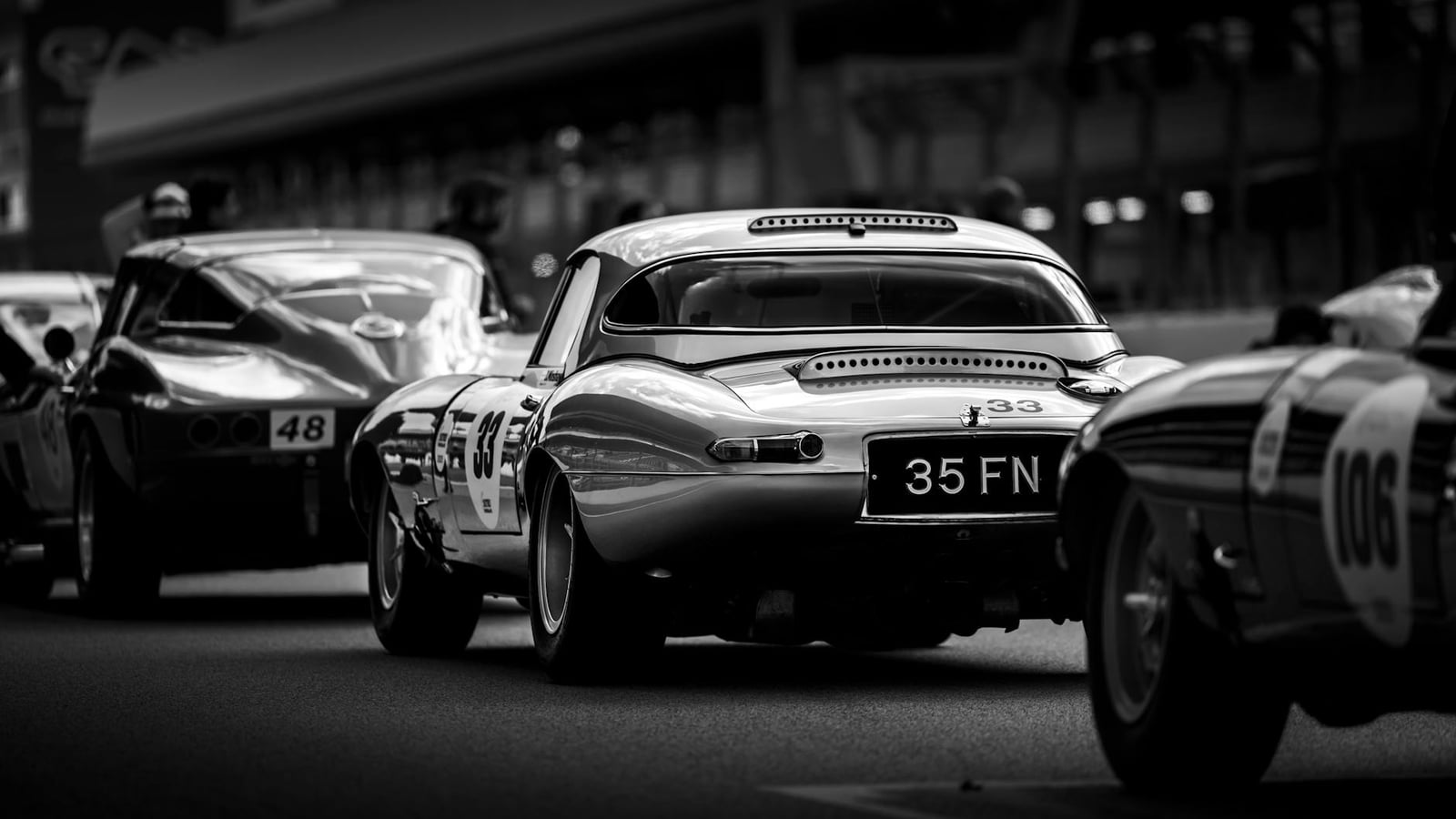
A handful of E-Types stand apart from the production cars. The factory Lightweight E-Types of 1963 and 1964 were aluminium-bodied competition cars with tuned, alloy-block engines, built for racing. Jaguar planned eighteen and completed only around a dozen at the time, before famously building the six “missing” cars to original specification decades later. There was also a one-off Low Drag Coupe and a small number of part-aluminium competition cars. These are collector pieces valued in the millions, and a world away from the cars most buyers will ever consider.

Buying an E-Type now
The E-Type is one of the best-supported classics there is, with a deep specialist trade and almost every part remanufactured, from a complete bodyshell down. That is just as well, because the structure is what makes or breaks one of these cars.
Rust and accident damage in the monocoque tub are the critical concerns. Check the sills, which are complex multi-layer structures, the floors, the rear wheelarches, and above all the front bulkhead and the engine-frame mountings, the most important structural area on the car. The square-section front frames that carry the engine should be sound rather than patched. On the V12 cars, add the cooling system to the list: a silted radiator leads to overheating and serious engine damage, so clean coolant and a healthy system are non-negotiable.
Mechanically the XK six is tough but will show its age through timing-chain rattle, worn cams and tired bottom ends; the V12 needs its cooling and ignition kept in good order. Because the desirable early features, the flat floors, the outside bonnet locks, the covered headlamps, all add value, recreated cars exist, so matching numbers and documented history matter. Verify a car against the records rather than taking the details on trust.

Where the E-Type stands today
Values cover an enormous span, and the ordering is consistent even where exact figures move. At the top sit the early Series 1 3.8 roadsters, especially the very first flat-floor cars, well into six figures. Below them come the later Series 1 and Series 2 roadsters, then the fixed-head coupes (the FHC in auction listings), which trade at a discount to the equivalent roadster. The V12 Series 3 roadster sits in the middle of the range, while the 2+2 coupes, in any series, are the most affordable way into E-Type ownership. The genuine Lightweights, valued in the millions, are in a category of their own. Auction data and the price guides bear this hierarchy out, though condition, originality and history move individual cars a long way either side of any guide figure. The full record, 4,029 recorded sales broken down by series and body, the seven-year slide since the 2018 peak and what moves an individual car’s price, is on the page covering Jaguar E-Type values.
The E-Type in dates
- March 1961Debuts at Geneva for export, with the British launch that July: a 150 mph claim, competition looks and a price undercutting Ferrari and Aston Martin by a wide margin.
- 1963The factory builds aluminium-bodied Lightweight competition cars, planning eighteen and completing around a dozen at the time.
- 1964The 4.2-litre six replaces the 3.8, adding torque and, more usefully, an all-synchromesh gearbox in place of the baulky Moss unit.
- 1967Interim Series 1.5 cars drop the glass headlamp covers ahead of the full restyle.
- 1968The Series 2 answers American safety and emissions rules with open headlamps, a larger grille, wraparound bumpers and better cooling.
- 1971The Series 3 brings the 5.3-litre V12 on the longer 2+2 wheelbase, as roadster or 2+2 coupe only.
- 1975Production ends at approximately 72,500 cars across all series; the XJS takes its place.
E-Type: what to check before you buy
Structure, which makes or breaks the car
- The front bulkhead and engine-frame mountings, the most important structural area on the car
- The square-section front frames carrying the engine should be sound rather than patched
- Sills are complex multi-layer structures, so surface tidiness proves nothing
- Floors and rear wheelarches, plus any sign of accident repair in the tub
Engine, by type
- XK six: timing-chain rattle, worn cams and tired bottom ends are the age signs
- V12: a silted radiator leads to overheating and serious damage, so clean coolant is non-negotiable
- V12 ignition needs keeping in good order as much as the cooling does
- The 3.8's Moss gearbox is slow and baulky by design; the 4.2's all-synchromesh unit is the better car to live with
Identity and specification
- Flat floors, outside bonnet locks and covered headlamps all add value, so recreated cars exist
- Matching numbers and documented history verified against the records, not taken on trust
- Series 1.5 cars are a real transitional batch and should be described as such
- Genuine Lightweights are a category of their own, valued in the millions
Related
The E-Type is the centrepiece of the classic Jaguar story and one of the defining British classic cars of the 1960s. Its XK engine traces back to the XK120, and when production ended in 1974 its place was taken by the XJS grand tourer. For the full detail on each generation, see the Series 1, Series 2 and Series 3 pages.
More photos
The E-Type generations
The Series 1 is the E-Type as Geneva first saw it, covered headlamps, slender bumpers and the 150 mph legend, and it is the generation the collector market prizes above all. A guide to the 3.8 and 4.2 cars, flat floors and 2+2s, buying checks and what the deepest E-Type market pays.
E-Type Series 1 guide1968–1971E-Type Series 2The Series 2 is the E-Type that American regulators redrew, open headlamps, bigger mouth, better brakes and cooling, and it remains the most usable route into six-cylinder E-Type ownership. A guide to what changed, why collectors rate it below the Series 1, and the buying checks that matter.
E-Type Series 2 guide1971–1975E-Type Series 3The Series 3 gave the E-Type a 5.3-litre V12, a longer wheelbase and flared arches, trading the original's rawness for turbine-smooth grand touring. A guide to the V12 cars, the commemorative final fifty, what the market pays and how to buy the last of the line.
E-Type Series 3 guide