Morris Minor van: the Post Office classic
The Morris Minor van was the small delivery van of post-war Britain and the face of the Post Office fleet. Its history, the famous GPO vans with their rubber wings, the variants and engines, and what a clean original is worth today.
Built 1953–1972 30 recorded sales

At a glance
- Years
- 1953–1972
- Body styles
- Van, pick-up, chassis-cab
- Drivetrain
- Rear-wheel drive
- Engines
- Sidevalve, then BMC A-series (to 1098cc)
- Top speed
- Around 50 mph
- Production
- Over 300,000 vans, pick-ups and chassis-cabs
- Designer
- Alec Issigonis
- UK survivors
- Original survivors scarce; genuine GPO vans most prized
- Values
- A five-figure classic; good Post Office examples worth most
- Famous for
- The red Royal Mail / GPO fleet; rubber front wings on Post Office vans
The vans
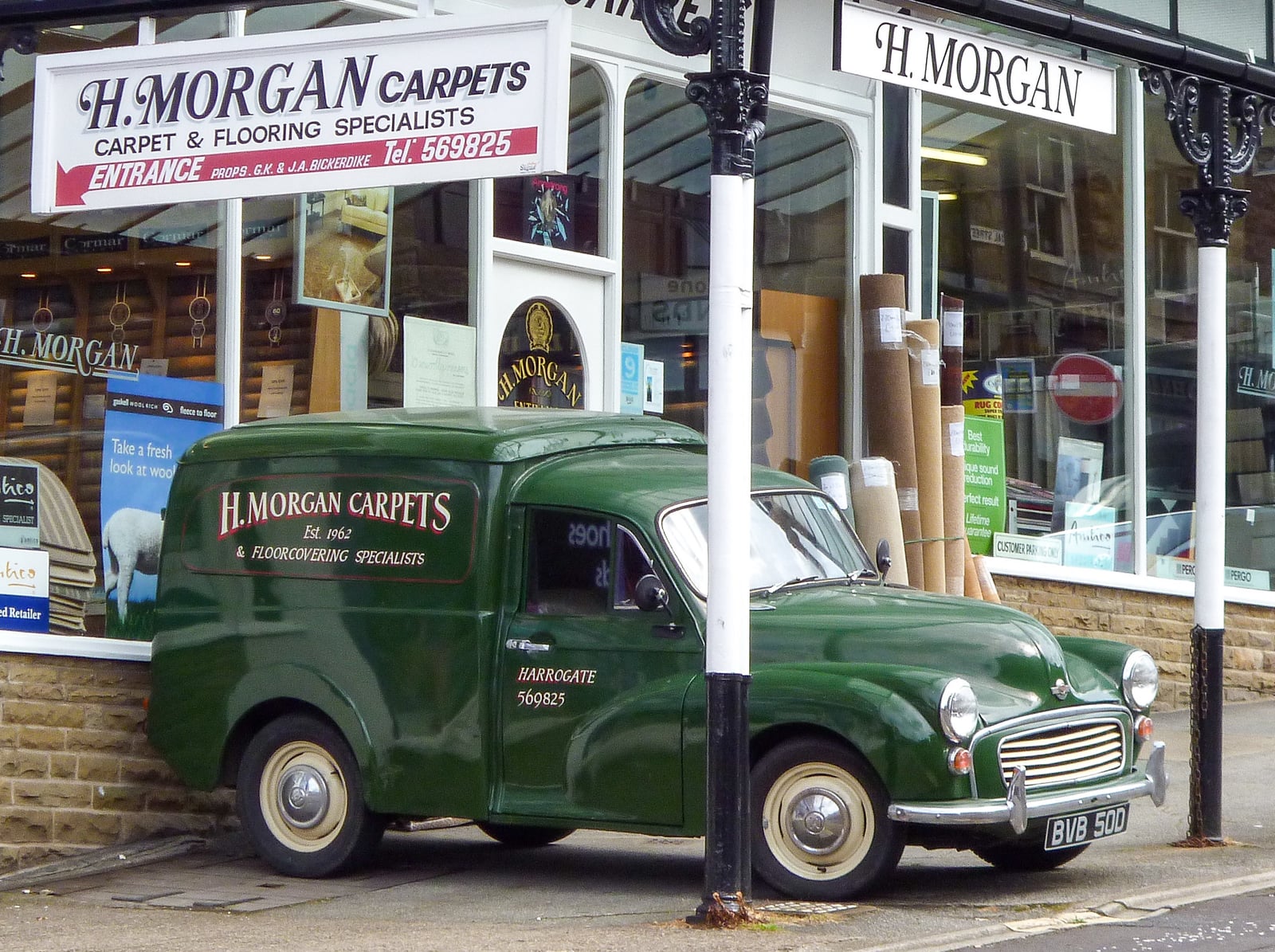
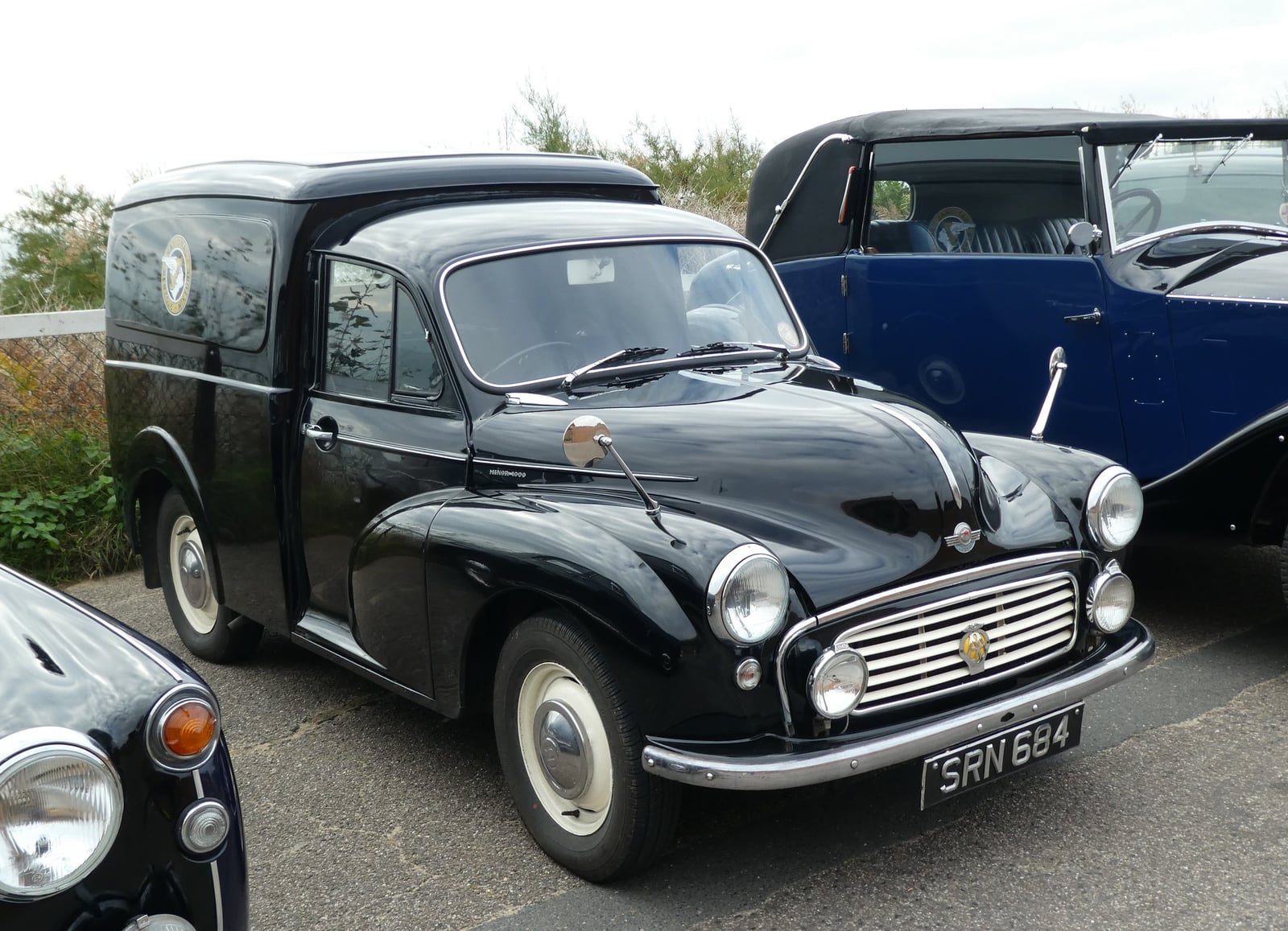
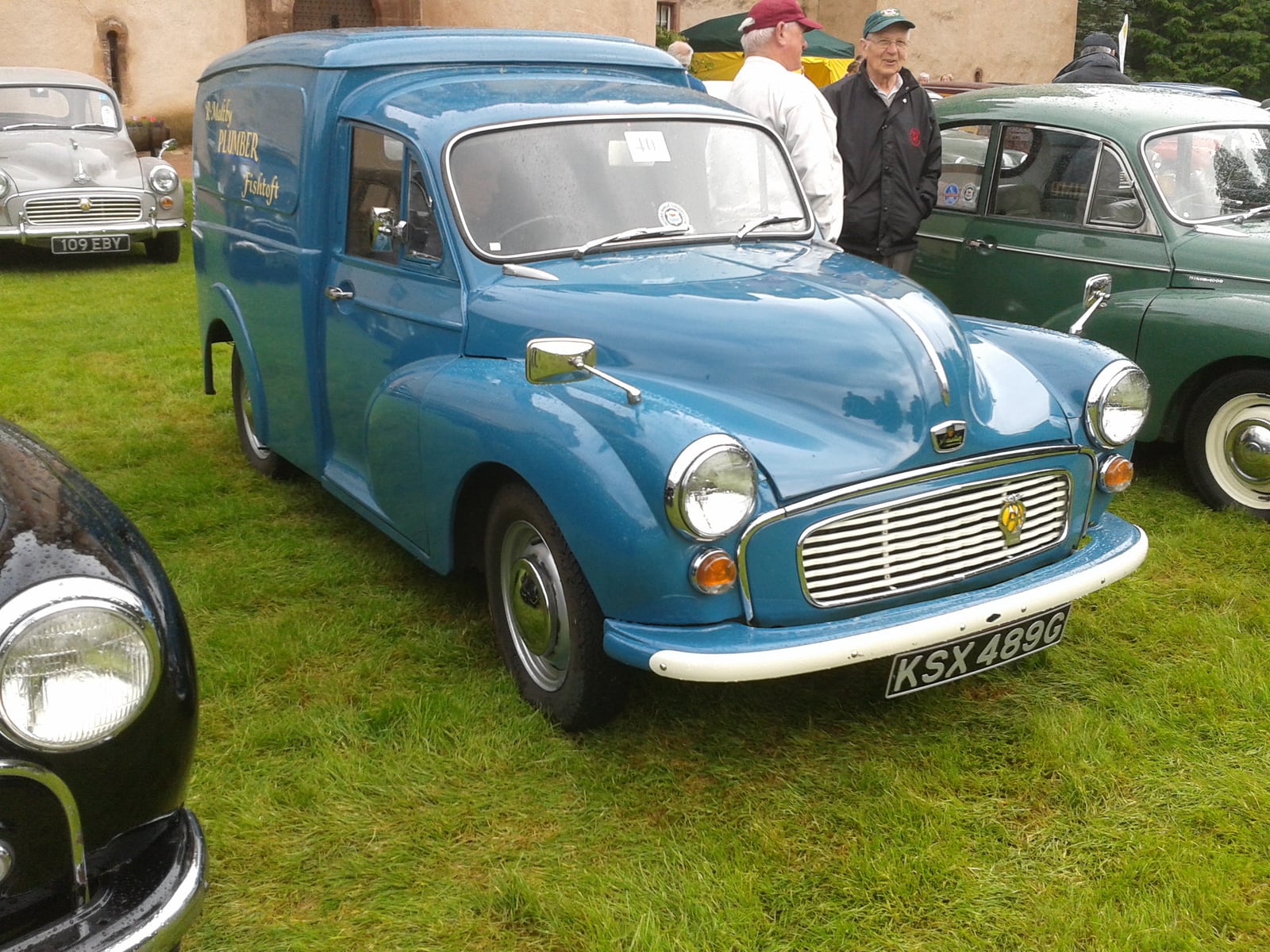
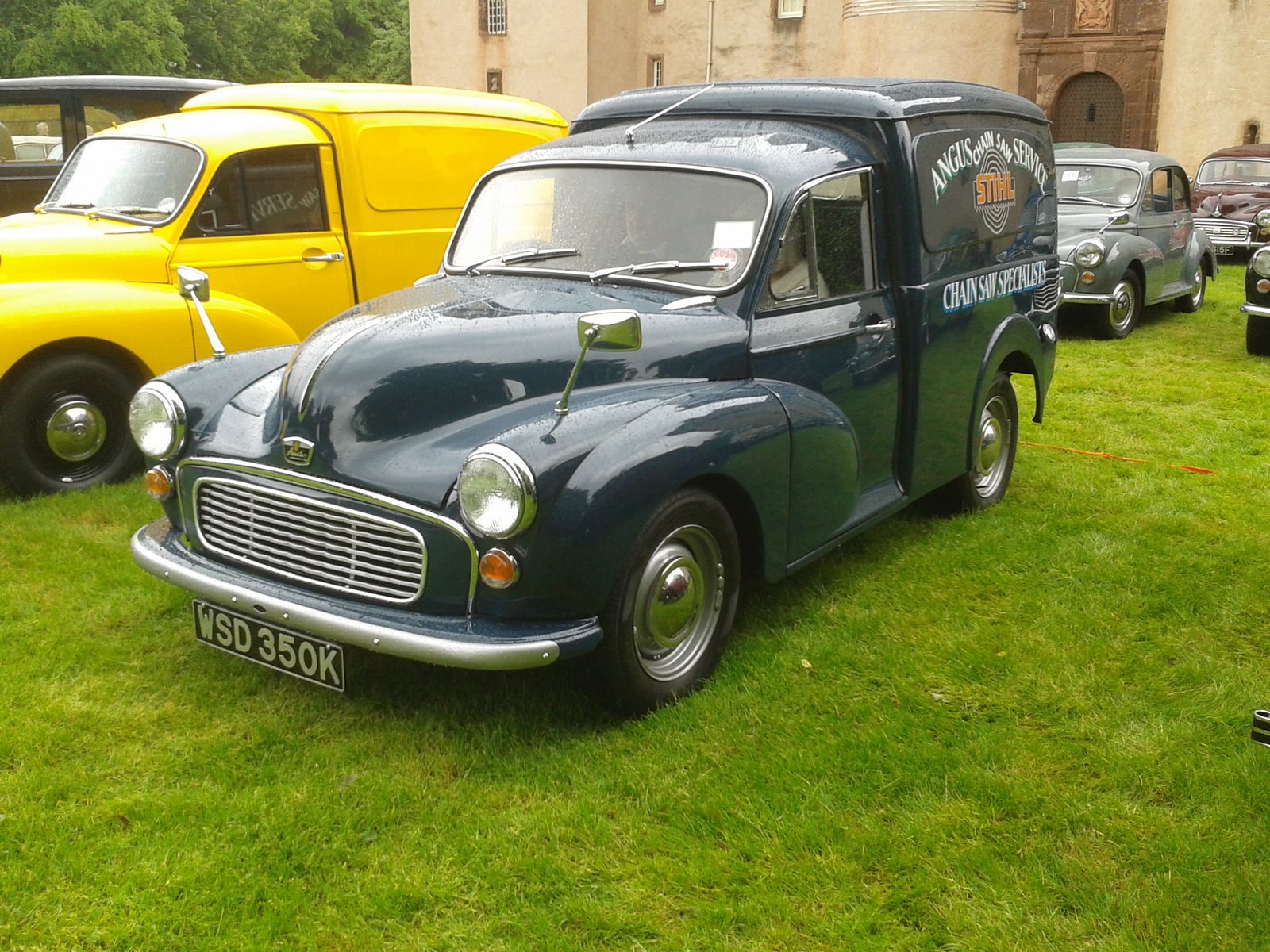
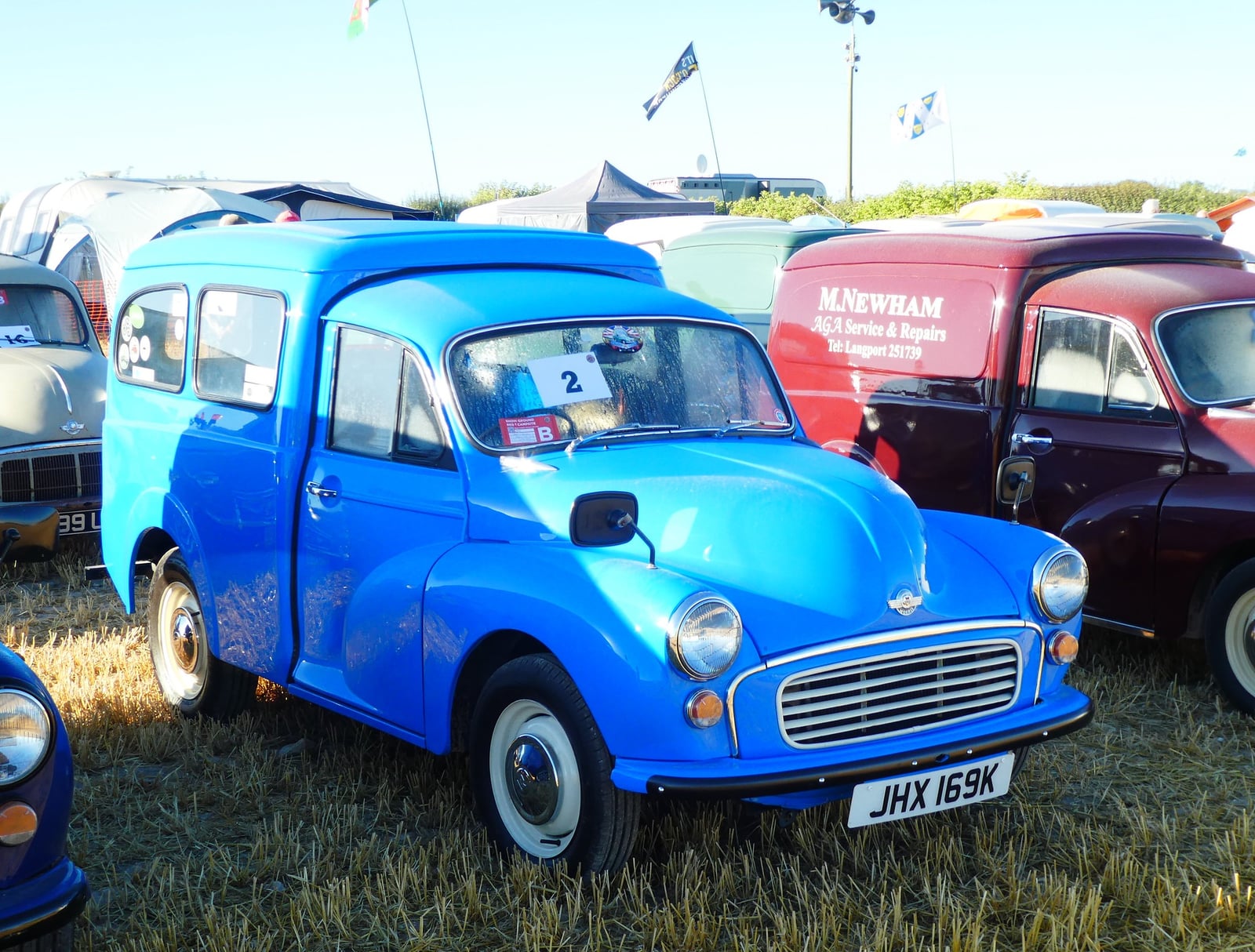
The Morris Minor van is the small van that delivered post-war Britain. For most of the 1950s and 1960s it was the default light commercial of the corner shop, the tradesman, and above all the Post Office, whose red Minor vans became such a fixture of the British street that the shape is still shorthand for the postman at the gate. It was built on the bones of one of Britain’s best-loved cars, it was made in huge numbers, and almost all of them were worked to death, which is exactly why a clean one now matters.
A van built on a classic car
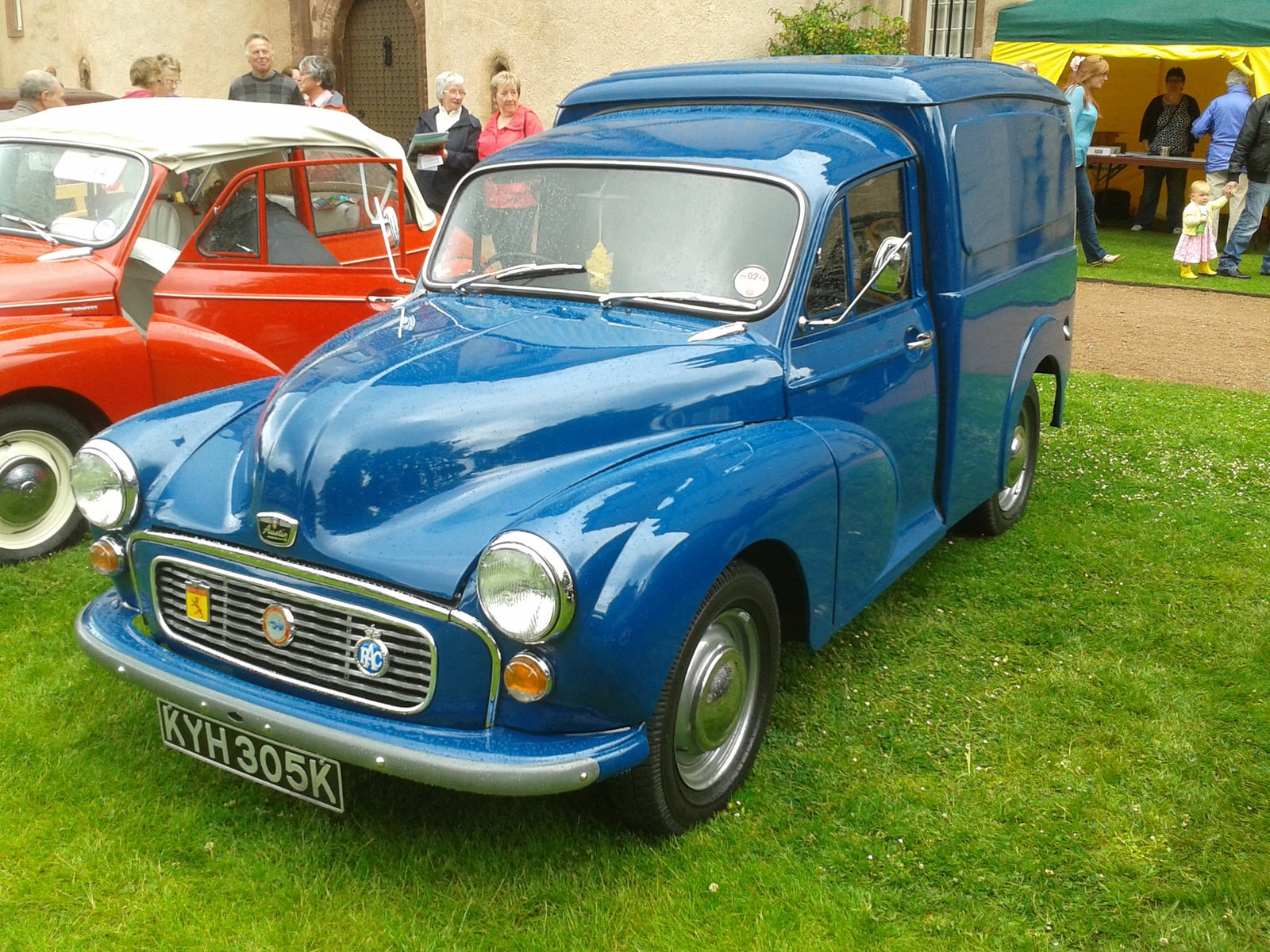
The Minor van was the commercial version of the Morris Minor, the Issigonis-designed small car that had made Morris’s post-war reputation. It arrived in 1953 and ran, with steady development, until 1971, with production of the commercials continuing into early 1972. Where the Minor saloon was a monocoque, the van and pick-up used a separate chassis at the rear to carry loads, which made them tougher and gave them the flat, boxy load area that did the work.
It was sold first as the Morris Quarter Ton Van and Pick-up, gaining a Series III designation in 1956, and was renamed the Minor 6cwt with the arrival of the 1098cc engine in 1962, with a larger 8cwt version added in 1968. Underneath, it shared the saloon’s mechanicals, which after the early sidevalve cars meant the BMC A-series engine, a unit so widely used and so well understood that parts and knowledge have never been a problem.
Over 300,000 vans, pick-ups, and chassis-cabs were built across the run, a huge number that tells you how completely this little van did the everyday carrying of its era.
The Post Office van
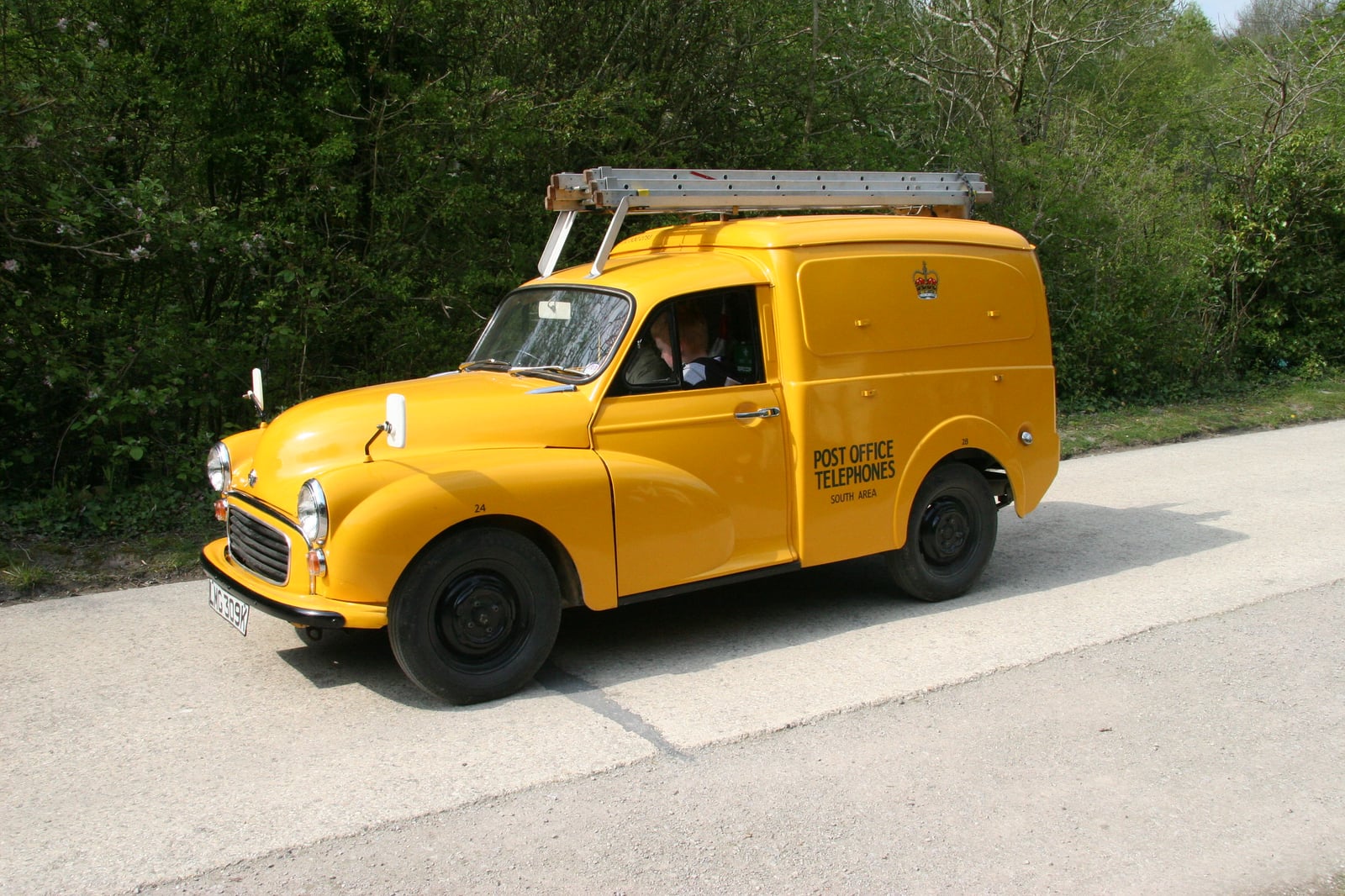
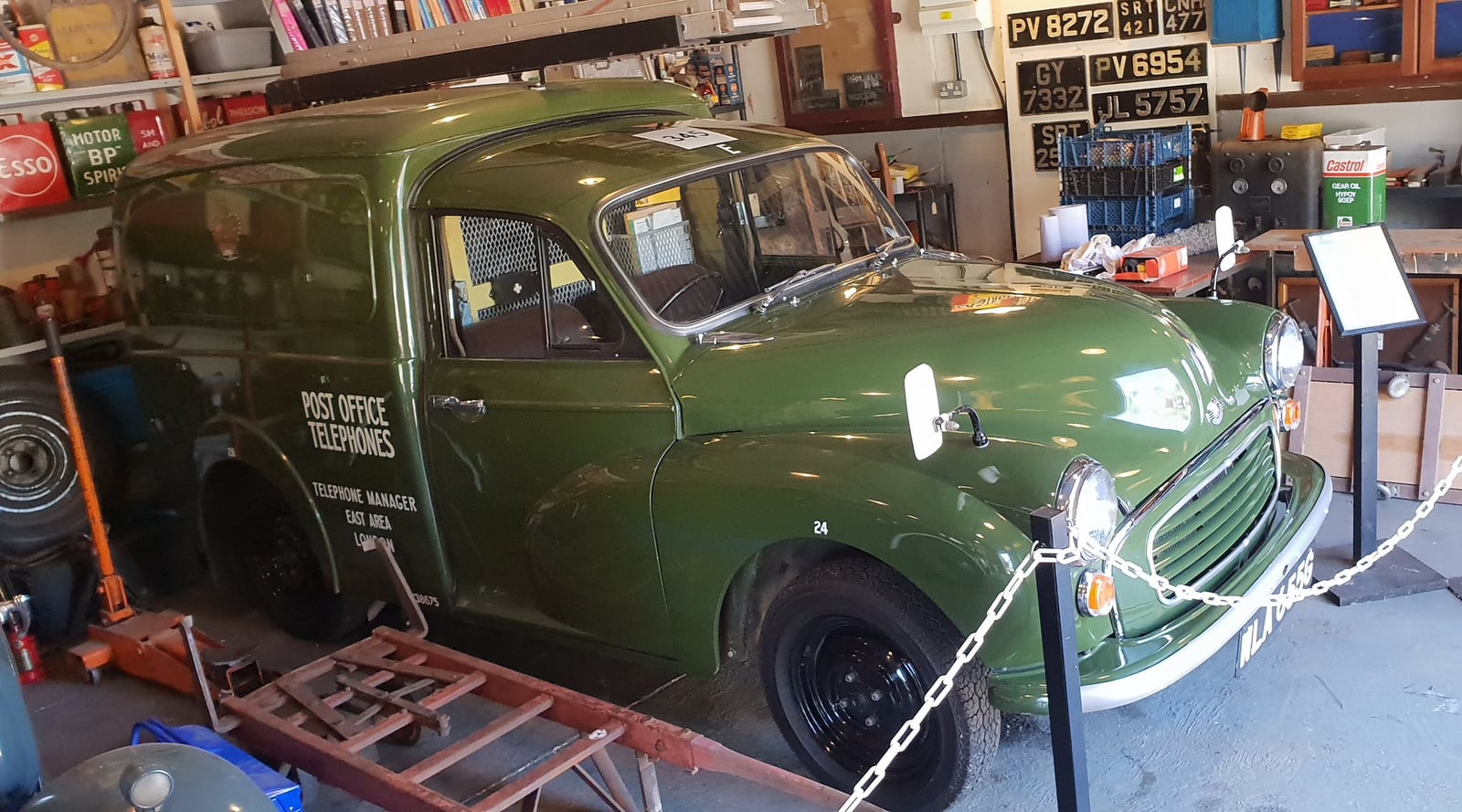
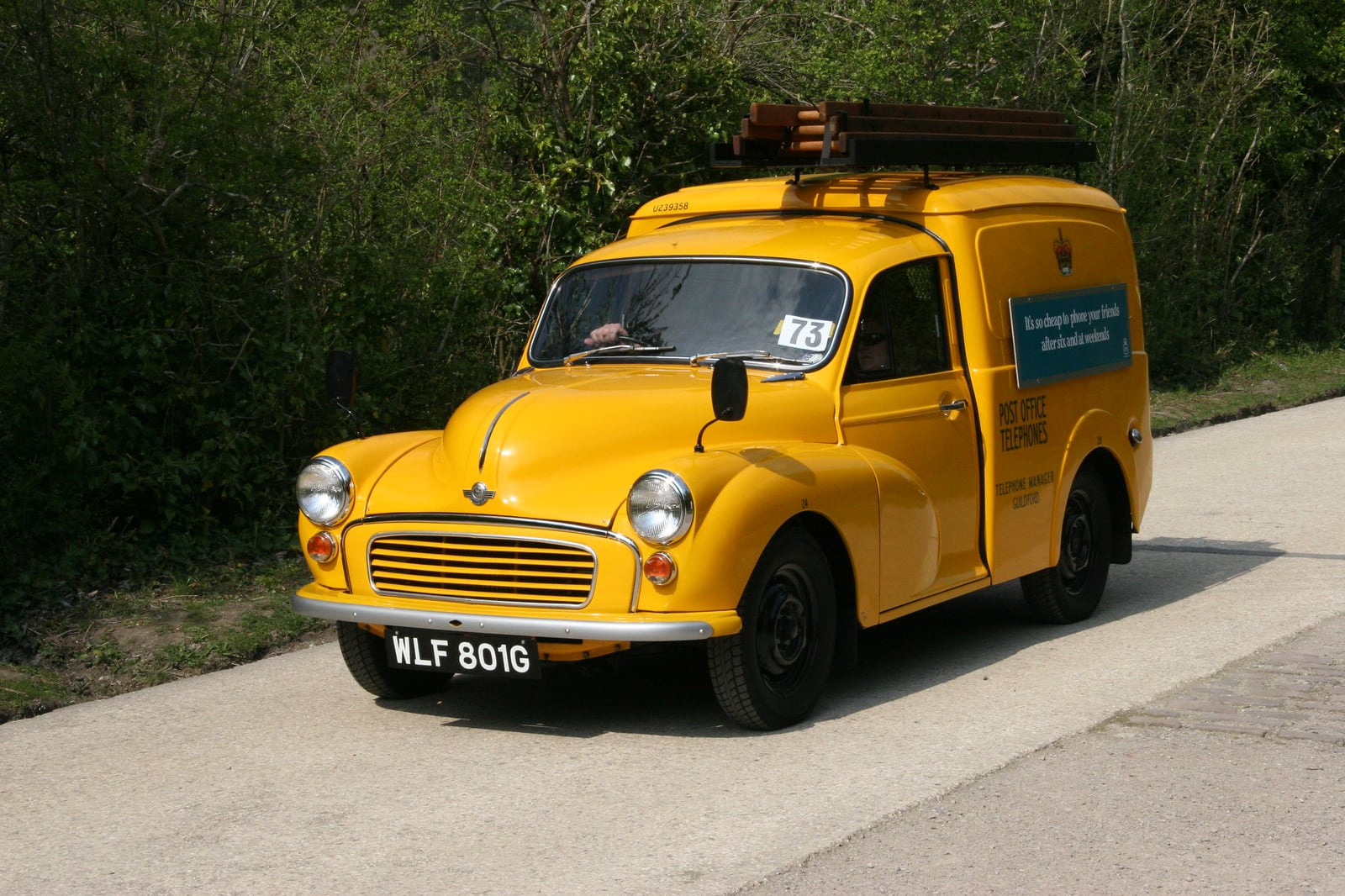
The Minor van’s defining role was with the Post Office, which was by a wide margin its biggest customer and took more than 50,000 of them for both mail delivery and telephone work. The red GPO Minor van became a national fixture, painted in Post Office red, the shade moving from Pillar Box to a slightly different Service red towards the end of the run.
The most recognisable Post Office vans carried a special feature: rubber front wings with the Lucas headlamps mounted on top, instead of the standard painted steel wings. The Post Office specified these so the wings would absorb the constant low-speed knocks of working in tight sorting-office and telephone-exchange yards without denting. That detail is now one of the most prized features on a surviving GPO van, and a genuine or accurately restored Post Office Minor is among the most desirable versions of the car.
Variants and what they are like
Beyond the standard van, the Morris Minor pickup (the factory called it a pick-up; the market spells it both ways) and chassis-cab versions served bodybuilders, used for everything from small tippers to mobile shops. All share the same modest performance: the A-series gives gentle, durable progress rather than speed, and a Minor van is a 50 mph cruiser that is happiest on quieter roads. The steering is the precise rack-and-pinion that made the Minor saloon a pleasure, and the van drives much like the car, only with a firmer ride and a useful load behind.
For an owner that combination is the appeal. The Minor van is genuinely usable: simple, economical, easy to fix, and small enough to live in a normal garage, while offering the load space and the nostalgia a saloon cannot. Many are used today as rolling advertisements for a business, as show vehicles in period livery, and as characterful weekend load-carriers that happen to be tax and MOT exempt.

Buying and owning
Rust is the enemy. The Minor van rusts in the chassis, the floor, the load-area bodywork, the door bottoms, and the front wings, and because these were working vehicles, most have rusted and been repaired at least once. The single most important thing on any Minor van is the condition of the chassis and the structural metal, because a rotten one can cost more to put right than a good one costs to buy. Check for filler over the rear arches and along the sills, look hard at the chassis rails, and treat a suspiciously cheap van as a restoration project rather than a bargain.
Mechanically there is little to fear. The A-series engine and the BMC running gear are durable and superbly supported, with the owners’ clubs and the wider Minor and BMC parts network supplying almost everything. Body panels, including van-specific ones, are available though more limited than the saloon’s. A good van is a five-figure classic, with genuine or accurate Post Office examples at the top of the range, and the value gap between a solid car and a rotten one is large.
Where it sits
The Morris Minor van is the quintessential British classic van: built on a beloved car, made in vast numbers, worked into the ground, and now treasured for exactly the everyday role it once played. It is the small, nostalgic end of the classic van story, where the Bedford CF represents the larger workhorse that came later.
The Minor van in dates
- 1953The commercial Minor arrives as the Quarter Ton Van and Pick-up, on a separate rear chassis where the saloon is a monocoque.
- 1956The Series III designation arrives with the saloon's updates.
- 1962The 1,098cc engine renames it the Minor 6cwt; the GPO fleet grows past 50,000 with rubber front wings on the Post Office vans.
- 1968A larger 8cwt version joins.
- 1972Commercial production ends, outlasting the saloon, at over 300,000 vans, pick-ups and chassis-cabs.
Minor van: what to check before you buy
Chassis and structure, most important of all
- The chassis rails, hard, and the structural metal throughout
- Filler over the rear arches and along the sills
- Floor, load-area bodywork, door bottoms and front wings
- Treat a suspiciously cheap van as a restoration project rather than a bargain
Provenance and livery
- Genuine GPO vans are the most prized, rubber wings and top-mounted Lucas lamps included
- Accurately restored Post Office spec carries real value; invented livery does not
- Pillar Box red versus the later Service red dates a GPO restoration
- Pick-ups and chassis-cabs served bodybuilders, so verify what the body started as
Mechanical
- The A-series is durable and parts have never been a problem
- Early sidevalve vans are a different, slower proposition
- The saloon's rack-and-pinion steering makes it drive like the car, with a firmer ride
- The clubs and the wider BMC network supply almost everything
What the Minor van sells for at auction
The Minor van comes to auction only occasionally: 30 recorded sales since 2012, typically making between £6,491 and £10,806 . With so few sales, treat any single result as a data point rather than a market price.
- £8,000Minor 1000 Van
- £6,130Minor 1000 Van
- £6,358Minor 1000 Van
- £10,525Minor 1000 Van
- £10,900Minor 1000 Van
Thin evidence. Only 30 recorded sales: read the figures as a sketch of the market, not a price. Based on 30 sold results from public classic car auctions (2012 to 10 August 2026). Sold prices, not asking prices, and not a valuation: condition, history and specification vary from car to car. Inflation-adjusted figures use the ONS CPIH index, in 2025 money.
Related
The Morris Minor van is one of Britain’s classic vans and light commercials. For the period it belongs to, see British classic cars of the 1950s and the 1960s.
More photos