Jensen FF: the first four-wheel-drive production car (1966–1971)
The Jensen FF was the four-wheel-drive sister of the Interceptor and a genuine engineering landmark, widely regarded as the first four-wheel-drive production car and the first fitted with anti-lock brakes. A guide to the Ferguson Formula system, how to tell an FF from an Interceptor, and what they are worth.
Built 1966–1971 15 recorded sales

At a glance
- Years
- 1966–1971
- Body styles
- Two-door fastback coupe
- Drivetrain
- Front engine, four-wheel drive (Ferguson Formula)
- Engines
- 6.3-litre Chrysler V8
- Power
- Around 330 bhp
- Trim levels
- FF Mk I, Mk II
- Production
- Around 320
- Assembly
- West Bromwich, England
- Designer
- Carrozzeria Touring of Milan, productionised by Vignale
- Values
- Usable from around £40,000; good cars £60,000-£110,000; the best beyond
- World first
- The first four-wheel-drive production car, and the first with anti-lock brakes
- Spotting one
- Twin air vents on each front wing, against the Interceptor's single vent
The models
The Jensen FF looks, at a glance, like an Interceptor. It is not. Beneath the familiar Italian-styled body sat a four-wheel-drive system and anti-lock brakes, both years ahead of the rest of the industry, and that makes the FF one of the most significant cars Britain built in the 1960s. It is the engineer’s Jensen.
Ferguson Formula: four-wheel drive on the road
The FF takes its name from the Ferguson Formula, the four-wheel-drive system developed by Harry Ferguson Research, the company founded by the tractor pioneer. Putting drive to all four wheels was nothing new on farm and military vehicles, but doing it on a fast, road-going grand tourer was, and the FF is widely regarded as the first four-wheel-drive production car built for the road.
The point was traction and safety, not off-roading. With a heavy Chrysler V8 sending its power through all four wheels, the FF could put its performance down in the wet and the cold in a way a rear-drive Interceptor could not, decades before four-wheel drive became expected on powerful cars.

The first car with anti-lock brakes
The FF went further still. It was the first production car fitted with anti-lock brakes, using the Dunlop Maxaret system, a technology that had come from aircraft. In an era when a hard stop in a powerful car could end in locked wheels and a spin, an anti-lock system on a road car was extraordinary, and it underlines how much of the FF was about engineering ambition rather than show.

How the hardware actually works
The engineering rewards a closer look. The Ferguson system split the V8’s torque permanently between the axles, biased toward the rear so the car steered and felt like a conventional grand tourer, with a central differential and one-way clutches managing the difference in speeds between front and rear. Nothing needed selecting and nothing could be got wrong by the driver: the security was simply always on, which was precisely the philosophy. The Maxaret anti-lock system worked mechanically from the transmission rather than at each wheel, crude by later standards but genuinely effective at preventing the locked-wheel slides that caught out powerful cars of the day. Period road testers, invited to brake and swerve on wet test tracks, wrote astonished copy about both systems, and the FF collected rave reviews that its price then quietly smothered in the showroom.
Telling an FF from an Interceptor
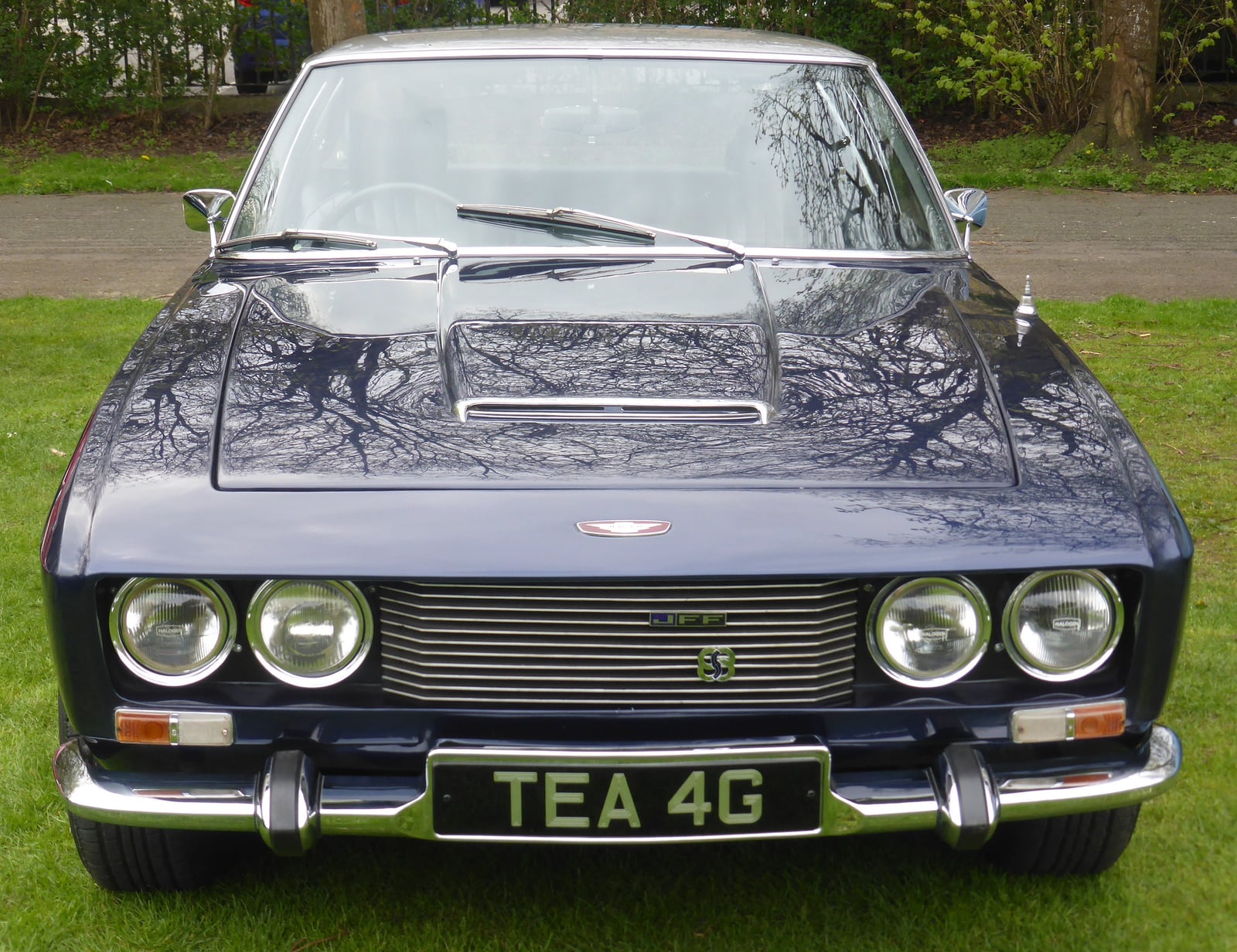
The two cars share a body, but the FF gives itself away. To make room for the four-wheel-drive transmission the FF is about four inches longer in the wheelbase, with a longer front, and the giveaway detail is the pair of air vents on each front wing where the Interceptor wears only one. Inside and in profile they are close cousins; in the details they are distinct, and knowing the tell is the first step to confirming a genuine car.

Why so few were built
The FF was brilliant and barely viable. It cost far more than the Interceptor it was based on, and the four-wheel-drive layout could not readily be converted to left-hand drive, which locked it out of the United States and the volume the company needed. Only around 320 were made between 1966 and 1971 before Jensen quietly dropped it, and the industry then took another decade to catch up: not until quattro-era rallying made four-wheel drive fashionable did the rest of the motoring world arrive where West Bromwich had already been. What was a commercial problem then is the FF’s making now: it is rare, historic and prized precisely for being so far ahead of its time.

Owning a Jensen FF
Live with an FF and most of it is Interceptor: the same relaxed, torquey V8 character, the same comfort, the same big-car presence. The difference is the extra security of four driven wheels and the knowledge of what the car represents. The same rust and ownership notes apply as for any Interceptor, set out in full on that page, and the same buying rule follows: the shell and the history matter far more than the mileage.
The one real caveat is the specialised hardware. The Ferguson Formula transmission and the Maxaret brakes need knowledgeable care and the parts are scarcer, so a sound FF with continuous history and a specialist behind it is worth holding out for.

Value and rarity
The FF sits above the Interceptor in value, on rarity and history alike. Usable cars start around £40,000, good ones run roughly £60,000 to £110,000, and the best go beyond, with genuine, correct, well-documented cars commanding the premium. It is the connoisseur’s choice in the Jensen range and a landmark in the wider story of British engineering. For the era, see British classic cars of the 1960s.

More photos
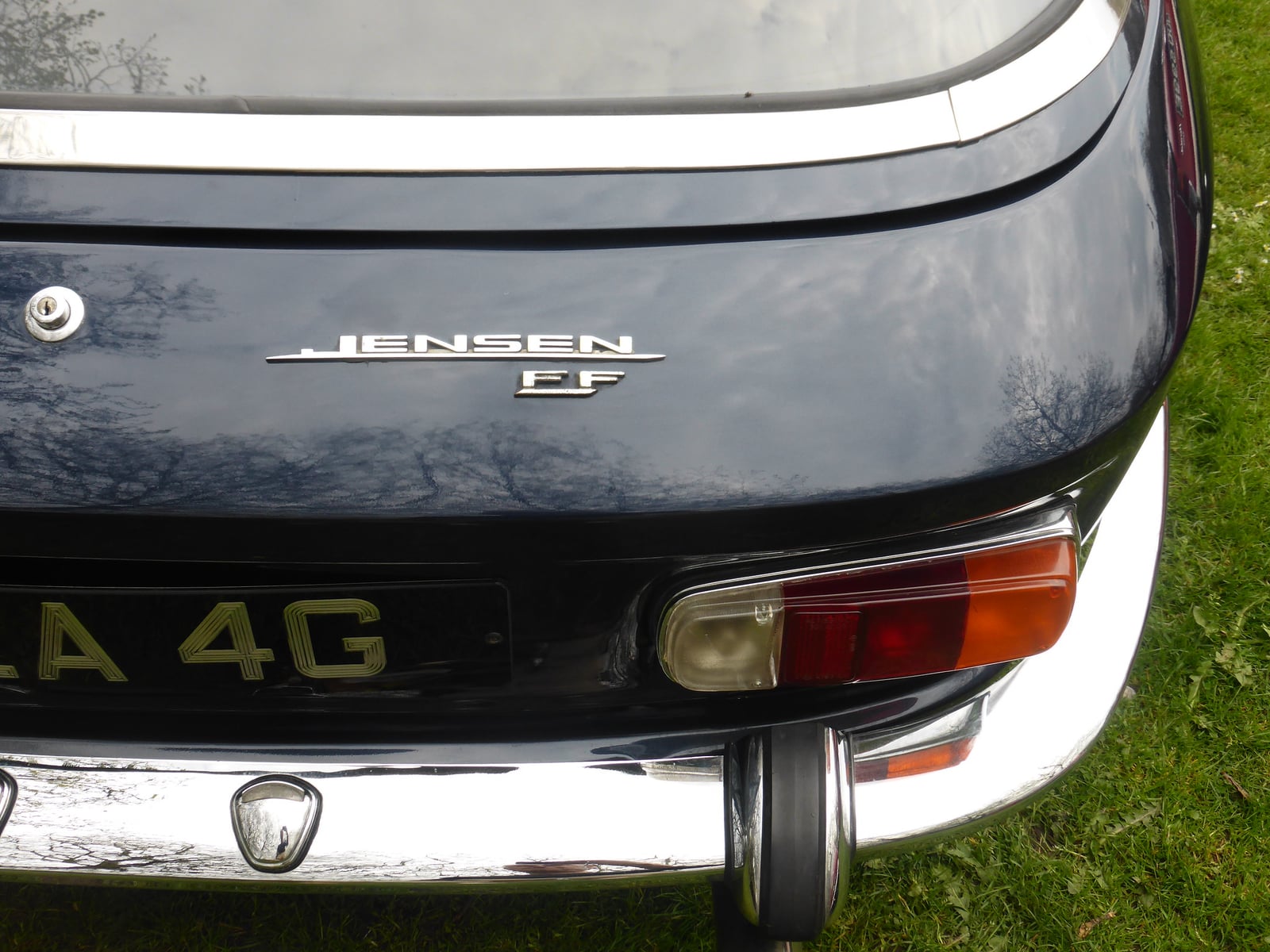
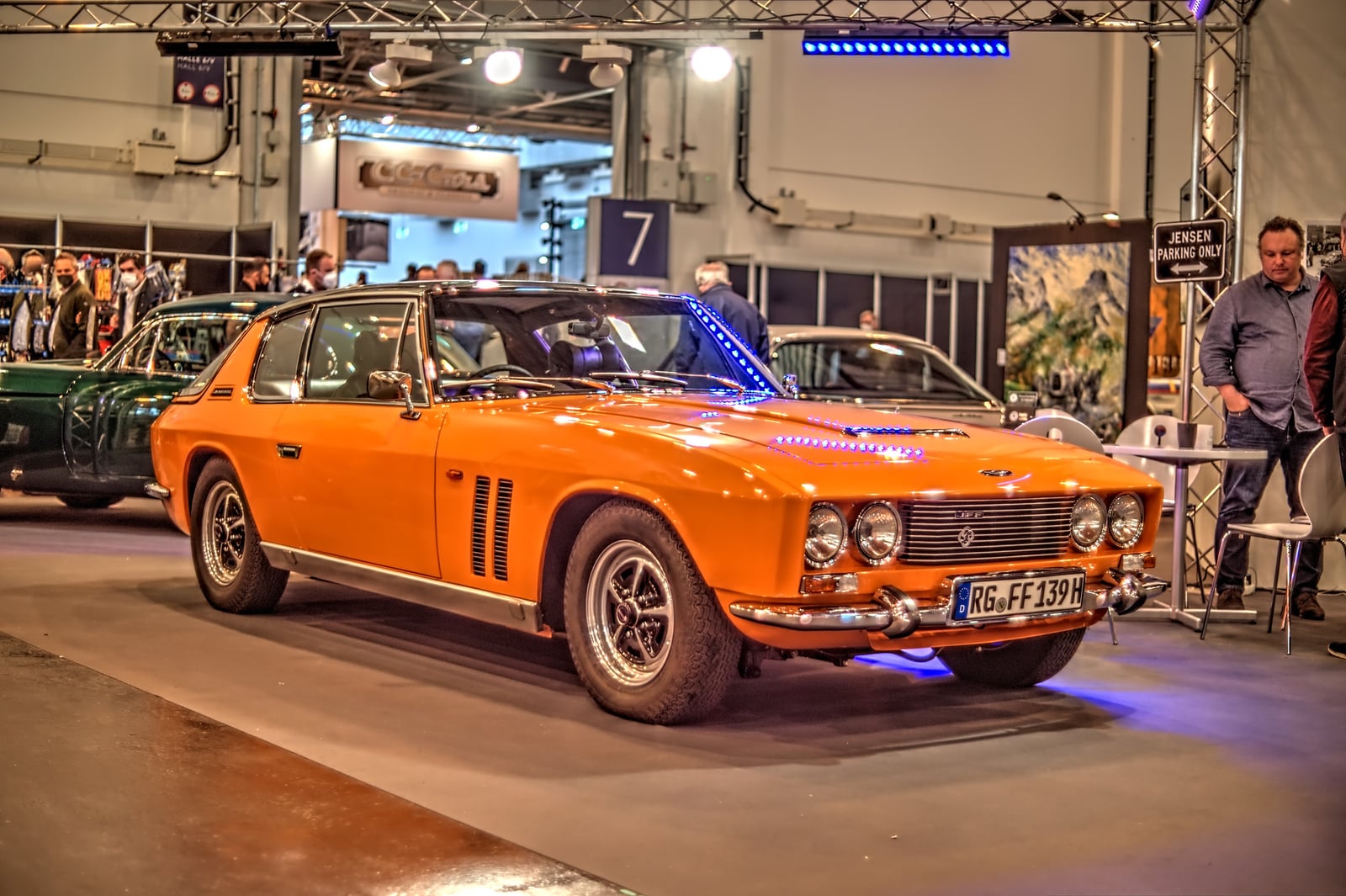
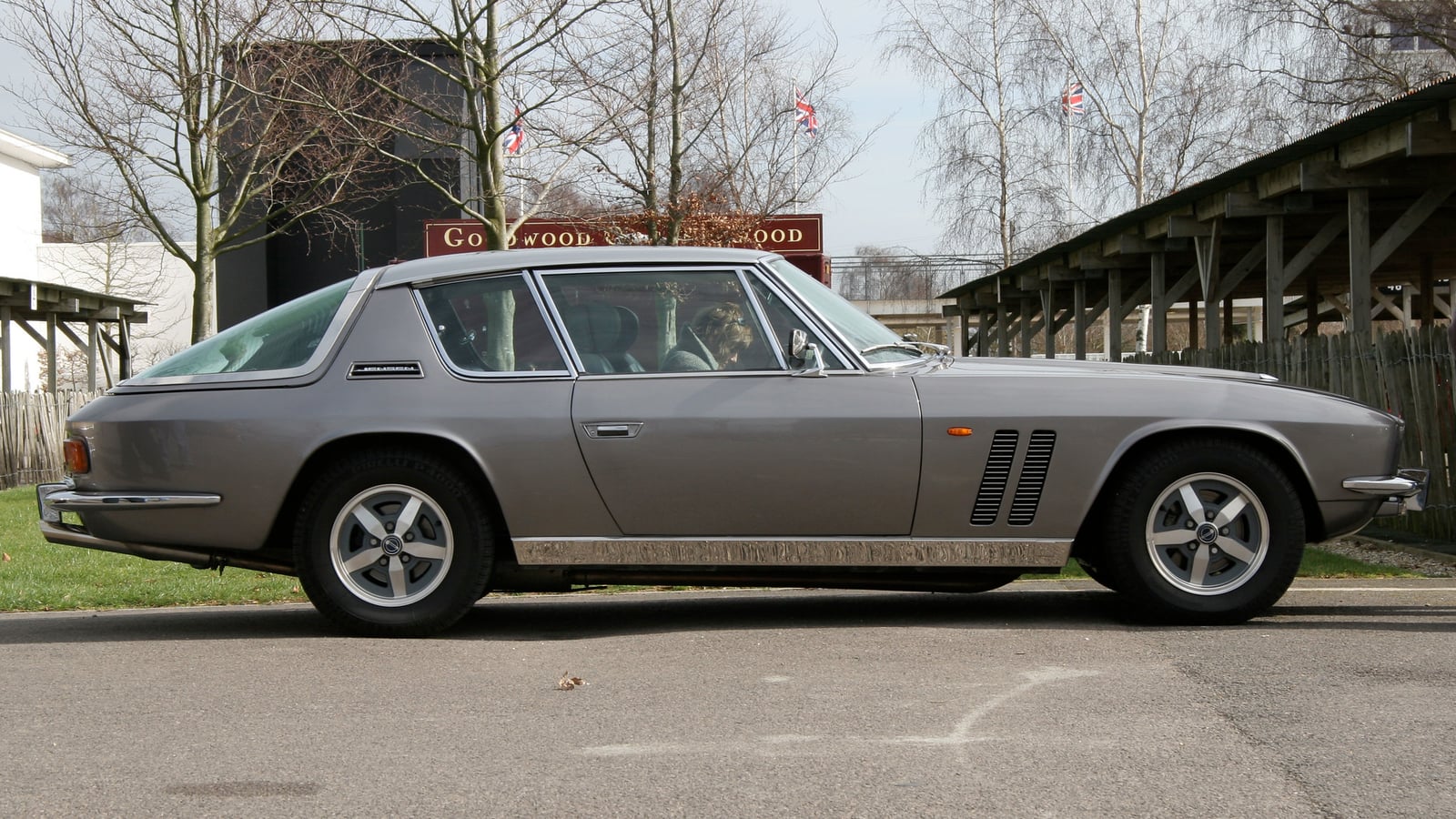
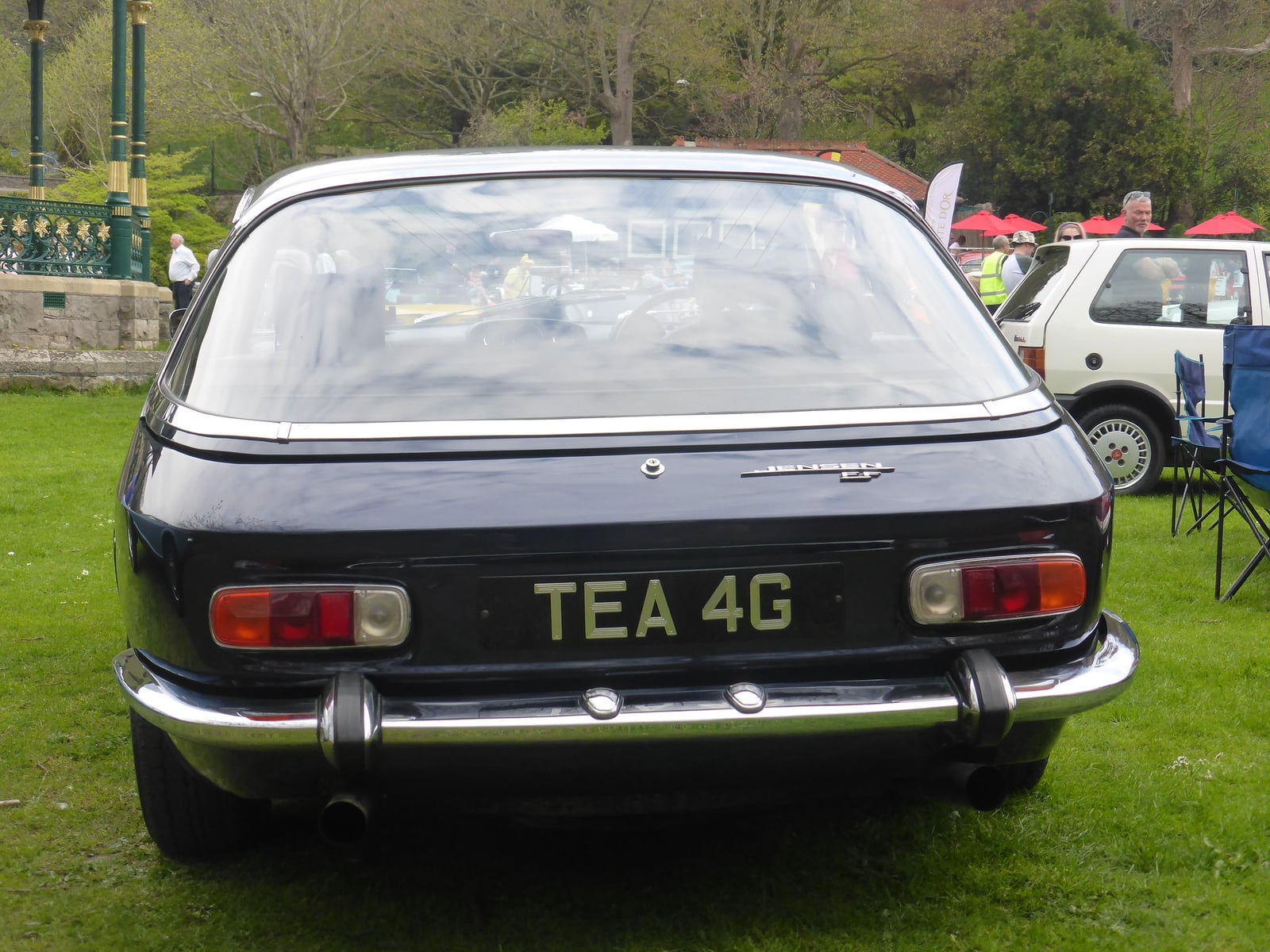
Key dates for the FF
- 1966Launched alongside the Interceptor with Harry Ferguson Research's four-wheel drive: torque split permanently between the axles, biased rearward, with a central differential and one-way clutches.
- 1966The Dunlop Maxaret system makes it the first production car with anti-lock brakes, working mechanically from the transmission.
- 1968Period road testers, invited to brake and swerve on wet test tracks, write astonished copy that the price quietly smothers in the showroom.
- 1969The Mk II brings the Interceptor's revisions.
- 1971Jensen quietly drops the FF at around 320 cars: it could not readily be converted to left-hand drive, locking it out of America and the volume it needed.
Before you buy an FF
Identity, the first step
- Twin air vents on each front wing, against the Interceptor's single vent
- About four inches more wheelbase and a longer front to house the transmission
- Genuine, correct, well-documented cars command the premium
- The club's records settle originality questions on so rare a car
The FF hardware
- The Ferguson centre differential and one-way clutches are FF-specific and need a specialist who knows them
- The Maxaret system should be present and functional, not bypassed
- Transmission noises are the expensive unknowns, so listen hard
- The V8 itself is ordinary Chrysler and the cheap part of the car
The shell
- The same sills, floors, valances and box sections as an Interceptor
- Hand-built body restoration is slow and expensive, and rarer still here
- Trim and electrics are the fiddly end, as on the sister car
- A sound shell outranks mileage and specification alike
What the FF four-wheel drive sells for at auction
The FF four-wheel drive comes to auction only occasionally: 15 recorded sales since 2012, typically making between £30,578 and £63,750 . With so few sales, treat any single result as a data point rather than a market price.
- £30,375FF
- £17,719FF
- £38,250FF
- £20,250FF
- £52,796FF
Thin evidence. Only 15 recorded sales: read the figures as a sketch of the market, not a price. Based on 15 sold results from public classic car auctions (2012 to 10 August 2026). Sold prices, not asking prices, and not a valuation: condition, history and specification vary from car to car.