MG MGB GT: Pininfarina looks and a hatchback, for roadster money (1965–1980)
The MG MGB GT added a handsome Pininfarina-styled fastback roof and a practical hatchback to the MGB, making a refined 2+2 that is one of the most underrated classics there is, and the rare MGB GT V8 gave it real pace. A guide to how the GT differs from the roadster, the V8, and what to watch for when buying.
Built 1965–1980

At a glance
- Years
- 1965–1980
- Body styles
- Two-door fastback coupe with 2+2 seating and a hatchback
- Drivetrain
- Front engine, rear-wheel drive
- Engines
- 1798cc B-series four; 3528cc Rover V8 (GT V8)
- Power
- Around 95 bhp (four-cylinder); 137 bhp (GT V8)
- Top speed
- Around 105 mph (four); around 125 mph (GT V8)
- Trim levels
- Chrome-bumper and rubber-bumper; MGB GT V8 (1973–1976)
- Production
- About 125,000 GTs, plus 2,591 GT V8
- Assembly
- Abingdon, Oxfordshire
- Designer
- Pininfarina (roofline) on the MGB platform
- Values
- GT project under £3,000; good £5,000-£8,000; excellent £12,000-£16,000+ (GT V8 commands a clear premium)
- Roofline by
- Pininfarina, grafted onto the MGB bodyshell in 1965
- The flagship
- MGB GT V8, the light Rover 3.5-litre aluminium engine, GT body only
The models
Take the open MGB, add a sleek fastback roof styled by Pininfarina, a pair of occasional rear seats and a hatchback tailgate, and you have the MGB GT (the MGBGT, as classifieds often run it together): a car that is prettier than it has any right to be, more practical than a roadster, and just as cheap to run. It is the sensible enthusiast’s MGB and one of the most underrated classics there is, and it has been called the poor man’s Aston Martin, a comparison that on looks alone is not absurd.
The MGB GT is part of the classic MG range, the closed companion to the roadster, and the body style that has quietly become a favourite of people who actually use their classics.
A fastback on the MGB
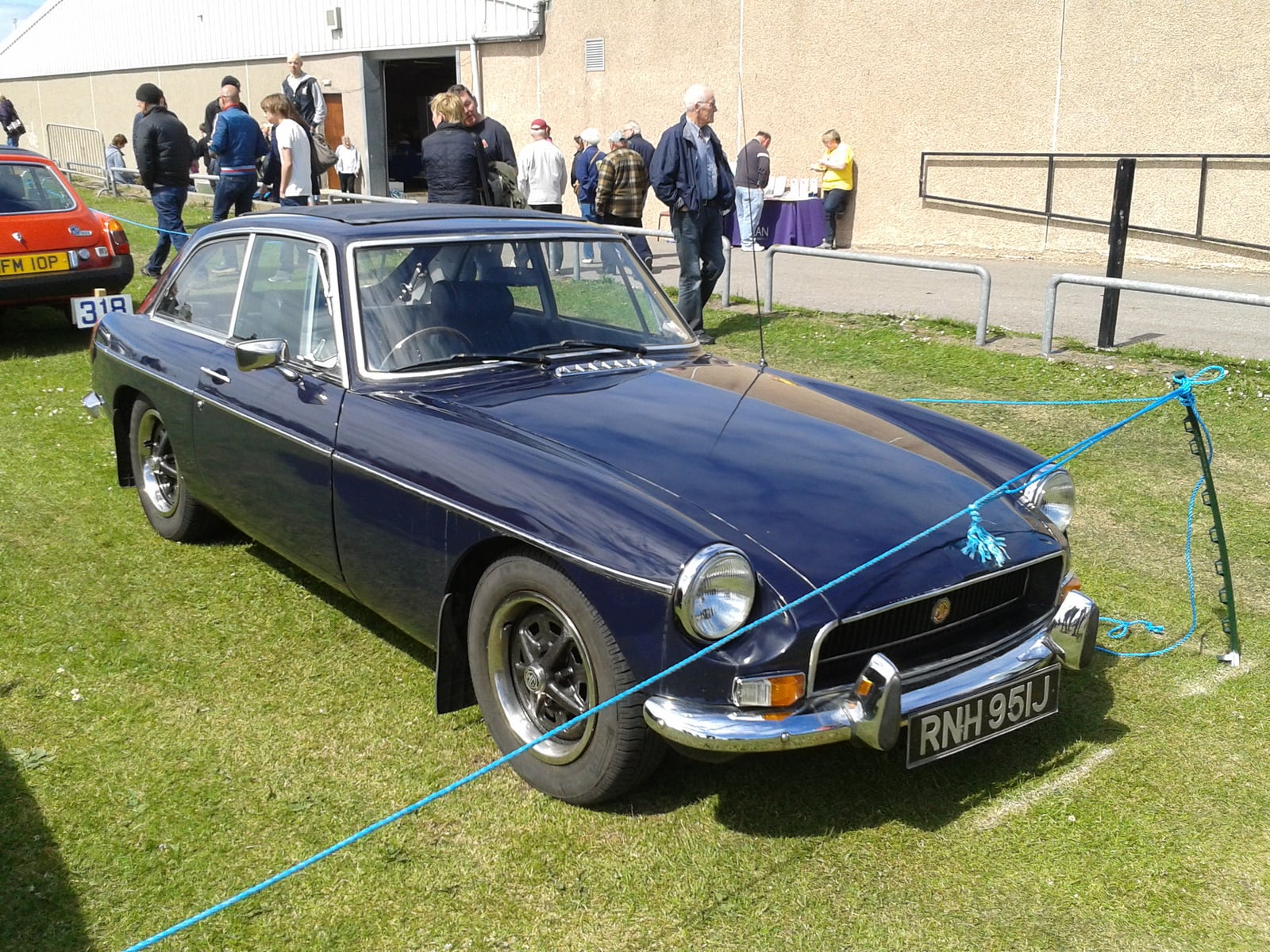
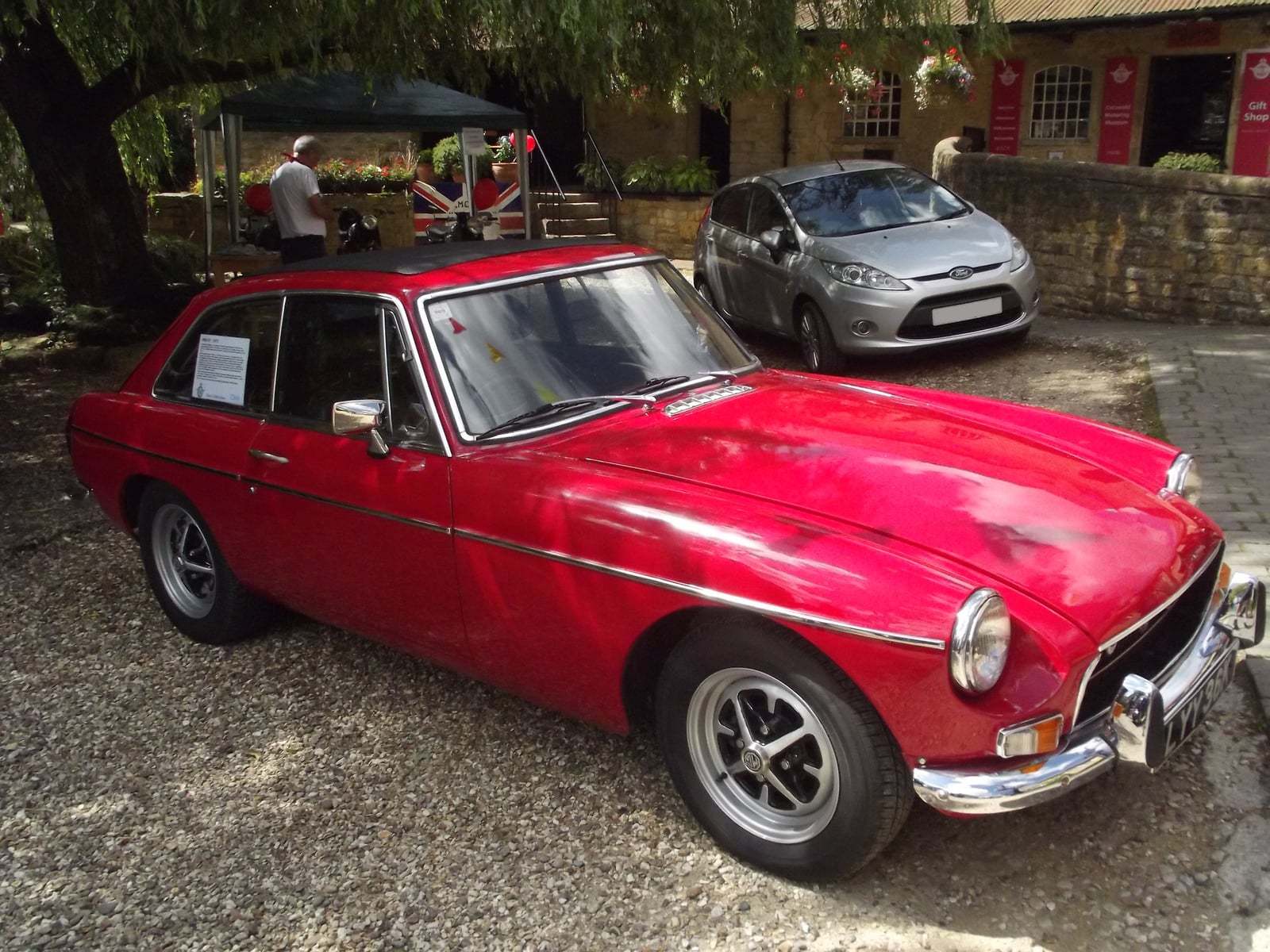
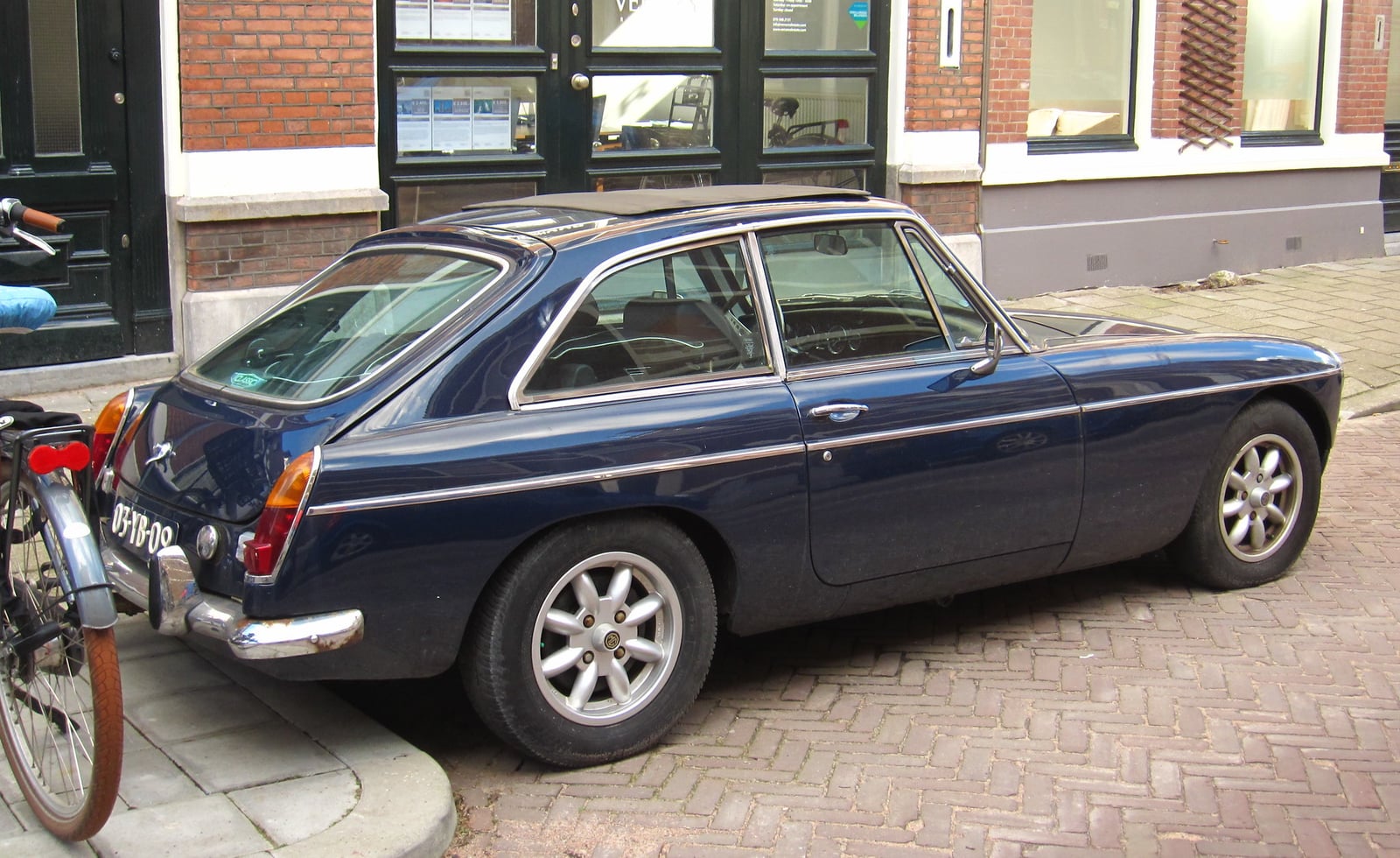
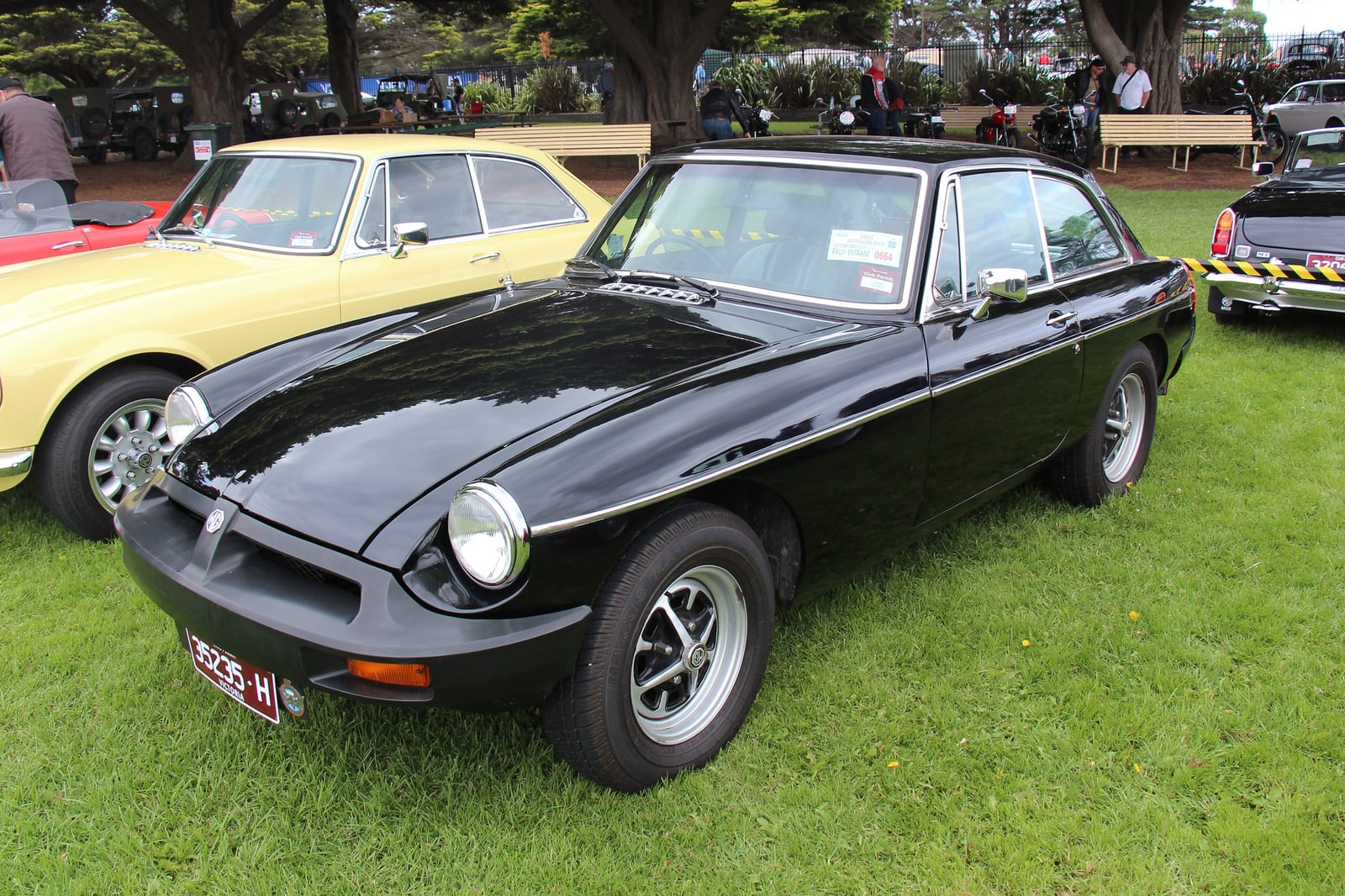
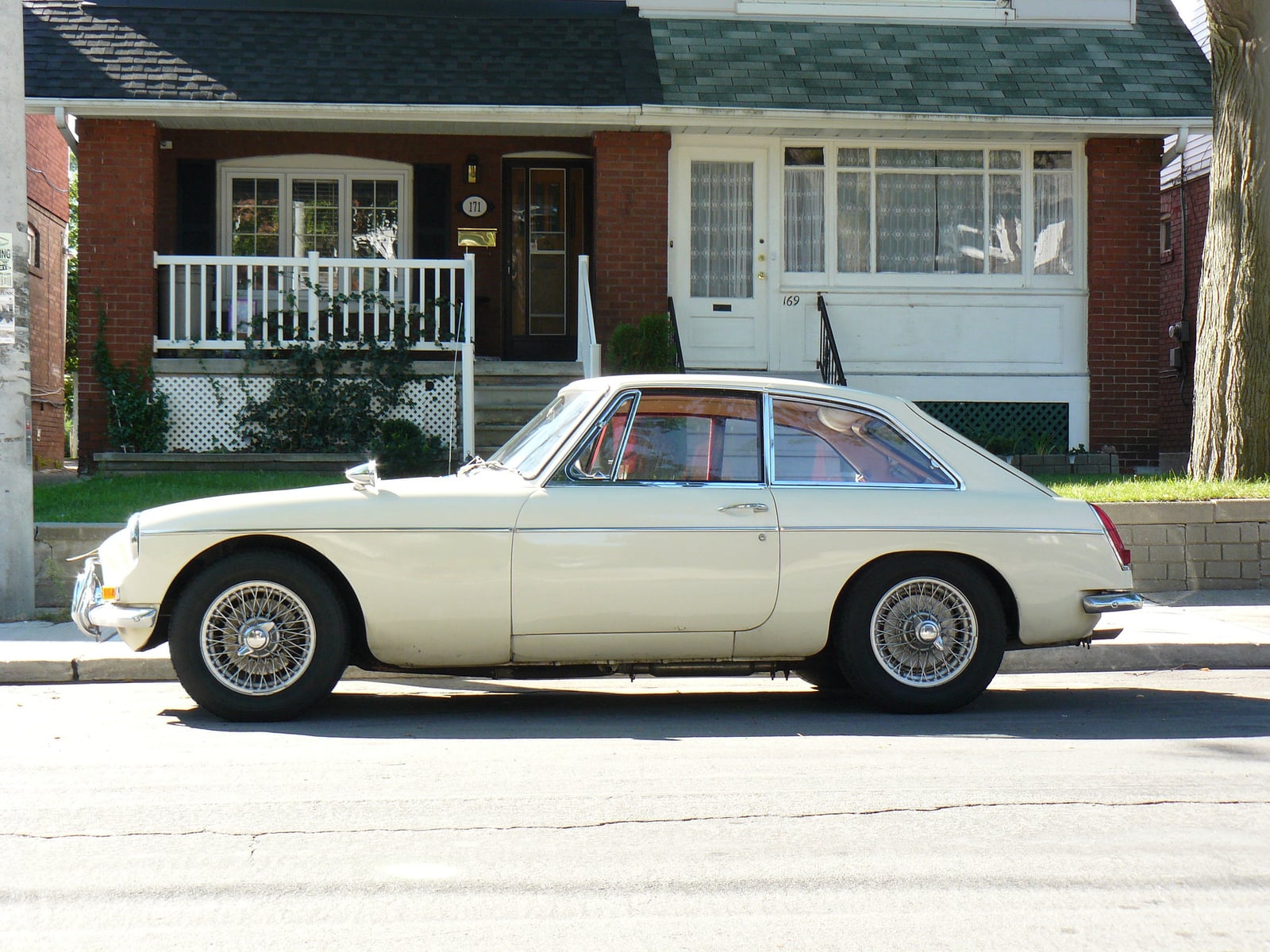
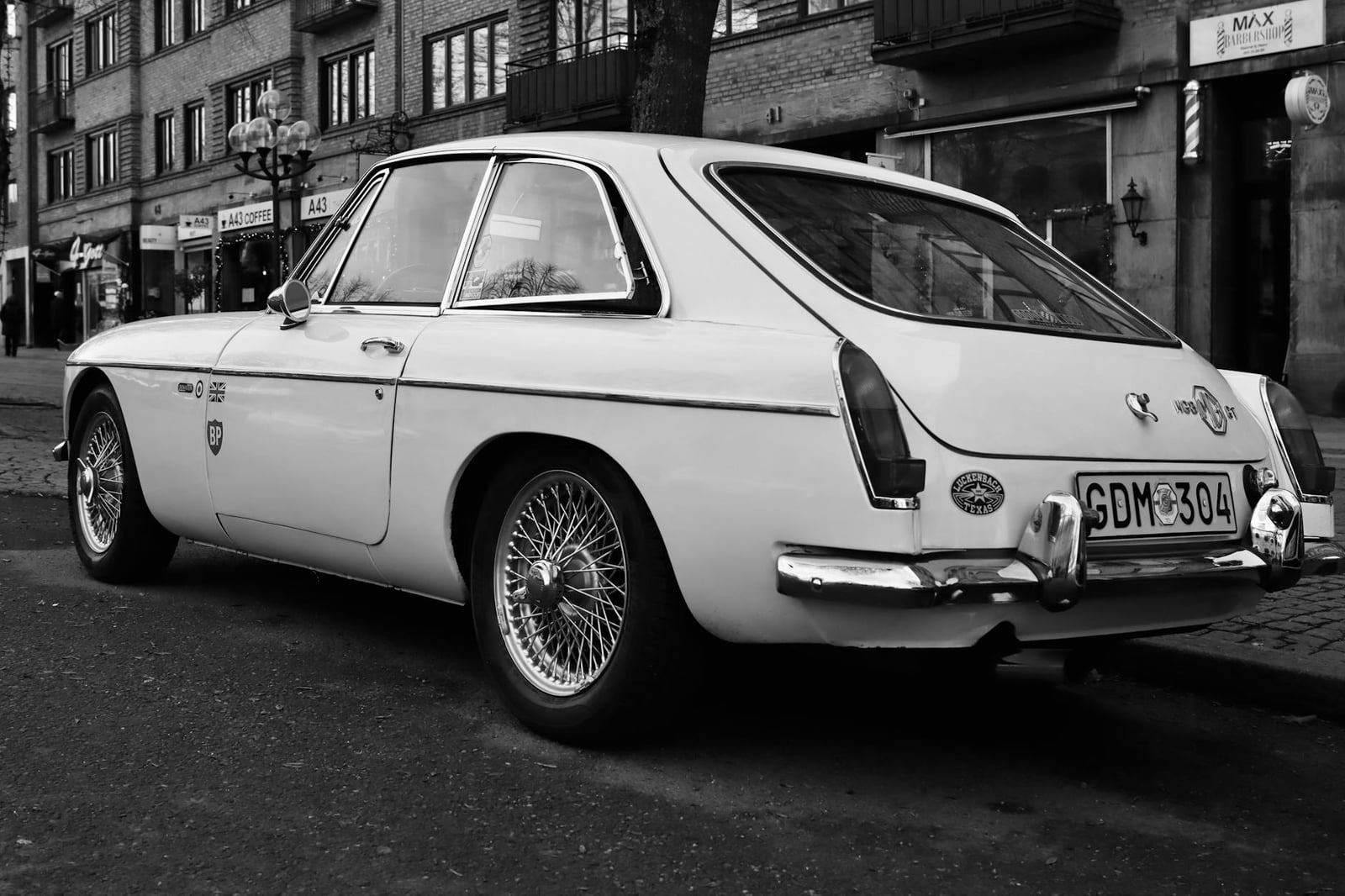
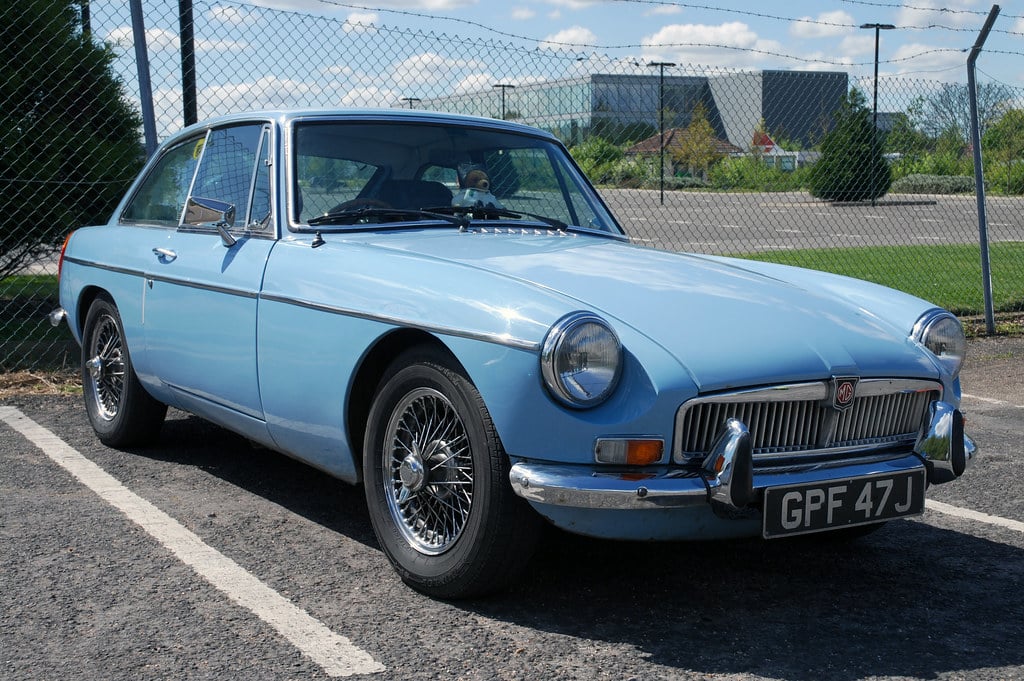
The GT arrived in 1965, three years after the roadster, and the transformation is all in the roof. The closed steel fastback, with its elegant sloping rear glass and opening tailgate, was styled by the Italian house Pininfarina and grafted onto the existing MGB bodyshell. It turned a simple roadster into an early example of the sporting hatchback: a 2+2 with a genuine luggage platform behind the front seats and small occasional rear seats suitable for children or extra bags.
Underneath, the GT is pure MGB: the same 1798cc B-series four, the same gearbox and overdrive option, the same chrome-bumper cars to 1974 and rubber-bumper cars from late 1974 to 1980. It is about 114 kg heavier than the roadster, which blunts acceleration a fraction, but the closed roof makes it slightly more slippery, so the GT is actually marginally faster at the top end, and noticeably quieter and more comfortable on a long run. The roadster wins on open-air feel; the GT wins on everything practical.

The MGB GT V8
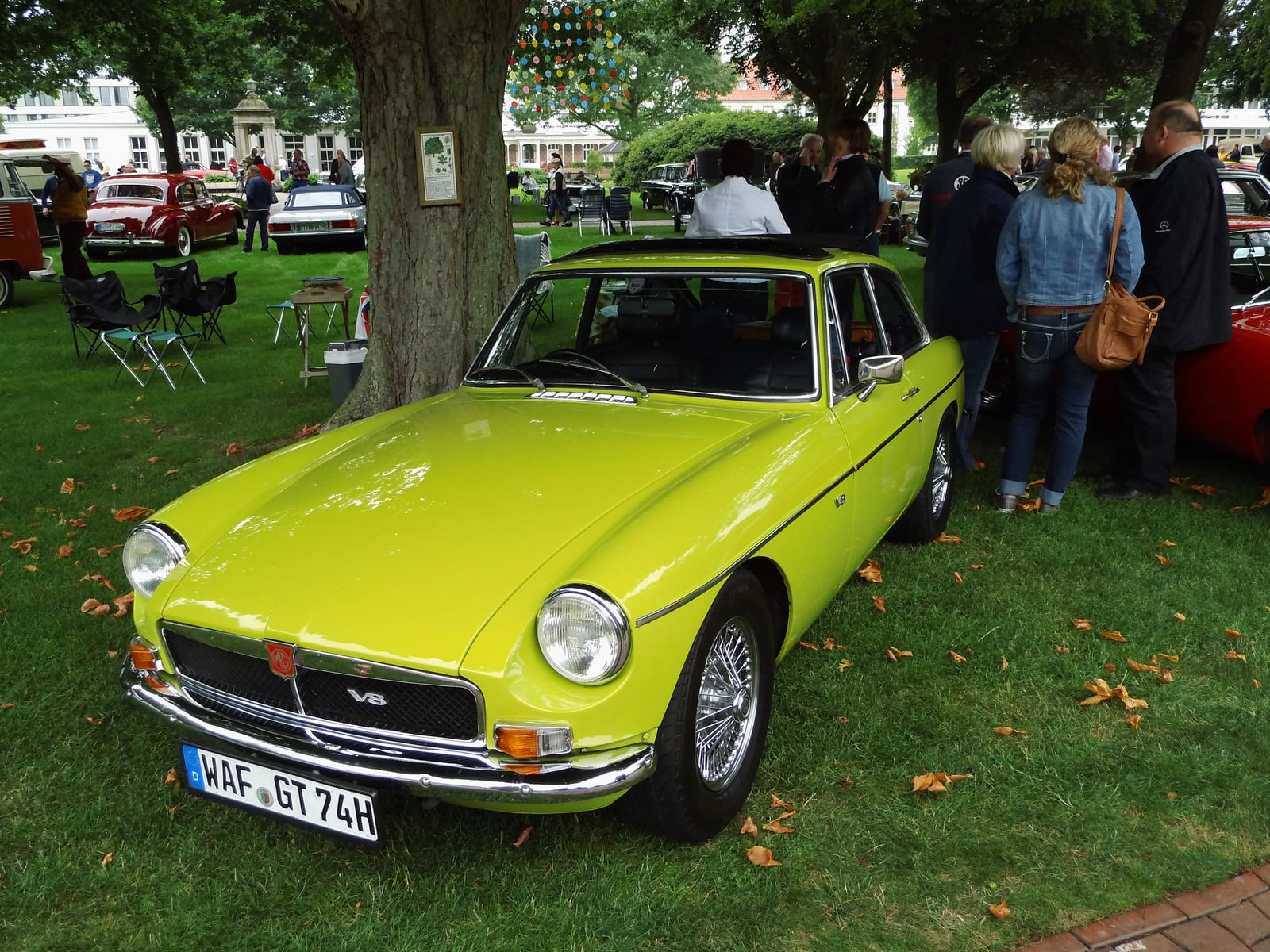
The most desirable GT of all is the MGB GT V8, built from 1973 to 1976. It used the light Rover 3528cc aluminium V8, the ex-Buick engine that became a British performance staple, producing 137 bhp. Because the alloy V8 weighs little more than the iron four, it added pace without spoiling the balance: 0 to 60 mph in around 7.7 seconds and a top speed near 125 mph, a transformation over the four-cylinder car.
It was a GT only; the factory never built a roadster V8, so every genuine factory V8 is a coupe. Just 2,591 were made before the 1973 oil crisis killed demand for thirsty engines and the model was dropped. The chrome-bumper cars, built in larger numbers early on, are the most sought-after. The V8 is the MGB to have for performance, and its rarity gives it a clear price premium over the four-cylinder GT.

What it is like to own
The GT is the MGB you can use all year. The closed cabin keeps the weather out, the hatchback swallows luggage, and the refinement at speed makes it a far better long-distance car than the roadster. It drives much like the open car, light and friendly, with the same simple mechanicals and the same superb parts support. The four-cylinder GT is no sports car for outright pace, but it is a handsome, practical and genuinely affordable classic; the V8 adds the performance that turns it into a real grand tourer.

Buying guide: what to look for
The GT shares the MGB roadster’s structural rust traps and adds a few of its own. As on every monocoque MGB, the sills are the priority, a complex multi-layer structure that carries much of the car’s strength, so check for a smart outer sill hiding a rotten inner one. Inspect the floors, jacking points, front wing lower rear corners, front chassis legs and the battery boxes behind the seats.
The GT-specific areas are at the back. The tailgate rusts along its lower lip if water is trapped inside, and the base of the rear screen surround rots, a serious point because there are no repair sections made for it, so look hard for bubbling around the rear glass. Water also collects between the boot floor and the fuel tank and rots both, so check the boot floor, the spare-wheel well and the rear spring mountings. On a V8, confirm the car is a genuine factory V8 rather than a later conversion, which is worth far less.

Where the GT sits in the market
The four-cylinder GT is one of the great classic-car bargains: good cars sit around £5,000 to £8,000, with the best restored examples reaching £12,000 to £16,000 or so. It is usually a little cheaper than the equivalent roadster, which keeps it firmly in affordable territory. Two special runs carry a following of their own at auction: the racing-green GT Jubilee of 1975, built to mark MG’s fiftieth anniversary, and the pewter GT Limited Edition that closed production in 1980. The GT V8 is the exception, commanding a strong premium, with good cars from £13,000 to £18,000 and the best chrome-bumper cars well beyond £24,000. The full record, 992 recorded sales, the coupé discount and the V8 premium in figures, and what the sale rooms actually pay for the Jubilee and the Limited Edition, is on the page covering MGB GT values.
In the wider story the MGB GT is the practical, handsome face of the MGB, the closed fastback that rivalled Triumph’s GT6 for affordable coupe appeal. For a six-cylinder take on the same idea, MG offered the MGC GT, while the V8 gave the GT the performance the four-cylinder car always lacked.

Owners’ clubs and parts
The MG Owners’ Club and the MG Car Club both cover the GT, with spares, technical support, dating and events. Parts supply is the best of any British classic, with body panels, trim, mechanical and electrical parts all available, and complete Heritage bodyshells made on the original tooling, though some GT-specific items such as the rear screen surround remain hard to source. The V8 has its own dedicated following and a good specialist support network.
Key dates for the MGB GT
- 1965The GT arrives three years after the roadster, with a Pininfarina-styled steel fastback roof and opening tailgate grafted onto the MGB shell.
- 1967The MkII improvements reach the GT with the rest of the range.
- 1973The GT V8 puts the light Rover 3,528cc aluminium engine into the coupe at 137 bhp, for 0 to 60 in around 7.7 seconds and near 125 mph.
- Late 1974Rubber bumpers and the raised ride height arrive across the range.
- 1975The racing-green GT Jubilee marks MG's fiftieth anniversary; GT V8 production ends the following year at 2,591 cars.
- 1980The pewter GT Limited Edition closes production, after about 125,000 GTs in all.
Before you buy an MGB GT
Structure, as on any MGB
- The sills, a complex multi-layer structure that stiffens the whole car
- Floors, jacking points, castle rails and outriggers
- Rear wheel arches, boot floor and the battery boxes behind the seats
- Sagging doors and uneven gaps point straight at sill rot
GT-specific
- The rear screen surround, which is hard to source
- Tailgate condition and its seal, which the roadster has no equivalent of
- The GT is 114 kg heavier, so tired springs and dampers show sooner
- Complete Heritage bodyshells exist on original tooling, which caps the worst-case bill
V8 and specials
- Every factory V8 is a coupe; the factory never built a roadster V8
- Just 2,591 V8s were made, and chrome-bumper cars are the most sought-after
- The 1975 GT Jubilee and 1980 Limited Edition both carry a following of their own
- The V8 has its own dedicated specialist support network
Related
The MGB GT is one of the classic MGs, the fastback version of the MGB roadster, styled by Pininfarina. For the wider period it belongs to, see British classic cars of the 1960s and 1970s.
More photos
Frequently asked questions
What is the difference between an MGB and an MGB GT?
Why are MGBs so cheap?
How many MGB GT are left in the UK?
Related across themes

More from MG

MG Midget: a Sprite in MG clothing, and the cheapest way into the marque (1961–1979)

MG MGA: 100,000 built, almost all for export, and the prettiest MG of all (1955–1962)

MG MGC: an MGB with a straight-six, and a reputation it never deserved (1967–1969)


