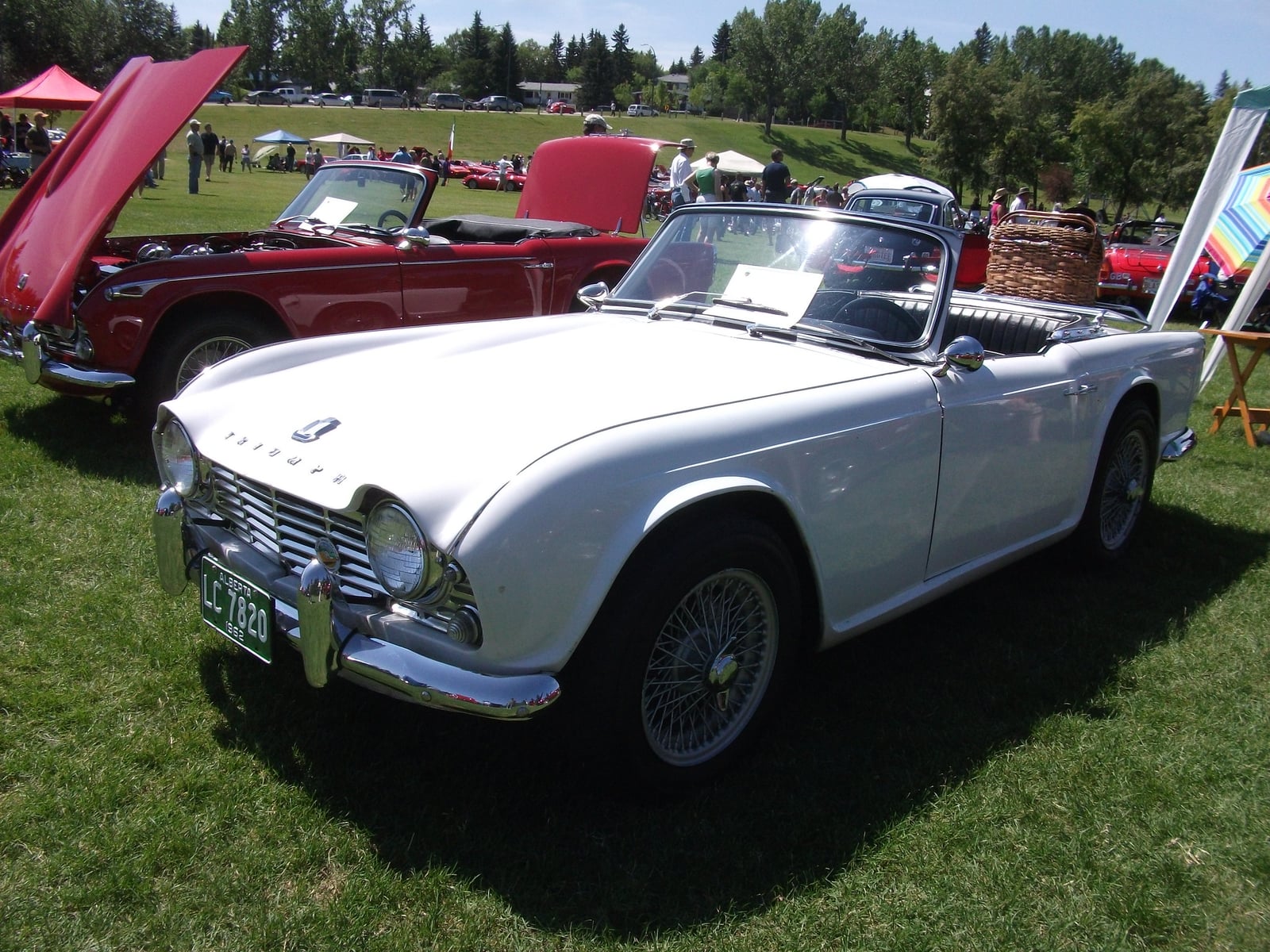
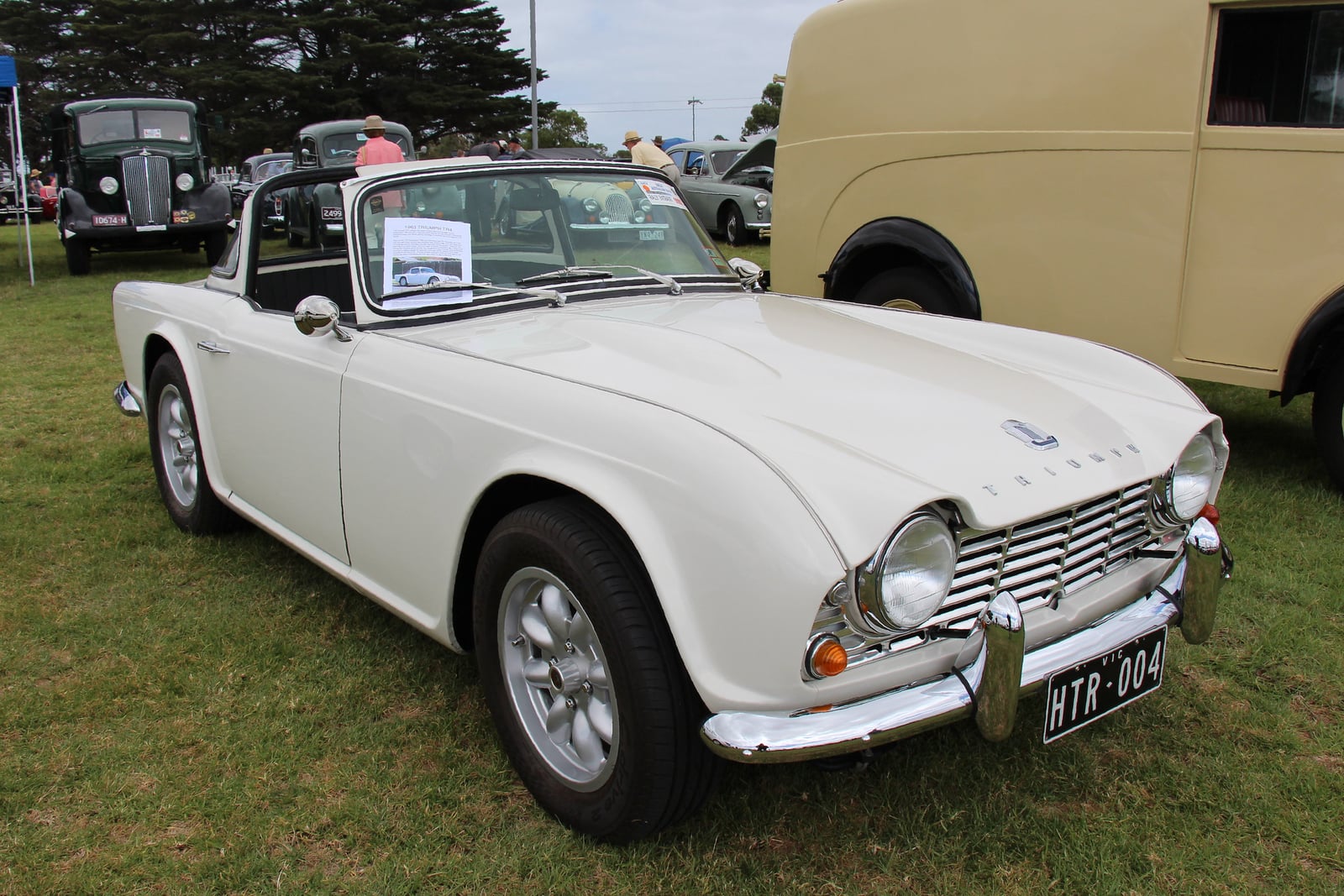
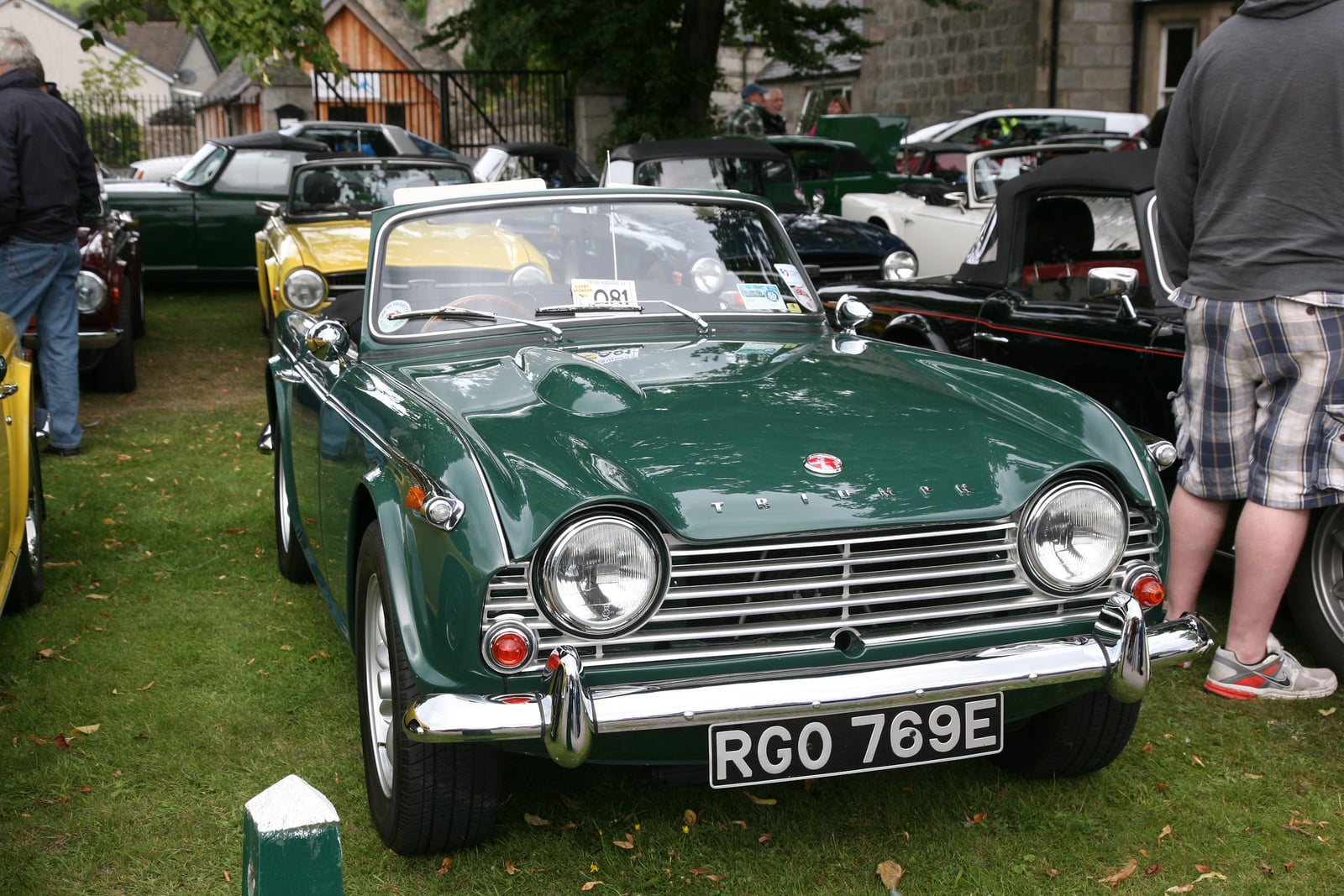
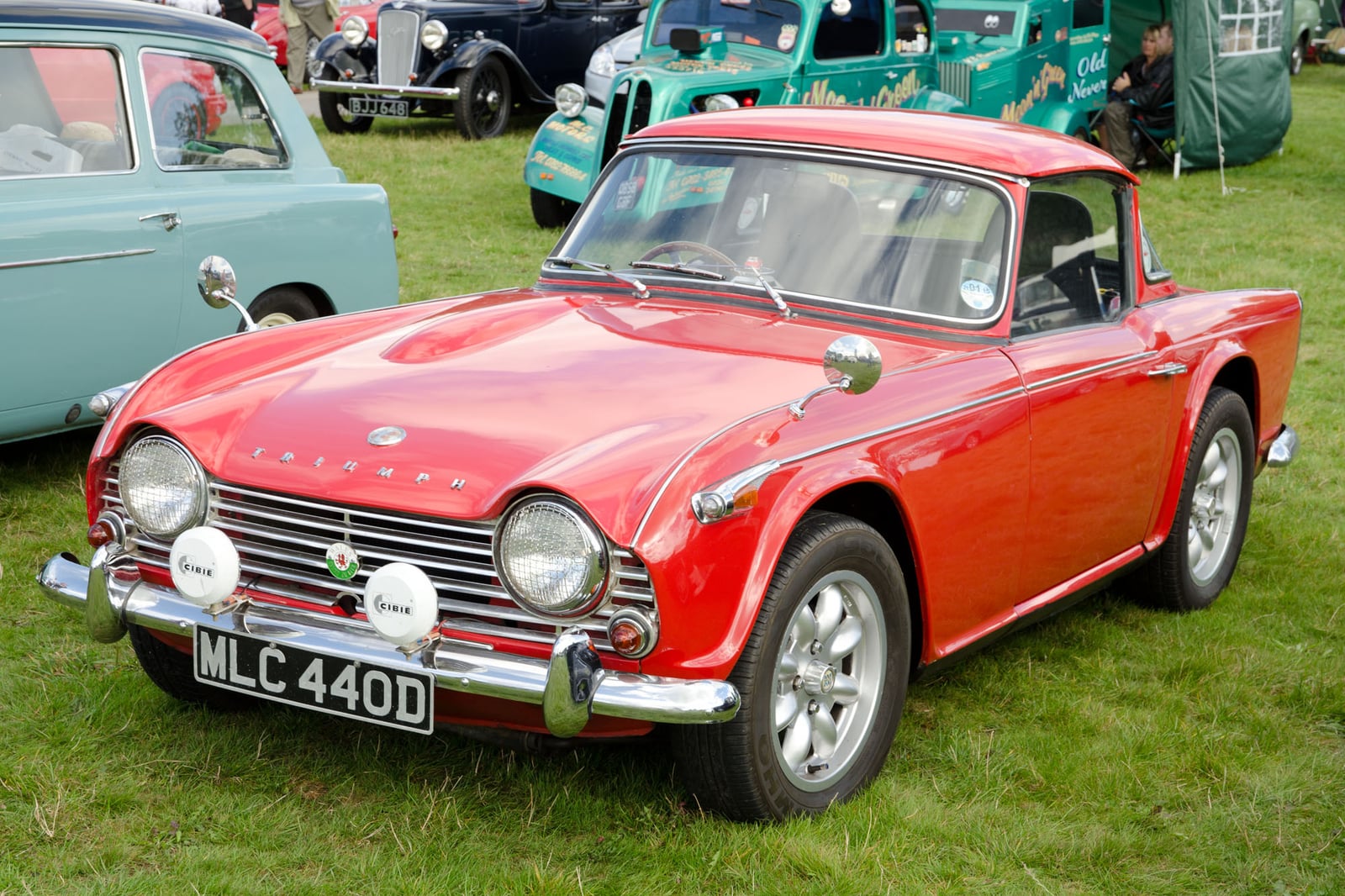
Triumph TR4: a crisp Michelotti body on proven TR mechanicals (1961–1967)
The Triumph TR4 brought modern Michelotti styling, rack-and-pinion steering and the clever Surrey-top removable roof to the rugged TR sports-car line, and the TR4A added independent rear suspension. A guide to the two cars, their place in the TR story, and what to look for when buying one.
Built 1961–1967

At a glance
- Years
- 1961–1967
- Body styles
- Two-door open sports car with optional Surrey-top removable roof
- Drivetrain
- Front engine, rear-wheel drive
- Engines
- 2138cc four-cylinder
- Power
- 100 bhp (TR4), 104 bhp (TR4A)
- Top speed
- Around 103 to 109 mph
- Trim levels
- TR4 (live axle), TR4A (independent rear suspension)
- Production
- 40,253 TR4 plus 28,465 TR4A; mostly exported
- Assembly
- Canley, Coventry
- Designer
- Giovanni Michelotti
- Values
- TR4 project around £7,500, good £20,000, excellent to £38,000; the TR4A slightly higher
- Innovations
- Rack-and-pinion steering and the Surrey top, an early removable hardtop
- Place in the line
- The first modern-bodied TR, leading to the TR5 and TR6
The models
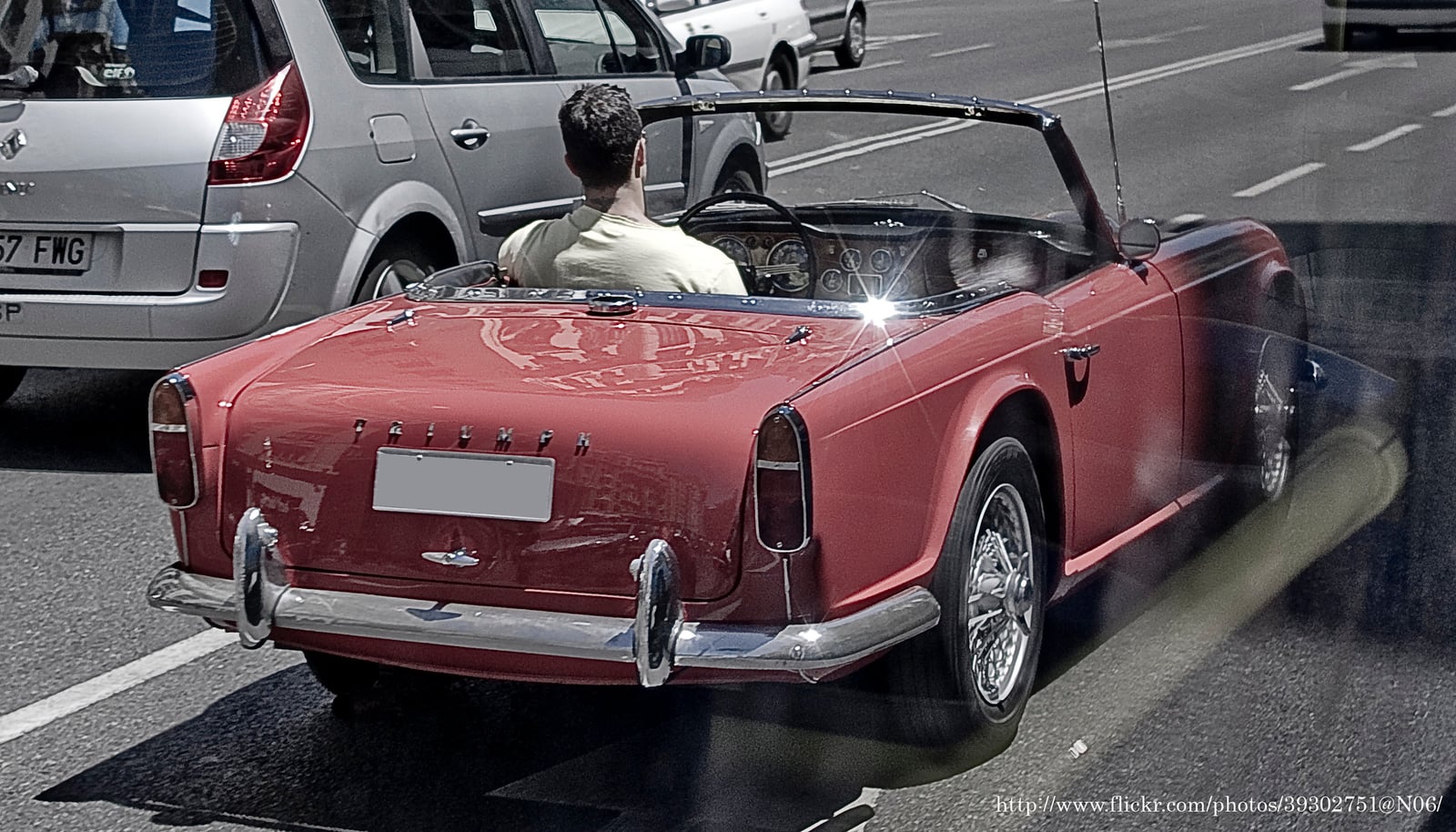
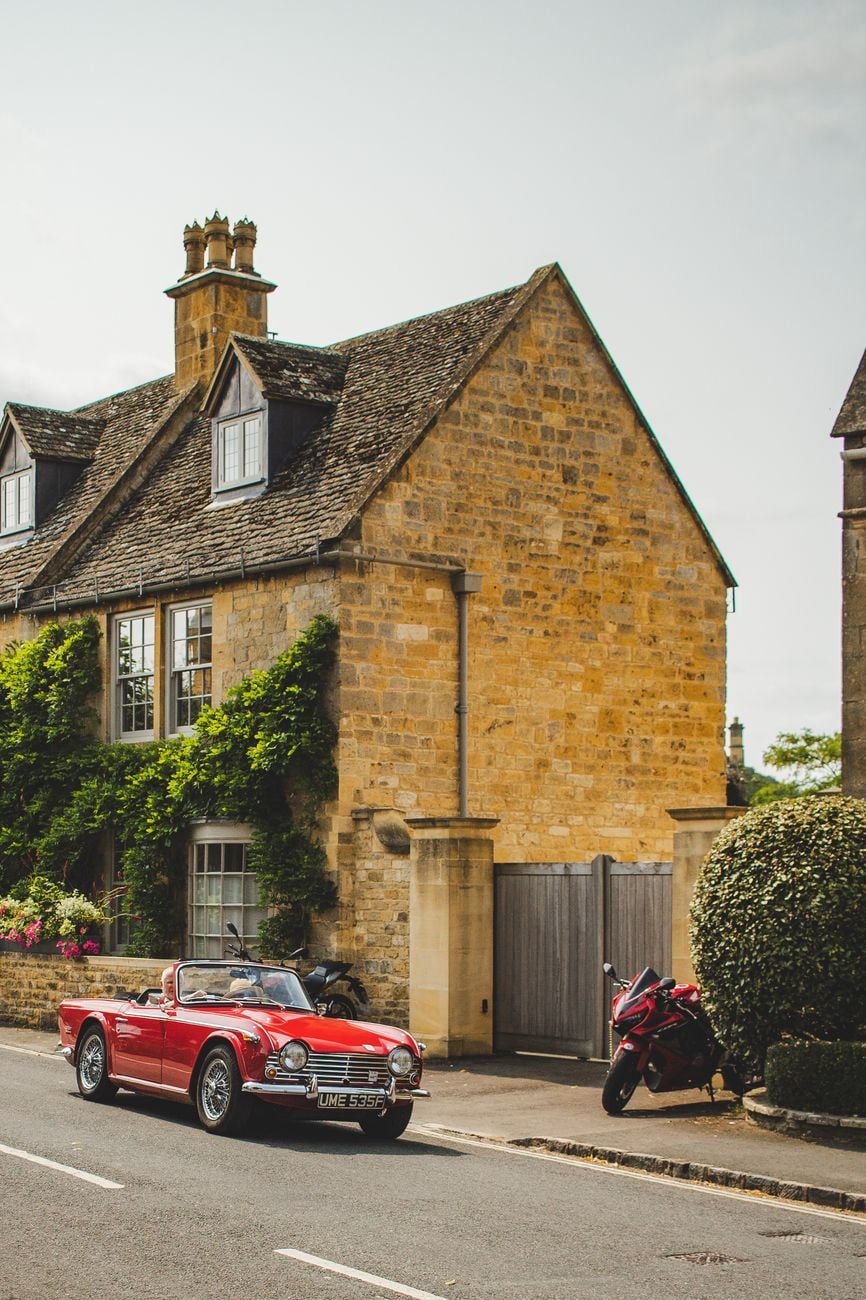
Where the TRs before it were bluff, side-screen roadsters of 1950s design, the TR4 wrapped the same rugged mechanicals in a crisp, modern body by Giovanni Michelotti, and added rack-and-pinion steering and a clever removable roof. It was the car that dragged the TR sports-car line into the 1960s, the first of the TRs most people would recognise as modern, and it set the template that led, through the TR5, to the TR6.
The TR4 is part of the classic Triumph range and a key step in the TR story, the bridge from the 1950s cars to the six-cylinder era.
A new body on proven mechanicals
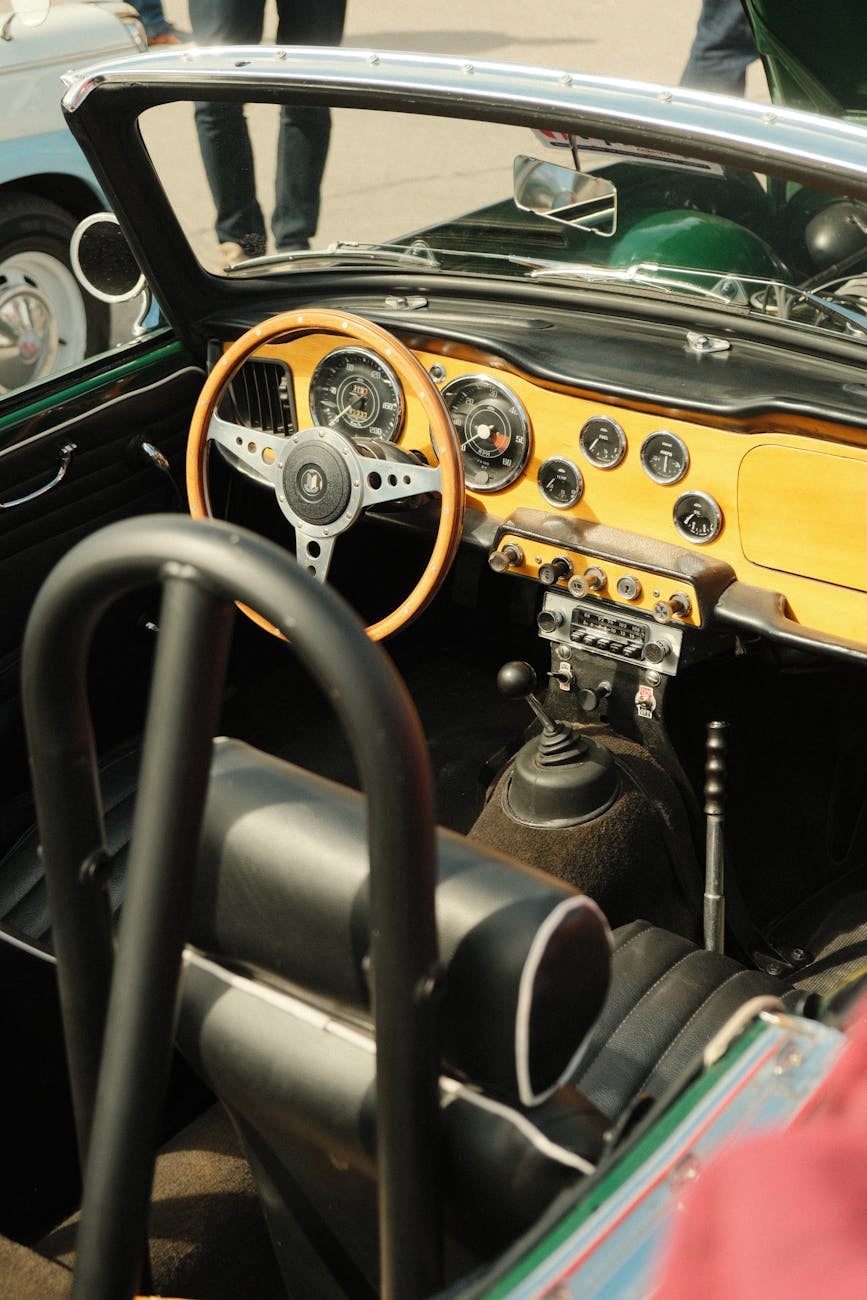
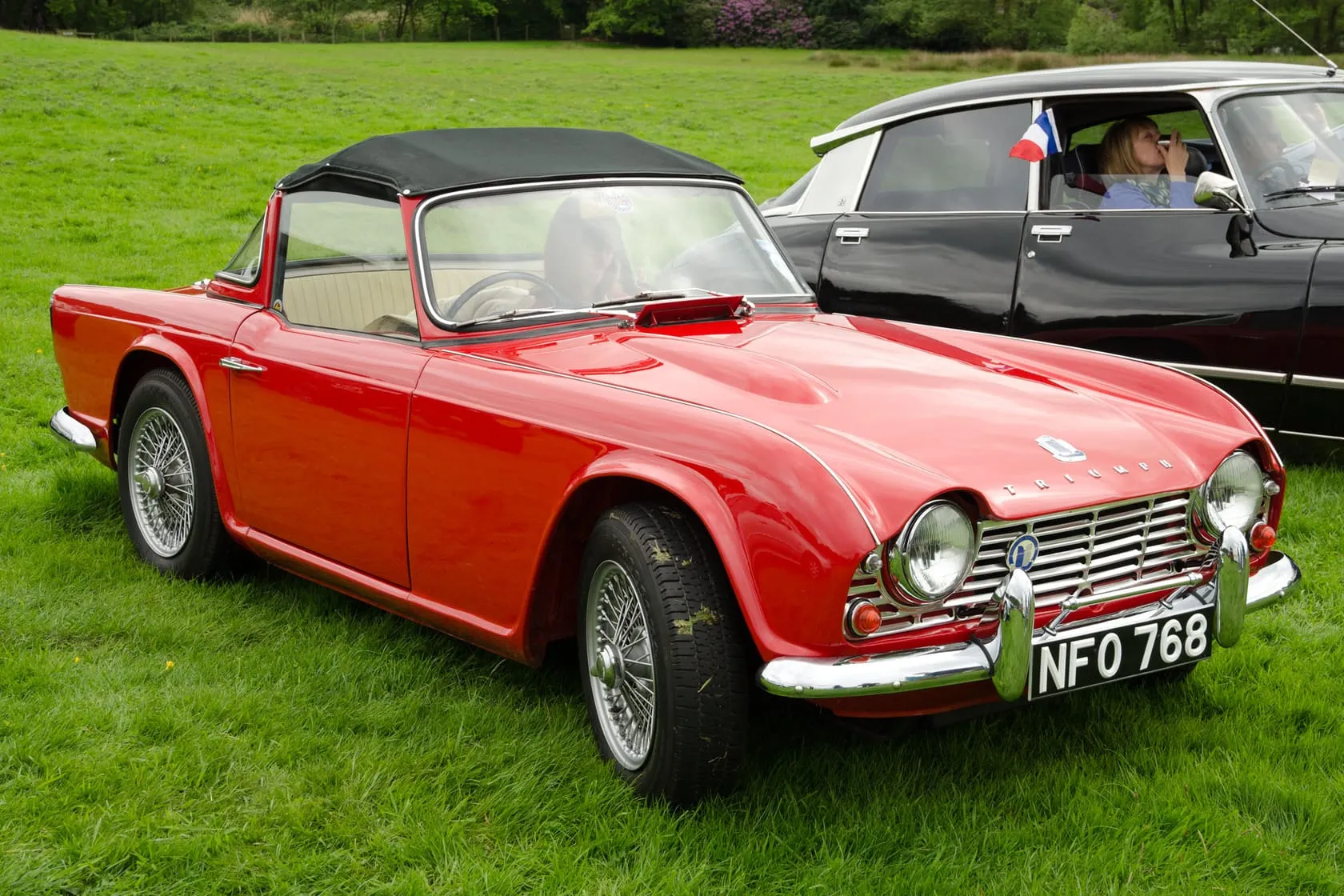
Launched in 1961, the TR4 was, in the old engineer’s phrase, the old axe with a new handle. Beneath Michelotti’s sharp new bodywork sat a carried-over chassis and the familiar 2.1-litre wet-liner four, now producing 100 bhp. What was genuinely new mattered, though: rack-and-pinion steering in place of the old cam-and-lever system, a wider body with wind-up windows, and the Surrey top, a removable rigid roof panel with a fixed rear glass that many regard as a forerunner of the Porsche Targa.
Like all the TRs, the TR4 was built overwhelmingly for export. Of the 40,253 made, the great majority went abroad, mostly to the United States, where the TR sports cars built Triumph’s reputation and much of its income.

The TR4A and independent rear suspension
In 1965 the TR4A took the obvious next step. The 2.1-litre four was mildly uprated to 104 bhp, but the important change was at the back: independent rear suspension, with semi-trailing arms and coil springs, fitted to most cars and prompted by Triumph’s American distributors. It gave the TR4A a better ride and tidier road manners than the live-axle TR4, and a cheaper live-axle version was kept only for the US market. The independent rear made the TR4A the more sophisticated car and pointed the way to the TR5 and TR6 that followed. Around 28,000 TR4As were built.

What it is like to own
The TR4 is a proper, rugged 1960s sports car. The wet-liner four is torquey and immensely strong, the controls are heavy and honest, and the car has real period character without the fragility some rivals carry. The TR4A’s independent rear suspension makes it the more comfortable of the two over poor surfaces. Performance is brisk rather than rapid by modern standards, with a top speed of around 105 mph, but the appeal was never outright speed; it is the solidity, the simplicity and the open-air character that make these cars. An optional overdrive on the upper gears makes the TR4 a relaxed long-distance companion, and the Surrey top lets you enjoy it open, closed, or anywhere in between as the weather dictates.

Buying guide: what to look for
The TR4 has a separate chassis, so that is the first inspection. Check the frame for corrosion, and on the independent-rear TR4A pay particular attention to the differential mounts, which can crumble or bulge, and the rear suspension arm mounts, along with the reinforcing plates. Inconsistent gaps between the doors and the wings often signal a weakened chassis beneath.
On the body, the rot traps are the sills and inner sills (a leaking cabin is a clue), the floorpans, the front and rear wings around the headlamps and top edges, the windscreen frame and the corners of the doors, boot and bonnet. The engine, by contrast, is one of the strong points: the wet-liner four is famously tough and straightforward to rebuild. Parts supply across the board is excellent through the TR specialists.

Where the TR4 sits in the market
The TR4A carries only a small premium for its independent rear suspension, a complete original Surrey top adds more than any other extra, and honest, original specification and a sound chassis set the figure far more than mileage. The full record, 479 recorded sales by version, where the TR4 sits against the TR3, TR5 and TR6, and why it has halved in real terms since 2016, is on the page covering Triumph TR4 values.
In the wider story the TR4 is the first of the modern-looking TRs, the car that brought Michelotti style and, through the TR4A, independent rear suspension to the line, and the structural and stylistic bridge from the 1950s side-screen cars to the six-cylinder TR6.

Owners’ clubs and parts
The TR Register and the TR Drivers’ Club are the established clubs for the TR sports cars, with deep technical knowledge and active events. Parts supply for the TR4 and TR4A is excellent, with chassis, body, trim and mechanical parts all readily available, much of it remanufactured.
How the TR4 changed
- 1961Launched with Michelotti's new body over the carried-over chassis and 2.1-litre wet-liner four at 100 bhp, plus rack-and-pinion steering and wind-up windows.
- 1961The Surrey top offers a removable rigid roof panel with fixed rear glass, a forerunner of the Targa idea.
- 1965The TR4A uprates the four to 104 bhp and, at American distributors' prompting, fits independent rear suspension with semi-trailing arms and coil springs.
- 1965A cheaper live-axle version is kept for the US market only.
- 1967Production ends at 40,253 TR4s and 28,465 TR4As, mostly exported; the six-cylinder TR5 follows.
TR4: what to check before you buy
Chassis, first
- The frame for corrosion, as on every separate-chassis TR
- On a TR4A, the differential mounts, which crumble or bulge
- Rear suspension arm mounts and the reinforcing plates
- Inconsistent gaps between doors and wings often signal a weakened chassis beneath
Body
- Sills, floors and lower wings
- The boot area
- Surrey top panels and their seals, which are model-specific
- Body sections are remanufactured, which caps the worst case
Specification
- TR4A independent rear suspension gives a better ride and tidier manners than the live-axle TR4
- US-market live-axle TR4As exist and are a different car to drive
- Overdrive on the upper gears makes it a relaxed long-distance companion
- The Surrey top is worth having complete, since the parts are specific to it
Related
The TR4 is one of the classic Triumphs and the first modern car in the TR line that led to the Triumph TR6. For the wider period it belongs to, see British classic cars of the 1960s.
More photos